The Top 10 NES Games of 1989
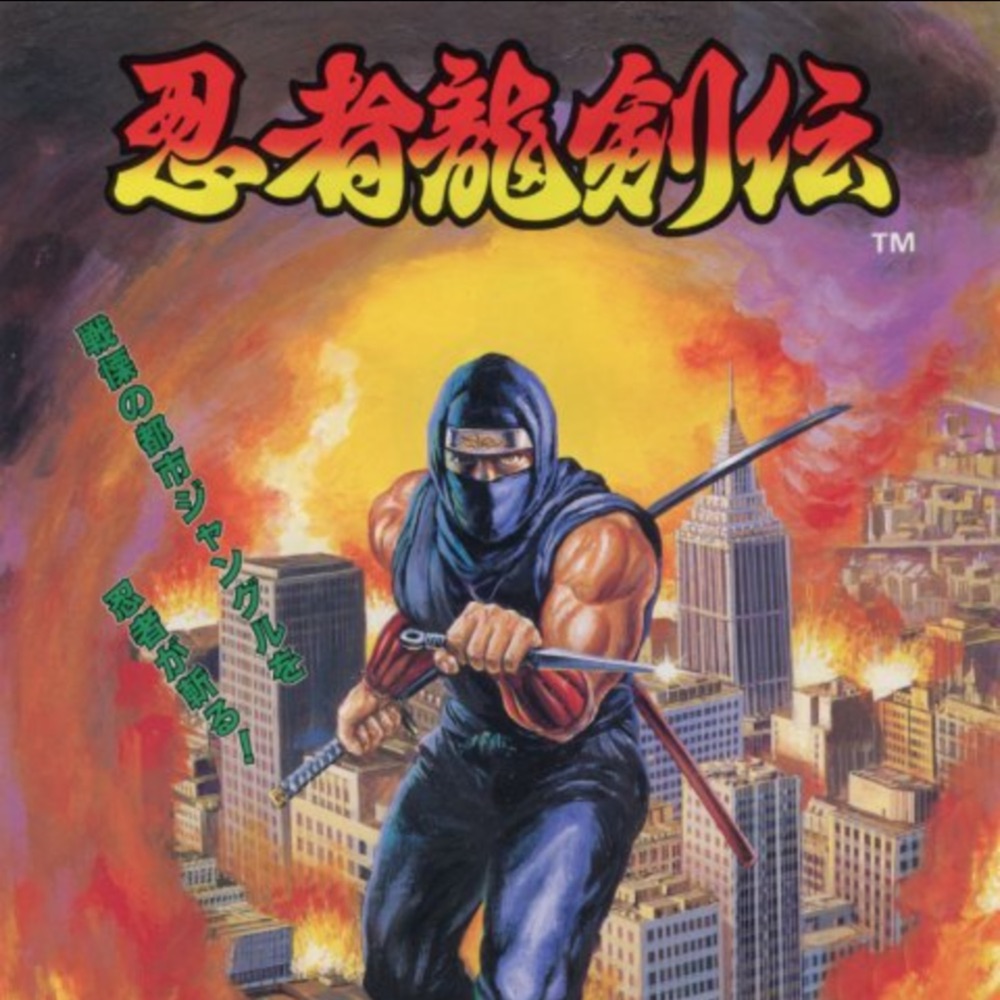
Our ranking of the ten best NES games of 1989, counted down from Gyruss to Ninja Gaiden, with the year's numbers and how each one did on the Essential Games List.
1989 in numbers, counting every NES game we covered that year.
The year in numbers
1989 was the year the NES had company. Nintendo released the Game Boy in North America on July 31, packed in with Tetris, and Sega's Genesis arrived on August 14 in New York and Los Angeles, with NEC's TurboGrafx-16 two weeks behind it. None of it slowed the NES, which was still the year's best-selling home system, and the biggest thing on its horizon was a game we could not play yet: Super Mario Bros. 3 had been out in Japan since October 1988, and The Wizard put it on movie screens that December, two months before it reached American stores.
For us it was a big year of 96 games, from Bomberman to Willow, which turned out to be our 250th episode. Twenty of them were sports games. Nintendo published seven of the year's games but developed only one of them, Tetris, a fact we found funnier than it probably is. Ninja Gaiden arrived in March, Nintendo and Tengen spent the spring fighting in court over who got to sell Tetris, and Batman opened in June, though the NES game would not reach American players until 1990.
It was also the year the Essential Games List changed shape. At the Best of 1989 episode we added Gun.Smoke and DuckTales, and took Kid Icarus, Bionic Commando, Operation Wolf and Baseball Stars off, so each is now a Play it. Ten 1989 games are on the list, and nine of them are in the top ten below. The tenth, Adventures of Lolo, is the one that just missed. Gyruss is the only game below that is not Essential.
The ten below are our favorites of the year, and this time the order came from the math rather than a fresh argument. Capcom developed three of them, Tecmo two, and Hudson Soft, Kemco, Bullet-Proof Software, Compile and Konami one apiece. They are counted down from number ten to number one, and every game links to the episode where we covered it.
Our top ten
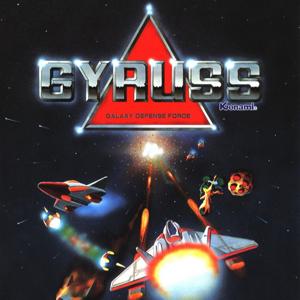
Gyruss
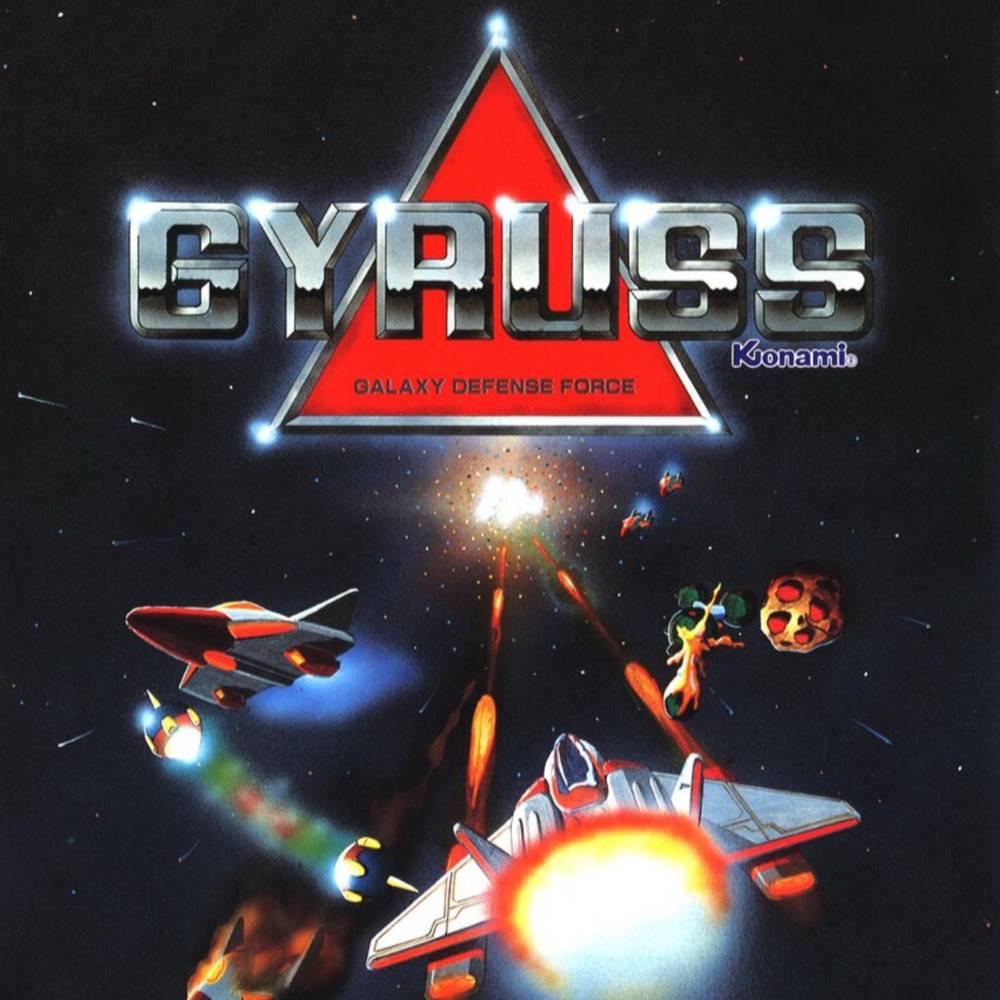
The arcade manual covers saving the solar system in one instruction: when the neo-revolutionary portrait of the savage Genghis Khan appears, press start. Khan, it turns out, was recruited from Mongolia centuries ago by alien "cosmic visigoths," and you are the lone space cowboy who escaped the "gyrus shroud of doom," crossing nine planets and 39 "zaptifying" stages to fight a sun we decided has a tummy ache. Our only quibble: 300 billion people counting on you in A.D. 2500 seems low for a galaxy that has solved space travel.
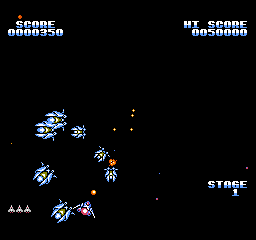
The hook is the circle. It is a shmup rolled into a cylinder: you orbit the rim of the screen and fire into the center, so you can never shoot across it, and enemies park in the middle and only turn dangerous on the way back out. Everyone preferred control scheme B, where left and right mean clockwise and counterclockwise, and we wished for an Arkanoid dial. Stages run about a minute and a half, so 39 of them never dragged. The boss fights and the B-button super blaster were added for the NES, making it the feature-complete version. The Toccata and Fugue in D minor at the start is an adrenaline kick, though Sam read a borrowed famous tune as a shortcut.
Power-ups are where it runs dry. The dual blaster felt like it did nothing. The multicolored background stars look like Pop-Tart sprinkles and hide enemy bullets, which drew the reply "just get good." Difficulty plateaus until after Saturn, where the dying finally started, and the content felt like 1986.
Mike voted it onto the Essential Games List, calling it arcade fun at its simplest, the nearest thing he could name to Balloon Fight, and better than the arcade original. Sam, Joe and Sean voted no, so it stays a Play it. Sam found it a little short on substance, Sean wanted more power-up variety and a harder game to match, and Joe, who struggles to vote for shmups, said he would reconsider for the best of 1989. At that point no 1989 game had made the list.
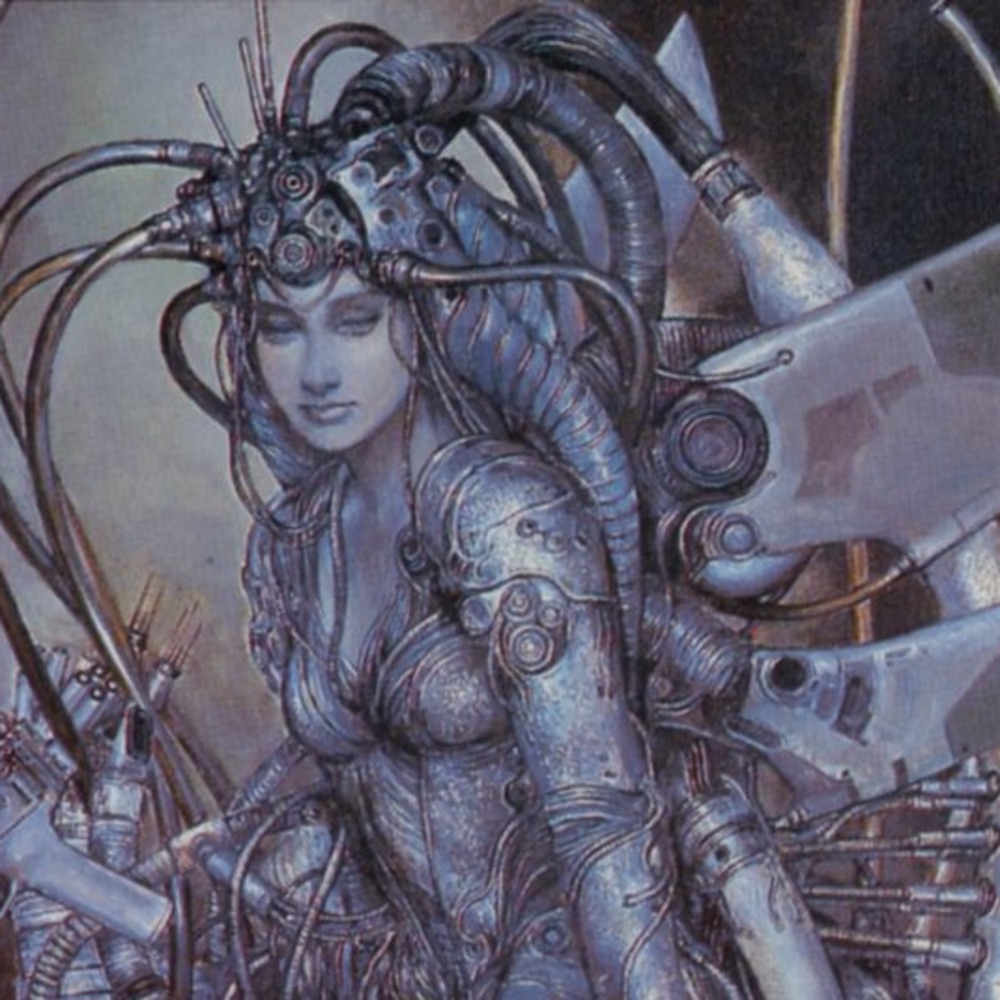
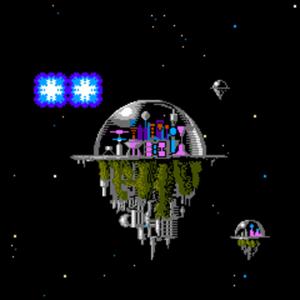
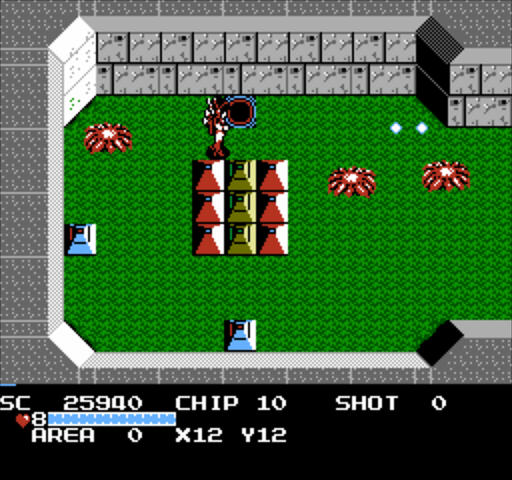
Joe nearly quit The Guardian Legend at the end of its first corridor, facing a boss with something like 17 eyes, because he assumed the whole game was a shmup. He had no idea a Zelda-and-Metroid style labyrinth was waiting behind it. Compile's trick is that you play a robot woman exploring that top-down labyrinth, and the shmup corridors, where she becomes a fighter ship, are how you travel between its areas. The title had us guessing sword and sorcery, but the job is stopping a planet loaded with strange life from reaching Earth. Other genre mashups we have played felt half-baked beside this one, and even the player who normally hates shmups looked forward to each corridor. Commercials sold it on Zelda, which spoils the surprise Joe got.
The labyrinth hallways look alike, and without the X and Y coordinates on the map we would have been lost. Shooting gray blocks to find power-ups or hidden holes felt like clearing a stage rather than exploring. Nobody finished, with Joe only about halfway, and without a password system it would have been dead on arrival. Still, every vote was yes. Length and repetition are real nitpicks, but nothing else on the NES mixes two genres this fully, and skipping it means missing something. Joe's wish to see it on the list started "almost at zero" and grew with every power-up.
What won us over was the arsenal. Twelve upgradeable sub weapons work in both modes and have real jobs: a ring that circles you and soaks up bullets, a beam sword, a Y-shaped spread that lets you dodge while still hitting a boss. None are required, so two players can end up with different builds. The story comes to you as you go, including a log from a previous Guardian along the lines of "I'm dead, but here's what to do". Beat it and you get a password of just three letters, TGL, which unlocks Corridor Rush, a shmup-only mode where weapons are earned by score.
Archon
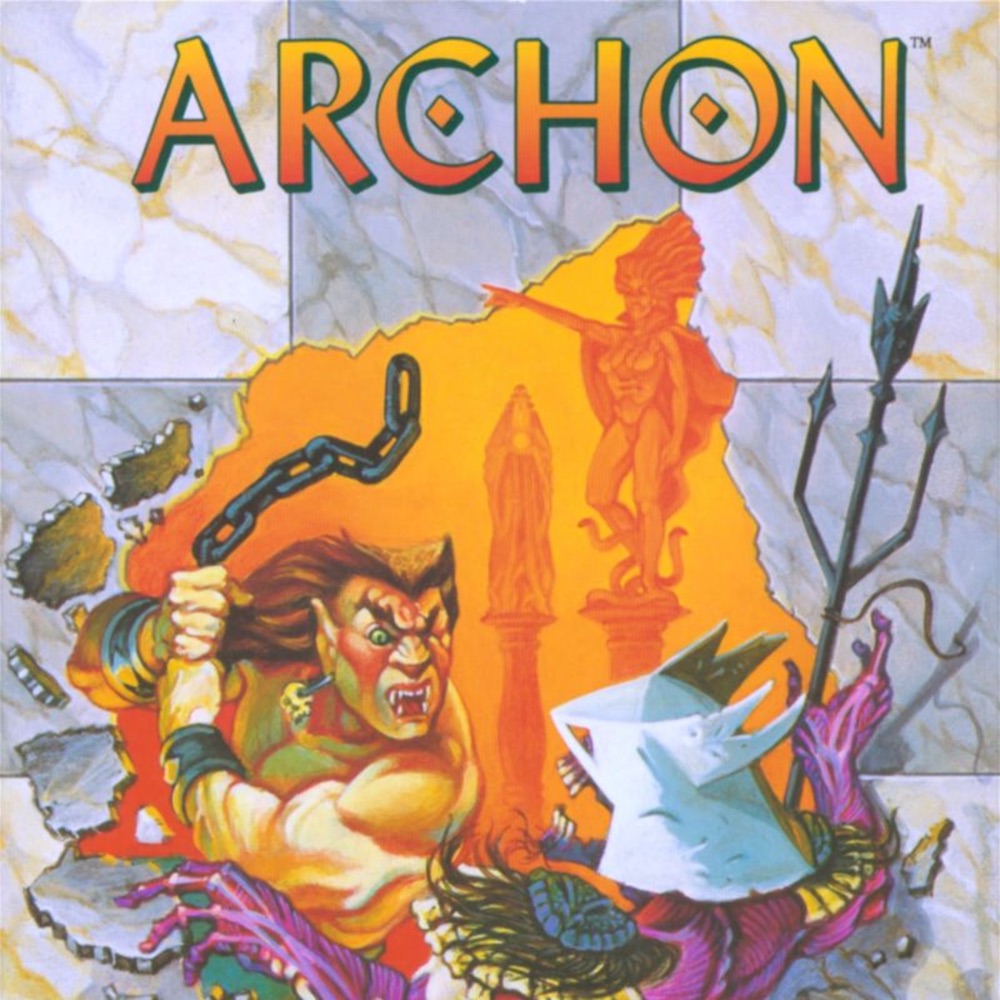
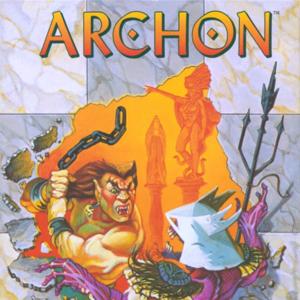
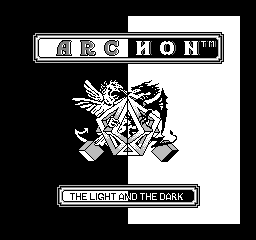
Our first match of Archon, played without reading the manual, was two sides walking pieces into each other until one ran out, and it felt pointless. Then we read about the five power point squares and the way the board cycles between light and dark, and it became an entirely different game. With 18 pieces a side on a 9x9 board, light squares favor the light side and dark squares the dark, and the power points cycle too, so a square you grabbed early can turn into a trap. You win by holding all five at once, wiping out the other side, or imprisoning the last piece. We likened that to a Quidditch snitch, and an argument followed.
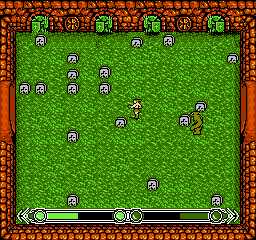
When two pieces meet they drop into a real-time duel in which each piece has its own health, shot speed and reload time, and a high chime tells you light has reloaded while a low one means dark has. Pawn upsets over big pieces were rare for us and felt wonderful. The wizard and sorceress carry spells that heal, revive, shift time or swap any two pieces, each usable once per game, and the exchange spell gave us our most planned-out turns. The votes diverged over those duels. Sean and Joe put Archon on the Essential Games List, which was enough: Sean called it unlike anything else, and Joe had expected chess with new rules and found something far more layered. Mike said he would have voted no, since the battles bored him and he could have a better time with chess. It was the first addition since Xanadu at episode 207.
The duels are plain and janky, with obstacles that bounce you around. The computer is merciless: the unicorn's shot is nearly undodgeable, a knight against a dragon on a dark square is mostly doomed, and there is no difficulty setting. The developers said in an interview that the computer versions ease up as a match drags on, which may explain a comeback or two. The NES port ends the game in a stalemate after 12 rounds without a fight.
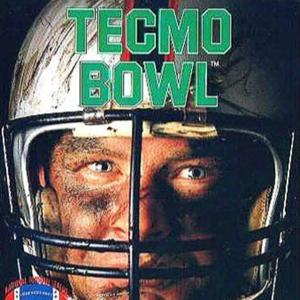
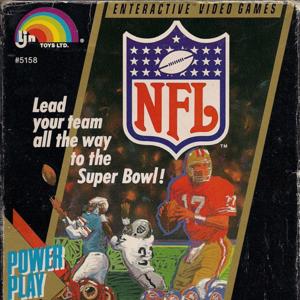
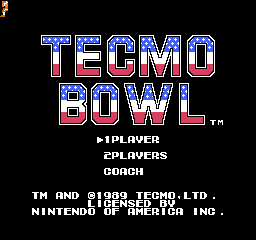
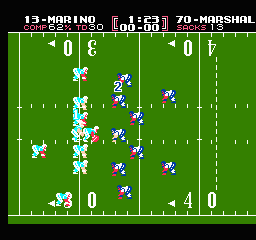
Kevin Mack of the Cleveland Browns was never a superstar, but in a couple of our matches he was the entire run game. We would charge him expecting the tackle fight where you mash A and instead go flying, as if he were a greased-up character from Family Guy. Underneath, every player has ratings the game never shows you, every team has its own playbook, and some kickers cannot make a 50-yard field goal even with a full meter. On top of that sits a four-way rock-paper-scissors: the offense picks one of four plays, the defense guesses which, and a right guess sends your computer teammates swarming for a sack or an interception. Quarters last a minute and a half, and the clock stops after every play.
It plays like an arcade game wearing football's rules. Tacklers fly through the air like NFL Blitz, and one halftime show had a cheerleader thrown skyward and then a hot air balloon. That was the argument for the third yes, from Mike: it may not be a sports game at all. Joe voted no and agonized over it: the best sports game we have played so far, he thought, but a niche for retro football fans. Sean voted yes as a symbolic vote, waiving what he called the sports game edict, and Sam called it perfect for what it is trying to accomplish. It was the first Essential game of 1989.
Defense is where it frays. You control one of eleven players and can only switch before the snap, so Sam never knew when to switch, and on offense, juggling the quarterback and the arrow that picks the receiver left us throwing interceptions. Turnovers kept scores around 17 to 10. There are no penalties, which we decided was a kindness, since a false start you did not cause would make us tear our hair out. Tecmo held the Players Association license but not the NFL's, so there are no team names and no Bills, which Sean took personally. We never went looking for Bo Jackson, which the episode ended up regretting a little.
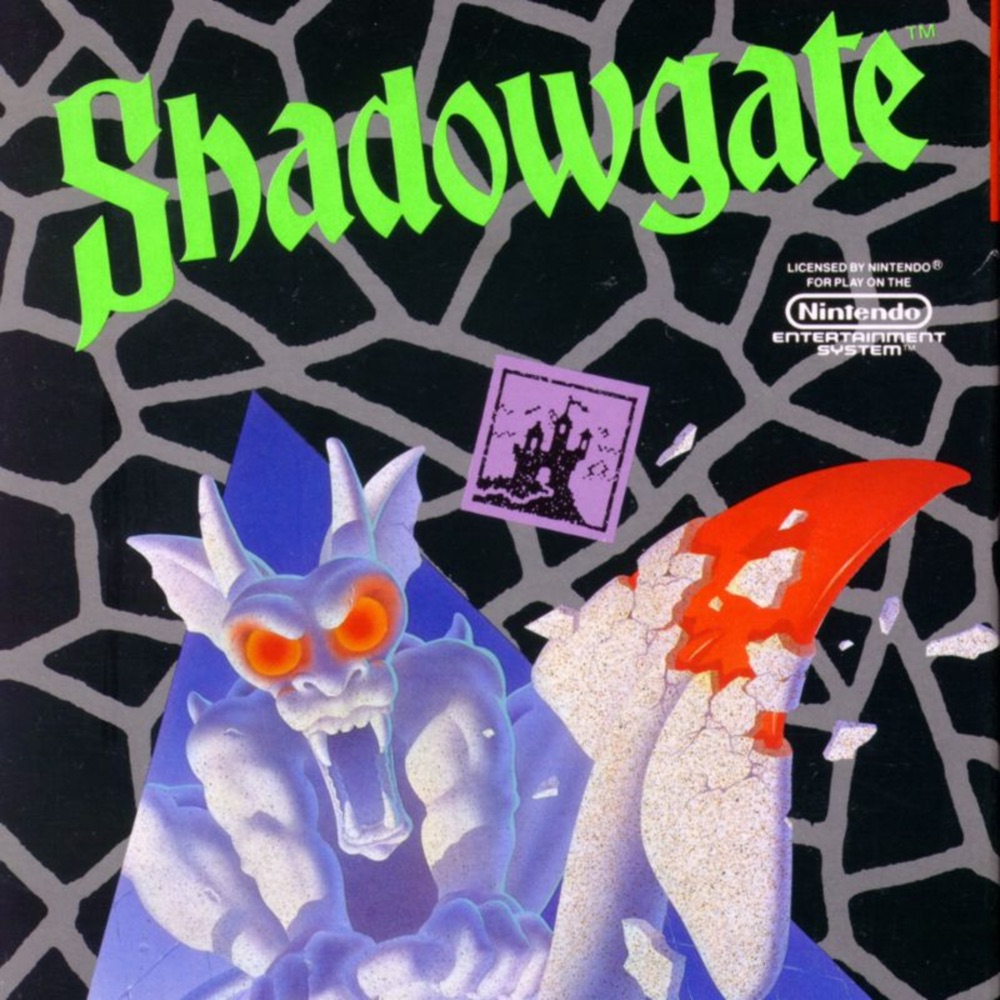
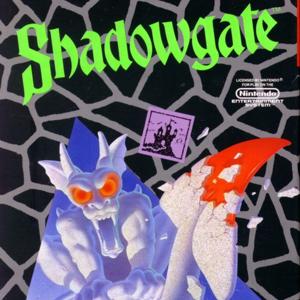
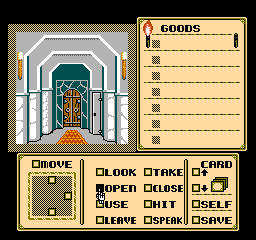
Pick up the gold pot at the lookout and Shadowgate tells you that you have fallen for the oldest trick in the book, and that the alligators really enjoy your company. You explore a warlock lord's castle in first person by picking a verb and an object, and the game reads you what happens next, like a choose-your-own-adventure book. Nothing relies on reflexes and there is no combat screen, which spares it a half-baked battle system. We argued over whether it is a precursor to escape rooms or just a point-and-click adventure.
Death costs one screen and no items, so we kept dying creatively. Take the book in the second room and you are dead. Step on the green tomb slime and the Grim Reaper shows up. The best puzzle is the frozen orb: freeze the lake to get past the shark, then later melt the ice with a lit torch to get the orb back for the scorching floor room. It is what you would try in real life. The sphinx's riddles depend on items you might have grabbed, which gives the junk in your inventory a reason to exist.
The torch is the least creative way to go. It burns down as you play and you die when it goes out, but with only a one-screen setback it never creates urgency. Some hints come from nowhere: the key hides in a skull, the waterfall passage never shows on the mini map, and the lit torch on screen can be selected, which sent us to a guide. The NES-only hint "don't forget you can set things on fire" is blunt.
Still, the item, use, target interface felt tedious for a few minutes, then vanished. Sean put it on the Essential Games List as a tentative yes, unsure because the other versions are probably better. Joe voted yes and said he would never take it off, since better point-and-click games existing does not stop this from being a fantastic one. Mike held back and called it a Play it for NES fans, since a mouse and keyboard suit it better.
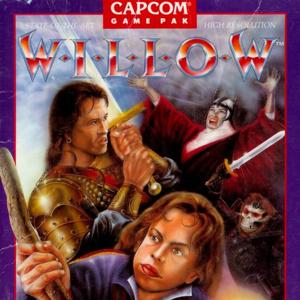
Willow
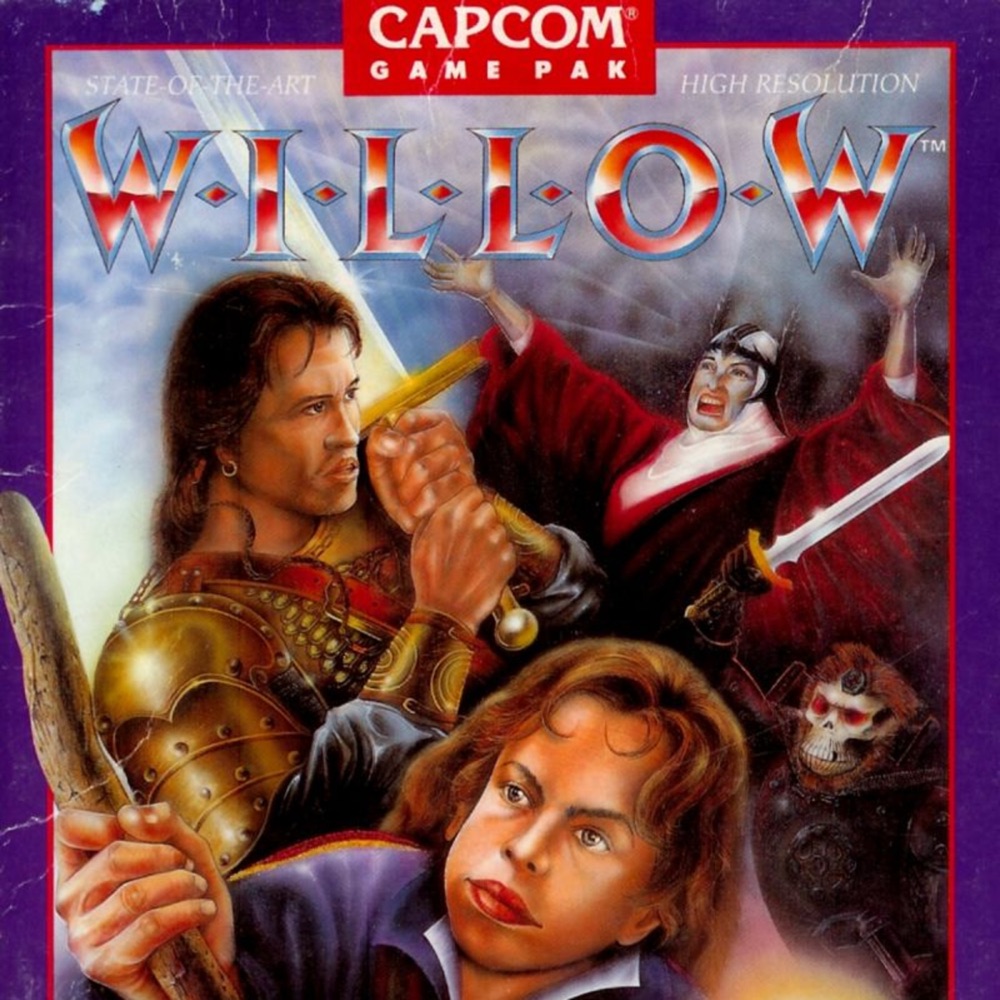
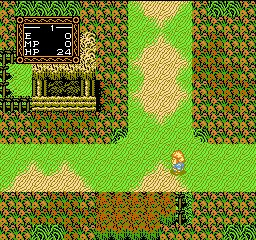
Adventure games on this show usually end with us hunting for a guide. Willow was the first long one where we barely wanted one. Townspeople tell you where to go next, and the next town is only three or four screens away, like walking from Pallet Town to Viridian. Talking to anyone snaps you into a pane with room for full paragraphs, where Zelda II and Castlevania II squeezed their hints into about seven words. Nearly every character you meet returns near the end. The film is about escorting a baby. The game has no baby, and its quests never happen in the movie, which we decided was a point in its favor.
Combat carries everything, since there are no puzzles. Heavier swords swing slower, and the shield works only while you are not attacking, so you wait out projectiles, then go in. Magic is the inventive part: a ring of fire you stand inside, a wind spell that hits every direction, and a late lightning bolt at 20 MP that mows down what used to give us trouble. The fire spell shows up right after the bat cave where you needed it most. Dying costs the experience since your last level and sends you back to the last town or healing spot with your items, so we died about as often as in a modern game and never felt cheated. Willow looks like a Super NES sprite, and his orange hair is clearer than Link's pink ever got.
It stumbles late. An old man gives you nothing until you talk to a second person much farther along, and the final boss demands a grind. Battle music is the overworld theme sped up, dungeons share one tune, and the password is 18 digits. At about five hours if you know what you are doing, none of it wore out its welcome.
The vote split. Sean said no: for all our praise, it is derivative at its core. Joe said yes and was smitten, calling it the epic adventure he is always after. Mike, holding the swing vote, switched to yes, because Willow is a complete package that gets everything it sets out to do right, even if that is simple. It went onto the Essential Games List.
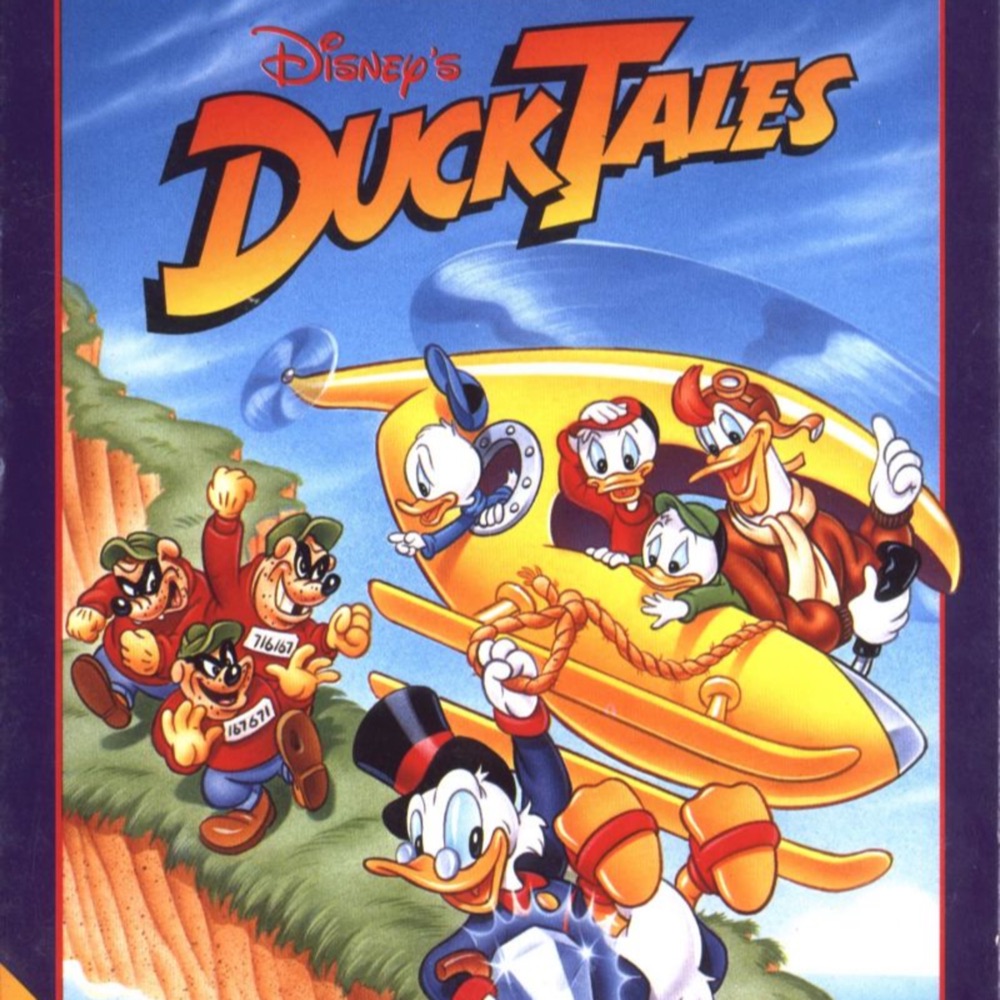
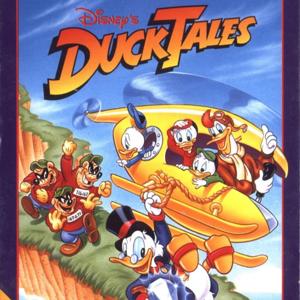
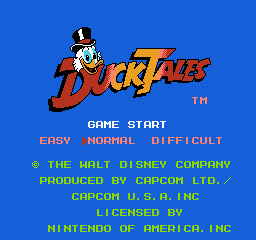
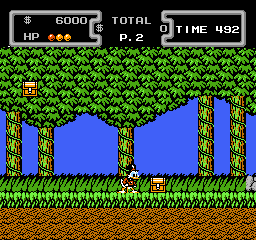
Cover the dollar sign and the score is a number nobody reads. Leave it on, and seven million suddenly feels like a fortune. That small trick had us digging through levels we would normally sprint across, hunting money for a duck whose only motive is out-earning Glumgold across five treasures. Finish with more than $10 million for an ending where Scrooge wears a crown, or with $0 for a joke ending headlined "Scrooge loses fortune but finds treasures." Capcom put much of the Mega Man team on it, so this was never a throwaway license, and the Mega Man-style select screen lets you take the Amazon, Transylvania, the African Mines, the Himalayas or the moon in any order. Our familiarity with the cartoon ranged from little to none, and it did not matter.
The cane is the other reason. Scrooge pogo-bounces by holding down while jumping, and golf-swings anything he can push up against. It felt clunky for a few minutes, then became how we got around. The pogo is speed and the golf swing is a chance to slow down and think, and a plain cane whack would have spoiled the balance. The Himalayas take the pogo away by sinking you in snow, and a rescued nephew even tells you where the secret wall is, fixing something we have complained about in other games.
We wanted more from the middle and the end. The toll gate, the rope duck and the wall-blasting gadget each appear in one stage and never return. After five treasures the finale is Transylvania a third time with a Dracula duck at the end. He is not named Quackula, which disappointed us. It felt like a level six, and the game ends just as you get going.
The vote split. Sean voted yes: only good games get to have missed opportunities, and it is not always challenging but always fun. Joe called it a definite essential NES game but was unsure it is essential today, since its ideas never deepen the way they do in Mario or Mega Man. Mike voted no so we could finish 1989 first, rather than add it and make it harder to remove. It stayed off that day and was added in the Best of 1989.
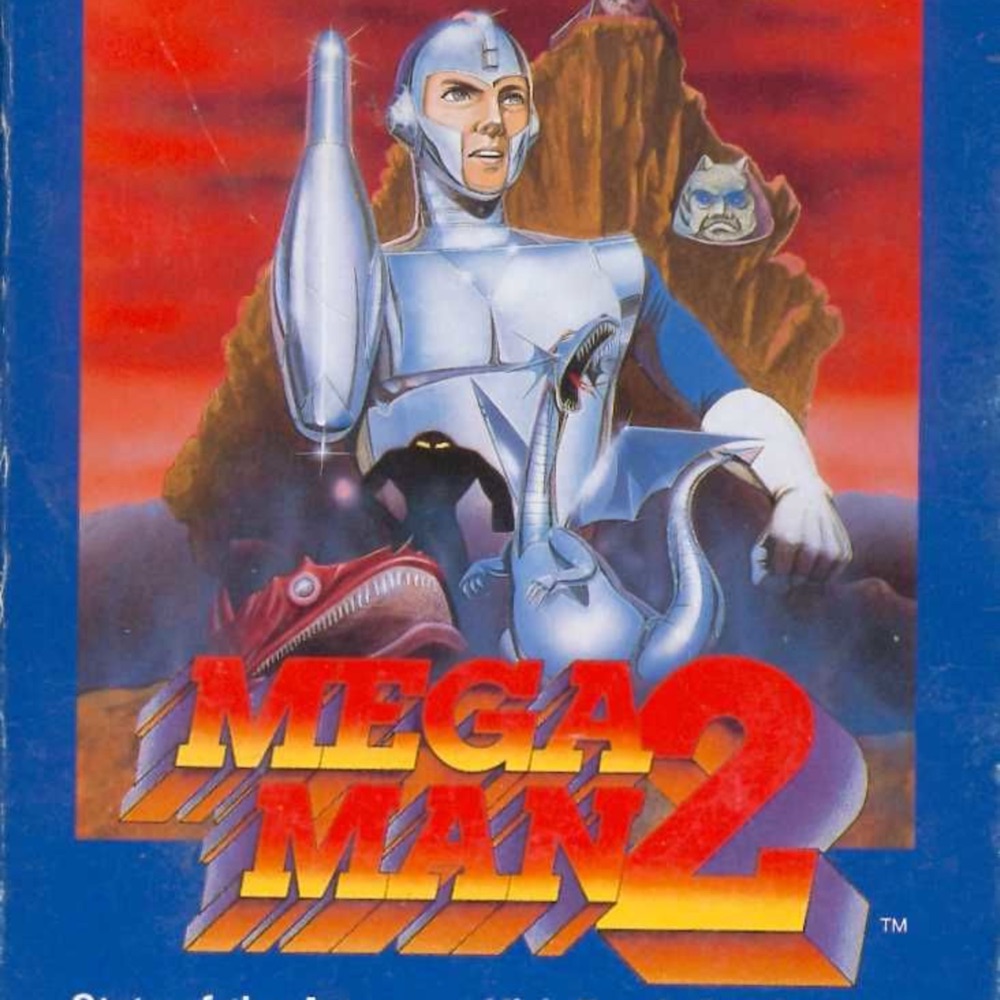
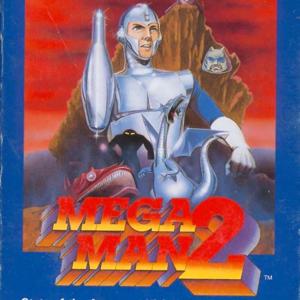
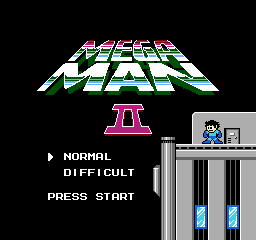
Capcom reportedly told the team that, with sales of the first game abysmal, they could make Mega Man 2 on their own time. As we heard it, they did, using assets cut from Mega Man 1. The big sequels we had covered, Super Mario Bros. 2, Castlevania II and Zelda II, changed the formula wholesale, and we expected nothing of the kind here. Mega Man 2 plays like Mega Man again, only repaired. The soft-lock is gone, so you cannot miss an item and have to restart, and we died less to knockback tangled up with platforming. The English release adds a mode labeled Normal, which is the easy one, with the original relabeled Difficult. We joked that Capcom did not trust us, but it let us learn the levels and then step up.
The stages finally fit their bosses. Bubble Man opens on a waterfall and then you swim. Quick Man's lasers are the best match of theme and design, and cost us six or seven tries. Flash Man freezes time, and the leaf shield wraps around you before flying off in a direction you choose, which made it a favorite.
Switching weapons means pausing, so we kept using the plain buster. The second half is six Wily stages and a rematch with all eight Robot Masters, and the Mecha Dragon and the Bulldozer guy look good enough to pass for Super Nintendo sprites. The Crash Bomber turret fight and the final fight can leave you with no ammo and no way to get more, which means restarting the stage. Then Wily turns into an alien, and only the bubble weapon hurts him, while everything else heals him to full. We could not agree whether that is hilarious or one of the biggest mistakes in game design.
We all voted it onto the Essential Games List. Joe's case was that it improves on Mega Man 1 without replacing it, so both belong. Mike was less sure about the original, whose spot he said we would revisit at the Best of 1989 ("you might be next, kid"). He also decided Mega Man 2 is not NES hard: play a level a few times and you have it, with enough health and that easy mode to cushion the learning. It took about 90 minutes of talking to get there.
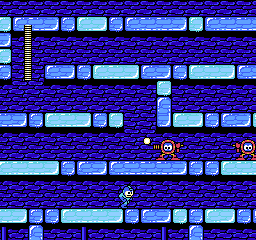
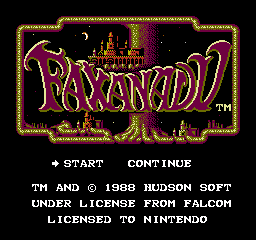
Faxanadu

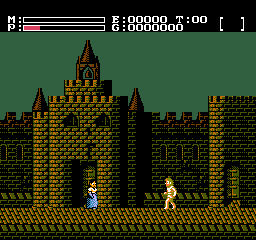
Nine hours in one sitting changed what we thought of Faxanadu's sword. At first everything felt stiff and sticky: the swing, the jump, the knockback. By hour two it was fencing, a negotiation over distance in which every hit shoves the enemy back just as theirs shoves you. Hudson Soft made it, Nintendo published it in August 1989, and the name is Famicom plus Xanadu, the Dragon Slayer spinoff it grew out of. We opened the episode arguing over Fuzanadu. Faxanadu won, on our podcast at least. No two screens repeat, and even the annoying bumblebees never felt cheap.
What really separates it is that everything happens on one giant world tree. Towns sit at its base, mist hangs higher up, and a burning region marks where a meteor hit, all in one continuous side-scroll, unlike Zelda II's separate top-down map. The first town teaches by refusing: you press Up to enter doors, the king won't see you without the elf's ring, and if you wander the wrong way an enemy kills you before you own a weapon, which reminded us of Bloodborne's opening. The mood carries through a restrained palette, a haunted mist town, villagers who look miserable and blink constantly, and a smoking shopkeeper who looks like Bill Murray.
Jack and Queen keys are cheap, and doors lock again when you leave, so they add backtracking and no challenge. Spells only damage enemies, inventory caps at seven items, and five potions means five trips through the shop dialogue. The strangest flaw sits in an optional tower: a bug turns its pendant into a penalty that halves your power, and we wondered whether the bug accidentally made the game friendlier. Dying costs some gold and a trip back to your last guru, who reads your password aloud as a pile of letters. Apparently the internet mocks that. We liked it.
Two yeses put it on the Essential Games List and the third came anyway: all voted it in. Sean said he had more fun than he did with Zelda II and found it prettier and more coherent. Joe compared it to picking up The Witcher, a game he is eager to return to each day, and said it scratched the JRPG itch better than Dragon Warrior had. The combat repeats, but this is a tight adventure that stands on its own.
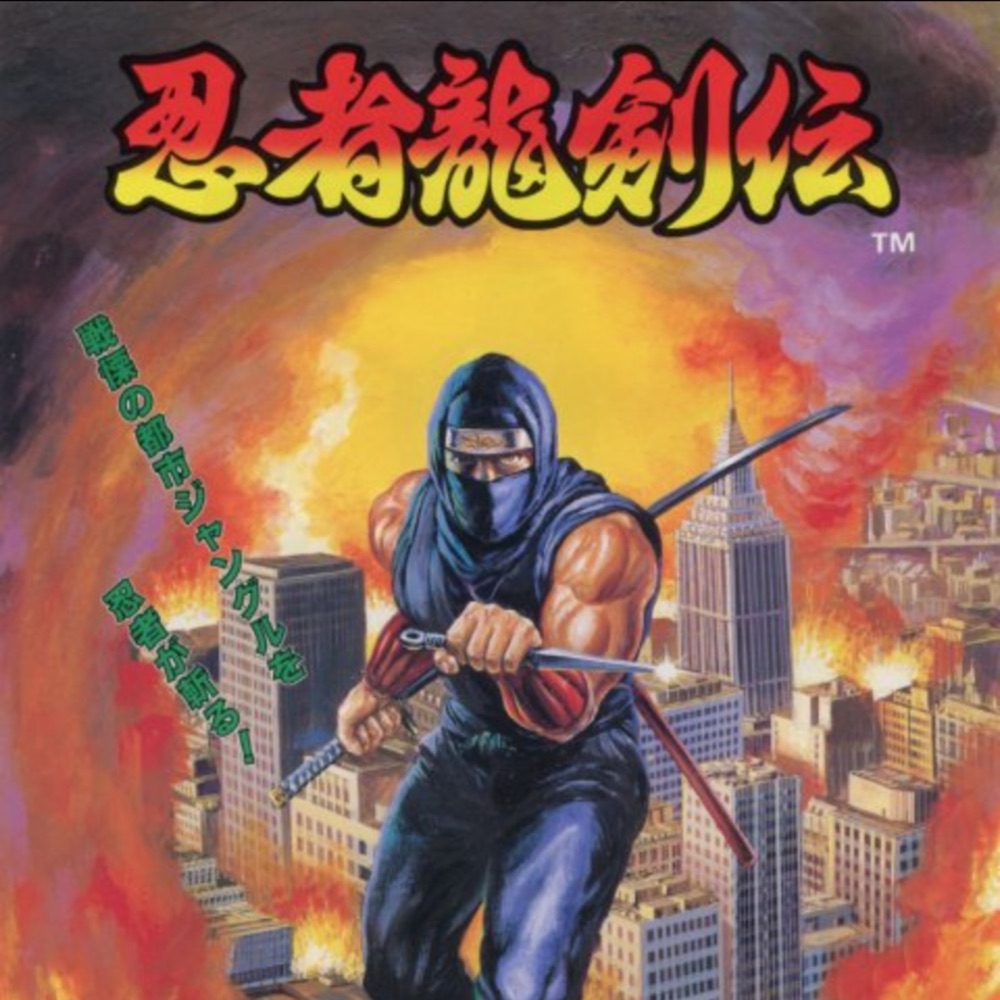
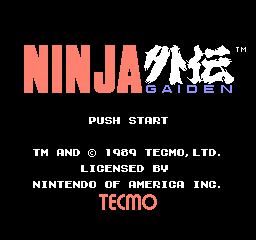
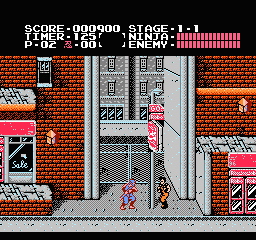
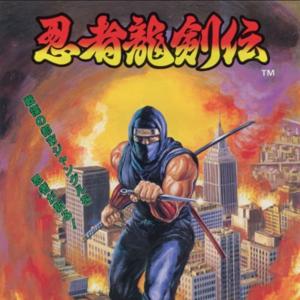
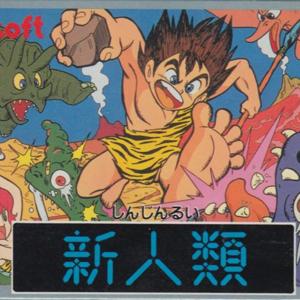
Our listeners warned us about the birds on Twitter, and we shrugged until around act four, when they got loose. The hardest enemy in Ninja Gaiden is a normal bird: it swoops in mid-jump, the knockback drops you into a pit, and kill one without moving an inch and another appears in the same spot. Act five, stage two puts a wall over the landing ledge with a bird waiting, and act six is a three-boss rush with health restored only before the first, and dying sends you back to the start of the act. The masked devil can't be hurt, since you hit an orb on the wall while fireballs follow you. The developers reportedly called the restart an accident, then kept it.
And we kept restarting it. After years of hearing about the Xbox reboots we had braced for one-hit deaths, but starting over felt like returning to World 1-1. Part of the pull is Tecmo Theater, Tecmo's name for its cutscenes. There are over 20 minutes of them and they felt like a reward. The six acts play like 30-minute anime episodes: a ninja in full gear sitting in a CIA office, a mysterious woman, a father who turns out to be the masked devil, and a wide shot of a mountain in the Amazon that felt cinematic. Enemies include football players, boxers and a ghoul priest, which we agreed is normal in that area of America.
Ryu feels good, his legs running like Naruto's while his upper body stays put. Wall-jumping takes real effort, and the short sword forces you uncomfortably close. The Castlevania resemblance is obvious, down to the UI, the bats and the hunched guys who spring to life, but the movement is better. Power-ups run on spirit points, so shurikens and a boomerang-like super shuriken feel stronger for running out.
Mike and Sean recorded the episode, the other votes were taped separately, and all voted it onto the Essential Games List. Sean said the presentation carries most of the experience, and a game that frustrates him yet still delivers the enjoyment he craves is rare. A taped vote called it possibly the most polished and most ambitious game we had seen. It was still unbeaten when the episode ended, and we planned to go back.