206 · Dragon Warrior
Once upon a time, the Balls of Light illuminated the kingdom of Alefgard, keeping its winters short and sustaining its peace. However, a man who could tame dragons and hence known as a Dragonlord, became corrupted by his magical studies. He attacked the Tantegel Castle and stole the Balls of Light, causing monsters to roam the land. A valiant hero named Erdrick, who had obtained the Balls of Light for the kingdom in the first place, attempted to defeat the Dragonlord and disappeared without trace. Many years later, during the reign of King Lorik XVI, the Dragonlord abducted Princess Gwaelin, carrying her to Castle Charlock. One day, a knight appears in front of the king, claiming to the be the descendant of Erdrick. He is entrusted with the mission to vanquish the Dragonlord, as the prophet Mahetta has predicted.
SHOW NOTES
Dragon Warrior Longplay
Dragon Warrior on MSX
Dragon Warrior on Gameboy Color
Dragon Warrior on SNES
Akira Toriyama
Alternate Endings of Dragon Warrior
Dragon Quest Builders
Chunsoft made this and Nintendo published it in 1989. It is the first JRPG we have reached on the NES, and the back of the box calls it "the epic beginning of a new era in video games." We decided that isn't too much hyperbole. We admired it more than we enjoyed it.
What works
- A world you can wander. Nothing tells you where to go next. You can cross the bridge to another continent or poke into a cave, and you decide when you're ready to move on. Progress is gated by level, not story.
- Gear beats levels. Prices climb fast enough that you have to risk tougher areas for more gold. Swapping a club for a sword felt bigger than going from level four to five.
- Towns worth revisiting. Not every town sells the same things, and a girl in the grass tells you she is not the princess.
- The bad ending. The Dragon Lord offers to rule the world with you. Say yes twice and the text turns red, he laughs, and you have to reset the console. It was spooky, like a creepypasta.
What doesn't
- The grind. The manual tells you to grind, and each new area asks for two or three more levels. It plays like an idle clicker.
- One-on-one battles. Attack, magic, run or item, a race to zero. There is no party, no vehicle, and new enemies are sometimes just a new color of the old one.
- Random encounters. Three steps, one step, or halfway across a continent without a fight.
- Dungeons. They split us. A torch shows one tile in every direction, which made them mazes to map in your head. They were also a nice break from the tedium.
- The menus. You pick a command to climb the stairs you are standing on. What else are you going to do to the stairs?
Worth knowing
The first four letters of your name affect how your stats grow, so TEST in capitals gives the best start.
The Game Boy Color version adds quick saves, drops the stairs menu, and doubles experience and gold. The Super Famicom version has redrawn 16-bit art and is the definitive way to play, but it needs a fan translation.
The bottom line
Play it. We called it not essential. Sean appreciated seeing the start of the modern JRPG, but didn't have much fun, and with so many remakes around he couldn't put it on for posterity. Joe had a good time through rose-colored glasses: essential if you have just played the first 205 NES games and want more, but for anyone else most JRPGs are more accessible. Historical importance isn't what the list is built on.
Written from our conversation in this episode.
- The epic beginning of a new era in video games
- NES Longplay
- Introductions
- JRPGs are finally here
- Any familiarity with Dragon Quest?
- For our generation, Pokemon was in a weird way, the introduction of turn based battles and JRPG tropes. I would never call Pokemon a JRPG, but it is the gateway. DQ is not quite the gateway, it’s the beginner’s book. It creates a lot of the JRPG mechanics still around today and lays down the basic concepts of turn based battles, leveling, grinding, saving, magic, and exploring a large map
- Overview
- In this turn based JRPG you play as the hero who must travel throughout the world to rescue the princess Gwaelin and defeat the Dragonlord evil. Along the way you’ll complete quests, fight enemies in random encounters, and gain experience to level up.
- Gameplay
- Exploration - Does this have the Legend of Zelda Moment? Does the scale impress you? Forget about the actual contents of the game, does it feel like a game where anything could happen next?
- Overworld
- Size
- Types of environments
- Dungeons
- commands to climb stairs and open chests
- Caves are dark, and must be lit up with a torch or Radiant spell
- Wings to fly back to Tangiel
- Overworld
- Combat - TURN BASED ACTION thoughts in all JRPGs?
- let’s really break down the battle system
- 1-on-1 battles always
- Attacks/Magic/Run
- Very little variety outside of discovering a new enemy once in a while
- Could there have been different types of attacks?
- Spells - https://strategywiki.org/wiki/Dragon_Warrior/Spells
- Leveling Up
- Based on your name
- The reward between levels feels small most of the time outside of the spells. I’d argue they could’ve done less levels, but make the strength more noticeable
- It’s really hard to catch up with the new places you go to. It’s not a level jump from lvl 5 to lvl 6. It’s often 2-3 levels per area.
- Story/Progress
- Receiving quests and hints. Arguably the easiest it’s ever been to figure out where to go next
- Buying equipment
- I really like how you don’t just move town to town, even the shops have items that you could grind for days to get now or realize you need to come back later.
- Acquired weapons, armor and shields will automatically replace the previous item,
- Optional Quests
- Erdrick’s Armor
- Fighter’s Ring (which does nothing)
- Saving the princess (also entirely optional)
- Fairy Water
- One door opens into a treasure room, where the guard inside will admonish you for taking what isn't yours. All that you will find is barely enough gold to make up for the cost of the key that you just used.
- Using the Nintendo Power Guide
- Only 1 save location
- Did you save it all for the end?
- Was there anything you expected that didn’t show up?
- Exploration - Does this have the Legend of Zelda Moment? Does the scale impress you? Forget about the actual contents of the game, does it feel like a game where anything could happen next?
- Ending note
- It is actually possible to complete the game without saving Princess Gwaelin as it is not necessary to fight the Dragon within the cave in order to receive the three sage's items. The Ending will not have her included as a result.
- Akira Toriyama
- Always mentioned in relation to Dragon Ball and Dragon Quest, yet I almost left him out of the show notes
- Sequels and Spinoffs
- Dragon Warrior will return to the podcast for 3 more sequels
- But I want to talk briefly about the best way to play Dragon Warrior today
- MSX Version
- Game Boy Color Version
- quicksave the game anytime outside a battle.
- store gold
- The menu was streamlined
- monsters yield more experience and gold, saving time.
- Super Famicom Version
- Better graphics and sound + all GBC upgrades
- Mobile has updated graphics
- Switch has the original games
- In 2016, the spinoff Dragon Quest Builders was released as an alternate sequel to the first game. The story is set after the "bad ending" of the first game, where the Hero accepts the Dragonlord's offer to join him and rule half of the world.
- EGL
- Clearly lays down the groundwork for so many RPGs to come, but time has not been kind to the concept. I will be shocked if the other DQ NES games don’t prove to be more worthy of consideration.
- Next week - Faxanadu
Auto-generated transcript. Each paragraph starts with its timestamp. Speakers are not identified.
Dragon Warrior, the epic beginning of a new era in video games.
And welcome to NEStalgia, a chronological exploration of every NES game released in North America. I'm Mike. I'm Sean. And I'm Joe. You know, the epic beginning of a new era in video games is a pretty ballsy take for anybody. But JRPGs are a huge part of the, you know, video game atmosphere and it's still around today and everything. And this is the first one we've been talking about Dragon Warrior for a long time on the show, just like the build up to it and how excited we are to play a JRPG on the NES.
And I think that's, maybe the epic beginning of a new era in video games isn't too much hyperbole here. I was gonna ask, like, is, so that was on the original box? Like that's not a reissue or something that's been said recently? That was just when this came out? That is the big bold letters on the back of the box. Incredible. Wow. Yeah, a lot of foresight there.
I would say it's a, I would just say it's kind of, you know, like narcissistic, but you know, maybe that too. I think at this point though, because of the way, you know, it was going in Japan with releases, I don't even know what Dragon Quest game they were up to in on the Famicom by now. But it was already like such a big deal in Japan that they even had like people taking the day off to play the new Dragon Quest game. So maybe they thought like the success of Super Mario Brothers doing so well in Japan and then also doing so well in North America was like going to happen again for Dragon Quest to Dragon Warrior. Yeah, I can see that.
RPG like sprawling world adventure. But it's not exactly like fully there. So I think it is a, you know, it is an interesting thing to look back on where they're saying like, this is the beginning of a new era. And then like it almost, it almost coincidentally became the beginning of a new era.
Yeah, I think like, you know, for our generation guys, like, you know, Pokemon Red and Blue in a really weird way was the introduction to our generation of like turn-based battles. Not necessarily JRPGs. JRPGs. I wouldn't even call Pokemon a JRPG. But like some tropes of that, of the video game mechanics and definitely, you know, turn-based battles and that idea. But, you know, that was like the gateway to like, okay, well, I played Pokemon Red and then like, you know, you might discover Final Fantasy as a result of that or other, you know, Nintendo-related RPG style games.
Dragon Quest is not quite the gateway. It's actually like the beginner's book, you know, it just creates a lot of these JRPG mechanics for the very first time. And they're still around today. And yeah, they are basic concepts that now like every game just like, it's not even something you think about putting in. You just put it in because that's how the battle systems and the world mechanics are designed. But, you know, you've got turn-based battles, leveling up, you know, the idea and thought of grinding, being able to save your progress, using magic, exploring a large map.
Joe, you kind of said that, you know, we did see this with even just like Ultima, right? Like that was a Western version of an RPG, but it's not the first time we're seeing this stuff. I think it's just important to note that like Dragon Warrior is doing it in a way where it's, you know, so basic that it actually allows anybody to get in and figure it all out, right? It's not as complex.
Definitely, definitely. And also just something about this, I mean, looking at it from, you know, from the present day perspective, this does feel more like what I'm used to in a JRPG than Ultima Exodus did. Oh, yeah. I mean, this is a very comfortable game for me. Like it's a lot of the same concepts that I grew up on and you can tell that like not much has really changed here in terms of basic JRPG design. But in terms of Ultima, like that sort of felt like this really weird, like bizarro game where there were some aspects that I recognized, but they were all sort of like through this weird filter of not quite D&D, not quite JRPG.
Whereas this is like a very clear lineage to where I started playing these kinds of games. Yeah, yeah. It feels like it's much more refined in that sense, whereas Ultima felt like it was like not. It was something. Like they didn't understand how to make it, you know, like they understand what they wanted. They didn't understand how it would best work on a video game console.
Yeah. Yeah, you could say that this streamlines a lot of adventure aspects that you would find in even tabletop gaming. And, you know, some people would say that some of the features in this game now are, you know, even obtuse for the time. Like being able to have like an action command for stairs so that you go down the stairs or not just pressing the A button for the treasure chest. Like you actually have to say take. These are things that like it's both establishing these ideas and concepts, but also taking a step back from modern – not modern games, but modern games of that time in 1989. Like things that we're more familiar with in other games that aren't RPGs.
Yeah, I'm not really sure if I would consider that like a breakthrough or something to build upon, but I'm sure we'll get into that. Well, you're talking about the command menu still? Yes. Yeah. I mean, it is like – I'm trying to remember exactly how Ultima worked, not to keep comparing it to Ultima, but like it is like a refinement in the sense that like the things you can do are much less. And like, yeah, it's just really weird that you have to select the stairs command to walk upstairs that you're already standing on. Like what else are you going to do to the stairs?
But at least it never got like so complicated where I was like – where I was thinking, so what do I do with this? It was always just like one extra step than what I'm used to to interact with anything. But would either of you be able to pretend for a minute that you didn't play the game, right, or that you aren't familiar with, you know, let's say 20 to 30 years of various JRPG knowledge? If you just like came into the world of Dragon Warrior, maybe peruse the manual a little bit but didn't like sit down with it as a guidebook. When you start up this game and you're given the assignment and you're locked in that room and there's the three treasure chests, right?
The idea of like how the game presents the information to you, you know, we're talking about like Legend of Zelda and how they let you go without the sword, right? Like it's up to you to go into that very obvious cave and collect the sword.
I'd argue that Dragon Warrior kind of does the same thing with the idea that nobody has ever done this before. So we need to kind of like show them without directly saying like, hey, you know, there's a key in this door and you can, you know, press the take button and then press the door button. You know, like they just – they let you figure these things out this way. You understand how the mechanics work. But even just like random encounters isn't something that like there's no tutorial. There's no spelling it out for you. You just find out like, oh, I got to battle to grind, to level up, to get stronger, to battle other enemies.
You know, what do you think about that introduction? Yeah, I think it does do some of the same things. But in some cases it almost does like the opposite where Legend of Zelda puts you on that first screen and expects that the player will just be curious enough to explore and find these things that teach them. Whereas Dragon Warrior locks you in a room until you do these couple of tasks that will teach you how to do those tasks throughout the rest of the game. So it's like a little bit of a different mindset. That's the complete opposite. Like that is – you have to cross this threshold whereas like something like Zelda will let you figure it out on your own.
Where this one – it's quite literally a gate that you have to unlock. Yeah. Well, exactly. But I was going to say that the – to address what you were saying, Mike, about the random encounters, that's where I do feel like it feels a little more Zelda-like where like that is just like you'll just learn.
I mean I guess you'll also still in that case now that I think about it have no choice but to kind of figure it out in that battle or die as serious as that sounds. But yeah, you'll just decide like okay, well I guess I'll attack and you'll see that you do damage and it'll just teach you rather than like it literally teaching you. Yeah, and you can go as far as you really want to in the opening map, much to your own peril of course.
But if you don't even choose to just like stay near the castle and just fight the nearby enemies, there's a lot – I mean yes, some of it's locked off. But there's a lot of places you can cross the bridge all the way to the other continent. You can go all the way up to the northwest and go to the other town up there in the desert. You can explore a cave.
Like there's nothing that says exactly what you need to do next. It's up to you to talk to the NPCs and get the clues. And yes, they're not like riddles or anything. They are kind of hitting you over the head with where to – even just like what direction to walk in. But I think there's something to that too, comparing it again to Legend of Zelda, just like the scale of the game impressed me because it wasn't just like go to this town, do this thing, go to the next town.
Like a lot of it was spent trying to figure out like when is it time to move on? When do I feel comfortable moving on? Should I grind to gain a bunch of gold to buy this sword or am I comfortable with my club? Like can I move on without it? Yeah, because I think a lot of games that we're used to in this like JRPG setting, like they're all sort of story gates.
Like you're supposed to hit this part of the story and then do this thing, whereas this very much is just level gated. Like you have to grind and grind and grind and it doesn't matter who you talk to. I mean you should be talking to people to get an idea of where key items are. But where you should be is entirely just based on what level you're at. And so there isn't that information of like, okay, I hit this story beat. So now it's time to go to this island or this dungeon.
You just sort of have to prod at the wilderness and see are these enemies that I can handle? And if they are, then maybe – and they're a little bit more difficult than I'm used to, but I can still handle them. Maybe this is where I'm supposed to go. So it's a completely different way of thinking about progression. I guess sort of in a weird way. It's simpler, but I had to sort of unlearn what I had learned in other games.
Yeah, I think that my favorite type of progression in a JRPG like this, particularly thinking of like the PS1 Final Fantasy games or even the Super Nintendo Final Fantasy games, where you have that experience where you are not sure if you're powerful enough to move on. Even if you have the story information where you know where to go, and rather than just saying, okay, well, I better stand here and grind and go to this forest and fight a bunch of enemies, there are other things to do in the world that give you that experience of grinding without feeling like you're just exclusively grinding. It feels like you're exploring the world. It feels like you're still playing the game.
And this Dragon Warrior did what I would consider like half of that in the sense that it gave you the need to grind and feel like I can explore the world, but it didn't really have a lot to do that felt satisfying outside of the actual battles that weren't complete progression. Yeah, there's no explicit side quests. It's just sort of you fumbling around and not really knowing where to go, and then you end up grinding. Even though in the manual it tells you to grind.
Right. As soon as you start. I mean, you know, I think we can get out of the way right now that grinding is a huge part of this game. I thought there was no avoiding that.
Joe, that's an interesting segue, though, too, about just the scale of the game and what happens in the game, right? If we just focus on, you know, not the story beats, right? Not how the story evolves, but just how you play the game. Does this really feel like a game where anything could happen? Like, the size of the game itself, like, the map is bigger than what we're used to, and, you know, you go to a lot of different towns, and there are caves to explore and stuff like that. But once you, like, get through, like, let's say the first hour of the game, were you still thinking that you could be surprised, or were you maybe a little worried that you had seen it all?
I mean, I definitely, I can't really remember how I was feeling in that moment, but looking back, I mean, I definitely found, I guess it depends on what you're asking by, like, surprises. I found things that would surprise me a little bit later in the game where it's like, oh, this type of enemy is stronger. I haven't seen this type of enemy before, which is a minor, a minor thing.
And also stuff like, you know, you get, at one point you get a, like, a reverse pokey flute. You get a flute that will put people to sleep. And I don't know if it only puts the one enemy that I ended up using it on to sleep, or if you can use it on other enemies. But, like, things like that did end up, or items that I could buy that were useful, spells that I would gain that would give me different abilities. That turned out to be, at least some of them, surprisingly useful in and outside of battle. So, like, that was a little more than I expected from this very early JRPG. I expected the spells to be kind of basic and not do much. And there were a few that would pop up.
Yeah. Yeah, go on. I mean, like, to answer Mike's question as well, like, I, after an hour, figured, like, no, this is, this is the game. And, yeah, there's going to be new enemies and bigger bosses or, and a couple different, like, story snippets. But I was pretty sure that this was it. Like, the base combat doesn't really change.
There's, it's just attack, run, use item. There's some magic with, and a couple of them have status effects. Nothing really gets more complex as you go on. It's an, it's a, a magnitude of numbers game. Like, if you have a higher level, you're going to beat things. There's no, like, rock, paper, scissors, elemental.
Any of these, like, very basic tropes that have grown out of standard RPGs over the years. Like, it, it just is what it is. And, like, more things happen. But there's nothing that really surprised me, like you were saying. Aside from a couple things at the end.
Right. And I think that's what I was getting at, too, is just, you know, this is, these aren't knocks against this game because it's such an early game. But in other JRPGs, you might acquire a new party member. You are the only, there is no party in this game. You're the sole warrior that takes on the quest. Or you might learn a new technique that opens up a new menu option in your combat where it's not just attack or spell. You know? You might change your class or something like that. These things don't happen, so the surprises aren't there. Even just, like, overworld surprises.
You know, in Final Fantasy, there's always the trope of different vehicles becoming your method of traveling throughout the world. And in this one, you're just on foot for the entirety of the game. So a lot of the game that's impressive right at the start, you know, is like, wow, this is a big step in the, you know, NES when you explore the games like how we are chronologically. But at the same time, once you realize what this game is, a lot of it is just, like Sean was saying, a numbers game where you're going to the new town or going back to an old town to get something.
And in the meantime, you are just constantly, constantly going through random encounters to do almost like an idle clicker. Like a cookie clicker game and stuff like that, where you are just watching the numbers on the left-hand side of your screen. They just count up and you're just like, cool, once I hit this number, I'll be satisfied. And then, you know, if you're like me, you all of a sudden start changing the number. You're like, oh, well, that other number is getting closer to a nice rounder number too, so I'll just hang out a little longer. But that's besides the point.
I think it's time that we actually do talk about the combat here, you know, and just how these battles work because it is a little different than even, you know, most JRPGs that we're used to because of the one-on-one nature of these battles. Yeah, I mean, it's still very familiar. Like you have your attack, magic list, escape, and item. But the only things that can really change in terms of like turn order are like you can get up. You can be attacked preemptively, but usually you're going to go first and then just going to go you, them, you, them.
And it's really just keep your HP up and still do some damage. Yeah, it's pretty simple. You can also have them skip turns by putting them to sleep and they can just sort of do the same to you with like time stop and stuff like that. If you've played any turn-based RPG, you've played a version of this. Yeah, I would say that there's probably not as much strategy involved compared to really any other JRPG. You know, it's like the RPG battle system boiled down to its like most basic form.
So it really is just do I attack? Do I use my like one damaging spell? Do I use a status effect or do I heal? And like that's it. And the fact that you don't have other party members really just makes it where you can't think like, okay, I'm going to have my warrior do this while my thief does that while my healer does this. So I can, you know, really plan out how I want to time things out. This is just what are you doing this turn? Okay, what are you doing this turn? Just a race to zero. Yeah. Exactly. Yeah.
And because they're always one-on-one battles, you know, it doesn't add as much complexity as even once you figure out the battle system in other games, right? You still have to think about like what each party member is going to do or which monster is best to take out first because like, you know, maybe there's one big strong one and three little rats or something. And you're like, well, I'm going to take out the three rats first or, you know, maybe the opposite.
This game doesn't have that because it's always one-on-one. So it kind of runs into this thing where you have very little variety until you discover the new enemy, which might just be – it'll have a new name too, but it might just be a new color of like the scorpion or whatever or the drake.
But, you know, once you have those – once you learn how to fight that enemy, as long as you're like monitoring your HP, I didn't find myself changing things up too often, right? Like if I was in a situation where if I was up against like something where I realized, oh, I'm in a zone where they expect to be a much higher level than I am, I'll use my magic here because I need to get away from this fight. But I'd like the experience points.
Whereas if I go back and I'm just dealing with, you know, slimes or whatever, I'm like why not just, you know, attack, attack, attack and just slowly try to whittle away. I mean there are certain parts – there are certain areas where once you get to a certain level, like every enemy in that area can be taken down with one attack. So you don't really have to worry about your HP there or your MP there.
And you'll just sort of learn that like, okay, in this region, I don't have to worry about anything. In this one, I might get thrown a curveball with like a magician or something. And as you move on, like you can do these larger scale strategies of like – it's not like a combat to combat strategy or like I guess when you're in combat. But it's more of a planning your trip strategy, like sort of like going from this low-level area to this medium-level area to this low-level area again and just sort of planning what you're going to do for each of those. You're not really thinking about each individual battle.
Yeah, and the game – to that point, the game I'll say does do a good job of incentivizing you to move on to more difficult areas when you've like outgrown a lower-level area where it's like, yeah, I can take on everyone in this area with no problem and gain the experience and the gold they're giving away. But all of the prices of everything I need has gone up exponentially enough that it will take me forever to get enough gold if I'm only fighting these guys. So I've got to go take my chances in the place where I'm still in danger and then come back and do that but get a lot more money for putting myself in that danger.
And like that's a basic RPG trope that happens in every RPG I've ever played. But I think this is just the first time we've really seen it be so significant to us on the NES. It's just boiled down and purified to that.
Right, right. I was also kind of surprised at the rate of random encounters. I expected it to be a more like frequent thing, like a nuisance, you know. It's kind of something that happens in most RPGs is like every three steps an enemy just appears or something.
Sometimes you have to really like walk a while to get a good enemy encounter. Well, I've found – Yeah, go ahead. Sorry. I think you're going to say what I'm about to say but say it. I found that the only thing I could expect was that it was going to be – it was going to be unexpected. The amount of times I had to walk. Like sometimes I would walk three steps like you said and run into an enemy. Sometimes I'd walk one step and run into an enemy. Sometimes I could walk halfway across a continent and not run into an enemy. Like it was just completely random.
Absolutely. Yeah, I felt like I would have long periods of time where one of those things were happening. Like the game was switching back and forth. Like, oh, for the next ten minutes, you're not going to run into any – you're going to run into one enemy every minute. And then, okay, the next ten minutes you're going to run into one enemy every step. I was just like, how come sometimes it feels – maybe it's the area I'm in, but sometimes it would feel like every step I take I'm in a battle over and over and over again. And then suddenly that would go away. Yeah, a little sidebar.
The RNG for this game has been found out. I watched a speed run that you may or may not have watched. But this guy games the RNG so that he like basically gets no random encounters. So it's not – I don't think it's area by area. But unless you know to the T what you have to do, it's going to feel random.
Yeah, my understanding was it was actually – and this probably comes in with the RNG as well – is that it depends on the type of tile you're on. That calculates the odds. So like the desert has like the highest odds of an enemy spawning with like a 1 in 8 chance. But most like just regular grass tiles have a 1 in 32 chance. And I'm not sure if that's just like something that constantly gets re-rolled each step you take. So like in a field, you just constantly always have a 1 in 32 chance every step you take or not. Basically what happens is each – like you get a seed like any sort of RNG sort of thing. And that's based on stuff like your name, the amount of gold you have, the stats that you have.
And then when you're taking – when you're moving like you're – like those odds sort of exist but they're like baked in. Like so if you have the same name and the same amount of gold and if you walk in one direction, you will always hit the same enemy on that same step. So if you can manipulate that, then you can sort of see that like it very much is that simple. But yeah, I mean unless you go that far and like sort of like the odds reset when you stop moving. So if you – as long as you go that – as long as you don't go that far and you sort of hesitate some, it's going to be random. But yes, with those odds.
And just talking about the random encounters, it doesn't have to be Dragon Warrior related here. But I feel like since it's something that we haven't had really yet, what are your guys' thoughts on random encounters in JRPGs anyway? Like what is the – some people have a tolerance for this stuff. Other people would just wish that every battle was either like meaningful or seen on screen like you were able to know that you were about to attack enemies. Like similar to Chrono Trigger handles it where you can see them on the screen and then you walk up to them and the battle just starts fresh.
You know, Joe, what are your thoughts on random encounters? Well, I hear a lot of people today talk about how random encounters are outdated and should go away. And I guess I have a little more of a tolerance for them than that. But I do find – like if I go back and play – not to bring it back to Final Fantasy, but if I go back and play other Final Fantasy games, old Final Fantasy games that have been like remastered or re-released and they always give you that option to turn off random encounters. I do find myself using that a lot and then turning them on when I want to grind and want to gain levels. So, like maybe I'm a little bit of a hypocrite in that sense.
But I like – I like, you know, the idea that if you go at least into like a dungeon that you feel that sense of danger where you're thinking, I need to heal. I need to get out of here because danger lurks literally around every corner. I mean every step I take could present me with an enemy. And on that like note, I usually prefer games that let you have the option to eventually get an ability that helps you or like in this you have what is like fairy water or something that helps that allows you to have the choice to not have random encounters. Or even in like some Final Fantasy games, you can just get abilities to turn them off like within the gameplay.
I like that because it's kind of like the best of both worlds where it's like you have to kind of earn it. You have it. You can turn it on and off and you also get punished for not doing random encounters naturally because if you never do any random encounters, you're going to be underleveled. So, I think it's a little more balanced than a lot of people seem to feel these days. But I mean that's just personal preference. They can definitely be done wrong.
Yeah, my ability to tolerate random encounters depends entirely on how much I like the battle system. Like I can play Final Fantasy 7, 8, 10, like any – I can play those random encounters and not really feel bothered by them unless it's like a Marlboro or something. Because I genuinely enjoy playing those battles and seeing the spectacle of magic and summons or just like seeing big numbers happen. Like I enjoy that. That's satisfying. But there are other RPGs that I don't particularly like the battle system and that usually means I'm not really going to finish the game. But it also means that I'd prefer there not to be random encounters.
So, it's just like do I like battling or not? That's sort of my opinion on it. But, you know, one more thing you just made me think of too that I've actually been putting a lot of thought into lately because, you know, a couple months ago I was on a Final Fantasy kick and I replayed 8 and I played 9 for the first time. And I picked up 10 for like the 10th time. And I love the battle system and the story. I'm fascinated by the story of 10. But the fact that 10 is so linear and I don't get to explore and I don't get to feel like I have agency and I feel like I'm walking a path to get another random encounter to continue on that path to get another random encounter.
And I have no choice. Like the random encounters feel like a nice complement to like me wanting to explore and go out into danger. When it feels like it's homework where it's like I have nothing to do in between random encounters except for walk until I get another random encounter and hope I run into a boss or a cutscene soon. That's why I've never been able to get through Final Fantasy X as much as I love the rest of the ideas of the game is because I just get burnt out on it after a while.
Like I feel like random encounters work really well if your gameplay loop is keeping me captivated otherwise. I sort of think like even though it's the opposite problem of like this very linear game where you're waiting for cutscenes and bosses. But it sort of is the same. It's the same problem too with Dragon Warrior because unless you know where to go you are just sort of. And yes you're exploring but you're exploring very similar environments.
Yeah with nothing to do with nothing to do. You're just sort of walking around getting into random encounters and then you might take two steps and get into another random encounter. So you're right. Like it is it's a really ticky tacky thing where I don't really know what if I can have a definitive answer about these things. I was surprised even just to see Dragon Warrior have options though like there's the repel spell so that you can walk a certain amount of steps without even getting into an encounter.
But also I forget it might be something you wear or an item you get but that basically anything that's you know less powerful than you will no longer be something that you randomly encounter. Like if your defense stat is higher than its attack stat you just don't run into it anymore. And I was surprised to see something like that so early on because I think those kinds of solutions help make it so that you're not constantly just fighting blue slimes all over the map.
Now granted they shouldn't be placing them in areas other than the beginning anyway. But speaking of just placing enemies it's really funny if you for some reason do feel like exploring very early on there is a way to run into a series of I guess they're they're hills because the mountains you can't walk over. There's hills at like the southern end of the map. Yeah. That have scorpions. I ran into that. Yeah.
And it's like you're just screwed if you're like level two and you're trying to fight scorpions. Yeah. You have I feel like you have a couple of options of places to go that you will just be completely outmatched early on which is nice to come back to later and see that you've progressed and see you can just kick anything's ass that comes at you. But sometimes it feels a little not particularly balanced.
Yeah. So I don't know. I mean do I prefer the games where the JRPGs where it's just like the enemies are out there and they endlessly spawn right. It's not like you there's a finite amount of experience to have but like they're just out there in the overworld and you have to run up to them to to start the fight. You know maybe I prefer that. But I also think that sometimes there's a surprise to like OK well I have 14 HP left and the town is over there and I think I can get in one more battle for experience points because I want to save my gold at the end. And it's like don't get greedy like you might just want to check into the town and call it a day.
I do like that and that's something that you could completely avoid in games where all the all the battles are conveyed to you on screen. Yeah. I got one example and this will be the last thing I say on the matter. Is Persona 5 like that is the only modern JRPG that I've played in the last like five years.
And that is a game where your enemies are they just show up on like the dungeon like while you're playing when you're when you're walking around. And I don't know. I kind of didn't like it. I maybe it's just the old school in me of like the old school Final Fantasy stuff. But I I it just felt wrong. I don't know. I don't know. I don't know.
now is appropriate to talk about since we're talking about the grinding and stuff like that. You said that the game isn't story locked. It's just level locked in the sense that you'll go to a new area and quickly realize that you've been outmatched and you can't be exploring here because there's a high probability that you'll die. So you go back to the earlier part of the area that you were hanging out in.
You grind there for as long as necessary to either buy the new weapon or level up your stats. But I can't help but notice that these area gateways, right, of like new enemies being introduced to you, it's not just like, oh, I'm level four and I need to be level five. A lot of times it's like two to three levels per area. Would you guys agree with that? Like it takes a load of grinding to move on, not just one level. It's not very granular.
They're pretty high jumps. So you will have to grind or mindlessly explore for a long time before you can go from one to the other. Yeah. And I also personally felt that my level, I had a harder time figuring out how much my level was contributing because as I was going up level, I was getting more gold and buying better armor. And I felt like the, I was armor and weapons and shields.
And I felt like those are what really felt like they were making the difference to me. And I'm sure the level, you know, obviously it was increasing my attack and defense as well, but it felt like the armors, like getting enough gold to get the new armor was when I felt comfortable to like, oh, now I'll go explore that area because this armor is, is making it significantly easier or the sword is making it one hit kills for all these enemies that used to give me trouble. Yeah, I definitely felt that too.
And the way the leveling up works too, I agree with you there, Joe, because the reward between each level does feel kind of small unless you're getting a new magic spell, in which case then it's like, oh, cool. Like I should try this out in combat or see what it does, blah, blah, blah. And, you know, I see if it's worth incorporating into my, um, my battles with the current enemies that I'm dealing with. But, you know, leveling up in general is a weird thing because, uh, similar to all the other RNG stuff we're talking, we were talking about, like it's your name is the first four letters of your name are like what tie your stats that you level up on. And like, so certain names have like better strength and other ones level up defense.
So like, yeah, I would, I would argue that the leveling up aspect, like going from level four to five meant less to me than, uh, changing from a club to a sword. Yeah. Specifically because like, you know, those are also giving you like, you know, the club does plus two attack damage and the sword, I'm making this all up. I don't know, but this, and the sword does plus five. So you're immediately getting a plus three stat boost that a level up might not necessarily give you depending on what name you picked.
Yeah. I didn't realize that the RNG, uh, you guys were talking about also would, I didn't know that it affected your experience, but, um, that is crazy. I didn't know that. Yeah. There's some weird name combos. Like if you do, um, link, uh, you know, like legend of Zelda link, uh, apparently you have, um, like great strength stats, but bad defensive stats. And I'm not sure why that would be the case. I feel like, you know, it's probably just an error. Like people, people probably would tell you that like, if you put in this guy's name, he has great this and great that, but there is, um, if you put test T E S T in all capitals as your name, you do start off with the best possible stats, um, to, for the game.
Granted, all of these best possible stats things, like it's not like, um, it's like level 1.5, right? Right. By the time you get to level 15, it doesn't even really matter anymore. Like what your name was, but it does matter early on, which I think is a strange decision to make, but you can also choose Enix who is the, um, the company. And I think they, uh, also give you like, uh, amazing defense or something like that. So there is some fun to be had with the names too. So try out some other ones.
I'll start my playthrough over. There you go. There you go. As XJZ exclamation point. X, X, isn't that like a Nickelodeon? My life is a teenage robot. XJ9. I've never heard of what you're talking about. It's a great show, Sean. It's not, it's not new either. It's, it's from, uh, maybe like, maybe we were like slightly, slightly getting to the point where we were too old to watch that show, but you know, I still caught it here and there, you know, or at least me, I, me and Sean are a little older than you, right? It's all right. You guys, you guys worked there.
Speaking of playthroughs, I think it's about time we talk about the story of the game and just the, the progress that that, uh, makes you feel because we, we've, we've managed to like talk a lot about the game without talking about the objective of the game. And, you know, to bait, to sum it up the best I can, like you don't have a name. You're just the descendant of this guy. I forget if they do it in the NES game or not, but you know, if you just look on Wikipedia, it's Erdrick who is like one of the common dragon quest characters. Um, you play as a descendant of his, so you're just the hero
and, um, you've been assigned by the King to rescue Princess Gwailen, who, um, has been taken by, uh, the evil dragon Lord. And, um, once you rescue the princess, defeat, uh, the evil dragon Lord, all peace will be restored. However, you're going to need to, just like in most RPGs, you got to collect a certain amount of things to open the passageway to get to the dragon Lord.
And, um, you know, that's it, the way that you, yeah, that's it for the story. But I guess like the way you figure out what to do next in this game is something that like, you know, requires talking to characters. Like you can just walk around and discover new towns and stuff like that. But there are things that you need to do either within the towns or caves that you need to go to that I feel like if you just try to brute force your way through this game, you'd spend so much longer than just talking to the NPCs. And I'm not sure why that's a thought I'm even having,
like who would refuse to talk to the NPCs, but it's just like similar to Castlevania 2, Simon's Quest. Like you need to talk to everybody to get the lay of the land. I think they're just a little more helpful. Oh yeah. They're definitely a lot more literal, uh, and, and less, uh, obtuse, uh, with what they say. And in some ways it's, it's not even just like not bad, like Castlevania 2, but it also almost felt like, oh, I'm playing an RPG because I went up to this little sandy area in the Northwest corner and just, you know, oh, I'm going to poke into this cave and see what's down there.
And, uh, lo and behold, there is a, like a story tablet that sort of tells you what you need to do that hasn't been really explained yet. And I thought that that was, that was like the one little feeling of discovery that I felt in any of these early RPGs so far where it felt organic. It felt like I actually discovered something. Um, and then I didn't really feel that again because the rest of it was like talking to people that said, do you know where Gwalen is or something like that? Um, but it, it was definitely done much more elegantly than something like Castlevania. Yeah. And you know, to that point that when you talk to all these people,
I felt like there were a lot of things in this game that we've sort of talked about in other games where it's, it'll be like, oh, go to this random tile and turn to the left and press a, that's what you're supposed to do next is what the walkthrough tells you. But like nothing would ever tell you. And like the, no one would ever get that. I don't know how people in the eighties got some of this stuff with, with some of these other games or like, how would you know to go there? Where this game did a pretty good job of at least always making those things feel like you can get there without a guide.
Now there were a couple of times there was something, I don't remember what the item was. There was an item that you needed that was right below that pool. There's like a, there's like a little pool in that time. Yeah. And, and I'm, I had enough good experiences with, with NPCs telling me information that I was able to use to find something that I would otherwise not be able to find or solve some little, little mystery that I'm confident that, or optimistic at least.
I'm optimistic that there is someone somewhere in the game that I missed that would have guided me there or something. Maybe not. Maybe that's like the, like one of their oversights. Cause when I got there. Sorry. Aren't they in the town after you cross the, the cave with the, you know, okay. So the first place it's on the east side of the map when you go to, I don't remember the name of any of these towns and you go to that like poison area where every step you take does two damage. And then you're in a cave.
The underground tunnel thing. Right. Yeah. Yeah. Straight shoot. You go to that other continent. Right. Yes. And you go to that other continent in the, in the next town that's there in that desert, I believe someone in that town does tell you about the fountain. Okay. So that's also just got the fountain item much earlier by looking at a guide, but it's also though, like a bit more intuitive across the board. Like if I go to a town and every town is just like a combination of an inn, uh, an armorer, like, uh, some other weird stuff.
And then I go to a town and I see this, uh, this fountain that'll cure rheumatism like that, that stands out. Like, I feel like that's gonna, like, it's gonna be, it's gonna come into play at some point. Um, so I can keep that in the back of my head and it's not like I have to go to this one area and then kneel for five seconds until a whirlwind takes me away.
It's well, I agree. And I don't because with the fountain, I was the whole time I was like, what is the deal with this fountain? I was trying things, but what the guide tells you is go four paces, four tiles below the fountain and press and press and get to this part. So like, I never would have gotten, like I never would have gotten, but maybe there is someone in that town, uh, to the South that Mike was talking about that says like something very specific like that.
Cause they've done a lot of other specific things like that in this game. But just with my experience, that was the first one where I was like, what the heck? Why, how would I know that? But that was the only one in this game so far, which I didn't beat, but I got significantly far. And, uh, the rest of those like little things, I felt like I had all of the information necessary to figure it out on my own.
You know, one thing I really like about just the, the towns in general is the towns that you come into even early in the game. It's not like this is where I am in the story right now. And then see you town. I never need you again in my life. Like there are, there's some end game items and even some of the earlier towns, uh, like the, um, the magic armor and, um, the iron ax. Like there's some things that are like, you're going to need to acquire like 800 gold or 5,000 gold or 7,800 gold in these early towns. That's like, Oh cool. That they're just like not saving this all for some like end game thing. But like, if you really wanted to grind or, or not feel like this world is just a
series of, um, staircases that you just keep climbing up and never going back down. I liked that, um, that the towns felt like they were something that you should revisit rather than just like, you know, I wasn't keeping track of like, I wouldn't write down what shopkeepers have what. So I'd go back to the towns and make sure like, Hey, do I, do I have a good amount of gold? Like, do I have everything I need from this town? Oh, cool. You know, like I don't have the iron ax. Yeah. Let me pick that up. I mean, I would, I would still pick where to go based on like the, the rates at the hotel, you know, I mean, I didn't want to spend so much gold just to hang out in this little forest village.
Yeah. And I feel like you would just sort of naturally pick up on like some things where, you know, where we would, I played this with a friend of the show, Mark Pascolato. So we would talk a lot about like back and forth about like which towns to go to. And we'd be like, Oh, like, I really need some, you know, I really need some of blank. And, and, and one of us would be like, Oh, I think that town up North sold that. And we would, so we'd make it like part of our journey to go to these towns we've been to before and like, and, and find things. Cause that's a, yeah, I like the fact that not every town sells the same things and it's not just, Oh, you got to the next town. It's going to sell all the things the last town did plus more.
So you never need to go, but there are reasons to go back and there are reasons to like kind of learn the world and learn the map a little bit. And there's also like funny people in the town too, that don't necessarily help you or anything, but they, they say stuff. I think it's in the first town or the, maybe the castle town. It's either the first town next to the castle or the castle town itself where there's just a girl walking around in like the grass. And if you talk to her, she's like, I am not princess Gwaylin. And just like the idea that like you would, you're given the mission to save princess Gwaylin and then you just go outside and you're like, Oh, I found her. Like, I think that's funny.
You know, there's some, there's some quips. I think in the world of dragon quest slash warrior, um, uh, that's just sort of a, a regional joke because there seems to be a girl in each town that says that. Oh, okay. Got it. Yeah. So I, I, I didn't, I didn't talk to everybody, but there's also like, um, you know, if you, if you buy the magic keys or whatever and you open the treasure room, there's a, you know, a guard inside. If you talk to him, he'll say like, you know, Hey, what the hell? Like, this isn't your stuff. Like, obviously it doesn't say exactly that, but like, you know, he's telling you like, don't come in here and steal this shit.
And when you open up all the chests, it makes up like just enough money that the cost of the magic key was. So it's also just teaching you like, don't do this shit. Uh, whereas in like legends, all the games you just break, um, every vase you see with the hopes of getting some rupees.
So it had some personality, I guess is what I'm trying to say. It wasn't like laugh out loud, funny or anything. And it wasn't like bad puns either. So it was like a nice balance of just like the occasional, like, Oh, this is a, they're trying to make this feel like a world rather than just like the whole quest, the whole, the, our whole existence revolves around you saving princess Gwaylin. So that does seem to be like the, the most popular topic. True, true. I got to say it. Like you could find out that you don't have to save princess Gwaylin to, to beat this game.
Yeah. That's the only side quest. It's bizarre, but like, you know, since that's the first thing you're told to do, if you don't rescue princess Gwaylin, there's still a way to get the, um,
I think it's like, are they crystals? I don't remember, but anyway, you need three of these things to like open up the, to get the rainbow. Yeah. I think they're just like artifacts or something. Yeah. Yeah. And then, and then that's how you get to the dragon Lord's castle, but you don't need to save the princess to do that. Sean, I will argue that while that is a very
straightforward side quest, if you will, there are some other things in this game that are completely optional, similar to your, um, the cave story you told where you were getting story, uh, through the stone tablets in the first cave. You don't ever even have to go to that cave. So theoretically, like, yes, those things aren't side quests, but like there's missable armor that isn't like sold at shops. There's, um, there's the fairy water that you can, um, that you can pick up. Like these things aren't, uh, you know, they're given to you as hints in the game of like things to do, but they're not, yeah, they're not quests. I will, uh, admit that.
Yeah. And I just think it's funny that that is the one thing that is sort of optional. Right. Right. And, and so there's like a couple different endings that in that case, there's the ending where you save Princess Gwailen and defeat the dragon Lord. There's the ending where you don't save Princess Gwailen and you defeat the dragon Lord. Or there's the even weirder ending where you save Princess Gwailen and she makes you, she forces you. There's no way to refuse this option. You must carry her back to the castle. But instead of going back to the castle, you just go defeat the dragon Lord and you're carrying her entire game. Oh, okay. Wait, does the game, I never even thought of that because, does the game recognize that?
The game doesn't recognize, like they don't have a, they don't have a text thing for it. But, but she will be in your arms during like the ending sequence. That's funny. Yeah. I never really thought of that. I guess I went cause, cause when I, cause I saved to the princess, like a good warrior and, uh, and just, I, I just walked straight back to the castle. Like a, you know, like a, like an obedient player. I didn't really think about all the other things I could do. I could just, I could just go out and fight bad guys while, while just carrying this, this princess.
And it was also funny to me that they just designed for that, like one, generally like one minute of gameplay where you go out to the castle, they designed a whole new sprite of your character carrying the princess.
It's funny that like, I think if this were a more modern game, that would just be like an achievement that would pop up if you, if you beat the game like that. But I think one thing that we are missing about the story though, is that the dragon, the dragon has stolen the like balls of light, which are what your ancestor Erdrick could like use to defeat him. So I feel like that's why you can, you can beat the game by defeating the dragon, even if you don't save the princess, because like you, you want to, you want to get, you want to like stop him from bringing darkness to the land or whatever. Right. Oh yeah.
Yeah. And, and the only difference is in the ending is just that she doesn't like, um, walk off with you or whatever. It's still the, the king doesn't say like, by the way, if you're feeling nice, you can still rescue the princess. Like they just don't acknowledge that she's never been saved and that she's, uh, locked away in from that other dragon. Cause you have to defeat a different dragon to, uh, to save the princess.
The other ending though, and probably the one that the audience is screaming at me, uh, to say, and don't worry, I know that it's a potential ending cause I did it in my own game. Uh, the dragon Lord, when you approach him, uh, still in his human form, he will offer you to just like, why don't we just rule this whole world together? Like you were strong enough to get to me. Think about how strong we'll be together.
And if you accept the game kind of like questions you and is like, are you sure? And if you accept a second time, the dragon Lord kind of says text that implies that he has now either, uh, poisoned you or taken over your body or something, but basically like you got the bad ending. He does his whole evil laugh. The text goes to red, which is something that only happens when your HP is like really low. Um, the text goes to red and you're stuck on that screen. You have to reset the console. You can't even like do anything else. Uh, you must reset the console. So I hope, you know, you saved a little bit before that.
I like that because it's a, that's a nice way of conveying that like the dragon was, had so much control over you that he like broke you. He broke the world from your perspective. I would have done that too. Like if, yeah, it's just a fun thing. You have to test the limits, right? You have to see like, did they prepare for this or not? And I'm glad they did, uh, in a, in kind of a spooky way. Like if you're playing this, um, on an old TV with your NES and you're like, all of a sudden the text goes to red and he's laughing and you can't do anything in the game. Like you've lost control.
That's kind of spooky. Yeah. I'd be spooked. It's like a creepypasta almost. Yeah. Like a creepypasta. Exactly. And then another thing, you know, I was, cause I was saying, I hope you saved kind of close to when that happened. Cause otherwise you'd have to redo a lot of what you've done since you have to reset saving in this game. It's, I mean, it's great that they have that instead of passwords.
Cause I can't imagine how long the passwords were. I think they were in the Famicom version. They had passwords. They did, but there's only one save location in the entire game and it's back at the castle. I think Tangiel is the name of the castle, but, um, did that bother you guys? Like, were you ever like, Oh, I really wish that I could save right now, but I have to go all the way back to the castle or was the
wings item, the item that just like you let you fly immediately back to the castle. Was that enough? I wasn't bothered by it. I mean, I think the idea of a save point is like the convenience of it at this point is, is good enough. Um, and the fact that the world isn't that huge is fine. Like you, you should only really be going there. Um, well, once you're sort of like out of, um, uh, you're out of resources. So you're going to have to go back to a town regardless. Um, so I, and I think like the, the sort of context of telling the king about like your progress, like that is sort of, uh, uh, immersive enough to, to give it a pass for any potential, uh, inconvenience.
Yeah. My, my only, my only gripe with it, uh, is that I wish that you were able to like save at inns just for like the immersion of it where it's like, okay, where did I last leave off? Okay. I, I, I was at this inn at this town. That's like, that's theoretically on the other side of the world as the castle. So like I, the idea that you have to basically start from like the start every play, you know, every time you pick up the game, start back at the castle, sort of annoying, but I can't complain based on what we're used to from these NES games, which is normally like no saving.
Um, um, I, I think it was fine. And I also like, I did like the wings and, and I thought that this game did a good job of making you, um, ration the items that you buy nicely. So I'd always make sure like if I'm going far away, I got to stock up on, you know, not only, not only, uh, what are they, what are the potions in this game? Whatever they are, herbs and, and, you know, uh, torches and whatever, but also wings so I can get back and, and, you know, keep all my gold and my progress and save everything.
It's also nice that when you die in this game, it's not game over. Hope you saved good luck. You know, like you start from where you last saved, you just wind up back at the castle. And I believe, uh, your gold is cut in half, maybe even more. Um, but that's like a good trade-off that makes it still like, you know, you might want to save this way. If you do die, you could just, you know, not lose your gold and start back where you last saved, but it's also not like, uh, everything counts. Like if I die right now, I'm, I'm losing all my progress for the last four hours. Like that would suck.
Yeah. Yeah. Although I did start to feel it when I would, when I would come close to dying or die when I was grinding to get a lot of money and like what, at the times where like, okay, I need, you know, I need $1,700 or whatever, $1,700 money for this, uh, for this next sword. And then I would get like $1,600 or $1,500 or whatever. And I would die and I would lose like $800.
And I would be like, wow, that is a massive setback. So like it, I don't think that's a negative. I think that that gave, it gave, that really gave it weight and gave you incentive to, to treat dying like a serious thing. Even though apparently the king has the ability to say, eh, I'll give you another chance at life. Except, uh, if you're wearing the death necklace, which is a cursed item that like is very, very hard to find, but apparently it sells for a ridiculous amount of money. Um, if you, if you die with the death necklace on, you go back to the castle.
First off, if you're wearing the death necklace, you can't enter the castle. You get kicked out by the guards, which I thought was like a nice touch. You can't even go in there to save while you're wearing this cursed item. But if you die, you only one HP is restored and then you're immediately kicked back out of the castle. So I liked it. He's like, okay, well he can't be dead, but like, let's just resuscitate him enough because I hate that death.
Yeah. Uh, it, so I found that, uh, or I, if that's the only cursed item in the game, we found a cursed item. There's a different one. There's a, the cursed belt. Oh, maybe it was that then we found a cursed item in a, in a dungeon and it asked us like, would you like to pick up this cursed item? And we looked it up and decided against it. But do you think it had, you have not looked it up, would you have picked it up? Like, what were you leaning on?
Um, I don't know. I think cursed implies for me, like, you know, cause I'm just thinking about how like people who didn't have guidebooks back in the day, how they would have played. Yeah. Cursed is definitely something you take a chance on, right? Like, Oh, you know, it might have stat boosting things, but hurt you or something like that. I'm the kind of player who would not accept the cursed belt. Uh, it's funny because you, I think my curiosity, you might get the best of me where I would, might think like there must be some reason for this to be an option that like, there must be some, some upside to it.
And I guess if the upside is it can, it could pay out a lot. If I sell it, uh, that's a good thing, but I don't know. And for anyone out there who could also just be a goof seasons of survivor, you'll know that, uh, I've put a lot of thought into this kind of thing. I'm sure every, I'm sure a lot of our, there's a lot of crossover in our listeners and, and viewers of survivor.
Yeah. They're actually all exactly the same. They make up both entire demographics. Every survivor listener watcher. Yeah. You know, we haven't talked about the dungeons, you know, not that they're like as big as, as other JRPGs have their dungeons. It is, it is still the same thing. You know, you, you walk down there, it's completely dark. You need to light a torch or cast a spell. However, I would also argue that these dungeons are the hardest part of the game when it comes to navigating and dealing with enemies,
um, and just, I guess, resource management, if you care about things like the herbs and stuff to heal yourself. This was the part of the game that for me was the most challenging was just being in these dungeons. Um, even with a guide, just like counting how many spaces I had moved and making sure I was heading in the right directions. Uh, you know, this is where the game kind of, I get what they were going for, but it was, it's weakest here.
Yeah. I, I, I don't, I think the whole, um, the presentation of, of any of the underground dungeons, uh, what was more annoying than it was, uh, putting me in a place like it, because if you're using a torch, all you can really see is like one block in front of you. Um, and, and yeah, it's like, it makes it more of a maze and you have to sort of keep a, a map of your environment in your head. Um, and I know that there's a spell that sort of gives you a wider field of view. Um, but I just, I just found it more annoying than, than interesting. But I guess that's also just me being lazy and not wanting to like make a map.
See, I didn't have a huge problem with the dungeons of this. Now, it sounds like you both beat the game. I beat the game many years ago, actually. I'm playing my hand here, but I, I beat it on an original NES. Uh, not that, you know, we don't always play these games on the NES, but of course I bought a copy of stadium events. What, what's bothering you? Anyway, uh, no, I really do own a copy of dragon warrior, like everybody else who owned this into power. And, um, I did play this game the old fashioned way too, without any, uh, fast forwarding or anything, just the way it was intended, the way God intended it.
Yeah. I, I, I, so I wonder from your perspective, from having beaten it, if, if, if there were more dungeons after the point I had gotten to now, now, maybe this will get a little tedious, but I'm trying to explain to you where, how far I had gotten.
And south, there's that town that is guarded by a golem. Do you know what I'm talking about? It's, it's, it's. Yeah, I know you. Yeah. Okay. So that is the last new town I got to. And then I spent the last few hours after that grinding to buy the sword and the shield that are in that town. Have I gone through all the same dungeons you've gone through other than I'm assuming the last one?
Yeah. So I, I think you've actually been through at that point, you know, I might be mistaken, but I think you've been through almost every dungeon except for the final, right. The final boss, which, which is a rather large dungeon, of course. But, but no, I think you've experienced as many as I have. And yeah, it's not, it's not frequent. I agree with you. I was just noticing that like, that's where the game is. It's least fun for me was like trying to get around both having enough MP to light up the,
to light up the dungeon, navigating around the dungeon, dealing with the enemies and also, you know, every other problem that you have with combat. Yeah. Well, so, so just speaking then to, to all of the dungeons, except for obviously the last one, I didn't, I didn't find them so annoying. I mean, they were like annoying in the way that they were meant to be annoying, but they didn't feel to me like poorly designed, annoying or like gameplay wise, where, yeah, when I, like the first few dungeons, when I just had the torch, it was tough to, to kind of go through it with, with just the, you know, just seeing one tile in every direction and getting that some small little like field of view.
But that made it feel like it was like, okay, we, all right, we got to prepare and we got to get to this dungeon. And like, this is, this is like a thing. We're going on like a real dangerous quest. And the, you know, you were able to, I felt like it, it incentivized you to, to go to town and buy all the, all your provisions and everything you need and make sure you're like well-equipped and go into the dungeon. And there were a couple that we had to like go back into. And then it felt very satisfying to me to get that illumination spell or whatever it is that lights up the whole dungeon. And, and we didn't, we didn't really map it out. So we did get lost a little bit, but we would just use the like hug the right wall
strategy and just go through the whole dungeon like that. Um, or like, you know, some other times we'd use some context, like the, the one we were talking about earlier that goes underneath the continents to, from one continent to the southernmost continent. Uh, just, just looking at the map and saying like, I guess we go south, you know, and figuring that stuff out. But, um, I don't know. It didn't bother me so much. I, I kind of thought that the dungeons were a nice interruption to what otherwise was getting kind of tedious.
That's true. Yeah. They would be noticeably blank without them. So maybe, maybe for me, it was just about the, um, the maze like designs. But I guess, again, that's just part of it. You know, it's just the point of, of having a dungeon to begin with, right? Like, why wouldn't it be nicely laid out? I guess I, what's that? I said, right. Yeah.
Yeah. Yeah. So it, you know, it is what it is, you know, just to talk about the last dungeon for a minute, it's not any more complicated than anything else. It's just, you know, the onslaught of the, of the enemies that you're facing is just ridiculous. And that's where I really noticed, like, you know, more than ever, it was like, oh yeah, this whole like magic thing that I've really only been using in situations of danger might be helpful to like pay more attention to. But the actual magic spells that you get in the game, like damage wise, right? Like things that are useful for attacks, you get hurt so early on. And then like you have, I think the sleep spell and,
um, there's one other spell that there's a stop spell, stop spell. Okay. Yeah. Yeah. Yeah. Yeah. But like, you know, uh, those are, those are more like defensive things for you, but like the hurt more spell, uh, that you get at level 19, like that for me was the moment where all of a sudden I felt actually powerful in this game. Like, yes, the, if you have the right items equipped, like your attacks do enough damage, but I don't know, it feels cool to be like casting magic. And with a name like hurt more, um, why not?
But like, I don't know that actually felt like I was making like, you know, yeah, I'm taking down these enemies that are really, really strong and I'm gaining a ton of experience. Like watching your experience in gold counts go up like to really high numbers at the end of the game is fun. And that's like, for me, that's when the, the game was really clicking as like, oh yeah, yeah. Like it's fun to watch numbers go up and, and get strong.
But I didn't feel like that through most of the game. Yeah. Yeah. I think, I feel like I felt miniature versions of that when I would go to a place that used to, that used to be impossible for me to get through and find that I was strong enough, but it was so minuscule that it felt like the, the hours of grinding to get to that point were not worth the satisfaction that it gave me when I got there.
Yeah. And I beat, um, the dragon Lord at level 22, which, um, apparently is not like a low level or anything. Apparently you could beat him. I mean, I'm sure Sean in your speed runs, the guy wasn't even like, it was level seven, seven. Oh my God. I know like level, level 17 or something is like, you can start to like, if you're not thinking about like the actual strategies and RNG of the game, like level 17 is when you could theoretically take the dragon Lord on,
but I did it, you know, at 22 and I thought that was fine. Game lets you go all the way to 30 though. So again, like if I was able to like pretty easily defeat the dragon at 22, I'd love to see what somebody could do in 30. Like how many, it probably doesn't even take that many turns of battle to defeat the dragon Lord. Yeah. Uh, you could probably run through anything on the map too.
When we talk about the dragon quest series, I feel like one name always comes up and that's, uh, Akira Toriyama, who is also, you know, the creator of all things, dragon, dragon ball, dragon quest.
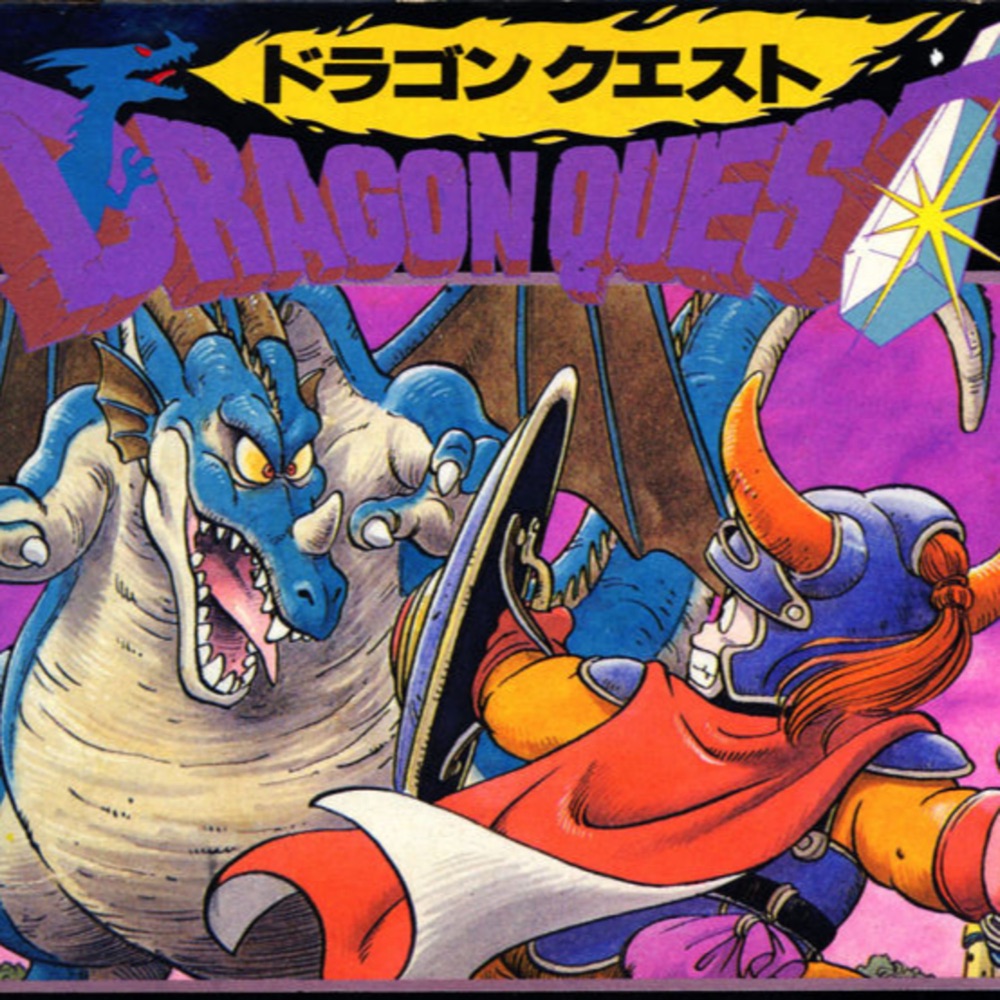
Um, and you know, he does the designs for all the characters and stuff like that. And yet I almost left him out of these show notes because you know, if you're playing the Western version, you don't even notice any of that stuff. Like the probably arguably one of the most iconic parts of these games, the designs of the characters and the enemies, it's not on the box because the box has taken the, the strong man's approach to, you know, even renaming the game from dragon quest to dragon warrior and trying to make something more fantasy driven. Seems like they want you to forget all about, um, Akira Toriyama in this Western release of dragon warrior. This is the same artist as dragon ball.
The same guy, the creator, the guy who created dragon. Oh, I mean, I guess I can see that in like the background art and a lot of the enemy designs now that you say it, but I did not know that. Yeah. It's gotten to the point now with dragon, uh, quest where like dragon quest 11, um, the most recent one that is just trunks. Uh, the main characters, just trunks. That's not even like another person. It might as well, they might as well just call them trunks. Is there a capsule corp?
There is not. Oh, but there's, um, I'm saying because he looks so much like, but there's also a lot of like Goku looking characters too. You know, the guy can't help himself. Yeah. And Akira Toriyama also, uh, did work on, um, Chrono Trigger, which, uh, you know,
it was like a square Enix joint. So it's not, you know, well, it was square soft at the time though, right? It was before. Yeah. Well, or was it Enix who made Chrono Trigger? Now I'm doubting myself. No, it was square made Chrono Trigger before. Square made. Okay. Yeah. So that's pretty interesting then though. The Toriyama would go away from Enix, uh, and make, make a Chrono Trigger with them. But yeah, that's why Chrono looks a little bit like Goku too with the hair. Goku's from the Garbanzo Chronicles, right?
Yes. Yes. Which, uh, yes, I remember that reference. Don't worry. Um, from our dragon power episode, which is again, like just shows you the refusal for Japanese acceptance here in the West at the time that like we couldn't, you know, we were all about dragons, right? Like dragons are cool and definitely not Japanese. That's just cool. But when you start saying things like quest and ball, you're like, no, it's all about power and warriors, power warriors versus quest balls. You tell me who wins. Yeah. Although the, the, the, the main MacGuffin of the story are still the balls of power.
That's true. Yeah. Well, the balls of light, right? Yeah. Same thing. Not balls of power. Yes. Um, you know, on the sequels and spinoff side here, just a couple things I wanted to talk about. Uh, dragon warrior is not, uh, it's not over. We have three more sequels just on the NES. So we will play dragon warrior two, three, and four on this podcast.
Is there anything that you guys are looking forward to? Like things you'd like to see them add, uh, to the dragon warrior franchise for these other NES games? I'm, I'm hoping there's more story, uh, in, in some of these, like at least more than just the template for a progress thing. Uh, I'd like some, some more, uh, NPCs that have names, maybe a party, uh, companions. Those would be cool things. Story based stuff.
Yeah. I mean, whenever I think of a game like this on the NES, like, I guess I'm spoiled from having played the original final fantasy and I'm expecting those kinds of things where like, I feel like all that stuff you just mentioned are in that game. So, uh, can we just skip the rest and play final fantasy now? I'm also hoping for, um, for just more things to interact with throughout the world. There's, there's, this is a, like a nice world to explore, but nothing to find.
Like I, like if you're going to explore, I'd like to have some stuff to come across. Right. So if this game influences, um, square to make final fantasy, I'm kind of looking forward to what dragon warrior two, three, and four, um, find in final fantasy to then influence their game. You know, uh, will it just continue to be like, no, we're our own thing. Like we do, we do this or do they meet them in the middle somewhere?
Are we going to see, um, a party, uh, or are you always just going to be a singular hero? I look forward, uh, to what those other games, uh, have because the other ones are expensive. So I don't own them. I only own dragon warrior one. Cause as I mentioned, it was included as like a reward for Nintendo power subscribers. And I was not a subscriber back then, but that's why there's so many millions of copies of this game.
And therefore it's easy to get one. If you want a copy of dragon warrior four, you better be spending a ton of money because, uh, or not, I mean, to get it for a deal to garage sale and then sell it fast. I don't know. Is that sort of the order of release like dragon warrior, then final fantasy and then the rest of the dragon warriors? Yes. Because we never got final fantasy two and three. Yeah. I just didn't know that final fantasy came up before the rest of the dragon warriors. Yes. And, um, to make it even more interesting though, I can't say with certainty, but I'm, I'm almost certain that dragon warrior four, um, comes out before final fantasy four, which would be final fantasy two on super Nintendo.
Um, I know dragon warrior four is late in the NES life cycle. So maybe that's not true. And maybe it'll be like a very, very advanced NES game, but it also might still be too basic. I don't know. We'll find out. Um, in 2016, the spinoff dragon quest builders was released. And I know what you're thinking. Why would I skip all the other dragon quest games and just talk about dragon quest builders?
But there is a reason dragon quest builders is the sequel to dragon warrior slash dragon quest one. It is the story of what happens after the bad ending where the hero accepts the dragon Lord's offer to join him and rule half the world. That's when you get a Minecraft clone. That's what happens when you accept the dragon Lord's offer. You get Minecraft for dragon quest. That's interesting. I had no idea.
It's the very start of the game. There's very, uh, I'd be like, there's not very little plot, but there's not much plot, um, outside of that. So, uh, you know, I think like that's, that's a fun little Easter egg thing.
And you know, like I'm all for that. I think dragon quest builders too does the same thing, but with the bad ending of, um, of the second game. I, I, I can't promise that because I don't know what the ending of the second game is because I never played it, but I would love to see them just continue to do that.
So these games are just sort of showing like a purgatory sort of thing for, uh, the, the character, if they did the bad things, right? If you did the bad thing, then unfortunately, you know, the world would go to shit and then it'd be up to these builders to rebuild the world to be good again. Oh, so you don't play as the bad man. Uh, no, no. Okay. That'd be funny. Yeah. You're playing as somebody who's like, you know, Hey, we gotta, we gotta clean this shit up.
That's like such a direct response to what happens in this game. And it's not just like, this is what happened next. It's like, Oh, we got to think of how the gameplay would change.
Yes. Yes. Very true. And you know, since I played dragon warrior a few years ago and beat it, I was trying to think about what my contribution other than replaying it could be this time. And so I wanted to briefly talk about the best way to play dragon warrior today, because I don't think it's the NES version. All right. So yes, there's the NES version and you could go through and, and, um, and play it with original hardware or, you know, on, um, the Nintendo switch, I think even has, uh, it's like three, $3.50 or something like that. You could just download it solo.
So there are options to play it the original way. There's the MSX version, uh, which is not a recommendation at all for me. Uh, it's, it's actually bizarre that it even came out for another console other than the Famicom slash Nintendo, uh, entertainment system. But it, that exists nonetheless.
If you want to try like a wacky alternate take, uh, at the pixels and sprites and stuff like that, but there's the Game Boy Color version, which, uh, includes Dragon Quest one and two. And this Game Boy Color version is just a huge quality of life update thing where, um, you can quick save the game anytime outside of a battle. You get the ability to store your gold. So this way you don't have to worry about losing it. The, um, the menu system, no more like press the doors button, uh, or the stairs button.
Yep. That's all gone. It's amazing. This is happening at a Game Boy game. Yeah. Right. Like the Game Boy is supposed to be an even weaker version of the NES. And yet here we are. And also the most important part, the, the moment of truth here, monsters yield more experience and gold across every single battle in the game. They basically just added a multiplier of two formula to everything. So now everything gives you double what it gave you. So you really progress through the game so much faster. It absolutely reduces the grinding. There are a couple of other like,
um, updates too. Like I think you can actually choose to equip, um, your items and armor rather than the, uh, the way the game works in the, in the NES version. You just, whatever you buy, you just immediately put on. I don't, we didn't really talk about that, but I didn't find it. Yeah. You have to sell the clothes off your back after you get something else. Yeah. Yeah. Cause you can only carry one of each thing, which I guess is more realistic. It's like, where's everyone carrying all their armor and these other JRPGs? Um, but yeah, it didn't feel like a burden because everything was just always like, this is the next best.
This is better. Like, yeah, it's not like it, like this does one thing and this does another. It's just like, they all do the same things, but each one does, does it better than the last one. So might as well you don't like the Game Boy Color and, uh, you don't want to play on like a small little screen or whatever. There's only one more option for you, but it is the best option. And that is the Super Famicom version of Dragon Warrior slash Dragon Quest one.
And that has all the same upgrades as the Game Boy Color, except for it has that beautiful 16 bit pixel art that like, honestly still looks good today. Um, I can't believe they basically remade the entire game, uh, redrew all the art and everything. And, uh, it is fantastic to play on, uh, a granted translated version. I do not know Japanese. I cannot play this. You'll have to look for a fan translation of it. But that version for me is the definitive version to try this old game if you're interested in trying it. But that's not to say that this NES version isn't worth playing either. That's something that we need to figure out right now on the essential games list.
Sean, Dragon Warrior, not Dragon Quest. Your thoughts? Well, um, since this is another genre that I have, uh, quite a bit of experience in and, uh, I, just like the rest of you guys, um, I'm almost sort of looking at this in the same way that I was looking at the early sports games where, uh, in addition to all of those like remakes and remasters and spinoffs and, and, and sequels, uh, like there's just so much of, of this game that that's just around. Um, and I think that with all the other options, as much as I appreciated seeing the beginning of, of the, the modern day JRPG in this game, uh, I don't think I enjoyed it all that much.
So I, I can't just put it on there for posterity that this is granddaddy, uh, cause I didn't really have all that much fun with it. So I can't put it on the essential games list. Fair enough. Joe, your vote. I think, I think anyone who listens to the podcast would know by now that I, I love a good world. I love a good world. I love a good adventure.
And that's why since starting, you know, the, starting this, this journey, I've just wanted, uh, I've, I've been itching for JRPGs like this. Like this is the kind of thing that, that, that I've been expecting on the NES. And I, you know, when I, when we, when we first started, I did not expect it all to start coming so late in, in, you know, in the process. But yeah, I think even more particularly, I liked seeing these old JRPGs. I like seeing the, like the, the kind of like bare bones of it, not gameplay wise, but like graphics wise and, and the way that they get around those, um, the limitations of the time and everything. Uh, so because of that, I mean, I did have a really good time with this game. And I think that I would,
I would say that if you're a person who has just played the first 205 games on the NES, and you want to keep playing more games on the NES, that this is an essential game. But if you're anyone else, no, it's not an, it's not an essential game. If you, if you're looking at
pretty much every other JRPG I've ever played and comparing it to this, like most of them, I think are going to be more accessible and more enjoyable than this game. Like, like I was enjoying this game because I think a lot of it was finally a JRPG on the NES and like, oh, I get to see how they did this. And even though like, it's all grinding and it's all this, like all these things that I would normally complain about. I had a little bit of rose colored glasses throughout it all. But if I'm looking at it and if I'm really looking at like,
at the experience as a whole, like the, yeah, it was mostly a grind with these like little elements that I'm familiar with that I'm excited about in between grinding, grinding and grinding. And, and there were just a lot of, a lot of things that could have been tightened and will in the future, you know, be, be, uh, added to by, you know, I'm assuming by future Dragon Warriors and also by other JRPGs that come along and other things that kind of, that kind of take this base and add to it. So long story short, no, not essential.
If you're really interested in RPGs, you know, I don't think this is an unfun game. It's just not particularly like really fun either. The one thing, and it's hard to talk about because, you know, you can't appease everybody when, when you talk about, uh, their favorite games or their least favorite games or games they don't care about. But that is a thing that happens specifically with JRPGs is that there is a whole group of people who love video games who will never, ever play a JRPG.
It's a genre that they just do not enjoy. The tropes aren't fun. The turn-based, like I pick my move, the enemy does his move. That doesn't resonate with them either. And like, you know, these people are definitely not going to be happy with a game like Dragon Warrior that I think we all kind of agreed is just laying down like the most basic way to, to play this kind of game. Lay out like almost the 10 commandments of the JRPG genre. Be like, you know, thou must level up. Thou must have random encounters, you know, like they're laying out a little groundwork. With that language. Even with that language too. Yes. With that language. Yeah. You know, they're laying down all this important groundwork, but, um,
historical importance isn't what like the essential games list is built on. So like when you see Dragon Warrior being talked about, don't say, oh, I hate that game. It's so boring. It's so bland, blank from 12 years later or 30 years later or 50 years later, did it so much better because that's not how like time works. Like this one lays the groundwork, right? And so it's important for those reasons, but we're also not disrespecting it by saying that it doesn't belong on the essential games list because it doesn't. It's, it's too far back now. You know, it's almost like saying, you know, um,
why isn't Pong on like everybody's favorite games of all time list? It's so important. It's like, because most people today wouldn't care if they saw Pong in the corner of their bar. They wouldn't be like, I gotta play that right now. I can't talk to you. Pong is in the room. Like, no, but we can all understand how important it was. It's the same thing with Dragon Warrior. And so I totally understand this game is not for everybody, but I do think like what they've, what they've put up here, you have to respect, understand, and, um, appreciate.
So I, I totally get what Joe's saying. If you've been following the whole line of games that we've been playing, or even just following the podcast in any regards, and you don't like JRPGs, you have to spend a little bit of time with this one to understand where the whole thing was laid down, where, where it started from. And that's, uh, that's Dragon Warrior to me. You know, it clearly, um, has the groundwork for what so many RPGs are going to do, but time has not been kind to the concept of Dragon Warrior.
And I will be shocked if Dragon Warrior 2, um, 3, or 4 don't prove to be more worthy of consideration for the essential games list. I do think Enix will continue to make these games bigger and better, and that 2, 3, and 4 won't fall to the same reasons that 1 just fell. I think, I think those ones will be open to more consideration.
And, and just to illustrate Mike's point a little bit more in terms of, like, like, what makes an essential game, if, if I were to walk into a bar and I was to see, like, an inexplicable spy-vers-spy cabinet, I 100% would tell my friends to go fuck themselves, because I had to go play that, and I wouldn't speak to them for the rest of the night.
Well, at least one friend you would have to have with you for spy-vers-spy. Yeah, well, you could play against the computer, but, like, that's not fun. I know, but I'm saying, like, think about that. You're at the bar, it's like, now's the perfect time to experience spy-vers-spy at a bar. Yeah, well, you also don't need to bring your friend with you, because if there's spy-vers-spy at a bar, you can assume that I'll be there also.
Very true, very true. All right, that's been, uh, this week's episode of Nostalgia. It was Dragon Warrior, if you're just tuning in. But next week... Is that how it works? We're just tuning into this live episode. Yeah. Next week, we're doing another long episode, because it's Faxanadu. I think that's how you say the game. Maybe the X is silence. Maybe it's Fahanadu.
Maybe it's not even do like that. Maybe it's Faxanadu. I don't know. So, we're gonna find out, because the best part of any episode is where we figure out what the title of the game is. That's the most important part. That's the part we do right after the Essential Games list. We vote on whether we can all agree what the title is. And if we haven't been doing that, we're gonna start doing that. So, that's the show, and that's what's next week.
But, if you want even more Nostalgia content, go to www.nostalgiacast.com and read really old articles, and maybe one new one. Maybe. Maybe there will be one new one by the time of this episode. But there's also a huge list on there on the very front page of people that we are thanking. And you're like, oh, that's weird. Why am I on that list? Well, you probably are, but you also might not be, because it's only for our patrons. And that's because we now have a Patreon at patreon.com slash nostalgia.
And for just a buck, you can get your name on a website that probably gets about 35 clicks a month. Hey! And I think that's unique. Anybody can get their name on Google. In fact, I could Google you right now and find out a lot about you. But how many people can get their name on the Nostalgia website? I don't know. Sounds like some clout if I was you. Maybe every month we digitize the website as an NFT and then sell that. Hey! Now we're cooking with gas. I'm saying. That's it. That's all I'm really going to say. I'm going to stop saying things now. I don't know.
Thank you.