208 · Flying Dragon: The Secret Scroll
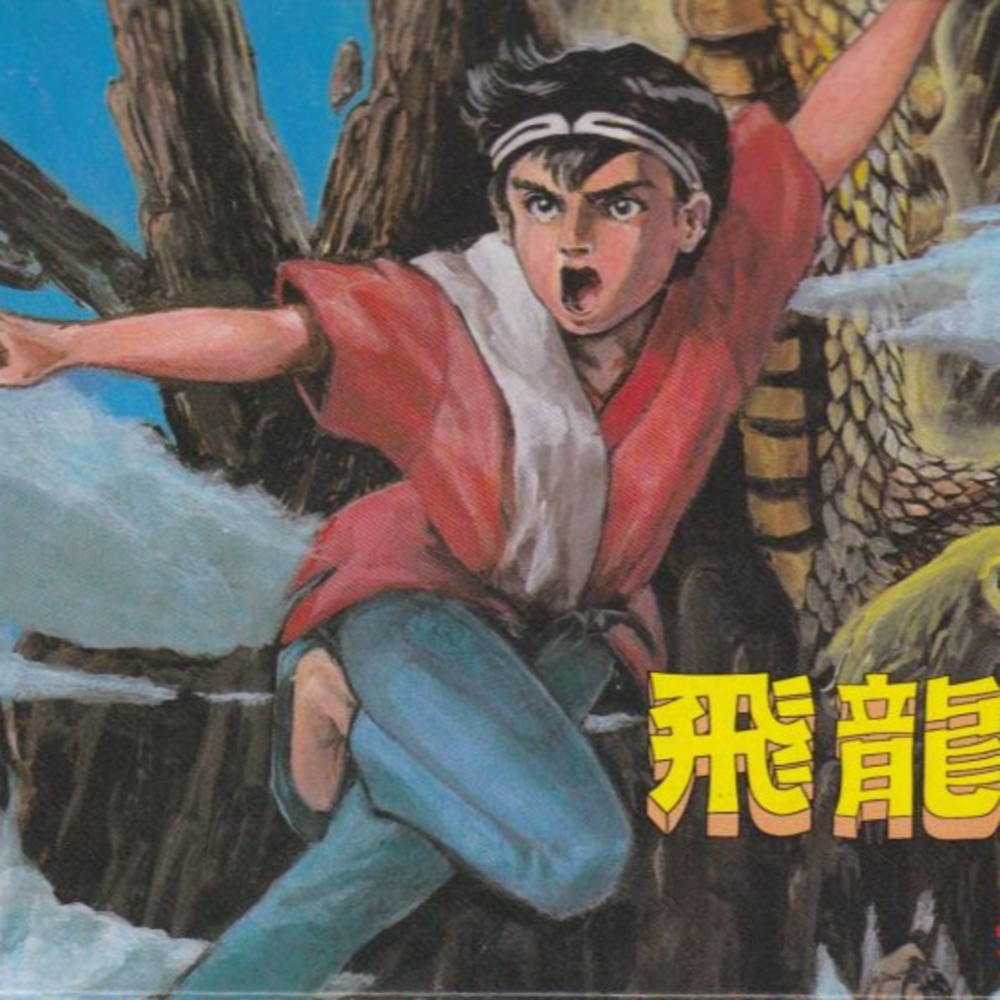
Set off on a journey to complete the mystical Mandara Seal and activate its magical powers. Face tough challengers, and use six different types of fighting techniques to your advantage. Work your way to the World Tournament, and defend the world from the legions of darkness!
SHOW NOTES
NES Longplay
Kid Niki Radical Ninja
Shanghai Kid
Flying Warriors
Hiryū no Ken III: Go-nin no Dragon
Ultimate Fighter
Hiryuu no Ken S - Golden Fighter
Flying Dragon (N64)
Culture Brain made and published this in 1989, and it is two games on one cartridge: Kid Niki-style side-scrolling stages and one-on-one tournament fights. It fits the 1989 trend of games that can't be just one thing. We liked the presentation more than the substance, and we never did get around to the story.
What works
- A real tutorial. Before the first fight, a controller appears on screen and teaches you the inputs. It stops the action, but it beats a poorly worded manual entry.
- Fights that feel like martial arts. Targets appear on your body and your opponent's, marking where to strike and where to block. At first it is a dance, and you get into a rhythm.
- Variety in the arenas. The city, the forest, a wrestling ring with boxers as opponents. It is not one location in different colors.
What doesn't
- The game plays you. The dots decide which buttons you press, so we were reacting, not choosing. Sean called it Simon Says. Punch-Out!! is also pattern recognition, but its tells are animation, not a dot.
- Window dressing. The tournament bracket and the flying kick change nothing. Every match is elimination, and you can only use a move when the dot calls for it.
- The pause trick. Pause, and the next dot stays on screen. A GameFAQs strategy says to exploit this. It is tedious and not fun, and almost an invincibility code.
- The side-scrolling stages. Short loops, like a treadmill. Kill five enemies in a row and a boss shows up. Do that five times, then find the door. The bosses are enemies with more health, and soda or milk bottles refill your energy. Jump is up on the D-pad, and moving right while jumping didn't register. Nothing you collect carries into the tournament, so it feels tacked on.
Worth knowing
Beat it and you replay the whole game to find four crystal balls. As we understand it, little changes except how much health comes off. We compared that to Ghosts 'n Goblins. Super Mario Galaxy unlocks Luigi after you've won and never says you didn't beat it. We would have given everybody the ending and unlocked a harder mode. Not enough carrot, too much stick.
Later games in the series dropped the dot system once Street Fighter arrived. We debated whether that was copying or the genre codifying.
The bottom line
Skip it. Nobody voted it onto the Essential Games List. Sean found it unique, a proto fighting game, but with too much flab. The fighting held our interest at first, then asked for more battles than the idea could carry.
Written from our conversation in this episode.
- Kung-Fu Has Never Been This Real
- NES Longplay
- Introductions
- Box art reminds me of Karate Kid
- Overview
- Half Side Scrolling Action Game (Similar to Final Fight) half Fighting Game similar to Street Fighter
- Gameplay
- Side Scrolling Levels
- Controls
- Up to jump
- Generous Hitbox
- 5 “boss” fights in each level
- The carousel feature
- You just wrap around and around the level to get to the point you need.
- Controls
- Fighting Game Levels
- Not your traditional fighting game. Targets indicate the attack or block you must make and you must input correctly. You don’t directly control attack
- KO Gauge
- Special Moves
- the "Pause Strategy"
- Whenever you defend or attack a red dot, another one will immediately appear on you or your opponent. If one appears on your opponent, quickly hit it, then pause. You will see where the next red dot appears and will have time to plan your next move. Quickly unpause, attack or defend the red dot, then pause again. This may seem time consuming, but unless you have amazingly fast reflexes, this method will probably yield the best results***
- "you must go through the game again" screen
- Find all 4 Crystal Balls.
- The Crystal Balls cannot be found in the 1st Quest, only in the 2nd Quest.
- Side Scrolling Levels
- Sequels and Spinoffs
- Flying Dragon Series
- https://www.mobygames.com/game-group/flying-dragon-hiry-no-ken-series
- EGL
- Next week - m
Auto-generated transcript. Each paragraph starts with its timestamp. Speakers are not identified.
Flying Dragon, The Secret Scroll, Kung Fu has never been this real.
And welcome to NEStalgia, a chronological exploration of every NES game released in North America. I'm Mike. I'm Sean. And I'm Joe.
I don't really have... Wait, what? Sorry, I was just going to say, what about real Kung Fu? Isn't that as real, at least, as this? Yeah, I guess, like, Kung Fu is already real, so it doesn't have to, like, get more real, right? Right. Sorry, go on.
No, no, no. I guess that's a good... I didn't have any topic prepared, so that's a good starting point for us here. We're going to slowly develop the episode from here. And I think that that is the best note to start on, is that Kung Fu is real, and people should know about it. Dragons, not real, and have arms and legs. They don't always have arms, but they usually have legs. God, you do this on purpose. I don't know what you mean, Mike. I have no idea either. I think it's time to start talking about video games.
I'm somewhat familiar with the idea of video games, more than I am familiar with Kung Fu. But we've played our fair share of Kung Fu video games. And, you know, Flying Dragon, The Secret Scroll is, like, a mixture of two different kinds of games. It's half-side-scrolling action games, similar to, like, Final Fight, or... I was thinking, for NES-specific, Kid Nicky Radical Ninja. If anybody wants to do, like, a deep pullback. Like, that game was very similar to this game.
But then there's also other stages, where it's just basically a fighting game, similar to Street Fighter. Now, granted, it's not exactly like Street Fighter, because Street Fighter 2 hasn't perfected the fighting game system. So they still have to figure out a way to handle that, and we'll get into that. But I think it's interesting that we continue to see this trend of, like...
Specifically in 1989, of games being, like, no, you can't just be, like, one thing anymore. You're either a bunch of minigames, or you're, like, mixing or fusing genres together.
Nothing really to add to that, but I was just wondering if you guys were expecting this to be, you know, more of a traditional fighter game... Or, you know, an action-adventure game similar to, you know, the ones I referenced. I was more expecting the side-scrolling element. Just because, you know, I'd never heard of this game, and it just sort of seemed like, oh, here's another side-scroller, but here's another kung fu-flavored one.
And in the beginning, it sort of fell into that expectation, and I guess it would have more so if I didn't read the manual in here... ...and, like, read about what I was going to get into next. But, yeah, I was originally thinking this would be just that one thing. Yeah, I was thinking the same thing. Even though, you know, at the beginning they do allude to the fact that you're, like, headed to a tournament.
So I sort of, at that point, was wondering what this tournament was going to be. But I'll say I was expecting it to be a tournament where you take everything you've done in the side-scrolling levels... ...and now you're...it's like an evolution of it or another version of that. But really, I was surprised that there's just two kind of gameplay styles that aren't really that related.
Yeah, they're actually so far apart in terms of, like, play style and just, you know, the flow of the game... ...that they actually make it a point to, when you get to the fighting part of it, to be like, actually, you have no idea what to do. We need to give you a tutorial to explain what to do. And they didn't do that at all for the side-scrolling action part, right? They weren't like, hey, we should teach people about, like... Punching and kicking.
Right, right. Or just, like, you know, what you need to do, right? Of, like, you need to hit these tiki things or... I can't remember what they are, but, like, these boxes and then they'll...
...things will appear from them. Or you need to defeat, like, all five bosses. Now, granted, that stuff's probably covered in the manual. I didn't look at it. But it's just a weird flow of something to be like, yeah, we understand that everybody knows how to do this part of the game. And we're going to give you that first. But then when we get to the other element of our game, we actually have to, like, stop and teach you, with an actual controller on screen, just the idea of doing this. That was crazy. Like, this is the first, like, on-screen tutorial I've ever seen, I think.
And it's done pretty fluidly. I know that it stops the action in its tracks, but, I mean, like, it's intuitive. It definitely is more useful than a poorly worded manual entry, and you just sort of have to parse the rest yourself. Like, I thought that that was done relatively well.
Yeah, I really wanted to kind of praise that element of this game as well, because it does feel like, for the most part, if not always, we've so far had to go back to the manual anytime we were, like, confused about the controls or there was some new gameplay element introduced. And like you said, Sean, sometimes that didn't translate perfectly to exactly, you know, you had to sort of figure it out. And this did a really good job of teaching you, not only teaching you exactly how to do it, but, like, you know, there's a little bit of a, I don't want to say a learning curve. It's a pretty simple concept, but, like, at least a learning curve is in terms of your muscle memory.
And it gives you a good, like, the tutorial doesn't just teach you exactly how to do it. It gives you some time to learn it, so you feel like when you're done with that tutorial, you've kind of upped your skill a little bit to where you feel like you're equipped to go on and actually fight the tournaments. So I thought they did a good job with that.
Yeah, and I think it also just shows how new of an idea this is to, like, video games that they felt the need to, you know, stop all the gameplay and action and progress and be like, here's how you're going to do these things. And, you know, that's really the biggest takeaway for me was just that, you know, it hasn't been perfected yet how we do, like, one-on-one combat, right? Like, we've seen wrestling games handle it one way, other games handle it via, like, menu systems.
Nobody's quite figured out yet, like, the idea of you and your opponent having different sets of moves and each having, like, a health bar that corresponds. But I think this comes really close. I actually question, you know, like, they came so close, but they didn't because they didn't figure it out, right? It's like some people will be disappointed.
But I don't think this is, like, the wrong way to go either. So if you don't mind, I'm going to actually, like, push aside the side-scrolling levels for right now, even though the game starts with them, because I feel like that's just something easier to get into. I want to talk about the fighting game levels, because since this isn't your traditional fighting game, you have these targets that indicate what kind of button input you need to do.
What did you guys think of that idea versus, you know, traditional Street Fighter, Tekken, Mortal Kombat-style games where, you know, you're in complete control of the inputs that you do, but you kind of need to, like, memorize these awesome inputs. Whereas this game says, like, you don't really have control over what input you're going to do next, but you have to remember these patterns. And then by doing these things with the limited controller that you have, right, you only have the D-pad and the two buttons, you'll be able to do, you know, more awesome things than you'd be able to if we just gave you one-button punches, one-button kicks.
Yeah, I mean, it's definitely approaching, like, the quote-unquote fighting game from a different angle than we're used to. It's almost more like a Simon Says slash rhythm game sort of thing where, yeah, these targets appear on your body and your opponent's body, and they sort of telegraph where you should hit as, like, a weak spot or where your opponent is going to hit that you need to defend. And I think it still works. It works pretty well as an idea.
And then when you're actually fighting and you sort of get into that rhythm, like, even the idea of, like, a combo sort of shows itself. It's a very simple one, but, like, even your standard inputs are kind of a combo because you have to target, like, these different parts of your opponent's body. But then you get slightly more complex ones where, like, with your sort of grab them and throw them over your head sort of thing. So there's a lot of elements that sort of will evolve as the fighting game genre evolves, but also stuff that'll just completely get thrown away, like this whole, like, they show you a target and you have to hit it sort of thing. But it's still very unique.
Yeah, I thought the target thing, it helped to bring a lot to the table, but there was also, I think it compromised a lot of other things, too. So for one, because they're trying to kind of, I feel like, capture the spirit of, you know, of a martial arts, you know, sparring one-on-one match, this target system kind of gives you control over things like, okay, where do I want my guard to be? Do I want to be blocking high, middle, low? Where do I want to kick? Like, where is he blocking? Where it's like, I guess that translates decently to what it would be like to be in an actual, like, martial arts fight where you're thinking of, like, okay, he's dropped his guard, I go for the head. Okay, his guard's up, sweep the legs, whatever.
So that's nice. And as, you know, just the way that it presents itself where these targets appear and you have to hit the target as it appears or you see where they're aiming and you have to block before they hit you, it lends itself to having a nice, fluid, what feels like a martial arts style fight as opposed to just, like, punch, punch, punch, punch. It's like a little more of, like, a dance, you know?
And that's nice. I think that that works and you really get into a rhythm as you're playing. What I think it loses is that even though you get more control over exactly where you're hitting and stuff, you lose pretty much all agency in the battle. You know, it's all about doing what it says is the best move at the right time. It's all about timing. It is almost more of a rhythm game in the sense that it's just kind of a series of almost quick time events. Yeah. And when you describe it as a dance, like, those targets really just are your choreography. Like, yeah, you're not making any strategic decision about I should bait and then hit. You're just sort of doing what the game tells you to do.
Exactly. And I think that that, for me, over time, started to slowly outweigh the appreciation I had for how cool it felt to fight this way. After a while, I was like, okay, I'm kind of bored now. I'm just doing what the game tells me. The game is playing me.
Whoa. The fighting game that we've also compared to a rhythm game, Mike Tyson's Punch-Out, you know, that game, completely different graphical style that they were able to pull it off. But, like, imagine if instead of these, like, great animation tells that you have to look out for and, you know, subtle tricks in the audience or flashes or stuff like that. Imagine if instead they just, like, had a big dot over the fist when it was about to, like, punch this way you knew to dodge, right? It's, like, it's kind of like that in a way, but I don't know how, because this is, you know, a 2D from the side action fighting game.
I don't know how they would be able to communicate, like, such great tells in the combat that it wouldn't just be reduced to the kind of combat that you get during the side-scrolling action stages, you know, where you're just, like, constantly just hitting punch and kick and hoping your punch and kicks outweigh the opponents, you know, and it just becomes like a spamming battle. So, because they had to come up with some kind of system to, like, create a more nuanced fighting system where it's actually like, you know, hey, you're responsible for both blocking and attacking, dependent on what, you know, what we show you on screen.
I'm not sure how else they could have pulled that off, but at the same time, you know, I'm not ready to applaud that either because I do agree that, you know, you are just answering their commands. But also, like, you're less inclined to just, like, experiment in general, not even because you can't, but, like, I don't know about you guys. I didn't even think I could move. Like, I found out later on you can move, but, like, I couldn't think of a reason for why I'd really want to move.
There's no, like, grand reason for, you know, for space control or anything like that. Like, you still have to, when the dots finally do show up in the locations they do, you still have to answer the same call. Yeah. So, I mean, in terms of movement, like, yeah, it's not really well utilized because there's, like, you can dodge out of the way of certain attacks that have enough, like, lead time. But the thing about this game is I agree with you. Like, this was put into place because having it be more of, like, a standard fighter in, like, the standard word that we're thinking of.
Like, the controls just aren't there. Like, even though you're being told what to do, they still kind of feel sticky. And I don't know if you, I guess it's kind of subjective. Maybe you guys didn't feel that way. But to me, they felt kind of sticky because the other solution, like, just playing armchair designer that I can think of to allow for more information to be given to you that isn't just an explicit target. Um, could be solved by just zooming in more. And that would make movement even less important.
Um, jumping and stuff less important. And so that, like, these larger sprites that you're seeing for, uh, yourself and your opponent could have more telegraphing information or, uh, just as a tell. Work as a tell or, uh, something along those lines. But I understand that, like, if this is how the game feels, um, in its current state, then I don't think that just blowing it up would make it feel any better. Um, so I don't know. I guess I'm just sort of rambling about, like, the wider design of the game, uh, in terms of, like, why they went that way.
Yeah, it's an interesting idea, though, the idea of, of blowing it up and then taking away the actual, like, icons on the screen and making the tells actual tells. Right? Because, you know, ever since, ever since Mike brought up Punch-Out!, I've been thinking about that where I'm like, why do I like Punch-Out! so much better than I like this? Because it is technically, if you really want to read into it, it is an indicator on the screen that tells you what to do.
But there's something, one, about the immersion of something like Punch-Out!, where it's like you feel like you're actually fighting that person. And two, it's a little more complex than just, than just the dot telling you where to hit. So it's like, you know, it's a little more, like, real-life decision-making based on what you're seeing. Well, obviously, it's still a pattern.
But, like, so are almost every boss battle in any modern video game you play is all pattern recognition. And I think that, you know, it's like Punch-Out! or something like what you're describing, Sean, about a possible way to do this, is getting closer to just complex patterns instead of a pattern of blue dot, red dot. You know, where it's just, like, literally, press this button now, press this button now.
That's what makes this feel, to me, like I'm not thinking. You know, the game is thinking for me. Yeah, it's important to remember that the dot here isn't just telling you, like, oh, hit their stomach or hit them in the head. It's telling you, just based on the way that the game, you know, sets up the tutorial for you, too, it's telling you which buttons to press on your controller. So you don't even get the choice now of, like, they're saying go for the head and I want to do a strong kick. Like, no, you have to do the same exact inputs that a dot on that person's head means versus a dot on your head. Like, they're deciding what controller input you do, so you're just reacting.
And even in the, you know, as the game continues, any additional things they add to the fighting, like they add some additional special moves and eventually there's an elimination round and stuff like that, it's actually all just story progress. It doesn't actually enhance the actual fights any further because, specifically for the elimination round, right, they show you this great, like, bracket of best of eight or whatever, right, and, like, you move up in the tournament.
And, you know, that's great and compelling as, like, wow, I got to make my way through this. But every match in this game is an elimination round thing where, like, if you lose, you lose, and that's game over. It's just window dressing the whole tree. Right, exactly. It's just dressing it up. But you could argue that the special moves are just doing that too, really. They're not, like, you know, there's that one where you do, like, a flying kick in the air where you're spinning around and then you come down and hit them.
That doesn't actually change anything in the game other than now you know this technique, but you can still only use it when we call for it, you know? Yeah. And I think another important thing to mention with these dots is since it's reactionary, it's kind of demanding on the reactionary side.
I don't think it's, like, so fast that it's impossible by any means. And you don't want to be perfect, right? That'd be kind of a boring game too. You want to make a mistake every now and again, so you don't want it to be, like, you have all the time in the world. However, the amount of times that you have to, you know, react to these dots on an individual fight level is just, like, that's a lot in itself.
But then to just continue to have to be on edge for this kind of thing, like, I don't know if this dot system is really pulling off the longer you play it. I don't know if you guys feel that way about the reaction times, but it's just, like, as soon as you strike or block what they want you to do, there's immediately a new dot on screen requiring the next set of inputs. Yeah. And, like, again, like, I think we've been, the way we've been pitching this game, it sort of sounds like it plays itself and it's super easy. And what you just said is why it's not, because while it is more just a test of reaction time and not so much fighting strategy, that is still very challenging.
One could argue that it's not a very engaging way to be challenging, but you're right. Like, as the fights progress, it becomes a lot harder to sort of keep up and to dodge as well as you should. So, yeah, I agree. It's demanding. Yeah, I think the other thing that makes it, that still makes it challenging is that,
so I know I'm going to get this backwards or somehow messed up, but something to the effect of when you're defending, you have to just press the D-pad button in the direction you're defending, but when you're attacking, you have to press the D-pad plus A in the direction you want to attack on them, which sounds pretty simple, but it does become a little bit of, like, a pat your head, rub your stomach situation sometimes, where you're like, wait, what am I doing? So, like, you get into this rhythm and it feels really good, and then when you slip out, like, once, suddenly you're like, ah, like, you're kind of, like, caught on your back foot for a second.
And, you know, that part, you know, that element of it is cool at first, you know, but it's just, I don't think it's interesting enough to hold my attention for the amount of time it wants me to do it. Yeah, it's kind of necessary for them to break up these fights with these side-scrolling levels, because otherwise that would be the whole game, right? It's just constantly, like, how much better, you know, I think Sean put it perfectly when he said it's like Simon says,
because, you know, how long can you keep up with that? Like, how long is that interesting? Even if the animations change, if the core concept remains the same forever, it just becomes harder to go on. Right, right. Did you guys try the pause strategy at all? The pause strategy? Sounds like a strategy I would like.
Yeah, I'm surprised, Joe, that you didn't know about it, but in order to really make my way through this game and, you know, just keep my interest levels up, I found on GameFAQs that there is a whole strategy to the fighting based around pausing, and that is that as soon as you defend or attack, you know, the dot on screen, because the next one pops up, you can actually pause the screen, the dot remains, and now you know the next queue up attack. Oh, that sounds so fun. No, it's not fun. It's not fun. I'm saying in order for me to continue on with the game, you know, in the later levels and everything,
it's a strategy that is not fun at all, but I also just can't believe that they would allow the dot to remain on the pause. Like, it seems like such an easy thing to just, like, if you pause, just, like, remove even just that one sprite or just cover it, right? Like, have the pause thing be, like, enough to cover the field of action or something. Like, I think it's just, it's incredibly tedious, don't get me wrong. Like, it's definitely, like, the game isn't encouraging it by any means. But, you know, if anything, it draws out, like, at least... I just can't believe people, like, played like that enough to consider it, like, a valid strategy.
Yes, I know. Yeah. Well, if you think about it, though, right, it's like, if you're trying to beat every NES game, sooner or later, you're gonna come up with ways to cheese any particular game that you're struggling with, right? Like, we've figured out all sorts of things, and I'm not encouraging this strategy by any means because, like I said, it adds actually so much extra time to these fights and it doesn't enhance the game at all because, again, you're just saying now, like, oh, cool, now I know I have to do, you know, D-pad up and A. And that doesn't, like, to me, that sounds like nonsense.
So not something I would recommend, but just a funny exploit because it completely removes any actual challenge. It's almost like having an invincibility code built into the game.
Yeah, it's kind of like, if you take away the live, not live, but the action version, the action element to this, you're just, you're literally just putting in inputs every couple seconds. You're like, all right, time to put in that next input, unpause, put in the input, pause. All right, what's next? Like, put in this input. You're not playing a game anymore. It's not even, it's like worse than other types of cheating because you're literally not even playing a game. You're just, you're just every couple seconds putting in a new input that the game tells you to do.
You're playing keep talking and nobody explodes with the game. Yeah, exactly. Except you can't really lose. Right, right. All right, I feel like that's enough on the fighting game section and we can move on to the side-scrolling levels. As I threw out a throwback episode to Kid Nikki Radical Ninja, do you guys even remember that game? Nope. Yeah, that was the one you had, you could go in different order of the levels, right? Yes. Yeah, I remember that one. Yeah, so don't remember that part, but just the look and feel of the side-scrolling action of it is what I remember most from this. But these side-scrolling levels are,
they're wraparounds. Yeah. You'll just constantly, you know, it's like you're going on a treadmill through the same set over and over and over again. And there are bosses. I don't know why they call them bosses. They might as well just be like enemies with slightly more health is what I would refer to them as. But the screen goes like dark for them, which is kind of cool. It's like it makes it feel like a little bit of a bigger fight. But these are the things that you experience in these side-scrolling levels is they're short, small stages where you have to kind of figure out where the bosses are, defeat all of them, where the hidden items are. And then lastly, once you've defeated all five bosses,
where's the key in the stage so that I can unlock the door? Well, all right. Let me give a little brief rundown of this. Please. So there's no hidden anything. Like there's some hidden like health packs and like many power-ups in the statues that are littered across the field. But the thing that triggers each like actual power-up and finding the key to exit the side-scrolling level is just kill five enemies in a row. You kill five enemies in a row and a boss comes out and then you kill the boss and you get the little piece of, I don't know, kanji or whatever the Chinese equivalent is.
And then you get your little power-up or key and then you move on to the next one. You kill five more enemies in a row and you fight the thing again. You do it five times. And that sounds like it takes a while, but it doesn't because the game is incredibly simple and easy in this mode. And then you just rinse and repeat until you have everything and then you just go to the door, which is clearly marked as the door, and you go to the next tournament.
And my biggest question about this part is why they even bother contextualizing the things that you're picking up as power-ups because you have to get one, you have to get them all in order and then the key in order to progress and you don't get to keep anything. As soon as you get to the fight, you are now in competition mode and what you did in the side-scroller doesn't really matter. So it just felt tacked on. Just to do what you described earlier, Mike, of just give you a break from the more strenuous one-on-one fighting,
it just seems half-baked the whole time. Yeah, I didn't realize that it was killing five enemies that triggered the boss to come. But I did quickly realize that I didn't have to actually move anywhere in the level. I was like, if I just stand here and fight for a minute, I thought it was time-based or whatever, but if I just stand here and fight for a minute, the boss will show up. So I guess I was killing five enemies. But that also kind of made me think, what's the point of this whole level?
I don't have to go anywhere. I can just stand right here and everything I need will come to me. I gotta find the door, but that's fine. So it's not that big of a level. Usually the door is pretty early on. And then there's all this other stuff that they put in these levels that you don't need to go to. But Joe, just even now knowing that I didn't have to explore the level, I prefer the way you guys were playing it. I think that it's such a chore to play as this character in these side-scrolling levels,
maybe specifically just because you have to hit the up on the D-pad to jump, and I just thought we were done with those days. But it's so bad here. It's frustrating because the jump,
it's like you definitely can't do multiple inputs at once for whatever it's worth anyway. But something about moving forward and also having to jump, because you have to, so you're holding right on the D-pad and they can't register moving right and jumping at the same time. But there's pitfalls and there's platforms to get onto. That just made everything infinitely worse. And if I would have known that I didn't have to move from where my comfort zone was and I could just stay there and have everybody come to me, I would have preferred that because the worst part about this part of the game, the platforming, if you will, just moving from the different layers and things that you experience throughout the level,
doing that over and over and over again too, because it's just a short loop before you go back to the beginning, doing that over and over again, I wish I would have just not had to have dealt with that or just put us in a tournament area, but this time it's not with the martial arts rules. Now you're out there in the wild so you can just attack the way that you attack. It's like don't give me free range to explore this thing because I'm not interested in exploring it. Yeah, I'm just going to clarify that I think you only prefer it that way because you didn't like the experience at all. I think if it was an engaging part of the game and you found out there's a huge shortcut that would actually bum you out. But yeah, just want to clarify that.
Yeah, but that's an interesting point too, not even that I didn't enjoy it. It's an interesting point to mention that the whole game is just kind of rules-based on things and we continue to find ways to just exploit that very obviously. Like they never actually designed anything to your point, Sean, of that it's just kill five enemies and then the boss appears and there's no like hidden area to find a boss or hidden place to find a key because it's just all like
you know, set up for you in this structure over and over again. Whether it's the fighting levels or the exploration levels, you can just figure out like the fastest way to get through all this stuff or the most efficient way for your play style to get through all this stuff without having to actually play the game much at all. Yeah. And I don't know what it was about the boss fight. I don't know why we're still calling them boss fights but like I don't know why what it was but like they weren't challenging
maybe because you have like a good amount of health and if you do explore, you can find, I don't know, I guess there's soda bottles or milk bottles. You can find easy ways to replenish your energy back to full. So I never really felt like I was in danger during these stages. I was definitely losing more health in the fighting game stages because even in the boss fights
you're encouraged to just like, I don't know, take a little chunk of damage here and there just to get up close and personal with them, right? Like just take them out quicker than trying to like block their attacks or dodge their attacks and then go in for the strike. It's like, if you can take them out in four rapid strikes, you're better off taking a little bit of health off and just getting rid of them early. Yeah, because you don't carry your health into your next like competition and the only thing that separates these bosses from standard enemies is that they aren't just mindlessly walking forward. They've got projectiles and they reposition
but like by the time you fight these things at least the later ones like you will probably have come across like a power-up that gives you a projectile or a little force field that you can just stand in front of them and it'll kill them in like seconds. So it's just, it's not very well balanced. It's just like you can easily cheese the section so it may as well not exist. Yeah, you know how like we talk about sometimes
difficulty in a game coming down to like was the bad guy, was the boss well designed or was it like oh he just has so much health like they made it harder by just giving him a bunch of health or making him do a ton of damage. It's almost like artificially inflating the difficulty of a boss battle
and I think that this game is like the reverse of that. It's easy but not because you can do a bunch of cool shit or you get all these cool power-ups. It's just easy because you have way more health and do more damage or your health doesn't go that you have just way higher defense and do more damage so you can just kind of run in and like and just sort of kamikaze the enemy and like they they you're they're gonna die before you die all five of them or whatever before you lose all of your health and then like you said they don't your health doesn't carry over to to the next
fighting tournament round like nothing about nothing about the side-scrolling round is in any way connected to the tournament round there are two separate games on the same cartridge
now imagine playing these two separate games and doing them you know one after the other after the other without much really changing between between the the two modes when you get to the end of the game it does that classic you know you're not you know like you're not done you actually have to go through the whole game again this time instead of just finding the keys and stuff now you have to find the four crystal balls and they made it so this way the crystal balls cannot be found obviously in your first playthrough you have to be on the second playthrough I didn't bother with this but from what I can understand the game isn't any more
challenging other than the amount of health that comes off so granted that is a bigger deal right but that's not the kind of modifier I like now I'm not sure what else they would have done I'm not you know I'm not saying like give me new levels or anything because they would have just ultimately been the same thing
but I don't think there's enough incentive there if you know if you go through all this to do it again just like how I kind of didn't feel Ghost and Goblins earned it either right like it's such a challenging game and then they say do it all again to get the true ending you know I don't know if these games that change so little other than just like great you did it once prove you're really good and do it twice it's like no I proved I was really good when I did it the first time right like this is your game this is all you had to offer you're not offering me anything new in the second playthrough I don't know yeah bothers me a little bit I agree I mean I think that this
trend that I don't know if it's really a trend but the thing that this game does only really works in like the more modern like roguelike games where that's just built into like the gameplay itself whereas in any any standard like get to the end fight the final boss and and and win game it's just a cop out and an obvious time extension tool so I don't think yeah you're right got a ghost and goblins did not earn it I don't think any game has earned it that like that operates like that yeah there would need to be something in the in the there would need to be a new game plus almost you know there would need to be something in it where it's like oh I got to keep all these power-ups I had or
or like some new yeah new I mean I know we said that this is maybe like a big ask but like new levels or something new to do if you're going to tell me that I can't beat the game unless I do it all over again yeah yeah and I'm totally a fan of new game plus stuff I'm not expecting that in these NES games but you got the true ending that first time yeah I don't think like that's lame I think that's a fun way for someone who's really good at the game to experience the game all over again with all the stuff that they acquired like you know even if you don't do it that way whatever you choose to do I think like that that way of flushing it out is a lot better than saying you didn't really beat the game but offering no changes I think about
Super Mario Galaxy has a thing where like you know you have to collect the first hundred and twenty stars in that game and then you can unlock Luigi and you play the same exact game again except for he just has a slightly higher jump that's the only difference but they never said you didn't beat the game so yeah it's not quite like new game plus territory because it's such a small change but like no one's forcing you to be like well if you want the real ending you know you got to play the whole game as Luigi again it's like that's what I feel like this game should have done
is like they should have given everybody the ending but now you've unlocked the more difficult mode right yeah you know that's the only change is like now you can play on the harder difficulty and prove your skill rather than prove you beat the game like I did prove I beat the game yeah it should be more like incentive to play it again rather than just saying nope you're not done if you didn't beat it like not enough care it people a reason to start over and say it again not enough carrot too much stick yeah
one thing I wanted to shout out for the like setting of the game and stuff like that is that the locations do change and even the fighting part of the game does change locations too to the point where a certain part of the game you're facing boxers and I thought that was like even though they don't act any differently or anything I thought there was like a neat change right something you would see in a an anime or a manga or something like that a karate guy taking on a bunch of boxers or something like that you're in a wrestling ring I thought that was a fun addition to this like being in the city or being in the forest they didn't
get too lazy and just all make it like the same location all the time and the only thing that changes is the color yeah I think the game has good presentation for the most part and and just the fact that there are different arenas is is it is enough for me to be honest but yeah there's a lot more polish to this game than there is substance for the sequels and spinoffs flying dragon actually does have it's a whole like series actually in Japan I think it's called hero no ken and here it's flying dragon but flying dragon had a prequel first called Shanghai kid only in the arcades and it's just the the fighting game part of
it if I recall correctly so this is just kind of a spiritual successor for the consoles with flying dragon but then the other games all get the flying dragon title and there's a bunch of them so I'm not really going to get into it too much but I you know interesting observation when Street Fighter finally does come out after that all the fighting elements of their games you know whether it's for Super Nintendo or N64 like they just rip off the Street Fighter format they completely abandon their dot system and you know trying to expand upon that with like a better understanding of like what fading games are now and they say no instead just make it
exactly like Street Fighter you know just if it ain't if that's what's working let's just copy that let's surrender our idea yeah I mean I think that I haven't played these games but I want to say that it's less like let's just copy Street Fighter and more like this is now the genre codifier and what we were doing was wrong yeah Street Fighter figured it out I mean I don't think that that should that should mean that that's the only way to do it but that was like you know at the time it's like okay that's the only way that anyone's figured out are we gonna take a risk and try something crazy and new and have it most likely be not
as good or do we just stick with the with the formula yeah it's an interesting observation because I mean I don't want to get into too much of other fighting games but Mortal Kombat is still kind of just Street Fighter but with more gore and some you know interesting
weapon choices right like it's it doesn't change too much other than like adding a fatality at the end which is a you know neat new addition but it's a small addition in the grand scheme of things whereas you have games like Tekken that actually do learn something from Street Fighter but say like well what if you could actually move around in the space you know like what if what if that was the change and so you could go either way with it right but ultimately
yeah once Street Fighter lays down the groundwork for like how to do these kinds of games it would be silly to keep the dot system in and just make this a reaction based game because essentially you know all video games are on one level or another are reaction based games it's just they usually don't tell you what input to do next and and that being said though like things like Tekken and I guess not not so much Soul Calibur but definitely with Tekken like that that is an evolution that was only made possible by new technology right and Virtua Fighter for that matter yeah yeah but interesting that Street Fighter continues to to avoid that right yeah
they say like no that's Tekken or you know whatever you know Soul Calibur that's those games and we do ours this way and then you have like King of Fighters you know following in line with that too and yeah all right we're gonna do something our way that we always do at the end of an episode and that is the essential games list Sean your vote for Flying Dragon the Secret Scroll uh well obviously what I've been saying has kind of uh tipped everyone off to how I'm going to vote here I I it's definitely uh it's definitely unique and it's building up to something in terms of like this proto fighting game um but it's got too much flab and it's it's just not all that
enjoyable after a little while um with the whole you know Simon says uh monkey see monkey do punch me in the face how about you uh not essential Joe monkey see monkey do how do you vote well speaking of that I I guess it's time that we let the listeners know that when we when we vote for the essential games list you know Mike you'll say Joe and then Mike holds up like a red target if he wants me to vote it essential blue target if he wants me to vote it not essential so I'm just waiting for that target to be held up because I we have no agency so Mike show you're held against your will yeah Mike has hold held up the blue target which means I'm
going to vote it not essential and I I think that all seriousness I think that the only thing personally for me worth talking about about this game is the fighting section the side scrolling section just another side scrolling section and it's got plenty of flaws and it you know doesn't doesn't do enough here I am talking about it even though I said it's not worth talking about but the the fighting section it did it did hold my interest at first and I was like oh this is cool and it's fun to get into that rhythm it's just not enough to hold my interest for the amount it wants you to to the amount of levels or the amount of battles it wants you to face
using these reaction commands it just needs something more to me so I'm saying not essential all right well thank you for listening to the blue dot instead of always yeah and you know it's always the blue dot actually whenever
anybody says any game I say not essential that's my new thing I'm keeping the essential games list it is perfect and we will not be adding any other games to it including flying dragon the secret scroll no it we're just happy that flying dragon the secret skull doesn't even have a chance right like thank goodness Sean and Joe voted correctly so that this way it doesn't fall on me but no it's not
going on the essential games list will something go on the essential games list in 2022 I don't know it remains to be seen right we're going through quite an onslaught of games here but you know we'll see because for all I know a game that already we already played is on the essential games list but I don't know that yet because I'm confused about time and space huh if you don't want to be confused about time and space all you need
to know is that new episodes every Friday of this show that's right if you're surprised by that I'm I'm a little worried because it's always been that way but next week we're gonna have Jordan verse bird one-on-one and if you don't know who Jordan or bird is don't worry we're gonna explain that in the episode we have you covered on all things Jordan bird and what one-on-one means as well we will go in depth
on those topics just like we always do on nostalgia for more nostalgia visit www.nestalgiacast.com if you want access to exclusive stuff check out our patreon patreon.com slash nostalgia or if you just want to like talk to us about nostalgia related things tweet at us at nostalgia cast I'm wait wait guys guys we didn't talk about the story of the game do we think that's worth talking about I don't think so you think so Thank you.