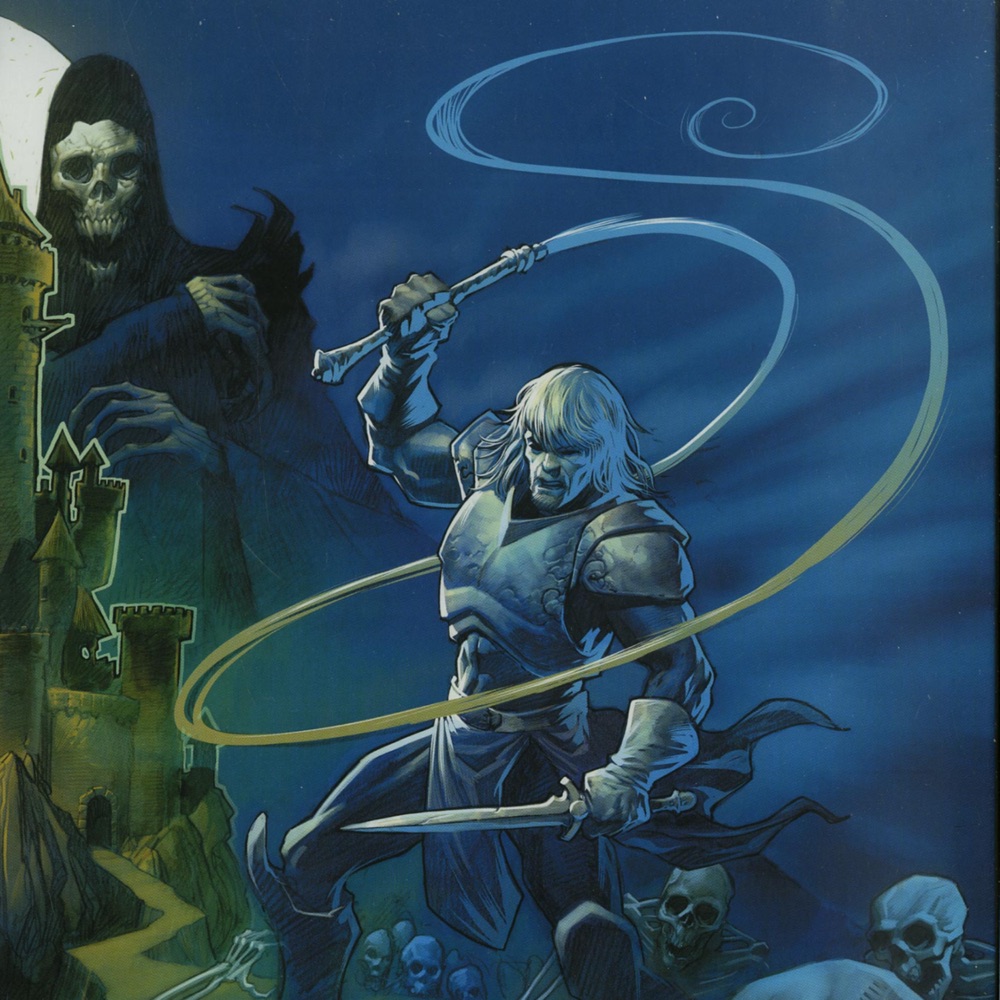
143 · CASTLEVANIA II: SIMON'S QUEST
Castlevania was a cake walk compared to this bloody curse.
You thought you had the Prince of Darkness defanged - eh, Simon Belmont?
Well think again, 'cause according to a damsel in distress, evil Count Dracula has left a horrifying curse in his wake. And the only hope you have of ending the terror is to destroy his missing body parts!
Talk about your frightening quest, searching a maze of mansions, graveyards and dark eerie forests - each guarded by man-eating werewolves, fire-throwing zombies and other devilish demons.
Your grim chances are kept alive in Transylvania, where cowardly villagers offer clues to the whereabouts of Dracula's remains. And where you'll purchase magic weapons, including silver knives and flame whips.
But beware the night. For when the sun disappears, Dracula's curse grows deadlier. And your chances grow dimmer and dimmer.
SHOW NOTES
CASTLEVANIA EPISODE
Castlevania 2 Tiger LCD
Castlevania 2 Tiger Watch
LOOK WHAT THEY DID TO MY BOY
AVGN
The Maze of Galious
- Castlevania was a cake walk compared to this bloody curse.
- Introductions
- Dracula special guest
- Overview
- In Simon's Quest, you may spend as much time exploring as you do fighting. You must travel around the world in search of the five mansions where Dracula's body parts are kept. Along the way you will pass through several towns where you can buy new weapons or items, and get clues from the villagers.
- 7 years later
- Gameplay
- Did anyone try to kill the guy at the start of the game? You talk to him!
- How can you trust villagers?
- Some do tell the truth!
- In the Japanese version it was more clear everyone was lying, but that you could use those rumors to find real Clue Books.
- But we need to really think about this...is this okay?
- Leveling
- Unlike most RPGs, you do not gain experience by killing monsters, but rather by collecting the hearts which some of the defeated monsters drop. You earn one less experience point than the number of hearts you collect. Once you have enough experience points, you gain a level and become stronger.
- However, once you gain a level, easier enemies no longer give you experience, forcing you to forge ahead to more challenging areas in order to continue improving.
- THE GRIND
- Enemies right away when jumping to new screen
- Day/Night mechanic
- Did it before Pokemon!
- As time goes by, the game will toggle between day and night.
- The game will pause to inform you of each transition before the cycle changes.
- The land itself does not change, but enemies become stronger.
- Generally speaking, the game is more difficult at night.
- At night, all shops and churches are closed, and no villagers are on the streets. Towns are no longer safe from monsters as ravens and zombies roam about.
- Enemies take twice as many hits to die at night.
- the Magic Weapons
- The Mansions
- Where are the boss fights?
- You can just leave Death alone
- Where are the boss fights?
- Multiple Endings ALA Metroid
- Simmon Belmont
- This game was NOT poorly recieved
- In 1990, Nintendo Power's NES retrospective Pak Source gave Simon's Quest ratings of 4.5/5 for Graphic and Sound, 4/5 for Play Control, 4/5 for Challenge, and 4/5 for Theme Fun.
- I feel like AVGN is the one who started the criticism
- Symphony of the Night's assistant director, Koji Igarashi, said the critical reaction to Simon's Quest and its gameplay allowed them to pitch Symphony of the Night to Konami.
- This is PEAK NES music
- Sequels and Spinoffs
- The Maze of Galious
- Given the “exploration action” nature of Simon’s Quest, I asked Akamatsu whether Metroid was an influence on the development. He told me, “If I had to say, I was thinking more of Konami’s own Maze of Galious.”
- FDS Version
- The FDS version features a progress saving feature
- But the legendary music is awful
- World of Power
- It departs from the original plot and introduces characters not seen in the game, including junior high school student Timothy Bradley, a video gamer who crosses over into the world of Simon's Quest and assists Simon in looking for Dracula's body parts.
- In 1988, Tiger Electronics released a handheld game and an LCD wristwatch based on Simon's Quest.
- Simon’s Quest Romhack
- The Maze of Galious
- EGL
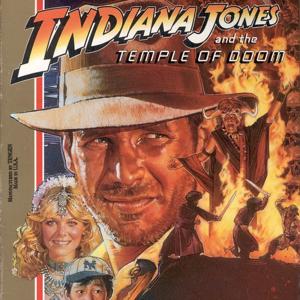
- Next week - Indiana Jones and the Temple of the Doom
Auto-generated transcript. Each paragraph starts with its timestamp. Speakers are not identified.
Castlevania II, Simon's Quest, what a horrible night to have a curse!
NOSTALGIA And welcome to NEStalgia, a chronological exploration of every NES game released in North America. I'm Mike. I'm Sean. I'm Joe. And I'm Sam. And you know what's interesting there, guys, is first off, when is it not, like, what would be a good time to have a curse?
Not Halloween. That's true. Okay. Or not Friday the 13th either. The statement itself is just weird, right? Like, what a horrible night to have a curse. Every single night would be bad to have a curse. Yeah, well, I wonder what the, like, parameters are. Like, if there's, like, if there's good conditions. We're like, oh, this is a great curse night. It just never happens to happen in this game. Hmm. I guess if you don't have plans, and you're trying to impress some goth kids. It might be like a trip, like, oh, this is a bad night to trip.
Yeah, and I mean, obviously, that's the line, uh, in the game itself, when it turns to night, and the enemies get, like, twice as strong or whatever. But otherwise, nothing else really different happens there. And so, I don't know about you, but when that text pops up for the first time, I'm expecting, like, things to go down. And then the music changes.
Yeah. I mean, you also can't, you're not safe in the towns anymore, which is still not, like, a huge thing, but. Oh, right, and they close the doors, too, to the town, right? Yeah. Because it's a horrible night. Right. Yes, to have a curse. And the, you know, we usually read the back of the boxes for these games. And the back of the box of this one, I found to be very strange. It says, Castlevania was a cakewalk compared to this bloody curse.
I don't know what that, you know, like, what is that about? Like, they're, like, completely trashing on Castlevania 1, and, uh, you know, cakewalk? Like, there's no vampire pun there. Like, weird. There's a lot of, I mean, if we could just talk about the copy in this game for a bit. Uh, the manual is filled with a bunch of these things, too. Like, uh, um, that, you know how in Congress they'll say the eyes have it?
If, uh, yeah. That's written down when you talk about, like, the eye enemy in this game. Like, as if that's, that's a, a feasible pun to use. I, I, I really don't know what they were doing while writing about this game. That's just how people used to talk in the 80s. The eyes have it. It's like, hey, you guys want to go to the mall? And they'd be like, yeah. I'm like, alright, the eyes have it. And then they'd go. It's the same, it's the same thing as, uh, uh, that Castlevania was a cakewalk. I, I don't get it. Well, instead of, instead of enemies in the manual, it just says, Count Dracula's best buddies.
So right off the bat, I'm like, do they want me to be scared? Or do they want me to, like, have a good old time? We should be scared. It's Halloween. Castlevania had that, uh, had that tone as well, though, right? Where, like, at the end it was revealed that it was all like a movie with Bela Lugosi.
Oh, that's right. Oh, yeah. Forgot about that. So, it always had, like, a bit of camp to it. I should say, as Sean keeps trying to introduce this element to the show, it is Halloween, guys. And that's pretty spooky to be recording this episode. Yeah. What a horrible night to have a curse. This is the nostalgia spooktacular, guys. Yeah. And, you know, last episode, I promised that we would get Dracula on the show. I think he's a little busy tonight, so I'm pretty sure he's not gonna make it here. But, you know what? What's he busy with? Well, it's Halloween! He's busy biting into some girls' neck or something. Delivering the presents to all the children.
As if he's the Halloween Santa Claus, right? Yeah. Yeah, it's actually weird that The Nightmare Before Christmas never took that angle. That, like, Jack Skellington would have beef with Dracula. Yeah, it would have been a cool crap battle. Although, I think there are vampires in The Nightmare Before Christmas. But, personally, I don't like watching that movie. And I know that's gonna put some listener on my list. But, I don't like watching that movie. Anyway, no Dracula.
Definitely Halloween. And we're definitely talking about Castlevania II, Simon's Quest. And if you may recall, some of us here really loved Castlevania I. And, yes, we were playing it for the first time ever. So, this is some real genuine stuff. And how many of you just, you know, guys say yes or no? I guess that's the only two choices you can give. How many of you are playing Castlevania II for the first time in this episode? Yes. Okay. That's not the correct way to answer that question. But it was the only option we were given. It seemed the most appropriate. Yeah. How many? Yes. Yeah, exactly. Okay, so I goofed a little bit. But, it's important that people understand that we don't have this whole, like,
childhood built around the Castlevania series. And especially with the original NES games. Because the game has a long history, Simon's Quest. You know, of like, I think, first being critically well received.
Then, like, a lot of people just giving up on the game. And then, many, many years in the future, finally, people start saying, no, this is like one of the worst NES games of all time. And that seems to be like the current narrative. Yeah, I'm familiar with the legend of Simon's Quest. Like, the current narrative of, like, why does this game exist in the form that it does? But I had not played it until... It was one of the things that I was sort of looking forward to when we started this podcast was like, oh, someday I'm going to play Simon's Quest. Because that is so infamous now.
But, yeah, it's... I'm glad I finally got to do it. Yeah, I actually never... I knew that there was, like, some discrepancy over the status of Simon's Quest. And I wasn't sure. I actually thought it was going to be kind of like how I imagine Zelda 2 will be. Where a lot of people don't like it. But maybe if you get past some of the changes, it might be a good game. I'm hoping. Just in the way that even Super Mario Bros. 2 was. Where it's like, oh, you might be off-put because it's different than the previous one. But, oh, underneath that, it's a good game. And I was hoping that that's what we would get for Castlevania 2.
And it did a little something different. Yeah. Anything to add there, Sam? I mean, before this, I had no experience with any Castlevania game. Didn't know anything about them. I know people really like the PS1 game. Oh, Symphony of the Night, yeah. Yeah. But, I mean, that's really all I know about the series. So you hadn't even heard anything bad about this game? No. Interesting. That's an interesting perspective, too.
Because, I mean, the angry video game nerd. This was his first video ever was on Castlevania 2. And I think that's kind of what started this narrative against. Yeah, it's part of the canon. Right, right. Well, let's get into it. You know, the game takes place seven years after Castlevania 1's events. And you're still playing as Simon Belmont. It appears that, like, when he last fought Dracula, he now has, like, a curse on him that Dracula has inflicted on him.
And he needs to go collect all of Dracula's body parts in order to, like, finish off the curse for good. So, in Simon's Quest, you spend about the same amount of time that you do fighting. You're going to spend that exploring these various towns and areas and castles, mansions, if you will, for the smaller ones.
You've got to travel throughout the world in search of these five different mansions where Dracula's body parts are kept. And along the way, you're going to pass through these towns that you'll be able to buy new weapons or items and get clues from the villagers. Now, forget everything you know about the game you played this week in preparation for this. That sounds like a pretty cool idea. Yeah. An open exploration for, like, finding Dracula's body parts by talking to townspeople and searching castles. No, on paper, this is, like, this is above and beyond the narrative and plot design for a game so far, like on the NES.
Like, that is pretty cool if it can be executed properly. Yeah, I think that it has, I know we've said this about other games before, but in this case, I think it's, like, the most notable instance where it has all of the, a bunch of elements that are really cool and, and maybe even would work well together. They're just, like, not executed or connected to each other properly, you know? Like, the idea of going through these different areas and, and finding all these parts is cool.
But, like, in this game, by the way, this is designed, you need a lot more, you need, like, a map or something that feels more open and feels a lot less random. And there's, there's, that's just one example, but there's a lot of things like that where they tried something cool, but they just ended up making it really confusing or unclear. Or tedious.
Yes. Or tedious. Or tedious parts, too. Well, you know, it's funny, it's, if you played Castlevania 1, and you were excited about that, and then you buy Castlevania 2, when you first start that game, assuming you didn't read the manual and don't understand, like, the larger scope of things, does anyone just try to, like, hit that first guy with the whip, like, as soon as the game starts, you just, like, assume he's an enemy, right? And then all of a sudden, you gotta talk to him. Yeah, it took me a while to figure out that I even could talk to him, because you have to be, like, sitting on his face for that to happen.
But, so, I mean, yeah, the fact that we're in a town, and you seemingly can't interact with anybody because your whip is going right through them, it will take you a moment to finally figure out what you're supposed to do.
Because there are doors, you think you can go through doors, the doors are closed, you can only go through open doors. There's a lot of, there's a lot of things that you're gonna start learning within the first ten minutes that you'd think would be a little bit more intuitive, and it's not. Yeah, and even the idea of these towns, again, is really cool, but the fact that just getting there is just endless side-scrolling levels, it needs something else to make it feel like you're, like, deciding to go to this town, or deciding to go to that town. Otherwise, it's just, alright, I gotta get back to this town, okay, that was three towns over, I guess I just have to walk in a straight line all the way back to that town.
Oh, Joe hates this game. No, I do have a lot of issues with it, like, you know, really, I think that, like I said, there's a lot of things that I feel like it was trying to be, trying to be something, like a hybrid of, like, a Final Fantasy game, and, like, a side-scrolling game, and I just don't think it pulled it off. But, um, I mean, I probably will have some good things to say about it at some point, but yeah, maybe not as many as you guys. Well, yeah, save them, save them! Well, alright, if we're talking about grievances, though, I mean, there's also the fact that if you get to a town where you want to talk to people, and it's nighttime, you just have to wait until they turn into not zombies, or whatever those guys are.
So that is, like, that's an entire mechanic in itself, which I think, like a lot of things in this game, is a pretty cool idea. Yeah. Like, the idea of a light world and a dark world, uh, and... Did it before A Link to the Past! Yeah. Um, obviously they didn't do it correctly, because we're going to talk about, um, but, I mean, when that first happened, and just sort of erasing that AVGN episode out of my mind, it was still pretty interesting.
Like, what changed? Yeah, and also, like, the transition of, like, the horrible night to have a curse, and, like, that change of time and stuff. That's really something that has been played out as, like, this always happens, and the transition is so long before you can do anything. I never really had an issue with it, as it popped up. It seemed pretty infrequent. It's a little overblown. Uh, it reminded me a bit of, like, just in Silent Hill, just the changing from, uh, misty world to other world. Uh, everybody is just, uh, is a zombort now.
It was, it was pretty cool. Yeah, I didn't really have much of a, a personal, personally a problem with it. Maybe once or twice I wanted to go to a shop, and I couldn't, but that's not a big deal, and seems like a fair punishment in the gameplay. But then also, I feel like it just didn't, like you were saying at the beginning, like, it didn't really seem to have much of an effect at all. Like, it didn't really, it didn't seem significant enough. I feel like you could have easily left it out of the game at that point, and it wouldn't have made much of a difference to the game. I would have liked to see, I know that the enemies are supposedly, like, a little stronger, even though it doesn't say that in the manual.
Um, but like, other, I would like to see, like, maybe different enemies, or something different you have to do at night, or just some, some reason to feel like that's in the game. Yeah, I think that the, the towns have, um, wraiths, or, uh, witches, I don't know what you would call them, but. Zomborts. Zomborts, okay, there you go. That's what they are.
So at least there's something there, but I totally agree, Joe. I was expecting the re, you know, like, the actual cycle of, like, dimming the screen and everything, that when things came back up, the enemies would look different. Maybe even the land would change a little bit, you know, and you'd have to actually time your playthroughs to be, like, at night, you know, the lake turns to fire. So I have to, you know, like, I can't cross this lake anymore, and now I have to fight off these enemies until I can, um, until I can get back to town or something. Like, I expected a little more to change, but I think that this, like, day to night transition thing is actually not poorly executed.
And I would say that because so much of the game revolves around, like, talking to townspeople and collecting things and buying new things, the fact that, like, at night, those things are inaccessible to you and that there's a direct consequence and that the enemies are stronger. There is a bit of a survival aspect to that where, you know, health is not just a commodity in this game.
Well, one thing that I think would have made this a bit easier to swallow would have been if there was some indicator in the corner of your screen that sort of told you, like, what time it was or how close you were until nightfall and sunrise so that you could time your actions appropriately. I don't know if it's, like, the same amount of time every time. I think it's when you pause the game, though, right, Sean? It shows it in the inventory there what time it is. Oh, does it? Yeah. Oh, shit. I thought that was, like, my play time. No, yeah, yeah, yeah. I'm like, I'm playing this for four hours.
You're right. I stand corrected. But, no, you are right. You have to pause for that. There's no way of, like, being able to, like, accurately time. You'd have to, like, assess. You know? You don't know how far you move across a screen in a certain amount of time unless you, like, pause and unpause between screens. And no one's doing that in their Castlevania 2 grid map. I guess, you know, just make that information a bit more accessible then. The timing mechanic did me dirty twice. The first time? Oh, like you just got to the town? Not quite. So, I was in the town and I was, I killed a zomble. Just say zomble.
I killed a zomble and the guy dropped the heart on the ground and I went to pick it up and just before I could get it, it changed to daytime and the heart went away. So, that kind of bugged me. But, you know, that's fine. In that same town, I talked to someone who said that if I jump into the lake, some lake during the daytime, then it's safe. Because I had tried crossing it at night and I died. And so, I went all the way back to where the lake was. But by the time I got there, it had turned night. So, I had to wait for the full cycle just at the lake, just standing there. And then it turned into day and I jumped in and I still died.
Right. Because you didn't, you know, you got what we like to call in this game an untrustworthy villager. Okay? Yeah. That is, I think, a small part of a much bigger topic that we have to talk about is, one, what kind of information you get from villagers and just in this game entirely and what you have to do with that information.
That's a huge part of, like, the legacy of this game if we want to talk about that. Yeah, I think we're good on the day and night mechanic. So, I think the question being posed is, the whole game is information based, right? Like, there's no, outside of, like, a strategy guide that you might be able to, you know, get on, like, a Nintendo power issue, right? There's, the only other way to beat this game is to talk to the villagers and decipher their clues. Now, how can you trust the villagers if they're not all telling the truth?
Or they're poorly translated. Well, yes, that's true. So, that is, that is what wound up happening. However, I was kind of shocked to know that in the Japanese version of the game, it's, the translations, like, some of those villagers do lie as well. But it's more clear that they are lying, like, through what they are saying, you can tell that they're lying, and then you use those rumors or lies. When you find the actual clue books in the mansions, those will, like, reveal the truths of those people's lies.
And so, I think that's a much better way. Unfortunately, this is a lost in translation thing where Sam was told to jump in the lake during the day, but you also need the blue crystal, and you have to kneel for, like, 30 seconds or something. Nah, that's a few seconds, but yeah. Okay, okay. But, and then, and then it reveals itself that, like, you can go further down, and, like, the water basically is drained.
I think that, uh, I think that my biggest illustration of how obtuse this game is, um, was just right off the bat. Like, I just started walking to the right. I didn't think I had any money, so I didn't buy anything. Uh, started walking to the right, got into a mansion, went through all of the stuff, all of the enemies, with my shitty starter whip.
Uh, got to the end. The vampire killer. Yeah. Uh, got to the end, saw a glowing orb, tried to interact with it, and could not. Uh, it was just, that was what I was there for, and I couldn't do anything with it, because apparently I needed an oak stake.
And I don't think, I mean, like, maybe there's a villager that says that you need an oak stake to do that. An oak stake to do that. Um, but I had, that was the moment that I opened up the strategy guide, because I didn't know what I did wrong. Didn't know that you needed it. And that's just sort of like the theme of this game. Yes, you won't know what you're doing if you, if you play strictly with the villagers' information. I will say to the oak stakes defense, at least, and it is, it is poor design. I'm not arguing that. The worst thing they could have done, though, is put the person who sells you the oak stake not in the mansion with you.
Oh, yeah. At least they were smart enough to be like, well, if people haven't figured it out yet, they might come across this villager in the mansion itself, and that person will ask them if they want to buy an oak stake, and they might just buy it out of curiosity. But you still don't know to then, like, toggle it on and shoot it at the orb.
Right. Yeah. And there are even other times where you have to, there's a couple times where you have to just go to a random spot where there's just nothing there and drop a clove of garlic. And that's how you progress the game. And there's no, as far as I know. Yeah, you have to summon some guy. Yeah, as far as I know, there's no villager that tells you this. There's nothing in the manual. I mean, I don't know how you would do that without a guide.
Yeah, and that's not like just bombing every wall, like in Legend of Zelda. This is a completely different level of ambiguousness. Yes. And it's also like you're being given information. So if you did write down, let's say you made a journal of everything that everyone wrote you, said to you in the game.
If you looked at those clues, some of them would still never line up with anything. And you might think like, well, I have to do something with this clue. Like it's never, it hasn't had any use yet. And it turns out it just will never have any use. And that is also really bad game design in the sense of misleading your players into thinking they haven't done something in a game that has missable collectibles. And that is also really bad game design in the game that has missed the game that has missed the game. And that is also really bad game design in the game that has missed the game.
So obviously we don't think this is okay. Like this is not a mechanic that we're dealing with. So is this the point where all of us kind of said like, well, we're playing this for the show. We played 140 plus games at this point.
I just kind of need to power on through with the guide. I mean, yeah, it was, it was definitely the moment where I was like, I need the guide. But once I had the guide, I was able to sort of enjoy the gameplay as it was since I was being told where to go. I mean, this is definitely not how I see playing games in general. Like I, I'm a, I mean, this is not cool, but I was able to experience the, the, the progression, the feeling of progression from getting these new items and getting a better whip finally. And like the gameplay itself felt pretty good.
Since that whole, like all of the thinking was taken away for me. I don't know if it's a similar thing. I mean, there is definitely something cool. Then not then when you don't have to worry about like missing impossible things. There's something cool about like, oh, I'm actually going from place to place. I'm getting this first because I need to, I got to trade these crystals for other crystals. And it feels like you're really progressing in the way that they intended.
I do think though, even then with the guide, it's not, you're not, you, you don't use the guide like you would where it's like, oh, where do I go next? Oh, I go to this building, put the guide down and play for a while. Like, and maybe this is just my experience, but like, you know, I'm, I'm looking at the guide, like every other second of playing this game. Cause I'm like, oh, there might be like, oh yeah, there's a, there's a, there's a missing block here that I would never have known about. Or like, you know, so it did feel like there, there was like I was reading the whole time I'm playing, which kind of hindered a bit. So I forgot that you had recommended that we read the, that we use a guide with this game.
And so I just kept like looking around things and like double backing different areas and just got very frustrated. And then I finally looked up the guide and I remembered, I was like, oh, right.
Uh, looked up like what I was supposed to do. And they're like, oh, well in the very first stage, like you don't have enough money to get the holy water. But if you like, uh, if you farm some people for a little bit, then you can buy it anyway.
And then at that point I was just like, I'd kind of had it by then. Sure. Grinding is on your to-do list. Yeah. That's the first thing you're supposed to do when you play the game. And we'll talk about the grinding in a little bit, but I wanted to go back to the strategy guide argument that I, I, I heard two different opinions here from both Sean and Joe. And I think you both agree on the same use case here.
But what I found interesting is that, you know, the thing that I go to for strategy guides the most are in like very big JRPGs where like there are missable things. But that said, you could play that entire game, you know, like you could, let's say Final Fantasy VII as an example. You can beat Final Fantasy VII without ever looking at a guide. I feel like most people would be able to, but if you might miss a lot of things and that's where like a strategy guide comes into use. In this game, I believe that a very small percentage of video gamers in history have beaten this game without a guide.
I mean, it had to have happened, right? It had to have happened, but how much work and time? I don't know. When was the last time somebody actually did that? Yeah. This would be a 45 hour game, which would make it on par with those JRPGs. But yeah, I remember like in Final Fantasy VII, Final Fantasy VIII, I needed those strategy guides to like find summons or like, oh, this is how you get Yuffie. And like, these are stuff that you don't need to finish the game. It's just to enhance the experience, get them like just optimize, like optimize the fun out of it kind of. But it is not how you get past the first level.
Right. Yeah. I mean, I like to use strategy guides relatively sparingly because I just like to feel immersed in the game and like, oh, if I miss something, I miss something. As long as it's not game breaking. But like, you know, I'll use a strategy guide if it's like, oh, it seems like maybe I missed a line of dialogue that tells me where I'm supposed to go next. And I'm just wandering, wandering aimlessly around the map.
It doesn't feel like I'm supposed to be figuring this out on my own. Then I'll look, I'll look something up. Or if I'm really stuck on something and I, you know, whatever, I'm just feeling like doing it. But for this, it was like, it's almost like the strategy guide is part of the game. It's like you, part of the game is reading the strategy guide while you're playing it. Yeah. And I would say, you know, to what Sean was talking about earlier, where he actually started to enjoy the game.
I felt the same exact way. You know, it started to feel a lot more like a Castlevania game with some tedious tasks. But for the most part, it reminded me a lot more of Castlevania 1 now that I just had to, like, get to the point where I could start fighting enemies again. And then that stuff was all good and fun. And as a lot of people know, Castlevania 1 is my current favorite NES game. So you can see that I would definitely have a good time.
That said, I'm not sure if I'm just having a good time because I tried without the guide first and then moved on to the guide. I think if I went straight to, like, just understanding, well, this game requires a guide and playing with that, I think I would have thought that this is, like, an unnecessary step in the game's design. And so I'm probably going to have to agree that that is... Well, I still do.
I mean, even as somebody that went through the exact same process as you, like, I still think it's inexcusable. But I was able to set that opinion aside, I guess, just during the experience. And so there's leveling, too, that we have to talk about. Leveling and grinding, if you will, for hearts and for, like, Simon has, like, a level up ability in this game.
Unlike most RPGs, though, you don't gain experience by killing monsters. It's only when you collect hearts from the monsters that you get the points. So you can't just go around constantly destroying skeletons. You have to hope that they drop hearts. You earn one less experience point than the number of hearts you collected. So I think if it's, like, if it's a full heart, that's six hearts that go into your currency of hearts. But then you only get five experience points. And saying hearts over and over again makes me think of kingdom hearts and the way those people talk.
But, you know, once you have enough experience points, you gain a level and you become stronger. And I never really felt like I had to grind for that aspect of the game. It was about collecting hearts in general. Just to get the money. And then you just level up as a result, you know? Yeah, the leveling up was a happy side effect. It was not something that I was working towards. Because, like, the attack power is just by buying a new weapon. Like, you're not getting stronger that way. I think you just get more life. Right? And so I wasn't too worried about that. It was just the fact that everything is so expensive.
That, I mean, if you're lost like you would be without a strategy guide, you will get rich if you don't die too often. But as somebody that is following the strategy guide, you do end up having to grind. Yeah, that's exactly how I felt, though. Without the strategy guide, or even sometimes with it, just there's so much, for better or worse, backtracking and going back and forth and traveling through these levels.
That I feel like a lot of the time, not all the time, I kind of organically just had enough hearts that I needed. Like, just because I had been killing things because I've been running back and forth trying to figure out where to go. So a lot of times I didn't feel like I needed to grind even for money. Sometimes I did. I watched a speedrun of this game, and the first thing that the guy does in the speedrun is just spend like two or three full minutes just grinding hearts. And that's kind of when I knew that I was in for a bad time.
It makes it easy, though, to grind in this game, too. So that's like the unrewarding part of it as well, is that enemies respawn the second that you leave them off camera. So you can just find like a spot where there's a skeleton to your left and a skeleton to your right, and just keep walking back and forth between them. They only take one hit of damage anyway, and then collect the heart from them as a result. During the day. What do you mean? Oh, yeah, because it would take additional strikes. Yeah, right? Yeah, it would. But if you level up, then it wouldn't. They also drop more at night. Oh, okay. That's good to know.
That whole concept is pretty cool in theory as well. Well, like the example that pops to mind right now for me, it's not experience, but like in the new Doom games, when you kill enemies a certain way, they will drop health and ammo and some other consumable. But you have to go and collect it like you can't just kill that range and and get better. So like it's a definitely it's definitely a cool thing to implement in a game like this. But the fact that you're usually killing enemies that are right next to you anyway, it seems like an unnecessary step to because you're just going to walk across the heart immediately most of the time. So it seems weird that they tied it to that.
I think it's still a cool idea. I think it just feels good to pick up something also. Yeah. It definitely gives you that agency in a way. I actually think a long time ago, a game close to Castlevania's original release, Rygar handled leveling up in a like action style game a lot better in the sense that attacking things of your like as you're going by things that you kill, you gain experience for regardless. And then once you become stronger than them, you never gain experience for them again. So there's a constant like need to progress forward. Like you won't gain any experience by just hanging around. You have to constantly keep moving.
Yes. Those hearts we were talking about, they do have use, though, outside. We were referring to them as like a currency, and we know that you can buy stuff from villagers. But the whole point of that is that you use the hearts to buy these magic weapons. And some of them are familiar from Castlevania 1. There's the Holy Water again, the knife, which now has like two additional upgrades, which are pretty cool. I was sad to see that the axe wasn't there and stuff like that. But most of the magic weapons in this game are pretty fun. Yeah, I had a lot. I didn't really use Holy Water that much in Castlevania 1.
But shortly after that, in Smash Bros., I was sort of a... I turned into like sort of a Simon Mane. And the way that you throw it in this game is very similar. And it just reminded me of that, because I haven't played Smash in a long time. But just the Holy Water in this game reminded me of being good at Smash.
Yeah, and I think like the Holy Water in this game is very effective. Yeah. You know? I don't know how... You need to spam it a little too much, but... Yeah, yeah. You could spam it and it like locks them in place for a little bit too. But I found all that stuff to be really fun to use in this case. Because in the last game, in Castlevania 1, it caused you to like lose hearts. Like you had to spend your hearts to use those magic weapons. In this game, once you initially buy them, you can just use them whenever. And we're talking about the Holy Water, which is great that you can just use that whenever.
But it's just nice to have like, rather than the whip, have some projectiles that you can use from far away enemies. Because a lot of times, especially in the castles themselves, the way the stairs are laid out is not inviting to using the whip. Yeah, there are definitely plenty of times where you feel absolutely stuck. Like there's nothing you can do to kill something without getting hit just because of the placement. So it is nice to have something you can throw down at someone. Yeah, and I remember when I... The first run-through without the walk-through, just going out into the first area with enemies without the Holy Water.
Yeah, you will just get stun-locked probably. And stunned into the water. Because you don't... You just don't have anything. It's still stupid that they don't communicate perfectly that you need this pretty much to play the game correctly. But once you did, it felt like that progression we've been talking about. There's two different kinds of...
So there's the magic weapons, which you toggle through, and you can only use one of them at a time. And it's the same controls in Castlevania 1, where you hold the up arrow on your D-pad and press the attack button. And now you do that instead. But then there's also, like, equipables that you get, like the blue and white crystal and the Dracula's body parts. Like, I think the bone, Dracula's bone or something like that, is a great defense boost. Yeah, the rib. The rib. You actually start to hold a shield. So, I mean, like, that's a cool version of that. But the rest of them aren't really... There's no context to it. Just, like, make sure you have this crystal on you where you won't see that elevator.
Right. The bone is cool, though. I just wish they thought as much into the rest of them as that one. Yeah. You know, I'd love to hear your thoughts on the magic from you for a little bit until, you know, I think you got, like, a knock at your door or something. Yeah. Did he disconnect? Sam? All right. I will edit that out of the show so that the listeners don't have to hear that. Oh, technically. But, yeah, yeah. Forget that. And that's the magic weapons. I do have to give a special shout-out to my favorite magic weapon that was not in Castlevania 1, and that is the diamonds.
There's the... It's definitely a missable collectible, but it allows you to... Yeah. It allows you to shoot three, like... I don't know why they call it diamonds, but they're, like, three white circles that are really useful in the mansions because when they touch a corner or a wall, they just bounce and go to the next corner. But you can shoot three of them at a time, and so if you go in a room that's crowded with enemies, you can shoot those from afar, and they can just follow along you. And it's almost like... It feels like a shmup power-up, you know, where you have these other ships fighting for you. Now, does that go away? Is that a consumable, or...? No, that is a power-up that you buy.
It does follow the same rules, though, where if you launch three of those, until you exit the room where they are in, you won't be able to launch anything else. Like, you won't be able to then, like, equip the knife and throw the knife. Yeah. So they literally stay on the screen the whole time you're in the room? Like, they don't fade, or...? I think they have a timer, I'm sure, but it's a very, very long timer. It's definitely not by bounces, because you could be in the fights in some of the boss fights, which are just square rooms, and if you launch those, they'll just keep bouncing around the walls and constantly making contact. I thought they were great for boss fights. Huh. Should have found that diamond.
Good luck. Good luck Good Can we talk about boss fights? Yeah, I would love to. Thank you, Joe. I was about to say, speaking about boss fights, where were they for the first half of this game? Right. Were there just three in the whole game? Three in the whole game, Joe. Okay, yeah, and the first one, like you said, is like more than halfway through the game. Which part of me thought, I guess that's kind of an interesting way of doing it. It's like you really got to work your way to finally get to the first boss. Like, oh, now it's like, it's all downhill from here. Now the big bads are coming for you. You've made enough of a stir.
But I don't know if you guys noticed that unfortunately you don't have to fight the bosses. Well, it's funny. You don't have to fight the bosses. You just walk back. You don't.
I didn't know this. Hold on, hold on. I don't know how true that is about Carmela. Carmela. Yeah, because you need an item. You need an item from her, right? Yeah, I think you need her item to progress. But you don't have to fight the one. Right. You don't have to fight death. Yeah, and you have the ability to just pass by Carmela, but you're going to regret it later when you don't have the item you need.
Okay. That's something I knew. When I first came across death, I was like, I just intuitively, just out of habit, I saw a doorway, and I was like, I wonder what's over there. And I just went, and I was like, oh, I did it. Yeah, there's the orb. Yeah. Throw the stake, and that's it. And to be honest, like, death's power-up that you collect from him isn't, like, all that great. Like, it's useful, but it's not something that you would need to beat the game. So it is kind of funny to imagine Simon Belmont walking into a room, seeing death, aka the Grim Reaper, and being like,
yeah, now I'm going to just go check out what's in the other room. Don't follow me. Death swoops down on him. He just keeps stomping with his fist clenched like he does, and just keeps walking through. Now, what's funny there, though, Joe, too, since you mentioned that you don't have to kill them, is that there's also no reward for killing them in the sense that, like, when you kill them and go to the next screen and throw the blood stake, the oak stake, into the orb,
when you go back to the next room, they reappear. The boss respawns. The bosses respawn. The death and Carmelo will both be there again. You have the option to just walk past them this time, but it's really lazy that they didn't program, like, a permanent kill state for those bosses. Well, have you ever played a game where you're, like, going back later and be like, oh, I really want to refight this boss? Like, these guys were ahead of their time. They knew that people were going to want to go fight that incredible death boss battle.
Okay, but remember in Castlevania 1 how, like, even the bat at the very beginning of the game moved around, like, a lot, and if you were playing that game for the first time, it would be a tough boss fight? I don't think any of these boss fights are tough in Castlevania 2.
Especially Carmela, the only one I fought. Okay, yeah, and she, yeah, and she just, like, stands in the middle of the room and if you, you know, if you use your magic weapons appropriately, she won't really be able to do much damage. Right, Joe? Right, yeah, and then at that point you already have, like, so much health that even, like, if you get hit a couple times, you have plenty of time to learn where to stand where you're not going to get hurt and you just keep whipping her. Like, there's not, like,
a strategy you've got to come up with or anything. It's just, yeah, just attack. But you still have all that health. I mean, we haven't really talked about the difficulty of this game in general. I mean, like, the fact that there are few bosses means it's not as difficult as one would imagine, but this is still a pretty difficult game in terms of, like, how often you're going to get hit.
That's true. I mean, getting to the boss with a lot of health is definitely a big challenge. Yeah, that's a good point. That's the first step if you're trying to make this easy boss games. But, because I didn't, I was very accident prone in this game because in addition to a lot of the obtuseness, sorry to get off the topic of bosses, but is that they'll just have, like, traps set for you. Like, some of the floors floors don't exist.
And I think that that's just, that's just not cool. There's that one wall in the second mansion that you're like, well, where do I go from here? And you could just keep searching the rest of the castle and you'll never find another way to go. And you'll be like, I must be missing an item or something. And then you realize that that wall's not really there. And if you just jump through it, you can move on. Like, that is just,
that's unexplainable to me. Like, I don't get that because this is the part, this is the only knocks I had on the original Castlevania, is that Simon's Quest doesn't learn from any of the mistakes that Castlevania 1 made. And then adds all these new mistakes. You know? So, like, the Castlevania 1 had the problem where whenever you get hit, you get launched. You know, you get launched back and sometimes that means falling into a bottomless pit and nothing you can do about it. Same thing happens in Simon's Quest. I believe those,
you know, you were talking about some tiles aren't there on the floor. I believe that happens in the later levels of Castlevania 1. But even if it doesn't, like, that kind of stuff is just, there should be, like, you know, you have all these magic weapons and stuff like that. There should be a magic way to, like, one of the orbs should tell you these aren't real. Yeah, it's really just spawning holy water. I mean, spamming holy water to make sure that you're walking on a floor, but I'm not gonna play the whole game like that.
Absolutely not. And I think, you know, we've kind of rushed this a little bit, but I'm happy with it that we're finally up to the part where, let's say, you beat all the bosses, you somehow got through all the obscure clue books and village
rumors. Now, you have all Dracula's body parts and it's time to get down to business and go to Castlevania, which is the name of the castle that Dracula lives in. It's not just the name of the game. It's time to go to Castlevania and take this guy down. And it's just, like, a really long trek to get there
and then you go in the castle and there's not a story. Well, at the start of that, seeing the empty castle and it being eerie, because there was so much to fight throughout the rest of the game, I would have been okay with, oh, this is the eerie lead up. You just go through an empty castle and get to the final boss and the final boss is really, really hard. But, you know, the final boss being a little lackluster kind of took away from that. But I thought the empty castle was kind of a cool little... Oh, okay. What was that? Was that Sam? I, Sam? Joe?
I, oh, Sean? Are you there? Uh, you were just saying, uh, I'm here. I'm not really, like... No, I just, uh, I don't know what happened. Is there a fucking internet out there or something? Well, Joe, yeah, I don't know. Um, okay. Okay. He had a point about the, about the death at the end, though. Uh, not death, uh, Dracula at the end.
I don't know where he was going. Um, so you're gonna have to, yeah, you're gonna have to explain this to me because I did not, okay, not get to the end of the game. Uh, but, I mean, the fact that it's a, it's an empty castle, I was just going to agree that, like, that is an eerie, um, that is, that is something eerie. That's something that's, that's kind of spooky. But it's not even like the same Castlevania. It would have been, how cool would that have been? Is, you get to Castlevania, a, a place that had been locked off to you, right, from the beginning of the game because you didn't have all the body parts.
Not true, of course, but, like, imagine if they did it this way, like, the gates are locked, and then finally, once you collect everything, a nice homage to Castlevania 1 where you go through, like, the courtyard and enter and it looks like the mansion from Castlevania 1. Instead, it's just this really small underground-ish castle that you just, like, go down a few staircases and then all of a sudden you're in, uh, you know, you're in Dracula's, uh, I guess, like, tomb or whatever. Now that you're describing it to me that way, that is kind of underwhelming. Uh, but, uh, yeah, what, still kind of confuses what's going on here.
Sorry, um, uh, go ahead. So, for the listeners, like, we'll find a way to get, uh, I think it's actually, we're, like, more concerned about Joe than we were about Sam, but it's just because Joe, uh, came second. We'll figure out what's going on here, but, um, we're gonna just continue the show. I'm not gonna be able to edit around this anymore, though, Sean. Maybe, yeah. Yeah. I don't wanna, yeah, this has never really happened before, but, you know, the point being is,
Castlevania 2, it tries to do something really different, and, in the end, just feels like a hodgepodge of a bunch of different games. I mean, take the endings, for instance. There's multiple endings, something like Metroid, where it's based on the amount of time it took you to complete it, but the multiple endings, you know, they're based on how long it takes, yeah, see, that's, that's goofy to me. Like, so, do we know how, do we know how long, uh, you have until you can, I think you have seven days. Like, how many,
that is ridiculous. Like, I guess, if you have been keeping immaculate notes through your first 45-hour playthrough, like, to this game in the 80s, then maybe you can get that best ending, uh, but, so, yeah, I've heard that there are different endings. So, the worst ending is that, uh, Simon Belmont died in the boss fight with, uh, with Dracula. Like, even though you kill him, right, can you believe that? Like, even though you killed him in the game and you watch him die and everything like that, it tells you in the blurb, like, Simon passed away with Dracula.
Okay? Like, like, together the two died. Okay? The second ending, which is, uh, just a little bit faster of a, of a completion, in my opinion, is worse. Okay? At least dying in the fight with Dracula and Dracula dying as well is some kind of cool, like, confirmation and your, like, duel of the fates style thing there. In the second ending, the middle one, it says that Dracula died, Simon, like, shows up to the grave, right? And you think, like, nice, like, Simon survived, he won it. And then it's like, Simon succumbed to the curse seven days later and died. Like, he, he succumbed to his wounds and that's it. And I, I think that that's, that's crazy. Because, well, stop me any minute, John. I mean, you let me know why that's crazy. John?
All right. Okay. All right. This is normal. We've never had, we've had mics without mic, but now we have mics with only mic. And that's fine. The show's got to go on. It's just, it's just Castlevania and it's just Halloween and we are doing a show. Why don't I just, you know, forget the endings and everything like that. The good one is something like Simon lives forever or something like that. I don't know. Let's just talk about, you know, the music. We got Bloody Tears and Monster Dance together. Together, Bloody Tears being the track that's just when you're fighting all the enemies, Monster Dance being the one when it turns into night.
Both of them got a Super Smash Brothers remix, which is awesome. So, you know, that's really cool and it's really weird to just talk to yourself, but I'm sure somebody's appreciating this listen right now. So let's just keep going and let's do sequels and spinoffs. Okay. Ever heard of a game called The Maze of Goliath or Galleus? You know, Mike, that's me, right? I always say games wrong. Ha ha. Laugh at me now, Sean. No? Okay. All right. It's all right. Maybe Sam, when he comes back, will put in like a little fail sound effect
because he's coming back. And The Maze of Galleus is another game that Konami made that never came to North America, but that is the one that the Castlevania Simon's Quest crew, they give that game all the credit for coming up with Simon's Quest. They said, given the exploration action nature of Simon's Quest, we asked Akamatsu whether Metroid was an influence on the development and he said, if I had to say, I was thinking more of Konami's own Maze of Goliath. So, there's another weak developer quote, Joe. Aren't you interested to comment on how we never hear anything interesting from developers?
Okay, well that's fine because we have the Famicom disk system version of Castlevania 2. It obviously had a saving feature instead of those really long passwords. And you know what's funny? That's a point with the angry video game nerd that I agree on. The passwords are very, very long, but there's something about the D-pad in the password screen that just doesn't quite work as well. You have to hit the D-pad like twice to the right or twice to the left to get things to register. So, it takes a really long time to put in those passwords. And here's the reason why I would say, yeah, sure, you can save, but I wouldn't play this one at all because the legendary music of Castlevania 2 is ruined in the Famicom disk system version. Remember how good
Metroid's Famicom disk system version was and Kid Icarus had that extra beat? Well, not anymore because the music is so bad in this version. It's like they added extra tracks, but they exchanged it for worse instrumentation. So, I'm sure when Sam's ready, he'll explain why that happened or why they would change the instruments.
Okay. World of Power, you guys don't care. You don't care. I've always talked about these World of Power books. If you read them when you were a kid, great. This time, a junior high school student named Timothy joins Simon Belmont because that's normal. Okay. Timothy Bradley and Simon Belmont team up looking for Dracula's body parts. Definitely read that in third grade. And if Simon's quest on the NES wasn't hard enough to play, try playing the Tiger Electronics LCD version of the game. That's right. Tiger Electronics released a
LCD game version of Simon's quest that I cannot find anybody who owns it so I was not able to watch a video of it. But, fear not, if you're able to beat Simon's quest on the NES, I'm confident you'll be able to beat the LCD game version as well. And there's still a challenge for people at home who are looking for like, well, you know, I beat Simon's quest on Tiger Electronics. What else you got, Mike? How about beating Simon's quest on your wristwatch? That's right. Tiger Electronics also released a wristwatch that you can wear and play Simon's quest on in 1988, believe it or not. Well, you know, I guess, can I, I'm just gonna take a drink of water since we're here together.
What is a podcaster? A miserable little pile of opinions. But enough talk. It is time for the Essential Games List.
As the Essential Games List only vote of the week, I declare Castlevania 2 Simon's quest officially essential. As for the rest of you, so you like to play Castlevania, then I curse you to play Castlevania 2 Simon's quest for a thousand years. Happy Halloween.
Castlevania 2 Thank you.