035 · GRADIUS
New to SHMUPs? Read our guide: How To Enjoy SHMUPs →
Ranked #1 in our Top 5 NES Games of 1986 →
The first horizontal SHMUP has blasted its way onto the NES! You must manuever the Vic Viper through seven bullet hell levels to defeat the Bacterion Army! For show notes and more check out www.NEStalgiacast.com
Gradius was Konami's first game for the NES and our first horizontal shooter. It is a port of a well-regarded arcade game, and within a few minutes we were saying it felt like the first game since Super Mario Bros. that actually looked like it belonged on a more advanced console. It was fast and fluid, and it sounded great. Sam was out, so it was Mike, Sean and Joe, and we talked for over an hour.
What makes it essential
- A power-up system that makes you choose. Every capsule you grab moves a selector along a bar at the bottom of the screen: speed-up, missile, double, laser, option, then the force-field slot. Take the thing you want now, or keep collecting for something better? The director has said the idea came from Western computer RPGs and character building, which he wanted to bring into a shooter. Lasers pass through everything on a line, and missiles clear the volcano's lava. Options (the little trailing orbs) and the shield felt close to mandatory.
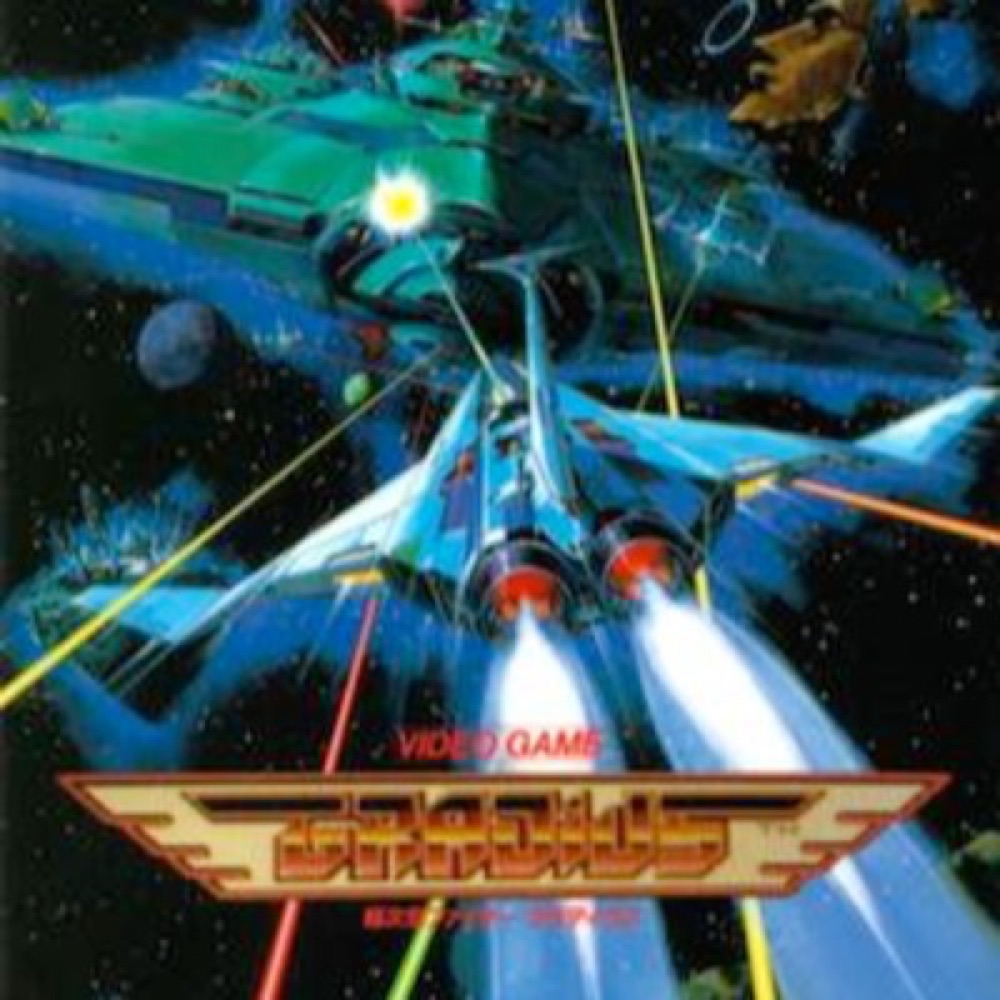
- Every stage looks different. Volcanoes, Easter Island heads that spit bubbles, a scaffolding-and-pink-bubbles stage, tentacle creatures called antenoids, and finally a giant green ship that looks like a Star Destroyer on the cover. We loved that it is weird: nobody could say why there is a stage with two upside-down volcanoes, and the manual just calls it the inverted volcano stage.
- Safe spots you can learn. The first-stage volcano looked cheap until we found the top-left corner and realized the missiles could knock down the molten blobs. The director has said that as a developer he would rather not have had those bugs, but we agreed they are part of why the game works: enemies have patterns, and so do you. We even compared it to Popeye, which had no patterns at all.
- Cheats that are fair. The Konami code makes its first appearance here. Pause and enter it for a speed-up, missiles, two options and a barrier. At the game over screen, a separate continue code puts you back at your last stage. Kill a stage-ending core within five seconds and you skip the next stage, up to stage five.
- It sounds and moves well. The music changes a lot, and movement feels a bit heavy at first, but speed upgrades turn out to be a trap, because you start hitting walls.
Where it hurts
- Dying costs everything. You lose every power-up and restart as a bare ship, often in the middle of a swarm. We all stalled out between stage three and stage six. With only three lives and no remembered stage, that makes it harder to recover than Ghosts 'n Goblins, even if individual stages were easier.
- The Moai stage. It is mostly a survival test, and it was one of the stages that ended our runs.
- No turbo help. A turbo controller does nothing here, and tapping the button works better than holding it. The NES version also has two options instead of the arcade's four.
The bottom line
Essential. Sean went first: the best scrolling game we have played, and one that shows what the genre can be on a home system, after he hated 1942. Joe said shooters are not usually his thing, but the game is beautiful and one of the best-feeling of its kind, so he voted yes. Mike's reasoning was that player choice, tight controls and a lot of personality make it a Gradius game rather than just another shmup. All three hosts put it on the Essential Games List, even though the arcade original is better and we know better shooters may be ahead.
Written from our conversation in this episode.
- First Horizontal Shmup
- Hiroyasu Machiguchi
- A sequel to scramble
- OBJECTIVE
- The player controls the trans-dimensional spaceship Vic Viper, and must battle waves of enemies through various environments in order to DESTROY THE CORE and defeat the Bacterion Army
- FIRST IMPRESSIONS
- GAMEPLAY
- 7 Levels - Themed Stages
- Level 1 - Boss Volcano
- Level 2 - Ship Barrage
- Level 3 - Droves of Ships
- Level 4 - Upside Down Volcano
- Level 5 - Tentacle thing
- Level 6 - Orb
- Level 7 - Brain of the Bacterion Army
- As for safe spots and such, we were able to confirm some of them ourselves, but most of them have been found by players. Simply put, they were bugs. We didn’t plan for them to be there. This goes for slowdown as well as safe spots, but I think for Gradius all the bugs ended up having a positive effect on the game, and I think we were extremely lucky in that regard. Although its definitely true that those were the boom days of “secret tricks” on the Famicom, from the developer’s perspective we’d rather not have had those bugs. But in the case of Gradius, we were lucky in that the players supported us, so those mistakes weren’t fatal. .
- CONTROLS
- WEAPONS
- ENEMIES
- We originally added the Moai because we wanted to give a mysterious image to the game. Xevious had used the Nazca Lines, and we were inspired by that. But we had no idea the Moai would become a mainstay of the series like it has.
- POWER UPS
- At that time, Western computer RPGs were coming into Japan, and “building your character” was a kind of new gaming buzzword. We were thinking of ways to bring that concept into the STG genre. Nowadays it seems rather obvious, but back then it was a combination no one had thought of yet. We also wanted to add other “adventure” aspects to Gradius. We planned a system where once you cleared a stage, you’d have a branching choice of where to go next. But in the end, due to memory space limitations, we couldn’t add that feature.
- DIFFICULTY
- SOUND
- STRAY THOUGHTS
- FROM SHMUPULATIONS
- Our offices were in Osaka during the Gradius development, and after we released the first game a young kid of about elementary school age brought us 200000 yen and asked us to sell him Gradius. Since this was a large amount of money even to us, we called his parents to confirm, and they asked us to sell it to him, so we did. That we had a fan like this made me extremely happy.
- KONAMI CODE
- CONTINUES - DOWN, UP, B,A,B,A,B,A
- Level Skip - Destroy the Boss within 5 seconds before level 5
- Gradius was also converted for the Nintendo Vs. Series arcade platform. It is identical to the NES version, but includes no cheat codes and allows the player to continue indefinitely.
- ESSENTIAL GAMES LIST
- SIGN OFF
Found automatically from the transcript and checked, but it can miss things or pick the wrong page. Spot a mistake? Tell us.
Games
- Gradius mentioned at
The episode's game: Konami's 1985 horizontal shoot 'em up, ported to the NES in 1986.
- Splatoon mentioned at
Nintendo Switch game whose online play went behind the paid service.
- Super Mario Bros. mentioned at
One of the launch NES games in the Switch app, and an essential-list pick.
- Balloon Fight mentioned at
NES game available on the Switch app and on the essential list.
- Ghosts 'n Goblins mentioned at
Previous episode's game, praised but very hard.
- The Legend of Zelda mentioned at
NES game in the Switch app with a planned special version.
- Super Mario Bros. 3 mentioned at
NES game in the Switch app with a planned special version.
- Metroid mentioned at
Mentioned as getting a special version on the Switch, and as having a Mother Brain.
- 1942 mentioned at
Vertical shooter from an earlier episode compared with Gradius.
- Scramble mentioned at
Konami's earlier horizontal shooter that Gradius followed.
- Commando mentioned at
Earlier NES shooter compared with Gradius.
- Kirby's Dream Land mentioned at
Game Boy game whose health bar the pink bubbles resemble.
- Kirby's Adventure mentioned at
NES Kirby game, distinguished from Dream Land.
- Super Mario Land 2: 6 Golden Coins mentioned at
Game Boy game with hippo statues that blow bubbles.
- Popeye mentioned at
Earlier episode's game, contrasted for its random patterns.
- Star Fox 64 mentioned at
Game with a brain-form final boss and branching routes, compared with Gradius.
- Xevious mentioned at
Shooter Konami's designers aimed to beat.
- Galaga mentioned at
Arcade shooter that gave Gradius its enemy-wave power-up idea.
- Breath of the Wild mentioned at
Used to talk about borrowing ideas across genres.
- Contra mentioned at
Konami game most associated with the Konami Code.
- Mach Rider mentioned at
Earlier NES game, joked about as the player's name.
- Karate Champ mentioned at
The next episode's game.
Hardware
- Game Genie mentioned at
Cheat device, contrasted with the Konami Code.
- Vs. System mentioned at
Nintendo's arcade hardware line that also had a Gradius version.
Companies
- Konami mentioned at
Gradius was its first NES game.
Film, TV and music
- Osmosis Jones mentioned at
Film about a story inside a body, joked about for the Bacterian Army.
Terms and events
- Pachinko mentioned at
Japanese gambling machines that Konami now focuses on.
- Konami Code mentioned at
The up-up-down-down cheat code that debuted in Gradius.
Other
- Nintendo Switch Online mentioned at
Nintendo's paid online service, which launched with an NES games app.
- NEStalgia Essential Games List mentioned at
The show's list of NES games still worth playing today; Gradius was voted on.
- Moai mentioned at
Easter Island statues that appear as enemies in the second stage.
- Millennium Falcon mentioned at
Star Wars ship the stage-ending core ship was compared to.
- Mother Brain mentioned at
Metroid boss compared to Gradius's final brain.
Auto-generated transcript. Each paragraph starts with its timestamp. Speakers are not identified.
Hey, what's up guys? Before we start today's show like how we usually do, I thought we'd deliver some, I wouldn't call this breaking news, but it's definitely news. I think it was Wednesday the official Nintendo Switch online service launched, and for a lot of people, they're not too crazy about that because now they have to pay for the free service that they've been using to play games like Splatoon and what would have been Super Smash Brothers.
Now they have to pay to use those online features, but that's not what we're here, we're not here to anger anybody. We'd like to talk about the NES online mode of it, which is a free download as long as you're a Nintendo Switch online member, which is $20 a year for the Nintendo Switch online, which I don't think is a bad deal at all personally, but let's see if it's worth the value to you. The current games, guys, you get 20 games so far.
Three more will be coming each month, so I think that's important to note that this is kind of like a Netflix thing, except for there's no indication that the games are going to expire, you know, like that they're going to fall out of the system. Sure. So the 20 games right now, baseball, tennis, Excitebike, Ice Climber, Super Mario Bros., Donkey Kong, Mario Bros., Balloon Fight, Ghost and Goblins, Gradius, Pro Wrestling, Soccer, The Legend of Zelda, Double Dragon, Ice Hockey, Tecmo Bowl, River City Ransom, Super Mario Bros. 3, Dr. Mario, and Yoshi. Now, we've covered a surprising amount of those games already.
Very skewed to the launch titles. Yeah, very skewed to the launch titles. I think I count 1, 2, 3, 4, 5, 6 right now. 6 launch titles out of the 17 that came with the NES launch.
Joe, what are your feelings? Would you invest in something like this? Well, I mean, I think just of those games that you listed, which this is the first time I'm hearing this list, but I haven't played a lot of them. But of the ones I've played, I can count 10 that I would love to play, right? Like, again, like that. In your bed. Yeah. And that's out of 20, some of which of the ones that I didn't count, I don't know. So maybe they would be great. I think that's awesome. I mean, that's a good amount, especially the fact that you're going to be getting more if you don't have access to it. Like, it's not easy to access a lot of these games anymore.
I think it's great. Yeah, Sean. I'm going to go into a wider context for this. Yeah. I do think that there is some value there, but I do think that any time that there is something that was free and is no longer free, even though they're adding on this NES thing, I would still be a little salty about that. Gotcha. And I think that it's a very reasonable price, but it's a principal thing. You know what I mean? Mm-hmm.
So, yeah, I think that I'm going to pay for the service, and I will enjoy these NES games, and I don't think that I'll ever cancel it. I will say that it's strange that it goes from free to paid. Yeah. Here's the thing that's weird. You can never own these games, presumably, on your Switch. Unlike the Wii U where you were able to buy Super Mario Bros. and then have it, and you can still play it today. There's essentially an eventual expiration date to you having all of these awesome NES games on your Switch.
Yeah. That's also a thing. I'm just thinking of the fact that, and I might have this wrong of the way it actually works, but I don't have a Switch, but I remember when I had the PS3 before PS4 came out and stuff, the online wasn't too great, and it was free.
But now that you pay for online, I feel like they've put a lot more work into it. It's a little more polished and everything, and I think, I don't know, not to defend the decision to just suddenly make something that you were getting for free paid, but I think that they maybe try and get an install base by making it free. Similar to, I think, Spotify did this when it first came out. You could just listen to anything for free. And they're like, okay, now we've got a lot of people, but now we have to make money.
Yeah, I think it was a very generous time period that you were playing free online. I mean, both Sony and Microsoft don't offer a free online experience. Not anymore. But I don't think we're here to talk about the online. I think it's really cool that they have these games. I've been playing them on the Switch. Most specifically, I've been playing Super Mario Bros., Super Mario Bros. 3, and The Legend of Zelda.
And I know that we haven't hit The Legend of Zelda or Super Mario Bros. 3 yet, so I'm sure you guys are eagerly going to wait to find out if they're on our essential games list before you play them. But we already have, let's see, two essential games, Super Mario Bros. and Balloon Fight, are on that list. And depending on how this episode goes, you know, maybe Gradius will make it. And you know how close we were with Ghosts and Goblins last week. We also have an old entry into the essential games list in this list as well. Oh, that's a spoiler alert.
No. Yeah, the Best of 85. Don't we do that? Oh, no, no, no, we do that in the Best of 85 episode. We don't know what time period we're in. We don't know. We're recording this months into the future. Yeah. So I hope you guys will let me know what you think about it. You know, you can add us on Twitter at NostalgiaCast or just send me an email at contact at NostalgiaCast. If you've been playing it or interested in playing it and if you want to know, like, more in-depth thoughts, I'd be happy to go into them.
There's a lot of cool things that they offer that it doesn't necessarily tell you. Like, there's a CRT filter for the games that you can put over them. There's save states. So this way you can, you know, kind of be, you know, a scum and do some – and then play games the way they weren't intended and try to beat them in multiple sittings instead of in one. And there's also, like, an interesting mapping to the controller, too, where it's the back two. It's Y and B instead of X and A.
Fun. Yeah. But, hey, whatever. And correct me if I'm wrong, but is there – isn't there a feature now to – if I'm playing Legend of Zelda, a one-player game, I can play with you, Mike, somewhere else. And virtually hand the controller back and forth. So I wish that the example – you're correct, but not on the example you used. Not on Legend of Zelda. So Legend of Zelda is actually getting a special version later in the road, which I'm really excited for because they are specifically calling them out as a special version.
Let's make a pause. Yeah. Hold on. It wouldn't delete them. Okay. Legend of Zelda is specifically making a special version. I think they also said there was going to be a special version of Super Mario Bros. 3 and Metroid. So I'm excited to see what these revised NES games might be like. But right now, only the games that actually had two-player in them support this online two-player where, like, you know, me and you can play and you can be in your apartment and I can be at my apartment and we can play Balloon Fight or Mario Bros. You know? Like, that's cool. No, that is awesome.
I am – not that I'm holding out, but I do wish that at some point in the future they make that tweak. That's my favorite thing to do on the PlayStation 4. Oh, yes. Passing the controller. Passing the controller back and forth. I'd actually be really interested to see if the – you know, if you want me to hypothesize for a minute.
I think that these special editions of these games could be kind of like a co-op feature where there's two links now and you can be doing stuff in Hyrule and the player two can be doing other things in Hyrule. Similar to, like, maybe Metroid, it would be two Samuses and you kind of just, like, link up whenever you want. Like, I think that would be really cool. That would be really cool. I can't imagine what else would constitute a special edition.
Like, loot boxes. Loot boxes, yes. Exactly. And new skins. Yeah. No longer – No longer does the old man in the cave offer you the sword. You have to pay 99 cents to unlock the sword. All right, guys. Enjoy the episode of Gradius. Hopefully, if you don't like the Nintendo Switch and you don't own one and this was boring, hopefully you hit the chapter marker that I put in there for you because iOS 12 also now supports podcast chapters, so your native podcast app can do chapters as well. Don't plug iOS 12. Gradius, it's a duel to the death with the evil Bacterions.
And welcome to NEStalgia, chronological exploration of every NES game released in North America. I'm Mike. I'm Sean. And I'm Joe. Guys, today we're talking about Gradius, I hope. I'm really not sure if that's how you say it. I think it's Gradius. I always thought Gradius as well. There's something weird about, like, going online and asking how made-up words are – like, how do they sound? You know? It's kind of like – Joe, you'll relate to this – with Roxas, and I used to call him Roaxas. Well, Mike, you don't know how to pronounce many words. But it's also verbally spoken in the game. It's not like you read it.
Okay, yeah, yeah. That actually sounds really stupid, so I need to rewind even further. I have some of those with, like, Harry Potter and stuff. I'm talking about, like, yeah, like, before we ever knew – like, before the game had ever came out, I was on Kingdom Hearts Insider. Right. And this is not a Kingdom Hearts episode, so forget about it. We're talking about Gradius or Gradius, but we're going to leave it at Gradius for the rest of the game. You did promise last week that you would know how to say it. Yeah, I know. And then I looked up online, and there was, like, multiple opinions.
But it's the first horizontal shmup that we have for the NES. That's true. It's a lot – you know, it's a lot different than 1942 in that regard, if you think about it. I mean, forget, like, just the setting and stuff like that. But, you know, playing horizontal, I feel like it's a little more claustrophobic than playing vertical. Yeah, I think that also had something to do with, like, just the size of your ship and everything else. And that's the design. I think they just had more, like, variety in enemies, so there was more on the screen at once. Right. But if we can jump right into first impressions.
I'd love to hear it. I would just like to say that this is the first game since Super Mario Bros. that I felt, like, actually came out on, like, an advanced console. Okay. Just because it was fast, it was fluid, it looked great, it sounded great, and I didn't feel like all of the enemies were just going to flicker out of existence at any point. This is just a very well-performing, good-looking game.
Yeah, I think, like, you know, I'll jump in with my first impressions here. I know the arcade version, and this is definitely, like, a step down, but it's not that 1942 level step down. Oh, yeah. This is a pretty competent port for Gradius, and you can kind of tell, like, nothing looks so different than it did in the arcade version that you're like, oh, well, I don't really know what that is. I mean, like, it looks pretty good, in my opinion. I think it oozes, like, a lot of personality, a lot of creative design, you know.
Each level is almost like its own theme and its own world kind of, you know, even more so. So it is. Yeah. More so than Super—well, not its own world. It actually all takes place on the same planet, if you can believe that. Even more so than, like, Super Mario Bros., you know. It's like in Super Mario Bros., you had, like, World 1, World 2, and stuff like that, but they didn't look, like, so different, you know. In this, it's like I really felt like I was in a different area each time. Yeah, you're either going to, like, a magma area or an Easter Island head asteroid belt. Like, I don't know what that was about, but I dig it.
Right. And then you got—at the end, you got that Super Fortress, or whatever they call it. I think it's got a name, a really strange name, if we have a man—you mean the boss battle there? Yeah, the final stage. Yeah. I mean, I know that that's, like, you're basically, like, coming up against the Bacterian army at the end there, but, like, Joe and E— Yeah, so I think we're all kind of on the same page with—my first thing I thought was, like, this is one of the most polished games that we've seen so far, I think.
In terms of, like, the visuals and the colors and even the music, because there's, like, a lot of music changes in this. Yeah. Which is a lot to ask for, it seems like, in an NES game. So it doesn't get old that way. Yeah, it felt very cleaned up and very polished.
Yeah, and I think, like, just to go back to my first impression real fast, because I have played the arcade version, you know, the game is still just as hard as any other shmup, too. Like, don't get me wrong, I died a ton. And, you know, sometimes if the game is good enough, like we were talking about in Ghosts and Goblins, like, that's satisfying. Yeah. And I think going away from difficulty for one moment and just going into your—the differences between the arcade and the NES version, I think they're only, in terms of performance, was that you could only have, like, two of those little followy guys instead of four, and just, like, a graphical downgrade. I think that it's— You're talking about option there, right? Yeah, option, yes.
I think that other than that, it's pretty much, like, frame by frame. Yeah, so just a little housekeeping for a second. This is Konami's first game for the NES, and, you know, no longer do we associate Konami with, you know, good graces. They pretty much just like to make Pachinko. Yeah, it's Pachinko. Yeah, Pachinko games and Metal Gear Online. Pachinko. Yeah, Pachinko.
So, you know, it's kind of interesting to see, like, even their very first release on the NES is a pretty decent game that was pretty well-respected in the arcade, and then the port turns out to be good, too. Yeah. I'm going to say that botched this name here, but Hiroyasu Mataguchi, he is the director for this game. This game is a sequel to Scramble, another horizontal shmup that pretty much, like, invented that genre a little bit, and they wanted to make a Scramble 2.
And he was kind of, like, trying to figure out, well, how do you do something different than what Scramble did? And essentially, like, what it comes down to is that power-up system of being able to, like, collect power-ups, choose your power-ups, and kind of, like, sacrifice, like, okay, I can get this power-up right now, or kill a couple more enemies, and I'll have, like, a much better power-up. Yeah, this has a really good feeling of progression in terms of grabbing those power cores and choosing what to activate at what time. Do I want to get the missiles now, or do I want to keep saving up until I can have that force field?
I think that adds a layer of depth to it. Right, and just to paint a picture, you have, like, this menu bar at the bottom, and every time you grab, I don't know if it's every time you grab a power-up, but after a certain amount of power-ups, the menu, the selector automatically moves everyone. It moves everyone every single time. Every single time. Oh, it's every single time. So you have speed-up, missile, double, laser, option, and question mark, and also loops.
Yeah, it moves back, too. So if you get another power-up, you're back to speed-up, and if that's not what you wanted, which was the first one, then you should have used your power-up when you wanted it. And theoretically, each power-up is better than the one before it, but I didn't find that necessarily true. I really think that, like, option is, like, a mandatory selection. Like, you want that stuff early on, and you want it, like, you know, you want it for as long as you can hold on to it. I think that and just the force field actually gives you the ability to withstand fire. And I think especially in a shmup game, that is very important.
Right. So the player controls the trans-dimensional spaceship Vic Viper, and, you know, you have to destroy, like, waves of enemies through various environments in order to, and this is now, like, a famous saying in the Gradius and Shmup universe, is just destroy the core.
It's like a thing people shout at each other. Yeah, yeah, yeah, like, it's a huge thing, because if you didn't notice, at the end of every level, you have to destroy a core. Right. Well, I mean, I didn't consider that a core. I considered that, like, a Millennium Falcon. Yeah, okay. That's actually really funny that you bring that up. It did look like something familiar. A Millennium Falcon is a good way of describing it. Yeah, I think the only reason I knew that those were cores was because that's how they were described in the manual.
Right, right. But in the arcade, it's referenced, and it's also just, like, a reoccurring thing in the Gradius series. Okay. And Gradius is a series, for those of you that don't know. It's actually a pretty popular series, all things considered. But if you're not into these types of games, there's a chance you might have never heard of it. Anyway, you have to destroy the core, and then the main goal of the game, of course, is to defeat the Bacterian Army.
That sounds pretty menacing, if you ask me. I think that's, like, a cool name for, like, an evil empire. If you're a germaphobe, I guess. Yeah, it's like, maybe this game is, like, an Osmosis Jones-style thing. Oh, wow. Is this all happening in some guy named, like, Bobby Gradius' body? Bobby Gradius. Like how we said that at the same time, we got some good stuff there. We rehearsed that beforehand. Okay. Way to blow it for everybody. Give him a peek behind the curtain.
Alright, so, you know, let's talk gameplay. There's seven levels. As I mentioned before, everything has, like, theme stages. Level one, guys. Did you feel like it was a good introduction to the Gradius? Was it too hard right off the bat? How did we do? I had, my initial thought on level one was, okay, this is moderately challenging, but it's not too hard. Until I got to that damn volcano at the end. Oh, yeah. And that is, like, I think that was harder than anything that came up in level two or three. The volcano felt cheap to me. Yeah, a little bit. Until I figured out that you could actually destroy the molten chunks of lava that were thrown out at you.
So you pretty much, I mean, this is going just into strategy. I know, I think we should. Yeah, you have to talk strategy. Yeah. Because, I mean, like, I have the strategy. I mean, I just sort of hid up in the top left corner and shot missiles down at it. Exactly the strategy there, bro. I tried a lot of things like that, but I would always get hit.
And eventually, I honestly, I did eventually beat it, but I can't really say it was anything other than luck. I was just like, one of these times, I'm going to just dodge enough and shoot enough down. My hitbox will miss all of them at some point. Interesting. Because what you're basically seeing is just, you have a volcano at the bottom, and it's just shooting just, like, dozens at a time of these, like, molten lava balls that are just, like, intertwining with each other. Yeah. And just weaving in and out of the screen.
Yeah. It's very difficult to, like, keep your eye on all of them and dodge. I will say, though, that, like, that top left area is definitely your safe spot. And I actually, like, kind of only, with missiles in my arsenal, I only had to, like, dodge, like, maybe one or two actual projectiles. Everything else was able to be, like, called off by the missiles.
But, like, that's a thing throughout this game is, like, figuring out where the safe spots are. That's not, like, it's not cheap. Yeah. It's part of the gameplay. And I think that's, like, something interesting that it's almost like you have to learn how to fight the boss. You can't just come in and fight these things. And that's actually kind of true with all the enemies. Because before you get to these bosses, you're just flying through fighting ships. But there's usually, like, a ceiling and a floor.
So there sometimes are things crawling on the ceiling and crawling on the floor. And I used to always, as soon as I saw something on the ceiling, I'd go up and shoot it. So he couldn't shoot at me. But then sometimes you'd have to watch your back because more things would come from behind you. So you really have to, like, kind of pay attention to the patterns of, like, how many people come here? When do I have time to go up there and shoot them without getting killed? And unlike Commando, I really love how, like, in this game, if you don't take care of business fast, like, that screen can get crazy. And it's able to, like, emulate all of those options.
You know, like, all those different types of enemies and all. Like, yes, there's slowdown. Don't get me wrong. Like, the game does kind of slow down a little bit. But just the fact that, like, you could have, like, 40 things shooting at you if you're not careful, like, really ups the stakes of, like, oh, I got to take care of the enemies as fast as I can. Yeah. And I'll have a little more to say about that in a later stage when I felt like that was really important. Okay.
Sean, any other thoughts on level one besides the fact that the boss is a volcano? I don't, but that's not the boss. Well, it's not the boss, but, like, the cores, I don't think, I think of those cores as almost like, you know, like, that's the thing you have to do at the end of the stage, you know? Okay. It's like, the boss of each one is, like, you know, in love. I will say that it is very unique for the boss to be a volcano. It already shows, like, how unique this game is. Yeah. I also like that you can just sort of go through a mountain and get some points. I mean, that was a, they had some cool little bonuses around the stage and that was, this is the first hint of that.
Yeah. I think, like, there's a lot, that's, again, like, another Super Mario Brothers style thing. And, like, you know, I hate to continue to use, like, such a popular game as an example, but, like, you have to think about what we have on NES at this time and, like, when you're comparing a good game, you, to compare it to Super Mario Brothers is a huge compliment. I think so as well.
All right. So, we're moving on to, like, level two now. And things got a little crazier in this one. There was, like, some, some walls that you could shoot down that were, like, mandatory to shoot down at a certain point, but for the most part, like, the game ramps up really fast here in difficulty and ships are really taking more shots than ever. Yeah. I was just happy to see such a change in the layout of this level.
I don't think this is on a planet anymore. Like, I think. Right. I didn't mean, sorry. I just meant, like, you're not traveling, like, planet to planet. It's almost like you're on, you know, like, you're trying to get to the Bacterian army. Exactly. Like, this is almost like their armada coming at you. So, you're just surrounded by all these, like, platforms that they're very angular and you can get blindsided by those little turrets that grab to the top of the bottom of whichever
platform there is. What would you think that is in space, by the way? Like, those gray platforms. I mean, I'm thinking, like, they're, like, space scaffolding. Okay. Yeah. That's kind of how I imagine. Yeah. Like, there's some space station around and they got all these little islands. Yeah. And there's a bunch of, like, plastic stuff you got to get out of the way. I don't know what to call those pellets that you have to destroy. I just call them, like, pink bubbles. Yeah. It's a good departure from the first level. Yeah. And, Joe, if you don't mind me asking, like, what kind of power-ups did you go for on the second stage? Like, what were your kind of, like, go-to things to get through this level?
I don't know. I'll use that now. But I didn't, I really wasn't too often, like, I need to get to this one or get to that one. So, that might have hurt me a little bit. I don't know if you guys got further than me. I only got to level four. Okay. I was using a lot of the secondary fire that shot up because I thought that because there were so many of the enemies that were attached to the ceilings of these very tight corridors you had to go through that I thought that would be the most useful use of those power-ups. Yeah. I use that sometimes. I think the other one I probably used the most, but not for really any particular reason, was just the missiles. Okay.
Yeah. Missiles. Okay. Yep. Mm-hmm. Yeah. Missiles here, I didn't find that helpful, but laser. Laser was great in this one. See, I didn't get what laser was really doing for me. Laser shoots through enemies. That it shoots through them. Everything on that plane. It shoots through so quickly and I didn't notice that it was going through enemies, so I just never really tried to get it again.
And I'm not sure if this is a placebo thing for me, but I also felt like laser shot faster than my normal shot, or shot more frequently maybe is the word I'm looking for, but it definitely felt like I was able to be more destructive with laser. Well, it's also, isn't laser, as soon as you press fire, the laser is shown throughout that entire horizontal plane, right? Right, right, right. So that's why it's faster.
Yeah, I didn't think, I thought it's still shot. It was like, it's longer. It was still a particle. It's still a particle, but it's just a very long, thin one. It moves across the screen. Yeah, it moves across the screen still. Oh, okay. But yeah, no, it kind of like, to your point, Sean, I see what you're saying. It does kind of like stay through the screen. Like, it goes from there.
Yeah, if it hits an enemy, it'll just keep going and hit any other enemies on that plane. Gotcha. And this one at the end has like those annoying ships that shoot like bubbles out at you at the end. Oh, yes. That's like before you fight the core. That was like the annoying. But they sort of phase into existence. The only thing I was thinking of was like, this is not as bad as the volcano.
Really? Because that was like their equivalent, right? Of the volcano. Well, yeah, this is like their boss for this stage. And I thought like this is so much easier than the volcano, which I think overall the level I thought was harder. I mean, like the regular part of the level. But sorry, overall, I think the first level was harder because it included that volcano.
Right, right. Okay. I think that, yeah, there is a point that like maybe these guys are easier because you can dodge them. But like if you don't take care of one quickly enough, now there's two on the screen and oh, now there's three on the screen, you know? So you really just have to like try and figure out the fastest way to take these guys down. And this, I'm looking at the manual for the first time now.
This level is called the Stonehenge stage. Stonehenge. Is this? I thought we were on level two. This is level two. That's why I was confused too. But level two. Oh, you're right. You're right. Maybe those gray things are stones. Yeah. Like stone clusters or asteroids, you know? I'm just misremembering. Yeah, that this is. Well, yeah, you're probably thinking of not Stonehenge, but Easter Island. Yes. That's why I was confused too.
Yeah. But just a little aside here, speaking of things that look like other things, I thought the pink bubbles, Mike, I know you'll understand this and maybe some of our listeners. I thought the pink bubbles looked like either your health or the boss's health in Kirby's Dream Land. Yeah. Exactly. Yeah. Okay. I wouldn't say exactly. It's due to my memory, which has been a long time. Yeah. I can see it.
But wait, are you talking about Kirby's Dream Land or Kirby's Adventure? Kirby's Dream Land. Kirby's Dream Land for the Game Boy. Okay. Yes. No, because yeah, Kirby's Adventure is the NES one and that does look a little different. And I'm sure someone will go play that and be like, yeah, they're both squares. Yeah. And that's really like their similarity. Kirby's Dream Land technically is like, you know, it's a black and white game. I know, but they're pink to me in my brain. They're pink. Some synesthesia with Joe over here.
All right. So then we get to like evil Easter Island with these Moai heads. And the weird thing about the Moai heads is that they're a reoccurring thing in Gradius. Like this isn't the only game that they're in. Definitely the first one, but they now are like an iconic enemy for the Vic Viper. Well, I guess they've established that whoever lived on Easter Island before it became a ruin, they were from Gradius. Okay. I never made that connection, but it took me a second. But now I realize exactly what you're saying.
I'm still thinking that we're inside someone's body fighting the Bacterian Army. Now you're saying that those people like supersized themselves, came out and brought the Moais to Easter Island. It's just my conspiracy theory. Well, I'll say this about Makaguchi talked about the Moai Islands in an interview. And he said, That is probably the most cogent thought from one of these developers that you've ever quoted. Wait until you hear some of his other thoughts. He has some really good thoughts about being a director of an old school game. He actually remembers a lot of it. And we'll go into that later.
I like that the idea of like just, you know, like this game should be weird. Like it should make you question like, where are you? And this looks familiar. It definitely is very weird. Yeah. I think a lot of the games we've played so far are still sort of grounded in a lot of the
expectations that we should have. But like this is a game that really tries to throw a lot of this weird imagery at you. You know what this is missing? Though this is missing like instead of just like black, which is fine because like space is empty. Yeah. It's missing like some trippy, like 70s lava lamp style. I think that might be part of why it looks so polished because a lot of the background is just black. It's also probably how they're able to afford like having so many more graphics on the screen than like most games we're handling. I don't know the technical side of that. I'm sure they're actually just tricking it to make it seem like that. But can we talk about the Moai as an enemy?
They're ridiculously hard. They're hard. They I remember thinking this might be as tough as the volcano. I compared everything to the volcano in this game. And I will from everything I ever do in my life. Out of 10 volcanoes. This job is almost like one of those volcanoes.
I call it boss volcano. Yeah. I would. I wouldn't disagree with that. Also, I just want to real quick step it back because I did promise that I had something to say about about.
If we're moving too fast for you. No, no. I forgot. I was thinking that on level three was when I really realized you got to kill things before you pass them. But it looks like my notes here was level two where I was already like if I start passing everything and not shooting things, they're all going to be shooting at me from behind. Right. And then they also carried over into level three too. But I noticed it in level two. Level two even one, you know, just to go back, since we're talking about like with all of the ship formations and stuff like that, I like how it changed it up immediately from level one. And now they're going in like different directions. Like they were they were coming at you sideways and then going up diagonally.
Like you had to kind of figure out like you couldn't get comfortable and you need to shoot them all down to get those power up. So that was like a nice touch that like they're already taking the game that you thought you knew and changing it on. Yeah. Immediately. And it's for those like trail things. Eventually they had like five or six of them where there originally were just four. Right. And then and then they changed the whole game again with these moa heads because it's pretty much like they're the level.
Yeah. It's like the second half of the level. Yeah. But you know what I mean? It's like now it's not so much about like shooting down ships or anything. It's kind of like about the environmental hazards. Right. And surviving. Like, you know, at this point, I want that that question mark, question mark, question mark one because that kind of acts like a force field. Is that what it is? It is a force field. OK. Yeah. You can take, I think, five hits. Yeah. And I think like that's what I want right now because these guys are shooting out like bubbles out of their mouth that are just destroying me.
It reminds me, this is weird, but Super Mario Land 2, the six golden coins on Game Boy has this level where like hippos have like these water bubbles come out of their nose and you can jump in them. And that's what this reminded me of immediately. So you immediately jumped into one of the bubbles like out of just habit? No, not out of habit because the bubbles weren't big enough.
But I guess I just mean like, sorry, one thing that's not clear here is that the hippos in that game were statues like the size, you know, like similar to like how these Moai heads were. And so it was just kind of like, I was like, was this a thing like bubbles and sculptures and shooting them out? I don't know. Like, I don't think there's actually a correlation there, but maybe there is some conspiracy theory.
The Moai heads, was anybody able to destroy them? I didn't even know you could. I was not able to. I was just dodging the whole time. Yeah, I was just trying to survive. I don't think you can actually destroy like all of them, but there were certain ones that I was able to kind of like, if they were, if they were at like a 45 degree angle facing me and I shot them with, maybe it was the laser that was doing it. But if I shot them with a laser in the face, like enough as they were coming to me, they would actually kind of like fall over, you know, like fall.
And kind of collapse, you know, and I think that that's just like a neat little touch, but it doesn't make sense why it works for like some of the Moai, but not all of them. Well, maybe it's just because it scrolls at such a pace that you could never land as many hits as you needed to, to destroy more than one at a time. I'm not sure. It would just be strange if they had some that were like hard coded as you couldn't, you couldn't kill them. And some were destructible.
Right. And, uh, this, this level ends with another crazy boss battle, uh, just a ton of ships coming at you. And then like, I don't know if they're shooting like little ships. They're like breaking off into all different ships. It's very hard. Yeah. It's, it's not that much. This one I think is the hardest boss we've faced so far. Sorry, Joe. I don't think. I still think the first volcano was harder than this.
Joe, I think you really got to go back. Maybe, maybe I'll go back and play, but that volcano took me a long time. Yeah. Maybe with the missiles, I'll be able to destroy those. Because the missiles are shooting directly down. So if you just go into the top left, you know, like the, I'm serious that like this one was the hardest one for me yet. Yeah. How are we feeling so far? We're up to stage three.
This is about as far as I can get. Yeah. I got to stage four, but did anyone else get to stage four and see what was at the end of fucking stage four? Oh, can I say that? You can say that because you're so upset. The end of stage four. I was hoping that you didn't. It was more than one other. Oh. I was hoping that you didn't get to the end of stage four. That's as far as I got. That's as far as I got because there were two upside down volcanoes shooting, but they still, like gravity still works the other way. So there's just double, double the pain.
It, it, it is, it is weird that like, well, it was weird enough that a volcano was a boss in this game. It's weirder that they're just like, well, just call it back. Like the volcano's brother is really angry and he's going to take you down. I'm sure I'm starting to wonder like what the flight path of, of, of your character is. The, the mock rider. What is this again? The mock rider. The Vic Viper. You are mock rider, but this is the Vic Viper. I mean, are you, okay, you're going out into space. You're in this weird scaffolding asteroid belt. You're fighting some Maui heads and then you just come back on the other side of the planet because we all know that on the other side of earth is just an upside down world.
Is that what's happening? Like, did he just, did he take a wrong turn? I, I don't know if it's so much as a wrong turn as just like maybe he's taking like a shortcut. Like, if you think about like, like he's on the upside down part of it, that like he's going under the area and like trying to skip it all. Going under the flat earth. Okay. Yeah. You know what? Sean, but in this situation, right? Not saying that flat earth is real, but like in this situation, if you go under a planet with a spaceship, technically those things are on top of you and looking upside down.
Right? Yeah. But then you would just, you would just turn over. You just turn over, man. You would just perspective wise. You would just, so he's flying upside down as Mike. He's flying upside down and just decides not to flip over. I think that there are just two upside down volcanoes. I think that's it. And you know what the name of this level is? The inverted space volcano stage.
So they are acknowledging that the volcanoes are inverted. An anomaly in space where two volcanoes have defied all gravity and created themselves inversely. It's weird though, because the first stage is, it's called the volcanic stage. It's not the space volcano. Well, because like, it's supposed to be the planet Gradius has been destroyed or like is in the act of destruction. And now this is just like, they recreated the space. I'm sorry. We're spending way too much time on the volcanoes. I mean, you know, it's an interesting boss.
It does have a, it does have a safe spot though, Joe. I'm sorry to tell you this, but it's, it's tough. Don't get me wrong. But, but you can do it. And I think like, you know, one thing that would be really good for this stage is to have more of your option. Uh, so this way you have more of those, those guys, this way they can shoot as well, because really it's just a, it's a matter of dodging projectiles here. Right. So since we were talking about safe spots though, I thought this would be another good time for another Makaguchi quote. He says,
from the developer's perspective, we'd rather not have had those bugs. Well, I, I think, I mean, in retrospect, he's, he's perfectly correct. It's interesting that, uh, he, he's able to say like, I wouldn't have wanted those bugs, but I'm glad that they helped the players. Yeah, because it allowed for like strategizing. Like if you know where to be during this special area, like you can get further. And that, that comes from not, not so much skill, but that comes from memorizing the levels and, and just knowing what you're doing in this game.
And I think that if any, if at any time that you were just in a level and you could just, it was an equal probability that you could get hit. I think that would be more frustrating than not. Right. You know, while we're recording this, this week that we're recording it and weeks ago for you guys, um, Popeye came out. So I just re-listened to that. And we talk a lot about how in Popeye, it's so like random. There's not really any patterns.
So it's just kind of like, you don't know when something's going to come at you. Right. So this having those, like the fact that there are those things that are, I guess, technically like exploits where you can find a safe spot is also because like there's good design where you can see what's going to happen. You can kind of see the patterns. You can pick up on the patterns in this, and that's what allows you to exploit those things. So it almost is still just a great game. I agree with you. First, I want to say no one has ever compared a shmup to Popeye. So thank you for that.
That is incredible. And like, I kind of wonder, like, you know, he's saying that like these things, you know, are bugs to him. Right. But like, in a way, it's these safe spots only exist because of the way that the AI like shoots projectiles, you know, like the way that they were designed.
In a way, I feel like even if he didn't intend for it to be this way, this is like a necessary step for the game. Like, like to figure out which way the enemies shoot and behave and to work around that to find these safe spots. You know, like I don't I think like even now, too, they're kind of like a staple in shmups is like finding your your pattern almost like the enemies have their pattern. So what's your pattern to get through the stage? Yeah, it's interesting to think that a core like mechanic of a genre was was discovered through oversight.
And so going on from stage four, we have stage five unexpected. Whoa, twist. Twist. But Joe, you said you did not get there. I did not get there. Are there five volcanoes on all sides of the screen? There are no more volcanoes. Now there's like it's it's weird because it's it's like tentacles, but they're like metal, I guess. And it's spacey. They're like, do you have the manual? Do you know anything about this? I just know that the name of the stage is the I guess the mole stage, but M.O.A.L.
OK. Is that something I don't know? I don't know what that that sounds like. No, that's not. That's the mole. You're on the mole stage. I see. That's not. What page of the manual are you on? How low long, Joe? I'm on a very like low res PDF. It looks like an L. What we're talking about are the antenoids. It's the antenoids. OK. Yeah. They look like tentacle monsters, but like they actually know what they look like. They look like tentacles. Oh, you know. Yeah. Pokemon reference right there. Or like a tentacruel.
Tentacruel. I wish I could find a picture. I just wanted to say cruel. Yeah. So when I run into an antenoid creature, go after the red spheres in the arm portions to destroy the arms. If you get to the central nucleus, the whole thing will go up in smoke. That's the manual's description of chapter. Yeah. It's kind of cool. It's like this wavy thing. Like it's it has like four arms on both like two arms on both sides, four arms total. And yeah. No, no, it's OK. That's like that's just the image in the manual that's provided to show you that like to shoot the red part. But like essentially you have to kind of like dodge those and aim for the center. It's like that. It's like, again, shooting that core.
You know, but but this level, you know, it's interesting that I didn't think it was like so much harder than like stage three or four. Like three is still for me. That's a really hard level. Like the Moais are killing me in that stage because like I'm taking hits from all directions. And as Sean mentioned earlier, like my force field is only giving me like five hits before it's like you're on your own, pal.
Yeah. So I would I would hazard that if you can't get to the question mark, you're not going to spend all that much time in this game at all. Right. All right. One thing we haven't talked about yet, though, is what happens when you just not game over, but just die. Like when you lose your life in the game. We haven't talked about that yet. And I feel like that's a that's a big consequence because you lose every single power up you have. Oh, yeah. So now you are probably near like a huge horde. And now you've been gimped to only being able to get like a speed up immediately because it'll give you at least one. It's as if you have like one power core on you.
So, yeah, you you better be able to just fire one bullet at a time and get some more cores. It's insane that that they that they were like testing this and being like, this is fine. Because it's not if you're on like even stage three or four at this point and you don't have power ups and you're at a certain point in the level because it has kind of like checkpoints every now and again. If you get to that point in the level, you might be toast. Like you might not be able to get any further just because your ship is like way too underpowered. And don't get me wrong.
It's like really cool that the Vic Vipers starts off as kind of like just this normal ship that you continue to get like more badass as it goes along. But to then like lose one life and then lose everything. And now you're just like this simple ship again trying to fight off like tentacle monsters and fleets of ships. It's like it's just not going to happen. Mike, I really think that you should start using the word antinoid because every time you say tentacle monster, I get I get very uncomfortable. Yeah, you're getting those those late night vibes again.
All right. So stage six. Now we're on. This is kind of like the final stretch, if you will. There's a there's not much more here, but unfortunately, this is where my journey ends because I die here pretty often and there's just no way for me to pick up enough power ups to get back to normal here. And also just so everybody knows, too, once you lose all your lives, what you start with three lose all your lives. It's game over. You're back. Game over. Yeah. It's not like Ghost and Goblins where it remembers what stage you were on, which was a really neat feature that we loved in Ghost and Goblins.
So but you would you could get more lives. Hey, we're not there yet, John. I didn't know I was spoiling. Oh, you're going to talk about something normal. I was going to talk about like you couldn't you just get more lives from like 50,000. Yes. OK. Yeah. Sorry. I'm like, I'm like, don't tell. I didn't know there was even a thing. Now I'm now I'm not going to talk about it yet. All right. Let's get through. Let's just walk through the game a little more. But yes, you are correct that like through points you can get lives. And so that's. Oh, I know you're OK. That's nice that points have, you know, again, have that value that is worth something.
Unfortunately, I just don't know if it's really like worth enough since it seems like I'd rather have those points like maybe say like, OK, once you get to 100,000 points, you're allowed to keep two power ups when you die. Like, you know, it's like there's no way to do that efficiently. But like maybe you could have them like preselected.
Yeah. You have to like go back into the menu and like it memorizes like how many you were able to option off on. So if I had that option, I think I would just if I had the option of doing that or getting a life, I think I would take the life. I mean, once you're out of those lives, you're back to the beginning. I know. But all I'm saying is, is like when I got to the when I got to this stage and then I died. It might be impossible to get in front of me. And I lost everything. Yeah. It was hard for me to build back up.
And it's it's just like the reason why this stage is harder for the record for me is because it it's a lot of different types of enemies. And then there's also like these amoeba things that shoot out like bigger projectiles and between dodging all the projectiles, trying to clean up the enemies as they're coming on the stage and also like just dodging the stage in general, which is kind of like rampy and also has like, I don't know, like vines, I guess is the right word for that. Just lots of lots of obstacles. Yeah, it's a lot of obstacles. For me, it was impossible. And it's kind of a shame because I wished that I would have been able to see the end of this game, but I don't think I was going to be able to do it.
So that's it. We all quit at this point. We're all we're all out. But there is one more stage. Right. Would you like to talk about it, Sean? It is. Yes, it is the final stage. And it's like you're finally you're at the end now. You're you've invaded the bacterian army. The Zeros, the Zeros super fortress. The Xerox. Planet Xerox stage.
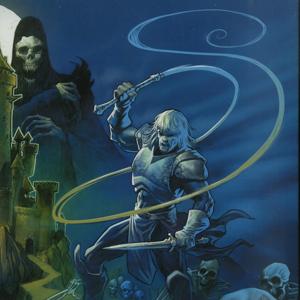
It's just like a like a computery, like industrial looking space. Right. Or. Yeah. No. Yeah. I think that's a that's an appropriate thing for it. I always thought of it like, you know, looking at the screenshots, I thought of it more like you're inside a giant ship. If you remember in like. Yeah. Gradius cover on the front cover. It's like. It's like a star destroyer. Yeah. By a giant green star destroyer.
And so now I felt like this is you. And actually, no, now that I'm looking at the cover again, you're not being chased. You're charging right at this. Yeah. This is the this is like the poster shot for scene seven is the front cover of Gradius. That's really cool. Actually, it's like you've just defeated all this evil amoeba and moaids and double volcanoes. Volcanoes and upside down volcanoes.
And it's like, you know what? Now, screw it. I'm just going to shoot into the middle of a star destroyer and enter through its through its hub, I guess, to try and like defeat the Bacterian army. So did you see did you guys see any like like videos of the stage or anything? It's just filled with volcanoes. I didn't see anything. It's filled with volcanoes.
My thoughts are that, you know, this is the ultimate stage of the game. So the fortress lies at the very heart of the nerve center of the Bacterian Empire. That's your initial thought. And is controlled by a complex biocomputer.
Didn't just read that directly out of the manual. Those are my original thoughts. This is the first mother brain, if you will. Like, you know, Metroid obviously makes that a bigger deal. But yeah, that winds up being the final boss of the game is just this brain that's like has like I don't know how to describe it. What would you say, Sean? Because it's not I don't want to say change. It's not it's not being slaved. I mean, isn't it just like those are connections. Yeah, connections. It's a part of powering the ship.
Cybernetic. Yeah. Do you you have to take out those? No, you just have to shoot the brain. In fact, I don't know how to like let you down here because you've only you haven't even watched the video. But all I know about it is what I just plagiarized out of the manual from watching the video. All you have to do is just be smart. Just shoot the brain. Just shoot. Is it hard? I mean, it's the brain. I didn't get to the level. No, nothing can hurt you. Like you're here now. It's just like a rewarding like final cut scene.
The stupidest thing you can do is like play chicken with the brain, you know, and be like, you know, like charge at him or something. You need to just like. Just shoot the brain. Yeah. Just shoot the brain. I guess ultimate just meaning the actual like just meaning the final stage. But like when it says this is the ultimate stage of the game, I think this is like the most intense stage of the game. Well, to be to be fair, though, Joe, everything leading up to that moment is pretty intense. So I'm not saying that like this level. God, that's not the whole level. There's there's. Oh, yeah, yeah, yeah. There's you have to.
Again, you've just entered the ship. Now you have to kind of navigate your way through the ship to get to the center brain. Gotcha. Looking at this image now of the Vic Viper and the brain, though, like like next to each other. I'm thinking of like Star Fox 64 when you take the back route into Venom and then you fight Andross first by as like his normal form. But then his second form is not the mechanical bat. It's him as a brain with his eyes like shooting at you. That's I think that Star Fox 64 takes a cue from Gradius. Me and Sean just looked at each other. Do you know what he's talking about? We don't know what you're talking about.
I really I'm getting serious vibes of that. I'll show the guys afterwards, but I'll link down the show notes. Star Fox 64 fans. Don't tell me I'm wrong here. They definitely like Miyamoto kind of is like a Gradius player now in my book.
All right. So that was that was the game. Essentially, I think we feel pretty good about it that we walk through the whole game and didn't have too many complaints being hard as nails controls. I mean, they're they're pretty fluid. Yeah, they're simple. So it's not not too much that they could have screwed up other than like the actual motion, which I think feels great. Yeah, I think the motion feels great. I think it is a 60 FPS game.
And like most NES games, it's not like that used to not be a big deal. It wasn't a hot topic to be 30 or 60. Well, now I'm thinking about one thing I did notice about the motion, which wasn't a bad thing. It just throws you off when from what like most people I think are used to that you you it's kind of slow moving. It almost feels like you're like there's a lot of resistance on your ship or something. If you try to go up or down. But that's not true, Joe.
If you keep using the speed power up, like if you just disregard everything, but then eventually you die and then you're back to being like trudging through investing in speed is a mistake anyway, because as Sean just mentioned, like you become too fast at a certain point. Oh, I got I got to thread the needle between these two. Oh, I've hit the wall. Oh, I hit the wall and I'm dead.
It's really tough. I actually tried that as one of my strategies for the Moai stage. I was like, well, maybe I'm just really fast. I'll get out of this. No, it doesn't help. It doesn't help. It just makes you a mess. I feel like you're surprisingly able to dodge things pretty well at that slow speed. You're able to dodge things well and they're able to dodge you well, too. Like you sometimes I would think like, OK, I just have to get a little more down and then I'm going to shoot them. It's like, nope, still didn't line up. Is it possible that the hitbox is smaller than the sprite?
That could be. I never considered that. I mean, I wonder if the hitbox changes, too, between like the missile, the laser. They're like, I feel like the missile has a bigger hitbox than anything else. You mean? Oh, you mean the. If I clipped like the edge of a wing of one of the enemy fighters, does that count? I mean, like if your shot clips them? If my shot does. I don't think it counts. I don't know. Yeah, I don't think so. I don't think it counts. Because there were many times I came close and it didn't happen. Honestly, I felt like a few times like your own hitbox was maybe slightly smaller because I felt like I was like dodging things. I was like, oh, man, I totally hit that.
Yeah. I don't mind when a game does that. Because it makes you feel cool. Yeah, definitely. All right. So that's controls. One thing. Another thing I want to mention is that this game does not help you if you have a turbo controller. Like it doesn't make the gun fire rapidly like it did in 1942.
It's still just like it has a limit. Yeah. How much you can shoot. It is definitely more efficient to be tapping the button instead of holding it. Right. Exactly. Weapons. I think we've went through that enough. Enemies. We talked about the cool ones, at least, in my opinion. Did any other enemies stand out for you guys? I mean, I like that in the beginning they sort of introduced the concept of the ones that do fly in a very tight pattern. If you kill all of them, you can get a reward with a power cord. They're like at the beginning of every level, right? Yeah. And that's like a note from Galaga and Xevious, the game that they were like trying to top.
They always talked about in the greatest interviews how like Xevious is the standard. You know, like that's the game that you're trying to beat. And how can they do that when they're thinking about designing the game? So I'm not surprised that there are some cues from Xevious in these games.
Power ups. Any thoughts? No, I think we've covered. I think we covered power ups. And I'll add a quote here. At that time, Western computer RPGs were coming into Japan and building your character was a kind of new gaming buzzword. We were thinking of ways to bring that concept into the shoot them up genre.
Nowadays, it seems rather obvious. But back then it was it was in combination. No one had thought of. We also wanted to add other adventure aspects to Gradius. We planned a system where once you cleared a stage, you'd have a branching choice of where to go next. But in the end, due to memory space limitations, we couldn't add that feature. Again, that's a Star Fox thing, right? Like you choose which planet you want to go to. I get you. I just love how many things are happening here. And I think that's a really cool thing. Like imagine you would have been able to choose your own path.
I love I love the enthusiasm we have for this. But I also like that that they were trying to move forward with with with the new ideas coming into these these kinds of games just from PC gaming. But I like that they also kept something from older games that was a power up that we didn't really talk about was if you found a blue one, it would just kill everything on the screen.
Yeah. You know, what's funny is, is like that really only showed up for me in the in the Moai stage and in stage two. Yeah, I got that in stage two. Yeah. In the Moai stage, it surprisingly didn't do much in the in stage two. Yeah, it was helpful. But like it shows up just rare enough that it's not really for me. It wasn't like a power up. I just thought it was like a cool thing. Like, oh, wow. What's that? You know, but I do like rare drops. Yeah. I also like just about this quote is that he's thinking about other genres that don't even apply to his game.
Yeah. Like, how can we how can we do stuff like that? Like, what should we do? And I just think like that's such a neat thing in game design, period, that developers today should still be asking themselves. You know, if you're if you're trying to design like a platformer, but you're looking at like, you know, a game like Breath of the Wild, that's more like an action adventure game.
It's like you can take cues, you know, from that. It doesn't have to be the cue doesn't have to be open world. The cue can just be like design elements or, you know, the weapon breaking mechanics, like little things like that and introducing them into your genre change your genre completely. I hear what you're saying, Mike. And I agree. But I think Konami, I think you they would go backwards and just say, no, don't do that. Turn into a pachinko machine. Right. Exactly. Yeah. Modern day Konami.
All right. So now that we've talked about all the levels and, you know, you guys were out of like stage four, I was gone at stage. But we were both. You guys got to stage four. I was not as far as Joe. I think I was stage three and I was gone at six.
I think like we need to talk about the difficulty here because we were so relentless with the difficulty on Ghost and Goblins. You know, it was one thing that really held us back in that game because we really enjoyed it. But the difficulty was killing us. Was the difficulty killing you guys here? Here's the difference to me between this and Ghost and Goblins. This wasn't at a glance. This wasn't as difficult. It was very difficult. Wasn't as difficult as Ghost and Goblins. But if you factor in the fact that you get three lives and you're done, I think this was more this would be more.
I don't even know if I want to say more. It'd be more frustrating. Well, it's harder. It's harder to make progress. Exactly. You can't just jump right back in and be like, all right, let's do this. But just looking at like individual like levels, Ghost and Goblins head and shoulders is more difficult. But but this had a this was pretty difficult. I mean, especially once I got to level three and stuff, it took me a few restarts to get through it. Like it wasn't it wasn't very easy.
I would say that while I think it's a very difficult game, I didn't feel the same kinds of frustrations that I did with Ghost and Goblins simply because I like the feel of this game more than I like the feel of Ghost and Goblins. So I I enjoyed playing it. And every time I failed, I was like, OK, I'll just keep playing the game instead of this. What I felt as clunky fighting system and platforming system and Ghost and Goblins.
So I agree with it. I was not as bothered by how much I was dying in this game as in past games. I don't know if this is like weird to say, but I find this like realistically difficult. Yeah. You know, it's really understandable where you're failing. Right. And it's like, yes, they could have toned down certain areas so that it wasn't so ridiculous for me. That's like the Moai Island stage or the later like amoebas and stuff like that. But I think like for the most part, the game is like.
It's not unfair, like it's not like, you know, nothing in this game to me screams like Red Devil. Yeah. That kind of level of frustration. I would say that your style of play is or the game allows your style of play to be more expressive so that you can go in with different weapons and like whether or not you have the shield or you can go in with different loadouts and try your luck a different way. And you have you have a better experimentation process than you would with Ghosts and Goblins, I think. Absolutely.
Yeah. With especially just because it's different between like space exploration and platforming is like, you know, with with Ghosts and Goblins, there's really only like one or two ways you can handle. Yeah. Like going through a stage, whereas like with Gradius, it's like you can go up and then switch back down to down or you can go through the middle of the stage. You can shoot open and go through a cave. I think that's kind of cool that they they accounted for that.
All right. So since we were talking about difficulty and stuff like that, I think I need to address something for Joe here that, you know, I wouldn't say that this should change your opinion on the game, but there are continues. There are continues. There are continues in the game. And this is the very first instance of the Konami code.
Yes. This was something that I ended up using, but not abusing. Do you know the Konami code? I don't. You do. OK, you ready? I might. But wait, I want to mention because this will come into play in a minute. But before you just told me that I wrote something in my notebook before I heard that and I put my pen down and later on, you'll find out what that was. But I want people to know that I didn't change this. OK, you made a note to yourself, a note to myself that I will talk about in a moment. But go on. Right. So but before I get any further, I'm sorry, I jumped ahead.
The Konami code is is different than the continues code. OK, yeah, because I didn't think I got continues when I used it. Yeah, yeah, yeah. The Konami code is up, up, down, down, left, right, left, right, B.A.
Joe, still not ringing? That rings a bell. OK, yeah, yeah. Where's that from? Every Konami game. It's mostly famous from Contra, I think, is like the famous one. Yeah, I think that's probably where I've heard it. Every like NES Konami game and even games way beyond that. And some websites. But there's a there's a something, a PlayStation game that's up, up, up, down, down, left, right, left, right, left, right. Probably a Konami game.
Square? I want. Yeah, Square. Well, that would make sense. It's like B.A. instead. There's no B on PlayStation. The Konami code is like, yeah, like like Sean said, it's referenced on websites. I think even like Reddit used to have a thing that you could do to get something like that. Oh, yeah, it would have a narwhal show up on the show up on the homepage. But that's the Konami code. They're actually just if you pause the game while you're playing it, it gives you one speed up missiles, two options and a barrier force field, you know, like it's pretty much just like a way for you to continue to progress on.
Yeah, I remember just to explain that I'm not so bad that I can't even get past the third level with the Konami code. I had played through the game and then I took up my I took a break from it and I decided I would try it out with the Konami code. I wasn't just going to keep playing. No, I love that. They give you the Konami code, though, because here's the thing about the Konami code.
It it's not so game breaking like Game Genie where all of a sudden you have like I could just program the game to give me 99 lives or I can have the games this way. I'm invincible. It's like this gives you like a realistic way to be like, you know, I'm really enjoying this game, but I'm dying all the time and I just want to get to like as far as I can or I want to get further. I want to beat the game. This gives you like a realistic way of doing that, saying like, hey, you might have lost all your stuff, but just put in the Konami code and you'll get one speed up missiles, two options and a barrier. Yeah, it's it's it's fair as far as cheats go.
The continue code, on the other hand, though, is when you get to the game over screen, you go down up B.A. B.A. and start and then it will start you at the last stage you visited.
Wow. Interesting. I didn't know there were two codes. Yeah, it's very interesting that there are two. Well, there's more codes than that, too. There's a lot of secrets in this game. And I just think like the continue one changes a lot. Yeah, that makes that makes a big difference in like how you're playing this.
I'll be honest. I use the continue code to get all the way to stage six. Like, I'm not going to pretend like I'm amazing at this game, but even the continue code won't save me to get to get to stage seven. You know, I still wasn't able to get there. So I respect these cheat codes because they don't outright break the game. Is this the first example of a literal cheat code in a in a game or for us? Yeah, I feel like it is. I feel like for for right now, you know, December 1986.
Yeah. Wow. That's interesting. And I mean, the game also has like warp zones, too, and stage bonuses and even a way to skip stages. That's not the warp zones. That's not the warp zones that you can actually skip the stages. Here's an interesting way to do it. I would have been nowhere near that inverted volcano.
You have to defeat the bosses within five seconds of them appearing. How do you do that? Not sorry. So not the sub bosses like the volcano and stuff like that. I'm talking about that core Millennium Falcon like thing. If you can kill that thing within five seconds, which if you have, I guess, enough power ups, you can do it. It'll actually let you skip the next stage only up to stage five. Once you get to stage five, you can't skip on onwards. But I think it's like a really neat speed run thing. Yeah. You know, if you're going for that. But the stage bonuses are cool. I mean, you know, Sean, you mentioned going through the like the cave like thing in was that stage two you were talking about? That's in stage one. OK, stage one where you're shooting.
I shoot the mountain, right? Yeah. And then in stage two, there's a couple of different like paths that you can take with the pink orbs or the Kirby life. Yes. Joe might say. And so that's like throughout the different levels. There's stuff like that. I just think that's like really neat that they included all these little secrets again. Like another thing that reminds me of Super Mario Brothers.
I thought you were going to say Star Fox. Yeah. No, no, no. Star Fox has a lot of secrets, though, guys. I cannot plug Star Fox 64. Not not Star Fox or Super Nintendo. That game runs like 10 FPS. Yes. Not even joking. Actually, I think it's like 15. Maybe interesting about Gradius here. Straight off for a minute. Gradius was also converted for the Nintendo verse series. Oh, yeah. How do you verse that? Isn't that weird? Like, first off, it's not a Nintendo game. It's a Konami game. So what's it doing in the Nintendo verse series? And is it? I don't know if it was called like verse Gradius or whatever, but it's identical to the NES version, but it includes no cheat codes, but allows the player to continue indefinitely.
Wow. Well, isn't that because it's an arcade game? Well, so, yeah, but what I meant is, is like, basically, you never have to go back to stage one. Does that make sense? Like, like... Oh, okay. Yeah. I would just think, like, give me your money and you can keep playing. It's exactly... Yes, that's true. You have to put in the quarter to keep going, but it's another way to, like, get to the end faster. You know, you don't have to, like, start all over. Pay to win. Yeah, this is an early example of Konami being like, well, you know, we do like money.
Ha ha. And this is a... One more weird thought I have, and then I'll open the floor. But I was looking for, like, developer interviews and stuff like that, and of course, I'm going to find a ton of that stuff on Shmupilations, which I'm going to link in the show notes. This is an amazing resource for people who are into shmups. But they included this, like, as part of, like, an interview with the director, and they didn't, like... They didn't source it. Like, they didn't say where they got it. It was, like, unknown article from 1996.
And I just don't even know if this is true, but here's the quote, and just take this for what it's worth. Our offices were in Osaka during the Gradius development, and after we released the first game, a young kid of about elementary school age brought us 200,000 yen and asked us to sell him Gradius. Since this was a large amount of money, even to us, we called his parents to confirm, and they asked us to sell it to him. So we did.
That we had a fan like this made me extremely happy. Does some child own Gradius? Yeah, wait, sold to him, like, what the... Wait, sold to him rights? It's like... 200,000 yen is a ton of money, guys. But wait, 200,000 yen is, like, not that much money. Right. It's... Okay, sorry, yeah, it's not that much money, but... It's not even that much money. It's like 20... Isn't it $20,000? Like, $2,000? Yeah. He's an elementary school kid. It was like... It's $1,800 today. It's probably more like $3,000 in 1985.
What is he doing with this? Is this story real? It cannot be real. Like... They're still making... I mean, not... They're not still making Gradius games. Did they really take this money, too? Well, that kid's old enough to be developing games now. I guess so. They took the money from a kid? Like, where did he get $200,000 yen? Hey, he's throwing the point like his parents... They probably only would have sold it to a kid, so the parents were like, alright, send
this kid in there to sell it. You would think he'd have, like, $5 on him. You know? Like, he was like, oh, here's $5. Can I buy Gradius? And they were like, haha, that kid's so cute. Like, called his parents. Do you mind if we take his $5? They're like, yeah, that's his allowance. Like, go ahead. He loves your game. And then they're like, oh, would you like to be in the game? And then they put his brain in the game.
They took a scan of his brain. They took a cat scan of his brain. And they just took his money. Like, I think that that's weird, but it's probably not a true story. Maybe Shmupelations puts that on there because they just, like... Like, control people? Yeah, yeah. Like, maybe they want to fact-trick people. Like, see if they're reading the interviews and, like, including these obscure...
I don't know, honestly. If you're from Shmupelations or if you've ever read this or heard this story, like, let me know. Like, please, I'd love to find out if I... Like, now a grown adult, I guess, but at the time a child owned Gradius and let Konami continue to make games for them. They're like, yeah, yeah, yeah, you guys can make Gradius, too. That's fine. Can you imagine if he, like, if he was actually just, like, a real, like, hard hitter? As soon as they, like, made the deal, he was, like, just super straight with them. Yeah, yeah, he was like, okay, here's the deal. Like, he pulls out, like, spreadsheets he's made. He's like, this is the levels for Gradius, too. The final boss will be a giant Moai. It is time for the Essential Games List.
All right, it's time for the Essential Games List. I'm not going to explain this anymore. We're pretty much at that point now where you guys know what's going on. Is it essential today? Not in 1986. Or I think this game came out in 85, 84 in Japan. So we're talking about 86, though, because it's NES. See, I'm already explaining it too much, guys. So take it away, Sean. Is this game essential?
I think that this game is a boatload of fun to play. I think that it has a lot of value. I don't think that anything has really been lost over time. It's the best scrolling game that we've played in terms of, like, whether it's a top-down or a sideways, like, I hated 1942. I didn't really like Commando, if you want to consider this a part of the same genre. I think this really showed what this genre can be on a home computer system.
And I think that it's legacy and just how fun it still is to play. I think it's a – I'm going to rate it essential. Wow. We have one essential vote. There's three of us, so we need two to put it in there. Joe. All right. I might get a little long-winded here, so everybody settle in. I'll settle in. So get a drink if you want.
So first of all, this kind of scrolling shmup is not usually my kind of game. So it's been hard for me to judge this one, and I was – you know, I've got a lot of back and forth in my head up until, like, in this session. I mean, I was still thinking about it.
But I think the game's beautiful. It's got a really great design, and it's one of the better, like, looking and feeling games of this genre that we've played so far. But maybe, like, of this genre that I've ever played, like, one of the better feeling games to me. And I think somebody who enjoys this kind of game in general would really love this game, probably more so than I did. But I don't know if it's something that I personally would frequently be like, I want to go back and play that again. But, like, while I'm playing it, like, I can – I can understand that there might be someone out there that doesn't like platformers. But I bet they could see Super Mario Bros. and be like, yeah, this is essential.
So, before you mentioned to me about the continues, I was very, very torn. And I finally made a decision and wrote it down in my notebook before you said the continues. Love it. And it didn't change when you said the continues, but it did reassure me a little bit that I also vote this game essential. Wow. It is on the list. I will give my thoughts, though, just to let the record stand. Here's the interesting thing about Gradius for me.
Yes, the arcade version is better. This is not arcade-stalgia. We focus on the NES games. We're talking about the essential NES games of modern times, right? Like, not what was just great when it came out. So, even though this is probably the best shmup that we've played so far in the NES, I mean, like, we have so many more games to go. Who's to say we're not going to see something better, right?
Here's the interesting thing about Gradius. You have a very, like, simply designed game where it's like you have all the limitations of the NES. You have to use your imagination for a lot of it. The designs of the sprites are beautiful, in my opinion, when you give, like, the... When you understand the limitations. In a game like Super Mario Bros., Legend of Zelda, like, Metroid, those kind of, like, heavy hitters from Nintendo. Those games are good, yes, because of their gameplay, but also because of the choice that they bring to the players and the personality that the game brings on to you.
You don't think of The Legend of Zelda as an action-adventure game. You think of The Legend of Zelda as a Zelda game. I don't think of Gradius as, like, just another shmup. I think of it as a Gradius game. And I think that's, like, what makes this game, for me, essential as well.
Is that when you play this game, even if you're not good at it, even if it's a little harder than you'd like, I think that player choice in this game, especially when it comes to power-ups and just, like, the idea that you do kind of, like, control this game a little more than any game we've seen so far. Even Super Mario Bros. in that regard, because with your power-ups there, it's like, unless you choose not to take the mushroom because you'd rather slide through certain, like, you know, areas, which isn't really a thing, you know?
You're mostly just going to continue to want to get stronger and stronger. And while you do want to get stronger and stronger in Gradius, you also have to think about, like, okay, I've seen Stage 4 a couple times now. I'm dying these ways. What power-ups are essential to me to get this to keep going? And I just think, like, between player choice, tight controls, extreme personality, and the fact that the game sticks out because of its own, like, story and setting and design, I think this game is essential, no doubts.
Awesome. We are in agreement. Really, really cool. I wonder what Sam would think. We will have to get Sam's take. I actually don't have anything from Sam currently, but we'll get that for the website, of course. Best of 1985s, too. Yeah, yeah, yeah. Or Best of 1986. When we do that, Best of 1986, we're actually going to have a lot of rogue thoughts from Sam because he won't be on next week's episode either. So who knows how this guy feels about games right now. Like, he's just going to come in and surprise us with that list.
Guys, I feel really good that Gradius is on the list. This was one of the games I was really looking forward to in the Best of 1985 episode. It's a game that I love not only just because of its, like, story and its gameplay as a series, but just, like, it's really fun to play no matter how many times I go back to it. Yeah, it's very strange that, like, because I'm really not a fan of the genre in general. I mean, the last two put a really bad taste in my mouth that was like, oh, God, these games. But Gradius is just, I can see myself, I will be playing this game again in the future.
Yeah, I mean, if I play it again, I'll enjoy it. It's just not one that I'm, like, that I would usually seek out, which is why when I was playing this last, I remember thinking, like, this could be essential. And I was about to put it essential, and then I started thinking, do I have to take into account how I feel? And I don't think you do. I think I can see that it's essential, even if I don't necessarily want to be playing it. I think it's essential for anyone who likes, who even remotely likes these kind of games. Very cool, very cool. And just, I mean, like, even just to talk about how much we like this game, we've talked for so long now.
And other than, like, one small mention, we never even talked about the music. The thing that we've been playing throughout the podcast episode. But it's like, that stuff is good, too. Even the sound design of, like, you know, when you did blow up an enemy or, like, your missiles and stuff like that. Like, all that stuff is cool. Like, it's just an extra thing that the game has going for it. I mean, what else is Mario? Is there something else that, like, comes around the same level as this? Right, like, such a complete package from beginning to end. Yeah, that's, like, from the first thing that I said was that this is the first game that feels like it's on a new system.
Right, right. Yeah, I mean, yeah. With Super Mario. No, I agree. I mean, like, you know, we also voted in Mock Rider and Balloon Fight for 1986 so far. And I think, like, I understand what you're saying, though. Those games don't necessarily feel, like, removed from the arcade in the regards that, like, you know, they're really just one style of gameplay done over and over and over again.
That's enjoyable. Whereas, like, Great A's continues to, like, reinvent itself on every single stage. And, like, how you would go about playing this type of game. Same thing with Super Mario Brothers. It's not just World 1-1 over and over again 36 times. That would suck. You know? So, I love that. Very cool that we got this on the list. That's all the time we have for this episode of Nostalgia. Join us next time for Karate Champ. And be sure to play it yourself if you can. If you can.
You'll understand why in the next week's episode. If you don't get a chance to play it, you'll understand why I say that. You know, for more Nostalgia, you know, don't be afraid to go onto the website. That's NostalgiaCast.com. I'm not going to spell it out for you because no one's actively typing it in on their keyboard. As I'm saying it, they're like, wait, wait. N-E-S. Like, nope. You started spelling it. Nope. Not going to do it. Not going to finish it. But you can find lots of cool stuff there. Did you ever wonder, like, what Miyamoto did during his time making the launch NES games? Spoiler alert. He wasn't making those launch NES games.
Most of them were just ports or he was working on, like, other stuff. And then they, you know, like, it's a long story. Basically, Japan was always years ahead of us. Everybody remembers Pokemon Green, right? Of course. This is a ramble. Yeah. You can visit us there or you can visit us at our offices, at the NostalgiaCast offices. Yeah, NostalgiaCast offices. And find, look for the one in your city. Yeah. We'll be at all of them.
Yeah. I will. Yeah. I'll definitely be signing copies of your cell phone if you listen to it on a podcast, which is a great way to listen to the episodes, you know. I don't care if you listen to it on Apple Podcasts or Google Play or Overcast or Pocketcast, however you listen to it. Just make sure you hit that subscribe button because if I sign your phone and then see you're not subscribed, I'm going to have to break your phone in half. That's just a rule.
And speaking of breaking things in half, the show notes will be complete with a list of everything that we have talked about. They won't be, I won't give the show notes in half if you go to the website. It's one of the big features that would draw people to nostalgia. It's kind of crazy. Yeah. It's not like some are at the top of the article and others are at the bottom. At the very top of the article, I automatically send you to other websites free of charge.
You know, there's no like PayPal like donation link on our website and stuff like that. So it's just like really cool that we just happen to not need your money. You know, like how many other podcasts have ended with like, you know, and don't forget,
you know, like Patreon account and like, you know, $5 a month, you'll get access to the high res episodes. Like, no, just just come tell us we're fun people to hang out with. If you hang out with us every Friday or whenever you get around on these episodes, look, I know it's been a stressful week. If you want to wait till Sunday to listen to the episode, if you're listening right now and it's Tuesday, Jeff, Jeff, go for it. Okay. And go play Gradius because it's essential. Join us next time. Bye. What a long episode. How long was that? That was over an hour. I think that was 70 minutes. Yeah. Holy shit.
We love Gradius. We do. Honestly, I was so, I like kept going back and forth before this. And this is when I decided it was essential. When I realized that he was charging instead of fleeing away. I was like, that is as bad as being chased. That's as bad as, well, I just, I guess I never really looked at it hard enough, but that's as bad as, you know, like you are Mach Rider. Yeah. Like, you know, Vic Viper and he's just like charging in on that. I love how like you aren't Vic Viper, the ship is. That's the name of the ship. That's so cool.
Vic Viper. Like, yeah, it has a first and last name. What other ship has a first and last name? The Millennium Falcon. The Millennium is its first name, please. That's like the Millennium Eye. That's like talking about like Yugi has the Millennium Eye. The is the first name, Millennium is the middle name.