031 · NINJA KID
Ninja Kid is everyone's favorite least stealthy ninja who fights ghosts, cyclops, summons familiars and other non-ninja lore related things. So if Ninja Kid is barely about being a Ninja, how does it fare as a game? For more NEStalgia as well as show notes and articles head over to www.NEStalgiacast.com
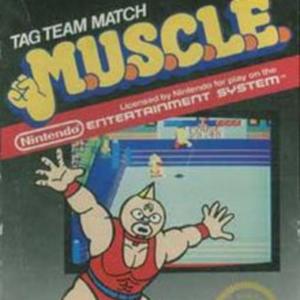
We came into Ninja Kid braced for another Bandai and Tose letdown after Tag Team and Muscle, and it turned out to be a better time than that stretch of games had earned. It is a Super Mario Bros. descendant with an overworld map, a pile of mini-missions and a ninja who is not very sneaky. It has good ideas and almost none of them are followed through.
What it gets right
- It feels like a post-Mario game. Momentum and jumping are solid, the scrolling loops so you can run back and catch an enemy you missed, and the overworld map gave us that "I'm on a quest" feeling right away. Sean liked it more than the other character-action games we'd played lately.
- The mission types. Every temple is one of four jobs: Poison Field (collect ten spirits), Blazing Inferno, Dogfight and Guerrilla Warfare. Blazing Inferno was a favorite: a little flame trails you loosely and you have to platform around so it drags past each candle. We were impressed that an NES game had something floating after you like that.
- A lot of toys. Invincibility, fire, shurikens and knives, and a speed boost that nobody was sure about. Guerrilla Warfare has the most open space, so that is where the power-ups shine. We learned only after playing that the ocarinas (really a whistle, per the manual, earned by clearing nine of ten objectives in a field) summon a Pegasus, a big eagle or the old witch during boss fights, and that made us want to give the game another try.
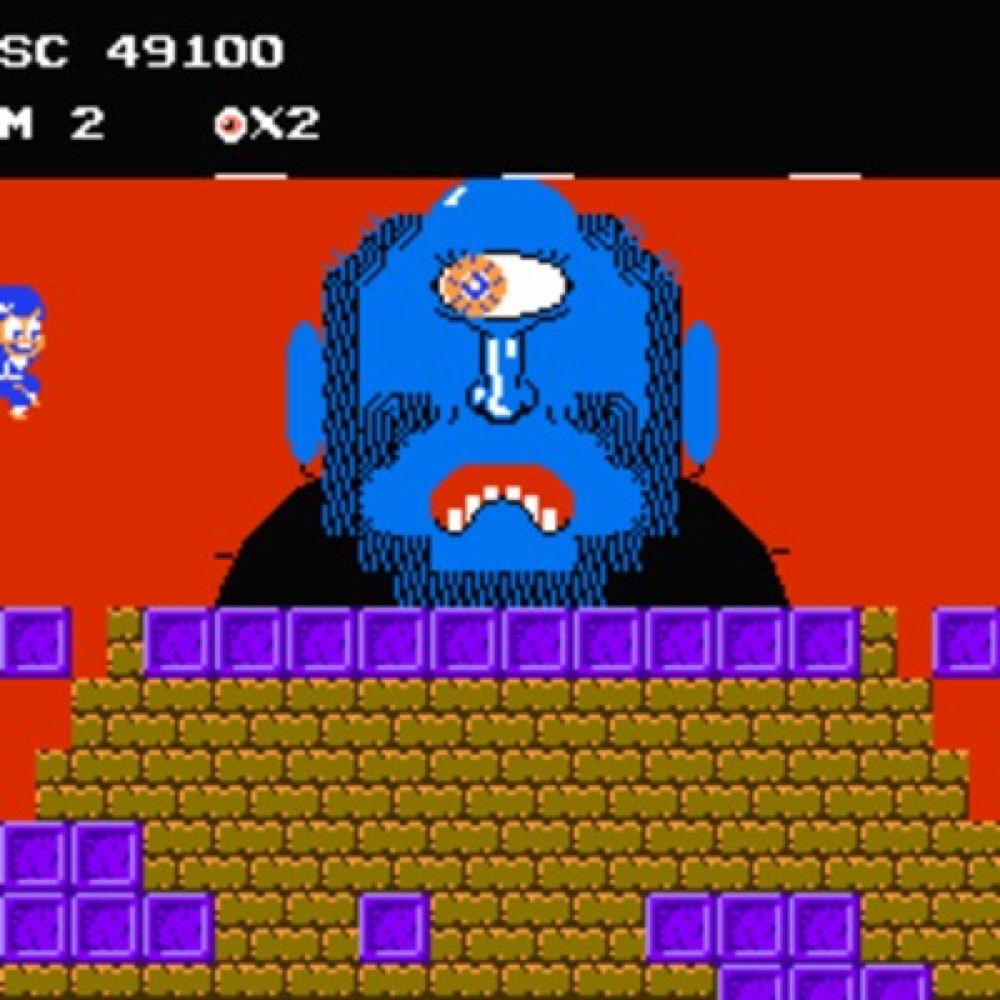
- Early horror. Frankenstein, a Cyclops, a witch's house and a stop at Demon Hell. It is a horror potpourri that arrives before Castlevania, with a Famicom manga origin re-skinned for the West.
Where it falls apart
- It explains nothing. We thought the spirits were enemies, and killing one by accident does not count toward your ten. The candle flame looked like a hazard. In a game where everything kills you in one hit, nobody wants to touch the mystery objects. Joe paused the recording to read the manual, which covers this, and that was a good reminder to read it.
- One hit, three lives. We argued this was inherited habit rather than a deliberate choice, but it still stops the game from being fun. A Mario-style mushroom would have helped.
- Procedural but shallow. The random mission order is a nice early roguelite touch, but the platforming patterns are uninspired. We wished it were a shorter, hand-built game. Another way to put it: what if Super Mario Bros. never ended.
- Too long. Someone looked up the map count mid-game, found there were 25, and stopped caring about replay value. The ending is a quick "The End" flash and straight back to the menu, and the two exit doors appear over the final boss but you can't use them.
- The overworld is only a level select, and the walk between stages gets tedious. The music is another sore point, with one level song and a few notes on the map, and we don't think memory was the excuse.
The bottom line
Skip it. Nobody called it Essential. Sean's argument was the plainest: if Super Mario Bros. is on the list and this is a lesser version, you play Mario instead. Two of the votes leaned toward Play it for now, as a unique try that beats Kung Fu, with the thought that it may slide to Skip it once we have played a couple hundred more games. Worth a look as a window into the year after Mario, and not much more.
Written from our conversation in this episode.
Auto-generated transcript. Each paragraph starts with its timestamp. Speakers are not identified.
Ninja Kid, join forces with the Junior Champion of Justice.
And welcome to NEStalgia, a chronological exploration of every NES game released in North America. I'm Mike. I'm Sean. I'm Joe. And I'm Sam. Guys, we're talking about Ninja Kid today.
Woo! Thank you for the one woo. I can understand the little silence though. Everybody's a little concerned having played some of the other Bandai Tose games and third party's just looking really bleak right now. Yeah. You know, I think, what was the low point so far for you guys? Was it Muscle or was it Tag Team? It was Tag Team. I think it's Tag Team. I think Tag Team. Yeah. Muscle at least had character. What? Muscle had character. Yeah, Muscle actually had characters. Muscle was the one with the characters.
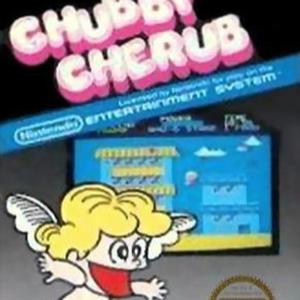
Yeah, yeah, yeah. Had characters. They were just the two bad games we recently played. Yeah, yeah, yeah. I mean, there's Chubby Cherub too, which is... But that, like, you know, that felt like a game. Yeah. At least it looks like a game. As long as you mute the music. Yeah. Because it repeats after like one minute. Oh, well, I mean, if we're going to talk about music. This is a good game to talk about. Ah, but a good segue. No, no, no. Let's not jump right there first.
Ninja Kid at least has an interesting back of the box, but how did we actually feel about it and playing it for the first time? Maybe we do some first impressions. Sean? I would say that I like the feel for this game a lot more than I did the rest of the non-Mario, like, side-scrollers or just character action games. Like, it's very clearly a post-Mario game, at least with its controls and, like, the momentum that you kind of feel with it. I like the sort of, like, overworld thing it's got going and a sort of proto-RPG storytelling mechanic, even though it's not very deep.
I like a lot of the aspects like that, but it was okay in practice. All right. Joe? Yeah. I mean, I was pretty optimistic right away because of the map, the overworld map, it kind of gave it a feel of, like, an adventure. And you go into the levels and, I mean, whether or not that whole feel of adventure delivered in the end is a different story, but, like, right away it was like, oh, this feels like it's, I'm going on a quest and that's the kind of game I like. So, kind of along the same lines as Chubby Cherub, this kind of felt like what I was expecting NES games to be like, you know, in that it just felt like a pretty kind of, not run-of-the-mill video game because I feel like that's not really fair at this point.
But from today's standards, kind of what you'd expect if you're, like, watching a movie about a kid in the 80s playing some obscure video game, I feel like this one would fit, you know? But yeah, I think, like, what Chum was saying, that it feels very solid in moving around and, you know, it looks nice. Yeah. Overall, I was pretty pleased initially. Yeah, I mean, I was incredibly worried going into this game just because I see that Bandai thing again and, you know, just a reminder that Bandai only holds the licenses for these games. They're not making them. That's Tosei, so it doesn't help that Tosei also made all these games, too.
So, when we're talking about Ninja Kid, the first thing was like, oh, is this going to be like the rest of them? But I think that this game is not like the rest of those. And I actually had a really good time with this one, even right from the get-go, because it was more like Super Mario Bros. I really appreciated that overworld map, which Super Mario Bros. didn't even have yet. I mean, that's like a Super Mario Bros. 3 thing. And I think also the scrolling mechanic, you know, it's an infinite scroller. You just keep going left to right.
But there is kind of like a spatial awareness of, like, where you are on that map. You know, you kind of see where the loop is and stuff like that. So, I thought that was, like, nice to be able to go back and forth. If you saw an enemy that you might have missed, you could run back real fast and they might still be there, provided you haven't, like, ran too far off. Yeah. So, I appreciated this game on just, like, its fundamentals.
But maybe now, you know, like, we should talk about the objective and then, you know, probably we're going to get into the flaws of the game pretty quickly after we talk about that. Oh, yeah. So, the objective for Ninja Kid, it's, like, it's kind of weird because there's not really a lot of story given to you, but you're the Ninja Kid. Uh-huh. And you have to, like, hit up these temples across the overworld map where different things will happen. It'll be, like, guerrilla warfare or dogfight or Inferno. Yeah. It's, like, I don't know what those things mean and the objectives are pretty unclear,
but the good news is, is that there's only, like, four different possibilities and once you learn them once, you know how to do them for each one. Well, you say that's good. Sorry. They're not really that difficult to learn. Like, it's, maybe it throws you off a little bit that there's no explanation.
The tower, not towering Inferno, the Inferno one is kind of hard to figure out what you're supposed to do. Blazing Inferno. Yeah. And I would say that the Poison Field one, too, which is the only one we haven't mentioned yet, that's when you're collecting spirits, and I think that, like, if you don't get that one first, you might assume that those things are enemies and shoot them instead of collect them. I do agree that the Poison Field was tough.
The Blazing Inferno, I thought, maybe I just got lucky, but... I honestly thought that that candle or, like, the lighter or whatever was something that was going to hit me and hurt me. Yeah, and I kept running away from it and it kept following me. I think maybe we, you know, because I think that covers the objective for now.
There is more to the game, but I think that's all you really need to know. To get started, maybe we go through each kind of, each thing, you know? Sure. So, let's start with Poison Field. Okay. So, Poison Field, you are in a kind of bland side-scrolling background. There really isn't too much... Yeah, there's a couple of different backgrounds, depending on how it goes, I think. Yeah, but there aren't too many levels, I mean. No, no, no. They're mostly the same structure.
Yeah. The graveyard, I think, has, like, a little bit thicker platforms than, say, the forest level. Yeah. But for the most part, it is the same. There might be a tree every once in a while that you can climb up on, but you're kind of just at the bottom of the screen going around with very small rolling objects on the ground. Those are your only real enemies, unless you take too long. And there are these wispy white souls that you have to collect, and once you get ten, then some doors open up in the ether.
I'm sorry. Open up in the ether, and you go back to... You either go to a post-level, like, mini-boss, or you go back to the overworld. What did you guys think those spirits were, like, the first time you saw them? Because I thought they were enemies at first. You can destroy them, too, right? Yeah, yeah, yeah. I definitely thought... Yeah, and you can destroy them on accident. It won't count towards your total. Yeah, that really throws me off, then. Yeah, I think you do, for Poisonfield, you do have to kind of accidentally stumble upon the fact that you can collect those.
It doesn't help that everything else in the game is a one-hit kill, so you're kind of afraid to touch them. I think that this is stuff that you would have to discover in these ways if you didn't read the manual, right? Oh, totally. I mean, the manual does cover this stuff, yeah. I just think that, like, a lot of people... It's not intuitive on its own. Especially with these games, too. I mean, has anybody ever seen the Ninja Kid box?
No, I haven't. I'm just saying, like, you know, those things weren't really, like, as well-kept as, like, the original Nintendo games. Like, everybody's seen the Super Mario Bros. box, but that's just because it's, like, a game worth preserving. Ninja Kid's kind of an obscurity right now.
I can take Blazing Inferno. Yeah, okay, so let's do Blazing Inferno next. That was probably my favorite. I mean, I just thought it was one of the cooler concepts in a level. So, basically, the levels can change a little bit. I know one of them was, like, a series of skulls in the background.
But you're running around, and you have this tiny little flame that follows you, and it follows you sort of at a distance, and it follows you kind of loosely. So, you have to go around and light candles, basically, by getting ahead of the candle enough where this flame following you will drag past the candle. And it's not so, like, fluid that just, like, the flame is going through the candles. You have to kind of platform yourself and jump around to get the candle to be lit. Yeah, the candle's following you very loosely, so it's very, like, floaty.
So it doesn't, which I thought was kind of impressive. I mean, I know nothing about developing a game for the NES, but just in my knowledge, I can't think of anything that, like, connects to your character in that, like, floaty manner. It was cool AI. One thing I liked about that level was that you can, they kind of have it set up so that they know that the candles are always next to you, not on top of you. So sometimes there will be, like, a little platform that you have to make a jump that's in between two bottomless pits or something. And so they know that you have to make that jump to get to this one that's not over that. It's, like, over one of the pits or something.
So they know, it's, like, kind of, not that it's challenging to be, like, aware spatially of where everything is, but you just kind of have to think about it just a little bit more than you usually would in, like, a go here because the thing is there. Yeah, and I think you're touching on something here that is... Not to explain this the right way. No, no, no, but I think you're touching on something about this game that is kind of cool and worth talking about. That this is, like, roguelite? Roguelite? Like, not roguelite, but roguelite in the sense that, like, every time you play this game, it's a different experience.
Yeah. You know, like, the levels aren't the same each time. You don't know what your overworld map is going to look like. Mm-hmm. You don't, you know, like, you don't know if it's going to be a guerrilla warfare stage when you enter in. And you don't know which backdrop you're really going to get unless it's, like, you know, if you're in the forest stage, you're going to have the forest backdrop. But, like, you know, I think a lot of this game is kind of cool in, like, an early, early
binding of Isaac, like, uh, Isaac or whatever you want to say. Yeah. I know. Sean, Sean cringes, but I always say Isaac because I do that double A thing. I know. But I think, like, that's really cool. Something interesting about this game that we haven't seen. You know, like, imagine if Super Mario Brothers was procedurally generated every time you play it. I think that, but the problem is, the only reason, like, the procedural generation is cool for, like, a replay value sort of thing. But that's also why there really isn't anything iconic about, except for the mechanic itself.
These levels have nothing going on for them. They have, like, random, not random, but less than creative platforming patterns. Yeah. They're not, like, specifically designed to be, like, this is a challenging part. Yeah. And I think that if it wasn't for the one, because I think that the one life, like, the one hit KO thing, it kind of has, like, benefits in this format, but that doesn't make it better. It's very frustrating to die that way. And it's also, like, common for the time. Do you know what I mean? Yeah. Like, one hit kills are kind of, like, established at this point. Because there's not a lot. At this point, but I hear what you're saying. Because there's, like, not a lot of substance behind those, like, roguelite elements.
And so when you replay it again, it's like, oh, okay, there's this part. Got to get a little better at this part. But it's not, like, I don't know. It's... It could have used a feature, like, Super Mario Brothers had, where at the very least you could have some kind of power-up that would say, like, okay, you can get hit once, and then you're back down. Well, they do have the invincibility.
Right. And that is cool, but that's more, like, the star than the mushroom. Yeah. It doesn't last. Like, if you're good at the game and you get, like, the mushroom, you're going to last through most of the game with the mushroom, you know? In this game, the invincibility can only save you for so long. Yeah. And I think the biggest thing that the, like, the replayability has going against it for this game is that... So when I was playing it, you know, there are three, or there are several, there are, like, maybe four or five different levels per map. Correct me if I'm wrong. And then you beat the map, and you move on to map two and map three and map four.
So I was kind of getting excited. I was like, oh, this is fun enough. Like, maybe I'll beat this game. And then I was on, like, map five and map six. I was like, maybe I'll just look up how many maps there are first. Right. I think there are 25.
25 maps with, like, five each. I was like, well, that's too many. Like, I probably won't sit down and play through this game now, so the replayability kind of doesn't really matter, because I didn't even finish the game. You're supposed to fail, I think is the thing. You know? I don't think they made it. So, yeah, I hear what you're saying. They didn't make it so that you could win. But, I mean, there is an ending to the game. And I watched it on YouTube. It was part of a Let's Play. Let's Play Ninja Kid Part 69.
Okay? Yeah, I know. Nice. But, like, also just, like, it's telling that an NES game has 16, that needs to be broken up into 69 parts. And the funny thing about it is, you get to the final world, which is very much the same like any of the other worlds. And you get to the final Shangri-La, or I don't know if that's how you say it, but Shangri-La form. And you fight it. And then when you kill it, it just says, the end, like, really fast across the screen. And then goes straight to the menu. Whoa. Like, right back into the menu.
And it's like, that's it. No closure. I think that they didn't really program the idea of an ending, which is weird because they had the VN thing. But you can actually see, after you defeat the final boss, two doors, like, spawn that you could, like, you know, use to exit, just for the uninformed, on any of these stages,
once you complete the goal of the stage, so whether that is to light all the candles or collect all the spirits in the poison field, the idea is that the doors would open up, and so that's how you get back out to the overworld. You can't just, like, say, okay, mission accomplished. Like, you still have to survive it until you get through the doors. So to see the doors in the boss stage is at the end of the game, but you're not able to enter them is just, like, the programming thing. There's more programming and not, like, they had more. I don't think they expected that many people to get there. They clearly didn't get there. They would have been able to notice that bug.
Yeah, and I'm sure it was a programming thing, but that's something that, if I was a kid, that would have been, like, more to me. It would have been, like, what is beyond, there's secrets beyond those doors. Right, you have to land in just the perfect spot so that the door, actually, I bet that actually could be something. Maybe there is. Unless it's programmed, just where the doors will never, like, spawn where you are.
You know, like, that could be a thing, because I've never had that happen to me in a level. But we're getting a little bit off, because we were talking about the stages, so I'd like to stay on that, if that's okay. But, Sam, I think you had a thought?
It was... About the replayability? It was about the doors. Okay, so we can... Go ahead. Yeah. Do... Does it matter which door you go in? No. As far as I know. Oh. Well, one door leads to the... Like you said before, one door leads to the boss, and the other door... You skip the boss. I don't think you know. Oh, okay. There might be a way you know. Okay, that was something I totally didn't notice. I never noticed, but that is kind of cool, and I don't even know if that's true, but I love it. Me neither. Because you'd never be able to really prove it, because you'd just be like, oh, that time I went through the door that didn't have the good boss.
I can't remember. I read the manual after I played the game. I think that was in the manual. It might have been when I was, like, searching stuff about it later, but... It's been a while since I read the manual, so I can't... Uh-oh. I'm not being a third. Daniel Smith. Yeah. Take a timeout real quick. I'm gonna look it up. Alright, so I magically pulled out my trusty Ninja Kid manual, and I found that after Ninja Kid clears each of the four fields, two doors will appear. One door leads to Demon Island Map. The other leads to Demon Hell.
So, if we clear any of those, then yeah, you can randomly go to the mini-boss, or you'll show up back on the main screen. I never thought of it as Demon Hell. Demon Hell. I have to be honest, I did not read the manual for this game at all, and that's kind of, like, disappointing to me, because I think this game actually, like, and I had a good time with it, so I think I would have had maybe even a better time if I would have known some of these little things. Yeah, I mean, I read the manual, and I must have glossed over that originally. Yeah. Thank you, Joe, for that very interesting fact. You got it. Sam, do you want to talk about dogfight? I would love to. So, maybe you explain that that's a mode? Yeah, it's a dogfight.
You know, you, uh... Dogfight in, like, the airplane sense, not in the dogfight sense. Yeah, yeah, yeah. They couldn't choose... They chose really primal-sounding things for all of these. So, for dogfight, you are on, I think, a magic carpet? It seems like it's a magic carpet. It looks like a magic carpet, yeah. You're on, I think, a blue magic carpet, and you have to destroy these little... I'm not sure what they are. They're, like, little bird... Well, you can destroy anything on the stage, though, correct?
Yeah, but there's most of those little... But most of them are, like, those, yeah. It's, like, birdworm things? Yeah, they're, like, birdworms. Every enemy in this game, besides, like, Frankenstein, is hard to describe. Yeah. There's a Frankenstein? There's a Frankenstein in the Cyclops stages, yeah.
Oh, yeah. Yeah, it's just, like, you know, they just did, like, as many random, like... Okay, so one thing... Sorry, Sam, to cut off your dogfight thing, but, like, we need to talk about how this wasn't ever the game on the Famicom. Like, on the Famicom, this was based on, like, a manga, and... They all seem to be, don't they? Right. Well, I mean, it's a Bandai thing, I think, so they were... They made the games for Famicom, because that was a big success, and then they saw how well it was doing in the West, probably, and they were like, hey, let's get some of those games on there. Yeah. So they just figured out a way to re-skin them, because chances are no one was reading
a Japanese-only manga in the West and being like, I can't wait for that game to come out on the NES. So, the funny thing here is that they had to completely, like, translate the game into something they thought Americans would want, such like Ninja Kid. And Demon Hell. Yeah, and Demon Hell and stuff like that, and it's like, and just, like, the inclusion of Frankenstein and all these other, like, obscure, like, horror monsters, and, like, the whole game is actually kind of like our first taste of horror on the NES. I guess so. Because, you know, Castlevania will definitely scratch that itch, but this is before Castlevania's time and definitely, like, fulfills the same look and feel. It's early horror potpourri.
But what is Ninja Kid doing in all this, in all this? He's fighting the bad demons. Yeah. Okay, but he's like, I don't know, I just didn't think, like, ninjas fought. Mike, like, monsters. Ninjas just fight. In general, it's just their code. I think we need to get back to dogfight. But I will say, for a Ninja, he's not very sneaky.
There's no stealth in this game. He is agile, though. I think Mike, you pointed out. Oh, that's true. Maybe that's where they go. Yeah, I said that at one point. I'm like, he doesn't do anything like a Ninja, but you said it's like, oh, it seemed, you felt like it was more about, like, waiting for your moment to dodge and waiting when to jump on something and things like that. Yeah, I definitely think that the easiest way to die in this game is to just rush through anything and be like, I'm unstoppable. I'm a Ninja. Ninja, because you're the most fragile thing in the game. You know, like, anything kills you.
Don't touch anything. You know, it's like, you don't want to do it that way. So that's what I was suggesting is, wait for the monsters to approach you. They all have projectiles, so don't get too close to them. You won't have time to jump. And, you know, since we're talking about the jump, I thought it was pretty good. It was pretty good. You know, I think there is no jump in the dogfight level. No, yeah, you can't jump off the magic carpet. Yeah, so can I get back into it? So in the dogfight level, you are on this magic carpet and you're kind of floating around. And I feel like the floating around on the magic carpet isn't as, doesn't feel as good as, you know, jumping around and running around. It's rigid, but I think on purpose.
Yeah, because that's, I mean, that's part of the, you know, part of the skill. But I feel like, I don't know, I feel like making it more difficult to move and having that be like a gameplay feature is not really, you know, kind of like a cut in corners kind of way. Would you argue that it was already kind of difficult to aim at those enemies in the dogfight levels? Yeah, well, the projectiles aren't like exactly straight on, correct? They kind of like do a weird circle thing. There's the one enemy that sends them in every direction.
And that guy, I feel like it's just hard to get past because you're not hard, but your move, your movement isn't great. And he throws so many projectiles too. It's like he's covering a diagonal plane. Yeah, for every burst or something. And you say you just got to kill enemies. And that's, that's pretty much it. There are power-ups also. Yeah. I'm not, I get mixed up with which ones are in which levels though. It's okay. I think power-ups is like, we'll talk about that separately, but one thing I wanted to mention about dogfight, that it kind of like makes it harder for you the longer you delay killing enemies.
Whereas like, guerrilla warfare didn't really, like you can run away from the enemies and they'll kind of like despawn. But if you leave enough enemies on the screen in dogfight, especially those guys that like shoot the diagonals and stuff like that, you're going to have a really hard time dodging all that stuff. Then you're in a bullet hell game. Yeah, exactly. And if you don't, it's not designed like that. I mean, we're going to get to 1942, but you know, in this game, it's not, you're not supposed to be dealing with that kind of attacks and trying to dodge them.
So that would bring us to guerrilla warfare, the final level, but definitely sounds like the most intense. It's, however, I find it to be the easiest. Yeah. It seems to be the most basic kind of, it's like what you would, it's just the running and gunning part. Yeah. You're just, you have to kill like 10 enemies. I think is usually what it, what it prescribes for you to do. This is the level where I find the most power ups. Yeah. And I think something that's cool about the power ups is that they really get a chance to shine in this level. Cause you, you know, there's a lot of open space between you and the enemies and kind of figure out what they do.
And I think it's kind of cool that they took a note from super Mario brothers with the power ups as well. But this is something completely different because there's so many power ups. I mean, we were talking about the, the mushroom, the fire flower. Those were like the, the power ups of super Mario brothers, other stuff's just like bonus things that give you like a one up or temporary invincibility. In this one you can get like invincibility. You can throw like a fire. You can speed boost. Yeah. Speed boost. Yeah. The speed boost one is kind of, kind of crazy though. Like, I don't know if I like that one. Yeah. Where are you trying to go?
Yeah, exactly. Yeah. And then they have just different projectiles, I think. Yeah. You can throw shurikens. You usually throw knives, I think. Hmm. Uh, that's also a ninja quality. Of course. If we're still debating why it's a ninja game. One thing I want to talk about is those, uh, they call them flutes, but they're obviously ocarinas. Did anybody collect those things?
I did, but just don't know what they did. So I think you're the only one I haven't told before the recording of the show. But what's really cool is that collecting those in the boss battles, you can use them to summon familiars to help you attack the boss. Oh, okay. So you're the witch. Witch. You're a witch ninja. I mean, you do stop at the witch's house, right? Before you. I guess that makes sense, yeah. Which again makes no sense. What is the ninja kid doing at the witch's house?
There's like, what are cool things? We'll put them all in the game. Witches. We're talking about evil potpourri. It's fine. Right. Also, since you've told me about these familiars, like this, that actually makes me want to play this again. It doesn't make me want to play through the whole game, but it makes me want to give it a try again. There are already a lot of little features in this game, and that's another one that seems like it would be cool to explore.
I think one thing that's interesting about the familiars is that they seem kind of, you might think that they're game breaking or something like that, but they're only on the screen for like so little time. And it's kind of weird that as far as I know, you can only summon them during the boss battles. I think like you get the ocarina is enough that you might be able to just use them on everything. It might just help you like auto play the game, you know, but there was there was like a unicorn
and a bird. These things all have names. I don't know them, but they were the three boxes in the bottom left of your boss battle. If you noticed in the bottom right, there's the health bar. How do you use them? And it seems like the manual says that it's actually a whistle, not those ocarinas that you get and you only get the whistle by completing nine out of the 10 objectives in each field. And then you're kind of like rewarded with that right before you get to the boss. And then you can either summon Pegasus, which is the Pegasus, you know, it's like a, that's like a unicorn thing, right? It's like a horse with wings. Not at all. Yeah. It doesn't have the, okay, sorry. I'm not even going to try and defend that.
The whistle is the ocarina. It's like, it looks the same. I don't know if it is that day, but basically we just select it. You know, like how you can toggle through your weapons, I think with B or something, and then you press A. And so you're going to need to get Pegasus, the big eagle was another thing, and the old witch. That was, that's the third. So friends that are listening, just know that like, if we don't, if you don't suspect that we've paused and read the manual, you'll probably assume that we're just lying to you about a lot of things. Feeding you false information about ocarinas and whistles. There is no ninja game.
This is just something we came up with. Like five minutes. What a bad game we came up with. It's okay. I don't think, yeah, I don't think we're actually talking about too many of the flaws. So does anybody want to talk about some beefs they had with this game? I have a, I have a, you know, it's, it's more of a disappointment of, so like I said, with my initial impression, I thought that it was going to be really cool because it puts you on this overworld map and sort of gives you this illusion that you have like some freedom to choose where you're going and what levels you're going to do.
And it does, you know, I do appreciate that attempt at like immersion. Overall, like the whole overworld map thing is really just a way of selecting levels. Like it doesn't really give you any sort of extra like freedom or like, it's more of like an aesthetic thing in the end.
So that was a little disappointing. I was kind of excited for that. No, I do agree because it's also kind of like, after a while, it's just tedious. It's like, I don't even, like, just get me to the next stage. Like, I don't want to walk through this. If something interesting was happening, sure. And I want to hear those five notes over and over. Yeah, that's what I was going to say. Is it better than?
Not at all. That's, yeah, that's, don't complain about those four notes too much because that's your only like period of peace. Maybe that's why they put it in, right? It's like a break from the other song. We only have one song for the levels. Let's give them a little break. Yeah, for all the variation that's in this game, they really could have done with some more music, you know? Yeah, I think maybe, I don't want to keep giving the excuse of like, oh, it's a memory issue, but like, it just seems lazy that like, oh, we got, we got 10 total seconds of music. This is good enough for the game.
Yeah, I think, I don't think it is a memory issue for something like that just because we've seen bigger libraries already. Yeah, exactly. So, who can say? I definitely think that's one of my biggest beefs with the game is the music and, you know, we just had that argument like a long time, what was it, like, must have been on Wrecking Crew or something like that where we were talking about, I was like, music makes 30% of a game. So, I automatically have to give this like a 70 because I hate the music.
Yeah. I would say that my, my beef with this game is I think that it shouldn't have, not be the structure of this game, the whole like, let's play a bunch of mini levels that have very narrow focuses. I think that the character with its, the way the character controls and with the shooting mechanic, I think that this should have been a more handcrafted level design where it's just a get to the end of the level sort of game where there are enemies on platforms that have strategic value and not just this semi-procedural, like semi-random assortment of like, okay, kill these 10 things and then move on. Like, I think this could have worked as a much shorter game that had better level design.
It's, it's kind of weird how it's like, what if Super Mario Brothers just never ended? Like, let's just make that. One thing I wanted to talk about is, does anybody think it's weird that we're already seeing like, Super Mario Brothers copies like this early too? It's, it's only been like a year and here we are. Is it a copy? If it's just like. I don't, I don't think it's a copy, but I'm saying it's clearly taken cues from it. Oh yeah. Super Mario Brothers is such an influential game and here we have a game already like one year later that we can see is clearly like taking notes from it already.
Oh yeah. Yeah. Um, I, I believe it. I mean, you see that in game design even today. Like I think, I don't know what the first game that did, uh, um, you get shot and then your screen goes red and then you hide behind cover for a few seconds and then you're a okay again. I think that was a call of duty. Was it call of duty? Because then every triple a first person shooter started doing that the next year.
Right. And they also, did they do the kill cam too? Or was that kill cam? Counter-Strike. Oh. Just like seeing how you died. Seeing how you died. I think the kill cam was call of duty as well, but I could be wrong. I mean, even, you know, a more, much more recent example is kind of like every game needs battle royale mode now. You know? And that was like something that didn't exist three years ago. Yeah. So I mean, these things happen quickly. I think that maybe that's one thing that hasn't changed in the, in the game industry is how quickly things that seem to work will catch on across the board. But I think on like a mechanical level, it's interesting to see like this kind of clear,
you know, clear. Now, I don't want to say copy because I do think Ninja Kid does a lot of things differently. Yeah. But just seeing like, oh, this playing it and saying this feels like Super Mario Brothers as you're playing it. The last thing that I will say in argument for this not being, again, not a copy is it's such a clear improvement over what came before it that if a game decided to do anything differently, I think it would be all the worse off for it. Sure. I think that's a good point. Improvement just because improving in the same direction doesn't mean it is just trying to rip it off or anything like that.
Any stray thoughts? Um, I think that the one hit to die mechanic is bad. I think at least two hits. And they should feel bad. They should feel bad. No, I mean, it's just, it makes the game kind of just not fun. It's a, it's a, I agree. It's a problem we're going to run into a lot because we're not at that stage yet where Blockbuster exists, but we're getting there. And a huge problem for video game developers was that they would spend all this time making the games and people could just rent them from Blockbuster as opposed to buying them. They'd be robbed of the sale and then Blockbuster could just get the game back and you could rent it again through them.
Nintendo actually winds up suing Blockbuster down the line. I do not recall whether they won or not, but we'll get to that when it happens. I think what's interesting here is just that we're already kind of seeing that problem where it's like, you're making the game harder than it has to be.
Not through like just design choice. Like think about it. The ninja kid, the kid who's supposed to go through 35 stages, gets one hit killed by anything and he's only given three lives. It sounds like you're padding your game to make it last a lot longer than it should. I don't know how much. Now we're just getting into like the theory of early game design. Which is fine. Yeah. The nostalgia can go wherever it wants. Yeah. I don't know how much of that was a clear choice of like, oh, we have to make it so that they can play this game for more than 15 minutes.
And maybe it was that originally. But I think that where ninja kid stands in like the timeline of these games, I think right now it's only based on precedent. Every game like this has sort of started with like, all right, one hit kills and three lives. So I think when they sat down and took a look at their design document, the given was one hit kills and three lives. So because of just, that's just how it's always been. I don't think that they were in the, in the business of innovation for this game. Right, right. Okay. Speaking of this game on the timeline, maybe we talk about our essential games list.
All right. It's our essential games list. You know what that is by now. So let's just talk about it, guys. Ninja kid. Is it worthy of still playing on the NES today? Knowing that you have access to all these other games, Sean? No, it's clearly inferior to Mario and games that came after it that have similar different unique bits to it. There was a lot about it that I was excited for that had promised like the different mission types and the overworld and, and, and all that stuff, the power ups and whatnot. Um, but overall it doesn't really deliver on all those. Like it's a little, it's a little tedious.
Um, not to ramble, but I do want to say that I, I feel like it is a game that if I had it when I was a kid, I would have, it would have been one of those games where I'm like, I want to beat Ninja kid. And because it just, back then it's like, there's, you only have, and there's only, you know, the repetitiveness doesn't bother you as much. And it feels like maybe I would have kind of been a little more fooled by like that sense of event adventure than I am now with all these other options around me.
So this game is not essential. I think that it's not super fun to play. It's, I think it's interesting as a sort of window into this time period where there are super Mario, not copies, but you know, like Sean was saying, you can see the elements of super Mario in this game.
And I think that only really, if you're interested in that from like a history perspective, should you play this game? Cause otherwise it's just kind of, just kind of whatever. It's not bad, but it's not good. There was a lot that I liked playing about this game while I was playing it. And then, you know, we had a week off to kind of like think about this game. And I think where I wound up is only like this game because I played such garbage.
The other weeks leading up to it. I think so. Like, how would I have felt if this was a replacement for a different NES launch title? You know, I mean, obviously if it was stack up or something like that, it'd be great, you know, but I do think, you know, like it's better than Kung Fu for me. And that was an NES launch game.
So I kind of want to say play it. I'm definitely not giving it an essential. And I think Sean kind of like nailed it right off the bat. If Super Mario Brothers is essential and this is worse, you don't play this. Like this isn't essential. If you want to get on our list now, on a platformer basis, I think you have to be up to par. I don't know if I would say Super Mario Brothers is the entry level. Cause Super Mario Brothers is pretty high up there. I didn't mean entry level. I'm talking about we're saying a game like that is essential.
So can we really put something below it on essential? Yeah. You have to say like, I can either play this platformer or platformer or Super Mario Bros. And if it's not different enough, then I guess I still disagree a little bit. I agree that this doesn't belong on there, but I don't think that there could be another platformer that's almost as good as Mario and still deserves to be. I think what, what, um, what Sam just said of if it's not different enough either, either. I mean, like, I know this is a different game, very much so, but it's also the quality and the uniqueness is nowhere.
I see. Okay. Yeah. If there's another, if there's another almost exact Super Mario Brothers, but it's a little worse, then it's like, yeah, just play Super Mario Brothers. I also think that there are, there are better games than Super Mario Brothers on this console and I'm not going to have a hard time finding them.
I'm just saying that, yeah, I think in terms of what Ninja Kid brings, like, like Sean said, it is different enough. It doesn't mean that the different things about it were quality. Yeah. And so what I was kind of getting at is, you know, I would say play this now because I thought it was a pretty unique experience, but I think I might even change it to skip it down the line where we start to uncover more games. You know, I don't know if I could really, I don't know where this stands for me after we play like a couple hundred more NES games. But right now though, I did enjoy it. And I do think that it's worth giving it a try if you listen to this episode and want to see what it's all about.
You know, I think for me personally, it was kind of fun to boot up every now and again and go through like a different kind of run. It never held my attention for more than like three worlds, but I did keep going back to it. Yeah. And that's all the time we have for this episode of Nostalgia. Join us next time for 1942 and be sure to play it yourself if you can. For more Nostalgia, please subscribe to our podcast wherever you listen and be sure to check out NostalgiaCast.com. That's N-E-S-T-A-L-G-I-A-Cast.com. We got a lot of interesting stuff on there. I'm talking blog posts for every game. Maybe you'll find out if NES baseball is haunted. Maybe you'll find some really cool ROM acts or a little lesson about your man, Shigeru Miyamoto.
Other than that though, there's all sorts of other platforms that we're on and you can find those on the website. Thank you so much for your support of Nostalgia. We thank you for spending time with us. I'm Michael Esposito. You can find me on at Esposito Film on Twitter and I'll talk to you soon.
Sweet. Did you swallow a sneeze? Yeah. Very good save. That was in fact what that was. Very good save. Killing brain cells for the cause. Killing brain cells and taking names. Susan G. Komen for the cure. I'm here to do audio and kill brain cells and I'm all out of brain cells.
You deleted it? Yeah. Everything. Nice. I actually deleted iTunes. I deleted iTunes.
What'd you think, Joe? Good. It was a good episode. Long. It was. How long was it? How long?
Almost 40 minutes. How long is the Chinese name?
Many indeterminates. No. How long is the Chinese name?
Long is a fairly Chinese name. How long is it? Yeah. That was like a dad joke. That was like intense like sun post like storm sunset. Nice. Against the buildings at least. Damn.