029 · CHUBBY CHERUB
Cupid's arrow tries to strike our hearts to love this game, but it's going to take more than a little naked angel for us to like this one. For more NEStalgia as well as show notes and articles head over to www.NEStalgiacast.com
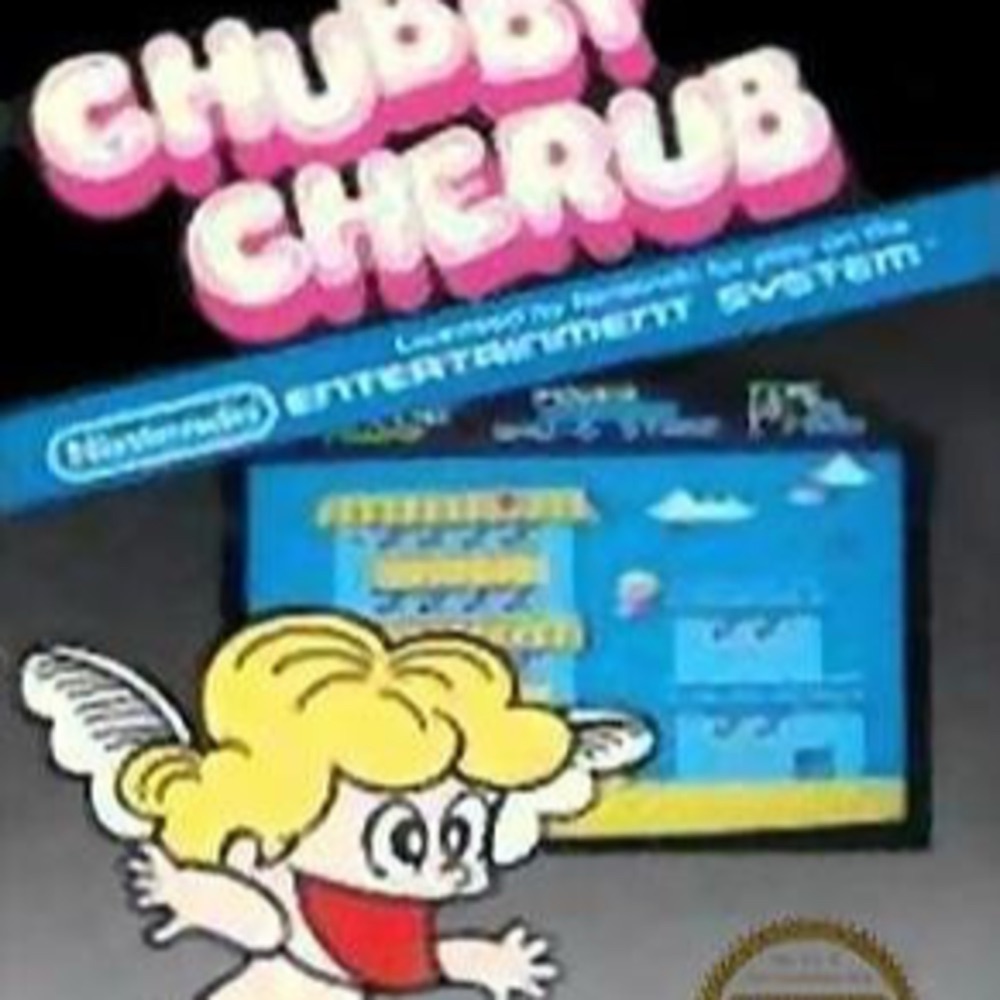
Chubby Cherub is a Bandai-published, Tose-developed game about a naked baby angel flying around a town, barking at dogs, and checking apartment windows for kidnapped friends. It came out on the Famicom in December 1985 and reached us on October 29, 1986, though we joked that nobody can say for sure. We spent the first few minutes working out how to say the title, and the manual plot is not much clearer.
What it gets right
- The movement and the art. Sam said the movement feels pretty good, and we liked the art too. Flying is a fun hook, and a kid in 1986 would have loved being able to fly.
- Plenty of power. Food gives you energy and invincibility, and there is so much of it that you almost never run out of flight. It works like the P meter in Super Mario Bros. 3, letting you skip over the dogs entirely.
- Odd details. A chow chow is the one invincible dog, the manual names the breeds, and you beat the kidnapper (the manual says "burglar") by throwing a dog bone so the dog attacks him. We also enjoyed the logic gap of a lollipop that lets you bark back at dogs.
Where it falls apart
- The same level, ten times. There are 10 stages, then it repeats. You fly, dodge and eat, and only smokestacks and the like change. The obstacles never get much harder, and because you can fly over everything, there is almost no platforming.
- The music. One cozy loop that is fun for the first minute and then plays through every level. Compared with Mach Rider's epic and intense soundtrack, it is just there.
- A score game in a Super Mario Bros. world. The manual leans on getting your score up, the way Mario Bros. or Balloon Fight do. We did not care about points when our friends had been kidnapped.
- Half-built ideas. It has good movement, nice art and a song, and then it stops. We wanted a maze level, different enemies per stage, new pickups, anything to change how you move through it. Joe's fear on boot-up came true: the same thing over and over.
Beyond the game
The localization is the real story. In the manual, the rice snack that is actually an onigiri is called a hamburger, which led to Pokemon and a debate about whether they are donuts. In Japan it was a different game based on a Fujiko Fujio manga with a ghost character. Tose is a ghost developer that leaves itself out of the credits and has made over 1,000 games, and the Wikipedia plot describes Heaven and Hell stages that are not in the manual, which we guessed was a rough translation of the Japanese game. The line "he goes to the hell" was floated as a tattoo.
The bottom line
Skip it. In the Essential Games List segment Joe voted skip it, "but not like a terrible terrible skip it," and the others landed on not essential as well. Nobody voted it onto the list. It is better than Tag Team Wrestling or Urban Champion, but we agreed it is a basic action game that never grows, and that the third-party games are not impressing us yet. We admitted we might have smiled, which Tag Team Wrestling never managed.
Written from our conversation in this episode.
Auto-generated transcript. Each paragraph starts with its timestamp. Speakers are not identified.
Chubby Cherub, a game where you'll chomp and chase all day. Yeah, who reads that and is like, ooh, that's what I want to do all day. Chomp and chase. Yep. And welcome to NEStalgia, a chronological exploration of every NES game released in North America. I'm Mike. I'm Joe. I'm Sean. And I'm Sam. Guys, today we're talking about a game that I have a hard time saying, so I'm gonna, you know, it's almost like a Voldemort for me. I kind of almost don't want to say it and just say like, we got through it. You heard it in the intro.
Chubby Cherub. It's Chubby Cherub. We're done. You can just take that instance and just cut it over every time. Yeah. We usually don't go over stuff like this very early in the episode, but this is a video game podcast. So I just want everyone to understand that we will talk about video games. But first, I've never heard that word before like two weeks ago. Really? I don't know what's wrong. I mean, now I know. I was just calling them baby angels.
Obviously, there's, you know, there's all different kinds of art and portraits and stuff of them. I mean, a cherub is just anything that looks like Cupid. Yeah, exactly. That's not Cupid himself. Yeah, exactly. Cupid is a cherub, right? But you could also like, Cupid is a specific cherub. It's also something you could call a cute baby or something. Yeah. Well, it's cherubic. Yeah. Okay. But was there something going on? Yeah. Was there something going on in the eighties that like cherubs had like a big breakthrough that was like, oh, that's clearly more recognizable than just calling it Cupid? No. I don't think so. I'd say in the nineties when Smashing Pumpkins released the song Cherub Rock.
Oh, okay. So I do know this word. Yeah. You've heard it before. Totally. I know that song. They probably had the opposite effect on each other. Like they released their album because of Chubby Cherub. Exactly. Yeah. You know what? That's the first bit of trivia you got.
Well, I mean, it makes sense. We gotta smash them. Tag Team Wrestling did the whole like, you know, strong bad influence. Yeah. So it makes sense that Smashing Pumpkins would be like, oh, NES, like I gotta name a song after. I feel like Corgan was really into the NES before he went crazy. Yes. Before he went crazy. The reason why I ask is because they could have changed it to anything they wanted because in Japan, this wasn't even the same game. This was one of those like Doki Doki Panic things before Doki Doki Panic was a thing.
Get it? I don't know what that is. Oh, Doki Doki Panic is Super Mario Brothers 2 USA. Oh, okay. I keep forgetting what that is. Yeah, sorry. It's a meme between me and Joe. Oh, okay. Anyway, the reason why I bring that up is just because they could have called it like Chubby Cupid or something because in Japan, you're actually like a ghost character named like
Kyutaro or Kitaro. I don't know. Just Han Taro. Yeah. Definitely Taro for sure. Yeah. But it was based on like a manga, Fujiko Fujio. Fuji. Yeah. I'm not going to botch that any more than I already did. Anyway, he's a big manga guy and he made what that was one of his mangas and that has like an incredibly long name that I'm not going to try and pronounce because it's like Obaki no Kitaro or something like half of this podcast in Japanese. Yeah. Anyway, I just wanted to point out that this is an interesting thing because Nintendo took like the fast route with, you know, the Rob games, just calling them robot gyro and robot stack. Right. Was that it? I don't remember. Stackbot. That's my nickname.
Stackbot. It's funny though because I was thinking before that I was wondering why a cherub? Like what? I thought it must have been like maybe in Japan a lot of times like cuter things do better in Japan. So it just, but it was Americanized. It was brought to the United States and they were like, what do American eighties teenagers love? Cherubs. Especially cherubs that are afraid of dogs. Right. Specifically. The noise dogs make. We'll get into that.
And so it was, it was released on the Famicom in 85, but it comes over to America a year later in October 29th, 1986. And I know what people are going to say, like October 29th, you know, you got a couple of other games in October. Are you sure? We'll get, we don't care. We're just doing them in alphabetical order. They all came out in October. No one can actually say if this game actually came out on October 29th. Especially not you. Uh, whoa. This game was published by Bandai. Uh, probably a pretty recognizable name to everyone in this room. Yeah. I recognize too many, if I know too many of the games they're known for, but I, I, I, I, well, you probably know them now more so because of their Bandai Namco partnership.
Uh, at this point they were just a publisher. They weren't making these games. They were just using the brands that they had acquired through like, you know, franchising deals and stuff like that because they have like Dragon Ball, they have Digimon, Power Rangers, uh, I don't know if they have Yu-Gi-Oh! I don't think so. Uh, no, they don't have Yu-Gi-Oh! I'm trying to think of who does. I remember Bandai. Nevermind. Yeah. Maybe, maybe they do have Yu-Gi-Oh!
Who knows? That's a question that we'll never know. That's a question that I certainly don't know, but the big property of course that they have is Gundam. Oh. That's their, that's their big thing. And that's huge in Japan. Something that probably has like a bunch of Famicom, Super Famicom games that we're just never going to see here in America because they don't believe in... Even Gundam. And they don't believe in Gundam.
Like, as like a viable franchise, you know? It's like, I think growing up I saw more of Zoids than I did of Gundam. No. I'd say they were about even for me. I don't even know what Zoids is. Wow. Zoids is a disease. But you know what Gundam is. I know what Gundam is. Funny enough though, this isn't a Gundam episode. There. This is an episode about Chubby Cherub.
What are we talking about? Published by Bandai, but developed by Tose or Tose. I think it's really important that we talk about them though, because they're like a ghost developer. They don't take credit for anything. They specifically leave themselves off of the credits of games, but they develop these games and then let another company take credit for them. It's so weird. It's so weird to think about, but they've made 1000 plus games and they're still around today.
Ghost making games that you might like that you just don't know about. And they're still, so they're still around today and still uncredited. They're still, yeah, a huge operation of like outsource entertainment. So I could, do they, do they sell the like the credit? Like how does that work? No, what happens is, is like a, you know, I'm not saying that this is a real example,
but to give an example, you'll have like Sony wants to make a PS4 game. They want to have it under the Sony publishing brand, but they, you know, outsource it to Tose or Tose for their, for their development and then publish it as a Sony developed game. Hmm. Weird.
And yeah, this is a real thing. And there's a very interesting interview that I'll put in the show notes where they interviewed a couple of employees of Tose entertainment and just talk about like, what is the process for this? And it's very interesting because they have a team at the company that's just in charge of like knowing all the different engines of all the different game engines that are out there so that they can help like troubleshoot with their developers to be like, oh, okay, so you're on unreal. You got to do this, this, this, and that, you know, and, and like, oh no, you're using
like a, you know, a square Enix proprietary engine. So you got to do these things. It's something that we just don't think about as fans. I guess it's not really like, if you really think about it, it's not that different from like, like a TV network outsourcing, like a show production. Right. Like for B roll or something. Or you play a whole show. Or the whole show. Yeah.
Great. Great. Great. know the plot uh no i read the manual and it's it's a wild ride i i don't really remember just because there's so much of it in the manual i wouldn't mind if you took me through what you remember because i think that might be funnier than the actual plot okay so there's all right
there you are the chubby cherub that's your name it says like chubby cherub's friends yeah you are the chubby cherub your friends got kidnapped by correct uh and you gotta you know collect food because that's how you get energy um and you know find them in a house or in like some kind of apartment complex and find the window that they are like that is for the room that they're being held captive yeah they're being held captive in an apartment complex it's like really strange like
you just got to check the windows be like are you in here mark you know it's yeah are they also cherubs or no they're just people normal normal humans several several humans you know more than one have been kidnapped and at some points you have to uh there's like what there there's a burglar also who has kidnapped them and you need to defeat the burglar by throwing a dog bone at the burglar because then the dog will attack him can i just correct you real quick yes if you are a burglar that has kidnapped people you're not a burglar you're a kidnapper no i get that but it's called the burglar in the manual in the manual they call them burglars oh my god yeah there were a couple
mistranslations in the manual yes the biggest okay no go ahead but the biggest one is there's like a rice donut or something that a rice donut well i'm not sure what you'd call it it's like a rice it's a lot of anime yeah that rice ball wow that was this is just bad i'm not i'm honestly not sure what it is but it's like a triangular rice ball you know what i'm talking about with like
but in the manual it's just called hamburger yeah and that is something that we see we see that a lot though in the in at this time like these westernizations of the games and they don't bother to change out like and i swear we're gonna see this a couple times with that specific rice
snack yeah if you want to call it if it's gonna be called a hamburger i'm not joking if you don't know what we're talking about odds are a lot of you have watched pokemon and yeah i was just thinking about something they were eating in there it was those things i was trying your little rice balls with like seaweed on the bottom yeah and i think brock calls them donuts they're called a lot of things in yeah they are okay so they are called rice balls that's the end of the they're not the
italian kind filled with cheese or whatever these are the ones with the like piece of seaweed yeah in between they're not ball shaped yeah they're not yeah they're like more triangle shaped yeah yeah but anyway yeah so back to the these are all very important things to know in the game okay you really you really can't play chubby cherub without like all understanding the plot yeah so there's also i i don't know if i i don't think i got i don't i don't think anyone's gonna
lie but you've lost out and then there is a person called like mad something and you gotta like give him i forget what you have to give him but there's like i can't because what you said so far was like your friends got kidnapped the burglar burgled them i guess there you gotta go find there's like a whole other guy there doesn't need to be another guy like that's it but you just he's like your friends you gotta get him something i don't really get it okay that's complicated the one thing that makes the game even more complicated is that there's a bunch of dogs in
your way the entire trip dogs are the main enemy yeah like why does any like do is there something in like lore about cherubs and and dogs that like no i don't think so i don't know why also that because you've had like a big lollipop that you could then fight dogs but you bark at the dogs back like it's like but it's a lollipop that gives you the power to do that bark at dogs right it's weird there's no there's no logical uh cause and effect
so before we go any further i'm gonna break down this game real fast all right not for the plot for the objective you're a chubby a chubby cherub and you start at the beginning of a stage usually in like town or something like that and you have the ability to walk or fly and you have to dodge a bunch of dogs or bark at them to attack them and then you get to the end of the stage and then you have to like save your friend who's been kidnapped by usually checking out the apartment complex and
opening up different windows some which will reveal more angry dogs and others that will reveal your uh you know your friend that that you're looking and then you go to the next stage just slightly different in look but it's a thing yeah it's the same thing an incredibly random thought yes that what if the dogs are hellhounds versus a baby angel and to to give everybody a little more context our audio producer is sitting next to me on the couch and he just typed up hellhounds on his phone and showed it to me i think he wants me to say it okay now here's these are adorable puppies you bring up
some of them look kind of no they don't look like they're not like three-headed cerberus dogs but some of them look like they can chase you you bring up hell here and we kind of teased this in last week's episode but in the wikipedia page after the plot it then mentions there are hell and heaven stages when chubby cherub goes down of the stage where is open downsides he goes to the hell i mean he goes to the hell like it is dark stage and cannot see any floors and cannot fly when chubby cherub
touched a dog he reacts like a miss but it repeats until he arrives to the exit this is just clearly taking this is just taking the ghost game and translating it to english wow right like that has to be what that is because it doesn't make any sense that's no that's not in the manuals it's not in the manual there are no heaven and hell stages and that's where my comment comes last week you told me you told me a while ago like oh there are these heaven and hell stages we didn't get to and then on last week's episode before we started recording like joe there is no heaven and
hell with no context so i just thought everybody would know i was referring to the cult classic tose develop bandai published chubby cherub unfortunately that wasn't the case and i just think it's really confusing that wikipedia would lie like this just so blatantly but also just have a memorable line like when chubby cherub goes down of the stage where is open downsides he goes to the hell that is some i'm gonna get that tattooed on the road hell of jeff shit right there oh that's a that's the thing
for the show notes i'm gonna put sweet bro and hell of jeff in the show notes because in a lot of ways that's like chubby cherub well one thing i wanted to mention about the dogs is that one of the dogs is invincible and it's a they in the manual it's just a chow chow like they give it the specific breed of which dog is invincible and all the other dogs are just like dogs there's like the chow chow there's like a bulldog right yeah there's a bulldog i don't know i can't remember if they actually called it a
bulldog maybe they're a little more vicious though than the normal the chow chow is the one that is you know invincible but you can be invincible too for a very long period of this game yeah pretty much every time you eat something you you're it's like it's like in a lot of games when you get hit and you have a second you get that pee there's like that that pee power up that'll yeah right out of the oh is it just the yeah just the it's just i think i was invincible so often that was like
yeah and it's so often so long and really there's so much food in the stage that it's it's hard to run out of flight and when you have flight it's kind of like in super mario brothers 3 when you have enough of your p meter built up so that when you're in the raccoon suit you can just like fly over the whole stage yeah you know it's kind of like that it's like i'm just gonna skip all those dogs like yeah see they should have made the dogs have wings or something then they'd be hellhounds right three heads
one thing that really bugged me when i was playing this was sometimes the food is like just beneath the platform so it looks like you can get it when you're it's if it's like on the roof of house it'll still be on the roof texture but under the collider so you'll land like above it and you'll have to figure out how to go down that was just a random thought that yeah no i mean that's it well that's an actual gameplay challenge you know i mean but you might actually get this right here yeah yeah but you don't need the food right that's the weird thing is that they've made the food yeah so powerful and your character kind of powerful in a sense that like really the only thing that's
gonna kill you is the enemies that can't be killed by your barks wow i mean this is this is very interesting though that this is the second like character action like side scroller game that we played i would say kung fu counts right i guess i guess uh it's it's not a platformer that's not a platformer so like we go from super mario to this to this and i like that you can fly like that's that would be a cool selling point for me if i was a kid like these days um but really you can fly almost you can just fly the whole time i mean it's more like there's really no need to jump at all
yeah there's very little platforming in the game because you you know there might be like once or twice where you in a stage where you've lost your flight and then you have to sorry i'm just right in the middle of your sentence okay um does anyone uh know how many levels there are so there's 10 stages and then it repeats okay uh so it's really really the manual focuses on this too though the manual
really talks about like how to get your score up and stuff so this game was more focused on like from a score perspective like how you might think of like a mario brothers or a balloon fight and i think that's weird i don't think that's the right path here in a post super mario brothers world where like super mario brothers is out and super granted you know this game came out in japan in december 16th 1985 so it only had a couple months after super mario brothers but i think at this
point it's like it's too little too late like i'm not caring about my score now i wanted like my friends have been kidnapped i want some closure on that i don't want to find out i'm like later that same day and my daughter's my only daughter's been kidnapped again so playing this game it i kind of had the the realization when i was playing it this is what i expected an nes game to be like
you know and that it's this really kind of super basic game that i just don't really care about the the premise of it not too much not the premise but you know the gameplay because the premise i'm rescuing my friends i gotta care about that you gotta always care but you gotta care about your friends but i actually um a couple months ago i started trying to get a little bit into video game
development okay right and the first thing and i know that it's like it's completely different than how it was then because they're like established engines like i was using unity right i mean everything that's being built right now is being built in assembly which is a different monster yeah um and i can't imagine how difficult that would be but the first thing that i did in unity was you set up you know a way to move and you set up like if i get this i collect it if i get this i die you know
and that's like super super basic stuff so it seems like that's like they got good movement down because the movement does feel pretty good i think uh and then they just kind of figure out those things there's some ai in it you know which is interesting uh but i don't know i feel like it's very surface value in that we got all these different elements of it and we're just gonna put them there and this is gonna be a you know a cherub and this is gonna be dogs i don't know you
know yeah i hear you well i mean i think they were working with the best that they could from oh yeah westernizing the game i agree but it still feels like a very early game you know it feels like they just like video games just haven't been out long enough for them to for this to be something um interesting and there's there's enough to it like like the like actually literally how many levels there are that it could there was like potential for it to change up in the levels and like
feel different and not just feel like they got one thing down and they did it over and over again on every level and like granted they change things up a little bit like it gets a little like there's like smokestacks later and stuff and but it's still in the end it's just you fly you dodge the obstacles and you eat the things and like yeah obstacles never get much harder the what really killed this game in terms of repetitiveness is that song oh yeah god
that that that this game had like a what like one loop like was that all this was yeah if i'm a real monster i would have just played that loop throughout this entire episode just slowly underneath it it's it's fun the very first time you hear it you're like oh hey i i really dig this song like it's nice it sounds like i'm having a good time it's a nice cozy town and then it repeats over over and over and over again and then you beat the level and the next level is the same exact song it doesn't work like
on a mock writer level you know where like the song is epic and intense and you feel like you're on and it's part of the atmosphere this is just music right this is me that's just that's just being thrown into the mix of randomness of you flying while you eat food while dogs bark at you while your friend is kidnapped in an apartment complex and no one else called the cops and you're a baby angel sent from heaven to go rescue your friends that how do you even talk to these people
the whole game is is broken and weird and i will say that if there's anything i can compliment it's to echo what sam said that the movement does feel pretty good but when you can skip the whole movement thing by just flying over everything to get to the end of the stage i know that that's not the goal because your score won't be very high but damn it if i care about my score you know like
in a game like this i'm trying to rescue my friends damn it right yeah so i think it's time to move into the essential games list all right it's the essential games list and you are thinking about what to get your girlfriend or boyfriend for valentine's day and you're like it needs to be a game about a naked baby angel running through a town fighting dogs but wait a minute
that game might not be good yeah that we you know and might you know we haven't we haven't gone right it might be good we have to talk about it here where we decided this game is essential for the nes today not when it first came out not looking at the library of just the 30 or so games that we've played so far we're talking about in 2018 if this game is still good joe
all right the thing about playing all these nes games is i feel like you start to get kind of wise to like things that happen in a lot of nes games and you start to look for them and when i first started playing this i something about it was like i wonder i wonder if this is going to be one of those games where it just you do the same thing over and over again i don't know what like it was about the aesthetic of it or about the first level that like made it seem like that i was really hoping
that it wasn't going to be that and that's kind of what it ended up being it was it was the same thing over and over again so i think i'm not gonna i wouldn't vote this essential i would probably say it's a skip it but not like a terrible terrible skip it it's just like meh wasn't very good
all right uh a couple of good things i'll say about this game is i i kind of like the art um i like the um the the tweaks that they have to movement i like that you can fly maybe they may have abused that a bit but it's sort of like you have you have an art style that you're going for and then you have this cool feature you're gonna uh put into your game and then you forget about everything else and you just stop making the game and that's just what this is it was it's a half-baked idea with a mess of a plot and just a very it's just a very messy execution in general so no it's not essential uh so i i kind of going off of that i feel like they did have all these interesting elements
that they programmed into the game that were you know there's good movement there's nice art there's a song uh uh and i think that they if they had just done like a little bit more this could have been a more enjoyable game like maybe there's a level where there's like a maze or something like that not like a maze maze but no i hear you know just like it like moving through it becomes more interesting you're yearning for variety at this point yeah yeah moving through it just becomes different than it was in every other stage and i feel like they have all this stuff in play but they just didn't really do anything with it and it just feels like a super super basic
platformer that you would kind of expect to be on the nes that's what that's what it came down to my like my overall take on this was yeah this is an nes game you know this is what i was expecting an old game to feel like it's not essential you know you don't need to play it all right i'll say this we we played enough nes games now and that's weird to say because there's still so many more to go there's like 690 left but we we played enough now where you're hoping for like forward progress
and we certainly didn't get that last week and we didn't get that the week before and while this game is better than tag team wrestling and urban champion they're different genres so it doesn't even really matter you can't compare them and even and it doesn't matter anymore comparing them because we're talking about them in a 2018 view here and in 2018 none of those games are worth
playing including this one because the thing is is like so many things that this game could have done if it was made today just don't exist and i think that that's like you could say that about a lot of games but you wouldn't necessarily like touch much of uh like super mario brothers or balloon fight or mock rider like you wouldn't you wouldn't touch too many things in that game to make them better
you know you could make a whole different game but you're satisfied with the way those games came out i don't think anybody would really be like satisfied playing chubby cherub i'm i might have smiled in this game as opposed to tag team wrestling whereas i didn't smile maybe that'll be my new like essential thing like but in smile it can't be essential but i'm definitely not voting this one essential i think it's missing a lot even in 1986 like i just feel like you're walking on super mario brothers footsteps here with this whole action platformer thing and you've missed the mark completely you know
different stages different variety would have been great different different enemies for each stage would have been cool and like i know there's a little bit of that but just even a bigger variety of how they attack and what they do and maybe what you do even you know different power-ups pickups there's a lot that could have been done and and it wasn't and i get that this is just a quick port with uh westernization to make it work for the new console but the these third-party games aren't really impressing me uh at this point you know i do have a quick little thing to add just about um just to touch upon what we've been saying about um this being an early nes game even in 1986 this
isn't up to snuff like i understand that just console gaming or gaming in general while it's been around for a few years at this point like it's still in its infancy oh yeah and if you're gonna make an analogy to even film or just motion picture you need to look at like how it was entertained just to go to like a nickelodeon and see this person just you know i don't know walk down the street isn't that crazy like yeah maybe that was still a reason why someone would be interested in playing chubby cherub or uh or uh urban champion or or wrestling but the fact that super mario brothers still exists like at this time is saying that like everyone can do better with these games it's not and i'll topple that
film point a little bit because it's not like you know we've only had like trip to the moon or something like that you know and like now nickelodeons are a thing it's like this is after like you know a dw griffith film comes out and it's like well now you know like now i've seen feature films so i don't really interested in flip book right i'm not really interested in flip books anymore i'm not really interested in shorts like i want more of that i want like a full 50 experience where i can play this game time and time again you know i i don't think that games like that are too far off in the horizon but we got that taste early and now we're hungry for more of it exactly but i love that
film analogy actually you're right i think uh you know we're at that time period 1986 where the console is still for some people it's the first time they're playing this you know not a lot of people had it in 85 86 is really when you know it sold world you know worldwide and then 88 is kind of like the boom so we're not even at the boom yet so for a lot of people who pick up chubby cherub it might be like their first time playing a video game you know this might be like and that's weird yeah but unfortunately you know that's the roll the cards and roll the cards it's a great mic expression that's the roll the cards and that's you get what you get and you don't get upset uh that's probably
someone's favorite nes game it's got to be at least one person's if you think about it i always say someone's favorite movie is transformers dark night of the moon you know like that's that's got to be at least one person's favorite movie maybe it's a listener's oh dear anyway if you managed to stay on the podcast and didn't shut it off when we had like struggled through the whole
rice ball thing which is actually called onigri i'm sorry sorry that we did that to people that you know we can they continue to doubt our credibility we have no credibility we're just fans like you so since you're a fan maybe you'll write into the show contact at nostalgiacast.com is the email you can write in ask us questions tell us what you like tell me what you don't like
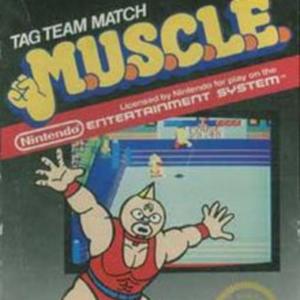
i'm not gonna get upset i only get upset on the podcast yeah i don't like your stupid voice well thank you listener who said that anyway uh that's pretty much all the time we have for this episode of nostalgia join us next time for muscle tag team wrestling and sean wouldn't like this but i'm gonna say be sure to play it yourself if you can for more nostalgia please subscribe to our podcast wherever you listen and be sure to check out nostalgiacast.com that's n-e-s-t-a-l-g-a-a-cast.com there you can find links to the show and show notes as well as our other platforms i'm michael esposito you can find me on ad esposito film on twitter and i'll talk to you soon so so so