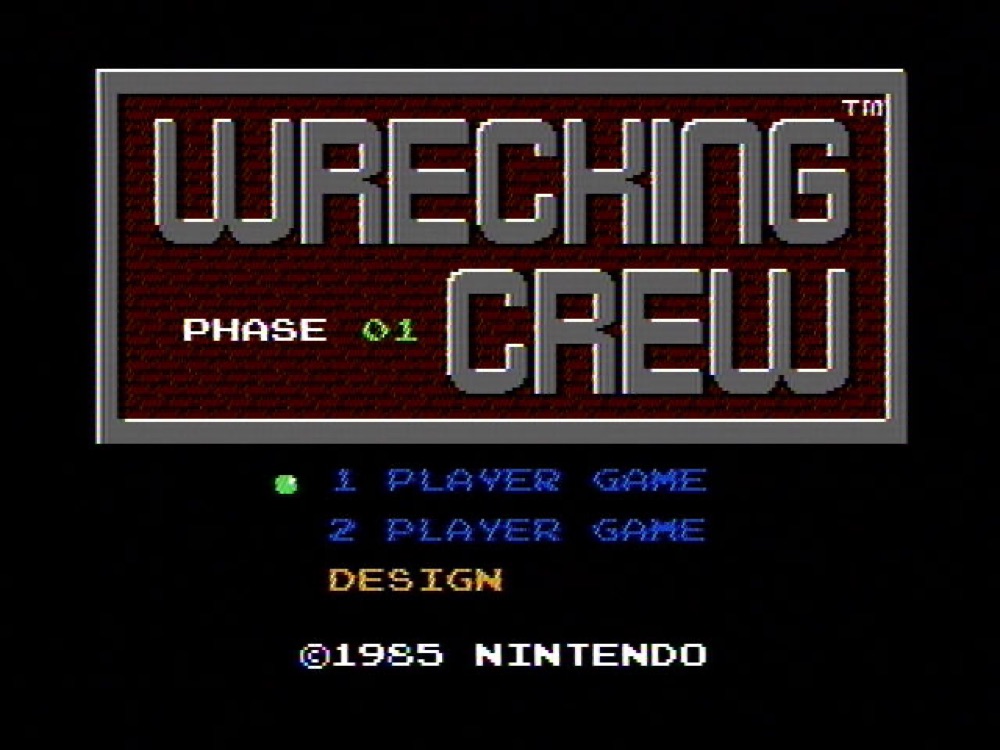
017 · WRECKING CREW
Let's tear it up for the 17th and final episode of the NES launch games! For more NEStalgia visit NEStalgiacast.com and don't forget you can always contact as at contact@nestalgiacast.com
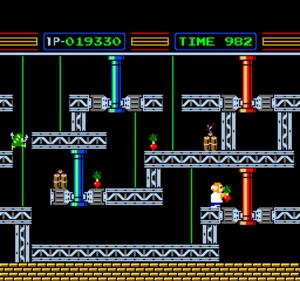
Wrecking Crew closed out the launch games, number 17 of 17, and it came with an unusual job description: Mario and Luigi are on a demolition crew, swinging hammers at walls, ladders and girders across 100 puzzle stages. Sakamoto, who produced it, only wanted a game about breaking walls for a puzzle feel, and Miyamoto then had Mario and Luigi added. Reactions on the show ranged from Joe's three-hour design-mode binge to Sam finding it stressful.
What it gets right
- Puzzles from almost nothing. The tool kit is tiny: walls, ladders, doors, bombs and a few enemies. It all comes down to destroying everything without locking yourself out of a level, and the 100 stages are all different, not 299 repeats of ten ideas. Opening a door lets an enemy wander into a silhouette world behind the stage, where it can't hurt you. A bomb opens every door, though, and may let them back out.
- Bombs that reward planning. A bomb blows up a connected row of walls, and another bomb on the far side sends it back the other way. Walls take one, two or three hits, so you have to think about where the chain will break. Chain walls score 100, 200, 400, 800, so there is also a best way to play for points, beyond just solving.
- Hidden extras. Break the M, A, R, I and O walls in order for a one-up, with no hint where they are (Luigi spells L-U with the same walls). The golden hammer comes with great music and turns every wall into a one-hitter, though it does not kill enemies, and we learned that by running into them.
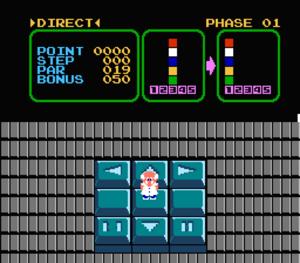
- Design mode. This is the headline. It works like the Excitebike one, but you are designing puzzles, so you cannot just throw things down. Joe made four levels, with doors that trap or release monsters, a chase level and a two-path puzzle where the order matters. He lost three hours on the first night and said it made him appreciate the stage design.
- The music, which has been remixed in NES Remix and appears as a Smash Bros. level.
Where it falls apart
- Few ideas. We counted about 5 to 6 concepts, so 10 to 15 levels shows you everything. Joe wanted more enemy types later and some sense of progression, and even level 100 is not all that hard.
- Locking yourself out. Several levels left us stuck, and we waited for the fireball (it comes out if you stand around too long) to end the suffering, never realizing Select restarts the level.
- Spike. He shadows you, knocks you off ladders and can undo a puzzle, and it felt like the first enemy that was out to get us. We loved to hate him and still want him in a Mario game.
- Design mode is not for everybody. Sean said there is more potential here than in Excitebike but he did not want to become a puzzle designer that night. Sam appreciated it and still did not like the game, mostly because you can't deal with the enemies.
The bottom line
Play it. All four of us left it off the Essential Games List (0 for 4). Joe, who enjoyed it most, called it play it, not essential, and we noted that it is less a Mario game than a game that has Mario in it. It controls well, sounds great and looks good. Sam felt other puzzle games are better, and Sean called it an adequate experience. Try 10 or 15 levels and then try the editor.
Written from our conversation in this episode.
Auto-generated transcript. Each paragraph starts with its timestamp. Speakers are not identified.
Wrecking Crew, here's an off-the-wall demolition game that you design yourself!
And welcome to NEStalgia, a chronological exploration of every NES game released in North America. I'm Michael Esposito. I'm Joe Castu. I'm Sean Tresmond. And I'm Sam. And welcome to our 17th and final episode for the launch games, guys. It's amazing.
It's kind of a feat that we went through them all. We made it. But we do plan to go through like 700 others. Yeah, this isn't like a queue for a break. Like we're just gonna keep going, but it is quite the milestone. It feels good to get through the, uh, and this actually, this is a lie too, though. It feels good to get through the launch games. I was gonna say it feels good to get through the black box games, but a couple more of those will come out. We're not through yet. Right, we have to get through this. We have to get through this one.
Thank you, Sam. Uh, Colonel Sam for that, uh, for that help. Uh, and I just want to announce real fast that we'll be doing a best of 1985 episode, kind of like our end of year review celebration, even though it's nowhere near the end of the year. It is the end of 1985 because no other games come out. Uh, all these games were released in October of 1985 in America. We are all, we are all on 1985 time. Yeah. Well, I've, whenever we do this podcast, I'm in 1985 again. Yeah. Uh, but we're looking at them in the future. No, that doesn't make any sense.
Anyway, I was never in 1985. Yeah. I was not born in 1985. Anyway, we're doing that episode. It's going to be a good time. Please join us for it. We're actually going to rank our favorite video games. Not all 17, just the top five from this year and kind of award a game of the year. Gee, wonder which one that will be. Uh, so let's just talk about Wrecking Crew. Does somebody want to like walk me through this game real fast? Maybe Joe? I'll give it a shot.
So you play as Mario and Luigi, if you play a second player, um, and you are walking around on different platforms, trying to break various objects that, yeah, it's kind of like, it's your assignment to like demolish every year. Like you're on a construction crew, which is weird because they were plumbers before this, but now they work on a construction crew, which is really more like a demolition crew.
Yeah. I think they're like, they have like a temp agency that they just keep doing these odd jobs. But yeah, like there, there are designated things that need to be destroyed and there are various wrenches and other things that are trying to stop you from doing that. Yeah. And we see the hammer come back, uh, from the Dungie Kong days, the hammer's back now. And this is like, that's your primary object. Just destroy these things as you're whacking these walls, doors, ladders.
Um, there's even like, uh, what would you call those? Like those little structural girders. Yeah. The girders. Right. And the girders are, you know, there's a lot of little puzzle elements where you break a girder and it knocks something from the top platform down to you. Yeah. So that's actually the objective of the game. The objective of the game is not just to destroy everything.
It's to destroy everything without locking yourself out of the level. Right. Because you see, if you destroy a ladder before you defeat everything on top of it, you might be locking yourself out of the mode. Now, don't worry, just hit the select button. You'll be able to restart the, uh, the level. You see, I never did it that way. Oh, okay. See, I, I always forced yourself to death. No, this is, I didn't know I could do that.
Um, so I thought it was actually sort of a meditation on failure and the, like the feeling of being doomed because there were some levels that I, I locked myself out of progressing. So I thought that the, the point of, of your, of your failing was you just had to wait for the fireball. I kind of played it that way too. I didn't, I never thought to just quit out. I was like, I guess I got to
wait for the fireball to come and end my suffering. And so, uh, for those of you that haven't played the game, there is this like fireball where if you stay on a platform for too long, it just like comes out from either side and hits you. I'm inclined to believe that that fireball comes all the way from the mushroom kingdom from King Koopa.
Uh, you know, like I just feel like it looks exactly like what else could it be? Like is someone else blowing stuff up and then like these little sparks of fire or like, Oh shit back then. It looks more like a, what a Mario's fireballs, doesn't it? Where he, when he has the fire flower. Yes. Yeah. Oh yeah, that's true. Bowser's fire does look different. It has more of like a long streak to it. Uh, and I will continue to just call Bowser, whatever I feel like Bowser, King Koopa, you know, maybe I'll just get crazy and call him wart. That would drive people crazy.
Um, but yeah, just to get back into wrecking crew real fast. So we kind of talked about what the game is. You're just destroying these objects, climbing up different obstacles and making sure that you destroy everything. Because if you miss even one little ladder or one girder, that's it. You got to reset the puzzle and do it again.
Uh, there's a hundred puzzles, which is pretty interesting. Uh, it's a pretty long game. We talked about Cuckoo land having like 299, but it wasn't like 299 unique things. This is 100 unique levels, which it feels very nice and, uh, offers plenty of variety so that you're not just playing like the same 10 or something. It's pretty impressive how much variety there is with how little variety there is in the, uh, in like the enemies and the objects on screen.
They have a lot of good combinations with just those few assets to have. Yeah, the tools are there. Reminds me a lot of, um, like what we were talking about with golf, where you can break the game down to just seven elements. You can break this game down into just destroy everything you need to, uh, avoid the enemies at all costs and, you know, uh, solve the puzzle. Don't lock yourself out of it. And you take those three things and then sure, there's some concepts of like, you know, dropping down from platforms or when to open up doors this way enemies get locked behind them. There's all sorts of things like that, but those things continue to like grow and expand as you play the game.
And when you're saying lock yourself out of it too, it's not always necessarily that you lock yourself. Oh, now I'm stuck on this platform. I'm stuck in this area. Sometimes you can still move around. You just have to slowly realize like, Oh no, now I'll never be able to destroy that thing. Or right. Once you destroy that ladder and there's a platform, uh, there's a wall up there that you need to get to. You're like, Oh, that's kind of the end for me.
Yeah. Uh, so before we go any further on the gameplay, uh, I wanted to talk a little bit about, um, Sakamoto, who, uh, was pretty much the producer of wrecking crew, much more famous for super Metroid, uh, and those games, uh, which is, it's kind of incredible that he worked on these kinds of puzzle games at first, but I found this, um, this quote from him back in like 2010 on wired.com where he was talking about like his NES, uh, days I'm working on like wrecking crew.
And so I'm just going to read this quote from him. He said, I wanted to make a game where you broke walls and you got sort of a puzzle feel out of that and nothing really I could put my finger on as far as specific influence or inspiration. I was just imagining that type of puzzle action game. That is the most like ambiguous thing you can say. Exactly. And I don't know if that's a bad translation, but that just makes me feel that like he barely remembers making this right, you know, like he's like, yes, I did work on wrecking crew. Yeah. I was on like mushrooms when I was making that game.
And he actually didn't even have, uh, Mario and Luigi in the roles. He had two other guys just doing this stuff and obviously didn't, you know, he assumed that Mario and Luigi were plumbers. They don't, they don't work on construction sets. And wait, hold on. And Miyamoto, uh, came over, you know, head honcho over at Nintendo. Not really at this point, but he is a big deal. And he was like, Oh, you know what?
And Mario and Luigi do this game. And it's kind of like, it's not a suggestion. It's like add Mario and Luigi to this game. So that's how they got in and got their ever changing jobs and stuff like that. Uh, I believe that the characters originally looked more like spike, the other guy in this game who like looks vaguely like Mario and Luigi, uh, who can sometimes, you know, screw up your game. Right.
Uh, you wanted to say Joe. Yeah, no. So aside from the color palette of Mario and Luigi, when there's only so many, so many pixels in a sprite, there's not much else that makes something Mario or Luigi. If you were a guy with a mustache in an NES game, we had to assume you were Mario. Because this Mario and especially this Luigi have very different color palette. Like Luigi is not green at all. So I don't know other than it's saying Luigi at the top. I don't think I would have thought this was Luigi. I would have thought this was a different guy.
Uh, there's only so many, uh, 30 pixels. So it's hard to recognize him. Now, Terry, I thought was the, uh, one of the enemies on screen. Oh yeah. Scary Terry. What's this? The little, the little purple, uh, enemy.
Um, not the jelly bean looking one. Okay. I didn't read that. I didn't read the names in the manual. It's fine. This is more interesting. Not the jelly bean looking one. The other purple and red ones. The thin guys. They look like, uh, Scary Terry from Rick and Morty. Oh, okay. I could see that. I guess. Take another look. Take another look. Yeah, yeah, yeah. Um, always good to have some Rick and Morty influences in our Wrecking Crew games. Uh, so guys, let's just talk about gameplay here for a second. The puzzles. Are they, are they interesting?
I mean, yeah. I mean, there's definitely a, uh, you can see that there is a progression that you have to follow for some of them. Some of them are a lot more forgiving of going out of the prescribed order. I liked the act of destruction. I liked breaking down the walls, especially breaking down like the, the concrete, uh, ladders.
Yeah. That's the most satisfying. Yeah. You get that little cascade. I found the most satisfying to be when you get the bombs, right. And they blow up like entire sections. Like, and then when they come back around too, if it was like, if they were double walls. So just to be clear here, they're not actually double walls. What I mean is like, there's, there's like walls that get one hit, two hit. And I believe there is a three hit wall, right? Yeah. And so you would, what you do is you hit these bombs and they would blow up entire connected rows.
And then if there's another bomb on the other side, it goes back the other way. So if you have a two hit wall, it would blow them all up one way and then the other way. And then sometimes you have to think about it as like, oh, there's a, there's a, you know, one hit wall there. So if the bomb blows it up on the way over, then there's not going to be a wall to connect on the way back. So then it won't, you know, when it starts going back, it'll stop there.
So you have to think about like, oh, where can I hit it? Where there'll still be connected all the way through, or you can just go hit them yourself. But, uh, but then you're more at risk at, uh, getting killed. Yeah. It's interesting how there's like, there's no wrong way to play this game besides locking yourself out of the levels.
But there is like also a way to play this game and an optimal way to like get high scores. Like it is kind of interesting that like you can go beyond just solving the puzzle and you can play it the most correct way to get the maximum amount of points. Cause like it's 100 points for each wall you destroy. But if you destroy them in with bomb sequences, it's like 100, 200, 400, 800, you know, it really builds up on itself. So I thought that was pretty cool. Uh, the other element I wanted to talk about was the doors, uh, because you can't destroy them, but they're there to kind of like lock enemies out the same way you might lock yourself out of the game. I didn't really understand the doors too much. There was one level that was all doors
and I tried hitting doors in front of enemies and I didn't really see what was happening. So doors only open with bombs as far as I know. You can also hit the door with your hammer. I was doing that. Once the door opens a, an enemy that's walking by the door will then go through and it'll be behind the stage. Gotcha. You just see the shadow of them. He can't hurt you from there.
Okay. Um, but what's interesting is that if you have to use a bomb, it does open all the doors, potentially letting them back out if they happen to be walking by. Right. That's a, that's what I'm forgetting. Yes. The, the, the bomb one is ideal for opening up doors that you can't access. Right. Whereas like if you can just knock on any door to open it up and that's a good way to get like a carry, uh, an enemy that's approaching you if you're like about to, you know, cause there's barrels in this game too that you can't get over no matter what.
So if there's a barrel in your way and then enemies approaching you, but there's a door between you and the enemy hit the door and let the enemy go through. Hopefully the door locks on in time. And then it's stuck kind of in like this weird silhouette world where we can see them, but we can also hit them with the hammer. Yes. But we don't know where they went. Right. What is that? Yeah. They're in this is a building. I don't know. Do you think that's in the building? We're destroying the building. I thought the building had like nothing left at that point. Well, what's the door go to then? That's what I'm wondering. It's like the other side. Whoa. Right.
The upside down, the upside down. Two weird things in this game that I feel like amateurs will never even figure out is the Mario letters and the golden hammer. The Mario letters is interesting because you have to destroy the walls in order of M, A, R, I, and O. There's nowhere in this game that tells you where these letters are. Right. You have to happen upon them. It's kind of crazy that it has that. And if you hit the R wall, which you don't know ahead of time, if you hit the R wall before you ever find the M wall, you'll never even know. So what does it do when you get all the letters? So when you get M, A, R, I, and O, you get a one up.
Oh, I don't know if that's necessarily worth it. So what it sounds like to me, and so basically there's just five different walls throughout the level that have a letter hidden behind it. But what it sounds like to me is that you pretty much have to fail the level several times to find out which order they're in in order to get the one up. But you've probably already lost more lives than you gained at that point. Right. It's a reward for people who play the game a lot and figure it out. But if you play this game a lot, chances are you don't need the lies. Because again, if you just select, if you hit the select button and get out and go back in, you have a whole brand new set of lies again.
Right. Yeah. I mean, I got the, I found the M and I just had no idea what to do. I was the same. I kept hitting it. I thought it was going to do something. It was green, right? Yeah. And the letters are green regardless. The Mario letters are green and Luigi is not green. No. And what's interesting though, since you bring that up, is that if you are playing as Luigi, there are the same doors, it's not the same walls. They're not different walls. Same walls will spell out L-U, you know, for Luigi. It's not done.
Like it's, it's, it's not an oversight. I thought that it was kind of cool that they included that. Yeah. Uh, and then the other thing is the Golden Hammer, which is not as difficult, uh, to pull up, but it's kind of like you have to do a certain sequence with the bombs and stuff like that. And then from those bombs, you know, sometimes an item will appear after the bombs and that'll just give you like a couple bonus points. The Golden Hammer will play this awesome music, uh, that I'll start playing as it talks under me. It basically like, as you're going through everything now is like a one hit.
So whether it's the walls or a two hit wall or spike, everything is now just one hit and it's collapsed. See, I accidentally got the hammer. I don't know what I did to do it. Um, but I, I really ruined it when I felt like, Oh, now it can kill the enemies. And I just ran right into him. It's so easy to think how you might think that because
that's the only time in Donkey Kong when he's swinging the hammer like that is the only time that you can kill enemies. Yeah. I'm thinking of a mechanic from a completely different game of wearing the same character with the same hammer. Sure. It's not crazy that you think that. Miyamoto should have taken one more look at this game. He should have came back after saying put Mario in it and looking at the hammers and be like, make him kill them. After his dream of puzzles with breakable walls.
I wanted him to make a game where he broke walls and got a puzzle. That's Sakamoto. Yeah. That's Sakamoto. Not, not Miyamoto, but, um, easy enough. Uh, so let's, um, before we jump into the, obviously like the, uh, probably the crowning achievement of this game, let's talk about the bonus stage.
Did anybody play that stage? Yeah. I think like every five or so. Yeah. Uh, I did not do so well. Also, I thought when I thought it was one of those things where, you know, the, um, well, yeah, we should talk about what it is first. It's just kind of like the, basically they hide a coin in one of the walls, not in like a chest or something. They're just like, Hey, find this coin. And then you and spike are in like a race, right? This is a breakable wall. But when they play it, it kind of, it goes back and forth really quickly and then it stops. And I figure, Oh, that's where it is. And I'll go check it. And maybe it's around there somewhere.
No, it's just in a random wall. Right. And it's very misleading. Has anybody been as robbed as I was? And you know, you're climbing up there. Spike climbs up there. The first wall he hits reveals the coin. And you're just like, what the heck is that spike? Yeah. Can we talk about spike real quick? I would love to get a spike rant going because like this guy is the first time in any of these NES games so far that I thought was actually trying to like, it was out to get me
because I mean, and I guess he, you never felt that way with the hammer brothers. No, I mean, yeah, but like just because this is the only one, this is the only character that just, he just follows, he just shadows you. Right. And this is the first shadow Mario. Yeah. And whenever you're in front of something, like I'm climbing a ladder and he knocks me down. Like you ruined this game. I know that's what that, that's the intention for him being there, but Oh no, yeah. It's definitely punishing when that happens, but he can ruin a whole puzzle for you. You can run the whole puzzle and you already got enemies. Like what? Yeah. What's he doing there?
You're the, you're the only other humanoid here. Why are you, did I beat you for the, for the good job? And now you get, you work behind the walls? Like I don't know. Seems like, yeah, it seems like he's also, since he's dressed in the same stuff you are. Yeah. It seems like we were friends there. I thought we were friends at first. You would think. He might be the third brother of Mario and Luigi. Maybe he's like an angry tenant who's trying to make sure that you don't knock the building down. By knocking it down. Yeah. By knocking it down himself. And then also something interesting
is people like with Birdo, I'm talking about like obscure characters here. So Birdo, Waluigi, people want those people to have their own games. I'm not saying Spike should get his own game, but get this guy to show up in like Mario party or something, right? Like this guy needs to show up in the next Mario tennis game, Mario Aces or something. I think it's called for switch.
It's like that he needs an appearance. Like Spike is long overdue for something. I get that. That's true. But I would never pick him because I don't like him at all. Well, yeah, I mean, you're not supposed to like those characters. In fact, if Spike is the third brother of the Mario brothers, then what is his like wah opposite? Is that wah Spike? Yeah, I guess. I mean, you know, it sounds awful.
Spike. Waluigi doesn't sound so great either. Waluigi. Hey, he's he's a treasure. Spike is. Yeah, I don't know. Spike is also just weird because that's that's just not very Italian. It's like Spike. But yeah, I just want Spike in something else now. You know, it's kind of like as soon as you know it now, you just want it in something else. I just would like to see Spike in a Mario brothers game again.
So let's talk about what everybody's really here for. Or something that some of us were up until 4 a.m. playing. And that's the design mode. This is not to be confused with the excite bike design mode. They function exactly the same way. And I just think it's incredible that we were ranting and raving about like how amazing that excite bike has this level editor where you can make all your levels. This game has infinite replay value. And then we're talking about like, you know, Super Mario Brothers really could have used something like that, like a level editor, because Super Mario Maker gets it like 30 years later. But excite bike had it in 1985.
And here's Wrecking Crew out of nowhere with a design mode. Well, this makes me wonder if there are going to be others with design mode. Because I want, you know, when excite bike when I played excite bike, I thought that this is like a rare, rare thing for the NES. But yeah, I mean, it's not many games later. We already have another design mode and it I loved it. I mean, Mike knows. Yeah.
So before Joe goes in depth with the level editor, I'd love to just get some Sean and Sam impressions on the design mode. Oh, I wasn't gonna I wasn't gonna hog the whole the whole design mode. I would love it. I mean, design mode or not this just being personally on a personal note, this just isn't a game that I like that much. Okay, just the fact that I can't do anything about the enemies. It's just for some reason for me, it's really stressful. I think it's really sick that there's a design mode in it. But it doesn't make the game better for me. Okay. Yeah. And Sean?
I look at the design mode for excite bike. I am immediately thinking like, oh, okay, I'm just gonna make a track. It's pretty intuitive. Like you can just get the feel for what you want to do in a in a like a one directional race, right? When you're in the design mode for wrecking crew, you have to really think about how you want to design your level because you're designing a puzzle, designing a puzzle. So I didn't use it that much because I didn't want to become a puzzle game designer and like at that very moment in my life.
But I see that there's a hell of a lot more potential in the design mode for this game than there ever was in excite bike. I couldn't agree more that there's like, there's this easy and accessible way for excite bike where like kids can just design courses, they're probably garbage, but they can design them. And they'll be tough. But like, that's fine, right? It's like, it's like, hey, I made this game. Come on over. It's like with wrecking crew. It's like most people are probably just gonna set up some walls, put some enemies in places where they don't belong, not play tested and just think like, well, is this all because I can see it, you know, like I see that it's solvable.
But like, you really have to have like, some kind of if not game design, at least some kind of idea behind like, making puzzles, you know, like, I could imagine like anybody who put the time and effort into this that they make great levels. But this isn't something you can just be like, Oh, let me just play around in design mode. There's not really like, there's no time for that. You really have to be good at this game first, understand its concepts, and then design levels around those concepts. That's the only way you're gonna make interesting levels. Whereas with excite bike, you know, all of a a sudden, it's like, I'm gonna put in the big hill. And it's like, yeah, it's like, Oh, you put in the big hill.
You know, like, Oh, there's gonna be accelerators everywhere. And then all of a sudden, there's just gonna be strips of grass. And it's like, Oh, there's the accelerator. And now I'm in a strip of grass. Like, exactly. Not like, yeah, it's not like wrecking crew where it's just like, I'll put a wall here. Someone's gonna hit it. Right.
So Joe? Yeah, so it did. I did kind of fall into that little bit of a trap where I was like, I'm gonna make a simple, quick game, you know, I mean, I knew it was gonna be more difficult than excite bike, but it ended up kind of taking a very long time for me to get it to where I wanted it to be. And really made me appreciate the game design of it like that. You can't just make a quick puzzle like you really have to so many things that you don't expect kind of come into play once you start putting different elements on the board. So it was I started playing it was a lot of it was a lot of setting one or two things down play testing going back.
And it kind of made me lose my sense of time for for a bit there. Because before I knew what I've been playing for like three hours, I made I made three levels on my first on my first play. But like each one took a very long time to do but I wasn't I was having a lot of fun doing it. So I think I think this level designer yet kind of to sum up whatever what everyone said, it's like, it's less accessible to someone who's not a game designer.
But it's definitely more rewarding once you put the time into it. So and I ended up making, you know, it lets you make four levels. I ended up making four levels. They're not masterpieces. I mean, I think they're all right. They they have good puzzle design to them. But I was I was humbled by how how much how much work it took to get them to be functioning puzzles. All right. So Joe, I got two questions for you here.
First one, when we're talking design mode here, how much control over the level do you actually have? Do you get free control? Is it a blank slate? And you can drop enemies wherever you want barrels wherever you want? How does this actually work? Well, pretty much anything that you can see in any of their pre designed levels, you can make you can set it in your level and you can make things happen in your level the way they happen in that you just have to understand how each tile that you use works.
And as far as accessibility, just to put these these elements down, it's pretty simple. You just kind of scroll through with A and B hitting a moves you in one direction of like, oh, here are all your options. And and once it's kind of like a nice little feature, like if I have a you know, I want to put a bomb down and then I just want to put a row of bombs. A will be the bomb button until I hit a twice and that'll start cycling through again. What was your second question? And no, I didn't ask it yet. Now you're ready for the second question. I'm getting ahead of myself. What kind of for your levels that you designed, what kind of like unique puzzle strategies did you put in yours? All right. So I made four levels.
So the first one, I kind of just made a basic, you know, you have to there's kind of two paths and one is the one you know, you have to do one first before you do the other, but you don't know which one it is. So I put a little bit of that in there. And there's some elements of like if you when you're at the top, you have to remember what's at the bottom because or you have to go back down and check because you'll fall into a trap if you if you hit the wrong thing without, you know, getting too much into detail. It would take forever. I have a level that's kind of just a race. You have you have three enemies that are trailing behind you as you have to run through the course, breaking breaking boxes.
There's like, you know, a few things along the way that might help you get rid of enemies. But for the most part, it's just how fast can you do it? I have a level where you have bombs all over the screen that you need to use to get out of platforms.
But each of these bombs will open doors that either trap or release monsters that are also all over the screen. So you have to kind of figure out what order you are opening and closing these doors. Yeah. I mean, like it's it's just lovely to see what you have them and they were they were fun to like die, figure out what I did wrong, try it again and like kind of like see a level that not only could be finished, but can be solved in a, you know, like a very unique kind of way and relied on like a certain strategy for each level, almost kind of like, you know, the way the Donkey Kong country games are where it's like we're introducing this element in the beginning of this level.
And by the end of it, you're a master of it. And it's kind of like with each level, you know, I'm not saying your game design was on the course of like, you know, rare. Right. But like it was incredible just to see like a concept introduced and like taken out to its fullest. I thought that was really cool. I appreciate you saying that, too, because also I feel like I feel like I improved from this level editor. Like, I don't think I was I've never really made a level like this before. So I think this kind of taught me those things. So that's what I think the value of this level editor comes comes from. And I have made a fourth level since.
Oh, fantastic. Wow. I mean, there have been I've always been a fan of the of the edit motor, like to create a whatever mode, even going back to like Tony Hawk to. Right. Like when I was in elementary school. But you could only the level could only take place in like a gray room.
So the fact that this editor is basically just a simpler version of or I'm sorry, a more user friendly version of how all of the levels were made. Like, I'm sure you could just remake all the levels with those tools. It's really great that you can have that kind of freedom.
And I'm glad to hear that you were actually exploring level design. Right. It was it was eye opening. It was fun. Yeah. And I'm sure that, you know, for those that really did take advantage of it back then, it did get them interested in like game design and like thinking about like, oh, how do they like how to forget how I play these games. How do they come up with making you like you look at the levels and some Mario Brothers. And it's like there's more thought there than just like I just keep throwing obstacles. Yeah. Like, you know, World 1-1 has a whole like idea of teaching you how to play the game without ever giving you instructions.
So one thing I wanted to mention is I believe that Joe was able to recreate his levels in an emulator. And so we're going to try to see if we can at least share that save file. We're not going to share any ROMs or anything like that. We're not that save file. So if you have a way of, you know, loading up save files, you could play those levels and give them a shot.
All right. So one other thought I had before we move into the essential games list, and this isn't really a thought, I should say it's more of like a note. As you guys know, I love looking at those game FAQ walkthroughs for these games. And I just have to give it up to the game FAQ for this page because it is like a work of art with like each level having like the the ASC2 art for everything, all 100 levels, like perfectly laid out in grid form of like which enemy is where when it starts, where the barrels are, and then like a step by step walk through how to solve the puzzle for all 100 levels. Like this is just so thorough and like,
beautiful that like, I thought, yeah, I just couldn't believe that like someone had went through all this work. Then I found out about strategy wiki, which is another great resource for like
guides for all sorts of not just NES games, but all sorts of games. And it's like the same. It's on par for that, but also like just with the actual NES graphic. So if you'd rather look at it in ASC2 art, I guarantee you that you'll have a good time on the game FAQs page. But if you like looking at the actual NES graphics to the strategy wiki has a layout for every single level as well as a walkthrough. So it's just kind of incredible that two people did this amount of work for a, you know, sure,
a fun arcade slash puzzle game, but, you know, kind of forgotten even by Nintendo at this point. Yeah. I mean, so that art really put like Pocky Taco to shame, right? Yeah. I don't think it was his name. I think you're putting him to shame. I think it was Pupawaka. Pupawaka. For those of you that don't know, please check out the Wild Gunman episode to find out more about Pupawaka.
Before we get into the essential games list, I just wanted to say something that hasn't been said yet. And that's that the music in this game is real good. Yeah. It's real good. And there's been a couple of like remixes in NES Remix and in Smash Brothers as well for these. And I think even in the latest Smash Brothers, it's a level, right? Wrecking Crew is a level, so that's kind of cool. Oh, yeah. So I shouldn't say forgotten by Nintendo. I just mean like who's talking about Wrecking Crew up against even Mario Brothers, you know, the original arcade game in the sewers.
Yeah. I don't know. I just wanted to throw that out there because it swings too. Yeah. And I hope that like everybody who's been listening to this episode has been digging the music. You know, one thing that I love to do in all these podcasts is put in the music from the actual games sprinkled throughout because I think like, you know, music is at the very least 30% of a game.
You know, like you don't think so? I mean, it's definitely a high percentage. 30 seems a little high. I think it depends. I think you could make or break a game. It could. It depends on the game too. It depends how good the music is. Like, I don't know, Super Mario Bros without the music would not be Super Mario Bros. Can't even imagine. It would still be a great game, but I don't know if it'd be.
What if it was Super Mario Bros. but with slightly worse music? I still not. I think, well, again, it would only be 30% worse, but when you're a 300% game, that's not a problem. I guess I would say I'll give you 20%. Okay, fine. I wasn't trying to open this up for discussion either. It was just kind of like something I was just saying. Yeah, there's no bartering here, okay? And speaking of no bartering, we're not going to barter in our Essential Games list.
All right, it's time for the Essential Games list. You know what that is by now. Come on. We've done this 17 times now. If you don't know what that is and you're just tuning in for the first time, please listen to our, like, incredibly long Super Mario Bros. episode. Don't listen to this episode first. You're like, oh, Wrecking Crew? Why do the guys love Wrecking Crew so much? Like in the beginning of the episode, like... We should do that for every episode going so well. Like, and welcome to NEStalgia. We did an episode on Super Mario Bros. that we think is worth listening to.
Maybe I'll just re-upload that episode every week, Sean. Every Friday, it's Super Mario Bros. Anyway, okay, the Essential Games list. Yeah, so the Essential Games list, basically, you know, you got all these games today. Should I go back and play games from 1985? Not because they hold up in 1985, but because they hold up today. So we're going to look at Wrecking Crew and decide if it's still worth playing in 2018.
Sam? For me, it's not a kind of game that I just enjoy, personally. Okay. And I think that there are other puzzle games that are just way better. I didn't really have a great time with this. It seems like you guys had a much better time. Like I said before, something about this game just stressed me out too much. Sean? I'm not going to say that I had all that much fun with this game, either. I think, again, this is an adequate experience. I think that most of the value in this game is having a full suite of making your own puzzles. So I think this works more of like, hey, do you want to make a game with these specific mechanics?
Here, try your hand at it. But, I mean, aside from, what's his name? Spike? Spike. Aside from, like... How could you forget Spike? I'm sorry. I just hate him so much. Aside from Spike adding a little bit of spice later in the game look episode. But not the eggplants. Not the eggplants. I know the eggplants. Aside from that, like adding a little bit of flavor to it, I wasn't as into it. But I know somebody who was. Well, yeah. So, obviously, I had a great time with this game. But I do have a few reasons that kind of keep this off of the Essential Games list for me.
One being that, even though I'm impressed that they were able to make so many good puzzles with so few elements, I don't think it would have hurt to have some more elements that pop up later in the game. Even just some other enemy types. As fun as it was creating the puzzles, playing these puzzles with so few elements in general was fun, but it wasn't mind-blowing or anything. And there were just a few things that felt like they should be intuitive to this game that you couldn't do. Felt like you should be able to do. So, for those three reasons, I would say no. I would say play it, but not essential. There are 100 levels in Wrecking Crew that we've touched upon. You can play this game, 10, 15 levels, see everything it has to do.
It's fun, but it's not... You can finish this in 30 minutes and be done with it. Does that mean that it's not good today? The puzzle structure here is limited to about, I want to say, 5 to 6 concepts. Which is why I say you can get it all done in 15 levels. But even level 100 itself, it's not all that difficult. And there's probably... I've ran into some more difficult levels even early on, like in the 30s and stuff like that. So, there's no sense of progression here. There's just nothing here that makes this game feel any different than just an arcade game.
Something that you would have seen in the VR system line. This is a fine game for an NES launch title. We've definitely seen worse. I just don't think, like, in 2018, this game is offering anything different. Even if this concept of being a demolition man in a construction world has not been explored since.
So, no, it doesn't make my essential games. But I don't think that because we gave it 4 no's that it's not worth playing. I think anyone who's especially, like... You know, there's a lot of people who are just like, Mario games. Gotta try them. Definitely include this one. But this isn't really, like, a Mario game. It just has Mario in it, you know? Yeah, just because it's a 0 out of 4 doesn't mean that...
It's streets ahead of Jaramite. Yeah. Like, it controls well. It sounds great. It looks good. There are a lot of things that are good about it. I just can't in good faith recommend this today. Like, 1985? I probably would have said, like, it's a good launch game. And we'll see where this lands on our, you know, 1985 review episode next week. You know, it'll be interesting to see what that top 5 comes down to.
But, you know, that is all the time we have for this episode of Nostalgia. Join us next time for our 1985 end-of-year review. For more Nostalgia, please subscribe to our podcast wherever you listen. And be sure to check out NostalgiaCast.com. That's N-E-S-T-A-L-G-I-A-Cast.com. There you'll find the show and show notes as well as all 17 launch games and even some crazy articles. I mean, have you ever wondered if NES baseball is haunted?
I'm serious. We have an article about it. You will be shocked about what you find out there. And terrified. But there's more fun content than just the website. But the website does link our, you know, it links you to our Twitch, our Twitter, our Facebook, and our YouTube, where other fun things go on, too. We try to be fun and different on all these different platforms.
So don't feel like, oh, I've seen the website. I listen to the podcast. I know what's going on. You know, the Twitter, what's kind of interesting about that is I just post, like, game magazine stuff or, like, you know, promotional materials that, you know, haven't seen the light of day in a long time. Or even just, like, little fun facts. Honestly, I'm not spamming on the Twitter page. It's probably, like, three posts a day, if even.
But I try to make them, you know, unique and interesting to the game of the week. So who knows what I'm posting at this time for Wrecking Crew. But I'm sure it's cool. And how dare you, like, think that you know us just because you listen to, like, one version of us, you know? Just as, yeah. I mean, like, yeah, sure, you've listened to one version of us 17 times now. And if you haven't, you should go back and listen to the episodes you missed. But how dare you think that, like, we're not different on YouTube? Yeah. Who are you to assume that we don't have a version of Ten Yard Fight that's a music video on our YouTube video page? Who are you to think that, Jim?
Come on, Jim. And Joe, I know what you're thinking. I like nostalgia. I do check out their website. I want to get in touch with them on a personal level. Well, I'm Michael Esposito, and you can find me on at Esposito Film on Twitter. We'll be talking to you soon in our 1985 end-of-year review, which is next Friday, just like new episodes every Friday.
Thanks for having me on my feet. Thank you.