241 · Cybernoid: The Fighting Machine
New to SHMUPs? Read our guide: How To Enjoy SHMUPs →
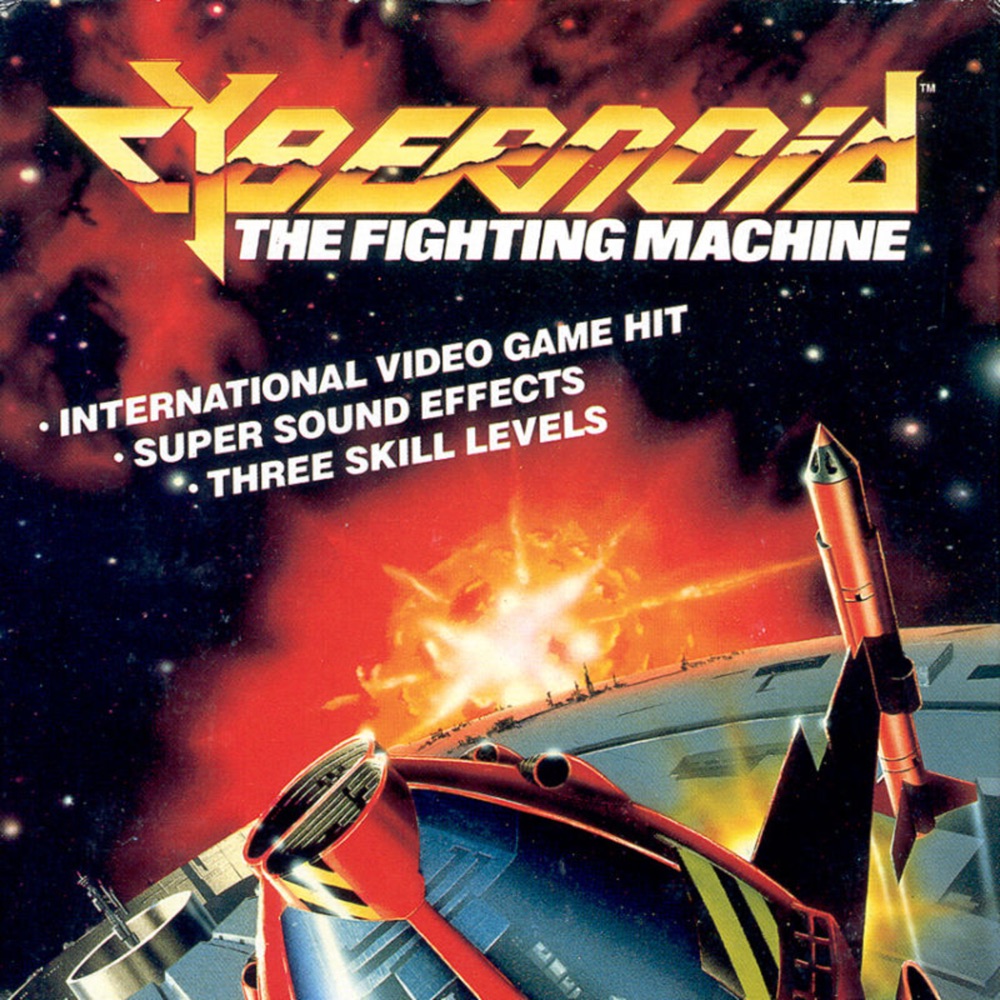
There are three asteroids, hidden among thousands, where various minerals and precious gems were stored. It was believed the riches would be safe there, until the Zoggians discovered them! Now you have to fly an experimental spacefighter, the Cybernoid, into battle to recover the asteroids. The Cybernoid is equipped with standard laser blasters, missiles, and the ability to pick up other weapons along the way.
- The Fighting Machine
- NES Longplay
- Introductions
- Regardless of what this game is Cybernoid: The Fighting Machine is a very 80s title. Could’ve been a movie, could’ve been a comic. They landed on this video game
- Gameplay
- Action Puzzle game
- You traverse 3 different areas with your ship carefully navigating around obstacles and enemies to get to the exit.
- The precise timing required to avoid obstacles
- The cool power ups
- Should it have been more SHMUP and less claustrophobic?
- Really cool powerups for a short amount of time
- Action Puzzle game
- Sequels and Spinoffs
- Cybernoid II: The Revenge
- Was enough damage done to justify any revenge?
- It’s the same gameplay with updated graphics
- Cybernoid II: The Revenge
- Development
- You know how we joke about Vic Tokai being one guy? This game really was one guy. Rafael Cecco programmed the whole game…just not the NES version. This time Studio 12 productions handled the port and Acclaim handled the distribution.
- What does that feel like when you program an entire game for the ZX Spectrum and then they bring in a whole team to put it on the NES
- EGL
- The idea is really fun and kind of reminds me of Air Fortress, except it’s way too tough and way too short.
- Next week - Dig Dug II: Trouble in Paradise
- NEStalgia Byte - Don’t forget to check out Dig Dug. Patreon.com/NEStalgia
Auto-generated transcript. Each paragraph starts with its timestamp. Speakers are not identified.
Cybernoid, the fighting machine!
And welcome to NEStalgia, a chronological exploration of every NES game released in North America. I'm Mike. I'm Sean. And I'm Joe. And that might be my favorite back of the box so far.
Well, Joe, regardless of what this game is, Cybernoid, the fighting machine, whatever this game is, that is just a very 80s title. This could have been a movie, could have been a comic. They landed on a video game, but I'm all for Cybernoid, the fighting machine. You're all for the title or you're all for the game? Is this your essential games vote? I'm all for the title is what I'm saying. We're just talking titles here. I think Cybernoid, the fighting machine, right up there with Terminator 2, Judgment Day. Yeah, I think like... In terms of titles. Noid, as like a suffix, is just really good.
Paranoid, like paranoid, uh... Noid. Yeah. Annoyed. And the fighting machine, this could be like about the first robot boxer that tries to take down like some elite Russian guy. Yeah, adding machine to the verb, like, I mean, like anything that sounds like something my dad would say if I was doing something good. Like, oh, Joe, you're the homework machine right now. Gotta add that to the title.
My dad never called me the homework machine, by the way. You're a podcast machine, Joe. Thank you, yes. Thanks. Now, as for the video game Cybernoid, the fighting machine, um, I'm sure that there is some kind of explanation on the back of the box or in the manual that explains the title or, you know, what you're doing. But I didn't think that this was going to be some kind of like action puzzle shmup game. Uh, you know, I, I, for whatever reason, I was expecting robots and I got, uh, uh, you know, like a sci-fi ship, uh, going through like a containment area, uh, where you basically shoot a bunch of enemies and also try to navigate your way around claustrophobic spaces.
Am I doing a good job? No, yeah, you're doing pretty well. Okay. Yeah, I think I would, I think I would consider it like, like if you wanted the log line for this, like think, um, Mega Man meets that helicopter flash game. That's the log line. Okay. That's, that's not terrible. I, I think that, yeah, this is definitely more a puzzler than anything else. And I know that like in the Wikipedia entry and, and Mike just said it, uh, he said shmup and I'm like, yeah, there's a lot of stuff thrown around and you shoot like you would a shmup, but like there's too much weird. Yeah. Claustrophobic navigation and almost lock and key like interaction with the environment that I can't call this a shmup.
Yeah. I think, I think navigation pit plays so much more of a role in this like precise navigation, uh, more of a role in this than like a shmup would. A shmup is about like fast, like moving fast and taking out anything in your way and avoiding hits. This is like about figuring out where to go and like doing it in a technical way. There's no flow. Uh, it's very, you're going to be playing this very methodically. Right. Uh, it kind of reminds me of air fortress.
Um, that, that game obviously had like a much clearer objective in each stage and, and, um, you know, maybe not, uh, maybe not so puzzly, but it reminds me of that in the way that like you're inside a, uh, you're inside of a space air. Uh, yeah, you're like in the, it's like a giant space station, but yeah, space station. Right. And you're a ship inside of that trying to just basically, uh, take down enemies, not in the sense of to progress that just to kind of clear off the area in front of you to then solve, uh, you know, we're saying the heist portion of it. Like, right. Yeah.
We keep saying puzzles, but it's more like, uh, the puzzles are in the timing, right? It's more precision based than anything else. I guess the only thing that's making me say puzzle in this is that, so, all right, you're, you're kind of going through a labyrinth and the schmuck portion is you have a never ending series of tiny what's it's coming at you. They have to shoot or avoid, but the, the puzzling more so is there's going to be other non moving hazards, um, that you have, you have several different kinds of attack and these like non moving hazards are only susceptible to one of those. Like there's your bombs and like the, anything that's like circular is fine with bombs.
And then there's the green, uh, and you can just shoot at those, but in anything that like you can't get like a horizontal edge on, you're going to have to use your bouncer buddies. And then there's some other like weird, like organic looking stuff. And sometimes you can just blow those up by ramming your little circular mace thing at it, or you're going to need something else. There's no real rules on that one.
The whole idea of it being like some things require things that you have to choose to use that that's very unclear, but that's what I mean by puzzler. Yeah, I get what you're saying though. You're right. It is like some things have that shoot them up element where you just have to clear your way through the enemies in order to get through the area. Then there's other things where it's like, well, hold on a minute. It's not just about using your blaster. Now you have to think about which of your, uh, power ups is appropriate to take on the, the enemy or object in your way here. And then the precision thing, more of the action element is about like, okay, now you're in a very tight space and there's an enemy that you can't defeat.
Like no matter what you shoot at it, it won't, uh, explode. So you have to be strategic about, uh, you know, where you are inside this tight space so that you don't get hit by its, um, its projectile. So you kind of come in, come out, come in, come out. So that's where like the more precision based, uh, timing comes in. I feel like the game switches how it, what it wants you to do very quickly that it's actually not jarring. It is, it is, um, it is presenting those ideas well enough that it's fun to switch between like, and now I'm shooting and I just got to take out everything. And, and now I'm trying to figure out like, well, how would I get between these two objects so that I can squeeze through the gate? Right. And then it ends.
Yeah. The, the, the, the mazes are, are small, I think is what Sean's trying to say. No, what I'm, what I'm saying is that like, there's all these things going on. Like it's introducing new, uh, new, uh, obstacles in your way. Um, what I'm saying is that the game is incredibly short and like you get through three of these levels and then you get like a windscreen. I did not get such windscreen. I mean, I think getting the windscreen, uh, would be crazy. Uh, but Sean, if you did it, that'd be great.
No, I mean, I, I, I, I played through it and I, I wasn't good enough to get that. But then when I watched other people play this game, they got it after like three levels. Right, right. Right. It's three levels. It's a computer can do it in under seven minutes. And, um, it's, it's very simple maze structure. Once you get out of all of the unique elements that we just discussed in the first seven minutes here. However, um, I think what Joe is trying to imply is that, you know, this is a very tough game despite only having three very short maps. So when you guys started talking about maps, I guess I was, I was taking like what you were saying as levels as like screens.
Uh, whenever you get to a point that inexplicably references like, uh, credits. Yeah. Okay. That, that would be a level. But I thought those felt long. I did not realize there were only three of those, but cause I feel like, I mean, I got through it. Maybe I was on the third one or I got through at least two of those. Yeah. I mean, I got to the third one too. But it was so close to the end. Yeah. I had no idea. I thought I was still at the very beginning.
Yeah. So I guess in that, in that sense, uh, it would be short, but yeah, I thought you were talking about like the, the screens. Cause the other thing we didn't mention is that like each of these puzzles is locked to like one screen and you get to the next spot and you go to another screen. So like each screen feels like you have a second to like stop and assess, like, what do I have to do? Here's all the things I could see. Everything that's going to come at me right now from this screen. Right. Which is what I was saying about how the, how it switches between the type of thing you need to be doing, whether it's shooting enemies, solving puzzles, or, uh, being quick with your, with your timing and maneuvering.
I guess I would just say that for me, the actual frustration or not even frustration, but the gameplay loop, like the way it's designed is that, yeah, it's pretty short, but you're going to be going through these stages a lot because you're going to be dying a lot because the, uh, hit boxes or the new screen, like the way it shows you the new information isn't, um, you know, it isn't user friendly, uh, by any means. I, I feel like a lot of this stuff kills you pretty quickly.
Oh yeah. You learn from it, you learn from it, but that's the idea, right? Is that it's, it's kind of, it's short, but that's because it's tough. It's a very difficult, very difficult game, especially I apparently towards the end when there are times where it's like, there's so much happening on, happening on screen that it's no longer like, it's no longer about avoiding the, the, the spots that will kill you. It's about finding the one or two spots that won't kill you.
Like, that's what I found, especially towards like, yeah, like that second level where I was like, okay, there's, there's a lot happening. I have to be like, I have to be like perfect here to get through. And then I realized after that, uh, that I was on easy mode of three difficulty modes. So this game is not easy.
Yeah, I was on easy mode too, but then it's also like, oh, when should I use the shield where I just say like, screw it. I'm not going to try and like learn this pattern, but you only have so many shields.
There's only two. Yeah. So what do you think about that though, in terms of a gameplay loop of, uh, the way that it handles death and you just, you're still remain on the same screen and you just immediately spawn back in. Uh, maybe there is sort of a, uh, modern mobile equivalent of this where it feels very like, you know, the whole idea is that while it might be short, you're supposed to get better at that particular sequence. And then, yeah, eventually you will have to start over because you run out of, uh, I forget if they call them lives or not, but you have to start over.
But yeah, you get through all of that again. And then you reach that point that you no longer could do. It feels like, uh, there was a lot of flash games on addicting games.com that were kind of built off that same presence of like Twitch reactions and, and moving very fast. And, and, and once you got through it, it was like, great. Now you probably are going to get through that most times.
Does this game have that same feeling? Does this game have that feeling of like, well, once I get through this section, I'm going to be prepared to deal with it in the future. Or is it just a so tough that every time I get to that screen again, I'm going to hate it. I don't really know how much of it is like, are you saying that people would replay the game in its entirety because they want to do better at it after they've beaten it?
Or just for those who haven't beaten it yet. Okay. Is it so tough that they, that it's unforgiving when you get back to that screen? You know, like, let's say you hated, um, the, uh, what are those things? The red, they're like red spiny things that move up and down. Um, they act as like an elevator. Yeah. They act like an elevator to you that you have to like move between them. Um, uh, let's say that that timing for you was really hard because you, you couldn't, if you get just a little bit too close to these spinies, they'll count as part of the hip box and you'll die.
Is that something that like, once you figure out the timing for it, it's now, um, approachable every time? Or is it like, oh man, I hate when I have to get back to that area again? No, I, I, I wouldn't say that I have the muscle memory for it now. I think I got lucky and I was able to get through it, but no, I don't think it's like golf. But I think, I mean, I don't think I do either.
And I think I was pretty bad at this game overall, but I think that it was giving me that, that vibe, which I can't even point a finger to another game that it's reminding me of. But that vibe of that kind of game where it's like, oh my God, this is impossible. But then after a while you're like, oh, I beat that part. Next part's impossible. But now I can beat that first part every time.
Might take more than one time. Yeah. And, and I, yeah. And I feel like that was the vibe I got. Like, that's what they're going for. And I'm, and I'm sure if you played it enough, um, you would get that. For me, I didn't play it enough. So, but like, yeah, I was getting that feeling too, where it was like, you, it's, it's there. So you can feel your own improvement. Let's do it. with whether they're designed to only be used in specific cases or you can choose to use them, even if they don't necessarily solve the puzzle the intended way.
You have bombs, genocides, shields, bouncers, and seekers. Genocides, a very interesting name for a power-up. I'm not sure if the government approved that when they wrote that in as part of their... We got missiles and we got genocides. You got what? But who knows? But obviously the genocides one is an extremely powerful weapon. It basically just causes all the enemy's ships to just blow up.
Bombs are the default weaponry. There's a limited number of all these things too, which I guess is also important to know. But overall, there was an aha moment for me as someone who didn't play the manual that I could even rotate through these things. There's one specific instance where I believe you need the seekers, maybe? There's several specific instances where you need to use the bouncers or the bombs. You won't complete these levels if you don't. It's the bouncers, though, early on where there's those green blocks in the first puzzle. And you can't shoot at them. That's the first instance where it's like, you need to use these other...
weapons. And I don't know. Maybe they should have found... I guess maybe there's just a problem with the game overall. But it seems like, for me, I was thinking more of these as puzzle-solving mechanics than I was defensive mechanics. Yeah, the only one that you're only going to be using in combat is the kill-em-all button. And the rest of them, I would just shoot at stuff and not waste my bouncers or missiles or bombs. Yeah, and you... Because I need those for the puzzles. And you can very easily softlock yourself because of that. There are things that you absolutely need. And sometimes the only way to get them back is to die.
So it feels... I don't know. It feels unfair a little bit because I didn't know what I was going to need. And maybe I'm... I mean, I guess it's like, well, you should use your resources and never miss a shot. Or else you're going to run out. Like, say, if you miss a shot and you've got to use an extra one, and later on you need that extra one, you've just got to lose a life.
Or, if you're on one life left, just start the whole game over. Or, did the game expand on its puzzle mechanic ideas interestingly throughout the game? Like, did they become more complex? Did they take the ideas that they introduced in level one map and then, you know, be like, oh, well, by the time you get to level three, it's like, you're taking two things that you used to do separately, now they're happening on the same screen. A little bit. Did you see that kind of evolution? I know that, like, I mean, I hated those elevator things you were talking about, where you have to go between two deadly elevators.
And if you touch either of them, you die as they're going up and down. So you have to match their up and down as you're trying to, like, get through. And that started. Then sometimes there'd be two of those in a row going, like, at opposite directions from each other. And you've got to get through those. And then sometimes there'd be those elevators, but then there'd also be other obstacles in the way that you'd have to shoot out. So you'd have to use whatever item it is to destroy that obstacle while staying within those elevators. And that's just one example of it's like, okay, I've dealt with these before. I've dealt with the other thing before.
So now I got to put them together. And it does up the challenge a little bit. But coming off of Battle of Olympus, that was a very story-driven game and had a large sense of adventure. Forget that this game could be short if you're perfect, right? Like, obviously, like, this was not a short game for me. I wasn't even able to beat it, but it was rather difficult for me.
The sense of, like, that you're doing anything even. Like, does it feel... Obviously, like, shmups don't necessarily feel like that in general anyway, that they're telling some kind of story. But it's interesting that at the end of the game, you're greeted by, like, this woman who says, well done, Cybernoid Pilot. You have defeated the Baycores. Until the next time, it's like, does it feel like you've actually done anything to justify... Like, for the most part, you're just maneuvering around. If anything, it feels like I've escaped the Baycores. Yeah, there's also no... Like, they have not earned the weird character design that they gave this screen. I don't know who that's supposed to be.
Because the only other reference to any story is just in the manual. So, otherwise, this is just a puzzle game. So, it feels entirely unearned. Yeah, I feel like it gives you the vibe of, like... The vibe of escaping. Like you said, it gives me almost like a Metroid feel. Where, like, oh, I'm in this hostile, scary environment. I feel like they could have gone with that. And it would have felt a little more earned. Just because that's what the tone says about it. Even without any story. But then to try and kind of insert this other, like... Feeling like that there was this other story going on. Yeah, felt a little off.
Yeah, I mean, the coolest part presentationally about the game is the starting screen. With your ship. And showing you, like, all the tools you have. And the blueprints of it. And it has that classified and a border and everything like that. Doesn't mean anything. It's not like you can choose a loadout or something. But that's the cool screen to me. And that's great because it's screen one. So it kind of makes you excited to be this ship. And then I guess I just wasn't expecting what came next. Based on just how I've been trained to play NES games over the last 200 episodes.
This was surprising, this kind of game. Should they have went, like, more extreme in either direction? Like, should this have been a little more open and shmup-like? Or maybe forget all of the shooting and just make it a defensive puzzle-solving game in a spaceship? I don't know. They didn't do that, so it's hard to say. But I feel like this mix of three genres, really, is the confusing part of the game for me. I think if this game had a story that wasn't just the end screen.
And there were missions. This was split up in missions. And there was a little bit of some context behind each mission. And maybe it wasn't just the same weird pink meat moss as the background of each. And maybe that that weirdly designed lady was giving you, like, some story beats. I think that, like, I could have done more with this. Like, I could have actually been engaged more. But as it stands now, like, no. See, I don't know that I would need, like, more, like, story, like, in that sense, quote-unquote. So, but for me, it feels like there's something really cool here about the way that this game, like, about this type of gameplay. That I feel like we haven't really seen this type of thing so much before.
I just, I would want them to, like, I don't know, more intentionally design the progress, you know? I want to learn about a thing and then feel like it's a little more complex and then, like, learn about a new thing, you know? I feel like it's kind of the randomness that throws me off a little bit where it's, like, if it felt like it was, like, teaching me as I'm going. And, like, it felt like, okay, this is really progressing consistently in Fire of Difficulty. I think that would help it, like, I don't even, I could be engaged in something like this because I'm always, like, well, what's the next challenge going to be?
I mean, obviously, I like a good story, too, but, like, I just think that the idea of this type of game is cool in theory. So I think that you can, like, keep people engaged without it. You know how we joke about Victor Kai being just one guy? Yeah. Like, just Victor? This game really was one guy. Why? Raphael Checo programmed the entire game, just not the NES version. Oh. Yeah. He programmed the original computer version and then Acclaim brought it on to the NES and hired Studio 12 Productions to handle the port of it. And I guess, like, you know, update the graphics, obviously, to be much improved from Raphael's original prototype.
But interesting that the game is, like, yeah, well, I guess, like, you know, Raphael must have signed off on it, right? Being like, cool, like, you're going to pay me how much money for my game? Like, go for it. You know, probably didn't want to then, like, learn assembly and figure out how to make it on the NES. Just funny that this is one of those examples of a game that was a one-man band back then. Like, it's interesting now when we still have indie games that are like, you know, Stardew Valley, where it's like one guy just doing it all. It's like, that doesn't seem possible. Oh, I think back then, too, it was like, oh, the guy made Stardew Valley and also Unity.
So, I mean... Right, right, right. I guess that's what I'm saying. It's like, yeah, it's also, like, even though it's much less impressive of a game by today's standards, it's pretty impressive that one guy managed to program a game that became such a big hit on computers that a claim was like, yeah, we want this on the NES. Yeah, it definitely makes it a lot more impressive knowing that one guy made this, like... Yeah. Good job, Raphael. Yeah. No disrespect with my negative comments, Roth. Yeah, I guess...
As I call him by, like, a nickname he didn't ask me to call him by. Yeah. To Sean's point, though, what does it feel like when you program an entire game by yourself for the ZX Spectrum and then they bring in an entire team of people to put it on the NES? Like, that must feel... We got that, yeah. Yeah, but that must feel, like, pretty good, though, too, that, you know, you were like, I did this all by myself and now you need an entire team and a publisher and some marketers. Like, you guys need all this. I was able to do this on my own.
Or maybe it was more insidious and he had sold them the rights, but he made a little thing in the contract that was like, but I'm not going to help you port it. And then he was laughing at them very rudely as he left the office and they were just like, what are we going to do? Like, we got to hire somebody. And that's how the game was made. Yeah, they hired, like, a ragtag team of, like, the world's most, like, scrappy developers and they had to learn to get along. They all smoke.
From that point on, he was known as Cyberknock. Lockrider. Lately, we haven't had many sequels and spinoffs, but this one has a spinoff sequel, rather. Not a spinoff, sorry. I screwed up the one thing that maybe I could have gotten right, but I didn't do it. It is Cybernoid 2, The Revenge. Was enough damage done in this game to, yeah, was enough damage done to justify any revenge? Is it, like, all of these enemies flying through you as a ship now and all your obstacles?
Right, they're, like, bacteria. Wow, that sounds fun. It's the exact same game with updated graphics. Oh. I mean, like, when I say the exact same game, I don't mean that it's the same game, like, with updated graphics. I mean, it's the same kind of gameplay. Yeah. So you don't mean it's the same game when you say it's the same game. Right. I meant it's the same gameplay. Yeah, they haven't changed anything else. New environments.
Cybernoid 2, The Revenge. Are they revenging Joe's brother? About time. I played that game, by the way. I should talk about it one day. Not now, though, please. Yeah. Not now. Also, interesting that this points out that Cybernoid, The Fighting Machine, is not, like, that was the subtitle, you know, The Fighting Machine. And now it's not, like, Cybernoid, The Fighting Machine 2, The Revenge. It's just, like, Cybernoid is the title. That is the, you are the Cybernoid ship. And this one was called The Fighting Machine.
All right. But before we move on to the Essential Games list, can I just pose a question? You may not know the answer, but you've got some info. So maybe you do. Yeah, go for it. Did they just neglect to remove the, like, was this like an arcade thing where there were credits? Did you ever get extra credits? Or is it just, like, a vestige of an earlier version of the game that it's even referencing credits? Why is there a thing that says that you don't get additional credits?
Great question. Don't know the answer. Great. Maybe it's just to... Oh, that's a question for the audience. It's just to make you realize, like, it's to make you feel the hopelessness of this game. Like, oh, you still didn't really, uh, get it, do that well.
There's no way you can. Sorry. Well, I have a question for you guys. Uh, which, what is your favorite music track in this? Uh, is it the one that goes, boom, boom, boom, over and over and over again? Or is it the one that's a music track? Oh, I like the music probably better. Me too. Joe, you don't know how lucky these people are, okay? The ZX Spectrum one didn't have music. I would take that. So this is a major upgrade. Because, I mean, unless I'm, uh, did something wrong here. You start the game, and the whole time, when it's paused, when it's not paused, when you're shooting, when anything's happening, nothing makes any noise, and it just goes, boom, boom, boom, constantly.
Then, halfway through the game, I realize you can pause it and press B, and then a music track will play instead. Okay, alright, this is the difference here. Now, there is a hi-fi version that just does away with music, this is via the manual, for, like, higher fidelity sounds. And then there is a music version with, you know, bleeps and bloops, I imagine. But I don't think I ever changed it.
Uh, so, I guess you found the button. So, is the wooing one, the whooshing, whatever you call it? That's hi-fi. That's hi-fi? I don't remember there even being, like, much sound, other than that, that... I'm sure there's, like, sounds for explosions. Like, I'm not... We could fight about the music and audio all day, but I think everybody thinks it's about time for the Essential Games List.
Sean, your vote. Alright, I'm gonna use the rest of my time to talk about the sound effects, because I was very rudely interrupted, uh, by Mike. Um, so, like, I think the voop-voop is, like, what it would sound like if you were in this weird, like, space-based. Uh, and the music is if you, like, you can't handle that kind of realism. Um, that being said, it's a really weird game. It's a unique game. Like, you know, I appreciate unique.
And some of the, like, the powers that you use, I thought they were very cool, the way that they were used. But also, not the... Not, like, not, like, crazy cool. Like, only, like, kinda cool. So, this is not an Essential Game. It's actually very strange. Like, I don't know how this got on the NES. So, um, that's me. Joe? Yeah, like I said, I think that, uh, there's something neat here about this idea. Uh, it's, yeah, it's a very, like, basic and crude version of that idea. That it almost feels like it's just, like, a concept right now, or it's, like, a proof of concept, rather.
So, no, not Essential. Sorry, this is a little awkward, because I kind of accidentally in the middle of this episode just gave my Essential vote. Like, what I thought they could have done better. So, no, not Essential.
All right. Uh, and I agree that the idea is really fun and kinda reminds me of Air Fortress. So, go play Air Fortress. It's a better game. Uh, this is a little too tough and a little too short. So, it is what it is. And that's that. Welcome, everyone, to Mics Without Mic. This is Sean. And I'm Joe. Thanks for being here today, Sean. Thank you for being here, Joe. You know, it's pretty rare that we get to, we get to really, like, shoot the breeze and be without Mike. Yeah. Never. Mike doesn't let us, because he's afraid we'll become too close of friends, and then he won't be each of our best friends.
That's true. And he thinks that, like, if we, if we were to do this too often, then we might steal the show from him. Right. And we can't have that. Yeah. And, like, he's upset that, like, we have our own Patreon for Mics Without Mic. We have our own Discord. We do Mics Without Mic Bites. Yeah. Can we talk about other foreign mics? No, no, no. It's, that, that, you don't remember this? This was our, our food review blog. Oh, that's right. I did, I forgot about that. We'll have to come up with another name for the foreign mic review.
Yeah, I think it's called Mike's, the question mark? Yes. But you don't pronounce the question mark. You just, yeah. It's like an upside down question mark there. Yes, I like that. Yeah. Anyway, I'm, I'm workshopping a, a third podcast about Joe's without Joe, and it's just me. Oh, my God. And I just talk about coffee, and it's like, you know, cup of Joe. Interesting, and I don't get any. You don't get any coffee now. I like it, can I be a part of it? That kind of defeats the purpose of the title. Well, we could call it something else then. Mike's without Mike. With coffee.
Um, well, all right. Let's, huh? What? Who?