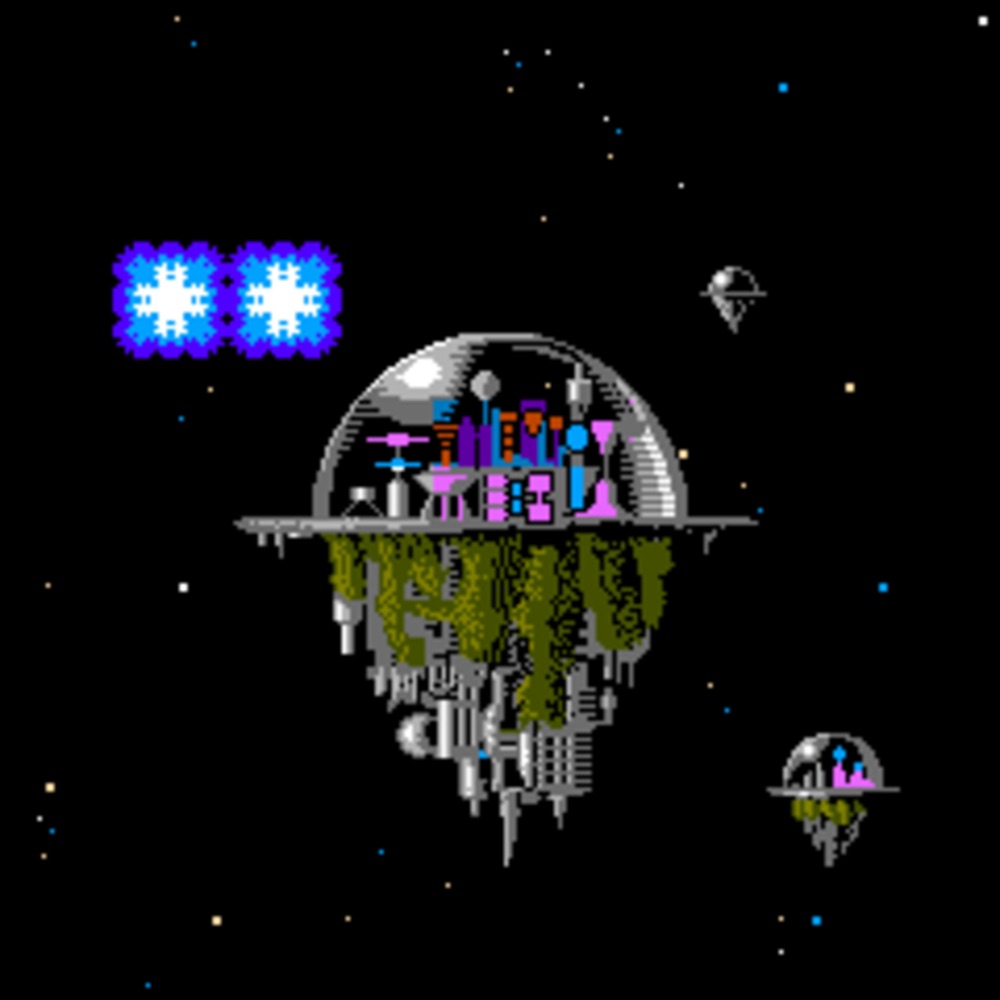
211 · Air Fortress
The Federation of Intergalactic Powers is under threat by gigantic fortress spaceships which have suddenly appeared and destroyed nearby civilization. When conventional defense tactics fail, the Federation looks to find a specially selected person, Hal Bailman and equip him with a special "Lightship".
SHOW NOTES
Air Fortress Gameplay
- A mysterious and powerful AIR FORTRESS is threatening the planet FARMEL. The destiny of FARMEL rests in the abilities of one specially trained person code number 82592-HAL BAILMAN.
- NES Longplay
- Introductions
- SHMUPs are generally associated with spacecrafts so Hudson Soft said what if we go all the way back to the beginning? The prequel to every SHMUP really. You can’t prove Dino Riki didn’t happen in the Gradius universe.
- Yet isn’t this really more like commando/Ikari Warriors?
- Overview
- Half SHMUP/Half Action Adventure. You play as Hal exploring the outside and inside of an air fortress. Your goal is to blow up the core and find the escape ship before the explosion.
- Gameplay
- The first part is a side-scrolling shooter on the surface of the air fortress
- In the Japanese version, if Hal collides with an enemy while on his lightship he must restart the approach sequence from the beginning; however, in the American version the player will automatically be respawned from the same point at which his ship was destroyed, provided that they have extra lives.
- Once docked, you walk the inside of the Air Fortress at your own pace for the action section. Hal is equipped with a jetpack as his jump as well as a blaster weapon and a more powerful bomb weapon.
- Any movement or firing you do consumes energy which is regenerated by standing still.
- Escaping once you blow up the core
- Then this repeats through 8 fortresses
- The first part is a side-scrolling shooter on the surface of the air fortress
- Sequels and Spinoffs
- None! Can we imagine a sequel?I’d like a version more like The Guardian Legend or Blaster Master where it’s not a repetitive loop and instead you have to navigate your way around the air fortress. AKA Air Fortress Metroidvania
- EGL
- NEStalgia Byte - Exerion and Formation Z
- Next week - Back to the Future
Auto-generated transcript. Each paragraph starts with its timestamp. Speakers are not identified.
A mysterious and powerful air fortress is threatening the planet Farmel. The destiny of Farmel rests in the abilities of one specially trained person. Code number 82592-HALBALMAN.
And welcome to NEStalgia, a chronological exploration of every NES game released in North America. I'm Mike. I'm Sean.
I'm 618341-Joe. No dash. No dash between the numbers and Joe. You think I would have a dash? I mean, yeah. At that point, right? Might as well, right? It's like a little more robotic. I think it's more of a bailman, not like Bailman. Like Hal Bailman sounds more about right. Hal is the name of the company, right? Yeah, yeah. But it could also be the name of a person. I was trying to make it sound like Batman. You know? Like Bailman.
Oh, Bailman. Yeah, yeah, yeah. You know? Like, da-na-na-na-na-na-na-na-na-Bailman. And it's like, not that this matters at all, right? I don't think Bailman isn't an identity as much as the orange astronaut is. Yes. Well, I think if you're a bailman, then you're really just like a bail bondsman that has some ideas about how important your job is. Well, he's from the planet Farmell, so he probably bails hay.
Sure. Thank you for that. Thank you for that slight chuckle. I appreciated that. Ha ha ha. This is a, you know, this is a, not an unusual one for us, but it is like, you know, half-shmup, half-action-adventure. Kind of like what we saw with the Guardian Legend, uh, way back when, if you guys remember that, essential game. And I feel like this game very neatly, like, breaks itself up into three different, um,
categories. And so it does like all the easy homework of me taking notes and stuff like that. And instead, we can just break this game down from, uh, its specific parts because ultimately, it's just a loop of someone who is on a ship exploring the outside of the air fortress, has to, you know, shoot them all up to get inside the air fortress, explores the inside of said air fortress, finds the core, blows up that core. And then the, you know, third remaining piece of this all is that they then have to find the escape ship before the explosion. Rinse and repeat throughout each of the air fortresses, and you have yourself a game known as air fortress.
And yeah, I, I know that we've played a, quite a number of games that like has like different genres sort of mashed into each other. But, um, the, this one, at least in like the last two between the, you know, uh, action adventure, just sort of explore and then leave in your ship. Like this was something that I just did not expect. Um, this whole, like find a thing to destroy and, but you better know how to get out of there, uh, was really well done in my opinion, in terms of like, uh, actually giving you a, a different feeling like in a game, like there's actually like a sense of urgency. Uh, I thought that was really well done. I don't, I don't know, like what your first, um, but what your first impression was when, when that happened.
Yeah. I mean, I think that's, that's one of my, you know, my favorite things about this game is that the, like the context that gives you that urgency is like, oh, oh shit. Like you blew up the ship. Like in any other game, it's like, oh, blow up the ship. All right. You won. Blow up the base. You won. Like, no, you have to get out. You have to get out of the base before it blows up.
And, and like that simple context really does make you, uh, you know, have that sort of heart pounding, uh, escape sequence. It did surprise me too. Cause the first, the first, um, fortress, you know, it just teaches you how to do it. So it's like, you blow it up and the exits right in front of you and you're like, okay, I can just get out of here. But, but then like later on when you got a, you know, you might, I come, I came across the exits a lot on my way, looking for the power core or whatever. And like, you have to make a mental note, like all the exits here, I got to remember how to get back to this before I destroy it.
Yeah. Kind of cool. Each level has its own like mini Metroid ending where, you know, that's like a common trope in Metroid games after you just killed mother brain or whatever, you have to now escape the planet. Uh, you know, there's usually like a timer actually like two minutes or whatever to find your way back to the beginning. And they just did that for each, uh, each level here. However, I feel like, you know, I said that as the last thing, but we need to kind of rewind here and go back to the beginning and talk about, you know, the side scrolling shooter,
uh, portion of this, because that's like the first thing you're introduced to, right? Before you even find out that like, you're actually going to be going inside this air fortress and taking on like enemies. And I guess some little, little levels of, you know, figuring out like where to go, uh,
maze like, if you will. Uh, before that you're in like a space scooter, I guess. Uh, I don't know what he's, you know, like the way he's laying on it. It's like a, it's just very strange. He's laying completely on his belly on this, like, um, yeah, scooter sounds good to me. No, no, no, no. It's obviously like a, an electronic like segue, which is just as bad-ass as a, I think it's more bad-ass. Here's, here's the thing that I thought was funny is that it shows at the beginning,
beginning of each of these levels, it counts down and it shows what looks just like a regular spaceship. But then like, as soon as the level starts, your guy is like mounting it like that. So I'm thinking it's just a spaceship and the guy saw it in the catalog and was like, wow, this looks great. And then it got there and it's like, you know, it's tiny and you have, you can't get inside it. You gotta like, you gotta like hug it from the top. I'll get from the top. You know, how you get on a bike, you know, hug it from the top.
Any biker gang will tell you, you know, hug it from the top. It's a good, it's a good idea though, Joe. Like why didn't they just make it a more recognizable, like ship sprite and then just have your guy walk out of it when it's time to board the air fortress. Like they do show a completely different sprite for like moments. That's what confuses me. I'm like, oh, this is a ship. And then as soon as the game starts, it's just a guy riding a thing.
I think maybe this is, you know, they were trying to, I can't explain the disparity between what it shows and what you are, but you know, maybe the reason why they made it like this is because, you know, bikers are cool. But maybe you wouldn't describe something as like hugging it from the top. But that's what makes bikers cool is all the hugging.
True. All right. So in terms of, you know, shmups, we've had our range of like bullet hell and, you know, different settings other than space and stuff like that. This particular, you know, if we're referring to this as a shmup, this particular one, you know, very easygoing for the most part. The enemies come in very distinct waves and there is time between them.
And there's not like any more enemies other than like, you know, eight at a time. And I know it sounds like a lot, but because they come in a very distinct pattern, it's not like something that you won't be able to deal. They basically come in straight lines. And then later they have like homing versions of themselves. But for the most part, I thought this was just a cool like setting for or explanation for like going into the fortress.
Like, you know, they didn't they didn't do too much work here in terms of like shmup design and stuff like that. But rather than just show you entering the next fortress or whatever, they made it into a part of the game, which is like a neat little like pat on the back for the game. It's not like I didn't love the shmup section, but it was better than not including it.
I mean, that's sort of the the yin and yang to it is the way that I would describe it is just perfunctory. Like it's there only to give context again to what you're about to do. It's not a particularly good shmup. If this was all this game was, it would be the least unique shmup we had played in a long time. But yeah, like when you take it holistically, it makes a lot more sense and like you don't have I don't have a problem with it. It's just that as a shmup, it does not really do that much.
Yeah. One thing, though, that I do think because I totally agree, it's a very, very basic shmup. It moves kind of slowly, which which makes it easier than a lot of other shmups. But one thing that I do think it does nicely is that it it gives you it gives you an opportunity and a reason to be collecting all that energy and your energy and your bombs that you need for the later levels we were talking about, which makes it like feel it gives it some significance other than just setting up the context where where how your your time inside the air fortress goes will in some way depend on how well you perform in the shmup, which I which I thought was like a nice addition to make it feel at least a little bit more important,
especially with how how much bigger the rest of the game feels than the shmups. Yeah, that's important because the energy and bombs can only be collected in the shmups portion of the stage. So whenever you go inside the fortress, there's no additional energy or bombs to collect. But the energy that you like get, like, let's say you can get up to one thousand one hundred energy in before you enter the air fortress, then, you know, you can always like rehabilitate yourself back to that level, which is great rather than if you only if you didn't collect anything and you go in there with two hundred energy, you're basically on a suicide mission based on the rules of how energy is expended inside the air fortress.
To be clear, there are rare times where you can find energy and bombs inside the air fortresses, but those are more like for when you're like, oh, my God, you're in desperate need of a little bit of energy. energy. But beforehand, it's like you want to build up your energy to prepare, you know? Yeah, and I do like that. Like it and again, like when I described it as as as perfunctory, that's just the mechanics of the the actual shmup. But what it like what it does, the role that it plays in your actual like game session, it's it's like it's something that I haven't seen before on the NES. Like there is a there's a specific like preparation stage and that is just like sort of coded in the shmup gameplay.
gameplay and that's actually a lot. Like when when you when you talk about like this, like multi-stage gameplay that I guess like we actually did play something like it recently with Dragon Dragon something or a flying dragon where but but like that kind of preparation is only really in the plot where, you know, you've got your get your action scenes and then you've got your fighting, but there's no actual you have to get through it. And no matter how you get through it, you're going to end up at your actual fight in the same state. Whereas this one, your performance actually determines how you're going like the resources that you have to perform in the action sequences. So that's kind of crazy.
Just how unique that is. Yeah. And I think the you know, besides making it a little easier, right, because the the bombs and energy are mixed between plain sight risk and reward where you can see them and you're like, oh, cool. If I just, you know, try to squeeze through this corridor because granted, if you touch things in this, you know, you're automatically dead. It is a it is a one hit KO.
Granted, you do just respawn where you are, assuming you have lives for it. But but there is that risk there of like, you know, do I go through these tiny corridors or, you know, I see enemies are this way. Should I go for the energy for the most part? This stuff is handed out to you. But then there's also specific enemies that you and I can't tell if it's random or not. I didn't play the game thoroughly enough to decide.
But like, you know, they can give energy and bombs, too. So there is a reason to fight to get, you know, to fight back and to look for this stuff. And, you know, if you get enough, like if you, you know, 1100 energy really is like a ton to work with in a game like this, where the, you know, the shmup level, the fortress level, like, you know, as you continue to rinse and repeat that they are they get increasingly longer. But for the most part, they are just short bursts of gameplay where, you know, as long as you come in appropriately equipped, you're, you know, you're going to be able to work with what you have.
Yeah, I mean, I didn't finish this game because there is definitely a difficulty curve. And the further that you get into each base, the more like labyrinthine the levels are. So at the beginning, yes, I totally agree that 1100, more than enough. And maybe the way that the difficulty increases isn't so much tied to like your energy expenditure later on with the later levels. And it's more just how like the game, how the levels are designed and how long they are.
But I definitely do think that while, yeah, it's very generous in the amount of energy that it gives you. Like, this is still, as it goes on, kind of a difficult game. Yeah, I was surprised by that, too, because when I picked when I started playing this, I was like, OK, this is just like a really easy shmup. And I got the other parts like, OK, it's it's not just a shmup, but it's still pretty easy.
I also didn't complete this game, but I did start when when it started to get too difficult and I wanted to play a little further. I started looking up some of the passwords for to load save files or whatever you want to call that. And I and I played a couple of the later levels and it is hard. I can confirm, you know, the shmup levels, I think even in the later ones aren't like too hard.
But as far as shmups go, I mean, I'm going to say something something nice about shmups now. So, you know, so mark this down on your on your calendar because I don't say this stuff often. But for today, for all the for all the things that that, you know, like I don't like about shmups. One thing is that they're almost never like completely broken like some other genres, like, you know, like most of the time if you make a shmup, it's going to work.
So like this shmup love like these shmups going into it like being not all that crazy or in advance and still it still functions as a shmup. It still works. Maybe that's why I don't like them because they get a little boring to me. But I don't think this the shmup has I think there's not there's not really much flaw to find for me with the shmup other than it's kind of easy.
But it functions like comparatively to some, you know, other genres like even platformers like feel like a half the platformers we do. It's like, well, these controls just suck like or like the way this feels is just terrible. I don't know if that makes any sense. No, I get what you're saying. Like that like the worst thing that a shmup can be is just bland. And while I agree with you most of the time, like I agree that that applies most of the time. Like I remember like the earliest of them like did have pretty terrible controls.
But now that we're in this like, you know, the the rules for a shmup are kind of set in stone. Like now like the cardinal sin of a shmup that since we play these games week to week, is that like it feels like every other shmup.
But like it's the fact that it's like sort of it's like a tertiary goal of this game is the is the shmup gameplay. It's easier for to be to forgive that. It's very basic in design. And I think that that's fine for this kind of game. I could think of ways to expand on it. And I'll mention that later on ideas I had. But I think for the most part of just, you know, a cycle where you are in the in the shooter section and then you dock the bike or whatever it is, you know, the ship and then go inside the air fortress. You know, the the point of the game, I think, is really about taking down these air fortresses, exploring the labyrinths, finding the the cores and then escaping.
So this part of the game is almost, you know, a nice break away from just a worse version of this game that would have been just, you know, stage one and you're right inside the air fortress. And then as soon as you, you know, destroy the core, it just goes stage two. And it's another similar looking air fortress granted with longer puzzles. But like, you know, the only thing that changes really is like the color of said air fortress or maybe like the introduction of an enemy or two.
So let's pretend that, you know, you've completed the shmup section. And now you've docked. Now you're inside the air fortress. The action section of this game where you are now just as the astronaut inside the air fortress. It has a lot of like interesting rules, too, about just like how how exploring the air fortress works. I think the first one to talk about is just the way that you expend your energy, because
that energy points that you collected, you know, that was unclear to me at first that any time you move or or use your jet pack that requires the energy, you know, system to drain ever so slowly. And yes, if you if you freeze up and pause, you can gain some of it back. But it's not it's something you have to think about. It's almost like a timer where whenever you're moving, time is moving. And whenever you're not, you're in the clear. Yeah, it's I found that very interesting.
Basically, however many energy pellets that you collected in the shmup phase, that adds up to you might even when you're in the shmup phase in the first go around, think that that's just your score if you hadn't read the manual. But then when you're in when you're in this actual like action sequence like that is just these are your calories like you can burn them. But like if you stop that, they kind of they'll refill back to where they were pretty quickly.
But if you get hit, if you take damage in any way that that brings your total down. And it also like adds a kind of like mystery factor as to like how much damage you've taken because it doesn't really reflect if you've already been expending energy like just the next time you kind of fully refill, it'll show you like what your max tank is now. But yeah, you can you can jump, you can shoot, you can move. All those things take energy.
And one thing that I really liked about this phase is the fact that you're you're shooting has recoil and it's like crazy recoil that moves your entire body. And this just like adds another like method of playing like that you can you can get creative with your maneuvering and like shoot behind you to move forward and like shoot to dodge other enemies. And it I really liked the way that this phase fell. I don't know how you guys felt. Yeah, particularly because that kickback comes.
Either either exclusively or at least much more prominently when you're flying with the jetpack, which is what that feels so natural because you're in the air and it's pushing you back through the air. It's like it's almost like you're you can just propel yourself backwards through through stages like that. It feels really, really natural and good to work that way.
Especially because it's part of the movement, right? Like the the jetpack has its own feel of weight to it. But so does the the shooting that I feel like when because they made moving something that like counts as a timer. Right. And it's a race against you of like thinking about how much, you know, you're going to to expend to get through to to find the core or whatever. And granted, you know, a very first level is like an introductory stage where I don't think you can make any wrong turns necessarily. It just shows you the idea of these concepts. But even then, it's a very quick understanding of what the energy means.
Right. And how you move. But also they try to create, you know, different sections for the air fortress, too. Like there's it's not just like, oh, here's enemies on the screen and deal with them. It's like they give you some enemies first, then they give you these like cylinder platforms that like move around and they'll, you know, presumably hurt you. So you have to wait for them to pass by before you can accurately move through them and and fit through the little corridors that they give you.
Then there's like the fire that knows when you're nearby. So then it starts spraying fire out so that you have to take it down while it's further away. So that if you want to avoid damage, granted, you can also just. Bypass all these things. Right. Like you can take the hit and you won't die. It's not a one hit KO thing. It's based on your energy.
So you can kind of assess to like how much damage do I want to take to just move on through this and not deal with these enemies or whatever, especially once the core has been blown up. But at the same time, it all comes with a trade off. Like, I think that's what I appreciate so much about the design of this game is, yeah, everything everything has a counterbalance to it as well. So you can you can take your time. The game is never forcing you to move very fast, except for after you've blown up the core, rightfully so. But you can take your time with the game, but you can also be rewarded for moving quickly.
You know, to weigh in on the whole energy thing, I feel like that's something that we've seen in other games that I usually don't like, where like your energy is constantly expending or a lot of times it is a timer. But like this is functionally a timer, even though it's not doesn't. It's not exactly that. But the reason for me that it that it works here and it doesn't in other games is that it can't just run out and then you die. So it doesn't feel like you're like you're fighting against this this clock or this like a typical timer.
Yeah. What you know, even if you get really low, that just means now you have much less health. Like you can still keep you can still keep shooting and you can still keep, you know, flying with your jetpack. Like you're not you're not locked now or like, you know, soft locked in the game because you can't fly anymore because you're out of energy. It's just now your energy is stuck and it won't go below, you know, like if you're down to like 20 or whatever. OK, now you can only it'll only refill up to 20 and pretty much one hit from anything will kill you. So it makes you get weaker as it goes on, as you expend your energy. Like really, that's functionally what's happening. You won't really be able to maneuver either.
Well, what do you mean with the jetpack? Yeah. Like if you're at 20, I thought that you still could fly even when you even when you're at minimum, you could just keep flying, which is kind of a strange choice, I think. But oh, I guess I was. I. Yeah. Maybe I didn't notice that.
Yeah. But but it's still it's still it basically all what it functionally does is just make the it's like another way to make the levels get more difficult the further you get into them. So so my one of the things about that that playing this game made me realize is that a lot of the the games that we've played that seem to have a little bit less thought put into their design. like they their their levels are designed in a way that like they didn't really take the characters maneuver like maneuverability or like move set into account.
Like you've got games that have platforming where like just the way that you jump feels wrong, you've got games that just like the speed at which they move like doesn't seem to gel with the levels they've designed. Whereas like in this game, my favorite thing about it was the fact that a lot of the obstacles that are put in front of you and just the design in general, like is 100 percent geared towards the the abilities that you have in terms of moving around like it in the very first level.
you'll you'll you'll encounter enemies that are on platforms that are also in front of walls that on the backside of them, like if you're facing the enemy, the the wall will be behind you on the backside of those walls are spikes, but you're shooting at these enemies to clear them. And if you are to shoot them in like the wrong way or too fast, you will just shoot yourself into the spikes. And I'm like, this is this is great. Like this is your your control scheme and your level design getting into synergy here. And I just wanted to kind of nerd out about that real quick.
Just that everything sort of falling into place there. Yeah, I noticed that specifically, too. And I that that that also hit me like the same way. I was like, well, they're they care about this. And, you know, at the same time, the air fortresses, you know, even though they get larger and, you know, the enemies are, you know, more thorough, I guess, in the amount of damage they'll expend on you and stuff like that.
It's not as basic as the shooter. But the idea of exploring the air fortress doesn't doesn't increase in ways that like even the NES, the way that we know it through exploration of other games could have maybe drawn upon, you know, like the the idea of just navigating through these fortresses and finding these, you know, there's the elevator doors that then bring you down to the next section and then you deal with that section and so on and so forth. Like you move through pipes or whatever. There's never any kind of like I don't want to say
puzzle solving, but there's not even any like backtracking or, you know, like locked doors that you then have to like find out like, you know, oh, the buttons over here. Right. Like these are things that they would have had to add in, of course, but it doesn't ever get any more complex than that. And I'm not saying that that makes this like useless, but it does.
It does remind me again to that like at the end of the day, it's a very simple idea that is, you know, very well executed. Yeah, I think part of that is is also because there's no like additional weapons or power ups to find, you know, you don't really evolve your character throughout. And I feel like in a lot of other games like this, like that's what you would be backtracking for or sidetracking to is like get a new gadget or get some new weapon.
This really has a lot of like, like the way the levels evolve as you go is like through more branching paths, but all the like inessential branches sort of lead to nothing, which which, yeah, makes it feel to me like there's something a little lacking. Yeah, I guess like if it were to have stuff like that, it would be more of a like a Metroidvania, which this, you know, what we haven't really decided yet. We've just sort of made some comparisons. This decidedly is not one of those. And I guess if they added stuff like that and slowed the pace down, because this is sort of a cycle of quick exploration, and then escape based on the knowledge of the level that you've just explored.
Like it's sort of going for a different thing here. And what one thing that I guess I kept drawing comparisons to, even though I know it very much is not like this, I kept getting like Hotline Miami vibes. Like it's just very quick.
You sort of like this again, there's like no, yeah, you don't really get any exploration bonuses. It's just like you go in, you find the optimal route, and then you get out. Um, and that's, I guess, just a more modern game that I'm drawing comparisons to. No, and I think that's a good point, because I think you have to decide,
you know, I'm thinking about Balloon Fight, right? That's an essential game, right? And that's a very basic game that never really evolves in concept. It's just a, it's just simple enough. And it's a fun enough execution that it's something that is, is timeless, because they made it easy enough to execute and easy enough to understand. But there is some fun things going on there. I'd argue here that Air Fortress, you know, it draws a, it draws a line into how far it wants to go on its own accord, right? Like they, they could have made this a Zelda-like, right? Or a, you know, I wasn't thinking other power-ups, but they could have done that stuff too.
And they chose not to, and it's, you know, you always refer back to, after you, you know, get an escape from an Air Fortress, they bring you back to the main screen where you see all of the Air Fortresses. And it's a very straightforward line. And that kind of reminds me of like a Star Fox layout, where in the game Star Fox, there, it shows you everything, every planet you're going to go to. And granted, that one has branching paths, which I think would have been cool for this too. But they show you everywhere you're going to go to, and then you're just following along. And it's like, that's the progress that you're making here. And I think, you know, whether that's enough or not, I definitely think like they've included enough stages.
It's definitely, you know, it's not a short game by any means, but it's a short burst of gameplay each time, each time you go through one of these Fortresses. The Fortresses that I played through, at least, did not drag on. They didn't overstay their welcome. And it was possible to kind of, you know, either keep a mental map or remember obvious landmarks within these, within these labyrinths, which is important, right? Because we've played games like Deadly Towers, where everything looks the same. And you have no idea what, you know, you've entered one door, and you're not even sure what door you entered through, let alone like what's different, because it's the same exact level layout. Like here, you can tell where you've been.
That's so important too, because this game would have been a nightmare to play if that weren't the case. And it's not like they did themselves any favors by making it like, like there's no, each map, like each little sub map in this game, like doesn't have any like real life parallels. Like a lot of games, they have landmarks because like, oh, this one is obviously the bar, or this one is obviously like a throne room or something along those lines. All this game is, is a series of mini maps, like little mini labyrinths.
But because like they all look kind of different, they're laid out different, whether that's like they used a different wall background or a different color for the walls, or just a unique sequence of enemies, like you're able to know like, oh, I've been here before and I need to exit via this way to get to where I need to go.
And I think that's kind of hard, especially when you mention games like deadly towers, it makes you appreciate it a bit more. Yeah, I'm of two minds about it because on the one hand, I do feel like for there to be these branching paths, at least for my personal preference for it to be satisfying. I want things on the other end of it. I want, I want something, whether it's a punishment or reward punishment, other than just being lost.
Um, I understand that that would make this a totally different game, but it feels like they, they like took one step in that direction by making these branching paths that like, don't do any, like it, it feels like they, they almost started to try and make it like a Metroidvania or something where you explore now. So like that sort of felt like a little, like, like it was a little bit missing something to me.
But then on the other hand, I do get that having these branching paths is like a means to, to give you an opportunity to get lost because a part of this game is to, is to have to find your way out. That's what, that's what creates that urgency. So like for that, like, so there is merit in those branching paths for that because without those branching paths, it would be a lot easier and you'd feel a lot less of that, um, panic when, when it's time to get out.
I just wasn't sure that it was like, I don't know. I, I kept going back and forth weighing whether or not like the pro of me having that, like, oh my God, panic moment, like that fun, exciting moment of getting out was enough of a pro to outweigh like some of the frustration I would get through the regular level when I was just like, I'm just getting lost to get lost here. And, and, and it, I don't know if it felt, felt a little unnecessary at times.
I don't know if it changes the game so much though, like makes it a new genre. Like met metroidvanias are defined by like finding new equipment that then becomes more useful in other areas, right? Like now all of a sudden you can go back to where you've been and do new things and, and find new, you know, new ways to open up other doors or do a thing that you couldn't do before, or there was a power up you saw, but you didn't know what you needed yet. That, that could all be done there. I don't think this game needs to change like on that level, but imagine if it was a little bit more like the guardian legend and this was not eight separate air fortresses, but was one giant air fortress that you kind of travel around, find, you know,
depending on branching paths, like find other spaceships that then like activate the shmup sections more frequently. But ultimately you're just trying to find one of maybe many branching paths that lead to the particular core that you're trying, you know, like of this air fortress that you're trying to get to. Like, I know I'm describing a game that isn't air fortress, but I don't think that that like puts it in another genre. I just think that gives it more of a chance to, to not separate and segment all of these, these parts together, you know, making everything feel like maybe more of a complete picture.
So I, I, so I think you kind of are describing a different game because if it's sort of like that, and this is an exploration, basically what you end up with, if you make that game is this is an exploration based game.
That's actually pretty low stakes for most of it, but, and then has like a big set piece at the end. Whereas this game like lives and dies by its loop. And like, it's supposed to be something that you can ingest. Um, you know, the passwords are there like in chunks of these, these little air fortresses. And the fact that like, I see it more as a heist game. Like you, you go in and you do some recon and then like the big, like the, the big, like exciting part is trying to escape. I think like the fact that it, it happens on this like regular frequency and you're going to fail most of the time. Um, or, or if you do fail, you're going to fail on the escape.
Um, makes it a different kind of game than what that was at describing. I don't know if I'm, if I'm being entirely clear with how I'm describing this, but no, I think you make a great point. And I think it's time to talk about the escape sequence because that really is like you, like you said, that's the oh shit moment of the game. And it's like something that it happened so early on in the first fortress that you get a taste of it.
And now you know that that's going to just continue to be expanded upon in each fortress, you know, like the idea of like, all right, well this time the ship was right next to me, but next time who, you know, who knows how far I'll have to go. And it does keep getting further and further away from you. And, uh, eventually you'll start to notice the, you know, you might not notice it the first time around, but if you, if it takes you long enough, the screen starts to like shake, things start to seem like, you know, they're falling apart. So I do, I do think that, you know, you make a good case for it.
Um, I think what I was trying to say just to, you know, clean up that last patch is not a, it is a different game. I totally agree that that's not air fortress and air fortress is doing something different. I was just trying to keep it in the same genre of game, like not try to add any additional things to it, but maybe, uh, not break up the actual game so much into stages and, and segments and just, you know, make it more of a, an overall exploration. But I agree with your point.
Let's talk about this, um, you know, blow up the core thing. First off the core itself, not really a boss fight by any means, but they do make it, you know, very similar to Metroid's mother brain fight where the core is capable of shooting things at you, but there's also enemies that you have to deal with too. Did these core fights feel like boss fights to you guys? Not the first few because it was, it was literally just shoot at them. Like they don't shoot at you or attack you at all. Later on, there are other enemies in the area or like turrets in the area that shoot at you. And that makes it a little more challenging, but pretty sure like everything. Don't they shoot fireballs, Joe?
Not the main cores, at least not the first two. Oh, okay. There are cores, there are cores that like look like, they look the same, but they're a little smaller and they're blocking away. No, no, no. I'm talking about the, I'm talking about the actual big core though. Yeah. The one that looks like a giant fireball. Yeah. Yeah. I think, I think we're just exchanging thoughts. Like you might be right that they don't do it for the first two, but they definitely do it later on. The cores do fight. Okay. I thought later on it was always other things in the room that were shooting at you. Those exist too though.
Yeah. For me, um, I, I didn't end up spending too much time with the cores because I was saving up my, um, one thing we didn't mention is in addition to energy, you would pick up, uh, uh, these bombs bombs, I guess they're bombs, but they call them something else in the deep lore of the game. Um, but they're just, you know, really heavy shots that, uh, you have a limited amount of, and I would just save them for the core. Um, and I guess some, some other like more pesky enemies.
Uh, so my, my core fights were usually pretty simple and it was just like, do I want to blow this up now or do I want to do a little bit more recon, um, and back out, uh, so that I know where I'm going. Um, so that, that's how I approach them. They're definitely not boss fights though. Yeah. I felt, I felt the same way. Like that, that was a, that was what was giving it like some challenge was like, yeah, it was like a decision I had to make or I had to think like, can I remember where to go?
Um, I will say one thing, a little, little issue I had, and I'm curious if you guys ran into this, but on the second core, I shot at this thing for like 10 minutes and it didn't blow up. I mean, literally, like I was just shooting it. I was like this, that do, am I so weak that I need this many hits? Should I have saved my bombs for this?
Uh, eventually I looked up a password and loaded a safe state because I never, I could just, I had beaten the level. I knew my way out, but I just could not. And I was watching a video of it. The guy did exactly what I did and he just shot it like, you know, 10 times or whatever. I was shooting it forever.
Are you sure it wasn't a wall? I'm sure it wasn't the wall. It was definitely a core. I was watching the video. The guy was doing the exact same thing as me. That's odd. So yeah, I'm looking into it. And, uh, first off, Sean, to answer your deep lore question, they are not bombs. They are beams that you are shooting.
Beam. Yes. Crash, crash beam bullets is what they're, uh, the deep lore refers to them as, but you know, Joe, I'm going to not offer you anything great here, but I think it might have to do with the beams then because either you experienced a glitch, which is probably unlikely, uh, but who knows, or that you'd need the beams because I was very similar to Sean in that I was mostly serving, uh, saving these beams for the big core at the end, because I just noticed that I wasn't using them on regular enemies. Regular enemies don't take that much damage, uh, to kill.
So it was usually like, you know, one to three shots per thing with the beam was saved for the core. So maybe I'm looking in the manual. It doesn't say anything about it, but maybe it's required. Yeah. Yeah. Cause I guess I did use the beams when I could on all the other times I played. So maybe I just naturally was doing that and not really thinking about it. But this particular time I was definitely out of beams.
It's funny because they even show you, um, the, uh, it says, beware of the fluctuating force of gravity in the air fortress in the manual. And it shows you like you, the core, the number of remaining crash beam bullets, right? It's like, all these things are like indicated on screen, but it still doesn't quite tell us if we need to use the beam bullets. I noticed that in the manual too. And it's really just telling you about like one little stage hazard, which isn't really even a stage hazard. It's just like, it just affects your, uh, flight. Um, so I thought that was just odd placement on whoever wrote the manual shame on you.
So I think we're all in agreement that the cores themselves were not, um, boss fights or whatever, but, but, you know, arguably it is a, it is a higher tension moment in the air fortress than,
uh, you know, the individual stage parts. When you get there, there are, you know, it's a lot of enemies to deal with. You have, you know, to shoot the core, you can't be still, you have to be expending energy. So there is a lot, you know, going on in terms of keeping track of your energy level, how many crash beam bullets you kept. It's funny that we're now calling it that instead of bombs, uh, you know, how many crash beam bullets you kept, you know, where the other enemies are, if you even want to deal with them, or if you feel like you can just take their hits while you continue to go at the core, because ultimately after you do all that, that's not the like, yay, I blew up the core. Like I did it. Now you have to, uh, escape.
So I don't want to get into like, you know, strategies for escaping or anything, but Sean, I think you were, you know, making it feel really cool about, you know, it's like a heist and you go in there and then once you've blown up the core, you know, it's up to you to get out in time. Do you want to talk a little bit about like how they communicate the urgency?
Yeah. So, I mean, the, so just real quick, the boss fight is the escape, not so much in the first or second one, because like in some ways it's kind of telegraphed to you. Um, but yeah, once you destroy the main core, uh, the lights go out and the music changes and it gets kind of ominous and, uh, then like you still have control of your character. So it's like, oh, I gotta get out of here. Um, and now you just have to kind of frantically get back to where you may have found your little space segue, um, previously.
Um, but then not only is it dark out, it's also shaking and that's, that's weird. I don't, I don't like that. And then if you take too long, it's now, uh, dark out and shaking really hard. And now the lights are flickering and like, oh my God, this game has a better sense of atmosphere than anything that we've played so far. And I, it, it was probably the most tense I've felt playing one of these games for this podcast. I, I've ever played. And that's me just sort of, you know, uh, gushing at this point. Well, I would say that I agree that that is one of the most tense things that we played at that portion of this game.
As far as like the atmospheric point goes, cause I was thinking the same thing when the, when, when after you would blow up the core and the music would change and it would get dark and it would feel very like, oh my God, like what's happening. I got to get out of here. But I, it also made me wish that there was a little more of that earlier in the state. Like, I feel like all the stages felt a little, like they could have used a little different music and a little more of that atmospheric feel
because clearly they're capable of it at the end of each stage. I mean, did you feel like there was a little bit of, of a like disparity between the atmosphere and the end of the stage and the early stage? I'm not saying they need to feel the same, but like, I feel like every fortress feels the same as the last fortress.
Well, yeah, I mean, I agree that, um, the, the only thing that's changing between each fortress is how, like how long it takes to get back, um, or not get back, but, but to get to like the exit, to find the exit and to get back to it. And there's no theming. Like there's no like, oh, this is the one, uh, that's based around this kind of maneuvering, or this is the one, um, that, uh, you're going to have to employ this strategy. Like they're all, they're all like generic in that sense. But I think like the, um, the idea still stands that like, at least in, um, uh, in the self containedness of each stage, like it goes from preparation in the shmup to exploration slash,
uh, like low stakes combat in, uh, like the, the middle part. And then like, oh shit, I got to get out of here in the escape. And, and, and while, yeah, like they're, they're not too different from each other that like those, like that, um, that, uh, cycle like still has a lot of power regardless of, um, any differences between each stage in my opinion. Right. I agree.
And it's a nice touch too, that they continue to make the ship harder and harder to find, you know, um, to the point where, you know, in later levels, um, it might not even be apparently obvious in your exploration where it is at first. And you have to, you know, you have to make that note of like, should I be going to the core if I don't know where the ship is? Uh, so it's, it's, it's nice that it's not something that you blow up the core and now it reveals a new area, right. Of like never before discovered part of the air fortress that now you have to quickly rush through to get to the end checkpoint. Right. Instead, it makes use of, you know, the backtracking.
One thing I wanted to throw out about this game, um, that, you know, I guess we don't talk about a lot, but I feel like this game was calling for it. The design of the game in terms of visually like graphics, it's a little, you know, even though it's fine, right? It's serviceable. It is a little all over the place in terms of sprite design, like the orange astronaut character that you are the how, um, I don't know. He's like kind of cartoony. And then like the backgrounds are, you know, kind of epic.
And then the enemies, you know, epic in terms of like space and scope and stuff like that. And even just like, you know, attention to detail, but then even like the enemies too, there's like some that do like, they have like 3d designs to them, you know, like pseudo 3d with those, uh, those tiles that move through space. And that caught my eye right at the gate. Yeah. Like those things are great.
Um, but then there's other enemies too. Like even just in that shooter stage, there are some enemies that are as simply colored or maybe like colorful as, as Hal is. And they like, you know, don't look like they blend in either, but then there are other ships that look great and they have more detail and they are like grayish to fill in like, you know, with what everything else is going on. So just feel like, you know, it's a mixture of like color palette, but also just like design in general that they didn't have like one look for this game. There's a couple of different looks being mashed together here.
Yeah. Everything they do though, does feel very clean compared to a lot of games like this where everything, you know, I guess I'm just seeing more and more now as we're getting later into the NES's life that like companies are able to, to make something that looks both like somewhat textured, but also not like absolute crap. Like I feel like early on there, you'd have to go with like solid colors and look nice or like try and be like a little more photo real and a little more textured and just look horrible. And, and this has actually done both, like not both of those, not look horrible, but it's done both as far as be, be colorful and be bright and be crisp,
but also have texture. But yeah, I do see like a little bit of a disparity between some of that stuff too. Even just the size of you on your ship, because you're a person, you can kind of imagine how big your ship's supposed to be. And then there are all these like ships that are like way smaller than you, a human. So like maybe those are like drones or something, but, but like overall, you know, I really liked the style of it, but I did see some of those weird things and it did feel, I think the character of hell, just speaking of design thing, in my opinion, could look a little cooler. Yeah. I agree that like, there doesn't seem to be a, like a holistic, uh, like there wasn't like a design Bible for this game because you're right.
The styles are all over the place. I think one of the things that they were going for here, like the priority was legibility and that's not just like legibility on the screen space of like, how can I tell who's my guy and where the enemies are? Cause we have played games where that goes out the window. Um, but even just like, again, like in like putting that mental map of the, uh, the labyrinth that you're going through in your head, like each stage has to look different, whether in color or in, uh, like the, the grander design of, of like the structure of it. And I think that was, that was sort of in their minds. I'm not trying to like give them an excuse for like, Oh, why do you have solid green over here? And then a very, uh,
almost photo real, like gray girder design over here. I'm trying to do like, excuse them of that, but I, that's what I think was going on. I think that's a good point to make because this is not an ugly looking game by any means. And I feel bad bringing it up because it's like, we've played much uglier looking NES games that we didn't comment on. Like, you know, we might've commented on like the main characters look, but like, we didn't like break it down in this kind of detail. It was just something, you know, I mean, Hey, we're getting better at doing the show, but it was also like something I noticed just, you know, because the, I don't know,
like something about the, the sprite of the Hal guy on the ship is just so funny to me that like, it just, it just like, it's something that just kept like appearing in my head because it is something you keep going back to as you continue to do the shoot them up stages. It's just funny that it's all a little all over the place and you know, whether it's intentional or not, or whether, you know, they were going for legibility, it's fine. Like it's all serviceable. It doesn't, it's not like, it's not game breaking by any means. It's not, it's definitely not confusing. So, um, I think it's fine.
Yeah. I think for me, the, the biggest thing is, is actually Hell's sprite was the one that, it just looks, I don't know. It's like big head, sort of small body, like, like not proportionate. It looks like that's what, that's where I get cartoony, you know, is from, from Hell's specific sprite. Right. But yeah, like, I, I don't want to, to, to skip over the fact that there's a lot of really cool enemy designs in this too. Like there, there's, there's one thing that looks kind of like one of the, uh, like training remotes from Star Wars. If you guys know what I'm talking about that, like floating orb. And then it like shoots out like one of the, I'm just mashing up other things I know to describe this, but it shoots out like one of the, uh,
fireball sticks from Mario that like, that, that spins around that you have to like jump over. Sure. Like that was a cool one. There are these like jumpy ones with long legs and, you know, even with, even with the, um, fact that they don't really fit those sort of 3d tiles being very simple things.
I, I know that's, that stood out to me right away. I was like, that kind of looks like something that would be on the super Nintendo. Like I didn't know they could like, like put something in a game like this on the NES. And while we're, uh, talking about stray thoughts here, like design and stuff, I think it was also rude of us not to mention the elevator door system where like you go in there and it's your cover spot, you know, you choose when to come out. And that is a, you know, that is a cool thought and something that we haven't usually seen. Usually you just go through the door and the screen scrolls you to the next stage and you're just in the elements.
A lot of times they'll just put an enemy right in front of your freaking face too, just to like rub in the fact that like, yeah, we didn't care and you shouldn't either. But in this one, you know, there are, there is immediate danger in some of these stages and you have to kind of choose when you want to be exposed to said projectiles. Yeah. Cause they'll start shooting as like, as soon as you see them, like you, you'll still be in, uh, the elevator, uh, uh, the, the actual elevator moving, um, and they'll start shooting at you. So, um, it, it, it was very, very nice of them to let us do a little recon before we left.
Yeah. I, I definitely took advantage of that a lot, but I actually hadn't really thought about it. And I think that that kind of is a testament to how much thought they put into little details like that, that like, I'm not even noticing, even though it is affecting my gameplay experience. Like I probably would have noticed if they didn't include it because, because you notice negative things and you don't notice positive things, but you know, just naturally. Um, but like, yeah, like notice, like thinking about things like that really makes, makes you realize like, yeah, they, this is definitely an example of a game that the developers cared about.
Joe, speaking of the developer, this was made by Hal Laboratory, uh, who works very closely with Nintendo and stuff, uh, even today. And, um, you know, uh, it's unfortunate that Air Fortress does not have a sequels and spinoff section because there are none, uh, you know, whether you could have made a sequel on the NS, you definitely could have, but even just, you know, a 16 bit upgrade too.
Like, I feel like there was enough explored here in the, in the, you know, basic layout of what they had that to, you know, take the, take it to the next level and actually throw in the other things that maybe we were looking for or just expanding upon these ideas. Even I'm surprised. I, you know, I don't know. Are we at the point now in the NES life cycle? Because like, this is the third episode in a row where the sequels and spinoff section is empty. Whereas like in the beginning it was, you know, like, yeah, you know, here's 12 games. Are we in the point now where it's just like
oversaturation in this market? And a lot of these games just aren't even being like sold because they're not made directly by Nintendo or they're not like having hot starts right away. Like I could see Air Fortress having a tough time knowing that it's being released the same time as Jordan versus bird one-on-one, which sounds crazy, but I'm telling you like, which one's going to sell to the kids? You know, it's like, I think we're starting to see the effects of this stuff and, you know, Air Fortress not having any sequels does seem like an oddity because there wasn't enough here. Yeah. I think that's crazy because like, you know, we, what we've seen so far,
um, I see the game developers of this time as a bit more like stubborn and, and like, like they'll make it even if there isn't a market for it. And like, I know that that's not entirely true, but like there's enough explored here. There's enough like new ideas, uh, put forth that you would think it, it would be crazy not to make another game that, that sort of explores the same mechanics like on like a grander scale. And the fact that this does not have a sequel is crazy to me considering what we've played that has 10. Yeah. Keep in mind, Town and Country, Surf Designs, Wood and Water, Rage got an NES sequel. Yeah. And we're going to have to play it.
Can't wait. Uh, but also, you know, a lot of these other games get sequels like, you know, three years ago or it would have been like a sequel came to the Wii U or something. That's true. Weird that like this stuff, you know, these last couple didn't have, you know, have anything like that either. Yeah. It's a good point, Joe. And maybe, you know, maybe guys just looking at other things in my show notes here, maybe it has to do with the fact that they were giving out, uh,
air fortress t-shirts if you bought the game and maybe their whole budget was spent on these air fortress t-shirts that I can't find anywhere on the internet. Apparently legend has it. It's literally just the game's box art on a white t-shirt, which sounds awful, but maybe that's what it is. And if that exists, like still, I'd like to get ahold of one. Yeah. Um, you know, if there's anything out there, if anyone has one, uh, just name your price and I'll, uh, I'll see if I can, if I can haggle you.
Now, since there are no sequels and spinoffs, right. And we spent a good deal talking about like things that we might've wanted to see or anything like that. I'm not asking you to pitch me your sequel or anything, right. Air fortress on some level or another, right. Uh, as a sequel, would it have been enough to just release this game with more, you know, with, with larger fortresses or, um, you know, new updated designs, right. I'm talking about NES sequels here. Like, would that have been enough? Or did we actually need to like, you know, see a significant change in order to like differentiate it enough? Maybe that was the issue with why it didn't come to the NES, a sequel.
Yeah. I feel like it would need some significant change just to, I mean, so many games, so many game series, like find their, like what they're really good at in the first sequel, you know? Like, I feel like this, you know, we there in an alternate history, we could look, but we could be looking at this game and be like, wow, I can't believe this is like the one that laid the base for, for whatever came next, which like expanded on it and made it so much better. I would like to see them evolve it a little bit if they, if they're, if they're going to make a Nintendo switch sequel.
Yeah, I guess, uh, and maybe you did specify, but is this an NES sequel or a, you did, but okay, I changed it. Uh, yeah, I think if it, if it's like an NES sequel, actually, yeah, any kind of sequel, I would just want to make the focus, uh, like you could throw the shmup away, find some other way to prepare, like make this about getting into a place, doing something and then getting out like really fast.
And like, that's, that's your core game loop right there. And I don't know how you do it. I don't know if like you, you, you re, uh, you, you, you sort of reframe everything, uh, as like you're a saboteur or like a, a cat burglar or, uh, what have you, but like, there's something there. And if, if you can make it into a, like a, a deeper, maybe the preparation is deeper and you get to use like things that you have, uh, like tools that you, you've, you've gathered over time, uh, to
better navigate. Like, I don't know, like, I think there's a lot going on that can be improved upon and expanded upon, uh, that it, again, I'm just kind of sad that, that nobody did.
All right. Well, uh, don't be sad because, uh, you know, there's still one more thing we have to do on this episode and that is decide whether Air Fortress is on the Essential Games list.
Sean, have you cheered up now that you've heard the Essential Games list music? I, I, I'm always cheered up by the Essential Games list music. Fantastic. I'm sure it was a nice surprise. Right. You never know when it's going to play.
Um, sure. Yeah. Go ahead and vote, Sean. Yeah. I've telegraphed this, uh, pretty strongly. I am not, I've not been coy. I really love this game. Um, and I know that, you know, the, the shmup part is kind of a throwaway. Uh, but at the heart is something that I really appreciate, um, and that is just like the, the overarching structure of the game.
Um, and I know that there's a lot of things that can be improved upon and I just said that I wish that things could be, uh, but like, nevertheless, to me, this is an essential game. It, it's, it's so unique. Play this game. Joe. So I was also very happy with my experience, um, with this game. And I, and I think that there's a, it has, there's a lot of credit to be given with how you, how it's doing something different than what we, what we've seen. It's unique and it has that, you know, that, that gameplay loop that, that gives you kind of three different levels of satisfaction all culminating in this, um, intense kind of heart pounding escape sequence.
And I think that is really, really awesome. And I, and I don't really have like too much to say like that this game did totally wrong. I, I, I said my piece about the, um, about the branching paths and how, how they felt like a little unnecessary. And, you know, I'm one who normally likes exploration, but something about this felt a little empty to me and like it was getting me lost to get me lost. Again, I realized that that has to do probably with it wanting you to get lost later when you're, uh, trying to escape. Um, but overall, I think that this game, you know, is a, is a great game.
And I feel like I'm always under the, like the, the false idea that in order for me to not vote something onto the essential games list, I have to come up with like a bunch of negatives about the game or I have to come up with like all the things that did wrong. I don't think this game did anything like particularly wrong, but I, I have come to the conclusion that I just don't think it's like, I think that I want a little more out of it to, to get me up to the point where I'm on the, where I put it on the essential games list.
I did feel like I, you know, as much as the gameplay loop in the, in the, in the, what they were doing was unique and interesting. I did start to get bored with it after a while. And I, uh, like, this is not to say that I, I wouldn't say play this game if you're a big shmup fan. I mean, if you're a shmup fan or, or not even shmup fan, but like a fan of this genre of game, I say, play it. I say like, if you can get your hands on it, I just don't know if I can call it essential today. Like if you're not an NES person, I, or like, I don't know that like, I, I, I'm confident that most of the other games on our, on our essential games list, anyone could pick up and play and probably enjoy this one.
I just don't think it's up there with the rest of them. So I am voting it off. Maybe I'll regret that and change it in the, uh, in the best of 89 episode, but for now I I'm not voting it. And so for a rare moment, it finally, uh, comes to be that I can decide something. Usually by the time I vote, it's been decided. You're welcome. So, you know, here's the thing.
Air Fortress is a hidden gem on the NES. And I, uh, hidden gem, I think we talked about like, what does that mean? And everything like that. I'm not going to get into all that right now, but this is definitely a game that surprised me. And, you know, even like talking about it on Twitter or seeing things about it, not a lot of people are talking about this game. And I think NES fans should be talking about this game more in the sense of like, it is really a, you know, even if it is just a combination of like two genres or
whatever, it is so much more of about like, you know, the navigation of the air fortresses and all that. However, I'm going to side with Joe here and say that it just wasn't enough to put on the essential games list for me. And you're not going to believe this, but it actually came down to thinking about other games that aren't on the essential games list rather than games that are on the essential games list. And so when I started looking through, like, what do we have that, what do we have like that we all really enjoyed that we didn't put on there? And I think it's fine
that, you know, that air fortresses is off for right now because there are other games that, you know, I feel like either we missed or we agreed. We're like, yeah, these are great games, but they're not quite up there to the same level.
I do worry though that, you know, you guys just listen to us talk about this game for like an hour. And I said, it's a hidden gem. And I'm kind of worried that it's just going to stay hidden now because we didn't put it on our essential games list. So I think if you're like us and you're playing all of these games, you know, I'd be interested to hear what people think now playing air fortress, because it's, it is really surprising to me that when you look online, there isn't a lot of buzz or fanfare for this game. Whereas, you know, other games that we didn't necessarily know about or didn't, you know, have like the acclaimed status of like, you know, a super Mario brothers or a legend of Zelda.
When you go online, it's generally agreed upon that they're great games, like even today, you know, and people talk about them. I think that was one thing that I noticed even with baseball stars was like, eh, do we put a sports game on the essential games list or not? You know, it's like, well, a lot of people are still talking about this baseball game today as like something that influences them or that they still want to play and stuff like that.
Air fortress has like this surprising category of just, uh, you know, nobody seems to either have played it back then or know that it's a good game today. So did we make the right call? Sean will tell you no, but, uh, you know, uh, I'd be curious, Sean, to hear your thoughts on mine and Joe's comments. No, I, I, I get it. Um, I agree that there's a lot of games that we've played that I've enjoyed a lot, but due to the sort of amorphous and, uh, sort of changing on my mood, uh, rubric that we've come up for what makes it a game essential and will always turn into these conversations.
Um, just our, just don't get on it. And, and even if we have like a quorum, uh, at our best of year, uh, may still not because maybe we forgot about it. Um, so I, I don't know, everything is subjective on this, on this podcast and, and nothing, nothing makes sense. So, uh, you, you can have your, you can have your like Zelda two is not on it and you can have your, uh, air fortresses not on it and, and maybe color a dinosaur will. So depending on how I feel that day, so color a dinosaur will the audience.
Yeah. I, so yeah, it's, it's, it's all over the place. I was going to say, speaking of, you know, counting your sheep or counting your eggs before they hatch or whatever, whatever the, uh, going to bed. Yeah. Counting your sheep is going to bed. So don't do that right now because I have something important to say. Um, I was thinking about the actual pressure of best of 1994, you know, like the final episode. And like when we officially
lock in the essential games list and we have to like, think about every game we've ever played. That is a day I dread. I just want everyone to know that that is not a day I'm looking forward to. Uh, we're going to have to replay every game, right? That scares me. So, Oh, you know, maybe when we get to that, we should replay them on a podcast. Yeah. Yeah. It'll be like when you, when you beat any of those, any of those countless NES games that you have to beat a second time before you get the real ending. We have to do all of nostalgia again before we finalize the essential games list. Yeah. We want proof that everybody listened to each episode twice so that they can unlock the final episode. That's it. That's canon now.
Yep. Enough talking about the final episode. Cause we still got many episodes to go air fortress, not an essential game. Let us know how you feel about that. Twitter at nostalgia cast, or if you're a patron, guess what? Patrons now have access to discord with us and they can just tell us directly. They could be like tag Mike and be like, you're wrong. You're wrong. You're wrong. And I'm like, Hey, Joe voted no too. And they'll be like, no, no, no, but I like Joe. Hey, I'm not saying to dox them, but I'm not, not saying to dox them. That's what you can do on the discord. Once we get Zelda two on, you can say whatever you want to me. There you go.
I still don't say whatever you want, but think about it. You know? So that, that's the opportunities they have there, but we don't just like, you know, you don't just become a patron and get a discord invite. You get so many other things too. We have our other exclusive show to Patriot, Patriot, uh, nostalgia bites, which, uh, the next episode is coming up soon. It's a double feature Xerion and formation Z. You've never heard of them. You know why? Cause I've told you a bunch of times. Now, if you listen to this part of the show, they're the Famicom games, but they're completely playable.
No Japanese required. And if you're tired of me, plug in a Patriotic, uh, just know that everybody who gives us love on Patreon is responsible for funding the website, www.nostalgiacast.com that you can go to completely for free. No password required. Uh, no game genie required to get on the internet. That's true. Right, Sean? Well, I mean, if they're paying for it, they technically like, do need to pay to, to access, but, but they're paying for other people to access it. You are definitely, uh, underwriting every freeloader that sees that website. Um, so, uh, feel, feel free to, to, to have some self-importance about it.
And if you're just looking forward to next week's episode, just know that it is back to the future, the movie, the game. So that's what we will be playing, uh, next week. You know, I'm, I'm not going to pretend like I don't know anything about this game, but I have not played it. So that should excite some people to know that, um, we are going to go into what is a, uh, very often talked about NES game. We are going to go into it blind.
I hadn't even heard of it. Yeah. We're going to record the whole episode blind actually. So, um, it's, don't worry about that. No look podcast. Yeah. We're not going to look at each other, but we are going to be able to hear each other. We're going to play the game blind. Yeah. Yeah. There you go. And we'll see you guys, you know, maybe we won't see you cause we'll be blind, but maybe you'll wear a blindfold when you listen to the next episode, just to keep it faithful. That's next Friday. This Friday already happened. You listen to it. It's this episode. So, um, you have a great weekend.