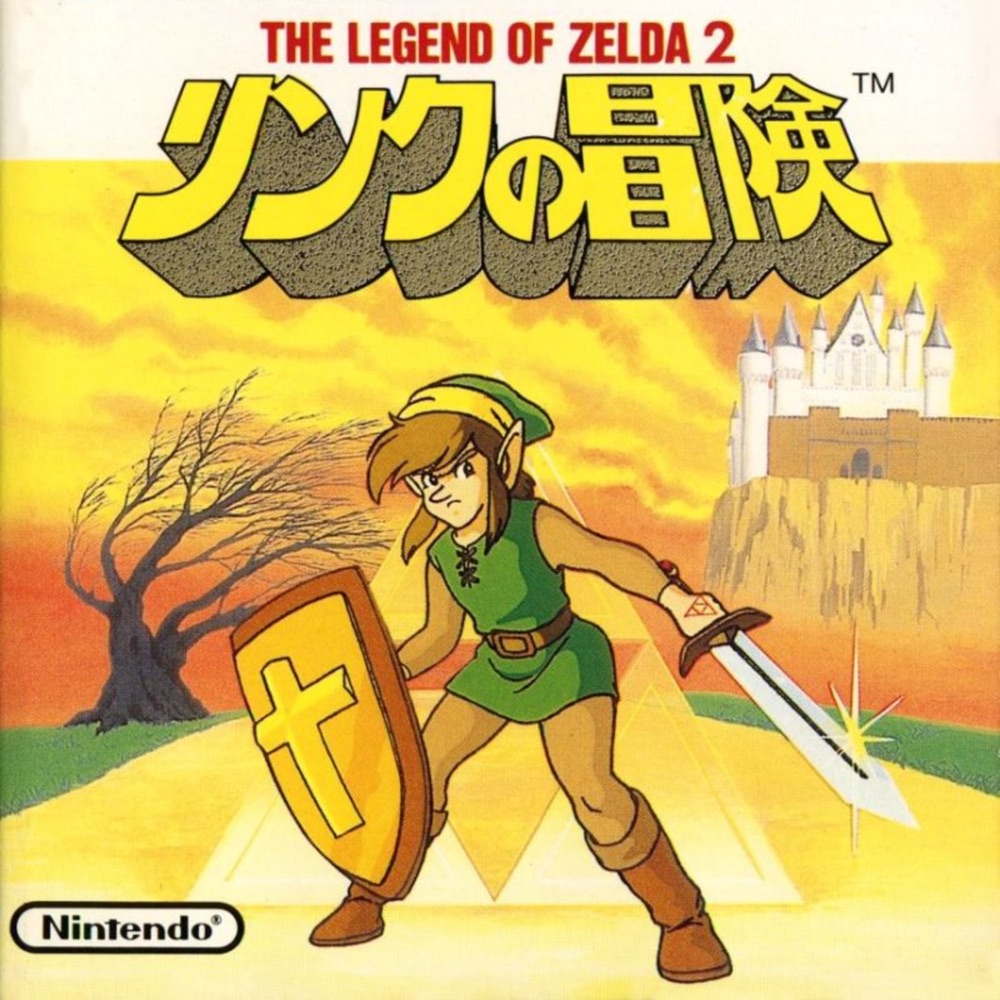
154 · Zelda II: The Adventure of Link
Ranked #8 in our Top 10 NES Games of 1988 →
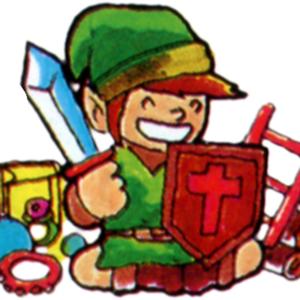
The land of Hyrule is in chaos. As Link you'll be sent on a treacherous journey to return six precious Crystals to their origins in six stone statues. Only by defeating the guardians of the six palaces will you gain passage to the seventh Palace, take on the ultimate challenge that awaits you and wake the Princess Zelda from her sleeping spell. On your way, helpful villagers you encounter will offer clues and secret messages invaluable in your quest. As you guide Link through the levels of Hyrule, close-ups and overviews will enhance your video vision.Are you up to the challenge?
SHOW NOTES
Zelda II Longplay
2 hour Legend of Zelda 1 episode
Tadashi Sugiyama Development Interview
Shigeru Miyamoto's 'Bad' Game
Dark Link OOT fight
Adventure of Link in N64 engine?
Zelda II reached North America in December 1988, two years after Japan's Famicom Disk System release. Miyamoto only produced it; Tadashi Sugiyama directed, and Tezuka and Kondo weren't involved. It began as a side-scrolling sword-and-shield idea that got a Zelda label, and Miyamoto later called it a failure. Mike, Sean and Joe were here, all new to it, and we talked for almost two hours.
What we liked
- Duels. The shield is the best of the combat. Duck for low shots, stand for high, and creep toward a dagger thrower while his throws clink off you.
- A world that surprises. Past Death Mountain you land on the first game's map, with the graveyard and cave right where you left them. The raft takes you to a new continent.
- The overworld fights. Enemies show on the map and you can run, and the tile you stood on shapes the arena. Joe wasn't sold on random encounters and came around.
- Magic and missable upgrades. The shield spell lasts a full screen and costs little, and the up and down strikes can be missed, which made finding them feel like progress.
- The bosses. A knight whose armor comes off, a horseback rider, a dragon. Shadow Link was the coolest thing we'd seen on the system: your size, black on black, and reactive instead of looping. There is a known exploit of hanging out on the left, and we're fine with that.
What we didn't
- A dagger for a sword. You have to hug enemies, hits seem to clink at random off shields, and we ended up jumping to strike over them.
- Clues that aren't. Secrets sit on single tiles, and the NPCs are "literally the strategy guide," when they aren't too cryptic. One really is named Error, another Bagu.
- Palaces that run in a line. Down and to the right gets you through even the Grand Palace, which is padded with filler rooms. No map, no compass, no choice, and side-scrolling is why.
- Experience. We split. Joe loved watching a five-hit enemy become a two-hit one, Sean was indifferent, and Mike felt Link should just grow as he goes.
- Where magic comes from. Old men in basements, not palaces.
The bottom line
Play it. It did not make the Essential Games List. Joe voted yes, with the caveat that it's essential only if you play with a guide. Sean voted no. That left Mike, who called it the best, worst game we've played, and voted no too. With three voting, two yeses were needed. Mike's reasoning: it's better than Rygar, but it stumbles into being fun, and the payoff doesn't match the time it asks. We were also heading into the Best of 1988 episode, where the list could change.
Written from our conversation in this episode.
- The Hyrule Fantasy Continues...
- Introductions
- Development
- Almost a full two years after its initial release in Japan, converting (with various modifications) the game from its initial Famicom Disk System format to the NES cartridge format.
- Developed by a separate team from that of The Legend of Zelda, and key members from The Legend of Zelda's design team, such as Takashi Tezuka and Kōji Kondō, were not involved in The Adventure of Link's production.
- Tadashi Sugiyama was the director
- Development started with Mr. Miyamoto saying he wanted to make a side-scrolling action game that made use of up and down movements for attacks and defense. It’s rooted in actions like jump strikes, downward strikes, and high and low shield defense moves. Types of moves that weren’t possible in the first game. Rather than being a continuation of the series, it started as a new sword and shield type of action game. We were experimenting while producing the game so we didn’t really have the first game’s systems in mind while developing it. As for it being unique within the series, we were searching for new ways to play so you could say it’s like a spin-off.
- Games didn’t have a ton of content at that time so in order to have them played for as long as possible we felt like we couldn’t make them easily clearable. We also did debugging so we would play a game too much and the game would have a high dif?culty that was interesting to us. One thing I remember is a call that we received from a customer at the time. He said he just couldn’t beat the ?nal boss. We talked with him and found out he was fully equipped so we had to tell him he could only rely on his skill at that point. A pretty tough answer, right? The person seemed to playing on behalf of a child… Sorry about that.
- Plot
- Link is on a quest to save Princess Zelda -- who is not the same Princess from the first game, but another member of the royal family by the same name, who was placed under a sleeping spell a long time ago.
- There is something Star Wars-y about the menu screen
- Overview
- The Adventure of Link primarily features side-scrolling areas within a larger world map. The game also incorporates a strategic combat system and more RPG elements, including an experience points system, magic spells, and more interaction with non-player characters.
- Gameplay
- Overworld Exploration
- Roads
- Good or Bad here? Remember what made Zelda 1 cool
- Talking to NPC.
- Improved from Castlevania II, but still feels as useful as Castlevania II. We need substance to these people. Talking to them is no different then a strategy guide at times. Link found everything he needed mostly on his own in the first game.
- That one cool town where followers of Ganon would turn into enemies and attack you as a trick.
- Waypoints
- Parts of the world do feel unique and it is cool to find stuff.
- It’s not cool when finding stuff is hidden in a random 1x1 square.
- Death Mountain, The raft to the new continent, and were highlights
- Difference in feelingm from Zelda 1
- Enemies were live fights
- You had a choice of dungeons
- Link’s sword felt bigger
- Roads
- Side-Scrolling Combat
- Sword and Shield
- The sword is way too short. It doesn’t feel good to fight. Link is in dire need of Simon’s whip in this combat Yes, I’m aware of the full health flying swords.
- Combat is annoying, you can get better at fighting, it doesn’t MAKE the combat less annoying.
- Magic
- A cool system that feels like a natural enhancement to Link. Yet we rarely see it in future Zelda games
- Magic is a chance to reinvent the combat,it feels megaman inspired and it’s kinda cool that it’s missable.
- The fact that your magic is gifted
- Experience System
- Very similar to Rambo.
- I don’t think Zelda has ever needed an experience system
- You fight to press on and continue the journey/exploration...not grind for stronger attack power
- The experience system never changes. It’s just which of these 3 do you want now?
- It does make for an interesting low level run
- Heart Containers
- There needed to be more secrets like this. The kind of thing similar to Zelda 1 where it’s not necessary, but it’s fun to find in the world.
- Palaces
- The palaces are the new dungeons. Only with less exploration.
- Many times you’ll find yourself following a very linear path with maybe 1 other room “choice”
- Even the Grand Palace at the end is a LONG winding map with mostly just moving down and to the right to get to the end.
- Now just for a minute imagine how this could be a good thing...remember Deadly Towers?
- Musings
- I am Error is not a mistake. That was his name in Japan.
- Overworld Exploration
- BIG BEATS
- Why don’t NES sequels follow the success of the originals?
- SMB 2, Castlevania II, Zelda II
- Why does the Castlevania II style game seem to be making a
- Zelda 2 actually came first in Japan. Perhaps Konami was inspired by it?
- What should a Legend of Zelda sequel be?
- Larger map?
- We already had second quest built in the game
- Link to the Past is the proper answer
- Why don’t NES sequels follow the success of the originals?
- Music
- Not by Koji Kondo
- Akito Naka-tsuka
- Ice Climber, Pilotwings 64
- Japanese Release
- The spending of experience points, as all three of Link's attributes cost the same, unlike the worldwide release.
- Extra sound capabilities not present in the NES
- Missing boss
- Sequels and Spinoffs
- Miyamoto says it’s a failure game
- Shigeru Miyamoto: It was my idea, but the actual game was developed by another team, different people to those that made the first game. Compared to Legend of Zelda, Zelda II went exactly what we expected… All games I make usually gets better in the development process, since good ideas keep coming, but Zelda II was sort of a failure…
- Superplay: So that’s why the third game looked like the first one?
- Shigeru Miyamoto: Exactly. We actually see A link to the Past as the real sequel to Legend of Zelda. Zelda II was more of a side story about what happened to Link after the events in Legend of Zelda.
- Dark Link would return in OOT (a great battle!)
- Some music would go on to make its way in Smash Bros
- SNES remake?
- From Koizumi - Before Super Mario 64, I had actually been making Zelda II: The Adventure of Link in polygons with Miyamoto-san. We were experimenting with a thin, polygon Link seen from the side and fighting with his sword. Chanbara (samurai cinema) was a pending issue at the time. We couldn't really bring Zelda II: The Adventure of Link into form at that time, but I kept that desire to achieve a sword-fighting Zelda game until I joined this team.
- Miyamoto says it’s a failure game
- EGL
- Next week - Best of 1988
Auto-generated transcript. Each paragraph starts with its timestamp. Speakers are not identified.
Zelda 2, The Adventure of Link, The Hyrule Fantasy continues.
And welcome to NEStalgia, a chronological exploration of every NES game released in North America. I'm Mike. I'm Sean. And I'm Joe. You guys will note that I had to say Zelda 2 and not The Legend of Zelda number 2. Yeah, it's like, you know, like Too Fast Too Furious or Fast Five.
Yeah, you like understand that it's in The Legend of Zelda, but this game actually does not have The Legend of Zelda in its title. It's not a Legend of Zelda game. It's a Zelda game. Yeah. It's funny because in the manual it actually addresses The Legend of Zelda, which I don't even remember if the original did that. If anywhere the original says, here's The Legend of Zelda. But this says, here's The Legend of Zelda. Oh, I see what you're saying. Yeah, like the lore. Yeah. Like The Legend of Zelda, like the game was just, it was sort of like a, it was telling the legend of Zelda. And Zelda 2 is like, you know, this is what's really happening. It's not mythological, you know?
Right. But don't you think it's weird that Zelda 2 is about rescuing the original Zelda, like Zelda 1? So I actually didn't know that until after I played the entire game and then read the story in the manual. And I was like, oh, it's a different Zelda. Wow. This is the one that I made sure I would read the story of because I imagined it was a pretty thick manual with a pretty sizable portion of it going towards story. So I did do my homework first.
Yeah. Did it last. Yeah. You're bad at this. But it all, it all checks out, you know, it's the second Zelda game and it's the first Zelda princess who's apparently been sleeping for a very long time. And it's the same link, just different Zelda, but you don't meet the old Zelda that you rescued from the first game. Well, that's just because all, all girls, all girls are, they're named Zelda now. So any, any princess that you rescue is going to have to be Zelda.
Well, I thought it was all girls born, born to the royal family. So like all the princesses, not like all in Hyrule. I thought it was everybody in the kingdom, but that makes more sense. Yeah. It's funny. Cause it is, I thought that it is worded like that at first, but if you, I think it does say like afterwards of the royal family. Okay. There's only two types of women in Hyrule. There's women named Zelda and women who hold pots over their heads.
Uh, which is, which we'll get into, I guess. But you know, before we talk about the legend of Zelda to the adventure of link, we probably should just really fast remind everybody that we love the original legend of Zelda. And we have a two hour long episode. I think it even goes over two hours talking about how much we love that game. So we're really not going to do that here. We're not going to gush about the legend of Zelda. We're barely going to remind you why we like it. We're going to, we're going to try not to, at least we're probably going to bring up some examples.
However, this is all about Zelda to the game that like, I think has lately gotten a resurgence, but for the most part, people see as the black sheep of the mainline Zelda games. Indeed. All, all of us have not played this game before. Am I, am I correct in saying that this is our first time playing this game? Yes. This was my first time.
Same. Yeah. So I think like with that, let's just get into the development of Zelda 2 to kind of explain what Nintendo was thinking and why the game changed so much. And then we can talk about our thoughts about the game from there. So this is almost a full two years after its initial release in Japan. Uh, the game came out in the Famicom disc system in 86. And finally, after like a, a way of trying to format it from the Famicom disc system back to the NES cartridge. And, uh, I think there was like a shortage of cartridges at the time for Nintendo. So they had to delay the game even further. It kind of just comes out around Christmas time for, uh, uh, December 1988. So we get the game now, but it's, it's actually been out for two years in Japan.
And it's developed by a separate team from the Legend of Zelda. So even, uh, Miyamoto is just taking on a producer role. He's not necessarily making this game. Uh, key members, uh, of the Legend of Zelda's design team, such as, uh, Takashi Tezuka and Koji Kondo were not involved at all. So it's really just Miyamoto being the producer and, uh, Tadashi Sugiyama, uh, being the director on this one.
Uh, development started with Mr. Miyamoto saying he wanted to make a side-scrolling action game that made use of up and down movements for attacks and defense. I love how that's how basic they start, you know? Yeah. And it's also interesting because I didn't know that this whole genre shift came from Miyamoto. Like, I, I would have thought that, like, the basis of this whole change in the way that the entire game is played would have been because they passed it on to a different team. And they wanted to do something, like, their own with it. Uh, I guess my preconceptions of the game have, like, are kind of challenged by that story.
Yeah, and even the idea, you know, uh, just, I want to make a side-scrolling action game of up and down movements. For attacks and defense. And that being, like, let's start there. And then, oh, that works for Zelda, so we'll just attach Zelda to it. I know that we've said that that's Miyamoto's design philosophy. But I can't imagine starting, like, with that vague of an idea and getting to a full video game. Well, it's actually hyper-focused of an idea. It's, it's just, I, I want this to be the mechanic. Uh, and then I guess you have to build every other mechanic around that. Which is also weird. Yeah, I wonder if it had become at, from the other direction, of, like, let's make a sequel to Legend of Zelda.
If, if the thought of, of changing the main combat gameplay style or, or, or any of this stuff would have even come up. Joe, I think you're spot on because, uh, Shugiyama continues in his interview saying, rather than being a continuation of the series, it started as a new sword and shield type of action game. We were experimenting while producing the game, so we didn't really have the first game systems in mind while developing it. As, as for it being unique within the series, we were searching for new ways to play. So, in some ways, you could actually say Zelda 2 is a spin-off, not a mainline game. Straight from Shugiyama himself. I guess that kind of explains the naming convention then. Right, rather than going full in on, on Legend of Zelda.
Shugiyama continues here, Games didn't have a ton of content at the time, so in order to have them played for as long as possible, we felt like we couldn't make them easily clearable. We also did debugging, so we would play a game too much, and the game would have to have a high difficulty that was interesting to us. One thing I remember is a call that we received from a customer at the time. He said he just couldn't beat the final boss. We talked with him and found out he was fully equipped, so we had to tell him he could rely only on his own skills at that point. Pretty tough answer, right? The person seemed to be playing on behalf of a child. Sorry about that, Shugiyama replies 20 years later to the man that he told on the phone.
You're on your own, buddy. Wait, someone called him, like, directly? I guess they called Nintendo's Japanese hotline, you know, like, for help. And he was just, like, around the office to take the call? You know, these aren't major, like, staffs at the time. Don't speak to your manager. Yeah, it's like there's only, like, 30 people working on a game, like the Legend of Zelda 2, so I imagine, like,
I don't know if he was directly on the phone call, but he probably heard about it, you know? But it's not unheard of to think that, like, back during those times. Yeah, he's a liar. But back during those times, it wouldn't be unheard of that you could get a hold of. Like, remember, what was that, Gradius was the game where, like, they went to that kid's school and gave him, like, a ton of money? I just gave him money. That's right. That also kind of sounds made up, but that's beside the point.
And I think I have some Miyamoto stuff here, too. He says that Zelda 2 is a failure of a game. And he says, it was my idea, but the actual game developed by another team. I mean, that's quick to shift the blame. I mean, if this is a situation where we want to assign blame and not praise. Right. No, I'm just saying Miyamoto is the one saying failure.
Yeah. I wonder what, not that there are certainly flaws in this game, but I wonder how much the backlash it got from fans affected his own opinion of it. Yeah, no, I think what wound up happening, Joe, is that they looked at Legend of Zelda 1, and that was, like, a challenging game for them to make, but it had a huge payoff and reward that created a long-lasting franchise.
And Zelda 2, Miyamoto says, actually, like, development went exactly as they expected. They pretty much took care of everything that they wanted to do on paper and never really deviated beyond the paper plan. Like, they never really got creative in the making process. It was just they followed the documents. And so he says, all games I make usually get better in the development process since good ideas keep coming. But Zelda 2 was sort of a failure because we just stuck with what we thought would be a good game.
The interviewer then asks, so that's why the third game looked like the first one? And Miyamoto answers, exactly. We actually see A Link to the Past as the real sequel to The Legend of Zelda. Zelda 2, more of a side story of what happened to Link after the events of Legend of Zelda 1.
That's a really good insight into, I guess, game development at the time. Like, I never really thought of it as, like, a recipe. Like, you've got your recipe for the game and you just do what's written down for you, like, step by step. I always would have thought that even back then, like, a lot of the creative juices would be flowing when you're actually coding it and testing it and playing around with, like, what if I could do this instead and then going back and adjusting. Like, I never really thought of it as, like, step one, write down everything about the game, and then step two, make it.
Yeah, it's strange to think that, you know, especially because they were working with, like, assembly code back then, that you could, you know, that you could clearly write out a game in documents first, you know, and then hand it over to the programmers and be like, okay, here, make this, because Miyamoto knows next to nothing about programming. He is just a game designer and kind of comes up with the concepts behind these things. He's never been responsible, even in Super Mario Bros. 1, that was Tezuka, who was responsible for kind of, you know, the jump mechanics and figuring out that stuff. Miyamoto was just kind of the designer of the levels themselves. Yeah. And at that point, it's almost like your programmers are just, like, data entry.
All right, so that's all for development, and that kind of tells two stories here. One, that this is not the original Legend of Zelda, and also that Nintendo's not quite happy with what they've put out here, but we're going to stay neutral still, right, guys?
Of course. It's been a little difficult, it seems, but yeah. Okay, yeah, we're neutral, we're neutral. So, here's a little thing, just to catch you guys up on the plot. Link is on a quest to save Princess Zelda, who is not the same princess from the first game, but another member of the royal family by the same name, who was placed under a sleeping spell a long time ago. My question here, because it wasn't clear to me, maybe it's the answer to the manual, is Ganon the one who put her to sleep?
I don't think so. No, I think it was just some wizard dude. So, Ganon really doesn't have much to do in Zelda 2. What I gathered from the manual story is that there's kind of just like two stories going on. One is that we learn that the blood of Link could restore Ganon. He's got that thing on his hand. Right, so that's like a stake. Like, oh, if Link dies, Ganon can come back. And then, also, there's this other princess that's under a sleeping spell that he needs to find a Triforce and unlock the temple with the Triforce, find it, and wake her up.
I could be wrong on that, but that was how I interpreted it. There just happened to be two different things happening at once. Ganon is not necessarily related to the other thing, other than the fact that if Link fails, Ganon will return. And the blood thing's important because there's like a cult of Ganon followers who are like out to get you, right? As a result of like they want to harvest your blood to Rizrek Ganon. Right, it's like very Voldemort.
Yeah, you know, the title screen also has like a smaller version of, I guess, the manuals plot where it does spell out a lot of the same things. And I don't know about you guys, but just from the title screen, there was something like Star Wars-y about the title screen, like the way that the music splashed on. The slow crawl. No, but even like even the design of the title, Zelda II, The Adventure of Link, kind of looked like... Yeah, like Episode II. Right, right, exactly. The Zack of the Clones. Exactly. And so, I don't know, that probably worked to its advantage back in 1988. Yeah. But now it just feels overplayed, overdone, and not really fitting.
I almost would have expected instead, you know, when you hold on a title screen too long, it would then take you to a separate cutscene where you can see images of the story being played out or something. That's kind of what I expected instead, like a storybook version of what was happening instead of the scroll. Yeah, it is also like a starry night sky, right? Which, to your point, doesn't really fit the game because there's never nighttime in this game as far as I'm aware. Nitpick! I mean, not that important, but just an observation.
Well, technically, I mean, it could always just be night when you're in any of the caves, you know? That's true. That must be when night falls. You only travel during the day. I think that's the important thing. That's true, yeah. So the title screen is showing you what you're missing while you're in the caves, and it's like, don't spend your life in a cave.
Yeah, that's what Miyamoto was trying to say after he had spent his whole childhood in caves to come up with The Legend of Zelda from his adventures in caves. He said, you know what, but that was a mistake, kids. Don't go in caves. Don't spend all your time in caves. Unless you have a candle, the power of the sun.
We'll get to that later. Anyway, overview of the game, though. Just to explain, if you've never touched Zelda 2, you should definitely take a look at it. The Adventure of Link primarily features side-scrolling areas within a larger world map. The game also incorporates a combat system that is also side-scrolling and has more RPG elements, including an experience point system, which we will never see again in a Legend of Zelda game. Magic spells, which are sometimes brought back. And more interaction with non-player characters, a la, like for us, Castlevania 2. And another game we just played recently, too. I can't remember.
I'm sure it wasn't important. But yeah, it's got side quests of all things. Yeah, it's got side quests. It's got people you can talk to. We had the old men in Zelda 1, but I wouldn't consider that the same here. None of them in Zelda 1 had the same personality as Error. Yeah, there you go. Exactly, exactly. piano plays softly piano plays softly piano plays softly piano plays softly
piano plays softly
so so let's get into the meat and potatoes of it there's a couple of big beats i want to hit here and the first one is what i think was the defining thing for zelda one and that's the exploration kind of you could go wherever you want in zelda one you don't have to hit the dungeons in any particular order i believe you could even do like as far as dungeon
four before you do dungeon one in legend of zelda one so the overworld and the exploration of that overworld in zelda 2 here uh sean tell me you're just um you know tell me your your thoughts on how exploration is handled in the adventure of link well this one it's a lot more guided like even going so far as to literally paint like a path on the overworld map of the most common places that you would go from that first screen um and uh there isn't as much connective tissue like you
know in zelda one the game is literally just a secret a sequence of screens and they're all the same mode of the game aside from when you go into uh into the actual dungeons uh whereas in this one they're they're kind of atomized and you have to travel between dungeons on this like very uh like very familiar to me sort of overworld map uh just from like jrpgs and stuff like that uh and so it's
like it's definitely more linear in the fact that they're uh the places that you can go to are very clearly marked and they're gated in uh whether it's uh via um via like items that you need to clear the path um and it's just a lot clearer i would say yeah uh you know you mentioned the road system right like that the the the lighter color that kind of says like you know oh here here we'll take this
road and it'll will lead to something and i think like that makes sense in a larger world that the legend of zelda 2 is trying to be but i i immediately like read the roads as like a bad sign of something to come because you in zelda 1 like you're immediately given a choice of like three different directions and you can go in any of those and anything can happen right here you know like the instinct is is to
again just kind of explore and see what happens but there's this road kind of nudging you to to go kind of up and to the left and fit and find your first town and joe i don't know how you how you felt about that but i i kind of thought that that was an odd choice to start because it doesn't feel like it does feel like links on some kind of grand adventure you know follow the yellow brick road
but at the same time it didn't um it didn't give me the feeling that i have to figure out what i'm doing it was kind of telling me what i need to do well i think i think i have a little bit of a different perspective when it comes to zelda 2 than a lot of people especially i mean maybe this doesn't add up exactly but like mike you're a zelda legend of zelda fan you're right you've played i assume most
if not all of the games correct uh i i the only zelda game i've ever played so far is the original for this podcast so coming at it from that perspective with no expectations really from the future i mean i've i've touched ocarina of time but not really played it um and also from the perspective of like knowing this game's reputation of of being disliked because it doesn't follow the same formula as i went into this expecting this to be very different than
the original legend of zelda so i kind of went into it like trying to look at it fresh similar to the way i did with uh mario 2 and it didn't bother me that it was kind of guiding you in a linear way but not not necessarily like completely linear it felt a little final fantasy ish where it's like yeah it feels like you're you're you have the options to go you really there really is like a pretty set way uh that you're supposed to order that you're supposed to do this but i think my perspective on it is that it felt like it's just two totally different both totally good ways of designing a
game uh so so for me i i still really kind of liked the way that it that it guides you and i i think it is just a matter of like you know usually i am a big advocate for like not changing things i love too much but this just isn't a series that i that i am so that i've been so you know i didn't grow up with it so i feel like i'm a little more open to that kind of change uh one thing i i'd like to say regarding uh i guess the more directed nature of this game is that like going back to that first
screen of legend of zelda like yeah there's all these different directions you can go but there's really no there's no difference between like there's it doesn't look more appetizing to go to the right than it does to go to the left or to go north or maybe maybe to go in the cave yes but other than that like it all just like yeah you could go wherever you want but why would you pick one over the other
whereas with zelda 2 like the the map like it's it's more contextualized like you could go into the forest or you can go down the road where you're likely to find more civilization or you can go onto the beach like it actually like feels a little more natural and your reasons for wanting to go places are driven more by what you think you might find there other than like i guess i'll just take the
right path because i i just feel more comfortable going to the right no that that is a good point uh this world does feel unique in a lot of ways as you continue to travel on it's not the same it's not the same look at the map over and over again it's not the same sprites like there is clear identifiers of mountains and and uh as you said an ocean you know uh i think a lot of this world feels really
unique and and has cool stuff to find you know if you if you stumble across the cave or when you uh see a bridge and you know all of a sudden it activates like a new side scrolling portion to get over that bridge you know this way you don't have to use your imagination of what crossing that bridge was like i think that stuff is really cool it's not cool when you're finding like hidden hidden secrets in this game that are hidden in random one by one tile squares that uh you know
that some some of them are locked behind uh story points too yeah i think that is something that um in a game that is also trying to be a living breathing world kind of thing you should see those things on your map and make them challenging to get to i think something like death mountain is a great example of that where when you get to the death mountain you actually have to traverse through all the different um cave options to kind of get through the puzzle that is uh the you know the variety of
paths you have now granted it's not it's not so many choices like realistically if you just keep moving to the right i think you will eventually get out of the out of the mountain but you had to work for it as opposed to saying like imagine if you walked up to a mountain tile and then that loaded the side scrolling mountain battle fight and then once you cleared that you cleared death mountain like
that's what those that's what those other one by one squares felt like so at times the the overworld exploration has like really cool moments that i didn't expect to play out into like these bigger moments and then it has these like go find this person or um you know my you have to find the elder in each village but then they all wind up being the same exact thing every time or they wound up being like they only give the magic spells it wasn't uh you know it there wasn't a lot of variety
where other times it was like whoa this is a completely different kind of game it was a weird balance i think what you're what you're touching on with like the tiles being like feeling like hard to to know about if i'm understanding you correctly uh i think that's like that kind of like is touching on what i think is behind almost every flaw i find with this game is behind like that one thing that
like the game just doesn't make things clear enough yeah i mean for some of them i know that you're i know that you're saying that some some of the things are like actual like key items that you need to progress the storyline and you you discover them sort of just by walking over that tile um but in in the context of exploration which is i think what kicked off this conversation correct it it does sort of
simulate that that feeling of happening upon something like i remember happening upon a little hut in the uh in the forest and while it did turn out that i needed to find that hut uh because i needed him to tell his friends that works at the bridge station that i'm cool um that that that moment still felt cool because i had found the hut um if if it worked out in a different way and i was told like i can't let you pass go find my buddy in the woods i would have probably thought about this a little worse
um but so i'm okay with that in some circumstances but i also don't think it's any different than bombing every wall in legend of zelda 1 like it's it's sort of the same like pixel hunting bullshit that i complained about during that episode too yeah i agree there i actually don't remember how much of legend of zelda 1 the bombing the walls was like absolutely necessary it was it it might have been there might have been it's reserved for hidden secrets you know uh there are
there is i think um one dungeon and um one item that like you need for you know for each one of those bombing the wall things but there's also like that's a way to find a lot of cool extra stuff that you don't necessarily need to beat the game but that you would want you know which is also applied player which is also applied in this one it's just sprinkled in more yeah i think it could have used a happy medium of i mean if something is is absolutely necessary to progress and the only way to find it is almost sheer luck i i think the happy medium could have been having some sort of
context like like there are some things that have almost no context or precedent i mean i played this game with a manual unabashedly with a with a uh with a walkthrough rather um and i think that that is like usually i don't do that usually i don't like doing that i feel like that i i wouldn't have enjoyed this game without it um because there are just some things that is after as i get to them okay never ever would have found that on my own because there's no clues there's no context um same as
castlevania 2 i agree i i wasn't crazy about castlevania 2 also and yet this feels like talking to the mpcs it feels improved from castlevania 2 does it not i mean i think i think it feels it feels just as useful right like we need we need a little more character in these people like they are literally just um you know it's no different than talking to the strategy guide at that point right like sometimes they're literally just giving you the next clue for advancement and instead you'd wish that
they had a personality behind that clue that you had to then i'm not saying tell me a riddle i'm saying like just be a person be a human being uh you know but link found everything he needed mostly on his own in the first game you know there were there were uh those old men that kind of would would be able to give clues but you didn't necessarily need them in this game i do think that these mpcs unless you're reading a walkthrough these mpcs are absolutely necessary uh for some of these things sean you mentioned finding i think his name is bagu yeah in the uh
in the woods and that makes sense like and for you that's a really cool moment i had the opposite one where yeah they told me i can imagine that that would be a pain in the ass uh right and i grant you that yeah and that's why i was kind of saying like earlier why not just like have the hut be something you see on the overworld and make it like a point oh you know like a point of interest but you have to figure out something else you know like maybe you have to that activates a side scrolling portion where you have to fight through a horde of enemies or or do some platforming stuff like i you know i i know
we're limited by the fact that the game wants to desperately be this side scrolling game like i think instead it would be really cool if there were just puzzles on the overworld unfortunately it would always switch you to a side scrolling point of view but i think that's what that's what the exploration of this game needed is more like uh you can see it you can go there and now you have to figure out what to do with it like that's what that's what this game needed more of yeah i think if they're gonna uh not to not to stay on this topic for too long but i think if they're going to
like make the hut in this example like a thing that you see on the overworld map that is taking away from what i think was like that like happening upon sort of uh feeling that they wanted you to feel uh and i i think that just just adding like a mob of enemies is not a good enough replacement and it just turns into just like just gotta kill a bunch of more dudes uh and and that's my challenge for the for this side quest like i i don't know i think that if maybe the if maybe the npcs were a bit more specific of where to look it would feel a lot more uh it would feel a lot better
um for it to not be on the map uh i just i just don't think that uh another like enemy mob would have fixed that problem i i see your point sean too i i i'm trying to remember how i experienced the bagu thing um i don't remember that one particularly bothering me i i'm just kind of assigning the uh the frustration i had with a lot of other things yeah just that whole design concept yeah yeah yeah
like i i don't think it's a terrible idea to say like check the woods to the north for for you know for bagu or whatever and then there's just woods to the north with nothing in it and you got as long as it's not like i don't remember but like as long as it's not like a vast like 30 screens full of woods that you have to walk you know if it's an area like oh i wonder if i walk around in there something will come up i don't think that's a terrible uh design idea i just think that where
that that idea goes in other parts of this game where it's like okay well this one had no context and i love the npcs i love the npcs giving you this context um i think that the problem is that they don't necessarily do it enough i think that there are a lot of times where they don't give you the context even at all or they give you something that's just weirdly too cryptic cryptic yeah yeah and i mentioned uh the death mountain thing is something that i really liked in this overworld and i have to mention too that after death mountain is that really cool uh revelation that you are in the part
of the game where the original legend of zelda 1 took place and i i think that that is is pretty cool to see that part of the map and see the graveyard again and see the uh the cave that you entered from and see um where you defeated ganon like it's really neat that they put that all basically almost in the same exact spot where it was in legend of zelda 1 i think they moved around a couple small things but that was like a really neat thing and that's the kind of stuff i'm talking about that i
really appreciate in this game from a from a uh exploration standpoint like things that you can visually notice for yourself on the screen uh even the um you get the raft and then the raft takes you to an entirely new continent like you appreciate that idea of of uh exploration in this grand journey of like wow i'm on the i'm on an entire different hemisphere now like i think i think moments like that are the cool parts of this game that really help uh sell the the adventure aspect but also make you feel like you're on a a bigger thing than just going from one town to another
collecting magic spells and putting beads in a palace no for for sure that whole idea of like happening upon something that you remember from before you played the game like it like we haven't really had um like that experience yet on the nes like because there hasn't been like a direct sequel that's actually used the same places and you get this feeling of nostalgia uh because you've been here before uh and i think like i remember the first time that i i remember having that feeling was uh
in grand theft auto vice city you get a couple scenes from liberty city uh but it's like winter now and it's like oh i i know this place but it looks a little different now so no i i'm i'm totally on board with with that as like a storytelling mechanism like just in the game yeah it's very pokemon gold and silver vibes for me yeah that that's a major one too and and you know it's funny that you mentioned
gold and silver because that's like nintendo does this a lot like even i think super metroid has a section where um metroid won like you just see that that map again and you're like oh i'm in the part of super metroid i'm in the part where i played metroid on the nes and i think that's really cool uh to see all that stuff play out but this has got to be like it's got to be like the first kind of callback
of its kind right i imagine like you know there's a lot of times where you play a sequel to a game and you know the characters are familiar or the the the gameplay is familiar but to actually see references to an older game is something that uh is kind of limited to computer rpgs uh during this time
period
Another noticeable difference from Legend of Zelda 1 to Zelda 2 is that the fights are handled in a side-scrolling combat form instead of just happening kind of live on the top-down, where you would be in the world and the enemies would just spawn as you entered the next screen. You'd be able to handle them right there and keep moving on with your journey. In this one, it kind of acts kind of like a hybrid JRPG, where there's these random encounters, but they're not necessarily random. You can choose to run away from them. The enemies appear on the overworld map, and then if you walk into their tile, you then get transformed into a side-scrolling screen, where you then have to duke out combat.
Joe, do you want to walk us through what combat entails? Yeah, so like you said, it's side-scrolling, so already you have the option to duck, and that kind of already changes the game. So you're really just choosing whether to attack an enemy high, attack an enemy low. Later on, you get a couple other attacks that you can stab down while you're jumping. You can stab up.
And while that sounds like a simple difference, like stabbing in side-scrolling versus stabbing in overworld, it makes a huge difference. It makes it feel a little more action-y.
And I'll admit, at first, I wasn't crazy about it, because I'm not usually crazy about random encounters, especially when it's going to be an action-based random encounter. I feel like just stay where you are. But they grew on me quite a bit, the random encounters, because I think what it does really well that a lot of games haven't done yet is not just bombard you with enemies. Like, some of the enemies feel really hard, and in other games I'd be like, well, this is like an impossibly hard enemy. But it gives you like a moment to like square, usually, to like square off with that enemy, and like it feels like a one-on-one little duel. Sometimes there's more enemies, but usually it's like manageable.
So I actually think that they handled the combat pretty well here, if you're taking out the factor of like whether or not they should have kept it similar to the original.
Yeah, I think like combat in like palaces, which we'll get into more later, I think that those are definitely more that whole like you can square off, and you kind of like focus on that one enemy. Whereas I think with the random encounters, it does feel a little bit more spammed. Which I know they're not all like that, but I think that the ones that I got into was just a bunch of tiny mobs that you either were just going to try to avoid, or you were just going to kill them all for experience. That's sort of how I, like my dichotomy of like the battle design in those two instances,
as for like random encounters in general, I did appreciate that they would take away some of the frustration that usually comes with random encounters by at least visualizing like where you would be, or like where the enemies are so you can try and avoid them if you don't want to fight them. It's hard. It's hard to do that, but it's still a possibility.
Yeah, I'd say those are my thoughts on random encounters. Yeah, and another cool thing about the random encounters is that, you know, if you are on a certain kind of tile when you run into a random encounter, the place where the fight takes place is relevant to the kind of tile you were on, which I think is definitely a nice touch.
And also that you can choose, you know, if you're good at running away from your enemies, you can choose to say, oh, I need more experience points. I want to tackle like a harder kind of enemy in my random encounter. Or you can say like, no, I just want like some easy fodder. I don't want to deal with this right now. I just kind of get to the next town. And you can choose to do those battles as well.
Joe, you talked about the sword and shield aspect of the combat in the sense of like, you're using the shield to prevent attacks on you, and you're using the sword to strike back. And yes, you can duck and you can jump. So it sounds simple, but there's a lot of elements going on here because it's all live. You got to remember, this is an action RPG in the sense that, you know, the enemy is constantly making decisions. You're constantly making decisions. There's this samurai like cinema aspect to the fights, you know, like I know, Sean, I know you were pushing against this, but pretend that it is just you versus one other enemy, right?
There is this aspect of like a game of chicken where you almost have to say. Yeah. Yeah, you have to say to yourself like, okay, he's going to attack right now, but I could block it with my shield, which I think is probably the best part of the combat, to be honest. The fact that the shield actually works and that if you duck, you can protect your, you know, your kneecaps. But if you are standing upright, that also like blocks fireballs and stuff like that. Like, I think that's great. The problem here though, is if this is supposed to be samurai combat,
Link brought a dagger to a sword fight, okay? That sword is way too short for this game. I can stand as close as I possibly think I should be to enemies, and I will without a doubt miss them. I feel like I need to be hugging these enemies. I think Link is missing Simon's whip at this point, you know? Like, it worked in Castlevania 2, a side-scrolling combat game, because he has a nice long whip, or, you know, there's projectiles. I know I'm going to get some pushback on this, but, you know, you got to tell me right now, don't you wish the sword was just a little bit longer so that the combat would have handled better? You're going to get no pushback from me. I agree entirely.
I also really like that whole chicken that you're talking about between, like, am I going to block high, block low, attack high, attack low? So, and at times it did feel like a duel, like, against a mid-range enemy.
But at other times, in conjunction with just how short your sword is, I felt like I wasn't even, I couldn't figure out some of these enemies, because it felt random whether I was hitting or not. So I know that they have shields themselves, but it just felt like I would randomly clink, but, like, clink against their armor, and then the next hit that seemed to happen in the same sprite sequence, that one would hit. So I wasn't really fully understanding that mechanic, as opposed to, I imagine maybe you guys could figure it out.
Well, there's an enemy in the first palace that made me look up something on game FAQs, because I just couldn't wrap my head around, like, why I wasn't doing any damage to him. And they suggested figuring out how to, like, jump and then strike. So you kind of hit them above their shield, like you're hitting them on their head. Interesting. And I don't know if that is just a glitch, but it did help for, like, a combat point of view, of, like, having to jump and strike.
Like, I do think that that's a valid thing and not just an exploit. But that's what I wound up doing for certain enemies. And then I think there were skeleton enemies sometimes that, you know, you kind of had to strike them in the legs. Yeah, the skeletons I had no problem with. The ones that, I think it's the same enemy you were talking about. I know that they all have names, but they're all bullshit names.
But it's the one that would, like, he would move his shield up and down, and then, like, he'd sort of give you a little telegraph of whether he was going to strike high or low. And he was orange. I think that's the same one you're talking about. Yeah, absolutely. I feel like there ended up being, like, multiple variations. I mean, there weren't variations of the same enemy, but variations of the same enemy behavior as the game went on. That was what you're describing.
Next with boomerangs. Yeah. Oh, yeah. That's huge. I feel like they weren't actually quite as bad, though. No. But the funny thing is I actually am just watching footage. I usually just watch footage while we record. And as I'm watching it, I'm like, oh, yeah, like, that is a ridiculously short sword. That thought actually never crossed my mind while I was playing, though. I did have frustrations with the same kinds of enemies,
but I had, like, mixed feelings on them a little bit. But now that you've mentioned it, Mike, I do think that, like, having, like, a little bit of a, I don't know if you'd call it a hitbox if you're the one striking, but a little bit of a bigger, like, sword, I guess,
would have maybe remedied some of this. Because I found myself doing little tricks like that, too. I found myself jumping a lot for those enemies. And I found myself doing weird things like running away from the enemy and then quickly turning around and stabbing low. And, like, that just worked. But, like, thinking about it, there was really no reason that should have worked that way. I just learned it. So, like, maybe that's a little flaw. But to me, it still doesn't take away too much from how much I actually did enjoy the combat and how fluid it is.
And I don't think a longer sword would have made the game, like, significantly easier. I think it would have just helped with some of the annoying aspects of the combat system. Because you can get better at fighting with the shorter sword. You just need to realize that you have to get really close to enemies and, you know, maybe sometimes cast a shield magic spell on yourself if you anticipate taking a lot of damage.
But because the sword, you know, is what it is, and you only learn two optional attacks late into the game that I frankly think Link should have just always had. I know that probably would have made him powerful. Down and up. Yeah, the down and up strikes. Like, I think those probably would have made him pretty op at the beginning. But this is the same guy who beat Ganon in the first game. So he should be pretty strong to start. You know, I'm aware of, like, when you have full health, the projectile sword thing. Like, that's awesome. It's so easy to lose that, though. Yeah. How often in this game do you have full health? Not very. I didn't have it very long. I also felt like maybe the sword thing wasn't quite as important
as it was in the first game. Because there are a lot of enemies that the projectile sword doesn't affect anyways. So it was nice to have, but it didn't, like, bother me too much that my health wasn't always full because I was like, well, I'd probably be... But you can at least, like, stagger these guys, I think,
with the projectile sword. But I could be wrong there. Yeah, like, freeze them up, you're saying. Yeah. I didn't notice that. That could be true. I didn't notice it. But that's also probably because I was almost never at full health. Yeah. Yeah, but I think, like, there's a system here in the combat that because it's not hearts, right? Because in the original Legend of Zelda, you had hearts that you kept collecting heart containers for and you could have, like, a crazy number of hearts at the end of the game if you collected them all. Or you could just try and stick with, like, your three hearts. I think in this game, there's the live system.
You know, the fact that you can, like, have extra lives as Link, which is something you'll never see again in the Legend of Zelda. You know, that's, like, my best guess is I don't see another way they'll do that again. This is definitely, like, Super Mario Brothers inspired.
But it makes the combat kind of forgiving. Like, you're okay to take some risks. I think there's certain moments where I would have been like, oh, I just took some damage. You know, like, I'm not going to make it through this fight. But when you have an extra life or something, you're like, eh, whatever, I'll keep going for it. You know, if I thought I was going to get a game over screen as a result, I'd be like, you know, I'd probably run away from the battle.
Now, could you remind me what happens when you lose a life? When you lose a life, I'm trying to think on the overworld. When you lose a life, definitely in a temple, you end up back in that temple until you get a game over. I think when you just lose a life, you end up, yeah.
Then once you get a game over, you end up back at the beginning of the game. But, like, everything you've unlocked is unlocked. So they did a nice little thing of having shortcuts you could unlock. So then you don't, you know, or giving you tools that then mean you don't have to re-traverse everything. You can now smash a rock that was breaking your way to get back to where you were. So I think it's like a good balance in punishment. Yeah. I know that there is that discrepancy between the majority of the game, where the game over sends you back to Zelda's sleep spot. But then if you were to die or game over in the final dungeon, then it just brings you back to the beginning of the final dungeon,
which I know confused a lot of people, at least back in the day. But I think that with today's views on difficulty, this is more than reasonable. And you guys didn't talk too much about the shield, the shielding part of this. Did you think about the shield a lot as your combat, or were you primarily on the offense? Oh, no, I was definitely thinking shield first, especially when you've got projectile enemies
that are one way or the other going to hit your head or your knees. Yeah, I think you have to think shield. I mean, I'm sure you could play it another way, but there's just so many things coming at you, especially, you know, you get the boomerang guys where you got to, like, fight them, but also worry about the boomerangs that are behind you that are coming back.
It feels kind of cool. It's hard, but it feels kind of badass when you pull off, like, a little, like, three little dinks against your shield at once. Yeah, yeah, with a lot of things. Or even some of those enemies we were talking about where they kind of mimic your movements with the shield, they throw daggers high and low, and it's kind of cool to be getting closer and closer to them, like, ducking to block low daggers, jumping or standing up to block high daggers, and, like, making progress getting closer to that guy without getting hit.
I think it's interesting how, in the combat design of the game, you know, it did seem like they wanted you to take your time, you know, like, use the shield to your advantage, strike only when necessary. That's going to make for a very slow-paced kind of game, but I don't think that the game gives you a ton of enemies at any given time, you know? We talked about briefly in the palaces,
you'll see usually, like, an enemy at a time, or maybe, like, smaller enemies, a few of them, but for the most part, like, it's spread out. And then the overworld encounters, the random ones, those ones, most of the time, they give them to you spread out, but you also have, like, a choice there. You can just flee battle, too, if you don't want to deal with it. So, they did slow down the gameplay combat overall in this game,
but where that doesn't quite work out for me is the introduction of the experience system, you know? Zelda, one, didn't have an experience system at all, and I don't think any Zelda has had an experience system since, and I don't really think they need experience systems, because the whole point of, like, your journey is to, you know,
find new power-ups and find, and, you know, get new skills and stuff as you traverse. So, the idea of, like, killing a certain amount of enemies unlocks a certain thing is strange here. You know, you fight to press on and continue the journey, not grind for stronger attack power. And so, when you mix, like, slow combat with the idea of grinding enemies that give you, you know, two to five experience every time you kill them, and you need, towards the late game, you need thousands to continue to experience your, you know, to gain your experience points to get level-ups in your health and magic and attack power, I think that's where the game all of a sudden gets weird for me, you know?
All of a sudden, you have to start grinding. I kind of disagree there. I actually, again, it might come from me just not playing really many other Zelda games, but I really enjoyed the experience system. I think it could have been improved. I think it is weird in the late game that their enemies are still giving you two points of experience, but there are plenty of enemies that are also giving you, like, 100 points.
But I found it very satisfying to level up, and it's one of the first times I feel like we've leveled up in an action-type game like this that you really feel the progress of, like, oh, this guy used to take me five hits, now he takes me two hits to kill. Like, I feel stronger. And I also never feel like I needed to grind.
I felt like there were times that I wanted to grind because I was in a temple, and at the end of a temple, you get whatever is left over to get you to that next level. So I always wanted to be, like, at the beginning of a, you know, I wanted to be at zero experience towards the next level so I can get a full level out of it. But that wasn't necessary. I always felt like I naturally got enough. Like, if I were to play this game without grinding, I still think I would have been strong enough at the end to beat the game.
Yeah, I think that it was unobtrusive enough that while I didn't ask for it, I didn't have an issue with it. Like, it was just basically you defeat an enemy, you cross that threshold, and the game is just like, you want to be stronger, or do you want to be more magic-y, or do you want to take more hits?
And I was like, oh, sure, I'll take more hits. I appreciate that. And then I just continued on my way. So I was never grinding, and I also didn't really feel any different after that upgrade. So while I don't know how necessary it was, I also, it didn't turn into an impediment on the game, or my enjoyment of the game. I feel like we are, like, a nice range of opinions on this.
Because I feel like, Mike, you didn't care for it. It sounds like, Sean, you're kind of indifferent, but you know, you didn't dislike it. And I actually kind of really, I think I would have liked this game a lot less if it weren't for, not a lot less, I still would really like this game. But this was, like, a significant, like, plus for me, having the grinding, because I feel like they did it pretty well. The grinding, I mean the experience, not the grinding.
Yeah, no, I know what you meant, too. And I'm not saying that you have to grind to beat the game. I'm saying there's, like, this weird at-odds system with itself of saying, you know, combat is meaningful and should be taken slow, but we're not giving you a ton of experience, so you're going to have to do this often. It just, I felt like, for a character like Link,
he should just get stronger as he continues on his journey, not, like, through grinding various enemies and stuff like that. Also, the fact that the experience system never changes, and this is something that I'm spoiled from from later games, you know, like, who knows what experience systems were like, although I'm pretty sure by this point Dragon Quest had come out in Japan.
You know, the experience system just offers you the same three choices every single time, and, you know, it's great, better than one choice, but I felt like, you know, a real level-up system would have offered you, like, some cool new attacks or, like, you know, bombs or something, like, something interesting that you could then, like, have in your arsenal for leveling up, not just, okay, now you're a little bit stronger, or now you have a little more magic, you know, to you.
You know, a system needs to be in place for these experience systems, so it's just, it's small, and it's small enough that it doesn't bother me so much, you know? It's just a small thing that I didn't like, but it does, you know, it makes for, it makes for healthy reasons for the random encounters to exist in the first place, right? Like, if an experience system is designed, at least there are random encounters so you can pursue to either do a very low-level run, or to grind the heck out of it and be super strong by the fourth palace, you know? I think, from that perspective, it almost seems like the only reason that each of them exists is for each other, and if you removed both, then maybe the game wouldn't be, like, any more, any worse.
But I do think, just to step back a little bit, I do think that the random encounters make the world feel a little bit riskier, because otherwise it's just a glorified map that you have to navigate.
So I think that the random encounters help both justify the experience system and justify the map. But, again, I didn't really have too big of an issue with the leveling up, because I didn't really even notice much about leveling up.
So I want to, maybe this is a little bit of a side note here, but I want to ask a question, and based on your answer, I might feel very stupid. But something both of you said made me think, were you guys able to choose what power-up you got at the end once you leveled up? Because I didn't think you could, and it just went... It depends on how, you can cancel. So this is the thing, you can cancel and wait. And because usually, after the first one, they all cost different values,
so you can save up some more, and then the next time you hit that threshold, they'll say, like, okay, here's another choice. Do you want one of these? I'll be honest, I didn't even glance at the values. I was just like, level up, it's telling me attack, so I'm going to get attack. And it just works out that each level up, you get the next one down the line. So I still got evenly leveled up throughout the game. And it was only on the last one that it let me choose all three, I guess, because now I'm realizing, because I had enough experience to afford three.
Wow, I didn't even notice that. But it worked out, because I leveled up pretty evenly across the board. Yeah, you can choose, and that's another cool point to the experience system, right, is that you can choose. And I liked it without even knowing that. That's funny, but also, you know, Joe, it's interesting, because in the Japanese version of the game, they actually didn't make it so that they are valued differently. It was always the same cost for all three of them, so it made for much different loadouts, I suppose. Of, you know, you could be very strong a lot faster, because it required less points overall. Huh. Yeah, I don't really know what that would change. I wonder how different it would feel,
because, like, aside, in the American version, where it's sort of, like, on a curve, I guess because I didn't really notice it too much that way, maybe I wouldn't notice it that much the other way either. Yeah, I think you'd just level up faster is all, and you'd be a little bit stronger, but if you didn't notice it, it doesn't matter. Yeah. I also made one small note that the experience system is very similar to Rambo. Do you guys remember playing Rambo?
Joe, you said that this game makes you feel like your attacks are doing more damage in the sense of something that used to take five strikes, takes two. I don't know if you remember Rambo or not, but it did work on a similar system. You killed things, and you got stronger as a result, and things were supposed to take less kill. Less to kill. Less kill.
It's funny, because I thought, like, oh, is this kind of like Rambo? But then I couldn't remember. Was Rambo anything like this? I was like, I actually didn't remember. It was like, I don't know. Why am I thinking Rambo? What the heck was that game? I don't remember. So I guess there was something similar about it. It was like Zelda 2, but with cut scenes that didn't really make sense. And Rambo was that other game I was thinking of much earlier in this episode when I was like, Castlevania 2. Yep, Rambo, absolutely.
So, you know, these games exist. Another choice in your experience system is magic, though. We haven't talked about magic in depth yet, and so I think that should be our very next topic. Sean, can you walk us through magic? So magic is basically your... The skills that you acquire via doing side quests and going into secret places and then getting led by a young woman into her grandfather's basement to be taught these things. And they can be very useful. They can be overpowered. They can be incredibly necessary just to continue through the game.
But basically, they're just a skill that you acquire and you go to the select screen to start it up. And you can turn into a fairy if you want. You can jump extra high. But the thing that really limits it is the amount of magic points that you have. Like, you're not really supposed to spam this. Like, you're supposed to just do regular melee combat for most of this game. And these are to be used sparingly. Yeah, they're used sparingly, but they're also not as sparingly as I was thinking they were going to be.
Because I think the one nice thing they do to make it so it's a little less, like, punishing to your magic bar to use something is, like, some things that are helpful. Like, there's a shield spell, which just makes you more defensive and it turns you red, which is kind of cool.
Once in a while, I'd be like, oh, why aren't I using that more often? Because you use it once on a screen and it lasts for the whole screen. There's no time limit on it. And it costs pretty low. Like, I know I can usually use a couple shield spell and still have enough to restore my health.
So I was appreciative that it was, like, it gave me some reasons to think about... Like, a lot of times in a game like this, I will just save all my magic for restoring health. Because that seems to me to be the most important thing. But this gives me reasons to say, well, you know, I'm going to have stuff left over when I restore my health. Not going to be enough to restore my health again, so I might as well use other spells. So I thought that was nice.
It's a really cool system that feels like a natural enhancement to Link. You know, he didn't have magic powers in the first one. And I don't think he gets magic powers in many other games. I know that occasionally he'll have, like, magic abilities or something. But this is a full-blown magic system,
which gives it a chance to, like, reinvent the combat. Joe, you were talking about, like, why don't I use shield more often? And I think, like, I feel like a lot of people make that, you know, connection late in the game. Yeah, I did. That they should be using the magic more. And that feels Mega Man inspired there. You know, like, pressing select, choosing your magic. And then, like, you know, even the fact that shield changes your color. Kind of like how in Mega Man, like, the power-up you choose at that time will change what you look like. I thought that that was really cool. And it's cool that some of these are missable. I know that some of them you need to, in order to progress on a high jump. Shield. Yeah, okay.
Yeah, shield is one you can miss. You're right. So it's cool that these are missable, but I hate that they're given to you by these old men in these basements. Not because it's creepy, but because this should have been the reward for beating the palaces. This should have been the thing. And I know that that makes it like, wait a minute, Mike, you just said it's cool that they're missable. But I think it's a better payoff and a better story for Link that he's, like, gaining these powers as he continues to go from palace to palace rather than just, like, can you find the... What's that?
The deep lore is that these old men are teaching him this. Like, if they're going to be in the palace, like, you know, they're all enemies in there. Who's going to teach him?
Okay, so, all right. Point refuted there. But make the old men, right, that you have to track down or whatever, make it more interesting. And I don't have a fleshed out idea for that because you just threw this wrench in my plan. But they needed to do something rather than just, like, talk to the woman, you know, talk to every woman in the town until one of them says, you should see my father or my grandfather, whatever they wind up saying. And then you go into their basement and he's like,
yeah, there's really nothing else I'm going to do here except for just hand it over to you. Like, they just give it to you right away and that's it. And I think that that's strange. I mean, at least it's different enough from, because if it's going to be something that you just get as a reward in the palaces, it's just an item that you pick up and there's no real extensive cool stuff that happens when you pick up an item. And they're more or less doing the same things except one has a mana bar and the other doesn't.
And I think that if they were both just like, oh, you just find it, then that doesn't really solve your interesting problem. Yeah, I mean, I won't say that it wouldn't be an improvement, but I don't think it's a... Personally, I don't think it's a flaw the way it is right now,
especially in this game, because we know that when this game tries to do things that are like... Like, at least this is something consistent that I can know. Oh, if I go in here, there's probably some way to talk to this old man. If I figure that out, I can get a power-up. Whereas this game is so many other things where it's like, I would never know that. I have to look it up. And I fear that if they were to try to go in that direction, we would just end up with eight power-ups that we have no idea how to get until we look up a walkthrough.
Magic made the combat better, though. I think if you didn't have these extra abilities and the whole game was just sword and shield fighting, I think I would have given up at a certain point because of how frustrating the short sword was for me personally. Like, there was just a lot of times where I thought I was going to hit these enemies and it wasn't happening. So Magic gave it a chance to spice things up every now and again and change how I was playing that out. And that's something that this game needs more of. And I know it's crazy because there's already enough magic, but it just needs more variety in what it's offering to you. This side-scrolling combat
is what you see in the beginning of the game, is what you will get throughout. And it's up to you, the player, to acquire these extra abilities and find the secret other two attacks of downstrike and striking upwards.
That's all on you to continue to change this game. The game doesn't push you to do anything else but swing your sword. And I'm not sure if that's a bad thing or not. I kind of wish that I had your revelation because I would describe, like, once you get past, like, the second palace, the frustration meter, like, hits red for me. And I think maybe that was because I was basically just trying to brute force my way through the game with just sword and shield. shield and I was only using my high jump when I needed to get up a high ledge or something along those lines. Like, I just, I wasn't thinking about magic when I was playing this game. So, yeah, I, it was my fault.
It was your fault or was it the game's fault for not making magic more intuitive? Yeah, blaming the game. All right. We've touched on a lot of things, but we keep saying we're going to talk about the palaces later. What do you say we just talk about them now? I think that's okay, yeah. All right, Joe, is that okay with you? I guess. Yeah, that's great. The palaces are the new dungeons.
And I don't know. I have a lot to say about this. You guys mind if I just kind of go on a rant for a second? Let's hear it. Tee off. All right. It's not, it's not an angry rant of any kind. It's just some, some thoughts I have about the palaces. This could become a, a very, uh, I'm going to say rant because it's winding. I don't really know where I'm going with it, but it's just observations I had about the palaces that I have to get off my chest. First off, if the palaces are the new dungeons, I don't like it more than I loved the dungeons in Zelda 1. The thing that made the dungeons in Zelda 1 cool
is the exploration and secrets that you could find within those dungeons. In these palaces, there is a lot less exploration to be offered. Many times you'll find yourself following a very linear path with only one, uh, other room choice. You know, it's never, uh, in Zelda 1 because it was top down. Most of the time in those games, you're offered at least,
you know, two or three different paths to branch off to. And there's a lot of backtracking involved of like seeing a door that needs a key, going throughout the dungeon, finding a key and then having the choice to say, oh, well, I could use this key back at that other door I found, or I could press on and continue to explore other parts of this dungeon and bomb the sides of the walls to see if they'll open up secret parts of these dungeons. That doesn't happen here in the palaces. You're pretty much just going in a linear path from one room to another.
And, uh, even if you look at, like if you go on strategywiki.com and just like look at the entire dungeon maps, it's the, the problem there is like, yeah, there's like elevators in the, in these palaces that offer some sense of choice. But realistically, the way that the game designed the dungeons, you should stay in order of the path and kind of do like first do A, then B, then C, then go down and do D, E, and F, you know? Uh, there's no like, do A and B, go down the dungeon, go to C, go back up, do D, go back down, do E, go back up, do F, you know?
Like learning from, um, from what Metroid did, where you, where you see the whole map around you and what you need to do, but it only becomes clear once you get your new power-ups what you need to do. In this game, they can only be done through keys, but the keys are very much, you know, doors locked, find key, now go back to that locked door you saw and unlock it. So, uh, even in the Grand Palace, which is the, the last, uh, palace in the game, it's a very long winding map,
but if you look at it, again, from a, uh, a strategy wiki or from a, you know, top-down point of view, if you just move down and to the right the entire time, down to the right, down to the right, down to the right, like, and I say that meaning like whenever there's an elevator, go down, whenever you can go right, go right, you will get to the end of the game and there are so many rooms in that Grand Palace that ultimately don't do anything. They're just there for filler or to make it feel grander, I suppose.
is, is missing in this, in this game as opposed to what was going on in Zelda 1, but I don't think that it needed to be incredibly complicated either because think about a game like Deadly Towers, one that we are, all hate and it's definitely at the bottom of our list, that one has crazy combinations that are almost nonsensical and no, you know, mortal soul would ever be able to figure out how they could explore all of that to get to the other side appropriately. I'm not asking for something like that. But I'm missing the Indiana Jones style feel
of the Dungeons of Zelda 1 where it's kind of like, you know, there, there's a, there's a core idea presented in the very first dungeon, let's say in this one, the palace, right, of there's, there's locked doors and there's keys and there's rooms to get to and there's a map that you can find that will, that will show you all the rooms and there's a compass that'll show you where the boss is. That's all gone in this game and instead it's, here's the palace, get to the boss, beat the boss, it's over.
Any, any doors that are locked or have, have appropriate keys to be found. There's no like finding keys in one dungeon and taking them to another. I, I, I suppose you could do that in this game if you were allowed to skip palaces. I, I never tried to go out of order, but it was, it felt, it felt like a trick in Zelda 1 and here in, in Zelda 2, it just feels like you're never presented with a, a risk, a risky choice in any palace. You're just following along the path. Am I crazy? I, I think that the, the deal with the devil that you sign when you move from like 2.5D or at least top down to going to 2D side scroller,
is that you're going to have less to work with in terms of the layouts of like, if you're going to do like a dungeon like this with like branching paths or a half-assed attempt at branching paths, like it's just going to be clunkier because like, while yeah, you can have the equivalent of having a room that exits to the north,
which is just like using an elevator up, like each room is going to feel less unique because there just isn't as much real estate to, to, to make that unique at all. And like Metroid was able to do it right because it had, it was, it was integrating
the skills as well as very unique, like sprite work in the backgrounds and all the things that you were maneuvering around. Whereas Zelda 2, it's like, they're almost like, I feel a little copy pasted. None of the rooms have much personality. Yeah, you can move up and down, but it's through clunky elevators. And it just like the fact that they went to side scrolling is what caused this problem. I don't, I really don't think that they could have made anything as memorable as Legend of Zelda 1
with the tools that they constrained themselves to. Joe, I know you, I know you have thoughts. I just want to get one more thing that I remembered here. And that is, and Sean, you awoke this thought. I didn't have it on paper. However, they never went on the platformer side for this game, which they should have done given its side scrolling nature. They never went for the idea that you can do Super Mario Brothers style puzzles,
which aren't puzzles, you know, which aren't puzzles at all, but they're fun, strategic, you know, jumping and using your powers to get across things. They never do that in these palaces. It's always just like, all right, well, we'll put a, we'll put a, I'm saying a staircase, but it's really just blocks of different heights. You know, we'll put that here. And the player has to figure out how to get through these enemies while they have the high ground or the low ground accordingly.
And that's something that they could have done in these palaces to make them stand out a little more that they did not do. Continue on, Joe. Yeah, well, I'll speak to that first, then just because it's fresh. But my thought on that is, again, I feel like that that is definitely an improvement, but not necessarily a correction of something that it did wrong.
Like, now that you said that, I'm like, yeah, that would have been awesome. But I never, while playing it, had the thought of like, man, I wish I was doing something different.
And to the point of the exploration, again, I totally agree that it is not even close to the level of the original Legend of Zelda. But I thought they still did a pretty darn good job of it. And I think that, like, I did feel like there were times where I felt like I was going on branching pathways. And maybe because I didn't do what you were saying, where I didn't just go from the top and like take the top three rooms, bottom three rooms, or middle three rooms, bottom three rooms, maybe that would have made, maybe it is linear like that.
And I just didn't notice, but I just kind of explored and was like, which direction do I go? Where do I find, you know, every dungeon or temple or whatever, outside of having the final boss also has an important item that you can use or sometimes need to use on the overworld. So I was looking for those, looking for the boss. Sometimes I would find the boss, but then decide I'm not going to take him just yet. I'm going to go get a little more experience while I look for that other thing so that I can get that level up at the end.
And I felt like for being a side scroller, they did all right with making it feel like making exploration. And I actually really enjoyed the dungeons quite a bit. And I'm realizing as we're talking that I think a lot of my opinion is colored by the sort of unorthodox way that I used the strategy guides. So like maybe it's like a very specific experience to me because the way I use the strategy guides, I did not read where do I go next? Where do I go in the dungeon? Because I, not even from a perspective of like, oh no, that's cheating. I don't want to do that.
Which sometimes I get that feeling a little bit, but it wasn't even that. It was more of just like, I hate playing and trying to be immersed in a game and having to constantly glance at my guide and walk through and feel like I'm following a list of instructions because then I don't feel like I'm playing the game.
So what I did with this is I would, before a dungeon or before something, I would read ahead. I would just kind of scan through, be like, all right, where do I go next? So I can find, so I could pick out the moments where it's like, jump through this invisible wall that I would never know otherwise. And then I would know, okay, in this dungeon, there's an invisible wall, but it wasn't giving me the directions. So I did still feel like I was discovering everything.
And, and I just assumed that it wouldn't all be linear. So I didn't try that way immediately. I just, I just tried exploring and I felt like I was exploring. I would just say that the palaces, the palaces have their moment in the sun. And I think that that is strictly based around combat, which is something we talked about earlier, that this is the, this is the chance where like,
for one, you face a lot more interesting kind of enemies in, in the palaces, but they're also more one-on-one style, you know, showdowns than the random encounters offer. So I think like stuff like that, and especially the fact that the ground is, is a little more dynamic. We're talking about high ground, low ground, stuff like that. Having, having the bridges and, and stuff. I think like seeing that stuff in the palaces, great. I'm all for that.
I can't agree with you on the exploration part. And I wasn't looking at a guide either when I was doing my exploration. It was just kind of a notice, a noticing thing that I had by the third or fourth palace that I was just figuring out. Like I haven't had any difficulty figuring out like where I should go next or what I should do. And I'm not saying difficulty is the answer, but I should have to make difficult choices as a player. If the focus is on exploration, which clearly it wasn't for these palaces. The idea of the palaces was,
you know, to, to fight stronger enemies and take down a boss. Like that's what they chose to go with. I just can't help, but notice how, how different that is from the first game. Yeah. I mean, I, I guess I, I just, I did get lost a few times, not never too lost, never frustratingly lost, but I did get, you know, I'm down in an area. I fell through random things and fell down and like, how do I get back up there? And it was minor compared to other games, but you know, I, yeah, I just had a different experience.
What do you guys think about like the, the lack of, not lack of, but the fact that there were less secrets in this game. I think we talked about Zelda one being a game that you wouldn't find everything out on your own. You'd have to like go to the playground, talk to other kids. They'd mention something they did and you'd be like, Oh, I got to go home and try that. But I'm not saying that can't happen here, but even things like the heart containers and the magic potions, the things that like increase your stats in those regards,
I felt like there needed to be more secrets like that because those things are, both those things are cool. Like they're hidden in the world. And if you find them great, but they don't change the game at all. They just are like a satisfying reward for someone who doesn't leave any stone unturned. Um, in Zelda one, there was a lot of, even just like, you know, and this is cheating because this is the game, the kind of game where like, you really didn't have to do much to get to the end and you could take on Ganon being very underpowered, but there were a lot of extra things, you know, including, um,
you know, extra, like, you know, you had the, you had green link first, then red, and then that like light blue colored one. It was like, it was cool to go through those changes, but they weren't necessary. In this game, a lot of it feels either necessary or, um, it's handed to you in a way that like the game has taught you about this process. There's no secret behind it.
I guess I kind of like a two pronged answer. Uh, number one being that if, if the only thing on the other side of the door of like the secret is just like a heart container or a pee bag or which is the experience bag or just something kind of pedestrian like that. I don't really care. Like I, if there's going to be secrets, I want them to be unique, sort of like the missable, uh, missable, uh, magic stuff or missable items. Like I, I like those kinds of secrets because it's an actual reward. Um, and on the other hand, I also think that just by virtue of this game being a lot more guided than the last, uh, the secrets that are there,
um, specifically also the more unique ones, even though there are the more, again, pedestrian, uh, secrets sort of scattered around as well. Like, it's not as necessary for them to, to be so common because like, you can't just go right to Ganon like you could in the first one. Like you're going to be forced through this, like this gauntlet that's going to, uh, bring you up to, like the power that you need to be. Um, so it's sort of both like, I don't care about those kinds of secrets. And also it wasn't entirely necessary in this one.
Uh, I don't know where I'm actually landing, but that, that, those are my thoughts. I like it. Joe, what do you got? Well, I, I kind of also have like a middle, a mid ground opinion on it because, um, I, I think that those things are talking about the magic that's, that's, uh, missable. But, and then also there's like something we didn't talk about, which is like, there's two regular physical attacks that I know at least one of them is missable. The, the up strike. I think the down strike might be missable too. The down strike is missable as well.
Yeah. Those felt really cool to me. Cause it felt like it wasn't just progress. It felt like progress that I made that was unique in the sense that like I could have not made that progress. I could have totally never been had this ability. And now it felt so satisfying to have this like thing that I found that like, I knew it was possible. I could have missed, uh, and the up strike and the down strike, both of them were actually really useful.
Um, they made the combat a lot better. There are, there are other secrets. Like, you know, you find a lot of heart containers that are just on random tiles. Like a random tile will take you to a side scrolling level that has a heart container. That feels, trust me, I'm always happy to find a heart container, but that feels,
uh, I don't want to say lazy, but that feels just like kind of thrown in there. It's like, Oh, secret. Here it is. Maybe people will happen upon it. There's not usually like a hint or like any reason that I feel like satisfied in the sense that like, Oh, I solved it. No, it's just, I, I got lucky. Um, like I said, happy that I got those heart containers, but I, I do feel like some of those secrets, like if they're going to be secrets should be something that I, that I have to feel like I, I earned. I understand that. Yeah. Yeah, totally. We'll be right back.
Okay, last thing on the palaces. Obviously, at the end of everything, there's a dungeon boss. So in this game, I guess you'd call them palace bosses. But there's one at the end of each one. Any particular thoughts on any of them? Is it the same fights over and over again, did you feel? Or did you feel a nice variety in these boss fights? Were these the stellar stick-out moments of the game? Or was it just kind of another combat encounter and move on? Joe, what did you think? I thought it was a pretty good variety, actually. Especially compared to a lot of other games we've gotten.
I can't remember off the top of my head. There were definitely at least one, maybe two, that I was like, okay, this is a little frustrating. But for the most part, I was pretty happy with them. I mean, there's one guy that's kind of like a common enemy you fight all the time, but he's riding on a horse at first. You've got to knock him off his horse. And even though he's a common enemy, he's one of the harder common enemies. So that was interesting. Then there's like, I mean, a little later in the game, there's like a dragon.
Each enemy has a different way of approaching for the most part. There's some that you have to use specific spells to take down. And I was happy with the bosses. Yeah, and they're a lot stronger, too. You know, it is definitely, it's a one-on-one fight that feels, none of them felt unfair.
And you do have to, it's a contest with them because it takes so many strikes to kill these bosses. But you have a good amount of health, too, as you progress on. So I think, you mentioned the dragon one, and I thought that one was really cool, too. I don't know if it would be called a dragon or whatever, but like, whatever it was. I thought that was fun. And it reminded me of the, you know, there was a great dragon fight in the first one, too. So Legend of Zelda just knows what it's doing when it comes to dragons.
But, Sean, you seem like you have some thoughts as well. No, mine was more just on like the aesthetic design of them. Like, there were some that I really appreciated. Like, the one where it's just like a knight and you keep knocking his head off, I thought was just really funny.
Or knocking his armor off. Like, I kind of liked that little flourish. But no, I mean, it's a solid cast of characters that you fight against. Yeah. So we're talking bosses here. Do you think it's weird that at the end there is actually no Ganon fight and there is no return of Ganon? And that's just like he is, he's teased all the time in the game over screen that Ganon has returned. But that's only because you died and I guess somebody found your dead body and harvested your blood. But, you know, I don't think it's weird only because we've had so many sequels now on the NES that have said, like, screw the conventions.
We don't want the old boss. We want a new boss. And to be fair, why would Ganon be in every Zelda game on just the second Zelda game? Like, maybe they were going to go different every time.
You know, I think. No conventions have been set yet. Yeah, I think I wasn't expecting the whatever the final boss was before Shadow Link. Like, I don't even know how to describe that thing. It was the worst moth thing. Yeah. And I agree with Joe. He was the worst. But, you know, like, I don't think I was expecting that. It wasn't like a big plot point or anything. Right. It was just another palace dungeon thing.
However, it was cool to then have Shadow Link show up. I thought that was like, that's awesome. That's like the coolest thing I've seen on this system so far. Like, the whole, like, I'm 14 and this is deep, like, equivalent. Like, fighting yourself? Like, come on. That's super cool. And the whole visual aspect of it, too. Like, the whole, like, Kairosguro. Like, yeah, he's you. But, like, the background and him are just, like, matte black. It was just a really cool visual.
Yeah, I agree. There's something so, there's something always to me so satisfying about, like, playing a game where you suddenly fight an enemy that's, like, the same size and, like, general. Like, it's just very similar to you. Yeah. There's just something very cool about that. Yeah, and I actually thought that, especially after fighting that moth thing or whatever it was, and I just knew about Shadow Link just because I was like, God, if this is the one before Shadow Link, like, Shadow Link is going to be awful. I actually think Shadow Link was easier than that moth thing.
I think it depends. I think a lot of people do consider Shadow Link to be an incredibly tough NES boss. But I would say he's not cheap. And it's a really cool cinematic moment, too, of, like, okay, so if this whole game was this samurai thing that we're all talking about, right, and this whole one-on-one sword and shield combat thing. Like, to Joe's point about there's something really satisfying when it's, like, the same size as you, when it's you, right, it's you versus you, it's now, like, it's just a skills bout. And I think it's impressive that they managed to make a really tough yet beatable boss that is essentially saying, you know, show me everything you've learned and I'm going to use all your tricks on you.
There is a very common glitch that you can just do by hanging out to the left. It's fine. It's fine that it exists. Some people just want to see the ending, and I get that.
But, you know, there's also a reward for, like, beating Shadow Link the normal way. I will say I did use that exploit a little bit. But I wasn't trying to. He kept forcing me over there. I was like, all right, I guess I'll hang out over in the easy zone and take it a couple hits out.
I'm not saying I beat the game regularly. Yeah, that AI exploit notwithstanding, like, I think I am still impressed, like, what they did with the behavior of that particular boss. Whereas, like, it won't just bum rush you. It's not on a loop. Like, it's reacting to you. Like, if you try and run away, like, it'll just wait for you to come back. And, like, that's really unique in what I've seen so far with this kind of game where it's just like, this guy's on a cycle, and I just wait for the next cycle to start. But, like, it's actually reactive, and it's an actual, like, AI script running, which I thought was pretty cool. And Dark Link would return in Ocarina of Time, a very good battle as well. Another very tough one, too.
I think it's honestly even better because of it being in 3D and using your sword combat to its advantage where he literally is just copying your moves one for one. And you have to figure out, like, well, how would I ever attack somebody who's just doing exactly what I do? Like, I think that's a neat thing in that game. It's a great battle.
There's a lot of things that we can't touch on, like, as in-depth as we have here. But I also just wanted to sort of shout out to the music because it never really shows up again. And I think that the palace theme is really cool. And that shows up in Super Smash Bros. as, like, one of the big tracks for the temple stage. So I think, like, the music was okay in this game. I don't know why it gets shunned. But then I found out it's not by Koji Kondo. So that's probably why. He did, like, every other Zelda game. He just did not compose this one.
Silly goose. In the Japanese release, of course, there are extra sound capabilities not present in the NES one. So I'll have to listen to those to see what they sound like. You know, it's also weird that the overworld theme is, like, briefly touched upon.
Sorry, from Zelda 1. That overworld theme is, like, you hear, like, a few bars of it. But then it goes into its own thing. So, like, they are recognizing the original game in many ways. But then saying, like, but this isn't that. Yeah. Like, leave behind. Leave behind the original Zelda 1 and join us in Zelda 2. I think it's entirely possible that if they didn't do that, we'd have called them lazy for it. So I think it was the right move.
Yeah, there is a fine line to walk there that, like, I don't know. I feel like I'll talk about it a little more when we do the essential games list because I've got a lot to say about that line. But I don't know. Okay, yeah. Okay, great. A few other questions I have posed for you guys are just general questions here.
Why don't NES sequels follow the success of their originals? We're looking at Super Mario Bros. 2, Castlevania 2, and Zelda 2 all in the same year, 1988. And why is that?
So you mean, like, just not following all of the same rules? Like, why aren't they just the actual, like, you know, Pac-Man, Pac-Man 2, right? Would just be Pac-Man with more mazes eating pellets again, right? They wouldn't be like, no, this time he's going to space and he's going to do a platforming adventure. I mean, that's just, I mean, okay. I think if you talk about any artist or artisan in media, the ones that are trying to make something good are not going to try and carbon copy their previous work. Like, every director isn't going to try and make, like, the exact same movie with different dialogue unless they're bad.
So I think that this is just what happens with creation. Like, if you're going to bother with making a sequel, I mean, yeah, with the art and commerce of it, like, maybe all your audience wants is more of the same. But as a creator, I don't think you'd really want to just do more of the same. So I kind of like how they're going with their sequels and not being just iterative but actually making a whole new game. Yeah. You know what? I changed my mind. I'm going to talk about that line right now because it's the perfect time for it.
Because I totally agree that, like, you could just as easily criticize something that just made another, just made it too similar to the original, didn't try anything new. And, but I do get the other side of that too where it's like, I have a debate with a friend of mine a lot about Pokemon and how he thinks the formula is very stale, which I understand. But also, I think if you change the formula too much, it's not Pokemon anymore, particularly in, like, a video game where, as opposed to, like, a story. Or if you copy all your story beats in a movie, that feels lazy and maybe boring.
If you change story beats and improve mechanics of a game, like, I understand the people who are coming to a Legend of Zelda 2 because they want to play more of Legend of Zelda 1 and go on another adventure in that style with those rules, with that type of thing. I'm just not approaching this game like that.
But I've definitely, you could definitely, you know, call me on other things that I've been salty about that didn't stick at least a little bit to their formula because now it feels like it's something new. It's breaking its own rules. It doesn't feel like it's the same world. So, like, I get the criticisms to it in that sense. But, you know, I think that maybe for someone who is a Legend of Zelda fan, this game didn't walk that line closely enough.
But I do think that if you go into this game without the expectations of Legend of Zelda and you just look at it for, like, what it is, you'll see a lot more merit to it than, like, if you're constantly comparing it to its past. So, I guess that to the roundabout way of, like, answering the question, I feel like that a big reason that these sequels do poorly is because maybe because fans, either fans haven't figured out exactly yet what to expect from a video game sequel or the developers haven't figured out exactly what they should do with a video game sequel or a combination of both.
Yeah, I think all those things are fair. I think it's also important to just point out the timeline. You know, 1988, who knows what sequels are supposed to be in video games, right? I wouldn't say that in movies, you know, like, the 80s was a big point for trilogies and stuff like that. But it didn't mean that the second movie had to just be like, okay, we're doing the first movie again, but we're doing it a little, you know, like, we're just continuing on with the story. Like, sometimes a new director came on. Sometimes the genre changed, you know?
Video games didn't yet become the formulaic process that is the Pokemons and the Call of Duties of video games, which is not a bad thing. I'm just saying that, like, you know, we didn't yet know that if you like Super Mario Bros. 1, you should just always get Super Mario Bros. 1 but with new levels every single time. Like, we didn't know that that might happen.
Instead, we got new attempts, which I think both of you made great points on. Right, and if you, sorry, just one last thought on that. Like, if you think about, just speaking to what you're saying about, like, video games being kind of young at the point. If you think about, like, just logically, most people, I think, when you think about a movie would say, when you make the second movie, make a different story with the same characters or a continuation of it. So, like, it's logically...
Like, not just, like, the most obvious ways, but, like, there are a lot of motifs that transfer over. There's, you know, the musical callbacks and visiting the old spot, like, visiting some old places from the previous game. It's just, like, the gameplay that has changed entirely. Exactly. I'm sorry to cut you off. No, it's okay. If you think about it, like, logically, it would follow, or it's feel logical that, like, okay, movies are about story. And when you make a sequel, you change the story.
Video games are largely about gameplay. So, when you make the sequel, you make new gameplay because people want something new, which isn't always the case. I mean, I think the reason that nowadays sequels do very well, video game sequels do very well, is because they figured out a formula in their first game, and then in their second game, they used that to make it, to perfect it.
Yeah. Yeah, so I think that, like, that's just, like, the logical conclusion you might draw if you're comparing it to, like, its closest relative in the 80s, which is probably movies, or at least what most people see as video games' closest relative. Yeah, I think these are all great explanations. You know, I think we have to, you know, start wrapping this up and do our essential games list. There is a large sequels and spinoff section that you could do for Zelda games, especially because this is the last Zelda game we'll play on the NES. Wow, that's a really early wrap-up.
Yeah, no, it's true. They're just done. Wow. We've still got eight more years of this podcast. I know. Right. And we're done with Zelda a lot. And we're done with Zelda. It's kind of crazy, but you've got to keep in mind that they weren't a fan of this one, even after they finished it. So they probably were thinking hard about how to change that. And that's actually one of the many things that they were thinking of in the only part of the sequels and spinoff section that I want to cover is that Koizumi, who is now famous for being the director of Super Mario Odyssey, but has been working at Nintendo forever. He gave an interview where he said,
He said, He said,
Yeah. So I think that's just crazy. I'm kind of glad that they never tried to remake this game in 3D, but I think it exists as what it is. I don't think any Zelda game needs to be remade because you could say Breath of the Wild is almost a remake of the original Zelda in some respects, but it does enough different and is its own beast that I think the Legend of Zelda series can always stay fresh just by continuing to iterate on what makes the franchise so great. But now we have to determine if the game is great itself. And we've talked a lot of the game.
We've had our lows. We've had our highs and a lot of middle ground. We've had a lot of, well, I could take or leave this feature, or it was good, but it was bad. So without further ado, let's figure out if we really think this game is good or bad in the Essential Games List.
Okay, it's the last game of 1988. I'm not going to give you the stats on how many games we put in the Essential Games List. I'm not going to give you a recap of the Essential Games List because we'll be doing all that next week in our very special Best of 1988 episode where we also have the power to change the Essential Games List, a one-time only occurrence per year. Yeah. So that's pretty big. But it also means that if it does or does not become Essential today, there's a chance that in the very next episode we could just all change it again.
So I don't know what that means for the stakes because sometimes like, you know, the Essential Games is like, oh boy, if we don't put it on now, it'll take weeks before, you know, months, years before it gets on. This is like, if it doesn't work this time, we'll just, you know, we'll just filibuster it next week. So not trying to make the stakes lower or anything, but you should still tune in for this Essential Games List. And Joe, you are going to lead us off.
Well, this game for me, it scratches two itches, sort of, if you will, a weird way to put it. But one is like the Castlevania thing. Like those dungeons to me kind of feel like Castlevania and I know it's a hot take, but I think I enjoy like the dungeon exploration here more than Castlevania because the combat feels so much more fluid to me.
And two, it scratches a Final Fantasy itch, sort of, where I feel like I'm exploring this overworld. I feel like I'm a precursor, granted, but like I feel like I'm getting to go into towns and get some information. Like I said, it's definitely, you know, definitely needs improvement a little bit on that. But it's a good combination of those two things. And I wasn't sure how I was going to feel about that because they don't necessarily feel like they go together. But I think they go together really well.
And, you know, we've obviously had some things in here that there are flaws. And I think that playing this game without a guide or without some sort of indication on how to do things really would be a tough time. So it's one of the few games that I recommend playing with a guide. But once you are playing it with a guide, I do think that it's essential.
Absolutely. While I do totally understand the, like, some of the backlash if you're expecting another Legend of Zelda game, if you come at it from a perspective of like, hey, this is something different, might give me some lore into Zelda, might give me some references to Legend of Zelda, but something totally different. I'll be honest, this is, this is like really high up there on my list of NES games.
I mean, I'll have to take this week and kind of, while I figure out like my top five of the year, see if it lands there. I mean, see if it lands there, but I have a feeling it will. Like, I'm pretty certain it will. And then even see if it lands on my top five of all time. I really have to kind of reassess. But like, it could be a little bit of recency bias. But like, I had so much fun playing this game. There was no point where I felt like it was a chore. And I actually would like be excited to play it again to get further. So yes, I think it's an essential game. Okay, that's one vote, given that it is just three of us tonight. If Sean or I voted essential, it will get in. So Sean, go ahead, give your vote.
Zelda 2 is a fascinating game. I think it's definitely one of those like food for thought games, because I've been thinking about it constantly. Because I have, it does have a lot of interesting features. It has a lot of incredibly infuriating moments.
And so yeah, it's just like, we've been able to talk about this game for like an hour and 45 minutes, something along those lines. I don't know if that's because it's great, though. I think that we've kind of played this game before with Simon's Quest. I mean, in a much more broken state in the terms of Simon's Quest.
But I can't really say that this is, for me, like I'm one of the least consistent voters on the show, I think. But like it's not, it just doesn't quite feel like this is an essential game to me. Like it's fascinating to talk about, but I think a lot of the things that I like about this game get countered by things I don't like about this game. And a lot of the things that make this game unique, in terms of enjoyment, I'm kind of just in the middle ground of. So I can't quite put it on the essential games list. Understood. So you're going to leave it up to me. I'm leaving it up to you. This is exciting.
I'm so nervous right now. I know. All right. Well, I'm not going to draw it out. Here's the deal. Zelda 2 is the best, worst game we have ever played on the NES so far. In the sense that it has so many good things going for it in a bad video game. I ultimately cannot put this on the essential games list. But I'm going to go more in depth now for why I can't do that. And here's the thing.
If you guys remember, way back in episode 50, there was a game called Rygar. And I really liked Rygar. I thought that was a really cool game. And I was like, wow, if there ever came something that was just like a little bit better, but in the Rygar genre of role-playing games. Rygar likes. I would totally put something like that on the essential games list. Heck, I might even put Rygar on the essential games list. But then I played Zelda 2. And I was like, wow, I'm a big fat liar. Because this is better than Rygar. It's longer. It's more interesting. It's a journey. And I still wouldn't put it on the essential games list.
Because here's the thing with NES games. And when you're saying if they're worth someone's time today. It's about so many things in a context of the player. And the biggest thing in Zelda 2 is that I don't think the investment of your time and the investment to be good at this game meets the payoff of what the game delivers. I think it's a fun experience. I think NES players probably were just disappointed by Zelda 1. And if you just don't think of this as a Zelda game, I think it actually is a really good game on this system. But what this is asking for you in terms of playing an old 1988 NES game when you could play games that came out today.
I think this is asking too much for what it ultimately winds up giving you. It's a stale experience after a certain point. And yes, you get new magic. And you learn some cool secret things. And the world does change a little bit. You find that new continent and everything. But it's the same overall gameplay loop.
And the ending reward while being like a really cool boss fight with Dark Link, I don't know. It just doesn't feel definitive enough of an experience at the end of the day that you couldn't just play through the first half of this game, say. And be like, well, I got my fill. And to say you got your fill doesn't mean that you had a great time with the game. For me to say, well, I got my fill makes it sound like it was like, well, I experienced playing this game because I want to play all NES games. And that's true. That's why this podcast exists. I want to play them all. But it doesn't mean I should just recommend every game that I like.
And even though I liked playing this, I can't say that when offered the choice of all the other Legend of Zelda games, that this one would be in even my top five recommendations. When there's games like Ocarina of Time, Majora's Mask, Breath of the Wild, you know, Twilight Princess. When those games exist, this is a lot different than those games. And this has some things that I would like to see a Zelda game try again. But ultimately, the game kind of stumbles into a fun experience rather than being designed to be fun. So not an essential game for me.
But like I said, there's always next week for a chance to turn things around. I'm going to spend the week like I'm going to be texting you guys. I'm going to be calling you guys. I'm going to be lobbying for this game. Because, yeah, I've voted for things that didn't get on before. But this one hurts. The other ones I've been like, OK, I get it. This one, this is the strongest I've felt against an essential game vote.
If Sam votes on, it's still not on either, right? Because it's still not on priority. That's true. It would just be a tie. Yeah. But, you know, here's the thing. I do feel very strongly about what Sean said about the hour 45 minute mark. And it's like we have a lot to talk about this game, not necessarily meaning that it's great. You know, like we have a lot to talk about because there's just so much to this that needs to be unpacked. Yeah. And that's a lot of baggage for a game, too.
I feel sorry for people who have decided, like, you know, like after listening to two hours of this podcast that they then want to like, no, you know, I think I'll see it for myself. And then they go play like this long Zelda 2 game. And then they're like, you know what? No, it wasn't that good either. And I've also listened to a two hour podcast about it. I'll say this. A two hour warning.
I'll say the one thing that that would have possibly made me not vote this on is the fact that I think it's absolutely necessary to play with a guide, which I think points to bad game design. But I just think that the pros that that is, in my opinion, the only major flaw. And I think the pros so heavily outweigh the cons that if you're willing to play it with a guide that I think it's worth it. But but yeah, like that would be the one the one thing that I would get like voting it voting it off is because of that.
Understood. I do have to say one last thing for anybody who's still listening in. And that's that I am error is not an error. That's that that's on purpose. That's his name. That guy's actual name is error. I love it. Also, I think that that's amazing. Yeah. Bagu bug. Yeah. That's I think that that's hilarious, too. So they did it. They're just the way they are. Yeah, that's true. In the in the writing department. Yeah. Yeah, absolutely.
Next week, we're doing best of 1988. What does that mean? If you've never listened to any of our specials before, first off, go ahead and listen to them. Who are you to think that you can avoid nostalgia specials? They're the best part of listening to nostalgia. They're all consuming. Every year when every Nintendo chronological year, when we finish all the games in a year, we go back and we look over the trends, some highlights. What are we looking forward to for the following year?
And also, like, you know, that thing where we review the essential games list. But also, as Joe mentioned, we give our top five games of all time for the NES as well and see how that changes. So if you're interested in any of that, if any of that sounds fun, if you want to hear some great music, if you want to hear Sean's voice talking very, very smoothly, you'll want to listen to next week's episode. He promises to be even smoother next week.
I've been – I'll be chugging Vaseline just to get any of the crickles out. Is that how that works? Yeah, that's how you do it. Didn't know that. Oh, you know, one more thing we got to do next week. We have to actually do the essential games list for Castlevania 2. Don't think we forgot. Wait. What are you talking about? I feel like I completely forgot about the end of that episode. I have no memory. Well, yeah. Actually, now that you mention it, hmm.
Well, here's the homework for the week, fans, okay? I would say go through the NES games of 1988. Play your favorites if you have them. And let us know on – at NostalgiaCast on Twitter. Let us know what your personal top five, top ten, whatever you want to tell us. If you want to rank them all from 1988, go for it. That's something like 60-something games, but go for it. It's going to be a lot more in 1989 and 1990. We've played some good ones. We've played some bad ones. But we hope you join us next week for our best of 1988 special. Thanks for listening. You can find us on Twitter at NostalgiaCast. You can find me, Michael Esposito, at Esposito Film on Twitter. And I'll talk to you soon. Thank you.