362 · Journey to Silius
Journey To Silius is a side scrolling platform game. On each level there are a wide variety of robot enemies guarding the terrorist's fortress, along with several weapons to find, which makes the mission easier. There are a total of six stages, each ending with a very large boss.
Joe was back after a few episodes away, so Mike, Sean and Joe were all on this one. From the title we expected a sprawling sci-fi JRPG. What we got is a short run-and-gun platformer of about six levels that looks and sounds far better than most of the library and punishes you for it.
What works
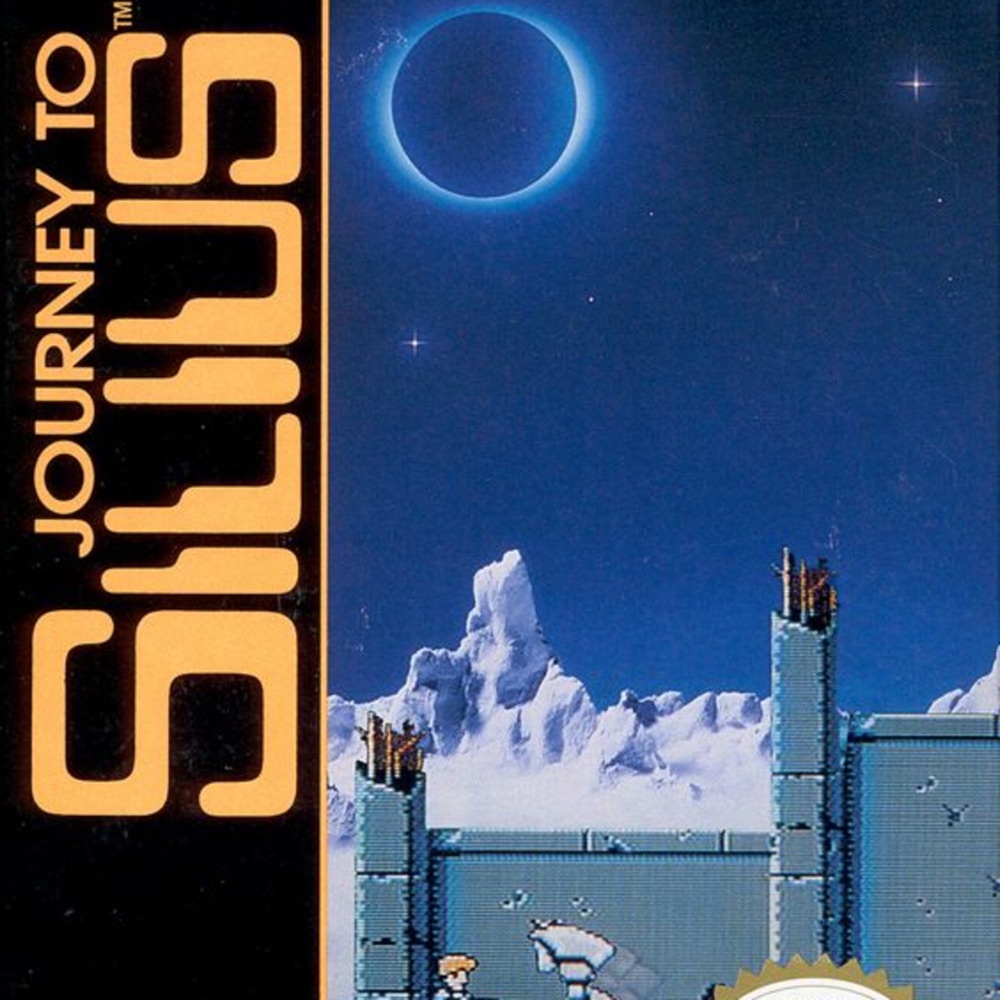
- Presentation. The box art sets the mood: the title turned sideways in a sci-fi font, a moon shot, real NES screens laid over it. The opening is cinematic and a little silly, with a utopian city, a mushroom cloud, and a dead dad.
- The soundtrack. Techno and rock that never lets up, and the stages feel like one game, not a desert level followed by a jungle level.
- Controls. Jay McCray controls so well that we were still surprised, which is a reaction we'd hoped to have outgrown by now.
- Guns. The handgun never runs out. The shotgun, machine gun, homing gun, laser rifle and grenade launcher all share one gauge. You earn each from a sub-boss, which feels like Mega Man, except you can use the new gun in the boss fight that follows.
- Deliberate level design. Every enemy is placed on purpose. It plays like a shmup on foot more than Contra, and one boss is basically a room, a dance of bullets and lasers.
- A switch-up at the end. The last stage is an auto-scroller with no enemies, then a huge ship, then a final boss that is just a robot.
What doesn't
- Blind drops. Jump to a lower platform and an enemy is already waiting, with little time to react. Turrets that pop up while another enemy is on screen were the bane of our existence.
- Damage you can't recover. Enemies fire spreads of five or six bullets, health drops are rare, and gun refills come more often than health. You just can't move on eventually. The only way through is to memorize spawn points.
- Situational guns. We rarely thought ahead enough to switch weapons for ordinary enemies, so we saved the special guns for sub-bosses. More ammo and a longer game would let us play with them.
- Short. After the credits it drops you back on stage one.
Beyond the game
It began as a Terminator game, and Sunsoft either lost the license or let the movie get too far behind. Traces remain in the intro screens and in a late Xenomorph-looking enemy. Sunsoft also made Blaster Master, Batman, Fester's Quest, Spy Hunter and Sky Kid. In the Japanese and European versions the hero is covered in body armor.
The bottom line
Play it. All of us left it off the Essential Games List. Mike said difficulty alone doesn't keep a game off, but it cost him enjoyment: you meet an enemy, take damage, and eventually can't continue. Joe went back and forth before settling on Play it. Sean said you're not bad at video games for being frustrated by those blind drops. As an indie game in 2025 it would control the same, with more health and a fairer shot at finishing.
Written from our conversation in this episode.
- We dare you to make the journey
- Box art really establishes a mood. Text is on the left side. Huge realistic arctic landscape with Pixel art gameplay tucked neatly at the bottom
- side-scrolling run and gun video game
- Weird, kinda had an RPG title to me
- In the year 373 of the new space age, Earth's overpopulation has driven a growing demand for migration to space colonies. Jay McCray, son of the scientist behind space colony #428 in the Silius Solar System, prepares to relocate there to continue his father’s work. However, a devastating explosion destroys the colony, wiping out the research team and all onboard data.
- While searching his father's home, Jay uncovers a floppy disk containing the full colony plans and a personal message from his father, urging him to complete the project if terrorists were to succeed in destroying it. Determined to safeguard the plans and avenge his father’s death, Jay embarks on a mission to take down the terrorists responsible.
- The player controls Jay McCray on a mission to defeat a terrorist group responsible for his father's death.
- The game consists of five stages. Move along the stage defeating enemies, maintaining health and gun energy, until you get to the sub-boss of the level who rewards you with a new sub weapon upon his defeat. Then you fight the boss
- Players battle robotic enemies and security systems to reach and defeat each stage's boss.
- The controls follow standard NES side-scrolling action mechanics:
- Jay can lie down but can only aim his gun left or right.
- Special weapons use a Gun Energy gauge, and once depleted, the player reverts to the default handgun. Weapons include:
- Default handgun
- Shotgun - spread
- Machine gun - 3 shots
- Homing gun - target
- Laser rifle
- Grenade launcher
- Final stage is an autoscrolling platforming challenge. No enemies, just objects in your way that you need to keep moving around in order to stay alive
- After completing the final stage, the game restarts from the first stage after the credits.
- Kind of an older relic in video games these days.
- Journey to Silius was originally based on the 1984 film The Terminator, but the licensing rights to the film were lost during development. The graphics and storyline were altered to accommodate this change.
- For the later-released Japanese and European versions, the player character design was changed, having his whole body covered in armor.
- Sunsoft making pretty competent video games
- Blaster Master
- Batman
- Freedom Force
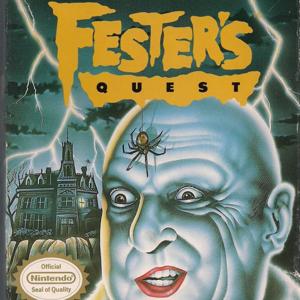
- Fester’s Quest
Auto-generated transcript. Each paragraph starts with its timestamp. Speakers are not identified.
Journey to Silius, we dare you to make the journey.
And welcome to NEStalgia, a chronological exploration of every NES game in North America. I'm Mike. I'm Sean. And I'm Joe. And normally you say released in North America, so I'm very thrown off. I know. I caught it. I caught it too. And I said that I had a whole other thing I was going to talk about at the top of this episode, but I guess I'm just rusty. Yeah. I don't think I can do it. I don't think I have it in me. All right. Well, we'll go. We'll go. Yeah. Thank you. But yeah, thanks for pointing it out right away, Joe, just this way the listeners had no time to react on their own. Yeah, that's what I do. As soon as I'm waiting like a hawk for you to make a mistake. Yeah, you're basically a listener.
Pretty much the last few episodes I have been. Yeah. Hey, Ed. Welcome back. Thank you. What I was going to bring up at the top. What were you doing, Joe? I was ill and I had some family things going on. I don't get it. Oh, okay. You didn't need to go into that. Yeah. Well, I had to have an answer.
Mike, what were you going to say? Yeah. It sounds like Sean's the final boss of Journey to Silius. I was going to say that, you know, to start this episode, I was actually planning on talking about the box art for this game because I think goes hard isn't the right word, but it really establishes like a mood and atmosphere for this game before you ever play it. And I'm sure there are other NES boxes that do that.
But something about like just the big title being like over to the left, sideways, you know, like sideways and just nothing behind it. Just Journey to Silius in this really nice sci-fi font. And then like this beautiful shot of the moon with a, you know, like a Antarctic background and then like actual NES gameplay stuff like overlaid on that, like stuff you're going to see in the game.
It's like, it's a pretty nice work of art. And I think it really sets up like a good vibe for the game. I'm not sure if you guys looked into that at all. I mean, I just noticed as soon as I booted this up, I was like, this is, there's some great production value all around here. It was very cinematic in the beginning and the beginning of this game piqued my interest. It's kind of, it's also kind of silly, the beginning of the game. Silly, yes. I would say, yeah, the box art, I don't think we, I haven't seen anything like this before
with, aside from like some of the black box games, I think had some like sprite stuff, like really blown up sprite stuff. Whereas since then we've gotten a lot more illustrated and this is kind of like that combination of the two. But I think they just know what they're selling here. Like this is just such a good looking game for this, for this system that they're like, let's put that foot forward. Yeah. And I think that's kind of what you meant too, Joe, about just the opening and everything. Like presentationally, you know, you're getting not only a good looking game, you're getting a good sounding game. The soundtrack kicks in right away and never really like lets up. Every track on every stage is pretty like intense, rocking, but techno.
And they're committed to like, I don't know if they had like design documents or anything, but it feels very cohesive. Whereas like in other platformer games, you usually get like, okay, here's the desert level, here's the jungle level here. And, you know, and that's fine because you're like going through, you know, like a whole world or exploring something. But like, I, I liked the way, uh, that journey feels very cohesive, uh, from the very beginning. Yeah. Now I have a question and I don't know if this is true. I'm sure Mike, you might have looked into this. Was this somehow connected to the Terminator?
Yes. Okay. I didn't know. I saw that on the Wikipedia. I'm, uh, I'm, I'm watching, you know, I always just have a YouTube video going while we're recording these of the game. And just the first comment, I just saw something about Terminator. I just looked. And it was like, you could still see some Terminator influence. And I was like, oh, was this supposed to be a Terminator game? Cause that would make a lot of sense because it feels just like the Terminator future.
You could see some Terminator influence and you can also see some like Xenomorphs at the end of the game. Right? Like what's up with that? There's like Xenomorphs in everything. That's what I'm saying though. Right? Like, it's like at this point, if you're, you're either doing Terminator or you're doing, um, uh, aliens or you're doing another Arnold Schwarzenegger movie, right? Like everything is just spinning off of the, of that, uh, action genre, which makes sense on an NES, of course, especially with all those big eighties blockbusters kind of like reshaping Hollywood.
But yes, Joe, it is true that this was supposed to be a Terminator game. Uh, how much of it is still in there? You know, uh, again, some of the, some of the intro screens. Um, I, can, can we walk through the, the, the intro like cinematic of this game for a little bit in a second?
Uh, just cause I just wanted to close out the, I just wanted to close out the Terminator things. So we don't keep talking about it the whole episode. Uh, the, the long story short is that basically they, uh, either lost the rights or just got too far out from the release of the movie to justify creating a Terminator game around it. My guess is that they lost the rights because Terminator is still a big franchise and you wouldn't just like give that up. You wouldn't be like, eh, it's just too much time has passed. I don't think it's worth it. Like, of course you would release a Terminator game. They released a Jaws game. Um, yeah. Or, or, or just like, uh, uh, what were those three guys that poke each other on the eye?
Three stooges. Yeah. That one. Um, but yeah, this, this intro cinematic, the tone, like, so the visuals are, you know, they're stunning, but like the tone of what they're saying and the visuals are, are, it's kind of funny where they show like this very like utopian, uh, blue sky, like future city. And then you see like a nuclear bomb explode. You got, I mean, you at least got a mushroom cloud and, and then you just see like, oh, this guy's dad has passed away.
And then later they're like, somebody on the news said that he died. And it's just like this one guy died after this nuke explode. The, the evening news is going to say that he died after a nuclear incident. Cause the terrorists did a very controlled explosion. Oh yeah. It looks very controlled. There was a to scale nuclear explosion. So if it fits in your TV, like that's how big it was on that guy.
Uh, it is, it is a bit of a weaker plot than the Terminator though. Uh, from, from that point, it's that essentially the character you're playing as, I believe his name is Jay, uh, his father is dead. He finds a floppy disk containing, uh, uh, the plans to a project that I guess the terrorists were trying to stop. So like space colonization stuff. Yeah. So he has to, uh, you know, basically take down the terrorist and see the project through. So, um, I don't know if we needed, you know, like you always need a story and it, it suffices, but the actual gameplay, uh, is not about collecting floppy disks or, uh, you know, like your floppy disks have like a life meter. Yeah, exactly.
Instead it is, uh, a little bit of like a run and gun, but with a lot of platforming as well. Uh, just a pretty straightforward action game left to rights, uh, movement and you play as Jay McCray, uh, on this mission to defeat the terrorists. So how is Jay? What, what's he like? He's got flowing red locks, um, and a skin tight body suit. Um, he's, he's got like some nice athleticism to him. He's very attractive. How does he control Joe? You read that as like a, a skin tight body suit, like a, like a Spider-Man skin tight. I read that as like a space suit, like little armor. Yeah, but it's, you know, it's too low profile. I think, I think it's like kind of shiny and more like spandexy. Hmm. We'll have to, uh, is there any character art? I don't know.
Um, my, my initial thought of, and I don't know why I, um, still have this. I feel like as, as we've gone through the years, I should have this reaction less frequently, but I still, when, when there's a character that controls really nicely, I'm still like, whoa, like this character's controlling nicely. Like I'm just not expecting it, especially in platformers. And we've had a lot more of them as time's gone on. So I don't know why I'm still not expecting it. I think I'm just still burned from some earlier games. Um, but yeah, that was my first thought of like, oh, this guy like is fun to play as. Yeah. And, uh, any, does anybody buy that potentially he is John Connor?
I see. I thought that potentially he would have been, I mean, just based on this moment when I found out it was term here, he would have been Kyle Reese. I don't know. I guess it would make more sense now that I'm thinking about it. He'd be John Connor. Cause it's the future, but he just doesn't look like him. But Kyle Reese was from the future too. That's true. But I was thinking like John Connor, he's just a kid in the eighties. And I like forgot that John Connor was like the, the leader of the resistance.
Well, they may, okay. They made Kyle Reese or John Connor a redhead and gave him some guns. So yeah, I mean, I buy that. I feel like Kyle Reese has, is closer to being a redhead than John Connor. Everyone knows this. I feel like Kyle Reese is a redhead.
And guns are the name of the game in this game, because, uh, even, even though it has like some platforming elements to it and everything, the only way to attack is not with your fist, but with a gun and you always have, uh, your handgun, which can shoot, uh, pretty rapidly for a handgun. But then you collect, uh, other guns along the way, a shotgun, a machine gun, a homing gun. I don't know if that's really a thing, but, uh, Like a homing missile, like launcher thing. Right. Uh, a laser rifle and a grenade launcher. And, uh, the interesting quirk about that is like, yeah, of course all of those are better than a handgun.
So we're going to limit how much you can use those things with a gun gauge. Uh, so you have your, uh, health meter or they're putting a P next to that, either for player or for power. Uh, what do we want to go with? I'm sure the manual establishes something, but yeah, power sounds right. So you've got your power meter for your health, but then your gun has, uh, essentially bullets, but you can't really count them like that because they're like the handgun never runs out of bullets. So it's not like you have to think about it like that. It's like alternate gun power. Yeah. Um, and so, you know, you have to use your specialty guns wisely.
Um, unlike, uh, you know, or, or kind of similar to a Mega Man situation, you know, where you beat a boss. I was going to bring, bring up that this felt a bit like Mega Man, yeah. Yeah, because you do have to, in order to get these weapons, you have to beat the, the boss, the sub boss of the stage, right? Um, in order to get the weapon. Oh, if that's the case. Yeah, like right before the final boss. Yeah. Yeah, I just kind of noticed when I would go to the menu that like, oh, I've got another gun here. I didn't really associate that with anything. Because you pick up that like, there's like a little bubble that falls in it. Oh, yeah, with a letter on it. With a letter in it. I thought it was like, oh, this is just the key to the boss.
It just immediately happens. It's kind of interesting that you get it from the sub boss in order to then use it against the boss of that stage. Like, I guess I appreciate that a little more over the Mega Man system where it's like, you get the gun and you're like, yeah, this would have been great in the fight I just had.
Yeah. I mean, that's the thing about like, how you kind of have to manage it in this game though. Like, you really need to save that. I mean, there are like, refills. There's like pickups that some enemies will drop. But you really have a limited amount of usage for these guns and they share a pool. It's not like you have some for one gun and you can go to the other one. Like, it's just all the guns that aren't the pistol require the same pool of gun gauge.
So you end up having to just wait till the boss to use this stuff because you can't really count on there being that many drops. Yeah, there's very few drops of health for that matter. Like, the gun one shows up a lot more frequently than the health one does. And so taking damage is probably, you know, like worse than running out of like special. Like, I would rather use my special gun stuff to clear out an enemy than to go into a boss fight with low power. Mm-hmm. Because you're just not guaranteed to get a lot of that. And the gun thing too, though, like, I don't know, like, just in general, enemies aren't really spawning a lot of these upgrades.
Yeah, definitely not. And I found it hard to just from like ease of gameplay, I found it hard to think ahead enough to switch to the gun I need on regular enemies. You know what I mean? Right. So I was just always kind of rapidly hitting the pistol. And I honestly think I used the gun more on those sub-bosses, rather the specialty guns on the sub-bosses.
Right. Because then I could at least like see, okay, I think I'm about to get to the end of this level here. Let me just get something with a little more oomph to it. And there were some where I was like, okay, I definitely need this gun for this situation. Now, this isn't true of 100% of the game, but did you notice the reoccurring theme for the most part of the game that you are facing off against one enemy at a time?
I mean, there's definitely sections where they kind of clump up. But there's been, I guess it's usually like one move around enemy and then a couple like turret style enemies or two move around enemies and two turret style enemies. I felt like it was more like Castlevania style where like you really are just like you're moving to the right and you see like an enemy and you deal with that enemy and then you just go on to the next one. I didn't see too many things other than with turrets where like they might stack up multiple on the screen at a time. Like, yeah. You know what I mean? I mean, I was getting like, I was getting surrounded by like some flying stuff and like maybe level two or three. And it turned, this is a kind of difficult game.
It's a very difficult game. And for me, whether it's that counts as an enemy or not, specifically those like ground turrets that would pop their head up being on the screen at the same time as other enemies were the bane of my existence in this game. Because I can see the pattern, but it's just hard to really react to that pattern while dealing with an enemy. I can imagine like getting pretty okay at this game if I really just wanted to memorize spawn locations. Because like this is a very meticulously like planned game. Like you can't just sort of run and gun this like a contra or something because everything is, all these enemies are placed in a spot to like have a gotcha moment. And you're going to run immediately into fire.
You know, were you noticing that? Yeah. If you jump down to any platform. Yeah. Someone's just waiting for you right there. Right. They know that you're going to be there. And you have to also keep in mind, your whole thing is guns. That's how you attack with, you know, projectile based stuff. But that's also how almost every single enemy in this game attacks too is with projectiles. So especially even just early on, some of these enemies have like, you know, spread guns where they are shooting like five to six bullets at a time.
That really does up the difficulty because even if you, you know, get hit once and then take down the enemy, you got hit once. And as we mentioned, like health is not something you're going to find. So you can't keep just taking like one day. You can't just keep getting chipped away enemy after enemy. You have to make it through a lot of these enemies without taking any damage to kind of stand a chance. Yeah, I do think that this is one of those cases where I imagine people who are really good at it have played it enough to be ready for exactly what's coming to be able to react to it.
I just, I don't, I don't see how you can get good at this any other way, really. I mean, I guess you could just be that reflexive, but I got to imagine the majority of people that are good at it have to just know. So, yeah, like that second boss, I don't know if it's the second or the third boss where it's not really like a, it's not an intimidating figure or weapon of war like the other ones.
It is like a room. It's a room. Yeah. And I forgot what other game had just like a room like this that was a boss, but it was also a sci-fi space thing. Um, and it's basically a dance that you have to figure out like, oh, where do you jump that you're not going to get hit by this mesh of bullets and lasers? And it's going to take you several attempts to even get the hang of that, uh, that rhythm.
That sounds like several contra bosses to me. So maybe that's what you were thinking. Maybe. Uh, but yeah, I, I agree. And I think as someone who's currently playing through Castlevania Rondo of Blood on the, um, TurboGrafx, uh, I'm, I'm starting to like understand the appeal of that a little bit. Like learning where enemies are and redoing a level like over and over and over again until you just like go through it without taking a hit. Uh, but I think it hits differently with projectiles.
I don't know if like, it's just different for me personally, but the, the way that this, the way that the enemies shoot, like the amount of bullets they shoot at you, the, the spread of their bullets. Like it's very hard to dodge that kind of thing. Well, you know, when you're playing a Castlevania game, if you just have to dodge the actual enemy, jump over that. Cause you don't have to, you can keep your distance and play footsies with them. And like, you can take it a moment at a time and it's all at your, at your rhythm. Whereas this, like you have to, you, if you stand still and just try and take guys out from a distance, you're probably still going to get shot.
Yeah. Once you encounter them, that's like, that's it. You have to deal with them now. Like immediately. And this feels deliberate and, and for better or for worse, uh, this gave me shmup vibes. It was like a shmup on foot to me. Yeah. I, I, I agree with that assessment. I was trying to get there. Yeah. And I don't think that that's necessarily a bad thing. I mean, maybe it is to us, but, but like, you know, but like, I think that's actually really cool. But, uh, maybe, maybe there could be some, some adjustments made in my opinion.
You know, what's weird about this game? Huh? The final stage is just an auto scroll level with no enemies. I didn't get to the final stage. Yeah. I couldn't get to the final stage. Yeah. You know, if you're watching, usually you guys watch along as you're doing it. Yeah. Like just jump ahead. It's, it's just interesting. You're in like a factory line or something. And the, the screen is, you know, auto scrolling now. But like, I wonder what, I mean, like, thank goodness there's no enemies. There's still plenty of ways to die.
I did see footage of this, but it didn't even dawn on me that there's just no enemies. Yeah. There's just no enemies. And then all of a sudden it's just like, boom, it's final boss time. And I just wonder, like, you know, we've seen before where like the final level tries to switch things up in games. I think earliest example I could think of is Kid Icarus's final stage being a shmup when the rest of the game was a little bit of an action platformer. Uh, this, this, this just feels kind of like a break in the game for a minute.
Granted, I'm not saying it's easy to do this. Uh, I personally didn't, didn't get through this at all, but like there's plenty of traps and pitfalls, but it's, it's just a different feel for the game in that moment, which is ultimately the climax of the game. Followed by a boss fight with plenty of, uh, projectiles.
Yeah, this is definitely trying to go for, uh, a more cinematic feel, uh, which they've been, this whole game has been trying to craft this experience. Like with how we've been talking about how deliberate each enemy placement is and, uh, how you have to be thoughtful of all that. And like, this is sort of taking even more control away from you to show you this, this sort of set piece. Uh, so I think that whole cinematic feel is, is where they're going with this.
And then you get to the final boss. Who's just a T 2000. Okay. Let me scrub ahead to that. First, there's a huge ship.
Or is that after? After the huge ship. Oh yeah. It is just a T 2000. He punches hard. Do they have T 2000s? Did I make that up as a T 1000? Uh, it's a T 3000. T 1000. T 1000 was the liquid metal guy. Okay. And I think like T 101 or T 100 or something was Arnold. I believe. Wow. It's a T 5K.
Apparently it goes all the way up to T 1 million. Whoa. Uh, T 1 million also referred to as T Meg. It was a gigantic spider-like non-humanoid hunter killer. Is this like a comic book or something? This is from, yeah. This is from the T2 RPG source book. Oh, there's an RPG. Okay. Hmm. It, the RPG was released, oh my God, January of last year.
Whoa. The new Terminator RPG? There's a new Terminator 2 specifically. It says T2 RPG. Um, it's just funny because it's like. It's just the one. What does that mean? Yeah, yeah. Like you're canceling out the rest of the franchise. Yeah. But it feels like everything's getting these RPG things lately, right? Didn't Avatar, the last airbender, get one, Joe? Yeah, just did. Uh, so everybody's, everybody gets an RPG. I can't wait for the SpongeBob SquarePants RPG. Honestly, that would be awesome. Eh. Let's make it happen.
Listeners, let's make it happen. No, no. We're talking about the crowdfund that. Uh, what else? What else? The game itself, pretty confident. We talked about the music, but I feel like it just needs one more shout. I really enjoyed it, uh, bopping the whole time. It's very, it's very danceable. Yeah. Um, I liked the, the, I read in, you know, that, you know, that blurb that it was trying to go for that, like, techno house vibe that I just wouldn't expect out of a, out of an NES game.
Oh, and here, here's an interesting note I had. So after completing the final stage, you get the credits and everything, and then the game restarts from the first stage.
That happens a lot. That's not something that, like, yeah, it happens a lot, sure, but, like, not with, like, a story-based game, right? Like, where you get the credits and everything, and then it just drops you right back in?
I don't know. I mean, it, it, it feels like a, it, it feels like something that, that happens pretty often. I, I don't know. Yeah, in, like, side-scroller games, especially shorter side-scroller games like this, I, I feel like it happens a lot, but I, I'm less surprised now that I know how short this game is, because the title, this is one of those that's, like, I've heard of this because I just feel like it's commonly talked about, I feel like it's well-known. I definitely know the name of this, and I always expected it to be a sprawling JRPG or something like that. Like, I was not expecting a short, like, six-level run-and-gun platform shooter.
Like, that, I don't know why, I just had no idea that that's what this was. Yeah, we played on, uh, our other podcast, Nostalgia Bites, which is, uh, available on our Patreon, we played a game called LaGrange Point, and that's what I thought, like, Journey to Silius was gonna be. Like, that kind of, like, sci-fi JRPG.
Yeah, I can, I can see that. I really, I, it kinda, I didn't have any expectation for this game, cause it, I hadn't heard of it, but it does sound like something you might've heard of. Because it's, it's just a, a generic title with a nonsense word in there. So, I didn't really think it was even gonna be sci-fi. Yeah, I didn't either, for some reason.
Silius, I think I read it as, like, Silius or something, which could definitely sound sci-fi, but to me, that sounded fantasy. Very. And then, Joe, I think you were trying to make the point that the game is short, but it's saying Journey to Silius as if it's going to be a little more of a, uh, adventure, right?
Yeah, I don't know what it is. You technically do go there, right? Yeah. Yeah, yeah, you're there. Maybe it is the word journey that made me think it was gonna be a big, sprawling adventure, or maybe it was just, just one of those things where, like, it, it must, it must elicit other things in my brain that sound like that, that, I don't know, something about it that was like, yeah, this is gonna be a sweeping Lord of the Rings epic. Maybe it should have been called, like, Commute to Silius. Yeah. Yeah, yeah. My day in Silius.
For the later releases, which would have been the Japanese and European versions, actually, apparently this came to America first, the player is completely covered in body armor for those versions of the game. They said, no, you can't have a redhead, it breaks immersion. And it was too skin tight. Yeah, that's what I was gonna say. It's, it, it, it was definitely just too, uh, obscene.
And this was made by Sunsoft to, you know, I don't think we don't shout them out like we do Konami and Capcom, but they're making some pretty competent video games over here, guys. They made Blaster Master, which I think once you know that, like, they look, you know, Yeah, that makes a lot of sense. Yeah, the sprite works there. Uh, they made, uh, the Batman game that Sean voted essential. Yeah, I remember doing that for sure. Yeah, they, uh, well, I'm saying it's a good game. It's on their list of good games they've made. Freedom Force, which at one point was on the essential games list. And Golden Sun. Uh, Fester's Quest. Oh, yeah. The essential game.
A game that we found out wasn't as bad as it could have been, though. Like, uh, Fester's Quest is no Jackal and Hyde. No, it's not. I do miss Fester's Quest. But it makes me excited to think about, like, oh, okay, we got another, we got another developer to watch out for over here. And I don't know what else they're coming up with soon.
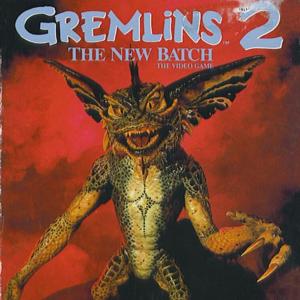
Uh, I probably should have searched for that before. What are you cooking up, Sunsoft? They're cooking up Gremlins 2, the new batch. Wow. Yikes. The new batch. Is that a movie? Is that what the movie's called? Gremlins 2 is a movie. No, but is it called the new batch? I think it might be. Gremlins 2 is called the new batch. Yeah. Do you know what they called the first Gremlins? Just Gremlins. Yeah, absolutely. It's the only one I've seen. Just a little dry humor for you.
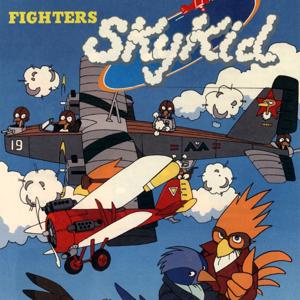
Um, and what else is Sunsoft gonna make for us? Cause that, that, that, I'd be surprised if that one turns out to be a hit. Um, yeesh. Nothing else? Gremlins 2 is all we have in the pipeline? Sunsoft. Sunsoft, a company best known for Gremlins 2, the new batch. Right. Uh, well they made Spy Hunter and, uh, Sky Kid. So they were. I've heard about Sky Kid. That's it from the past though. Yeah, Sky Kid. Shmup. Is that with the planes? That was the planes. Yeah, and Spy Hunter was the cars, right? That was the cars. Yeah. You were not ever like a human spy, you were like a car. Yeah, he's like Knight Rider, he's Spy Hunter. No, he's a car. Where's the Spy Hunter, Knight Rider team up? It's gotta be out there.
Yeah, look hard enough, it's lost media. Ha ha ha ha. Uh, we've also lost the plot of the show, so we're gonna get back into focus by doing the last thing we have to do, which is the Essential Games List.
There's a lot to like about Journey to Silius, and it goes so much beyond just even the gameplay. I really do think you're getting, like, the video game experience here. You're getting some great graphics, you're getting some great sound. Like, this thing would just be awesome on a CRT, and you just don't know what to expect. Like, I didn't know what to expect. I was expecting an RPG, and I got this, and this was pretty awesome. Like, it goes pretty hard. The problem is it also gets pretty hard pretty early.
I don't think hardness is... Hardness is not a good word, but I don't think hardness is a reason to keep a game off the Essential Games List. But it definitely affected my enjoyability of the game, just because I was noticing that, like, alright, something's gotta give. Like, either the game enemies are tough to deal with, but you're rewarding me with energy so that I can stay in it to win it. Like, I'm being rewarded for fighting these enemies.
Whereas, for the most part, the actual game is you see an enemy, you must immediately engage with that enemy. You're gonna take some damage, but you're gonna continue to move on, and then eventually you're just not gonna be able to move anymore. And that's not an exciting game. So, I think while having the additional sub-weapons add something, having the competent platforming add something, having the purposefully placed enemies, even if they are trolling you with some of the placements, all that is good stuff. So, it's definitely a play it. I just don't think it got to the level of Essential for me personally. Joe? I went back and forth on this for a while between golden play it and Essential.
And I think what sort of was the final factor in me keeping it a golden play it, I think it really just comes down to what we were talking about, that sort of memorization that is almost required to get good at the game. Which is not like a nail in the coffin, like, kiss of death for a game. But I do think that that, similar to what you said, Mike, did kind of prevent me from having the full amount of enjoyment I could from this game.
That being said, I think that they really didn't do too much else wrong. I mean, this game is really cool and very interesting. It's just on the shorter side, and I think that there is a... It's like a level of difficulty that didn't sing with me in, like, the sense that it's a satisfying, challenging difficulty. Some of it was kind of a frustrating difficulty.
That might just be me being bad at the game. But I think overall, it kind of just hovers below Essential for me. So, definitely play it, but not Essential. Sean? I would just like to state that having a blind drop that has, like, two enemies, that you're going to run into and not even really have time to set and react,
is definitely okay to be frustrated with that. You're not bad at video games because you're frustrated with that, is what I would say. Thank you. I needed that. I think this game does a little too much of that. I think this game didn't take enough of... It didn't play around with, like, the gun, like, the upgraded gun mechanic as much as I think it should. I think maybe you should have had a little bit more time to play around with those because right now it's just too situational.
And I think it should have been a bit longer. I'm agreeing with both you guys. I had a lot of fun with this game when I wasn't going down those blind pitfalls and getting
really, really hardcore hit. But I think if they just changed the vibe a little bit, like, just make it a little longer, give your guns a little bit more ammo, that in turn makes the game a little bit more forgiving, and so now you've got the same amount of... Like, it's just, like, it's so compressed that it really needs to be something that you memorize, whereas if you could just be a little bit more freeform with it, a little bit looser, then I think it would be a better game for it. I'm rambling. It's a play it, not an essential game. It's kind of funny, though, if this game was released, you know, as an indie game in 2025,
it would be... It would play and behave and control mostly the way that it's laid out here. Like, they made a great game, especially for that time, but, like, one that still plays well. It would just be that you would actually be able to clear through the enemies and there would be more health and, like, you would get through it, right? It would be a little challenging, but you'd get through everything and experience everything
there is to offer. Games are now, like, more focused on that, where it seems like, obviously, back in the day, you know, we're talking about making it hard just way it lasts longer, but I also just don't think, like... I don't think developers really cared if you ever got to the end of their games, right? Like, that wasn't really the point of it. They obviously didn't care on this one because they didn't really put anything there. Yeah. They'll put you back around.
Right, right, you know? So, it's kind of funny to think, like, nowadays, there's so much about, like, a complete experience and, you know, like, I think people would be mad if they bought, like, even a AAA game, but even an indie game, if they bought it, not knowing that it was going to be hard and just being, like, this old-school NES hard, I don't think that's what people are looking
to play with these new games. I think about even just something like The Messenger to Ninja Gaiden. Like, The Messenger is very much like Ninja Gaiden, but it's a game that anybody with, like, some just determination to get through it can get through it. The same cannot be said about Ninja Gaiden, the NES game. Like, eventually, you will just get screwed by the RNG and all the crazy shit that they threw at you in that game because they didn't really care. And then sometimes you get something like Super Hexagon, which is, like, literally 10 minutes of gameplay, but it's just hard. Yeah, yeah, yeah. Yeah.
Totally different kind of game, though, but yes, I know what you're laying down, and I think, again, like, you wouldn't expect them to make God of War Ragnarok, which apparently is coming to PlayStation Plus, so that's why it's on the top of my head, but, like, God of War Ragnarok, you wouldn't expect them to make that and be like, yeah, we don't care if anybody makes it to the end of this game.
You know, like, of course they want you to get to the end of the game. They've designed it probably in a way where, like... They spent way too much money on this game to not be experienced. Yeah, exactly, but they're probably thinking, like, yeah, and we should make sure, like, eight-year-olds could beat it, too. Like, it would probably be harder for the eight-year-old than it would be for the 28-year-old, but, like, we should make it so the eight-year-old could beat it. On PlayStation Plus, today.
On PlayStation Plus, today. On PlayStation Plus, today.———