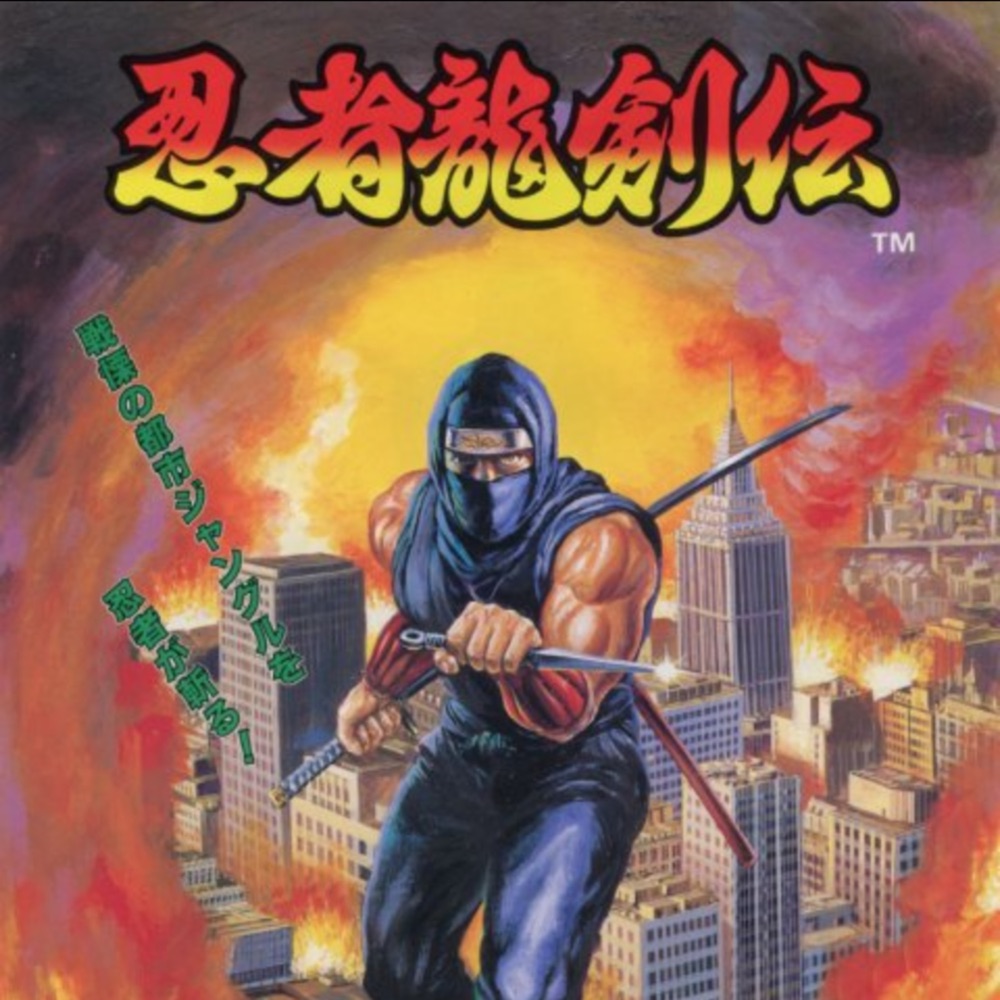
170 · Ninja Gaiden
Ranked #1 in our Top 10 NES Games of 1989 →
Players take the role of Ryu Hayabusa, a rising warrior in his family's clan whose main role in the world is to protect the Dark Dragon Blade from getting into the hands of evil. Ryu Hayabusa travels to America to seek vengeance for his father's death.
SHOW NOTES
Ninja Gaiden NES Longplay
Ninja Gaiden Arcade
Ninja Gaiden Trilogy SNES
Ninja Gaiden OVA
Ninja Gaiden XBOX
The Messenger
Ninja Gaiden Master System (Different game)
We went in braced for a reputation. Ninja Gaiden is known for punishing difficulty, and the Xbox reboots only added to that. What we found was a game we kept restarting, kept dying in, and kept enjoying anyway.
Why we kept playing
- Tecmo Theater. Tecmo's name for its cutscenes. There are over 20 minutes of them, they tell a coherent, over-the-top story (the CIA, a mysterious woman, a father who turns out to be the masked devil), and Start skips every one. Each of the six acts felt like a 30-minute anime episode. The wide shot of the mountain in the Amazon was properly cinematic.
- Ryu feels good. His legs run like Naruto's while his upper body stays put, and the sprite work and jungle backgrounds look great. Wall-jumping is an active process, not just holding up, and the sword's short range means getting uncomfortably close.
- Castlevania, improved. The UI, the bats and the hunched guys who spring to life are near one-to-one with Castlevania, with better movement.
- Scarce power-ups. Shurikens, a boomerang-like super shuriken and a fire shower (annoying upward angle) all run on spirit points, so they feel stronger for being limited. There's also a free jump-and-slash with down and B in the air, which we only learned from the manual.
- Fair bosses, mostly. The act one boss swings twice, you hit twice. The act four statue dogs can be beaten by waiting under their pedestals, where they always seem to land above you.
- Short enough to restart. We accepted our deaths, and starting over felt good, like going back to World 1-1.
Where it bites
- The birds. The hardest enemy in the game is a regular bird, and from around act four they get loose. Knockback sends you into pits, and enemies respawn the moment you kill them without moving. We wanted an enemy cap.
- Act five, stage two. A jump we called nearly impossible, with a wall over the lower ledge and a bird waiting.
- Act six. Nonstop spawns, then a boss rush of three fights, with health restored only at the first. Dying sends you back to the start of the act. The masked devil can't be hurt, since you hit the orb on the wall, and fireballs follow you. The developers reportedly said the restart was an accident and decided to keep it.
- Quirks. You die if you fall off a ladder instead of climbing down, and turning around mid-jump is awkward. Inching up a wall by jumping looks accidental, but we voted to keep it.
Beyond the game
It reached the Famicom as Legend of the Dragon Sword, and there's a separate Tecmo beat-em-up arcade game with the same name. The Super Nintendo trilogy barely changes the original. The Messenger is the one to play if you want more.
The bottom line
Essential. We all voted it onto the Essential Games List. The presentation, the feel of Ryu and the fun of the first four acts outweighed the frustrations. Neither of us on the recording beat it, and we still plan to go back. It may be the most polished and ambitious game we've covered so far.
Written from our conversation in this episode.
- Ninja Action
- Introductions
- Overview
- The game is eerily similar to Castlevania
- Most of what you’re gonna hear me say are improvements I would also apply to Castlevania
- The game is eerily similar to Castlevania
- Gameplay
- Jumping
- I had a love hate with this.
- Knockback
- At least enemies can’t knock while you’re on ledges
- Wall Climb
- Do you think you should’ve had spider-man abilities?
- Weird Quirks
- Death if you fall into a place your supposed to climb down
- 5-2 is where the programmers failed us with the impossible jump AND other quirkst
- Annoying Enemies
- Boss Fights
- Pretty easy tells, but I would’ve expected more action
- Story
- Who was expecting cutscenes like Golgo 13
- over 20 minutes of cinematic cutscenes
- The acts are like an actual TV Show
- Who was expecting cutscenes like Golgo 13
- Personal Improvements
- Knockback
- Jumping
- Platforms should be more clear
- Jumping
- Development
- Famicom first - Legend of the Dragon Sword
- It was developed and released around the same time as the beat 'em up arcade version of the same name; neither of the games were ports of each other but were parallel projects developed by different teams.
- Made largely because Ninja’s were having a North American renaissance
- Sequels and Spinoffs
- 2 more NES games
- Ninja Gaiden Trilogy
- Much like Super Mario All-Stars
- Ninja Gaiden OVA
- Xbox Games
- The reputation of these difficult games held Ninja Gaiden as a series away from me.
- Everyone MUST play The Messenger
- EGL
- My highest recommendation
- Next week - WORLD GAMES
Found automatically from the transcript and checked, but it can miss things or pick the wrong page. Spot a mistake? Tell us.
Games
- Ninja Gaiden mentioned at
The episode's game: Tecmo's 1989 NES action platformer about ninja Ryu Hayabusa, famed for its cutscenes and difficulty.
- Castlevania mentioned at
Konami's 1986 game the hosts say Ninja Gaiden closely resembles in layout, interface and enemies.
- Castlevania II: Simon's Quest mentioned at
Earlier episode's game, known for its reputation and compared to Zelda II.
- Zelda II: The Adventure of Link mentioned at
Released around the same time as Castlevania II with similar gameplay.
- Ninja Gaiden (Xbox, 2004) mentioned at
The rebooted Xbox series, known for its difficulty and over-the-top cutscenes.
- Dark Souls mentioned at
Used as a comparison for the Xbox Ninja Gaiden's reputation for difficulty.
- Ghosts 'n Goblins mentioned at
Capcom game also known for brutal difficulty, compared to Ninja Gaiden's reputation.
- Shinobi mentioned at
Sega's ninja series, mentioned when the hosts discuss one-hit deaths.
- Golgo 13: Top Secret Episode mentioned at
Earlier episode whose cutscenes the hosts rank below Ninja Gaiden's.
- Rambo mentioned at
Earlier NES game whose cutscenes are compared unfavorably to Ninja Gaiden's.
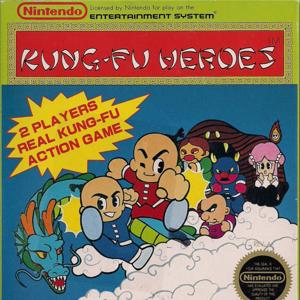
- Kung Fu Heroes mentioned at
Game from an earlier episode, contrasted with Ninja Gaiden's rewarding replay.
- Super Mario Bros. mentioned at
Used as an example of a game people happily replay from level one.
- Contra mentioned at
The final boss's alien look reminded the hosts of Contra.
- Ninja Gaiden (arcade) mentioned at
Tecmo's separate 1988 arcade beat-'em-up of the same name, not a port of the NES game.
- Ninja Gaiden II: The Dark Sword of Chaos mentioned at
The first of two NES sequels the hosts say they will cover.
- Ninja Gaiden III: The Ancient Ship of Doom mentioned at
The second NES sequel the hosts will cover later.
- Ninja Gaiden Trilogy mentioned at
1995 Super Nintendo compilation of the three NES games, judged barely improved.
- Super Mario All-Stars mentioned at
Compilation remake of the NES Mario games, used to explain the Trilogy.
- Ninja Gaiden (PC Engine) mentioned at
Hudson's 1992 PC Engine port, with smaller sprites and larger backgrounds.
- The Messenger mentioned at
Modern ninja platformer by Sabotage Studio that the hosts recommend as Ninja Gaiden-influenced.
- Marble Madness mentioned at
Earlier episode's game, mentioned as having no sequels.
- Super Monkey Ball mentioned at
Spiritual follow-up to Marble Madness, used as an analogy for The Messenger.
- Super Smash Bros. Ultimate mentioned at
The game where the hosts think Ryu Hayabusa deserves to be a fighter.
- Vectorman mentioned at
Sega Genesis game jokingly proposed as a Smash character ahead of Ryu.
- Pepsiman mentioned at
Pepsi mascot and PlayStation game, jokingly suggested as a Smash character.
- Fire Emblem mentioned at
Nintendo series jokingly suggested as the character Smash really needs.
- Metroid mentioned at
Earlier episode where the hosts first faced a vote going against someone's wishes.
- World Games mentioned at
The next episode's game, which the hosts call mediocre.
Hardware
- Super Nintendo Entertainment System mentioned at
The 16-bit console that received the Ninja Gaiden Trilogy.
- TurboGrafx-16 mentioned at
The PC Engine, NEC's console, which got its own version of Ninja Gaiden.
- Xbox mentioned at
Console where the modern Ninja Gaiden games first appeared.
Companies
- Tecmo mentioned at
The Japanese developer and publisher of Ninja Gaiden.
People
- Ryu Hayabusa mentioned at
The ninja hero of the game and series; the hosts struggle with his surname.
- Simon Belmont mentioned at
Castlevania hero who was added to Smash, cited as precedent for Ryu.
Film, TV and music
- Teenage Mutant Ninja Turtles mentioned at
Cited as part of a ninja craze in North America when Tecmo made the game.
- The Karate Kid mentioned at
Movie mentioned as feeding the 1980s interest in ninjas and martial arts.
- Xenomorph mentioned at
The alien from the Alien films, which the final level's design recalls.
- Ninja Gaiden OVA mentioned at
A 1991 animated adaptation set after Ninja Gaiden II, which the hosts say is on YouTube.
Terms and events
- Tecmo Theater mentioned at
Tecmo's trademarked name for the game's anime-style cinematic cutscenes, mentioned in the manual.
Articles, videos and sites
- Essential Games List mentioned at
The show's running list of essential NES games; Ninja Gaiden was voted onto it.
Auto-generated transcript. Each paragraph starts with its timestamp. Speakers are not identified.
Ninja Gaiden! Ninja Action!
And welcome to NEStalgia, a chronological exploration of every NES game released in North America. I'm Mike. And I'm Sean. And that's it? That's it for today? You would think, you would think it's a very important episode. I would think at least. So Sean, do you think this is an important episode? It seems like it's a pretty important episode, but real quick, Mike, we just had a discussion about the pronunciation of the title of this game before we recorded, and you still said it weird. I feel like the only way to say this is in a way that like no one's ever heard it before. So this way you can't argue, you know, with the, the Gaiden or Gaiden fans. You just say Gaiden.
Gaiden! You know? It's like French. It's like French. It's Gaiden. Ninja Gaiden. Yeah. I love it. I like that. I think that's cool. Or we could just refer to it as Ninja Action, which is actually not quite on the back of the box, but it is two words on the back of the box. And that was the best I could pull from. It's the first two words on the back of the box. So you get what you get sometimes when it comes to the opening titles of a Nostalgia episode.
Yeah. And the, the legacy of this game kind of precedes it. It, it does. It does. But I don't know about you, but when I think of this whole franchise, I imagine an incredibly difficult franchise that has honestly made me shy away from it over the last 30 years of my life.
Absolutely. I'm, I'm right there with you. I, because of all of the horror stories I've heard about this game, it was sort of like a Ghosts and Goblins thing, but more people, I, I feel like. Uh, we're playing Ninja Gaiden more, um, or at least like games in this series more than Ghosts and Goblins more recently. Um, so I had some friends that played the more, like the modern versions. Uh, but even, even then I was like, no, thank you. I'd prefer to play a game that is, is a little less hard, even though I never really played.
Yeah. In a way, the reputation of the reboot series on, uh, the Xbox, it, that to me was like before Dark Souls, that was Dark Souls. Like you just had this reputation of it being incredibly hard. And I was like, well, why would I, why would I buy a game like that? You know? And it turns out like those can be fun. Um, but yeah, this whole series is brand new to me. Um, including this NES game. I had never touched it before. How about you? I hadn't played this. I hadn't even played the Xbox version. All I know of the Xbox version is that it had laughably over the top cut scenes, um, uh, and, and characterizations. Um, but yeah, this is my first exposure to Ninja Gaiden in general.
And, you know, when we were playing, uh, Castlevania II, Simon's Quest a while back, that was another game that had a reputation to it. And I think we all came to the conclusion of like, you know, isn't this weird that like this and Zelda II are coming out around the same time and they have like similar gameplay styles. Uh, of course, uh, of course, Castlevania II, you know, it like, it beat it here in the States, but it actually came out long after in Japan. So, uh, it was technically copying Zelda II. Here, I was very surprised to see how much, uh, of Ninja Gaiden is really just Castlevania I.
You know, I didn't actually put that together, but I, I kind of get what you're saying there. Um, I feel like the movement in this game is really what sets it apart. Um, there, there's definitely some parts of Castlevania I, uh, in terms of its controls and like, uh, the speed of the movement and some of the sticky shit with that, um, that I think feels a little bit better in this game. Uh, but in terms of like the general layout and the, and, uh, and like the, the general structure, I, I do agree. Yeah. I could see a lot of, a lot of Castlevania in this. It's pretty crazy. Like you look at the UI and it's almost like one-to-one the same. Uh, there's, there's bats in this game.
There's, there's these little guys who are like hunched and then they, all of a sudden they just like spring out into action and attack you. It reminds me of those, uh, same like characters that go up against you in the Frankenstein level of Castlevania. I just think it's like, it's just insane how many parallels there are. And I think most of what you're going to hear me say in this episode are improvements. I would also apply to Castlevania. Um, but it's no surprise. Castlevania is my favorite NES game so far. So I think like, you know, Ninja Gaiden copying the formula might not hurt it. I just wasn't expecting it.
Yeah. Um, for some reason, I don't know if I'm thinking of the right game series. Um, what I was expecting from this game was one hit KO. Is that Shinobi or is that like a Ninja Gaiden thing? No, that's a, that's, that's not a Ninja Gaiden thing. So I don't know if that's a Shinobi thing. I never played Shinobi. That's Sega's Ninja series. But, um, I'm surprised, you know, the, the one hit thing. And I remember we talked about that in a, in a previous episode too.
Um, that would like, to me, that would explain why people think this game is so difficult. That's sort of what made me think of why I never wanted to play the fricking new ones is because I felt like, oh, one hit, you're dead. Uh, but, um, once again, we're sort of experiencing these games differently than their legacy would suggest, um, in previous episodes.
And so I'm not really sure where you want to start when you talk about, uh, Ninja Gaiden here, because, uh, you know, you get right into the gameplay and, and everything that that has to offer. But I think that before all of that, there's also just a, a presentation element to the game, uh, that lets you know. And I think we talked about this in a previous episode too, of like, sometimes you play a game and you know that it's going to be like a good time.
Uh, especially on these earlier games. Cause right away, like based on the way that the character feels or the way that the game is, uh, is drawn out. Like you can tell like, ah, I'm not going to really like this. Something about the very start of this game and the way it handled itself, like immediately, let me know, like, I'm probably going to enjoy this. Did you feel that? Uh, yeah, I would say that the, um, the, where I want to start is the presentation, uh, because when I read the manual for this, I was, I was very enthused to read that they have like, what was it called? Like Tecmo, uh, theater or something.
Is it Tecmo? Um, I, I forget. Yes, it is Tecmo, but I forget what they, um, Yeah, they called it Tecmo Theater. They actually copyrighted that term. Yeah. And it's just like their word for cutscenes.
And I really appreciate these cutscenes. They're, um, I think they've, they feel a little bit better than even like Golgo 13, which so far is sort of like the, um, I find the best cutscenes so far. Um, especially better than Rambo. Um, and it actually seems to tell a coherent story. I don't know how much it's sort of related to the gameplay. It seems like the story is sort of happening in a different world than the gameplay. But, um, there, it's really great art. Um, the music's fine. Uh, I really, I really like the idea of a, of a guy in full ninja gear just sitting in an office in the CIA. Um, lots of great stuff here. Great animation from where there actually is animation.
It's over 20 minutes of cinematic cutscenes in an NES game, uh, which sounds crazy. But also, you can, you can skip all of this easily. You don't have to watch these scenes, which is also like a nice breath of fresh air. That's crazy. Yeah. You can just hit the start button and move on to the next level and it's like no big deal.
But the acts, uh, you know, there's six acts in the game. They actually feel like 30 minute episodes of an anime, right? Yeah, they got that feel to them. Uh, especially, um, because their length sort of shifts as the game goes on. I feel like act one is like one level long and, uh, there's sort of more stuff going on in the later ones where there's more meat to the story. Um, I, I really enjoyed these. It was a really good, uh, reward for completing a level.
Yeah, it was unexpected when it first happened after the completion of the first level. I was, I was like, whoa, this is, this is happening. Like, uh, we're actually going to like get some story and stuff. It's completely unnecessary, but, and like you said, it doesn't necessarily feel like it's happening in the same world. Except for that really cool scene. I think it's an act four or three where you get to like the end of the mountain and all of a sudden it cuts to a cut scene.
Oh yeah, yeah. That felt cool. That felt cinematic. Very, yeah, I agree. Uh, is that where, is it the one that's sort of like the wide shot of, uh, finally discovering this giant mountain in the middle of the Amazon? Yep, exactly. Okay. That they could have just seen from the helicopter, but whatever. And I guess I didn't really expect like that kind of world in Ninja Gaiden. I think I expected like not even that time period, right? Like, did you expect, um, Ryu, who is the ninja, like, did you expect him to exist along the same time as like the CIA in America? No, I had no idea that this game had anything to do with, uh, the West. I thought it was sort of going to take place in old timey Japan.
Well, allegedly, uh, according to the Tecmo developers, they actually made the game because in their own words, ninjas were having a renaissance in North America. Like, I don't know if they are specifically calling out the Teenage Mutant Ninja Turtles, which are also becoming incredibly popular. That's some great market research. Just, you know what I mean? It's just the Teenage Mutant Ninja Turtles. Well, there was probably a bunch of ninja blockbuster movies too, right? Like, I gotta think that, um, I can't think of any off the top of my head, but even things like Karate Kid have to be helping, like, the idea of ninjas.
You know what? You're probably right. I don't know. I just feel like ninjas, even early 90s, like, ninjas is like a big thing and it's not exclusive to turtles. It's not. Um, no, I, I, I can see that. I think when I, when you think back to the culture of the 80s, I think there's a lot of ninja themed stuff. So you're right. But the whole game just has like a, you know, since we're still on presentation here, it does just have like an odd mishmash of, um, of enemies and, and vibes going on. I mean, like football players kind of attack you. It looks like, right? Like, are those guys wearing helmets? Like, am I crazy here?
They look, they look like football players. I can't tell what their artwork was in the manual though. And then there's boxers. There's just guys who just want to box you. It's like, who, who is this? Did I see a priest that was throwing like crucifixes at you? Or is that me just, I don't know. Well, it, it, technically, I don't know if, I don't know why you jumped a priest because I'm pretty sure that's like a ghoul. Uh, but. Well, it's a ghoul priest. Like if you look at the face. Yeah, it's a ghoul priest.
Um, which are normal in that area of America. Yeah. And, um, and there's just something, I think there's just something funny about that, but it didn't bother me at all. Because like you said, like, you know, this is, it's like an anime. It's kind of silly. The story's all over the place too. It's like, you've killed your, your, you know, your father's been killed. You've been captured by the CIA. You don't know who this mysterious woman is. Oh, your father hasn't been killed. Turns out he's been turned into the, you know, the big bad boss. I didn't know that. Oh, you didn't, oh, you didn't get to stage six. I would just like to say that this game is very hard and I make no apologies for the fact that I did not make it to stage six.
All right. So before we, before we like break down the gameplay elements, we, let's talk about that. Cause you're saying that the game is very hard. I completely agree with you, but it, it happens in a weird way, right? The game isn't actually hard and it is very enjoyable to, uh, to be Ryu and, uh, you know, hop onto the walls and hang onto the ledges and attack the enemies and get the cool power-ups.
Like that's all fun. And I don't think any of the enemies are unfair. I think there's just a, a point in this game where they should have said, you know, we really need to reevaluate if the enemies should just spawn in constantly. That is the main issue with, with the, with the gameplay in this game is, and, and we've, we've damned games for this, um, that have lesser qualities elsewhere.
Um, it, it's just, it makes some sections almost impossible. Um, unless you, uh, play, play the game in a much more conservative way, which I don't think is necessarily a bad thing. Um, and it's a little bit more strategic than just like holding down, right. The right, uh, holding down, going to the right. Um, but it, it's a little unintuitive. Uh, I did end up getting better at this game as I played, like, like I would hope most people would, but there were still a lot of places that I just, uh, that, that like respawn, that just, it just would soft lock me in some ways.
Yeah, there needed to be a cap on number of enemies. And I know there are people who have beaten this game who are going to disagree there, but I think, you know, the, the, the fun part of beating any video game, not even just NES games, isn't how hard they are. It's how good it feels to beat those games. And I don't know about you, Sean, but like, if I could have beaten this game, I absolutely would have, I would have went for it. Like I was having a great time with it. It just, it gets to a point. It gets to a point. Uh, on act, on act five and definitely act six, where this thing wants you to like,
you know, I couldn't even imagine how I would land on the next ledge while the enemies are all still there. And there's a bird trying to get me. And I have, and I have tremendous knockback. Knockback. A thing that we complained a lot about in Castlevania, which again is here, you know, other games have knockback too. But I think since we're, since we're talking about it here in Castlevania, we might as well talk about it for Ninja Gaiden, uh, Gaiden, Gaidan, uh, whatever you want to say.
Gaiden. Uh, yeah, we've got to talk about it because the knockback decision feels like something that is just a relic of like, well, you know, I can't imagine, I can't imagine the developers. Let me phrase it another way. I can't imagine anybody saying the knockback is going to help the player. It's only designed there to hurt you.
I think that, I think the game needs knockback. I think most games that have this sort of design, like does need knockback or else things get a little, a little easier in the, like balance gets thrown off in the other direction. I just think that, uh, you need a longer period of invincibility. We're getting into nitty gritty now, but I think you need a longer period of invincibility
after getting hit and getting knocked back and hopefully not falling into a pit so that you can, if you need to just run past that enemy on that platform, um, and just like, like lick your wounds and just be thankful that you didn't lose a life. Uh, I think that that's a pretty good compromise, uh, in terms of, uh, all the issues that we, or all those problems that we can get into, uh, just by getting knocked back into, into
gullies every time. Okay. Well, here, here's the, the issue with knockback is, is like, yes, I totally agree with you that there has to be some kind of, um, knockback. Otherwise it's like, what's the consequence? If you have enough health, like just run through most things, you know, like I get that.
Um, the issue is, is that the later stages are just, um, you know, platform, platform, yeah, pitfall heaven, you know, like, yeah, there's just like a guaranteed that if you're in the middle of a jump, you're, you're jumping from one platform to another. And if you get hit by anything, you're not going to be blessed with hitting, getting hit back into the other platform. You're just going to get into the pit and die anyway. So I, I argue that again, it's just a cruel developer thing here where either the knockback needed to be removed or the enemy design needed to be more like thought out because there are just situations in this game, uh, especially later on where I just felt like, you know,
even if I had like, you know, there's where you can to, to throw that, to kill, uh, the enemies that were on the pre the following platform. As soon as I make a jump or something like a bird just swoops out of nowhere or, or an enemy from the other platform spawns, you know, there's traps laid for you that they're, they're, they're real gotcha moments, uh, that I don't quite appreciate.
Uh, so no, I agree. Yeah. The, the knockback, maybe it just should stun lock. I don't know. It's a, it's hard to come up with a, to come up with a solution. Because I don't like saying like, this needs to be removed and this needs to be removed. I think it just needs to be like, there's gotta be an answer to these, but obviously this game has a pretty good, uh, is, is very good in the memory of a lot of people. So it wasn't the, uh, the killing blow for, uh, for the popularity of the series. Sure. And so rewind for a second, forget that you're not, uh, you know, forget that you're on act five or whatever, go all the way back to act one. You're starting up the game and everything like that.
The, the core gameplay loop of being Ryu and, uh, you know, you don't have any like ranged weapon other than some power ups. So you're really just dealing damage with your sword and everything. How do you feel as, uh, and I'm not going to try even say that last name. It's like Hayabusa or something. I think Hayabusa. Yeah. It's like, how do you feel as Ryu, uh, in the game? And, and, um, did they, did they do the right amount of balancing with making like a character that could easily take down your average enemy, but also, uh, you know, like feel good to play as? Um, so you, you're asking feel like he, so he's, he feels good to play as, but he can also do enough damage.
Well, do you, but do you agree with that? You know, like, is, is it like, is it, is there a balance there or is Ryu just kind of like, you know, on a, on a one-to-one enemy level, like he poses no challenge. So kind of the game needed to add everything back in, uh, like it does later on in the game. I see what you mean. I think that, um, that there, the, the difficulty definitely comes from the amount of enemies, uh, you know, bosses notwithstanding, um, and just how dense the field can get with them. Um, so I don't think that I, but I don't think that the game would be too easy if there were less of them because enough of the game is also, uh, like mastering the platform mechanics.
Um, and I think that the character is designed in such a way that he, like, he does feel good to control when you, when you are just navigating the levels. Um, and also the fact that his standard attack is so short range that you do have to get, uh, uncomfortably close to some to, in order to actually defeat an enemy. So, um, I think that, uh, it's, I think that he feels pretty good to control aside from when you try and change the direction you're facing when you're jumping. That's one of the things that I hated the most about his control scheme.
Right. And so you mentioned there's, there's two parts of this game. There's, uh, you know, there's the combat element of everything, but then there's also, you know, you're a ninja and you've got to navigate these platforms and, and jump over these pitfalls. So a lot of the game is jumping, climbing on, uh, you know, let's call them ledges, but you know, it's really just walls, right? Like you're just hanging on to walls. You're like Spider-Man, right? Yeah. Um, you know, walls and, and just platforms in general. Did the game have a, did you almost feel like this is a, is a platformer more than an action game or is it still more of an action game?
I think just because of the, of the, the balance of challenge is definitely heavily in favor of like combat. So I would say that this is more of an action game. Uh, but I guess sort of paradoxically, most of your deaths will come from falling off the ledge. But since, since those are all due to the enemies, uh, I'm going to call it an action game. Right. There's, there's something about the, the platforming in the game too, that I don't know, it doesn't feel as nice as it could. Like you mentioned the jumping, right? Which is definitely an issue with the, like doing a backwards jump or instead of a forward jump or like depending on which direction you're facing and stuff. But even the wall climb, right?
Like I'm not saying he should have been Spider-Man and had the ability to wall climb, but if I'm able to suspend my disbelief and think that he's just holding onto the wall, I have no reason to think that he's not able to like scale it too. Right. Like, well, I think that, I think that part of the enjoyment of like sort of doing the wall climbing of jumping back and forth or in, in some senses, just jumping and grabbing onto the ledge you're already on a little bit higher. I think that the fact that that's an active process and not just holding the up button is still like enjoyable and add some amount of challenge that isn't just going to kill you by throwing you off of a, into a pitfall.
So I, I like that at least. What about those weird moments though, where, um, you know, there is no other wall to jump to and you kind of need to jump over something from the wall you're currently on. I'll just use like, uh, you know, the boss in stage one as an example.
There is a weird strategy that I, I don't know if this is brought up in the manual or not. I don't know if this is like a thing that was intended by the developers, but you can, you can sort of inch up by jumping. Yeah, that's what I meant. Yeah. Yes. And I, I hear that, but I'm saying like, they could have done that better too. Right? Like, I feel like that was just done on accident. Like you weren't supposed to be able to jump off and hop back up a little higher because that feels so, that feels so bad. And honestly, sometimes I just wind up being further down. Like I wind up like, did I make any progress on this? Yeah. I don't think it's intentional.
Uh, I mean, well, what do we know? But it does seem like it was definitely something that they noticed and just decided to leave in because anytime that you're supposed to do that, there is a wall opposite you that you're supposed to be able to jump off of, uh, or sort of like bounce off of.
Um, so yeah, it doesn't feel great when you end up just sort of shimmying up by jumping back and forth, but, uh, I think that it does add a little bit of skill, um, even though it, it seems like it's not intentional. So I, I vote to keep it. It's an advanced strat. I got you. Yeah. That's for, you know, that's for players who dare. Who dare. And there's no knockback when you're, uh, on a ledge or on a wall or something, you know, it's just like if a bird hits you while you're hanging onto the wall, you just, you just flash of damage, but you don't get any knockback.
I guess that's a small mercy. Yeah. But I don't think it was again, like, I don't think, uh, I don't think we needed the knockback anywhere. If you don't need it when you're, you know, if the rules don't apply in certain areas, they shouldn't apply, uh, most places. I don't know. I wouldn't, I wouldn't make that kind of absolute. Maybe there shouldn't have been any horizontal knockback. Maybe it should have been like a pop you in the air vertically.
Okay. I can live with that. Although yeah, it still gets confusing. Uh, what do I know? I don't make video games. Ha ha. I don't know. You talk about the platforming, you talk about the difficulty, but how do you, how do you wrap up? Like just the, the moment to moment action of the game? Like, how do you, how do you talk about that? Because I thought that part of the game was the most fun. Like actually just when you were able to get into flow and kill enemies and keep progressing
and just, you know, making progress in a stage, uh, specifically even those, those first four acts, even when birds are introduced, which don't get me wrong. I mean, you know, birds might as well be the final boss of the game, but like there still is a flow at certain points that just feels, it feels like a very tight platformer with solid combat and a wide variety of enemies and the power-ups are really cool. How, how do you, uh, how do you capture that? Yeah. How do you quantify that? How do you put value on that?
Uh, I think a lot of it is also just, we were talking about presentation in terms of cut scenes and, uh, all, all that stuff before, but I think that a lot of, uh, what makes the, the game moment to moment feel good is the, the fact that the, the sounds and the sights in the actual level are, are impressive as well. Like when you're in the jungle, like when you first get dropped into the jungle, like that's a, this is some really cool sprite work and, uh, like the backgrounds look amazing.
And like, just the fact that his run animation is so cool. Like he doesn't actually move the top, the top portion of his body. He's like Naruto running, I guess. Like the top portion of his body isn't moving, but his legs are moving super fast. Like that all sort of like, you know, the, the, the hole is greater than some of its parts. Like all of these things add up to just a really great feeling game, which, which is why I feel like we both had a lot more patience for a lot of frustrating deaths, um, throughout the entire game.
I think that's a good way of summing that up is that, you know, you reward games that are good to you by putting time into them. And it's less of a problem in games today, just because games today are, you know, one, they're, they're much larger in, in team sizes and in play testing and everything like that. So you won't really run into problems where like, you know, oh, there's too many enemies at this particular situation. Like they, they would have probably play tested that to death.
But you know, when you get stuck in a, in a game that you're enjoying, you'll take some time and, uh, and make the commitment to say like, all right, well, you know, can I, can I overcome it? Right. Yeah. Whereas in, um, you know, in Kung Fu Heroes, the game that we just played there, there was very little for me incentive wise to be, you know, like, oh, okay, I'll, I'll just keep trying to beat this level where I'm not having a good time with it.
Something about Ninja Gaiden here that I really enjoyed was just going back and, and, uh, every time I like, you know, this is a fundamental thing of the NES, right? There's no saving, there's no, like, once you power off, you power off, you have to start over again. I enjoyed every time I started this game up. And even though I started back up at the beginning, like it just feels good to play through it.
And I just kind of accept where I die. I don't get upset that my lives are over and that I didn't beat the game, which is a weird thing to say, but it's true. I don't, I don't hate that. I wouldn't just start back up and go back to level one, but I'd come back to it. Yeah, I think that's like sort of where it's sort of the philosophy of a lot of roguelikes is just because the, the game itself feels good and it's not overly long.
Like this game, while it's going to take you a while to beat, like we didn't beat these, this game, um, the game itself isn't all that long. So it's not like you're going to have to wait too long to, uh, get to a point where you might make some more progress that you have, that you weren't able to get to before. So, um, I think that, uh, that makes you like less frustrated to have to start all over again. I mean, it's still frustrating to have to start all over again. Um, if you, uh, like if you're really deep into a specific stage and you use your continue to start at like four dash one, like there's still a little bit of, um, of that frustration, but, um, I think that because like levels aren't overly long, that plays to its advantage.
Yeah. And you know, like when you're at a friend's house and they just have super Mario brothers and you've played it a million times and you're like, Oh, let's just pop that bad boy in and play, you know, until we die. Right. Like one, one I've played, I've played level one, one of super Mario brothers countless times, but I'm not going to like refuse it the next time it comes up. If I'm at like a, a comic con or something, and there's like a TV that has it up. Like if the controller is free, I'm going to grab it there too.
I kind of feel like that's my Ninja Gaiden now too, is like, if I see that game and it's just like, just has the title screen up, I'm kind of inclined to press start because at least while the going is good and while my mediocre playing, uh, seems great, you know, when those, when those moments happen, the actual game that they've designed here is awesome. Yeah, I agree.
It's just, you know, when you get to act five dash two, all of a sudden the programmers have failed us and, uh, we realized that they didn't want anyone to ever beat this game.
So do you remember five dash two? I, I, um, yeah. I think I kept dying at the, I think it was the boss of four. Okay. Well then you were saved from the actual, uh, final boss, which is just the pitfall to your death because in five two, the programmers designed a impossible jump in my opinion. And I know it's, I know it's possible. Don't get me wrong. I'm just saying for, for the average player. And let's be honest, some of you listeners know exactly what I'm talking about.
It's just not possible here. There is a, you have to jump down to a lower ledge. Okay. Sounds fine. Right. Except for the lower ledge has a giant wall, uh, above it. And so you can't, no matter how you jump, you will either jump and land on that wall. Okay. So you'll just like land on that wall and have to jump back to the previous platform or you'll jump and fall to your death. There's, there's no like perfect jump and fall that gets you in that sweet spot of that other platform. So how do you get across? You have to jump.
And this is just me, you know, I'm sure there's better strategies out there. I, even though there's a strategy for like just using that cheese wall jump, uh, to keep climbing up until you clip over the level. Interesting. Um, but you know, I wasn't that good at that. So what I had to do was you jump, land on the side of the platform that you're, that you were currently on. Cause that's like, you know, that's a wall too. Yeah. And then hopefully, because that was hard enough to do. So if you've managed to do that without losing too many lives, then you have to hope that you will successfully jump in between that small little tunnel, uh, that the, that the platform is on.
And did I mention that there is a bird that is also trying to, um, to, you know, give you some serious knockback, uh, so that you can't complete the jump. Well, let's hope that when the bird hits you, you're, you're on a wall instead of on the ground, you know, so that you don't get that knockback. Yeah. So I, I think, you know, the, if the multiple enemies that just continuously spawn in act six, you know, didn't bother you, uh, five, two, uh, for me was the one that, that really killed me. Damn.
Yeah. I, I can't imagine it being, you know what? It was definitely the boss that got me. So I guess I can handle a little bit more, um, uh, platforming difficulty. But I I'm, I'm sort of at my, my level with this game. Like, I don't know if I'm actually good enough to get any further, but I'll, I'm still going to play this game. So we'll see. I'll, I'll update you at the best of 89.
So you're, you're talking boss fights here and you know, I'm not trying to insult you here by any means because, um, you know, the boss fights do ramp up in difficulty, but they're really good boss fights and they have pretty easy tells as long as you're like willing, uh, to wait. And, and that's like, that's the weird part, right? Is for these big boss fights, I would have expected more action.
Now, maybe there's something poetic about a ninja who, uh, doesn't, you know, like use brute force to take down enemies bigger than him. Like, you know, he just, he strikes, he strikes only when necessary, but, uh, you know, like let's just break down that first boss. Cause it's just such an easy one, right? Like he walks from, he walks from side to side, uh, never like turns randomly, just always all the way to the left and all the way to the right. And he has like a pattern of when he will swing and he will always take two swings.
I don't know something about that, especially in 1989, when we don't see that too often on these NES games, it's a very simple boss fight, but it communicates a lot to the player. And it lets you know too, is like, you know, Hey, you're like, you'll beat this guy. Just take your time, man. Like you don't have to go out there and try to swing your blade like seven times while he's going to, you know, beat the crap out of you. Just get, give him two hits and dodge his two hits. Then give him two hits. I really liked that. And I think a lot of the bosses came down to that. I don't remember the exact boss fight of act four. Can you talk to me about it?
Um, well, before I get into that, I will, I will just say that I think that the stage one boss included, um, the bosses sort of like hit box of trying to jump over them is, is pretty big. And I think that's sort of what gave me problems even early on was like, even with him, like he, he walks to a point where you have to jump over him. Um, and I, every time I fricking tried to jump over this guy, I was taking damage, uh, because I just couldn't jump high enough, even if I was on the wall.
So I think that's a part of it. Um. Yeah. I mean, I get that cause they totally want you, they're basically forcing your hand to jump onto the walls to get like the highest wall jump. Yeah. You, there is no way you're just jumping over that guy, um, from the ground. Exactly. So I was even taking, taking damage when I was doing it the supposedly correct way.
But the boss for act four is like two, like demon baby dogs or something, um, that like, I think they're supposed to be statues and they're on pedestals and they jump back and forth and they, there's like some other, uh, uh, uh, stuff flying around. I remember, I remember, sorry, I'm going to tell you how to cheese this in a second, but, uh, but keep going. Yeah. And I was using, like, I had like one of the more powerful power ups.
Um, and I feel like even then, like it was a crapshoot of when this was actually doing damage. I don't know if there's like a specific way to do damage or if like you have to hit both of them at the same time. Um, but it just seemed like I wasn't really making any progress with the standard way to attack these guys. So please tell me the cheese.
So, you know, that there's those two pedestals, right? Yes. And, you know, maybe, maybe this didn't happen in your game, but it happened in mine. And once I figured it out on my own, I was like, you know, God bless this tactic. Like I'm going to stick with it. Just be patient again. And it'll all ride out. If you go under the pedestals, the way that they jump, they will always land above those pedestals. In my personal opinion. Interesting. I never saw them go under them.
So what I would do. Those are the safe spots. And then you come out and attack as necessary. Now, I will say that I also noticed that occasionally they will lunge at your current position. Ah. So you do have to be prepared for that as well and move around. You can't just camp, but you can alternate between the two pedestals. And for me, that was enough to take care of them. Huh. Okay. Well, at least that's a new strategy. We're doing this the old fashioned way. Right. A strategy I found out on accident, which I'm sure is like, you know, people do know that one. But I thought like that was a cool gamer moment, you know, to be like, I could take down these guys. Yeah. Well, without looking at a guy. I appreciate I appreciate the help, brother.
Oh, it doesn't matter. Because when you get to act six, all of a sudden, all that stuff I was talking about with the boss fights being fair and having tells and stuff like it doesn't it's all out the window. Like, forget about it. Well, I was watching some videos and I saw like the second to last boss is like he has projectiles that will always follow you and there's no way to shake them off and you're guaranteed to take this damage. So I am aware of how bad they can be. But please tell me your experience.
So there was something about the masked devil who turns out to be your father. Sorry if that's a spoiler alert. Real big spoiler. But you don't know, but you can save your father. If we're going to just get further into the spoiler territory, you don't fight the masked devil. There is a orb on the wall. That is what you're really trying to attack to break free his mind. Hold on. Is this like an alternate? Like, can you like do one or the other and the game goes differently? I would love that. But I'm absolutely positive that you cannot damage the masked devil.
I feel like I feel like I tried to hit the masked devil just to see if it was doing anything to the enemy health bar on the UI. And I don't think it did anything. That would have been an easier fight, though, because the masked devil takes up the entirety of the ground. Like you can't you basically can't be on the ground if you're on the same side as him. So you basically always have to be on the walls. And then the orb somehow like summons fireballs that are just always around you.
And that was the that was my end point. I'm sorry. I know I should have probably looked up a strategy or something. Maybe there's a way to cheese it. But it was just so frustrating to see after all of the other enemies on screen and taking my time and like and just constantly being killed throughout act six to then get to the boss rush. Remember, it's three boss fights at the end to get to the boss rush and then just see what what to me with my own eyes looked impossible. I wasn't interested in in even looking it up and seeing how to do it. I was like, that's enough ninja guidance.
Well, I'm sure someday you'll you'll return to the well and try and finish it up. Well, I'm sure there are people who played this game back in 1989 who wound up beating it in 2019, 30 years later, you know, like maybe my time is just 2049, 2059. Yeah, exactly. I don't see why not.
You know, it's funny, though. They take the time in in the boss rush at the end. They take the time to restore your health when you get to the final to the to the first boss. Right. OK, that's nice. But then if you die at any one of the particular boss rush parts, you go back to the beginning of act six. Yeah, that's kind of a that's kind of bullshit. I get that. At least there. I know that there was a lot of games that it was like when you die, the game's over, start at one one. And then it was sort of this this sea change when the first game that we reviewed over here
actually had. If you die, you just go back to the beginning of the stage, even if you've run out of lives. And we were so amazed by that. It's like, oh, this is finally like some mercy for the player. But I think with a game that has a boss rush, I think that there's still that need to give them a little bit more a little bit more of a hand, maybe a little bit of like a health increase between bosses. Well, would you believe that the developers had the nerve to say that like that was an accident? And then when they noticed it upon playtesting, which means that they did playtesting for this game. Keep that in mind. They said that when they noticed it, they were like, oh, that's pretty cool. Let's leave it. Wow. Unbelievable. Wow. Japanese people, you know, they just do not they just do not care about your feelings.
You know, think about it. It's true, though. Like how many North American games got like an easy mode added to them? Like, it's so funny how how these games are tough. But, you know, they were designed to be like, well, we can't allow somebody to beat this in one day. Yeah, that would be a waste of money. So obviously the second boss in the boss rush is that big bad guy. How do you want to say his name? Wakio? Oh, yeah, I would say that it's the hard J. Jamiroquai. Jokwakio. I'm going to go Jamiroquai. Jamiroquai. OK, that's weird.
But so he's the he's the second boss. And like you said, he's got the fireballs that just follow you all around the stage. Not not nice or anything like that. But would you believe that the big bad is actually like an enemy from Contra?
Like, do you see this thing? Yeah, it's not from Contra. But like the way that it looks, it's it's it's it's supposed to be that demon sculpture, but it has like an alien like identity to it. And it looks like, again, another xenomorph inspired thing. Yeah. The whole like the whole interior design of the final level sort of goes that direction of like this kind of xenomorphish kind of design. Right. So it just gave me the Contra vibes. Another great game. But, you know, I just thought that was like it was just strange.
Right. Like they always have these these games always have to one up themselves. Like the masked devil is a cool enough reveal that like you have to fight your father. Right. Then they're like, no, actually, psychic. You actually do have to fight the big bad boss who's been behind everything from the beginning. And then it's like, actually, no, it was the demon sculpture, which is actually an ancient alien. You know, it's like, get the heck out of here.
You know, one time they're going to make the final. The final boss, Mario. You know, it's going to be like, actually, he was behind everything. Well, that's an idea. Don't just give that away for free. Sorry. My bad. Yeah. All right. That's the boss fights. You know, while we're talking about like weird quirks, though, in the game, I think the weirdest thing I encountered.
And again, I'm sure that they knew that this happened and didn't care to fix it. Is that if you're supposed to climb down something, right? Like, let's say you're going from one part of the stage to the next and you're supposed to climb down a ladder. If you just jump into that pit instead, which allegedly leads to. Yeah. You die. However, even if you're on the ladder and come off as you're like right near the end of the screen. Oh, yeah. I've seen. Yeah, I've done this. You still die. Yeah.
That's something else. I think they just need like a special descriptor. Like, however you program this goddamn game. Like, you can fall down those. Like, it'll be a quick little speed running strat. You know, just let us fall down those pits.
Yeah. Wild, you know, that that that happened, but also like not that big of a deal. So I don't want I don't want anyone to think like, you know, that that like destroyed my experience of playing the game. I just thought it was, again, another funny thing that happened while I was playing this game, because let's be honest.
Because this game has enough randomness in terms of enemies and the way they spawn. And like you could, you know, it seems like sometimes when you kill those birds, even though you're on the same screen, you haven't moved an inch. As soon as you kill the bird, it just respawns in the same exact spot. Am I wrong? No, you're completely correct. That's that's one of the that's one of the things that that drives me crazy about this game. It's like there's all these quirks of like, guys, if you if you just fix our long list of complaints, you'd have you'd have the perfect game. That's how it goes.
All right. We didn't talk about the power ups, which we keep saying are cool. Sean, what makes them so cool? Well, because the projectiles and you can finally hit enemies at a distance. But I think what makes them feel more powerful is because they are so limited in their use and you only get to use them like you get like spirit energy or something. And that's how it gauges how many shurikens you can throw or fire like showers you can throw. So because they're they're so finite, they feel a lot more powerful.
So there's that. Yeah, there's the shurikens. There's the super shuriken that sort of like acts as a boomerang. And that one's interesting because you can extend that and make it kill multiple enemies just by like avoiding it. And it'll sort of seesaw back and forth and and destroy whatever it touches.
There's the fire shower thing, which is just goes up in like an upper 45 degree angle. Bothered me the angle. Yeah, I don't like that. I hope it's more powerful like on bosses or something. The actual power up is cool. And the idea of like, you know, just like, you know, boom, fire attack. Like, you know, sure, I'm down with that. Like, that's funny. Yeah. But the angle of it proved to be very useless. Yeah, it was only for if you were lower than your enemy. So I guess I guess they nerfed it for some reason.
And then there's like the invincibility thing. I don't know of any others or maybe there was the the jump and slash one. Oh, yeah. Jump and slash, which I thought was like separate from the rest of the power ups. I thought it was like this is like a power up that you get to keep.
But then I would try it on an enemy and then die. So. Yeah, that would have been that would have been nice just to have that be an ability. But I don't think like, you know, you could do you could do it with or without because you can attack enemies in the air still just not as stylish. Yes. The jump and slash lets you do like a flip in the air with your sword out. So this way you just basically kill anything that you're. Which would solve a lot of our problems with. Connecting. Yeah. Oh, absolutely. Yeah, totally. It's just that, you know, how often do you have that thing? That's true. And also, you know, it's interesting. The jump and slash because that becomes your, you know, your attack when you're up in the air.
You have to spend the five spirit points to use it. So eventually you'll just run out of spirit points and and you just won't have that. You'll have this useless power up. But you don't have to spend the five points. There actually is a command that they put in. So this way you can do the normal attack that doesn't cost any spirit points while you're in the air. Oh, I did not know that. But it's just down B instead of up B. I see. Okay. Yeah. Sorry, not up B. It's just instead of like the up B is for all the other ones. Yeah. B while you're in the air. So I didn't know that either. But it mentions it. So I thought that was pretty cool.
Yeah. You know, it seems like it seems like they just they they pour energy into certain areas and not others. You know, that saying you only use 10% of your brain. Well, sometimes it's true. Well, I actually like while we've been recording, I've just been watching a Ninja Gaiden playthrough and I've been on the ending cinematic for a while. Like this is actually a pretty long and intense ending cinematic. I told you over 20 minutes of cut scenes in this game. It's unbelievable. Yeah. Top notch presentation.
The presentation's all there. And I think we're both in agreement that it's a fun game. It lays out a lot of things. Is there anything that we miss, though, Sean, when we're talking about this this game? You know, I don't know. Did we really do the birds justice in just how annoying they are? Yeah. Can we set aside some time to to discuss the birds?
And a moment for all of our fallen ninja brethren who have fallen into countless pits due to the birds. Let me just say that I think that if there was a species of bird and I know that that's not that's not a possibility because there's several kinds of birds that will attack you and even some basket on it. But if there was a species of bird that just angrily attacks whoever whoever comes by, those birds would all be dead. So I think that this game is completely unrealistic and actually does a disservice to wildlife by having this kind of enemy in the game.
It's just kind of wild that like the hardest enemy in the game is just a normal bird because because there's actually and I'm being serious here. You know, the boss fights are another whole nother story. But there is no harder enemy than the birds. The bats are pretty slow, easy to tell. I always felt like I could kill them pretty good. The dogs, you just jump over them. The cheetahs, those are just dogs spray painted to look like cheetahs.
You know, like there's so many things in this game, like all the all the like the ghoul priest or the guys who throw their boomerangs, you know, really fast. As long as you know that, like as long as you can recognize that that's the guy who throws his boomerang really fast, you'll never get tricked into getting hit by that. So all those guys have like nice tells the brown bird and then the white bird. The white bird is crazy. Right. They just act insane. They're just like I think they think there's something actually wrong with them and they can't be in cahoots with the demon statue. You know, like they just can't be in cahoots with those guys. So they're just pissed off birds for no reason.
Maybe and I can I can kind of see this as an explanation. Maybe the presence of this eldritch abomination has driven has driven the birds insane. I can accept that as a story reason, but I don't know why you'd want. I don't know why you'd want to torture your players as much as they do. Yeah. If the final boss was some kind of Lovecraftian bird, that would have made more sense. Right. I would have been like, oh, my gosh, they were behind it all along. Like birds, birds have been on Earth so much longer than us and we didn't know it, you know, but like here we are. And I got to say the birds, we were warned about them on the Twitter page by many of our nostalgia listeners.
And we were. Yeah. And I just didn't take it seriously until even when they first appear. It seems harmless. They're annoying. But like, whatever. Somewhere around Act 4, the birds just like get loose. Yeah. To me, I thought that when I first saw one like in like alone, I thought like, OK, this is just sort of going to be like a Medusa head. And Medusa heads are a pain in the ass, but they're predictable enough that you can you can just sort of navigate around them. But yeah, I wasn't prepared. I should have heeded their warnings.
So Ninja Gaiden came first to the Famicom under Legend of the Dragon Sword. Do you think that do you think that's cooler than Ninja Gaiden? No, I prefer Ninja Gaiden. Legend of the Dragon Sword to me. That feels like a book.
I don't think it's a video game. A very poorly written, paperback only book that's sold in a scholastic book at a book fair in elementary school or just sold in an airport somewhere. And you would think that would be my piece of Ninja Gaiden trivia. However, if this game was developed and released around the same time as the beat them up arcade version of the exact same name in the States, Ninja Gaiden. Did you know that there was also an arcade game named Ninja Gaiden made by Tecmo and that neither of the games are ports of each other, but were just parallel projects developed by different teams within Tecmo with no relation to one another?
Interesting. Okay, so let me put it this way. All right. It's not awful, right? It's not like, oh my God. Like, I'm sure people who put the quarter in could get a quarter's worth of enjoyment out of it. However, like, compared to what the NES version has laid down, I just feel so bad for those guys who are, you know, in Tecmo working on the arcade version. And then they see the NES version and they're like, wow, we are using, like, we're using better hardware.
Wow. We're using, you know, like, we're doing everything. Like, ours is supposed to be the moneymaker. And these guys are working on, like, a home console version and it's just every bit better than ours. Like, just the idea of making it a beat them up, too, is just like, you know, like, I don't even know what would make you think that a Ninja should be involved in a beat them up. Yeah, because a beat them up really relies on, like, sort of spongy enemies where it's going to take you a moment to beat each one where with, like, a Ninja game, you'd think that, like, this whole, like, he's got a sword and he's going to stab the guy and then he's going to move on to the next enemy. It doesn't seem to have the same rhythm.
So, yeah, I agree. That's a weird, that was an odd decision for them. Yeah. There will be two more NES games for Ninja Gaiden, Ninja Gaiden 2 and 3. I won't reveal the subtitles because everybody knows them except for me. So, you know, are you excited for more Ninja Gaiden?
Yeah, I think. If they learn their lesson? If they learn their lesson about the goddamn birds, I think I can get on board for a sequel. All right. And then, you know, you know how, like, for the Super Nintendo, Super Mario All-Stars was released, which was just like a, you know, a remake of the three Super Mario Brother games on the NES? So, Super Nintendo had Ninja Gaiden Gaiden? They had Ninja Gaiden Trilogy, but I like your name better. I think that's what it should have been. Ninja Gaiden Trilogy.
And, you know, I played this one, too. And I gotta say, like, they just didn't do enough to justify it. I thought I was just gonna love the idea of playing this same game, but in 16-bit with some tweaks and some, you know, even better presentation.
But it's almost like, I don't know. So, uh, I don't know how to say it. Like a one-to-one, or? It is pretty close to one-to-one. And maybe they were trying to be faithful and just say, like, it's now the game on Super Nintendo, you know? That's weird. But there's just, a lot of those weird quirks and programming decisions are still there, and I get it. Like, maybe, you know, maybe they didn't want to do the work, but also maybe they wanted to be faithful. I don't think that's what anybody was looking for at that time, because at that rate, I'd rather just play Ninja Gaiden on my NES. Huh. Right? Like, at this point, if you're just doing it that way, the only value is that it's three games in one.
Yeah, I would imagine, because, like, at this point, there wasn't so much, like, I feel like there wasn't, like, the purism that we see now of, like, oh, we don't need to make these more pretty. Like, everybody wanted to experience this game in higher fidelity, I would imagine. So, yeah, I really don't understand the decision there. And Ninja Gaiden also came to the PC Engine.
Again, the very same game and everything like that. However, for some reason, like, everything in the game is smaller. Like, the screen size is obviously the same, but, like, everything has just been, like, scaled down so that backgrounds are just so much larger. And I'm not sure why they made Ryu so small. But I couldn't get over that when I was playing this version of the game, too. And I was like, huh, it's weird, because this is the PC Engine. It's supposed to be a very powerful console for 1994. And I just feel like, again, they just said, we're not changing what we've made since 1989.
Huh. So, I don't know why this keeps happening. But if you wanted more Ninja Gaiden that wasn't just the first game remade for different consoles and different ports and stuff, maybe you would check out the Ninja Gaiden OVA, which I will link to in the show notes because it's available on YouTube. It is a 30-minute anime that takes place right after Ninja Gaiden 2. So, maybe you should wait to watch this until that episode.
But I looked over the animation. It gave me even more Golgo 13 vibes. Huh. Yeah. For a second there, I thought an OVA was the name given to, like, fan-made remixes that, like, put, like, new metal over the top of anime footage. Is that a different thing? I have no idea. Yeah. Because I think that's an FMV, right? Is it an FMV? Fan-made video. Oh, I see. Okay.
Uh, OVA, I don't really exactly know what that stands for because, for some reason, like, the internet is really adamant about putting OVA on everything like that. But I can't tell the difference between an OVA and an anime. Huh. You know, so I don't know what makes them different. Maybe it's, like, a budget level.
But that's the best of my guess. Obviously, we have the Xbox games, the reputation of these difficult games, you know, held Ninja Gaiden away from a lot of people, Maya and Sean included. Mm-hmm. But they do exist, and they exist on a variety of platforms now. Like, first they were Xbox games, but now I think you can play them on even the latest, well, not the latest latest, but play them on, like, the PS3. Huh. And the Xbox One, I think, because of backwards compatibility. So, there's three of those. I did not know that. They must be good. Yeah. And if anybody who's listening to this and is like, wow, I love Ninja Gaiden, can't believe you guys said anything bad about it.
Well, have I got a video game for you? It's called The Messenger, and it is a must-play. The Messenger? It is a must-play video game. It's called The Messenger. It's absolutely Ninja Gaiden-influenced. It's available on Steam. It's available everywhere.
You know, Switch, PS4, whatever, like, PS5. You know the guy that made this game, Mike? Are you just shilling? I don't even know the guy who made this game. I played The Messenger long before I played Ninja Gaiden, and I love the crap out of that game. And so I'd say, like, you know how we were talking about Marble Madness, and now we have Super Monkey Ball? Yeah. Like, this is the same kind of stretch.
We had Ninja Gaiden, now we have The Messenger. Like, it just, it does feel strange, though, right? That there is, there's no Marble Madness sequels, and now Ninja Gaiden is also kind of dead. Where is Ninja Gaiden? Why can't Tecmo, why didn't Tecmo make Ninja Gaiden 4 on the Super Nintendo? Where's Ninja Gaiden 4, 5, 6, 7? This is not anywhere near as dead as Marble Madness because of the more recent games. I think that it's due. I'm sure that there's going to be more frickin' Ninja Gaiden games. Yeah, but it disappeared for, like, 16-bit, 64-bit, 128-bit, if that was a thing.
No, well, I think it's due for, you know, you know how they make with franchises now. I'm sure there'll be a new Ninja Gaiden game on the PS5 or 6. Well, I'll tell you the next time we'll see Ryu. Okay. Super Smash Bros. I mean, what is taking so long? This guy absolutely deserves to be a character in Super Smash Bros. I thought they were done. Aren't they done? I don't think they're done. You think there's going to be more? I think there, no, isn't there more? I don't know. I thought they were done after 5.
No, no, no, dude, dude, there's a whole other pack. Come on, come on, you know about this. Sephiroth was announced and everything. Yeah, yeah, I know. I mean, I thought they were done after, like, the fifth, what's it called? Like, fighter pack, whatever the fuck.
Eh, I don't know. They're not making video games. They might as well make DLC. Yeah. But here's the thing. Ryu, if he never goes into this version of Smash, the ultimate version, right, that's a missed opportunity. They finally got Simon in there. And it feels weird that, like, another one of... And keep in mind, he's a Tecmo character. So that's not even, like, overlap with anybody else. Like, that's a good new introduction. I think they need... I think before you give Ryu a chance, you need to give Vector Man a chance.
Hmm. Or what about Pepsi Man? Or, yeah, or the, uh, Cappy. Or, like, I forgot. The 7-Up guy. Oh, Cappy is from, uh... I was thinking of from Super Mario Odyssey. No, no. That's really funny. Sorry, uh, the 7-Up spot. Yeah, what they really need is a Fire Emblem character.
Oops. All right. I think we're starting to go on tangents here, but, uh, to recap, tons of Ninja Gaiden games to play through, and we'll play through some of them. Does that sound fair? Sounds good to me. Okay. Okay, let's talk about if we're ever going to play this one again in a special version of the Essential Games list where we phone in Sam and Joe, who could not make it to the actual episode, but we'll record their votes because, I don't know about you, I think this is kind of an important episode we should hear from everybody before we, uh, before we decide our final vote. So, we are going to vote, they are going to vote, and then we're going to react accordingly based on everyone's vote. We'll know. In the Essential Games list.
Sean, you only get one vote, so use it wisely. What is the vote? Um, so, I think that while this game has a lot of my frustrations from a lot of lesser titles, um, and I think it's very easy to improve upon it, I, I, I, the presentation of this game is so well done, and, I think that's more than, that's, that's more than the majority of the experience of a game like this. Uh, I think I do have to put this on the Essential Games list because a game that can frustrate me but still give me the enjoyment that I crave from a game, uh, that's, that's sort of rare. Um, so my vote is for Essential. That is one vote for the Essential Games list. Uh, so, uh, that's a lot of games to play. Uh, so, uh, that's a lot of games. That's a lot of games.
That's a lot of games. I did, and then do it again, right? Like, I, I really enjoyed this game here, and it's funny because I feel like I misled a lot of people with all my, uh, complaints, but I gotta be honest, when this game is good, it is really good. It is really, really good, and I really enjoyed it, and yes, there are annoying things in this game, but you can overcome anything in this game.
including me i will beat this game someday and that's exciting that's exciting that like this is what this is right now like the best game i think i've played on the on the console and i haven't even beaten it so i'm going to be going back to this one a lot i i kind of knew uh within like an hour of playing the game that this was going to be on the essential games list but as i continued to play it i was like man like it's just gotta go on so hopefully everybody else agrees as well
well let's hear them hey guys um since you haven't heard from me yet i'm going to give a nice long list of pros and cons of ninja gaiden as i do my essential game vote so i'll start with the pros because i gotta admit i loved this game i really had a blast playing it and i feel like
one of the biggest parts of that was because of how fast and concise the gameplay was i feel like a lot of other games that we've played that are kind of in this genre were had like maybe hit boxes didn't feel right or something about your the motion of your attack didn't feel right and this feels um it really makes you feel like a ninja i don't know if it's something just about the the motion of the
slash or just how i think part of it might have to do with how almost every enemy is a one hit ko so it feels like you're really good at kind of uh dealing with these enemies pretty quickly and efficiently um so if overall it just feels really good to play and a lot of that also comes from that sort of parkour element of having the like wall jump ability which also gives you that real that
real ninja ninja feel um and makes you kind of think about the level you know and although it never gets like particularly puzzly it makes you think about the level in a different way like the verticality of it and how many jumps do you need to take to get between between two walls to get up to where you are while avoiding the enemies and everything there's a lot a lot going on um secondly my my second pro is that it's it's bite-sized so you can i feel like you can kind of sit down in an afternoon and and try and and try and beat ninja gaiden but also it's definitely challenging enough that it's going to take you some time to master so even if you feel like you want to you want to blow through the game like
it's not it's it's not too easy like that's for sure um so i think that the the balance between like the length of the game and the challenge they hit that pretty well i will say maybe towards the end there are a couple couple points that i think get uh for for me personally or i could uh use a little less of a challenge but for the most part i think it was pretty pretty balanced uh in like a good way to sort of extend the length of of a pretty short game uh and then finally the there's a very ambitious story and yeah it made me chuckle a few times at how they tried to cram like a really
really convoluted plot into this small game but i actually do think they did a decent job of uh of telling this this story and if i were a kid in the 80s playing this game just knowing how i was as a kid i would have it would have drawn me in hook line and sinker i would have eaten that that up even though there are obviously a lot of points where the story is super rushed and plot elements seem almost to come out of nowhere sometimes uh it's maybe it's a little over ambitious for the way that they're telling it but i still appreciated how robust they tried to make it um so i really uh i kind
of respected it for that and i actually am interested in where the story goes i want to play the sequel now after uh after seeing the ending um to jump into the cons real quick this one's kind of uh you know it's it didn't need this necessarily but i think that this game is begging for a co-op mode and i wish that there was a way that you could jump in and play co-op um because it just it just feels like the perfect game to to kind of almost like that ninja turtles vibe that you get we get from games that we'll see in the future of like jump in with a friend and try and beat these levels together
so i i did think that uh that that was sort of lacking i i i thought this would be the perfect game for it but you can't really fault it because you know it's it's early so like they haven't maybe they haven't figured it out like that that's where this could go yet um another kind of big thing that kind of uh affected my my experience was i think turning just turning from left to right can be a little janky and and not really feel as concise as as the way i was talking about earlier um
where you know a lot of the a lot of the attacks are very concise a lot of times if something comes up from behind me you need to turn way too way earlier than you feel like you need to turn in order to actually uh hit the enemy before it hits you so like i think that a lot of times kind of hindered my my experience of like making me feel like a ninja it didn't really uh didn't really help to have that little like almost there's almost like a lag to to when you turn around which really threw a wrench in the hole like be fast and and quickly dispatch your enemies thing um and finally my last uh my last con is that sometimes the enemy placement well well overall i think that they did a
good job of like just it's not just completely random like we've seen in other games where like they they did place things um in what seemed like uh deliberate deliberate spots to make a good level but a lot of times like you'll kill an enemy but it'll just keep spawning over and over again and that felt a little like random and like like you're just being mobbed and i think that sort of takes away
from how much they um how much thought they put into the placement overall that that it doesn't really matter if you take something out you have to keep moving or else like it'll just keep spawning now that didn't happen all the time there were just a few more than a few instances that i felt like that was a major hindrance so so those are my list of pros and cons and i'll say that
although that there are a couple of moderate to significant cons they do not uh outweigh the pros even close for me i mean i think that i think that this game was fantastic i think that it's uh it's definitely worth worth playing and i i'm gonna give it an essential vote so i think that this game is possibly the most polished game that we've seen in making this podcast it has an entire story in it with cut scenes which i've never seen in the nes before it's got really fun mechanics the art is amazing and it's maybe the most ambitious game that we've seen uh at all and it's definitely one of the best executed games and it's just hard to find
anything really wrong with it unless you just don't like this kind of game but it's an amazing game and it deserves a place on the essential games list and it seems that the correct destiny has has come to light here yeah i i guess you could say that um ninja gaiden is an essential game
hooray i had to say it that way because we you know when we do it like this i don't get to say that you know so now now that's like that's when it's official i think there's a moment beforehand where you know we do the votes and the listeners at home aren't necessarily counting like okay wait how many yays how many nays so i have to say that i have to say this is now an official essential game before it uh can be blessed on the list yeah i think that's actually in the uh the charter
right which uh anybody can get a copy of we're happy to send those uh only via mail though so you you know it's like a whole thing yeah who can who wants a pdf of something like that yeah and then you got to sign up for usps informed delivery it's like it's honestly it's a whole thing i don't want to get into it but if you do need to see the charter legally we can provide it to you
we do hope that um we do hope that this is a consolation for the people that uh wanted other games on the list um or want other games off the list like you know we we do most of our voting uh to curry favor with a certain camp of people well you know i think that's a good point though sean right like there are certain people who are probably upset that zelda 2 is not on the essential
games list and some of them are on this podcast but you know that i think every every episode right is about identifying the current game in the scope of uh of the chronological exploration and so right now in our history of doing the podcast ninja gaiden is really solid and i i think deserves to be on the essential games list you know could things change in the best of 89
probably not likely but that's what that's what we do here on the show is like you know we look at the games at face value then we look at them in the context of every nes game and then we look at them again retroactively so i think in in a way even though right now we only have nostalgia by the end of the show like by the end of the show's run we will have nostalgia oh god that was that was make that made me cry you made me pee my pants i didn't mean to
but it can't be undone there was a time in first grade where i wanted it to be undone and it just the universe wouldn't let that happen so what's done is done and right ninja gaian is essential ninja gaian is essential we're still posting on twitter at nostalgia cast we're still recording episodes every friday those three things are true but you know what's not true what's not true mike what's not true
is whether or not we knew the results of the essential games list during the recording of the episode uh i don't know if you want to tell people that no it's true sean they need to know there is an alternate version of this very episode that was recorded in the uh weird situation that the uh ninja gaiden game as we know it was not put on the essential games list and that version will be buried uh in a graveyard i thought you were gonna say that it's available somewhere
no no absolutely not that that is one version for the nostalgia collectors out there the people who collect every single episode um don't worry the nfts are coming and you can buy the nft versions of each of our episodes but you will never be able to listen to the version where ninja gaiden was not put on the essential games list yeah you don't want to mess with timelines like that right do we do that for every single game no because we're all in the same room right we're all in the same room but
this particular situation we had to do that now do i practice in the mirror what would happen if people voted no on games i want to be yes absolutely i've had to prepare myself for that every single day since metroid ever since the metroid episode i've had to prepare for the fact that my other uh podcasters might uh go against my wishes which he's been trying very hard not to let us do since then right but this is a fair show this is a democratic show and everybody's votes are equal
um until i can change the charter to make them so that they're not you know uh which is something that sean writes so i don't know how much power i have over that yeah so again if you want to read that charter just reach out to uh sean you know on the on on the handles that he usually provides to you guys yeah it's pretty easy to get a hold of yeah you remember them but if you want to reach out
to nostalgia you do that at nostalgia cast on twitter we're posting new episodes every single friday uh we got a pretty mediocre game coming up next week it's like uh world games or something but don't let that discourage you yeah well no no i didn't mean it like mediocre games can show up on the essential games let's look at look at some of the games on the list uh but so much that doesn't
mean that um that you shouldn't listen to that episode because you hopefully you join us like we look forward to you joining us i don't know if that makes any sense but i'm michael esposito you can find me at esposito film on twitter have a great weekend if you're listening to this on a friday have a great monday if you're listening to this on a sunday and it's gonna be an okay tuesday if you're listening to this on a monday