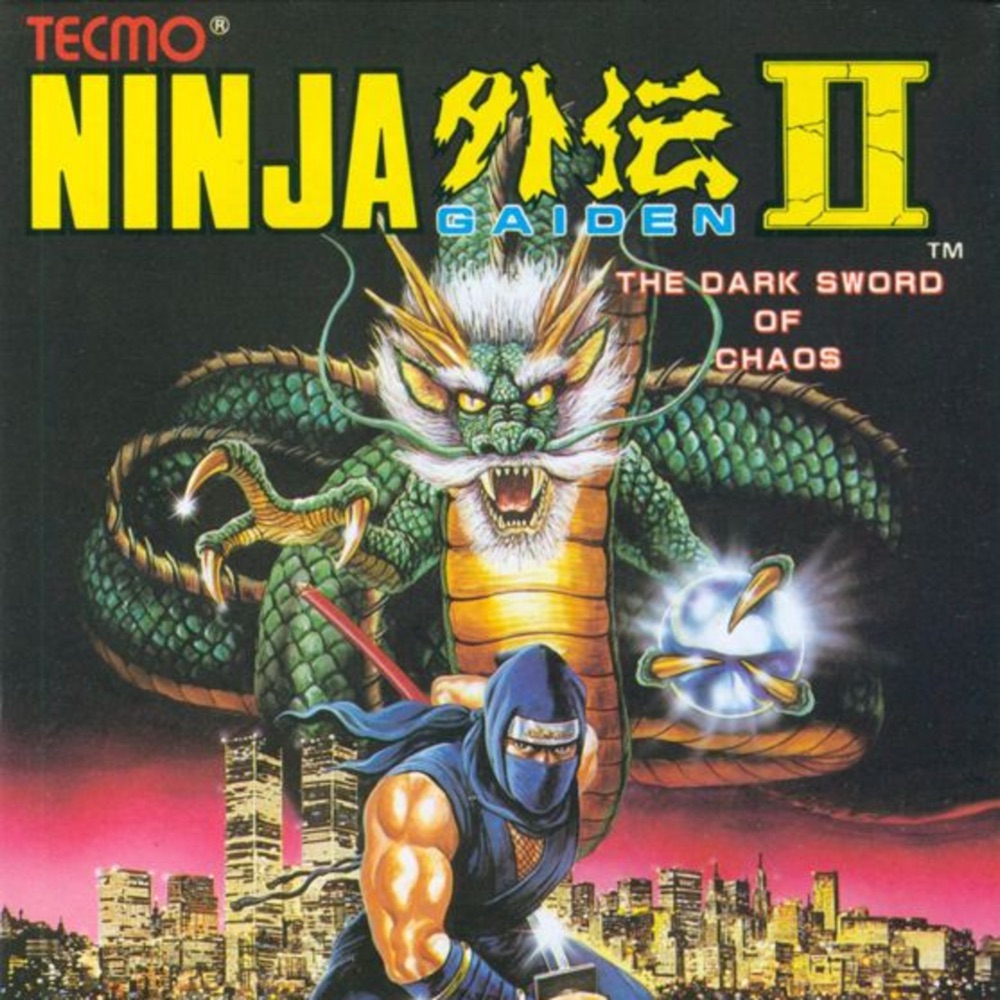
308 · Ninja Gaiden II: The Dark Sword of Chaos
A year after the events of the original Ninja Gaiden, a new villain named Ashtar receives word of Jaquio's defeat. Ashtar uses this opportunity to hatch a new plan to plunge the world into darkness. The ninja, Ryu Hayabusa, hits the trail to destroy all manner of vile creatures entering the world while fighting his way to destroy Ashtar, his Dark Sword of Chaos, and whatever else is behind the evil.
Ninja Gaiden II arrived just a year and two months after the first game, so for players it was a quick turnaround, even if it felt like ages to us. It is Ninja Gaiden with new tricks and a new story, and the controls are untouched, which suits us, since they were the best part of the original. Mike, Sean and Joe played, and Joe opened by arguing that an iterative sequel is a fine thing.
What makes it work
- Wall climbing. You can now climb up and down walls instead of only clinging. Going back to the first game, it seemed obvious that you couldn't.
- The clones. A power-up splits Ryu into copies that repeat your inputs a beat behind. Park one in the air and the flying boss around the third or fourth fight becomes a puzzle you can solve on purpose. They also turn your other weapons into big area attacks, and later bosses fire so much that the game seems to expect you to have them.
- Cutscenes that look better than they should. They sit in a thin letterbox strip, which seems to let them push the palette, and one shot of Ryu hanging off a cliff while the camera tilts was desktop-wallpaper material. The manual gives six pages to recapping the first game.
- Dynamic levels. A moving train, wind that changes direction, an ice stage, and a thunderstorm that flickers between bright and dark. The ice and wind mostly hinder you, though the wind sometimes helps. Joe liked the dark stage, where difficulty becomes memory and nerve.
- A fake-out ending. Ashtar is the level 5 boss and you think you're done, then Jaquio comes back as the level 6 boss.
Where it frustrates
- Ledges that lie. Some look climbable and aren't. Climbing down can also dump you in a pit that looked like more wall, and dodging a pit only to grab a wall that still means death is worse than falling.
- Clones are a collectible. Die and they're gone, just when you need them most. We wanted them as a default ability with a meter.
- Limited ninja powers. There's an energy cap, most of them fire in different directions, and the upward fire is far more useful than the downward one. The fire circle that makes you invincible was the favorite.
- Cool Spot. The red circles you smash for power-ups replaced the lanterns and candles, and they look like the 7-Up mascot sitting on nice level art.
- Brutal later on. Nobody finished it. We stalled around the ice level, and a Game Genie used just to see the later stages didn't make the final bosses look beatable.
The bottom line
Essential. In this episode it stayed off the list: Joe voted yes, Mike and Sean voted no, and Sean cast the deciding vote after saying his main feeling while playing was frustration. Mike scored it an 8 against the original's 9. It was added later in Best of 1990. The Super Nintendo trilogy remake supposedly has worse controls.
Written from our conversation in this episode.
- Longplay
- Manual
- All the makings of a movie sequel
- Interesting and vague subtitle
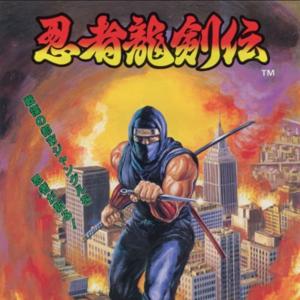
- Cool poster
- Big hype after the first game
- A year after the events of the original Ninja Gaiden, a new villain named Ashtar receives word of Jaquio's defeat. Ashtar uses this opportunity to hatch a new plan to plunge the world into darkness.
- Without getting into the NEW features are the controls great as they were in 1?
- Two new abilities that Ryu can do in Ninja Gaiden II are climbing up and down walls and attacking with "Power Boosting Items" while on walls and ladders
- Ninja Powers
- "Windmill Throwing Stars" that move back and forth like a boomerang;
- "The Art of the Fire Wheel" which hurls fireballs diagonally upwards;
- "Fire Dragon Balls" which hurls fireballs diagonally downwards;
- and the "Invincible Fire Wheel" that creates a barrier of three fireballs around Ryu, destroying any enemy that touches them
- ATTACK OF THE CLONES
- the ability for Ryu to "split his body" and clone himself when the player collects an orange ninja symbol.
- Collecting this symbol creates for Ryu an orange shadow of him that follows behind and copies every move Ryu makes, including climbing walls and ladders and attacking enemies. Using this technique, the player can strategically position Ryu and his clones to more easily defeat enemies and bosses.
- The player can continue and restart the game from the beginning of the level
- Dynamic Environments
- Train
- The wind level (changing directions)
- Darkness level
- EVEN BETTER CUTSCENES?!
- One of the first times the bad guy isn’t the final bad?
- Ashtar is level 5 boss, but you have to take down Jaquio and Kelbeross in level 6
- Is it as difficult as Ninja Gaiden 1?
- Sequels and Spinoffs
- Ninja Gaiden 2 - XBOX 360
- Ninja Gaiden Shadow for Game Boy
- Ninja Gaiden Shadow is a prequel to Ninja Gaiden. It is 1985, 3 years before the events of the NES game, and Jaquio has not yet been awakened. However, Emperor Garuda, an evil dictator, threatens New York city and it is up to the Ryu Hayabusa to fight him.
- Ninja Gaiden Sigma 2 - PS Vita
- Ninja Gaiden Trilogy for SNES
- Apparently made the games worse off despite the “upgrades”
- EGL
- NG1 and 2 are both great and probably around equal in quality. NG2 has a bit more actual level design, along with the individual stage gimmicks etc, which gives it a more "complete" feel than the first game.
- However, I personally prefer the barebones, sleek focused ninja action of Ninja Gaiden 1 f I have to pick. I have played it much more than NG2, and it's a game I can keep coming back to. However, I think there are fair arguments to prefer either one of the three Ninja Gaiden games on the NES.
Found automatically from the transcript and checked, but it can miss things or pick the wrong page. Spot a mistake? Tell us.
Games
- Ninja Gaiden II: The Dark Sword of Chaos mentioned at
The episode's game: the 1990 NES sequel with wall climbing, shadow clones and dynamic stage hazards.
- Ninja Gaiden mentioned at
The 1988 NES original, covered earlier and voted onto the Essential Games List.
- Castlevania mentioned at
Earlier episode used as a comparison for sequels that change the formula, and for the heart-style ammo system.
- Lode Runner mentioned at
Earlier NES episode whose sequels simply added new levels, cited as the lazy way to make a sequel.
- Marvel's Spider-Man 2 mentioned at
PlayStation 5 sequel praised for keeping the formula and adding new things.
- Adventures of Lolo 2 mentioned at
Recent NES episode where one host defended a sequel that simply adds more puzzles.
- Tony Hawk's Pro Skater 2 mentioned at
Example of an iterative sequel that adds small things like manuals while keeping the formula.
- Kingdom Hearts mentioned at
A host's favorite series, used as an example of new worlds on the same engine.
- Super Mario Bros. mentioned at
Held up as a game whose levels, like ice and wind, shape how the platforming works.
- Super Mario Bros. 3 mentioned at
Its ice levels are cited as letting players use momentum to their advantage.
- Bionic Commando mentioned at
NES game with many characters whose dialogue is brief, compared to this game's story.
- Fire Emblem mentioned at
Series joked about for having too many characters in Smash Bros. compared to Ryu.
- Cool Spot mentioned at
Game starring the 7 Up mascot, which the red circles that hold items in this game resemble.
- Double Dragon mentioned at
NES game brought up as a possible earlier case of a final fight after the apparent last boss.
- Blaster Master mentioned at
NES game where you must still escape after beating the boss, offered as the closest example.
- Ninja Gaiden II (Xbox 360) mentioned at
The 2008 Xbox 360 action game in the series, known for steep difficulty.
- Devil May Cry mentioned at
Spectacle action series used to describe the style of the Xbox 360 Ninja Gaiden games.
- Ninja Gaiden Shadow mentioned at
Game Boy prequel set in 1985 where Ryu fights an emperor threatening New York City.
- The Last of Us mentioned at
Story-driven game cited as one where playing the first game before the second matters.
- The Last of Us Part II mentioned at
Sequel whose strong gameplay a host says can be enjoyed without the story.
- Kingdom Hearts III mentioned at
Game the hosts say a newcomer could enjoy if they ignored the convoluted story.
- Crisis Core: Final Fantasy VII mentioned at
Prequel to Final Fantasy VII, discussed as a possible starting point for the series.
- Ninja Gaiden Sigma 2 mentioned at
Remake of the Xbox 360 sequel for PlayStation Vita, with mission-based play.
- Super Mario All-Stars mentioned at
Compilation used to explain what the Super Nintendo trilogy of NES remakes is like.
- Arkista's Ring mentioned at
Next-but-one NES episode, an obscure game whose box art made a host question its licensing.
- Remote Control mentioned at
Next week's episode: the NES game based on the MTV game show.
- Adventures in the Magic Kingdom mentioned at
NES game covered the week after Remote Control.
- Archon: The Light and the Dark mentioned at
Game a host joked about while discussing episode voting.
- Back to the Future mentioned at
NES episode 212, where the host re-recorded his lines after getting a new microphone.
- Raid on Bungeling Bay mentioned at
NES episode 63, one of two whose recordings were corrupted and rerecorded.
- Deadly Towers mentioned at
NES episode joked about as the source of the audio used for this episode.
Hardware
- Game Genie mentioned at
Cheat device a host used to reach the later levels of this game.
- PlayStation Vita mentioned at
Sony handheld that received Ninja Gaiden Sigma 2 Plus.
Articles, videos and sites
- NEStalgia Essential Games List mentioned at
The show's list of essential NES games; the first Ninja Gaiden is on it, this sequel was not voted in.
- Patreon mentioned at
Platform for the show's Patreon page, which includes a Discord community and bonus Bytes episodes.
Other
- Pokémon mentioned at
Franchise cited as one where players ask for formula changes though the familiar formula works.
- Super Smash Bros. mentioned at
Fighting game series where the hosts argue Ryu belongs, noting Lolo is also missing.
- 7 Up mentioned at
Lemon-lime soda whose red-dot mascot Cool Spot the item drops resemble.
- Souls games mentioned at
From Software's difficult action RPGs, mentioned by a host who is just dabbling in them.
- Yakuza mentioned at
Series with long interconnected stories, used in a debate over whether you must play earlier games first.
- Halo mentioned at
Series cited when asking whether newcomers need to play earlier entries first.
- Final Fantasy mentioned at
Series whose entries are mostly standalone anthologies that weight story as heavily as gameplay.
- Chessmaster mentioned at
NES episode where part of one host's audio was cut out because the recording failed.
Auto-generated transcript. Each paragraph starts with its timestamp. Speakers are not identified.
Ninja Gaiden 2, The Dark Sword of Chaos.
And welcome to NEStalgia, a chronological exploration of every NES game released in North America. I'm Mike. I'm Sean. And I'm Joe. Ninja Gaiden 2, The Dark Sword of Chaos, has all the makings of a Hollywood-style sequel with the interesting yet vague subtitle underneath the original game. The cool poster, I don't know if you guys saw the art for Ninja Gaiden 2, but it has like, you know, prolific character, front and center, awesome text, giant dragon behind him. I can only imagine, honestly, with how the art style of this game.
And then there's also like, you know, there's the hype factor, right? Like Ninja Gaiden, we all love that game, right? We all still love that game? I did enjoy that game. Yeah, I mean, I haven't played it in a long time, but I still think I love that game, based on what I remember. Now, we recorded Ninja Gaiden, because it's funny Joe's saying as we remember. We recorded that as like episode 170, which was, geez, I can't even, is that like 2020, 2021?
But it's really only been a year and two months between the release of Ninja Gaiden and Ninja Gaiden 2. So even though it feels long for us because we play every single game, for players, you know, in real time, it wasn't that long of a wait for this sequel. So Ninja Gaiden is fresh in their mind. I'm wondering how you guys remember or think of Ninja Gaiden before going into Ninja Gaiden 2. Were you expecting, you know, we've had sequels where they just completely changed the game, right? Ninja Gaiden 2 could have been an RPG or, you know, something where a puzzle style game. Who knows what it could have been?
It happens to just closely follow the format of Ninja Gaiden. But as we saw with Castlevania, you can't always just expect that. Well, joking aside, I feel like normally when we have a sequel or something, like even if we just played the game six months ago, I'm like, man, I don't remember that game. We play so many games and I just have a terrible memory.
But Ninja Gaiden had the exact, yeah, it had the exact opposite effect for me, though, because I was like, so I was actually, I wanted to remember, like, what did we all say? Was it, you know, did everybody voted essential and whatnot? So I went back to look at that episode and I couldn't believe how long ago it was because that one is the only one ever that feels like that was way more recent than it actually was. Like, I, you know, I'm joking, they're like, oh, like how much I remember.
But like, yeah, there are things I forgot. But like, I do remember that like so much more than a lot of other games or at least like the main gameplay style and like the feel I got from it. And obviously, like the crazy cut scenes and all that. So I was, I was just surprised at how recent it was or how not recent it was and it still felt recent.
Yeah, from what I remember, I really dug the presentation. I enjoyed the feel of the character. I probably, I want to say that it probably feels exactly the same, like in terms of like character movement and all that. But that I'm, if I were a responsible podcaster, I would have gone back and at least played a level or two just to refresh my memory. But I'm not that. Well, without getting into any of the new features, right, you have to add stuff to a second game. You can't just, well, some games do it. They just say like now with more levels, right?
I think in one of our sequels and spinoff sections, I think it was for Lode Runner. It was just filled with games where it was like, yeah, same exact controls, but we added 48 new Lode Runner levels for you. So, you know, you don't usually get away with that. And Ninja Gaiden 2 wasn't going to try that. But yeah, it is basically, you're right, Sean, it is Ninja Gaiden 1 with new abilities and new gimmicks on the levels and obviously a whole new story. But it's not like they didn't change even the sprite, right? Like it's not like we saw a size change or a layout change or the way that Ryu controls.
The one big change is that in Ninja Gaiden 1, yeah, you could latch onto the walls and kind of jump from wall to wall, but you only could hang in your place. You couldn't climb up and down. Yeah, now you can actually climb up and down these walls.
And, you know, that's like, is that a selling point? Like that's something to talk about in this episode and feels unique. But do you think when they were making this game, they were like, yeah, we got to throw that like as the marketing. Like now you can climb the walls. It just feels like an obvious, like when you go back to the first one, you're like, huh, can't believe you couldn't climb these walls. Well, it does give you a bit more like a feeling of freedom of movement and you actually having like a direct relationship with this character.
I would imagine that if I had remembered that you couldn't climb up the walls in the first one. But I would have found it a big plus. Yeah, and I have a lot of thoughts about like about the general feeling that that I feel like most people sometimes including myself have about game sequels that don't do a ton to change up their formula. Like I think that there is a place for that. And I guess I feel like that place occurs more often than I think most people believe. You know, I'm saying my opinion is that there's more room for that than I think most people feel like there's room for.
Because like, you know, I've talked about this about Pokemon before where like a lot of people are like, well, when are they going to change the formula? And like I'm just perfectly OK with like, hey, take this formula I love, add some new Pokemon, put me in a new region. But like you don't have to change the formula. And more recently, Spider-Man 2 on the or whatever. Yeah, I guess it's Spider-Man 2 on the PS5.
A lot of people were complaining where it's like, well, you know, don't expect this to be like some big formula changing thing. That was a great formula. And they added some nice new things. They added a couple new things. It was a great new story. And like I'm happy to get like a sequel like that that like didn't try too much to change it. Because a lot of times they try to change things. And I'm like, well, this isn't as good anymore. Or it's like not even that it's not as good. But it's like it's not what I was looking for. I'm not saying that like that's always the case. There are plenty of times like, OK, this has gotten stale or like you didn't do anything.
But like I think that we'll probably get into it. I'm sure. But like there are a lot of instances in Ninja Gaiden 2 where I think it walks the line really well. Like one being being able to climb up those things, the walls rather than just jump on it. Where it doesn't completely change the formula. It just adds a little bit more nuance and just gives you like, hey, it's another chance to use a couple more tools to explore this world or to spend time in this game or a similar game. Joe, you mentioned Spider-Man 2, which is definitely more recent in gaming history. But also recently on this show, I feel like Adventures of Lolo 2, you made the same defense there.
Maybe the lone defender of saying like, hey, it's totally fine that they didn't like give Lolo like some new power that made it a new way to solve puzzles. It was totally fine to just say like, yep, first game had a great puzzle solving mechanic. And now we're throwing more puzzles at you, obviously two totally different games, but it's not unheard of.
And I think especially when you go back and listen to our comments on the first Ninja Gaiden, we had basically no complaints about reuse controls and thought it was the best part of the game. So why screw that up? Right. Like why change how he jumps or how he attacks? Right. I don't think that that's where you need to make the adjustments. And so if the game starts off and it feels familiar for a game that's on the essential games list, that's a plus, right?
Yeah. I mean, like when a game really feels like it nails its formula and when sequels come out, when sequels come out, like you kind of want them to be iterative and mostly they are like a good example of this that I was thinking of when you guys were talking is like Tony Hawk. Like the first one came out. It's pretty bare bones, but like the formula is there. It every time it releases a new one, like Tony Hawk's Pro Skater 2.
Now you can like combos are easier. I don't remember exactly how. Maybe it's because you can manual out of out of tricks now, but like then in three, like then they introduced the reverts and I can get these super cool combos. But the game from one to three is exactly the same plus or minus a couple different like move concepts. And I think that in games that rely a lot on their, like on like that core gameplay loop, that's really all you need is just something additive, something minutely additive sometimes.
And it seems that that might be what we're seeing here. Yeah. And like with something like Tony Hawk too, it's, it's, it is almost the same except for those little additive things. But also you are taking that formula and you're exploring new, you know, skate parks and you're exploring new areas to do. It's like you, you get that thing that you love doing and you get to go explore somewhere else with it. Like that's like, that's a totally fine way to make a sequel.
You know, I even think about like just games that I talk about all the time, like Kingdom Hearts, love Kingdom Hearts. And like, if you take Kingdom Hearts one, you take exactly that engine, exactly that thing. And you just like put new worlds and gave me new stories to explore. Like I'm happy, you know, rather than like changing it so much that I'm like, okay, it's the same characters, but this feels like a different game now.
You know, I mean, both can be good, but I'm just saying like, I guess my, like my whole initial point is that like, it's not, it's not an immediate negative to me to be like, well, they didn't really change that much in like the formula.
And climbing the walls may be obvious and unmarketable in my opinion, but you can't ignore something like being able to clone yourself and have those clones run around screen and perform the same actions as you. That is a completely marketable, totally unique. I've never seen this in an NES game yet. This is awesome. This is the, this is the cutting edge feature, the sellable feature of this game. The thing that makes it worthy of the Ninja Gaiden 2. In fact, it'd be cool if you were only able to split your body once and the two was in reference to the two Ryus, but save the third split for the third game.
This is, this is definitely the thing that probably warrants its own section. So let's have it out here. Uh, essentially there is a power up that you collect that allows Ryu to, I believe the game describes it as split his body. So it's not like a shadow version of himself or whatever. It's just another clone. And, uh, this clone just mimics all of your inputs, including wherever you walk to, whenever you attack. And so, you know, it's a skill barrier.
I want to say on the player to make these clones useful because they either can just be something that's constantly behind you, always lagging behind and not to your benefit. Or they can be something that you thoughtfully choose to put first and, uh, keep yourself out of harm's way to allow the clones to do the grunt work. Probably requires a little more time and effort and thinking, but the payoff is ultimately worth it. Uh, Sean, what did you think of the attack of the clones?
Yeah, there, um, my first thought was that they're, they're a little jank. Um, I think that the, the fact that, and that also makes it feel a bit more reactive and less like, cause we've, we've played games where you control more than one thing, but they're usually like moving in formation and it's very rigid and it's like two people holding a stick. So like they can't get any closer or farther away and, um, it's useful, but it doesn't really feel like revolutionary in this one.
Like, I don't know if they just have different inputs, like the reacting differently. Like, so it's always going to lag behind you and, and do exactly what you did. However many like ticks prior, but sometimes like the jump is sort of out of sync. And when you attack, it's definitely exactly when you attack.
So you're sort of attacking in concert there, but there's just enough like smushiness to make it feel like something you kind of, you really have to learn and get the feel for. So I like it. I can't say that I was always very good at it. Um, there were a couple aha moments during some bosses that were really, really annoying. Um, that, oh, I just sort of lucked my way into kind of stun locking the boss, um, because it would retreat to safety where I just so happened to have one of my doppelgangers, uh, planted. Um, and it's kind of hard to set up because you've got so many things flying at you and everything gives you so much knockback with that. That's conversation for another time.
So yeah, I like the concept. I don't, I can't say that it's a perfect execution, but yeah, it's cool. Yeah. I felt like it had its, its moments where it was like, this is where it's really valuable. One, the one that stands out to me is a, a boss kind of early on. I think it's like maybe the third or fourth boss, um, that like flies kind of overhead back and forth and you have to, you, yeah, you have to hit it to, to, to get them to come down. And then, you know, you have to hit it in the air basically.
But like, yeah, my strategy just became after a while, I'm like, I don't know how I would have done this if I didn't have the power up where I had, you know, one or two guys behind me, but I would jump in the air and land while leaving one of my other guys up in the air because they're not moving based on like what the time you were there. They're moving based on like how far away from that moment you are. That makes any sense. So it's like you stand still. They'll also stand still in the air behind you where you were.
And then I'm then waiting until the boss gets near hitting him with that guy, then getting out of the way and like going immediately to jump and set up another guy in the air for when like the time comes that he's going to be in the air and that side. And that one like actually to me started to feel like, wow, like I'm doing this. It's not like an accident. But like most of the other time I was using those guys, it was like, I'm just fighting as Ryu and I'll probably get some lucky hits in with these other guys that are swinging around behind me too.
That was like my main strategy with those guys. Another value that they have that's a bit more apparent and easy to just immediately take advantage of is the stacking potential of your other power ups where something that might not be entirely useful at first now is just this kind of huge area of effect attack that's coming out of any duplicate that you have. So it also it also it also plays well there. It's definitely something that looks cooler than it performs in game. I think there's no doubt about that, that it's surprising when it first happens and you realize you have control over these shadow reuse.
However, pulling it off in the game to to great effect does take the kind of maneuvering that Joe was mentioning where you kind of need to get it in the right place for it to be useful and hope to park it there in a way. Otherwise, they do wind up just kind of running about the screen and nonsensically sometimes hitting things for you. The trouble with the clones, though, is that the game isn't treating them like a ability that Ryu always has and kind of like a metered thing that he can control.
But, you know, deplete over time. It's treating it as a collectible like any other power up that if you die will go away. And so later on in this game, just like the first Ninja Gaiden, this game gets incredibly difficult later on. But in a way that I almost feel like it expected you to have those clones to to be able to take on these bosses, just given how how large their spread of fire is and avoiding them is damn near impossible. Like to do it on your own. I couldn't fathom.
So the issue becomes almost shmup like. Yeah. The greatest greatest paradox. Yes, exactly. Like if you die and you lose all your power ups and you lose all your clones in this Ninja Gaiden game, you're suddenly a lot.
You know, you're in a worse off situation because you're in a lot more trouble now that you are basically going to die earlier because there's a lot more that you can't deal with. I think being able to bring the clones into a situation, not just the boss fights, but being able to think about how to use them to dodge enemy attacks is where they excel best. And so I really think they they should have included this as a Ryu default ability. And again, something that's depletable instead of something that is acquired through the level, just like your Ninja Stars or your Firewheel, etc.
Yeah, I agree. This this really is a hard game. I don't remember how because I know that Ninja Gaiden as a series is known as being hard games, but I can't remember how much of an impact that had on our our episode for the first one. But I really felt it here like I was getting actually frustrated at times, not even against bosses, but just in the scope of the normal gameplay and advocating these levels and just getting stuck in realizing that like I'm just bashing my head against a wall. I need to go a little slower or not slower, but more methodical. And yeah, I did definitely I felt definitely felt a punishment in this game.
Yeah, it felt to me like a game like a lot of NES games that you have to you really have to like learn, but like not not in the way where you have to like learn and memorize the stage. You have to like learn a lot of like enemy behaviors and or I guess defenses against certain enemies like there are there were certain people that would just kill me over and over again.
As soon as I would see like one of those big guys with their swords like held out running at me, I'm like, I just don't even know how to avoid those guys. And I would have to like literally sit stop and like make a point to be like, OK, I got to literally just spend this level just figuring out like how do I deal with these guys, you know, and then like slowly, you know, I didn't beat this game. I got maybe halfway through. So like, you know, given more time, I feel like I would like slowly, you know, as I'm saying this, this just sounds so obvious. This is like literally how anyone does anything. But like, yeah, get better at it as I learned.
But like, you know, it's like it's I guess it's just like the enemies aren't just like, oh, a different sprite in like they're doing different damage. Like they do have these behaviors that I felt like I needed to not memorize when they're going to come or the layout, but like memorize like, OK, so if I see this guy, I got to react this way or I got to be quick and get out of the way, get behind them or, you know, whatever.
Yeah, there were I felt that there were times where I was actually fighting the levels themselves. Like it was never really about the enemies is about the geometry. And my biggest peeve, I know I'm getting a little off topic here. My biggest peeve with this game, at least in its level design, is that there are some ledges that are not meant to be hopped, that there are some where you can climb to just below where you think that you could do like a little like midair.
Jump over and you just never will. And I just like would I would just like a moth to a flame, get stuck there trying and trying to get over it. And these little like flames that slowly home towards you are just are just swarming me and the other enemies are jumping around. I'm getting knocked around back and forth. It actually felt like hell. But I think that just because I wasn't playing the game correctly.
Well, I mean, I think I had the exact same experience. And just to be clear, to make sure we're talking about the same thing. You're saying like when you climb out, you grab onto a wall, you climb to the top and you think you should be able to jump up onto the top and start walking. And it's like, nope, you cannot go any higher than this. Like, even though you can see the top right there and any person that could climb a wall should be able to pull themselves up to the top of the wall.
But yeah, that happened to me a million times, too. And that was very, very frustrating. But they're like designed to not be like those are not places that you can move on from. Like you're supposed to turn around or find a different route. But there were some times where I felt like or I thought that you did have to get up on top of there. But it was like I always felt like I did. Yeah. No, but I think there were times where it ended up that I did have to get up on there. But it's like you couldn't just climb up there. You'd have to climb up there and then jump somewhere else to get higher.
So you can jump onto it from above or something. And like fine, like that's that's fine if that's the gameplay mechanic. But to me, it was just like because it looks like the other ledges that I can just jump up on. And there's no contextual reason I shouldn't be able to. Like it felt like it got puzzly in a way that like I wasn't prepared for a puzzle and wasn't expecting a puzzle. So like that made it frustrating where I'm like, I know that like this should there should just be an easy way to get here. And I can't figure it out because it's not clear.
The weirdest part about the being the ability to latch on to and now scale the walls is like in the first game, if you, you know, grabbed onto a wall but not in the correct spot, you were almost like willing to accept the death or the, you know, the need to go backwards because it was like up. I just didn't grab it from the right point. But now that you can scale up them, it feels like specifically the pitfall ones, the ones where you have successfully dodged the pitfall but have grabbed onto the part of the wall that still sort of means death but requires you to jump to your death. Like acknowledging that like, yeah, you thought you saved yourself, but you're just you're just going to have to die. No two ways about it. It's like it's even worse.
It's a worse payoff than just falling in the pit because you thought you saved yourself only to find out there's nothing you can do about the situation to Joe's point of shouldn't I just be able to pull myself up? Like I don't have the upper body strength. I know that it's like a different like that there is a skill and it's it's a part of the gameplay to like, you know, jump from wall to wall.
And I guess having there be an animation of you just going over the ledge sort of removes from that. But I think in certain situations, I think it's more of a pro than a con to just like be able to climb up the corner. Yeah. And onto the platform. Yeah. And there are still plenty of other reasons that you could do that jump from wall to wall thing and you could need that.
Like it doesn't need to be like you've locked me out of simple skill. So I you don't have to manufacture me jumping from wall to wall. I'm going to jump from wall to wall to get hired, but to get to places I couldn't otherwise reach anyways. So like, yeah, I had I had a similar complaint, actually, that kind of the opposite. When I'm climbing down walls, sometimes like I'm climbing down something that like leads into a new area below.
And like, yeah, if you fall down there, it's death, which like understandable. You fell. But like, so as long as you climb down and you get to the bottom, you touch the bottom and it like loads a new area below and you keep climbing down. But then like sometimes you climb down and you get to the bottom and it's like, no, that was a pit. You died. Well, how do I know?
And I think like there's a ladder texture. Yeah, I think there's like, yeah, there's a texture that like gives it. But like at first I didn't know. So I was just like getting annoyed with that. I'm like, all right, maybe I climb down here. I just touched the bottom and it was like, what? What? I did do that, too, though. Yeah. Sean, you were mentioning the levels and perhaps describing the claustrophobic parts of the later levels, especially with all the spikes and narrow entryways with enemies. But there's also the introduction of dynamic environments that Ninja Gaiden 1 was free of. In Ninja Gaiden 2, there's a moving train level. There's a level where the wind kind of changes directions. There's an ice level.
And, you know, again, this is the kind of stuff that you add to plus up or to justify a sequel. The only complaint, you know, I hate to start with a complaint because I'm sure we can talk about good things for these dynamic environments. But they they don't work with Ryu.
They just kind of exist at the same time as him. And I feel like a good game used like a like a Super Mario Brothers creates a whole world where, like, you know, there's something about the the land that Mario runs on that changes the platforming aspect of it. And instead in Ninja Gaiden 2, it's like, well, the ice level now is just like everything's slippery and it sucks more. Like, you know, if you had a hard time controlling Ryu before this, like you're really going to hate it in the ice level or with the wind changing.
It's like, well, you better just be more patient and wait for it to change in the direction you need. It's like it's not really like enhancing. There's never it's only a hindrance to to the player character. It's never like to their benefit or to pull off some really cool thing. I'd say that the only one that that kind of does what you're talking about is actually the wind level, because there are times where you're going with the wind. And finally, it feels like, you know, you're getting a little bit of some grace from this game. But then, you know, 15 seconds later, you're fighting against it.
The rest of them. Yeah, exactly. Like they're kind of they exist separate from yourself. There's the one where actually at the beginning, I was like, oh, that's really cool. It's like not dynamic lighting, but like there's like a thunderstorm going on and the level keeps getting brighter and and darker. And I just thought it was like a cool visual effect. I'm like, oh, now I can't see where I'm jumping and there's still 15 things flying at me and I need to jump away. But I can't tell if that's a bottomless pit or a platform down there. Guess I got to wait or just, you know, take a leap of faith. And sometimes it worked. Sometimes it didn't. But yeah, a lot of them were more like sources of frustration than like, oh, that's neat.
I'm I'll devil's advocate this a little bit. Not in the sense that I disagree with you guys in like, yes, like Mario does this in a different way. That's like it complements Mario. You know, it complements the way it plays. Because like, yes, I agree with that. But I do think that for the most part, I like they were short lived enough that they never got too frustrating to me. And I kind of appreciated this like level of challenge in like, yeah, like the wind changing one.
If that were if that were like became a mechanic throughout the rest of the game, I would be very annoyed. But like it's just like this one level where I have to think about it this way. Like like that was kind of cool. Same thing with the dark that the like lightning one where it's like dark and, you know, the dynamic lighting one. I'm like, it's annoying.
Maybe. But like I actually found it kind of cool because it's like adding this level of difficulty. That's not just like, oh, because the enemies got harder. And it like makes me feel like a ninja because I have to think about like, what did I see there? Can I jump to that in the dark? Like I got to think like the difficulty comes from me being like, I got to try and take a snapshot of this environment and like use my ninja skills to like jump around in the dark. And like that felt kind of fun to me.
And even like the ice, like like the ice, I think is the best example of one that like doesn't do like, you know, the ice in a Mario world, like or at least in Mario 3, like that like gives you this ability to be like, I can use the physics and like the speed that I've learned while playing this game to to like my advantage because of the ice. And like, you know, and it might be harder, but it can also be like much more satisfying.
And like maybe the ice level doesn't do that here, but like it still is like, okay, I'm a ninja and I got to like adapt to this new environment. It's like harder now in this way. Like it didn't, I really, I guess I came into this like really, I really liked these dynamic environments. I thought they really added something to the game.
Like where it's, it's the thing that I'm like, wow, like they, they did do something that like added from the last game without over changing the formula, you know? Yeah. Where, where I agree with you is on like something like the train level. So it's, it's harmless. It, uh, it does introduce a, you know, a side scrolling like mechanic, but, um, you know, it doesn't affect really the gameplay loop and it doesn't put the player on a, on a negative scale.
I'd appreciate things like that. And don't get me wrong. I'm glad that the game didn't wind up making a, a situation where it's like, you know, oh, Ryu goes into people's houses now and, and has dialogue with them to move the story along. And, and, uh, you have to try to find keys or something like that. Like, I'm glad that these are the kind of level changes and that it's not outright, uh, gameplay changes. Like, I'm, I'm glad that they mostly just took Ninja Gaiden 1 and tried to plus it up. And so, yeah, like, you know, do I hate all of those dynamic environments?
No. I just kind of wish whether it was through Ryu's Ninja powers or, uh, through the, through the level design, like the ice one. And, and I hate to keep harping on it, but like, I wish that there was a way that like, if you knew that level, like you could actually like skate through it, right? Like you could breeze through it faster because you know the path or whatever. And so it, it, it, it's good to be slippery when you know what's going on and it's bad to be slippery when you're not sure where the pitfalls are, right?
Like that would have been, uh, something that's more rewarding. And that probably is more rewarding to the speed runner, but it's not, it's not incredibly obvious to the player. Whereas in a Mario game, you, you know, you learn those mechanics very fast, right? There's a, there's a lot of people in the world that are good at Mario games. Yeah. I guess I'm just seeing it as like a different, it's trying to do, maybe not trying, but like, I feel like it does something different that not necessarily worse, but different than what Mario was trying to do, you know?
And like, not, I'm not trying to just be a contrarian, but like the, like the train one was like maybe the only one I wasn't like impressed with because like, I felt like it was just a background. It didn't actually change any gameplay, you know, it was cool. I was impressed with like, oh, this is a cool environment, but it wasn't until I think of the wind one where I was finally like, oh, this is actually making me think differently about how I'm approaching this level. And I think it's all a fair point. I disagree. Well, I don't want to be a contrarian, but that's all the, yeah, it's all to the contrary.
The Ninja powers, anybody want to touch on these? Is anything like, you know, I think Sean mentioned their most useful ability is when you pair them up with the clones to kind of create these additional spreads. I do hate just how limited these things are though, based on your, um, what is it? Like, uh, there's, there's something you collect. It's similar to the hearts in Castlevania. Yeah, some kind of like energy. I didn't really know how it worked, but. You just don't get to use it that often. And it has a cap on top of it. Like, I feel like the cap should go away at the least.
There's the cap. There's the fact that most of them are kind of the same thing, but in like different diagonals. Um, which is useful. It's just, I mean, in certain ways. Um, so like, I never really paid attention to which one I had. I don't know. Maybe if I was better, maybe I would have been better at this game if I'd have actually been paying attention. Um, but you know, you spam them during bosses if you've got the right direction.
Uh, there's one where you kind of summon this fire circle and you're kind of invincible for a while. And that's fun. And then like, if you've got all of your clones, like now you're just this like conga line of destruction. Um, but yeah, other than that, I didn't really think about them too much. Yeah, I, I, I wish that there was, yeah, more than just that directional thing. Like the, the one you just mentioned was the one where I'm like, yeah, okay, wow, this is different and it's cool. That little, like, that little shield that comes around you and your crew. But, but yeah, like there's throwing stars.
Yeah, which all goes straight forward. Then there's like fire that goes up and diagonal and then fire that goes down and diagonal. Which I just feel like the fire that goes up and diagonal is like 90% of the time way more useful than the one that goes down and diagonal. Because you're usually below enemies. It does feel good to like kind of slam dunk on somebody. But it's never the most like efficient use of your time. Yeah, yeah.
Somehow Ninja Gaiden 2 has even better cut scenes than what we saw in Ninja Gaiden 1. Something we praised heavily. But I, I just don't know how they're squeezing the fidelity. Like these cut scenes, I can't be the only one thinking that they kind of almost, they look Super Nintendo in a way. Uh, and obviously like they're doing it by using a very small portion of the screen. But to their advantage, that kind of looks like it's filmed in 235.1 aspect ratio or something. Well, no, it's more like 471. Yeah, exactly.
It's so thin. But I guess that allows them to really increase the, you know, the palette or resolution or whatever. Because it really looks great. And, um, you know, this is a game, just like the first one, that you can play oblivious to the plot. And it doesn't matter, right? Like you're just going into the levels and you don't need any context for why you're doing anything. You're just a ninja who moves from left to right. There's no story plot points to collect or dialogue to, uh, to use later.
Uh, there's no payoff like that. It's just telling, uh, you know, uh, and I'm going to call it an interesting story. It's not the greatest video game story of all time, but it's definitely more thought out. More than 99% of the games we played. Yeah. I, I liked it. And I liked that, you know, yes, it's very separate from the gameplay, but not, not the most separate. Like, you approach a tower and then you're like, oh, I gotta climb the tower. And lo and behold, the predominant, like, movement, uh, you're going from like screen to screen in this level is vertical.
Upwards. And then there's one like, oh, you gotta go, uh, Hey, I'm American. I got a gun. You gotta go down into the thing, uh, to go get Irene. I don't know if like Irene was like a doppelganger before, but like the, the evil dude was her or was behind her. I can't tell, but he went down. So then in this level, you're going to go predominantly down. So, you know, there's, there's something there.
Yeah. It's contextual. Yeah. But I, I mean, I am just like, I don't even like, I did like, I'll admit, I kind of stopped following the plot after a while. Cause there's just like so many twists and turns, but I like, I am mind blown by like some of the, like that shot. I think it's the tower you're talking about, Sean, the shot where like Ryu is like hanging on a cliff and like the camera, like, like tilts. That's a full screen shot too. It's beautiful. Yeah.
And I think maybe it's because they, there's so few colors in the palette that they're still able to make it look so good. But like, yeah, that is like, that is like pushing the NES to its limits. It's, I just, I just posted it in the chat. If, if, if you guys want to make sure we're talking about the exact same picture. It's a, it's a vibe too. It's like, it's just cool as like a, honestly, that's like desktop wallpaper stuff.
Yeah. I might do that right now. There you go. And you, you know that they care about the plot because there's six pages in the manual dedicated to the story. And it's not even the story for this game. It's the recap of what happened in the first one. Literally, they, they give six pages to what happened in the events of Ninja Gaiden one.
And the last paragraph just kind of sets up where the main menu of Ninja Gaiden two like kicks off. So it's really like they, they want you to be invested in this. And they are certainly thinking of, uh, you know, they know that they're going to release a third game and everything. They want you to think of these as, as blockbuster action flicks. For sure. And I mean, like, I think we've been, we've definitely been given it the short stick.
Like they actually have character design here. Like there's actual personality for each character. They may be like caricatures, but they still have that personality. And I'm used to playing these fricking cookie cutter shmups where they're like, Oh, you were, you're the last Zorblaxian and you have to kill all the evil Zardnaxes. Uh, it's 5,000 years in the future, by the way. And we all live underground now.
And then it was like, let's you do it. And whereas this one actually has a plot and the art seems to be good enough to be in an anime. So I'm a big fan. Yeah. There's, I mean, there's even those other games like Bionic Commando or like, I think Metal Gear kind of did it too, where it's like, yeah, there's all these characters, but they say like, they say like three words. And then like the NES starts to like crash, like smoke because of like the amount of dialogue on screen. It's like, this has like literally like, this is like, yeah, it's like a manga.
And I think whether you pay attention to the story or not, Ryu as a character is just kind of those, like, that's a cool character. Like just, just from the way he controls in the game. And then additionally, the way he behaves in the story. Like that's a, that's an early cool video game character. And probably one of the remaining holdouts of like, that guy belongs in Smash Brothers. You know, like I really think that maybe instead of the 14th Fire Emblem character, we could have got Ryu instead. He's not in Smash Brothers? I thought everybody was here. No. They say everybody's here, Joe, but Lolo's not even in Smash Brothers.
That's my second Lolo reference of the day. Speaking of weird references, in Ninja Gaiden 1, to get the power-ups or the energy things or just random points, you had to destroy lanterns and candles that were, that were built into the stages. And that kind of made sense. And again, felt very Castlevania-y. In this game, you are just defeating various cool spot. You know, that mascot for 7-Up back in the 90s, like the Red Circle? He's just everywhere and you just defeat him over and over again to unlock the energy and power-ups. And I mean, I don't know if you guys know cool spot or not. Yeah, of course I know cool spot. I played the game. I do know what you're talking about. I didn't know his name was cool spot, but I...
Yeah, but, you know, that's him. That looks exactly... Like, it's obviously a 99 Lift Balloons reference. There you go. Okay. I missed the German connection in the game, but I'm sure that was covered in the plot. I think it is. On the third page. But I'm just saying, like, why change something like that to... These red circles just don't even fit in with the level. Anywhere. You know? It's not like, oh, those are my quarters I dropped on the train. Like, you know, it's... They're just there and they're littering your screen and they're covering up some nice design work. So why bother? I don't know. It's a good... I did think that that was sort of weird.
But, yeah. I didn't really give it too much thought. Yeah. I'll be honest. This whole section exists for me to mention cool spot. I'm really glad that you did, though. Yeah. Me too. I forgot about cool spot. Do you remember in the video game where, like, you start off sort of, like, surfing on a 7-Up bottle and then the game starts and you kind of forget everything else that happened?
Yeah. It made me really want a nice, cold 7-Up. Yeah. What happened to 7-Up, by the way? 7-Up's still around, I think. Oh, there it is. Cherry 7-Up is the definitive 7-Up. Well, that's... I would say... That's categorically false, but... That's not true. Cherry 7-Up is, like, actually linked into my DNA. I'm a big... I mean, I do like 7-Up, but I would go Cherry over... I mean, I would go Mountain Dew over any 7-Up. I'm not saying that it's good. I mean, I'm not saying that the original's better. I'm just saying, if you're talking about, like, an iconic look, like, it's green.
It has to be green. Yeah. Why'd they make Sprite white now? What's up with that? That's too... Yeah, that's too political for this show. What about Starry now? They got rid of Sierra Mist, and now it's Starry. I don't like that at all. Oh, yeah. I remember that too. It had, like, a 15-year run. The lemon-lime soft drink war has taken some weird turns. Yeah. I feel like nobody's even paying attention to it now that there's the chicken sandwich war. It's true. Anyway, even though it's not lemon-lime, Squirt is the way to go. Squirt's not lemon-lime? No, it's grapefruit. Oh, shit.
Getting back to the plot of Ninja Gaiden for a minute. Just for a minute. We can go back to lemon-lime after this. In Ninja Gaiden 1, you defeated... I believe his name was Jacquio or Jacquio? Yeah, something like that. Yeah. You defeated him, and so in Ninja Gaiden 2, turns out there's an even bigger bad, and his name is Ashtar, and he's gonna plunge the world into darkness with the Sword of Chaos, blah, blah, blah. It's all good stuff, trust me.
But that's just actually a psych-out. Ashtar, you wind up fighting as the level 5 boss, and you think you've beat the game, but then it is revealed that Jacquio is never like... Nobody's gone forever, right? And so he returns, and he becomes the level 6 boss, and I'm wondering... I'm sure this isn't the first video game to do this, but can you guys think of another time where it was like, the big bad isn't the final bad? Yeah, I know that becomes a trope later on in JRPGs, but I don't think we've experienced it yet.
You know, I like that they set up, you know, you think that you've beaten the game, and it's like, nope, whole new level coming at you. You mean, okay, you're just talking about like on the NES, or you mean in general? Yes, on the NES. Yeah, I mean, you can bring up other examples, because, you know, we all know there's plenty.
I just thought that, you know, I was like, huh, I'm making note of this as the first time I'm seeing this happen on the show. I guess I haven't seen it on the NES. I feel like we've had like, it's not the same, but we've had like things where you beat the final boss, and then there's still like a level or two of like... Oh yeah, what was the game where like, oh wait, was it Double Dragon? Where like, you beat the dude, but then you gotta like fight the other dude, but maybe it's not canon. Yeah, you gotta fight yourself, yeah. Yeah. Your brother. But then there was also, I forget this, I did this like on a recent episode also. You love this game, Sean. We all like this game, but you really liked it. It's a, no, it's not Cyber or something. It's a...
I don't remember any of the games. It's Blaster. Blaster Master? Yes. Didn't, in that one, didn't you like beat the boss, but then you still have to like escape? Or like, you have to like... Okay, but yeah, but escaping, escaping is not the same thing. Yeah, yeah, yeah, yeah. I mean, it's not the same thing, it's just the closest thing I can think of. Not Sex and Z.
Yeah, but that's like saying like after Luke blows up the Death Star, like it's crazy that they, it's crazy that they continued the movie. You know, it's like, no, it's not. Like, you need to wrap things up. Well, you know, the final boss is those medals that they get at the end. He's gotta get the medal. Right, right. And Chewbacca lost. Yeah, I mean, we all know George Lucas has another cut that he's never gonna share with us where they drop the medals.
Right. Or maybe, you know, maybe they didn't film that and he's gonna CGI it into the movie. Well, yeah, yeah, the medals, the medals part was fixed in the edit. You know, everyone said like that whole medals thing wasn't working and then, and then they fixed it in the edit. I believe you. But let's be real.
Ashtar, Jacqueville, like none of us got to these guys, right? No, no, I didn't. No, I got to the ice level. I was midway through the fourth level where I just like, nope, don't have, I just don't have the endurance for this anymore. Yeah, I game genied into these levels to make sure I could experience them. And I could say with near 100% certainty that I am not ready to take on Ashtar, let alone Jacqueville. Like these bosses are just, again, like you need the shadows, the shadows, the clones. You need those guys because there's just too much going on. Like they deal too much damage. You don't have enough health. Something's got to give.
I'd hate to say that I wish that they put in a cheese way to get through these bosses, but there needs to be something other than just like, get good for me to enjoy the games. I totally understand that there are people out there who love that stuff and are determined to beat all three Ninja Gaiden games on the NES, on the original hardware. Power to you. I don't got the time for that.
All right, so moving into the sequels and spinoffs. I think we've covered these, so I'm just going to say real fast, all the twos in the Ninja Gaiden series. Ninja Gaiden 2 was also, without the dark sort of chaos, just Ninja Gaiden 2, was released for the Xbox 360, and that is the, you know, it's not like these Ninja Gaiden games. It's more of a action combat, Devil May Cry proto style game. Those are punishingly hard as well, though, and I've never played them, but in watching a playthrough,
they look awesome, but I got to imagine it's because the player who's recording the long play is just good at the games. Like, I imagine it takes a lot of skill. Yeah, it's like a spectacle fighter thing. Yeah, like it looks awesome, I just don't believe in myself enough to pull this off. Yeah, I think I played one, I can't remember if it was the first or second, of like the Xbox 360 versions, but I was not good at them. But they look cool.
Yeah, I talked about this on the Discord for our Patreon members, but like, as somebody who just recently started like dabbling in these Souls games, I just know that, like, I don't have the ability. Like, I kind of wish I did, but I'd much rather use my time to play some really obscure simulator game where I'm managing a F1 franchise, because apparently that's something I've always wanted to do. I'd rather waste my time there than learn to be a great ninja. And then there's Ninja Gaiden Shadow for the Game Boy,
which actually turns out to be a prequel to the original Ninja Gaiden. It is 1985, three years before the events of the NES game, and Jacqueo has not yet been awakened. However, the Emperor, an evil dictator, threatens New York City, and it is up to Ryu to fight him. Now, that doesn't tell me what kind of game this is, but I'll just tell you it's basically just, like, the best the Game Boy can do to emulate the style of these NES games.
But again, like, it's just, it's so much about the plot, you know? Like, they're building it as a prequel to the first game, so it's like, did people care that much back then? Like, they were like, oh, I gotta be completionist. Like, I gotta make sure I know the whole story going into the trilogy.
I suppose so. Well, I think that it, like, it's just playing in, on like a, its own playground, you know? Like, there's no competition for this kind of heavy story, so like, if that's what you want, like, this is where you're going. At least for this style of, like, manga-ish, action-y heavy story. Like, maybe there's some JRPGs and stuff with heavy story, but like,
I don't know, I think it's like, yeah, it's like, it seems like it's the only one of its kind right now that you can go to. And I'm watching this Game Boy prequel, and like, very impressive just how the cutscenes look on the Game Boy, too. It's like, the Game Boy's capable of this? Like, it's pretty cool. I just need to do, like, a quick aside, and I'm just, I just gotta say, there has to be a different pronunciation of Jack-we-oh. Like, it sounds ridiculous. Jack-we-oh. Is it maybe Jack-we-oh? Or like, Jack-te-ow? Like, it just sounds, it feels wrong.
But I'll let it. I'll allow it for now. Yeah, I'll allow it for now. That's why I just haven't said it this whole time. Yeah, I'm not getting it wrong. While we're talking about stories in video games and everything, here's a hot take. If anybody ever asks you, like, hey, do I need to play these four games before I play this one? The answer is always no.
Always? For any game? For any game. Like, you don't need to, like, it should always be about the gameplay first. You shouldn't need, like, the Yakuza games, for instance. Like, yeah, they're all connected and everything, but you don't need to know what happened in 1, 2, 3, and 4 to play 5. But I'm trying to optimize my enjoyment, and to optimize, I need context. Yeah, but those games are like 80 hours. You've got to play 80 hours times 5 now just to play the newest entry? I think that's crazy.
Do you think people have to play Halo 5? Do they have to play Halo 1, 2, 3, 4, ODST, Reach? Like, I don't think so. I think it depends on what the game is. Like, you know, there are some games where I do think story is as important as the gameplay, like Uncharted or The Last of Us. Like, I wouldn't say jump into The Last of Us 2 without playing The Last of Us 1.
You know, but, like, that's the kind of game they are. This game, definitely you're right. Like, you know, you don't need to play the first one to play the second one. But, Joe, I think people would have just as good of a time as we did with Kingdom Hearts 3 if Kingdom Hearts 3 was their first Kingdom Hearts game. But it sounds like you guys didn't like that game. Yeah, exactly. I think they would get the same enjoyment. I think people would have a much better time with Kingdom Hearts 3 if they didn't care about the story at all.
Right, right. I guess, you know what, you're kind of right with The Last of Us. But still, I think that, like, there is something to just be said about, like, video games primarily being enjoyed for the agency it gives you to do something that you can't do in real life and not the movie that you've been dying to watch, right? Yeah, I mean, it also depends on what you're in it for, too, because you could totally, if you don't care about the plot,
play The Last of Us 2, because the best thing about that game is the gameplay. And it's really, really good gameplay, in my opinion. Okay, I just want to put it to another thing. Like, we were talking before this episode about, like, you know, the whole, like, compilation of Final Fantasy VII. Would you recommend someone just play Crisis Core?
I've never played it, by the way. Just that I'm asking the people that have. You know what, though? It was interesting. It would work, because Crisis Core is technically a prequel to everything. So it wouldn't matter. Okay. Like, you don't need to know. I guess that's true. But I wouldn't recommend anybody start on Crisis Core, because they'd be like, this is what people love about Final Fantasy games?
Yeah. I mean, again, it's like, it comes down to your preference. Like, I think that there are games that the story is as heavily weighted as the gameplay. And I think most Final Fantasy games are among those. I mean, luckily, Final Fantasy games are, you know, anthologies, so it doesn't matter. You don't have to play 1 to play 14. But, you know, I personally, in those kinds of games, I weight the story and the, like, production of the story and the way the story is told as highly as, like, the gameplay.
But, I mean, there are games that I don't. And there are games that I think, like, yeah, definitely this is a gameplay first game. And then there are people who don't agree with that. Like, it's just, I think it just comes down to preference. Wrapping up the sequels and spinoffs section, Ninja Gaiden Sigma 2, which is just really, I know, right? It's like, how many more qualifiers do you need on that? Ninja Gaiden Sigma 2 and Knuckles. He's just grinding at that point. And Knuckles, like, from Sonic? Yeah. And Knuckles. Exactly. That was on PlayStation Vita and is basically just like, hey, you guys all like those new Ninja Gaiden games on Xbox? Well, the Vita's got a handheld version.
So enjoy it. And it is kind of like the crisis core of the Ninja Gaiden remake series, if you can believe that, Sean, because it's just, like, it's mission-based stuff. Not necessarily, like, a grand, you know, it's not as large as the main games. I see. And last, and weird that I saved this for last, you can play Ninja Gaiden 2 on the Super Nintendo in the Ninja Gaiden trilogy, which was released for the Super Nintendo, which is no different than what we're all imagining right now, Super Mario All-Stars, right? It's just, here's the three games, now they're on Super Nintendo. Is it, like, up-res and stuff? With, no, 16, yeah, brand new graphics and everything.
Oh, that's cool. And worse controls, apparently. Apparently, I mean, I didn't play it, but apparently they made decisions about how things work and, you know, the way they upgraded the game. Everybody just kind of agrees that you just don't touch this trilogy on the Super Nintendo.
Yeah, that's weird. And we'll have to find out why, but maybe in a Bytes episode, since those are now lawless episodes that can be about anything. The Wild West. Yeah, Joe, last time we did a Bytes episode, I don't know if you were there or not, but it was, oh, I think you were, yeah, it wasn't even, it wasn't even an NES game anymore. Yeah, it was, uh, what was it? It was a MSX game, yes. Yeah, that's right. All right, and that's it for the sequels and spinoffs section, so the last section is a little something I call the Essential Games List.
I think Ninja Gaiden 1, which is an Essential game, and Ninja Gaiden 2 are both really good games and, honestly, probably equal in quality. Ninja Gaiden 2 has a little more level design going on to, in my opinion, its fault with the, uh, the dynamic levels not necessarily helping the player and the later levels being a bit claustrophobic. Uh, but I think, I think even though that gives it a more complete feel than the first game, you're able to climb the walls again, something that when I went back to the first game, I was kind of like, oh, yeah, you couldn't do this? Like, that felt so obvious. How, how did they not program that?
Um, and, and the clones are a cool upgrade, but again, they're just, they're just kind of like a new power-up. They don't actually make the game feel that much better. I think I just prefer, at this point, the simpler approach of the whole, like, ninja action. Like, I think I felt more like a badass ninja kicking butt when there was less enemies, less things happening on the screen, and I was more, like, in control.
And maybe I just progressed further, so I like that, too. Who knows what biases I have, but those biases are what's leaning me to say that Ninja Gaiden 1, still totally valid on the Essential Games list. Ninja Gaiden 2, while not necessarily a downgrade, is just less what I wanted going off of Ninja Gaiden 1, and for me, would just, like, it'd just be slightly under it. If I gave Ninja Gaiden 1 a 90, or a 9 out of 10, I'd give Ninja Gaiden 2 an 8 out of 10.
And for that reason, it's not going to go on the Essential Games list for me. Joe? So, I'm going to bring it full circle to kind of what I said at the beginning of this game about how, like, I don't mind these, these, I guess I was sort of trying to set myself up for this in the end, because I wanted to be able to explain my decision here, but, like, I think that there, that, like, having an iterative sequel like this is not a negative thing,
and I know that nobody is saying it is, but, like, I think this is a conversation we've had other times, and I think I've even been on the other side of this opinion in the past with other games, but, like, I guess I'm rambling to say that I think that there is room for both of these games on the Essential Games list, even if they're, like, similar.
I had, personally, from what I remember, just as much, if not more, fun, but at least as much fun with this game, so I think it deserves it as much as Ninja Gaiden 1. Like, I think both of these games are incredible, and I think that they both belong on the Essential Games list. Despite, yes, some flaws that we have with this one, I do recognize those, but I think that the pros outweigh the cons. Sean? Yeah, this is a tough one, because I feel like my, the main emotion that I felt while playing this game was frustration, but the main emotion that I feel when I think about this game is really positive, you know?
Especially with all the cool cutscenes, and I've been known to like a difficult game, but, like, I still had a more negative experience than I really think I should have, and maybe this is just, like, you know, maybe that's where my head's at. Maybe I, maybe I need to come back to this at a later date. But right now, I just, I felt too much of that frustration to really say that it's an essential game for me, because the problems that I was having just seemed so, like, fundamental to the game.
That said, it's sort of in the same vein as what Mike was saying, where it's like, oh, if this one was a 90, this is an 80, or what have you, but I just don't know if it's crossed that threshold for me. So, I'm going to unfortunately cast the deciding vote to keep it off the essential games list for now. All right, and so it's not on the essential games list. You know, this was probably the one that I was, I was voting no, but was also, like, totally fine if it got on the essential games list,
which is, like, a weird thing to say, but there are times where, like, you know, I vote no, and I hope you guys go along, and this time I was like, eh, they do what they want. Like, it's not, I felt my own biases going into the vote, which is something that I feel like shouldn't really bleed in there, but hey, that's the show, right? It's the, you're voting on the essential game. It's the Mike show. No, it's the essential games list according to these three dudes, right? Like, we can never make the one that's specific for each of you listeners,
and so I guess, like, you know, it's totally fine that my biases slipped in there, but that's my problem, right? It's like, I can't actually tell you which one is better, because I feel like some people will enjoy not even just the, you know, the harder difficulty or the ability to climb walls, right? Like, some people might just enjoy the overall, like, presentation of two more than one, whereas some people might say, like, I got what I needed out of one, and two was just unnecessary additions, you know? Like, that's totally possible, and that happens with any franchise, so we definitely, you know, we definitely have much to discuss if Joe wants us to revisit this in the Best of 1990 episode.
As you might have caught on through the episode, if you listened to the entire episode, I mentioned a few things such as a Patreon and a Discord that I talked to people on and a Bytes, whatever that was. Those are all things related to our Patreon page, patreon.com slash nostalgia, where for just a buck a month, you can get access to the Discord, where we have a very lively chat about not just the NES hardware, but all things video games and even an off-topic thread that really gets off-topic. It gets kind of nutty in there. But if that sounds cool to you, if you want to get nutty with us, right? If you're a squirrel looking for your nut,
come on and get it at the off-topic section on the Nostalgia Discord for just a buck. And there's no commitment. I'm not making people sign 70-year contracts at... Oh, sorry, 10-year contracts at 70 million AAV. Like, that's not... You're not the Shohei Otani of this podcast. It's going to be fine. But you're the Shohei Otani of my heart. And so I want you to know that whether or not you sign up for the Patreon, we are still going to keep doing episodes like future episodes,
Remote Control next week, Adventures in the Magic Kingdom the week after that, and a game that I'm sure maybe seven of our listeners have heard, a game called Arquista's Ring. This game I've never seen in anything that I've ever looked at where I, you know, sometimes you see the box art and you're like, oh, it's that game. Even the box art to me is like, is this official? Like, we're supposed to just be playing the licensed games. So let's see what Arquista's Ring is all about. And if Arquista's Ring is a great game, let me know ahead of time.
So, guys, question. When I mentioned how I went back and listened to just part of the original Ninja Gaiden episode, I just listened to our Essential Games list vote, and I'm a little confused, and I'm wondering if you guys remember what was going on here. Because we all voted. Sam was involved as well. The four of us voted.
It was obviously voted Essential. Essential. And then there's, like, another, like, almost ten minutes after the vote where it's, you know, doing the general talking. But, Mike, you say something about, like, how, just so you know,
like, if it sounds like we knew what was going to happen, it's because we already did. And there was an alternate version of this episode in which things, you know, it was the incorrect timeline and we voted it not Essential, which, like, sounds like some bantery thing we would normally do, but it sounded very serious. Like, it wasn't a joke. I mean, we were laughing about it. You just gave me chills, Joe. Like, I don't know. But, yeah. Well, then, also, I noticed that, like, for the whole, everything after the Essential Games list,
it's just you and Sean. Like, we don't mention it, but, like, me and Sam either are just being very quiet or are, like, literally not there. So, like, I don't know if, like, we couldn't record and you guys had to rerecord something or we did. But, like, we talked about it. We were like, oh, maybe one day we'll release the original version of this episode. I don't remember any of it. I don't know what was going on there.
In my never-ending quest to get the Essential Games list the way I think it should be, I have had to acquire the Infinity Stones and travel through the multiverse in order to find the ones where you guys vote the games accordingly. But, see, I can't, I don't think there was a, I don't think there's a universe where I didn't vote. Are you not even going to let me make my Archon joke before I, uh... No, no Archon jokes. No, I can't explain this, actually. I think, if I recall correctly, something did happen with the audio file and you are correct, at the very least, that me and Sean did a pickup record
after the fact. But there was never a different vote. I think that was just me. Okay. I think that was just me referring to the fact that me and Sean were, um... In a different space and time. We're recording again. Yeah, at a different space and time. Yeah, cover it up. Yeah. No, that's not what it is. Um, because, look, those are the votes, right? I didn't, uh, you know, you didn't, you didn't not say it, right, Joe? It's not AI. I mean, no, that's what I would. We didn't have good AI in 2019. Now we do. AI was that episode where I didn't realize that I had already played that dodgeball game. That was when we used AI, Joe.
Joe, if you want a real deep cut for the listeners, though, I will give them this treat. And that is, go back, uh, listeners who are this engaged in the show, go back and listen to the Back to the Future episode of this podcast. Because that was the episode, let me get the number for people, Back to the Future was episode 212. That was the episode where I first got my new microphone, where everybody was like, oh, it's new mic, like he doesn't sound like he's talking out of a tin can. Some people were even like, oh, I missed the old mic.
But this mic wasn't using his new mic when we recorded Back to the Future. And so I had to transcribe everything, re-record my lines on my own, and then insert them into the episode. And you didn't tell us. And I didn't tell you because I couldn't take that risk. I couldn't take that risk. And I was QC-ing the episode and I remember thinking like, something just sounds really weird. But I was like, whatever. It just sounds weird. And then you told us about it later, like months later. And I was like, oh my God, that makes so much sense now. Yep. So the Back to the Future episode was really me going back to the past to change the future of this podcast so that people know I have a good microphone.
Well, I think that there was a period in time back when your mic was bad that I think that my, there was a moment where I had the best quality audio. And it was short-lived, but like, I don't know what happened. I'm still using the same mic. I'm surrounded by soft blankets and padding, but I sound horrible these days. I'm hoping this episode was like, was better than the last few episodes we've been having. But I cannot get myself to sound good. And since we're on a deep cuts train here, I will say that episodes 26 and 27 of season three, that is episodes 62 and 63,
Lode Runner and Raid on Bungeling Bay, those two episodes are actually ones where the entire record got corrupted and we all had to rerecord, but we were all present. It wasn't like I took some of the old files and some of the new files. That is just something that is kind of funny to think about that we pretended like we were doing them for the first time because it would just be embarrassing to acknowledge that we had to record twice.
I think there were also at least two episodes where I was there, but my recording didn't work and you were able to just like work it so like you and Sean's audio was still there and you just cut out a few lines and like the whole episode was still like, I had been talking, but like it didn't record and we still made it sound like I just wasn't there. Yeah, hold on. I can get that episode as well. One of them might have been a Bites. Yeah, it was the Game Boy episode and Chess Master.
That's pretty insane that we worked around a third of a conversation. Yeah, like go back and listen to it and see if there's anything that they were like responding to or you're like, wait, why are they saying that? Probably because it's something that I said. Definitely listen to the Chess Master episode because if I recall, Joe wasn't really that familiar with Chess and so you didn't say much to begin with, but I definitely didn't just like trim you out and trim out anytime we said Joe. I trimmed out like entire sections that just no longer worked because you said something meaningful.
Yeah, but I feel like I actually might have been familiar with Chess at that point. No, no, you were. I'm joking. I'm saying that like- No, because I before, I just started, I just learned chess like, you know, very recently, relatively recently, but I was like, I don't know how I could have played Chess Master if I wasn't familiar with chess. Right, right. It would be impossible. All right. Sean, any secret episodes you want to tell the listeners about?
No, I love hearing about these things because I just have zero memory for any of it. Yeah, actually this whole episode you've been talking about how people are going to think you have like short-term memory loss or something or long-term memory loss because this whole episode you've been saying that you don't remember anything.
Well, I don't remember my childhood. I don't remember. I know who you guys are like in theory, but I don't remember like any like in-person conversations that we had. I don't know where we met. I don't know like where I am like now. Well, that's because you're actually not on this episode and we have just lifted bites from the Deadly Towers episode and made it sound like you were talking about Ninja Gaiden this whole time for an hour and 12 minutes. Is this like a Soma situation where like I just sort of I find out that spoilers for Soma, I'm actually just like an AI recreation of my past self? It's time to wake up, Mr. Sean.