
062 · LODE RUNNER
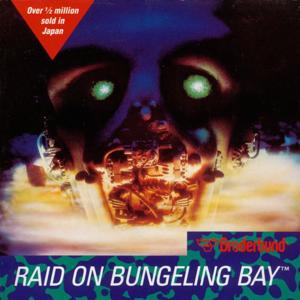
You are a highly trained Galactic commando deep in enemy territory. Power hungry leaders of the repressive Bungeling Empire have stolen a fortune in gold from the peace loving people, and you've just discovered their secret underground treasury. For more NEStalgia as well as show notes for this episode visit www.NEStalgiacast.com
- Developed by: Doug Smith and for NES Hudson Soft
- Published in the US by Broderbund
- This is mostly known on the Apple II and other computers released in 1983. Not a big success on the NES, but the port was simple enough. It’s actually one of the first Famicom Third Party games in 1984
- NES FEATURES
- It has 50 levels
- scrolling screens
- added music
- and graphics redone in a more cartoon-like style
- In addition, fruits and vegetables randomly appear which may be grabbed for additional points
- Although a level editor was included, there is no way to save levels created with it.
- An arcade game (Irem developed) of Lode Runner was produced with some added features like the ability to hang off the ends of ladders and an improved enemy AI.
- https://www.ign.com/articles/1999/02/18/locknlode
- Q: Can you talk a little bit about how the original Lode Runner concept and game came about?
- Doug:
- The original Lode Runner game came about in the summer of '82. A that point in time I was a student at the University of Washington studying architecture and my minor was in numerical analysis. As a starving student I took a part-time job at the campus. That job was a consultant at the academic computer center basically my job was to help the students log-on, print their jobs etc, etc. But for the summer quarter there are basically no students so I'm sitting at a desk with nothing to do and I had access to the computers. So to occupy the time where I was just paid to sit there and do nothing, another friend and I started to write a game.
- He submitted a rough version to Brøderbund around October 1982 and received a one-line rejection letter in response to the effect of "Thank you for submitting your game concept. Unfortunately it does not fit within our product line.".
- Around Christmas of 1982, he submitted the game, now renamed Lode Runner, to four publishers and quickly received offers from all four: Sierra, Sirius, Synergistic, and Brøderbund. He took the deal with Brøderbund.
- RECEPTION from others:
- Softline in 1983 praised Lode Runner, calling it "smooth, thoughtful, and quite addictive".
- Computer Gaming World praised Lode Runner's unusually easy-to-use level editor and the strategy necessary for an arcade title, describing it as "one of the few thinking men's arcade games".
- Ahoy! in 1984 called the game "a top-notch action game that requires both a quick mind and an agile joystick".
- Zzap!64 called the Commodore 64 version "not one of the most recent games but certainly one of the best ... a classic for a long time to come ... graphically minuscule and aurally crude, the game's sheer addiction kept my eyes propped open until the owls went to bed".
- In 1984 Lode Runner was awarded "1984 Computer Game of the Year" at the 5th annual Arkie Awards.
- Lode Runner Series
- Championship Lode Runner 1984 - A direct sequel with 50 levels edited by fans and intended for expert play.
- Lode Runner II (MSX) 1985 - MSX version released in 1985 with 50 levels (22 original levels & 28 new levels)
- Lode Runner’s Rescue (Atari and C64) 1985 - 3-D sequel with dozens of 3-D perspective levels and screen design editor.
- Hyper Lode Runner 1989 - Gameboy Version
- Battle Lode Runner 1993 (PC Engine) - revolves around traveling through 50 different stages in 11 different time periods, collecting gold without being caught by enemies. The character can climb ropes and ladders, walk on top of enemies, collect power-ups, and most importantly, dig a hole on the right or left of himself.
- Lode Runner 3-D 1999 (N64) - This looks archaic
- THE LODE RUNNER MUSEUM - https://web.archive.org/web/20131006092123/http://loderunner.home.insightbb.com/
Auto-generated transcript. Each paragraph starts with its timestamp. Speakers are not identified.
Lode Runner, you're a highly trained galactic commando deep in enemy territory. Your mission? To recover a fortune in gold, stolen from the bungeling people by their power-hungry leaders.
And welcome to NEStalgia, a chronological exploration of every NES game released in North America. I'm Mike. I'm Sam. I'm Joe. And I'm Sean. And today we're talking about Lode Runner. Guys, what do you know about Lode Runner?
Absolutely nothing. I know it is a game that is on the Nintendo Entertainment System in North America. Oh wait, I played this game. Yeah, I was gonna say, but we all played it, right? Yeah, yeah, yeah. I mean, I know as much as I played. Yeah, I only knew nothing about this until I played it recently, but... Well, I think it's funny that you bring that up, Joe, because this is actually like a popular game back in the day. Like, this was on almost everything. Yeah. A lot of computers play this game. It's big on the Apple II, actually. It's mostly known for its Apple II release. And that was back in 1983.
And while not a big success on the NES, the port is simple enough that they managed to convert it to, like, anything that would play it. So... I believe that. Yeah. Like, I mean, it's fairly simple, right? It's not like, oh, how are we gonna write the code for this one? But it actually was one of the first Famicom third-party games. This game came out in 1984 on the Famicom. So that's before the NES even comes to America. I feel like that's a waste. Like, it's a waste of, like, a superlative, like, first third-party game, or if... Unless it was just one of the first. Yeah, it's not the official first. Unless it was just, like, really popular. And people, like... It's all very questionable. People were really hyped that this was on...
That this was on NES. They were like, oh, man, now I don't have to buy an Apple II. But I do wonder about, like, how it got big over in Japan, like, big enough to scoop up, like, a Famicom release. Yeah. Because it is a Western... I mean, it was developed by Doug Smith. That's one guy. Okay? I don't know it personally, but I'm gonna say his name like that just because... I feel like you gotta include, like, allegedly. Well, we never... We never had that before, really. Like, you know, a game made by, like, one person. Is his... Does he have, like, his name, like, on the title screen? Yeah, he has his name in a lot of places.
Maybe not for the NES release because Hudson Soft did the porting for that. He didn't actually, like, do the converting for each system. He's responsible for the computer releases. Okay. But, yeah, that was like, you know... Any games were a thing even back then. Even in Japan, there's a lot of... For the computers, a lot of people were doing that. Even Iwata was doing that. I just want to get Doug on the line. Like, I feel like he's accessible. It's kind of a shame that we don't have Doug as a special guest for this episode. I know. Like, we could probably... Until now. Hey, it's Doug. Look under your seat. Joe was about to be arrested for impersonating a game developer.
Yeah, you didn't say his last name, so you could have just been any Doug. People call me Doug sometimes. Yeah, Doug from the hit Nickelodeon or Disney show, depending on which one you watched. So is this the part of the show where you tell us all about Doug and his life story and how he made the game? I don't really want to talk too much about Doug because I couldn't find a whole lot out there on him, but I just thought it was worth noting that he developed the entire game. It is published in the U.S. by Broderbund, the guys who brought us Deadly Towers, and we hate that. Classic. What? Was that where we landed on that? No, I'm just kidding. I was like, are you sure?
I mean, there was a lot to be said about Deadly Towers that I don't want to talk about again here, but I don't feel like I'm holding it against Lode Runner knowing that it was developed by an entirely different guy. Yeah. A lot of times we see familiar company names, and we immediately think about what else they've delivered to us. In this case, I'm just thinking Broderbund is just a publisher. They had no hand in the actual development of even the NES port, I feel like. But having played that game, Deadly Towers, and just recently having played this game,
it's not, because these are some of their first games that they've published, and it's just not a good look for me. Spoiler alert. Their taste, I would say. Like, their best foot forward, maybe.
Anyway. Yeah, no, that's fine. In fact, since we're talking about the game now, why don't we do some first impressions? Sam, you want to start us off? It just kind of looks like a generic arcade game to me. You know, there's guys you've got to avoid, there's things you've got to climb, things you've got to collect. I don't know, it wasn't really, nothing really jumped out at me. It wasn't, like, colorful. I think it's just a black background. Well, you were in space, right? Well, you were in space, and now you're on the planet of, I'm not sure what the... The Bungles or something. Yeah, we're going to have to talk about that.
Sean revealing that as if it's, like, commonly known knowledge that you're in space. I don't know. I just feel like to most people, it's like you're in a cave. I mean, it looked like I was in a cave until I read the manual. I will say that, like, going up ladders in some NES games has been difficult for some reason. Like, you know, the transition between walking on the ground and, like, climbing. It was very difficult even in Donkey Kong. Yeah, this, I think they get ladders right. So if there's anything... There's one point. Yeah. One point.
They get ladders right in this game. If you're a big fan of ladders, you'll love Ladder. Yeah, you're right. This is a perfect ladder simulator. Well, you think about how poorly elevator action handled stairs. Well, hold on. Well, I mean, think about what you just said.
They made them hard on purpose because... It's propaganda against stairs. Right, they wanted people to use the elevator, so they made the stairs hard. Where did we land on the ladder simulation in Wrecking Crew? Like, was that... I was a fan of that. Oh, you know what? Yeah, never mind. They have pretty ladders, too. I don't know if there was a time in Wrecking Crew that I ever had to, like, catch a ladder in the air, and I feel like you'd do that in this game. Yeah. Which, I don't know if you could have. So it's a little bit more... It's more detailed ladder simulation.
The physics is better in this game than I've seen in other arcade games like this. Okay. Like, climbing across that little clothesline is easier in this game. You see what happens when you soul search for your first impressions, Sam? You went from, I have no idea what I'm about to say, to, I have a lot of thoughts on ladders. No, it just got me thinking. Great. Joe, what are your first impressions on the game, not ladders?
But you're allowed to talk about that. All right, all right. I'm going to kind of mirror what Sam said before the ladder stuff, which was, you know, I actually started out reading the manual, which I don't do a lot. I don't read the manual first a lot. But while I was reading it, I was kind of already a little, like, worn out on this idea, because I was like, this feels like we've had so many of these arcade games. I'm just kind of overall, like, I was unfairly just saying, like, I'm already overall just, like, tired of this. It looks like something that I already know what it is.
So it just being that, like, generic arcade game kind of turned me off right away. And it did better once I was playing it than I thought it was going to. Like, I enjoyed it more than I thought I was going to. But middle of the road, at least at the beginning. Specifically for you, Joe, when you say arcade game, right, is it the fact that it's going to be a very simple, repetitive gameplay loop that bothers you? Is it the, like, high score featured mechanic that bothers you? Like, what is it about the arcade thing? Well, I also use the term arcade game very, like, loosely.
I'm not, like, there's actually nothing about it that, like, means that these are just arcade games. Yeah, I've heard you call Final Fantasy an arcade game. You have not heard that. I have absolutely not heard that. Do not put tarnished my name. I would like to maybe step in and say that I could see this game with, like, the insert coin overlay under it. Right. So I think maybe that is what you mean. Yeah, I guess I'm thinking more of, like, a specific, like,
type of arcade game. Like, a Donkey Kong style thing, which I'm not even a big fan of Donkey Kong, where it's just like this, yeah, it's like one screen. Granted, this is, like, a little more than one screen. But, like, you're climbing landers, you're grabbing, I guess not, but, you know, you're grabbing little power-ups and stuff, but, I don't know. It's just, it's just that sort of style. I'm, like, drawing with my hands right now, like the listeners can hear, can see me. But, it's just like that sort of style of arcade game that I'm just never been big on. I think you explained it very well.
Sean, first impression. Well, ladder physics notwithstanding, I will just jump on the meh parade here of, yeah, I mean, this is a pretty simple game in every instance. And, um, I, I thought it was, you know, at least, like, the controls are tight, and the
enemies behave correctly. And, um, I guess, like, there is some critical thinking involved, but as far as puzzle platformers go, this is a pretty, like, I'm nonplussed by it. And then, uh, just for you, Sean, here, since you brought up the enemies and stuff like that, AI in NES games so far, what's the verdict?
I, I, some games have done well, at least with pathfinding and trying to, uh, like, ambush you, I guess. Especially in a game like this, that's the whole thing, isn't it? Yeah, that is the whole thing. Um, but that has been, like, it's been this, uh, what's the word? It's been this in, intentional, like, since at least, like, Pac-Man. Right, okay. So, it's not that impressive, it's just like, yeah, it works. Yeah. I think the AI's like, well, I don't want to get to, I'll get into it later.
Okay. Yeah. Alright, so that was first impressions, and I think that was great. Real quick, my first impression of the game, I cheated a little bit by doing some research on this, and I was actually just very surprised to find out that it didn't all take place on one screen, uh, and that it does, like, have a scrolling screen, because all the other versions of this game, uh, especially the original computer versions, all took place on one screen. Oh. With the scale of the game significantly, like, zoomed back.
Yeah. To the point where you're just a little stick figure, and you can see every piece of gold, every ladder, every enemy, all at one time. So, I think that would be much better. That makes way more sense. Yeah. Because there were times where I just, I didn't know what to do, because I didn't know where the enemies were. Right, and you have to kind of prepare for that, because I think one thing that we're about to talk about is maybe the objective slash how to play of the game, because the only way that you really have to work around the enemies is by, uh, like, removing the,
um... Gold? The... No, um... The floor. Oh, removing the floor. Oh, yeah. Removing the floor around them, so this way they fall through it. We haven't really talked about that. We should talk about that. Yeah. So, go ahead, Sean. So, in Lode Runner, I don't really know what you are, but you... You're a Galactic Commando. You're a Galactic Commando that went out... With a pretty good shovel.
Equipped with a shovel, and apparently your only mode of defense is to dig a hole for your enemies to fall in, um, but you're also trying to collect big mounds of gold while you do that. Now, these enemies that follow you around and try and kick you off their planet cave, whatever it is, um, will sometimes pick up the gold, and you have to, uh, bury them in order to get it back. It's typical, like, you know, mid-80s Japanese arcade game, like, logic.
Yeah, it's like a maze more than anything, right? Yeah. Like, you're kind of exploring each level in the sense of it being a thing that you have to explore, figuring out the best way to get the gold without being touched. Exactly. You don't want to get touched. And you can choose to dig a hole on your left or dig a hole on your right. You may not dig a hole under you, and it's best not to run into one of your holes.
Yeah, because... Well, I'd say it's crucial not to run into one of your holes. Yeah. Why would you say that? In some cases, you want to, though. In some cases, you might need to drop down on something that's below your hole. That's true. But you can't get out of your hole once you're in your hole. Well, no, but sometimes the hole, like, if you're on, like, a... If you're on a platform... Oh, that's true. Yeah, then you can drop down. Okay, yeah. I guess I meant that more in the, like, you know, you'll accidentally kill yourself way. But yeah, that's true. It is another way of navigating. Yeah, the holes do fill back in seconds after you dig them.
And so the game, you know, we haven't really described it in full yet, but it's just a bunch of, like, blocks, right? Like, you're just walking on, like, the equivalent of, like, brick wall blocks. And they're not brick walls, obviously, because you're creating... You know, they're dirt. But it's not a very, like, visually enhanced game. It's kind of just... I don't... I'm not saying abstract. You can tell what everything is, but it's so simple that it doesn't leave... Like, it leads it all to your imagination, and I'm not trying to imagine anything as crazy as the manuals leading me on to believe.
But hey, this is, like, one of the first games, I guess, along with Wrecking Crew, which could put on the back of the box, like, fully destructible environments. You know, like, that just... That got big in the mid-2000s. Yeah, not even Crackdown 3 could complete the fully destructible environment thing that they were tooting for years. But is it fully destructible if everything you destruct comes right back immediately? Well, also, the ladders are indestructible. As they should be. Yeah, that's ladder physics. Yeah, ladder physics explain that things aren't destructible.
All right, to bring it back to the manual for a second, I feel like we owe everybody... We owe everybody the plot. Yeah, we owe everybody the plot, at least, because, as Sean said, this game does take place in space. You are a galactic commando deep in enemy territory. Power-hungry, and I'm going to emphasize hungry here, leaders of the repressive, bungeling empire have stolen a fortune in gold from the people. That's... Wait, did they say repressive or oppressive? They said repressive. Interesting. Yeah, interesting choice of words. Wait, you're not even sure where this is about to go, okay?
They've taken a fortune in gold from the people, whether that's from this planet or another planet. People capitalized or... People is not capitalized. I'm emphasizing the people more than they are. And they've taken all this gold from the people by means of excessive fast food taxes. What? Yeah, they've taxed the fast food. Oh. And so, like... They didn't even, like, raid for it? Is that really stealing? Yeah. It sounds like... This game has, like, a political agenda, right? Wait, do they take over... They took over the government? Yeah, well, the bungeling empire would be presumably the government itself, right?
Taxation is theft. Yeah. It's essentially what the game is. Honestly. So, now your task is to infiltrate each of the 50 different treasure rooms. That's right. There's 50 levels in this game. Oh, jeez. And evade the deadly bungeling guards and recover every stack of bungeling booty. For taxes? It's just a terrible name.
Yeah. Bungeling booty. Also, wait, if you're taking the gold, right, which is the taxing of the people, are you then redistributing the wealth? It does not say. Or are you keeping it for yourself? I feel like you're... I don't remember a cutscene. You're taking my tax dollars and keeping it for yourself. You're lining your own pockets. I don't want to play a game where somebody else goes to, like, the, you know, the Federal Reserve and steals all the money and then it's like, I was already taxed on that. They're taxing fast food also. Like, that's not that bad. Yeah. They could be doing a whole lot worse. But these people are trying to kill you over it?
Did you mean sin tax isn't, like, a computer language or it's a sin to tax? No, it's a tax on a sin, like obesity. Oh, okay. Or, like, you know, I guess, uh, uh, what's, what's the word? Not... Gluttony? Gluttony. Yeah. Gluttony. It's a, it's a nanny state maneuver. Wow. Yeah. I love where this is going. This has been a fantastic episode so far. Between the lines of the manual there. I was going to say, maybe it's time for us to talk about gameplay. We've been talking about it. We have been talking about it. I don't, I don't really actually know where I was about to. Leave it out. Anything but what we're talking about.
The, uh, a couple of interesting things for you guys when it comes to the NES version of this game, other than the fact that they removed, like, the best feature that it could all be handled on one screen, presumably a programming limit for the NES maybe. Like, it was like, oh, but if you try to put it all on one screen. I think it was more just probably like a resolution thing. Oh, okay. Yeah. I guess, I guess that's what I meant. Yeah. But you're, yeah, you're making more sense out of it. Yeah. Okay. There's a great video by, um, the 8-bit guy on YouTube. Oh, yeah. A very wholesome guy.
Um, no, seriously, wholesome. Okay. And he does a video explaining, like, NES graphics and just, like, how, how they work and how you, like, design a sprite and how that sprite is read in the memory. So, I'll, I'll link that video. I think it's really cool and worth checking out. But the NES version of this game has the 50 levels, has the scrolling screens, and added music. There was no music in the other versions of this game before the NES version. Might that have been preferable?
Um, you know, I think so. Because, uh, if anybody would like to sing the track right now, go for it. But I guarantee you do not remember it. I don't. Nope. Yeah. Well, actually, no. Okay, I was gonna say, that'd be crazy if you just have, like, all of the NES tunes we've played so far stuck in your head. I'm sure some of the listeners do, because we play all the music in between this stuff, and I'm sure some of them wish we would just get on with the show.
Would you have already played this? I would have at least played that. If it is just the one track that I'm thinking that it is, then I would have played it by now. So, listeners, you go ahead and hum it out loud. Wait, you mean this track? You just play it again right now? Do you want me to play a track from a different game? No, no, the same track. All right, I'll play it. This is Muck Rider. Yeah, sure, I'll play it right now.
Yeah, that one. So, that's the one song. That's the one song, and then also, the graphics were redone in a more cartoon style. And then, the biggest addition, in my opinion, fruits and vegetables randomly appear, which may be grabbed for additional points. There were no fruits and vegetables. How was the game even playable before the NES version? See, now the fruits and vegetables makes more sense. Right. Because of the fast food tax. Yes, exactly. I'm glad you understand. So, it's like, you can just get these. Yeah, this is actually a post-burger time world.
Where people, the chef from Burger Time is having so many nightmares about making those patties that he decided to tax all of the people, so this way he wouldn't have to make any more burgers. I didn't know this whole time. Emphasis on the people. Right. I know this whole time we were in the bungeling empire. It's all part of the NES cinematic universe. Yeah. Okay. Yep.
And then a level editor, of course, is included in the game, but there's no way to save levels. So, hooray. Another one of those. But did anybody play around with that? Yeah. I dabbled in it a little bit because I do like the level editors. This one, though, I mean, I think I need to say a little bit more about the gameplay as well. But with this level editor, I think it's just that this game is even simpler than Wrecking Crew.
It's not as fun to me to set up the levels because there's not as much to play with to make an interesting puzzle. Yeah, it's almost like, and it's not as much fun as this, but we were talking about Pac-Man earlier. Sean mentioned that. And I think that if you were given a level creator for Pac-Man, it's not like, oh my god, sky's the limit. I want to create so many levels. It's like, you could create a few, and Pac-Man Championship Edition has some great new levels that people haven't played before.
Gimmicky levels. Yeah, gimmicky things. But it's not, at the end of the day, all you're trying to do is just avoid other enemies and pick up gold. In Wrecking Crew, you had a more defined objective that made puzzling cool. In this one, there's not many puzzles to solve. It's not really a puzzle game. It's just a maze. Yeah. Wow. Maze is a puzzle.
That's true. I think what... I didn't... Well, you know what? I'm not going to rescind it, but I understand what you're getting at. Are mazes puzzles? Mazes are puzzles in the sense that you have to find your way out of them, but I'm saying that there's no, like... It's just A to B. It's not A to B to C. When I see, like in an airport, I feel like they say mazes and puzzles, like on the little paperback books you can write in. I feel like it's all... They list both as if they're separate entities. Write in if you think a mace is a puzzle. I don't want to forget that Joe had thoughts on actual gameplay, so I'd like to get back to those actual thoughts.
So, because I actually, while I was playing this, like I said, my initial impression was like, I was like, ah, like, great, another one of these. But I sort of like reluctantly had fun. Like, I was kind of like, I wanted to be like bitter about it. I'm like, no, this is stupid. But I had some fun, and I think that came from like some of the design of the way the levels work, I think, have to do with the fact that you can't dig straight below you.
So like sometimes there'll be like several layers of ground, and if you don't like plan ahead when you're at the top, how many tiles back you want to go, you're going to end up trapping yourself where the only place to go is down, and then you can't go down. So like if you don't have anything right next to you, ground right next to you, you can't dig into a wall, you're trapped.
Like you have to start the level over. And I think that was like a little bit of a, what presented a little bit of the challenge. The problem was, was that that was like one of the only things that made it like puzzly for me. It was like just deciding where to dig those holes. Very one dimensional. And that didn't really keep my attention for too long. And I think that that leads to a note that I had kind of going through. I didn't go through all 50 levels, but as the game progressed, in short, like levels did get harder in the sense of like enemies were killing me faster, but it wasn't becoming more challenging from like a, oh, how do I get the gold? And how do I climb the ladder? Like, you know, there was no like new obstacles.
A refresh would have been good if even like every 10 levels, something new got introduced, you know, because that would at least you'd only need to come up with five new things. And then you'd, you know, like you'd be good to have some fresh gameplay every now and again, while maybe like reinventing the hook. With this, it's like, I don't know, after the first 10 levels, I'm sure that there were other levels that were harder or maybe like pose some kind of new challenge. But you already have all the concepts. Yeah, but all the concepts are down. And so it just didn't make for a very interesting gameplay. And even, even like beyond just the difficulty based on like adding new concepts, just the difficulty based on the design of the puzzles.
I, after a while, I just skipped because you, it's one of those games where you don't have to play through every level. You can just skip to whatever level you want. Yeah. I just skipped to level 50 to see what it was all about. And it wasn't like much harder than some of the other levels. And in fact, I think I'd probably already played levels that were harder than that one.
I don't remember exactly. Remember, we had that with Wrecking Crew too. Yeah. Which was another game where you could select levels and we kind of were like, oh, the last level is not that hard. It didn't seem like they were trying to do like a gradually getting more difficult, which makes it. I feel like when you have such a limited palette though, there's, there are only, only so many
permutations of those items or all those instances of obstacle or like, you know, the ground or ladders again. Sure, that's true. But I'm saying, I'm saying even without like adding new things or anything like that, if you just take all those levels and say like, what, there must be an order to which that they're like generally to most people, like the easiest and the hardest. Yeah. And you like, I don't know, it feels weird to not put them in that order. Like it's not as rewarding.
Yeah. I guess my point was just that it's, I don't think that you can make something all that much different when you only have, you know what I mean? Like when there's only so many. Wrecking Crew had so many different like enemies and types of things. And like, you know, the structure of the stages could be designed differently based on like where you place the bombs and the walls.
There was just enough variables. In this one, to Sean's point, there's just not enough variables in the game to make. Especially to make 50 levels of it. Maybe you made too many levels. You could probably just get real gimmicky every now and then as like level variations. Like one with almost no floor and it's all ladders. All ladders, yeah. All ladders are all ladders and clotheslines, whatever that rope thing is.
You know, but yeah, I agree. There's really not a lot you can do with it. And I do want to give, since Joe talked about like being able to select the levels, I want to give that a shout out as a feature. I kind of like that. So this way you don't have to like, let's say someone actually does like this game and like the level 21 to 29 is just really good. You don't want to have to play through all the fat again to get to that. So I do like that like the games include this as an option. I'm not saying like Ghost and Goblin should have a stage select right at the beginning,
right? That's not like the same comparison. I guess I'm talking more for like Solomon's Key didn't have that. And remember how much we hated that, that like you had to go back to the beginning when you died, when you actually had an official game over. I would have liked to have just been able to see all the different variations of the puzzles because it's kind of like Sudoku, right? Like if you do like a Sudoku puzzle, you don't ever want to solve that same puzzle again. You solved it. Now you want a different thing. So this is a nitpick and I'm not really holding it against the game, but for some reason,
psychologically, like if it's a game like Hitman and as soon as I buy the game, like I can play any mission that I want, like that makes sense to me. But if I'm playing an 80s NES game, for some reason, I just feel like I'm in debug mode if they give me all the levels at once. Like, I don't know. Like I feel like the progression of, you know, level one, two, three, four just makes more sense in that sort of sense. I understand. It's less rewarding when you have everything. Yeah, exactly. I understand that. It's kind of like playing with cheat codes on.
Yeah. You know? And it's because like such a large precedent had already been set to say, don't do that. Yeah. Do the, do like the, you know, there's no narrative, but it's almost like if you could select in Super Mario Brothers to go right to World 8, which you kind of technically can, but like, let's say even right from the main menu, you would do it. You wouldn't be like, oh, today I'm just going to start on World 3. It's a speedrun. Yeah. Right.
I realized I was going to say something about the AI earlier, and that was just that it's like really basic, but it is, you can manipulate it, which I think makes good AI. AI. So, I mean, what else is the AI supposed to do in this except for follow you? So you can kind of lead it down one way and then like juke them and go the other way. So like I did the first level without digging holes, just because I didn't realize you could do that the first time I played.
But I did lots of like tricking the AI, which I, it did make me feel at least a little bit clever. So I think that, you know. Was it clever or cheesy? You know, a little bit of both. But, uh. Well, I like the juke to your point. Like I do like. You can manipulate them. Which I think is good. Yeah. Doing like sidesteps that make it seem like I'm about to jump off the ledge. Yeah. And then all the AI like starts jumping. They're like, guys, he's going to jump.
And they all line up down there. Right. I'm like, you idiots. I'm getting the gold over there. Exactly. So I thought it was a nice touch because you couldn't necessarily do something like that in Donkey Kong. Yeah. Which I guess is like relative to this game since it came out in 83 and Donkey Kong came out in 81. So there is like some relative programming there that I would give Douglas Smith some credit for. Just Doug. Yeah. I called him Douglas this time.
Mr. Douglas Smith. Joe, did you think of it? Yeah. It was just a random, random tack on to what you guys were saying, which about the, I think the ideal world of these list level, which obviously is limited on the NES. But like, I think it would be that you're, as you beat a level, you've unlocked it to play again. But now we're talking about battery saves and whatnot. Yeah. Like an open world version. Yes. Open world load runner. And I will mention just since we were talking about the stage editor and I missed this. The manual actually does have a cool little like guide for how to create a playable level.
Not that it actually like teaches game theory or design, but just like simple questions that kids might not think about. So I thought that that was like a nice touch to have that in the manual just to share the... Is it possible to complete? Yeah. Yeah, exactly. Like are all the gold placed where they can be gotten? Is there an escape ladder reaching to the top of the screen? Is there a way to get to the escape ladder? You know, things like that.
That's cool. I think like, you know, we don't need something like that, but kids definitely would need something like that when they try to make these and then not understand why they're not working out. Unless they're, you know, really dumb kids, I guess. Like... And we can't help them. Yeah, we can't help them. But I just wanted to say that Joe earlier had brought up the arcade game thing and he wasn't wrong because Irem developed an arcade version of Lode Runner and it added features like the ability to hang off the ends of ladders and an actual improved enemy AI, but I tried to look up like what was improved about it.
Just improved. Just improved, yeah. It's like one of those like patch notes that doesn't give you any actual significant details. So I was like, all right, whatever. Improved balance. Yeah, right? And then I'm going to talk a little bit about Doug Smith since... Dougie! Sean was a little upset I didn't talk about him. I read it right at the very top. I thought that's what we do here. So I'll give you some quotes from him because we love hearing developer quotes. This is a new segment on the show, the Doug Smith quotes every episode. Every episode Doug will give his feedback on games. So this was an interview with IGN for like a history of Lode Runner thing. And I think this actually came out around the time that Lode Runner was getting an N64 game.
So bear with me for a minute. Wait, did he develop the N64 game? I think he played some kind of role in it. Wow. That's cool. So the interviewer asks, can you talk a little bit about how the original Lode Runner concept and game came about? Doug answers, the original Lode Runner game came about in the summer of 1982. At that point in time, I was a student at the University of Washington studying architecture and my minor was in numerical analysis. As a starving student, I took a part-time job at the campus. That job was a consultant at the Academic Computer Center. Basically, my job was to help the students log on, print their jobs, etc, etc.
But for the summer quarter, there are basically no students. So I'm sitting at a desk with nothing to do and I had access to all the computers. So to occupy the time where I was just paid to sit there and do nothing, another friend and I started to write a game. We'll pause there for a second. Does anybody see like a dilemma here? I think the game is owned by the university. That's a problem. Yeah. Thankfully, he didn't admit it until 1999.
And also, well, to be fair, copyrights at the time were probably different. You know, like, there probably wasn't a precedent for someone making a game at a university and having it be like a debate for whose intellectual property it is. Yeah, I have no idea how IP law was in the 80s.
So it's fun. Yeah. And, you know, we mentioned that Broderbund, you know, published the game and stuff like that. So he submitted a rough version of the game to Broderbund in October of 82. So it actually really only did take him that summer to make the game. And he received a one-line rejection letter in response. And it was something along the lines of, this is Doug remembering it. Thank you for submitting your game concept. Unfortunately, it does not fit within our product line.
And Doug never said no because around Christmas of 1982, he submitted the game, now renamed to Lode Runner. I don't know what he originally had it renamed as. And he submitted it to four publishers and quickly received offers from all four, Sierra, Cirrus, Synergistic, and Broderbund. And he took the deal with Broderbund. Wow. So it turned out all you need is just to change the name.
All you need to do is just change the name and you have a winning product. Wow. Yep. Good job, Doug. Any thoughts? I thought Doug actually gave like a legitimate answer to an interview. No, that was very good compared to what we're used to. Yeah. I mean, the Japanese talking like, you know, cryptic circle. Like, I feel like Sakamoto says things and then like people at Nintendo get it. They're like, oh, yes, yes. I understand that reference he's making. And we're all sitting here like, he's just talking about like the smallest little detail in a game that means nothing. You missed the bus that day. Right, right. I have a question, but it's not about the interview. It's about the context of the interview. Sure. Lode Runner for N64?
Yeah. Yeah, we're going to get to that, but it is with 3D polygons. But like a 2.5D kind of deal or is it like a 3D? Yeah. Let me, hold on. I could pull it up for just for you guys, but you're going to have to give me. All right. Well, that was totally different than what I thought it would look like. Yeah, but you were right about the 2.5D. Yeah, but it was cool. It was still like in a 3D world, which was cool. I thought it would be like Super Smash Bros looking. Yeah, I have a very controversial opinion with that first generation of 3D games for N64 and PS1 where I hate them all. Oh, I didn't think it was controversial.
I kind of like how crappy they all look, you know, in just like a look where we've come from kind of deal. Yeah, I just find most of them to be like, it's actually amazing. I've kind of fallen in love with like PS1 2D games just because like the sprite work is like so good. And it's like, it's like, wow, it's a step above Super Nintendo graphics without like forgetting all of the good things about Super Nintendo games. So it's like every now and again, we need to be reminded that stuff like that exists.
I'm talking specifically probably about like Castlevania Symphony of the Night, which is just such a, such a cool game. Still holds up. Absolutely. That would be on my essential games list. I'm just going to say it. Oh, all right. Okay. No, I still find, I still find the old PS1 N64 graphics charming in the very least. And there definitely are games that did it correctly.
Yeah. It really depends on the game. I think Metal Gear Solid was. Yeah. The closer that they try to look real. Yeah. The worse it is. You guys haven't played. They don't look real yet. If it's like a charming like cartoon, then I think like Crash Bandicoot, I think looks great. This is a tangent, but if you haven't played Paperboy 64. I have played Paperboy 64. Just look at that hot, hot garbage. And it is trash. That game is not good. And so that N64 game was called Lode Runner 3D.
In my opinion, it looks archaic. But, you know, I guess at the time it was received. It was 3D. That one. Well, I mean, yeah. 2.5D was not going to catch on. That one looked better. If they called it Lode Runner 2.5D, people wouldn't get it. That one looked better than I've seen N64 games look. So I'll get at that. There were other Lode Runner games though, guys. Let's not forget Championship Lode Runner. Of course. Which came out in 1984.
A direct sequel with 50 levels edited by fans and intended for expert play. So fans were so big about it that they made their own levels. And then this was like the best of the original Lode Runner. Then you have Lode Runner Roman Numeral 2. Is there something to pronounce it that way? Are you sure it's not just 11? It could be. I think it's I.I. It's I.I.
And this was actually on the MSX. It was only released on the MSX. And came out in 1985. 22 original levels and 28 new levels. So that's cool. And sorry, the 22 original levels doesn't mean 22 new. The first ones. 22 of the first ones, yes. It's funny that like for us, right? Like I don't. I could care less about the levels, right? Like I'm not like, oh, I hope they're right back stage six.
But apparently fans did. Then there's Lode Runner's Rescue on the Atari and Commodore 64, which came out in 1985. A 3D sequel. And again, like. People really like this game, huh? 3D not in this. You know, it's 3D perspective levels. So we're talking about like on the Commodore 64, which couldn't clearly do 3D. That was the name of it like just in Europe, though, right? Because I think in America it was Lode Runner Other M. That's very funny.
Considering we had the Metroid episode. That's why I'm laughing so much. But this one also came with a screen design editor and dozens of 3D perspective levels. So good on them for trying something new with the formula for the first time. And then Hyper Lode Runner in 1989, which is just the Game Boy version of the game. So I don't know what's hyper about it. Hot. And then Battle Lode Runner, which is not a Battle Royale Lode Runner game. It's a 1993 PC engine game and revolves around traveling through 50 different stages in 11 different time periods, collecting gold without being caught by enemies. The characters can climb ropes and ladders. So ladders make their return. Thankfully, I was worried ladders weren't going to be confirmed.
And you can walk on top of enemies, collect power-ups, and, of course, dig a hole to the right or left of yourself. They got right and left in there? Right and left. I'm just imagining these things written on the back of the box. You can walk on top of enemies in this game, too, don't you? I don't know. I don't know if you can. I never tried it.
If they fall in the hole, don't they die, though? No, if they fall in the hole, they only die if the hole regenerates. Oh, right, right. So you can use them and you can leave. Okay, that makes sense. It's like you get them out of your way. They fall down and then you walk over. Right, but then you can walk over. Okay, cool. I cannot believe that we've been talking about this game for this long. Well, if you wanted more information about Lode Runner, you could always check the Lode Runner Museum at loadrunner.home.insightbb.com. I thought it was somewhere in New York.
The Lode Runner Museum in Paris. It's funny because we had, like, the elevator museum when we were talking about elevator action. True. So Lode Runner having a real-life museum wasn't out of the realm of the possibilities.
But before we get to the essential games list, I do need to talk about the reception from media outlets at the time of Lode Runner's release. Because, as I mentioned, this was a very well-received game and obviously, like, fans loved it. So it wouldn't be fair if we just kind of poo-poo all over it without talking about how it was received at the time. I think it's totally fair. So I'll just give you a couple of, I'll give you the name of the magazine or publisher or whatever, and then what they said.
Wait, to be clear, this is the Apple II version? This is for, yeah, mostly for the Apple II version. I think there's some for the Commodore 64 version. Okay, but this is, like, how it's meant to be played. Yes, exactly. Okay. Softline in 1983 praised Lode Runner, calling it smooth, thoughtful, and quite addictive.
Great. Computer Gaming World praised Lode Runner's unusually easy-to-use level editor and the strategy necessary for an arcade title, describing it as one of the few thinking men's arcade games. Oh, my God. This was a lot earlier than when the NES game came out, correct? Yes, 83. Ahoy, in 1984, called the game a top-notch action game that requires both a quick mind and an agile joystick.
Zzap 64, called the Commodore 64 version, not one of the most recent games, but certainly one of the best. A classic for a long time to come. Graphically minuscule and orally crude, the game's sheer addiction kept my eyes popped open until the owls went to bed. Until the owls went to bed. That is beautifully written. No, that is too purple for a review. Yeah, this guy was in the middle of writing Moby Dick 2.
And he was writing the sequel and at the same time had to review Commodore 64 games. I actually just don't even think it's that well crafted of a sentence. Like, while not the most recent game, is not like something you should hold against it. Like, I don't understand this guy. It's not new. It came out a while ago. But. And the graphics stink and it's kind of crude. But. I like. When are you going to start phrasing it? Night birds. You refer to owls as night birds? Yeah, right? Okay, yeah, sure.
And. Last but not least, in 1984. Kotaku. Load Runner was awarded. Jason Trier said. In 1984, Load Runner was awarded 1984 Computer Game of the Year at the 5th Annual Arcee Awards. That's just astounding. So, there you have it. I mean, I was looking up some of the reviews and I was kind of surprised to see, like, just even like modern reviews talking very fondly about it. Which, like I said, I had fun with it, but I just don't see it. I just don't see what the. And I guess it had to do with the time and what was available at the time. And maybe. I could say that I've had as much fun with that game as I do with, like, the offline dinosaur
in, like, a browser. Oh, I like the offline dinosaur. I don't know what you're talking about. I think I like the offline dinosaur more for being real. It's so funny. The offline dinosaur. Wow, deep cuts over here. Anyway, I'm sorry. No, that's fine. I think it's time that we move into the Essential Games list.
So, you have Lode Runner. All right. A game that was released in 1983, but really in 1987 for us, but also in 1984 for the Japanese. And then it also got released on the N64 in 1999. And now you're going to vote for its Essential Games list, you know, whether it's on there or not. And that means, is it still worth playing today?
Sean? All right. I sort of regret saying that I had more fun with the offline dinosaur because that's not true. I think that Doug deserves more than that. And I was just being like a little too facetious. But that being said, I didn't really enjoy this game. I mean, like it like I played it and I didn't feel like I was like pulling teeth.
But it's just there's not too much going on here. We talked about this way too much. More than it deserved. But yeah, it's not going on the Essential Games list for me. Maybe you guys think so. Joe? I mean, I'm always I'm drawn to puzzle games somewhat. And like even even like something that's like so simple that the mechanic is so simple. I'm like, oh, they could do some interesting things with just this one mechanic to be cool. But I feel like they never really got into the stride of like doing anything that was that that got that complicated or that interesting. So like overall, I kind of.
It lost me relatively quickly and it was it was it was a fun aside, but I probably wouldn't go back to play it. OK, Sam. Kind of what everyone else has been saying. It's I just didn't really like it that much. It's like a basic arcade game.
It accomplishes what it set out to do. But also like the fact that the whole game doesn't even fit on the screen makes this not even the best version of this game. So there's no way that it's essential for the NES if NES version of it isn't even the best way to play it. So I'm saying no. All right. Point.
This whole time I've been playing the offline dinosaur game. You guys are doing your Essential Games list votes because I had to look it up and I have played this before, but I had to make sure I knew what Sean was talking about. He's talking about that game on Chrome when you're not connected to the Internet. I think you have the dinosaur jumping over the cactuses. Oh, I thought that that was like I'm sorry. I didn't describe it correctly. Yeah. No, no, no. I just know. Yeah. I mean, like you made it seem like it was like something everybody knew. I was like, wow, deep cut.
So, yeah, if you want to play that game, I will admit that I only played that for about I'd say a minute and a half while you three talked. But yeah, it's a much better game than.
Wow. And it's and there's much less even to the sounds to that you're missing. Oh, I'm missing the sounds. I turn them off to be put on my podcast. Yeah. But here's the thing. If that was better in just two minutes than load runner, then I think we have our answer. Of course, load runner is not essential.
Look, I'm sure that this game was fun when it first came out. Right. The difference is, is that like when you go around and ask people about Pac-Man, they still have heard about Pac-Man to this day. Like people have played Pac-Man. You can still have access to it. No one's looking around for like an Apple II to get load runner on, you know, like that's the problem. But why are they still making load runner then? Are they? I don't understand. Well, the last thing was like the 1999 game. Still, that's like a that's a while. Yeah. I mean, but we're we're like now. That's true. All right. Sorry. I interrupted. It sounds wrong, but it's true.
So. With four no's. That is not going to make the essential games list. But it also means that we're at the end of our show. Oh, good. So without without anything else to say, that's been Nostalgia. I hope you've enjoyed it. Today was a pretty good episode for us. I had a lot of laughs. I learned that owls are just night birds. Night birds. And you guys know night birds. And we all were gifted the offline dinosaur game. Join us next time for the offline dinosaur game. Actually, if you go into your phone now, you have it like it's it's available now. How do you know what phones they have? It'll be a flip phone. Download Chrome and then do it.
Anyway, they could have flip phones now, too, because they got those foldable phones. But they do have foldable phones now. Yeah, it's crazy. With the glass. Yeah. But if you have a you know, if you have a mobile device, you could also type in www.nostalgiacast.com because we are optimized for mobile, baby. Yeah, girl. If you go to that website, you'll get a specific look just for the mobile look. We even have an optimized for tablets, too. So if you have an iPad or a shield or a Surface. An NVIDIA shield? Yeah, I don't know. Does the NVIDIA shield exist anymore in like a handheld form? I don't know. I heard it's a great emulator. Um, or a great use for emulators.
Okay. But yeah, go on the website. Check out all the other stuff we have. There'll be links to everything here. I don't put the links in the actual descriptors of the episode specifically so that you go to the website. Fun fact, the website's free. Uh, we don't charge anything to go on there. For now. Yeah, you won't be sent a bill in the mail 31 days later being contacted that your ISP has hit the, uh, the URL. We also don't have pop-ups. We also don't have taxes on fast food.
It's true. Um, on the website. I can't speak about your specific country. I know that we have a few international listeners. So, for all I know, they are taxed on fast food. Canada seems like the kind of place that would do that. I mean, we're all, I mean, whenever I go to a fast food place, there is like tax on the receipt. But you consider that like a fast food tax or you just consider that sales tax? Technically, I mean. Okay. Look, that's for the post show. Okay? Sorry.
Um, NostalgiaCast. And then always, uh, if you're also in, uh, in the website, if you go to contact, you can contact us, submit a little form submission. I know that's how a lot of people do it. We get the email and then we get to read all your nice thoughts. I just want to say we've been getting a lot of thoughts lately.
So, I love that. Keep it coming. And if you don't want to do it that way, you can always, uh, contact us on Twitter, uh, at NostalgiaCast. NostalgiaCast, we post, uh, at least one to two images every single day of relevant games that we're currently covering. And we have the schedule for the upcoming games on the Twitter. It's a, it's my, uh, the pinned post on the NostalgiaCast page. So, if you want to know what games are coming up that you can play along. That's how you do it. All right. Great. I'm Mike Esposito. You can find me on, at Esposito Film on Twitter. And I'll talk to you soon.
Bye.