064 · RING KING
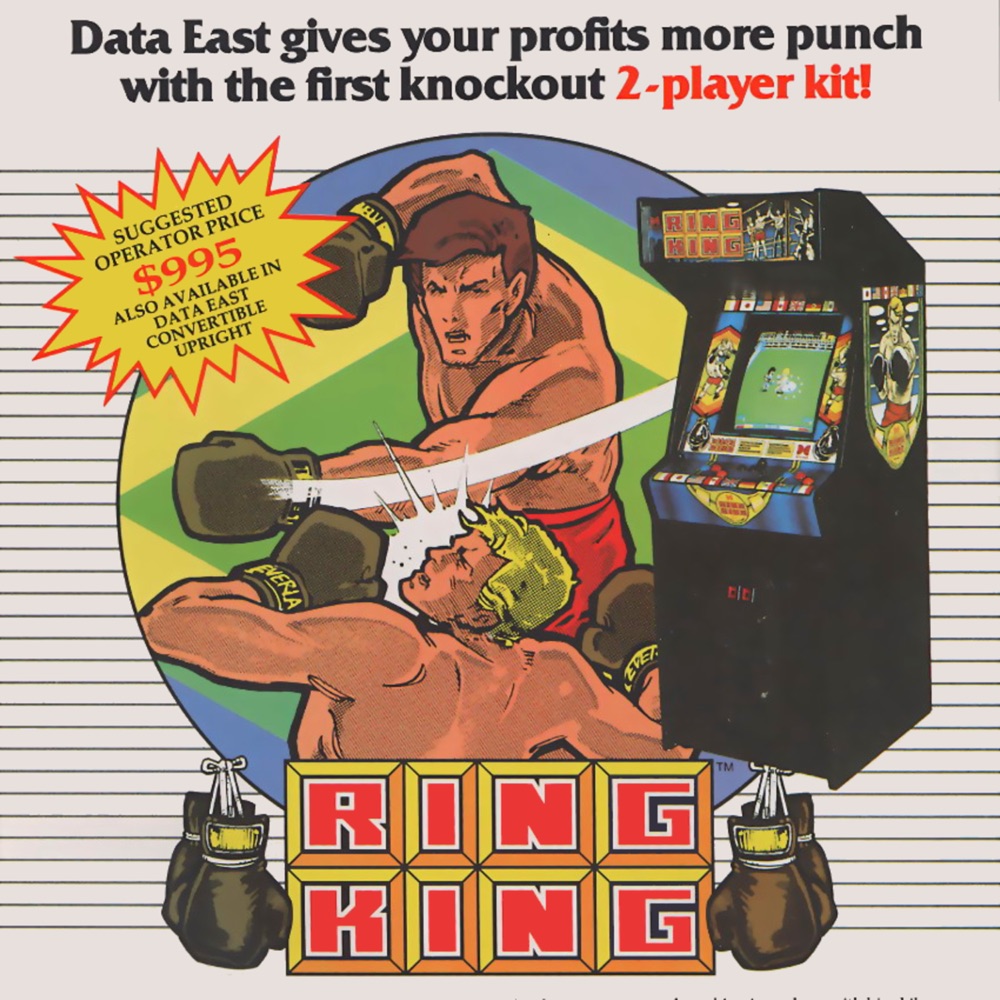
Boxing fans await the match of the century, a World Championship title bout in which challengers with varying abilities and styles contend for the coveted title, Ring King. For more NEStalgia as well as show notes and links check out www.NEStalgiacast.com
- Data East
- 1985 Arcade release, 87 for NES
- King of Boxer in Europe
- Family Boxing in Japan
- choose from several different types of punches and defensive maneuvers, along with unique special attacks
- revives their stamina during the round interval by pressing the button rapidly.
- The boxer's abilities are determined by three different stats; punch, stamina, and speed. (RPGish)
Auto-generated transcript. Each paragraph starts with its timestamp. Speakers are not identified.
Ring King, challenge your friends or your computer to the Data East Championship title bout.
And welcome to NEStalgia, a chronological exploration of every NES game released in North America. I'm Mike. And I'm Sean. And that's it for today. This seems to happen, but you know, it's okay. We've got a good rapport. I like our, you know, this is kind of like what we call the Donkey Kong singles. Because we did the four Donkey Kong episodes back to back to back to back. And the fans were raving about those. They said, I hate it when Joe's on the podcast and Sam's on the podcast. I call him Sham. That's how much. Whoa. That's how much. Well, it wasn't really me. It was Oliver from Mississippi who wrote in and said, Sam, more like shmam.
Shmam. Yep. And I said, yes, ma'am. I'll take another. And we'll take another wrestling game right now. If you can call it. It's not really a wrestling game. It's a boxing game. It's entirely a boxing game. Very different sports. So we haven't had one of these though, then. We haven't. We haven't had a puncher. I was sort of like, I was sort of like, hey, I don't play boxing games now. So this must be cool. Right. Like, I have nothing to compare this to. Nothing with like Fight Night. You never played those games? I did not. Okay. There was like Fight Night all the way up to round three.
Maybe I played one of them when like the PS3 first came out. I remember like my friends really liked them growing up. And like, I thought it was cool how like you threw your punches with the analog stick. I was like, oh, that's neat. Yeah. Makes more sense. I remember that. Yeah. But now it doesn't. Now it doesn't. They took away the analog stick for these games. This was 1987. 1987. This did get released in the arcade first, 1985. Both Data East though. Data East also doing the 87 game. And we don't love them. I don't like Data East. And this is like kind of a meme just across the board though. Like anybody who's a fan of the NES kind of knows that Data East wasn't necessarily known for their great games.
But we're just discovering this as we play this. Yeah, exactly. I kind of, this is one of those names kind of like Bandai Namco when I see them and I'm like, I don't really need to like, I don't really want to play this, but we have to because we signed up for a chronological exploration. Yeah. All right. So a couple of things real fast before we get into the gameplay, which is going to take up most of this episode. It has a bunch of different names. So it was Ring King here in the United States, but over in Europe, it was King of Boxer.
I'm sure that plays better in Japanese. And then, well, no, because in Japan it was family boxing. Wait, so what was it called where? In Europe, it was called King of Boxer. King of Boxer. And so both of those just sound funny to me. Like family boxing sounds like you're beating up your family in a game of boxing. I kind of like that. Which I think like, you know, sure, right? Like you would play that game. You didn't get that game. That's not what this is. But I would have played family boxing. Yeah. And King of Boxer just sounds like they just didn't try to localize it. Yeah, exactly. Boxer King would have been better. King King Boxer of Box. No, I'm sorry. Yeah. The King of Boxer of Duke of York. Yes. OK, great.
Sean, do you want to walk me through maybe like what you do in this game? You box. Great. Any rules for boxing that our fans at home should know? So basically, this is, I guess like this is just what boxing is when you break it down. But this is more a stamina management game than it is like beat them up until they drop sort of thing. Yeah, you really can't get away with just kind of like I think of Urban Champion. Yeah. Which was kind of boxing, but street brawling and beat them up style. Yeah. But you can kind of spam buttons in that game. There wasn't like a ton of strategy. It was almost like rock, paper, scissors. Yeah, this game, while I will get to my opinions on it, this game does have more strategy to it.
Whereas you can try and tire your opponent out by having better footwork than him or just tire him out by punching him harder than he can punch you. You have to recover your strength between rounds.
Yeah, I mean, there's there is some stuff that it was impossible for something like Urban Champion to do. Yeah. And I think one thing that was impossible for a game like Urban Champion to do, but Ring King, in my opinion, succeeds at is that you can take full advantage of the mat and and kind of do like semicircles around your opponent or quarter turns so that you actually are kind of in, you know, a pseudo 3D environment. Yeah. And I think that outside of like the core gameplay, one of the cool features that they have here is the ability to, I guess, create a character. But it's not so much creating a character as it is just giving yourself long term like record keeping.
Yeah, I liked that how you could name your player even like it gives you the default player one thing, but you can choose your name and then you can kind of choose like where you start off. Even as far as like starting off as a rookie level one or rookie level five kind of thing, you know, like you you you kind of jump in how how you're comfortable and then you have like your stats and your win loss record. And I just I thought that was kind of neat for a game like this question. Did that save if you like? No, it was password based.
Right. So that kind of stinks. So, I mean, yeah, you have to if you were to buy this game and your friends bought this game and you went over to each other's houses, you would have to play your matches. Then write down your password at the end of the PlayStation when dad comes to pick you up or mom and people capable of driving or they're both like they're coming in like in different cars and you have to choose which car to get into.
Or they're both in the driver's seat and mom hits the brake and dad hits the gas. Or maybe it's like a babysitter or like a family friend, but not a stranger, not a stranger. You never want to get into the car with a stranger. And that is the nostalgia family tip. Number one. Giving these out throughout the year as a way to just kind of like keep people safe and up to date in the modern age. The 2019. I hope this is 2019. It's 2019. OK.
Yeah. Let's go back into the game. What was I saying? Oh, yeah. Yeah. So when you would go to your friend's house or vice versa, you would have to write down your password and keep it hidden away. And you couldn't just cheat. And if you had like a really bad night, maybe forget that password. So you had to use the password with a better record. I was doing this as late as like Wayne Gretzky's 3D hockey for the N64. Like they had a password system. If you didn't have a memory card like that was nice of them to like. Oh, wow. Yeah. But like you could just very easily just write down the password for when you won all the games. And then if you lost one, just type in the old password, you know, like, all right, I'll take this.
Yeah. So, yeah, I think that's a cool addition that we haven't seen before. Yeah. And so ranking has a lot of modes, too. It has a training mode, a ranking mode, a tournament mode. Of course, two player mode, which the NES would explain the family boxing part of it, I guess, because they would be like, oh, play with your brother or something. And then watch modes. Yeah. It's interesting that they thought that we would want to watch two computers play each other. I didn't use it. I didn't even I wasn't even that curious because I figured it would just be like, oh, this is going to look like a demo.
Here's my contrarian thought there, Sean. OK, like this is during the big era of like, you know, boxing and wrestling like times where pay-per-view is everything. WrestleMania was getting big.
Tyson Tyson was huge with Mike, you know, and you've got the watch modes are kind of like a way for kids to watch boxing. Right. Even though it's computerized. Right. Yeah. Random element to it where they just kind of like can pick a fighter out of the and have like a stake in that person. I guess so. I mean, I'm not going to say that I didn't like pit two computers against each other in sports games before, but they were a little bit more complex than this. Yes. And I agree.
In today's time, it's not exciting to watch two computers duke it out in this game. Yeah. And I don't think it would even be exciting to watch two computers duke it out if they made like fight night round eight. You know, like I don't think that no matter what now, it's not exciting. No, because we have like YouTube where you can just watch boxing. Yeah, we have Twitch. I think that the novelty at the time is cool. Yeah, I'm going to give that mode a thumbs up. Actually. Cool.
Because it's totally not necessary and they chose to include it anyway. Yeah. You know, it almost makes me wish like why didn't all the other sports games have it? Not that I would watch baseball. Well, he has baseball being played and then like a ghost shows up on the screen and haunts me for the rest of my life because NES baseball is haunted. Oh, you're right. So ranking, let's get into the mechanics now of the game.
And you can do this either through ranking or tournament. But ranking was kind of the is that the one where you go through the ropes? See, I read the manual and it's very clear in the manual. But then in the game itself, I found it to be no matter what mode I tried first, I would just get my ass kicked. Got it. I don't that they were all equally difficult for me because they always seem to block.
And it's very hard for me to tell when they blocked or I would just to get a little too fancy with the button and hit air. Uh huh. Like, I feel like that's another thing where the the computer is much more selective with when it punches and it's usually your face. Computer just feels like it really knows what's going on. It suffers from tag team wrestling syndrome, I think, where like the computer just sweet spots everything. Why would it make a mistake?
Yeah. Like, you know, like it's kind of one of those things where it just seems programmed and not just like punch things randomly. It just seems to know like, OK, this will connect. So I'll do it right now, but I'll do it slower because I'm in the easier mode where it's like the later modes will just knock you up. Mm hmm. And that is it's true. I didn't put too much time into training and, you know, familiarizing myself with the deeper mechanics. But it was pretty frustrating with how I did play it. So I didn't want to put too much time into it.
Yeah, I think, you know, and there's something to remember here, too, is that like your boxer has abilities that are determined by punch, stamina and speed. And those things grow throughout the game. So it's kind of hard starting with zero. Yeah. And working your way up to it. But I'm sure there comes a point where your stats are good enough that you're able to kind of like walk over these guys. But it seems like you should be fighting people off the bat who also have zero. Yeah. And maybe they do, but they don't feel like it. No, I don't because I did play with higher stats at one point.
I didn't notice anything on my end that felt all that different. Right. It's not like the speed stat you like, you know, when you go up by one, you're like, oh, I feel so much faster. Yeah, exactly. I do think, though, that if we leveled the playing field and it really does suck that, like, we hate each other outside of this podcast because it would be great to play this game two player if we're on like a level playing field. Yeah, but I could never play with you. I could never play with you either. Like, your face actually, like, disgusts me. But when we do, when you do play with another player, like, you don't have to worry about frame perfect blocks and all that.
And I think it would be a lot more fun that way. I just worry that you would have two people that have both learned strictly from playing against the computer and then just continue to, like, play terribly against each other to the point where it's just two people punching air. Sure. But you would, they'd probably be closer matches. Yes, I agree. Sorry. Where did, how did you feel about, like, you know, we talked about the stamina system earlier, but, like, that being, like, you know, when you get knocked out and then you got to kind of, you have to hit the count of 10 and stuff like that. Like, you know, did you find that the stamina system was fair? I think that the stamina system punished you too much by missing.
I know that, you know, boxers look like goofballs when they miss punches, but I don't think that it, like, takes the wind out of them in such a way that you would lose several ticks of stamina. And I think that's one thing that was happening to me right off the bat, too, is I wasn't even noticing how much stamina I was depreciating until, like, I missed several shots, got punched, like, twice, and then was knocked out. Yeah. But, you know, that's a great segue because if you survive the round, you can get your stamina back a little bit by playing a little minigame. Yes, you can. A little minigame.
Sean, would you like to try to describe this for the viewers? No, I think that you can. Okay. Well, so in this minigame, you know, it's not in boxing. You go into your corner, and you're kind of coached on, and then there's another guy who, like, does, like, you know, he applies, like, some stuff to your face to get rid of those, you know. You got to buff out those scratches, Captain, you know? Get rid of the cuts. Get rid of the blood. And then you got your coach who's kind of, like, pepping you up, and he's, like, saying, like, get back out. You got to do this. You got to do that. Well, they kind of fuse that person into one role in this one. And instead of fixing you up or instead of giving you strategic advice, he's kind of just giving you a BJ.
Yeah, it sort of looks like that, doesn't it? Yeah. I'm not going to say that that's what he is doing. There's probably a eureka moment for a lot of people who listened to this episode and didn't know Ring King, like, personally. They didn't own it because this wasn't a very popular game, to be fair. It's more popular in the arcade than it ever was on the NES. But they've definitely seen this shot of, like, an NES game where it definitely looks like one guy's blowing another. And that's this game. That's Ring King. Because it's odd because there aren't too many other things that it could be.
I guess he could be, like, tying your shoes. But I've never seen a corner man. I don't watch too much. I don't watch too much boxing. But I usually see somebody, like, you know, working on the player's face or, you know, behind them giving them, like, a neck massage or some shit. I've never seen them go so low and make the same movement over and over. So that's, I think, why it happens. I mean, if you don't know Ring King, there's probably a higher chance that you just know what this looks like. Yes, exactly. And here's my other piece of advice for those of you who know this screenshot is that it's entirely Data East's fault for making this happen on the NES.
Like, they do deserve it. But this was never their intention because the arcade version actually is different. Like, it looks a lot. Like, also just because, like, we know by now that arcade graphics were better than NES graphics at the time. And it does look different.
It does actually look like there's enough space, like, there's enough diagonal space between them. We'll do, like, a GIF side-by-side. Yeah, I think that's worth checking out, like, a side-by-side thing. Because the other one is pretty clear that he's kind of, like, fixing up his abdominal area, I guess, from, like, the punches that he's been taking. All the punches he's taking, yes. Yeah, so that's the Ring King minigame, and that's mostly the game in a nutshell, too, is, like, you know, if you weren't blowing on the cartridge to get it to work, you were probably blowing your character to get him back in the ring for the next round.
I don't really have too much more to say about this game because I wasn't, like, I don't know, I wasn't a huge fan of how the actual boxing mechanic works. This game, presentation-wise, is great. Graphics for an early NES game, pretty cool, too. I like the pseudo-3D thing. It just doesn't have enough, it's not exciting enough. The punches lack weight. I mean, I know that it's hard for a game to have weight at this stage, but there have been a lot of games that we've played on the NES so far that feel a lot more tactile than this.
And I have no idea how you do the special moves. The special moves are pretty cool to pull off, like, when you... I think it's a distance thing, actually. Is it? So I think it's actually the distance you have from the opponent, it's just hitting the normal attack button. And to be honest, even if you can't perform them in the game, if you do see them in, like, a video, they are pretty cool, the special attacks. So I think, like, that, again, like, just another cool presentation thing that just gets blurred somewhere in the actual gameplay because it's harder to achieve than it should be. Or, you know what it reminds me of?
In tag team wrestling, when you have to, like, when you grapple someone and then select through a menu very quickly what grapple move you're going to use to them. You know, like, it's like, no, that's just not the way to, like, make it a directional thing. Make it a, you know, make it a combo of buttons. Exactly. You know, don't make it, oh, if you're at this distance, like, fill up a meter for the special move. These things have all been thought out way ahead of this. So I think we're going to finalize these thoughts in the Essential Games list.
Okay, Essential Games list time. And, Sean, I feel like you were heading in one direction when you were going on your rant right before this. So why don't you just finish that rant up? Yeah, this game isn't good. There are some cool things that you can do. It's sort of like a metagame where it's, you can keep records and you sort of have some attachments to your character. You're not just boxing with random guys, but the boxing itself is very lackluster. So it is a pass. This game is different enough from Mike Tyson's Punch-Out! That, you know, it didn't, like, it wasn't copying that at all. It was actually trying a different approach at doing boxing on the NES.
But, in my opinion, especially because Mike Tyson's Punch-Out! is coming out before the end of 87, this is a complete pass because it's going to be obsolete even sooner than, like, we could say, oh yeah, Fight Night, definitely play that instead. Because we're always looking at the modern approach. But even if you look back then, this game should have been, like, a, especially knowing it came out in 85 for the arcade, this should have been one of Data East's first game to the NES. That's kind of like an early 86 or, you know, early 87 even, because now we're in September.
It's like, for this game to come out now, I just don't think it, I think it missed its opportunity. It was probably better left at the arcade back in 1985. But I could see the appeal for the, you know, for the North American audience who was big on boxing at the time. So I'm sure this thing sold okay by all metrics. But it's overall just not a game I'm going to boot up again. And it's not a game I would recommend to anybody. So, not essential. Yeah. I'm sort of sorry that it was this quick.
This game doesn't have too much to it. Yeah, and I think even, and what's funny is, is, like, we've talked a lot about what makes this game good. Like, we didn't give it too much criticism while we were talking about it. So I think that's pretty much everything that you could say about this game. You know? We talked about the RPG mechanics and stuff like that, but, like, you know, of moving your speed and stamina and punch. But as we also explained, there's just not really a lot to that. Like, sure, you can work on those stats and they move up, but, you know, I would argue that the progression system in Rygar was a lot cooler and more progressive.
Yes, it was. Okay. So that's this episode of Nostalgia. You can find us at www.nostalgiacast.com. I don't know if I'll have any show notes for Ring King other than the BJ scene. But I usually include show notes. So check out that website for sure for all the past episode show notes, because you might find some cool stuff out about Gradius or Super Mario Brothers. Or I just did, like, a whole thing on Athletic World that has, like, an essay on athleisure games and stuff like that. Athleisure games. Yeah, you've got to check it out.
Very interesting stuff. I try to find articles that, you know, you wouldn't necessarily find just by Googling the first results when you type in the name of the game. So I do a little deeper of a dive for you guys, this way you can enjoy fresh original content from guys who are really working hard on it. And we're working hard on it, too. You know, we've got the Twitter, at NostalgiaCast, where we post an image every single day. We do have a Facebook page.
We just don't put anything on it. Yeah, just nothing goes there. Just don't use Facebook. I have privacy concerns, and I just don't think anybody should be there. Yeah. So that's that, and that's this, and I'm Michael Esposito, and you can find me on at Esposito Film on Twitter, and I'll talk to you soon. I'll talk to you soon.