- Tecmo again!
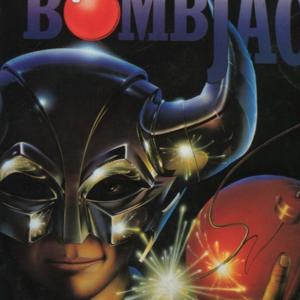
- Michitaka Tsuruta was the developer. His first NES game, but he’s also known for Bomb Jack (NOT mighty bomb). Apparently very popular in Italy based on one interview.
- Soon after Solomon's Key went on sale, a primary school teacher came and asked us questions so they could finish the game. He wanted to show the ending of the game to his class for fun on the last day of school. But there was a level that posed them lots of problem, and hence they wanted us to give them the solution. I was happy we could show him.
- At this time, Lode Runner was a huge success. In this game, the principle action was to make blocks disappear. And I thought to myself that the opposite action could be interesting. This was the original idea for Solomon's Key.
- 64 Levels (15 are secret and one is the final level)
- 48 levels, 4 per Zodiac sign
- The final level is called Solomon’s room.
- Should levels be unwinnable?
- Is Dana too powerful or too weak?
- Stand out puzzles?
- Did you find any Secret Levels? You have to find the zodiac sign in that stage
- What did you think of GDV? Would you rather that be present in more score based games?
- How do you feel about using guides with puzzle games? Is this a puzzle game or an action game? https://www.gonintendo.com/stories/235592-solomon-s-key-dev-discusses-developing-the-game-porting-to-nes
- A sequel was released in 1993 for NES called Fire ’n Ice
- 
- 
- 
- 
Auto-generated transcript. Each paragraph starts with its timestamp. Speakers are not identified.
Solomon's Key, you and Dana, the Wizard of Lyrak must unlock Solomon's Scroll of Secrets to restore peace in the constellations.
NOSTALGIA And welcome to NEStalgia, a chronological exploration of every NES game released in North America. I'm Mike. I'm Sean. And I'm Joe. NOSTALGIA Guys, you know, when I say that at the top, you notice I always say it the same way, but lately I've been thinking, it's a chronological exploration of every, that part's fine, okay? NOSTALGIA But I say, and welcome to NOSTALGIA, a chronological, right? It's like, should I just roll off the NOSTALGIA?
Yeah, save some time. NOSTALGIA Yeah, and welcome to NOSTALGIA, a chronological exploration. NOSTALGIA No, no, no, no, I heard it, it doesn't work. NOSTALGIA I think every time there's a word ends with a letter that the next word starts with, the whole podcast, just roll into it. Okay, I think there's like an Adobe Audition shortcut I can use to just detect that. Yeah, because the listeners, they're busy. In case the listeners don't know, this is not a mistake, putting that in the episode. Welcome to the Solomon's Key episode. Guys, Solomon's Key. Yeah, it's like, so great. It's Tecmo, they're back.
Still not Tecmo Super Bowl, but I... Yeah, still not Tecmo Super Bowl, but you might remember Tecmo from Mighty Bomb Jack. You remember Bomb Jack. Yeah, I do, unfortunately. You don't, right? I don't. Yeah, okay, you did not. But you'll remember him. I will play it, and I will remember. Everybody must remember Mighty Bomb Jack. It's the instructions on the back of the box. Oh, is that the back of the box? Yes. This one comes from Michitaka Surata. He was the, not the developer, I have that list as the developer, but he's like the designer of the game, essentially.
And this is his first NES game, but he's also known for Bomb Jack, not Mighty Bomb Jack. That's a different game not made with him. That's where you remember him from. Bomb Jack, which apparently, Bomb Jack is a very popular game in Italy.
Okay. Like, yeah, just like, kids in Italy equated that to like, Bomb Jack is right up there with Super Mario Brothers. All right, I don't question my heritage. You haven't played Bomb Jack, so you only played Mighty Bomb Jack, keep that in mind. That's true. So this is Solomon's Key, and maybe we could just go through our first impressions, since this one has like a little bit more to offer than our usual game. Joe? I actually, for some reason, I don't know, I don't really know why, I was really, really looking forward to this game. Like, I just loved the, like, I knew a tiny little bit about it, about you just, you have a very simple mechanic.
You create and destroy blocks with your magic. Mm-hmm. And that's, and there's puzzles to it. Um, and it, I did enjoy it. I was having fun. It's just, I don't know, I guess it just wasn't, it didn't quite live up to like, how unreasonably hyped I was for it. Right, right. Um. Sean, what do you got?
I was also looking forward to it, um, just because it, because I do like Tecmo, and I thought that this was going to be, um, another one of those breakout puzzle hits. Um, and I. Why did you say that, like, with power, but also like you whispered it?
I don't know. Okay. That's a, that's a, one of the riddles. Oh, very good. Um. Um, but, uh, yeah, I mean, I like the, I like the mechanics used. Uh, there's a lot of, uh, clever, there's a lot of lateral thinking in this game that I couldn't quite live up to in the amount of time that I played it. Um, I think that there's a lot to offer in all of these levels in this game, but it wasn't, yeah, it was sort of, it was missing something. Or maybe there was too much of something. One or the, one or the other. I think, like, you know, the first couple levels are good tutorials, uh, just of like, here's the things that can happen. And then immediately after that, I was like, oh, wow, you can, like, this game can really unwind itself fast.
Like, things just get out of hand. And you put a block, like, in one wrong spot, next thing you know, you got a bunch of, like, those electric balls, like, following you around. It's cascading. Hey, my first impression is that just, like, I need, before I go any further than this game, I need to understand, like, the block concept. Because I was just using it to generate, like, you know, little ladders for me to climb and stuff like that. But then I realized, like, no, you really have to, like, understand how these blocks work. You need to know, like, programming and what, like, an AND gate is and stuff like that. Like, it really does, like, there's a, there's a really steep curve when it comes to, like, level two and three.
And then, you know what I mean? Yeah. And, uh, so Saruta says, um, at this time, Lode Runner was a huge success. Lode Runner was an arcade game and I think got a port, uh, not to the NES, though. Oh, no, it did get a port to the NES. It's coming up soon, actually. Oh, my. Um, and he goes, in this game, the principal action was to make blocks disappear. And I thought to myself, that's the, that the opposite action could be interesting, making blocks appear. Uh, that was the original idea for Solomon's Key, he adds.
I mean, it's, it's a solid foundation. I mean, I know it sounds really mundane, but it really does allow for, um, a level of expression and, like, just, um. What if you could be Super Mario and add the blocks, the question blocks, wherever you want it in the level? It adds a level of emergence because it's like a, this is a, this is a systems-based game.
And it's not just, like, a, an authored game. Right, and there is, it does lend itself to a lot of possibilities of ways that, like, a puzzle, like, it's just one simple mechanic. You just, you just create a block in an area or you remove it. But there's a lot that can be done based on, like, the layout of the rest of the level where I almost think that the time limit, not to get into the game plan, but the time limit that it gives you is almost unnecessary. I feel like this is the kind of game that really benefits from, like, stepping back and, like, taking a moment to think about it.
Where the time limit always puts, like, so much pressure on you that you're like, I'm just going to try things. Yes, I totally agree the time limit is my biggest frustrator because it didn't give me any chance to experiment.
And as someone who really wasn't understanding the full potential of the blocks, having, like, a time limit also tell me, like, hey, better make up your mind fast hurt. Right, yeah. And I think that this game was not quite like Wrecking Crew, where I think that Wrecking Crew had, like, some potential, but, like, I don't feel like it felt like they put a ton of thought into the individual puzzles. Where this, like, not all the puzzles, but a lot of the puzzles were like, oh, like, there's a really clever way of doing this that you can't see right away.
And then you got to think about it a special way. Like, they definitely put a little more puzzle design into these. Oh, yeah. I think before we get any further, the plot was explained at the very top of the episode on the back of the box. And to be honest, I didn't even know that was the plot, but that's all we're going to get into when it comes to plot. But just in case you guys didn't know, the objective here, this is like an action puzzle platforming game is how I would describe it, where you are not Solomon, okay?
You're looking for his key. Right. You are looking for the key. Yeah, you're Dana, and you're looking for Solomon's key to open up the doors. There's a door at a certain part in the level, and there's a key. And your main objective is just to create and make blocks disappear to however you like throughout the stage in order to collect the key and get to the door. However, that said, there are countless secrets in every single level. There's fairies to collect, bottles and rubies to pick up, different treasures.
There's even zodiac signs and stuff like that that you can try to find for secret levels. It's really crazy how much is packed into each level, but the main idea is to just get the key and get to the door. But even when you're saying like picking up these power-ups and stuff, even just hearing that, I'm thinking just jumping and grabbing a power-up. But like every move you make has like a consequence based on like what you're building and where you're putting it and what enemies you're letting out and trapping in. And if you want to get any of these power-ups, you have to think about how to get to those too.
Yeah, I think it's a beautifully done mechanic here because in theory, being able to have the kind of power to make and also, you know, to create and disappear blocks. To have that power, very easy, like in the wrong hands, can be a game-breaking mechanic that like, you know, a person who isn't really good at designing puzzles could just get lazy. And then like a good player can just easily take advantage of that.
That's not the case here in Solomon's Key because I think a lot of the puzzles are intricately designed where your big power is actually used against you. Sometimes like putting blocks in the wrong places that you don't even think about as being the wrong places will penalize you and will cause the level to be almost unwinnable. You'll have to die. Yeah, I think there are some instances that it's just like you can fail. You can perma-fail. I think almost any level after those tutorial levels, you can perma-fail theoretically.
Yeah, and that's interesting. I mean like a part of me thinks that like because there are enemies and they all have different behaviors that add another level to the puzzle, whether they're the lightning balls that will just circle the entire perimeter of a room or like a segment of a room or the guys that charge. Yeah, yeah, those guys who like wind up their fists, right? Yeah, yeah. They have like one eye too. I didn't see both eyes. I'm sure they have both eyes. Yeah. They all have these different behaviors because they're just another like piece of the puzzle. But like I think that this game has too many moving pieces, at least in the beginning. I think if level 40 through 50 are this busy, then it makes sense.
See, I almost felt like the difficulty was inconsistent where it would be like, yeah, the third level is really hard and the fourth level is really hard and the fifth level is really easy. And the next one is medium and the next one is really hard again. I was like, why are they not scaling up? Yeah, you're right. I think you're right because it's also not just the same kind of puzzle every time. Like sometimes they're more abstract or sometimes they're a little bit more direct. But it's exercising different parts of your logical realm, I guess, which I think is good with like trying to think of things in different ways.
I also just think like, you know, some people could have a really easy time with a certain level and some people can have a very hard time at that same exact level. That's true. How you go about thinking about the best approach because I'll guarantee you, you know, just looking at some of the ways that I tackled some of the levels and then watching like a speed run of it, I was like, wow, I did a lot of unnecessary things. And all I really had to do was like build these two blocks and remove that third block and it would have caused enough chaos for me to get through the stage.
And I think for me what made it kind of more challenging, I think in a good way, to kind of like see what you have to do. It's like normally when I play a puzzle game, I feel like you see all the components and they're all right there. And you're like, what do I do with this and how do I get to connect with this and whatever.
But with this, I feel like you see a lot of a lot of the empty space. Like there's all this space between it and like the blocks are so the blocks take up an amount of space that like that makes it so like even there's a lot of space between here. It's like there's only these three little steps you have to do. But like I'm not even connecting something on this side of the screen to that side of the screen in my brain. But like those things are connected. Does that make sense? It's not like how to explain.
It's lateral thinking. Yeah. Yeah, it becomes like a chain reaction after a while where it's like you didn't see it at first, but now you're like, oh, I screwed up. Yeah. Right. Yeah. And it's just the fact that like everything's kind of spaced out makes it like harder to like see them see the whole. Oooh Oooh Oooh
Oooh So if I had to ask you guys, do you think that Dana is too powerful or too weak? I think it's appropriately powered.
Perfectly balanced. No, I'm not doing that. I think it's pretty well balanced. I think that he has, like I said, he has the one thing that he can do and that's your puzzle. Maybe there are a few times where it's like there's all the enemies react to the blocks differently. There's like the one enemy that just breaks the block and just keeps moving. Yeah. And there was like one level that you just start out one of those right in front of you. I'm like, how am I supposed to get around?
Like sometimes the block will make an enemy turn around. So like things like that, maybe I wish he had like a shield or something. But what we haven't talked about is that he does, you can collect a power up that shoots fire around the edges of the puzzle, meaning around your blocks and everything. Yeah, yeah. So you can plan where that fire will go based on the layout of the level two. Okay. So this is something that I never got cleared up for me. Once that fire hits an enemy, that's the end of the fireball's path, correct?
No. Well, there are two versions of it. There's one that is just a single attack. And then there's one that Joe is talking about that it will just be a chain and it will go around the entire space. Oh, yeah, the super fireball. Okay. Yeah, yeah. But like it's a different potion is how you get that one? Yeah, it's like the icon is like a larger flame. It's like a tall flame. Yes. Okay. Because that would have been helpful on that early level that's just like a giant Z with the ghosts going back and forth. You could just use that super fireball to clear them all out and then just walk through it.
Otherwise, you have to wait for them to wind up in an appropriate spot, wish a block behind you. This way they have to at least defeat that block and then you can run down to the next level and keep doing that. Yeah. So there are multiple ways to finish these levels, but yeah, there are definitely optimal paths. Yes, there's optimal paths, but also seemingly unlimited ways to solve it. I don't think any two people other than the optimal path would solve it the same exact way. Yeah, I think you're right.
And so I think that it would be really interesting to watch some good players who aren't thinking about the optimal path. They're just good players. I think it would be interesting to watch them side by side and just see how they tackle the situations.
I wish that with the optimal path, though, not to harp on the time limit thing, but I wish that maybe you were penalized every time you made a move. Every time you make a block, you're penalized rather than your time going down. So you think there should be a limit on how many blocks you can make? It's not even a limit, but your life is constantly dwindling throughout the game or throughout the level. And at the end of the level, however much life you have left, that becomes your points.
So that's your time limit. I do think it would be interesting, though, when you talk about a limited amount of blocks, it would be interesting for there to be a par. Yeah, yeah, that would actually be cool. Instead of using how long it takes to get, how few moves, so it's like this is how close you got to the optimal path. But then you can still take time to think about it. One of the features of the game is once you get a game over, you're given a number that out of context means nothing. Oh, the GDV you're talking about. Yeah, yeah, yeah. So do you have things to say about that? Well, yeah, we could talk about that. I'd love to know what you guys think about it.
But the GDV is essentially just like an objective way of looking at you versus the best possible score based on your game over. And it's based on a lot of different things, but mostly collecting of the fairies because that's also part of their optimal way of playing the game. Not the speed running way, but the optimal way to score the most points. So it doesn't just look at your high score and say, oh, you scored this much, so you scored your most ever. You're on the high score. It looks at how you actually played as Dana. Yeah. You know, like how you actually performed and gives you a score based on that.
I'd like to see that in more games, to be honest. Yeah. Like a score based on performance rather than just like, you know, hey, you were really good at defeating enemies and hitting blocks. Yeah. There are games more specifically for the PC and more recently that I've never really gotten into. They're way more open form games like Factorio and I guess even like I think Polybridge. Okay. Like they have. Oh, we've seen Polybridge. It looks cool. Yeah. So they have these like histograms that you need this to be online for it to work this way. So obviously it wasn't an option back then. But it puts you into percentiles for how or how efficient you were or how good you were with your resources.
And I think this is like the precursor to that like kind of scoring of that like relativistic like this is how good you could have been sort of thing. And I think it's more it's a more definitive way than a high score, you know, than like a really large number. This is a more definitive way to kind of like track your progress and see if you like played better than the previous time. Because I think like when you get such a large number like 138,000, you're like, what does that mean to me? Yeah. You know, whereas like the GDV will actually tell you like, hey, you're doing better than your previous time because your score is two points higher. You know, like, oh, that's digestible.
Exactly. I'd like to see that in more games for sure. To go back to the time limit thing, though, Joe, I don't think we're harping on that because I do think if I'm thinking about the things that took me out of the game the most, it was that the later puzzles as they got harder and harder, I just did not have enough time to solve them. And I keep if I'm being honest, this is one of those games where I wasn't that great at it, but I kept booting it up because I wanted to enjoy it.
And the time limit kept harping that it kept saying like, no, you're not going to be able to have a good time here because you're not going to have enough time to figure it out regardless. Well, here's a quick thing about time limit. I have a problem with it, too, but not not the time limit.
The thing I don't like about how this game is structured is and I know that there is like a cheat sort of there's like a built in cheat code so that it doesn't do this. But the fact that you only have lives and then you go back to square one, I think this is a game that should just respond to you at the beginning of the puzzle. Because otherwise, so you're you're trying to use your your problem solving skills to to fix this one this one problem, this one puzzle.
And now you're kicked back to level one. You got to do all this stuff you probably memorized already. You don't get a continue. Continue. I think you get. I actually don't know. I thought you get a continue. But your GDV resets. Is that is that the case? I thought that was the case. I don't remember, to be honest.
OK, because whenever I lost my lives, I went back to one. OK, maybe it's after. Yeah, maybe. I think I did, too. But OK, I remember. It might be after a certain point. But my point, though, is that, like, I think that you should be able to keep attempting the level you're on because that's what you should be focused on. I completely agree. That's the problem you're trying to solve. That's the kind of game this is. Yeah. You don't care about playing this level again.
You already know the answer. Or, I mean, you could play it and find a better way. But, yeah. That's a problem because I think the game, as much as, you know, we described it as an action puzzle platformer, I think that the game doesn't know whether it wants to be a puzzle game or an action game. And I think that that's the weird thing about sending you back to level one makes you treat it more like a puzzle, more like an action game.
Yeah. Where it's like anything can happen each time and it's up to you to, you know, use your skills and stuff. But I think it's more about a puzzle game. Yeah. Where it's like, OK, but I've solved that puzzle. I'm not going to solve it differently now that I know how to solve it. So you're basically just asking me to do these tasks again. Yeah. So I agree with that problem.
It's definitely, I think it leans, it knows it's a puzzle game. But it has all these weird holdovers from action games. Like it has, like, who needs lives in a puzzle game? I don't know. Yeah. I think it even would have been, you know, would have been fine if like, yeah, if you weren't losing your lives for these things. If it was like you, your time limit runs out, fine. You can keep, you could still solve the puzzle and move on. You just won't get those extra points from the leftover time. Right. Like, so like, yeah, you could play and try and beat the time limit if that's what you want. So there's 64 levels, 15 are secret and one is the final level. Did anybody find any secret levels?
I know of one, but I didn't find it. That's all that matters. Okay. So you know of one. Did you go in it? Did you see it? I had to, this was when I was watching people play just to get more out of it. Yeah. Um, but if there is one of the first levels, there is just the Zodiac sign for, I think, um, the twins. I don't remember which ones the twins are. Yeah. I don't know Zodiac signs at all. I'm not the person to ask here, but yeah, there is a, basically, you know, there's a Zodiac sign for each, like every four levels. Yeah. There's one Zodiac sign attributed to it.
So when you, uh, it just looks like a square. It looks like just a part of the background of the level. But if you go up to that square, you can collect that piece. And then when you finish the level, you don't go to the next level. You go to that Zodiac room. Right. And, um, it's a, it's a little differently, um, designed. Like it's mostly breakable and createable blocks. Okay. This one. Um, so I guess it's a bit more free form. It's more of like a, like a room full of coins in Mario where there's a lot more, uh, rewards than there are, um, obstacles.
Joe, did you know about the secret rooms? I didn't know about until just now. Yeah. There, this is considered just for the record guys, this is considered a very hard NES game. Uh, like it's up there, you know, it doesn't have that legendary ghost and goblin status. Maybe it's just because less people would choose to play a game like this, but it's very hard.
And you know, there, there's like multiple endings kind of based on like how well you perform if you get all the way to the end. And it's like to get to the end is one feed. But then to find out that like, oh, I didn't collect all the fairies and oh, I didn't get to the final, you know, to the seat, to all the secret levels. It's like just even finding that stuff is crazy. There, there are things in this game where you will have to spawn a block in a specific place.
Unspawn it just to get like, uh, you know, an item that you couldn't find elsewhere. Yeah, it's so strange that like in, in empty space I was watching when it wasn't a speed runner, but it was somebody that was good at this game.
Just knowing where all of these like phantom blocks were. Yeah. But here's my question. Do you guys think that that is a problem in this game? Like the fact that there's like all of this secret stuff that you might never find. Is that a problem? That kind of reminds me of like a, like a hidden block in Mario or granted Mario is usually designed where you probably will accidentally bump your head on the hidden block.
But, but really there's no like, you kind of get the feeling like, oh, I, I just happened to jump into that block and that, and it's there. I wouldn't have known it was there. Yeah. So I mean, I do think as long as it's never like necessary, I think it'd be really cool to be like, I put a block there and I destroyed it. And there's like a hidden item under it. I'm like, oh, cool. That was a secret.
In these, in the, in what I was looking at though, uh, this isn't, you have to have intent. Like it, you, it's not something that you're sort of out of the way. It's not, yeah, it's not something you would do. That's my only argument against what Joe said. Uh, but you know, you just didn't know. Well, yeah. Is that like, it's, it's not done with intent here. Uh, it's, it's. Oh no, you have to have intent for it. Oh, sorry. I guess what I meant was is that it doesn't, it wasn't designed in a way that it's like people will find this. It was meant to be hidden.
And I feel both ways about it. So I think it's kind of dumb that it's not intuitive, but at the same time, if you, if this is the game that you own and you can like explore every nook and cranny of it, it is kind of cool that there are these like, you know, items that you might never find just, just to give an idea. Like the guy who made the game facts, uh, FAQ for this, uh, he wrote it. And then like, he came back like eight years later and was like, Hey guys, I was just checking out the game the other day. And I noticed like these other things. So I added some extra things that I just found. And it's like, wow, you just found new stuff for your guide.
I almost see. I almost wish then if there was a secret block up in the corner of one level, you know, you could, there would be some indicator, just like a platform or something where you could, you know, I've beaten a level. I figured out a few different ways to do it, but like, why is that? I feel I can get up to that spot. Why, why can I, I wonder if there's something up there that you can go up and explore around up there or something. You bring up a good point though.
Did you ever feel like the game was nudging you to do a certain thing? Like, or do you think that it presents the puzzle and says you figure it out? I think that there are certain, uh, signifiers of what you should do. I think enemy placement, uh, is one of the biggest ones.
Um, if you see some of those lightning guys just circling around one block, you might be, uh, asked to move them somewhere else. Right. Or, or there are those things that fall out of like the weirdly shaped holes in the wall that fall straight down. Maybe you should, uh, make it so that they fall into a pit instead of going down a rope. But also, yeah, I'll see them falling and they're not, they're not dangerous to me because they're like, they're hitting a platform that's blocking them.
But then I realized like, oh, the game, I need to open that platform and let them out in order to get what I need. Like, you know what I mean? Like, oh, they wouldn't put something dangerous up there unless I needed to get up there. Right. I think, you know, I'm just going to sound like a broken record here, but since we're talking about the secrets and the different ways that the game nudges you, it just, again, it feels very strange that we have a time limit. Like, how am I ever going to be able to get a chance? I was even just thinking about it as I was saying, like, oh, you get, you know, if this is the only game you own and you want to explore every nook and cranny, it's like you don't get time to explore every nook and cranny.
And there are a lot of cool, you know, if you had more time, there are a lot of cool alternate ways to approach things. Like, there was, like, sometimes there's with those electrical guys that, like, they zoom along the perimeter of walls and of blocks and everything. There are sometimes ways that you can, like, box them closer and closer into each other without ever letting them on the other, like, from the other side of the wall. The way you keep creating and destroying blocks, you make sure they can never touch you. You can just box them into a tiny little box and, like, make them. It's like, really, it was kind of cool when I discovered that. It reminded me of that game.
It was on, like, Windows 95 where you were the cat or you were the mouse and you had to put the cats in the corner and get the cheese. Yeah, sorry. All those Windows 95 games. Nostalgia trip. But, yeah, just I feel like I found that one and I feel like there were probably tons of other, like, little tricks and secrets and just cool ways of doing things that, you know, that I would have liked to explore. But I never felt like I had time to try and experiment with that stuff because just, like, no, got to get to the key. Okay. Should levels be unwinnable?
Should you fall into a point where you can no longer win the level? And, like, is that good game design for you? I think if you can fall into that point, the game should, the level should end. You should have a ton. Oops, you're done. But I didn't notice. Kind of like a suicide of your character. I'm imagining the Mario, like, and he falls.
Yeah, yeah, yeah. But I don't think I ran into a situation where I boxed myself completely out of the level. Like, there's always something I can undo. I don't think a level is ever unwinnable, but I think you certainly can get to a point where you've just unleashed too much on you and you'll just be in a constant state of trying to jump over obstacles.
Like, you'll be just playing jump rope with the enemies. I guess if I would get to that point, I would just end up getting killed. That's what I'm saying, though. It felt like I got trapped. It felt like I died. I do think that there are actually ways that you can break the level and that you just have to wait out the timer. I don't think that that is a knock against the game. I think that you have failed this puzzle. And maybe it's a little cruel to make you wait it out.
Well, you could jump down to your death. Or you could do that. Assuming it's one of those levels. Not all of them have pits. No, no. But I think because there are even modern games that you can, like, fail just because you did something wrong. Sure. But usually I would imagine they would then tell you and not make you just sit there and not know if you failed or not. You know what I mean? I'm failing to come up with one right now, but I do know that they exist and you just have to, like, press R to restart or something like that. But if there was a way for you to just restart, that would work because it's a lives-based game. Right. Then it would be a much easier pill to swallow. How do we feel about using guides with puzzle games specifically?
I don't know. Personally, I think that the guide should be like, this is how you do this. This is not how you solve the puzzle. These are your tools. This is how you use them. Things like that. But I mean, I guess, yeah, it's really not much of a guide. That's a good point, but I'm specifically here talking about, like, a guide that tells you how to solve the puzzle. How do you feel about using that? See, I'm kind of – I don't really like strategy guides to begin with unless they are more for, like, in creative games of, like, here are some ideas that you can use to optimize your city.
Yeah, like tips and tricks instead of – Yeah, tips and tricks. I like tips and tricks. I don't, like, walk me – take my hand and walk me through this game. I don't mind that in certain types of games. Puzzle games, it's a big no for me. That's cheating because that's the game. Yeah, you've essentially, like, lost out. You're not playing this game to have the accomplishment of putting the inputs in yourself. The accomplishment is solving the puzzle. It's like you're playing the New York Times crossword from yesterday with today's paper. Right, exactly. Exactly, but just something that you reference when you get stuck.
You know, it's like – you're like, oh, I'm just going to check this one word. It's like sooner or later than you wind up checking the whole thing anyway, and then it just doesn't become fun in the first place because you never earned it. You know, I think, like, it's okay to use it in, like, you know, let's just say a Legend of Zelda style game, you know, where it's like, oh, I'm really stuck right now.
Yeah, I'm lost. I don't know what to do. Yeah, that makes sense. You know, that makes more sense, but you can't use it, you know, to the same point. You can't use it in the Legend of Zelda during the middle of a dungeon because that's a puzzle that you have to solve. It's like – And personally, I'm always, like – I like to use that kind of thing as a last resort even if it's like – you know, I was playing – what is it?
It's Dishonored 2, and I was stuck, and I did not want to look up where to go because the part of the fun is exploring, but I'm stuck forever. So finally, I was like, okay, where do I – and it was just something I totally missed. But, like, usually I kind of don't like doing that because, like, the idea is, like, I'm trying to immerse myself. Like, I'm this guy. I'm lost. I need to find my way out. Totally, yeah. So, like, I don't like to use guides in general.
And I can see that being a thing in Solomon's Key as well where it's like, you know, I've been stuck on this particular level for a very long time, and I just want to – like, I'm not going to use the guide for the very next level, but I'm done with this one. I do think that there is, like, a statute of limitations. It's still – I mean, like, that is, like, if you do translate it to, like, a junkie saying, like, I see this one last fix. Like, you might – you'll probably get addicted to the strategy guide. That's why I say strategy guide is not even once for puzzle games.
I did not use a strategy guide for this one, and that did limit how far I was able to get into the game, but I definitely didn't think I was going to get anything more out of the game by looking up a strategy guide and being like,
oh, yeah, that's how you do it. Like, there was a part of me that I had to, like, work myself out of. I had to start embracing the mistake in these kinds of games, but – and this is sort of a tangent – but in, like, story-based games or decision-based games, and I know that, like, the ending of a lot of games doesn't change too much by your decisions, but, like, in games that you interact with your party, I'll be like – they'll show me in, like, Mass Effect, like, you can say this, that, or the other thing. And I'm like, well, I don't want to say the wrong thing, so I'm like, what happens if I say this? And I did that for a while, and it was ruining games for me.
Especially those story-building games because now you're just – sure, you're getting the optimal story where, like, the best storyline possible, but it's not your story. No, no, now it's just, like, it's the best thing ever. Yeah, it's the story you wanted, but it's not – It's not my story. At that point, you're watching a movie. Yeah. I got that way – not to go on a total – No, it's okay. This is a good discussion.
With Skyrim because Skyrim, it's, like, you know, it's role-playing. I'm like, I want to play as this character, and he does this, this, and this, but he has all these powers and whatever. And I was always trying to get those, like, I need to get these powers to play this character, but I'm like, no, the whole point is, like, his journey. Like, I got to get there in a way where I don't know what's coming or else it's no fun. I'm sure all of our viewers can relate Solomon's key to Skyrim. Right. Absolutely. We got there. One last question for you guys. Is this a puzzle game or an action game? It's a puzzle game. Yeah, it should be a puzzle game. It's a puzzle game with action problems. Yes, action problems. I like that even better, okay?
To go back to the guide thing real fast, Saruta actually was in a guide-like situation. He describes this after the game went on sale. Soon after Solomon's Key went on sale, a primary school teacher came and asked us questions so they could finish the game. He wanted to show the ending of the game to his class for fun on the last day of school, but there was a level that posed them a lot of problems, and hence they wanted us to give them the solution. I was happy we could show him.
So, in a way, he even helped gamers cheat his own game. He was like, you know what? Yeah, it's fine. I'll show you how to finish the game. I love these stories of before these companies got so big that they didn't have hearts. Yeah. Just interacting with people. Wait, random people. A child bought. A child who bought the Gradius series. And then this teacher who's like, yeah, I want to show my kids the ending. And he's like, okay, here's the answer.
Yeah. Now you have to call into, well, not now, but eventually you'd have to call into Toys R Us for your answer. You know? You couldn't get a hold of Shigeru Miyamoto. He'd be like, Miyamoto, what do I do? I don't have the sword. He's like, did you go in the cave? Did you go in the cave? Did you go in the cave?
All right. That's Solomon's Key for me. Any straight thoughts, guys? Maybe something we should have talked about in general. It has that thing where you jump with the up button. This one didn't bother me, though. I don't think it was too bothersome because you don't need to do quick jumping, Mario jumping, but I still noticed it. I don't know what the solution would have been. You kind of need the A and the B button otherwise. But it's just one of those things that it's like the NES controller, you're not going to get better than that if you need A and B for something else.
I think it was, here's the interesting thing, because it's that control scheme across the board. Now, you guys know me lately. I've been getting kind of crazy, and I have to try the games on every system that they came out on. So I tried Solomon's Key on the NES, the Commodore 64, the arcade, and the unreleased, but I think it came out in Japan, the Sega Master System version of the game. The only time that the up to jump bothered me was in the Sega Master System version of the game, and it was because it was just so stiff that it wasn't working.
In the NES version, I actually didn't have a problem jumping and moving in a diagonal sort of way, like an arch. Yeah. I didn't have a problem with that using the NES version. It was only the Master System version of the game that I found that problem. For me, it was there were a few times where you had to jump over an enemy. That was my only way around some enemies, and that kind of got a little janky sometimes. I don't know. I was trying to see the up arrow and the forward arrow. I mean, I'm a person that uses up in Smash Brothers, so. Oh, yes. Okay. I mean, I can live with the up button.
And then last thing, since we were talking about all the different versions, I will mention that this is a great port on the NES here. The arcade version doesn't really control that much different, and outside of the graphical polish of it, it's pretty much the same game with the levels switched around a little bit. The order isn't the same, even from the very beginning. I thought that that was interesting that you're not given the same kind of tutorials, in the same order, at least. Okay. All right. I think with that, we will take it into the Essential Games List.
Guys, we're talking about 2018 now. How does this game hold up in 2018? I don't care about 1987 anymore. Is it still 2018? I can't remember. Yeah, it's a good question, actually. Sorry. It could be 2019 by now. That's a great question. We've been in this recording room for a long time. We've been recording since 10-yard fight. What year is it? Since 10-yard fight, we've been going. I'm having an existential dread right now, not knowing what year I'm living in. But, Mike, save me if you're listening. Anyway, so it's 2018, 2019, 2023 when Pat's listening to this.
Just hope that that happens. I think you said Pat last episode. Yeah, yeah. The odds would be incredible that Pat listens to both episodes. These are his first two episodes. Assuming he wouldn't quit. Pat, we mention you on every episode. Anyway, so it's this year, and you've got to decide if this game's still relevant and still worth playing today. More importantly, is it still essential?
Sean. I allowed this game for a lot of just the amount of, like, just the great puzzle design. This has great puzzle design, but it also has an identity crisis. And I think there are a lot of elements of this game that just don't quite fit with the intention, with the intended experience that you as a player are supposed to have. You don't have enough time to really experiment with these levels while they beckon for experimentation.
I think sometimes it gets a little too crowded in those stages. I think if you like puzzle games, you should play this game. It is not on my essential games list. All right. There you have it. Joe. So I'm not going to repeat all the things Sean just said, because I agree with all the things that he said was wrong with it. And I think that's a real shame, because I really think there's a lot of thought put into these puzzles. And I think that they're—I mean, obviously, I didn't play a ton of these puzzles.
You said there's 60-some. There are 64 total. So I think there could probably be some really cool puzzles in this, but all those negative things, particularly the time limit and the action elements that don't quite work, kind of work against it and kind of work against what you want out of a puzzle game. So I think that's what holds it back for me. But I would still give it a play. I still think it's a lot of fun. If you can do it within the time limits, that's even better. I mean, you probably—it's definitely more of a challenge.
But—and I didn't mention this on the rest of the episode. Go for it. I also think it would have been great to have a creation mode. Oh, creation mode. What do you call that? Yeah, like the level builder. It was a programming series. Yes, it was the programming series.
Design mode. Yeah, why couldn't I think of that? But yeah, I think that would—like, this is the kind of game that, like, you could make some really cool puzzles and you can't just throw stuff down. You have to really think about it. But not essential.
I would never want to play anybody else's levels. I only want to—like, just thinking about it, I would only want to play Michitaka's levels. Well, it's like—sorry, but I mean, it's like Mario Maker, right? No, I know, I know. Like, most of the levels that come out of Mario Maker are terrible. Right, right. But, like, if you really want—it's more about making the level that's fun. No, I know, I know. And I think that's just me knowing that I couldn't make a good level with this. Like, I wouldn't want to play my levels or anyone that, like, you know—NES didn't have online. I wasn't going to get the, like, access to someone's cool levels. That would have just been, like, another feature. I would have been like, oh, rats.
Here's the thing for me with Solomon's Key. It's such a unique game. It's such a cool puzzle, like, a twist on the puzzle genre, too. But for me personally, like, I couldn't get enough enjoyment out of this game because of all of the setbacks. The time limit, for one. But also just, like, sometimes you're too powerful. Most of the time you're too weak, in my opinion.
I just—I don't know. I kept booting this up, hoping to have a better experience each time. But it would fall flat for me pretty fast each time I boot it up. So I will say that this is one of my, like, you know, most attempted games. I attempted it a lot over, like— That's quite disapproletive. Right. I attempted it a lot over, like, a two-week period. But I can't say that I'll be going back to it now that we're done with this episode. I don't think this will be a game I'll be hitting up again. So I kind of even toss up on the play it. But I do think if you're, like, a fan of puzzle games in general, this one does something that we haven't really seen. Iterated a lot. So give it a shot. That's my recommendation.
And if you're really a fan of Solomon's Key, you probably know, but just in case you didn't, a sequel was released in 1993 for the NES. And we will be doing it on Nostalgia, of course. In 11 years. Yeah. In the U.S. it was called Fire and Ice. And it is one of the rarest and most expensive NES games. Oh, my. So that will be a fun purchase.
But otherwise, it will be a really fun purchase, especially for the people who play along. I hope you really like Solomon's Key. You might want to get started on that now. Yeah. You might want to, yeah, start saving. Start a 529 plan for that right now.
Otherwise, it was called Solomon's Key 2 outside of America. But they didn't want to call it Solomon's Key. Maybe this game didn't sell well. Who knows? Also, I have to throw out that Michitaka has a lot of fun drawings that he did for the game. And I didn't really want to, like, talk about them. But I will definitely post them up on the show notes. They're definitely worth checking out. He's a very vocal guy who loves to talk about the things that he's doing. And he is kind of regarded as, like, one of those early great game designers for both Bomb Jack and this and then a bunch of other puzzle games later down the road. So I definitely think, like, you know, we'll probably run into him again.
And I would check out the rest of his stuff if he were jamming on Solomon's Key and Fire and Ice back in the day. It's definitely worth to see what he continued to make after that. But that's all the time we have for this episode of Nostalgia. You can contact us at contact at NostalgiaCast.com. NostalgiaCast.com is the website. At NostalgiaCast is our Twitter handle. And I'm Michael Esposito. You can find me on at Esposito Film on Twitter. And I'll talk to you soon.
I'll see you soon. I'll see you soon soon soon. Thank you.