067 · Spy Hunter
This is hardly a game. It’s a high-speed test of your secret agent skills. Meet the challenge and survive Spy Hunter! FOR MORE NESTALGIA as well as show notes and links check out www.NEStalgiacast.com
- First released in 1983 by Bally Midway. It’s now on the NES in 1987 and still Published by Bally Midway so this is our first game from them
- First overhead car game on NES
- Originally supposed to carry the James Bond License
- Game designer George Gomez drew inspiration for the game from listening to an audio cassette tape of music from James Bond films. He designed the game with Tom Leon, with whom he had worked on TRON. Gomez sketched out the in-game road map on a long scroll of drawing paper and also came up with the idea of the weapons van. Originally the game was to be based directly on James Bond and have the James Bond theme as in-game music, but the license could not be acquired. Instead, an electronic arrangement of Henry Mancini's theme to Peter Gunn plays throughout.[2]
- The car is called The Interceptor
- Smoke Screen, Oil, Missles
- Destroy enemies, protect civilians
- Pinball version immediately followed in 84
- Spy Hunter II in 87 is arcade only. Game jumped to 3D behind the car view
- Spy Hunter Movie
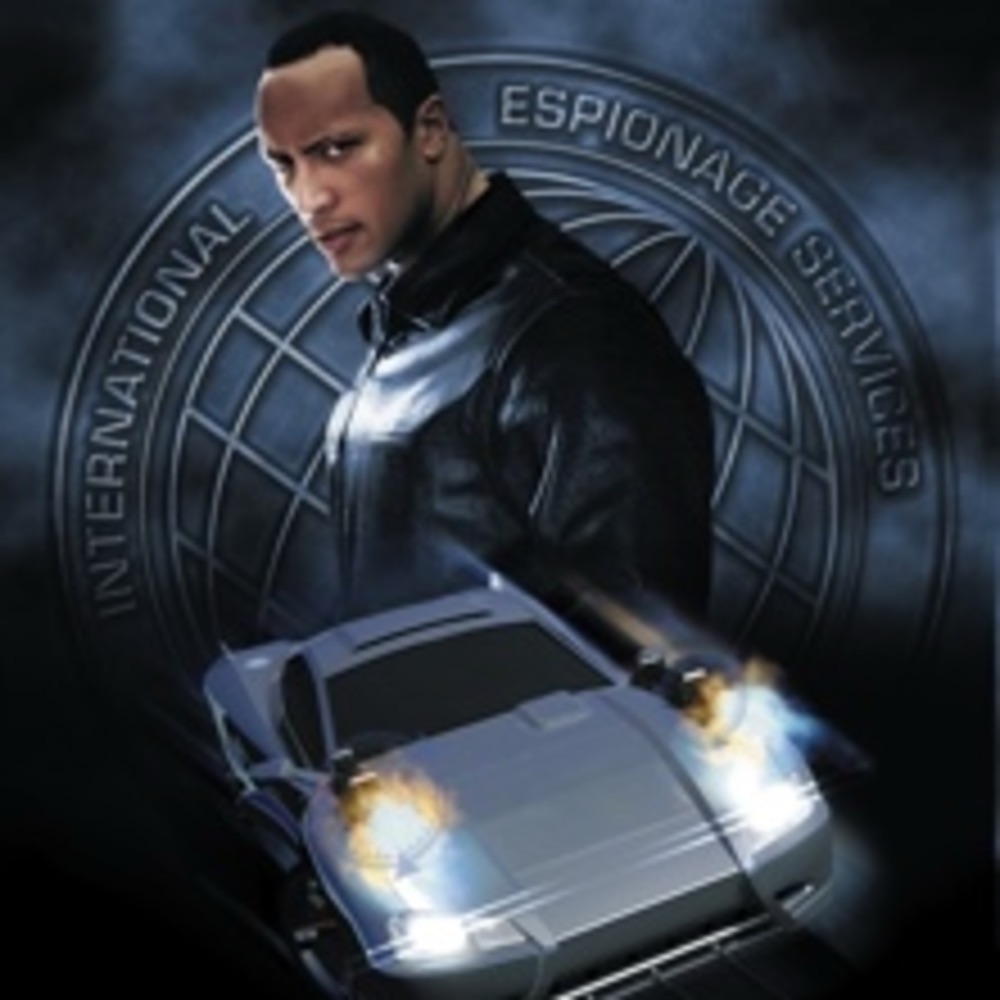
- In the summer of 2003, Universal Pictures acquired the rights to the 1983 arcade game Spy Hunter from Midway Games. The following September, Universal signed actor Dwayne "The Rock" Johnson to star in the film adaptation based on the game. Screenwriters Michael Brandt and Derek Haas were hired to write the screenplay, though a director had not been decided at the time. Spy Hunter was slated to begin its budgeted $90 million production in spring 2004 in time for a summer 2005 release.[8] In January 2004, screenwriters Mark Swift and Damian Shannon replaced the original writing duo to rewrite the script, with production slated for June.[9] By May, Universal Pictures acquired director John Woo to helm the project.[10] In the same month, the previous screenwriters were replaced by screenwriter Zak Penn to rewrite the script once more.[11] By August 2004, production had been delayed, pushing Spy Hunter back to be released in summer 2006.[12] In April 2005, Penn was replaced by screenwriter Stuart Beattie to rewrite the script.[13] By May 2005, however, director John Woo left the project due to scheduling conflicts.[14] In August 2005, Dwayne Johnson said the film was still developing without a director. Pre-production work was underway with designs such as the morphing Interceptor vehicle driven by Alex Decker.[15] Production was eventually halted for the time being, and Dwayne Johnson was detached from the project.[16]
- In May 2007, Paul W. S. Anderson was hired to replace Woo as the director. He was going to be writing a new script with another screenwriter.[16] He left the project a year later due to his commitment to Death Race 2 as a producer. In February 2013, however, Warner Bros., who owns the rights to the film adaptation distribution, announced that Ruben Fleischer was officially brought on board to direct, after several rumors were given to the public ears, with Carter Blanchard providing the script, bearing an entirely rewritten storyline.[17] In November 2015, news were made that Blanchard was replaced with new pair of writers, Neal Greaves and Sam Chalsen, with Dan Lin and Roy Lee producing the film, while the report also made it unclear whether Fleischer was still on board as the director.
- Spy Hunter: Nowhere to Run released on Gen 6 consoles
- Supposed to be tied-into the movie. Eventually released by itself. It’s bad.
- TAPWAVE ZODIAC - https://www.youtube.com/watch?v=g2CZRmHlJbw&t=64s&frags=pl%2Cwn
Auto-generated transcript. Each paragraph starts with its timestamp. Speakers are not identified.
Spy Hunter, the arcade smash of the 80s comes home.
And welcome to NEStalgia, a chronological exploration of every NES game released in North America. I'm Mike. I'm Joe. I'm Sam. And I'm Sean. Alright guys, and today we are talking about... Spy Hunter! Spy Hunter! Spy Hunter. Spy Hunter, the video game, based on the arcade game, based on the James Bond movie series.
And that's probably why you guys were laughing like that, right? Yeah. Like what? Yeah. Like, oh, okay, cool. This was first released in 1983 by Bally Midway, which I think now is just Midway? No, but back then it was Bally Midway. Oh, I mean like did they just turn into Midway? Yes, I think that's what happened. Oh, okay. And now it's on the NES in September of 1987. Neat. Still published by Bally Midway, so this is our first game from them. Good. Does anybody remember anything about Midway?
I know they did some games that I liked. Yeah, I remember Midway popping up a lot. So you're fond of it. So maybe you'll be fond of the game. You said you remember it, so you're fond of it.
Yeah. So you dated the president's wife, right? That's true. Oh, that was it. It's like such a weird... You dated the president's wife. Well, going back to Spy Hunter... It's the first overhead car game on the NES, right? Like top down. Yeah. That's cool. It was like Legend of Zelda on rails. Uh... Because Legend of Zelda is like top down and now you are in a car. Okay. I think that's like the best way to give like an overview of what this game is. Well, it's not like Legend of Zelda at all. It's basically Legend of Zelda. Sam, would you like to talk about what Spy Hunter is? Give like an overview of how you play the game?
Yes. So go ahead. All right. So the way you play this game is you drive in your little secret agent, very speedy car, and you can fire guns out of your car. Uh... And you're just trying to survive and not run into stuff, stay on the highway, shoot things as they come, not get hit, bumped off the road by the armored cars, not get shot by the helicopter. Try not to kill civilians. Try... Try. Whatever. Um... Uh... And also jump back into your, uh, your... Like what the... Like the tractor trailer that you came out of. Mm-hmm. So that's how you get your, uh, your upgraded weapons. Yeah. Uh... And then that helps you fend off all these guys. And you're just trying to survive and rack up a high score.
And I think that was a wonderful way to describe the game. I think that's pretty clear. Just want to mention that it's also, it's pretty fast paced. Oh, yeah. Very fast paced. Much faster than I thought it was going to be. Yep. So I think that's a great overview of the game. And now we can kind of just go into our first impressions. Because I think for a lot of us, even though this is a, definitely what I would consider an arcade hit, uh, and has been iterated on a lot. This is some of our first times playing Spy Hunter.
So I'd love to hear some first impressions. Well, my first impression is, uh, I had played the remake, uh, almost two decades ago now, I think. Um, there was a 2002, maybe? Maybe 2001? PlayStation 2 game? Uh, that was just, I think, a remake of this game. And it was called Spy Hunter? It was called Spy Hunter. Okay. Um, it, it still had the cool white car that could turn into a boat.
Um, it still, like, ended levels by, um, going into the, uh, weapons van. Um, it was, uh, I think a pretty decent retelling, I guess. It's not, not like there's a story. I mean, there was a story in the remake. Yeah, it was just called Spy Hunter. Yeah, it was, uh, I, I have pretty fond memories of it. Because it was one of the first PS2 games that I owned. And, uh, it had some pretty cool effects when you turn into, like, the boat and stuff.
Um, it had a mission structure. It had a story. Um, all of that doesn't really exist in this one. It's just, uh, go as fast as you can. Uh, because you can go faster, um, uh, than you should in this game. And, uh, just kill a bunch of dudes. And forever. Sure. The road doesn't end. Right. Um, there's no, there's no, like, hooray, you beat the game. He's on highway one. Yeah, you're on. Yeah. And, uh, yeah, you just sort of like do that gameplay loop for a while. Maybe jump into the boat if you want to. But, yeah, it's, it's, it's fine. Okay. Sam, first impressions? Uh, first impressions were that, okay, it's kind of like, it's kind of like Mock Rider a little bit.
And it, since this came out, I guess, before Mock Rider, I guess Mock Rider would be a little bit like this. So, it's cool that you get that inspiration from it. And you can see that there's the, the pad, like the, what, the water pad, the puddles on the ground that are slick. And there's, you're shooting with your car. And it, I think it did feel a lot like Mock Rider. Uh, like, it's very fast. Even in concept of like, you know. Some people you want to pass, other people you want to bump off the road. Um, and I thought that it was also very easy to die. Okay. Like, very easy to die. And did you think that was something that you eventually learned to overcome? Yeah. I think so. Okay. I think it's something that the more you play it. Yeah. Yep.
Joe? Yeah. When I, when I first started playing it, the speed of it kind of threw me off a little bit. Cause I, I feel like, maybe it's just me, but it feels faster than, than Mock Rider or, uh, you know, any, any, really any of these other games that we've played. Um, but I think that really, other than, other than that, I think just the fact that it's very simple, but it works very well.
So I, you know, I thought it was good. Yeah. And I think that's my first dimension too, is it's a great arcade game. It, it, it, the loop is nice. The, um, the fact that it doesn't interrupt your flow by being like, oh, you beat this stage. Now go to the next. Like the fact that it is just kind of endless and you're racking up a score. It's perfect for that arcade arcadey thing.
Uh, you know, I don't know if that's like something you need at the home. Like that's something that I always focus on with the NES is like, what does this do? Like now that you can have it in your living room, like, you know, not that, not saying that that affects like how I feel about the gameplay, but just maybe affects how I feel about like now on the NES, like what's different. Is it just a inferior version of the arcade thing? Who's to say? Uh, I think we can talk now a little bit about just the, can I actually challenge you on one thing? Um, the fact that this game just goes on forever.
I think that that is a problem that there's no like end goal aside from, you know, your high score, because I thought we, we've, we've brought up a lot of times how we were sort of past this, um, by this point. I think, I think that's what I was saying. If, if I wasn't clear, I think I was saying is like, that's great and all for an arcade game. What is it bringing now that it's on the NES?
You know? So I'm saying like, my first impression is great arcade game, but like, how quickly am I going to get tired? I thought you said that like, it's better now that you don't have to like put another quarter. No, sorry. Yeah. So I guess I, what I meant to say is like, you know, now that I have access to it in my living room, whenever, how, how much do I care about it?
You know? Because it's like, it's not just like this pick up and play experience. It's kind of like, it's, you know, I'm just playing for points. All right. The points don't matter. It's who wants it anyway. You know, it's like, well, let's, let's, let's go to where you wanted to go. Okay, cool. So I think I'd like to just talk, you know, since we talked a little bit about how the game controls, how you felt about, you know, all the different weapons that you had available to you, how the enemies came at you, just kind of like, you know, your gameplay experience and whether the game was fair to you or not.
I, I liked the, there were only a few different weapons, but at first I liked them until I kind of, I kind of thought, so you have the oil slick. Yep. Which puts a straight line of oil behind you and any car that passes, it veers off the road and crashes. And you have, what is it? The smoke screen. Smoke screen. Which makes them stop, right? They'd stop in their tracks because they can't see. They can't see. I suppose. Um, and then you have the missiles, which only, as far as I was able to tell, only let you shoot helicopters. That's correct. I, I didn't think helicopters were that difficult to deal with otherwise.
So like it, it sucks when you got dodged, helicopters attacked, but they kind of telegraph them anyways. Um, but the, uh, the other two, the, the oil slick and the smoke screen, even though they make the cars do something different, they really both fundamentally do the same thing. They stop anything that's behind you. Like there's nothing, there's not really a power up that gets things in front of you or like does something with speed or does anything like that unique or interesting.
Right. And I, yeah, I think I would have liked to have seen more power ups than three, but I will say that like, I enjoyed the oil one. Me too. You know, like laying out oil for people behind me. It felt like you were, especially because you know, the big thing about this game is that you kind of have like gears. So you, you know, if you hit up on the D pad, you'll get faster and faster and you can simultaneously slow down if you need to by hitting down on the D pad.
And I just thought that it was like really cool to speed past somebody, lay down some oil, watch them slick off to the side of the road. And then it's like, okay, I'm going to deal with what's next in front of me. You know? Right. I liked, I liked when you actually felt in control of the car doing cool action movie style things. Yeah. I hated when it was just like me spamming the, you know, the turrets that are on the front of my car that I presume I'm using to shoot at the cars.
I hated when it was just that and I'm just shooting at things in front of me because, because it is top down, that's not very like dynamic and is more like a shmup style thing. Yeah. That doesn't translate here because you can only be on the road, you know? So you're kind of like more focusing on like your driving and then you are on your shooting.
And so I like better using the power ups. And I kind of wish that that was just the focus in general, but like all these creative ways to kill as opposed to, well, you always have your guns. Yeah. I think that also the, the guns can be a little bit annoying because if you shoot someone, it's like their car breaks down before it like explodes and disappears or whatever. So you can run into them and die. That is okay. So I'm glad you brought that up. It's like, I think that, I guess that's part of the skill of it and like swerving around them. Because I think that the fact that the game doesn't hide like the full speed that it can go behind like, I don't know, like another pickup could have been like a turbo.
So instead of just, that's your max speed. You can do that for as long as you want. It is actually, I don't have the Twitch capabilities to play at the max speed. I don't think anyone's supposed to. I was rarely at the max speed. Yeah. Because I would die immediately. I know. And, but my lizard brain just had go faster, go faster. And I just kept wanting to go faster. Don't acknowledge the lizard brain. I just wanted to keep going faster because that's just what you do in games. You try and go as fast as you can.
But I had to like actually consciously stop myself and go like at the, like near the speed limit. And it just felt odd. But even in my, and I know what you're talking about. Cause like even in modern games, right? When you're like, let's say it's like a challenge mode thing in a certain game and you have to do a specific thing and you get really far along, but then you do something that like fails the challenge. You have to start back at a certain point.
Your immediate instinct is just like, okay, I've already done this part. So I'm just going to rush through this as fast as possible. And sometimes you make very careless mistakes that make you restart even earlier than you got the previous time. That's what it is for Spy Hunter with me too. It's like, I know I shouldn't be going fast, but I want to, I want to go fast. Like, you know, I really just want to go it.
And like, I'm not saying I got, I definitely got better at the max speed as it went on. Like I was dying immediately on the max speed when I started and I didn't get better. But by no means is that like, did Bally Midway think like, this is how you're supposed to play the game is like a good player. We'll just be at the max speed the whole time. And they'll just be shooting the enemies and clicking the power ups as they go.
It's meant, there's a reason why there's gears and you're meant to slow down the turns. You're meant to speed up on the straightaways. It's, it's cool. And I like that touch. I think that's one thing that I can say is that controlling the car felt great. Yeah. It was just not what, it was not an intuitive thing for me at the beginning.
And maybe there should have been a cap on like, that the max speed shouldn't have been like breakneck. I don't know. Maybe, I mean, it's, it's cool though, when you have those little stretches, I think it's good that it's in there. It's just maybe, I wasn't, I wasn't smart enough to know immediately.
And especially later on as I kept using like all the gears, it was kind of cool to like slow down on, on, on like a, on a dime, you know, like super fast, slow down, shoot a car and then immediately start speeding up again. You know, like I did like that. It wasn't like realistic gear changes where it was going to take me a while to get fast. It was, it felt like it was very smooth actually. Like you can, like, you can pull it down. Like you can pull it down.
Yeah, exactly. And, and I feel like to what you were saying before, it helped if you were going close to the max speed or like three quarters of the max speed and you want to get around the car in front of you, you can just punch up the gas real quick, get in front of them, slow down and do whatever you got to do. But made it a little easier to manage that kind of, that kind of thing. Yeah. And how do we feel about protecting the civilians? You don't really have to do it. I guess you lose points. You don't get points for a few seconds after you shoot or run into a car.
Which I mean for a game based around all, you know, like the whole thing is scoring points. That is like a pretty low penalty. It should be like, you can't kill more than like as an agent, you can't kill more than 10 people. Like otherwise it's game over. I mean, it's sort of, I think it's fine because if you watch a spy or action movie, like they're very reckless. How many people has James Bond killed? You know, that didn't deserve it. Like it makes you wonder. In all those films, it's true. Like explosions are happening sometimes. It's like nobody was in there. Yeah. I did not know that there were civilians.
You shot every car. Every car. Oh my gosh. Sam the manual Smith, what happened? You didn't read the... First of all, I will say this manual, very nice. It's a very nice manual. It's a very nice. I would recommend checking it out. There's a... Some cool illustrations. What's the word when you unfold and there's like a big picture? Oh, the pullout. Centerfold. There's a nice centerfold. Hubba hubba. That's a nice NES game.
Yeah. It's like that. And I mentioned James Bond a little bit. And so I guess we should talk about how Spy Hunter was supposed to carry the James Bond license. Does anybody know the story? I assume... I have vague inklings of it. Okay. Yeah. So game designer George Gomez drew inspiration for this game from listening to a cassette tape of James Bond films. Like it was just like a compilation of a bunch of the James Bond tunes. And then he was like, oh, it'd be cool if I made a whole game around the car chases.
So he designed the game with Tom Leon who had worked on Tron for the arcade. And Tron is also a weird game on arcade that I don't think we'll ever get on the NES. But like that's a cool game to check out. Just watch a video of it. It's interesting. Because you also have to remember too, the arcade games control differently. Like I'm pretty sure Spy Hunter was one of those like arcade with a wheel. You had a wheel and a pedal. And I think there was a stick shift too to like change gears. Well, actually, maybe. Not a stick shift, but there was some kind of way. You had a pedal for acceleration.
Yeah. I thought for some reason that there was like a one way switch that like you could turn in different directions, but maybe that's not true. But like even just the wheel thing is like a huge change from playing with a D-pad. So like you always have to remember that. It almost feels like this street that you're on is not really wide enough to need a wheel. Like I feel like you can barely turn it all the way. And you're just going a little bit to the side. Now I'm picturing the wheel too in the arcade being like a very small little like Fisher Price wheel that you just turn. But anyway, to get back to the story. So Gomez and Leon are working on this game together.
And the whole time they're doing this whole thing with James Bond influences. And they wanted to use the James Bond theme as in-game music. But I don't know, you know, like the Albert Broccoli. Yeah, exactly. Those broccoli guys are very strict about how James Bond gets used, which is funny because they bought the rights to the films for like, like the rights to the whole franchise for like nothing from Ian Fleming when you think about like the fact that like a billions of dollars it's made. So here they are being like, no, don't use the music. We don't want to.
And instead they used an electronic arrangement of Henry Mancini, who I don't know if I'm supposed to know him. I mean, it's a it's a recognizable song. You will when you hear the song, you will associate it with spies, maybe even incorrectly to James Bond, but it's not right. And that's Henry Mancini's theme to Peter Gunn. Yeah. Yeah, I guess it's Peter. Peter Gunn, which is a which is the name of a song. So I thought it was like Peter Gumb was like a reference to something else. Well, we'll probably play the, you know, the arrangement. It'll definitely be in this. Maybe it's already played. Who knows? I like to get funny with spy hunter. We'll play this on now.
What are you doing? We'll be right back.
We'll be right back.
We'll be right back.
This is breaking news. We're announcing a new console from 2005. If you like just immediately obsolete hardware or just weird curiosities at all, I would look up just what it looked like, what it played. But there was a system. It came out with like there was like a Doom. I think Doom 2 was on it. Duke Nukem was on it and Spy Hunter. And it was basically a tuned down version of the 2001 game. But it had like new levels. Wow. Yeah. And it was able to play that. It was. Yeah. It actually looked like somewhere between. It was like an N-Gage. It was somewhere between Spy. I'm sorry. It was somewhere between PS1 and PS2 era. Yeah. Joe is showing a picture right now. It looks like a little bean.
Yeah. What a description. It's basically a Palm Pilot with a little bit of a beefier graphics chip. It also looks like a Game.com, which probably doesn't mean anything to you guys do, but that's also a console. A handheld console. So like a handheld system. And the buttons on the right, if I'm correct if I'm wrong here, but they're not like A, B, Y. No, it's colors. Yeah, it's red, blue, green, and brown or something. Hit the red button.
But yeah. I mean, I guess it's not as. I mean, a triangle is kind of weird too. But the fact that on the box that you bought the whatever, the Tapwave. That Spy Hunter was on it. Spy Hunter was on the box. The fact that like Spy Hunter 2001 was supposed to be your system seller is pretty ridiculous. And it like it folded within a year or two and sold the entire company to an unknown buyer. So that's a really fun. I love that. Yeah, that's true that I don't think anybody knows.
It is so impressive. And Spy Hunter got other games too. There was actually immediately after this. So the game came out in 83 and a pinball version immediately followed in 1984. 84. That's like the next logical step, right? We made a video game. Let's make a pinball version now. Of course, that would make sense though because Bally is attached to the Midway. And I think Bally made a ton of pinball machines. So it would make sense that they would then make a pinball version.
And so that came out. And it's actually really cool. Pinball machines around that time were still like. They weren't quite as experimental as they are now? No, no, no. I would say they were. They were starting to get like, you know, like what's the, what can we do that's cool to make people come back to pinball machines? You know, it's around the time that we're going to start to get like Terminator 2 and like cool machines like that for pinball, which if you guys haven't seen a Terminator 2 pinball machine, it's really cool. And I highly recommend checking one out.
There's a lot of like things that can happen in that one. So I think like that's what I look for in pinball is how many things can happen. Yeah. You know, I don't want to just hit bumpers. I want like lights to constantly flash at me. It's, it's gambling at the end of the day, you know, it's like. But no money. You can get no money. You're gambling on fun. The gambling is a reference to the fact that like pinball machines were banned for a while because like the states had considered them gambling. It's so weird. Because you technically like paid money for it. Played game. I don't know. It's so weird. You pay money for candy too.
It's boring. Yeah. Anyway, it's gambling. And then Spy Hunter 2, no different than the, you know, we're talking about Spelunker 2. Spy Hunter 2 with Roman numeral 2 came out in 1987, but it's arcade only. And it really, it jumped all the way up to 3D behind the car view.
See, that justifies the steering wheel there. Are there turns in it too? Because that's the last straw. But like remember, we're talking about 87, so I'm not talking like polygons really. You know, like we're talking like pretty rough. Yeah. This is why you don't hear about Spy Hunter 2.
When you hear the name Spy Hunter, you picture the top down thing, right? Am I wrong? No, I mean, I see 2001. Okay, yeah. So which one would you picture more? You would picture the 2001 game? That, for all I knew at the time, that was the original Spy Hunter. The way you guys are talking about Spy Hunter is like it's a known franchise. No, I mean, I just knew it. I just knew it because I saw the game probably at like Toys R Us and wanted it. Right. I think it's also just, it's a recognizable game though too from the arcade.
Like that, that top down look of a car. Yeah. I have seen the arcade cabinet since. Yeah. It's just similar to like Rampage, you know? It's not like there's like a whole series of Rampage games. Right. But like you know those three, you know, the wolf, the gorilla, and the Godzilla thing. Yeah. You know those three characters and you know like the gameplay loop even if you haven't played it. Yeah, there's a wolf. Okay. He's like a giant wolf man, you know? He's not like a little wolf. I just remember King Kong Godzilla archetypes. I don't remember the third. You know that, you know? So it's like the same thing with Spy Hunter. It's like when you see the top down little like Hot Wheel car, you're like, oh, it's Spy Hunter.
Now it's time for our big part of this episode, which is to talk about the failed Spy Hunter movie. Oh. Right? Everybody was expecting this. Oh wait, is this current? It failed? In the summer of 2003, Universal Pictures acquired the rights to the 1983 arcade game Spy Hunter from Midway. The following September, Universal signs actor Dwayne The Rock Johnson. No way. Still at the time, like still like with the WWE kind of thing, you know? We're not even close to being finished. Right. He stars in the film adaptation. He's going to star in the film adaptation based on the game. Screenwriters Michael Brand and Derek Haas were hired to write the screenplay and there was no director. Okay? So that's 2003.
And the game came out in 1983. So it's like, this is perfect. It's been 20 years. Let's make some money on nostalgia. And Spy Hunter was going to have a budget of $90 million for like the production of it in 2003.
And it was slated to begin in the spring of 2004 for a summer 2005 release. Well, in January of 2004, they replaced the screenwriters with Mark Swift and Damian Shannon to rewrite. They were going to do like a total rewrite of the script. And now production was going to move to June. By May, Universal Pictures then got director John Woo to direct the film. Something good. And then in the same month, the previous screenwriters were replaced again by screenwriter Zach Penn, who was going to rewrite the entire script again.
Okay? August 2004 comes along. So now, remember, this is all 2004. It's already had two screenwriting changes. Now Zach Penn's writing it. But in August of 2004, production had been delayed. And now it's going to be released in summer 2006.
In April of 2005, Penn is now replaced as the screenwriter for Stuart Beatty, who is now going to rewrite the script. What the heck? Okay? What were they? How complicated was the Spy Hunter plotline? It was probably very complicated. Okay, so that was April 2005. By May of 2005, though, director John Woo left the project because now he has scheduling conflicts. So I can't direct this thing. So now there's no director, but there's still one man who's been in it from the very beginning, and that's Dwayne Johnson.
Who said that it was going to continue development without a director. Obviously, they were going to get one, right? Until they got it. Until pre-production work kept going, and they were working on the vehicle, and they were trying to figure out all of this stuff that was going to go on. And then in May of 2007, Paul W.S. Anderson was hired to replace Woo as the director. And you may recognize that name because he directed Mortal Kombat, the Resident Evil series.
He's like the video game guy. And none of them are very good movies. No, they're not good. I'm not saying the Spy Hunter was going to be good. The best movie I would say that he made wasn't even a video game movie. It was Event Horizon, which is a cult classic to me. But yeah, he also did The Three Musketeers, and then he later married Mia Jovovich. But later that same day. Exactly. So Paul W.S. Anderson, he's coming on, right, as the director, but only if another screenwriter comes on and rewrites the script.
That is not a joke. That's his stipulation. That's the plan. That's the plan, is that someone else is going to come in and rewrites the script for what will now be the fifth time. Just as a joke, that's his demand. Yeah, but I need you to rewrites the script again.
In February 2013, Warner Brothers, who owns the rights to the film, announced that Reuben Flesher was officially brought on board to direct. So like, is The Rock still involved in this in 2013? We're not getting to that yet, okay? So that's like a thing that's happening now. So there are now like, he's on to direct, and now Carter Blanchard is going to like provide some script or something, right? So like presumably there's now a new script to, new director, who knows what happened to Paul Anderson in that time. And not Paul Thomas Anderson.
Paul W.S. Paul W.S. Anderson. There's a reason we had to say those initials. So this whole thing is happening, and then in November of 2015, news was made that Blanchard was replaced with a new pair of writers. That's Neil Greaves and Sam Chalston, with Dan Lin and Roy Lee producing the film.
So all that's happening, and long story short is that... We don't have a movie. We do have Spy Hunter Nowhere to Run, which was released on Gen 6 consoles featuring Dwayne The Rock Johnson. Wait a second, I didn't even know this. Yeah, so this is a PS3, Xbox 360 video game called Spy Hunter Nowhere to Run, which was essentially supposed to be tied in with the movie, but the movie never happened. So this game comes out instead and has a really bad early 6th generation look of Dwayne The Rock Johnson in the game. Wow. And I didn't even know that there was just a Spy Hunter 2, a sequel to the Spy Hunter I've been raving about.
So spoiler alert, though, that game is bad. Yeah. Spy Hunter Nowhere to Run, that is. And so that was a very long tangent, but I thought we needed to... This is the only chance we have to talk about Spy Hunter. We need to get all of it. We need to sort out the film thing because that film, thank goodness it never came out because that went through more rewrites than the Super Mario Bros. movie. I want to see all of the scripts. Yeah, I would like to see how they change. Like, what could have been so complicated?
What could have been like... Spy Hunter wouldn't do that. You need that love. Spy Hunter wouldn't do that. The guy. The guy on the back page of the manual. I want to know about the guy who drives the truck. I feel like he's got an interesting story. So that's Spy Hunter. I feel pretty good about everything we've said. I think we've covered all of Spy Hunter. The entirety of the creative idea of Spy Hunter. And now we're going to talk about the NES game once more as we vote for it in... And now we return to your regular scheduled program. As we vote for it in... The Essential Games List.
Guys, let's wrap this up fast. Let's vote. And just tell me... You know, because we didn't really talk about whether you actually enjoyed it. So I guess this is a good part for you guys to tell me about that. So, Joe? I did enjoy it. But it's forgettable. And it was moderate enjoyment at best. So, not essential on my end. Alright. Sam? I also enjoyed this game. I thought... These kind of games that are more arcade-y, driving games. Or just racing-esque games. Like Slalom. Like Mock Rider. I just vibe with these games. So I like this game. But that being said, I think Mock Rider is a better way to play that kind of game.
And it's... I don't know. Just a little stuff in there that made it not as fun as I think it could be. I'd rather play Mock Rider. So it's not essential. I also like this game. You know, just as a game. Not just all of the weird minutiae of its history. But I would... If you see it at an arcade, if they still exist. Or somewhere in a bar that has the arcade machine. I'd stick a quarter in for that. I wouldn't recommend going out and searching for a cart of Spy Hunter. I would recommend looking up the Tapwave Zodiac, though. And if you can find it, buy it.
Probably for a lot of money, though. It's like a hundred bucks, I think. Oh, okay. Cool. You know, sometimes those things, like, just because they're so terrible, they go out in value.
I'll tell you what's not terrible. Spy Hunter. I'll tell you what's not essential. Spy Hunter. But, you know, here's the thing. I think Sam kind of hit it for me. Where it's like, we've already had this genre fulfilled for me with Mock Rider. And I think, like, some people will be upset because, yeah, Mock Rider is lacking in certain things. That, like, Spy Hunter picks up the pace for. Like, power-ups and stuff like that. But at the end of the day, Mock Rider took, like, more risks on things that now pay off. Like, in 2019.
That it's like, oh, cool. I still play this game today. Whereas, like, Spy Hunter just kind of, like, remains the thing it was. You know? So, it's, like, cool to go back to. And I definitely say play it. But I'm not about to, like, be like, oh, everybody's got to play this game. Spy Hunter is part of the video game canon. Yeah, it's not really. Right? We're not going to say that.
And we're also going to. One thing we will say is that this is the end of the episode. This is the end. So, turn it off. This is the end. Unless you want to hear an interesting story about a little website called www.nostalgiacast.com. Oh, I haven't heard of that, Mike. What's it about? Small little website that hosts all of our episodes. Wow. You can download the episodes there if you actually want to, like, have, like, some audio files of them. And, you know, just hoard our data. If you want to, like, torrent them. Yeah, that'd be really cool. If you want to post them on, like, BitTorrent.
Maybe I'll start that as a project. Like, I'll host them myself as, like, a torrent link. Yeah. To pirate our podcast. Yeah. This way people can pirate our podcast. You're already paying us nothing. So, now, except for, you know, some really cool guys. Yeah. Some really cool guys pay us. Oh, yeah, you do pay us. But you don't have to.
You, right now, the person who's not paying, can now, like, take a sigh of relief. Yeah, we don't think any less of you. Yeah, I seriously don't. And I will think less of you, though, if you don't, give us a follow on Twitter for at NostalgiaCast. And you're like, but, Mike, I don't have Twitter. And I say to that, get Twitter.
I don't have Twitter, Mike. I don't have Twitter, either. And I say to that, get Twitter. I have Twitter, and I follow NostalgiaCast. I often log into Sam's Twitter. Sam, what kind of stuff? Yeah, you can log into other people's Twitters. In fact, that's a great idea. Why don't everybody just log in? Sam, could you give everybody your username and password right now so they could log in to your Twitter? Well, my username is at dadfromcollege.
Okay. And I actually don't remember my password because it's been so long. We'll do some follow-up next time. Yeah. There's probably a couple it could be, but I don't want to give you guys the wrong one. I do have an idea, though. If everybody that has already subscribed or followed the NostalgiaCast Twitter, if they could just log in to five of their friends' accounts and also have them follow us, or just take their phone when they're not looking and have them follow us, that would be much appreciated. Consider writing down on a piece of paper www.nostalgiacast.com and just, like, not littering, but, like, just posting it somewhere. Yeah. You know? Leave it places. Don't drop it on the floor.
Put it on, like, a... Bathroom stall. Yeah. Or that, too. Yeah. Who brings pens into the bathroom stall with them? Like, how do people write in the bathroom stall? Presumably, you would have written it beforehand and then went into the bathroom with it.
Oh, I'm just talking about vandalism. Oh, yeah. I guess there's intent. I guess there's markers. I'm giving you some intent. I've never vandalized. Well, my phone's dead, so I'm just gonna write on the wall to pass the time. I feel like it's more like that. With the Sharpie I brought with me.
Anyhoozle. I like anyhoozle. For a good time. It's not the time I stole it. Okay. Call nostalgia. Yeah. So, that was Spy Hunter. Sorry if you didn't enjoy the whole movie talk, but here's the thing. You can skip it. I usually give people chapters. But you told them now. Oh, whoops. Sorry. Next time. For future reference, if you ever don't like what you're hearing yet, we have chapters for a reason. And if you're not getting chapters, consider listening on a podcast player that provides chapters. Because that's like a pretty big life hack for podcast listeners.
Fine. It's just Smash, not Smash Hit or anything? The arcade Smash. It's a Smash. Okay. Legally, they can't say Smash Hit. There's so many. Everybody's here. Yeah, they can't say Smash Brothers either. They can't say the arcade Smash Brothers of the... Everyone's here. Everyone's here except for this podcast because if we did say that, we would get a takedown notice from Nintendo, so we're not going to say that. But we said that last... All right, well, you know what? No, but we also said that we'd take it back. And that time is relative, so it doesn't matter. So technically, we said it before Smash Brothers was even a thing. How many different ways can you say the arcade thing of the 80s finally hits the home?
That's such a generic tagline that we get so often. The arcade hit of the 80s. I hate reading that. I would have rather have said, then we've got you right where we want you because that's the last thing on the box. Like, Spy Hunter, then we've got you right where we want you. Just reading anything on the box. You're just reading the copyright on the box. Or reading it like one of those fast-paced 80s commercials where it's cutting between a kid unable to handle his controller and the action on the screen, which isn't really that exciting.
And it's like, Spy Hunter, it's one of the longest-running hits in video game history. And it's picking up right where it left you at the arcade. There's terror at every turn, tire slasher, smoke screens, oil slicks, torpedoes, bomb-dropping helicopters, standing in your way of the most diabolical collection of enemy agents in the game ever to hit a video screen. Check out the graphics, those explosive sound effects, and the most incredibly manic action you've ever seen. Try to tell yourself they're not really shooting to kill.
Oh my god. That's weird. That the hope of the entire free world isn't riding on your every move. That it's all just a game. Then we've got you right where we want you. That's very strange. You need to leave that in. That should be the open. This is all like post-show. Banter. Oh. Welcome to the post-show. No, no, no. You say that at the beginning. Now it's the pre- I'm not editing the post-show. Now it's the pre- Anyway. No, it's the pre-show. Take it. Move it. Yeah, that would be a really bad way to keep it. Welcome to the pre-show. Alright, alright. Let's go.