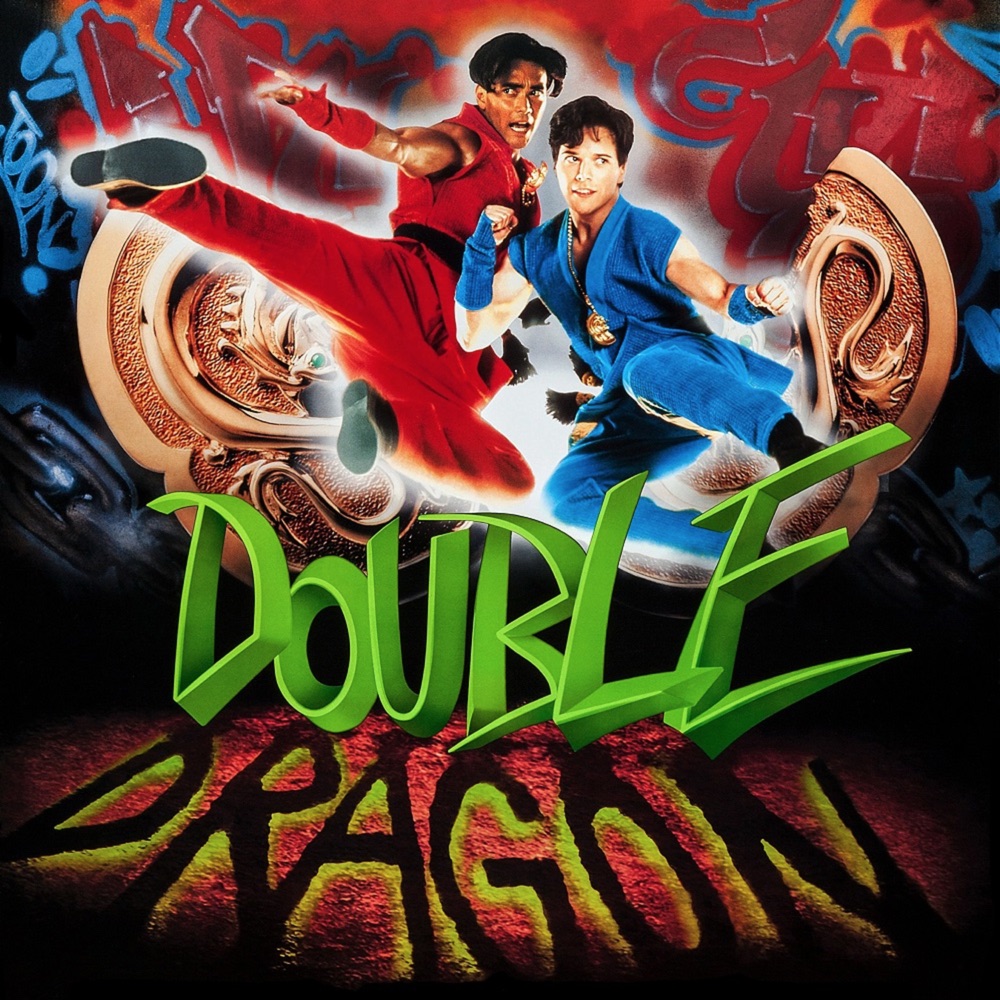
103 · DOUBLE DRAGON
Ranked #5 in our Top 10 NES Games of 1988 →
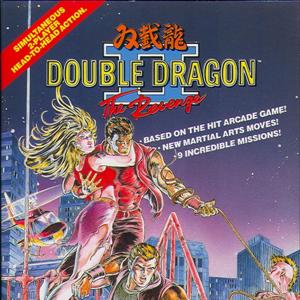
Billy is faced with his greatest challenge. His girlfriend, Marian, has been kidnapped by the Black Warriors, the savage street gang of the mysterious Shadow Boss! Using whatever weapons come to hand – knives whips, bats, rocks, oil drums, even dynamite – Billy must pursue the gang through the slums, factories and wooded outskirts of the city to reach the hideout for his final confrontation with the Shadow Boss… his brother Jimmy!
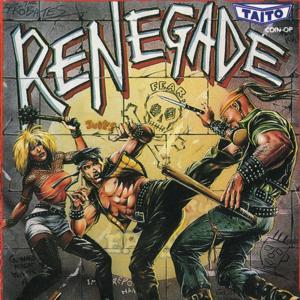
Technos Japan gave us Renegade only about twenty episodes ago, and Double Dragon plays like the team listened to our complaints and went back in time to fix them. It is a true left-to-right side-scroller, the template for what everyone later calls a beat-em-up. Only Mike and Sean were on this one.
What works
- Hits that land. There is a split second between the connection and the slow-motion fall, and the same animation plays when you get hit. It has crunch and weight.
- Simple controls. One button punches, one kicks, and Renegade's facing-dependent mess is gone. The Z-axis and hitboxes are far more forgiving too.
- Two enemies at a time. That was an NES limit, and it turned into the sweet spot: one on each side, enough to watch your back, never overwhelming.
- Things to pick up. Bats, whips and crates all use the punch button. A bat guy who kept re-grabbing his bat while the other goon hit us from behind became a Looney Tunes routine.
- A level that fights back. Knock someone onto the mission one conveyor belt and he falls to his death, Abobo included. It makes the world feel like a place.
What doesn't
- Hearts nobody asked for. The arcade game gave you every move up front. Here you earn hearts through landed hits, new moves arrive with no announcement, and with four missions you level up fast. We wished it were all unlocked.
- A pointless timer. A home version did not need a clock.
- Jumping is never explained. The broken bridge in mission two is the first place you need it, and A plus B shows up only in the manual.
- The loop in level three. After the Abobos burst out of the mountain, nothing says the holes are the way forward, and the giant thumb keeps you walking back to the same bridge.
- The last level. The fortress brick wall has no pattern we could find, and the strategy wiki's advice amounts to good luck. After it comes a gauntlet with endless spawning. The popular boss tips are cheeses, like the Chintai despawn glitch, and there is no guard button.
Beyond the game
The arcade co-op ending makes the two players fight over the girl, while the NES manual spoils that Jimmy is the shadow boss. Mode B is a one-on-one fighter with better sprites and a character select. We also skimmed the sequels, from Double Dragon 2 and 3 to Super Double Dragon, which finally adds a guard, plus the board game, comics, cartoon and movie.
The bottom line
Essential. Sean went first: it is the most modern-feeling game we have played so far, and he had too much fun to vote no. Mike agreed Sean had made the best case. For now it is the beat-em-up and one of the best games on the system. With only two hosts the rule was all or nothing, since a game needs more than 50 percent, so two yeses put it on the Essential Games List. We are not sure it will still be there at episode 700, but replaying it never got stale, and Mike plans to keep trying to get further.
Written from our conversation in this episode.
- Back of the Box
- Manual
- Introductions
- The game is a spiritual and technological successor to Technos' earlier beat 'em up Renegade
- Overview
- Side-Scrolling Beat Em Up, where you attack enemies on screen with punches and kicks.
- Gameplay
- Attacking
- Punches, Kicks
- Objects
- Leveling Up
- Progression
- The Timer
- Boss Battles
- Final Boss
- Willy
- ACTUALLY ITS YOUR BROTHER JIMMY
- Whether this is meant to indicate that Jimmy is the leader of the Black Warriors, or it is simply Techno's way of providing the final climactic battle from a two-player arcade game that is otherwise impossible in the NES version is open to interpretation.
- If you die, you will return to fight Jimmy. You'll return, that is, as long as you have another life available.
- Due to technical limitations of the NES that were not worked around, the game can only generate two enemies on-screen to confront the player and both enemies are the same character.
- The omission of the arcade's two players cooperative game mode
- "Mode B"
- 1 or 2 players can engage in a 1-on-1 fighting match with six of the game's characters using graphics more faithful to the arcade.
- Attacking
- Developer Interview - Yoshi-he-sa Kishi-moto
- A self-proclaimed rebellious youth, Kishimoto says he got into fights in school on a daily basis. Which, he explains in retrospect, was partially the result of a rough break-up. "There were family reasons as well, but there was a girl and she dumped me, which pulled the trigger," he says.
- Sequels and Spinoffs
- TWO MORE NES DOUBLE DRAGON GAMES
- Double Dragon II: The Revenge
- Double Dragon III: The Rosetta Stone
- SUPER DOUBLE DRAGON
- SNES - the player now has a guard button for blocking attacks.
- Double Dragon V: The Shadow Falls
- SNES - a head-to-head fighting game based on the Double Dragon animated series in the style of Capcom's 1991 arcade-hit Street Fighter II
- Double Dragon NEO GEO
- Head to Head fighter based on the movie. It was Technōs Japan's last Double Dragon game before the company went out of business, and the fourth and final Double Dragon game released in arcades.
- Double Dragon NEON
- 360/PS3 - Reboot of the series by Arc System Works
- Double Dragon IV
- PS4/Switch - It takes place shortly after Double Dragon II: The Revenge and uses an 8-bit artstyle
- THAT IS NOT EVERY GAME, BUT IT IS ENOUGH FOR NOW
- Double Dragon: The Board Game
- The winner is the first player to successfully fight his or her way around the game board to Jimmy's Hideout to rescue Marian. You will pass through the slum section, the industrial section, the forest section and the hideout section on the rocky road to victory.
- Double Dragon Comics
- portray the dragons not as skilled martial artists and bad asses, but as generic superheroes who get their powers from some sort of artifact, which in this case is a statue.
- STAN LEE is their father in this comic series
- Double Dragon Cartoon
- The premise of the show is that the protagonist brothers are separated at birth. Billy is raised by an elderly martial arts master known as the Oldest Dragon, and his brother Jimmy is raised by the evil Shadow Master as his second-in-command, the Shadow Boss. As a result, the Lee brothers oppose each other as adults; but when Jimmy is betrayed by the Shadow Master, he renounces his evil ways and joins his brother as a Dragon Warrior. During the course of the series, the brothers recruit allies in their war against the Shadow Master and his henchmen. The futile search for their father, John Lee, is a subplot throughout the series.
- Double Dragon Movie
- The movie's plot primarily concerns Shuko doing all he can to acquire the Double Dragon. While he has one half, the Lees have the other.
- TWO MORE NES DOUBLE DRAGON GAMES
- EGL
- 19:40 Sean resets
- 36:35 Sean Coughs
Found automatically from the transcript and checked, but it can miss things or pick the wrong page. Spot a mistake? Tell us.
Games
- Double Dragon mentioned at
Technos Japan's side-scrolling beat-em-up, ported to the NES from the arcade, and the episode's game.
- Renegade mentioned at
Earlier Technos NES brawler, treated as the proto-beat-em-up that Double Dragon improves on.
- Streets of Rage mentioned at
Sega Genesis game cited as the later standard for the beat-em-up genre.
- Bad Dudes mentioned at
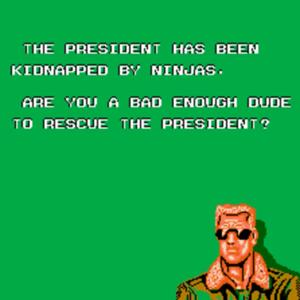
Data East game whose famous line asks if you are a bad enough dude to rescue the president.
- Super Mario Bros. mentioned at
Used as a comparison for how levels feel connected, and for how a player dies and the other takes over.
- Metroid mentioned at
One of the two games the hosts say a 3D NES emulator was tuned for.
- Sleeping Dogs mentioned at
Recent game with interactive environments, such as pushing an enemy's face into a urinal.
- Kung-Fu Master mentioned at
Earlier arcade and NES fighter used as a comparison for how far Renegade and Double Dragon advanced.
- Wizards & Warriors mentioned at
NES game cited as lacking a sense of place compared to Double Dragon.
- Castlevania mentioned at
NES game praised for making you understand where you are headed.
- Street Fighter II mentioned at
Fighting game cited as one where guarding is a mechanic.
- Contra mentioned at
Run-and-gun game the cave platforms in Double Dragon recall.
- Mortal Kombat mentioned at
Fighting game cited for the arcade ending where two players fight each other.
- Trojan mentioned at
Capcom NES game with an early one-on-one fighting mode.
- Tag Team Wrestling mentioned at
NES wrestling game the hosts try to recall in discussing character select.
- Double Dragon II: The Revenge mentioned at
The next NES Double Dragon game, covered in a later episode.
- Double Dragon III: The Rosetta Stone mentioned at
The third NES Double Dragon game, joked about as a language-learning game.
- Super Double Dragon mentioned at
Super Nintendo entry that finally adds a guard button.
- Double Dragon V: The Shadow Falls mentioned at
Super Nintendo head-to-head fighter based on the animated series.
- Double Dragon (Neo Geo) mentioned at
Head-to-head fighter based on the movie, Technos Japan's last Double Dragon game.
- Double Dragon Neon mentioned at
2012 reboot for Xbox 360 and PlayStation 3.
- Battletoads mentioned at
Rare's NES game, mentioned with the Double Dragon crossover.
- Battletoads & Double Dragon mentioned at
Super Nintendo crossover of the two franchises.
- Dragon Ball FighterZ mentioned at
Arc System Works fighting game named as an example of their work.
- Double Dragon IV mentioned at
Recent entry on PlayStation 4 and Switch that uses an 8-bit style.
- Shovel Knight mentioned at
Modern game with a retro 8-bit look, used for comparison with Double Dragon IV.
- Dragon Warrior Monsters mentioned at
Game joked about when the cartoon says Jimmy joins his brother as a dragon warrior.
- Stinger mentioned at
Konami NES shooter the host says is on the essential list for now.
- Balloon Fight mentioned at
NES game the host often boots up to play.
- Gradius mentioned at
Konami shooter the host also often boots up to play.
Companies
- Technos Japan mentioned at
Developer of Double Dragon and of Renegade.
- Rare mentioned at
British developer of Battletoads.
- Arc System Works mentioned at
Developer of Double Dragon Neon and several fighting games.
- Marvel Comics mentioned at
Publisher of the Double Dragon comics.
People
- Yoshihisa Kishimoto mentioned at
Creator of Renegade and Double Dragon, quoted about why he made fighting games.
- Stan Lee mentioned at
Comic creator, joked about as the brothers' father in the Marvel Double Dragon comic.
Film, TV and music
- The Dark Knight mentioned at
Film referenced for a scene where the Joker breaks a pool cue.
- Double Dragon (animated series) mentioned at
1993 cartoon with a different backstory for the brothers.
- Double Dragon (film) mentioned at
1994 live-action movie that explains what the double dragon is.
- Super Mario Bros. (film) mentioned at
1993 film the Double Dragon movie is compared to.
Terms and events
- Beat 'em up mentioned at
The genre of side-scrolling fighting games that Double Dragon helped define.
Articles, videos and sites
- Essential Games List mentioned at
NEStalgia's running list of the NES games the hosts call essential.
Other
- Mega Man mentioned at
The other game the hosts say a 3D NES emulator was tuned for.
- The Elder Scrolls mentioned at
Role-playing series used to describe how lived-in a game world feels.
- Ninja Gaiden mentioned at
Series the hosts joke could cross over with Castlevania.
Auto-generated transcript. Each paragraph starts with its timestamp. Speakers are not identified.
You'll never have to stand in line to play Double Dragon again!
And welcome to NEStalgia, a chronological exploration of every NES game released in North America. I'm Mike. And I'm Sean. And that's it. That's just us today. When was the last time? It's been a while. It has been a minute. You know, like I always find these to be much more intimate and sensual, especially when like the studio lights dim a little bit. A lot of people have written into the show and said that they prefer it when all four of us are on the show.
There are some things we can't control. So if you don't feel that way and you're like, oh, I love it when it's just Mike and Sean, maybe write in to make us feel better about ourselves. We'll just cut the rest of them out of the show. Yeah, I don't see. Yeah. In fact, yeah, we'll fill it in with just more of like a different persona of me and a different persona of you and that'll still get us to four. Yeah, totally. And that's all that they really want is four voices. Would you be like, yeah, that's all they were ever asking for was I like it better when more people talk all at the same time. Incoherently. We do that a lot.
So, Sean, today we're playing Double Dragon. True. That's made by Technos Japan. And if you may remember, Technos Japan has released one other game on the NES for us so far. Do you know what that game might be? Renegade. Renegade, right. The other beat-em-up game, the only other one really. The proto-beat-em-up. Proto-beat-em-up, yeah. This game is very much the spiritual and technological successor to Renegade. And I think we're going to see that a lot. But that makes me think like, well, we only played Renegade like that was only like a couple episodes ago, right? I think it was more than a couple, but I know what you're saying. Yeah, I'm saying like maybe 20 episodes ago.
Sure. You know, so it hasn't been much time, but you can see in Double Dragon that a lot of improvements have been made in this genre. It's like they listened to the episode. Right. Well, they did. They listened to the episode, went back in time and said, oh, we can make a better game. Let's call it Double Dragon. Yeah.
And then, you know, movies, cartoons later. Everything ensues. Yeah. Just for those of you that don't know, Double Dragon is a side-scrolling beat-em-up where you attack enemies on screen with punches and kicks. And eventually you can learn other things, too.
In the arcade version, you just had them all already. But the important thing here is that makes this a little different than, say, Renegade is that it's a true, like, side-scroller from left to right where you have to clear the enemies on the screen and continue moving for, like, forward progression. Whereas in Renegade, you were stuck to a screen and then you move to, like, another screen to face the next wave. It's like the codifier of the actual genre that you're thinking of when you say beat-em-up.
Right. This is really close to, like, Streets of Rage level of the beat-em-up genre. Yeah. Which will eventually, like, give everybody their official definition of what a beat-em-up should be. And all those bad dudes. Yeah. You know, I'm a pretty bad dude. I know. Are you a bad enough dude to rescue the president? Always. We shouldn't have spoiled that before that episode, but we'll get back to that.
I don't think we really need to do any preliminary talking here because we set up a lot of what a beat-em-up can and should be in the Renegade episode. So let's just get right into it. Double Dragon, you boot up the game. How are you feeling? You know, after I go through that, what seems like way too many options for the beginning,
I get into the game and I see some very effective motivational cutscene to go forward where somebody just, like, punches the girlfriend in the stomach and then you're off. Yeah. And it's good graphics for the NES. Yeah. This is very impressive. Yeah. So I'm already, like, engaged. I think it's very clear that there's a very simple story to be told and now you just go right into the fun. And the fun, of course, is punching and kicking everybody that stands in your way. Yeah. Only people that stand in your way ever show up in this game. The streets have been cleared for everybody but villains. How did you feel about just, like, your general attacking power?
This felt, like, just from the weight of the punches, the rate of movement, like, this just felt like how it felt it should. Yeah. Everything connects very easily. I'd say there's a couple of, like, later moves that feel like, oh, that probably should have hit. When it's most, like, directional inputs and stuff like that. Right, right. But for the most part, like, a punch is satisfying because there's also animation for both parties, like, you when it happens to you when you get punched. And when you punch an enemy, there's a satisfying, like, connection that happens that registers a hit. It knocks them back or knocks you back. And that split second delay between the punch and their, like, slow motion fallback, that just feels right.
It has crunchiness and it has weight to it. So it feels good. Yeah. And the progression of the enemies, I mean, you meet a lot of what you're going to see through most of the game just in the first level. Yes. And that actually didn't bug me because it's only four missions and it does get pretty tough. So I didn't mind having not so much, like, new encounters to deal with that were going to be, like, incredibly hard things that would then set me back to stage one again.
Yeah. I think that there isn't really much tutorializing here, but they do give you, like, the easier enemies to begin with. And that's, you know, just typical video game logic. Yeah. The one thing they didn't that they do tutorialize, but they don't ever spell out for you. So if you don't own a manual or don't have a manual and that's jumping there, there comes a point, I think, in stage two where a broken bridge is in your is in your way. And if you walk up to it, you'll fall into the river. But if you don't get out.
No, you can't get out. You'll lose your life. Okay. But they never told you, like, about jumping and you never had to jump before that you had to climb fences and stuff. Yeah. So it was a weird moment where I never used the jump buttons before, but I said, okay, well, there has to be a way for me to jump. It turns out you just push A and B together, but I had to refer to the manual for that. So you didn't read the manual to start. I did not read the manual to start because I assumed and was correct in thinking that one button would be to punch and one button would be to kick.
That was the problem in the prior game. Yes. That in the prior game, for those of you that can remember, you had to, like, face it depending on which way you were facing that would do the different inputs. Yeah. So punching and kicking were tied to, like, in the right, if you're facing the right, A would punch. But if you were facing the left, A would kick. But basically, B would always attack to the right and A would always attack to the left and it just depended on whether it was going to be a punch or a kick.
Right, right. So it was still confusing as hell. They fixed that a lot. And I think they also kind of fixed that Z-axis that we were complaining about because maybe it's just because the graphics are better. But I was able to better understand if I was just going to punch nothing for the character. Yeah. And maybe it was just more forgiving, too, in terms of a hitbox. Like, you don't have to be exactly lined up with, like, this.
Because if you think about it, if you're pixels, right? If you're pixels, yeah. Yeah, but I'm saying, like, you're just flat, you know? I know. It's really hard to see. It's like these strips of paper, like, fighting each other. So you have to be, like, perfectly aligned for it to happen. And this game's a little more forgiving than Renegade was. Totally. Do you think that if you're pixels, like, do you just see, like, a line? Or do you see in two dimensions as well? Somebody made a 3D version or a first-person version of Super Mario Bros. Where you see through Mario's head. And it is, like, terrifying. And also what somebody would dream like, you know? Nobody would actually ever have a good time experiencing that. Yeah, in 2D land being pixels.
But, you know, at least now we have the technology. We didn't have it back then. But now we have the technology to see what that would feel like. Science. I'll try to link that in the show notes for everybody. But, yeah, that's actually a really cool thing. And there's another cool thing, if we're just going to get on tangents here for a minute.
There's this, like, 3D NES emulator that, like, automatically calculates for certain games that they've programmed to make 3D. So this way it plays better. Sometimes it gets a little, like, mind-fucky. Yeah. I think only, like, there's, like, maybe Metroid and Mega Man are, like, the two games that they've really spent time on. Like, figuring out how to make all the pixelated elements work in 3D. Yeah. But otherwise, if you just throw, like, a random game in there, I don't even know if it'll take it. It might try. Yeah. So one thing that we haven't talked about yet with attacking, though, is the leveling up system.
Yes. Now, this is non-existent in the arcade version. In the arcade version, you already had everything in your repertoire. And you just kind of, like, figured it out by either, like, looking around on the panel of the arcade. It would show you all the moves. Or you would just do them, you know, naturally by button mashing.
Like, this game doesn't spell out for you the leveling up system. It's based on your hearts. Yes. Down at the bottom left. So there's no real sense of, like, levels. It's just like, oh, now I have more hearts. I think, right? Yeah. So basically, you have a score. And that just counts up normally. And then that's in the bottom right. And in the bottom left, you have this other number that goes up every time you land a hit.
And once you hit a certain amount, once you get to a certain number, you get another heart. And that heart is basically leveling up. And with it comes a new move that you can do. It doesn't say, like, new move acquired or anything like that. You just know. Like, oh, this is the second heart move. And the whole concept, I don't really know why it's in the game.
Because there are only so many enemies that you fight before getting at least to, like, level three. And so I think that, like, everybody, unless you're more efficient, if you're more efficient, you're going to get less hearts. Right. So I don't know what, like, the point of this was, but it's there. Yeah, I think, just to go over it for a second, you have punch, kick, jump, and headbutt available to you right at the beginning. I love headbutt. Yeah, it looks pretty good at that. It's pretty cool.
And then, like, level two comes around, and no additional inputs are required. But now you have the uppercut and a roundhouse kick on stunned opponents. Yes. I just feel like, you know, it seems like this was added to make the NES version a little harder because of the other limitations of the game that we'll get into. But there's no reason why, like, you know, you couldn't have those abilities at the beginning.
And it doesn't feel like, it doesn't, because there's no, like, awesome screen that tells you about your newly acquired techniques. Or, like, you don't go to, like, a sensei who teaches you these things. Because it just happens randomly, all of a sudden, you'll just notice, like, oh, I have the uppercut. Yeah. Like, now your combo looks a little different. And that's the only thing that really tips you off if you haven't read the manual.
It does get a lot more, like, you get a lot more useful things down the road, but you have to figure out how to use them. Yeah. And I think, for what it's worth, though, these additional moves, I wouldn't mind if they were all available from the beginning. But they are great to have in this game. It's a very welcome addition to this whole thing because we're so used to, even in, like, action games and stuff like that, only having, like, the A button does one thing.
And maybe you get, like, different objects. Yeah. So it's treated slightly different. And then the B button is another thing. And then your D-pad up is to jump. So to have, like, a lot of different mechanics here, to be able to, like, have a thing to grab somebody and then another button to throw them. And then when they're on the ground, you can face punch them.
Like, to have all that stuff is really cool. It makes it feel more like a complete game instead of whatever Renegade sort of was. Right. But you're kind of, like, leveling up so fast because there's only four missions that it just feels like, how are you learning this stuff? Like, shouldn't you have just had all this to begin with? Like, if there's only four missions, is it really, like, is it really bad if I learn the elbow move from the beginning?
No, I mean, yeah, it takes, what, like, ten minutes to get to, like, five? Like, I don't... Yeah, yeah. I think level five is very easy to get to. And then, like, level six requires some... But that's only because by level six, you're probably on mission 3.5. Right. And it's a pain in the ass now. So, I think that it... This is one of those artificial barriers that I wish they wouldn't have even thrown in there.
I can see why they did, but I don't think it was a just reason. Yeah, it also feels like the timer was another thing that was not necessary in a home version of this game. There's no reason to tell me that, well, I spent too much time fighting these guys, so now the game's over. Like, why? Was she, like, tied to bombs that were going to go off if I didn't get to the next room in 30 seconds? I don't know. It's just, like, well, games have timers, so this game has to have a timer. And we haven't really shaken that yet.
Right. And how did you feel just about, like, forget the timer thing, but just progression throughout this game? Did you feel like you were, like, climbing the ladder of skill and difficulty and, like, being introduced to new things? I did, but I also don't think I needed a built-in mechanism to feel that way. I mean, I'm going to learn the game as I play it. I'm going to realize that I'm getting better as the game goes on. I don't need the heart system. Yeah, this is a game that does really well through repetition, too, though.
I think it's just the right amount of simplicity meets, like, diversity in your movesets, which is why I wish you would have had it all to begin with. Yeah. That I didn't mind dying and starting over again because it was only ever two enemies at a time on your screen. It's not this, like, fodder of enemies that you just have to figure out, like, well, how am I going to get through all this? And you can't get to the next stage until you beat them all and stuff like that. What's funny is that the two people on screen, two enemies on screen at one time was just a limitation of the NES.
I read that, yeah. And it winds up working out in its benefit, I feel. I think that it would have at least, like, again, with diversity of experience, it would have been nice to be able to throw in a couple screens where you have to fight one enemy of one kind and another of the other kind.
But, obviously, we don't, because this is kind of a new genre right now, we don't, I'm not really, I don't really care about that. Yeah. Because this is, at least, this is fresh enough that I don't care that I have to fight two duplicates of the same guy right now. Right. And to be clear, I think that the two enemies on screen is the sweet spot in this kind of thing because you can deal with one person on the left and one person on the right and you do have to watch your back, but it's not overwhelming to the point where it's like there's four guys on screen and I'm barely understanding my placement on the Z-axis, you know, it's, I think...
They will, if you're not careful, they will wobble you. Yeah, and they do, they do. I think there was something really funny that happened to me one time with, one of them had a bat and the other one was just normal. And I was just fighting the guy with the bat because you want to disarm him and then you pick up the, yeah, you want to pick up the bat. And I would punch him, the bat would fall, and then the guy behind me would punch me, and then the guy with the bat would pick up the bat. And it just kept happening. It was like a Looney Tunes episode where then I proceed to, you know, because he's in the middle of picking up the bat so that I punch him in the face. And I just did that until he died and then I took care of the other guy.
But that brings up another thing that we haven't seen before and that's interactive items and, you know, tools that you can use here. Another thing that, you know, this is just looking back in hindsight, but another thing that I didn't look at the manual at all, but when I saw those objects, I just assumed I can pick this up. And I just assumed using the punch button. It's like we take that for granted, but I think that's actually like just really good design decisions from this team.
Oh, yeah. To just know like, no, you shouldn't hit select to pick up an object. Like it should just be the same button that your fists are, you know? Exactly. I really like that. And, you know, for what it's worth, there's a, you know, there's a good variety of things. I mean, I'm sure we could have X for a little more, but I think like having the baseball bat and the whip and some of the bigger objects, you pick up a crate at some points. I like that there's also some weight to those bigger objects too.
But, you know, those things help along the way because they almost make you feel like you're taking control over the situation. Once you like disarm the person and now you have the bat. And that level of interactivity with the level itself is sort of what makes me like a lot of these action titles and even the games outside of this genre. Like I remember really enjoying, I don't remember which wrestling game it was, but whatever the wrestling game was where you can like leave the ring and then go into the back and like pick up a chair that was just sitting in the locker room or something. I mean, those were later like N64 games and stuff like that. But yeah, those are perfect. Great example.
And just like, yeah, like interactive battles in more recent games like Sleeping Dogs where you can use the, use a urinal and put their face in a urinal. Like this is sort of that like step one and just the interactivity of the level design extends itself to like how the actual surface you can walk on interacts with you as well.
Like in the first level, you get into that weird conveyor belt area and you can actually just kill your enemies, but not just by punching them, but by knocking them down on the conveyor belt. Like, and they just fall to their death. Like I think that that's very creative and it really, it really increases my enjoyment of these kinds of games. Yeah. I think, I think if Renegade for us was impressive because we had Kung Fu to compare it to, then this game is just, it's on like the same scale. Like now Kung Fu looks like something from like Atari 2600 and Renegade looks like an early NES game.
It really does look like from the 2600. But, but yeah, there, there's a, there's a, there's a, there's an interactivity to the environment, but also it helps make it all feel more alive. Yeah. For an NES game. Very much. Which I think is pretty cool because right now we've seen a lot of like, you know, and this is a interesting example, but in Wizards and Warriors, right? You go to a lot of different places and you see yourself move around on the map, but I never really felt like I was at any of those places. You know, like I'm jumping around on tree stumps. I'm in a cave.
I think those things are happening. But when you're like in Double Dragon and even if you're at like the castle at the end, which is like kind of weird. It's a hidden fortress. Okay. A hidden fortress. Or when you're in these caves, it's just having, having that stuff like be available to you makes it all feel more, more alive. Yeah. It has a sense of place and it has a sense of maybe not being lived in. Like this isn't, this isn't like an Elder Scrolls game, but it definitely has more external logic and not just video game logic of enemy placement.
Yeah. It's as simple as like how in Super Mario Brothers, when you go down the pipe, it's like, cool. Now I understand why I'm in the underground. It's like sometimes you just need that connective tissue. That's what made Castlevania so great. Exactly. You understood where you were going, even if it was nonsensical. It was like, cool. I mean, like I feel like I just got out of that room and now I'm in the, you know, I'm getting closer to the tower. Yeah. Wow.
We should probably talk about the boss battles because this was, for me, the moment where I remembered that I'm not good at beat-em-ups. So what are we considering a boss battle? I would start with even though he later just becomes a generic enemy,
the Abadobo, I think his name is. So the big, like, the thing-looking guy. Yes. Okay. And he shows up in the end of Mission 1, I think. Yeah. Ababo is his name. Adobo. Abobo? Abobo. Okay. Abobo, Abobo. Yeah. Abobo-bop-bop-bop-bop-bop.
That works, too. He definitely has the intimidation factor going for him. But I think, so this is the beginning of level one, you said? Yeah, that's what, you're still on the conveyor belt and everything at the end of this. See, that was easy for me because that was the first time that I'm like, wait, I know that I can just beat him by knocking him down on the conveyor belt and I won't really have to fight him. Right, right. So I think that later in the game when you have to fight more than one and he just becomes like a regular goon, then it's more, it's harder and it's more annoying.
Yeah, I think that happens around level three, which is where you also start to see an excess of just like screens to get to things. So like at first it was just like, you know, all right, face two of these guys, move a little bit forward, face four of these guys, move a little bit forward, then two again.
By level three, you're facing like five of one thing, three of another thing, four of one thing. You know, like it just keeps going and then you have to fight the two Bobos. And that's like, for me, that's kind of like, I'm not good enough at this genre to deal with this. I just, I just spammed jump kicks. Jump kicks are good. I'm a fan of them. They dodged most of them, but I was able to get out of the way of like a counter attack quickly. And that's worth mentioning too, the dodging thing. They're smarter AI for sure in the Bobos than in most of the other enemies.
But, you know, I'm not saying that the difficulty of these guys like makes it a worse game. I think it's just, it was the revealing factor to me that I was kind of like cruising for a while and not actually like being good at this, at this genre or this game in specific. Yeah, I think the first, I don't remember if this is mission one or mission two, but after you climb up this building with a bunch of ladders.
That's mission two, I believe. Okay. So you have like a mini boss, I guess, of the guy that, I don't know how to describe him. He's purple. Yeah. His name in the manual is Chintai. Okay. And yes, he's the purple one and that's after you fight the Lindas, which are the female characters in the game. I think that's really funny. It's like, what's a vicious name for a woman?
Linda. And I remember that was the first fight that like it didn't feel like I was just counting how many times I knocked him down and then he, oh, he should start flashing and go away soon. It actually felt like a brawl because I didn't know his pattern and there was, it was mostly just raw reaction time and, and that kind of experience. I don't know how you felt about that. Would you count that as a boss? I would count that as a boss. It is, it is the end of that mission. I would count a boss anything where like all of a sudden you're introduced to the next mission.
You know, you're facing him alone too. Uh, I think what was the only thing that was disappointing here was, uh, Chintai was another one that like I had trouble going up against. But when you look at like strategy guides on multiple different sites too, a lot of them have just figured out like very clever ways to like deal with this. Yeah, they can choose him. Yeah. And stuff like that for, for almost all the enemies though. And it seems like it's like, well, is that the best way to play this game?
And, and if so, I guess what I mean is, is like everybody kind of agrees that it'd be better to cheese on these people than it would ever be to actually fight them. You know, like head on. Yeah. The one way that I've seen to beat the second boss, this Chintai, which isn't even cheesing. It's just like, it's just a glitch of, of going down the building again. And he just despawns. Oh, right. Okay. Yeah. I remember seeing that one as well. That's like, that's actually considered like a secret. Uh, and on some of the like guides, it's like, Oh, did you know you could do this?
And you know, yeah, I think I'm fine with that stuff. And I'm fine with like, you know, figuring out the fastest ways to take enemies down. I, I meant that more as a comment of, is it like, does it say something about the game that no one's recommending like an actual way to just like fighting him as you would. Right. Be sure to die. Like you can't dodge. Yeah. You know, be sure to guard. You can't guard. I think that that's something that we haven't talked about yet that we're not thinking about it because we haven't played enough of these. But if we ever play a game with guard, going back to something like this is going to be tough.
Yeah. That's true. The ability to just like cross your arms and have some invincibility is nice. And they punish you in games with guard too. Like usually if you guard too much, like a third punch will still knock you down. Yeah. So I, I think this game could have used something like that, but I'm not sure how they would have done it. I guess, I guess it doesn't really, I didn't really think of this because when I played these games, I was never very good and I never guarded. Right. I never knew. Even in, you know, say like Street Fighter 2 or something like that. I never thought to guard. It's really aggressive.
Right. It's difficult to reprogram your mind like that. Yeah. But yeah. Yeah. And I think it's, it's worth mentioning that at this point, you know, if we're going all the way to the bosses, we might as well go to the end of the game where the final boss, Willie, is the guy who kidnapped your girlfriend and everything like that. And in the arcade version, it was kind of crazy because you would fight him, but also like enemies would just keep spawning. But you had to take care of Willie. Like everybody else would just run off if he died. Willie's the guy with the machine gun, right? Yes. Okay. The only one with a gun in the game.
And in the, in the version here though, it's Willie just shows up at the end after you've taken out like two of Bobos, two Chintais, two Lindas, two of, like you have to take on. Williams. Yeah. You have to take on like two of all of these types and then finally you fight Willie and he's by himself. And I just think that's interesting because in the arcade version, it was more of just like a try to survive. Well, again, like they can't put more than one kind of enemy on the screen.
So they had to redesign that. But let's, let's jump back a bit and talk about the actual design of some of these levels. Sure. Um, so level one, it's pretty standard. It's pretty intuitive. It has, you know, some, some nicks and crannies, but level three, I almost just stopped playing the game because of level three, because I didn't realize that after you fight the two of Bobos that jump out of the cave, jump out of the mountain and turn into a cave. Uh, that you shouldn't keep going right because the game just, the level just loops. Right. With the, with the platforms, right? After you get on those floating platforms.
That, that, that is level, that is level three, but that's like the second part. So no, no, no, no. The first part. Out, when you're outside in the forest. Yep. They, you, you, you walk across the bridge and then you fight some dudes that, uh, I don't know. They just look like they're wearing jeans. Those are the, those are the Williams. Okay. But like, I know what you're talking about. The bridge was what, this is the, this is the bridge. It's not the bridge. But no, but this is the bridge scene I was talking about earlier. And basically that's the only, like, that for me was the recognition that something was, yeah. Something was up. Yeah. So I, I, there, I think there should be, cause like they give you the, the thumbs up to keep moving forward.
But so maybe if you're, if it's going to be in a screen that has a cave, maybe like point to the cave. Yeah. They don't, they don't imply that because the Bobos broke through. Yeah. To make those holes that it was never implied that you should enter them. Yeah. Uh, so yeah, that is, that is very strange. Uh, and I think depending on like which one you enter, you also like enter a different part. Yeah. Of the, of the cave. I went right into the, I think both times I played through this, I went into the purple cave.
Yeah. With the falling stalactites. Or is it stalagmites? Uh, no idea. But there, oh, it does say actually here somewhere. Hold on. It's stalactites. Stalactites. Yes. Yep. Uh, you know, which are mandatory in caves. It seems like at this point in NES games, it has to be something that falls that if you get close to it, it just starts falling. Exactly. Um, the platforms were weird though, because they looked like they were taken out of like Contra or something like that. It's also weird to just see, to see platforming in, in this game. It shouldn't be there in my opinion.
Um, but yeah, then there's a, there's also like a whole nother part to this cave too with some waterfalls and stuff like that. Yeah. It's got, it's, it's okay. Yeah, it's okay. It's okay. But I do agree that it is a little strange that if you, if you don't go into those holes, you will just loop back and come across the bridge again. And I think that's why the bridge is probably there to remind you of like, hey, you noticed, uh, you'd been doing this right.
Like you should just stop. It should just stop. It should stop. You know, if there's a thumb that tells you to keep going, that thumb should also like be able to like point into the cave or, you know, use an index finger with your thumb. Yeah. Well, it's usually it's thumb for the other thing. Like get out of here. Like you're good.
Um, for those of you that don't know what we're talking about, it's literally just a giant thumb that like appears on the screen. Instead of like a, an arrow that says you can go to the next screen now, which is just a thumb. Yeah. It's like hitching a taxi ride. Yeah. Yep. Uh, okay. Any, any other thoughts on the level design?
Um, so were we just going to talk about the final level as its own thing? Yes. Uh, that's what I was getting to. Okay. Let's talk about that. Okay, cool. So you, you're, you're calling it a hidden fortress. Um, I'm calling it this weird, like dungeon cave. There's like, it's just so unfitting for the rest of the game, but I guess going into a cave was weird enough. So like naturally you would lead up into like this place filled with skulls and, uh, Mike Wazowski eyes. This, I mean, this is like organized crime. Obviously you're going to find this stuff. Right. Oh, where else are you going to see this stuff? Uh, and really, uh, you know, what, what, what kills me here?
It's not that, uh, I mean, like you want to talk about that bricks thing. I, yeah, I think we have to at least acknowledge it, that it's just the cheapest thing. I don't think it has any kind of, I don't think it has a pattern.
It says, um, no, uh, no enemies appear to welcome you, but this is just a trick to lull you into a false sense of confidence. The wall itself is actually your enemy here. Is this like a game FAQ? This is a strategy wiki. Uh, like I, I, I prefer to use these cause they include pictures and stuff like that for these NES games, like right next to them. But I just love that. It's like, there's little you can do to prepare yourself except to wait and move as soon as a brick returns to the wall. Stand by the left column and wait for the first brick to pop out. As soon as it's done, move to the right. You may even choose to jump as you go. It may or may not help.
None of my, uh, advice here may do you any good. It's crazy because, you know, the, the platforms were already like a weird thing, but they weren't, they weren't bad. Like they were pretty easy to land on and there was only three of them. They don't ask too much of you. Yeah. This, on the other hand, it's, you know, if this was super Mario brothers, it'd be very easy to handle this. Get some momentum. Yeah. The jump is great. Yeah. In this, we didn't complain about the jump like we usually do because it doesn't matter so much. It's, it's a fighting move. Yeah, exactly. Uh, now all of a sudden, uh, we've been robbed by it.
Uh, I, I, yeah, I don't have much more to say. It's just, it's, it's wonky that it's here, but, um, you know, it's not like, it's probably the hardest thing in this if you've made it to this point because after that you're just fighting the same two enemies over and over again. I wouldn't say that's the hardest because now the, so the, this turns into just like a gauntlet level.
Like these levels have been getting exponentially longer as you progress through them. And I never got through a level four, uh, because just when you get to the like arena areas, they just keep spawning and there isn't even a delay. They just like, Oh, you beat one stage left. Here comes another one stage. Right. Here comes another one. Right. That's, that's during, it's, it's kind of like, um, it's a maze. But you're like going up to the top of the castle.
Yeah. And so like you have these new moves, like you can jump on their chest and like just get rid of them quickly. But now that they're spawning so quickly, they can just interrupt you. And it like, it's definitely by design, like this is supposed to be harder. You're not supposed to be able to beat this game in an hour. Uh, but it's, it's definitely, uh, a different experience than the relative like power fantasy of level one. Right.
Uh, yeah. And, uh, I don't have anything to add to that other than that the, um, the infinite spawn is real. Uh, there really is one that will just continue to generate them as long as you stay in the area. So the, you really do want to just get out of there. Uh, and then it eventually brings you to like the area where you start to see these, um, the, the dragon head, which I guess is the only indication of like why this game is called double dragon, double is a dragon. Is there a second one? No, uh, there's not. Oh. Um, and there won't be unless you consider, I guess, whatever that door is behind you in the final fight. Yeah. Two dragons. Got it. A second dragon. But, uh, you know, I'm not, I'm not upset.
I mean, there was a, there was, there was an indication, there was no indication that you'd be fighting dragons or anything like that. It's just a cool name and like it's a pass. So I think, um, also on the like box of the game, there are two dragons and on the title screen of not the NES one, but of some of them, there are two dragons. Well, on the, on the title screen of the NES one, it doesn't say double dragon, right? Well, it's important to say the name of the game in, in the title, but, uh, in every other version that I'm seeing here in the Amiga version, in the, uh, Amstrad CPC version, in the arcade version, there's always two dragons.
Uh, it's just sort of a, a misnomer sort of anachronism sort of thing, because obviously it was called that because it's two fighters, like it's a two player game, but that doesn't exist in this version. Okay. But now I'm actually kind of pissed because the Game Boy version even has the two dragons on the, on the title screen. But all we get is just text that says double dragon. And then I guess double dragon as well. Yeah. Uh, and some flames. Cool. I like flames. So those dragons made them. Yeah. They're just slightly off screen. You just can't see them right now. Wow. Thank you.
Thank you.
It's true. And surprises you and says, well, actually, I love this woman, too. And I want to be the one who rescues her. So now I'm going to fight you to the death. Well, here's the thing, Mike. And you've got a weird idea of this.
It proves to me that you didn't read the manual because this manual spoils the game and just says, this is your brother. He's the leader of the Black Dragon Club or whatever. Really? Yeah. Oh, my gosh. And it's just like, well, thanks. I would have liked to learn that myself. Just so no one thinks that Sean's crazy here and I'll explain why I thought what I thought. It says, Billy must pursue the gang through the slums, factories, and wooded outskirts of the city to reach the hideout for his final confrontation with the shadow boss, his brother, Jimmy.
That's crazy because what I was trying to get to was that in the arcade version of the game, if you beat Willie, the game ends and you take, let's just, I don't know, is her name Maria or something? Probably. You take her and you walk off and that's great. If you're playing co-op in the arcade version, after you beat Willie, it says fight to the death. And now you actually must, like Mortal Kombat, Street Fighter style, fight the other person you've been playing with the entire time who's your brother.
And the two of you now fight and whoever wins, whether it's Jimmy or Billy, whoever wins gets the cutscene with Maria. I had no idea. That's fun. There's a great, yeah, there's a great article online, I'll link it in the show notes, about like the shocking twist of the arcade version of Double Dragon. And just think about like, what a mindfuck that would be for like two kids that are playing this game at the arcade.
And all of a sudden it says like, yeah, like, you know, it's like that scene in the Dark Knight where the Joker breaks the stick, the billiard stick. And he's like, we're accepting applications and we're only taking one. Yeah, exactly. Like Maria's only got enough love for one of you, so the other one must kill their brother. Maria's a monster. And we don't even know if that's her name. Yeah, whatever. Whatever.
Wow, okay, yeah. Turns out you should read the manuals, kids. True. Because in this one they just outright change it to having him be the shadow boss. They do that because in the co-op version of this game it's not co-op at all. It's Super Mario Brothers style where when someone dies, then the other character, the other player just plays as their variant sprite. They do have, moving on to, unless there's something we want to talk about, like the actual game first, but the Mode B.
I think I read that Mode B is like a tech demo of a scrapped version of the game. Interesting. Okay. I didn't read anything about that, but I'm interested. Basically, Mode B is a version of the game where it's got better graphics. Yeah, it's noticeable too, like that they have more detail. And it's just a one-on-one fighting game. It's a little janky, but the other technical limitation is you can't fight another player. You have to fight a copy of whoever you're playing as. Right. But you do get to do like a character select, but apparently that was supposed to be what the game was supposed to look like. And there would be a multiplayer, but I guess they found it to be too difficult to implement at this time.
Got it. Now, are you saying that because I've played the arcade version and I do think that the sprites in this Mode B look a lot closer to the arcade version? Yeah. Is that what you're saying in relation to like how things should look or are you saying that at one point this game was going to be a one-on-one fighter? No, no, no. I think this might be apocrypha.
Like it may not be true at all, but what I've read is that the game was supposed to be a, like the kind of game that it is, like a side-scrolling brawler. Mm-hmm. But it would have been multiplayer and it would have looked a lot more like Mode B. Got it. Well, for what it's worth, I'm down for 32-year-old rumors. You know, like if they still can't be confirmed or denied at this point, let's just bring them on.
Mode B is interesting. No, I will give it that. But, you know, we're just, we're not quite there in the one-on-one fighting thing yet. But hey, this is like HD compared to. Yeah, yeah, yeah. It's actually like crazy to then see like, oh, wow, Billy looks like that. Like even just having the choose-your-character screen is just like, it's so different than like what we've dealt with so far where it's like an afterthought mode of, you know, in Trojan, there was Capcom's first attempt at like a one-on-one fighting style game. And it's like weird because that guy goes on to make Street Fighter, the same developer.
But at the same time, it's like nothing's there. You know, it's other than just the idea of killing your opponent on a... Wasn't there a character select in, what was that stupid wrestling game? There was a few. The really stupid one. Tag team wrestling? No, the one with like the... Muscle? Muscle. Yeah, maybe. But that's different. Those are wrestling games.
I don't think of those as like... What I guess what I mean is this is like an entirely different game where like all of a sudden you have a whole new mode where you can just do like, you know, one-on-one combat. But that's not why you bought the game. No. It's just like an additional thing. It's a nice little bonus. Yep. But so I was able to find one thing from Yoshihisa Kishimoto, who was the creator of both Renegade and Double Dragon.
He wound up doing everything that is involved with Double Dragon. And it seemed like in the interview he was like, I wish that didn't happen. Like I wish I could have broken free and done my own thing. And now he is doing his own thing. But the only thing I could find from him is that this whole thing like may or may not have been related like to a bad breakup he had. And this is what made him like make these style games.
He said that he got into fights in school on a daily basis, which in retrospect was partially the result of a rough breakup. There were family reasons as well. But there was a girl and she dumped me, which pulled the trigger, he says. I mean, okay. He's the one saying this. It's him. It's him saying that. We're not putting words in his mouth. No, I get that. It's just weird to think that a game where you rescue your girlfriend comes from a guy who had a bad breakup and just wants to fight people. I don't know. I feel like this is sort of.
I'm not saying he's a liar. I'm saying that he sounds like he's ascribing a little too much subtext to a very basic and generic premise. I got you. It's like how many games so far have we have started with somebody kidnapping somebody? You have to go get them. Right. Like we've it's been as far back as Kung Fu. Right. So who cares? That's not that. Don't tell the story if it's not really that interesting. It's just been a while since we had some interviews. I thought, you know, hey, I found this thing.
Let's do that. No, I know. I appreciate it. But I think we're ready to move on to our feature segment of this. It wasn't the gameplay. It wasn't talking about anything regarding that. It's Double Dragon Battletoads. It's sequels and spinoffs. There it is. OK, there's two more NES games coming to Double Dragon. And that is Double Dragon 2, The Revenge. And Double Dragon 3, The Rosetta Stone. Ooh. Yeah. It's a language learning game.
You'll learn Italian and Japanese and all that stuff in Double Dragon. Double Dragon. But we won't talk about those because we'll play them. Yes. So that's kind of cool. On the Super Nintendo, we get Super Double Dragon, which now finally puts in a guard button for blocking attacks. But that makes me nervous because does that mean that they don't do anything different in Double Dragon 2 and 3 to make them... I know that they do already. Great. But I won't say it. OK, cool. I'm glad that you've been playing ahead. I haven't been playing ahead. That was fine. I just ran ahead. So we had Double Dragon 2, Double Dragon 3, Super Double Dragon. Here's where things get complicated. After that, we get Double Dragon 5, The Shadow Falls.
Where did 4 go? Yeah, where did 4 go? OK. Wait, no. 4 was Super. Was it, though? I think it was. OK, but wait for it. All right. So that's Double Dragon 5. It's on the Super Nintendo. And it's no longer a beat-em-up. It's just a head-to-head fighting game based on the Double Dragon animated series in the style of like a Street Fighter 2 game. OK. You know? So it very much is almost like just a clone of Super Street Fighter 2. I don't like that. All right. Then Double Dragon Neo Geo. Nice. OK. Head-to-head fighter again. Oof. Not based on the cartoon this time, though. Based on the movie. We'll get to that. It was Technos Japan's last Double Dragon game before the company went out of business.
And it's also their final arcade game for Double Dragon altogether. Then Double Dragon goes into a lull for a while. We don't hear from it. The movie kind of killed it altogether.
And we get Double Dragon Neon for the 360 and PS3, which is a reboot. Hold on. You skipped Double Dragon X Battletoads. I know I skipped Double Dragon X Battletoads. Why? Because we didn't talk about Battletoads yet. There's not enough context for it. What are you talking about? It's a sequel slash spinoff. We have to mention it. I know. It's just like there's just not enough context for certain fans yet. Some people don't know if GameStop carries Battletoads or not. You know? No. We just don't know these things yet. Whatever, Mike. No, I think... Is there a Battletoads for NES? There is a Battletoads for NES. It's made by Rare. You know, the people that made Slalom.
Yeah, there is a Battletoads for NES. And Battletoads Double Dragon is a game that will come out on the Super Nintendo. It's a very unlikely crossover, but it's a completely original game featuring both of those franchises. And honestly makes me wish for more unlikely team-ups. It's like, who was asking for that? Where was like, you know, Ninja-vania?
Where like, you know, the Ninja Gaiden series crosses over with Castlevania and they both have to team up to destroy Dracula. Like, that would have been great, right? I will admit that Battletoads Double Dragon or whatever the actual title is, is my only past experience with Double Dragon. Interesting. Okay. Yeah. And what did you think of that game? I thought it was fun. Great. So, there you go. There's our review. Yeah. Fun, not essential.
Double Dragon Neon is a 360 PS3 game. It's a reboot of the series and it's done by Arc System Works. Those guys who now do all of those other fighting games. Those other fighting games. You know, don't they do like FighterZ, Dragon Ball FighterZ? Oh, okay. And the Persona games and stuff, the fighting versions of those. Yeah, they do do that. They do Dragon Ball FighterZ, Guilty Gear XRD, BlazBlue, you know. Okay, so just all the weeb ones. Yeah. Short thing.
Yeah. Yeah, 45 more apparently too. That's pretty impressive. Yeah, but Guilty Gear is definitely, I think, what got them started. Because Double Dragon Neon was not favorable and did not do well. And so, you would think that would be the end. But we have a loose end to fill and that's Double Dragon 4 finally comes out. Very recently, they were like, oh, we never got to 4.
What happens in 4? Well, don't worry about it because if you play Double Dragon 4 on your PS4 or your Nintendo Switch, it'll explain everything. See, Double Dragon 4 takes place shortly after Double Dragon 2, The Revenge. Okay. Even though it's Double Dragon 4, but Double Dragon 3 is either a prequel or a way in the future sequel to all of these games. And Double Dragon 5, remember, doesn't exist. There's no 5. That's just a fighting game based on the movie. 4 takes place between 2 and maybe 3 and 1 is the first. You see, Double Dragon 4 is the game in which Xenonort comes in and actually takes his dreams and turns them into Double Dragon 5. But not before.
You're supposed to interrupt. No, all right. That's great. Sorry. I will interrupt you to let you know that Double Dragon 4, also not that well received, and uses an actual 8-bit art style. 8-bit. Like, not like that, like, Shovel Knight style, like, oh, this looks great. It kind of looks like Double Dragon 1.
I appreciate that. And it's on PS4 and Switch. $60. Yeah, look forward to that. I don't think it's $60, but I promise you, listeners at home, I am not joking with you when I say this is like a widescreen version. It's a 16x9 version of Double Dragon 1. Wow. With more enemies and all that stuff, you know, because they can fit more. And all that jazz. This is not every game in the Double Dragon series, but we have some other episodes to do with them. So we're going to leave it at that. But it is worth mentioning some non-related game things, like the Double Dragon comics.
Okay? Yeah. They were released by Marvel. Now is it, oh, it's Marvel, not like a manga. No, no, yeah. It's Marvel. It's American comics. Nice, strong American comic. It portrays the dragons not as skilled martial artists, but as generic superheroes who get their powers from some sort of artifact. All right, that's stupid. Or a statue or thing. But it's notable because this reveals that Jimmy Lee and Billy Lee, their dad is Stanley.
That's the change that they made in this one. Wow. Stan Lee is their father in this comic series. I appreciate that. I thought you said that they were going to join the Avengers. No, that would have been funny.
Then you have Double Dragon the board game. Okay? Wow. I would love to get my hands on this board game, but it's apparently one of the worst of all time and is, like, you know, just impossible to find. No one's even selling it right now. For sure. The winner of Double Dragon the board game is the first player to successfully fight his or her way around the game board to Jimmy's hideout to rescue Marion, who I guess is Maria. So this is based on the NES version? Okay. You will pass through the slum section, the industrial section, the forest section, and the hideout section on the rocky road to victory. The rocky road.
Then there's Double Dragon the cartoon. Okay? Okay. If you're following along, this is the TV show. The premise of the show is that the protagonist's brothers are separated at birth. They never know what to do with these brothers and explain why they're dragons.
Billy is raised by an elderly martial arts master known as the Oldest Dragon. Not the Elder Dragon, the Oldest Dragon. And his brother Jimmy is raised by the evil shadow master as his second in command, the shadow boss. As a result, the Lee brothers oppose each other as adults. But when Jimmy is betrayed by the shadow master, he renounces his evil ways and joins his brother as a dragon warrior, which is a different game. Yeah, it's Dragon Warrior Monsters next, right? Yeah. During the course of the series, the brothers recruit allies in their war against the shadow master and his henchmen. The futile search for their father, John Lee, is a subplot throughout the series.
Not Stanley. What channel did this air on? You know, I'll take a look for you. Let's see. In the meantime, you can tell me if you've ever seen the Double Dragon movie. I've never seen the Double Dragon movie. Did you know that it exists?
I had a feeling that it did, but I feel like that may have just been like a Berenstain Bears thing where it's just like, oh, probably, now that you say that it exists, I must have heard of it before. So I got a weird answer here for the TV show. It says that it... On the CW. No, it said BKN Network, which is like Bobot or something like that, which I don't think we ever got in... What is that? Yeah. Like, I don't think... Yeah. It says like... It just said... It doesn't really say like where it started, but like that doesn't... Bobot feels like the production company, not the network. Yeah. So I can't really find out where this aired, but if I had to take a guess, it would have to be like on like...
ESPN. Yeah. ESPN. Yeah. Because it's martial arts. The ESPN, the Ocho, always plays martial arts, so that makes sense. Yeah. This episode's really going off the rails, but we have to talk about the movie real fast because the movie's plot concerns Shuko.
Okay. No idea who that is, doing all he can to acquire the double dragon. The double dragon. Okay. In this one, so Shuko is like the main villain. The double dragon is a medallion. Okay. And he only has half of it. The other half is with the Lees. So they have to like, you know... This is now finally, after the long wait, we finally understand, thanks to this movie, which apparently is even worse than the Super Mario Brothers movie. Wow. We finally find out why this whole thing was ever called double dragon to begin with.
That's fun. Yeah. I appreciate that. Let's watch that. Yeah. We should watch that and do an episode on it or just do DVD commentary that people can watch in sync. All right. I think I've had enough here. This got off the rails at the end, but let's not forget that we did like this game. Yeah. So with that in mind, let's take it to the Essential Games List.
Forget that they don't actually ever explain what a double dragon is, whether that's like a cat dog thing where like two dragons or one, technically one dragon, but both have a face. Just don't pay any attention to that. That shouldn't affect whether this game makes it on the Essential Games List. What's your verdict?
So Mike, I think that like your concern about the double dragon, you're sort of projecting that onto me. Like I'm totally okay with it just being a cool name. Um, but in terms of the game itself, I think that this is the most modern game that we've played so far. Uh, at least in terms of its, its feel aside from maybe like something as classic as a Super Mario. Um, but I know that we're going to play more iterations of this kind of game in this, in this IP.
Uh, but right now I think that I had, I had so much fun with this that I can't rightfully not vote for it. So I'm going to vote for it to be an Essential Game. Wow. Very cool.
I, as you were starting to talk, I had the feeling that you might vote this Essential just now, not even like in the past or anything like that, just right here with your speech. And then that made me think like, what are the rules when there's two people on the podcast to vote for the game? You have to vote for it. Okay. So it's not like it's now Essential. No, we, we went past that 50% mark. It has to be 51%. Got it. Okay. So it's either all or nothing right here on me. Yeah. Let me tell you, I did not make a decision before this episode. Okay. I, if you're asking me right now, if I think this game is Essential, I think that you have made the best case for this game to be on the Essential Games list right now.
And I think that I've never really thought about them like that as we were going through them. Like, I never thought about like, let's put games on here for now and then we'll take them off. Look, I'm not saying that we should take it off. I'm just saying that I know that a lot of times we, we, we argue about what is and is not an Essential game. Yes. And it ends up being like, well, you know, you could play the next game that comes out. Right. That's Joe's voice. Yeah. He does sound like that in real life. Don't forget about what you hear on the podcast. That's usually what his voice is like.
But I, I, so I'm just, I was just going to get in front of that and say, I know that we might play something better, but for now, I say this is essential. So I think that, um, I said some things on the best of 87 episode that, um, about Stinger where I was like, right now one of the best we got. Yeah. I know it might not be later on and we might remove it when that day comes, but right now it is one of the best shmups and that's why I think it's on there.
So if we're being honest, double dragon, isn't just the best beat them up. That's, that's obvious. It's the beat them up. It's the beat them up right now. It's also one of the best games on the system right now. Yeah. And so even though this is a pretty like big reach for an essential game, I think that if I look at everything else that's on there right now, double dragon's welcomed.
Yeah. I agree with you. I'm not so, I'm not so sold that it'll be there on episode 700 and whatever when we're done, but right now it actually feels good being on there. Double dragon for me also gets a bonus point for never getting, never getting to the point where I didn't feel like shit replaying it again. You know, there are a lot of NES games where they are difficult or they're not difficult. They're just like have, you know, frustrating things that make you start over.
And, and, and there's something about like, okay, now you're playing this NES game all over again. That is just very demanding. Yeah. For a person who's used to like nowadays, you die and you checkpointed back five seconds. You know, like there, there's something about that.
And I think double dragon never for me got stale like that. And I could see myself playing this game as we continue to play other games too. You know, I always use a balloon fight and Gradius as examples of games that I just continue to just boot up whenever I, whenever I have a moment to just play some NES games. And so I think double dragon, because I did not beat this game yet, could be one of those games that like I'm going to continue to try to get at. Got to get a little bit farther.
So it's an essential game for right now. We'll, we'll check in with Joe and Sean, see what they think. My name's Sean. Joe and Sam and see what they think. But most importantly, we want to know what you guys think. Do you think this is an essential game or not? Please write to us on the Twitter where we have NostalgiaCast. Yeah. And also ask us like whether you think that we undermined the rest of the podcast by only being two people and voting it essential. Like, was this a quorum? Do you agree? Will I sometimes like, or in the future maybe host a podcast late at night by myself where I do an emergency future episode that is just about the essential games list and I reorganize it to my likings? Maybe. Maybe not. I think that we live in a society.
We are the only two people that have been on for 103 episodes. So we're allowed to have a power trip every now and again. And that's what you just saw here, people. A hostile takeover of the essential games list where, um, and Sean doesn't have a gun to my head right now. I don't. And I am not in danger. I've never had a gun to Mike's head ever once ever. Never. Sean, you never even held a gun. Never. Uh, and if you've never held a gun, uh, hit us with a like button on Twitter. Uh, hit us with a big fat like on one of our older posts pre-six months ago. And if you have held a gun, comment. Comment if you've held a gun. Like if you haven't held a gun.
Um, retweet if you're into the idea of holding a gun but just haven't done it yet. And, uh, actually, what's the other one? Share. Wait, that's retweet. Also, retweet if you've held a gun but never wanted to. No, DM us. DM us. If you want to know the essential games list. Like where it's at right now. Because the website's down for good. Oh, yeah. That's true. Uh, there used to be a thank you page. Now it's just like a redirect.
Oof. To the Twitter. Because we don't, we didn't pay for it. Okay. Oh. No, we just didn't pay for the. Like to go daddy. Yeah. So now, like, I'm gonna try to buy it again and it's gonna be swooped by some cyber bully who's like, you know, it's $6,000, you idiot. And I'm like, ah. You are the people that are now squatting on our webpage. Uh, please just, you know, give us a DM. Uh, we can talk through this and hopefully we can get this back from you at a reasonable price. Yeah, I'd like to state for the record that no one's squatting on it and we didn't, uh, we didn't lose it unwillingly. We gave it up. Uh, the Raspberry Pi is listening. You can find me at Esposito Film on Twitter and I'll talk to you soon. I'll talk to you soon.