105 · R.B.I BASEBALL
Move up to the big time with R.B.I. BASEBALL. Only R.B.I. BASEBALL has rosters and player stats _officially_ licensed from the Major League Baseball Players Association for MVPs like Reggie Jackson and Cy Young winners like Roger Clemens. These stats make all the difference on every play. It's time to stop playing with no-names and step up to the plate with superstars in R.B.I. BASEBALL!
SHOW NOTES
R.B.I Baseball Fan Site
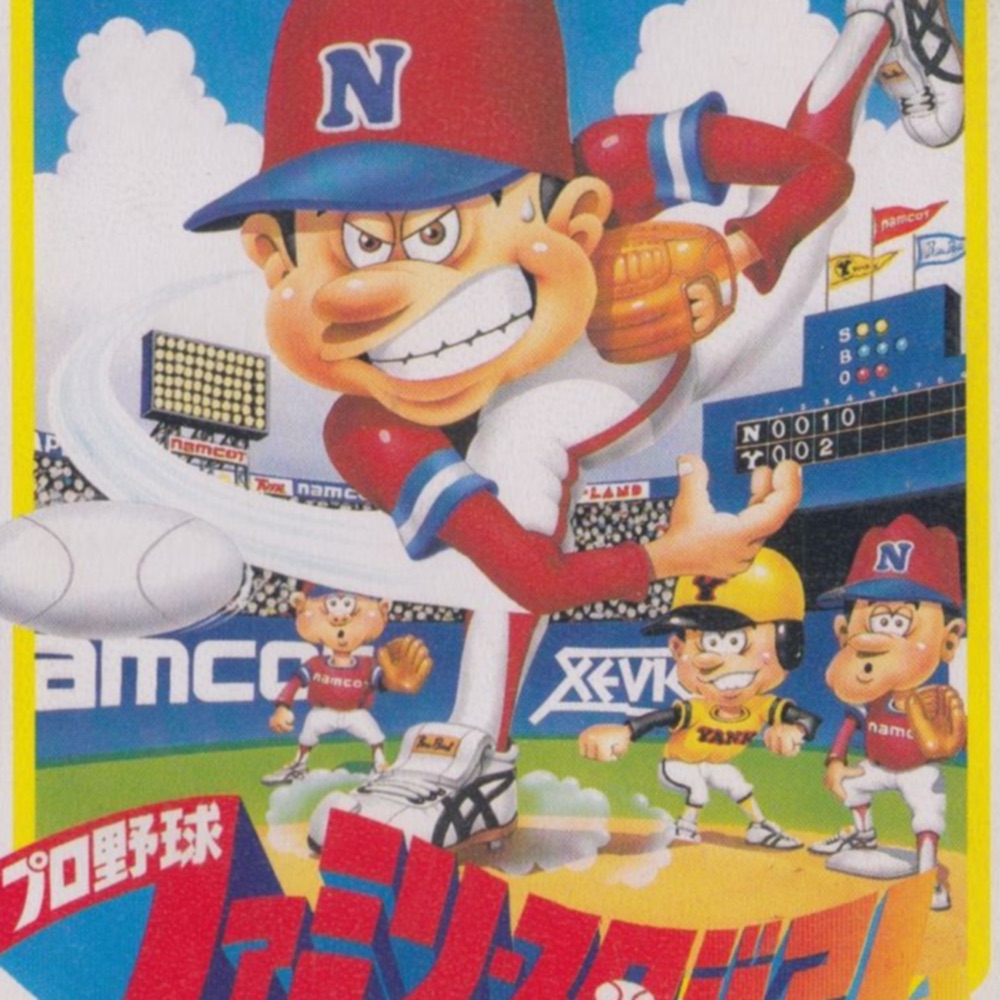
Pro Yakyuu Family Stadium
Atari Games vs Nintendo Lawsuit - Gaming Historian
RBI Baseball 20 First Look!
Major League Baseball Rules
- Back of the Box
- Manual
- Introductions
- Overview
- Sean explains Baseball
- Gameplay
- MLBPA, but no MLB
- I can finally play 1986 World Series
- Batting
- Most fluid we’ve seen yet. Very fast paced
- Running
- They always do Hit and Run making outs likely
- Pitching
- 2 pitches. Control the ball after release
- Fielding
- Pressing B automatically runs the player to the base
- Jumping like animations if nearly caught
- Errors are possible and throwing errors
- Really hard to catch flyballs
- Substitutions are possible, but not as in depth. No setting the roster beforehand
- Presentation is lacking and the music isnt great either
- Did anyone else just throw to first base all the time after a play was over?
- MLBPA, but no MLB
- Newspaper ending!
- RBI Fan Website - http://dee-nee.com/rbi/
- RBI Baseball Manager
- A tool that lets you edit teams to make your own lineups. Works on Windows
- Sequels and Spinoffs
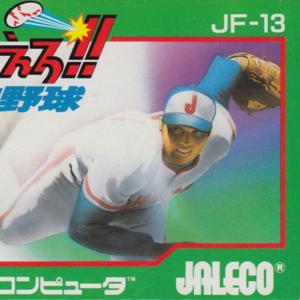
- Namco developed and released Pro Yakyuu Family Stadium for the Family Computer on December 10, 1986.
- Atari Games released a Nintendo VS. System arcade machine of Family Stadium named Atari R.B.I. Baseball in 1987
- Tengen is a subsidiary of Atari so that’s how RBI makes it to the NES
- RBI Baseball 2 and 3 will come to the NES in 1990 and 1991
- More games, but we will cover them in later episodes
- In 2014, Major League Baseball Advanced Media, the digital arm of MLB, revived the name for a new series of MLB games featuring arcade-style gameplay influenced by the original series.
- EGL
- 28:00 - Give or take Sean says JALECO WORDS
- 36:00 - Moving into Sequels and Spinoffs
- 39:55 - EGL
Auto-generated transcript. Each paragraph starts with its timestamp. Speakers are not identified.
When you're ready to move up to the major leagues, you're ready for RBI Baseball.
And welcome to NEStalgia, a chronological exploration of every NES game released in North America. I'm Mike. I'm Joe. And I'm Sean. Alright. Sean, don't worry. Even though you're the last one to say your name, you'll be the first one to talk after me just now as I'm speaking. Yep, you will. Because you have a very important job for us. Yes, what is this? Nobody here has ever played a baseball game before other than NES Baseball and...
What was the other name of the other baseball game? No, it was Major League Baseball. Major League Baseball. Major League Baseball. That was our 100th episode not too long ago. Right. If you can't tell by now, we're joking that we haven't played baseball before. And we're pretty into baseball as a thing, but we only had one baseball game for like a really long time. And it was our second game we ever reviewed. It's episode two. And then we went 98 episodes before we ever saw another baseball game. But now they're coming in like crazy because we're hitting that peak start of the season time of June 1988.
So it's in full effect now. The season started earlier than that. It started in late March. But, you know, this is the time to be releasing your baseball games. Yeah, I think that while we have played these baseball games pretty often now, I would say that, you know, sometimes it's hard to keep track of the rules. You know, like, I don't know if I can remember what baseball is, but I could try. Could you tell us what baseball is? Yeah, yeah. In case of in case any of our listeners don't remember what baseball is, just as like an overview of the episode.
Baseball is what happens when 18 people get together and they decide to designate each other as batsmen and pitchmen. And the batsmen stand in front of the catchmen. And what happens then is the pitchmen will stand on a tall hill and throw balls at the batsmen. A tall hill? A tall hill. Yeah. Okay. They throw balls at the batsmen.
And if the batsmen can hit any of the balls out of the park, they score. But they can also choose to hit them inside of the park and stay on the, like, aisles of safety that have been designated on the baseball diamonds. There are islands of safety in the archipelago of the bases. And you can only walk along certain shipping lanes to get to them. Really, baseball is, like, you know, because it's the great American sport, it has a lot of ties back to the American Revolution.
I love how straight that was going until that moment. I was just thinking about it. What I was about to say. It really is like the American Revolutionary War in many ways. And that's why everybody who's a patriot loves baseball. So thank you for that explanation, Sean. Yeah. Now, we should probably address the baseball ghost in the room and say, like, what is the difference here between the game that we just played called Major League Baseball and the Nintendo version of baseball and this RBI baseball? I think that one reason that it's, like, maybe a little less, it's okay-ish that we're having all these baseball games back to back is that when we had our first baseball game, which was NES baseball, definitely a lot of room for improvement.
I mean, I don't even think, you couldn't even feel the ball in that one, right? No, it just happened. I mean, it was like a whole half of the game you had no control over. So I think that it's, we're climbing. We're slowly getting better and better. But where things are gained, other things are taken away. So in Major League Baseball, it was the first of any of our games, really, to have, like, a license attached to it. So we actually had actual Major League Baseball teams.
But they couldn't get any of the players because they didn't have the MLB. But they got their stats. Yes, they did. So you had to kind of figure out what you were. Yeah, you had to figure out who it was. You couldn't use their likeliness, you know. I guess you could use their likeliness because those are their stats. But you couldn't use their names. Yes. And they didn't have the Major League Baseball Players Association signed on. Now, in this game, RBI Baseball, they decided to go make a deal with the Players Association, but not with Major League Baseball.
So you're playing with made-up teams. And I say that very lightly because they're definitely respective to the teams that they're on. Like, Daryl Strawberry is on the New York team. Mm-hmm. But there's no New York Mets. There's no Philadelphia Phillies. There's no San Francisco Giants. Nothing is lost. Nothing's lost in losing the names of the teams as opposed to losing the names of the players. I think this is the better deal. If you have to live in a world where they got split up between two games, I think this is the better deal. Because it's like, you know the teams.
It's harder to figure out, wait, which player is that unless they just like know all their stats. But would you argue, as sports fans that we are, that you're really only ever rooting for the team name and not necessarily the players, and that you hate some of those people the second they go to a team you don't like? I think it's easy to map the team name onto the team that you know it is. The fact that in Major League Baseball there were no logos and there was no difference between the presentation of playing at Stadium A or Stadium B, I can live without the select screen saying the full name of the team.
That's a great point. And I'm happy to be playing RBI Baseball because I can finally play the 1986 World Series the way it was intended to be. I can be the New York Mets because they specifically give you the 86 Mets. They actually do a really weird way of choosing the teams that get included into this game because it's not all 30 teams. It's actually the best teams from 86 and then the best teams from 87. So the four and four to get you eight total teams. But it's like weird because you're mixing seasons. You know, you have like some great players from 87. And I wondered, like, was anyone who was great in 86 traded to a great 87 team? Yeah, I was just thinking the same thing. But it doesn't happen. There's no carryover.
I think also because I think the way they did it was it was eight teams and they were division leaders in one of the years. It was just one from each division. Oh, are you talking about the National League All-Star team? I mean, the National League All-Star team and the AL All-Star team are players from other teams. From all the other teams that are still considered the best. So it wasn't necessarily like the actual full All-Star team lineup because some of the best teams might have those players. It was just to include all the other teams, too, which I thought was cool.
For sure. Yeah. I think the biggest thing to note about this game is that this one looks a lot similar to our first Nintendo baseball game. Except for it is a lot faster in pace and much more fluid, I would say. Yeah, it's more controllable for sure. This game definitely, between the similarities in the graphical style and some of the improvements, this looks a lot like our first iterative sports release. There's a couple new bells and whistles. The baseball will bounce off the grass in this game.
You can do diving catches, too. You can do the diving catch. You can't actually put in an input, but if you're far enough away from the ball but still within reach, your player might dive to catch it. So there are these small improvements that will continue to happen for an eternity that this game really shows in relation to NES baseball, even though it wasn't made by the same people. Yeah, and so if we could just run through the big four, batting, running, pitching, and fielding.
Batting in this one, how did you feel it was different from the other options we got? I feel like, first of all, one thing I noticed right away is that you almost have to move within the batter's box while the pitch is in the air. You have to kind of decide where you are as you see the pitch coming. Do you guys feel that way? Or did you guys do that? Well, you definitely won't make contact with the ball if you're not positioned to hit it. Like in this one, it's not so obvious that if you just time the swing with the ball crossing the line that it should be, you'll make contact with it. It will not reach. Yeah. Right. There are a lot more balls thrown in this game, I feel like. Yeah, and that said, yeah, you don't have to swing at every pitch either.
I definitely moved a lot in the batter's box as well, but I wouldn't say that that actually benefited me in any way. I think I probably should have just sat still. Yeah. I mean, that could be true for me too, but it just felt, it was just so tempting to often, especially, you know, if it was just like, if, you know, if it was not exactly like fully an outside pitch and you weren't sure and you're like, oh, I'll take a swing at that, whatever, you know.
But I think that it was, there was a little bit of a learning curve to the timing. Once you got it down, it felt very manageable, I think more so than Major League Baseball, where I think I had a little more trouble kind of seeing like, well, when am I hitting it, when am I not? But yeah, other than a little bit wider of a, I guess, of a strike zone and a little bit faster, this is pretty much an identical mechanic to both of the other games you've played.
Totally. Yep. And I would emphasize that fastness too, though, because I definitely appreciated how fast you could get through X amount of innings. Because let's be honest, when you're playing these baseball games, you're not in them to actually like think about the, well, how long does it take to watch a baseball game? That's how long it should be to play one on the NES. It's like, these things should be fast. They should be at maximum, maybe 25 minute experience. And it's good, because they give you a timer. Yeah. Just to make sure that it's under that variable there. Right, right. Okay, so that's batting.
Did anybody hit a home run? Because I found it to be relatively easy, but it definitely depended on the person you were batting as, which I thought was nice. Yeah, I had a couple. Yeah, one or two. But you can definitely tell that there are a difference in the skills of these players. At least, while it may not feel it's exactly one-to-one with their stat line, I could feel a difference. Got it. Okay.
And when you hit a home run, too, it's like, the presentation flair that I've always been arguing is missing is still missing here for me. Yeah, there's a few, like, immediate instantaneous fireworks. Yeah. And then, that's all I needed, though. I don't need much more, to be honest. And just a billion small little dots that represent all of the fans. The billions of fans that go to the game. They, like, shake like flies, you know? Like, they just get out of control for a home run. So, that's nice, I guess.
Now, with base running, this is where base running and batting kind of merged for me. I hated this feature. Whenever you hit a ball, it doesn't matter. Everybody starts running. Everybody runs. It's a hit and run. Every single at-bat is a hit and run. And not in the true sense that they'll actually start running before you even swing at the ball. That's what a hit and run is. But here, still, it's so annoying to have to think that you have to control everybody back. You have to command everyone to go back.
If you have more than one man on base, then you're going to have a rough time, like, dealing with fly balls. Because you're going to have to press left in A to return the guy back. You're going to press up in A to return the guy back. It's just a lot to think about while you're also waiting for the ball to land. Yeah, and I don't know if this must just be my personal preference, but somehow this game felt more intuitive to me to tell a player to advance.
Because you use the D-pad to select the player that you want to advance. Whereas I think in Major League Baseball, you use the D-pad to select the base you want them to advance to. And that was just like one more. With having to use the D-pad and then press A and then think about, wait, it was just like one more layer of confusion. I'm sorry. I know it's the same thing. I prefer the open base. I'd rather tell them, whoever can, go to second. You know? I like that. I appreciate that more than saying, you, the man on first, start running to your nearest base.
I mean, I get it either way. I just feel like the more I thought about it, I'm like, well, it really is the same thing. It's just kind of a preference thing. So for some reason, this felt easier to me. I couldn't remember ever if it was B or A, though. Yeah, exactly. So I just hit both. I just hit both. That's both retreat and advance. But as long as you're designating to an open position, it seemed to always advance. I see. Yeah.
It didn't confuse any of my players. I will say that in this game, they improve the AI a bit so that they won't just stop running when they have an... I mean, they still are way more conservative than they should be, but they won't just stop running after you first touch the ball. If they can very feasibly make it to the next base, they probably will.
And I appreciated that because I couldn't cheese the AI as much anymore. Right. I thought the same thing, actually, a couple times I got into a little hot box running between second and third or whatever. There were a couple times where I was like, I bet I could kind of just trick them into letting me get closer and closer to third. No, they're pretty smart about it. They'll hold the ball. Yeah. I thought I could just, no matter what, if I was facing second base, they would throw to second base. So I tested it a couple times, and now the AI functions well there.
Another weird thing, and I don't know if I attribute this to the speed of running that they've given the players or a fielding mechanic, but it's really strange to see a situation where a ball can be like a ground ball to shortstop and the man on first can be safe. That's just never really going to happen in a game of baseball. Something about the measurements of the baseball diamond in this game are off.
If you want to start talking about fielding, then. We can move over to fielding, yeah. Because, again, I don't know if that's just that they made the runners too fast or if the fielding is just a little chaotic. It's definitely an improvement, though, because in the first game, the speed of the ball was so – well, I actually don't remember if this was the first. I think it was the last game. Major League Baseball, yeah. The speed of the ball in there was so variable, and depending on if it was moving on the X or the Y axis could change significantly. But I noticed that in this game, I actually did have more realistic plays. Like, I did end up executing a double play at one point, which I never did in Major League Baseball. Right. Yeah.
I was able to pick a couple guys off that way. So this is definitely better. This is an improvement to the fielding in Major League Baseball. Yeah. I think if I hadn't played Major League Baseball, I would be a little more annoyed with this one because I do feel like the ball – if a grounder is hit into the field, it is just so fast, you can't catch up to it. I mean, like almost unrealistically so. But then when you throw the ball, it's a lot slower than I feel like it should be. But it's so much less noticeable when I compare it to Major League Baseball, which it was – that was the case tenfold.
Yeah. Like, here I was like, it wasn't too bad. I would probably have been annoyed with it if I wasn't comparing it to one that was much worse. And the game also has both the possibility for errors based on, like, you know, dropping the ball when you try to catch it. And it can, like, bop you in the chest and fall down, which I thought was cute. But there's also – and I didn't experience this when I was playing, but I did see the computer do it. There's a possibility for throwing errors.
I – okay. Like, they legit – Yes. Like, they threw it to first. Nobody was there. So it just went off out into the distance. I did have that happen to me as well. That's a real thing that does happen in Major League Baseball. So, like, I thought that was pretty – like, you know, a pretty neat touch to actually – because we've seen everyone tries to do the box score and have the error thing. But there was no real way to figure out, like, what are you calculating as an error? And here it's like, okay, at least there's, like, some kind of basic reasoning to it.
Some things that they didn't improve, though, I would have preferred – and, again, these aren't the same developers, right? They're not. No. Okay. No, no, no. RBI Baseball is tangent. Didn't this actually release first in Japan or wherever? Yes, yeah, yeah. We'll get into that. I just want to make sure – I don't think that that was – that this was copying that game. Regardless, somebody stole somebody's code for the most of this.
But still, there is no cursor pointing to where your outfielders are because there are so many fly balls that, you know, you get that boop, and I'm just like, okay, where's my guys? I know that they're always in the same position to start, but I don't have the muscle memory to know exactly where I have to go. And there's no visual reference for them at that point.
You're seeing the fly ball, and you know that that's a big fly ball, and that it's going to translate to the outfield. But you have to already be running towards the ball in most situations to catch it. But if you can't see your fielder, it's really hard to control them. And I'd add to that that I think it's even worse with the pop-ups because the ball, regardless, it can't show you the actual Z-axis.
Yeah. So, like – It's an audio Z-axis. But, like, yeah. But, like, sometimes the ball is, like – it's like, oh, I got some time. I can make that. And then it just drops. So, like, I'm looking at it, and I'm like, all right, my outfielder, I finally see him. You know, we're going to go a little further back. And then it drops, like, in front of us already.
Yeah. You know, it's – there should have been – and I know that this sounds cheap, but this would have been the best way to communicate it. There should have been a circle showing you in pop-up situations where you had to be, and you had to just make sure that you got to that circle to make the catch. Well, it does have a shadow, but – Yeah, but I meant, like, more of, like, a projected circle of where you need to go, not the shadow of the ball. Oh, I see. So, a target.
Yeah, like a target. And I was like, all right, so if you go here – and maybe that's something you could have turned on and off. Who knows? But, like – You've got to go a couple more generations for that. Right, right. I just think that, like, that was missing here because so often the computers are just, like, effortlessly already there when it finally moves over to the outfield. And for most players, it's a situation where, other than muscle memory, you might find out that you've been going in the wrong direction, and now you have to steer the other way. Yeah, I just – it's weird that the show and probably games before it, because there was a good decade where I didn't play any baseball video games.
But it's just such an elegant solution of just having a fake shadow of the ball that expands and contracts relative to how high it is. Yes. So, I mean, I'm sure that that's technically possible on the NES, but maybe it just hasn't been thought of yet. Yeah. And the audio cue is nice, but I don't think it's, like – I don't think it's working as well as it should. Yeah. Another thing with fielding that was cool was that there was an option to run to the base just by pressing B.
Mm-hmm. And I thought that was a nice touch because sometimes you would be the first baseman going off the base and just picking it up, but then you didn't want to wait for someone else to step there or just where you had to throw it. And you can throw it to nobody. Mm-hmm. So being able to run to it was nice, and I thought that was an extra bonus. Yeah. So I think that covers everything for fielding for me. Anything else from you guys? I don't think so. Probably move on to probably the biggest aspect of the game, pitching, because this is where you're the most in control of your fate. So how did we feel about pitching?
I thought that this was a little bit more chaotic than the previous – than Major League Baseball. I thought in Major League Baseball I had a lot more of a fine control over where the ball was going. In this one, it was more of just sort of like a – you can kind of nudge it in a direction that you want. And that's actually, I think, a good thing, though, because, you know, pitches aren't as precise as, I guess, we are led to believe. Yeah. And I think it was – I don't remember if Major League Baseball – for some reason, I feel like Major League Baseball lets you choose between four pitches, and this one just lets you choose between two. Well, it's – I think it's, you know, it depends on how long you hold the pitch button for how fast it is.
And then you do the aftertouch thing again with where you want it to go. Right. And the aftertouch thing didn't work as well, as Sean already said. But for the most part, the AI would be able to play along with you, too, and, like, would swing sometimes at obvious balls. It would wait on strikes. You know, it's not like if you pitched in the strike zone that you were guaranteed that they were going to make contact with you.
They weren't superhumans. Yeah, I appreciated that because a lot of times – I think we've seen other games, not necessarily a baseball game, but other games that were, like, the AI is just too – Like wrestling games. Yeah. The AI is just too – Good at the game. Yeah, it's just, like, they didn't stop the AI from being able to use all its information that it has.
So that was nice. But I did, you know, just to weigh in on the little aftertouch thing is that I did have a hard time even telling, like, when is this working and when is this not when I do this? You know, it was hard to, like, really see the effects of that. Yeah. And there is some pitchers, depending on how good they are or unique they are, they'll pitch a knuckleball. Yeah. And a sinker ball, which I think were cool, too, to have that much control over where the pitch was going. The knuckleball, if you're versing a pitcher who has that, it's very hard to read, and you'll most likely just swing. Yeah. I also – because when my pitcher was throwing knuckleballs, I was a terrible pitcher. I didn't know what I was even doing. So it works both ways.
And did you guys notice anything about pitcher stamina? Because it is in the game. Yeah, I did notice the – But it's hard for, like, people playing this for the first time to pick up on it. I actually – this is one of the few games that I did play as a kid, and I remember very little about it. I thought I was going to turn it on and be very nostalgic about it. I almost don't recognize it. But I do remember having to change pitchers after a while because they get tired. I didn't really notice the actual difference in, like, strength.
But I guess I'd have to play it some more. I don't know. Yeah, well, because the manual chooses to include this more, and it's definitely in the game. I'm not choosing to – I'm not saying, like, oh, they – because keep in mind, we haven't really addressed this yet, but Major League Baseball was a game that let you, like, really get focused on being the manager.
You know, before the game, you had the whole lineup. You had to pick your lineup of an entire player's, choose their batting order and stuff like that. In this one, it's already kind of, like, figured out for you. Just pick your starter. But it was much more involved in Major League Baseball. But the same stats are still here. You just kind of have to go to, like, the manual to figure that stuff out because they even have, like, for every single team, they have, like, contact ratings.
They have stamina ratings for them. They have, like, you know, the amount of home runs that they have correlates to, like, if they're more likely to hit a ball, like, out of the park and if they have a better average and, you know, stuff like that. So it's all there. I just wonder, like, to people who didn't play this game to death, you know, when it came out and, like, played it for years and years,
how much would you notice that? Because I didn't really care who was at bat as much as I might have cared in Major League Baseball where they put the emphasis on the stats, you know? So you actually cared a little more. In this one, I never, like, I never substituted. And that's something you can do in this game. Yeah. It's hidden, you know? Like, they don't really. Well, it's also, it's in the manual. No, it's in the manual, but it meant more, like, you could go the whole game without doing it.
And it requires a couple of extra press. You have to pause and then hit buttons. I think, yeah, I think it makes it, it actually makes it possible to casually play this game. I feel like, like, we all kind of did. Or to get really into it. And especially if you're playing against someone, get really into it and, like, kind of focus on the more minute details like that. Which is nice. Yep.
But, and, you know, I've already, we've already touched on this with the way the home runs go and stuff. But, again, like, presentation is lacking. The music's not great either here. So, again, I'm missing this whole, like. It also has a weird rule change thing where, like, it's like Little League rules with a 10, it's got a 10 run mercy rule.
Wow. Okay. That I didn't notice. Yeah, I did notice that. I didn't get 10 runs. Yeah, I had a game that ended in the seventh inning because of that. Yeah, I actually, when I was done playing, we haven't talked about this yet, but I went to the watch feature and let it play in the background because there's a feature in here where it's like, like watching a real baseball game. On TV. But I let a couple of them play and one of them, both of them are really high scoring games, but one of them was mercy like that. It was like, one of them was like 28 to 22 and the other one was like 18 to, you know, 12 or whatever.
It's a 10 run mercy rule from wherever. It's not the first one to 10 or anything. No, no. If you're 10 ahead. If you're 10 ahead, yeah. Okay, that makes sense. Hey, I guess, I don't even know who that's serving, though. I don't know. I guess your younger brother that doesn't want to get beat that bad. Right, right. And just throwing this out here, I don't know if you guys did this, but I seem to do this all the time in baseball games, and I definitely did it here.
Did anyone else just throw to first base all the time after a play was over? Or, you know, like you're hitting A to like, you're hitting A to get on, like bring me back to the batting scenario or bring me back to the pitching scenario. And instead, it just throws it back to first base because the thing's like, oh, that's what you want to do. You're trying to pick them off. Yeah, no one's there, but sure.
And so I constantly would, because there's such a long pause there. Yeah. It's like the only slow part of the game. The rest of the game moves pretty fast. I didn't actually end up doing that compulsively, but I can see how somebody could. That's funny. So after you finish the game, you're greeted with a nice newspaper ending.
Yeah, a lot of flaws, but also a nice, you know, blank wins, and it gives you the box score. It's almost something you would want to like, you know, take a picture of if you were proud of it, you know? Did you do that, Mike? No, I didn't. Oh, okay. But I just thought, like, it's a nice extra touch to, like, end a game rather than just be like, let's show the scoreboard. Like, no, read about it in the paper.
One thing I don't want to gloss over is the music. You mentioned for a second that it wasn't that great. I think that is an understatement. I thought this, and I usually, like, I'm usually pretty forgiving on a lot of music particularly. I thought this music was just, it was the worst part about the game. I mean, it was, it was just, like, one tone. There were no, it was just, like, do, do, do. I can't, I don't remember what the tune actually was, but it was all just, like, every note was one tone, and it was just insanely repetitive. I don't remember that from my childhood, it being so repetitive.
Wow. I mean, I guess I kind of forgot about it because it was just, I knew what I was playing. I don't know. Yeah. It actually, for me, usually I don't get, like, particularly annoyed with music. This one, like, I got kind of, like, kind of annoyed with it. I didn't sound off. Yeah. That's smart. I couldn't, I couldn't. See, Mike, that's why you didn't know how high these things were. Right, right, right. That's true. Okay. I've been found. I've been found out. You have to play the game correctly.
One thing we have not talked about at all, and it does relate to this game, but I figure I'll save this for a later episode, but it needs to be acknowledged. I said Tenjin made this game, and there's a long, like, history of this game that we'll get into in the sequels and spin-offs section. But, yes, this is the very first NES Black Cart game. Black Cart. An unlicensed NES game that Tenjin made on their own, saying, like, hey, we're going to put this to market. Like, we don't care if Nintendo approves of it or not, without their quality seal and everything. Are we going to get arrested?
No, no, no, because the reason why I didn't bring it up in this episode, I didn't talk about that whole fiasco, because they also released a licensed one. And so we are talking about the licensed version. There's no difference, but it is worth noting. But when was the licensed version released? The licensed, well, I would assume the same time. I would assume that the licensed version maybe even came first.
I'm confused now. Yeah, why would they? Well, because eventually they wanted to muscle in their power over, basically they wanted to have control over the rules that Nintendo was enforcing on the NES. We're going to, like, get into it now here. Let's do it. Basically, that's the problem. The licensed one was on, just, sorry to interrupt. The licensed one was on a normal gray cart. Okay, I had the other one when I was a kid. Yes, and most people did because they were selling them cheaper because they were able to. They figured out a way to make them work on any NES.
And on top of that, the reason why they did it is because Nintendo had very strict rules on how many games you could put out in a year. And that's why, like, other companies like Capcom would go on to make, like, other smaller developers and, like, be under those names. Mm-hmm. And Tenjin was like, no, we're not doing that. Like, Tenjin was a subsidiary of Atari. And so that just wasn't going to happen. So instead, they started selling the games. And Nintendo said to Toys R Us, to every major video game distributor at the time, you put those games in the store, you're not getting Nintendo games. So you can only guess who won that fight. Right. Now Atari is making hotels for people to be in. Yeah, to live in.
For a night. Book it in your own experience. I thought you were describing what hotels are. Yeah, well, we used to have to describe everything in the show. For those of you that do know this whole story with Tenjin, obviously that was very rushed, so don't get upset about that. But I think that's a good overview. It sounds like Tenjin is the hero of the working class. Well, you know, some people might say that. Other people might think, how dare they?
But we'll get into that more in depth when we actually get to our first unlicensed NES game. In the meantime, I'm going to cover a thing that we usually don't cover in Nostalgia, and that is that I stumbled upon a fan website for RBI Baseball that was just so beautiful and so well taken care of and still has a strong community forum that posts as regularly as yesterday, February 4th, 2020. Okay? It's called... It's called 2020, Mike. 2020? 2020. What did I say? 2020. Oh, my God. I was one of those people. Yeah, you were one of those. Is this a thing? You can't say 2020. That's a thing. You don't. Now we're 2020 people. We'll get into this in the post show.
All right. It's called d-knee.com slash RBI, and they have so much on here that it's just insane. They have the amount of, like, they have records going back to all of their previous tournaments. They have a whole way of, like, playing RBI baseball. For the NES, this one, online against each other.
They have, like, the history of these tourneys. They have, like, very in-depth, like, FAQs and, like, the players and stuff like that. If anybody happens to frequent that website, please tell us, like, more about this because I'm so interested in everything that's here on this RBI baseball database and Hall of Fame and Hall of Shame. So who's the mango of the RBI community? Well, if we take a look at the rankings here, they rank the players, but then they also have, like, they also have the different players themselves.
So it seems like this guy Gantry. Gantry. Is, like, he has, he, well, actually, Sperling has the most runs by a team at 34, and that happened on April 30th, 2005. Wow. But more recently, on November 6, 2016, Gantry scored 28 runs and still lost.
That's a tough loss. That's sad. But, I mean, he's got a very good consecutive wins, right? Yeah. He's got a very good consecutive streak here. And they even go as far as to, like, give you, like, all of the stats of every player and stuff like that. And then they have their rankings for, like, the top 10 players. Gantry ranks Reggie Jackson at number one, and so do Lips and Poetzee. Oh, yeah. But Sperling gives it to Kirk Gibson. Sperling is always the, like, the person that says the opposite. Right. He's always a contrarian. Contrarian is the word I was looking for. But then again, on the top teams, most of them picked the Detroit Tigers, but Gantry went California Angels.
Crazy Gantry. So, you know, it really could go either way. I'm looking forward to another season from these guys, and I'm going to try to follow it more closely if they do have a 2020 season. We'll definitely link this in the show notes, because I think that's such a wild thing. Yeah, that's awesome. It's just so curated and so managed. Yeah, that's amazing. I love it.
And if you can't get enough of RBI Baseball yourself, and you want to play with, like, you know, the players of today, you can actually, for Windows, you can download RBI Baseball Manager. And provided you have a legal ROM of RBI Baseball, it will, this tool very easily lets you change the names of the players, change the stats, so you can actually put in, like, you know, your 2020 teams. Or you can just put yourself in. Yeah, put yourself in and give yourself, like, amazing stats and all that. But I think it's cool that it just works on Windows, requires no coding whatsoever. It just works out the box. It just works.
So I mentioned that it has a very complicated history here of this RBI Baseball, and you wouldn't think so, but this thing goes all over the place. So let me just give you it chronologically, and just keep in mind that we're going to get some other RBI Baseball games, so we're not going to cover all sequels and spinoffs right here. Namco started out with development for this game, and they released it as Pro Yaku Family Stadium for the Famicom in 1986. That was Namco.
Then Atari Games releases a Nintendoverse system. Remember, that's the arcade lineup of Nintendo games. They used the same game converted for Major League Baseball, and it's called Atari RBI Baseball, and that's 1987. Tenjin, a subsidiary of Atari, makes RBI Baseball for the NES in 1988, the product we have today. So we had Pro Yaku Family Stadium, Atari RBI Baseball, and now RBI Baseball. RBI Baseball will be the name that it sticks to going forward. We will only get RBI Baseball 2 and 3 on the NES. They'll come in 1990 and 1991.
There are more games, but we'll cover those in later episodes. But it is worth noting that in 2014, Major League Baseball Advanced Media, which is like the video game slash digital arm of MLB, took the name RBI Baseball and started making their own series of baseball games that are more arcade-like to complement the people who didn't want to buy the show, because that's very simulation-like. So you have MLB The Show on PlayStation, which is now coming off and apparently going to all consoles and maybe even PC.
And then you still have RBI Baseball, which is getting a 2020 game that comes out in March. They're very B-grade so far. Absolutely. They get middling reviews at best, and they look cheap. But again, if you're someone who enjoyed maybe MLB Slugfest on GameCube, that might be more up your alley than, say, playing a full 162 season of the show. Any questions?
I'm sorry, I wasn't paying attention. Yeah, yeah, yeah. It's funny. I like the idea that Joe just never listens to the shows. He's like, oh, my time does not care. You'll have to care when you play them. You don't have to know right now. You're on a need-to-know basis. And I think the fans at home need to know if we are voting this essential, so let's do the essential games list.
Sean, why is this game or is this not game essential? Perfectly executed. Is this not game?
It is a sports game. It has little iteration. Therefore, not essential. Elegant. Very beautiful. Joe, do you think you could say that with more words? I won't go into it too much because we always talk about sports games. This is, I think, definitely the best baseball game we've played. I think by a lot.
But it's still not the best a baseball game can be on the NES, I think. So I'm going to say not essential. Before I make all the people on Dini the website, before I upset Gantry and Sperling, I just want to say that I could definitely see how, if you've been playing this game since 1988, how it could still be fun today because you know the game to death. It's one of those things that's like a lot of people grew up on 007 Nightfire. And they love that one map in the snow mansions with the rocket launchers and they just fire at each other from the opposite castles.
I know exactly what you're talking about. I grew up on that. Right. You know what I'm saying? And that's something that is not fun if you picked it up today. But if you've played it for years, it's still fun to this day. I think that's what RBI Baseball has going for it that I don't think Major League Baseball and Nintendo Baseball had going for it. I hope nobody is still playing Nintendo Baseball today. One thing I will say, though, is that while I'm not voting this essential, the baseball games keep getting better. I think in order of how they've appeared is how they keep getting better and better. So are we on trajectory for an eventual essential NES baseball game?
I don't think so, but let's just keep it up in the air. Yeah. I still think it's hard. Not that it's impossible, but for just a sports game, just because they've been improved on so much since. And I know there's a difference between playing a retro game and playing a current game. But baseball is just kind of baseball. I feel like you can only get better. Even a Super Nintendo game, I think, has so much more chances to be essential than this. And then you just keep getting better as you go.
So in the Major League Baseball Hall of Fame, you need 75% of the vote to be entered into the Baseball Hall of Fame. And then if you don't, you get a chance for eight more years, essentially, from your first year. However, if this game isn't at 75%, you know, for you guys, what is it at? What is the number of percentage that this game is at for you? To get into the Central Games list? No, no, no. Yeah, yeah. Like, so it didn't hit the 75%, but would you give it, like... I have, like, a 25. 25. I like that. I mean, this number is going to be completely arbitrary, because I have not...
Yeah. I don't think it's going to be at all. Just make a number. But I would probably go, just based on my generally being more forgiving, 35. Okay, cool, because I was going to say even as high as 40. Really? I was going to say even as high as 40, but here's the thing.
There are many, many games that will be better than this and not make the Essential Games list, and there are a lot of games below this. Yeah. This is a middle-of-the-run, perfectly-functioning NES video game. It is a functioning video game. With very little, you know, left to be desired at that point in time. But now that we've moved on with our lives and we're in 2020, I don't think I'm looking for this.
Yeah, and I'll say, look, I think at least my percentage is literally just based on how close I think it would be for me to put in the Essential Games list. It's based on nothing. Yeah, well, right, right. But it's not... I would put it higher if I said, like, percentage of, like, how likely are you to revisit this game, or how much of a... Do you think this is a good game? I mean, I think it's a very good game just for the reasons of its genre.
I'm not trying to... I mean, I think you guys are overselling this game, but... Great. Yeah. I also, like I said, played it a lot growing up, so I have a little nostalgia for it. Sure. Even though you didn't recognize it. All right. So we're done with this episode. It's not Essential, but I will remind all the listeners that this episode is currently going up on February 7th,
and that's pretty impressive because everybody thinks we record so far away, but we only recorded two days before the release of this episode, so we keep it up with you guys. Don't worry about that. Sometimes. I'm going to give you breaking news just so this way you have, like, proof that we recorded the episode so soon. Yeah, well, a picture of today's newspaper in the show notes.
A long time ago, meaning, like, not that long ago, when we did episode, like, 90-something or something like that, it was Renegade. Remember that game? I remember Renegade. And that was part of the Kunio-kun series, and we talked about how, like, that meets, like, Streets of Rage and Double Dragon. Not Streets of Rage. River City Ransom. No. River City Ransom, Double Dragon.
There was, like, another... That dodgeball game. Sure. All these games. Okay. They are now coming in a Kunio-kun Classics, finally coming to the West. VR. For the very first time. Oh. All of those NES games that you never got a chance to play, most of them being sports games, have been fully translated into English and will be coming sometime later this year. I'm trying to get a release date, but I don't see anything.
But it's... Oh, February 20th. It's happening very soon. Wow. And it's a total of 18 titles. Double Dragon, Double Dragon 2, Double Dragon 3, Super Dodgeball, Renegade, River City Ransom, Crash and the Boys Street Challenge, and then all of the Niketsu games that you guys don't know about. So, if anybody's interested in, you know, liked Renegade... You can buy those directly from us. Yeah. We'll be buying copies at cost, so if you could just give us, like... Another 40. Another 40 for shipping and handling. That'd be fantastic. Thank you.
Thank you.