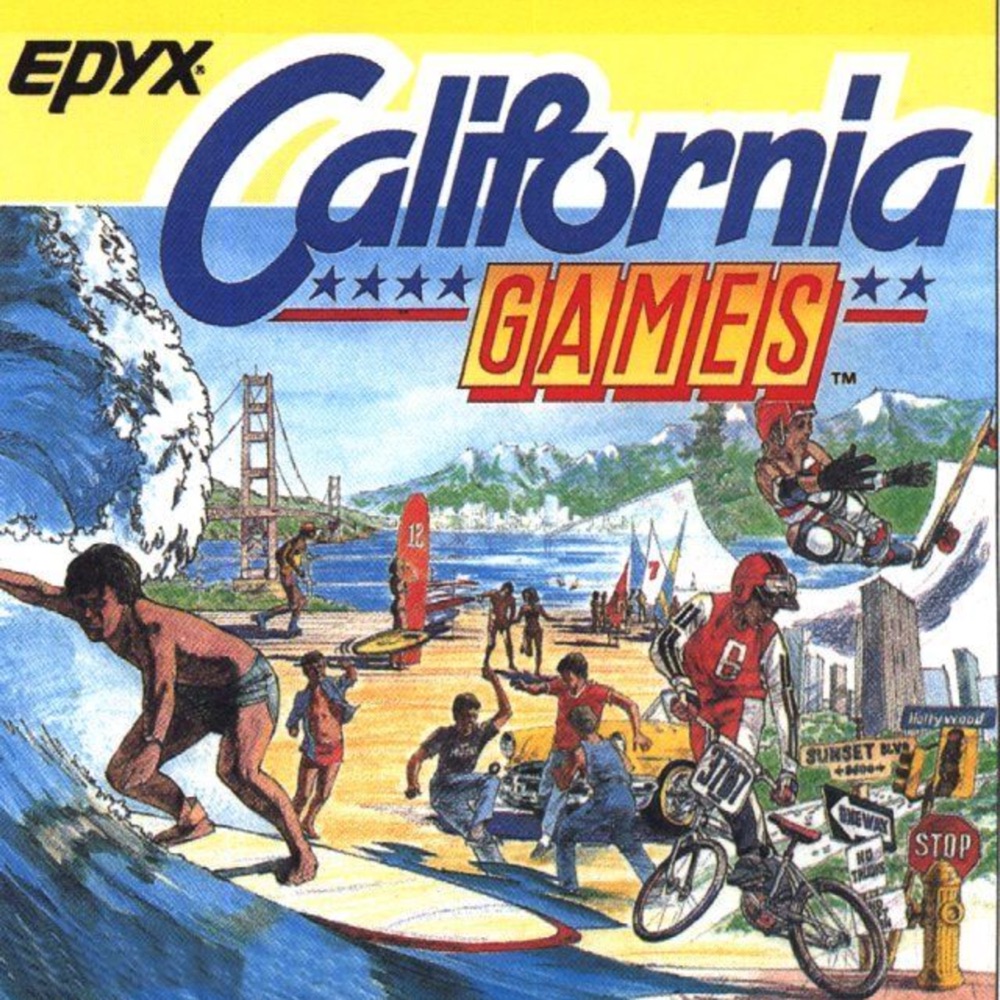
185 · California Games
California Games was the original "Extreme Games" – what today's generation might call "X-Games in the sun". Players can select sponsors (absent in some versions) and compete in events such as skateboarding, footbag, surfing, roller skating, flying disc (frisbee) and BMX. The surfing event is ranked by judges, which give a score to help the players improve their routine.
SHOW NOTES
California Games Gameplay
California Games II
Skate or Die Episode
Guitar Hero
S-Ranking
- Now the summer will surely last forever
- NES Longplay - https://www.youtube.com/watch?v=3JEAeUXg4Zo
- Introductions
- Gameplay
- Skateboarding
- Momementum built by pressing up and down
- Could only do the kick turns
- These GAMES always have this weird timing mechanic that doesn’t translate for me
- Footbag
- I wasn’t expecting to use my head so much
- Lots of moves
- Surfing
- Judges are a good feature
- roller skating
- Obstacle course. I feel like these try to show you how difficult it can be. But I don’t wanna play as a novice rollerskater.
- flying disc (frisbee)
- This was my jam, even if it was simple.
- Timing mechanic made it easy
- BMX
- Skateboarding
- Thoughts
- California Games appears in the book 1001 Video Games You Must Play Before You Die by General Editor Tony Mott.
- With more than 300,000 copies sold in the first nine mmonths, it was the most-successful Epyx game, outselling each of the four previous and two subsequent titles in the company's "Games" series.
- What’s the legacy fo the EPYX GAMES series. Is it the same as every version of Madden except the current one?
- This should’ve taken the Skate or Die approach
- Sequels and Spinoffs
- California Games II - SNES and other platforms
- EGL
- Next week -
Auto-generated transcript. Each paragraph starts with its timestamp. Speakers are not identified.
California games! Now the summer will surely last forever!
And welcome to NEStalgia, a chronological exploration of every NES game released in North America. I'm Mike. And I'm Sean. And that's it. You know, but the crew will surely last forever. Right, Sean? I think nothing can tear us apart. Never, never gonna tear us apart. There you go. Beautiful in excess song. But also, you know, just want to go back to that back cover for a second of the summer will surely last forever. It's a bit poetic as we are seeing, you know, the end of the summer now in 2021. But California Games promises us that as long as we have the cartridge in our consoles, if we're playing in winter, it's practically summer. Yeah, this game, it does a very medium job at creating a vibe. And I think that's worth talking about.
Yeah, so I don't want to, like, pretend that this is Grand Theft Auto San Andreas, you know, picturing of California in any way, shape, or form. But, you know, without talking about the actual gameplay, do you feel like they sold you on the idea of, like, this is happening in California and has California vibes? Have you yourself been to California, Sean? I've never been to California. It's on my list.
But I think that, you know, the pop culture idea of California is pretty ingrained in everybody's heads. You know, like, they tried to make the title card the license plate, but they didn't get the font right. So I'm like, that's off to a bad start. Like, they had the idea, like, they had the right idea, but they just didn't quite execute on that title card. Yeah, I don't know what it is, but I think you hit it on the, you know, you hit it on the head there when you said the pop culture image of California. That's really what this is.
Like, I don't think, like, anything in this game sells me on the idea that it might be taking place on a particular beach in California, or, like, you know, that these are things exclusive to California. But in the late 80s, you know, especially with, like, Saved by the Bell and stuff like that, like, I think this is people's idea of California. And now, you know, if you're in New York or rural Oklahoma, like, you can have that feeling of being in California encapsulized in sports video game format.
Yeah, I guess you could say that. That's very generous of you. Very generous of me. But I guess what I meant is, is, like, when you play a baseball game, right, and, you know, you play at a California stadium, right, like for the Los Angeles Angels or Dodgers or something, you never feel like, oh, I'm in California now, even though that's, like, literally a real location in California. Yeah, this, you know, they've got the famous skateboarders of Los Angeles. They've got the famous hacky sackers of San Francisco.
You surf at the beach, which I think is a town in California. It's, yeah, it basically hits all the strokes there. Yeah. And like you said, this is basically just another one of those games where we go down the line and play a series of little sports mini games that are all under the same theme. So this is made by Epix, and they made, though, they made winter games, which we absolutely hated. They made summer games, which we liked.
And I guess now they're like, hey, how about California games? I'm not sure where spring and winter went or why California was chosen over any location. California season, yeah. Right. But don't you remember, we also played world games, and I feel like that could have just included California. But they doubled down on the idea that most of these sports happen exclusively in California or that they're trying to encapsulate what California is via sports. I think you couldn't have said it better right there.
So how do we feel about these games, though, right? Like, I mean, we all know that we didn't like winter games. That episode's pretty famous now. But like these games seem to just be...
Mini games. Mini games or, yeah, exactly. Like, I don't know. How do you play these games, Sean? Do you actually like go through the gauntlet of going through each of them and gaining your scores and checking out what your high scores at the end? Or do you just say, like, I'm just going to play each mode and I kind of, you know, just like go into practice mode or tackle each one individually? Have you ever experienced the full game from beginning to end in one of these?
Yeah, that's how I usually do these because it's kind of a genre in itself now, even though I think, yeah, that one company made all of them. Right. So, yeah, I'll play through the whole tournament with no... Like, I think the previous games, you could be the only contestant. But in this one, you can be the only contestant. And that basically just serves as like a demo for each mode because you win the trophy each time.
But, yeah, so I did one by one. If there's a game that I think is a little bit deeper or at least a little bit more interesting, I will, after I do the little sampler, I'll go back into a practice mode or maybe or just like the single event mode and play around with that. So I did that in here as well. And so let's just go down the line here. We've got skateboarding up first where, you know, not, I guess, kind of like Skate or Die, right? Skate or Die was like a whole game based around skateboarding. But in this one, you have that half pipe mode, which is kind of similar. But the controls are a lot different. Sean, what did you think of the controls here for skateboarding?
They were, I think, if I remember Skate or Die correctly, did it have a half pipe? Yeah, it did have a half pipe. Okay. I think I was able to perform a bit better in the previous one because I don't remember being as frustrated by a half pipe as in this one. I was able to, like, get some speed going because, like, your controls kind of reverse. Like, you've got to hold up and down in, like, a rhythmic fashion to gain some speed, which is kind of cool. Like, it feels a little bit more tactile that way. But then when you try and do almost any trick, I just kept falling and eating dirt.
I was able to do a couple of, like, the hand stalls kind of accidentally. But if I tried to do any kind of spin, I wasn't doing very good. It's very hard to pull off tricks in this mode. These games always seem to have that, though, Sean.
You know, like, there's always a weird timing mechanic that just doesn't translate well for me in any of these Epix games. Like, that's their biggest downfall is that, you know, like, let's talk about you saying with the momentum of your skateboarding and how you have to, like, get higher is by when you're going up to half pipe, you hold the up button on the D-pad. And when you go down, you hold down.
Now, that's kind of like it's like a pendulum thing. Like, you have to think about where you are on the pendulum for that. And that made sense to me. And, you know, at first I was like, oh, well, they could have just, you know, done that for me, I suppose. But I liked having control over how much speed I was going to have. I could only do the kick turns in this one. You could do the kick turns. Yes. And that's the only thing I was able to do successfully.
I was not able to even, you know, hang like you were on the top of the half pipe or anything like that. Every time I tried that, it seemed like I was, you know, they let you get the act of performing it. It shows that you've put the buttons in. But you always bail. Right. You always bail. You just didn't do the right thing at the last second, whatever that was supposed to be.
Very frustrating experience. But I've noticed this a lot over and over again. So I don't know what it comes down to here for this kind of thing. Should they have just given you more leeway on that? And therefore, like, yeah, everybody scores lots of points. But then it becomes like a risk or reward factor where, like, you know, you're not just rewarded for scoring points. You have to score a certain amount of points or, like, take bigger leaps, you know? Like, I'm not sure what it is. But I don't think, you know, like, performing tricks should have been so hard.
Because that's, like, the entirety of this event. You're not thrilled by just going up and down on the half pipe. I feel like that's the standard experience that we would expect movement in our games. I think the tricks is what you want to do. And so the fact that that becomes kind of a, you know, a hard thing to pull off makes this particular skateboarding game, you know, not as fun as it could be. Because you could just add more different kinds of tricks or more different inputs. But they should have given a larger, you know, input time to pull it off. Yeah, I agree.
I want to know what your secret was for doing the kick turns. Because any time I tried, because I was looking at the diagram in the manual for, like, oh, this is what you do at this point in order to pull off this trick. And I thought I was doing it correctly. But every time I pressed the button to do this kick turn, which I don't think anybody actually calls. I don't know. I thought it was just turning around. Yeah, I just fell off the board. And the board went in a different direction as me.
And, yeah, so I want to know how you did that. I guess you want to know how I did the hand stall. It was just, I guess we had different rhythms. Yeah. Well, I'll tell you, I don't know how it works for the hand stalls or not. But for the kick turns, because of, you know, that happens at the lower half of the half pipe, kind of before you start, before your body is vertical, you have to kind of do that where as you're going up the ramp, like beforehand, before you're going up the ramp, that's when you do the first half of the input. And then as you're turning around, you have to change the input. It's not like a one-two. I see. It's like a one-two, you know, which made sense to me.
But maybe that's why I wasn't able to pull off the air tricks, because every time I tried to do those, I felt like I was just, you know, not reactive enough, because it was basically showing me that no matter what I was going to do, I was going to screw up. Like, I had lost control of my board.
I guess in this way, it's very similar to when I tried to skateboard when I was, like, 13 years old. Yeah. You think you're going to just go out there and, like, you know. Tony Hawk it up. Right. Yeah. Yeah, like, it's like, yeah, yeah, Tony Hawk it up. But, like, even just, like, an ollie, you're like, all right, I'll start with the basics, whatever. And then you just never do that. You never just pour it in the air. I did. I was able to ollie. That's nice. It wasn't very dependable, but I could do it once every three times. So what's your air trick trick?
My air trick? You know, like, in the game, what was your trick to doing the air tricks? I couldn't. Oh, I'm sorry. I didn't mean to disappoint you. Oh. The handstand thing or whatever. Yeah. I guess I just felt whatever rhythm they wanted me to feel. And I just sort of held the button for as long as it felt like a person would be able to hold that position. And then I let go and it worked. So I have no idea how to describe it.
Yeah, I don't know. There's something about, like, skate or die communicating better what you're doing and having fun with it, too. But they also had a wider variety of tricks. So maybe, I don't know. You know, it's only one game of, like, seven in California games. So maybe they didn't have enough time to, like, put a bunch into the skateboarding. But I would think, you know, skateboarding to me is, like, that feels like a, you know, I'm not sure about this. But it feels like it was invented in California. So, like, why not go all out if this is California games? Why not go all out on the skateboarding?
And they just didn't, you know? I'm almost positive that you're correct there. I think it very much was a Los Angeles outer, like, the outskirts of Los Angeles sort of thing. Yeah, the Lord's a Dogtown. Yeah. All right. You feel good about skateboarding? I feel good about skateboarding.
Great, because now I want to talk to you about a little game, you know, well-known game called Footbag.
I just don't know. You know, maybe they do call it that on the West Coast. Maybe that's, like, a different thing, you know? Like, maybe they call it Footbag. Have you ever heard it at all like that? I've never heard that term. I only know Hacky Sack. Yeah. Maybe that's an East Coast thing. I don't know. That's what I'm saying. This is an East Coast-West Coast rivalry right now. Yeah. Footbag, to me, sounds like they're trying to make it into a sport, though. You know, like, it's close enough to football. They're like, this is competitive.
Hacky Sack is a game you play with your friends where it's, like, four square or something like that. Yeah. This, this footbag is, like, competitive freestyle Hacky Sack. Yeah. When you look at this guy, he looks like an acrobat. Like, he looks so serious. He's in, like, he's got, like, a technique. He's got a stance that I wouldn't really associate with Hacky Sack. Um, and this actually was one of the, uh, this felt better. Like, it almost felt good to play this game because the, the bag seems to have some physics to it. Uh, so I, I thought it was neat.
Yeah, yeah, I agree with you. Uh, the bag has some physics to the sense that, like, it won't just keep going straight up. That would be really boring. Yeah. Um, so it does, like, even if you hit it straight on, it still does move ever so slightly to the left or right. Uh, which is good. I don't know how they calculate that, but whatever. And then, um, you know, again, the timing here is more forgiving.
Um, if you, you know, if you want to hit it on your head or whatever, but miss, you still have a chance to, like, hit it with your foot. You know, or, um, even hitting it with your foot isn't, like, this precise, uh, input. Yeah, there's, like, a hitbox. Right, exactly. As long as your foot is up in the air and makes contact with the, the bag, doesn't really matter what happens next.
But, you know, the best part about this game is all the different tricks you can do. Again, this is, like, learning everything that skateboarding didn't do. Because I was, like, blown away by just, like, discovering new moves in a game that I thought really only had, like, you kick the bag and you hit it with your head. When I started, like, jumping and doing back, uh, you know, back turns, like, you could do 180s or... I think that's called the Dizzy Dean.
Yeah, oh, you remember. You, I was gonna try and think about, like, putting up the terms on the, on the dock here. But I was like, wow, there's just so many, it'd be a waste of my time. I know, they're really, they're really funny. There's the jester that I got. There's, I got, like, the full axle. Apparently, there's, like, a readout of all the, uh, of, of all the tricks that you did. Uh, but it also includes all the tricks that exist, which I think is a little presumptuous. Um, uh, it kind of reduces the amount of creativity that this board of footbag can, can, uh, innovate. Uh, but I was only able to do, like, three or four of the tricks, and I don't even know what half the other ones are.
Well, most of them are just, like, a combination of, uh, flipping your, uh, what do you want to, how do you say that? Like, when you, when you jump, and now your back is turned to the screen. Like, is it a... Oh, a 180 jump. A 180 ground jump. Most of these are 180 ground jump combinations with something else.
Um, and then also, like, it's a combination of where your foot is, too, though. Because if you notice... Yes. Uh, you can't control it, but based on the location of the bag and where you are, your foot will behave differently. So you kind of have to, uh, pay attention to that. And, you know, that is definitely, uh, a risky thing to do, but is worth more points. Oh, yeah. Is that when you hit it with your foot, uh, especially, like, if you stick your foot way out or whatever, that ball, uh, ball, that bag goes flying to the other side. And for some, for whatever reason, this guy plays on, like, his tippy toes. He, like, refuses to move any faster or just run.
So you have to... Which I guess is fine for a side-score. He has grace, is what you're saying. Yes. Yeah. I'm sure it's, like, the rules. You know how, like, race walking has rules where they can't, like, they can't run or jog. They have to... They specifically have to walk in this particular fashion. Uh, it's the same thing with, uh, foot bag, I'm sure.
We have to find the, uh, the nearest foot bag commission. Yes. And I also wasn't expecting to use my head so much in this game. Were you? No, it was, like, the main, the main use of, of body appendage for me. Because it's such a, it's just a big target. Guy's got a big head. Yeah. Yep.
That's what they said, too. I think that's foot bag. Oh, good. Yeah, no, it's fine. When he came out, uh, when he came out as a baby, they were like, oh, he's got a big head. He'll be amazing at foot bag. Ha ha ha. But, yeah, you're right. We're done with foot bag. We can't, we can't go any further with it. Let's talk about surfing. You know, something that I'm sure they do in California, but I would think that that would be saved for Hawaii games. Oh, I, I don't know, man. I think, like, I think it's, it's equally owned by, by both, by both states.
California practically owns Hawaii anyway. Yeah, is, is that based on anything, or are you just saying that? You know how, like, you know, New Yorkers have Long Island to go vacation out to, like, the Hamptons? They just go way out to Hawaii? Yeah, they just go way out to Hawaii, and they just have, like, rental property there, and they don't interact with any of the locals. It's great. Wow, that sounds like a nightmare. Yeah, it definitely is. I'm sure it's a real nightmare for the people that live there, people that go and notice it.
But, anyway, surfing is, you know, a Sean verified California sport, and I'm willing to allow that because I'm, I'm also pretty confident that, like, there's, you know, any, any, you know, even out here on the East Coast, like, where all the beaches are, there will be some surfing. I mean, and where, where was Point Break? Like, where was that set? Was that, was it California?
Uh, sure. If you want it to be. Then I think my point stands. There you go. So, what'd you think of surfing, though, Sean? Uh, this one has the, uh, you know, it's just you, and the judges are, are grading you based on your performance. So, uh, did you feel like, you know, a little performance shy around them? Were you, were you trying to overperform for them, being like, I gotta score good for the judges, and therefore wipe it out? Like, what was your thought process?
You know, I really wasn't sure what I was supposed to do. I, I, I thought that, like, I was kind of torn between, like, are they scoring me on how many, how much air I can get off the, off the lip of the wave? Or, is it how much time I can spend in, uh, like, the cylinder of the wave? I don't know what the term for that is, uh, in the biz. Um, so I didn't know. The break, right? The break, yeah, the point break.
Uh, so I have no idea what they were actually scoring me on. I knew that if I fell, it would be bad. Um, or if I just went off to the bottom right, and it's just like, you just leave the game. I knew that wasn't good for your score, but, uh, I got like a 6.7. I don't know if that's just like the default, or if that's good.
Um, but yeah, I wasn't really sure what I was supposed to do. Yeah, so I think it's a combination of making sure that you stay on for as long of the duration as you can. Like, if you wipe out early, you're pretty much just. Not gonna score well at all. And so you do have to, you know, ride the wave for as long as possible. I think they give you like a really long time though, right? Like 90 seconds? Yeah, it's, I was in there for a while.
So, yeah, it's a long time to, um, to ask of. But, you know, you can't just, uh, you know, go in a straight line and just continue to ride it out. You have to do tricks. So it's like surviving as long as you can, plus the tricks that you do. And most of the tricks that you do are just, um, you know, building up some speed. You have to go down on the wave first, shoot back up, build up some speed. And hopefully, while you're in the air, uh, do a little, uh, do a little spin or something. Oh, I didn't even think to spin.
But you don't have to do even a full spin if you can, if you don't think you have the momentum for it. Any kind of turns are accepted and appreciated and all that. So, um, I noticed that no matter how much speed I built up, the 360 spin was really hard.
Um, but just some, like, ups and downs, those were easy, uh, air grips and stuff like that. Yeah, all I have to do is sort of, like, match the angle at which you approached on your return. Right, right. For some reason, like, yeah, the 360 one is, like, and I don't know if this is just the game's graphics or not. But do you ever get the feeling that, like, you went too high and now you're, like, beyond the wave and the game shows you that you've fallen, like, behind the wave? Oh, yeah, that does happen. Um, I think that that happens if you land, like, horizontally.
If that's, if that's what I think it was, I don't know. Yeah, I guess I'm just wondering, like, you know, like, is that really a thing that could happen? Like, you could jump over the wave and go behind it? Like, maybe, yeah, I guess I have no reason to think that it wouldn't be possible. But, um, in the game, it's, you know, because it just seems like a background, you know, like one solid background. I was a little surprised to be, like, crashing behind the wave. I was like, oh, I would have thought I would have crashed in front of it, like wiped out or something. Well, I think, like, the, and it's too bad that Joe isn't here because he's our resident surfer.
Um, but I think, like, it's supposed to be showing, like, you're, you're constantly going to the right, but obviously they can't really show that very well because they need to, they need to show the rest of what you're doing. Um, so I think that's just a, just a low fidelity there.
Yeah, and surfing also, we have proof that this game was never approved by any kind of California tourism board or anything like that because every time you wipe out in front of the wave, yeah, the shark shows up. And I, you know, I think that's just a misconception. Uh, sharks don't just lurk in the water waiting for you to wipe out on your board and then they're like, mm, I'm really hungry for some man meat and then they just eat you.
Uh, you know, not all sharks are like that. Some sharks, sure. It sounds like. Absolutely. It sounds like you've been paid by, uh, the shark lobby to say things like this. I could understand why you would say that, um, but, you know, and it's a shame Joe's not here because he's our resident. Shark Week expert. Yeah. Um, but, you know, it is what it is.
I just thought that was strange. Like, couldn't they, couldn't they have included like just normal wipeouts too? Like the shark seems like a fun gag. A la like balloon fight, you know, like in balloon fight, occasionally there was that, um, if you went too close to the water, that enemy would, uh, eat you, you know? And that was like a fun thing of like, you didn't know where he was. Lava dragon or something. Yeah. It's like, oh yeah, I don't know where he is, uh, on the screen. Cause he actually was programmed to just go back and forth.
The shark. It's like, it's a cute thing once. And then it's like, oh really? Like the shark fucking murders me every time. Well, he murders you off screen. So it's okay. Yeah. All right. The, going back to the judges real quick though. I thought that was a good idea. That's a good feature. Uh, something different to shake this up. So this way it's not just points based on like, you know, the number of tricks you do or something. Like technically it all still is.
Don't get me wrong. But like, imagine if the footbag game was also just like a judges based competition where you were just scored out of 10 based on, you know, how, um, you know, if you, if you played footbag like a ballerina or not, you know, like the elegance of it all. Uh, so the surfing made me think that too, of like, sometimes it's cool to just ride up the wave and ride down it because just surviving is also worth some points.
Right? Yeah. And I think that it's, uh, it kind of reminds me of, uh, sort of like the, this, the tier system in a lot of action games or like the score, the scoring system in modern action games where it's not like you get points, but you get a rating. Like you got the S or you got the S plus plus because I think, uh, like a rating on a 10, like in this or a letter grade in, um, like those action games I was talking about, they at least give you a frame of reference because I don't know what 50,000 points means in any context. It's just an arbitrary number.
Uh, but if I got an A, that means I did pretty good. Wow. You actually bring up a great point of, you know, and, and maybe we should talk about this for a minute cause we're always talking about arcade games and high scores, but like, would you be inclined to go back and play some shmups or even like donkey Kong? If they were just going to give you like, you know, a, uh, D through S ranking on it instead of a score? Like if they just, if they just made it a little easier to define how well you're playing, would you, would you consider going back?
I think like it, maybe it isn't a perfect one-to-one comparison because a lot of those games, uh, you're not guaranteed to finish. And if you were to get an F, you probably just game over it. Um, but if they were to say like you get unlimited continues and you only respawn and there are respawn points, so you don't have to start over the whole level again. Um, and they, they took how, how many times you had to respawn into, uh, into consideration. Then, yeah, I think, I think a lot of shmups would be a lot more, uh, engaging if they did something like that.
Yeah. It's almost like it's, it's, it's on my want list now, you know? Um, they do have retro achievements now, which if you have like, uh, I think if you play on certain emulators, you can connect to like retroachievements.org and it will register when you do things in an emulator, which is really cool. But now this is on the top of my, uh, want list for like arcade games because you're right. Like even in, uh, silly games, like Sonic Adventure or whatever, like the fact that you get a score at the end of it is like, it's a nice incentive to replay some of those levels. Uh, because you're not thinking about like, you know, what's, what's 4 million points to me? Like you said, you know, it's, it's what does, what's the difference between A and S?
Yeah. Very cool. Good, good point there. Anything else you want to say about the judges though? Should they have given, uh, an S? Like an 11? Yeah. That'd be fun. I, I would love to see what it takes to get an 11 in, uh, surfing.
Yeah. It's, you know, that's an interesting point though. You know, you're always keeping these conversations going because now you've got me thinking like for the people who really get any of these games, right. Right. Like say skateboarding or surfing. Say you've like mastered the California games version of surfing.
How much better of a time are you really having compared to the person who's just getting by, you know, like they're, I'm not talking about the person who can't play the game. Cause that's not a good time. But like you and I seemed like, you know, oh, we were able to surf and we were, we're doing some like going up over the wave and stuff like that and come back down. And we scored fairly okay with the judges, but does it really feel like unbelievable to be amazing at the surfing thing to be like, I am the master of surfing. Well, yeah, you just said it. I mean, like you, you would know better than me because you were one of the top drink, like guitar hero players at one point. So you, you know more about mastery than I do.
Uh, so did that feel good? I mean, I was pretty okay at guitar hero. I would never get any leaderboard positions, but I had a lot of fun. Do you think you had more fun than me? Yeah. That's an interesting point, uh, on fun. Like there's a whole, I think, no, I think we had the same amount of fun playing the game. If anything, I played it more stressful than you, but there there's all of a sudden like there's a new kind of fun that isn't the same as playing the game.
There's like an, it's almost like I've, I've unlocked a deeper game of the leaderboards, you know, something that the game wasn't really trying to make into a game, but is now in itself its own game. And, uh, you know, I don't think California games is quite the one-to-one with, uh, you know, dance and rhythm competition games. But I see what you're saying is like, I don't, I don't think like the person who plays California games and gets like the amazing high score has anything to really like show off for, but maybe they feel better that they've mastered it. Maybe there's more of a sense of achievement. But in terms of actual fun had, I would think that, uh, you know, most people are just having the same level of fun.
Which in the case of surf is medium. Right, right. A medium level of fun, unless you're really surfing, in which case go for it. Oh yeah. No, I meant like specifically this iteration of, of surfing.
Roller skating is up next. And this takes a, um, you know, it seems like we're getting like an ABAB style of mini games here where like skateboarding was, was score based and practice, you know, like let's just say judge based or whatever. Foot bag was a game that was more like, you know, Hey, you've got this bag, do some fun tricks with it. Surfing went back to like the scoring based, uh, kind of sports game. And now roller skating is like, it's an obstacle course. Yep. I, this felt a lot like the skateboarding, um, mini game in, uh, the surf designs game that we played before.
Um, where I don't know. I think if you're going to do extreme sports, which I don't know if that was a term yet. Um, I, I would still want it to be sort of that, that, that, um, that trick based, uh, like run, run and trick. It's a trick based gameplay. Whereas I, I don't really like this whole like linear obstacle course thing. You can do tricks. You can do like spin jumps, uh, over cracks in the, the, the sidewalk and, uh, self propelled bouncing balls. Uh, but I, I didn't really like get into this one as much as, uh, of course our favorite foot bag. Uh, it was very funny and it, it did have, it did, I did feel some weight to it whenever you tripped or you fell like that, that, uh, that animation of her just face planting really oofs.
Yeah. It feels like, um, it's a commentary on the state of sidewalks in, uh, or boardwalks maybe, but like, you know, like just a commentary on the state of that in California. Cause this is again, one of those like obstacle courses where it's just like, there's just too much wrong. You know, um, we played paper boy. Okay. Yeah. But that game like that game leaned into it, you know, like, uh, I don't think anything about skateboarding foot bag or surfing made me think that when I was going to load up roller skating, it was just going to be like this crazy obstacle course of, uh, you know, like you said, bouncing balls and, um, you know, sand little. Yeah.
All sorts of weird things. But more importantly, I just feel like with these obstacle course levels in, in, in these NES games or whatever, especially for a sports oriented game, I feel like it's just trying to show you like how difficult it could be to like do the, do those feats. Right. So like, Oh, it'd be, you know, like rollerblading is like really hard to have fun with if it's, if nothing's happening to you. So now imagine how hard rollerblading would be if all these things were happening to you, but I don't really want to play as like a, a roller skater having a tough time.
Like I just played as a skateboarder who can barely land any tricks and, um, a surfer who, who really can just ride the wave. So with roller skating, I'd like to actually, you know, like do some cool stuff, not be this novice roller skater. Yeah. That's basically what it is. Tripping over themselves. Yeah. This is the first time in a video game. I think maybe ever that I personally am better at this thing I'm doing than the video game I'm playing. Like if I'm playing Tony Hawk, I'm doing crazy things that no human being can do.
Uh, and even like skate, you are, you're, you're basically playing as a competent skateboarder with a bit more realistic moveset. Um, but in this, like she can't hop over a crack in the, in the floor. She can't hop over a little bit of a, like a, a three degree incline ramp. It's insane. I've, I've never, I've never heard of this kind of, I guess it's like Octodad where it's just hard to, hard to live your own life, but you, you don't have a cartoonish body.
I don't know. No, no. Yeah. That's a good, it's a good point. But again, like Octodad was like leaning into that. Yeah, exactly. California games, you know, um, implied none of this going into it, especially being the, uh, you know, the fourth game that we're talking about now. And I, I just think like, even at this point, right. As, as eight bit video games, like it's all just escapism. So why make it like, you know, this roller skater sucks. Like I want to play as the best roller skater ever. Yeah. You know, I already played as the best Italian plumber that ever lived. That's true. Let me get, let me get on a roller skater who like has no problem with, uh, you know, three inch breaks in the sidewalk.
The flying disc, which I would like to refer from this point onwards as frisbee. Um, but again, maybe that's just a East coast, West coast thing. I would hope they call it frisbee over there. I still think it's frisbee there, but you know, never been.
This, this was my jam. Um, and not even just in real life, but like, I really liked this game, even if it was simple, like maybe this is just showing what kind of gamer I am or whatever. But I felt like this was the right amount of being a, being a unconventional sport, being easy to play, but then also like challenging you to be better than you were. You know, you were talking earlier about, um, the, you know, guitar hero or being just mastery of something.
Like this is something that I feel like anybody, once they understand the rules, they can throw the frisbee and catch it. But now it's about, well, how far can you throw it? And do you plan to, uh, jump or dive or dive backwards when you, when you catch it? Like this one was actually fun to challenge myself with because I knew, um, I could always start the setup. And then it was all about like completing what I had started. You know, I knew you were going to like this one because it, it has a similar, uh, as a similar game mechanic setup as like golf. Like you've got meters.
Uh, there's a, there's a, there's like a place that you have to throw to and a place to throw from. Um, and there's always a better way to approach it than what you probably did. Um, so I, I did like this one. I think it's a little oversimplified. Um, but I, but it does, even though I just said that it has a little bit more depth than, uh, what you would think just looking at, uh, like the heads up display and everything that you have to do. Um, but yeah, I, I thought this was a, this was a good entry.
Yeah. Maybe they should have given you like more control of the Frisbee while it's in the air or, um, you know, even added like a randomized wind factor. I'm not sure how much fun that would have been because the idea is always to like throw as far and pull off as cool a trick as possible. But like, I don't know, maybe if it was like a best of three or something and it was always randomized, that would be. Yeah. The fact that there's only one attempt kind of sucks, but. Yeah. I think, I think a best of three would be, would be much more engaging there.
Right. And, you know, there's no, there's no dismissing it. Like it is this very simple game, but it says something that like, we're enjoying it. You know, like sometimes maybe you have to like ditch all the complications and, um, and just like, you know, agree with the player of like having a good time. Like I almost feel like Frisbee and footbag are like the picks right now because they're simpler, enjoyable experiences that don't require like precise timing on these eight bit graphics.
Maybe it really does just come down to like what we're, what we're dealing with here when it, when we're talking about these timing mechanics. Like, I just feel like epics as a, you know, uh, software developer just did not get their timing mechanics down properly. And that's why we're having less fun with skateboarding, surfing, roller skating, and more fun with these, um, you know, simpler games because they avoid that timing. I think you're right. Um, the, the ones that we've actually had positive, positive things to say about have a, have a bit more leeway. Um, so yeah, I agree.
And last we have BMX. BMX. And to be honest, Sean, by this point, I was just kind of exhausted. I wasn't sure if I was even going to play BMX. Um, and, and so I didn't. I, you didn't play BMX. I just, I couldn't bring myself. You just stopped. Knowing that it was probably going to be like skateboarding, but on a bike. I just thought like, I don't know. Sean, Sean could help. Oh God. Okay. Uh, all right. So BMX is another obstacle course. Um, but this one has, uh, it's a bit more.
So in skate in roller skating, you still had like the momentum of you have to sort of tap a or B, I don't remember, uh, to gain speed. Whereas this one, the big, like, uh, physics puzzle, if you can call it, that is like when to try and catch air and try and do your tricks. Because there are a lot of things that look like ramps, but the, but the area right in front of it is itself a ramp and you're going to have a hard time landing and you're probably going to lose a lot of momentum.
Um, so there's a little bit of strategy in determining like when you're going to like try and do a back flip or a kick out or whatever the hell these tricks are called. Um, but it falls into the same pitfalls as skate, uh, as that skateboarding as, uh, roller skating, uh, because it has way too many things just like littered in front of you. Like if this were an actual, uh, this were an actual competition, there wouldn't just be tires laying in like just strewn about this, uh, this course. It would be all about catching air and doing tricks and don't give the people at American Ninja Warrior ideas.
They'll put tires on the courses. Yeah, I know. Um, but I mean, so I did like this better than roller skating because it wasn't just a flat plane and there was some strategy for like when to do tricks, but it has the same problems and it's, it's nowhere near as good as footbag.
Now for any of our listeners who didn't play this game before listening to this episode, I just experienced firsthand, Sean, what they experienced listening to us talk about each of these games. Is it completely frustrating? That's what, so that's what it comes down to is like it, you did a great job explaining it and I could picture it, but it was just not even frustrating. It was stressful. Why would I ever boot up this game? Like the things that you're describing and knowing the limitations of an NES, it's like,
that's just like, for me, it's like, first off, I'm a little surprised to find out that BMX wasn't like skateboarding with the half pipe and stuff like that. I definitely wasn't expecting. It was more like a site bike for some reason. Yeah. So that's a little surprising, but I don't know, like you, you, you didn't exactly sell it on me, but it's not your job to sell it to me. Like I think Epix let me down here by being like, okay, last chance. Like there's still one last sports mini game from Epix I can play on the NES. And I just kind of said pass.
That's incredible. I don't, I don't think we've ever gotten into a situation where the host of the show just decided not to play a key part of a game. Well, we always try to spice things up on the show, right? Absolutely. You know, California games appears in this book that people see all the time. I'm sure there's, and there's other versions of it too, but it appears in 1001 video games you must play before you die. And now I don't have a statement. I don't have a statement about California games, right? I have a statement about these, these books, 1001 video games, 1001 movies, 1001 books, which is hysterical in its own right. Yeah. If you think about it.
I just think like nobody should ever like getting one of these lists is just ridiculous. And it's a feat that you should hopefully by the first 100 entries. I don't realize that nobody other than you. Yeah. Like, yeah. Nobody other than you should decide the 1001 video games you should play in your life.
Not because California games is so bad that I don't think it's deserving. I don't know. I can't think of a thousand and one better games off the top of my head, but it's just so surprising to me that like, you know, you would, you would consider, um, must play games based on someone else's recommendations, you know, like, uh, you know, like a critic's choice. I understand and stuff like that up to a certain point, you know, for like the best of the year or whatever. But a thousand and one games that you got to play because of a book. That's just crazy to me. Oh, yeah. Like the concept is ridiculous.
But yeah, I do think that it may be not specifically this series of, I don't know, meta meta books or whatever, uh, but I do think that having a list of recommendations is still worthwhile as like a jumping off point for discovering things yourself. I mean, that's why we have an essential games list. Yeah, that's what I was gonna, that's what I was gonna say though. I think it has to be like more, more curated and thought out. So like, I wouldn't even trust IGN to make like a one thousand and one video games you must play. You know, like it has to be like 100 is too much.
Right, right. Exactly. I think it has to be more like, these are the, uh, you know, the best GameCube games or whatever, you know, like, like, like it has to be a more focused list or like, here's the greatest RPGs, you know, it's like, yeah, I agree with that. Now that's like, that's a good starting place. Uh, when you have like 1001 video games across, you know, uh, nine console generations and,
you know, so much obsolete hardware genres and yeah. And this game is no longer like, you know, you have to buy this on eBay. Uh, both the console and the game to play it properly. Like, I just don't think like, what's the scope here, you know, but it's the same thing with the movies one, Sean, we both love movies. We know how to make movies.
Um, they're just pictures, right? They're just pictures. I would not recommend, uh, anybody to just like, take me up on my movie recommendations just because like, I feel like I'm a trusted authority. I would say like, oh, you want to know like my top 10 horror films? Like here they are, you know, like it's gotta be something more street. Yeah. When was this book, the book that you're referencing published? Was this like in the nineties or was it like recent? Why would this ever be on a modern list? It was the, believe it or not, scary enough. The book was published in 2010. Oh my God.
Yeah. Wow. Uh, and so I'm just looking along here and it's, uh, 1001 books you must read again. Just crazy. Uh, you know, you might only be able to read their book before you get to the other thousand and one, uh, a thousand and one movies, a thousand and one albums you must hear before you die again. Like I can just tell you right now, like, yeah, you might discover new albums this way, but like nobody could just tell you like a thousand and one music albums you're going to like or, or consider worth trying. Um, and then the last one, interesting, a thousand recordings to hear before you die. Just like audio recordings of found sound.
It's a list of recordings, mostly albums with some singles. Um, so I can't tell what's different about it from the albums. So it also includes singles and EPs. That's, I guess they ran out of ideas. Yeah. I don't know. What else could they do though? A thousand and one, what? A thousand. Foods to try? Yeah. A thousand and one cities to visit before you die. There you go. Beautiful.
All right. Um, with more than 300,000 copies sold in the first nine months, California games is the most successful epics game outselling each of the four previous and two subsequent titles in the company's games series. Now I think that's interesting because California games arguably has the smallest, um, like reach,
right? Like summer games for anybody who likes summer world games for people all over the world, like not just Americanized, but somehow California games winds up being, uh, the bestselling entry. What do you make of that? Yeah. I'm not really, I'm not really sure what to make of that, I guess, because, um, I imagine their, their biggest audience was Japan and the States. Uh, and we, I guess like the idea of California is a, a shared cultural touchstone.
Uh, the, the fact that winter and summer being more, more general, um, had really didn't have that much of an effect. I don't know. I'm talking out of my ass right now. Yeah. No, I mean, it's all speculation who, who could really say why it sold any better. Maybe it just was like, it didn't have as much competition or whatever for the month. Like who really knows? But I just thought that was interesting that like the, the most limited scope one, like maybe that's just how it has to be. Sometimes maybe sometimes you really have to focus in to get the biggest audience, you know, like be, sell your niche. Yeah. Next is a Wisconsin games. There you go.
Um, so, you know, that brings me to my next point, Sean, what's the legacy of the epics games series? I mean, you know, today, what is the legacy? Is this just the same now as every version of Madden except like the most recently released one? Like these games basically serve no purpose anymore, right? If you wanted to play skateboarding, surfing, you can't play footbag anywhere else. As far as I know, as far as I know. Yeah. If you wanted to skateboard or surf, you'd probably just be better off playing a more recent video game, right? What's the legacy? Okay. I guess they're, they're just novelties. I guess in the same way, maybe to a lesser extent as they were when they were released.
Uh, because the one thing that I always found, uh, appealing about these games is that they're just samplers. Uh, they, they try and take the most interesting, uh, mechanic they can out of each of these sports slash games slash, uh, pastimes. Um, and yeah, try to gamify it and you get like five minutes with each and you've, you've, you have a mini game. So I, I, I guess that's sort of it. Like this is the birth of the mini game. As far as I know, uh, that's their legacy.
That's a good point. And you know, like they served, they served a much bigger, um, audience and purpose back then. Like when these games were released, they probably were, um, you know, cause they were released on so many different platforms. They probably were the best versions of skateboarding or surfing or whatever at that time. You know, I guess I'm just saying like.
You know, for the modern NES player, right. Who has access to his NES and his PS five, right. Uh, I don't know how he found a PS five in the stores, but let's just go with it. Um, to that gamer, I feel like if they're going through the NES, like we do it because we're, you know, like that's what the show is set up for. We're going to play them all in chronological order or whatever. But for the guy who like buys California games and feels like he has to experience it, you know, and I'm not picking on just California games here. There's a whole bunch of games that are, you know, outdated now on the NES.
Um, I just, I'm not sure when it becomes like owning these games just to say that you own them now for your NES versus, or, you know, or if they were like a part of your childhood versus like, you know, well, I really want to see what surfing was like, you know, for on the NES. Like, I really want to see how they played it back then. Like, I'm not so sure you're going to really like reap that experience from this.
Yeah. I don't think aside from, again, like we keep pointing out these very niche, uh, these very niche sport things that we haven't seen, uh, a video game version of before or since aside from those little entries, uh, everything else has been improved upon and expanded in like to the point where the rest of it doesn't really serve any purpose anymore. So you can kind of ignore this game in the future.
Yeah. It's just like, it's like Madden, you know, um, there, all the games at one point were the best version. I'm sure some years were controversial because like they were downgrades or whatever, but like, let's just say, even if that was true, right?
Uh, there's now no point to be like, I want to own every copy from Madden 2001 to now. And I'm going to play them all too. You know, like I'm going to play a full season in each one and just like go through it. It's like, that's a cool idea for a podcast. Uh, I can see how somebody would come to that conclusion, but, um, it's definitely not just like something worth doing on your own, you know? No, I think like with it, with something like Madden or something as iterative as a yearly sports title, you only really need to play, um, whatever is considered the best of each generation. Because I personally consider, uh, like the Xbox slash PS2 era to be like the experience that I wanted out of a football game.
And they kind of like have lost that, the magic they had going forward. So I do think that there, there's still like in, in yearly titles like that, there, there is still stuff to be found in the, in the older games. Uh, but not in each year. You have to be a bit more, you have to be a bit more, uh, choosy when you do something like that. There was something like this though, where this is the most bare bones you can, you can do surfing. The most bare bones that you can do skateboarding. Yeah. It's been, it's been overshadowed.
Right. Well, well said, well said. I also just, you know, one last thing on California games. Maybe I should have brought this up at the top when we're talking about California.
I feel like this could have taken, obviously Epix wasn't going to do it, especially because they were making it for, you know, dozens of platforms. And so they kind of just needed that, you know, computer layout of the main menu screen. So this way it just easily translates to every home computer that they ported on and every other console that they ported on. But this should have taken the same skate or die approach of like, you know, you're just walking around a California boardwalk and there's some cool like things to see.
But then like when you walk over to the beach, you enter the surfing level. Like, you know, if you go over to the, yeah, to the roller skating like rentals, then you do the obstacle course by the, by the, yeah, they could have done a lot with presentation with this game that they just chose not to. It's a missed opportunity, especially now that it has been done before with skate or die.
But yeah, that could have added a lot of cool nostalgia value here. Yeah, it was definitely skate or die's coolest feature, to be honest. Yeah. Just, just having that little hub.
Absolutely. Real quick on sequels and spinoffs. Just want to say that if you liked California games and if you were Epix, it was obviously a no brainer to take your bestselling one and make a sequel. So California games two did come to the super Nintendo and other platforms. Uh, so it is, uh, it is a little later and it is, um, you know, with, with cool 16 bit fidelity, but, um, it sold less than California games. And so maybe again, that's just like a, this one's just an anomaly or they waited too long and the, you know, sports market had become more developed since Epix brought out California games too. Yeah. I think by then, like what year was it?
Uh, I'm going to say 92, but I'm not certain. I mean, I think even by 92, there were much more specialized sports games that, uh, that had a lot more to offer. Maybe not, I don't know about any other like super NES skateboarding games, but I would have to think so. Yeah. Uh, it's actually 93 for the super Nintendo. Um, but 90 for computers.
Oh wow. And yeah. It's already dated then. Yeah. It's, that's a little strange, uh, the amount of time it took, but you know, these are just, these are how these things work sometimes. And I also have to imagine that like, you know, it's the same strategy now. Like you can't, Epix can't like come back as a company and announce California games three. Like nobody was waiting for it. The market isn't there for it anymore. They can't do it. It would have to be very innovative.
Right. Or, you know, it's just like, uh, just make a new kind of sports game. Like don't even call it California games three. That's such like a weird throwback. You know, there are certain, like, there are certain games that like, I know people get like hyped for and everything like that, but then there's so many other games that were like one-offs on consoles that just nobody is expecting a sequel for, you know? Like, they're just not going to do it. There's never going to be a Jade Empire two.
Oh man. Sorry. Had to be said. Anyway, there might never be a Jade Empire two. Uh, there is a California games two and we're talking about California games one and we're going to finish up this discussion by finding out if California games is an essential game on the essential games list.
Sean, California games. Does it get the California games version of whatever the Olympic gold medal is? I will say that California games, I think the, the sales of this game, uh, actually do speak to the quality because of, of the games games that we've played, this is my favorite, uh, at least so far, but without rehashing everything that we said before, uh, this game is not essential and a game like it will never be.
Yeah. I think that's pretty much where I land to, uh, not an essential game, uh, you know, but we were picking on them for choosing California, but I don't think that was the wrong choice. Uh, you know, like it wound up being a really, um, cool idea to like focus in on that. Like I would argue, you know, I was just, I was just being cheeky with spring and fall games. Nobody wants those.
Uh, but maybe, you know, like, like maybe they could have done alien games after this, like, you know, or Mars games like that, that would have been interesting. Make up their own sports. Right. Make up your own sports on that aliens play and stuff like that, but that are loosely based on popular sports throughout the world. I don't know. It's like world games, but with aliens. Okay. Uh, I like, I'd play that.
I think it could have, you know, I'm just saying like they could have kept going with this, um, California games while sounding like weird. I don't think like anybody back then was questioning it. I think nobody even knew. Oh, well I played winter games and I played summer games. I have to get California games. It wasn't like, it wasn't like that. This was just, Oh cool. Uh, bunch of sports that, uh, are big in California. I want to be big in California.
I, you know, I can't. Cause you know, big in Japan, big in California. Yeah. Whatever you say, Mike. There's, I'm just mixing saying, um, there's another saying too. And that is that, uh, you can find NostalgiaCast on Twitter at NostalgiaCast. Uh, we post things all week long. We posted things about California games all week long. Can you believe that Sean? We had a week's worth of stuff to post about. That's incredible. On the Twitter. I got to get on that. I got to start, I got to start following NostalgiaCast.
Oh yeah. I mean, a lot of, um, a lot of the listeners write in and ask for your handle and I told them you don't have one. So if you have one, tweet NostalgiaCast something and maybe we'll retweet it so people can find you. Yeah. I'll see what I can do about that. Yeah. See what you can do. Uh, but you know what the listeners can do for us?
They can reply to us at NostalgiaCast on Twitter and let us know what they thought of today's episode or any particular episode. Hey, if you're just working your way through the catalog now, weird that you started with this episode, go back to the beginning, go all the way through JK, do it however you want. But let's say that you have thoughts on episode 90. I don't remember what it was, but I said something controversial like every episode. And you're like, I got to call Mike out for this. We'll do that on the Twitter. That's the best place to talk to us right now. We're posting new episodes every single Friday at 8am, um, on the dot too. So if you're getting them at like 830, that's on you, man. Like they're coming at eight.
Uh, Sean, you get yours at eight, right? Uh, every eight, every Friday. Yeah. And also I want to say that if you have any thoughts on any future episodes that we haven't done yet and, uh, you anticipate us to say something controversial, uh, I also want you to reach out to Mike, uh, who handles our Twitter.
Yeah. Lots of people, you know, that's a good point though, Sean. Like a lot of people did write in about California games as a game that they remember playing, but remember nothing about. Huh? Don't you think that that's an interesting like observation of, uh, you know, I, I certainly had games like that, that I rented from blockbuster that I can't even remember the titles of, but I can kind of picture them. Yeah. I don't remember anything else about them. Yeah. I've got a bunch of those. I can't, again, I can't think of any of them because that's the point.
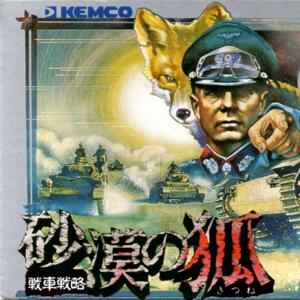
Yeah. That's, that's exactly what it is. Um, but yeah, California games across the board seems to be, uh, something better left to the past. Uh, you know, but maybe next week when we play whatever it is we're playing next, don't ask me because I clearly, I think it's desert commander.
Desert commander. Oh yeah. It's like back to back war games, right? We got desert commander next week and then like gorilla warfare the week after that. Gorilla, gorilla war. Yeah. Sure. Gorilla war. But you know what's, you know, it's coming up. What's coming up? Episode, episode one 90 mega man two. Ooh. Yeah. The long awaited sequel to one of our essential games, uh, mega man two. I've heard good things. Um, so we'll have to see. We'll have to see. And we'll have to see you next Friday when we play desert commander. Thanks so much. I'm Michael Esposito. You can find me at Esposito film on Twitter. You can always find nostalgia at nostalgia cast on Twitter. Talk to you soon. Bye. Bye.!