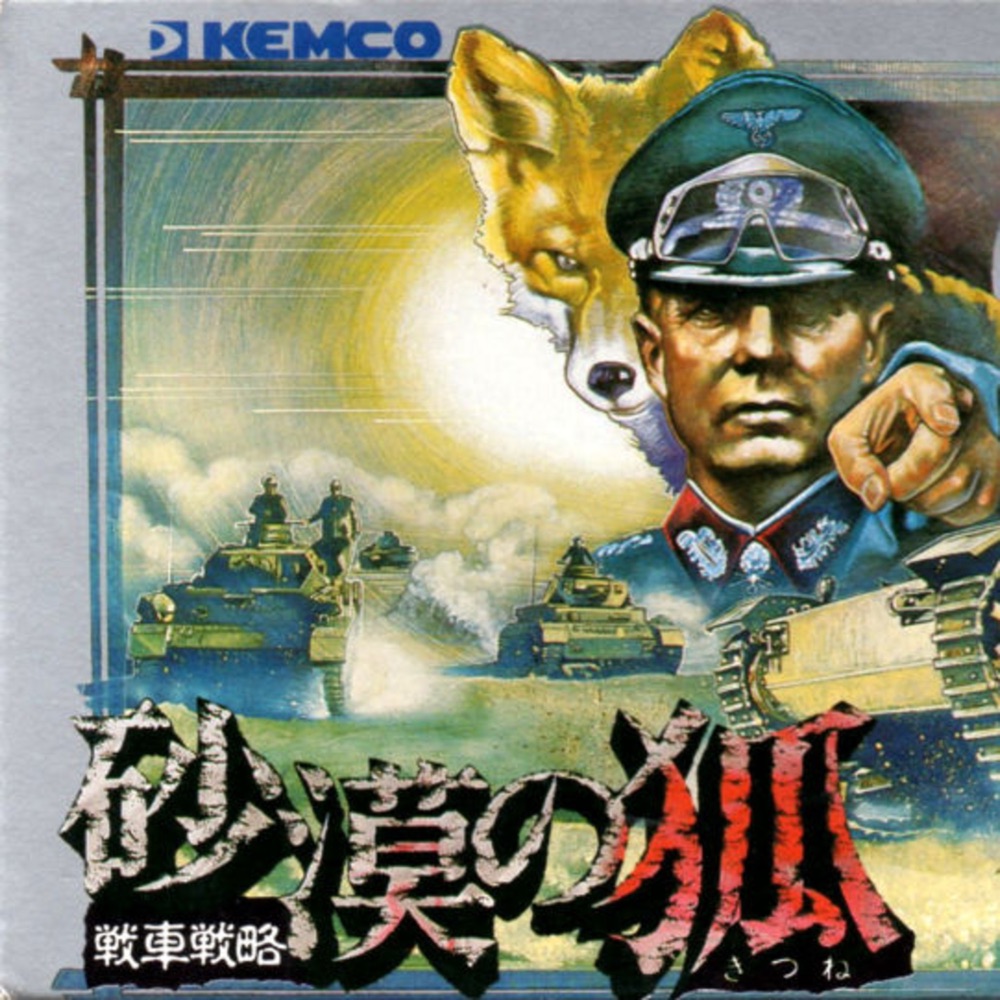
186 · Desert Commander
Somewhere in a nameless desert, two opposing nameless armies take to the battlefield to destroy the other. Through the strategy of their commanders and the diversity of their units, each side seeks to gain the advantage over the other. There are 5 campaigns total and can be played either VS the computer or a second player.
SHOW NOTES
Desert Commander Longplay
General Patton
General Rommel
Fire Emblem on Famicom
Famicom Wars
Into the Breach
Xcom
How many rivers are in Africa?
North and South
Superman Episode
Spy Vs Spy (an Essential Game)
- The enemy has been sighted. Your challenge has been accepted. The future of the free world now awaits your brave and steady command.
- NES Longplay - https://www.youtube.com/watch?v=WWXnQlrG8JM
- Introductions
- turn-based strategy video games
- Overview
- In the original Japanese release you choose between playing as the Allies or Axis led by either Patton or Rommel. In this North American version WWII titles have been stripped.
- The main gameplay objective is to either occupy the enemy headquarters or destroy all opposing forces on the playfield and the player that does so first wins
- Gameplay
- Five Different Scenarios
- Mostly made harder by you having less units than the CPU
- YOU CAN CHANGE THIS with player 2 controller
- Mostly made harder by you having less units than the CPU
- Changing your loadout before scenario start
- Units and Balance
- Good mix of counter units (think rock-paper-scissors)
- Infantry units not well suited for the map size?
- Map size vs number of units
- Terrain advantages
- Strong favor to those who attack
- You really wanna lay back in war. Spreading out and engaging first is a losing strategy
- Five Different Scenarios
- Kemco
- Joe they already brought us Spy vs Spy...but also Superman
- North and South - Civil War
- EGL
- Next week - Guerilla War
Auto-generated transcript. Each paragraph starts with its timestamp. Speakers are not identified.
Desert Commander, the enemy has been cited. Your challenge has been accepted. The future of the free world now awaits your brave and steady command.
And welcome to NEStalgia, a chronological exploration of every NES game released in North America. I'm Mike. And I'm Sean. And that's it again. Although we did get word from Joe, he misses you all and he hopes to be back next episode. And he got you all little magnets that have like beach sand in them. Yeah, he traveled the entire world actually and stopped at every single country and got magnets. And we hope to, you know, make those a subscriber bonus at some point.
We don't plan to do any. No. We don't plan to do much, but we do plan to have Joe back if he'll if he'll welcome us with open arms. Yeah, there's still that one thing to work out. But I think we could sign the contract by the end of the week. Great. And, you know, we're talking about Desert Commander today. Sean, turn-based strategy video game on the NES. Were you expecting it? Did you think they could pull it off? You know, I was definitely expecting it to happen at some point. I wasn't expecting this to be it or like it to happen so soon, even though, you know, 180 whatever games isn't really that soon.
But no, I was very excited to find to hear that this was a turn-based strategy game. And you're kind of a turn-based strategy guy like this is this is one of your preferred genres. Am I wrong? Yeah, I'm I'm really into XCOM.
I kind of I kind of dug the Advanced Wars games, even though I didn't play too much of them. And, you know, like even though it's a different genre, I do very much prefer turn-based RPGs than I do real-time RPGs. So, yeah, I'm I dig this format. And what is it that excites you about turn-based RPGs? Because I think some people find them to just be a little too slow, maybe a little too similar to like chess, you know, where you have to like you're doing a lot more thinking than playing.
Are those the things that excite you or is it something else? Yeah, I mean, there are definitely games where I I prefer that like, yes, this is about twitch reflexes. And this is about how you perform in the moment. But it's almost a bit more of a calm and relaxing challenge to to have a to have a turn-based strategy game where you do have that time to say, like, this is why each of these other turns will fail or will sort of work against me. And this is the least bad solution I can think of. I kind of like that that mental that mental sequence.
Yeah, I'd argue I even like the more recent trend of turn-based strategy games that just flat out tell you what the most likely result to be is based on the units that you're comparing to another. So like, you know, I know Fire Emblem does it, but even, you know, a lot of, you know, more strategic war games that come out today, they'll tell you like, you know, you have a 94% chance of victory in this one particular battle between your tanks and their infantry, you know?
And it's like, some people hate that because it takes the, you know, the element of surprise out of the video game. But I would argue that in a strategy game, I want to be playing as like the most dominant force that I that I think I could be, you know, I want to know what the odds are against me and plan accordingly. Yeah, with like more modern games that aren't that aren't in this genre per se, like, like Into the Breach, which I guess is pretty much this.
And also Slay the Spire, that which is very much not in this genre, but takes a lot of like turn-based strategy cues. Like they've all sort of borrowed from that same feel of like what a turn-based game is. And like, yeah, they give you pretty much perfect information and you have to work with that perfect information. That's like a whole theory of strategy games of like is perfect information just giving you like a perfect way to win or is it another way to play? And I guess like that that sort of doesn't make sense the way I phrased it. But I like that more modern takes on on these turn-based games as well.
And a lot of turn-based strategy games just come down to like the setting too, if nothing else. Like that is what makes a lot of these games different other than maybe like, you know, one core mechanic that like they add on to addition of all the usual turn-based strategy tropes. And I guess what I'm getting at here is like, you know, this is just, you know, war. This is war in the desert essentially.
You know, there's no like fun video game-centric units here. It's all going for what I would imagine at the time to be very realistic. Obviously, you know, no more does this have a realistic effect on it. But, you know, that's what they've chosen here and you could also do it in space or you could do it, you know, in like a Game of Thrones fantasy timeline. Like you can do it through all different kinds of settings. What did you think about the, you know, World War II desert aesthetic here? Well, one, I did know that this game in the other localizations had a bit more personality in that like you were the allied forces fighting against Axis forces. Whereas in this American version, you are just two teams of soldiers fighting in the desert.
And while like when you have that context, the desert makes sense and there's like some interesting flavor going on. Now that you've removed the actual historical context, now this whole desert environment is kind of bland.
And I think that if they did just like, I'm kind of getting ahead of myself here, but I would have preferred more map variety. Because there are different maps. They're just very similar. Yeah, you almost can't tell that there's different maps throughout the game. And maybe that's just a problem with their, you know, with their setting here of, I think, you know, as you were saying, because of in the Japanese version, it was taking place in North Africa, I think.
There's just, there's just something about World War II, though, that is kind of just like timeless to these war strategy games. In a lot of ways, people who never played a turn-based strategy game before, you know, before 1989, where this might have been their introduction, I feel like they would have gotten it out of risk. You know, they could see the parallels there between the board game Risk and this game. Yeah, I guess so. I didn't play too much Risk. I played a few games and was not great at it. It's a little bit more abstracted.
This game is a very abstracted war game, but Risk even more so. But you're right. It has enough similarities that it could be seen as like an entry to at least give your brain some context as to how to approach this thing. Right. And, of course, you know, the main gameplay objective here is not total domination over your enemy. You have to take over their enemy headquarters.
Destroying all the opposing forces is fine. Yeah, you will win. Yeah, you will win that way, but you would ultimately still have to take out their king or the enemy headquarters, if you will. A king, of course, referring to the chess board. Yeah, there you are with the chess. Yeah, sorry. No, we'll see. And, you know, I think what's interesting there is there's, you know, there's a way to do that, right? To say, like, you know, the objective here is destroy enemy headquarters.
If enemy headquarters was like a thing on the map, I could understand that being the objective. But this is like enemy headquarters is just another unit on the map that is not necessarily all that more stronger than any of the other particular units. Like, yeah, it can move a little better and it can fight off all different types of enemies. But at the end of the day, it is just subject to the same things that all units in the game are subject to. And therefore, it makes the objective a little easier to exploit. Would you agree with that, Sean?
Well, yeah. Okay. So, like, if we were playing a multiplayer version of this game, like me versus you, I think it would make a lot more sense. Like, the fact that the computer in this game, the AI is a little rudimentary, it is easy to exploit. Like, you just have to bait some units away from the king unit or, like, you know, like the captain or the base, whatever you want to call it. But just so that you have enough time to surround it with, I don't know, a couple bombers and maybe some infantry if you can get them there with the truck.
And it doesn't matter how many units they have left. You basically just surrounded their general and you win. But I think when you think of it like that and you think of the game mechanics more and how they would perform in a two-player setting, it does make sense. Like, because if you want to think about it in, like, the sense of what this is trying to simulate of the base basically being, like, just your command ops. Like, whoever is in the field giving command and structure to your forces, like, they would be kind of mobile. And maybe they aren't all that strong and you wouldn't ask that group to take out a battalion of tanks.
But you would want it to be somewhat mobile and you would want to protect it. So I think if me and you played, we would be much more conservative in how we played with the base and would make it harder for each of us to actually win this game. And it seems like in a lot of these one-player scenarios, the only way that they can make it harder for you to win the game is just by piling on more and more units to fight against.
Yeah, that's a good point, Sean, because there are five different scenarios. Yeah. That they provide to you and they just change basically from being beginner, easy, hard, all-star, if you will. You know, like, they just continue to move up a little bit. But you're right. They're not really challenging. It's not like the computer is getting more processing power and therefore making smarter plays. The difference between the scenarios is, you know, your placements on the map. Sometimes they'll try to spread your units out across like, you know, instead of having all your units together, you'll have some on the east side and some on the south side.
But otherwise, it all just has to do with the number of units your computer opponent has. That's how they make it harder, by just giving him more units than you. And I think that's also telling to the fact that they probably saw the game as something that was easy to exploit, you know, through playtesting and decided that that would be the way to handle it. The funny thing is, I'm sure you didn't try this, but you can actually, similar to how a two-player game is played in this game, you can just plug in a controller into player two. And on that screen with the computer, you can remove units from the computer side. I did learn that.
And make it a fair fight. That is, it's very silly. I would never want to do that. But I think turn-based strategy games are the only genre that I will, like, be serious about in Iron Man mode, where, like, oh, I can't just save scum. So that would be a cardinal sin for me to do that and fuck with their units. But, no, I did learn that you could do that. It's kind of silly.
I like what you talked about save scumming there for a second, because it's a very obvious point, too, though. But, like, I guess, you know, nothing's stopping anybody from doing that. But this might be the one, like, you know, or not the only genre, but it might be the most important genre that you can't do something like that, because ultimately you're better off just watching somebody else play the game.
You're seeing the result of the battle take place. Saying you don't like it and rewinding or save stating and trying it again is, you know, is literally defeating the purpose of playing through the map. So I agree with you there. And that's why I also agree with, like, not changing the units that the computer has, because clearly, you know, Kemco, who developed the game, said, like, the computer kind of needs these extra units to make the game harder for you. Like, if you want scenario five to be our most challenging scenario, we need to give the computer more units.
Yeah, and I think maybe, like, in terms of replayability, I do like that they added this feature so that maybe not removing units, but you can switch up how the computer, like, what their team makeup is like. Like, oh, let's see if we give them more bombers instead of more anti-aircraft, and let's see if I have less, like, if I change that in a similar way. And so you can have a bunch of different extra scenarios that you've crafted yourself. But, yeah, I don't think that they really wanted us to mess with it to make it easier. That just kind of defeats the point.
And the good news is you can change your loadouts. Yes. And that's probably, as a consequence, why you can change the computer loadouts with the Player 2 controller. They probably just program the same setup as the two-player game. But it's very important that you can change your loadout, because I think that would make these scenarios really suck and not make them good for replayability. If you were always forced to be like, well, in this scenario, you know, you're all tanks or something like that. It's like, that's up for the player to decide.
But the fact that you get to change your loadout before the scenario, I found it to be incredibly helpful. I also found it as a way to figure out, like, you know, which ways are the easiest to exploit the computer. Well, I mean, yeah, that's at the core of strategy. Like, you're trying to optimize, and I think if they were to handicap you there and say, like, no, this is just, this is your makeup. Like, this is going to be how many planes you have and how many tanks you have.
You're starting to err into the side of, like, a puzzle game. Because I think one very specific feature of strategy games is the ability to also alter the starting conditions within reason and provide a way to change your team makeup and all those fun pregame situations. So I appreciate that they added that. But I'm sure that strategy outside of the NES is pretty well developed by now. I don't know too much about 80s strategy video games, but I'm just glad that they included that. And that isn't, like, a newer feature that was just found in the 90s or 2000s.
Right, right. And to be fair to your point there, computer turn-based strategy games are not only a thing, but they're a lot more developed than Desert Commander was at the time. Desert Commander was favorably reviewed for the NES, but was just seen as, like, an introductory game to turn-based strategy. Yeah, good for the NES. Right, right. Or maybe just good for console gaming in general. You know, you have to remember, home computers are very expensive in 1989.
You know, just because, like, there was a lot of home computer video games, those were mostly just being made by passionate people. I don't think, like, you know, Nintendo ever thought that the family computer, the Famicom, was eventually going to become a home computer. I think they always saw it as a video game console first, you know? Yeah, for sure. So I was talking about changing the loadouts.
And I guess what I really want to talk about here is just units and balance. We don't have to give an overview of all the different unit types that you can have and, you know, who beats what. It is kind of a rock, paper, scissors thing where some units are strong to others and weaker to others. And that's important. Every game kind of needs that as the basics. Otherwise, one unit would just be the de facto. But I did find the bombers in this game, especially because of the overall objective of taking out the headquarters, I did find the bombers to just be something that I always wanted to stock up more than anything. Sean, curious if you found something similar or if you thought there was a particular unit that was just useless, you know, talk away.
Yeah, bombers are definitely very useful. I kind of I would sort of take away some of my fighters and just replace those with bombers. I didn't get too crazy with customization, but I did figure that I'll just overpower on the offensive side and try and like I don't really need to shoot down their bombers if they're not going to use them very well because computer. If I was playing against you, I might double think that.
But yeah, I didn't play too much with the loadout just because I think that while there is that rock, paper, scissors plus mentality here, it's still possible as a unit at a disadvantage to do some damage. Like it's it's it's like they it's balanced a little too much in that even when you're supposed to be at a disadvantage, you can still you can still like use a fighter against a ground troop and you might take a few out. Like I thought that I figured like if if they're going to do that, it's kind of taking away from the the uniqueness and the utility of each kind of unit.
Obviously, there are more utility units like the anti air is going to be much better against aircraft and it's going to be against like a ground artillery. But I think they should have made their specializations even stronger than they were in this game. Yeah, because I mean, that's a good point. There's you know, there's terrain advantages. There's advantages of air versus land. There's advantages to like where you can go on the map. Right. I mean, you know, in the earliest stage, it's very easy to just kind of park your aircrafts over the ocean where nobody can really touch them and then just swoop in for the attack.
There's a lot there's a lot of things like that. But there's no there's no like special bonus for like or a particular thing for each unit that like they can pull is like a finishing move, if you will, or like a special extra bonus. I think there's something on the menu for each unit that said power. And I thought like, oh, wow, that's really cool. Like each one has its own power up or special ability. And then when you click on that, I think it just tells you literally like how much ammo you have left, like how many units. You're thinking of it like Final Fantasy or something.
Right, right. And I just thought that was like, oh, man, there was a chance there for like, you know, like once per, you know, per scenario, the tank can just like fire a really amazing shot. That's like guaranteed to take out minimum three units, you know, like just things like that would have been interesting to see added here. Because otherwise, I think what you wind up with is playing a scenario once, seeing the computer's hand and being like, well, you know, he doesn't really have any aircrafts at all.
Yeah, this one. And so if I make a team of 12 bombers and, you know, like a tank to take out the anti-aircrafts, like I'm pretty much going to win this thing. And I think you see that a lot in this game. I don't know if that, you know, again, we're talking about this, you know, strategy games being all about optimization. I don't know what point it becomes optimization versus, you know, cheesing against the computer there. Yeah, it's a fine line.
It has a strong, the map in general has a strong favor to those who wait. And I'm sure that's not just for the computer game either. I would imagine that, you know, even on a human to human scale, if me and you played, we would both play a very tight defensive game waiting almost for the attack. I feel like because of the size of these maps and because of how enemy movements work and stuff like that, you're kind of encouraged to be defensive.
Yeah, and that's why like some of the modern like XCOM XCOM 2, for example, like they added turn timers to many fans dismay just because there was too much turtling. And it does make it a more interesting game when you have when you have to get something done in a time slash turn limit because you actually have to come out of that shell. And I think maybe that could have helped here. I mean, it's kind of hard to contextualize if you're trying to make it a trying to make it realistic, like there was no time limit, but like maybe as like a supply limit that always sort of ticked down.
Like we've seen in some other games that we always kind of complained about, but it may maybe makes more sense in a strategy game. Just to put some pressure on you to actually do something.
And you were also talking about the maps affecting this as well, because, yeah, like while the road network looks a little different and your spawn points change a little bit and spawn locations within your your forces will get split and things like that. But I think like if there was if they thought of it more as like an arena shooter where a different map means almost a completely different like philosophy of map making like they'll if they added like a level, for example, that was like a bridge or like a couple bridges and had some choke points that weren't just like, oh, here's some mountains. You can drive over them. You can just take longer.
I think that could have helped this game's case of creating a bit more map variety and therefore gameplay variety. Yeah. I don't know if it's because, you know, and I'm sure you had a similar experience. I don't know if it's because we played turn based strategy games before, but I feel like, you know, for a beginner's game, the obvious mistake here to make is like going into the very first scenario. And just spreading out your unit to cross the map to be like, all right, I'm covered everywhere. You know, like when you're covered everywhere, you're covered nowhere because it just takes one unit to take down yours. And now you have a whole, you know, expose to you.
I don't know how they could have solved that in this game, given how basic it is, especially, you know, just with the one objective. Like it's never just like, you know, don't have this many casualties or also take out all the tanks or something like that. Like because it is just a one objective game, I'm not sure what they could have done there. I really like your suggestion, not even just for bridges, but just like it's a shame that there's, you know, there's rocks, there's water, there's roads, and they don't really have like they're really just on the map for color more than anything else. Like, yes, only the planes can go over the water.
But I don't know if you like noticed anything different, but the water is only on the outsides anyway. So it's not like there's this big, you know, moat that we have to cross over that only your planes will have access to. It's basically just hidden in the background and, you know, use it if you want to. The computer won't really take advantage of it.
Or it's, you know, wow, the rocks would be like the mountains. Like no tanks can go over those. But it's like, no, they can. They just don't move as fast. It's like, no, they just shouldn't be able to go over those, right? Yeah, I agree. Like that adds to like the specialization that I was talking about. If there are some units that literally can't go over a terrain, I guess they already did water. But that's the most basic, I guess.
But that extends more. It also extends over to like the special terrain areas that they have here. Like there's some walls that add like a defensive bonus, I believe. I think they're supposed to be like bunkers for you. Yeah, like it's a defensive bonus, but they're just so scattered and like only one unit can take advantage of it at once. It sort of reminded me of the little fortresses in Fire Emblem that it was kind of silly to me that they were just in random spots. They didn't really like add to choke points or anything. It was sort of the same thing.
And then you have the airfields and supply depots. But they don't really add to the landscape so much as like, oh, here is one place that whether I have one or the other, like it's not really adding to the landscape. It's just I'm having trouble like actually saying this, articulating myself here. No, I think I know what you mean because ultimately these things, right, aren't put strategically in a way that they matter any more than at the beginning of the game, right? Like you're always near an oasis and a bunker and, you know, and the roads to get around. But like the roads are really like, yes, they're great for movement, but they're really out of the way.
There's no like great roads out there. So you would really spread your units out by using the roads. And then the oasis, it's like, you know, if you're coming to them or you're going to meet them in the middle or something like that, or they're coming to you, maybe I guess is like the only situation where the oasis matters. But like these things aren't really strategically placed in a way other than the airports, which I think are important. They're not airports. They're like runways or whatever. Yeah, the airfields. Those are important, you know, because that's how you refuel your planes. And the towns are important to recollect supplies.
So I think like, you know, there's a mix there, right? It's like I didn't really see the benefits of the oasis or the bunkers that much. I'm sure they would have played a role if maybe the maps were smaller and there was less like real estate and you want to make sure you have those. Yeah. If they contributed to like area denial, like if you being in this one spot and holding your position here made it so that the opposite side would have a harder time even operating in that area because it gives you a boost to like attack range or something along those lines. I think that's what I was that's what I'm sort of getting at.
Yeah. You know, again, you know, against the and maybe that's because now you have like the element of surprise or whatever. But I think I would have liked to have actually seen it as a more, you know, a more tactical battle where it's like, you know, it doesn't matter if you're the attacker or the defender. It's it's purely unit versus unit. I think so.
What I do think about that is I think it does kind of make sense that the initiator would have an edge. And that's simply because your damage in this in this simple way, your damage is literally just like you get and you get a number of attacks or potential hits based on how many units are left in that squadron or however much health you have left on that unit. You can look at it both ways.
So if you have 10, if it's a full platoon, you have 10, you will do 10 attacks and they may hit or miss, but you do those attacks and whatever the enemy, on the other hand, they only get to do as many attacks as they have units left. So since you are attacking first, you are already making their offense less capable by killing those units and making them do less attacks at a time.
So there definitely is an advantage to the to the initiator. But I do think it kind of works out. It's just it's just very simple. And that's really the only that's the only thing adding like any modifier minus the rock, paper, scissors, how useful that unit would be. If you if you get what I'm saying.
The last thing I really want to talk about in terms of the units here is that, you know, each of them has a ammo capacity and a fuel capacity. And in a longer game, this will matter. You will run out of ammo or run out of fuel if you don't, you know, if you basically just try to be as offensive as possible and keep taking out unit after unit after unit.
I feel like that's very necessary. Not only from like a simulation war style game where like obviously you wouldn't just have infinite ammo and infinite fuel, but also just from like a, you know, if we're not talking about the computer, we're just talking about human to human. Like game balance. That is right. Like game balance. Like that is an interesting thing that you could be like on the cusp of victory. But all of your, you know, all of your nearby units don't have any ammo and suddenly have to retreat.
And now, you know, the headquarters has like time to go back and get supplies and, you know, reinforce themselves. Like I feel like it didn't happen so much for me with the computer, but it would come into play a lot more in a head to head game. Yeah, like if we were playing and you were kind of lax with your placement of your supply trucks, I could just go after them and just try and wait you out and see you run out of ammo and maybe try and guard the places on the map that you can get supplies. Like that's definitely a valid strategy.
And I do like that there is that purely unit to unit strategy. I guess I would have just liked a bit more, a bit more of it tied into the map, which is what we've been talking about.
Yep, yep. One last thing on the map too, now that I'm remembering it. You know, infantry units, the ground foot soldiers, there's, they're almost useless without the, what are they? The transport, yeah. Yeah, the transports. They're almost useless without those. But then you have to almost think of the opportunity cost there of, you know, it takes two units now. You have to have the truck and the soldiers when you could just be applying those to like anti-aircrafts or bombers or something like that. I really found myself, you know, as I continue to play this game more, just ditching a lot of the field units outside of the armored cars and the tanks.
Did you see, did you know something similar? Were you finding a good use for your infantry? Well, like I said, like I was, I was a bit more conservative in how much I changed their loadout just because I wanted to play it as I expected them to want me to. So I did, I did realize that, yeah, this, this transport is taking away a slot that could be used for a much more pack of punch unit.
But I did think that if you're trying to be a sneaky boy and like you, your strategy is to just sort of wait for their units to kind of leave an opening for you to go and attack their, their base. Having that transport that can move a pretty good distance, whereas your infantry really can't and your infantry being very good against the base.
I did see that, that sort of cost benefit analysis working in favor of keeping a transport just so you could do that little sleight of hand and get behind enemy lines and take care of it there. You're really making me want to start looking for like the eSports Desert Commander series, you know, like I, what was it? I just sent you the other day, we found out that Microsoft Excel has a best of 16 eSports competition happening as we're recording or whatever, right?
But like, I don't know, isn't this like the whole like hook of speed running and stuff like that? Like niche games being, you know, seeing them be done in a way that you've never imagined them to be done. Like I would really like to see what a, you know, like with an ELO rating system, how like people would play Desert Commander. I don't think there would ever be a scene big enough for it.
But it's a shame that when you go look at like YouTube playthroughs or strategy guides or whatever, most of them are just suggesting the fastest victory rather than what you were going for, the practical victory with the units that they give you. So since I did the same thing, I wanted to win.
I'm curious, Sean, what were your thoughts on the scenarios with the default loadouts? Did you, did you think that that was maybe a little unbalanced that they were, that they weren't giving you the units you needed or the, or the, you know, the amount of units you needed? Or did you feel like, you know, still, it's just a matter of being defensive and waiting for your opportunity to strike? Yeah, I mean, I wouldn't say that I was, I was playing it, it kind of was false to say that I was playing it the way they wanted me to play it because I was still just like kiting enemies because I had unlimited time.
I can, I can, I can sort of turtle and just let, okay, this, this one artillery is kind of left alone. If I get to him, his, his buddies won't be able to really split my, split my guys up too much. So I'll take them out one at a time until I see that opening of the base. So, I mean, yeah, I was also kind of cheesing it.
I guess it wasn't just also using the, the, the min max loadout. I keep using loadout when I should just be saying like the, the array of units that you have. But yeah, I guess I'd say that it was still, it was challenging because I wasn't just like, oh, full bombers, Fox only. Um, but, uh, yeah, it was still, it was still a challenge. Yeah. Now, I don't know much about Africa, but I think, you know, that there are probably a plentiful amount of rivers, uh, in Africa.
And that, uh, that's why, you know, I'm a little shocked that we only got like large bodies of waters around the edge of the maps because I don't know, like I would have liked to have seen some naval units too. I, you know, this is world war, this is world war two. It's not like we're shooting, uh, you know, missiles and, you know, have advanced combat. So there was still very much, uh, you know, naval combat happening during world war two.
And I think that could have added an extra thing, uh, for the, you know, especially for the planes, uh, to take care of, you know, I think like, you know, the air force versus the Navy versus the army would have been an interesting thing to see as like a three way, uh, unit face off. Another level of that rock, paper, scissors.
I mean, I agree only so far that like, whether or not there were a bunch of rivers in Africa, I mean, there's at least one. Which is debatable. Right, right. It's debatable. How many rivers? Yeah. You can't count them. Uh, just for like a, a gameplay reason, like have there be some rivers that create natural choke points to add some, some strategy to the map. Like we're talking about, we're talking about a lot about, uh, team makeup and how they interact with each other and how, uh, your own team makeup internally creates a challenge or makes it easier.
And, uh, the balance between yours and theirs, like it's all about the units. And my, like the thing that I keep bringing up and we keep both bringing up is I would just like to see more in terms of the map and adding rivers, whether it's realistic or not, would add a bit more complexity and a little bit more to think about on each turn. Uh, if there was just a better variety of, of landscape.
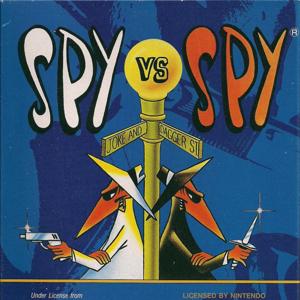
So this game was brought to us by Kemco, uh, who believe it or not, Sean, we have played Kemco NES games before. I know we, we don't hear their name often. Uh, they make some interesting games. This being one of them, no doubt. Uh, they also brought us spy versus spy. Oh, wow. Yeah. In a central game, uh, depending on who you ask.
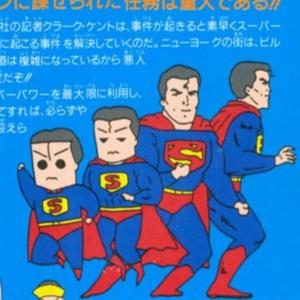
And, uh, um, you know that, but like, again, that was a very creative new use for the NES, uh, especially in a two player thing. And I feel like this has some similar things where like, you know, this is a first time turn-based RPG, uh, turn-based strategy game, not RPG, uh, that we're seeing here. And, uh, I, for, I feel like, you know, definitely the two player is much better than the computer mode here. So, you know, it seems to have a constant theme with the games that Kemco releases until you all of a sudden find out that they also made that Superman game. That was really strange. Remember that Superman game? Wait, yes. Yes. With the chibi Superman?
Yeah, that was the, that was the biggest, like, out of left field I think we've played so far. Um, especially from what they've had, because spy versus spy, you could say, is out of left field. But, like, I can see a better through line from spy versus spy to Desert Commander than I can see with, uh, Spider-Man, Superman thrown in there, too. That's weird. And, you know, spy versus spy and Superman are both franchises. So it's interesting that they chose to, uh, not grab, like, you know, Axis and Allies, the board game.
Um, but they didn't choose to just, like, port that. Well, World War II is, like, a franchise, right? Like, there's the World War II-verse. I mean, the History Channel basically makes all their money off of it, right? So, and now Ancient Aliens. But, uh, yeah, I think World War II is a franchise, sure. People keep saying, when's World War III? Like, they can't get enough of this. Everybody wants the sequel.
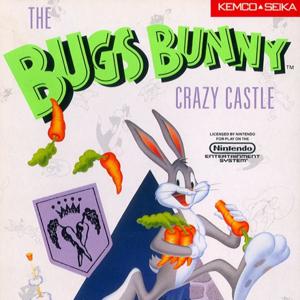
Also, though, Kemco is not gone. They make a lot more NES games, actually. But I wanted to focus on for a minute, uh, because there's no sequels and spinoffs to this game. Just another Kemco game that we should have on our radar. And that is North and South. Another turn-based strategy game from Kemco on the NES that is about the Civil War. Oh. All right. I'm interested. I can't wait. I'm interested, yeah. Now, Sean, any last objections, though, to, and you don't have to actually have objections, but just wondering, like, you know, what's the temperature like in 2021?
Uh, you know, in the original Japanese version, you were the, you know, the Allies fighting the Axis. But in a two-player game, somebody has to say, I'm gonna be the Axis. Uh, is that, you know, like, is that a, is that, should they, maybe it's better that they just stripped the Axis and Allies things? Nobody had to play as those bad guys? No, I mean, if you play Command and Conquer, you know that it was a good idea. It was just as fun, or maybe in some cases more fun, to play as the Soviet Union. Like, it, it's a game. You get to, you get to do weird stuff. Like, I play, uh, I play Hearts of Iron, and some of the most fun, uh, gameplay in that is to play as Nazi Germany and see what you can do differently there. Uh, it's a game.
Yes, it's a game. I'm glad you said it, too. Uh, one last thing that you had me thinking about, though, now that you're talking about this. If it was Axis and Allies, right, or, you know, even this, green versus blue, whatever you wanna, you know, like, that's what it is.
There should have been, like, one thing, right, that, like, made the, the, the teams different? Yeah. Like, just one defining factor? Like, maybe it has to do with how the headquarters operates? Like, it was supposed to be General Patton versus General Rommel. So, like, maybe they have, like, a unique trait or something? I guess it depends on what kind of flavor.
I, I prefer some asymmetry, uh, but I guess if you wanna make it equal, uh, one, if you don't have to worry about that balance of, like, oh, is this special technique somehow more useful than the one we gave to the other team, you don't wanna worry about that, then I guess you can just make it like chess. Um, but I do prefer asymmetry and playing with different specialties, uh, so I agree. Alright, I think we've talked a lot about the maps in Desert Commander. I hope you guys feel like we also talked a lot about the game itself. We have one last thing to do when it comes to talking about NES games at the end of every episode, and that is we decide whether it's on the Essential Games list.
Sean, challenge for you, if you should accept. On your Essential Games list vote, you can vote yes, you can vote no, but you cannot talk about the maps in your Essential Games list, uh, vote. I'll see what I can do. Um, you, you know, I, this is a genre I very much like, and it is the first of its genre on, uh, on this journey that we're on. Um, and I did enjoy myself while I played it, uh, but I think I can't, I can't put this on the Essential Games list just because of how rudimentary it is. Uh, and there, and yes, there is a lot of strategy just by virtue of the kind of game that it is.
Uh, but I think that, I think there's more that can be squeezed out of this, and I think maybe I'm gonna be more excited for this North versus South and see if they can, if they can do some more stuff. Uh, so, I'm holding out hope for that, but for Desert Commander, it is not essential. Well said. Um, I will add that this is an example of a fun game. A game that I would consider to play it. A game that is, if you are, you know, if you have another person in your life who likes to play NES games, consider picking this one up just for the two player.
It is very, um, entry level in both its strategy and in its introduction to, uh, turn-based strategy games. And that's why I just don't think it can go on the Essential Games list. Uh, I had a lot of fun playing it. I think I'm gonna go back to it, if you want me to be honest. I'll check it out every now and again. Um, but it doesn't go on the Essential Games list because they just, you know, knowing what we have and knowing where, you know, where turn-based strategy games are today, this one just doesn't quite feel like one that everybody needs to go back and check out. I think, uh, a lot of the games we talked about in, in today's episode, especially a lot of the ones Sean mentioned, you know, that's a good use of your time.
Um, they're not just better because they're more recent or they're longer gameplay experiences. They're better because they've thought through the strategy element. Uh, you know, the computer here really hasn't even thought through a lot of its own strategy. If you look at the computer sometimes, I swear, I've seen the computer sometimes just select the fighter plane and just go around in like a circle to nowhere and just waste its own fuel. And I'm like, well, that's gonna cost you. You know, if you're just gonna play like that, that's kind of ridiculous.
So, I think we talked about a lot of great things in this episode. I think we talked about a lot of the downfalls of this. And I think it's pretty obvious why it's not going to go on the Essential Games list.
Boom. Sean, we have another war game next week. Guerrilla War. Um, Guerrilla War, otherwise known as Guerrilla Warfare, um, you know, is something that I thought the Americans invented. Was that taught to you in school? Yeah. Uh, definitely in, uh, sixth grade social studies. Yeah. We invented Guerrilla Warfare. Right. We invented Guerrilla Warfare and it was like the only way we could defeat the British. Like, we just didn't play fair. And I remember thinking like, I just remember thinking that was crazy. I'm like, these guys, the British are like, you know, they're lining up like 60 men just in a line. And then we're just coming at them from like all angles, like barbarians. Why didn't we think to hide in the trees?
Right, right. Like, like they didn't think that either, like that they could just spread out, like they have to be in a line. And I remember thinking like, you know, for the longest time that that was just true because you learned it. Uh-huh. So, uh, that's, that's Guerrilla War in a nutshell. But if you want to find out about the NES game Guerrilla War, uh, definitely join us next Friday. Every episode publishes at 8 a.m. on Fridays. If you're not getting them at 8 a.m., either I forgot to post it and I'm posting you late. Or you're not using the right podcast player. So think about that. Or you're in a different time zone.
Oh, interesting. Yeah, yeah. I never thought about that. How many of our West Coast boys are getting these things at 5 in the morning being like, oh, shut up, turn off the notifications. If you've unsubscribed to NostalgiaCast because you got a notification at 5 a.m., you're not committed to the chronological exploration. You're not and you need to, and we don't need you.
Yeah, we don't need you, but also you probably don't need us. I don't want to say anybody needs us. Yeah, this is just a mutual, like, hatred for one another. If you've unsubscribed from us, you unsubscribed because you don't like us, and we've unsubscribed from you, actually. We went in to your podcast profile and blocked it. Now, of course, everybody who's listening to the show has no idea about that because they're listening. We're listening to them on Twitter at NostalgiaCast. They're posting. We're liking. A lot of times we're commenting. And, Sean, you recently joined Twitter and still have not made your, like, public introduction to the Nostalgia Boys.
The time will come. I can't wait. Maybe the 200th episode. It's coming up, folks, faster than you realize. I think this is episode 186. So get ready for episode 200, which also happens to be kind of an important game. So I think we have a big important game every five on the fives. Do you know what I mean? 190, 195, and 200 are all important games. That's kind of cool. It's going to be a fun few months. Yeah. And also listen to 187, 188, 189, 190, 191, 182. All the in-betweens. Yeah. All the in-betweens, too, even if they're not exciting. You probably never heard of Desert Commander, but now you have, and maybe you played it. Maybe. Or maybe you didn't because we said go play Into the Breach instead. I'm Michael S. V. You can find me at Esbizil Film on Twitter. Sean and I will talk to you very soon. And Joe. Yep, Joe, we welcome you back. Thank you.