330 · Shingen The Ruler
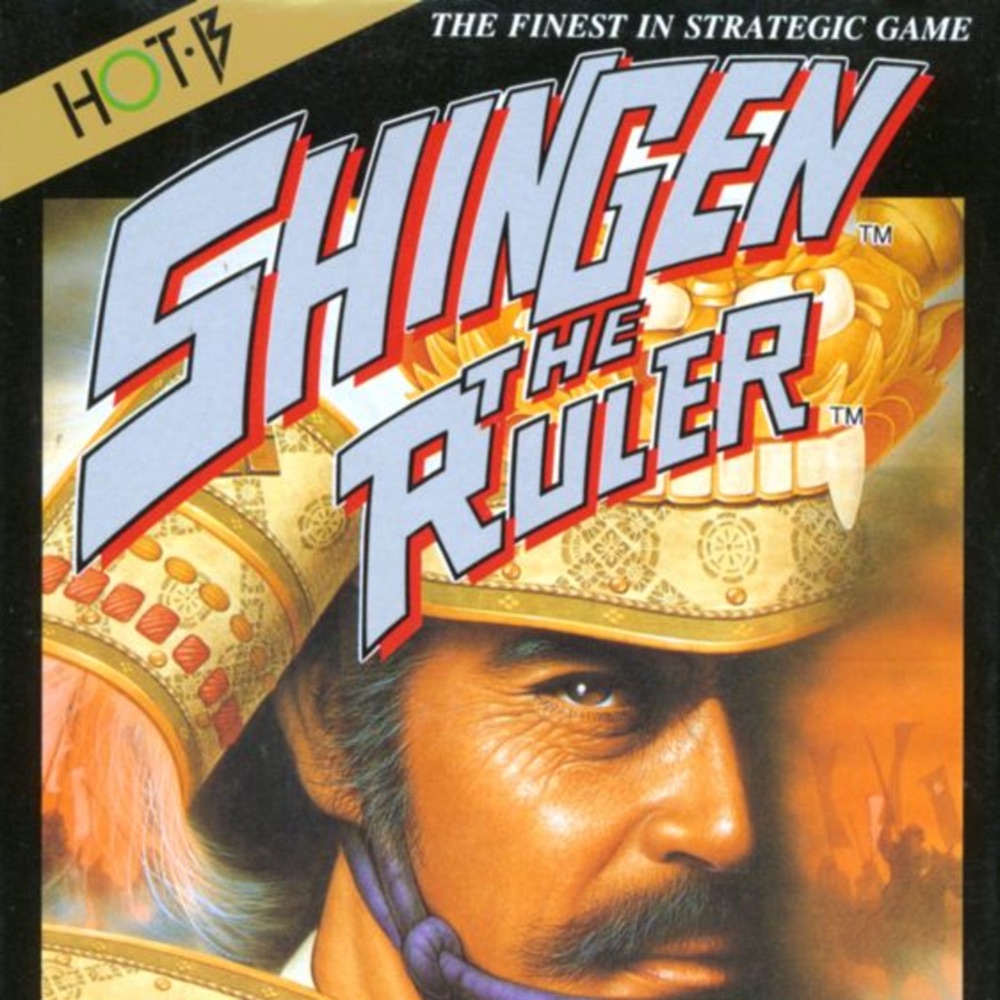
Shingen Takeda was one of the most powerful warlords of medival Japan. You being with two small city states and attempt to conquer the country as Shingen did back in the 16th Century. Control all aspects of your territories from social, economic, and military in attempt to spread your influence. If you are good enough, you can do it faster than the real Shingen himself!
Shingen the Ruler is the NES strategy game that opens with a pop quiz. Only Mike and Sean were on this one, and the first thing the game asked was "How many occupied regions do you control?" with 0, 3, 2 or 1 as the options. Sean tried three, then two, and was told "silly" both times. The answer is always one, since you only start with the region Shingen already ruled.
What works
- The battles. Fights are turn-based and read more like Fire Emblem than the board-game chunkiness of Nobunaga's Ambition. There is a rock-paper-scissors triangle between unit types, and the computer is not smart enough to stop you exploiting it. Sean conquered a few territories this way before running out of supplies.
- New systems. Gold mining, heirs, princesses to marry off, ninjas who spy on rivals. The real Shingen's son lost everything in a single day after his father died, so it's funny that the game builds in a succession risk of its own.
What doesn't
- Everything is abbreviated. YLD, DST, PRD, PRI, CLT, RNK, HDQ in huge type, with room to spell them out. The manual is mandatory, and Sean compared reading it to cramming a textbook for a pop quiz. Between battles the game felt like a calculator for a pen-and-paper game kept in the booklet.
- No way to know if you're doing well. Spend money on culture and the stat goes up by six. Is that good? We'd need 40 hours to say. Sean's gold mine collapsed four turns after he built it, and he still doesn't know if he got anything out of it.
- Scripted, not systemic. Heirs turn up on a set turn instead of through any dice roll, and you never feel like Shingen, just a confused person in 2024 clicking through menus.
- No tutorial, but there is a sound test. Hold A and B on controller one at boot, then A, B and right on controller two. We figure it was a developer's leftover, since the sound is nothing to show off.
- An odd one to send over. This is Shingen 2, and the first game never came out here. It is a very specific piece of Japanese history to hand American players in 1990.
Beyond the game
HOT-B made this one, not Koei, though it plays like their games. We also noted that the game has no place for the women who ran Shingen's network of spies, and that a Pokemon and Nobunaga crossover exists on the DS. Bandit Kings of Ancient China is up next, with hex grids and a calendar that ends in 1127.
The bottom line
Skip it. We both voted no on the Essential Games List, so it stays off. Mike said it made combat more fun but fixed none of the genre's other problems. Sean said it is probably no fault of its own, he just can't give it the month it would need. Even people posting playthroughs online seem unsure what they're doing, and conquering Japan in 1540 was probably as much of a fluke as winning a round here.
Written from our conversation in this episode.
- All the power of Shingen is in your hands
- NES Longplay
- Manual
- The Strategy Game Video Game Universe just got bigger.
- Nobunaga formed an alliance with Takeda Shingen through the marriage of his daughter to Shingen's son.
- How many occupied regions do you control? 0, 3, 2, or 1.
- It’s not a choice, the answer is 1
- Everything is abbreviated. Memorization matters
- HOT-B is making a Koei game
- What is different or feels different?
- What’s your fast approach to learning these games now that we had a few?
- What do you focus on?
- MONEY
- MILITARY
- Field Battle
- Dispatch all troops
- Fight
- Siege battle
- Succession in the game
- Funny mechanic cause Shingen’s son screwed up things so bad after his father’s death that he lost the empire in a single day. So try not to let that happen
- Portrayal of Leadership: Shingen was known as a brilliant military strategist. How does the game portray his leadership qualities, and what can players learn about leadership from playing this game?
- Role of Women: In the Sengoku period, women often played strategic roles behind the scenes. How does the game incorporate or fail to represent the roles of women during this time?
- Economic Management: Players had to manage their economy by collecting taxes and investing in infrastructure. This economic aspect was quite detailed for a NES game and added another strategic layer.
- SOUND TEST
- Hold Start + Select (Japan) or A + B (US) on Controller 1 and reset the game. As soon as it boots up, release the buttons and hold A + B + Right on Controller 2. If done correctly, the sound test should appear after the Hot-B logo.
- Similarly complicated CUTSCENE CODES
- After the ending sequence is over and kanji "END" is displayed on the screen, press and hold A + B + Select + Start on Controller 1 and A + B on Controller 2 at the same time.
- How necessary it is for tutorials
- You can’t build a sound test, but not have tutorials
- Sequels and spinoffs
- This is actually Shingen 2. We never got Shingen 1 in the States. Missed out on a lot of deep lore
- Takeda Nobuhiro no Ace Striker (1992) - This is a spin-off sports game featuring characters from the Takeda clan. It was developed and published by Hot-B for the Super Famicom. In this game, players take control of characters from the Takeda clan and compete in a soccer (football) tournament.
- Nobunaga's Ambition: Lord of Darkness (1991) - While not a direct sequel or spin-off of "Shingen the Ruler," this game is worth mentioning because it is another historical strategy game developed by Koei. It is part of the "Nobunaga's Ambition" series, which focuses on the Sengoku period and allows players to control various factions in feudal Japan.
- EGL
- Next week - Silkworm
- NEStalgia Byte
Auto-generated transcript. Each paragraph starts with its timestamp. Speakers are not identified.
Shinjin the ruler, all the power of Shinjin is in your hands.
And welcome to NEStalgia, a chronological exploration of every NES game released in North America. I'm Mike. And I'm Sean. Can you really have all the power of Shinjin in your hands? Like, Shinjin is not... Shinjin is a person, right? You wouldn't say all the powers of, you know, Mahatma Gandhi in your hands, right, if you were playing some kind of, like, 1945 Indian independence adventure.
I would associate it more with, like, a sports game, like, all the power of LeBron James in your hand. Not knowing that this was marketing for the states, a, you know, a foreign historic ruler that I wouldn't have learned about in high school. It's a weird, it's a weird flex. Yep. All that stuff you never knew in the palm of your hands. It's the internet. But it's Shinjin the ruler on NES in 1990. And let me tell you, the strategy game video game universe just got bigger.
Because Takeda Shinjin is basically, you know, at this point, I mean, he is somewhat related to Nobunaga. Yeah, he's like another guy on the map, right? Yeah, he's another guy on the map. Now he gets a game. But Nobunaga and Shinjin are bonded through the marriage of Nobunaga's daughter to Shinjin's son. So this is, like, it's all connected, man.
So you did some actual research here. Wait till you see what I hit you up with later in the episode. That's called a tease in the marketing business. But, yeah, there's some stuff going on in this game. But, yeah, I did a little bit of research because Shinjin, the ruler, takes place around the same time as Nobunaga. So I'm like, wait a minute. Who the heck actually unified Japan? Was it not Nobunaga? It's just one of those things, Sean, where, you know, like the textbook tells you something, but history says it's a lot more complicated.
And, you know, depending on which way you read it, it's Nobunaga, it's Shinjin, or, and I'm not going to try to pronounce this, it's a third guy. So it was, like, three people. Obviously, no one man has the power to just unify an entire country, right? Like, that's like saying George Washington won the battle against Britain, right? Like, he didn't single-handedly just turn, I mean, you know. Aren't there, like, mangas out there or animes that sort of, like, would do that? Like, there's, like, an anime version of George Washington who single-handedly defeated the British with, like, a spirit bomb or something? There was that steampunk game on 3DS where, like, George Washington and Abraham Lincoln take on a bunch of mechs.
But that's not what you're talking about. No, no, I don't think I'm talking about anything. Yeah. So, with Shinjin the ruler, I have to ask you the question that's on everybody's mind. It's the first question that they ask you in the game. And that's, how many occupied regions do you control, Sean? This was, like, a really funny moment.
How many occupied regions do you control? Is it 0, 3, 2, or 1? First off, why are they in that order? Yes. But also, is this covered in the manual? Okay, so I did read the manual. The manual needs to be used in this game.
But because everything is written down as, like, some super abridged version of what you're doing. And there's no, like, flavor text or tool tips to help you out. So, it's very on brand for this game to just immediately be like, So, you already know what's going on. How would you like to proceed? So, I started by saying three. And they're like, silly, Sean. You don't have that many. And I'm like, okay, let me try again with two. And they said the same thing. And then, finally, I went with one. And so, I, like, you know more about this than me. Because you're the host.
But is that just, like, how many territories aside from your capital you'd also like to give, like, orders to? Well, you are spot on. So, kudos to that. That is true. But it is funny that the game can never start with more than one. So, it is not a choice at the beginning. It's like a pop quiz at first. Like, how many occupied regions do you control?
And the answer is only one. It can never be two at the start of a game. You only ever start with the one region that Jinjin did have rule over. And then, even if you go beyond three. Say you own, you know, four or five territories. You can only ever give commands to three at a time. Which I think is, that makes sense. It's like a balance thing. Yes, exactly. Right. You can't just be ganging up. You know, if you have 17 and there's two remaining, right? It's like, all right. Just, at this point, guys, just give in. But, yes.
It's how many you want to give orders to. So, I get the check later on. I just think it's funny as a starting point to basically say, how many occupied regions do you control? Is just a weird way of wording. How many territories do you want to give orders to? Is the real question at hand. Which is also, like, just thinking about strategy games now. Like, it's already dating itself. Like, it would just be, here's what you can do. You can choose to do this or skip. Not, how many of the things that you are able to do would you like to do? It just doesn't happen. Yeah, that's a good point. Because you can pass. You can say, like, I choose to do nothing.
Which, I guess, is also awful. Because, technically, I think you can give more. Depending on what you choose, you can give more than one command to a territory. So, you might want to just give off, like, one command and then pass the remainder. But, I could never find a good reason for that. You need to do everything in this game. So, you might as well never pass. I can't think of a justification for it. But, I wanted to talk about the other thing you brought up. Which is just the confusing menu layout. Because everything is abbreviated. And, when I say everything, I mean it all. The manual is required because memorization would be required otherwise.
You have your YLD, your DST, your PRD, your PRI. And, then, within those menus, your RNK and your HDQ. It's like, oh, come on. Give me a break here. It's not even like, oh, how are they supposed to list all this out? It's like, no. The way that they designed, like, the UX UI developer. Whoever decided that this is how this game is going to look. Like, they made the conscious decision to have to abbreviate everything. Like, the...
The... Okay. So, each, like, yeah. The Yield. The Destructive Capacity. Like, they're all in huge, like, 25-point font. Or 32-point font. And, it could have just as easily been, like, the standard... I don't even know what the typeface is. But, that typical Nintendo game typeface. It could have been that. They could have written everything out. And, they could have given you a bit more context with what you were doing.
And, it all would have worked. It just wouldn't have been, like, this sort of badge square design that they're going for here. Yeah. In the combat sequences, you do get a lot of information in those menus. A lot more text. So, I agree with you. It's not hidden for any good reason. But, even just thinking about, you know. Okay. So, we've played strategy games before. But, that doesn't mean that everybody in 1990 played all of the other Koei games. Of which, this is not a Koei game, too. We'll get into that later.
But, you know. We have some introduction to this. So, we kind of at least understand the importance of rice and building a military and taxes. Right? Because, we've seen how it works in the other games. And, there's generally a flow of these things. But, now the fact that I have to actually refer back to the manual just to understand, like, what the abbreviations mean. Unless I memorize it all. It just feels like another way to kind of gatekeep this strategy genre away from casuals who would prefer to just, like, I don't know, have a streamlined version of this.
And, I get that that's just sort of the time that we're in. Like, every game. Even if it's an action game. Like, or an RPG. Like, it's assuming that you also have the instruction booklet or the manual out. And, they both kind of work in tandem. But, when it gets, like, when it gets this amorphous. When it gets, uh, this much needs to be referenced to in the book.
Like, what is, this isn't the game anymore. This is just a, like, an engine for a pen and paper thing that you're doing off to the side. I, I've, I'm exaggerating a bit here. But, that's sort of what it felt like with how little, like, this, this game, aside from the battles that we'll get into, almost just feels like a calculator for a game that you're playing in the, in the instruction booklet.
Yep. Mm-hmm. And, uh, Hot B is, it feels funny. Hot Boy. Yeah, Hot B. I just kept saying Hot Boy. Yeah, Hot Boy, uh, is making this game. Uh, they're basically making a co-A game, though, right? Like, you could, you could say that, yes, the presentation is different. But, uh, what your, what your main goal is, is not too different from Nobunaga's ambition. And, even the kinds of things that, uh, you should focus on, or, um, the military battles, right? That, they're, they're still turn-based. Granted, they're a little more, like, Fire Emblem here than they were in Nobunaga's. Uh, you know, what is it? Does it feel different, or does it feel too close to those co-A games? Is it a bootleg, or is it an entirely different approach to the Nobunaga genre?
No, I think that there's enough going on in the battles, uh, to differentiate between this and, like, Nobunaga and romance. Um, where, you're right, like, I, I didn't actually put this together, but it does feel a lot more like a Fire Emblem. And I think that, uh, everything about this game compared to those is, like, it just looks cleaner.
Like, even the ridiculous design of the domestic, uh, the domestic orders and what you're doing outside of battle. Like, it, it's, it's nonsense, but it looks nicer. And in the battles, like, in, in Nobunaga, like, you had these weird, like, almost skeuomorphic, like, like, pieces that you were moving around on this weird grid that wasn't a hex grid, but it tried to act like one. And it all looked very, uh, chunky and not very clean.
Whereas the battles in this game, like, everything feels a lot more like a, a 8-bit strategy game than, like, what Nobunaga seemed to have been going for, which is almost like trying to pretend that it's a board game. So what's your fast approach to learning these games now that we've had a few, right? Uh, it's not, it's not your first time kind of digesting what's going on here.
Did, did you, did you go straight to the manual and kind of read through everything? Did you try to just say, like, oh, it's all about production. I gotta just up my production. Is it all about military? I've gotta just, uh, acquire as many troops as possible. What was your strategy, uh, to kind of trying to get somewhere with this game?
I guess I'll start by saying that I don't think that I truly understand these games still. Um, with all of the abstract, uh, stuff going on, it just doesn't hook me as much. So it's hard. It's like, even from the beginning, from Nobunaga to today, I still don't think I have a full grasp of how all this stuff works. But, I will say that I was like, okay, yeah, I do kind of understand this a bit more than the first one that we played.
So I'll try to just go in, and then when I have to reference something, I'll go to the manual and I'll reference it. And then I realized that, yeah, everything is just like a letter, and you have to know what that letter means. So I did then just have to go and kind of read the manual as if I was doing a unit for, like, I had to read the textbook to do a pop quiz on the test in high school.
So, it was a lot of front-loading of information, uh, which I don't think is very conducive to actually learning how to play the game. But I did my best, and I, you know, I didn't crash out in the first year like I've done in previous games. And I did win a couple battles, and I still don't know, like, if I'm doing well.
But, uh, yeah, I didn't immediately lose. Right, and I didn't beat the game either, or whatever that would entail, conquering all the territories. But I would say, similar to your point about how, like, okay, now that we've played a few of these, I know at least a little bit more than I did when we went in blind.
There are a lot of menus here that I, this is not a strategy guide, this is not game FAQs, don't listen to me. But for me, there are a lot of things that I just choose to ignore as, like, oh, well, that's just, that's just affecting, like, my chance rolls. So, uh, some of the abbreviated things, like DST for disaster, CLT for culture. These are just, like, yeah, if my culture was higher, it'd be better. But I'm not focusing on that because that won't help me gain territories.
Like, it's better for me, uh, probably in the long run. But I don't have time to do everything in a turn. So I basically focused on, like, my yield to make sure that I was able to, uh, you know, uh, have enough crop for everybody to not starve. And then my military. So it's, you know, it's basically what it comes down to in real life, right? Use your brain, guys. Art's not going to get you anywhere. Nobody cares how cultured you are. It's all about how strong your military is and how much money you have. Loyalty? Who cares about loyalty?
Okay, so I was under the impression that you would actually have, like, uprisings if you didn't keep your loyalty up. So I was trying to at least keep a little bit of, uh, of my resources there. And I think that culture is, like, an almost universal, like, modifier on how productive you are. Um, I could be wrong. No, you're right about both. Loyalty will cause an uprising if it's too low, right? But it's like, all right, I'll, you know, I'll deal with that as we go. And doing a lot of things will really reduce your loyalty. So it's, I don't know.
I can't say whether it's a good or a bad thing to focus on that. But I agree with you because the one time that I was like, oh, you know what? This is something that hasn't been in these other games that we've played. Like, you can, like, sort of invest in gold mining. And this was just my experience. I'll do that. And, like, oh, we got a gold mine. And then, like, four turns later, it's like, oh, it collapsed. And I'm like, okay, I don't even know if I got anything out of that.
So anytime I tried to make progress in a lot of things, it would just sort of revert a little bit while longer. So I don't know, man. You know better than me. No, it's an interesting case with the gold mines, too, because there's a choice within there of, like, oh, you select a gold mine. Do you want to dig or do you want to produce? And it's like, what's the difference? Well, you can only produce if you have a gold mine. Yeah, yeah. So I'm like, is this a trick question?
Like, I want more gold mines, right? Like, the goal is money here, folks. So I just kept saying, dig gold mines. And then every time I had a chance to recruit more units, I was recruiting more units because that's the name of the game here. All right, I'm sure there's a way where I can, like, send a princess and have some kind of amicable relationship with the territory to kind of, like, down the line. I'm not sure how you get princesses, either.
Yeah. I think they just appear, just like the heirs, though, too, right? Like, it takes time. There's a section for heirs. And it's funny because it's not A-I-R, like air. It's heirs, like people who can assume the throne. Inherit your stuff. Yeah. Right. And at the start of the game, it just says no.
Air? No. You don't have an air. Eventually you will. But, like, those are other ways to, I feel like, conquer territories. But like any good video gamer, I can just do it through combat. So I'm going to conquer all these territories by sending my large military to somebody's smaller military and fighting them in combat. And I would say that Shinjin the Ruler figured out combat in a way where the Koei games chose to probably just take a more, like, strategical, simulated approach. And Shinjin the Ruler said, like, all right, this is our chance to lean into video games a little more and make it where you have. And these aren't the actual terms, Christian. But you have, like, archers. You have, you know, you have your.
There's a little bit of rock, paper, scissors going on. Yeah, exactly. There is a, there's that, again, Fire Emblem triangle thing. Yeah. But, you know, it's actually, it's gamified. And there is a way to just, you know, take advantage of the computer AI who isn't quite as smart. Whereas in, to go back to Nobunaga, right, it was like tiles where you had to just kind of assign units and everything was very close together. And it felt more board game-y than it did video game. And Shinjin the Ruler kind of corrects that and made it a little easier to conquer a territory. So, yes, listener, I did conquer some territories in this game before I completely ran out of product. But you still have to move.
And moving doesn't necessarily mean what you think it means. You kind of have to have, like, internal supply lines, right? And, like, it's still way more complex than I would have liked it to be. Which, I guess, again, that's my modern take on something that would be, I guess, a given in this level of strategy game back in the day.
As you continue to play the game, time moves on and you will have an heir. And eventually there is a form of succession in this game where, you know, you're hoping that the educational level of your heir was good enough. So that when now they're the ruler and you control them, you kind of have the same or maybe even better loyalty, culture, etc.
But that's a funny mechanic. Because Shinjin's son, in real life, screwed up things so bad after his father's death that he lost the Empire of Japan in a single day. So at least it's funny that they, like, built that into the game. But just try not to let that happen with your first heir in this game. Okay, so this is more of an alternate history game than it is a history simulator. Okay. Should they have made it where it's like a race against time to make sure that you unify Japan before your idiot son comes to power? I think that...
Okay. What I think is funny about this game is that it has these mechanics like heirs, like marrying off your daughters. Like, all these things that in... I'm used to them being in, like, something like, again, like Crusader Kings where it's all systematized. Like, you just get a random... Like, you'll find some character on the map. You'll marry them. There's, like, a dice roll every month. You might have an heir.
And it depends on how you play that these things will happen. And in this game, you just, like, I guess on, like, turn 32, then you have an heir that you have to, like, train. I mean, it's a weird combination where the mechanic feels like it should be more systemic, but it's actually very scripted. I don't know if that makes any sense. But I thought it was weird.
Another thing that's weird when you think about just the storylines of history and stuff like that, we haven't gotten a game yet, whether it's Shinjin or Nobunaga or Genghis Khan, we haven't gotten a game that really has an accurate portrayal of that person's leadership. It's always just you as the player assuming a military or a government command post with no knowledge, expertise, or anything like what they had. You know, in the Civilization games by Sid Meier later on, there are, like, unique specific bonuses that you get per country for choosing, like, that country's great leader.
And it plays well to their historical beat. But in Genghis Khan, like, you're not playing as Genghis Khan and all of the, like, stats he had. You're just playing as, like, the every guy who was just trying to redo what Genghis Khan did. But don't you have stats, though? Like, that's their equivalent is just I have a higher number in leadership, so I'll be more effective in this specific part of battle. Where it's not so explicit as saying, well, I'm Theodore Roosevelt, which means that I get a B-52 when I get to that certain tech level. It's more, it's less interesting. But I still see that they're trying to differentiate in some way.
I don't know if that's sort of what you're talking about, though. No, I think it's a good, it's a fair, it's a fair point back to me. I guess I just didn't feel like, you know, you know how certain video games make you feel like you're Batman. Oh, yeah. This does not make you feel like that. I don't know anything about what it means to feel like Shenzhen in the first place, but I definitely just felt like it was me, the idiot in 2024, trying to figure out what was going on, instead of the cold and calculated Shenzhen who managed to negotiate affairs and build up his culture and take on other warriors in order to unite Japan. It doesn't feel as brilliant as it was in history. It feels more like dumb luck.
Because even at the mechanical level, and we've talked about this in these previous strategy games that we played, but how am I supposed to know if that stat is good or not? I know that it's usually going to be on a scale from 0 to 100 or from 0 to 255 or something, but is it...
Like, okay, I spent this amount of money on culture to get that stat up. And it says, like, okay, you spent that amount of money, and now your culture stat is 6 higher. I'm like, okay, is that, like, efficient? Is that a good return on my investment? Like, I don't know unless I put 40 hours into this game. Right. And I don't think that that's, like, really what I would need to do to get an idea. If Hot B really wanted to take on Koei in this genre of games... Oh, Hot Boy, sorry.
Then what they should have done is they should have built in, like, some kind of tutorialization or some kind of guru that you can consult with on things. Because this is just another entry in these grand strategy NES games that proves that it's very necessary to have tutorials. And it bothers me that there is a very arbitrary sequence of inputs that you can do on controllers 1 and 2 in order to get a sound test to pop up. So they had no problem making it so this way it's like, oh, yeah, let's build a sound test into the game, right? But let's not have tutorials.
Don't do all the, like, you know, extra things you think you have to do. And not even sound test, but there are similarly complicated cutscene codes. I didn't know anything about this stuff. Yeah, it's like, all right, listen to this. So hold start and select... Oh, sorry, hold A and B on controller 1. Start and select was if you're on the Famicom. Hold A and B on controller 1. Set the game. And as soon as it boots up, release the buttons and hold A and B and right on controller 2. If done correctly, the sound test will appear. Get the heck out of here. Like, build a tutorial, hot boy.
I mean, the only credit that I can give them here is that maybe this was not supposed to be a thing. And some developer on their team just left this in. It was how they tested sound. And it wasn't like, oh, they'll appreciate this sound test because there's such great sound in this game. I think it's just left-hors. Exactly, yeah, it was a testing thing because, yeah, there aren't such great sounds in this game. You'll hear them through the episode.
Another thing that's kind of lost to history here is that this game takes place during the Sengoku period in Japan. And, you know, women did have a strategic role, at least behind the scenes, right? You couldn't... There was no women leaders, but they did... And there are a lot of notable figures that aren't really, like... I don't know. They have the princess mechanic to, like, marry off to kind of create cultural bonds.
But there was, like, an entire... This girl here, Mochizuki Kiyomei, had an entire network of female spies that basically, like, helped Shinjin, like, take down rivals and stuff like that. And it's, you know, it's telling of video games of the time that there isn't really a role for women here in this video game. But I think it's worth mentioning today that they definitely did play a role. And so their absence here feels noted now less than it probably did in 1990. I guess, like, I just don't know anything about Shinjin.
So I wouldn't know that, but that is cool to know. But I guess if I had to, like, find a way, like, oh, you know, they got that in there somehow. It's ninjas. Ninjas. Which, as a mechanic, I think it's just funny to, like, to talk about ninjas in a historical setting because they just sound so cartoonish. But in this game, they would be how you spy on people or how you, you know, commit terrorist attacks to try and throw your enemies off their game. And it's just weird to think of ninjas and not think of cartoons.
But I guess they also are a stand-in for, you know, Shinjin's women's corps. And the ninjas are really, like, what, a way to see the stats of the other territories? Yeah, it's just the way that you check other stats or, you know, as some kind of clandestine operation.
On the sequels and spinoff sides, it's worth noting that this is actually Shinjin 2. We never got Shinjin 1 in the States. So I guess we missed out on a lot of the deep lore, and that's why Sean doesn't really understand who Shinjin was. It wasn't because we didn't read about him in social studies. It's because you never got to play the first game. Right, Sean? Yeah. Yeah, that must be it. I think the first game, actually, though, it's not an origin story for Shinjin. It's just a more bare-bones version of this same exact game. And so they had the courtesy to wait until they improved it to send it over here. Still weird that they would send it over here at all, though, right?
Yeah. Like, did Nobunaga sell well? And they were like, oh, then our game can go over there. That's definitely something that I kind of wanted to mention. This is such a weird title to bring over here because, like, we don't learn about this stuff. Like, I mean, and I... There are so many other games that are more... Not appropriate. I'm not saying that this is inappropriate for American audiences. But make more sense to try and market to an American audience that didn't get sent over here. And now you've got this, like, super in-depth Japanese history simulator. They're like, oh, no, they'll love this.
All right. So here's a real, like, spinoff. Nobunaga's Ambition, Lord of Darkness. It's worth mentioning that, obviously... Lord of Darkness. And even though it's not a direct spinoff of Shinjin the Ruler, it's worth mentioning because it is, like, the next version of Nobunaga's Ambition, which is obviously around the same period and everything, souped up for the Super Nintendo. Kind of weird to think that that becomes, like, a franchise. Lord of Darkness? Like, what if there was a George Washington Revolutionary War simulator and it was just, like, Symphony of the Night?
Yep, yep. But the Lord of Darkness isn't, like, some kind of small subtitle either. It's, like, it's very big on the box. It's, like, a very strong-looking Nobunaga, and then it's just Lord of Darkness over him. Is it a vampire, like, remix of Japanese history? Doesn't appear to be. That would be pretty fucking awesome, though. Nobunaga's Ambition, though, also just came to the Super Nintendo as Nobunaga's Ambition. So this is, like, a sequel to those games. Yeah. Wow. Yeah. It's a complicated release thing because you have Nobunaga's Ambition, Nobunaga's Ambition 2, Nobunaga's Ambition Lord of Darkness, then a bunch of Japanese-only Nobunaga games before you get to the worldwide release of Pokemon Conquest. What?
Which is a crossover between the Pokemon franchise and Nobunaga's Ambition. Yes. That's bullshit. Yep. It's on DS. You can play it. It's a real thing. Jesus. And the only other real thing we have left to do, although it's hard to follow up that act, is vote on whether Shinjin the Ruler, not Nobunaga, will be on the Essential Games list.
Whether Shinjin was the guy who actually unified Japan or that was Nobunaga, it's tough to say because Nobunaga got a lot more video games based off of him, so that would kind of throw it in his category. If I was just looking at the raw numbers of it all, I would say it's probably more of a Nobunaga thing.
Shinjin the Ruler, as we talked about, did make combat a little more fun, but it didn't really fix any of the other problems I have with strategy games. So I'm just saying as, like, a 30-plus-year-old that, like, I'm still a little confused on what's happening, and I really doubt anybody in 1990 was having a great time with it. In fact, I would go as far as to say that even the videos, and they're few and far between, but the videos you find of people playing these kinds of grand strategy NES games on YouTube where, like, they do some kind of commentary, they also haven't quite figured it out. It's weird that they're like, here's me playing this game I had from my childhood for five hours,
and as they talk through it, they're just kind of like, yeah, and I'm just going to do this, and then, like, long pause, and then, okay, and yeah, we're going to add these guys to our military. Like, they're not really sure what they're doing, so how can anybody be sure what they're doing? I feel like to conquer Japan was probably a fluke back in 1540,
just as much as it would be a fluke to win a game of one of these. So it's a no from me. Sean? Yeah, I mean, in the same, like, also just sort of going back to seeing how other people have played these games. I remember, like, because there's no Wikipedia page for this game, I just had to just sort of scour whatever Google had, just for a little bit of background. I don't want to just go in completely blind.
Seeing the, there was like a Reddit post of like, ah, 32 years later I finally beat this game, and then everyone else just like, yeah, I couldn't, I, like, I wouldn't want to commit a whole year to playing this game and understand it, and like, oh, there's, you know, there's just too much going on, it's too difficult, it's too, it's too just out there. I kind of agree. I think this is, this whole genre just is not doing it for me, and it's so weird because I like this stuff.
And I, I just wish that I had a, a better grasp of it. If I actually gave this a month of playtime, which I don't know if I can, but if I did, maybe I'd actually get it. But when it's only like, hey, we got, we got more podcast games to go through, I can't give that kind of time to this game. Uh, so, you know, maybe it's, it's, it's no fault of its own, but no, this is not essential.
All right. Uh, I'm sure there's another one coming down the pipe. I just haven't really checked what the next one's going to be, but we'll be playing more of these. Uh, what's the next like, Koei one? Oh, no. Yeah. Ooh. Uh, Bandit Kings of Ancient China. They're not even trying to, they're just not even trying to hide how obscure it is. You know, like they want kids to know, don't buy this one, right?
Uh, Bandit Kings of Ancient China. Like, Bandit Kings sounds fun. That could be like some kind of fun, uh, you know, actioned sword game where, you know, it's like Ninja Gaiden with swords or whatever. Nope, you gotta keep track of race again. Yep. Bandit Kings of Ancient China, though, kind of spells it out for you. Nobody wants to be, um, uh, uh, around during those times. Definitely not against a Bandit King, no less. Battlefields take place on hexagonal grids. Um, oh my God. And the game ends when the calendar hits January 1127.
1127? That's so much earlier. What are we gonna, like, uh, what game? Where's the 10,000 BC game, Koei? Like, where am I fighting, uh, you know? I just want rocks. Yeah. Sabretooth Tigers and all that. Next week is Silkworm.!!