283 · Conflict
Conflict is a turn-based, hex-grid wargame for the NES that can be played by one or two players. It is not a strictly historical wargame in which battles of the past are recreated using real-world geography. Instead, the two opposing sides (Blue vs. Red) fight it out across 16 imaginary scenarios with armies modeled on NATO and Warsaw Pact forces of the late 1980s.
- The red wolves are on the prowl
- NES Longplay
- Manual
- War games
- Turn Based vs RTS
- The goal of each of the 16 scenarios is to destroy the enemy's commanding unit. The first player controls the blue (Western Bloc) forces while the computer (or second player) controls red (Eastern Bloc) troops.
- Each player starts with two factories, at least one of which specializes in air combat units and at least one of which specializes in ground warfare units. On each turn, the player can, if they still have a factory that has not been destroyed, produce one military unit.
- The player can earn fame points by occupying cities and airports and destroying units of the opponent's army; fame points are lost by losing units of one's army in battle or retreating from battles.
- The more fame points the player has, the more powerful units they can produce (e.g. tanks instead of infantry).
- The computer always starts with more fame points than the player
- the goal of depleting the computer's fame points, usually by destroying powerful red Army units, tends to be a high priority at the beginning of the game.
- The hexagons can be plains, woods, mountains, barren terrain, shoals, seas, bridges, airports, towns, or factories. The terrain in each hexagon has an effect on maneuverability and the extent to which forces can take evasive action. Units can be repaired, refueled, and rearmed at cities or airports, depending on whether the unit is a ground or air unit.
- Pace of Play
- 3 Units or All Units. This is how many units each player is allowed to use before their turn ends.
- Presentation of War
- Strategic Options
- Plenty of units and maps, terrains and attacks
- Detailed manual grid for unit strength and weakness against other units
- Map 16
- Password
- Can’t change your level between maps at any time while going 1 through 15
- Sequels and Spinoffs
- A sequel was released for the Super NES entitled Super Conflict.
- EGL
- Next week - Fisher-Price: I Can Remember
- NEStalgia Byte - Fuzzical Fighter
- -[Infantrymen (FS)]-
- Fame: Free (+300 | -100)
- Movement: 4
- Weapons: Carbine (Infinite [AA])
- Availability: All Missions
- Summary: The weakest, cheapest and most useless unit. They're only good
- for capturing structures or being fodder units.
- -[Commandos (CS)]-
- Fame: 800 (+300 | -400)
- Movement: 4
- Weapons: Carbine (Infinite [AA]), Stinger AT (4 [AA])
- Availability: 1, 3, 4, 6, 7, 8, 9, 10, 11, 13, 14
- Summary: An upgraded version of the Infantry. Good versus lightly
- armored ground vehicles and Infantry. They can damage
- helicopters a decent amount, but will likely die while doing
- so.
- -[M151 (M151)]-
- Fame: 1000 (+300 | -500)
- Movement: 6
- Weapons: Carbine (Infinite [AA]), TOW ATM (8)
- Availability: 1, 2, 4, 5, 6, 7, 8, 10, 12, 13, 15, 16
- Summary: Lightly armored, highly mobile jeep. Excels versus Infantry,
- Commandos, and Supply Trucks.
- -[Supply Truck (Fuel)]-
- Fame: 1600 (+300 | -800)
- Movement: 6
- Weapons: 12.7mm MG (Infinite [AA])
- Availability: 1, 3, 4, 7, 9, 10, 11, 13
- Summary: A lightly armored vehicle that can resupply your troops. Supply
- Trucks aren't good for combat, so protect them and keep them
- away from battle.
- -[M247 (M247)]-
- Fame: 3000 (+300 | -1500)
- Movement: 5
- Weapons: 40mm Machinegun (Infinite [AA])
- Availability: 2, 3, 5, 6, 7, 8, 9, 11, 12, 13, 14, 15, 16
- Summary: A medium armored anti-air vehicle. Excels versus Infantry,
- Commandos and fighter jets. This thing is a hunk of crap.
- -[M60-A3 (M60A3)]-
- Fame: 4200 (+300 | -2100)
- Movement: 5
- Weapons: 12.7mm Machinegun (Infinite [AA]), 105mm Tank Gun (14)
- Availability: 2, 3, 5, 6, 9, 11, 12, 15, 16
- Summary: Standard tank with medium armor. Excels versus lightly armored
- vehicles, Infantry and Commandos. Good versus armored vehicles
- (except T-80s).
- -[M48 (M48)]-
- Fame: 4600 (+300 | -2300)
- Movement: 5
- Weapons: Carbine (Infinite [AA]), SAM (4 [AA-NG])
- Availability: 1, 2, 4, 5, 6, 7, 8, 10, 12, 13, 14, 15, 16
- Summary: A lightly armored anti-air vehicle. Excels versus helicopters.
- Good versus jets.
- -[M1A1 (M1A1)]-
- Fame: 6000 (+300 | -3000)
- Movement: 5 (6 for Flag Tanks)
- Weapons: 12.7mm MG (Infinite [AA]), 120mm Tank Gun (14)
- Availability: All Missions
- Summary: A heavily armored tank. Excels against all ground units.
- ========================================================================
- BLUE AIR UNITS [FG22]
- ========================================================================
- -[AH-1S (AH-1S)]-
- Fame: 2400 (+300 | -1200)
- Movement: 7
- Weapons: 20mm Machinegun (Infinite [AA]), TOW ATM (8)
- Availability: 1, 2, 3, 4, 5, 9, 10, 11, 12, 15, 16
- Summary: Lightly armored attack chopper. Excels versus lightly armored
- vehicles, Infantry and Commandos.
- -[KC135 (KC135)]-
- Fame: 3000 (+300 | -1500)
- Movement: 8
- Weapons: 20mm Machinegun (Infinite [AA])
- Availability: 8, 14
- Summary: A supply aircraft which can only resupply other aircrafts.
- Does not repair damages. Excels versus Infantry and Commandos.
- -[A-7 (A-7)]-
- Fame: 3400 (+300 | -1700)
- Movement: 8
- Weapons: M61 Vulcan (Infinite [AA]), MK83 Bomb (10)
- Availability: 1, 4, 7, 8, 10, 13, 14
- Summary: A mobile bomber jet with low defense. Excels versus all ground
- units except AA vehicles.
- -[AH-64 (AH-64)]-
- Fame: 3700 (+ | -)
- Movement: 7
- Weapons: 30mm Chaingun (Infinite [AA]), Fire Dart ATM (12)
- Availability: 2, 3, 5, 6, 9, 11, 12, 15, 16
- Summary: An improved version of the AH-1S attack chopper. Excels versus
- lightly armored vehicles, Infantry and Commandos. Good versus
- bomber jets.
- -[F-4E (F-4E)]-
- Fame: 5000 (+300 | -2500)
- Movement: 10
- Weapons: M61 Vulcan (Infinite [AA]), Sparrow AAM (8 [AA-NG])
- Availability: 7, 8, 13, 14
- Summary: Cheap mobile fighter jet capable of being mass produced.
- Excels versus aircrafts.
- -[AV-8B (AV8B)]-
- Fame: 5600 (+300 | -2800)
- Movement: 8
- Weapons: 25mm Machinegun (Infinite [AA]), MK-83 Bomb (8)
- Availability: 6
- Summary: A VTOL bomber jet with average properties. Excels versus all
- ground units, but is vulnerable to AA vehicles.
- -[A-10 (A-10)]-
- Fame: 5800 (+300 | -2900)
- Movement: 8
- Weapons: 30mm Gatling Gun (Infinite [AA]), MK83 Bomb (12)
- Availability: 2, 3, 5, 6, 9, 11, 12, 15, 16
- Summary: A powerful bomber jet with average defense. Excels versus all
- ground units, but is vulnerable to AA vehicles.
- -[F-16C (F-16C)]-
- Fame: 6200 (+300 | -3100)
- Movement: 10
- Weapons: M61 Vulcan (Infinite [AA]), Sidewinder AAM (6 [AA-NG])
- Availability: 1, 2, 4, 5, 8, 10, 12, 14, 15, 16
- Summary: A mobile fighter jet with great offensive power. Excels
- versus aircrafts, Infantry and Commandos.
- -[F-15E (F-15E)]-
- Fame: 7000 (+300 | -3500)
- Movement: 10
- Weapons: M61 Vulcan (Infinite [AA]), AMR AAM (8 [AA-NG])
- Availability: 7, 9, 11, 13
- Summary: A mobile fighter jet with moderate offensive power. Excels
- versus aircrafts, Infantry and Commandos.
- -[F-23 (F-23)]-
- Fame: 7800 (+300 | -3900)
- Movement: 11
- Weapons: M61 Vulcan (Infinite [AA]), AMR AAM (8 [AA-NG])
- Availability: 8, 14
- Summary: A highly mobile fighter jet with great offensive power. Excels
- versus aircrafts, Infantry and Commandos.
Auto-generated transcript. Each paragraph starts with its timestamp. Speakers are not identified.
Conflict, the Red Wolves are on the prowl.
And welcome to NEStalgia, a chronological exploration of every NES game released in North America. I'm Mike. And I'm Sean. And that's it. And today we are talking war games, specifically a conflict of sorts. With Matthew Broderick?
No, no. In fact, actually, yeah, you bring up a good point. Like war games might have been a better title here. Conflict is just one word, right? I think Joe said conflict could just be what happens in any game. So it's not quite descriptive. But it is a conflict, right? It's a fight of two armies, basically going to war. So why didn't we call this war again? War is better than conflict, actually. I can think of a thousand better titles in one minute than conflict. It seems like a title you'd give something that has so much gravitas that you can only name it the most primal or the most base descriptor. Like that's the only thing that fits.
But it really like, no, you got to give it some flavor. This is already going to play into my criticisms in the future. Yeah, no, you're right. Like when you when you see the title of the game, you make an opinion based off of that. I didn't know who Lolo was in the adventures of Lolo. But it seemed like it had a whimsical fun to it. You know, oh, the adventures of Lolo. Right. Like I wasn't expecting to play Rambo first blood.
Right. You know, it's there's a different tone there. And yet with conflict, I don't know what kind of game I'm going to be playing, but it is it's you know, you're doing, you know, combat strategy of war. And usually there's two different kinds of games for that. There's the turn based war fight where, you know, you you take a turn, choose your commands, and then the opponent chooses their commands and you fight based on where you are in the map and stuff like that. And that even applies to like the board game side of things like that's how risk works risk is a turn based war game.
And then and then you have the real time strategy games where you're constantly sending out and controlling your troops from this like general point of view. And then you're building new stuff and you're sending out larger armies as you're preparing to for the fight and everything. But it's all happening in real time. Where do you stand on that before we get into conflict? Like, like, like, are you a turn based guy or a real time guy?
No, I am a turn based guy because I I never developed the sort of twitch reflexes that real time kind of requires because in a real time game, you're trying to control everything at once. And that goes without saying. But there's like actual like that's why it's an e-sport like it. You can you can kind of the actions that you're taking to control it still requires twitch reflexes, even though it's a strategy game. And I prefer strategy games where strategy is sort of where it starts and ends. I like to think about what I'm going to do.
Yeah. And turn based also get, you know, presents the information to you in a way that is digestible before you make the move. Whereas in real time, you're you're seeing it all happen. And yes, there is information. You know, sometimes it's as comic booky as numbers popping up on screen of the damage you're, you know, units are doing to the other units. But then there's also the surprise factor of, you know, if if you're caught off guard by your positioning while you're doing something else and then you didn't realize that this was happening on the other end of the battlefield.
You know, there's a lot there's a lot of different things going on there. And while I would say conflict falls in, you know, to the turn based side with the hexagon style map and the, you know, your turn first, then the opponent's turn. There are some interesting like things that I usually see reserved just for the real time strategy genre, such as having these factories where you continuously make units while the war goes on. Usually that's a real time thing. And that was surprising to see here.
Yeah, so it's it's kind of got a weird combination of real time and turn based aspects. I don't really know if that stuff's been codified yet because I don't think there's been a real time strategy game released at all yet. I could be wrong, but I just don't think that even computers are really at the level that that can be done. So I feel like every war game is turn based in the computer and console market at this point.
But yeah, usually in a turn based game, I guess like civilization is the and that's not even really the same thing as civilization is more than just a war game. But like, yeah, you have factories, but that's just your cities. So I guess there's some stuff that that's borrowed and and and played with in the future that like this game and I'm sure some others have sort of put the groundwork for. But it's really interesting to see like the kind of when when there were really rules for this stuff, what they're actually working with.
Yeah, just to go back on the were there real time strategy games, I believe on one of our Nostalgia Bites episode, Boko Suko Wars was described as that kind of game. And we were firmly in the camp of it's not and it's not even it's barely any strategy to begin. Yeah, that is not what I mean. Right, right, right. That's not the kind of game that's if that's what they're considering in that same genre, then that genre has a long way to grow.
That's like a Pikmin game basically anyway. So and so with with conflict here, you also mentioned a civilization which has a lot more in common than just the hexagon style grid, which actually civilization wouldn't really adopt until five.
Yeah. So not until five. But there are some elements, too, in these war games that are I feel like are necessary. They're not they're not copying civilization by any means. But, you know, there's towns, too. There's types of terrains. And those things also matter in the scheme of war. And in games like Nobunaga's Ambition and the other Koei games that have that format where you are doing a little bit of civilization where you're taking care of your your civilization. But you're also then going to war. The clunky part in that game is always when you go to war.
Right. Then it has like this war map that is, you know, it has multiple terrains. And you've got to figure out, like, how do I move my units and am I prepared for these fights? So I'm kind of glad that conflict chose to be like, yeah, I mean, like there's towns and there's forests, but they're just terrain things like you don't have to manage them by any means. You're you're just managing your units. And that's because really they're presenting you with an arena. And like you said, the towns and the airstrips, that's all just sort of that's just there, not just for set dressing, but that's just playing with terrain.
So it's a very different kind of game than Nobunaga's Ambition and Romance to the Three Kingdoms. But when you bring those up, that's like it definitely falls into the same category for me. I know they play very differently, but they are still these war game aspects. And I'll wait until we get more into the nitty gritty to for like my my pure view, but definitely of the same ilk as those games.
And it's funny because the towns are so much just a, you know, a part of the land that that's not the goal. Like your goal in these arenas isn't to destroy the cities or take them over. It's to destroy the commanding unit. I believe it's a flag tank. I don't know if that's an actual like type of tank or if that's just how they refer to them. Yeah, I think it's like the flagship, but it's a tank.
Yeah. But yeah, that's your goal every time. It's not even brute force like it is in some games of civilization that you try to take over. Like you basically just have to total domination over your opponents. In this one, as long as you can get to the flag tank and get around everything else, you don't have to destroy the remaining units. It's just that's the mercy call. So there are 16 scenarios in this game and each one is just a different arena with a different terrain and a different starting position.
But the units don't change. The units aren't locked off or anything like that. And the opponents are just again, it's just the scenario has changed. So for one, it's an all land battle. Another one that you're separated into two islands. Another one, it's like an interesting like stop gap where there's only a small narrow passageway between the two opposing teams. So how are you going to strategically fight around that? I like all those ideas.
But it is a little weird that at the end of the day, the 16 scenarios are really just 16 different ways to play what is essentially the same mission over and over again. Destroying the AI computers flagship.
So yeah, the one thing, this is sort of an aside, I think what would have if you really like the core gameplay of this game. And I think that there is something here. But if you really like the core gameplay of this game, this is a game ripe for having like a map creator. Like we've seen it in so many different games that don't really call for one that it almost feels like it's wrong that this one doesn't have it.
But yeah, like basically all the maps are just different ways to explore the the core gameplay of these sort of like rock, paper, scissors thing that's happening every time you get into a battle. And each of the different hexes, the types of hexes, at least having like offensive and defensive modifiers. And I think one of the things that I find very confusing about this game is that's very opaque. I don't know. I know what the modifiers should be. I don't know how they're affecting the actual game. I'm rambling right now.
But yeah, no, I think it's a it's a great point because there is there in the manual itself. Right. It tries its best to and I would say that it does a good job of explaining what the expectations of how you should play the game are, because that's an issue that we run into a lot in these larger, you know, strategy games is, well, what you know, what am I what do I need to focus on? And so they do break it down from just a movement production, then battle how you supply like I get all that stuff.
But other than a little like relations guide at the end that shows you like your your unit and then the opposing unit. And it's a very complicated grid that, you know, I with different symbols and X's and circles.
Yeah. They have a key and it translates to like, oh, well, this unit versus that unit means total victory. And this universe of that unit is you're at an advantage. Right. But but still, that's only true. If you actually know what you're doing in the combat, because this isn't a combat where you just, you know, go you're in the hexagon next to the weaker unit and you just say, I'd like to fire at that unit. Like that's not how combat works in this game. Combat is a lot more involved if you want it to be, which is an interesting thing, you know. So that's something that I did not do was have the computer take care of all of combat because I felt like I needed to know what that part of the game was.
But that is an option to just be the general that like pushes the pieces together. And that's a very unsatisfying thing, actually. Like they should have they should have. If anything, it should be normal combat mode and simple combat mode. You should still have to be the one who decides the actions of your units, because if you're just placing them on the map, I would argue that you're doing the weakest part of a strategy game. You know, like you're just thinking about which unit should attack the other unit. And I'd say that the actual battle part of deciding how they go about successfully taking down or dodging the the enemy unit is the core like interesting part of this game.
Yeah. And I mean, like if you're looking at war in Civ, that's like the the easy mode or the simple mode. That's sort of how war works in that game. And I wouldn't say that that's a dumb game, but I guess it's also war is also just a part of that game. It doesn't. And it also has like economic and cultural and whatever else victories.
So I guess it's OK that it the war gaming itself is a little simplified. But I think that there is still enough strategy in placing pieces and like knowing advantages and oh, should I attack from this position because it's from a forest or should I instead attack from this position because it has higher ground? Like I don't I think that the simple mode could have still worked, but I needed to play the more complex mode where you decide to fight and then you go into like a battle screen. Now, the battle screen is very like it's simple. There's three things you could choose to do and then six sub things you could do from there. But the problem here is you're not getting a lot of feedback as to what any of that really means.
And the feedback that you do get can be misleading. So let me just give another little example here. You can attack, defend or try to escape. If you have let's say this is the first turn and you have decided to battle. Now, if you attack, you're going to attack and then the opponent can choose to do some kind of evasive maneuver so that they can get into a better position to counterattack. But then they can also try to escape and they will. The game will say that this tank has done this maneuver and escaped. And then the next screen will say that it got bombed out and exploded.
And it's not quite clear what happened between those two. Exactly. Like there's not a lot of, I mean, I guess trial and error. And that's sort of like the theme of these strategy games from the day that we've been playing over this podcast. It's all just trial and error. You're never going to get very clear feedback from the game itself of like saying like, maybe you should try this. It's just you have to brute force it. And that's what every battle is. It's very drawn out. You're going to fail even if you have the advantaged unit.
It's kind of screwy. And it's a shame because the combat dialogue presented by the game. Keep in mind, all this action stuff is happening in a very small screen where it just shows the unit that you are and the opposing unit when it's there. When it's their opposing turns. But it shows you like in a UI, your strength, your weapon of choice, and then the enemy's strength. And if they have a weapon or not, what their weapon ammunition is.
And then there's the command choices and stuff. And obviously for if you're playing as blue, which you have to in a one player game, you have your choices. And then red automatically picks theirs. But there's this little box, a dialogue box in the middle that feels like it's giving a lot of flavor. But in an unsatisfying way, again, because I've only said like attack.
And then it's added all this extra detail in, which is fun. But I can't tell how much of it actually like meant something or was a dice roll. So it's not actually giving you any information. So it'll always say if you are in a jet, like you're attacking in a jet or you're fighting a jet. And it has done a specific, let's say it's dove. Like that's one of the evasive maneuvers it can be.
It'll always just say that the G-force really affected the pilot. And it has nothing to do with like if the dive is successful, if that is like actually evaded the shot. Because the next screen will be a hit or a miss. But the previous screen will always just say the same thing. So it's not really informing you of anything. It is just flavor. And it's tough to say if that's good or bad. I think it's bad because we're both in the camp of like give me as much information as possible to know what I'm doing strategically.
Like I need to know like it's almost like the Fire Emblem way of things, right? You want to know what actual damage you're going to be doing to the enemy unit before you commit to the action, right? And even though like Fire Emblem will even be like there's an 80% chance of this happening, you're willing to take that kind of risk. But here it's more like I'm going to say attack and I'm supposed to have the advantage, but God knows how much damage it's going to do. Yeah, if it does any damage. Right, if it does any damage.
And the defense of the computers feels like, you know, maybe they, I mean, obviously they have a better understanding of their defensive maneuvers than me. But I just felt like it says that I have total victory over these guys or that I'm at least at an advantage. And I feel like they know something I don't about the defensive maneuvers. Like they know how to choose the right one or something. Yeah. Again, this will be the last little rant that I go on here. But there also seems to be something going on, some calculation, some system that tells you. So, okay, in a battle, you'll have, yeah, the attack, the defend, and the retreat.
And you don't always have all three of those options. You can end up only being able to defend and retreat. And retreat will give you the same like sub options of defend. And it seems to be completely random if you're able to counterattack. Like the, I will initiate combat as a surface to air tank against a helicopter. And I will shoot my weapon and it'll miss. And then they'll do something. And then they get to counterattack. And then it'll come back to me. And I can only defend a retreat.
And I don't know what's going on there. I don't know if it's like, oh, I picked the, I should have, um, I should have turned instead of adjusted. And I don't know what the difference is there. But I think that has some effect on whether I can counterattack or not. You know what I mean? Like, there's so much behind the curtain that it just doesn't seem to make any sense. Right. And I feel like that's why the actual way to like learn this game is to do the auto battle mode. The one that we kind of hinted at a second ago. So, uh, it basically, if you, um, press select, you'll be able to, uh, get this screen that determines the, uh, the scroll speed of the messages.
And, uh, the, uh, whether you or the computer is in charge of the combat. And when you choose the computer, it's not like it just happens and you don't get to see what happens. You actually get to watch the computer fight the other computer. And there's something to be learned there. Especially with the amount of units that we have in this game. Uh, the blue and red do have, even though it seems like mostly the same units, they do have different, uh, movement capabilities and weapons and, um, you know, and, and strength and stuff like that.
So there's a lot of like variables in this. And if you really want to complete all 15 scenarios, you do have to get a good control over the various units because there's land units. There's, uh, there's like cargo units and supply trucks. There's different air units, uh, that aren't just like, you know, it's not just fighter jets. Like there's other different types here.
So to learn all of that in a game where the manual doesn't necessarily spell out for you what you should be. I mean, it has a defensive commands thing that is arbitrarily decided by like maneuver one, maneuver two, all the way up to maneuver six. And then it says like maneuver one, because it doesn't want to give it a name for your particular unit.
The chances of avoiding enemy fire are not, are not so high, but this can set up a good counter attack. And it's like, I don't know if that's enough to go. I don't know. Yeah. I don't know if that's enough to go off of. I want to see what the computer would do in that situation. And so, uh, there is something, a bit of a learning curve here. And the best way to do that is to play on auto actually, and let the computer kind of show you the ropes. That sounds so boring.
Okay. Let's talk about something that also would affect whether this game is boring or not. What's the pace of play like in this game? At the beginning of the game, it lets you decide whether each, you and the computer are going to control three units on the map between turns or all of the units. And, uh, this basically just, you know, will change the nature of the game too, because it's, it's more than just saying like, all right, let's speed this up and just only get control of three.
It's actually changing, you know, strategy of like who you're bringing forward in the battlefield, because it's not like you're going to move three guys forward. And then the next turn say, you know what, actually, I think I'm going to bring these three guys forward as well. Like you're losing time in that regard.
So, yeah, that's an interesting decision that they made to have these be options. Yeah. Either move three at a time, both the computer and the player or player one and player two, or move all at once. Um, now I know for a fact that the reason that they made this an option is because if they didn't make three, uh, movements, the default, all games would be plotting messes that people would get completely. Just, just, they would, their eyes would glaze over because the game would be slower than anything we've played before.
Um, but that also, like you said, raises, it also adds wrinkles to the strategy. And I really liked that. Like, oh, do I move these three or do I move these three units? Um, do I try and like push forward and, uh, like man the, the assault or do I move these units into like occupying an airfield and get some freedom points or whatever you call them and try and build this up? And then I gotta make sure that I, I build my unit during these three turns so it doesn't just automatically go to the opponent.
And so there, it adds some complexity to it. Um, but yeah, I think it was definitely a decision just based on pacing. It's a long game ahead of you. This is not like scenario one is just, um, you know, it's easy in scale and that's, that's a place you could spend some time. Like even the first scenario is going to be a long one. When you consider that on top of being able to control all units, if you wish, you're making new units to also continue the fight.
So for the most part, you're playing, um, a strictly defensive game because you want to make sure that your flags, uh, your flag tank is not exposed. And then you're kind of just pushing forward gingerly with your, uh, you know, with your land units and taking your air units as more of a, uh, wide surround. So you do kind of wind up, especially because the air units aren't locked to these interesting land terrains because they can explore as they feel like you are mostly playing the same kind of game. But it is a, uh, I guess the best solution, unless you know the maps inside and out, the best solution to, to, to approach these is always the same style of protect your flag tank and, uh, and approach cautious.
Yeah. And yeah, that's, it's funny that that's sort of the, the strategy that by default is kind of the most, uh, reliable. It's sort of the equivalent of an XCOM, just sort of moving up a little bit and then going into Overwatch and just, just dragging the game along that way. So much so that in the sequel, they have to change the mechanics so that doing that is actually counterintuitive because it's the optimal way to play, obviously. Um, so it's funny that the game is by design, so conservative. Um, and I learned that the hard way because I tried to just sort of barrel in guns blazing and my entire like forward operation was wiped out. And I mean, obviously it takes a while for that to happen, but yeah, I learned that.
Modern turn-based games have that problem too, with showing you how far the enemy can extend itself, right? Like what their range of attack is based on where they currently are. And so that you kind of leave your units on the outskirt, right? Get everybody, uh, reformatted and aligned if they were previously broken up because of a battle that you took care of.
Uh, again, you know, I'm working off a Fire Emblem because I just recently played, uh, Fire Emblem Engage. But that's a real problem because the enemy, you know that they can't reach you. You're able to see how far they can extend. And so as long as you don't come into their zone of conflict, they won't approach you. And so you can just take your sweet time on the battlefield, like resetting up.
And I feel like that's something that should definitely be solved then. But even here, like there is a little bit of, imagine you're playing this game, Sean, against somebody who owned it since 1990. Okay. Like you're not playing, you know, you're not talking with me anymore. You're talking about somebody who's loved and played conflict for over 30 years. And you are screwed because, because they really know these systems inside and out. They know exactly how many movement units, uh, each can make. And, you know, there's the, who, who beats who and which defensive maneuvers to use. This is a game where actually the computer might be playing a little bit of softball with you compared to a pro player.
I mean, yeah. I mean, I don't, it didn't seem like the computer was making very calculated decisions. Like, um, there's probably some skeleton of a strategy baked into the AI. Um, but there were definitely some boneheaded moves that even as a rookie, I could see like, you sure about that? Um, but it obviously, because it knows the, like the, the more granular details of how battles work, it's definitely an advantage there. But yeah, at the, at the, um, the general level, I don't really know if the computer knows what it's doing.
Sean, you called these freedom points, which I really like. I appreciate you saying freedom points because, uh, they're fame points. Fame, yes. And, uh, you get them by occupying cities, airports, destroying units. So pretty much the opposite of freedom. But, uh, it's freedom. It's, you know, you're just expanding your country's freedom onto their country.
This is like the, the currency to get higher tier units, right? Yes. Yeah. The more fame points the player has, the more powerful units they can produce. So, uh, you know, at the start of the game, if you have a certain amount of fame points, you can only have like infantry. And then when you finally get enough, now you can have tanks. And what's funny about that is that the computer always starts with more fame points than the player. Double. Yes. And the, the reason for that is probably because there isn't much of a challenge. If you're available to the same, uh, production of units. Do you think, do you think it was a mistake to double or no?
I mean, I guess the, the actual difference is that like that can be debated, but even today, uh, strategy game AI is such a problem that like in Stellaris or in any grand strategy game or even in civilization, like a lot of the ways that, difficulty is adjusted is just by letting the computer cheat more. And when you get to hard, it just means that it can do 50% or a hundred percent more production at a particular unit than you can, because it's not as smart as you. So it's, it's funny to see it just like worn as a badge in this game, like to be so transparent about it. Uh, cause usually that sort of information is just hidden from you. Modern games.
I have to think that the fame points are the only way in Victor Kai, the developer of the game who wasn't just one person, no matter how many times we joke about it. Um, that was their way of solving that. You wouldn't just camp forever because if you, if you do camp, you are basically waiting for an onslaught of really strong units while your fame stays the same or depletes as their stronger units make their way over to you.
So it's probably a bit of a balancing thing just to encourage you to get over to the opponent faster, take out their units to get your own fame points and then grow stronger units so that you can continuously chip away at their, uh, you know, eventually their towns and their airports, which are not, you know, they're not as easy to, to get ahold of as the, as the units. Absolutely. All that to say, you know, forget about the computer for a second, forget about the fame points in, in the sense of like them having more than you. What do you think of the, the balance of this is, you know, blue versus red instead of the iconic halo series, red versus blue. Uh, what do you think of the balance between the two?
Uh, I did mention that there were different types of units. You don't have to get into the nitty gritty of it or whatever, but just from a, uh, from a surface level understanding of how the game works with the time that we had with it. Uh, uh, did they, uh, did they create a game that is compelling on, on the, on the strategy side of things? I think mechanically there's, yeah, mechanically there's something here.
Um, the, the differences are really just like, oh, this is Western made versus, you know, Eastern black. It's just a cold war thing, even though, you know, the Berlin wall, the Berlin wall fell a year ago. It's okay. Um, and I, I mean, yeah, if, if we're going only going by the mechanics and like the stats for each unit, like, yeah, this seems pretty balanced. They just have kind of different names and you look at the manual, the manual is basically like an actual like service manual.
It's not like a fun, uh, with lots of color and illustrations. Like it's literally just, this is the stat of this plane. This is the stat of this tank. So you can just see there, like there's probably been a lot of work done in making this game, uh, mechanically balanced.
And I can't confirm that because I'm not going to read the whole thing while I'm playing, even though I guess maybe I should have, but like, it seems to be. Yeah. I mean, and you give people enough time, right? Yeah. 2023 versus 1990. Like I'm sure that there are strategy guides somewhere on the internet that tell you how to cheese every single scenario, right? Like there's this weak point, take it out immediately. And then you basically run circles around the computer. Like that's to be expected.
But what I'm talking about is mostly what you were talking about in the, just the general sense of that. There's certainly enough variety between all of the different types of units you have to command the different, uh, types of terrain you'll be at. And the, uh, even though the goal always remains the same, uh, there is something here for the player who finds it interesting.
And I think that's the next question is, uh, you know, mostly at this time with the exception of maybe a hardcore devoted few, uh, the NES is seen as a video game console for kids. And I can't help but feel like, um, not that no kids would like this, but that this is more of the kind of game that, uh, dad secretly like finds out or gets, you know, for Christmas or something like, oh, you play two or whatever.
And then dad gets obsessed with it because he can actually understand the strategy side of things. And he takes the time to read the manual because he also reads the manual for the lawnmower, you know? And so then it becomes dad's console and he's, and he's always playing conflict and there's a conflict now between you and dad because you can't play, uh, Zelda to the adventure of link.
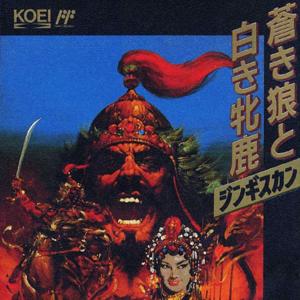
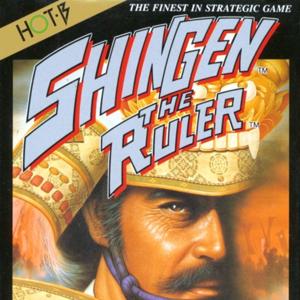
Yeah. I mean, like I, I, I buy it. I think if this was my first foray into strategy, I'd be really into it. Maybe not when I was eight, but probably when I was a teenager. So it definitely skews older, but we've already seen that with the games that we mentioned before with Nobunaga and romance, um, or Genghis Khan. Maybe we played all three already. I don't remember, but like it plays into that.
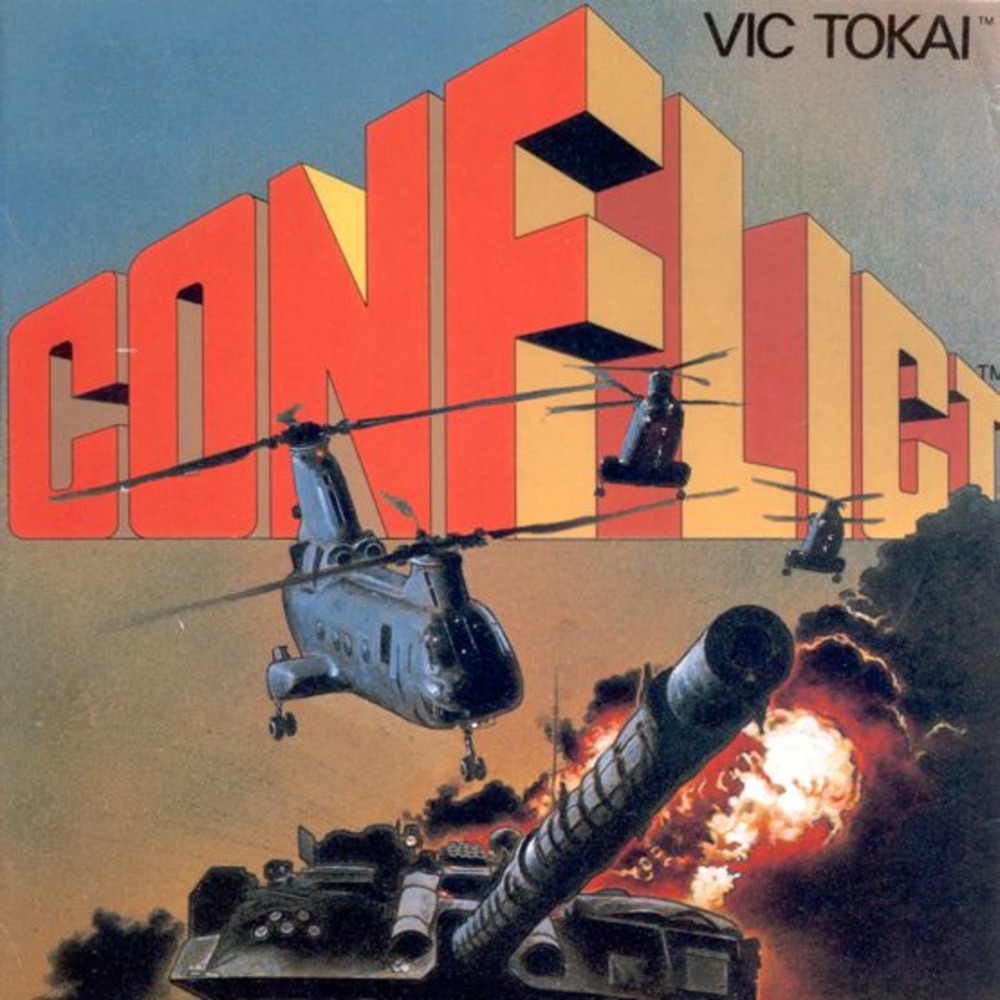
But conflict, uh, unlike Nobunaga's ambition, like conflict has a box art that has a tank that I, it, it either it's firing or it's exploding. And then a bunch of helicopters hovering over it. And it has C-O-N-F coming at you on the left side and L-I-C-T going away from you in this cool, like prism effect. And to me, if I'm a kid looking at this game, I think I'm about to play like the next Ikari Warriors or something.
You know, I don't know if I'm expecting the, the, the very plain hexagon strategy game. And that's my own fault. Keep in mind. And, but I just wanted to bring up another, you know, maybe loosely related to conflict, but say you did get this game and, uh, you're not entirely into it or whatever. I don't know about you, but when I was a kid, if I received a game or if I bought a game, that was now my game. And whether I was good at it or not, I'd probably play it more than one. Like I'd probably play it a lot and find my own way of finding some kind of satisfaction.
Okay. So I have a little story that has nothing to do with conflict, but it does play into that expectation versus reality. Um, there was a, uh, a time I went to the local game store. I think I was maybe 11 or 12. I don't know. I was young and I saw this PlayStation one game on the shelf and I looked at the box art in the back flap. And I saw like these incredible screenshots that looked so real and the game was missed. And I'm looking at this, I'm thinking it's a first person shooter that has these incredible environments and like high fidelity graphics. So I buy it on the spot. I go home. I boot it up every, I didn't realize it was all pre-rendered and you're moving between different screens.
And that was the first game I ever returned. And that, I feel like that actually gives me, like people might be mad at me for saying that, that like I didn't like missed and I returned missed, but I thought it was a first person shooter. So I can see kids in the early nineties buying this game, seeing that it's a grid based war game and not fire a tank like a shmup, um, and returning it as well. Maybe there was better. I was also kind of dumb. I should have read, I should have known better, but you know,
I just remember like going to Toys R Us and you would watch the, like they had the videos you would click on for the game. And it was like a, it had the box art on the pad. So you would click on that pad. Yeah. There was like a pad that you would click on the box arts for those. And then it would show you the video gameplay footage of that game. Wow. And it was, it was all Game Boy Color games on this one for whatever reason. And somehow genius me with $40 or whatever chose this like Sylvester and Tweety Bird game for Game Boy Color.
And this is the one. It's just one of those things where it was like, all right, uh, I got home. I didn't like it, but now I've got to play it for a month, you know? And that's what I did. Uh, it's just one of those things. I feel like I would have, I wouldn't have understood what I was doing with Conflict, especially at that age. I feel like, um, I didn't really get good at like these kinds of video games until I was able to, I don't know.
I don't want to say like think critically because that's like, that's also subjective if I can even do that now. But there is a, you know, there's like a turning point in video games where like old video games that you used to find fun, now they're no longer fun. And then these new games show up. So all that to say that like, I would have stuck with this even if I had no idea what I was doing and I would have made up my own rules. And even though I got decimated, I would have had fun with it.
Last bit of color. When I returned Myst, I was chastised by the guy that worked there. Like, what do you mean? It's Myst. You should have known this. But then he still let me return it against company policy. So I appreciate him. But, um, I think it was probably like 13 going into high school, maybe even eighth grade when games like this would have clicked to at least the most basic degree. Um, but at that age, I would not have kept it now.
Sean, I mentioned there were 16 scenarios, but there's actually only 15 on the map. Uh, you have to beat all of one through 15 at the same level of difficulty too. You can't change your level of difficulty between them. And then if you beat them all, you'll get a password for map 16. Now, I think that's a really strange way of getting the secret scenario that you can't change the difficulty. Like, it should just always, whether you beat it on normal or hard or whatever. I don't even know what the difficulty names are. But it should make it so that it gives you the same passwords. This way, at least you can always unlock the final scenario.
Uh, but yeah, they're kind of like piecemealing it out to you. Wait, so it's a randomized password? Uh, see, now that's the part I don't understand. I don't think it is because you can look it up. Uh, nowadays.
But I guess what I'm saying is, is I guess maybe it produces a different password depending on what your difficulty is. And that was the idea. So if you changed. Okay. If you changed between maps that it would produce like half of one password and half of the other. I, I, I didn't fully grasp it. I'm sure it's safe to say that neither of us played through all 15 and got this password, right?
Absolutely not. And, and to be clear, the 16th scenario isn't something awesome where like, it's, you know, an enemy from one of the other Victakai games, right? And it's like, oh, I wasn't expecting this. Like, wow, this is cool. Or like, oh, this one's on the moon. Uh, no, it's just more. It's just all, it's a larger battle, right? Uh, whoopity doo. And on the sequels and spinoff side, a sequel was released on the Super Nintendo. What do you think they called it? Conflict. Super Conflict.
Hey. Very good. All right. Way to go, Sean. Um, and Super Conflict, it kept a hex map. It obviously made the graphics prettier. Same objective. Just capture the flagship. Uh, that's funny. And capture the flag. Hey. I think, well, that, yeah. Yep. And, um, this time there are over 55 different scenarios. Still no map editor, huh? Still no map editor. Uh, but I guess at 55, at least, you know, it'll take, take a lot longer. Yeah. Your map will be in there somewhere. Yeah. The map you would have thought of. Exactly. The exact map. It's actually funny when you get to that one, you're like, oh, wow. Uh, another, oh, wow. Moment is, uh, the thing that we do at the, uh, at the end of every episode of Nostalgia. It's, oh, wow. The Essential Games List.
Conflict might be a great strategy war game. I just don't have the time to figure it out. Uh, to be honest, these, uh, you know, that's not a great way to start a vote, but I'm going to be completely transparent. Like, we're playing them all. You only have so much time in a week to play these games.
What I got out of this game in my week with it, my, uh, my dinner with conflict is that for the most part, for the most part, it seems like a completely competent game that, uh, has a great computer that will fight you and kind of do some things that are questionable. Like, you're, you know, sometimes it makes the world's smartest offensive maneuver and then does the stupidest thing with its unit. But still, uh, maybe it's the size of the map or the variety of the units that provide an engaging enough experience of war where it's not just like, oh yeah, I just bring in my fighter jet and we're going to just clean this thing up from a distance. That doesn't happen here. And so you can, you can still play this game today.
And if you're a fan of, uh, turn-based strategy games, I suggest you do. I think that, uh, even in today's turn-based strategy games, there are some things here, uh, that kind of break the mold a little bit on like what I expected out of the turn-based games. All that to say though, that it's really just for that audience. Like, I don't think anybody else is going to be, uh, blown away with their time on conflict and they might find it to just be a more obtuse version of turn-based, uh, strategy games that they don't want to play because now you can play Fire Emblem Engage and just hit the auto battle button and it'll just move all your units for you. Heck, you can even tell them, be aggressive, uh, defend my main guy, uh,
just attack in a way that is the most, uh, efficient, which is like, wait a minute, why wouldn't I always select that one? Why wouldn't I just select the most efficient one? Like, why is that even an option? It should be, if, if, if the computer is going to be making a lot of decisions for me, I should at least just have it. I should have some kind of general command, but instead I'm just going to do, yeah, do what's best. Oh, that's a weird choice, but that's kind of what you do in conflict as well. Well, you wind up saying to yourself, shit, this, this combat system is, uh, a lot to learn and I've got a little bit of time and I'm trying to play every NES game. So let me just turn on the auto battle mode.
And then it just kind of does whatever you don't get to say like, okay, auto battle, but make sure that like my units mostly make it out alive. You know, like that's kind of what this needed on top of that. It needed to be like. Auto battle, but win. Yeah. Auto battle, but win or auto battle, but, uh, I choose whether you're defensive or offensive, uh, which you could argue you kind of do on the map, but I'd say that there's, there's still more to be, uh, squeezed out of that system that they didn't.
And so my overall review of conflict is it's a great turn-based strategy game, especially for the NES and especially compared to the other turn-based strategy games we played so far, just doesn't get over that threshold that would bring it into the essential games list. What about you, Sean?
So yeah, we've been, we've both been pretty critical of this game and a lot of the decisions it's made. And I do agree though, that this is a lot more approachable because at least the hex grid at least seems to my modern eyes, a, uh, it, it just looks right. It looks right. Um, a lot of the, the, the baseline things that you can do, the things that you are, that you do in modern games as well. Um, but I kind of alluded to something earlier and it had to do with the title conflict.
Like the most, the, it just oozes personality, doesn't it? Like it just doesn't have any personality. It's just a through line for the whole experience for me. I think what I really need from games like this is, is something else going on with, with, with conflict. It gives you a manual and the manual is, it gives you a comparative like array of whether one unit will win a battle against another. And how, like what the odds are for each individual scenario. And it gives you all this information and it gives you all of these different maneuvers that you can do.
But it, like, it doesn't have, uh, a weird alien that is also a snake that has abilities that, um, only snakes would be able to do. Like constrict, like, like it's why I like games like XCOM or like Fire Emblem where there, there's always something else to think about. It's not just a bunch of, uh, cookie cutter things that are happening. And I think like the fact that this game is just the template for what a strategy game could be makes me not really like it very much.
I think it just needs more, more personality. And that, I just keep repeating that. But for that reason, it's not on the essential games list for me. I think that's just what it's going to be like. Nobunaga. It's just lots of, lots of numbers. I don't really just like looking at numbers, you know?
Yeah. And I would say just so, you know, and I'm sure this is what you were getting at too. It's not that it has to be fantastical. Like it has to be aliens or it has to be, um, you know, mystical dragon knights. Uh, it's, it's that you can do war and that's interesting, but this is actually like, this isn't even in a vague way. It is doing Western block versus Eastern block, but it doesn't actually like put a label on it and just say what it is.
And I get that that's probably for like Nintendo of America reasons or whatever, but like just do something different then, right? Like instead, like make it the Pacific theater, right? Or something like choose something that actually like gives it something than just, oh, it's red versus blue in a game of, you know, artillery units because nobody is going to find any joy in that when they're not having something that's actually at stake or something that's actually
unique. Instead, we're just saying like, yeah, this guy, uh, you know, he's got this kind of plane and they've got that kind of plane and you got to make sure that your plane shoots down their plane. It's like, okay, but why? You know, they, they're not giving you the why. And I'm not even saying that like you need characters to carry like, oh, why am I at war? Like it's war. You're at war. But like factions can be characters to just have a little fun with it.
I mean, like, yeah, it goes back into the fantastical stuff, but like Starcraft, there's no like real fleshed out characters that you care about in that game. But the Zerg are, are different than the Protoss are different than the Terrans. They each have their, their, their fun twists. And there's just no fun twists in this. And I prefer some asymmetry. There's no real asymmetry. I'm just rambling.
Next week, we're going to be playing, um, I can't remember. Yeah, I, I can't remember what we're supposed to play next week. But, um, if you check it out on, uh, NostalgiaCast.com, there's a whole list of episodes and, uh, actually it has all future episodes on there too, for the rest of 1990 at least. And it should be on there, uh, whatever it is. So, um, I mean, if you don't want to check that, just wait till next Friday. Cause we're publishing episodes every Friday, I think.
Uh, and then for the Nostalgia Bites episode, that one I do remember. It's Fuzzical Fighter. And, um, that is a shmup RPG. So don't you want to get in on that? Come on. We love RPGs. Some of us hate shmups. Let's see what happens when we put them together. Uh, until then, um, continue to put this podcast. Podcast on your listening device. Cause those two things together count as views for us. And we need all the views we can get. Plays, right? Plays. Yeah. We've been doing podcasts for a long time.
Thank you.