426 · The Krion Conquest
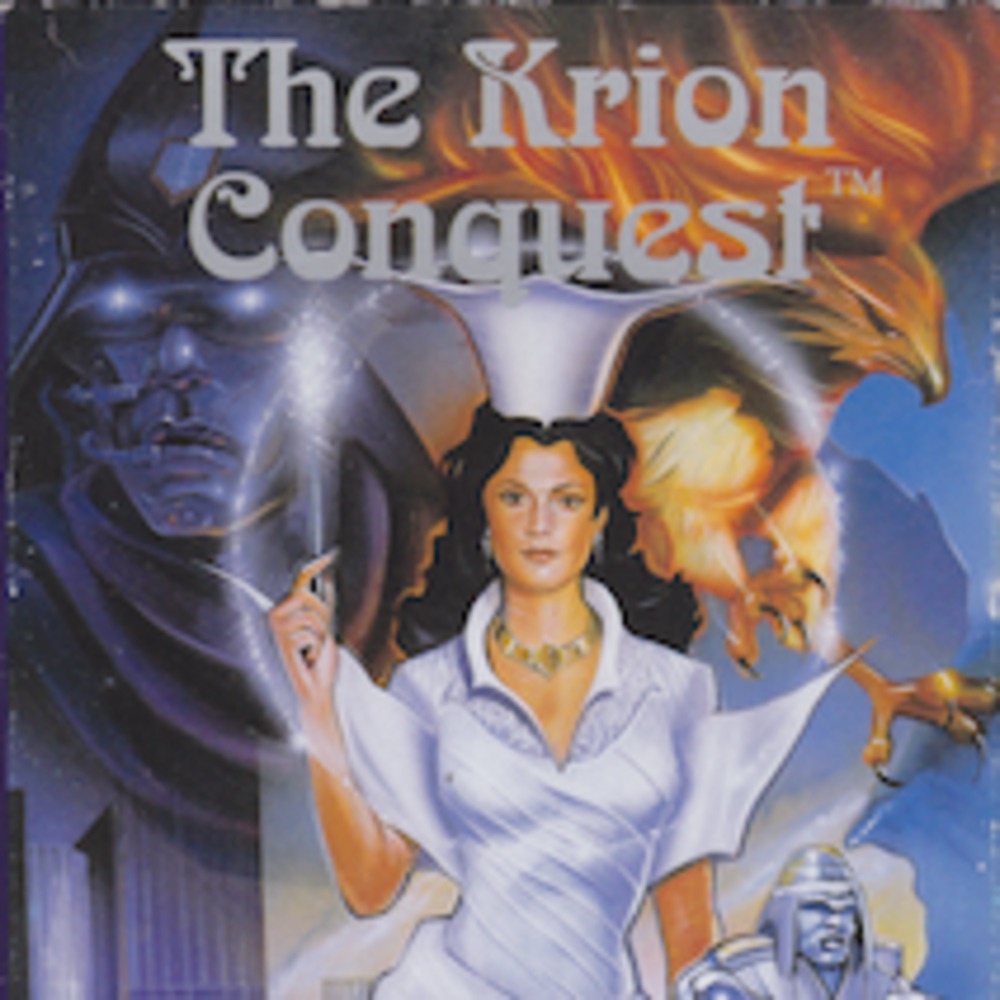
The Krion Conquest or more simply Magical Doropie (まじかるどろぴー), is a side-scrolling action-adventure video game for the Nintendo Entertainment System, developed by Vic Tokai in 1990. Later, Genki Mobile ported the game to Japanese mobile phones.
Robots invade Earth in 1999, conventional weapons do nothing, and the answer is a witch for hire who says "I am Francesca" and then explains nothing else. Mike, Sean and Joe spent the episode on the obvious point: this is a Mega Man clone, a blatant one. Francesca explodes exactly like Mega Man and her health works the same. We said we were basically playing a lawsuit. It does play differently, though.
The good ideas
- All six spells from the start. No stage select, no boss weaknesses to look up, and no ammo meter (the Phoenix costs health). We agreed that handing over every tool and trusting you is friendlier than Mega Man's model, in theory.
- Good teaching. An early enemy that keeps throwing projectiles pushes you to arc the bouncing ball over a wall, and it feels good even though the answer is obvious. The broom lets you be wrong about it several times before it counts.
- Bosses with no health bar. You fight blind. The final run is a pink mech, a clone of Francesca (an idea Zelda 2 got to first), then the Cryon Empress, which we mostly saw on YouTube.
The broom problem
- It's the game. You fire a gun, a broom appears, and it moves in whatever direction you shoot, if you're standing right. Nearly every screen has a broom puzzle and one stage is almost all broom. Sean has never wanted a shmup more.
- Menuing. Spells are chosen from a menu, and about 80 percent of those trips are for the broom, so the action keeps stopping. We wished it had its own button, or worked like Rush's jet, where the D-pad moves you freely until you jump off.
- Smaller things. The charge shot (before Mega Man 4) takes too long and breaks on screen changes. The shield is neat, but you get shot while charging. Freeze can't make platforms. A witch has an oxygen meter underwater.
Why it's brutal
The Japanese original, Magical Kids Doropy, is based on The Wizard of Oz and had continues and Ninja Gaiden-style cutscenes. The western version dropped the continues, checkpoints and cutscenes, gave enemies more hits, stopped refilling health between levels, and makes health pickups vanish if you scroll away. No passwords either. Joe said it was the game he died in most in months.
The bottom line
Play it, with caveats. Nobody voted it onto the Essential Games List, and we figured the witch and the broom would frustrate people even with continues. Joe leaned toward Play it and said the missing continues tip it over. Sean wouldn't go that far: it knows what it's doing but is too punishing to be playable. Mike's pitch is for Mega Man fans, who will come away appreciating Mega Man more.
Written from our conversation in this episode.
- If you are out there, please come.
I. Setup & Premise
- The pitch: It's 1999. An alien robot empire called the Krions has invaded Earth, and their forces are immune to every conventional weapon — tanks, missiles, the whole military playbook — except one thing: magic. The solution is to find a witch
- Enter Francesca: A young witch-for-hire, apparently the only practitioner of magic not already sealed away, summoned by a man named Kagemaru who carries a wand containing her consciousness. She sets out alone to dismantle the Krion Empire through four rounds of increasingly brutal action stages
- Developed by friend of the show Vic Tokai, first in Japan as Magical Kids Doropie, released in North America in January 1991 as The Krion Conquest
- The origin story behind the origin story: The game was originally designed as a licensed tie-in to the 1986 anime The Wonderful Wizard of Oz, which is why the protagonist's name, Doropie, is literally a Japanese transliteration of Dorothy. When the rights fell through, the team kept the witch design, stripped the Oz references, and built their own world around her — and Doropie became Francesca for North America
- ODD WIKIPEDIA SECTION THAT LEADS TO A DEAD LINK: Claims some developers at Vic Tokai objected to having a girl as the protagonist because they believed the NES was for boys and players couldn't relate to a female lead.
- The elephant in the room: The Mega Man comparison is unavoidable and should be addressed upfront. The sprite proportions, the colored outfit swap, the weapon switching, the tilesets — they all look like Capcom's work. The honest framing for the show is not whether this is a clone, but whether it's a good game underneath the familiarity
II. What Makes It Stand Out
- All six powers from the jump holds up
- Unlike Mega Man, Francesca starts the game with her entire arsenal — no earning weapons by defeating stage bosses in a specific order
- Six spells switchable at any time from the pause menu, each changing her outfit color as visual feedback: red (normal shot), blue (freeze), pink (phoenix/fire), green (bouncing ball), orange (shield), purple (broom)
- There's no MP or weapon energy meter governing use — you can switch freely and fire as much as you want, except for Fire which costs health
- In concept this is a genuine design improvement over Mega Man's model, and in 2025 it reads as ahead of its time — giving players tools and trusting them to figure out application
- The charge shot — which predated Mega Man 4 holds up
- Holding B charges a super shot that does roughly four times the damage of a normal blast — a mechanic the Mega Man series wouldn't introduce until Mega Man 4, several months after Krion Conquest shipped
- Worth raising on the show: Capcom got the credit, Vic Tokai got the obscurity
- Applies to the normal shot and freeze — adds a real rhythm to combat when it works
- The spells in practice — the good, the bad, and the baffling mixed
- The Broom (purple): the most important spell in the game. Summon a rideable broomstick, then steer it by shooting in the direction you want to go. Changes direction when you shoot again. Think Rush Jet from Mega Man — but weirder to control and responsible for most of your deaths in later stages
- The Ball (green): fires diagonally upward and bounces off walls — genuinely useful for enemies at awkward angles, some bosses require it. Well-balanced and frequently satisfying
- The Fire/Phoenix (pink): transforms Francesca into a screen-clearing firebird that hits everything — but costs one third of your total health bar per use. Incredible against bosses, suicidal to lean on in stages
- The Shield (orange): deploys a chargeable barrier that reflects projectiles — needs to be charged before it appears, which makes it almost useless in the heat of combat when you need it immediately
- The Freeze (blue): chills enemies in place temporarily — but doesn't kill them, and you can't use frozen enemies as platforms despite that being the original design intent before cartridge memory limitations cut it. Has exactly one meaningful application in the entire game: extinguishing flames in Round 1-3. Outside of that it's largely redundant
- The honest assessment: three of the six spells are genuinely useful, two are situational at best, and Freeze is a reminder of what this game could have been if development constraints hadn't intervened
- The broom's collision detection is a specific, discussable problem feels dated
- The broom has wide collision detection that makes threading tight passages difficult
- You cannot move it downward — only the direction you're shooting
- If you jump while riding it or clip a wall, it disappears or shoots off unpredictably
- Round 4 is almost entirely a broom stage — vertical tunnels, ascending rooms, spike-lined corridors — and the game's margin for error is nearly zero. This is the moment the game's roughest edges become impossible to ignore
- The stage gimmicks, round by round mixed
- Round 1: standard side-scrolling with fire hazards that actually integrate the Freeze spell — the one moment where the whole system clicks together and feels intentional
- Round 2: ice stage with slippery floors. There's a quirk where ducking while sliding stops you dead, then starts you again when you stand — almost certainly unintentional, but you will use it
- Round 3: underwater sections with a separate oxygen meter alongside the life bar — you have to find air pockets while fighting fast-moving enemies. Cool concept, punishing in execution because the enemy density makes it nearly impossible to reach air without taking hits
- Round 4: pure broom stage — the sky round. Either the most fun or the most infuriating depending on your tolerance, and it lasts long enough to test that tolerance fully
- Round 5 (finale): not really a round — it's a three-boss gauntlet. No level at all, just the final fights back to back
- The bosses — specifically how they differ from Mega Man mixed
- No weapon weaknesses — you can't just look up which spell beats each boss. Bosses have long invulnerable attack phases followed by brief windows where they expose themselves
- No health bars on bosses either, and no flashing to indicate damage — you're fighting blind on how close you are to a kill
- Thunder Knight (Round 1): the first boss, relatively forgiving — arcs over the platforms at the bottom of the screen, readable pattern, good introduction to the "wait for the opening" rhythm
- The final gauntlet features three consecutive new bosses: a pink mech that teleports and fires energy bolts, then a clone of Francesca herself (the game's most interesting idea, but again a stolen concept from another game, Zelda 2 — fighting your own moveset), then the Krion Empress-Bot, a giant robot dragon that draws obvious comparisons to the Mega Man 2 dragon and is the visual spectacle highlight of the whole game
- The Francesca clone fight specifically is worth calling out — fighting a version of yourself that uses the same weapons is a legitimately cool concept for 1991 and holds up as a moment today
- The difficulty — and what North America specifically did to it feels dated
- Vic Tokai removed the continue feature for North America.
- No continues, no mid-level checkpoints, no checkpoints before bosses — if you die on a boss you restart from the beginning of that round's third act
- Health does not refill between levels. Health pickups in levels are scarce and despawn if they scroll offscreen
- Enemies were also made stronger for the North American version, requiring more hits to kill
- The cumulative effect: a game that would be decently challenging becomes one of the most brutal on the console, and not in a designed way — in a punitive one
- What the cartridge couldn't fit mixed
- The final stage was cut short due to memory limitations — what shipped as Round 5 is a fraction of what was planned
- Freeze was designed to let players create platforms out of frozen enemies — which would have made it one of the most creative tools in the game. That feature was cut
- Shield was designed to let Francesca ride it downward through passages — also cut
III. Pop Culture, Sequels & Connections
- A follow-up for the SNES was planned, but the cost of SNES development made it unfeasible. Magical Kids Doropie had a mobile port in Japan in 2004 via Vodafone — easier difficulty, shrunk graphics — and that's the end of Francesca's story
- The Japanese version is a significantly richer experience: Magical Kids Doropie had full Ninja Gaiden-style cutscenes with story and character development between every act. The North American release stripped every single one except the slightly modified intro — meaning the version most English-speaking players know has almost no narrative context for anything that's happening
- Nintendo of America's religious content policy in action: A hexagram appeared at the end of each stage in the Japanese version as a magical seal — NOA flagged it as religious symbolism and removed it entirely.
- The magical girl connection: Francesca/Doropie sits at an interesting intersection — she predates the mainstream Western awareness of magical girl anime by a few years. In the Japanese context, a witch heroine with costume changes was a recognizable archetype. In North America in 1991, she was just a weird Mega Man with a hat, and the removed cutscenes made it worse
- Broader genre resonance: The "robots weak only to magic" premise shows up across games and anime of this era — there's a whole conversation about why sci-fi and magic kept getting mashed together in late 80s/early 90s Japanese genre fiction, and this game is a small data point in that
- The most direct parallel is Sakura Wars (1996), where women with magical abilities use mecha to combat demonic threats CBR — it's almost the exact same premise as Krion Conquest flipped: magic-powered women fighting robots, versus a magic-powered woman fighting robots. That franchise became a major Sega property, which makes the comparison pointed.
- Magic Knight Rayearth (1994) is another example — three schoolgirls are transported to a fantasy world and end up piloting giant magical mechs. The whole series is built on magic and technology being two sides of the same coin.
- Aura Battler Dunbine (1983) is a mecha series set in a fantasy world where the robots are powered by magic.
IV. Closing Bits
- Who should play it today: Mega Man completionists who want to explore the genre's edges
- If Magical Kids Doropie had been localized faithfully — cutscenes intact, continues restored, Freeze able to make platforms — does it get remembered as a Mega Man competitor instead of a Mega Man clone?
- Tease next episode
Auto-generated transcript. Each paragraph starts with its timestamp. Speakers are not identified.
The Cryon Conquest. If you are out there, please come.
And welcome to NEStalgia, a chronological exploration of every NES game released in North America. I'm Mike. I'm Sean. And I'm Joe. Thanks for coming, guys. I didn't have any of you here. We were out there. You heeded the call. So I guess we'll do this episode? Yeah. I've got my wizard hat and wand and I'm ready to go. Broom. Easily controllable broom. Sean, are you a magical girl? I'm so magic, bro. That's pretty banging. Right? That's straight bussing, Sean. I'm Francesca.
That's actually what she says at the beginning of the game. And that explains everything we need to know. She says, I am Francesca. Yeah. Let's just get right down to brass tacks real quick. Like, first of all, this is a carbon copy of like the setup from last week's episode where like robots attack the earth and stuff. But in robots attacking the earth is so hot. It's so hot right now. And instead of, you know, finding some 25 year old expendable like military man to copy his brain waves and enter the, enter the matrix, you just summon a witch. And she says, I'm Francesca. But she also kind of has like the facial expression of Kevin James in that meme.
Like when she says it. Right. But let me ask you something. Would you rather she say happy birthday? Like Frosty the snowman, right? Isn't it a little better to just say your name when you, when you introduce yourself? I am Francesca. And then they just cut away. Yeah. Everything she says after that is not, not, not pertinent.
Yeah. I'm like not even sure. Like I needed her to say something more. I just needed to know like, where did she come from? How did this guy summon her? Like what's going on? Like just at all. Legally, legally she has to say I am Francesca so that the people at Capcom don't think she's Mega Man. That's true. That's going to be a huge problem in this week's episode is that we are basically playing a lawsuit.
I don't know how they got away with this one, but they did. This is a, this is a Mega Man clone. Arguably the first, right? I don't think we've seen anything come this close. I mean, technically just last week, again, we did have a game where like you gained a new power every time you beat a boss, but that's not like that's not lawsuit worthy. That's just kind of like a good idea. Yeah, it's not even in this game.
Right, right. In this game, you just have them all. It's like, forget, forget going to different places to get your powers. What if you just started all of them? This game's better than Mega Man. Well, maybe we should decide that over the course of the episode, preferably at the end of the episode, if you don't mind, if you guys could just wait till then. Yeah, sorry. We blew it there. You guys talked. Thank you. The pitch, it's 1999.
It's not really that. It's 1991 in chronological. It's 2026. It's 2026 here. But it's 1999 in the game. And as Sean mentioned, aliens are attacking Earth. An alien robot empire called the Cryons have invaded Earth and their forces are immune to every conventional weapon. Tanks, missiles. The whole military playbook is out the window. That's all we got. Except the one thing that we have yet to figure out how to monetize. Money. Magic. What? Magic. And magic is not something that we have yet.
The solution, of course, find a witch. Enter I am Francesca, a young witch for hire. Apparently the only practitioner of magic in the world. But this world seems to have magic. Right? I mean, if it's not magic that brought her there, like, I mean, that does imply that there might be other magic aside from her. Right? Yeah, I assume so. So maybe I'm implying that she's the only practitioner of magic, but she's certainly the only one looking to save the day. So she sets out alone to use her magic to dismantle the Cryon Empire through basically four stages. Anything I missed? No, that's it. That's the game. Oh, great. That's the game. Yeah, yeah. So the Mega Man stuff, like, it is true. This feels very Mega Man.
I'm pretty sure they traced Mega Man's sprite and then just put, like, a witch hat on it. The whole, like, the health works the same. The powers kind of work the same, but there's no, like, ammunition to them.
Even when you die, it looks exactly the same. Yeah, you explode the same way. It's really blatant. But, like, all that being said, this game does feel different because, like, it's so much more based on how you get around the stage.
Like, I feel like... That is true. There's a lot of navigating and there's a lot of constantly switching your weapons. Like, in Mega Man, it's kind of a, oh, I know that the boss is weak to this, so I'm going to use this power-up that I acquired in the previous stage. This game notably does not have a stage select screen at all, so you don't get to choose, like, which one you're going to tackle first. So it's missing that from Mega Man. But then, yes, I agree with you, Sean, that it is a lot of times you have to use the broom power. The goddamn broom. Yeah.
To propel yourself forward because the other option is to just jump into a pile of spikes. There is no reasonable way to jump otherwise across these platforms. You have to use the broom to navigate. And the broom kind of works like how you would expect Mega Man's dog to work in, like, you know, that it acts as a platform that can be a spring. Mega Man's dog. Mega Man's dog's name is what?
Rush. Rush? Rush is the girl. Yeah. Sorry, I didn't know. I don't even like Mega Man. I know that. Yeah, I mean, like, would you say my dog's full name to other people or would you say Mike's dog?
Well, I'd say Phoebe just to foster confusion. Okay, great. So now everybody knows my dog's name is Phoebe and they can just say Phoebe and pour her out of the house. Yeah. Wait, who told you that? I know it. But we're getting a little ahead of ourselves. I just want to bring us back a second.
This was a game developed by friend of the show, Vic Takai. And it's been a minute since we had Vic on the show. But in Japan, this game, just like last week's episode, I'm seeing a lot of parallels here. It was a different game. It was Magical Kids Doropy.
Yeah. And was that, that was, I read and I didn't confirm that it was based on Wizard of Oz? Correct. The wonderful Wizard of Oz, which is why the protagonist name is Doropy, because that is a literal Japanese translation of Dorothy using their kanji. So in this original version, was it still about like robots attacking? Of course. Who's the Tin Man, but a robot? That's a great point. Yeah. That's who you're fighting. The Tin Man and all those friends. You're fighting the Tin Man. Yeah.
And then, you know, here's a weird thing. The Wikipedia section, it's an odd claim, and it leads to a dead link. So who knows if this ever even is true. But it claims that some of the developers for Victikae objected to having a girl as the protagonist because they believed the NES was for boys and players couldn't relate to a female lead. I did read that. It just feels like a weird thing to include without a source. And then they mentioned something about like eyebrows, which I thought was funny. Not eyebrows. I didn't even feel like including that. Yeah. And I was like, some weird fan must have just put this information here. This is a part where I do not trust Wikipedia. Right. It's female character erasure.
Yes. No, she's great. Just get rid of them all together. I mean, what did you guys think when you saw the broom? When I saw the broom as a power, I thought it was like going to be cool. Like it was going to be easy to use.
Well, when I first like summoned it or whatever, you know, cause it's like a gun that you shoot and then the broom appears. Kind of weird. But the, when the first time I did it, I was like, okay, it's just a platform that can't move that I can use to like jump one extra step. Took me a very long time to realize that it can move and then much longer time to realize how to make it move. It was just like move. And then I, and move in different directions. Yeah. Right. And it's like, and I, and I'm still not sure I can fully explain it. The gist of it is that like, if you're standing on it, the direction you're facing, once you fire a shot, the broom will move in that direction.
Yeah. But there's like other rules to it that make it like, if you'd like do one thing wrong, it'll disappear and you fall to your death. And I don't know. It's a little strange. It's very strange. So I think Joe and I had a similar like a sequence of discovery where first I just use it as a platform. And it, one, one thing I will give this game credit for is it allows you to be wrong about how the broom works several times before it actually matters.
Right. And so first I thought it was just a platform that you could stand on and jump off of. And then I realized, oh, you shoot in a direction and it goes that way, but you then just keeps going that way. And so like, okay, so it's like a single use, like moving platform. And then you realize that if you then continue to shoot in different directions other than down, it can move in those directions and you can kind of like thread it through some platforming needles and yada, yada.
But then you will also just randomly fall off because you also free walk around it. But, um, so I had a lot of like, it's, I, I really dig the, the idea of this broom and how they're sort of integrating it into the level design. And like a lot of the segments of these levels are mini puzzles about using the broom, but it's almost like the game is too much about the broom and the broom is too hard to control for it to be that.
I don't know. I'm done. Yeah. She's a witch. Well, why can't it just be just one press of left on the D pad makes it start going left. One press of up on the D pad makes it start going up. Like that's just because you move as well. Yeah. But why not just not have that be, but then what would you do? Like wait till you collide with something? No, just jump. You're off the broom. Hey, hey, look at this guy.
Video game problem. Game developer job. Which, well, what's funny is also like, you know, we're talking so much about the broom there. You have six spells in total, but I think it is right to focus on the broom because it's not even that it helps like get around the stages. It's necessary to get around the stages. And a lot of times they will make it so that you basically have to thread the needle using the broom where it's like very specifically like make sure you spawn the broom in this particular spot or else you will just collide with the wall and fall into the spiked pit.
And that ultimately becomes like a different kind of game than the rest of this game, which is very much like a Mega Man inspired shooter, you know, against a bunch of enemies and giving you creative solutions for that. Because the rest of this game has like you have you have a normal shot. You have your freeze shot. You have your bouncing ball shot. And they teach you about these things pretty like in a friendly way where there's an enemy very early on that just constantly is throwing projectiles.
And if you know, there's just no way to get around it, you you have to figure out like, I think I need to figure out a way to shoot this guy and you try to shoot up and there's a wall in the way and then eventually you're like, oh, I have this bouncing ball thing. Like maybe I could arc it so that I could he can't touch me, but I could hit him and it will work and it feels good even though it's like the most obvious thing when you finally pull it off.
The rest the rest of that game, I think sounds great. Then when the broomstick becomes so much of the navigation on top of the like the shooting, it becomes an extra element that I didn't sign up for. Yeah, I think the broom overall hurts what is otherwise like a pretty well designed system of like multiple weapons. You know, it's like everything else. Like I do think, well, most of the other ones have like some thought behind them and they have good uses for them. And there's there's the good like parts of the level that are designed around them. But I kind of have a hard time like appreciating those because most of my energy is spent trying to figure out how to use the stupid broom.
Now, there there's no MP or weapon energy meter governing how much you can use of these things. You can switch freely and fire as much as you want, except for the that Phoenix power. Right. Which costs a lot of health and is kind of it's not really. Yeah. But yeah, it's not even really like it shouldn't it should be a different button. It's not really like a projectile power thing. It's not it's not like something you should switch into. It feels like a pretty devastating move, not something you consciously like. The other ones are all like different projectiles you shoot. And then this one is just, you know, you what is it? Pink is the color for that one. And you just turn pink and then you just spawn a Phoenix and cost a bunch of your health.
It's just a confusing like it's not really a power like the other ones. Well, that's why I like and I was trying to find a way to actually articulate what I was feeling here. That's one of the things that makes this game feel like a ROM hack that or like a mod that the only way to make that be a thing that you could do was to fit it into the system that was already put in place by Mega Man. Because otherwise it would be like a press press this button to do your screen clear. But you only have a couple of those. But they had to fit it into the weapon select system that's already in Mega Man, which this game is not.
So it feels very derivative because of that. Now, in concept, the having the six spells from the beginning, the six powers and also not having a limit to how much you can use them. That is a genuine design improvement over Mega Man's model. Like I'm not saying like in the actual games comparing each other, but just in theory, that is a it reads more friendly to 2026 players. Just giving the players the tools right from the beginning and trusting them to figure out the application. So I do think at the very least, it's not it's not a bad idea to just start with all the powers rather than acquiring them from stage to stage. The problem is, is that because you have them all, there is a lot of menuing in this game.
It's micro menuing. It's not like Dungeons and Dragons style, like living in there. But you are switching pretty frequently, I feel like, even in between before you screen clear and get to the next part of the screen. You are switching even in those singular screens between different power ups to fight different enemies. Yeah, it's a tough thing. I think we've run into a couple of times where like on a controller that doesn't have not only doesn't have shoulder buttons, but doesn't even have like that many face buttons.
Yeah, having to go into a menu to do that rather than like being able to assign, you know, four or five buttons to like switching between power ups. I think that would make this a much more, a much better experience because it's so action oriented to have to constantly interrupt the flow of the gameplay just to select something. It does start to kind of wear on the experience. Yeah, to include the broom as a weapon, as Joe was saying, like the gun that fires the broom, like it is very much just like it's necessary just because of how the game is set up, which again is like a ROM hack for Mega Man.
That like that should have been a completely different like mode of interaction. Like that should if there was another button, it should have been a separate button. Unfortunately, there are only so many buttons. So I understand.
But it just doesn't it just doesn't work when you have to something that is used so frequently, like almost every screen has some broom puzzle, quote unquote, like associated with it. That like that's the only reason that there's so much menuing. It's not because like, oh, there's like there's so many enemies that require this certain like other spell. Like, oh, you should freeze these guys, but bounce these guys. Like, yes, there are guys that are only there are enemies that you can really only reach if you are using the bounce. But 80 percent of going into that that like spell select screen is just to select the broom. Now, here's my tinfoil hat moment for why Capcom didn't sue.
Because this game invented the Mega Man charge shot before Mega Man 4 came out. And so Capcom was like, you can steal our entire game, but we're taking the charge shot and putting it in our game as a result. So it's just like mutual stealing. Obviously not verified, just like that other claim about why they didn't want a woman protagonist.
But I like I like to think that, you know, it's here. It's also like and I don't know, maybe it'll feel different in Mega Man 4, but it's just kind of like a nice to have thing. Not something I even really like focused on that much. Like charging takes a while. It takes too long. Right. And you're moving between screens and there's a lot of enemies on the screen. So like it's really only useful when it's like you and one other enemy and you have some distance between you. So you can kind of like charge up the shot and then just fire it and and move on with the stage.
It's kind of inconvenient to charge up when there's like four enemies or you're on the broom or something like that. It just it's not worth it. It also bugs out when you go like when you change between screens. Like if you're mid charge and you do one of those like weirdly slowly scrolling changes to a different like a different screen, you will not be able to continue charging. You will not be able to shoot it at half charge. You just have to let go and try again. And I know that's like super nitpicky, but if we're comparing it to Mega Man, who in those later games like that charge shot feels good to do.
And that's just it's it's very strange feeling. Yeah, I I did at first use the charge shots a little more when I could, you know, see something coming up. I could charge it up. You can kind of run towards it and use it. But I found that a lot of the use cases for charge shots were very interesting ideas that you never really needed to use. Like the one might like one that I thought was the most interesting was the shield. You can you can place a shield in front of you using the charge shot.
And and then that is like, yeah, it's literally like a barrier you can stand behind and then you can shoot through it. Enemies can't shoot through it. Very cool. Almost never is there an opportunity to charge up and then have the shield that takes, you know, a small enough amount of time that it's worth charging up to have the shield. You're going to get shot while you're charging up.
You know, like it's like it's like a cool idea, but it is not implemented nicely. Joe, I'm like 10 minutes late now to that conversation at that point you made about the how the broomstick should control. But isn't that exactly how Rush does control in one of his power ups? Like when he becomes like the jet form, don't you just get to free move with the D pad? And then once you jump off, that's just it.
And like when you're back, isn't that also how like G.I. Joe's like that we could be only because we just played G.I. Joe. Yeah. Isn't that also how he controls with the jet pack? Like, yeah, you should just be able to free move. That's it. Yeah. I guess I was just thinking like specifically the one one compares into Mega Man there. It's like it did work there where it was just like, yeah. And then when you want to get off, you just jump off.
But until then, you can freely move it with the D pad. I think there's also it's reminding me of those like platforms in. I think they're originally Super Mario Brothers 3, but they're probably more often in Mario Maker. They're like platforms with arrows on them. Yes. And you jump on it. You press up and it goes up. You press left and it goes left until it disappears.
I'm not well versed. I'm having trouble remembering that now. I remember the ones that just move on their own. The ones you have to follow. Like they make their own path. No, no. This is like it only happens. I think it only happens in World 7. Yeah. Just that we're not ragging on the power ups, though. It is worth mentioning that like obviously the default power up is the default shot is fine. And the ball one is great. Like it's not always useful.
It will. You know, you need to know. I'm just saying you could fire it literally nothing because it would be one thing if the balls literally just kept spawning around in the screen. They expire after like three touches to the wall. So you need an enemy that is in an awkward position to use it. But that is a positive. It sucks that the Phoenix thing requires life, but it also thematically makes sense that, you know, to rise from the ashes of requiring a sacrifice. But like, you know, that's another good power up. It works against bosses, too, which is good.
The freeze one. That's the one that it was a felt like a missed opportunity. Because you freeze the enemies, but you can't then like use them as platforms. Yeah, that's a thing. I would think, too, that I mean, just in like more modern games with like like a freeze mechanic that they would that they would also be like you could just shatter them. And sure. Their debris would sort of be a projectile in itself. That wasn't really the case.
But I mean, I guess it's like it's like a very niche tool to get through flamethrowers. And I guess also stop enemies. Yeah. I used to stop enemies. But how often do those how often do those fire things even show up? Yeah, I think it's just like mainly in one stage. Yeah. Right. Yeah. Like the fire is not like present. There was at least like an environmental use case for that, that it was like designed around. That was that was cool. But I would have liked to see more of that.
But I would have thought it'd be funny to use freeze in in the underwater levels. And then you just like freeze the entire environment. Yeah, you're stuck then. Yeah. These are called going back to the directional lifts from Super Mario Brothers three. And I posted a picture in the discord for everybody but the listeners to see. Right. The users.
But if any listeners want to see it when this episode releases and you're a patron, let me know in the discord and I'll post the picture there too. And they're called directional lifts or you're calling? They're called directional lifts. You got to pay to see. Yeah. You got to pay to see everything.
Join our only fans to see the directional lift. Right. Here anything you want for free. You want to start seeing stuff? You got to you got to cough it up. Cough it up. Really? And then there's the shield power as well, which it if you hold down the charge long enough, it it has a barrier that reflects projectiles. This thing is almost useless in most of the stages because the heat of the combat requires you to basically fire something immediately or use it immediately. And that neither one of those things can happen.
So the shield I did not find as useful. Maybe somebody else wants to tell me I was wrong. I'm not going to say you're wrong because there's other ways to go about this. But I feel like with the enemies that look very closely to Mega Man, like the guys with the hard hats. Yeah. They will stop firing when you get too far. And oh, it's also where like the the how effective your your fire rate is or like how effective like just your regular fire is that that also ends up being the same distance.
But when you get close, they start firing again. So I guess you could charge that up, fire it off right next to them there. Their projectiles disintegrate in the shield. You can shoot right through it. But you could also just do that with timing. And it is just a very niche like use case that it's easy to sort of circumvent anyway. The stages and their evolution we have start off with the, you know, standard learn the game stage. But that one has the fire hazards, though, which the freeze spell does work on.
Then the next stage is all ice. So it's slippery. And we've also seen that in Mega Man and Mario Brothers round round. Stage three is the underwater section where all of a sudden now there's a separate oxygen meter. She's a witch. Did she need this?
Can't you just cast a spell to breathe underwater for a little bit? Okay, there's something. Like if she drowns, she's not a witch. But if she doesn't drown, she is a witch or something like that. This game is completely, like it doesn't even fit into the witch lore. Right. So she's not a witch because she can drown. Right. Wow. She's just a hero.
This is bullshit. Well, you want to hear bullshit. After the underwater stage is the just, I guess like the sky stage. But it's also just the broom stage. Yeah. You're just constantly using the broom to navigate these levels. Sorry. These sections of the level. I've never wanted a shmup more than while I was playing these levels.
I also just want to go back to where I said that it's easy enough just to take it out with whatever other weapon that you have. Because I think we need to just like point out the difficulty of this game. Like not even just the whole like broom and the tedium of pulling out the broom and how easy it is to fall off the broom. But this game's not easy. How much harder than a Mega Man game though? Just out of curiosity.
Here's my thought on this. Because I was, I don't hate a game that's hard like this when it's like Mega Man and I can kind of try over and over again. This game, you don't select your levels and it's linear and there's no continues. There's not even like, I mean as far as I saw, there's not even like passwords or any sort of save function at all.
That to me makes it like, that's where it makes it that much harder than Mega Man. Or at least one of the things that makes it that much harder than Mega Man. Or at least in Mega Man it's like, you clear a stage and then you die on the next stage. You don't have to start the whole game over. Like you're making progress. This being this hard and not having that, it's too much for me.
And I certainly agree it's hard. I'm not denying that. I just felt like it was more interesting to talk about just all of the interesting design decisions they made than just say it's hard. Because I feel like we do that a lot, but we don't articulate why. And this game has a lot of, it has a lot going on in addition to just being a hard game. Like it's hard, but at the same time, you do have a lot at your disposal. Which makes it interesting that it's hard.
You would think at some point you could find some sort of exploits. Like, oh, if I just hang out in this corner and use the ball, it would clear out the stage. But it just doesn't work like that. I mean, because there definitely are points where you, like even like mini bosses, that if you just stand in a specific spot and spam the ball, you can beat them trivially.
But you just need to know that. And I guess, yeah, you would know that over time. But I think like I could see my 12-year-old self playing this game and just brute forcing every other thing. Aside from standing in a specific spot and spamming ball. I think like I could see my 12-year-old self playing this game and maybe like any more.
to go to the bosses specifically and how they differ from the megaman bosses there are no weapon weaknesses i think we mentioned that already but you can't just look up which spell beats each boss and be done with it like how some people play someone some people like me play megaman games uh there is no health bar on the boss there's no like you know and here's your version of the
health bar and here's their version you're you know you're you're just kind of fighting blind hoping that they're close to a kill the the actual bosses themselves though it's they're not like unforgiving um they they have they have like the i guess the interesting thing is that they're not just you like a different witch like how the robot masters are kind of like megaman size and have like
a specific attack they are just like bosses that you fight in a in a regular video game i think that might sound silly but non-witch video game or a non-megaman game to that point you know like it's just basically like normal bosses but you're still this same small puny character and then the final gauntlet of three consecutive bosses uh first it's a pink mech then it's a clone of francesca uh which is an interesting idea but again a stolen concept from another game called zelda 2 uh so you're
you know you're fighting your own moveset we've seen that um so thankfully nintendo didn't sue the yeah i was almost thinking of um what's his name from megaman 3 the like proto no is it proto man who's the one that's like the yeah yeah proto man yeah because i was just sticking with that's funny i was giving me that vibe yeah and then the um the final boss uh the cryon empress uh who's also a robot
and it's a yeah giant robot pretty cool uh good good looking visually and um that's did you see that boss at all i thought i thought had a lot of nice shading on it no i i didn't see even like this boss rush you guys are talking about because i didn't get i definitely didn't get to it i saw it on youtube i got to it on youtube i got to it on youtube is great were you playing along like did you have a controller in your hand i was using a towel or whatever yeah he had the towel yeah okay great yeah you don't even bring an nes controller to your computer you just use a towel and yeah i'm like
playing on a uh power pad um but you know i'm not trying to dunk on the the clone thing uh the fact that zelda 2 had it before it's always a cool concept when you have to fight a version that has like the same exact skills as you and just show that you're better at using it than the computer i appreciate that yeah i i i like um like again last week we had we had bosses that were like human shaped and player shaped and i like those kinds of bosses because it's not just about um like just finding a spot to dodge bullets it's almost more like a one-on-one fight i was not there
to uh talk about the boss you guys are talking about but it sounds like that's sort of what you guys are talking about i'm just i'm just talking you're here i'm here is that is that right sure you're talking to somebody who just watched it on youtube like i'm gonna speak to you know i didn't get there in the game on youtube too like i haven't even finished it yet like in on on paper sounds exactly right we are definitely the people to talk about this game we are the people to talk about this game and we've been giving them 33 minutes of good content and now we got one minute of bad content and they're quitting
they're just gonna quit the show nobody's quitting get back to good content because i'll explain maybe why this game is so difficult uh in terms everybody could understand not just well the enemies are hard or it's hard to control a broom they just made this game hard on purpose for uh the north american version of this game as i mentioned it was a wizards of odds wizard wizards of odds that's that's a good title who's gonna make the wizards of odds game i feel like it's like a math game no right yeah that's only about the odd movie in 20 years they're gonna make about polymarket and calci there you go yeah oh beautiful let's copyright that right now um but no it was a wizard of oz game
and when it came to north america um vic unfortunately made the decision to remove all continues from the north american version remove mid-level checkpoints uh no checkpoints before bosses if you die on a boss you restart from the beginning of not the entire like stage as we know it but the little like axe in the stage so if you're on 2-2 or whatever you start the beginning of that
um and health does not refill between levels um and they're just pretty scarce pickups in general for health um and they despawn if you just scroll a little bit off screen there's no memory of it on top of that the enemies were also made stronger for this version of the game requiring more hits to kill and so when you look at all those things uh a game that would probably be decently challenging just using again all the systems that the game has set up for you in tandem with each other has now
become brutal yeah because it just wasn't even designed with those things in mind and then they just turned up every lever i think this is the game that i died the most in recently like of probably probably the past few months like i just kept dying and it was hard because of that continue system or the life system that that just shits you back out the at the beginning of the level like it was really hard to to get any kind of progress to see like well i can't just have a sample size of one level and so it was just very hard to to see a lot of this game because of that um
yeah i was bad this game that's all i'm saying oh i mean me too 100 and i i just cannot get my head around what the purpose of removing continues it was already in the game they made the choice to remove it what they made the choice to remove it not built around it's not like a it's not like a roguelike or like you're not playing a nuzlocke so just like what just you already have continue just give us the continues i don't understand i know that this is not an original thought um
i've heard it elsewhere but like it is kind of crazy just how uh there's no no video games in general just don't have like chapter select like movies do to just like go to the part that you love the most like now that we are 40 years removed from some of these games or 30 years removed from some of these games and instead it's like you just have to play the whole thing from the beginning to experience like one thing you might like about it or one thing you want to see about it like we would
have been great if we could talk about the boss rush from a playing experience but we could only talk about what we saw on youtube because we couldn't get there and i i've heard people talk about this before too like we are i bought this game why shouldn't i be able to just go to wherever and i don't know why i don't have a good argument but i disagree i don't like it i don't like that people think that i don't like to hear that it's not it's i totally agree with you yeah i think i also think
like there's a difference between release and like 30 years later like it would be really hard at release of any game like if you had uh god of war ragnarok and just the ability to be like i just want to start the game right at the end right that's weird that game just came out it's a story-based game it should be like either after you beat the game some kind of chapter select happens or um you know like after enough time has passed the developer just like unlocks the keys you know it's like okay you can have all this now like you have to like edit your computer's
yeah it's like you've been trying to play this game for like four months now we're just gonna unlock it all for you right right uh back to this game uh a follow-up for the super nintendo was planned um but it never came out oddly the japanese version of this game magical kids dorpy did get a mobile release in japan in 2004 um obviously it has the easier difficulty but i mean like how do they fit the graphics on like a 2004 mobile phone we weren't even like on iphones yet like what did it look like on a motorola yeah for the video version right yeah i mean
yeah they could have done it yep uh and you know we mentioned all the difficulty changes from the japanese version but the you know the japanese version of the game also had like beautiful ninja gaiden looking cut scenes between each uh act you know followed that you know ninja gaiden has acts too it followed that structure so stealing a little bit from them as well and uh you know obviously this game yeah this game just stripped all that out and even modified the intro a little bit uh obviously from from a story perspective but also just how much uh of the intro cut scene was there
so there's really you know there's no narrative context for anything that's happening well we know that her name is francesca yes i am francesca and that's that's the only thing she says so by now in the podcast if i'm francesca and joe's mock writer do we know who you are yet i thought i think he's francesca go on joe no no you just said you're francesca well i mean apparently mike's francesca oh right right right me and sean are the same person so we're oh i didn't know who was talking
right right i thought that was me talking yeah so you're francesca and mock right no i'm mock writer true true and sean anyway okay and then there's also you know i made reference to sean being a magical girl at the beginning of the episode but like that is about to become in 1991 it's probably not too hot in the west but it is going to become the hotness with sailor moon and everything so
francesca you know sits in an interesting intersection where magical girl anime is very popular in japan this is being changed from a japanese game to an english game but they kept the magical girl element here so the witch heroine with a costume change i mean it's a pretty recognizable archetype today but in 1991 it's more of like a a curiosity i am pro magical girl um i think that uh i am francesca is like some crazy some crazy character development that we won't see again for like probably 10 15 years yeah do we need all this lore all this backstory for francesca too much just give me the game yeah lara croft had just like a cut off blue top
now you know we talked about the story at the beginning the the robots only being uh weak to magic that i couldn't find like that premise or like that being a trope uh but i did find a lot of like
girls with magical abilities that control mechas in japanese media and i i thought that was just interesting that like here she's using the magic to take down the robots but um the you know there there there's certainly enough anime of like school girls transported to fantasy worlds piloting giant magical robot mechs that i was like this is did they just get this wrong in the translation should there have been a mech in the third level right should you should should it be a mech instead of a broomstick or a broom mech or like yeah i i think that there could have been more of
that um mech makes everything better uh um and just just for anybody curious magic knight ray earth uh which comes out a few years after this is the uh anime series i'm talking about but then also uh you know probably the most direct parallel um is the sega property sakura wars where women with magical abilities use mechas to combat demonic threats that's uh that has pretty cool every single base so wait so in this in this trope that you're talking about is no i'm saying it's not a
trope though the it's it's oh well i guess like the trope that this game didn't follow right right yeah in this trope i mean are they just controlling the mechs through magically uh then do the mechs not have like electronic no no mechs mechs are mundane but they also have magic and that makes them the mechs are powered by magic all right yeah i was making that up so the mechs are not electronic they're just they're just pieces of metal that they're golems with metal get inside
yeah uh aura battler dunbine is another one like you aura battler dunbine like aura farming yeah yeah it's all about aura got it i don't know why i can't say that right battler i was saying oh okay i didn't know i thought that it was battler i meant to say battler every time but i kept saying battler like it's like batman's riddler uh combination fusion the battler that's their ship name yeah yeah anyway yeah i don't i didn't have a good i wanted to think of like a ship name way to get to the essential i thought you were gonna say and our ship name is right but like yeah right yeah but instead i'm just gonna say the essential games list
joe i do want to start by saying i think we were maybe a little mean to this game like everything we said was true but like i think if you listen if we listen back to this episode we're gonna make well this was like one of the worst games we've like it just sounds like a really bad game i think this game i think it's a play it you know i think that uh i think that it had potential and
it squandered this potential to be at least a hidden gem and i don't think it got there so like in the end i don't think that it is an essential game by a long shot and i think the biggest thing that tips it over the edges no continues i might have had a little more fun with this game if i could like play it but like get further and like really try on different things without having to start the whole game over again uh every time um but like yeah it's got some some cool things some cool
design and some cool choices and it falls apart if you look at it too closely but like i i do think that like it's it even if it's not a play to try it like you know i don't think this is like one of those games where like wow atrocious like definitely don't touch this but it did not reach the levels of essential by far sean yeah no i don't i don't want to make it sound like this game is completely
irredeemable um i i even alluded to it earlier that like it does a good job uh like actually giving you a tutorial in a way like it it teaches you it teaches you ways to use the the broom and it lets you like kind of only sort of understand the broom uh until it makes you fully understand what the broom is before half the game is broom so it it it understands what it's doing in a way that a bad game really wouldn't but it also like just does not have it just does not have like a good
vibe of itself um it's it's there's too much of certain things there's not enough of others uh they made it way too fucking hard to play the western version of it um so the the game is the game has some competencies but they do not like manifest in a great way uh it seems too punishing to it just in its own like in how it presents itself to truly be like playable
and i'm not saying that no you know what i am gonna say that this game is not very playable um but it knows what it's doing so it's not terrible but it's just not great so it's just not it's not essential i wouldn't go so far as to say play it i yeah um go on mike i will go on um and yeah i'm not gonna recommend most people play this but i do think this is a play it for megaman fans like i do think you have to if you didn't know about this because it yeah you have to i don't think it comes up i think you have to find out about this game and see that it's a megaman clone i don't think it's like
talked about in those circles so definitely try this if you're a fan of the megaman games and haven't played it yet i think you'll come away appreciating megaman more because it's not so simple to just like drop in all the same tools and call it a day like you do have to flesh out the you know the screen by screen design and the power-ups have to mean something in the actual gameplay not just be powers that you can call upon whenever you want the interesting thing is if we go back to the whole magical kids doropy thing and if that had been localized and if they kept the cut scenes and they restored the continues and heck if they even did some of my other complaints like if if freezable
enemies could be made into platforms right does does that make it essential like if it just fixes all those things the answer is no like that those things help make this a more playable game it doesn't make it any it doesn't give it any better shot at being on the essential games list because no one is saying remove the witch element and remove the broomstick like those things are staying in the game and
those things are going to frustrate the hell out of players megaman finds a balance between like using the new powers that you acquire across the stages in an appropriate like save them for the bosses or when you know you have to take care of a specific enemy otherwise you just uh you stick with the generic pea shooter here it's like you're constantly in those menus all the time and all of them feel a
little jank as power-ups the game has really cool ideas i agree with joe that we might have been a little too harsh in the episode for the sake of discussion and we found way more to critique but ultimately you know this was never something i even thought about for the essential games list it's amazing that capcom did not sue vic here and put him out of business but uh it will be amazing
if we are not sued next week when we record peter pan and the pirates uh our next game on the essential games list i feel like disney will be coming for us as we uh like it's very sure um apparently peter pan and the pirates is not based on peter pan yeah right not based on um or pita pan the uh mediterranean fast food joint it is based on a television uh and sorry a cartoon i'm learning as i'm going a cartoon
of peter pan and the pirates that was on uh fox kids for an entire year so entire year though 65 episodes they almost got to that magic 100 number so almost right right yeah if each episode was one minute they basically have a movie oh yeah uh yeah it's so close joe right 65 100 yeah that's like pretty much if you round up it's right there right uh but i like peter pan and i like peter pan