255 · Clash at Demonhead
Professor Plum and his designs for the "doomsday device", DEAD END have been taken by the diabolical LAWBREAKERS - a sinister group dedicated to the destruction of mankind. It's only a matter of time before the device is assembled and the final countdown begins.
- Can a one man Engine of Destruction prevent Mankind’s extinction?
- NES Longplay
- Introductions
- Better title - Engine of Destruction or Terminator?
- This is not what I expect an Engine of Destruction to look like
- Some weird branding musings
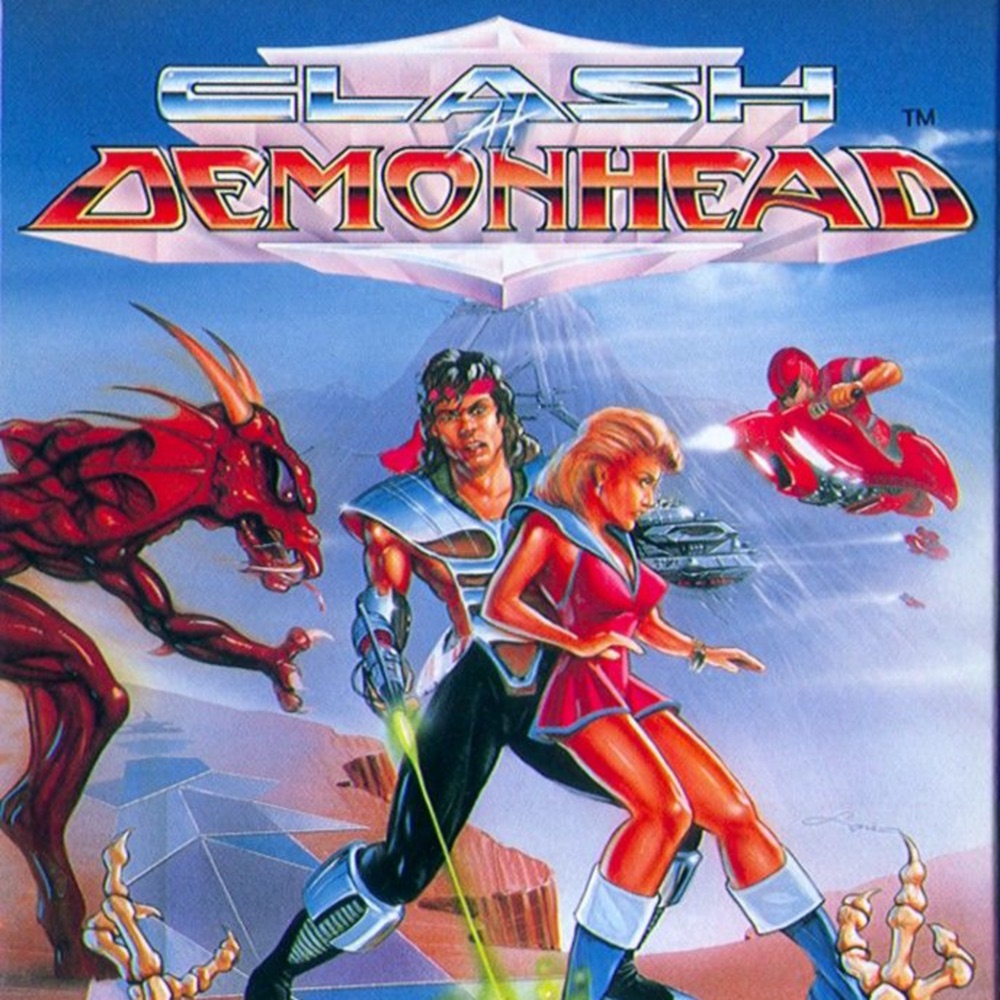
- CLASH AT DEMONHEAD - title
- Cool anime cover
- But the game is very “Super Mario” in style. The character sprite versus the anime rendition we see of him on the box and the pause menu don’t quite add up
- Some weird branding musings
- Overview
- In this platforming game you control Billy "Big Bang" Blitz, who is capable of running, jumping, and shooting. Though you start with just a handgun you’ll be able to upgrade your weapons and powers later on. There are over 40 routes the player can take in the game, and the player must explore the world to progress. The game is non-linear in that the player can choose which direction they go, being allowed to backtrack and visit different stages.
- Gameplay
- Let us first judge the game as a Platformer
- Levels are short and replayable often required for traversing
- A bit of claustrophobia in the level design. Both because of how the platforms/cliffs/water is placed and the hitbox of enemies
- The base version of Bang is not a great start
- Bosses are more mega man in style. Learn the pattern and know where to hit
- Levels are short and replayable often required for traversing
- Now let us judge it as an Adventure Game
- Choose your own path
- How fun is exploring paths and backtracking
- In Super Mario Bros 3 and World, when you beat a level you are not forced to “replay” the level in order to backtrack through the world map
- Bosses are required to beat in order to collect their medallions
- Secrets/design
- There’s areas you don’t have to go to that will make you stronger
- Some parts of the world are gated behind specific power ups that you might not know you need. Like Route 17 with the Jetpack and the Aqua Lung
- Now let’s judge it as an RPG
- The Shop
- Power Ups, food, equipment.
- Limited time use means returning to the shop
- When you buy a gun in RPGs generally the gun doesn’t run out, you just buy a more powerful gun later
- Power Ups, food, equipment.
- Talking to people inside the stages provide quest information
- Faysha leads you to route unknown, Michael gives story help, Hermit gives you the 5 force powers
- Force - as magic
- Gaining force allows Hermit to teach you moves that help progress both in the game and as additions to the platforming sections
- Going micro in Route 35
- Gaining force allows Hermit to teach you moves that help progress both in the game and as additions to the platforming sections
- Another RPG trope, that whole unwinnable boss fight against Guycott
- The Shop
- Cool password that starts you with max HP and all items
- It is a translation: (I) remember the things the genius forgot."
- Let us first judge the game as a Platformer
- Plot Stuff
- Agent of S.A.B.R.E. (Special Assault Brigade for Real Emergencies)
- Has to save Professor Plum, creator of a Doomsday Bomb capable of destroying the world.
- Bang meets Michael, who he thinks is his friend but is actually possessed by a demon
- The bomb turns out to be technology from an alien race responsible for creating humanity one thousand years ago.
- The only way to defuse the bomb is with the medallions, but with no instructions, Bang can only guess where each medallion is placed, and is working against a countdown timer that triggers the bomb.
- TWIST ending: Bang is offered an apprenticeship, but Bang declines to see about "making a game based on these adventures!"
- Most important plot point: For the NA version, they added a mustache to the shopkeeper.
- Sequels and Spinoffs
- Sales Figures / Popularity: Cult-like. Most famously, a band in the Scott Pilgrim comic series and the movie is named The Clash at Demonhead, in keeping with the video game theming for names.
- RomHacking: One adds the route numbers to the map, so that you can see them at all times. The other allows you to save the game.
- EGL
- There’s a LOT in this one. It mimics so many ideas we’ve seen executed well from the Essential Games List. It can be a bit of a tedious video game if you don’t know what you’re doing, but no more than say Metroid or Zelda 1. I do think the actual combat isn’t as tight as Mega Man and they might have been better off expanding the size of stages. But the game’s ability to be a Mega Man / Mario / Zelda 2 crossover and pull it off is worthy of it being on the EGL.
- NEStalgia Byte - All Night Nippon Super Mario Bros. (a look at MANY SMB games)
Auto-generated transcript. Each paragraph starts with its timestamp. Speakers are not identified.
Clash at Demon Head. Can a one-man engine of destruction prevent mankind's extinction?
Clash at Demon Head. And welcome to NEStalgia, a chronological exploration of every NES game released in North America. I'm Mike. I'm Sean. And I'm Joe. Guys, who has the better title? The Terminator or the Engine of Destruction? I'm going to say the Terminator. It's more succinct. Yeah. Yeah, one word to describe what you do, you know? Engine of Destruction sounds like you're trying too hard to have like a really intimidating name. Engine of Destruction sounds like a part inside the Terminator's robotic body. You know, like, oh, now we got to install the Engine of Destruction. That's true, yeah.
And this is not what I expect an Engine of Destruction to look like because there's just some weird design, maybe musings on my own behalf that I had when I look at the box art and then the game, like, graphics, and then the, like, anime style, you know, in the menu when you pause. It's like an anime rendition of the Engine of Destruction, otherwise known as Billy Big Bang Blitz.
He has, like, three different kinds of looks here. He's got the one on the back of the box that makes him look pretty fierce. Then in the game, I don't know, he's got like, he looks kind of like a Super Mario Brothers cutesy style character. And then when you pause, you get like this beautiful, like, portrait headshot and pixel art of him. So, not really sure which art style I'm supposed to interpret as.
Am I supposed to imagine the box art the entire time I'm playing the game? Or am I supposed to feel like I'm more like in a cute, silly world like Super Mario Brothers? I'm gonna go with the sort of close up during dialogue and when you pause, like, that's the canon look. And, you know, when you zoom out and you're playing the actual game, like, that's just the closest they could get to make it look correct.
And the other thing was probably just, they hired a box art guy and he's like, Yeah, we're trying to make a game with a guy that looks like this. And I'd never seen what they were actually trying to make. And he'd get Fabio. Yeah, and he'd get Fabio like that. So, I think that's what's going on. Um, yeah, I felt that the sprite, you know, to the best of most games, like, nicely represented what I imagined. Like, I can easily imagine that sprite as the guy in the pause menu or like the pixel art version. Yeah. I didn't even see the box art, so I don't know. It's pretty out there.
I can, I figure it as such. And are you allowed to have two nicknames? Are you allowed to be Billy Big Bang Blitz and also the Engine of Destruction? See, that's also a thing. Like, is that, that's what's actually on the back of the box? Yeah, yeah. Because I don't, I mean, I didn't finish this game, but I don't remember. I don't ever think he's referred to it as such. Yeah. Again, I think whoever designed the box, both the ad copy and the art, like, they never played the game.
Yeah, that would make sense. I mean, I also think that you are allowed to have two nicknames, but if they do not go together at all, such as Billy Big Bang. What is it? Billy Big Bang Blitz. I think Blitz is his last name. So, Big Bang. Billy Big Bang Blitz. That's just like fun and like, oh, he's a crazy out there guy and then the Engine of Destruction. I think they need to be a little more cohesive than that. Well, those are just like the two, like, he's kind of bipolar, he's got a couple different moods, so he'll either be big, Yeah, don't make him angry. Big Bang, and he's cool and fun.
And then Engine of Destruction is after he's had a few too many whiskeys and maybe his girlfriend, Amy or whatever his name, like that she won't like listen to him. You know, any kind of different combination of things. Fair enough. So, in the game, you control Billy Big Bang Blitz. I swear, it's not even like they don't make a big deal out of it. So, I'm going to stop making a big deal out of it. He's bang. I just think it's funny. Yeah, I just like that. Yeah, he is bang. Who is, you can, basically, you're playing a platforming adventure RPG crossover style game where even though it seems like it's a platforming game, first and foremost, there are branching paths of over 40 routes that the player can take in the game.
And the reason where the adventure part comes in is because throughout these routes, you'll find and talk to either NPCs or you'll find a shop or another location that like leads to a secret location to another place. All these things can be found on the routes, but you have to traverse these routes through the platforming stages. So, the game is kind of non-linear and, you know, you gain, you don't necessarily gain experience points, but you develop your inventory as you continue to play the game, visit shops, and acquire specific power-ups that you need later on in the game. You can choose any which way to start or to go and you're allowed to backtrack to visit stages you've already seen.
So, I feel like if we really want to talk about this game, we kind of have to like divide it up into sections or maybe that's just a fun, neat way for me to get you guys to be more coherent. But I feel like if we start talking about it as a platformer, then as an adventure game, and last as an RPG, we'll cover more ground that way. I don't need you to make me more coherent, Mike. Well, you sound a little, you know, enraged by that, so maybe I'm... Mike, I don't even understand what you're saying right now. Yeah, exactly.
Maybe we should just move on and talk about the platforming of this game. Yeah, whatever you want. Yeah. Well, you know, it's the main hook, right? So, you're entering these levels and, you know, you choose your path. Most times you're given like two options, but sometimes you're even given as many as three.
You choose your path based on the number that it provides you. Like, oh, going left is number five. Probably we're going to call it stage five or whatever. And then those levels are like half Mega Man, half... Yeah, I think actually mostly like Mega Man style with a little bit of like that Castlevania II sense of like you can explore and talk to people too sometimes. Sometimes you're doing all that, but they're short little bursts of levels.
They're not like full stages. So, when we say 40 stages, it's not like each stage is a five-minute endeavor and you must visit all stages to complete the game or something like that. So, forget about all the branching paths for a minute and all the other things you can see and do. Just as a platformer, how does Billy Big Bang Blitz perform? I'll say that at first, not considering all the other stuff, just the way it moves, it did sort of throw me off a little bit.
Because there are some weird things that bothered me. And again, in order to explain why this got better, you'll understand once we get more to the RPG part. But there were like things where when you jump in the water, you're like already losing health if you go below it. But then things are shooting at you and the only way to dodge is to go below water. And there were like weird things like that. There's stuff where like you hit the top of the screen when you jump.
So, if you're like up high and you try to jump, you bump into the like invisible ceiling of the screen rather than just kind of going up and through a little bit and then coming back down. Like little things like that felt a little jank and they got better over time. But like that's just my, that was just my initial impression of the platforming itself.
Don't want that to like make anyone think that like I had a bad time the whole time. But at first I was like, what is going on? Yeah, like at the base level of how Bang performs or just handles, it is very tight. Like you're, you'll, you'll have that one-to-one. There's not a lot of, uh, it's not sticky, um, like a lot of other platformers, especially early platformers. Um, but he, his jump is very strange and, and just the arc and height of that jump, um, will, will lead to what Joe was talking about. Um, especially if you're anywhere beyond, like if, if you're playing anywhere beyond, uh, the top half of the screen, you're going to bump your head on the ceiling slash sky.
Um, and, uh, you know, you've got a, you've got a projectile that you shoot and there's only, you can only have three of those on the screen at once. Otherwise you have to wait for them to kind of depopulate and that, that can sometimes cause some issues, but that's also something we've seen before a lot. Uh, just getting into the nitty gritty of that, like there are the, the one thing that I did like about him in terms of how he controls is he could move and crouch at the same time. That's something that we've complained about a lot in the past.
Uh, so there's, he's got a lot of tools. He can also climb on walls if it's the right kind of wall. Uh, so he's got a lot of tools available to him, but like, there are some aspects of it that were a little head scratching. So to that too, I mean, I, this is one of the games that I, I guess I made the mistake of assuming it was straightforward enough when I turned it on that I didn't need to read the manual. And I think that that also, I mean, I'm assuming a lot of this stuff is explained in the manual. I kind of figured it out organically or from watching videos afterwards.
But, uh, like I had no idea you can climb walls. I had no idea that there were like platforms you couldn't jump down through. And so I was like, why are all these levels just dead ends? And like the, you know, none of that stuff's obviously explained in the game. So I probably should have read the manual first, but I think that also like was stuff I was missing. Like all the stuff you could do that I was missing when I first played it and was like, what, what is this game? Because I wasn't like noticing all like the, um, the other additions like that I didn't know were possible. There are also levels that are dead ends though.
So that, that's true too. But I don't think I actually discovered those in my initial, um, in my initial play, you know, pickup of this game where I was like already hard on it. And I think going back to your point, Sean, about just how bang controls and everything, I'd say the base version of bang, the one you start the game with is not a great start for this game. The, the upgrades, which are obviously meant to feel like, you know, rewarding power-ups that you've earned by killing enemies and buying them either at the shop or getting them elsewhere. Um, you know, they're meant to feel like actual improvements. I just think that the, the base version of bang where he just has his standard out, uh, load out and just the gun, the handgun.
Um, it's, it's not that great. And the levels themselves are designed with a bit of like claustrophobia, uh, you know, both because of how the platforming works. So the, the platforms themselves, you guys were talking about hitting the ceiling and that's not great either. You should be able to kind of float up there or something at the very least, but the platforms, it's almost, uh, it's cave-like in its design sometimes too.
And I feel like certain enemies, just the way they're placed and everything. It's a lot of, uh, it's not a, it's not a fast moving game. Sometimes you do have to like shoot from afar, clear out the area and then go, or sometimes you have to take the hit and, you know, and just power through it too, which is not, those aren't great feelings. I think it'd be a lot better if this game was just a little more open. Maybe if, if the size of everything was just shrink down a little bit, so this way they had more room.
Uh, I, I feel like I, I kept running into that issue with the hit boxes, uh, in specific. Yeah. There's, um, it's, it's not specifically you one-to-one controlling the character, but I think it still falls into the same, uh, category. But also your power, your health.
The way that it tracks that, um, you'll get however many little squares of health and one might intuit that, that means that you have three or four hits until you fall. That is not true. Uh, each one is kind of invisibly subdivided into other hits that I think maybe some, uh, enemies do more damage than most.
I never actually tested that theory, but, uh, you will take damage and you don't really know you're taking damage because your power doesn't go down. Um, and especially with how, uh, weirdly shaped your hit box seems to be, uh, you, you know, you're taking damage just because of like that tactile response, but you're not seeing it reflected on your power meter. A lot of this can confuse and just make it not feel perfect. Yeah, it almost felt like some of those like power, like the, the different sections in your power meter felt almost like arbitrary.
I swear sometimes I would, I would lose, I would lose the health immediately on first hit and then other times it would take like 10 hits or something. I mean, maybe it was because maybe that first bar wasn't full and there's just no way of telling that, but like, it always looked like sometimes like one hit would kill me. And then other times, uh, you would have, it's hard to get a handle on your relative safety because you're not really sure when that's going to happen.
And also to your, to your point earlier, Mike, about, um, I know we're not really talking about upgrades that yet, but a lot of the upgrades will, will, we will see when we talk about them are more so like fixing problems with the way the game handles more so than giving you, uh, additional fun stuff. Uh, the, the, the jet pack I will say is just fun and it's not fixing any problems, but like, uh, what, when it seems that they're more just, oh, I don't have to deal with this annoyance anymore.
Uh, that, that seems like poor design in my opinion. Right. I keep thinking about, uh, you know, some of the best platformers and the super Mario brothers games when you, uh, die in that game and, or when you have to restart it because there's no save, you have to start all the way back at world one, one. And it's not really, uh, it's not a chore to then get through those levels again, because they're designed in a way that's just kind of fun to play them. Like, I don't think clash of demon had really had that for me as individual stages, the actual, uh, journey and adventure part that we'll get to in a second.
That's all, that's what enhances the game. But yeah, if you actually just think about the fact that you have to sometimes visit these stages again, especially if you, uh, might've went the wrong way or now you need to, um, you know, you hit a dead end and you have to replay. I, I'm not saying you have to go back and play like seven levels that you just beat again.
I'm not being that extreme, but you know, there is some backtracking in this and you're just playing these short platforming levels again. I don't think, uh, it's more of a slog to then get through them again. There was nothing like these levels maybe could have been more unique or more, uh, inspired, uh, or easier to get around. So this way, uh, backtracking wasn't that, uh, big of a deal. So I, I think they, they could have done more here, uh, to, to increase the feel of exploration.
Yeah. I think that this is where we often have different like tolerances for backtracking because you're right. I mean, everything you said, I agree with just for me, the levels were short enough that it was like, it never was like that didn't even really cross my mind because it always just felt like, Oh, okay. I got to go back this way. I'm familiar with this area now. So like, that's kind of cool. I know where I'm going. I know where I got to get once I was like getting to the point where I'm backtracking a lot.
Um, but yeah, I mean, I think it's just, it doesn't bother me when there are short bouts of it like that. And I think it, it solves its own problem because if, if it were like this for the entire game, that would be a big problem. But, uh, once you kind of get the power up for teleportation, um, a lot of that kind of goes by the wayside.
Right. You think about a game like dragon quest where you're constantly going back to the, um, to the, to the main town to report to the king and even save your game there. Uh, if each one of those like trips back was, you know, like multiple levels that you had to keep traversing to, and you had to have bang, keep going back to like where you started to then like get the next mission or something that would be a train wreck of a game. So I do agree that the, the levels are short and that's enough.
Um, it's enough to tolerate them. I, I just, I guess I can't get over that idea that, you know, they could have, they could have been a little more unique even just if it didn't feel like a stage five. And, you know, I don't know, then stage 13 or something, cause they don't, they're not sequential, the numbers on the route. Uh, so sometimes you'll be on stage five and move over to stage 13. It just felt like I was just doing another version of the same level rather than like, oh, this is how the route changed and evolved, blah, blah, blah.
Yeah. And as far as the routes too, and sorry, I, I just the, the arbitrary order that we're talking about it, it just happens to be like all the negative things I have to say about the game. I do have good things to say about the game too, but the, the route.
Like, it's great that they gave you a map and everything, but without there being numbers on the map, like, it just, it seems like such a small thing. Like so many NPCs will say like, oh, go to route seven and do this or whatever. And then I look at the map and it's like, okay, it's just a bunch of dots on a page. Like, there's, there's like, what are there, like 40 of them? Like, like, I don't remember which one is which. Well, that's where I just wish. I think a lot of our listeners and just, you know, people that grew up with these games would tell you that you have to make your own map with your own label. I get that. Yeah. And that's what I did. I don't agree that that should be necessary, but.
Yeah. That's what I did, but it just felt like there, why, why the map almost, I mean, the map almost felt arbitrary. I mean, I guess it does like, you can kind of trace out your path. And when you get to each spot, it shows you like all of the, it shows you which direction all of the immediate possible levels you can go to are. So like for that, it helps, but it's like, just feels like such a small thing. If they just made the map something you could look at, it would be like an actual, very useful tool.
Instead of having to like, have your own map outside. I mean, I've been on both sides of that. Like you should draw a map thing in previous games. But for this, it's like, well, there is a map. I feel like it wasn't helping me much though.
Yeah. Right. And the, and the map Joe that you usually want to draw is, would be the platforming stages in this game, which don't require a map at all. Like those are very easy to navigate. It's just navigating yourself around the overworld is the weird part. You'd want to draw a map of the side scrolling parts. Well, I'm not saying in this game, you don't need to, but I'm saying in normal games, like people would tell you, oh, you need a map. But to make a map of Metroid. Right. And it's not like you're making a map where you're just saying like, okay, criteria is over here.
And the fire levels down here, you know, it's like, you don't just be as generic as that. Instead, you would be like, here's the entire, like, where's the platforms are? What type of enemies are in here? In this game, you wouldn't do that for the individual stages. You don't need to make those kinds of maps. But this very, like, simplistic branching paths, you know, art of an overworld map that they gave you isn't something, you know, it just needs numbers. That's all. It's not like it's complicated. Exactly, yeah. Yeah, I take it more as like, you would do, you would draw the map in something like a Zelda dungeon. Like, you're making the map out of the levels.
This game gives you the map, but without all the information on it. So you just redraw the map that the game gives you, and then I guess just fill in numbers. I guess it could be like a way of like, you know, you're progressing because you're now learning. You're filling, you're learning which is which. Well, numbers and also like things like, oh, there's a there's X key item here, and now I got to get there. But I agree that it is it. It's a it's a very small amount of information to leave out.
At least the numbers don't change every time you start a new game. Wouldn't that be an interesting experience if you didn't know where you were going to branch off to next? And, you know, stage 14 was always stage 14 that gives you X or or does Y, but it leads to a different route. So this time you might have to travel in a completely different direction because you're not sure where that stage that gets you the jetpack is. You got to redraw that map now. And last on the platforming side, you know, the the bosses, you know, I I think they did a good job here with the bosses because it is a bit of just learn the pattern. And know where to hit them. And then, you know, you can get by.
So and this also is like locked off again. So I feel like it's not it doesn't have the claustrophobic problems that the rest of the the levels had. I have nothing really else to say. I just I liked them.
Yeah, I think the one I liked especially was the one that started off really tiny. And then like as you as as the game as the fight progresses, it gets larger. I just thought that was a fun little joke that I feel like they've thrown in there. And it sort of expresses that this game has a really good sense of humor and just vibe going on.
Yeah, they didn't they at least as far as I have gotten, they didn't really get samey. It always felt like it was like, oh, here's like a here's a new guy. What's this guy do? You know, like they were never like, you know, they're not in my contention of like best designed boss fights ever. But they they're I'd say that they were definitely better than than maybe the majority of what we see at the NES when it comes to trying to a boss battle. I think it's because it's there's they're not they're they're not easy fights, but they're easy to learn how they how they fight.
And then you just have to play more like defensive and hit regularly and you'll be fine. I like I like those. It reminds me almost of Mega Man. It's not the same thing because Mega Man is like you want to go in with the appropriate power up that that particular boss needs. It doesn't have that, but it does have the same learn the pattern and hit appropriately style that Mega Man. Yeah, I think that that hits the nail on the head because there are just too many games that we've played where it's just like, all right, I'm at the boss battle. He's just throwing a bunch of shit at me like I got to run and dodge, dodge, dodge and try and hit. And it's like, no, these all have like, yeah, something learnable.
Moving into it as an adventure game, we were talking about, you know, the branching paths and the backtracking and stuff like that. I wanted to offer a thought about a game we'll be playing soon, Super Mario Brothers 3 and really Super Mario World on the Super Nintendo. When you beat a level in either of those games, you're not forced to replay the level in the overworld to backtrack through the world map.
You just now can like, you know, those levels like change color, at least in Super Mario World, they change color to mark that they've been beaten. And then you can walk back to those areas. Do you think that Clash of Demon Head would have benefited at all from that approach where? I don't. I think that these are two very different kinds of games. One is an adventure. Like, imagine in a Final Fantasy game, you didn't have to fight anything once you went through a place before. Like, it's trying to sell a different experience.
Mario is a platforming game and you beat the level. It just happens to have like a level select that makes it look like a world map, even though there really isn't any interplay between those levels. In like what an RPG or adventure game has. So I think that that would be weird. Yeah, I agree with you because I feel like, well, for one, it's hard to even like put my finger on like how to say it exactly. Like Mario is trying to be much more of like this like planned out like Twitch reflex type platformer. You got to jump to like every situation you find yourself in is super planned out to be like a difficult platforming challenge. And I'm not saying this game isn't planned out.
But like you said, Sean, it's planned for like a different thing. It's trying to make it seem like, no, you're this guy, a real guy. I mean, a real guy is real as a guy with like jet boots or whatever it gets. But like a real guy on the adventure going through like an actual like terrain and fighting things. It's not as much like platforming challenges as it is fighting enemies. So it would be weird if like, I mean, I'm sure that, you know, you could just skip over it. But I feel like that is for better or for worse, like this, this mountain or whatever it is path leading up to the mountain of these levels is like the meat and potatoes of the game.
So like you beat one thing once you have to go back and suddenly you're just zipping around the map. I feel like you're cutting out a lot of what the game is. I can see people criticizing that because you're because like your game might be artificially inflated. But I think it it adds some stakes to like going back and whatnot. Well, to split it the other way, then would the game have benefited at all to take the Simon's Quest, Fizanadu style approach where, you know, yeah, you're always in this platforming, side scrolling style of game. But you never go back to an overworld. You just go to the next area and it's all seamless.
I think that might have been hard to do the I mean, I guess if you really like rethink the way that the game is designed, it might not be so hard. But it'd be tough to do the branching paths like that. And like this this sort of maze of like learning. I go here next. I got to go there next.
I don't know. It's hard for me to envision it like that. Whereas like, yeah, like Fizanadu does that does what this game does with like the backtracking going back to an extent. But I feel like the whole point of this game seems to be like learn the terrain at the whole point. But like a major point of this game is like learn the terrain and navigate around, find your power ups, know where things are. I don't know. I don't I'm not saying I don't think it could work. I think that this was like explicitly. It feels like their intent.
Absolutely. Yeah. It's trying to do the consequence or reward of your own choice on those branching paths. There's a reason why it's not just a straight line that you move through. So I'm I'm not advocating for either style Super Mario World or Fizanadu. I'm I'm just arguing that those are other games that we've seen take the same kind of approach for for those for better or worse. But, you know, Clash of Demon Head is doing it its own way.
And I think that's ultimately what we talk about here is that the choose your own path nature and whether you get lost or or find what's necessary. There are areas that you don't have to go to, but they could make you stronger or collect more money to buy at the shops. There are some parts of the world that are gated behind specific power ups that you might not know you need when you first get there. But then you have to go find them.
Stage 17 has the you need that you need the jetpack to go any further. So you might get there before you ever get the jetpack. And then you have to kind of piece together why you're not progressing. I think little things like that take this game. And that's why it's not just a platformer. It's not just a Super Mario Brothers Mega Man style game, because there is this style of fetch quests where you'll be told, oh, you need to get this thing or you need to do this thing in order to progress.
Things are things are gated off in a way that they aren't in traditional platformers. Yeah, like there's an economy and inventory management and several different variations of upgrades. And I think just like that depth and having like having different not collectibles, but I guess currency is the key track of. And you can get gold and you can sell it for money and then you can then buy more stuff at the at the shop. And there's different ways to get to the shop. I think that all those different systems, as simple as they may be, yeah, make the game greater than the sum of its parts in that way.
Also, another part of, you know, this could border RPG as well, but just the NPCs or characters that you meet that kind of give you the quest information. I'm thinking about Faisha. I think that's how you would say it. She's the fairy character. Sprite. Yeah, she leads you to Route Unknown or, you know, Michael gives you like some story beats and the Hermit eventually gives you the force powers.
Like these characters also add some flavor that we really wouldn't see in like Mega Man games until like the X series where you would start having cut scenes and having, you know, the explanation of what's going on in the world. In the first six games, to the best of my knowledge, I don't think they have those kinds of cut scenes where you talk to characters and get additional information or world building or power ups in that in that fashion. I mean, it also has a date numbering system where it's 1990 X. So there's also that Mega Man flourish. Yeah, the 20 XX is so close to 1990 X. The characters that you're meeting along the way, they're all kind of goofy. This isn't the worst translation ever, but the translation isn't perfect.
I feel like when they say that there are like seven governors of this mountain, like I think they're just they just tried to say boss. So that's that adds a little bit of personality. But like that, what we were saying about if I had to give like a spark notes for how I feel about this game, it's sort of like all of the higher level, the higher order designs, the stuff that like that inventory management that we talked about, the character design and the the writing.
And just when you when you zoom out enough, everything looks great as like a design doc and like all those complaints that we had earlier in the show of just like how you move and how your hitbox manages like those weren't perfect. So the the the characters and like that stuff that you wouldn't see in Mega Man until later, like those are all really, really well done.
And whereas just the more base level stuff we had more complaints on. And John, you're kind of getting into the plot there for a second, which I think is worth just giving a brief overview on, because as the engine of destruction, why what is happening? If you know, they're saying you must stop mankind's extinction.
You're you're an agent of Sabre Special Assault Brigade for real emergencies, which made me question, what are fake emergencies? Real in like the 80s sense of like, it's more important than most. Right. Like Knight Rider would also be a member of the Special Assault Brigade for real emergencies. Like he's one of those people that's contacted in a moment of real emergency. Yeah, like a blizzard isn't a real emergency like that. That's for that's a an emergency for for normal people. It's only when it comes down to like the threat of nuclear annihilation where he considers it an emergency.
And Professor Plum has been kidnapped. And Professor Plum is the creator of a doomsday bomb capable of destroying the world. So I guess you can guess why you need to rescue him on my journey. Like, why is he a good guy that created the doomsday bomb? Are we getting into like the gray morality of geopolitics here? Like, was Professor Plum, he was just a tool for the good guys, but the good guys decided that they needed a world ending technology to stay ahead of the bad guys? How good could those good guys be?
Why is Plum not under house arrest 24-7? I see a lot of parallels to like 1950s, 60s, you know, early nuclear warfare here with the, you know, Professor Plum could have in another life rather than be kidnapped, could have just went freely over to give the doomsday bomb to other people. Are we so sure he was kidnapped? I don't know. Yeah, like, I was unclear on that too. Like, did we have the doomsday bomb? And like, oh no, the bad guys got one too? Like, what's going on? But to be honest, for this whole story section, I'm kind of just listening because I had no idea what was going on.
I don't know, was all this in the manual stuff we were talking about, Mike? Like, I didn't get any of this from the game. I mean, some of it, like the doomsday thing and everything. And like, the stuff that like, not Michael, there was someone else that would talk to you too that was like trying to steal your girlfriend, I guess, it seemed like. He did steal your girlfriend, yeah. He did, I guess. When you were on vacation with and you got an emergency code from. Right. Now, that's important, Sean, because we didn't mention that.
After you're told you have to save Professor Plum, you're told that when you're on the beach. So that's, you know, that's a little bit of an interruption. But for Bang, he can do it. And Bang eventually on his journey meets Michael, who he thinks is his friend but is actually possessed by a demon.
So that's when some other, like, you know, I thought this was pretty grounded in reality from a story standpoint for a moment. And then the demons started showing up. And, you know, Sean, you got me thinking about the bosses versus governors thing. And I think that we should start calling bosses, like, even beyond that. Presidents, dictators. Like, who's more important than the boss is just the guy who you report to at work. Like, the governor has real power.
You know, I thought that was a cool, like, unique, I mean, I'm sure it was a mistake, but, like, unique, like, flavor of the lore in this game. Like, oh, the bad guys are, like, the, you know, the seven evil governors or whatever. Like, I was just like, oh, that's kind of interesting. What's going on in this world? But that's the, like, these are, like, the, like, people who you fight who have, like, powers and shit. But I don't know if there is any other media. Mike will probably tell us all later in the show. But if this is just a standalone story for this standalone game, they did have some backstory of there being, like, an ongoing war. But he was specifically on vacation from the war. Like, I guess he finishes Tora Judy.
And I don't know if, like, Demon Head Mountain is just where all the bad guys live or if that's just another place that happens to be inhabited by bad guys that you were fighting in this war.
But, like, there's stuff that you can assume that there's more going on here. Right, because the bomb, the doomsday bomb, turns out to be technology from an alien race responsible for creating humanity 1,000 years ago. They Prometheus-ed us on this shit. Wait, only 1,000? That's weird, right? What's the math on it? It's 1990x.
Right. That implies at least another 990 years. I didn't think about that, yeah. I don't know for sure where I'm getting this information from anymore. But, to be honest, would that shock you? It wouldn't shock me. If it was true, right. But it also sounds a little like you just made that up. So, the only way to defuse the bomb is with the medallions that you've collected from the governors.
There are no instructions, though. So, Bang can only guess where each medallion is placed. And, you know, it's like a – it's an actual thing you have to do in the game. It's not just watch Bang try to put the medallions in place. You have to do that. The good news is that at least they lock in when you have them in the right spot. So, you can just put, like, you know, one in each place and then just see if any of them lock. And then just so on and so forth, rotate through. But it's not great that there's some RNG there at the end. It is RNG? Like, it's not – like, you don't get hints?
Like, uh – Yeah. I believe it's RNG. It dies or whatever. Okay. Yeah. And, you know, if you don't do that, if you don't put the medallions in the correct order, you get the bad ending of the game where the bomb triggers. And, you know, it's pretty cool that we have a bad ending. We also had a bad ending in Dragon Warrior, which I called Dragon Quest earlier in the episode. It was the same game where you can join the dragon. That was pretty cool. Oh, yeah.
Very memorable. Yep. We both love it. And also say that you do put the medallions into the bomb correctly and stop it. Then you get offered an apprenticeship by the hermit, but Bang will decline the apprenticeship. And he wants to make a game based on these adventures. Now, that's pretty crazy. What an ending. That's very wild. Bang implies that he made the game you're playing. Yeah. It implies that, like, he's trying to tell you, hey, this happened. Watch out when you go outside. Like, this is out there. But why is it that you can't accept, like, if that's the actual thing that happened, then why can't you actually accept it? Because that's not what happened.
He didn't accept. He made this game instead. Oh. Right. Oh, okay. But, Sean, even if you could, right, then why would you ever even answer the phone at the beach, right? Just don't start the game at all. Like, just hang out on the beach with your girlfriend. The only winning move is not to play. Yes. Right.
Most important plot point, though, and then I swear we'll talk a little bit about the RPG mechanics like the shop and the force and stuff like that. But the most important plot point is that for the North American version of Clash of Demon Head, they added a mustache to the shopkeeper.
I'm looking at him right now, and I cannot imagine him without a mustache. It would be crazy, right? I wouldn't have bought this game in Japan if he didn't have a mustache. That I didn't know. I mean, like, yeah, I guess Japanese people are very clean-shaven and everything, and they were like, oh, this game feels very Japanese. Like, better add a mustache for the Americans. I don't know. I've seen Japanese people with mustaches. I'm trying to figure out why. Well, think about it. Wait.
Why would they add the mustache? Maybe they just thought, like, Americans were, they were more, you know, there's a lot of cowboys in America, so, like, maybe they're like, oh, they love mustaches. I don't, I just don't think that the late 80s, early 90s were, like, a very mustache-centric time in American culture, so, yeah, I don't know. I thought it would be more like a goatee. That seems more of this, more this time.
You know, they're dealing with 8-bits. That's true. But, and now, you got me noticing that, uh, when you're looking at this glorious mustachioed, uh, sprite, there's a little, is that you? There's, like, a little guy, like, basically, like, sitting in his lap. That's his daughter. He says, let me introduce you to my daughter. Is that you? Like, it's just this tiny little face down there. You think it's, like, a ventriloquist version of you? I want to buy this.
All right, so since we're talking about the shop, might as well bring that up, because it is a place that, um, both you can go to, you can spend money on, and you can also buy at the shop a call to then call the shop wherever you are to then buy more of the shop. Yeah, it's kind of weird how it works. You kind of, if you don't want to get in a hard position where you have to go all the way back to where, like, the shop always is, there is a shop call. And then when you use the shop call, the shop will just fall from the sky, and then you can do what you need to do, um, on location. And basically, you want to just make sure that the first transaction, the first transaction that you make when you call the shop is just buy the shop again.
Yeah, that's what I was doing, too. And then you'll also have the various power-up suits, um, get some food for health replenishment, um, uh, all that fun stuff, you know. Yeah, it's, it's, it's actually something that, um, that helped me after, like I said, like, my first pickup of this game, I was really not enjoying it. And, uh, but it was because I didn't really know what the heck I was doing. I'm sorry, I don't want to curse on the podcast.
Um, but I, uh, as I, like, kind of realized, like, oh, you're supposed to, like, you're not supposed to go to this part yet. You're not supposed to do this until you have, until you've bought, like, the scuba gear. Like, when I was talking about how I kept dying in the water at the beginning, and it felt like I had, like, no agency at all to, like, get myself out of it. It was because I needed the scuba gear. Like, I just should have read the manual is really the answer.
Um, and then there are, like, things to, you know, there's things to help you jump higher. There's the jet pack, which, uh, I actually don't think I got to the part where you need a jet pack yet, but it definitely, uh, helps you. Even when you don't need it. Otherwise, yeah, there are, even when you don't need some of the items, they're still helpful.
Yeah, yeah, like, there's a, there was a boss I was having a real hard time on, and there's a, uh, I forget what it's called, but it's, like, a, basically two, or medallions, or whatever you want to call them, and two orbs that fly around you and protect you from damage.
And, like, it only lasts for so many hits or whatever, but, like, it made a difference. Like, there's a lot of cool power-ups, and it feels like, it's interesting, because it's RPG-ish in that way, but it's not, like, a lot of these things are not, are only locked behind how much money you have. Not behind your progression. It's the, um, the monk power-ups that really, uh, are, like, more about progression. But, like, these other items, like, you could buy them and use them pretty much whenever you want. If I'm not mistaken, there are a few items in the shop that, uh, he's like, oh, I haven't designed this yet, but you can buy it later.
And I think that those are also a lot of progression. Well, there are some, there are two that are question marks, and then there are some that are, like, after you've bought one, I know that they're out of, out of stock or whatever, so you can't just buy a bunch of them or, like, buy them back-to-back. What you're saying also rings a bell, too, though, but maybe in the video I'm watching right now, this person must be past that, but I do remember running into that when I was playing.
But them being limited-time-use items, too, like your power-ups, a lot of the, a lot of the guns you buy are just temporary, and once you run out of its ammo, you, you know, you lose it. Limited-time-use means that you have to return to the shop, and so the real strategy for the shop is to always have the shop call. So you always basically need to spend the upfront, I don't know if it's, like, $2,000 or whatever.
Yeah, you need to, yeah, you need to buy that first and then buy things. You can't, like, run out of money without it because the shop, going back to the shop could be an awful lot of backtracking in specific situations, but the power-ups could be really useful, and getting them on the fly is a lot handier or, you know, more positive gameplay experience for a lot of people. I could imagine some people who need specific power-ups and finding out they have to go back to the shop being a bit of a letdown.
One thing that I did, like, about the items in Upgrade specifically is that, yes, they run out of ammo in use, but you can also unequip them from the menu again and, like, save the ammo you still have and not, like, be like, oh, I just needed it for this one jump, and now when I need to do it again, like, I'd have to go buy a new one. You can put it away.
Yeah. I was doing that even with, like, the scuba gear, which only loses its, whatever, its potency or whatever, its power as you swim underwater, but when I wasn't underwater, I would still unequip it, like, I don't know, for, like, immersion or something. It just felt right. Like, I didn't want something to happen to it. I didn't want to damage it by, like, by getting hit by an enemy, even though that's not how it works at all. But it was nice, especially for those jumping boots.
When you buy a gun in RPGs for characters that can wield them, generally the gun doesn't run out, though, right? You just buy a more powerful gun later on. Maybe I'm just thinking of very specific RPG experiences to me, but I did find it surprising at first that I was just buying the ability to use this thing 30 times rather than being like, oh, I'll just get a better gun later on. Like, you kind of always default back to your base model.
I mean, I guess for the guns, you can think of it as you're buying 30 rounds of ammo for the guns. I feel like it makes less sense for, like, the boots. It's like, oh, these boots only have, like, 10 boots on that, and then you gotta buy a new pair. Yeah, well, they ripped open or something, right? The souls are gone, yeah. Exactly. Yeah, like, if you're thinking about, like, in Final Fantasy VII and you get a new gun for Barret, like, it's really just treating it as a ranged version of a sword.
That's, like, a much more pure JRPG, whereas this is, you know, it's got that whole hybrid thing going on. Um, isn't, doesn't Breath of the Wild do something like that with all the weapons where, like, they break? Yes. So I think, I'm actually pretty positive that Breath of the Wild directly ripped this game. There you go, there you go.
And you know what, while we're on the subject of that, because we'll never cover that game, I would just like to say that I don't understand why people hate that. It's crazy to me. That's the only way to play different, uh, with different weapons in those games. You would never use anything if your best stuff never broke. Well, I get that, but, again, going back to how people have been trained on RPGs, like, that is part of permanent progression.
And I don't think a lot of, there are a lot of people that, when you take permanent progression away from them, especially with gear, because I know, like, you keep all your other, like, health upgrades and, uh, stamina and whatnot, whatnot, but, like, I, while I don't see it as a huge of an issue, I can understand the psychology behind it. Yeah, I feel like it just depends to me on, like, what I expect to be getting into from the beginning.
You know? If I want a game where I'm really, like, if I, if I pick up Breath of the Wild, which I plan on doing eventually, um, I'll go into it knowing, like, okay, that's what this experience is. It's like, you're looking for your next weapon, you know, like, that's, that's fine. I guess I can understand if, like, because it's not been done in other Zelda games, right?
No. Yeah, so, like, I guess I can understand if you're like, oh, I want to play the next Zelda game, and it's like, it feels like they, they changed something fundamental to a Zelda fan. I feel like I'd like it, because I'm going to go into it, like I said, expecting it and being like, yeah, this is, this is what this game is, let's see what it's all about. I would argue, though, that game is fundamentally different from the other Zelda games anyway, so, like, people who like Twilight Princess probably will still like Breath of the Wild for a totally different reason. It's not because it feels like Twilight Princess. Anyway, talking about Clash of Demon Head back on it. Joe, you mentioned the powers that the Hermit will teach you.
Both progress the game, but also act as, like, additions to the platforming sections. You know, you can go micro-sized, and yeah, that's useful, I think, in, like, stage 35 or something, where there's actually a passageway where you have to turn micro to, to go through it, and that's kind of funny, it reminds me of, in Super Mario, there's a, not the, not the first game,
but later on, they would add a mini power-up, too, that has that same thing, so Joe chalked that up to another thing that a game, a Nintendo game, stole from Clash of Demon Head. Wow. My point being that you could also just turn micro whenever, though, too. You don't, it's not like it's, wait till you're standing in front of that, and then you'll turn micro, it's now an enhancement to the platforming stages as well.
I'd say that this is also... Yeah, does it affect a great Ant-Man game, which I don't think we've ever gotten before. Well, Ant-Man, the movies, a lot of people think it's based on the comics, it's actually based on Clash of Demon Head on the NES. I see. But does your hitbox change when you're small? I didn't feel like it did, but I couldn't really tell. I think it does. I didn't test it enough.
Really? I think it does. I guess I'm just still getting hit a lot. I was going to say, I think it does as well, but to be honest, I don't know by how much, or now you're making me question if at all, but I would imagine, you know, I mean, look, it's not an unpolished game. You've got to think that they would, they'd be able to make those kinds of adjustments. Yeah, that's true. But it's also not a perfectly polished game. No, it's just polished.
There's a bit of, you know, they could do some more and it would shine a little better, but it's polished. Another RPG trope, that whole unwinnable boss fight against, what's this guy's name? Guy Cut? Guy Cut Threepwood? Whatever. You know, I thought that was fun. Unwinnable boss fights? Sure, I wasn't expecting one.
I didn't get there. Oh, you mean at the very beginning? Yeah, at the very beginning. I was like, what do you mean? I didn't even play this game. He, like, sort of does, he doesn't kill you. He's just like, oh, I'm done. Like, I'm gonna. Yeah, yeah. No, but you have to, like, take a certain amount of damage before he's like, I'm done with you. Okay. But you're still doing things. It's not like it's a cut scene where he just, like, lights you on fire or something. Yeah, I like that. He's just like, I'm just gonna rough you up a little bit and I'm gonna make fun of you and I'm gonna tell you I'm a governor.
And now you gotta come get me. See, I think I would have liked more of that throughout the stages. Yeah, but it's nice to make the governors feel intimidating right off the bat. Yeah, yeah. Then throughout the stage it's like, all right, now you gotta kill the guy. I think more just spontaneity. That was, you know, that's something that, like, they show off at the beginning of the game. And, you know, it's not a groundbreaking feature. It's not even that impressive of a feature. I get it, John. But still, nevertheless, it's, you know, it's an interesting thing that's included in this game that is trying to do so much.
There is a cool password that you can put in that starts you with max health points and all the items. And I didn't write down it because it's, it was either too long or it's not something you could say out loud. So I didn't bother with it. You were out of paper because of all the map drawing. Right, right, right. But it's a translation in Japanese that says, I remember the things the genius forgot. And maybe that's like, you're, you're playing as like a past version of Bang. Or a future version. I think that's actually just like, um, a quote coined by the Victor Kai, right? Right, right, Victor Kai.
But really, is this like, is that a quote from something? Did somebody say that? Just Victor Kai, just while making this game? I think he coined it, but I don't, I don't really know. Who made this game, Victor Kai or Billy Big Bang Blitz?
Well, Victor Kai is the, is the, what is it, like the demon engine or whatever the heck he's called? Billy, Billy Big Bang? No, well, yeah, Victor Kai is the actual developer. I understand that. But, but, but the engine of, engine of destruction. Death? Destruction. Oh, yes. He, maybe that's who Victor Kai is. Or Victor Kai built the engine of destruction, which is Billy the Big Bang Blitz, who then went on to make this game.
Because maybe Victor Kai is the one who did all this stuff. And then he just changed the name of himself in the game. Because in the end, they reveal that this all really happened. I'm very confused now. And if Victor Kai made this game, he must be the protagonist who it says went on to make this game. Victor Kai is a longtime friend of the podcast, so we'll just get an answer from him, you know, sooner or later. And we'll report back to everybody.
Sean, sequels and spinoffs? Nothing. Really? Didn't happen. Yep. This is a, like, cult classic style game. Um, and I don't know if you can say classic even, but, like, it definitely has, like, a cult following to it. But apparently, the closest thing I could find to any form of additional media, you would think it would have got, like, one of those World of Power books, right? But instead they gave it to Bases Loaded 2, when they could have had such a rich story in The Clash of Demon Head.
The closest media I could find for this is that the band in the Scott Pilgrim comic series and the movie is named The Clash of Demon Head. So, um, obviously that comic series has, like, a ton of video game names all over it. But I just thought, you know, gotta give you something. So that's what I got, you know? In terms of, like, why they never made another one, I don't know. It's up to Victor. What does he want to do about it?
I did know that when I saw this on, like, the list of upcoming games of, like, there is some cobweb in my brain that has heard this name before. I just didn't know it was gonna be from a Michael Cera movie. Yeah. Clash of Demon Head does sound like something really cool, though. Like, you gotta give it up to them. Props for a great title. It is a great title.
And one other small note before we move on with the rest of the show. The, um, the thing of adding route numbers to the map, it was done, Joe. They did it on a ROM hacking thing that you can download if you want to play this game on an emulator. And it literally just adds, uh, numbers in, like, really, you know, just black text next to each of the dots. And it makes sense when you look at the image.
You kind of understand why they would have said, like, you know, this is a lot that people don't necessarily need. Like, it's just, it looks really cluttered when you look at it. But, you know, it's helpful. I will say, though, that even though we've been talking that it is medium polished, and I do, we have said that we like the designs for, uh, the characters and some other things. This map looks like it was made in MS Paint. There is no, uh, looks like there was no actual perspective used.
Like, you know, just that paint bucket. Yeah, they didn't even make Demon Head look scary. Yeah, and then, like, your sprite that moves around the map is, like, literally, like, a yellow smiley face.
Like, it's just a dot, dot, and then, like, a straight line for a mouth, not even a curve for a little smile. Maybe it was the shopkeeper's daughter who designed this map. Oh, I like that. Oh. If you like that, Sean, you'll love what's coming next. It's something we do every episode, and it's called The Essential Games List.
I think I'm going first these days, right? It's 2023. It's a new year. I speak first. It's your rules, Mike. It's your year. Wow. All right. We're going to need a little back and forth or something beforehand. That's a little strange. I didn't think about this beforehand. It's weird to hear me throw to The Essential Games List. No, we're not talking. If you want to go first, you're going first. All right, all right. Well, look, there's a lot in this one. It mimics so many ideas we've seen executed well from games that are on The Essential Games List. It can be a bit of a tedious video game if you don't know what you're doing. But no more than, say, you know, if you don't know what you're doing in Metroid, I find that game to be very tedious.
So, you know, I do think the actual combat isn't as tight as, to quote a game I've been saying all this episode, Mega Man. I don't feel like it's quite there. We described the levels as a little claustrophobic and the hitboxes being a little large. They might have been better off expanding the size of these stages, not necessarily the duration of the stages, just giving more freedom of movement. But, you know, you've got to respect the game's ability to be Mega Man, Mario, and, you know, a Zelda 2 crossover.
I don't know if it's completely worthy of being on The Essential Games List, but it gets a lot of respect for me. And I definitely think this is one of those ones that earns its cult status. It's kind of like, if you know, you know. But I do think this is more of, like, the second rung of games on these things, where this would definitely fall into my play it category, because it really is for NES enthusiasts. I do think there are just some overall quality of life things that don't make this a complete package today.
Joe? Yeah, so, like I said, I was very unfair to this game, I think, when I first played it. But, you know, I'd only played it for, you know, not very long. I had still planned on playing more before the episode started. Luckily, before I picked it back up, our friend John B. had some good tips and tricks. And once I kind of, like, applied that and, like, I don't know, I actually kind of paid more attention to, like, what I was supposed to do and, like, how this game is supposed to be played,
I sort of did a 180. I really thought it was pretty ambitious and, like, largely succeeded in a lot of the ambition. It's definitely, I will not say that it is not a flawed game. I mean, it definitely has its flaws here and there. But it was pretty fun. Like, the RPG element of it that kind of, like, helps you get past things and it's kind of, like, it's not as locked as other games like that. Like, you kind of decide, like, okay, you know, I can use this here.
This will help me. It feels like you have more agency in that, like, in where you use these power-ups and how they help you get past things and stuff. And for that, I love it. And I actually did come around to the gameplay despite, like, a lot of those weird, like, movement and hitbox things we were talking about earlier. Once I kind of realized all the tools I had at my disposal, that felt like less of an issue to me.
But, yes, I am kind of on the same page. I feel like this is definitely a play at, I don't know exactly what I would say was missing. There's just, it's just not quite polished to the level as other essential games. And I don't know. This might be one that, again, like, I say this a lot now. But, like, maybe whenever we do the best of 1990, I'll revisit it and my eyes will be open. But I'm not there right now. So, no, I'm not going to vote on the essential games list. Yeah, like I said earlier, I think as you go up on, like, the hierarchy of whether it's at the base level, like, just how the character moves.
As you go up to the grander designs of, like, oh, how does the economy work? How does the story interact with the gameplay? And what's the vibe like? As you go up from a more basic concept to a higher concept, the game gets better at each step. I do agree that the more moment-to-moment gameplay is what's hindering this.
And I would also put this at the rung of play it, not essential. But if that, like, if there was more, if it just felt better moment-to-moment, shooting the basic gun, because that's mostly what you're going to be doing, and if it felt a little bit tighter in combat and with the platforming, I think this game would be essential. But it's what you're doing the most. So it just felt a little annoying at times. So I'm going to keep it off as well.
All right. So it's three no's, but it's three reluctant no's. I've never seen that for all three of us to be, like, sad that I didn't get there. But it's a game we knew nothing about, too, beforehand. So that tells you something about the quality of this. I think at a certain point, you've got to remember, we played who knows how many NES games now. Like, we're getting pretty good at this. We're pretty good at playing NES games, too. But we're starting to also understand the difference between, like, a good NES game and a great game overall, maybe. I don't know. Spitballing. What do you think? What are you guys' thoughts on that? I haven't learned anything. Are you getting better at playing? You're not getting better at playing NES games?
No. Even on your own scale? No. I think maybe I am on my own scale. I don't think I'm very good at NES games still, like, as a whole. But I do think that I'm better at, like, on my own scale deciding what I think is a great game. And what I, you know, like, it used to be like, well, is it? Isn't it? You know, like, now I'm like, okay, I've seen a lot of these. And sometimes it's almost to my disadvantage when I'm trying to explain it. Because I'm like, I don't know. I just didn't like it. Like, I just feel like I've figured out my tastes a lot more for these old games.
Yeah. And I would just say I'm not, I'm definitely not saying I'm good at NES games by any means. I think the people who listen to this show, the ones who grew up on the NES or play the NES, you know, and a lot of them let us know that they beat these games. Like, that's impressive stuff. I'm not necessarily like, I don't know. We've played over 250 NES games. I can't even say that I beat more than 40 of them, you know? Like, some of them are really easy beats. Other ones, good luck if you ever beat them.
I don't know how many I'll beat by the end of this. But I definitely think I'm getting better at playing NES games. And so that's a pretty cool, useless skill that I developed. I mean, I was just being a dick. Obviously, I think I have a better eye for these kinds of games now. Because before, like, retro just wasn't my thing.
But now, you know, we've kind of, we've put down a foundation of knowledge and experience. So, yes. I think we're getting better at this. I don't know. Right, right. The funny thing is that I don't think it necessarily, like, translates back to, you know, your ability of NES games. And maybe that's what you were saying, Sean, is that I don't think I'd be any better at, um, what are some of, like, the hardest NES games that we've played? I took it more as getting better at criticizing an NES game. Right, right. Like, Ghosts and Goblins, I don't know if I'm going to get any further in that game than I did when we first played it.
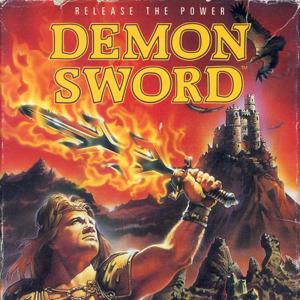
But I do think that, um, you know, I'd be more prepared for it now than ever. Not just because I played it in the past, but because, you know, we're seeing, we're seeing the NES tropes and design decisions over and over again. Yeah. And we're going to continue to see them over and over again. Next week, we'll be seeing a demon sword. Uh, not to be confused with Clash, a demon head. Uh, two different kinds of demons in different places. Um, one's at the top of a mountain, the other one's inside this sword. Uh, that's not true about either of these games. No. Oh, and it's not on the top of the mountain either.
Those are, yeah. Yeah. So, uh, go, go figure. We do know things though on this podcast and that is that we will talk to you next week. And if you want to talk to us even sooner, don't forget to join our Patreon for that discord where you could have found out all those hot tips that John B was giving out all week that Joe mentioned. Think about it. Maybe you want to see what those tips were and be a little better at Clash of Demon Head. And everyone who joined, uh, the Patreon has the right, but not the obligation to join the discord.
You're not like forced. You don't get an automatic, uh, join, uh, receipt or something like that. So some people choose not to join us and that's fine too. Because at the end of the day, you also get the Nostalgia Bites episodes and we've got one coming up very soon for all night Nippon Super Mario Brothers, which is Super Mario Brothers with DJs and, uh, the DJs come out of the warp pipes instead of the piranha plants. And I think the Goombas wear sunglasses. You know you want to hear about that. So join us there or just join us next week for Demon Sword. No hard feelings.