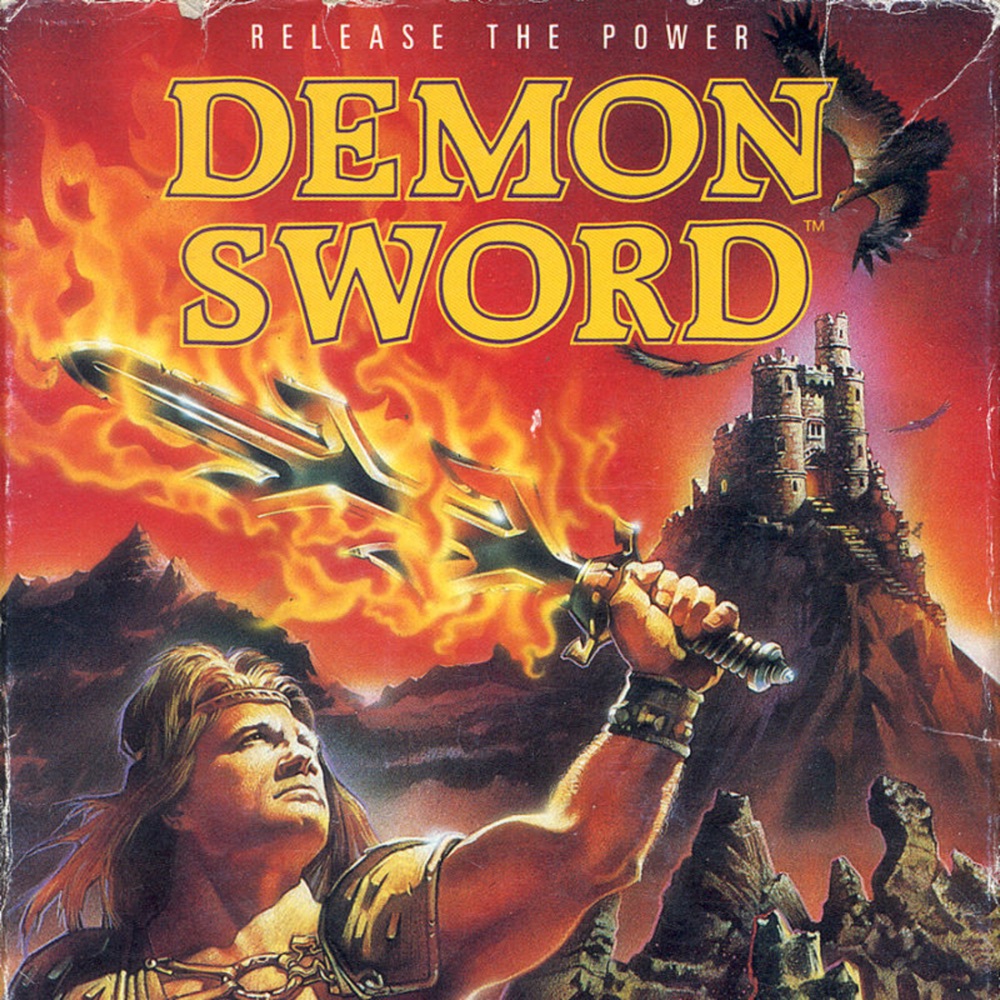
256 · Demon Sword
In Demon Sword you play the part of the noble fighter Victar. Victar carries with him a sword which was used long ago to defeat the evil Dark Fiend who took over the land. Now he is back, and Victar must use the sword to defeat him once again. The game is an arcade style platform game. You begin with just part of the demon sword, and after defeating a large monster at the end of each level an additional section of the sword is restored.
- In a land of impossible evils. . .
- . . .all paths lead to the Dark Lord.
- NES Longplay
- Introductions
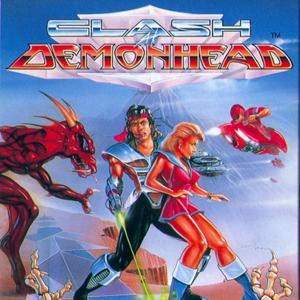
- Last week, we killed a demon with a sword…in the game Clash at Demonhead. Now we’re playing a game called Demon Sword, but it’s the same idea. Demon can only be killed with a sword
- This is a game made by TOSE
- The secret shadowy ghost developer studio. They are still around, they just did some work on the Crisis Core remake
- And published by Taito
- Taito. A giant of the 1970s and 1980s arcade and video game scenes, their production wouldn’t tail off until the 2000s. They were purchased by SquareEnix in 2005 for $409 million. Just to bridge that connection back to Crisis Core
- Overview
- A man named Victar, who comes from a small village, has a sword that can destroy the demon. The blade had previously been split up into pieces, though, and Victar must travel through three worlds to get back the three broken pieces in order to restore the sword to defeat the demon.
- In this action platformer you’ll fight through 7 stages, fighting a boss in each one who upon defeat will give a piece to rebuild the sword.
- Gameplay
- The game is very reminiscent of past TAITO game The Legend of Kage
- The speed, the diagonal jump, the ninjas
- Enemies will spawn anywhere and on diagonals including the freaking sky
- MAGIC is what’s new
- Fire Sphere - protective fireballs
- Lightning Beam - shoot lightning
- Power Beam - stronger Lightning
- In each stage there is at least one Mystic Gate, which you must have a key to open. These are not left to right platforming levels
- Bosses - only two hits to finish off even a few real bosses
- The game is very reminiscent of past TAITO game The Legend of Kage
- Japan got the real game
- There are six more stages and several bosses in the Japanese version that are unavailable in the North American version.
- There are more items and magic spells available in the Japanese version.
- The ending in the Japanese version has extra scenes and text cut from the North American version.
- EGL
- NEStalgia Byte - All Night Nippon Super Mario Bros. (a look at MANY SMB games)
Auto-generated transcript. Each paragraph starts with its timestamp. Speakers are not identified.
Demon Sword, in a land of impossible evils, all paths lead to the Dark Lord. Demon Sword, in a land of impossible evils, all paths lead to the Dark Lord.
And welcome to NEStalgia, a chronological exploration of every NES game released in North America. I'm Mike. I'm Sean. And I'm Joe. Last week, we killed a demon with a sword. In the game, Clash at Demon Head. Now, we're playing a game called Demon Sword, but the sword isn't a demon. It's pretty much the same idea. The demon can only be killed with a sword. Was this a common thing that happened in the 90s, that demons and swords, the only way to take care of them? Well, Mike, I think we're still in the cultural 80s right now. And demons were all the rage back then. I know this because I watched Stranger Things. Yeah, and that's a documentary about the 80s. Yeah. For real kids' experience.
I think so. I just think it's funny that, you know, it's like, obviously, it's only happening because we play, if the games come out in the same month, they just happen to do it in alphabetical order and D comes after C. But the fact that they both have demon in the title and they're about killing demons with swords, just thought it was an interesting observation.
Yeah. And I know that's like sort of beside the point, but you'd agree with me that we're still technically like in like an 80s vibe, right? Oh, I couldn't agree more. But I do wonder now that you brought it up, what is like, maybe not the moment, right? But what is the year that it starts to become the 90s? Maybe like, I feel like anything that I see on the NES is probably going to make me, well, make me like culturally think of the 80s. Although like, in my own life, it makes me think of the 90s. So, you know, I think it's all subjective. Maybe like 91 when, you know, Soviet Union fell. That seemed like a sea change, right?
Right, right. That makes sense. Are the Power Rangers also 91? Because I think they are. And that's definitely 90s. Nobody thinks. All right. 91 it is. There you go. So that's it. The Power Rangers and the fall of Russia. It's so funny. Yeah, great. Or maybe the beginning of Russia, depending on which way you look at it. It doesn't have to necessarily be the fall. Maybe it's related. I mean, maybe we sent the Power Rangers over there in some covert ops. It was definitely a side op. Well, that was a documentary too. Yeah. Power Rangers and Stranger Things, both documentaries.
Because Power Rangers is actually like American because the Japanese version was something different. Right. Super Sentai. Right. Super Sentai. We talk about video games here. Oh, yeah. Super Sentai.
Yeah. It's the secret shadowy ghost developer studio that makes games for other people. And then they get to show it off like it's their own. But they made it. They're actually still around. They just did some work on the Crisis Core remake. Oh, wow. And yeah. Yeah. So they're still making like big games. Like some work meaning like they just they did like the polishing or did they did they develop the game? I just did. I didn't want to say that they developed the whole game because it's like, you know, Square Enix has a whole freaking team too. So I doubt that like in this day and age, you just outsource an entire video game to them. Yeah. But they just did like the shoe design.
Or maybe they like program the game. I'm just spitballing here, of course, but maybe they program the game and Square Enix provides like art and design documents and stuff like that. Yeah. Who knows? Yeah, I know like with other things with other like remasters like that, like some like assets that have been lost just have to be like rebuilt.
And I'm assuming that that's just a tedious task. Yeah. So they just like say, hey, remake all this. This was a remake though, right? Like, was it? I'm not actually sure. I'm not sure. I'm too much into the Crisis Core.
It's a very faithful remake. They didn't change anything about the ending or anything to work with the Final Fantasy 7 remake series, which is interesting, right? You would have thought for sure this was their opportunity, given how the Final Fantasy 7 remake game changed the story so much that Crisis Core could also rewrite some narratives. But no, it's the game. Yeah, I would have just imagined that. I guess it does fit with Square Enix to give more respect to Crisis Core of all things than to a classic for millions of people. But anyway, what were you going to say, Mike?
It's the game is published by Taito, though, the people who would take the credit for the game, too, back in the day and not even put Tosa anywhere on the box. Taito, of course, a giant of the 70s and 80s arcade scene. But bringing Square Enix back into the fold, they were actually purchased by Square Enix in 2005 for a good sum of money. And so I just wanted to bridge that connection back to Crisis Core and Square Enix and Demon Sword, right? The game that we're definitely not trying to avoid talking about.
Yeah. Demon Sword is about a man named Victar. Victar, not Victor. I thought that was important, the A. They put it there, not me. Uh, Victar, who comes from a small village, has a sword that can destroy the demon. The blade had previously been split up into pieces. And Victor must travel through three worlds. Now, see, I don't think it's worlds, right? Like, is he really going to, like, other planets or other universes to get these swords? Like, I wonder if it's, like, using the term world as in, like, you know, like, using it loosely, you know? I mean, I don't think in Mario you're going to different worlds.
And yet they call it that. Yeah, I mean, I think it's... See, I would have thought, Mario, you are going to different worlds. Because that's, like, so much more, like, fantastical, I guess. I suppose. But, like, but either way, I mean, I feel like it's like, you know, you think Harry Potter, they say the wizarding world. They don't go to a different world. It's just like, oh, this is our world. This is where, like, you people don't live in this world because you are off doing something else. Yeah. Wait, Hogwarts takes place on Earth? More of a cultural world. Hogwarts doesn't take place anywhere. Hogwarts is just a building. No, I get that. But I'm saying that building is, like, geographically on Earth.
You're messing with me. I'm saying, like, I thought that the whole, like, going through nine and three quarters thing was, like, that transport. No, that's, like, in Scotland or something. Oh, wait a minute, wait a minute, wait a minute. But I'm being serious for a second. Like, when they go through the brick wall thing, they don't go to, like, a mirror world that's, like, not... No, no, it's just like our world.
I thought it was just like a transporter. No, I mean, yeah, it moves them somewhere else. But, like, yeah, they have, like, they have spells to make sure that regular muggles don't walk near it. Like, it repels them. Because it is an actual geographical space in the same... Okay. So, yeah, that's what I figured. I didn't think that it went to, you know, world two. I think that it's as if...
Maybe it started as, like, a translation error that just turned into canon. And, like, because I'm from Buffalo world, but I currently live in New York City world, you know? Like, maybe it's that.
But I... Yeah, like, it's the way that I would say, like, wow, you live in a totally different world than me right now. Because you're in, like, a big city and I'm in, like, the country. Yeah. What else can we talk about? Well, the thing about the three worlds, the reason I bring that up in the typo and everything, or not typo, because they are referring to them as worlds throughout the game, is that each of those worlds contains a broken piece of the sword that you then add to your sword to restore its swordliness so that you can defeat the demon boss at the end of the seventh stage. This game is... Let's talk about the sword, though.
Can we talk about the sword? Are you sure? I kind of do. All right. Because it's the first thing that you see. It's in the... It's on the title screen. You get this cool, like, that's lightning out. You see a sword. And I just wanted to state that it looks like a sword that I would have drawn in a study hall in middle school because it's a sword that has, you know, the base. It's got the trunk of a regular sword, but then it's got mini swords coming off the sides of it. Yeah, it's a sword with swords. Yeah, which I'm pretty sure... Yeah, it's a cactus. It's a cactus sword. And I don't think that that would be useful in any actual combat scenario, but it does look fucking sweet.
See, I agree with you that it wouldn't be necessarily useful. Maybe, but who knows? But, like, I don't agree that it looks sweet. I think it looks really sweet. It looks sweet in my middle school study hall sense is what I mean.
I see. And you never see that, like... Oh, no, you do see it get added to the sword. Yeah. At least there's, like, some in-game element to that, too, because your sword just gets a little bit longer each time, right? You start with, like, a hilt. Right. And then it gets, yeah, larger as you move on. Well, I kind of like that conceit. You know, if the sword is getting more powerful, then adding, like, a component in the game, too, of having a longer reach... I don't know if that's true, but... It does. Yeah, having, like, some usefulness for the sword as you're going along, like, that adds a lot for me.
Yeah. Yeah, yeah. I mean, I think that functionally, that's fine. And, like, and I'll say, too, that the, like, if it weren't for the more high-fidelity art, I would think, based on the sprite work, that, like, that was just supposed to be... Those extra swords was just supposed to be, like, energy beams coming out of it, or, like, it's so powerful that it's bursting, but then you see the actual art, and it's like, oh, no, those are just... That's metal. More sword. Just, like, sword branches.
This game is very reminiscent of another Taito game we played a while back, The Legend of Kage, and I don't know if you guys remember that game or not, but, yeah, it's just even from the way that Victar runs, the speed at which the, you know, everything moves, the characters, but also the enemies, that diagonal jump, we, like, really drew that out in the Kage episode to talk about how he... Kind of, like, leaps into the air and can fly up really high.
It feels almost like a clone if you didn't know that the same studio made it. Yeah. Did Legend of Kage have, like, such a high jump? Oh, yeah. Very high. Yeah, you're like Crouching Tiger. I don't remember that, because I feel like that that... Like, the whole time you're playing. I feel like that that element of this is what really kind of gives it its, like, specific feel.
Yeah. The, like, the jumping off of trees and climbing up branches and just the fluidity and speed, like, this is definitely, like, in the same series, or at least, like, the same devs worked on this. Yeah, it's surprising to see that they wouldn't call it Legend of Kage 2 and just, like, ride off that success. Yeah. But, Joe, to answer your question, yeah, everything, pretty much the things that Sean listed off, that's all the same. So the magic is what's new. You didn't have magic in Kage. So in this one, you can, you have protective fireballs, and then you can shoot lightning, and then you can shoot this thing called a power beam, but it's basically just stronger lightning.
So it's just lightning that hurts more, and it's power beams. But that's, those are your three magic things. And, you know, I question if that's enough of an upgrade for, you know, for a game that we've already kind of played, or at least felt like we played. Like. I think it still has a different vibe, though. It seems a bit more structured. I mean, again, Legend of Kage is a very, very, very blurry memory that I have that might have happened ten years ago or two years ago. I don't remember when we started this podcast, but those memories still exist, but this does feel different.
Yeah, I vaguely remember Legend of Kage as well, but, like, very vaguely. I, and I, and I'm leaning towards agreeing with you, but that is almost making me, like, that's making me really want to, like, look back at Legend of Kage, because if, if we're saying that this feels more structured, I don't think that speaks well for Legend of Kage, because I, I felt that the structure of this game. Oh, no, it doesn't. Was lacking. I didn't think that Kage really had any structure to it.
Yeah, I mean, that might be true, and that's kind of how I remember it, too, which I'm saying is, like, it's pretty impressive that, like, it could be less structured than this, in my opinion.
Legend of Kage, if you probably remember the first level of the game, but also most of the levels of the game having just, like, strobe effects for lightning that was going on throughout the woods. But the, the first level of both games are very, uh, similar to each other and almost feel like it's, it's calling back to, um, the original game. But, uh, in, in Legend of Kage, you also had, like, ninja stars that you could throw all the time. So you, you could hit with your katana, but you could also, um, throw your ninja stars.
And then you're, you had power-ups that could change the color of your outfits. And that's, that was what that game's whole thing was. In this game, I guess the structure that you're referring to are those mystic gates that you need to kind of find, and will first find the keys for, and then find those mystic gates to move on to, uh, the, the following stages.
Yeah, it's, it's more, it's on the macro scale is where I find any structure. Like, between finding those gates, getting those power-ups by beating, like, a mini-boss, um, then going to the end of the level, fighting that boss, and then getting a very progressive, like, the upgrade for each boss is always, like, another part of the sword. Like, you know, just add the Lego on top, like most, how most swords work. Um, and so I'm not saying that it's like, oh, it's got this vast storyline, and like, oh, there's all these things that make it feel, uh, very well planned out. But I, I consider that more than just level one, level two, level three. Yeah, yeah. And I, I should say that I think that, um, it, it could be.
The levels could be very cleverly structured, um, for all I know. But the thing is, is that, like, I think that the movement in this game is great. I think that that's, like, one, uh, one, like, really good thing that it does. Even with, like, up being jump, which we usually hate, doesn't feel so bad because the movement feels so good. I feel like the movement and the level design are at odds with each other.
And I feel like that's why I feel like there's no structure. Maybe there is structure, but it doesn't work with the way the game plays. When I, when I said, um, that it felt more structured, again, I just meant, like, it. Yeah. I keep, I keep re, I keep making up what you meant by structure. I know that's what you meant. No, because the levels themselves feel vast and almost too open to the point where it felt at times like the, uh, like the level was repeating.
Like, I kept seeing the same patterns. Like, there's no way to know where you are in this game. You just have to keep going in the direction that, like, probably just keep moving right. Um, and I, I just don't know if it, if it was repeating or if I was just. It was repeating. Okay. It was repeating until you, you fulfilled a certain, like, objective to, to then eventually hit the boss area is what I'm imagining.
Uh, yeah, having. I thought it was just that, like, the key would, the door would be there, but you couldn't get through it until you found the key. The door is always there. You need the key. Okay. So, yeah. The, the level design, it's, that repeatingness and how big everything is, that definitely fits with the movement. Um, uh, otherwise you wouldn't, it definitely wouldn't feel as fluid because you keep jumping, like, keep hitting shit. Um, but, yeah, the, and you still feel like you don't really know what to go, what to do, where to go. Um, I don't know if maybe you agree with that, Joe, but.
Oh, absolutely. Yeah. I mean, I, I think that that's, that's exact. I mean, I think that you're kind of hitting exactly my thoughts. It's, it's got a great sense of speed and action going on throughout the game, and I think if you are the person who just kind of takes off running and, and doing these large diagonal jumps, the first thing you'll notice is that it's weird that enemies can spawn literally anywhere, including out of the sky.
But they also spawn diagonally, so it's not, like, convenient either. They're just, they're, they're coming from nowhere, and they're going in odd directions. So, you're dealing with that, but then if you just kept running and jumping, treating it like, say, a, a, a, a platforming style game, you don't really, like, take the time to understand the layout or explore for, to find the mystic gates or to know, like, what's going on. You're just dodging enemies and not sure, like, if them spawning is, like, in Legend of Kage, you had to kill, like, X amount of enemies to move on. That was, that was their, uh, stage sequence thing, was like, can't move on to the next stage until you kill 10, right?
In this game, they, they've changed that to try to, you know, update it a little bit or at least, um, not make it so repetitive as just kill X number of enemies. But I, I actually think the whole, like, the, the speed at which the game wants you to play and the way in which enemies spawn doesn't really encourage this kind of, like, exploration thing that they might have been going for.
Yeah, like, I'm blown by half the platforms. And, like, when I started and I'm like, oh, I guess I should be kind of methodical. But then just the, the foundational controls, it just make you not do that. Like, between the momentum that you get when you keep moving in one direction, like, it just makes you not really care about what's right in front of you. It makes you just want to keep moving.
And so, yeah, if you're trying to explore and find a key, um, that's not really how they should have gone about it. Yeah. And I think that, like, overall, definitely, you know, definitely a negative thing, obviously. But I think that, like, I, I, I don't know if you guys agree, but, like, I don't want to understate how much I think that they, they kind of nailed the movement. Oh, yeah. They just put it in the wrong game.
Like, it does feel good, like, that you, you get that, like, anime, like, samurai or whatever, like, sort of, like, warrior that you're trying to go with where it's like, oh, you're, you're kind of, like, almost soaring through the levels because you're so agile and nimble and swift. And you're kind of, like, just swiping down enemies as you go. Like, you feel awesome.
You feel cool. It just gets really boring really fast because there's no game built around it once you realize that the enemies are really not, never going to present, like, more of a challenge. Even bosses kind of don't really, like, fit into that gameplay style. But, like, I mean, not to, you know, not to, like, jump ahead to, like, my overall thoughts, but I, I felt, like, because of that, like, I felt kind of like I was playing a tech demo for movement.
Yeah, I mean, like, it felt like. This is the game that it should have been, like, kill X number of enemies, but also maybe it should have been making, like, points matter and almost, just because of how fluid everything is, almost like Devil May Cry-like and, like, you get, like, combos and, like, score adjustments that way. Like, that's how, like, a game that is, like, that moves like this, I feel like it should have been structured. I know that that doesn't mean anything to anyone, but, yeah, I agree. It seems like they applied some mismatched design elements here.
This game has the opposite problem of modern Sonic games, where modern Sonic games are all about, like, we want to make sure we can make him go fast, but you can still control him in these larger 3D open worlds. And so either he's not feeling fast at all because the worlds are way too large, or he's moving so fast that you're missing out on everything that's happening.
You know, all the stuff that they poured into the game, you're just completing it in two minutes. It's this game has the opposite problem because it's, like, there's a whole, the game actually probably wants you to play a little bit slower, but they designed their character to just, to just do, to go way too fast and for enemies to spawn way too rapidly that you can't kind of, like, just, you know, not stroll around, but you can't even, like, take in what's going on. You're just constantly fighting off enemies and figuring out, like, is this where I need to be? No. Okay. Is this where I need to be? No. Okay. And just keep moving and moving.
Mm-hmm. Yeah. And you can normally just bypass anything that's in your way. Like, there's no, there's no platforming obstacles. You can just jump so high, you just get past it. And enemies, I mean, you kill most of them in one hit, or you can just jump past them. There's really no, there's no reason to not just rush to the boss. Yeah, I mean, you gotta get a key, but otherwise, like. Well, what's up with the bosses, too? Because, you know, I didn't get to the end of the game, but, like, some of these bosses, only two hits, and they're done?
I don't remember a situation killing them in two hits. Maybe you. Yeah, I don't either. I remember situations where you can just kind of lock them and hit them a dozen times, and then they die, but they won't hit back. But, yeah, I didn't remember any two hitters. Well, were you guys using the magic? Oh, it took me a while to learn how to use it, yeah. Almost never. Right, right. Right. Well, you would just use the magic for the bosses. I would actually argue that, you know, for the rest of the enemies, the ones that are just one-hit KOs, no reason to use the magic, because if you miss, it's no different than missing with your sword, right?
Yeah. So, like, why bother? But I guess I was doing it wrong still. But did anyone else also feel like the bosses had almost no AI? Like, it was like they were just programmed to just swipe, just swing and walk around and hope that you get in their way? Well, I thought it was canon that all the enemies are blind. Oh, was that canon? Yeah. I thought that was canon that, like, this army of demons can't see. Yeah. And I noticed there's, like, I think it's the second boss where it's more of, like, a wizard than it is a swordsman. And it will, it has some kind of AI where it will do its best to avoid you so it can use, like, a ranged attack, I think.
But other than that, yeah, they just, they don't really have a pattern. They're just larger, more HP-heavy versions of the goofballs that are flying at you in the woods. Yeah, and because they have that, I don't even know if this is the correct term or not, but in a lot of RPGs lately, it's been used as, like, staggering the enemy. Mm-hmm. Where, you know, because it has that effect on the bosses, too, they're not that challenging. If you get them in, like, that sweet spot where you can kind of, like, attack them and then they're, like, stuck in, like, a state of animation where they look like they're taking damage, but then they can continue to take damage.
You know, I'm not sure why they would design it like that. It should be more like you hit them and then they have a small period of invincibility or something. If they want it to be a more methodical, like, battle situation. Right, right. Yeah.
But we're not even playing the real game, so what's the point, right, of talking about Demon Sword here? Because Japan got the real game. On the Famicom, there are six more stages, several more bosses, more items, more magic spells, and the ending in the Japanese version has extra scenes that weren't included. Oh. They cut a lot of text and basically just ended the NES version, but in Japan it actually, like, has more of a story to it. So we did just get a tech demo.
Well, didn't you feel that was weird at the end? I mean, I don't know if you guys saw the end. I watched it on YouTube. It's just him riding a horse in the desert and then, like, the time just changes, but there's no text explaining what's happening. You're just watching him ride a horse.
No, I did see it. So they remove the story from the game. I mean, I thought, okay, so you throw your completed Demon Sword into the head of a demon, and I'm like, okay, I did it. I thought that was just you, like, on your farewell tour going back, you know, to work at Applebee's or something. And then they just did it. Yeah, but they could have put that as text. They could have been like, yeah, and then Vitar went back to Applebee's. That's true. They could have done that. Or the Wizarding World of Harry Potter. And he goes to, like, a portal into another planet.
Wow. Because that's how it works. That's all the... Oh, God. I couldn't think of the word for callbacks, but it's all of them right there. That's the word, yeah. You actually did think of it. Mm-hmm. I just love how on this screen all the stars are just in clusters of three. It's just like a bunch of Orion's belts in the sky. Hey, man. That's all stars are.
What else you got, Mike? What do we got? I was just checking the Demon Sword Famicom play, but I guess it's called something different, so it's really hard for me to find it.
Sorry about that. Like, thought I'd have a good answer for what happens next. But basically, from what I can see, yeah, he reunites with his... Oh, you know what? Actually, the horse thing is supposed to be silent. So at least they didn't jip us of, like, some contextual things there.
They just... Oh, wait a minute. Now, this is strange. Okay, sorry that it's all, like, live react, but the Famicom version has the text after the cowboy scene, after he's riding the horse into the desert. It has English text to explain what happens next. Praise to the great... That word looks wrong, but it's like Vajra. V-A-J-R-A. Vajra. With great wrath, he will violently destroy all obstacles. Oh, so Vajra must be Victar. Ah. That sounds pretty, like, just destructive. Are we sure that Vajra isn't, like, another villain?
Yeah, it sounds like we got the bad ending. Yeah. Right? Like, he's gonna destroy... With great wrath, he will violently destroy all obstacles. Yeah, that sounds like not what a good guy would do. He would, like, reluctantly destroy all obstacles because he must, because the prophecy was foretold, but... Maybe he's an anti-hero. Maybe. Maybe this is the first anti-hero. And he doesn't go back to work at Applebee's. He goes back to work at, like, Popeye's.
Is Popeye's, like, the anti-heroes version of Applebee's? Well, I guess, you know, anybody that works at Popeye's is, like, they're mean. I would have thought TGI Friday's is the, like, anti-hero version of Applebee's. Yeah, you're right. If you're going by fast cash, sit-down restaurants, then maybe TGI Friday's does fit that bill. Was this in the manual? Uh, yeah. The one I wrote.
I'm somewhat understanding of, like, oh, it comes to North America and they made the game harder or they made the game easier, right? Like, I can understand some weird executive logic there for why they would make those kinds of decisions based on renting and stuff like that. But why cut content, like, like, full stages and bosses and items and magic spells? Like, what's the point there? At what point do you just say, like... Yeah, that's... No, that does feel like the freeware version. Like, the demo version of an actual game. Three of nine levels.
Like, that's crazy. Yeah, and also, I mean, even, like... Yeah, I mean, I was going to say the same thing about, like, translation stuff where it's like, okay, maybe they didn't want to translate this and, like, you gotta, I guess, do some recoding. But I feel like cutting magic... I mean, isn't that extra work? Yeah. Don't you have to actually cut the spells out of the game? Well, maybe they're in the data. Like, why do that? They just don't have any actual program drops for them or something.
But, like, was there something where it's like, oh, this magic is offensive to Americans? Or, like, I know, like, the only other one I could really think of was, like, Casino Kid, where they cut out, like, content like that. And, like, that, I guess I understood a little bit. Maybe we were just, like, a little more strict on, like, gambling in a kid's game. But this was, like, the magic, like, graphic or something? Like, I don't know. Well, we can talk about the Famicom version all we want, but we're only allowed to vote on the North American version in the Essential Games List.
And I go first on these things. Still working on that transition, but we're going to nail it eventually, right, guys? We're not going to transition, so. Yeah. Mike? Thank you. Yeah, yeah. Throw it to me. There you go. Well, guys, you know, since you asked, no, obviously not.
We weren't even talking about the game for most of this episode, much to our own amusement, too. I had more fun recording this episode with you guys than I had playing with this game. It was funny because I didn't know that Demon Sword. It was the Legend of Kage folks. But as soon as I started playing this game, I said, wait a minute. I've done this before. Like, are we sure that we haven't played this one? And I looked into it, and I said, oh, okay, okay, okay. So I actually went back and played Legend of Kage.
And, you know, this is the prettier version of that game. And I had a little more fun with that version. So I'm not even going to say Demon Sword's, like, that much of an upgrade. It's a perplexing upgrade, if anything, because, yeah, it's adding stuff. But is it really adding any fun? No, not for me. Sean? I will agree with you. This is a very pretty game. We didn't really talk too much about that. But, again, we basically come to the conclusion that this is a tech demo, even though we were joking about it. Like, if we're going to get a third of the content, I'm not calling this a full game.
And even when it's, like, full of content, I'm not entirely sure if it, like, fits its own design doc. So I would say that this also is not essential. Joe? Yeah, I mean, you mentioned how we, like, barely talked about the game this episode. And that feels weird. But it's just, like, you run around, you attack enemies, you fight bosses.
And I feel like everything around that is so not memorable. Like, it's hard to talk about this game. Like, what? It's just, like, that's kind of the meat and potatoes of it. And I feel like this is one of the many. But, like, maybe one that's, like, very guilty of feeling unfinished. So definitely not essential on my part. And don't worry about us, you know, struggling to talk about this game. We'll be talking about mini games. We still have many more games to cover. We've talked about mini games. You can check out all those past episodes if you haven't already. Or never too early to just restart and try to catch up with us all over again.
But we also have Nostalgia Bites. We have 12 of those now and a Game Boy episode. So if you sign up for the Patreon, patreon.com slash nostalgia, you get, like, 13 plus episodes for free right now. And then you can immediately cancel. But don't do that. Just hang around. See where it leads you. Might lead you to our Discord. Because we have one of those, too. And we're all good friends there. But you don't have to join that if you join the Patreon. They're, like, kind of different ideas. Join the Patreon. You get access to the Discord. But you don't have to talk to other people. Well, it's not, we're not going to do show and tell. We don't make, we don't do icebreakers either.
Speaking of, not icebreakers, but speaking of video games, the next Nostalgia Bite episode is All Night Nippon's Super Mario Brothers. Which is Super Mario Brothers with DJs coming out of the warp pipes. But also, another episode where we're going to talk about many Super Mario Brothers games. It might surprise you which ones we cover. So definitely check that episode out as well. Otherwise, I'm Michael Esposito. You can find me at Esposito Film on Twitter. And I'll talk to you soon. I'll talk to you soon.