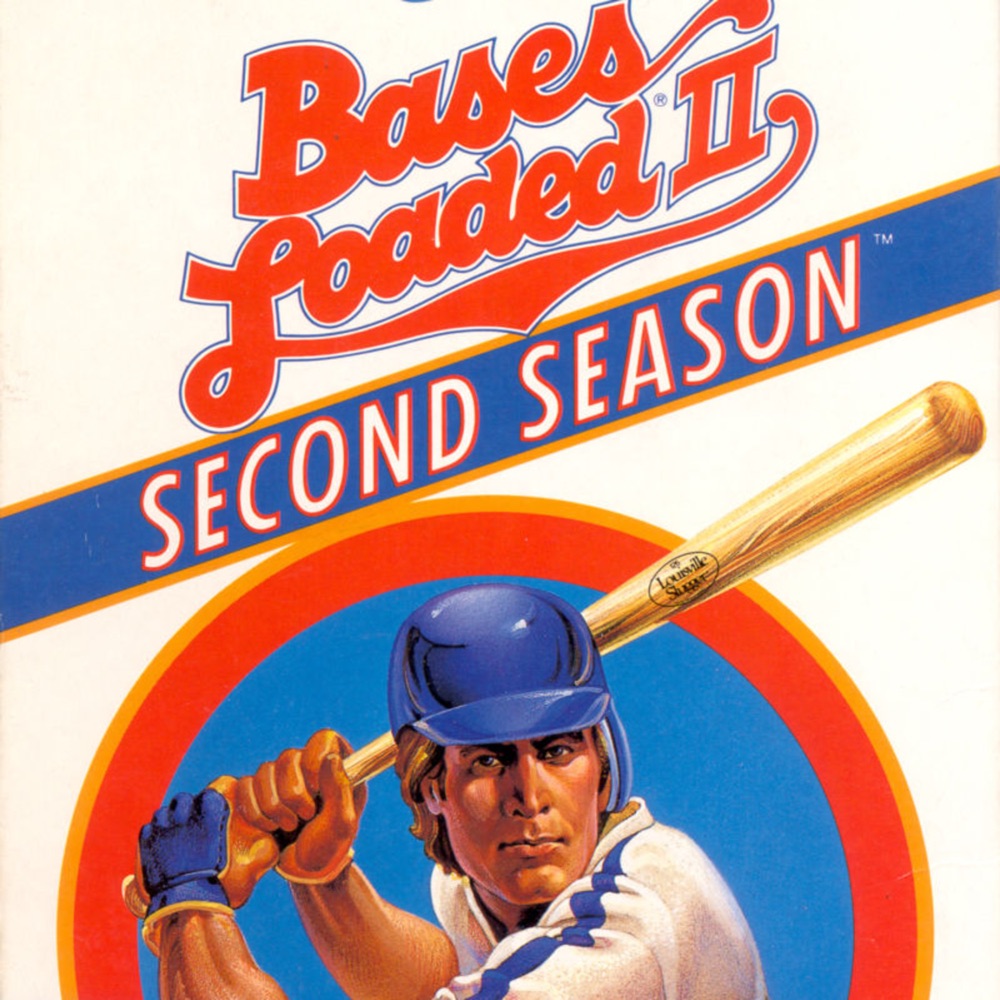
252 · Bases Loaded II - The Second Season
In this version of Bases Loaded you coach your team through a 130-game season in either an Eastern or western division of a professional baseball league. Win the pennant and you're off to the World Series! You can also play head-to-head with a friend.
- DO YOU HAVE WHAT IT TAKES TO PLAY AND MANAGE A WORLD SERIES TEAM
- NES Longplay
- Introductions
- Winter Meetings
- A little Bases Loaded retrospective
- Much more realistic looking take
- FULL SEASON available
- Sluggish feel to the game
- Overview
- So Bases Loaded II is mostly the same game as the original, but with the ability to play and manage an entire season of baseball with players that actually grow and shrink depending on performance.
- Gameplay
- Now let’s talk about that Player performance feature for the game since it is the meatiest addition
- Every player has a physical, sensitivity, and intellectual rating
- Pitcher
- Phys - duration and control of pitching over time
- Sens - speed
- Intell - Curveball
- Batter
- Phys - Contact with the ball
- Sens - Power with the bat
- Intell - Clutch factor, performance with runners in scoring position
- Ratings are dependent on the player, you can’t make a light hitter go lights out with a high sensitivity. He’ll just be hot. The performance is designed to make players hot or in a slump just like in real baseball
- Theres a few camera differences too, did these Help or hurt?
- In Bases Loaded the view was from behind home plate, whereas in Bases Loaded II the view was either from the first-base line if the home team was at bat, or from the third-base line if the visiting team was at bat.
- The point of view once a ball was hit into play was also different
- In Bases Loaded the view was from behind home plate, whereas in Bases Loaded II the view was either from the first-base line if the home team was at bat, or from the third-base line if the visiting team was at bat.
- The speed of the game is slightly faster than Bases Loaded 1
- Games run about 20 minutes each, so without any managing you’re looking at about 44 hours just to complete the regular season which is 130 games.
- at the end you get a single screen that says WORLD CHAMPIONS, followed by 90 seconds of credits, and then a team photo.
- Best Speed Run: Single game, 8 minutes 26 seconds.
- Quirks
- "9-run rule".
- No game was allowed to last more than 12 innings.
- All of the players on the Washington, D.C. team are named after famous politicians, while all of Los Angeles's players take their names from Hollywood luminaries.
- Now let’s talk about that Player performance feature for the game since it is the meatiest addition
- Development
- The original game sold 1.5 million copies and there’s nothing to suggest Bases Loaded II didn’t sell as well if not better. They are still going to make 2 more sequels for the NES and you can pick up the cart today for just 5 bucks.
- The game was novelized by Peter Lerangis, as part of the Worlds of Power series published by Scholastic Books.
- Really weird pick for Worlds of Power
- From the authors website - Since the game itself didn't have much of a plot, Lerangis was free to create a comedic baseball story line; it turned out to be the title he felt was the most fun to write.
- EGL
- I love the idea of players getting hot and going into slumps, it feels like if this was the Baseball game your family bought you could easily sink a ton of time into it. Growing up on N64 we only had MLB featuring Ken Griffey Jr. and between me, my dad, and my brother we all took our chances at playing a full season. But that’s really the only reason you would go through a full season here, there isn’t actually enough reward or dynamic changes across the season to make it worth it. For a game that’s all about selling you on playing a full season, they mostly focused on the repetitive same experiences you’ll have over and over again.
- NEStalgia Byte - All Night Nippon Super Mario Bros. (a look at MANY SMB games)
Auto-generated transcript. Each paragraph starts with its timestamp. Speakers are not identified.
Bases Loaded 2, Second Season. Do you have what it takes to play and manage a World Series team?
And welcome to NEStalgia, a chronological exploration of every NES game released in North America. I'm Mike. I'm Sean. And I'm Joe. Guys, currently in the baseball universe, we are in like winter meetings time where there's a bunch of like owners getting together in what I imagine is a log cabin in a really snowy place because it's called winter meetings. Yeah. And they just like exchange fat stacks of cash for players. Oh, yeah, yeah, yeah. Yeah. I just want to say to our listeners real quick, I'm sorry for putting you through some chewing gum earlier. We were thinking about making it like we were all managers chewing gum. I did it. Didn't sound great.
But I'm going to stop now. I appreciate your effort, though, Sean, because this is a game where you are simultaneously the players and the manager. Yeah. And it's almost like it's great that, you know, there are these there are these baseball games where you only get to play as like half the players at a time. And there are some baseball games you get to play as all the players at the time. And this is one of the latter. A little bases loaded retrospective because this is our first baseball sequel game, a little refresher, if you will.
Bases loaded. The big appeal in that game for us, at least listening back on the episode, was that it had a much more realistic looking take on baseball going for the TV style presentation from center field with the pitcher on the mound and the batter only facing this, you know, unlike all the other baseball games where you then like control from the batter's perspective. This always stayed in the TV perspective.
Bases loaded also had a full season available. What a full season was, I don't quite remember. It might have been a shorter season, not a full 162 games. But that was there. And we also commented that the game overall had a bit of a sluggish feel in terms of pace of play, which would be, you know, a nightmare in today's baseball world because that's all they're trying to do is just solve how to make the game faster and faster. They want these games to be like under two hours.
And they just this season coming up, they introduced like a pitch clock so that pitchers have to throw the ball again within a certain time or else I don't I don't know what happens or else I didn't look that far into it. But what will what will the repercussions be? Can they really do anything? Yeah, there's a 10 yard penalty. Right. The bases come closer to the batters. Second base. Right.
But yeah, I mean, and this sort of sticks with that. What with the bases loaded feel, at least like in that in that hit screen, it still has that more realistic viewpoint. Yeah, I'd say bases loaded to is mostly the same game as the original, but with the ability to manage the players, not only in terms of like building lineups and stuff like that, but to actually have those players grow and shrink depending on their performance from game to game kind of creating the real life effect of being hot or being in a slump. Yeah, not physically grow or shrink, though. Right. Very strange. That's MLB slug fest for the GameCube.
Joe, any takes on this whole player performance feature? So I am always I'm always down for that. I'll be honest. I'm going to need you guys to sort of be my be my eyes and ears as far as like the actual
like roster kind of changing gameplay and like player performance. I did not play a significant amount of like a season. I played like two games, so I didn't really get to like really see what the like what what impact that has on like playing a bunch of games or like what impact it has after playing many games in a row. How you see that like Joe played a good amount of like the career portion or like the management portion of this game on a blanket.
Yes, I tried to keep the rosters managed that way. Yeah, I have a blanket with a grid. I just put up a YouTube video and then I just pretend that I was playing on a dance pad. Yeah. You know, it's funny, Joe. You only said you said you only played two games. And so you don't have time to really know anything about the player performance. Not that like, you know, two games an awful long time. It base is loaded. So I'm not saying you didn't give your fair shake here. What I'm saying is, is that when you start this game, the manual doesn't tell you like there isn't like a cool stats page in the back of the manual for each player and like what they're good at or like, you know, what their initial ratings are.
You boot up the game. You go pick your team and you don't even find out if this team is any good until after you finish your first game. Then you're greeted with the stats after that first game. Yeah, you get like an idea. Like there's, there's something of a, of a presentation where each batter comes to the plate and they've got like stats from last year.
So you kind of see like, oh, they're, they're a batting percentage is up there. The amount of home runs they hit is up there. But like, this isn't based on the game. This is just the game like sort of prescribed these stats to this player. So you get an idea of sort of what their capabilities are from that at least. Yeah, that's a good point. But they, there's an actual like stat for each of those things that is covered inside the game that you can check.
It's different between pitchers and batters, but basically there is a physical sensitivity and intellectual rating for each person. So for the, I'll break it down here. The pitcher physical means that how long they can go and their control of pitching over the course of a game. Sensitivity is their speed on the ball and their intellectual rating is how, how much they can curve the ball, which sounds kind of crazy that it's like, you have to be really smart. Yeah. You have to be really smart to know how to throw the curve ball.
It's all geometry, you know, they do all the geometry in their head. Yeah. And it's funny though, like a really high intellectual player can basically bring the ball all the way from the top of the plate all the way down to the bottom. And so it kind of crosses the entire strike zone before landing in the dirt. And I got to imagine that would fool most human players. The computer seems to have a good grip on things, but most human players would probably swing, you know, before it reaches the dirt.
I'd say so. Yeah. I mean, even, even not even fully grasping these concepts, I think that the pitching on the computer end is still pretty good in this game. Yeah. And then for the batters, physical means their contact with the ball. Sensitivity is their power with the bat. And the intellectual is their like this. I thought this was interesting. It's their clutch factor. They're basically how, how much better they'll be able to put the ball in play when there are runners on either second or end or third base.
So runners in scoring position. And that's kind of more what I wanted to see in this game is what was described in that intellectual factor there for the batter is meaningful team building stats, you know, not just like, oh yeah, this guy, you know, he's, he's tall and he's got, and he's large in weight. So he's got large power, you know, just like comic book style presentation to that. And so, yeah, you might be able to hit the ball harder with him. I liked the idea of players being clutch in certain kinds of performances based on where the rest of their team are and then trying to figure out where you want to slot them into a lineup accordingly.
Yeah. That whole like intangible tangibility, like putting a stat on that is pretty interesting and like, oh, I mean, I don't really know too much about the, the strategy of baseball. I only really know what Mike lets me know, but I would imagine you might want to put him in like the four slot, you know, get a couple of people on base and then he can, he can strike them in. Right. Beautiful, Sean. Very well said. It sounds like, it sounds like Mike is like withholding knowledge from you. Like, oh yeah. He's censoring all your, your baseball. All those Mets games. He just sort of like lets me, I don't need to know basis.
Right. Yeah. It's true though. At the end of the day, the most important thing in baseball, in my, you know, my opinion, there are other people who are going to tell you other stats are very important. War seems to be a very important stat these days. I would argue that the most important stat in baseball is just your on base percentage. Does this guy get on base? And that's like something. Now is that OBPS or is that OPS? That's OBP.
OBP. Yep. Okay. OPS is a mixture of that and slugging. So, uh, it's slugging is like, you know, when you hit like doubles and so on. Oh yeah. Anything better than that. So this way it's like, wow, not only does this guy get on base, but he fucking crushes the ball. Um, so yeah, great OPS would be even more impressive. However, a guy with a high slugging could also have a lot of, um, you know, fly outs and yeah, strikeouts and stuff like that. And that's not particularly useful either.
So all that to say, none of this really matters in this game. Like we're talking a lot of like saber metrics and baseball strategy. Now you don't need that in this game because although the ratings are dependent on the particular player, you, it says in the manual that you can't make somebody who's a light hitter all of a sudden just become the home run King, uh, because their sensitivity is maxed out. It's just, he'll be for those particular set of for like maybe the next game or so he'll be a little better at, at hitting that ball a little harder, but the performance is designed to make the like streaks of, of real life baseball.
And I certainly didn't play the game long enough to experience that, but I'd still say that while that's a really cool concept, it didn't, it didn't affect so much how I was building my team because of the, probably the limited amount of time I was able to spend watching this team grow.
So did you guys feel that, I mean, are you saying that you don't, you didn't feel that it like really kind of did what it was setting out to do? Cause in my opinion, as someone who didn't play enough to like really experience it, like this gives you something that some of the other, many of the other baseball games we've played doesn't, or don't give you because, uh, it gives you like the, gives you incentive
to play a season, you know, rather than just like, okay, you're gonna play a game or you're gonna play another game. You're just going to play 162 games and they're all going to be roughly the same. Whereas this, like the managing aspect feels like it would give you the incentive to like, okay, you're watching your team grow. You're, you have reason to like keep going forward because like you have progress.
Yeah. I mean, if you're asking me if I played this game long enough to see like that very large, overarching game mechanic play out, I did not. Like, I feel like you need to play this for like eight to 10 hours to really get a grasp on that. Am I wrong? No, you're not wrong. And I would just say, uh, to Joe's question about like, is this meaningful? I do think it's, it's meaningful because it does change the player performance, which is much better than just being like, you got to trade players to get better players like that, you know, just having them be flat all year round. It wouldn't, wouldn't be as exciting.
I'd say it's maybe a step below baseball stars system of like being able to train and develop your players. Like this is more just based on their performance in that game. And so if, if they had, if they went over four, their stats go down, you know, and that does make sense and, and translates, but it's, it's not as, um, it's not as deep or as rich. It's just based on how good you are as a player, not necessarily, you know, your entire team, like kind of being like, Oh, well this guy is getting hot, but this guy is cold.
So if this game, if you played this game for long enough and you never personally improved, you might just like bottom out an entire professional baseball team. Like it's just a self-fulfilling prophecy. Yes. If you're bad at the game and now granted, they also make it this way.
Even if your physical stat is like as low as possible, it doesn't mean that you're never going to be able to make contact with the ball. It was the, the guys who have great natural contact stats. It just, it just fluctuates them slightly. And I feel like it's still cool. And since this is the meatiest addition to the game, I, I guess that's why we're spending so much time on it. But you know, there's other things about this game that have changed too. There's a, there's a few camera differences and I'd like to know from you guys, whether you thought these helped or hurt the game.
Yeah. Um, I think that in terms of fielding and making it not quite as unwieldy as some previous games that we've played, this was a, a huge, a huge like addition to the game. Like, uh, the, the angle it's either from like the, the first baseline or the third baseline, depending on who, who's on defense at the time.
And it seems to be that like perfect middle ground of wide enough to know where things are going and sort of have an idea of where your fielders are and close enough to have some kind of control over where you're throwing and like where you're jumping. And I just really liked the way that fielding worked in this game. Yeah. I felt like, uh, fielding in this felt, I mean, maybe I'm misremembering some of the other baseball games, but it felt the most intuitive to control. It felt the smoothest and the most like I'm in one-to-one control of the players. Well, a large problem we have with fielding in a lot of the other baseball games is the
way that you don't see your outfielders, which is arguably a very important position in the game where people are going to, uh, hit pop-ups that should be easy outs. But if you can't see your outfielders, you might not be able to get to the ball where the easy out is in time to catch it. And then that really affects not only the pace of play, but your ability to win games. This something about the speed of the ball in play, and they did change the point of view of where, uh, of how they show the ball that's different than bases loaded one. Something about that I thought was a little easier to register as well. There's still going to be line drives that would be impossible to catch unless you, uh,
you know, you kind of knew where it was coming, or if you saw the play enough, maybe you'd be able to like perfect a, a dive, uh, in a particular direction. I don't, I don't, I can't confirm if that's possible. I'm just saying maybe over time you would learn something like that, but being able to make routine plays and understand, um, controls was very straightforward in this game. And I thought that really helped. Yeah, I think just that, that 25 degree or 45 degree shift for the point of view, uh, really helped just like have your mental map a bit clearer.
I mean, it's not, it's not crazy to think like if you're, if you're at the home base, if you're at home plate looking out into the field, like you should know where your field is. Sorry, that's pretty simple, but that shift, like it clarified in my mental map where everybody should be. So I wasn't like preemptively moving my fielder in the wrong direction for too long to make the play a triple instead of a double or a double instead of a single. It seemed to be a bit more intuitive in that matter.
Other baseball games, I always feel like I'm not, this is going to sound weird. Like I'm not in direct control of the field, even though obviously I am. It doesn't feel as like one to one where like, like I'm controlling a video game character. It feels like I'm, it's almost like I'm putting in an input and it's like picking it up over time or it's like, okay, you want to go this. Yeah. Yeah, exactly.
Like, do you know, do you agree that some of the games are like this? The previous baseball games and even some like, uh, like the football games and some soccer games, it kind of felt like, oh, that's a suggestion of where the defenses shift or something like that. I do know what you mean. It's like you're controlling like the general tide of the, of the game, of the, of your team rather than just like, oh, I'm controlling these players, which is the first one I really
remember. And I'd have to replay bases loaded one, but like I really remember feeling like, okay, yeah, this is just really intuitive. I'm just controlling, you know, the fielder. I would argue, uh, or not argue, but just add that RBI baseball and baseball stars both felt pretty good in terms of controlling the actual players when it came to fielding. It just had a, it was a bit faster. And so maybe it becomes harder to make awesome plays.
And just in general for this game, the pace of play and the speed of the game, they've allegedly made it a faster game than bases loaded one. I still felt like, I mean, games run about 20 minutes each.
And so if you're not, if you're not doing any of the managing of everything, right, if you're just like playing these games and going game after game, after game, you're looking at about 44 hours just to complete the regular season, which is 130 games. And there, you know, there's something to be said about that, that you don't have to play all 44, like a full season should take you at the very least a full baseball season. You shouldn't just be like speed running these baseball games, but you know, that's a lot of, that's a large commitment, 44 hours.
I mean, you know, there are RPGs on the NES that can be completed much faster than that. But if that's the experience you're looking for, and I don't really know too many who do play the full 162 game season in the, in the more, uh, modern games, they're either playing like a creative player, a, a shortened season where you're just playing your guys like highlights or you're playing a shortened franchise where it's only like 40 something games. But like, if that's the experience you're looking for, then it should be offered. And I think that that it, in terms of sports games that are offering a season mode, I think that, that you need that.
It's not for me in terms of baseball or hockey with these 82 and 162 game long seasons, but I think it should be there. Sean, that's a great point because like MLB the show, which is the prestige baseball game of our time, that I don't think lets you, uh, or it's probably buried. Deep within the menu system, play a 162 game season.
It lets you, yeah. There's a franchise mode, but it just says like, you know, uh, we're just going to bring you to the important moment. So it's like, you know, they automatically simulate the game and it's like the top of the seventh and they're like, hold the lead for the last three innings. Like they're not even having you play full baseball games anymore. Yeah, that is def. It's a, it's a toggle. You can play literally every pitch, but it does not default to that.
Joe, any thoughts on playing a full season and the, the length of, you know, you, you've played two games, the length of an individual game. Yeah. I mean, it's, it's, again, it's no secret that these sports games are not for me. I mean, I did grow up once in a while playing different iterations of, of, you know, MLB games or, or even baseball games on the NES because my brother was really into it.
Um, for me, I'm all, when I'm playing a video game, a sports video game, usually it's always too long. It's like, I'm not really the, I'm not really the, um, the best decider of this. I will say that like, I, um, I didn't get bored really fast with this. You know, I, you know, I was having fun. And I think a lot of that was because they controlled so nicely both in, in fielding and in batting. But, uh, so like for me, no, but also I've not really experienced any of these more modern baseball games where you're not just playing full games all the time.
Yeah. It's almost like the, it's a reverse thing now because we're playing, we played the modern games that don't encourage a full nine inning game. Going back and playing a 20 minute long baseball game just to decide the outcome of one game that you then go on and play 130 of, uh, it felt, you know, it felt more extreme, but no one's holding a gun to your head saying you have to play all 130 games to experience, you know, the, the baseball bases loaded to second season. Like you, you don't have to play 130 games. It's going to, you're going to get everything you need out of the game pretty, you know, earlier.
Sure. But I think another reason that it wasn't, it didn't feel as stale to me as it could have right away was, I think this is something I've mentioned on other, other, uh, episodes before is that like sometimes with, particularly with baseball, but other sports games as well, but, but with baseball, like when you're like the pitching mechanic, I never felt like it had it down in a way where I felt like I was using any of any quote unquote skill that would, that would even translate or, or be like adjacent to playing baseball where it's like, okay, you're picking your pitch. You're deciding by hitting this button and that button, but it doesn't feel like, uh,
you know, it doesn't feel like you're doing something that makes it like, oh, cool. It's like, I'm playing baseball a little bit. Whereas this game I felt like did a little bit because the, because the, um, the pitching is based on, based on like your inputs in real time as you're pitching, which obviously doesn't translate to, you know, once you let go of the ball, you're not in control of the ball anymore in real baseball.
But like, it gives you something to be doing where it's like, you feel like you're getting better as a player of this game. I always have a hard time articulating this point, but like something about this game particularly made me feel more like I was in control of like the pitch than other baseball games where it's like, okay, I decide what pitch I'm going to throw.
Yeah. You very much are, um, more so than you should be. And there are in previous baseball games that we've covered, it, it also has this sort of after touch mechanic. I think that this one makes it subtle enough that it, it's a bit like I buy it a bit more, but I've always been confused by this. Like, and it still exists in modern golf games too.
Like that whole like after touch, like while it's in the air, you can make it spin a certain direction so that when it hits the ground, it'll, it'll sort of roll back or whatever, which is not possible. And it's the same with pitching. Like once it leaves the pitcher's hand, like you can, you curve it directly. Um, I always appreciated more like in the, again, in the more modern games where it's just sort of, you play this sort of mini game and that determines how good of a pitch or like how good of a spot you picked and how it's going to hit that spot.
Um, but I do agree that in, in terms of like this flavor of pitching, uh, it, it feels the most complete, um, from what we've played. Yeah. The reason that kind of thing doesn't like the reason that I, that I get like why they're doing it and why it doesn't bother me is because I feel like, yeah. Like to throw a baseball pitch, like it's all about like the, you know, the way you move your wrist and the way you move your arm, which at least maybe back on the NES, like you couldn't really properly translate that to something that was like input. So like all the inputs that they tried to do that weren't like you controlling it after it's left your hand felt like, not like I was playing baseball.
Whereas like, obviously this doesn't either, but it feels like it's like a, it's like a compromise that they're making to like, okay, we have to give them more control. We have to do something to make it more. Yeah. Exactly. Yeah. So like, even though it shouldn't be that way, if you're trying to make it exactly like real baseball, I, I, I understand them thinking like if, if real baseball of real pitching, at least right now with what we've come up with so far, it doesn't translate perfectly to a video game. We have to come up with something different that can like seem like real baseball, but like really doesn't make any sense.
And on the flip side of pitching for batting, uh, maybe just a quirk for me. And I can't remember if they did this in bases loaded because these are the only games that take on this camera viewpoint of from behind the pitcher. But I was really aware in my playthrough of this game, the catcher's mitt and just almost like watching that more than anything else when I was batting, because it's, it's very telling about the location of the ball more so than the ball that's coming at me.
And I know that sounds strange, but you can kind of get a good idea if you're going to get a ball or a strike based on the catcher's mitt ahead of time. So it's not something that a real baseball player can take advantage of, but you can in this game. Yeah. It's like a one to one tracking and you can kind of see like, Oh, if it's, if that mitt is going fast enough that by the end of this pitch, it's going to be like behind the pitcher or like way out to the side, like that's going to be a ball.
And I thought that I noticed that too. And I don't think I've seen that in anything previously as well. And I, that is pretty cool. It's weird. Yeah. And it's definitely a video game only. It's a batting assist, right? It's like, it's an assist mode thing that, uh, you know, I'm not saying they have to turn off or anything is again, it's, it's part of the presentation, but if you saw somebody, uh, if you saw the catcher start with his mitt outside the zone and start to motion back in, you know, that this guy's throwing a curve ball, that's going to wind up back in the strike zone and you can, you know, just time accordingly.
Yeah. It gives you that chance to like, to see it. I mean, obviously it's not easy if you're actually at bat in a real game, but like, there's something more intuitive by about being there and using your own body and your own eyes as a, well, you're using your own eyes, I guess, but you know, like a ball that's coming at you, even though like, I'm sure that it's hard to even like describe how you can see it, but you just do because you're there and it's intuitive and a video game screen with this tiny little dot. Like, I feel like they needed to give you something else.
Since major league baseball and specifically our commissioner is so focused on making the game faster and more appealing for the TikTok generation. I thought I'd mentioned that bases loaded to had a couple more ideas that maybe he might think to incorporate into his baseball game. And that is that there is a mercy rule in this game. If at any point after the fifth inning, you're winning by nine or more runs, the game automatically ends. Same hat with the computer. If they're winning by nine or more runs, definitely not something that's ever happened in real baseball. I've seen teams lose 35 to two, and thankfully that only counts as one loss. That's the great thing about baseball.
Also, no game is allowed to go past the 12th inning. And they have this whole bullshit right now that bases loaded to didn't even dare put in their game where like in extra innings. Now there's a runner on second. But in bases loaded to they're like now the games just end after the 12th inning. So I never saw this happen. Does it just give you a tie? I don't know what that would do to your standings, but it doesn't count. It like doesn't say you lost. It just ends the game. And if you were in a season, it would just move on to the next game. Yeah. So I imagine it has a feature for ties. Just played less game. Yeah.
Like because otherwise it would have to give one team the win and one team the loss and that'd be messy. Right. So theoretically, it has to be tied. Also, since we're talking about how fast this game can be played, there is a speed run of a single game of bases loaded to and somebody was able to complete a single game in eight minutes and 26 seconds. I just think that's a neat speed run of like you have to you have to score just enough to win. So hopefully just hit a home run. You have to win. Okay. Right. Like just hit a home run at the very start of the game and then just proceed to try to get out as fast as possible.
Okay. I would have thought that the speed run would just be like an actual any percent, which is just strike out all the time and just try and strike them out all the time. So that'd be zero, zero or whatever. But like, okay, I like that you have to win. Yeah. And we talked about almost every kind of thing you could do in this game, but we forgot to mention probably the easiest way to get out. And that is the rather unkind base running system that they have developed here because they don't understand how a coach might, or even a manager, because you are the manager,
how they might manage their team and make sure like, Hey guys, if it's not two outs, like don't run on every single fly ball. Like it's probably not a good idea because if they catch it, you have to run all the way back to the base you were assigned it. And this is something that took me a while to get used to that every single time the ball goes into play. If I think that my player doesn't have a chance of making it to the next base and spoiler alert,
they really don't. I don't, I know that like speed is dependent on the player, but a lot of these speeds are misleading. And I think like, even, even at the slide, I think that I was safe, but the umpire calls me out, but you have to be trained to in most balls that are put in play to just say like, Nope, go right back to your base. Like, what are you doing? This isn't, it's not time to take off.
Yeah. They should, they should, they should go halfway and then stop because every time, every time there's a fly ball, suddenly I'm like panicked because I'm like, I have to, I have to like give like, if I've got, if bases are loaded or something, I gotta give three commands. Of like, Oh, go back, go back, go back. Like I gotta like pay it. Suddenly I've got like more managing to do in the middle of this play.
It almost became like, again, I didn't play this game for all that long, but there, there was a moment of just like muscle memory, uh, forming of like, all right, make sure that you immediately bring your runners back to base before you know where it's going. And that's a very, I guess that's a super conservative way to play. But like when you're hitting as many pop flies as I was, then it's probably for the best.
Yeah. And I, you know, I also felt otherwise I felt like I, I, this one, this game was very intuitive as far as like, just like which, um, which runner to select to have them like keep going or to have them go back. But in those moments I was always like too panicked and I'd always forget like it's, it's, it's B and left or like, it should be easy, but like, I would just, I would just get in my own head about it. We used to be upset when there wasn't officially licensed teams. Seems like we've gotten over that once baseball stars made developing your own players cool.
And I guess like developing your own players here too could also be fun. So it's not a huge loss that you can't play as the New York Mets or the Boston Red Sox or whoever you would want to play as. But they did do something interesting with some of the teams. And that is that the, for the Washington DC team, all of the players are named after politicians in Los Angeles. All the players take their names from Hollywood stars. And I think there was one other that I can't remember. Oh, it's in the Japanese game. They did something with like the developers or something like that.
I mean, yeah, baseball stars definitely made me not care as much about that. I still think that it's, it's weird when it's just a couple teams that get like special treatment. I guess you can count that as an Easter egg, but like, how come, you know, Minnesota doesn't have a bunch of Minnesotans on it that like famous Minnesotans, you know? Yeah, all those. Or maybe I'm thinking of Iowa. I don't know. But yeah, it's cute. I would just say it'd be tough to do that for every city. I know. The original Bases Loaded sold 1.5 million copies. And there's nothing to suggest that Bases Loaded 2 didn't sell as well, if not better. They're still going to make two more sequels of this game, Bases Loaded 3 and 4.
And you can pick this card up today for just five bucks. So chances are it sold really well for it to be that cheap of an NES game. Yeah, I guess this is where we start to see franchise loyalty kick in, maybe?
I don't know. Right. You bought Bases Loaded 1, so it's like, you're going to buy Bases Loaded 2. I couldn't find actual numbers for how much Bases Loaded 2 sold, but obviously it sold well for them to say, yeah, we're going to make another one and another one, and then we're going to make more for the Super Nintendo. I know it's funny how many baseball games there are, though, on the Nintendo Entertainment System. Not even just sequels of games, but just competing. These games we played already. Yeah, just competing games because you don't have that anymore. It's either you play MLB The Show or you're screwed. Yeah. Right? Like, does Madden have any competition? No, they signed an exclusive contract with the NFL.
And I don't know if the show did as well with MLB. I just know that I was under the assumption that EA was going on a hiatus with baseball, but I don't remember the last time EA released a baseball game. Yeah, the last one I could think of is back in 2005, MVP Baseball. That's the GOAT.
By a lot of people, not just me. It is considered, yeah, MVP Baseball 2005 with Manny Ramirez on the cover is considered. That game let you, you talk about being a manager of your team in Bases Loaded 2. In that game, you were like the owner of the actual team and could set the price of the popcorn in the stadium. Okay, yeah. So this is like rollercoaster tycoon. Yes, yeah. It had a whole other mode to it.
Yeah, that sounds like late 2000s Madden as well. I think they kind of got rid of those things or at least reduced how important they are to your financial well-being. But it also sounds like the year 2005 was just the high watermark for alternative sports games because, you know, that's also ESPN NFL 2K5. So that was, I gotta start playing more 2005 games.
This game, believe it or not, was novelized as part of the Worlds of Power series. You know, the books that we've been covering for like Ninja Gaiden and Blaster Master. Well, Bases Loaded 2. Not Bases Loaded 1, keep in mind. But for this sequel, they were like, we really need to lock down a Worlds of Power book for this one. And it's a really weird pick, and I didn't look up the plot or anything, but from the author's website, he says that since the game itself didn't have much of a plot,
he was free to create a comedic baseball storyline, and it turned out to be the title that he felt was the most fun to write because all the other ones he kind of had to adhere to the video game plot. Well, I can't wait until we read that for our listeners. Yeah, if you want to see content like that, just let us know. We'll do a whole Worlds of Power series and then get cease and desist letters in the mail. One thing that we don't do by mail, but we do on the podcast, is the Essential Games list.
Sean, your vote for Bases Loaded 2, second season. Oh, it is still December, isn't it? Yeah. Yep. This is one of my final votes. First. My final first vote. Yeah, so we put Baseball Stars on the Essential Games list, and then we took it off not too long ago.
And as much as I think this is a very competent baseball game, and a lot of the mechanics that they're adding and changing, I like, but if I had to take off Baseball Stars with all of its fun amusements, the metagame stuff that seemed like no one else was doing that, I can't in good conscience put Bases Loaded 2, second season on here. I think it's very good, but it doesn't have the personality that that has, and in sports games that's very important, so not essential. Joe? I think we use this argument of, like, if something better comes along,
it doesn't mean that the earlier thing is still not, doesn't have value. And then we also use the argument that, like, hey, this is better, so I don't need to play this one anymore. Like, we use those both. I think we did that in the best of, I think we talked about both those things in the best of 89. And I just want to clear that up with this vote, where I think that there's a difference for me with, like, a baseball game, where something comes along in the future. I know plenty of baseball games will come along after this,
that will make me realize, like, okay, this has improved the whole formula of this, and there's nothing left in that older baseball game that makes me need to go back to it. And then there are other games where it's like, oh, this has improved the whole formula, but there's still value. I don't want to say value, like there's no value in this game, but, like, there's still something about Super Mario Brothers
that is fantastic in the gameplay and in the charm and in the environments and in the levels that, like, just because Super Mario Brothers 3 exists, I don't have to go back to it. But with a game like baseball, it's hard for me to feel that way about it, because it's like a lot of them are trying to do the same thing. So when one improves on the earlier iteration,
it is hard for me to say, like, yeah, this is an essential game. Like, if you want to play a baseball game, it's got to be this one, or, like, this has to be one of them. So I'm going to say no. I would say that this could be maybe an essential NES baseball game of all the NES baseball games, but I just think, you know, go play MVP 2005. I hear that's a good baseball experience. Rumor has it, that's all I let Sean know. Yeah. No, yes, exactly. You know, I love the idea of players getting hot and going into slumps and trying to just do something to emulate the season experience.
Everybody who's a fan of any particular baseball team will note, like, my favorite player is my favorite when they're good. And it's like, then they start to, you know, have, like, four strikeout games in a row, and you're, like, start booing them, and then you love them again when they get hot. So it feels like if this was the baseball game your family bought
and that was all you had, or at least until bases loaded three, right, you could easily sink a ton of time into it and try to get far into a season. I'm not saying you're going to complete the whole season and questioning if that's even worth it because you get a screen that says world champions followed by some credits and then a team photo, and the team photo is stock. You know, it's not like your experience that experience across the 130 games changes what happens in the photo. So not sure how much that's worth it. My point being, wrapping it back up to my own childhood,
growing up on the N64, we only had MLB featuring Ken Griffey Jr. And between me, my dad, and my brother, we all took our chances at playing a full season. And I think the closest we ever got was, and it was 162-game season, the closest we ever got was, like, 120 games in. And then you just, like, I don't know, you get tired of it, you stop playing for a little bit, you forget what happened, and you just start a new season. I never got to the end of a season,
and I never felt like, oh, this game stinks because I never got all the way to the end. But that's really the only reason you would go through a full season here. There isn't actually enough reward or dynamic changes across the season to make it worth it. And for a game that's all about selling you, I mean, the first thing in the back of the box was, can you play and manage a World Series team? For it to focus on that,
they mostly focused on the same repetitive experiences that you'll have over and over and over again. And for that, it doesn't really stand out too much, other than the little details we mentioned, against all the other baseball games we played on the NES. So I don't think it's enough to make it pop. Are you a bad enough dude to win the World Series?
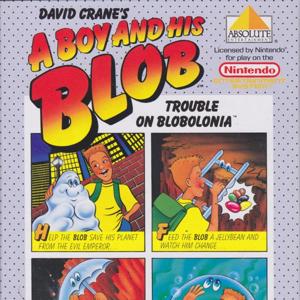
Next week, we are playing A Boy and His Blob Trouble in Blob-alonia. And that's like a cult classic game. I don't think, I think the verdict's out on whether that's a good or a bad game, but you should let us know. Write in to us on www.nostalgycast.com. And there's a little contact button. Write in and say, I think A Boy and His Blob is pretty good, but only the Wii version. Like, yeah, give me your hot takes. I want to hear them. And for everybody who's just a patron, they'll also be able to look forward to our next Nostalgia Bites episode, which is All Night Nippon Super Mario Brothers. And I know what you're saying.
That's just Super Mario Brothers with like some DJs coming out of the warp pipes instead of piranha plants. Don't worry. It's not just a look at that game. It's a look at many Super Mario Brothers games. And we're gonna look at so many different ones that I can't even cover them all here. But if you really want to see what they did with Super Mario Brothers elsewhere, not even just on the NES, this is the episode for you. And you can join that at patreon.com slash nostalgia. I'm Michael Esposito. You can find me at Esposito Film on Twitter. And I'll talk to you soon. But if you want to see... ...