258 · Genghis Kahn
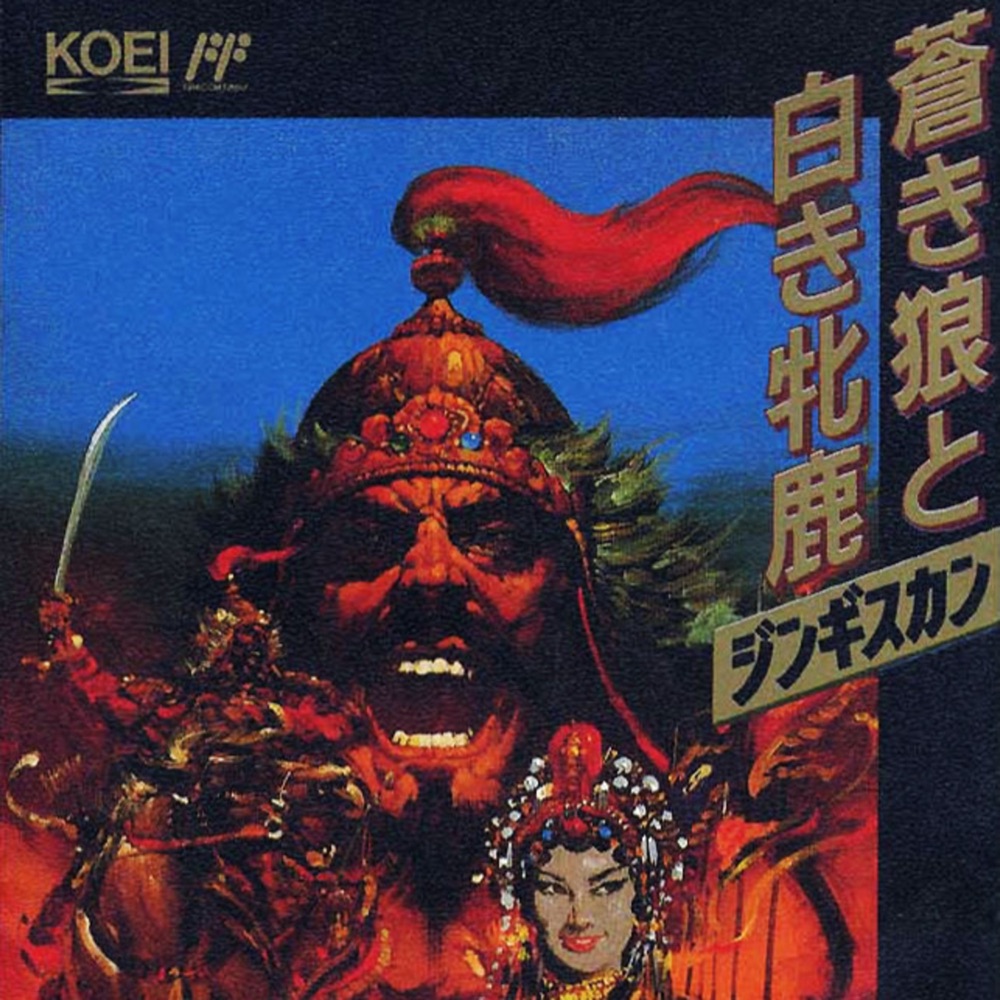
Genghis Khan is a top-down 2D turn-based grand strategy game, based on the real mongol leader Genghis Khan's life. The game's main objective is to become the supreme ruler.
- LIVE SECOND CENTURY CHINA
- NES Longplay
- Introductions
- Koei persists in porting their grand strategy games to the NES.
- Overview
- Two modes
- Mongol Conquest, which begins in the year 1175 A.D, which is a one player mode. Players assume control of Lord Temujin
- World Conquest, which begins in the year 1206 A.D, is started by choosing the number of players and difficulty. It supports 1-4 players. Players must choose who they want to be; Genghis Khan (Mongols), Alexios I (Byzantine), Richard (England), or Yoritomo (Japan).
- Afterwards, take over the last country. When you do, you shall get a screen talking about how the real battle begins. You will then be elevated to the World Scenario, intact with your stats from the Mongol scenario. It will then take about one or two minutes (I am not joking) before you can get set.
- Two modes
- Gameplay
- make three choices. These choices include training the troops, buying a certain product/quantity from a merchant, drafting soldiers, sending a treaty, or going to war. Each act takes one choice away until the three choices are used; then the cycle continues. Once every country has used their turns, the season changes and the cycle goes through again, but in a different order.
- Because these games are like Historical fiction, is there a case for them also making a historically accurate mode?
- Use the market fluctuations to your advantage. When Spring comes around, sell off some of your items to get lots of Gold, then when you get to Winter, buy back what you need. This cannot be stressed enough; if you want to win, you NEED to sell and buy accordingly so you have a healthy dose of money.
- Armağan Yavuz, the co-founder of Turkish developer TaleWorlds cited Koei's Genghis Khan as an influence on their Mount & Blade series
- Sequels and Spinoffs
- Not the first Ghengis Khan game
- Aoki Ōkami to Shiroki Mejika (蒼き狼と白き牝鹿, lit. "Blue Wolves and White Does") - 1985 (PC-98, PC-88, MZ-2500); 1986 (MSX, FM-7, X1)
- Genghis Khan (蒼き狼と白き牝鹿・ジンギスカン, Aoki Ōkami to Shiroki Mejika· Genghis Khan) - 1987 (PC-88, PC-98, MSX2); 1988 (MSX2, MSX); 1989 (X68000, NES, DOS); 1990 (Amiga); 2003 (Windows); 2007 (Cellphones)
- Genghis Khan II: Clan of the Gray Wolf (蒼き狼と白き牝鹿・元朝秘史, Aoki Ōkami to Shiroki Mejika· Genchou Hishi, lit. "- Secret History of Yuan Dynasty") - 1992 (PC-88, PC-98, MSX2); 1993 (FM-Towns, X68000, NES, SNES, Mega Drive, Mega Drive CD); 1998 (PlayStation)
- Genghis Khan: Aoki Ookami to Shiroki Mejika IV (チンギスハーン・蒼き狼と白き牝鹿IV) - 1998 (Windows); 1999 (PlayStation)
- Not the first Ghengis Khan game
- EGL
- Next week -
- NEStalgia Byte - Bio Miracle
Auto-generated transcript. Each paragraph starts with its timestamp. Speakers are not identified.
Genghis Khan, Conquests of Love and War.
And welcome to NEStalgia, a chronological exploration of every NES game released in North America. I'm Mike. And I'm Sean. It's just us. Yes, just us and Koei, who insists on porting their grand strategy games to the NES with their third entry in the... Is this a franchise? They're all like different franchises. I'm going to call it a franchise. It seems to be based on like the same systems and bones, and it's the same people, so yeah.
It's just funny because like Romance of Three Kingdom got like 13 games. Nobunaga's ambition is going to get a sequel. I believe Genghis Khan is going to get a sequel. So then are those sequels also part of this franchise? This is like very confusing stuff. All right, so let's not call it a franchise. Let's call it a family. Yeah. You got... It's like, you know, how there are a bunch of Hardys and there's also a bunch of Carl's Juniors, but they are basically the same.
I think that's how that would work. I thought Hardys and like... Oh, no, wait. I'm thinking of Rally's and Checkers. Maybe I'm thinking of Rally's and Checkers. Yeah, I've never been to... I've actually only ever been to Checkers out of the four we've listed. Is Carl's Juniors any good? I don't know. I've never been there. Hmm. You went to California recently, In-N-Out Burger? In-N-Out Burger is a place I've been to. It's good. That's good. I've had that. I've liked it. I like burgers, mostly.
Burgers, especially on the fast food variety. But you know what? Fast food and these kinds of games are very similar because whether you go to McDonald's, Burger King, or even something fancy like In-N-Out where it's like, oh, we're exclusive to the West Coast. Like, come find us. No matter where you go, you're getting the same burger, right? It's got all the same elements. Yeah. And yes, the cheeseburger mostly tastes the same except for like, you know, the patented bun strategy of like how much sugar they're allowed to put into their buns that somehow stay well. Yeah, exactly. Yeah.
And that's what Koei's doing here is like, their slogan is, they supply the past and you make the history, but they're just supplying you the past piecemeal. Like, they're saying like, okay, now play as the Mongols. Okay, now play as China. Now play as Japan. They're not giving us the past all at once and they're not really doing much to change it. So whether I'm in Japan or China or now with the Mongol Empire, I don't know.
I'm not really feeling the differences. Yeah, I mean, there's some base level mechanics that are changing here based on whatever game we've played that sort of fits with the theme of the, of whatever time period they're trying to cover. Uh, I don't really, I, I, I can't really focus on which ones like romance did that was different than, uh, that was different than Nobunaga.
But this one seems to have changed the most. And at this level, it's almost like we're trying to tell the difference between like Madden games from year to year because their systems are so similar. Yeah, that's a good point, Sean. Um, maybe a more like apt or gaming, um, analysis would have been like the, the monopoly games that are, uh, you know, every single one is like, oh, they just changed what boardwalk is right to like whatever that franchise or IP is.
But then occasionally you get one that has like in the manual, if you bother to read it, it's like special fun rules that like they try to tie into the IP. So this way it's more like that. And it's like, no one really reads that. So you could just play it the same way and not notice any of the differences. But if you do go the extra step and find out that like, oh, in the, in the Simpsons version, it does this, but in the New York Mets monopoly version, it does this. That's not true. By the way, I don't think either one of those do anything different. I own both.
Um, you know, I'm playing the same, I'm playing the same game both times. And that's kind of what I feel like regardless of like the little changes, but there is is boardwalk just Mike Piazza as like a person. It's just like him. I think it's actually, I think it would be Shea stadium at the time, which makes sense, right? You make the actual stadium that you play at the final destination. Mike Piazza is probably like in the greens, you know, the greens are valuable.
All right. Genghis Khan though does make changes though, Sean, and you're right. I'm not, I'm not fully giving it the credit that it's due because it actually adds, um, unlike what Nobunaga was doing, where it was like, Hey, you can play as like six of the countries, uh, six of the territories, or you can play as all 50 something of the territories. This one actually takes the time to be like, no, the two modes are actually going to be something kind of different where like Mongo conquest, which starts in like the year 1175.
Um, that's like a one player mode where you must play as a specific Lord and conquer a specific set of territories. And it's not, it's not super linear or anything, but you know what to expect and can get better at playing that very specific version. Yeah. Whereas like world conquest or any of the other, you know, Nobunaga's ambition or romance of three kingdoms, that's more of the grand strategy. Like anything can possibly happen. There's no way to keep track of like what country 35 is doing.
You just gotta, you know, you just gotta hope that when you get there, you're the stronger army. I wouldn't say that mongol conquest is any easier than world conquest, but it definitely is smaller in scope. So it can almost be seen as like a dry run or as just like a tutorial.
Yeah. And I'll be honest, that's the only mode I really checked out for this game because it was a little more accessible to the point where this is the first time I was able to go on game FAQs and actually get a,
a guide that I could understand and like sort of mimic and yeah, the turns wouldn't work out exactly the same way. So it wasn't like I was playing someone else's game verbatim, but at least I had a good starting point of like, all right, make treaties with these guys,
build your army for this size. Like that's great because that's the kind of thing you can't anticipate in world conquest because you don't know what the surrounding armies are going to even like be what their base stats are going to be or what kind of army they're going to turn out to be or whether they're even going to focus on building an army and whether you could just steamroll them later. Like that's hard to find out in the world conquest mode. Yeah, I think again, one of my biggest problems with this series has been how opaque the stats are.
And I know that we played three of them and you'd think that I'd have enough like time with them by now that I can kind of get some relationships between stats that just make sense. But I still am not there. But what I would say, like what I mean by that is like, I don't know how many troops is enough to think, okay, I can go to war now because like 50 something might look like a high number to me. But then I'll go to war and it's like, oh, he's already got like 2000 troops or something.
But what I will say about Mongol conquest is the map is a lot easier to digest and kind of like keep a mental image in your head. Like you can see that there's sort of like a choke point in territories right in the middle. So you you kind of want to consolidate on one side before you move over to the other just to like minimize the amount of lines in battle you might have or enemies that want to like attack your flank.
So I will say that it's easier to think tactically on the grandest scale in Mongolian conquest. And also you're able to make three decisions on on the kinds of things you want to do with your empire per term, which is great because, you know, in the past, it's like everybody makes a move and then everybody makes a move. This time, it's almost like, you know, first, I'm going to train my troops.
Then I'm going to try to sign a treaty with these people. And then if they don't sign it, I'm going to freaking fight them. You know, like you don't have to wait all those turns to find out what's going to happen next. Yeah, it it also kind of because when it's just one move per turn turn order, I feel like becomes a problem because you can only do one thing, obviously. So if you just if by some for some reason, country 12 goes before country 13 country 12 has an advantage.
Now that you can kind of just like weight your priorities, you can do the three things that you meant to do in those three cycles. But now they're all happening concurrently. And you can think a bit more.
To me, it just feels a bit more leveled out because of that. You made me think of and I don't know if the original risk board game does this, but certainly the computer version of risk that I played growing up did. And more famously, the board game diplomacy, which can only ruin friendships, never restore them.
Yes, those those games have a way so that like you decide your moves, the computers or fellow opponents decide their moves. And then they're all executed like at once. And there's some contradictions that have to be like worked out or some conflicts that need to be fought because, you know, you chose to fight this army. But then this army invaded you.
And it's like, well, that's what you decided. You know, like those kind of thing work out. It is interesting that like, you know, for a thing that's trying to like simulate history, the idea of like going in turns doesn't necessarily like it doesn't work. And at the very least, it should it should probably be random. The turns like after each turn should be like a random drawing of the like who goes next after everybody's gone. Yeah, and I guess in a single player game, it may as well be sort of like that concurrent execution.
And then whatever gets priority is random. But because like, you know, the computer, you can't see what the computer is doing. So it might have incomplete information on you. You have incomplete information on them. But when you get to like the four player game, when you're in World Conquest, then that's kind of when that would take a take a bigger it would cause a larger issue, I guess. And because these games, especially from Koei, are treated like historical fiction. Is there a case for the historical nonfiction or rather historically accurate mode where like everybody else other than you does behave as expected and you can just choose to, you know, use that history knowledge to either watch it unfold or take advantage of it and rewrite history?
Well, I know that in some paradox games, it's a lot harder in something like in something like Crusader Kings when there are hundreds of agents. But in something like Hearts of Iron, which is just a simulation of World War Two, there's only like a hundred or so different countries that have their own AI.
There's a checkbox before you start a game that you can either check or uncheck that determines whether the AI will behave as they did in real life to the best of its ability, you know, considering how you change your behavior as opposed to the actual country.
Or you can just have it be random. And yeah, I really don't know if any of that is in this game. Like if if the AIs have predetermined routines that you are interacting with or if everyone just sort of has the same personality across the board, I'm not really sure. And it'd be interesting if, you know, in history, territories five and six, which are not actually they're not actually next to each other. That's another thing, you know, just real quick, because we were talking about this in our Clash of Demon Head episode that like the numbers for the routes weren't concurrent. So it wasn't like one, then two, then three.
It's also like that in this map. Like, why not just make it so that it just goes from left to right, you know, territory one, two, three, four. Instead, it's like they're kind of near each other. It's like serpentine. They don't touch. Yeah. It starts from like one corner and then it goes to the left and then to the right and to the left. It can be confusing because then it'll be like this country has has ordered you to give this plot of land to them or or to make them a vassal. And by the time I'm at the screen that is telling me that this country is telling me to do this, I don't know who's actually threatening me because it's just giving you a number and I don't have the map memorized.
Yeah. And then to round out my point, there is just that if it was historically, I agree, like territories five and six to had like a peace agreement in real life that like, yeah, they shouldn't fight in the game. Or at least there should be a checkbox for that, like what you were suggesting with Hearts of Iron.
Yeah. Now, the arguably the easiest way to win this game and there is no easy way to win this game, but it would be to master the thing that has annoyed me the most about this game ever since Nobunaga's ambition and the thing they really refuse to fix and fix in a meaningful way. I'm not talking about like, yeah, they make quality of life improvements, but they need to revamp the combat in general. And the combat in this game is something that like if you understand it and you know how to use the numbers to your advantage and where to be on those maps and how to fight, you're going to steamroll the opponents because it's all about, you know, just having a larger army and conquering smaller territories to eventually conquer everything.
That's where I struggle with this game. I feel like even though it's close to a turn based strategy game, it's not that and I can't do that. So, well, I think that that's the easiest solution. A lot of people would argue also that there's this whole market manipulation thing that you have to understand and that that's the real way to win where like, you know, once you get to spring,
that's the time to sell off all your items and get a lot of gold. And then when you get to winter, that's when you buy back everything you need for the following season so that this way you always have exactly what you need and can anticipate the, you know, the quantity of your army, your people, your taxes and so on and so forth. You know, that's more exciting to me than the combat. And that means that something's probably wrong with the combat. Yeah, well, okay, let me just again describe, I think, in a bit more articulate way what I don't understand about like the overarching economic and like overview tactical level of this game.
In any other strategy game like this, I kind of get the gist of how to scale and how to get that positive feedback loop of growth going. But in this, I like I went to war, I beat the guy, took his land, and now I've got a barely defended now two plots of land that I guess I have to wait till the next year to get more troops unless I want to hire some more. But my gold reserves are down because I used it all to fight the war.
And I guess I can sell some food. But then again, I don't know how much is going to be taken during the next season. So I don't want to mess with that too much. So you end up in a way where like, you know, in something like Civilization or like Crusader Kings again, or one of these paradox games, you can kind of have an idea of how to extrapolate how to get from where your resources are currently to where they are in the future.
And I just had, I was just the chicken with my head cut off. I didn't know what I was doing with it. The combat, while it is jank, I at least understood what like what attrition would be walking through woods. And yeah, the like the eight directions or the six directions you can go choosing between those is kind of wonky. But I understood what you're supposed to do. And if you end up next to an enemy, you won't be able to move any further. And I understood that different areas had different offensive and defensive buffs. And I like I got that. That was understood to me. Everything else was not.
Arguably the most interesting aspect of the Mongol conquest thing, if you can get to it, is that once you do conquer every territory, then, you know, a screen presents you with the information that the real battle is about to begin. And you just load into the world conquest mode, but with your stats from the Mongol conquest mode. So I think like that is that's a real like, whoa moment, you know, like an aha thing to happen to somebody who manages to get far enough in Mongol conquest to then import their save into the grander game.
That's just crazy. Yeah, I mean, I I had a weird feeling of just like, oh, this is like Spore, but actually impressive when you get to that that threshold. Because, you know, in Spore, you go from, oh, you're just a you're just a thing. And then, oh, now you're a tribe. And now you're a nation state. And now you're the whole world.
And just that expansion of scope over time. I like that idea. And I've always like, you know, when I was a kid, I'd be like, oh, it'd be really cool if like the Sims tied into Sim City tied into like a nation running game. Like, that'd be so cool.
As a simulation. I knew it wasn't really feasible. But when you when you nail it down to just like, OK, consolidating the Mongol Empire to then becoming the Mongol Empire and trying to conquer the world. I guess when you when you nail it down a bit more, you can actually implement that. Right, right. And then, you know, the equivalent for that would be if there was a way to hook up like two NESs so that I had Genghis Khan in mind and you had Romance of the Three Kingdom in yours. And then I was able to take my final file from Genghis Khan and your final file from Romance of the Three Kingdoms. And we duke it out based on our empires.
Like, that would be what that is. And I think that's the kind of stuff that makes like, you know, we're not supposed to talk about these games. But like Sonic the Hedgehog 3 and Knuckles, like the fact that it does open up and then you put the other cartridge on top. Like, wow, what a time to be alive for something like that to happen. And that's not even like a grand strategy game. That's just a platform that gets some extra levels.
No, that is funny. I didn't make that connection. You know, you have to assess if that's worth it, though, right? Like playing all of Mongol Conquest and then saying like, yeah, no, I haven't had enough. I'll definitely keep going and now conquer the world. Like, I guess you have to be Genghis Khan himself to really have that kind of thirst, right? To say, I'm going to keep going. It wasn't enough. I mean, I think if you've gotten to the point where you actually won Mongol Conquest without a game FAQ, then I'd say that you'd be maybe not blown away because, you know, you saw that the other version was an option at the beginning of the game.
But you'd be interested in continuing. But you don't have to play as Genghis Khan in the World Conquest mode. In the Mongol Conquest, you have to play as Lord Temujin, but in World Conquest, you can either be Genghis Khan, who represents the Mongols, Alexios 1 of Byzantine, Richard of England, or Yorimoto of Japan. And I feel like it's pretty interesting that like, I don't know if those are exactly the world players or if that's just like what they had in mind to make it a more interesting game. Like, you know, boiling it down to four, meh. Like, the world? Come on. I think they sort of lumped in a bunch of leaders that were active more or less than a couple hundred years of each other.
Yeah, I don't really think that they all like, they all got together and decided like, all right, it is now a conquer the world competition between the four of us. Because you must begin in the year 1206 or something like that. Um, but, yeah, it is weird because, you know, we're used to in this series, uh, everyone kind of almost being at a level playing field, having like one province. And then it just sort of organically blobs and then you'll get empires out of nothing and some will disappear within the first few years. And so this feels a lot more structured when you just have these four mega empires and they just sort of pick on the little guys.
Uh, but at least it's, you know, it's one of those differences. And so it's not just like a reskin. Yeah, that's true. Even if the, you know, the grander game doesn't necessarily change, right? Like no, no system, no additional systems are added or, um, there's no, uh, new politics because it's the world stage instead of just your, uh, local territory versus territory. So, you know, it evolves a little bit, but really it's just a, a longer, uh, larger map. It's not necessarily, uh, a different game than playing the Mongol conquest. Although this time the type of role play you could do might be different if you choose to be, uh, as far out as England as opposed to being the Mongols.
Yeah, it would be cool to see if there were any actual mechanical differences between these four empires. Like if they're, I mean, even something that could just be tweaking numbers, like having, uh, like the English have longbowmen and the Mongols have a special kind of cavalry unit unit or just something like that. Because really they're just, they're just different portraits and different flags and I guess different name, what name lists that it generates children for you from.
Uh, it doesn't really feel like different civilizations colliding. Right, right. It's, it's almost like, you know, you could play as the Japanese, but because of their location, it's kind of difficult to play as them. So it's actually just like a difficulty setting, not necessarily like they behave differently, which is more of a civilization.
Uh, especially like Civ 4 when you start like being able to choose your leader and getting that leader's stats and that nation's perks and stuff like that. That's more of that kind of game. But so Koei wasn't like, you know, uh, on the up and up with that kind of stuff. They needed other people to innovate for them, but it is interesting that like, you know, there is some kind of difficulty curve based on, um, you know, who you choose.
Yeah. Is there, did you play as Japan or did you play? I didn't touch world conquest actually. Oh yeah. I just figured. I actually don't know if there'd be another, like, like they have to cry. Cross a straight to get to the mainland. I thought it, maybe that would add something to that. But I think if I, if I'm remembering right, they just act as if it's just another, you know, province or another land to move from or move to. Right. Crossing that water doesn't really play a factor.
Yeah. And instead it actually like, it does the risk thing where, sorry, the board game risk where certain, uh, areas are just like great because they have such great defensive holdouts where, you know, if you can, if you can conquer, uh, Australia and the Philippines, you can just build your massive army out from there and then send them forward. Because nobody can like, nobody can get the, figure out the technology to send boats from Madagascar or boats from, uh, Peru or anything like that in order to, um, to, to get over to you. Yeah. It has that, uh, natural, just you've back, you're, you're in the corner. You don't have to watch your back. And I think it would have been, uh, Chile was what I was looking for.
Not Peru. Right. Sure. I mean, one or the other. Yeah. They're next to each, they're next to each other. So like, I guess it works. I was thinking like the most Southern, uh, South American, uh, uh, country, which I'm not sure is Chile either. Is Argentina like technically a little more South? Who gets the, who gets like the final thing? It was funny when I was in Hawaii, there was a bakery all the way at the Southern most point that advertised itself as the Southern. Southern most bakery in Hawaii. And I was like, I mean, it's the most bakery in America. And I was like, eh, is that really like a selling point? Is this bakery going to taste any better because it's the Southern most bakery?
It, it would be Chile if you're thinking of the Southern most point in South America. There you go. And also risk people, if you're listening at Antarctica, it's time. Yeah. We're going to be living there soon. I don't know why we keep talking about board games in this episode, but I don't know if you remember Sean, in college, we did play like risk space, which was just risk on earth, but maybe like a little like futuristic tech and stuff.
But then also had, it had the moon as a map as well that you could try to conquer. And we put that, we put that in another room so that you actually had to travel to the moon if you wanted to do anything there. I don't remember having to move to a different room. Yeah. No, we put it in my, we put it in my apartment room and the, the board game was in the kitchen.
Okay. Yeah. All right. Well, we should do that again. All right. Why not? Sounds great. And we'll invite all the discord listeners as well. Not that you can listen to these episodes directly on discord. You have to, yeah, you guys know what you have to do by now, right? I tell you at the end of every episode. So, you know, unless you're not listening to the end of the episode. It's not the end of the episode actually, because we haven't done a few things. Oh, most importantly, I haven't told you that the people who make a mountain blade, that whole
series of games, they say that Genghis Khan was the influence at the beginning of that series. And, um, I needed to tell you that because that's the only kind of background developer insight I could get for Genghis Khan. That's interesting. I did play mountain blade very briefly before, again, I got dissuaded by, by the complex mechanics that I guess I just didn't have time to learn. Uh, but I have other friends that have a lot of fun with that series. Yeah. How much of citing it to Genghis Khan though comes from the fact that like they finally got a good title on one of these games.
Nobunaga sounds foreign. So people probably wouldn't just go pick that up if they don't necessarily know who he is or weren't into Japanese culture. Romance of the Three Kingdoms sounds like a JRPG if I'm being honest, but it also just seems like it could be like some sappy game that because there's romance in it, kids aren't going to be interested in it.
And so Genghis Khan is finally like, yeah, that epic historical guy who tried to kill like everybody and breed all the others. Like, that's who I want to, that's who I want to play as. Like, that's the kind of game I want to be. And yeah, you might not even know that it's going to be this grand strategy game. You might think this is going to be some Ninja Gaiden action game where you're just, you screwing shit up. But instead, you know, you get a history lesson. You take it to your social studies teacher, figure out like, what do I do with this game?
Yeah, I think that actually my favorite title in this series is Romance of the Three Kingdoms. I didn't know about the book before we recorded the episode. I just thought it was a pretty awesome title. But I will say that, you know, when I was reading about these games in like PSM magazine and AGN and whatever, I did think it was like an adult game for adults and it wouldn't be fun. But, you know, now that I'm older, it's just like a really cool, just like, wow. Right. And I think at another scale, it could be Romance of the Three Kingdoms sounds like a soap opera. Could have been right after, you know, One Life to Live or All My Children.
Romance of the Three Kingdoms. Yeah. Sappy stuff. On the sequels and spinoff side, we did mention that there will be a Genghis Khan 2. It's called Genghis Khan 2, Clan of the Grey Wolf. And that comes out in 1993 for, get a load of this, the NES and the Super Nintendo at the same time. So are they the same game? Are we just going to be playing the dumbed down version? Should we check out the Super Nintendo version at the same time to make that episode a little interesting? I don't know. We'll cross that bridge when we get there, right?
Yeah. But this isn't even the first Genghis Khan game. The first Genghis Khan game, I don't, it's a bunch of like, it's a bunch of Chinese letters that I'm not sure I'm going to get right. So I'm not even going to try to say it or whatever. But it doesn't look like it has Genghis Khan in the title. It looks like the literal translation is Blue Wolves and White Does. Which, again, sounds again like a Romance of the Three Kingdoms thing.
Well, the thing at the beginning of the manual, and I guess also there's a little text box at the beginning of the game, does say that like, like a wolf and a doe were like a king and queen of Mongolia, and then, you know, divine right happened. So, I mean, at least it thematically makes sense. Okay. So, look, if you look at it, you got Blue Wolves and White Does is technically Genghis Khan 1. And then Genghis Khan 1 is just Genghis Khan 2. And then Genghis Khan 2, Clan of the Grey Wolf, should be Genghis Khan 3. So it makes sense that when they finally, in 1999, PlayStation released Genghis Khan 4, there were no questions about where 3 was because everybody knew that 3 was 2.
Okay. Wait, so what was the first one? First one is Blue Wolves and White Does. And what was that released on? That was released in 1985 for the PC-98, PC-88, and the MZ-2500. I swear they're fucking with us sometimes with these things. Like, they just throw on, like, a couple extra letters, and it's a brand new computer that only was released in, like, New Zealand.
I don't know. It would come to the MSX, though, and that's a console that we're more familiar with. Okay. And it's just this game again. Well, theoretically, yeah, but it's the inferior version because it doesn't have the same graphical fidelity or... features because it's the first entry. Yeah. But we're not here to talk about the first version or the fourth version or whatever other numbers they want to throw at us. We're here to talk about Genghis Khan 2, which is 1. All right, I'm beating this joke to death. We're here to talk about Genghis Khan and whether it belongs on the Essential Games List.
Even though Koei keeps making these games, I don't think at the time they were doing anything wrong by switching very little between the versions. And in fact, Genghis Khan is without a doubt the best version yet because of the, like, turn system, but also the ability to play a single-player mode that's maybe a little more straightforward and guided. Guided very loosely, of course. The reason why these games keep getting knocked off the Essential Games List, though, is that there's nothing missing in later grand strategy games that's presented here. So really, you're just getting the minimal experience of any kind of grand strategy game you could experience today, but even probably, like, just five years later.
So whether it's a game as grand as Stellaris or something more linear like Civilization, and linear, obviously, that's depending on how you play. But those games offer so much more than the kind of, you know, rewriting history that Koei wants you to believe is happening with Genghis Khan. And today, these games are really nothing more than textbook examples for people to go back to to understand how the games that we have today that have so many of these features built upon them several times over, where they started from. So there's nothing here to gain for a player who's already having a great time with some of today's examples.
Sean. Yeah, I mean, I'm still impressed that these games exist. That still hasn't worn off. I, you know, I think I said it in Nobunaga. I just didn't think before we played them that this was really a thing that they could do.
But it's still a very unhappy experience to play these, really. Like, between all the quality of life improvements that I can think of right off the bat, booting it up. Like, just not knowing the names of anything and not having any context when you're interacting with different provinces or countries or whatever. And all these numbers that don't really equate to anything other than more numbers. Because, yeah, I agree. Nothing but improvements have come in grand strategy. There's nothing that's been lost. It's just what's here is what's here.
So, no, it's not essential. Right. Not an essential game. Not that these can't be essential games. We're going to continue to give them a shot. As I mentioned, we'll have Genghis Khan 2 to look forward to or not. It depends on how tired you are of getting with these episodes. We promise eventually Joe will join us for his thoughts as well. He's been noticeably absent on these three Koei games. But it's just a random coincidence.
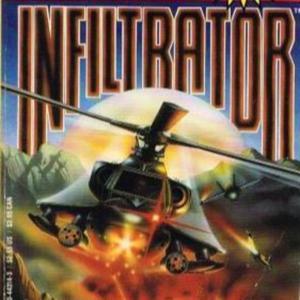
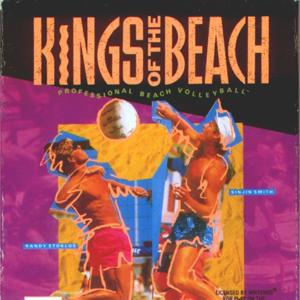
Not that he's avoiding these kinds of games. And nobody should be avoiding any kinds of games because we're going to have so many more coming up. We have Infiltrator, Kings of the Beach, The Magic of Shahar Azad, and then our Nostalgia Bites episodes, too. We just released All Night Nippon Super Mario Bros., which is not just the Super Mario Bros. Romhack-ish style game where there's DJs coming out of the warp pipes instead of piranha plants. If that sounds interesting, check it out. But we also covered a lot of other Super Mario Bros. games in that. And we're going to continue to cover weird games that only ever got to the Famicom that are accessible without any Japanese knowledge.
You can look forward to Bio Miracle, Captain Tsubasa, the soccer game that I think now is starting to come over to North America, but it started as early as the Famicom.
Chaos World, I don't even know what that one's about. But again, these are all things to look forward to. And we hope you look forward to them with us because we're going to keep doing this podcast every Friday. If you have any thoughts in the meantime, you can write it to us on the website. There's a contact form that gets you directly to me. Or you can just tweet at me. I'm Michael Esposito. You can find me at Esposito Film on Twitter. And we'll talk to you soon. ! Thank you.