238 · Archon
Ranked #8 in our Top 10 NES Games of 1989 →
There's a board. There are pieces with varying powers, squares to move into and an opponent to conquer. But the squares keep changing. And once you decide where to attack, the board explodes into a battlefield.
SHOW NOTES
Archon
Archon II: Adept
Chess
Chess 2
Quidditch
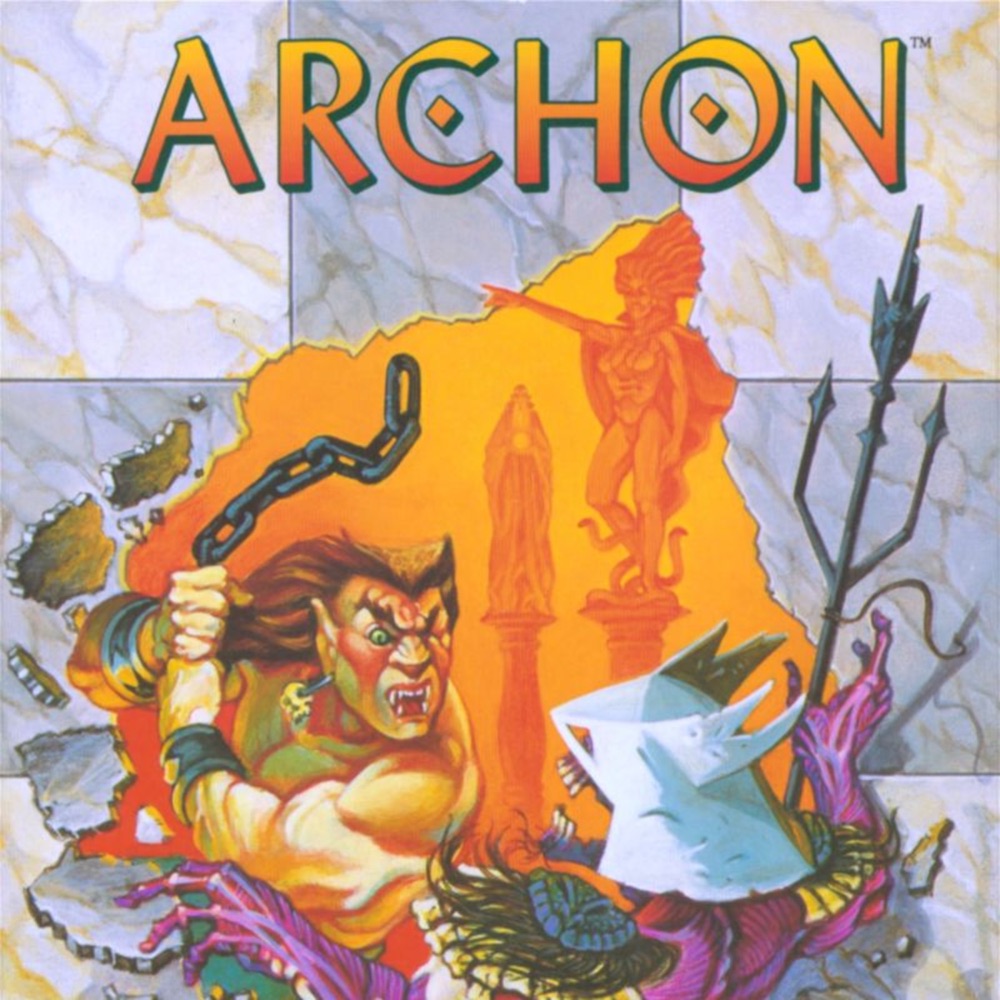
Archon looks like chess and isn't. It is a 9x9 board with 18 pieces a side, light against dark, and when one piece lands on another they don't simply capture: they drop into a short real-time, top-down fight. We expected a chess clone and found a stranger game that began on computers around 1983 or 1984, among Electronic Arts' first releases.
What makes it essential
- Strategy and action feeding each other. Every piece has its own health, shot speed and reload time, so the question is "can this unicorn beat that sorceress right now." A weak piece can still win if the player is good enough. We each pulled off a pawn-beats-big-piece upset once or twice, and it felt great.
- The board breathes. Squares cycle light to dark like a day-night loop, favoring whichever side matches. The five power point squares run through that cycle, so a square you grabbed early can turn into a trap. You win by holding all five, wiping out the other side, or imprisoning the last piece.
- Spells with a catch. The wizard and sorceress can heal, revive, swap any two pieces, or shift time, which reverses the color order. Each works once per game, so burning revive early costs you. The exchange spell gave us our most planned-out turns.
- Movement that isn't chess. Pieces get a number of spaces and may walk, fly or teleport, which made it feel closer to a tactics game.
- Sound as a tell. A high chime means light has reloaded, a low one means dark has.
- The manual changed everything. Our first match was pieces bashing into each other. After reading it, the lumina squares and power points made it "an entirely different game."
What gets in the way
- Janky collisions. Gravestones and rocks in the arenas bounce you around and spit you out somewhere odd, like rubber-banding.
- A merciless computer. The unicorn's bullet is nearly undodgeable, and a knight against a dragon on a dark square is mostly doomed. It felt fairer against a person. The developers said the computer versions ease up as a match drags on, which would explain a late comeback.
- Uneven special pieces. The Phoenix's explosion leaves you stuck and open to a free hit, and the shapeshifter felt less unique than its mirror.
- No difficulty setting.
Beyond the game
The NES port adds a rule: 12 rounds without a fight ends the game in a stalemate. The sequel, Archon II: Adept, adds magic points and upkeep costs but stayed on computers.
The bottom line
Essential. Sean and Joe voted it onto the Essential Games List, which was enough, while Mike said he would have voted no, finding the battles tedious and feeling he could have a better time with chess. It was the first addition since Xanadu at episode 207. The fights are plain, but a game this strange and this layered earns the spot.
Written from our conversation in this episode.
- Strategy that Hurts
- NES Longplay
- Introductions
- Archon has a lot of similarities to Chess, but it’s not Chess. Are we surprised we haven’t seen more traditional tabletop games yet on the console after Othello?
- Overview
- Two sides, a light one and a dark one, consisting of 18 pieces each compete on a board divided into (9 by 9) squares. You win the game by having one of your units on each of the five powerpoint squares, by removing all opposing pieces from the board or by imprisoning the last remaining creature of the opposing side.
- However, you can't just remove a piece from the board by landing on it. When two pieces clash, the outcome is decided in the battle arena during one-on-one real-time combat. If the real-time combat takes place on a dark square, the dark monster gets a health bonus (longer life bar). On a light square the light side gains an advantage.
- Gameplay
- This is a different kind of video game. We’ve been trained to play as characters exploring a world, defeating enemies. That’s kind of the promise of video games right? That they are more immersive and alive than table top games?
- The rules of the game
- Movement
- It reminds you of every pieces move
- BUT you cant take back a selection?
- Design of the board
- It only looks like a chess board, it shares almost no similarities.
- I like how they played the dark and light areas, but I would’ve opted for larger alternation rather than just land masses
- Powerpoint Squares
- The fourth and fifth square being the ones
- Balance
- Being able to theoretically win any fight does give a unique “down, but not out” aspect to the game HOWEVER, certain units completely dominate the game
- Movement
- The battles of the game
- There are also some squares whose color changes over time (from afternoon, to dusk, to night, to dawn etc.), which adds an extra layer of strategy to the game.
- A stronger piece will generally defeat a weaker piece, but not always, and a fight can result in both pieces being eliminated.
- Different pieces have different abilities in the combat phase. These include movement, lifespan, and weapon. The weapons vary by range, speed, rate of firing, and power. For example, the pawn (represented by knights on the 'light' side and goblins on the 'dark' side) attacks quickly, but has very little strength; its weapon, a sword or club, has limited reach and power. A dragon is stronger and can attack from a distance, while a golem moves slowly and fires a slow but powerful boulder.
- The sorceress and the wizard can cast seven different spells. Each spell may be used only once per game by each spellcaster.
- The NES port has a new gameplay rule that encourages combat. If no battle has been fought for quite a while the game ends in a stalemate
- Computer Skill
- According to Compute!'s Gazette: The computer adapts over time in an individual game to help the player defeat it.
- Developer
- developed by Free Fall Associates and one of the first five games published by Electronic Arts
- Sequels and Spinoffs
- Archon II: Adept
- Adept introduces resource management in the form of magical power. Magic is gained by having pieces on power points, and spent as an Adept moves or casts a spell. The summoning spell places a demon (which are common to both players) or elemental (specific to each) piece on the board, where it incurs a per-turn upkeep cost.
- An updated version of the game has been announced for release exclusively for the Intellivision Amico
- Archon II: Adept
- EGL
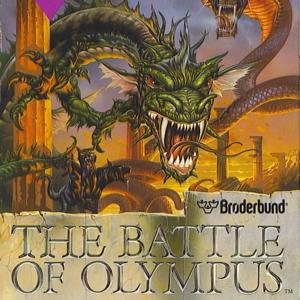
- Next week - Battle of Olympus
- NEStalgia Byte - The Portopia Serial Murder Case
Found automatically from the transcript and checked, but it can miss things or pick the wrong page. Spot a mistake? Tell us.
Games
- Archon: The Light and the Dark mentioned at
The episode's game: a chess-like strategy game where pieces fight real-time arena battles, ported to the NES in 1989.
- Endless Legend mentioned at
A grid-based strategy game with battles inside the grid, offered as a closer comparison to Archon.
- Archon II: Adept mentioned at
The 1984 sequel that adds magic points and resource management; computer only.
- Faxanadu mentioned at
The previous Essential Games List addition, episode 207.
- The Battle of Olympus mentioned at
Next week's game, sometimes compared to Zelda II.
- Zelda II: The Adventure of Link mentioned at
Game that Battle of Olympus is often compared to.
- The Portopia Serial Murder Case mentioned at
Japanese Famicom adventure played in English with a translation patch for the Patreon-only Nostalgia Bites.
Hardware
- Amiga mentioned at
One of the many computers Archon was released on.
- Commodore 64 mentioned at
Home computer that also received Archon.
- Apple II mentioned at
Home computer that also received Archon.
- ZX Spectrum mentioned at
British home computer that also received Archon.
- Amstrad CPC mentioned at
British home computer joked about as rarely owned in America.
- Atari 8-bit computers mentioned at
The Atari 800 line, another computer that got Archon.
- Intellivision Amico mentioned at
Console that announced an updated Archon, joked about as never arriving.
Companies
- Electronic Arts mentioned at
Publisher of the original Archon, one of its first five games.
People
- J. K. Rowling mentioned at
Author of Harry Potter, joked about as the one to confirm how wizard's chess works.
Film, TV and music
- Harry Potter and the Sorcerer's Stone mentioned at
Its life-size wizard's chess match, where pieces fight, was compared to Archon's combat.
Terms and events
- Quidditch mentioned at
The Harry Potter sport, where catching the snitch ends the game, compared to Archon's five power points.
Articles, videos and sites
- Compute!'s Gazette mentioned at
Magazine where the developers said the computer opponent plays worse over time in the computer versions.
Other
- Chess mentioned at
The classic board game Archon resembles but differs from, with only one way to win.
- Othello mentioned at
A recent tabletop-game adaptation on the NES, mentioned as the previous board-game-style episode.
- Checkers mentioned at
Another traditional tabletop game the NES might have received instead of an original like Archon.
- XCOM mentioned at
Turn-based tactics series mentioned as a game Archon is not like.
- NEStalgia Essential Games List mentioned at
The show's list of NES games that define the system; Archon was voted in.
- Blood Bowl mentioned at
Games Workshop's fantasy take on American football, the closest analog one host found to Archon.
Auto-generated transcript. Each paragraph starts with its timestamp. Speakers are not identified.
Archon, Strategy That Hurts.
And welcome to NEStalgia, a chronological exploration of every NES game released in North America. I'm Mike. I'm Sean. And I'm Joe. Today we're playing Archon. Archon has a lot of similarities to chess, but it's not chess. Are we surprised that we haven't seen more traditional tabletop games? We had Othello pretty recently, but also not recently if you think about these things only coming out weekly that makes it seem like it was further away. What are you guys' thoughts? Should we have gotten a chess game before a video game adaptation of a game similar to chess? I don't think so. I mean, I think that I'm surprised we haven't seen more tabletop-like games that utilize the fact that it's a video game in an interesting way.
Like chess, great, yeah, put it on the NES, but I can also just play chess. Whereas this is like, you couldn't do this. Like, it's nice to see something a little different than just what you can do on the tabletop. I also don't know how recently, like, computer-controlled chess was even possible. Like, I know that it was definitely in the 80s that it was like, oh, a computer can actually play chess against a human and put up a fight. But I don't know, like, would that have been an NES thing? I mean, that's like my, at least why we wouldn't have a chess game, maybe not like a checkers game. Maybe we should have had a checkers game.
But I guess they had to make up their own game to get that idea across. I don't really know the early computer chess games and stuff like that, but I have to imagine that if video games, even the concept of them was around in the 60s, that certainly people were also fiddling around with, like, chess computer engines back then, but clearly not the same kind of computer chess that you're referring to, Sean. I'm not trying to give you a gotcha.
I mean, you know, it's also an NES. Like, it's whatever hardware they were using, it's probably better than this. Right, right. I feel like, you know, there was probably somebody way back when who made it this way. Yeah, it had no graphical interface or whatever, but it could, you could give a computer the information and it could tell you the next move that then you would have to manually use the chessboard to put the piece where it wanted it.
But there would be no fun little, like, arena arcade in the middle there. So I think we're better off with what we got. Yeah, you're right, Sean, because this isn't chess. Even if the similarities are that, like, pieces have a certain amount of moves that each one can make. So, like, you know, in chess, pawns can't move the same way that bishops can. This game also has units that move uniquely. And it kind of has a checkered board 8x8, but this is a 9x9, and it's not fully alternating colors. It's kind of, there's sections. It's kind of breathing.
Right, light and dark, and they change based on the time and stuff like that. Maybe I should break this down a little easier. You know, there's two sides. There's a light side and a dark side. And the light side, let's say, you know, the reason why I say light side and dark side are not white pieces and black pieces is because the teams are even different. It's unique based on whether you're on the light or the dark.
So you have 18 pieces on each side. The board is 9x9 squares. And you win the game by having one of your units on each of the five PowerPoint squares, which is not something that is possible in chess at all. These are basically squares that are specifically designated as, hey, if you have a unit in all five of these, you automatically win the game. Think of, like, some Harry Potter Quidditch bullshit. Oh, that's some Quidditch shit.
It's like, yeah, they have, like, it's pretty much soccer. And then all of a sudden there's this snitch that you can also just grab and automatically win the game. I don't know if I agree with that analogy at all. Because Quidditch is a very dumb rule. Like, there's a very dumb rule that ruins the game of Quidditch. I think this is actually a very interesting, like, this is almost like, this is what makes the game interesting to me.
Oh, yeah. Well, I'm not saying it either way. I guess what I'm saying is that in chess, there's only one way to win. It's to pin the king so that he is in checkmate and can't possibly make a move that, you know, basically any other move would also kill him. So therefore the game is over. In this, there's, like, the win state of having five PowerPoint squares or removing all opposing pieces from the board or imprisoning the last remaining creature on the opposing side so that they can't move anywhere either.
Yeah. Because I would say that overall this is not, like, as one-to-one to chess. As, like, it seems at first. Like, it's clearly, clearly inspired by chess and clearly, like, supposed to be, like, a
take on a chess-like game. But it is not, like, an advanced or, like, altered version of chess. Like, it's very clearly its own game with, like, some DNA from chess. It's almost like the, um, a lot of it is just, um, cosmetically similar to chess and it's actually closer to, like, a, a grid-based tactical fighter like a, not, not XCOM, but, um, like an endless legend where on this grid, if you, if you go to, into battle via the grid with another character, then you'd go into, like, a tinier battle within that grid to actually figure out what's going to be the end state.
Um, but yeah, I, I get that it's not, it's not going for that. Right. Because the difference here, obviously, is that in chess, uh, the, the pawn is, it's totally possible for the pawn to even go as far as checkmating. It's not that the pawn is not as powerful as the queen, it's just that the movement is different, but certainly all pieces can beat other pieces. If the queen is diagonal to the pawn, the pawn can capture it on the next move.
Here, the, you know, any piece has the, uh, ability to take down another piece. It's just not, you don't remove the piece by landing on it. And instead, when you land on the opposing piece, the two pieces, uh, battle it out. It's, uh, it brings you into an arena based on the, uh, color of the board.
So there's neutral, uh, light and dark. So in neutral, it's an even battle in a light square. It's, uh, heavily favoring the light side. And in a dark square, it's heavily favoring the dark side. And even aesthetically, the graphics kind of change a little bit, uh, and change the kind of sprites that you see on screen. However, in this battle, it is a one-on-one real-time combat system. There is no, uh, there's no strategy here. This is where the action combat comes into play.
And, uh, whoever wins, uh, based on the, uh, losing HP first, whoever, uh, takes the piece, then they get that square and the other piece is removed from the board. So, uh, you know, this actually has a, has like a Harry Potter element to it too, right, uh, Joe? Where like, there's that in the Sorcerer's Stone, the, they play the chess. Yeah, the wizard's chess. Right. Yeah. And they actually fight. Yeah. I think that that's a really cool. I don't know that if in Harry Potter though, if there's ever like a way where it's like, Hey, you've made the correct move in chess to take it. But like the other, I actually never thought of that, but like that the other, um, defending opponent could like just be stronger and still kill you.
Um, I assume it's not, but that is one thing that's cool about this too, is like the strategy all comes from trying to attack your opponent when they're on a square that gives you the advantage and not be attacked while you're on a square that gives them the advantage. Um, but yeah, it's totally possible to be like a very weak character, uh, or, you know, a weak player being attacked or like a weak piece or whatever being attacked by a strong piece. And like, if you're just, if you just that skilled at like action based video games, you might still win. It's just going to be a lot harder that way. So like, if you're not good at that, you better rely heavily on the strategy to give you as many advantages as possible.
Um, Mike, can you tweet JK Rowling to confirm, um, whether or not that's how that game worked? Yeah. I hear she's pretty active on social media these days. Yeah. I just, I know that you can get some information that way. Um, but no, like I, I, I like that there are two different variables that go into like, what should I try and like, am I going to be able to win this fight? You've got different grades of hero.
Like you've got the pawn equivalent, which are, you know, they can just go stabby, stabby or bashy, bashy. And then all of like the back row characters have some kind of special skill, uh, whether it's, uh, like the golems that just throw a really big rock or, um, the, the Phoenix, which is sort of explodes itself over and over. Like there's a lot of asymmetry and, and, uh, variety in, uh, power, but then you also add that sort of environmental changes. Like you've got the, the piece, you've got the board, uh, board squares that are always going to favor one of the other. And then you've got all these central areas that, uh, it's all about timing, whether it's going to favor you or not.
Um, so it, it leads to a lot of at least room for strategy. Yeah. And it's, and it's heavily layered too, because like, yeah, we, I mean, maybe I'm just repeating what you just said, Sean, but like you're, we're, we're talking about the strategy of the actual board movement, but then also like, yeah, using the, the different stats of the different characters, you got to think like, yes, it makes sense like that by, you know, the unicorn can go take out this, uh, you know, gall or whatever I'm trying to think
of things, the dragon, but you got to think about like, well, okay, but what's my unicorn's attack and how fast is it? And how much health does it have? And I have, I've been attacked recently and will I have less health? Yeah. And like the, you know, what's the stats of the thing I'm attacking? So there's like, even though the action part is not quite as like just a strategy game as like the board part, there's still like that action video game strategy. You have to think about like, okay, what's the best strategy for this character against this character? Like it really goes pretty deep.
If you think of, you know, those action segments are very simple, like there, which is nice, which I think was, is necessary for a game like this. They're very simple to play, but it's, but everyone has a different, you know, stat set. Yeah. So let's talk about the actual combat because I feel like most people can visualize the, the chessboard pieces and you know, how that part of the game works. Even if you don't know the five PowerPoint squares are just essentially the, uh, like the the, across on the screen with the middle piece being the, uh, the middle centerpiece being the fifth point.
And if you can somehow, you know, I think that's great because then there's, uh, two sides, three sides in the middle of the board and then one on each side for the light and dark. So this way you can't just run to race to these squares and call game over. You would have to definitely get into some kind of combat. Yeah. With the opposing side. Because the, but the default space that like the king or slash queen equivalent, um, or just the most powerful unit on the board for each team, their default space is one of those power spaces.
Right. So to get away from the strategy for a second, I'd like to stay on the, the combat, which you both have alluded to is a little simple, uh, but still has some problems. Uh, I think even, even if it is, it's great on one hand that it is fast, uh, it would suck if these then took you into very long battles that decide the outcome of something that by the time you got back to the board, you were kind of like, wait, what was my strategy?
What was I going for? You know, to have to recalibrate between the scenes. It's nice that they're fast, but I don't think there's actually enough going on in this combat, even between the different units to make this part of the game fun. Uh, this real time action is, uh, top down and most enemies other than the, uh, the pawn units, most enemies shoot like a projectile bullet that doesn't, uh, doesn't shoot often. I think some of them have like a faster reload than others, but it's hard to tell when you're like good to shoot again.
Uh, and especially in squares where it's, you know, you're, you're heavily favored or heavily disfavored based on the, uh, light or dark square. This can be a huge problem for the other unit. And I feel like the game lost a little bit of its balance in the actual combat versus the proposed, uh, idea of this combat.
Yeah. I don't know if I agree because I, you know, I think that if it were any less simple, I think you'd be taking away from the overall game. Like, like, I feel like this is here as like a means to just add something that you have to think about when you go to attack, like, okay, now will I be able to take on this person?
I, I thought that these sections, while I will say I'm not good at them when I'm playing against the computer. Um, so like maybe that, that, you know, if I get a little better at them, I'll, I'll like them even more. But, um, but these sections are very easy to like pick up and like, like that's all you kind of need. Like, it's just like the, it's just the extra bit of strategy to add to it. And like you said, I, I'm glad that it's not any longer, but like, as far as the, the recharging of your attack or of your projectile, I mean, I think that that's also meant to be part of it.
You know, each, each character has a different recharge rate and you have to think about that as you're, as you're attacking, who you're attacking, like, oh, this guy recharges really fast. Um, and also, I don't know if you noticed, but each, the light side has like a, like a high pitch chime that tells you when you're reloaded. And the dark side has a low pitch chime that tells when they're reloaded. So you always know if you're, if you're listening to that, when each player is ready to shoot, even your enemy. So you can like use that to be like, okay, he's ready to shoot. I better kind of like try and bait that out of them. And like, okay, I'm ready to shoot now. I can attack.
Yeah. I think the, the one thing that bothered me, uh, in the actual combat sequences wasn't so much the simplicity of it because I agree that that was the right choice in something like this. It was more so that there's, there's a bit of jankiness, um, especially when you're maneuvering around the little obstacles, which I think it's, it's necessary just so that like, like all these obstacles need to be there just to add some asymmetry to the arena. So it's not just like, all right, you shoot him and he shoots you and stand on the other side of the room. Uh, like in some of their, they're like gravestones and some their rocks and some their like weird statues.
Um, but whenever you're maneuvering around those, like the game doesn't know what to do with collision. It seems like it, it, it sort of will pop you all around the, the, the obstacle in question and spit you out somewhere, uh, touching it. I can't, I don't know if I'm doing a very good job of describing what this feels like, but it's almost like the equivalent of in an online game, like weird rubber banding and you just end up in a, in a strange spot.
I don't know if you guys experienced this. Did you? Yeah, I did. It's like a bounce. It bounces you around on the, on those obstacles. So instead of being like you, you're either clipping through them on accident or they're like pushing you back so hard that, uh, it screws up your movement. And it's not even like, it doesn't even show, it doesn't, it doesn't feel like it's supposed to be done on purpose. It feels like it's not doing a calculation correctly.
Yeah. It's weird. Cause it's like, these things are supposed to be solid objects, but they made it. So it's like, yeah, you, you, you can use them as cover for cover and stuff, which I think is what they're for. And like what I like about them, but it's like, yeah, you weirdly blink through them. Like, but, but you said not necessarily in the direction you're going. Sometimes it'll pop you somewhere else. So it's like, they're helpful, but they're also kind of harmful and it does not feel like it's necessarily like a designed challenge.
Yeah. And I think my problem with the action sequences is that they make me doubt the premise of the game where like, you know, you might be down, but you're not out because any, uh, unit can take on any other unit. Sometimes in these action sequences, it really feels untrue. That idea that if you have a, um, what are they like nights or whatever? Um, yeah, the palm pieces, the night, if you have a night and it's going up against, uh,
the dragon, you know, or, or even like a basilisk or something, especially if it's in a neutral or dark colored square, this is going to basically be an unwinnable fight. The computer, uh, would really have to screw up badly for an extended period of time, given the health bar bonuses that they get for being in those particular squares and just how much more powerful they are again, like I get that it's probably supposed to go down that way. It's just that if the hook was that any, anything can happen on this board and that just your, uh, your positioning alone doesn't mean that you're in a better spot.
I'm on two fences about it because there's, there's the obvious thing that like, this is great for the light and dark pieces of the board. Cause that actually means that it matters where you place your units, right? That, uh, you would want to always kind of occupy if you're playing on the light side, light squares. So this way, anybody who dare challenge you has to play on your field and that's great for strategy. But then there's other times where, you know, you are low on health to begin with.
And now one of these uber powerful pieces just kind of comes in and, and, and walks the floor with you. It doesn't feel, um, as strategic at that point. It almost feels like the, the stronger characters can just kind of brute force their way past the other enemies. Well, I don't want to be the guy who just keeps disagreeing with everything, but, but I disagree.
Um, because I, I think that what's so cool about that is that it's like, it is, it is what it, what it meant to be is like, yeah, this is like, this thing will probably kill you, but it's possible. Like if you get yourself in a point into a position where you're like, shit, like all I have left is like this pawn and they've got their dragon left. It's like, yeah, you're going to have to pull out this, like this, like come from behind almost impossible victory, which is very unlikely, but it can happen. And it's like, it simulates that, like that underdog story.
You know, it's like, that's the whole idea. Like, even if you're like pinned down by like the enemy in like how you would be on a chess board, like you still have that last, like, Hey, maybe if I'm just, if I, if I can do, if I can come in clutch enough, I can like just barely scrape by with like this crazy skill of this, like one night going against the fire breathing dragon. Like, like that, a part of it seems really cool to me where it's like this mix of strategy versus your own actual skill. Like, yeah. Twitch reflex stuff.
Yeah. Like that part was what drew me to the game. Like the most, I think. And I would say like some of the, like this is sort of exacerbated by some of like the frame perfectness that the computer has, like with the unicorn to be specific, like any, any unit that has a projectile weapon has a different speed associated with that projectile. And most of them are kind of like shmup level speed where you can maneuver around them depending on how fast your unit is. However, like the unicorn basically shoots a bullet and it travels like many inches across the screen, uh, per frame, I feel like. And it's just almost impossible to dodge if you're playing against the computer.
However, I think if you were playing against another human who may not have like perfect input, uh, it would be a lot more even, uh, and, and more of like a fighting chance for you as the weaker character. Um, so I think a lot of this is just exacerbated by a perfect computer. Yeah. And I agree. I mean, so I did play against the computer and a human and while I lost against the human as well, and I did eventually win against the computer. I do think it is easier against the human because it's like, you're both kind of like, oh, like this is hard to, you know, you're both like, it's just hard to react to.
But, um, but you know, for like, uh, I mean, I'm sure we'll talk more about like the idea of balance later, but like, as far as the unicorn, the, the dark side does also have a sort of almost equivalent to the unicorn where he has a weapon that is just as fast and a, and it's actually a little stronger, but the difference is he has a shorter HP bar. That's the, um, Basilisk. So it's like, yeah, those feel a little like OP, but also it's like, you have one too. But I get, yeah, I guess I get what you're saying. If you're playing against the computer, it still might feel unfair because the computer is the computer. Like, you can just do it.
Yeah. Right. And I guess like a lot of what I'm going to say might just come down to, um, you know, a question of skill and such. But if you think about chess, right, uh, both sides have exactly the same pieces. They don't behave any differently at all. And that's the kind of game where if you capture enough pieces early on, then it is, you know, for the right skill level, it is a one game, right? The, once you're like plus eight, there's no real chance that the, uh, the other opponents going to get past you because you were already smart enough to take, uh, eight points away from them in a chess game here.
Yeah. You're both being given the same types of units. Maybe they're creatively named and look differently. Uh, but I don't think like, that's not really what the balance is, right? The balance isn't that they gave everybody the same kind of unit and you'll have the same tools. I'm talking about just even the balance between how the units behave in the fights themselves and what that ultimately means for pace of play and the idea that like it's anybody's game and stuff like that. It's great that we both have, uh, a unicorn equivalent and such, but it doesn't help the, uh, you know, the fact that most unicorns are going to kill almost all, uh, pawn units,
well, you know, at the end of the day, like that they don't really stand a chance. Yeah, but that's the... I would like to... Did you tell me that you beat one of the stronger units with your... I did. With your pawn? I have as well, yeah. Yeah, and that's really cool. Like it's... It didn't happen often. I think it happened like once, maybe twice, but it was really cool when it did and I was like, oh, I might actually be able to turn this game around now.
But like, that's the other thing is like, of course, like, when my pawn goes up against like their, you know, the sorceress, I'm like, well, I'm screwed. But like, that's also on me is like not putting my pawn in that position. In chess, if your pawn goes up against something that's in a position to kill it, it's just going to kill it, you know? Whereas this, it's like, oh, all right, maybe I could survive. Like... Yeah. No, I mean, I'm not saying this is better than chess. I'm just saying it's a different idea.
That's the headline. Yeah. Archon better than chess, says Joe. No, and I'm not saying that chess is better than this either, vice versa, you know? I think the hill that I'm willing to die on is that the reason why we don't get like a chess two is that it's very hard to find true balance in these kinds of games. And there are ultimately like exploits against them that keep the, you know, 1,000 year old chess game still relevant today.
That like, that is, you know, the idea of that is the strategy that are built around those particular pieces and how they seem to work well. And that there used to be pieces back in the day that behaved a little differently. And they said, hey, we should get rid of that and fix it. And I'm sure there's still room for improvement, even in chess, right? Of like, maybe it turns out white is just too powerful, his ability to go first and everything.
These things don't actually matter for the actual game. I just think the idea of the units themselves, like it's not as cool as a tactics game because of the way that it sets out as a chess board. Whereas like in a tactics game, it's not, you know, it's not just checkerboard pieces. It's actually like a map and there's, and you know, you put, you push units together and you think about like, you know, there's a little bit of like wartime combat involved in that.
And this is more one-to-one with chess and therefore has the same flaws as a chess game. I would say that it's not, it's not quite as one-to-one with chess just because like it sort of is simulating that asymmetric environment with the, the changing like pitch of each square. I think that that adds like the kind of complexity that like makes it less of a chess game and more of a tactics game.
Yeah. And I think that like the, I think that the only other thing that like is still, that I'm still kind of hanging on is that like when, what we're talking about with like, yeah, the, the pawn or we keep calling it a pawn, whatever the knight versus the basilisk, like that being unbalanced, that's an unbalance like in that particular battle, but that's not, that doesn't make the game unbalanced. Like, you know what I mean? Like, it's like, if you go up again in any video game, if you go up against an enemy that's stronger than you, you wouldn't say this whole game's unbalanced. Like, oh, maybe you got to go level up or maybe you got to go to, you know, this is like,
yeah, the whole, this, you got into that position. You, you're somehow, your opponent did something or you did something that got you into that position where you're going to get attacked by it. Could have gone the other way, but like the whole game as a whole, we have to look at it as like the entire thing as like, is it balanced? And I think they, I'm not saying that necessarily did it perfectly, but I think they did a good job of making the dark side enemies and the light side enemies balanced.
So like what, if that happens to you, you could also do that to them. Like, you know, in it, and you have to think about like, how can I get myself in a position where I'm not having these unbalanced battles or, or I am having unbalanced battles that are unbalanced in my favor. So it's like, I just think that the way those two things marry together is like your strategy
informs how you will play the action side of it is like, is the, is the point, you know? And I think we, we haven't entirely, uh, we haven't painted the whole picture because it isn't entirely balanced in terms of like, oh, the, the knight is the equivalent of the goblin and yada yada. Uh, because each side also has one unique character, uh, the Phoenix, which again is, that's the light side and that just blows itself up and you just sort of like try and blow up next to the guy. And then the dark side has the like metamorphic dude, the shapeshifter, shapeshifter. And that just, you know, makes it perfectly balanced and is kind of lame.
But, uh, that, those do add to, um, add some extra levels to it as well. I think. Yeah. And when I first kind of saw that, that like, first of all, not only are there different enemies, but like some of the enemies that are like the, the mirror equivalent, they have slight different stats. Like they'll have a boost in one thing and a, and a lack in the other, and it'll be like slightly different.
And I'm on the fence of whether or not, like I prefer that, or I prefer it like to be, no, there's an equal on each side. So that way, like no matter which side you play, there's not one side that could possibly have an advantage. Like once you played it enough, I do like that they're different. I like that you could try it differently. I mean, I would also kind of really like if they were totally, um, not all equal, but like the sorceress was exactly equal to the, to the wizard.
And then the, the, you know, the knight was exactly equal to the, whatever the, the goblin, the job. So that way it's even, but that didn't bother me too much. But yeah, the shape shifter thing seems cool, but I just didn't feel like there was enough of a unique thing on the other side to be cool. You know, like the, the, I don't know, the, what was it? Phoenix is pretty similar to the banshee on the dark side.
Oh yeah. Whereas like, there's nothing like a shape shifter on the light side. I think there's like something that's unique on the light side, which is like the, the genie. Maybe. Yeah. But like, it just didn't seem as unique. It's like, it felt like they were trying to like throw a little wrench into it and make it like, Oh, here's like the, here's like the sleeper for each side. But just felt like one was like way more unique than the other.
Uh, I thought the genie, actually the genie I think has maybe like the fastest shot speed and a, and a really large health bar. So I think that's like, he's, he's very powerful too, compare, comparatively. Yeah. And then on the other hand, the shape shifter is like, well, okay, you're, you're going to take the shape of exactly whatever attacks you, which seems like, so you're not even getting an advantage. You're getting like equal. Whereas like the, so like that felt a little weird. Which creates a weird problem with the shape shifter versus like say the Phoenix. Yeah. That was specifically pointed out on the Wikipedia page. So I just had to try it out and it was really funny. It actually took several, several minutes.
And even the Phoenix as a unique piece. Um, I, I hated it. If I was playing on the light side, uh, the explosion thing is, is very awkward and kind of traps you in a, uh, you're stuck while that animation's going on. And so most likely if the, you know, computer or human is smart enough, they'll just wait until your explosion animation is done. If you didn't manage to hit them and then they get a free hit when you spawn back in. Yeah. My strategy with the Phoenix was just try and take out the Banshee with it as soon as possible because the Banshee had like a similar thing, but it is, I think it's more powerful, but it doesn't shield itself with its explosion.
Whereas you do. Oh yeah. So like, I would just be like, okay, well at least I can get some use out of this Phoenix before something else kills it because anything with a projectile usually would kill me when I had the Phoenix. So pieces move differently in this game than in chess 2 where it's you know you get three spaces for most things some get four some get five but it's also ground or flying or teleporting as opposed to just you know I guess like the knight in chess comes the closest to the
flying creatures in the sense that they can hop over other units but they give you two different you know there's two different options there it's the type of movement you're doing and the amount of spaces you can go and so if you have three spaces as the troll you don't have to go forward you don't have to go behave like a rook where you can only move in rows it's like you can go anywhere you want three spaces and so that also creates some unique situations on the board where
you could think about like where you want to position your units for the powerpoint squares if you want to lump a bunch of guys together so that you can keep fighting to take back a powerpoint square against like you know one unit at a time that you know both options are viable but you have the ability rather than thinking like all right well my troll only moves in l-shaped directions so I have
to think about how I'm going to get him to this particular pace that that doesn't happen in this game no and I think that that's another that's another point that makes it like closer to a turn based tactics game where it's it's literally just a movement uh a movement count uh I think if they added like the only kind of movement was specific to each piece then the the the chess analogies would be even more inevitable and like you can't really say that it's not trying to be chess anymore um
so I think that was also a uh like a good decision the sorceress and the wizard also have the ability besides being some of the strongest pieces they have the ability to cast spells uh they can heal shift time uh revive which is a really cool idea uh similar to again in chess where you get to the other end of the board and you can change your piece this time it's like you can't change your piece but instead you can uh bring back a piece from the dead the other thing about these spells is that you can only use them once per game not one spell for the entire game but once you revive a unit that is uh that is the end of your revive so you might want to think about that before uh wasting it early on or something I think uh I think the ability to lock
these as a one-time use it makes it like it it actually complements the idea of the whole strategy thing but also just of the spells in general so that wizards and sorceresses don't have this sense of unlimited power where they should be removed from the game almost you know like uh don't bother putting them into play because you can just use them as your spell casters from afar instead you're kind of encouraged to uh you know to get them into the battle as well and you know because they're powerful and they can take down enemies that are posing a threat well also it's it's like gives you this strategy of like what do I want to use my you know my
summon spell right now or do I want to wait until I really need it later because the longer you wait the more likely you are like the enemy is to take out your wizard you know because as strong as the wizard is he has a very small hp bar so it's like it it really adds to like the decision making I think I couldn't find anything about the NES version specifically but the developers uh mentioned
in their interview with compute gazette that in the computer games at least the computer adapts over time in an individual game to help the player defeat the computer so that the longer the game goes on the computer actually behaves uh worse to allow the computer to allow the player to win uh rather than the computer getting tougher and honing in on its victory that's I don't know if you guys experienced
that at all yeah I thought that was an interesting note from them uh you know I guess like in some ways if there was a difficulty mode for that like a selection of you know beginner or advanced and the beginner mode did that that would be a good way to learn right how to like face up against the computer but even then you're not really learning because it's just getting easier but I think there should have been an option I did win against the computer but now I'm thinking like now I'm thinking back on like the moment where I was like oh my god I really turned this around and thinking like oh maybe the computer just started getting stupider as time went on I really don't know how like what
capability like what what it was even what is the AI actually doing when it does that because we usually when I think of uh difficulty in a game of this generation it's like a numerical thing like it's either more or less health uh more I'm guessing it misses fire on purpose yeah but like how how does it do that I I just I don't know if the NES was capable of of something like that it could also give like
less than optimal make less than optimal decisions like in where to go I suppose like on the on the board makes more sense yeah I do remember thinking that like one time I was playing and I was I was having a real hard time getting all the powerpoint squares and then like at one point I was like well why didn't they just go there they could have stopped me and they didn't and then I won so like
maybe that had something to do with it too the NES port also has a new gameplay rule that encourages combat so if no battle has been fought for I think it's 12 rounds the game automatically ends in a stalemate that was not present in any of the other versions probably not something that's going to happen if you're just like picking this game up and playing it either like there's no reason to avoid
combat but I could see situations in like really high level play where uh they want you to encourage to continue fighting rather than being uh reserved about your units yeah I think especially if you're playing against another person who and you both really know how to play and then there's like somebody's trying to yeah there's some strategy or something that that gives people uh incentive
chess has a rule like that too where you can't make um the same move three times in a row and that that would also cause a stalemate um did we mention the lumina squares at all those are the power points right yeah we briefly no this is the ones that changed uh over time oh yeah yeah okay yeah we briefly mentioned it but I think we should go into more detail about it because that's the that's the board strategy right like that's what makes this board stand out as opposed to again if it was a checkerboard you would just always stay in the light squares and not have to worry about you know the dark side being overpowered against you here because there's kind of a zone
particularly in the middle but it is kind of spread out I don't know how to describe it it looks yeah it's it's like it is the cross it's sort of uh bringing all of the those power squares together um but that's sort of what I was talking about when I was talking about uh the like sort of an analogy for uh the terrain and environment if this were being compared more to like a tactics game on ground uh whereas like uh like instead of oh it's darker light like oh this has like acid on it and like this sort of like zone of control um area denial that you see in more complex tactics games
but it's more like shifting uh it's like pulsing instead of the player or the enemy having actual control over how that shifts yeah and it really informs a lot of the decision making as well because like so because of where the cross this cross of squares that are constantly changing it's like a day night cycle so they get lighter and lighter and then they get darker and darker so like the darker it is the more of advantage the the dark side gets and the lighter it is the more of the advantage the light side gets but um but the what I thought was cool is that it goes through like you said all of those
power point squares so that makes you think like oh I can capture this power point square pretty early but throughout the game that power point square will become a major disadvantage to you and that'll that opens up the enemy to attack you on a square so like you don't want to be on those squares for too long but you need to be on five of them at once in order to win the game so it's like it's tough it's tough to win that way to be honest like I feel like in all the games that I've played only like one or two matches ended that way most of the matches ended like with with both sides trying to get there and
one side just running out of pieces from dying and battle over and over again yeah I think the power point squares are necessary to encourage combat situations in all over the board right so this way you have to go over to the other side you have to try to keep control of the middle of the board you're not just trying to uh get to the other side right so I think that that encourages what is
going to be the likely outcome of just the other the opposing team lost all their units and that's how you're probably going to get into a win state instead of the um the power point squares or you're going to because of these fights eventually have one have way too many units compared to the other and then take the power point squares that way there's not um there's not like a at least I could
think I can't think of a unique situation where early on in the game somebody could just grab all five squares by tricking the other player by making them like come out and go to unexpected places and then take those squares without being like you know a heavy war zone I I couldn't see that happening yeah when I when I the first match that I played you know neither me nor my opponent knew how to play
we hadn't read the manual or anything so we were just like just playing we were just attacking each other and I was kind of like oh this is dumb there's no actual strategy there's no reason for this to be on a board you know like you just you just keep moving until you can attack the person you want to attack and we just did that until someone was totally out of pieces then after reading the manual I was like oh this is an
entirely different game just because of the lumina squares and the power points like just adding those two elements made this like oh there is a lot of strategy now it does matter where you position yourself and the wizard and sorceress can uh via the shift time spell reverse the order that the tiles were changing colors in and so if you if you do that if you time that well you could really screw over
the other player by uh extending the amount of time that you have on the light squares in an area that they were expecting to be dark again probably a high level play move probably not something not something I personally did but it's fun to uh to see the impact that these spells could have on strategy then again maybe just thinking about these situations uh proves that they don't really happen
yeah I mean I think that because something like revive is so directly uh beneficial um that's that's sort of like I mean and I know that like you can only use one each but whenever I was thinking of like oh I need to cast a spell right now it was something like that direct like oh I just need to revive and not like hmm well I it's it's actually going into the middle phase now from my direction so I need to make it come back to my direction I was never thinking that 4d about it but it's cool that
it's there yeah I think the most like quote-unquote 4d I ever got with the way I was thinking was with the exchange um spell which lets you just swap out literally any two players on the board like switch them with each other so sometimes I would be like okay I know that the that the the day night cycle is going if I'm like the dark side I know the day night cycle is going to be
switching towards dark in like two turns so on this turn I'm going to switch one of you know my one of my you know my basilisk with whatever's standing right next to their you know someone that I want to attack on a that's going to be on a light square in a turn later so it's like thinking like that much ahead but I think that if you like if you played this enough and got good at it if we treated this like chess and like like how people like love to to play chess and get better and find new strategies I think that shift time would be utilized a lot in the way that you're talking about I just think it's just a game that no one's ever heard of so like it doesn't happen yeah well
joe apparently actually it's a very popular game uh in the early computer scene and is still like rated very uh favorably um by most of the people yeah most people played this game so it it will get into it in the sequel spin-off section but it even got a sequel so this is one of electronic arts like first five games ever uh it's it's not obviously this late 1989 but by then they were a big company but this game first came out I think in either 83 or 84 and so um EA now EA bad but uh back then you know they were getting started it's like obviously they had to get some big games uh on their initial lineup and Arkon was considered a very big game they were the champions of the people
you well since we were talking about it on the sequels and spinoff side uh Arkon 2 Adept is uh the name the subtitle of that game this game kind of had a subtitle too just not on the NES version it's not on the box but the uh the light versus dark or something yeah yeah the light in the dark or something like that on the uh on all the computer versions I guess they just thought like no Arkon's clear enough for what the game is uh we don't need the subtitle on the NES who knows why they didn't include it but it's worth mentioning also Adept here is the uh is the subtitle on the sequel and Adept introduces resource management in the form of magic magic is
gained by having pieces on powerpoints and um then you can spend that those magic points on moves or by casting spells uh summoning a spell uh or an elemental or a demon or you put those pieces on the board and then it uh basically incurs a per turn upkeep cost so therefore you know the whole resource management thing yeah you have to think about like you know okay so I have my uh fire elemental on the board but I'm gonna run out of it in two turns and then it's gonna be done with uh do we get this on the NES we I don't think we get this on the NES I think this is computer only it was released long before
um 1989 so yeah I don't think we'll be seeing it because they probably would have just taken this one right I would think so yeah so uh you if you do want to play it the Amiga as always everything is on the Amiga if there's one thing I've learned that there's like 3,000 video games on the Amiga the Commodore 64, Apple II, ZX Spectrum you know these are just things that I feel like are much more European we didn't we didn't really have exposure yeah you should have said ZX Spectrum
right right uh the Amstrad CPC it's like nobody owned that in America right I thought the Amstrad CPC was like a military device right yeah yeah the Atari uh 800 it's like nobody had that now that I know was in America but nobody had that you silly goose and also an updated version of this very game has been announced uh for Joe to immediately purchase exclusively for release on the Intellivision Amico which means you will never see it Joe yeah it'll never happen I think it's had the switch or something I was like I'll download that right now pre-order right now I didn't know
that they could get those kinds of exclusives for Intellivision Amico but also they seem to do a really good job of never releasing this damn thing and just taking Kickstarter money so I don't think we're gonna see this Archon was ported through infinity to like all like even more recent mobile phones and stuff like that like it is it is something that gets ported every now and again so there probably are more like modern hardware to play it on than the NES maybe the computer versions
the computer's more advanced or whatever these are things I didn't look into for this part of the sequels and spin-off section because I uh was more interested in that whole adept system that they introduced in the second one cute so I don't have any like you know cute words or anything to tee up the essential games list uh you know when no like meets its match no checkmate system or anything like that so instead I think we're just gonna go into it with the essential games list
Sean your vote so um I I really think that this is a very unique game uh as much as we kept calling out uh chess or tactics games in general uh I I think that this sort of I've never seen anything really like this before like the closest analog that I could find to a game that matches this in spirit is like blood bowl which is trying to be like a warhammer version of american football which I always uh enjoyed
and and and this sort of like remix stuff it I I always I'm always into it and I've had nitpicks here and there I the the the actual the actual like real-time battles are are a little simple and can be janky at times but I I think that there's enough going on in this like cocktail of weird game uh weird game features um that I would say I I'm gonna vote to put this on the essential games list
and that's one vote it needs one more Joe your vote so I mean no secret that I definitely really enjoyed this game I feel like the there's just so many elements that all work together in ways that like that create just countless types of strategy I mean it just gets very layered way more layered than I thought it was going to be when I first picked it up I mean I thought it was just going to be chess like with slightly different rules um would not saying that that wouldn't be layered but it would just be chess like you know but this is this did its own thing it made something totally different and I love the way that the strategy interacts with the the actual video game like action
gameplay element of it and yes the um like collision jankiness aside like that that is a flaw I think that the I mean personally and I know that not everybody agreed here but like personally I thought that the um the action stuff controlled pretty well for for what it needed to be if it was a whole game based on that I would want I would want a lot more you know polish on those parts but just the way they work together the amount the amount that I was thinking about this game after playing it and like thinking like well what could I do with different strategies and just the idea like you I'm not even that good at this game but the idea that I could play it a lot and like really
it could like I could really come up with like new ways to play and strategy and you know play against other people and see how that works um I am also going to put this on you know vote for this to be on the essential games list so uh one of the more unique experiences I'm going to pass it on to Mike before I say the word strategy one more time yeah and two votes means that it is on the essential games list so after a very long drought of let's see this is episode 238
fact Xanadu was 207 so I mean that's like 31 31 episodes to get the next one but we got there uh I will just add even though my vote doesn't mean anything that I am way less enthused about this game than you guys I didn't think that the battle system was all that impressive or even like fun so for me like that alone took me out of the game because otherwise it is just kind of like thinking about pieces on the board and I can have a better time with chess uh I would just like to add that I
wasn't comparing this game to chess uh in the traditional sense of like two games I was making it a a grounding point of like well we can talk about chess and then we can talk about this for people who aren't playing these games along with us at the same time I definitely think there's a much more unique game than chess in fact even just the ability to cast spells and um and the powerpoint squares and the light and dark shifting that is all like incredibly interesting things I just don't
think the actual moment-to-moment gameplay was anything all that special uh I found it kind of tedious to even just continue to go through those uh top-down battles uh those real-time action battles so I can't put it on the essential games list but it is there there's nothing I can do about it so it is on the essential games list and we'll uh see if we can get another one on next week with the battle of olympus a game that I think is I think this is the one that sometimes is compared to zelda 2
oh boy so you know that I'll vote it right now go right on that just you know open up some more wounds while we're talking about the essential games list so who knows either battle of olympus will get on the essential games list and will upset zelda 2 people or battle of olympus won't get on the essential games list and will upset zelda 2 people
I can't wait all that to say we also have um our nostalgia bites episode of the portopia serial murder case uh nostalgia bites are japanese famicom games usually you don't need any uh japanese knowledge to play these games technically you still don't because this is a translation patch but it is a patch it is a cheat we're just trying it out once just to see if people like it we make the rules here right but you know I figured we'd let everybody know that it's not gonna be a regular thing you're not gonna have to uh you know get on the internet and download translation patches all the time
we have seven or now eight other episodes that are completely like just famicom games that you could buy on ebay right now plop them into your famicom and never need to know a lick of japanese so you have but if you want to listen to this episode and you're like wait a minute I never heard of nostalgia bites that's because it's for our patreon page patreon.com slash nostalgia for just five dollars
a month you get access to a whole nother podcast uh that is a monthly basis so right now we're in month nine where you at everybody you know we're waiting for you we got people on our discord uh chatting it up with us and all the proceeds from the patreon go into cool stuff like uh the nostalgia website uh nostalgiacast.com we can't host that if people don't uh give us money we refuse to so give us money and let us host the website it's a win-win situation you