285 · Fisher Price Perfect Fit
Transcript
Auto-generated transcript. Each paragraph starts with its timestamp. Speakers are not identified.
Fisher Price Perfect Fit. Dropping down the Perfect Fit game shoot are familiar everyday objects such as letters, numbers, figures, and lots of familiar Fisher Price toys.
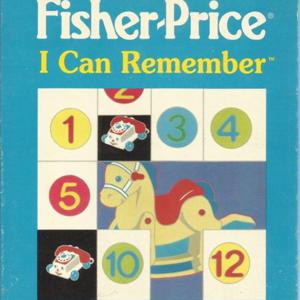
And welcome to NEStalgia, a chronological exploration of every NES game released in North America. I'm Mike. I'm Sean. And I'm Joe. And back at it is Fisher Price with the sequel to I Can Remember Perfect Fit. Although- And what a sequel it is. Yeah, you don't, it's not really a sequel. It's just another game made by Fisher Price, which is really just Fisher Price just saying like, make us this game. And I believe it's Game Tech that actually makes these games.
We were a little funny, a little silly, a little unfocused last week. This is serious. But this is, yeah, this is now, this is about making sure that this podcast is still a perfect fit in your rotation. We know a few of you probably were considering deleting the podcast after last week's episode. I would have. And you're probably not pressing play on this episode. You're probably just waiting until we get a normal episode again. But fear not. I promise a perfectly normal episode where everything will just fit right into place.
Yeah, there's this one. Okay, so like the way that it describes itself for this one, I thought that it was going to be a puzzle game, like literal jigsaw puzzle pieces. And it would be an image of a thing. And that is not what this is. What this is, is literally images that you need to match with its own image.
There's even less strategy or like challenge as I can remember, because now all you're doing is like just bringing a thing that looks like a hole to the hole. You shouldn't be able to do that, right? You shouldn't be able to fit it over the silhouette without committing. So for the way that Sean's explaining it here is basically you get to see the full toy, right? The full colored object and everything come down the chute and it could be upside down. It could be flipped horizontally. Well, from the later levels. Yeah, no, I know. I know. But just bear with me for a second. I'm trying to explain the game.
And then on the side in like this other box are the, you know, the silhouettes or the holes, if you will, of those of those objects. And the problem with any challenge being removed from this game, even from like, I can understand maybe a two years old. But for most part, this is a very easy game because you are allowed to put the object over the hole without committing. And I know that in real life, there are toys where you take like, you know, the sphere and have to put it through the sphere one.
And somebody puts it through the half moon one or, you know, like they're trying to shove it through that. And that's how they learn or whatever. But I bet you that somebody who isn't able to figure out the difference between the sphere and the half moon is definitely not able to hold this controller and also function this game. So, again, it could be, you know, for anyone over two, three, whatever, there would need to be something.
I think what you're suggesting is a perfect solution where it's like, if you put this there, you put this thing over that spot, like, and it's wrong, you failed. But you can just put it there and be like, okay, it doesn't fit. I can see it doesn't fit. Why would I press A? It's very strange that you guys have jumped to this specific problem because I didn't even think of it as a problem. The fact that you can, that you don't have to commit to what you're doing because I don't know. Like, it just seems like an amount of challenge that the game doesn't actually deserve. I don't, like, when you have the toy, when you have the toy, you don't have, like, a fail state for putting. Well, you do, though.
You do? Like, I mean, it's not a fail state, but it's like, oh, I tried to put it in. It didn't fit. That sucks. Like, I bet. I mean, you get that. We get that in this game. It doesn't fit. You get that same angry buzz. Yeah, but if you're playing competitively. Angry buzz. If you're playing competitively against someone else, you don't really get, I mean, you get time punishment. I see. So I guess that is what. You guys played the competitive mode. I did not. Yeah, I'm speed running.
Well, yeah. So we're adults, and we're pretty smart. And so this isn't a brag. But nobody ever got one wrong, right? Like, nobody ever got tricked by this game, correct? Well, I accidentally didn't get it in perfectly. Like, I was just, I was too lazy and too fast, and it was maybe off by a few pixels.
Which is my fault. I was sloppy. So I got a couple wrong. Sean, that's actually something the game does well, is that it eliminates that chance of, like, having too little a shift in movement. That you're just like, yeah, it looks kind of lined up, but it's not by a few pixels, so you're screwed up. At least the game does move you in significant chunks.
So I guess what I'm saying is that most people who aren't lazy would avoid your problem still. Because it's not like, oh, it looks like it's fed, but technically. I'm especially bad at this game. You're especially lazy at this game. You had it all right. You just didn't choose to take the additional time to just make sure it was lined up before moving on. I see. I get it. Sean, I'll make you feel better, because I did actually put a shape just wrong once.
Was it the phone? No, no. So it's not a case of, like, oh, I don't know the difference between the shape of the letter E and a cake mixer. But it was in the later levels when, you know, you have to start flipping the images either horizontally or vertically.
And there's the sunglasses, where the arms of the sunglasses, like the part that actually hooks around your ear, on the left side, the hook is slightly more obtuse than the one on the right side. Like, honestly, yeah, it's like the left side is maybe at, like, a 45-degree angle, and the right side is at, like, maybe, like, a 30-degree angle. And it's obvious if you look at it for more than a second. But, like I said, I was playing against someone. You're trying to go competitive, yeah. Racing against the clock. So I'm just like, got it, go. Like, go. You know, I'm moving too fast, and I missed it.
And then the time, I guess this answers Mike's question of, like, what the, or what we were talking about anyway, about what the fail state is, is yes, that even though I didn't get any points docked, the time it took me to go drag the image back to the flip image section, which is how that works. It's not a button. You have to actually move the image to, like, a space on the screen that lets you flip it. And the time it took me to do that is what lost me the game. It happens to the best of us, honestly. It's true. Sunglasses are tricky shapes. You can compete with either a friend or the computer.
And even today, we are still far away from computers behaving truly like humans. It is one of, you know, the modern age dilemmas of our time is how will we get them to be more like us. But certainly in 1990, it was even more of a problem. And when you verse a computer, whose, again, name is Electro in this game as well, we mentioned that last week, when you play against the computer, it's the most, like, robotic form of watching a game play itself. You can see the thought process, like, of the computer processor. You can see the if-then statements happening.
Right, exactly. And so you watch it come down, and it just immediately, the piece is moving right away. It puts it right up against the silhouette that it thinks it needs to match. It notices it doesn't match, so it brings it back over to the flip image. Takes basically, I guess, a 50-50 chance on whether it's flip image horizontally or flip image vertically.
And then tries it again and just continues to scroll over really fast again and again and again in a way that is very unhuman-like. And a little, if I'm being honest, unsettling. And not, like, in a super scary way or whatever, but just in a very, like, what is the computer doing? Why is it behaving this way? Why can't you just try to, you know, in Jeopardy, the solution was they just say gibberish because they couldn't even provide them with wrong answers, right? They couldn't even think of creating different options of what the correct answer could be close to.
In this game, instead, it's like watching the computer, you know, like, trying to solve a Rubik's Cube, but instead it's just trying to match up two images. It sort of looks like, like, if you have, like, a CNC machine and you kind of, like, moved the, what it's trying to, the actual, like, material that it's trying to engrave below it. And then it, like, sort of loses its place and then you kind of, or you know what, a better example is, it's like watching that scene in Jurassic Park where you've got the egg flipping machine and then, like, it gets confused that the egg is not there anymore. But it's in, it's in Dr.
Alan Grant's hand and then it sort of, like, snatches it out of there and, like, that, it kind of feels like that. The fact that it is a timer, though, that is the thing that makes it so that you can't, you know, that decides when you lose, when you run out of time, tells me that even Fisher-Price anticipated that most people were going to solve these. And I'm not sure, like, what they could have done to make it a more interesting challenge.
I think it comes down to the fact that it's, you're running over, you have to run the image over a box that says flip image and has arrows either pointing up and down or side to side. And that's your only two options for movement. And maybe this game should have made it, and again, I'm assuming that toddlers can't hold the controller anyway, so you might as well open up experiment for the controller, is that, like, if you held down the B button, you could rotate the image yourself so that it, like, had to fit exactly.
Like, you can't just turn it perfectly 180 degrees in either particular direction. You need to spin this thing enough so that it perfectly fits in the match. And whether it should have been, like, toys the whole time or whatever, and I know that occasionally, like, you know, you get letters and numbers, too. And to be honest, the G is... Just an ad symbol? Yeah, the G is a little freaky sometimes, the way it comes down. And it's like, you gotta do the flip image both ways. You gotta do it horizontally and vertically. And it's like, I kind of forgot. I lost plot of the G there for a second because I'm not used to seeing them like that.
Otherwise, you know, there is very little challenge removed here to the point where, as Sean pointed out, we just moved right into the third level with the flipping of the images. Because it's not worth talking about the first one where the images just come down correctly and your job is just to see the same silhouette of the image. And the problem is that the silhouette isn't even just, like, it's not an all black hole or whatever that looks exactly the same. It even has, like, if it's the rotary phone with the wheels, it has the eyes, the nose. It shouldn't have that stuff. It should literally just be the perimeter of the toy, letter, object, whatever. It needs to be that. So this way there's at least, like, not some kind of identification of...
You could recognize it instantaneously. It just looks like a copy of your image and you're just putting it over it. Yeah, it almost makes you wonder, like, you can't call this a video game. And whoever... Again, I think it would have been more...
It would have been more fruitful of a teaching instrument if you just bought your kid a block thing. Like a thing to push blocks through. Um... What this is, is more so a... It's sort of a programming test. Like, you know, nobody needs a program that says Hello World. When you press print, it goes to Hello World. And then it shows that thing. That's just an exercise. This is an exercise in programming. Nobody ever needs this. I don't think any kids actually use this. I don't believe you if you say that you had this game as a kid and this was something that you passed time with.
Well, because I think that if you... If you're in the demographic of, like, the age group that this is aimed at, like, you are, like, a child that needs to learn matching shapes. Like, you're at that age. Like, you're, you know, you're, what, two or younger.
And the point of the exercise is, like, okay, the square goes in the square. The, you know, golf to mini golf hole goes in the mini golf hole. Whatever. Like, a little complicated, I guess. But on a physical thing, it's, like, that's conducive to learning that for these children. Because it's, like, okay, I can move the P this way and it'll go that way. This is, like, you've got to remember this, like, extra step of, like, flip image vertically, flip image horizontally, like, section of the screen.
That's just, like, if you're able... I'm convinced that any child that's able to... Yeah, like Mike said earlier, any child that's able to operate the interface of this already knows, like, that these very obvious shapes match into each other in this very obvious way. And if Fisher Price can get away with games like Perfect Fit and I Can Remember, why aren't they just continuing to pump out games like this? Like, Fisher Price Tic-Tac-Toe, Fisher Price Rock, Paper, Scissors. It's, like, screw putting them all out as, like, some eight-in-one pack, right? When you can just make a really, really simple game and attach, like, one extra condition to add levels to it. What's to stop them from making Fisher Price Duck, Duck, Goose, you know?
Every childhood game. That would be awesome. Yeah, exactly. It's, like, the sky's the limit for them because they got away with these two. People must have bought them. But I do not think that there's enough here. And I also think if you do want to make it a little bit of a video game, right?
Imagine, instead, you're Nintendo and you're tasked with making a Perfect Fit kind of game with Mario as the star. And so you can teach a child a little bit about platforming and placement in a 2D video game without any of the enemies or obstacles in the way. And instead, you could have them control Mario the same way he would in Super Mario Brothers. You'd pick one, two, or three.
But you just have to line him up with the Mario that's silhouetted on the screen. So this way they start to learn the foundations of a video game on top of the Perfect Fit style, you know? Like, you have to make Mario crouch into this position directly underneath this platform. All right, Mike. That's... But video games are degenerate and make your brain turn to goo. We're trying to teach kids shapes. You don't need to teach kids how to play video games.
Speaking of teaching them shapes, though, there's really not enough shapes in this game. Like, where is just the obvious circle that wouldn't require any flip of the image or a triangle or a half moon? Where are those ones? Do they not have the trademarks for those?
I think having a circle... Universal owns those. I would like to see a circle that you had to flip a certain direction for it to actually work. Like, they forgot that it is non-directional. That would be fun. Hmm. Yeah, no boss battles in Perfect Fit. No. Not even any Easter eggs. Wait, is there an image of an Easter egg? I don't think so. Oh. There is an image of the block game, which is pretty meta. Oh, that's funny. Oh, really? Yeah, I didn't see that one. Fitting blocks, shapes into blocks? Yeah. That's great. They should have been the Fisher-Price logo should have came down the chute.
Man, now I want a physical block game that has a shape, like a hole in it shaped like the cartridge for this game. That's the NES. Sean, that's the perfect point. Because realistically, Fisher-Price Perfect Fit is a cartridge that is a perfect fit inside your NES. And so putting this game inside the NES is in itself a obstacle for the kid. When was the last time you tried to put a cartridge into an NES, though? It's very rarely a perfect fit. Sometimes you gotta, like, force it in, and sometimes it's very loose.
Yeah. I know that this was a problem with my 52-pin connector or whatever, because I had a new one on my NES when I got it off eBay. It was, like, a brand new one. And when I would put the games in, the cartridges, it wouldn't be too much of a problem getting them in, but it gripped onto them so hard that I remember Dragon Warrior, I had to get, like, pliers and put them in that little part that you're supposed to put, you know, your thumb and your index finger on to pull out. I had to put pliers in there to yank it out. That's how gripped on it was. That's a tight fit.
That's a perfect fit. But before that, like, before I thought about the pliers, I was literally just like, all right, I guess I'm just gonna keep Dragon Warriors in there until I beat it. Like, no sense in pulling it out. Win-win. One last thing, and we kind of touched on it a little bit, so you don't have to say everything, you know, if it's been covered ground before. But presentationally, and I'm not talking about the way the toys look, the sprites or anything like that, but presentationally, they have delivered the bare minimum. On even what could be a fun, you know, like, object comes out of a chute and you have to place it in the correct hole.
Instead, it's, it's like very scientific with just like two lines representing a chute. The toy comes down those two lines and then immediately it, it's already hovering over like one of the flip image boxes if you're playing one of the later levels. And then there's just another larger box with the silhouettes inside of them. And they're perfectly spaced, you know, in like a, a nine by nine fashion. And there's just really not, you know, think about what you could have had fun with in terms of, I don't know if it would have been like a crane machine or whatever, where like you pick the object first and drag it over to the perfect fit.
But this is like really bare bones in, in the sense of even trying to convey the ideas across of this being a, you know, like some kind of object that you're interacting with. It's really just a screen with images on it. Yeah. That's why I think that, you know, maybe if it wasn't a, uh, like an extra, a learning exercise for a, a, a game developer and training, this was just made by one person, one person, uh, that just sort of made this in a, in a couple days. I don't think maybe the art assets would take some time to make, but I feel like you could program this game pretty quickly.
It was definitely shoveled out the door. Yeah. It feels like the, the benefit for them doing this is like, it's incredibly simple to make. You don't even have to really like hide that, like just the pro like the programming of it. Like there's, there's nothing's gamified. Like you said, you're just moving stuff to other places and you put a little, you know, um, conditional reactions and then you trick the parents into like,
okay, yeah, this is my two year old. What do they care? It's just like a, this is a game for them. And then they buy it. And if they don't, it's like, you probably wasted like, you know, $200 on development. You know, you probably make that back. 200. We will find out if Fisher Price Perfect Fit is a perfect fit for the Nostalgia Podcast on the Essential Games List.
Well, I haven't been hiding how I feel about the game. And while I do feel like it is the bare minimum, it does get one thing right. And that is that it truly, to count as a, um, as a, as a match in this game, different than the kinds of matches we were playing last week. And I can remember it is truly a perfect fit, uh, for the object to fit over the silhouette. There is no, uh, I, I could imagine a game, uh, that was made just like this, except for it has the adventure of Lolo's, uh, type of input. Where, like, if you just move the box a little too far, right, if you just push a little too much, now you've softlocked yourself out of that level. And you have to restart that one. You have to commit suicide as Lolo and restart.
And I could imagine that happening with, uh, the hot dog and ketchup bottle in Fisher Price Perfect Fit. I could see that, uh, a different, a worse version of this game exists where the pixels have to be perfectly lined up. And if you didn't perfectly line up those pixels, it would be failed. And so I will give them credit for that little thing.
That's about all the credit I'm willing to give them. They didn't even have fun with the idea of what it means to flip images. They just put boxes that you, uh, rotate over. It'd be like if, um, you know, if there was a whip button on screen for Castlevania, every time you wanted to whip, you had to like walk into the whip button, uh, in order to whip. It's like, that's just not fun. Fun. And, and Fisher Price Perfect Fit has found a way to take even the more basic elements of its own game and remove the controller from them wherever possible.
So for that reason alone, Fisher Price Perfect Fit is not on the essential games list. Joe? Yeah. I mean, this is obviously going similar to last year into my not applicable category, but I think this is maybe the first not applicable that I also think doesn't really do what it sets out to do, uh, in teaching children their shapes. Because I do really agree that, like, this is something that probably, uh, a child that needs to learn this needs to learn this before they learn to operate a video game controller. Because I think that that, like, you know, you can have the parents sitting next to them doing it for them, but like, just buy a, a, a $2, you know, wooden puzzle with, with pieces in it. And like, you'll probably get more bang for your buck.
Um, I'll say that, like, oddly enough, it did lead to, like, when I played with another person, it was, like, kind of became this totally different game than what they're intended where we're just racing, just trying to go as fast as we possibly can because that's, like, the only way to get points. Um, not saying it was fun or anything, but, like, it did, it did, like, unintentionally have this, uh, gameplay element that does not, again, does not accomplish what they were setting out to accomplish. Uh, so definitely not essential.
Sean? It is not essential. It's really all you need to say, right? That's a perfect, uh, argument. Thank you. Can I, just since, uh, this is a little bit of a short one, can I play a little, a little shape game with you guys? Please. Okay. I'm going to describe the shape of a video game character. I'm just gonna, I'm just describing it. I'm looking at a picture, I'm describing it, and I want you to tell me who I'm describing. Okay. All right. Imagine a, and I'll give you the color, too. Maybe later, if you're having trouble. Okay, imagine a sphere. Imagine a sphere. Okay, you got the sphere. Towards the top of the sphere are two large oval eyes. These ovals are vertically. Sonic the Hedgehog. Position. Not Sonic the Hedgehog.
Frogger. Pac-Man. Inside the eyes, you know, the, the, the irises and the, not Pac-Man. The irises and the pupils. Ratchet. Blue irises with a pupil. The irises are kind of toward the top, so he's kind of like looking up a little bit. What color is the sphere? The sphere is blue. Sonic the Hedgehog. Nope. He's got, uh, he's got two sort of, uh, sort of, uh, oblique oval feet. Mega Man.
Nope. You want me to tell you? No. Give me more. All right. And he has a hand and on this, he has, you can only see, okay, he's got two hands, white gloves. I'm assuming they're gloves. Sonic the Hedgehog. In some art, looks like they are connected by arms and in other art, looks like they're kind of floating a little bit. Ray Man. He's holding in one, in his right hand, a golden key. I don't understand. Is it Mickey Mouse?
No, no, no. This is a, this is a video game character that we have played this game. We have played multiple games with this character. Lola. Blue. Lolo. You got it. Oh, there we go. Great. Okay. All right. You want to do one more? I forgot Lola was blue. That's so funny. Yeah, yeah. Go for it. All right. Imagine a sphere. Okay. A butt towards the top of its head, you know, maybe a little lower this time. Two oval eyes, two pupils that are kind of into each other. It's almost like cross-eyed. Okay. A smile with some teeth sticking out of the sphere. Arms that, clearly arms, but the arms are white and the hands are red. Two very nubby feet. One hand is holding onto a pole or peg that is attached to the ground.
Um. I don't know. Yeah. I'm lost. The pole good me up. Wait. Is it a. That's like the biggest hint is the pole. He's holding onto a peg. The peg is attached to the ground. Is it the wizard guy from, uh, from Lord of the Rings?
The spherical wizard from. Oh, I forgot there was another sphere. Yeah. Gandalf is what I was thinking of. The spherical wizard. I don't know. Who is it? This is, I believe the name is Clu Clu. Oh. The sphere, you know, he's spinning around. Yeah. I do remember. Yes. Yeah. He'd be grabbing onto those poles. Yes. You want my last one? No. I want one more. I'll take one more. Okay. Imagine a sphere. Okay. Two, two, much longer oval eyes. Um. Very cute looking.
Two horizontal ovals on the cheeks that kind of, like, represent, I don't know, like, a blush. Kirby. You got that one. Yeah. Very good. I felt like I wanted to come up with something to fill those extra couple of minutes. Yeah. You did. You did fantastic. But can I ask a question?
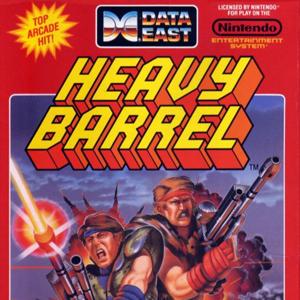
Sure. Do all characters start with a sphere? I wanted them all to be, like, really similar, so it would be a little more of a challenge. Yeah. And also, I thought of this, like, two seconds ago and just thought of three characters. That were spheres. Well, you're doing great, and you're doing a lot more work than Fisher Price did on their own game. Next week, we're done with Fisher Price for now. Unfortunately, I think we play one more. That's a little sequel and spinoff tease for you, I suppose. And then we are going to play next week Heavy Barrel. That's a pretty cool name.
Is this a Fisher Price game? It's a Data East game. Wow. So the quality could go either way, right? Absolutely. One way or the other. I was starting to think that it was going to be Fisher Price games to the end now. Heavy Barrel, you play as somebody riding on the river leading up to the Niagara Falls, and you have to try and survive. That's not true. Yeah, it's like a barrel shmup.
Is that true? No. Are you messing with me? I'm messing with you, but would you like that game? You'd be able to see my house in that game. Yeah, that'd be crazy. Joe's house is actually on the Niagara Falls. Yeah, yeah. It's at the bottom. Do I see my house in that game? Do I see my house in that game? Do I see my house in that game? Do I see my house in that game? Do I see my house in that game?
Do I see my house in that game?