156 · Sesame Street 123
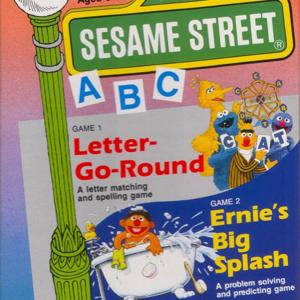
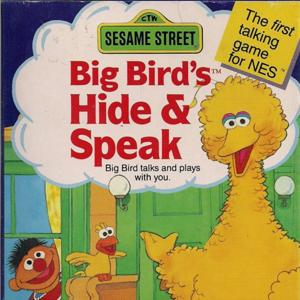
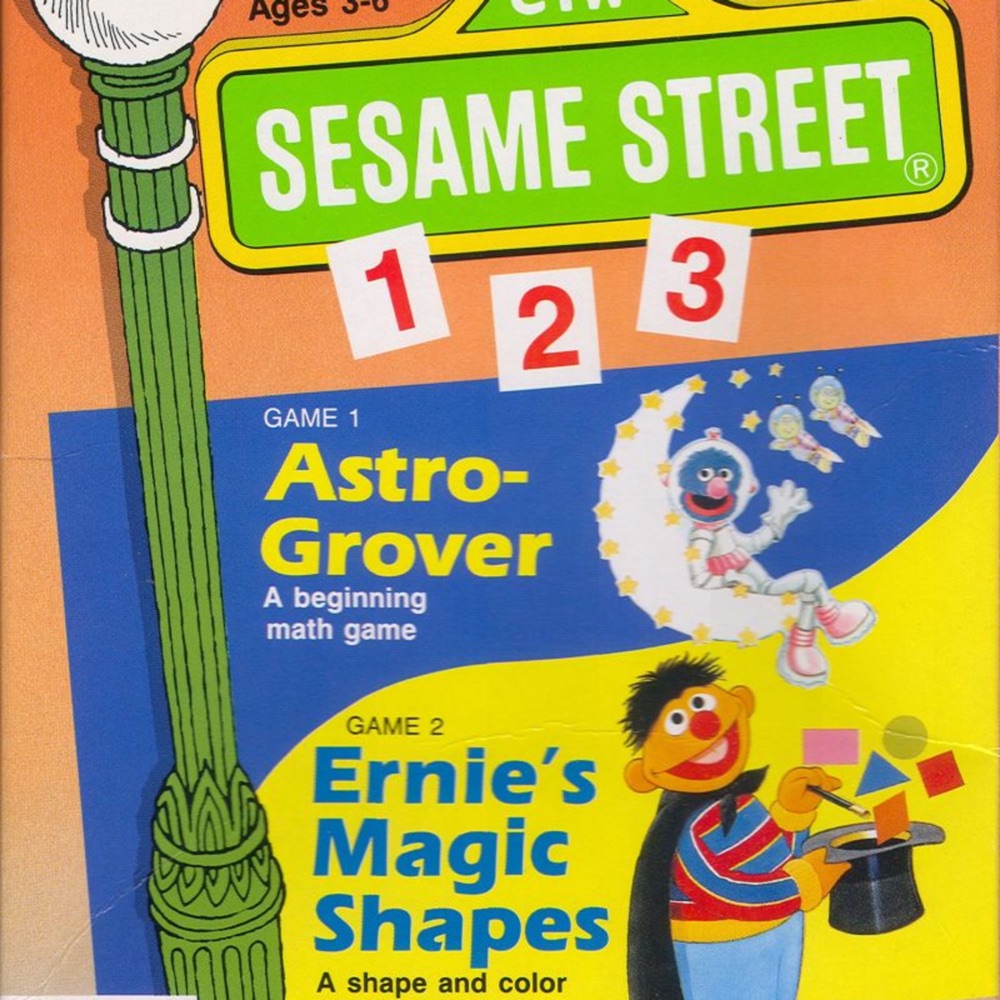
This math-based learning title for Ages 3 to 6 featuring Sesame Street characters. Sesame Street 1 2 3 includes a compilation of 2 previously released games.
SHOW NOTES
Sesame Street 1-2-3 Longplay
Sesame Street Location (Upper West Side somehow)
Sora's Keyblade was originally Riku's
- 2 Great Games in One. Learning fun with your pals from sesame street
- Introductions
- Can you tell me how to get to Sesame Street?
- Overview
- It’s actually 2 games in 1. What a value! Ernie’s Magic Shapes teaches you about Shapes and colors. Astro-Grover
- Gameplay
- The worst menu design yet
- Any direction is down until it is up
- Selects with A/B/Start/Select
- Wanna play the other game? RESET the console
- I know they meant well
- Ernie Magic Shapes
- Nice graphics
- The shape designs in the later levels are pretty wild
- First it’s like pick 3 circles of the same color, than it was draw a human being using just shapes
- The look the Rabbit gives when you’re right OR wrong
- Astro-Grover
- Finally the 123 part comes into play
- Should there have been points? Or a high score?
- The deceptive nature of a too easy game causing stress that you’ll get ANYTHING wrong
- WHERE IS BIG BIRD
- THE SECRET ENDING
- The worst menu design yet
- Development
- Rare made this!
- Sequels and Spinoffs
- We’ll be playing Sesame Street ABC as well
- AND A BUNCH MORE
- EGL
- Next week - Star Soldier
Auto-generated transcript. Each paragraph starts with its timestamp. Speakers are not identified.
Sesame Street, one, two, three, two great games in one, learning fun with your pals from Sesame Street.
And welcome to NEStalgia, a chronological exploration of every NES game released in North America. I'm Mike. I'm Big Bird. I'm Joe. Sean. And I'm Sam. Guys, can you tell me how to get to Sesame Street? You're gonna take the J down to Delancey. Uh, you walk like four blocks. Uh, that's about it. You didn't imagine Sesame Street being in Harlem? It's in Alphabet City, isn't it? Alphabet City? Okay, that makes even more sense, granted the fact that it's A, B, C. What you should know though is if you pass Sesame Street, you can't turn back to go get to it. You have to just keep going until you loop around back to the top of the menu.
Oh, you have opened a can of worms on us, Joe. Like, we're not, we're not talking games. We're talking Sesame Street, okay? Just the, just the world of Sesame Street right now. We'll get to the game, which may or may not have a menu that makes no sense whatsoever.
Sesame Street. What's, what's the deal? Sean? Like, in general? What's the deal with Sesame Street? Well, if you don't, uh, if you don't know, Sesame Street is a children's edutainment show that has been running for decades, and they made video games about it. I'm not sure what you want me to say. I think you've covered a lot of the ground of Sesame Street. Sam, would you mind telling us your personal experiences with Sesame Street? I remember really liking the, you gotta put down the rubber ducky if you wanna play the saxophone song with Bert and Ernie. That, I think, was my favorite. And I remember when, I think Elmo had a worm that went to the moon at one point, which was pretty cool that Worm did that.
Um. Okay. And, also, they're puppets. I don't think, I don't know if we said that, but they're- Uh, are they puppets? Some of them. They're Muppets. Yeah, I think they're Muppets. Oh, right, I forget. Yeah. Which leads me to my final question for Joe. Joe, The Muppet Show, Sesame Street, same universe?
Uh, well, you got Kermit the Frog in there, and, you know, he kind of crosses over, he kind of connects the two, so I think it's part of the, you know, like an extended universe kind of thing. Yeah, I'd say so. So, imagine a world where Disney cares as much about, like, the Muppets and Sesame Street cinematic universe as they do say the Marvel cinematic universe. What kind, you know, like, what kind of video game today would you expect from Sesame Street? That question just threw Sean off. Yeah, yeah, yeah. He was like, what do you mean? If you saw his video right now, he spit into the camera. He's taking a sip of coffee, spit it out into the camera. I didn't see him making a Wii game.
Yeah. Like, a Wii game now? They'd make an Nintendo Wii game now for Sesame Street. Yeah. With the balance board. I want to see, like, a Bethesda-style RPG where you go around talking to all of the Muppets and doing quests for them. Oh, you know Oscar the Grouch is going to have the best quest.
Yeah. I don't know if it has to be a Bethesda-style in the sense of, like, the way that their games play out, but I would love to have, like, their kind of dialogue tree in a Sesame Street game where you just- It needs to be Fallout 3 slash Oblivion era, like, the entire world pauses, and you just sort of, like, very awkwardly pan to their face, and they just sort of, like, Oscar the Grouch is telling you his life story about how he became in a trash can. It would be perfect.
Do you have character customization? Do you want to be a Grouch? Do you want to be an Elmo? You can be a Muppet or a person. Yeah. And it's called Sesame Street Outer Burrow, and the whole time you're trying to figure out how to get to Sesame Street. I love it. And then when you get there, you realize it's been nuked. Yes. Perfect. Yeah. Guys, our preschool audience is going to be through the roof after this episode. We're going to have such an uptick in preschool listeners.
Yeah. I was thinking about that, that we probably, for this episode, should avoid curse words like shit and ass and stuff like that. Yeah. We shouldn't say things like that. I won't say anything. So, we're not going to talk much longer about Sesame Street. In general. Like, this episode's going to be over sooner than you guys know it.
But Sesame Street 1, 2, 3 on the NES is actually, as I mentioned in the back of the box, two games in one. Wow. What a value. Have we ever seen a game be released on the NES before that wasn't first released separately and then joined together? In some kind of desperate cash grab attempt? Okay. But just, like, just as a baseline here, like, the term game here is meant very loosely.
Because it could also have been marketed as, like, 16 games in one. Yeah. I was going to say the same thing. I think we should do 16 episodes on this for each game mode. Yes. So, I mean, you could call it half a game, two games, 16 games. I'm going to go on the, I'm going to err on the side of, like, maybe a quarter of a game. I think it's a game. I would say that this qualifies, these both qualify as games. I understand that they might not qualify as two separate games. But that's probably your one cartridge bias. You probably, had this game been released on 16 different cartridges, as you were suggesting, Joe,
I bet you would think this is 16 different really bad games. Just because it's on one cartridge doesn't mean that the quantity has changed. I bet you if they released this on 16 cartridges, they would have never made it to number 16. That's true. They'd have to do it all at once. Yeah. Okay, so, you know, we've got Ernie's Magic Shapes, which teaches you about shapes and colors. And then we have Astro Grover, which is where the 1-2-3 part comes into play.
I think the first thing we need to get out of the way, and Joe, you can lead this if you want. Love to. There is a menu system in both of these games, and it is probably the least child-friendly menu design I can think of. And I can defend myself of that, Sean. I know you're already thinking, like, what's he talking about? Children would love this menu. But they won't, and I'll explain why after you explain why not. I will. But Joe, you first. Menu thoughts? Well, all right. So, normally, on a normal menu, if you press the down button, your selector cursor will go down. And if you press the up button, your selector cursor will go up. In this case, any button just makes the cursor go down, and then you loop back around.
Which I actually thought was... At first, I thought, okay, well, yeah, you're supposed to have a little kid operating this. It's going to get confusing. But actually, it's like, well, I guess that's the simplest, like, all right, you can't screw it up. Just you're going to... Any button you hit is going to move to the next one, and it's that simple. And now that I think about it literally as I'm saying this, there actually are a lot of games that do that. They use a select button to just... Like, a lot of early NES games, they just use a select button to move down, and you loop back to the top, and you can't go back up. So, I'm kind of walking back to my finishing game.
Don't worry, I'll get you covered. John? Yeah. So, this game has two buttons. Like, they have narrowed down the entire D-pad to one button, and the entire face A-B to one button. And then, you know, the parents are reserved for start and select there.
But, like, this is just... This is designing for children. Like, they didn't really know what, like, the level of mastery that these children had for, like, an 8-10 button controller. So, they just narrowed it down to what they could. And that means that directionality doesn't mean anything, and it's just move on to the next. Like, why... Yeah, it could confuse a child that is smart enough to know that up means up, and then it suddenly goes down. But they're definitely aiming for lowest common denominator here, Mike.
Confuse a child? It confused me. Yeah, an adult that plays video games. Yes. So, here's the thing, okay? Imagine this scenario, if you will. Any direction you press is down until it becomes up. Now, that doesn't make a lot of sense to me. I could appreciate a system that would just continue to go down and then recycle itself all the way back up to the top.
But when you're saying that if I press the up button, if I press the left button, if I press the down button, it will just continue to move down until I hit the bottom, and then it becomes an up button, right? Like, that's the tricky part here. I don't see how that is intuitive. You gotta think about this, though, when you want to think about, like, intuition, though. So, the up button on a D-pad does not point up. It points forward.
So, to a child who's not aware of that, it points away from your body, depending on how you're holding the controller, normally parallel to the ground. So, to a child who's not aware of that, they'd be like, well, that's not up. Up is above my head. That is up on the screen. It's not the thing that's forward. But then that's like saying down is just in. It is. Okay. We've been trained. We've been fooled our whole lives. But the D-pad... So, your only real problem is that it doesn't just loop back to the top.
You know what's actually funny? It's like, I have a whole thing. This is bullet point one. I was just interrupted by Joe. I could have kept going. Okay, keep going, Mike. Okay. So, this is a... You know, if we're remembering that this is Sesame Street 1-2-3, right? A game where you're supposed to learn your numbers and presumably also know a lot about shapes to the point where you can build a whole freaking human body in one of them eventually.
If that's the whole idea is it's a learning game, I think we can trust the children to learn a little thing about the up and down button on a controller. This is the moment to teach kids how to use a controller. Not the moment to coddle them and say, you know what? Just hit the left button if you have to. It'll get you to another menu.
In that case, use the select button because that's what has been defined on the NES as selecting an option. You want the child to hit that little button with its... Those fingers aren't attached to anything yet, Mike. Like, they don't... I'm not quite sure why the left and right button should do anything. They shouldn't be doing anything, the left and right button. Up and down, want to move in the same direction? Sure. That's not acceptable in my book, but if that makes sense, fine. Left? Left to move up or down? It's just one big button.
No, see, I understand that, but we're not teaching the child anything. Yeah, but you want to teach the child how to use a controller that is not... Like, this is 1989. Video games are brain rot. They're not supposed to be teaching them how to play games. They're supposed to be teaching them about shapes, colors, and numbers.
So, I gotta wait until Sesame Street, up, up, down, down, left, right, left, right, start, select, until I can figure out how to use a controller? That's the game where they'll teach me how to use one? No. I don't think Sesame Street's your place to go to about controllers. Yeah. If they wouldn't teach a child about a controller, like they wouldn't just bother to do it in a manual, then they shouldn't be bothered to teach a child anything on a video game. They should have just stuck to the books.
I feel like that is... I don't know. I guess that's a weird stance. It's a weird stance that if you don't want to teach a child about video games, you shouldn't teach a child about anything. No, no, no, no. I'm saying you shouldn't teach them anything via video games. Oh, okay. If you're not prepared to teach them how to use a video game controller. Like, that's like saying, don't teach a child what the keyboard does, but have them play like Sesame Street teaches typing. Mike, the game isn't for the... It's not how to teach them how to use the controller.
They have simplified the controller to maximize the ability to teach them about shapes, colors, and numbers. All right, so you go ahead and you are in Ernie's magic shapes and you're in there and you're looking through the menus and all of a sudden you're like, you know what I'd like to do? I'd like to actually play Astro Grover instead. Well, for that, you got to hit the reset button on the console. You're trusting a child to do that? No, the parent is supposed to watch them.
That's the only way to get back to the main menu. Or the manual is made for the adult. Like, did you try reading the manual? The manual is ridiculous. I never want to look at it again. It is like 24 pages. Does it have a coloring book page? No, it is a beat for beat. It's basically teacher's notes. But my point here, and I think you're trying to play this up a bit, as I am, but the controller,
it's neither here nor there, Mike. You're saying it's very respectful of them to not sell a separate two-input controller, specifically for Sesame Street 1, 2, 3, where there is one button that does directions and another button that does all things. Why scalp these single mothers? You're saying that that's very generous of them. That's very generous of them to not, like, sell a Big Bird-style controller where his left feather does the direction than his right feather does the selecting. That would be predatory. I think this is where Rob could have really come in handy and saved the day.
All right. That's enough about the menu. I know I'm right, so I don't really care otherwise. I know they meant that, but they completely failed. They completely failed. I know you're going to edit me saying that out, though. I'm going to edit you out the entire show. Then you're just going to sound like a lunatic, just, like, arguing with yourself.
So, Ernie's Magic Shapes. I didn't sign up for this. Shapes? I have to learn about shapes and colors and identifying matching stuff? Like, this is a game about numbers. Well, I mean, it's geometry, right? Like, geometry is sort of mathematical. Three points, four points. That's the first good argument you've made this episode. Absolutely not. You just have a thing. You just have a thing for the controller that you need to educate people on the controller. We're not speaking anymore.
Sam, please talk us through Ernie's Magic Shapes for a little, so I can cool down. Sam, please talk. I like the fire. First of all, I'm on Team Sean. I think the controls are fine.
Second of all, Ernie's Magic Numbers. Or no, Ernie, what is this? Shapes? It would make sense if it was Ernie's Magic Numbers in a game that's called Sesame Street. One, two, three. You could have, if you actually, you know what? If you're advertising that it's two great games in one, why not call it Sesame Street, one, two, three, and Shapes? That's only three. That's three.
Oh, yeah. I agree with Sean on the controller point. I will say that I was thrown off by Ernie's Magic Shapes being the first thing on this game, which is not one, two, three, and then the counting being the second thing. So one point to each of you.
All right. So the Shape game, you got to, so there's different versions. Versions of this game. The most basic one is Ernie will hold up a shape, and then you have shapes that are cycled through. And you can use any button on the D-pad to move to the next shape. And when you see the shape that is the same shape as the shape that Ernie is holding up, then you press the A button, and he lets you know if it's the right shape or not. That's true. And that's it. What makes it magic, though?
Well, because it's Ernie's magic shape. Ernie is conjuring shapes. Yeah, where are they coming from? The particles are crazy. I'd like to see you conjure a shape. And I do want to be clear that Ernie conjuring the shape makes it magic. The rabbit in the hat, usually associated with magic, not magic, because if you look carefully, the rabbit is just coming from behind the hat. He's not coming in from out of the hat like a magic rabbit does. He's just behind it.
That's true. Also, what's up with the rabbit? Whether you choose the right shape or not, it seems like he's not that satisfied. He's angry that you got it right. And his shapes. He doesn't really care. And when you get it wrong, he just kind of has this smug look. He comes out from behind the hat, and he's like, not that one. All right, Mike, here's the thing. Here's the thing. Not that one. I think you are projecting something onto this rabbit. I think that this game, the whole magic shape collection, is actually a very comforting sort of game for children, because there's no real... It's not making you feel bad that you got the shapes wrong.
Like, they're just like, try again? That wasn't it. But you're doing okay. Just like, nuh-uh. But in the other game that we'll get to, it actually goes like, uh-uh, you're wrong. You're stupid. Try again, you idiot. So I think that this is a much nicer... The nicer half of the game here. The rabbit included. Yeah, it is nice that the rabbit won't say, uh-uh. Like, I agree. I just think it's a little strange that the rabbit, um... You know, like, he isn't defeated if you get the shape match directly. Is it about killing people, Mike?
It's Sesame Street, so I get that. All right, here's the thing, though. So you're matching shapes, right? You're like, here's a circle. And then they're like, cool. Here's another circle. And you're like, yes, I agree. And then you get that. That's a win. Then, in the next level, it's like, here's a circle of another color. Match the circle and the color. And it's like, no problem. Can do that as well.
But the shape designs in the later levels were actually, like, pretty wild. I think people thought I was joking when I was talking about, like, assembling a human body. But eventually, it goes from, like, okay, here's a traffic light. Red, yellow, green. You gotta now, like, reassemble that. And you're like, cool, I did that. And Ernie's like, okay, you might have done that. But how about you do a whole, like, human body made out of shapes? And it's like, here's a circle. Here's a rectangle. Here's a bunch of smaller rectangles for the arms and legs. And you have to, like, notice the pixel patterns on them. And it's like, oh, yeah. This is the same game that, like, kids aren't supposed to know how to use a controller?
I'll say that there were a few times later where I was like, oh, yeah, there's a long rectangle. There's a long rectangle. There's a couple that are, like, they're not, like, significantly shorter than each other. They're, like, literally a few pixels shorter. And, like, when I look closely later, I'm like, okay, I guess that is a little shorter. But it's like they're trying to trick us, let alone preschoolers. Yeah. Like, some of them.
Only on that last round. The main problem I have with this, like, the create a human being, it's not about accessibility with the controller. It's not about anything other than, like, this is boring. Like, imagine, like, you could probably keep a toddler, like, entertained with, like, those, like, creating, like, a cherry out of shapes. But I don't think you can keep a toddler entertained when you have, like, this is a 40-piece human puzzle. We're going to go one by one. It's going to take about 30 seconds to place each piece. I don't think that that would keep anybody entertained, to be honest.
And then there's, like, a hummingbird, too. It's insane, the shape that they want you to do. You know, Joe, you got onto something, though, about, like, not being certain yourself. And that's, like, what I wanted to talk about as well with both these games, but specifically the shape one because it's so easy. There's that feature in these games where, like, we are full-grown adults and there's, like, a little bit of stress on everyone to just never get anything wrong, right? Like, you don't ever want to get a single answer wrong because the game was made with two-year-olds in mind. And you're like, don't screw this up, don't screw this up. And so you have to essentially play the perfect game of Pac-Man in Sesame Street 1, 2, 3.
Well, I mean, I wasn't feeling that pressure. I was just like, okay, this is fine. And then there was one that just, like, I didn't, I was just like, oh, yeah, that looked exactly like that one. And then it was wrong. And then when I looked closer, I was like, oh, okay, I guess it's a few pixels shorter. Like, I don't know. Maybe I need to go back to preschool. I don't know. Joe, are you saying that you don't have the same insecurities that Mike does? I wasn't saying that, but I'll let you guys, you guys have had your own little argument here. So I'll let you guys hash that out. Joe has accepted his deficiencies, that's all.
And also, like, Ernie looks really good. Like, he has great graphics. Yeah, this is great pixel art. Like I said, they had, they've got a lot of cool particle effect, too, which I haven't seen before. Like, they look, it looks like 3D magic. I think that's where the magic comes from.
All right, so that's going to be it for Ernie's magic shape. I had another essay that I wanted to, I wrote something. You're sure? I mean, I guess not, Mike. No, no, go ahead. Go ahead. No, I don't want to anymore. All right, that's fine, too. Because now we're going to move on to the two, the two of the two in one. I don't know. No, I guess Astro Grover. We're going to move on to Astro Grover. Finally, the one, two, three part comes into play. Sean, walk us through Astro Grover. So in Astro Grover, you play the part of Grover, who is a blue man, blue creature, who must interact with a UFO that has come from some unknown planet. The UFO will send out up to, I guess, nine of its crewmen.
And since mathematics is the universal language that we expect aliens to, at least be able to communicate with, like formulas and constants, we think that this is how they would speak to us.
So you would either identify the number of alien crewmen in one of the games, or you could add and track crewmen that go back into this UFO. And then there's also, you get to work at the space agency, and math is what powers them to take off. I would say that that's all accurate. And I agree with your assessment that the aliens in us would communicate most likely through math before anything else. But it also felt like a Rick and Morty, show me what you got moment. It's just like, they have the aliens in front of you, and they're like, oh, you think you guys are like an advanced civilization? Count these aliens.
Yeah, it feels like they're holding houses in a neighborhood hostage. And if you, only by getting the correct answer of aliens will they, like, release it from this weird force field that they have around it. Yeah, I didn't actually forget. I forgot about that reading. Yeah, you're right. Because they actually will, when you get correct answers, they will recolor in the neighborhood block, which is presumably Sesame Street. Yeah. So they are holding Sesame Street, a place that children all across America hold dear. Hostage. Yeah, it's like, well, if there's ever any reason to learn your numbers, like, now's the time, because your good friends are in danger. The stakes have never been higher for numbers.
Originally, I was going to suggest that, like, this is the, like, game for four and up, whereas Ernie's magic shape is for two and up. But now that I also realize that this has, like, a little bit of a hostage motif, I definitely recommend this for only four and up. I say this is PG-13. PG-13, you get one F word. So, I don't know if that happened here or not. I didn't play it all the way through. I give it to Ernie when he's looking for his duck. Where the fuck is my duck? That's it. Whoa. That's all I get. We said no curses. We can bleep that. We get one. Oh, we get one. We're PG-13 now. It's a PG-13 show. Oh, very good. Very good. Guys, where's Big Bird?
He's in the letter one. Oh, okay. You just know that. Yeah. You looked ahead? You looked ahead into the Sesame Street games. No, in the letter one. In the ABC part. Yeah, that has not been released yet. This is 1989. Yeah, we're talking about 1989. What game did you play? Did you just reveal yourself? You should have paid attention to these number counting lessons. What game did I play? Did the aliens reveal themselves? We're all just attacking Sam. Wait, what game did I play? You played the compilation Double Pass. Did you play the ABC? We will get there. Wait, were we not supposed to play the ABC?
No. Just one, two, three. Oh. See, you'd think that this podcast is so easy a child could do it because it's just chronological order, but somehow, every now and again, somebody fails us on the show. Well, look at the break side. In two and a half years, you can take a day off and not play that game and just become prepared. So was the Ernie one where he's in the bathtub not part of it? No. That was a dream, actually. Well, I take back my F word then. I'm going to save it for another time. That's fine. You're giving us a little hint into future episodes. That sucks that we have to talk about this all over. Oh, my bad. However, should there have been points or like a high score of some sort in this game?
Like, should there have been some kind of way for children to keep progress? Are you saying that should they have been graded? You mean give them more numbers? Should they get like an F if they get like the first one wrong and an A if they get like all of the seven shapes or numbers? Not before they've even played Sesame ABC. They're not even going to know what the heck those shapes mean. Those symbols mean. They should be graded on a scale of one to 100. They should be graded on a scale of like circle to diamond or something that they'll understand after playing this game. I think that you're despicable.
And I wouldn't do that. I wouldn't suggest. You know me. I hate high scores. So I would never suggest adding a high score. I just thought it was funny that like this game is so inconsequential. It doesn't matter if you get things wrong. It doesn't matter if you get things right. So why play it at all? Look, let me say a good thing about this game. Let me say a good thing about this game. Because I went into this thinking, okay, no way are they going to be able to make a functioning preschool game that's like not going to be a mess for a preschooler. Just because just knowing the games that we've seen that like look like a mess or are confusing
anyways, this I think would fulfill its purpose of being like educational for a preschooler. I think it's on. I mean, not that I have that. I know really what's out there, but I feel like it's probably on the level of like some game you can download on your on your phone today for your preschooler to play. Like I feel like a toddler could play these games, which I was thinking it was going to be like, no way is it going to work out that way. Kids today are like they're like writing essays when they're one years old. Yeah, I think that no, I think you're right, Joe, that it's definitely navigable.
And I think but I think it does need like a parent to be there to sort of put them in the right direction, like tell them what buttons are. But I mean, if we're talking about what the about children of the 80s, then not generation right Z one that that already knows how touchscreens work and everything. Actually, it probably went all the way past it. They don't know what buttons are either because they only use touchscreens. We went full circle there. But no, I agree with you that this is this seems like I mean, as a 30 something, I think that me as a two to two to four could have understood that there's one last thing I want to talk about. And that is the secret ending.
Okay, like did anyone get to that played the entire game? I didn't see a secret. Well, there's the usual ending. And then there's the secret ending. I think you're fucking with me. Is the secret ending? That's your secret ending. The game. No, that's now two for the whole show. Now we're are. God damn it. No, mine's for the next show.
Wait, is this the secret ending is the game? There's an entire game mode that we didn't talk about. What are you talking about? I'm not joking. There's the there's the there's three satellites at the bottom of the screen and they shoot like a beam in like a triangle, like a cone formation towards a bunch of aliens. Yeah, you have to. That was the part where I'm at where you work at the space agency. Oh, gotcha. Yeah. So that that's because. Yeah, I think so far we've only explained the. The houses one.
Like what you do there. And I just want to say that that that was the you have to select when the beam encompasses the correct number of aliens. Like once there are three aliens in the beam, you select A or whatever. But I for a second thought like there was going to be at least some level of like, oh, you have to like think about how to move the beam in the right way where you're, you know, something they can move things.
So it's blocking that or it actually doesn't. You don't even control the beam. You just press it looks like you you move the beam left or right. You just press left or right and it moves it automatically to wherever it wants to move it in a preset thing. So it does not give you an extra level of control, which I was thinking, wow, what a great puzzle game this is about to be.
But but real quick, what what how is that a secret ending? What's the secret ending? No, it's not to see. It's not the secret ending. Joe, that was a good observation. The secret ending reveals that Sora's Keyblade was originally Riku's. So I don't know what you're talking about. Everybody knows that shit.
That's that's the secret ending. No, there is no secret ending. But I thought that'd be really funny to just like did you get to the secret ending? Like this is how playground rumors start. It's true. This is the secret ending of Sesame Street. One, two, three. I think of the podcast as a playground. I think so, too. We've pretty much been on a seesaw this entire episode of love and hate. Absolutely, Mike.
Yep. Some people here are circles and other people are squares. And I'm sure as hell not a square. I'll be honest. I'm I'm fuming that you just got me with that Taurus thing. I can't even finish this episode. Can't believe it. Can't believe I fell for it. That's funny. And all right. Last thing. Rare made this game. Nice. The the Donkey Kong Country people, the Banjo Kazooie people, the Sea of Thieves people, the Sea of Thieves people. Yeah. Not the same people. I don't think anybody from the original team is is like, oh, we should make Sea of Thieves. I don't think any of the guys who made Slalom said that. Probably right.
And we'll be playing Sesame Street ABC. Not as early as Sam, but we will get there. I know he got like some kind of review copy or something. But we will be playing Sesame Street ABC on the NES. Make no mistake. We play every single game. And actually, we'll be playing a bunch more. There are a lot of Sesame Street games coming to the NES. So I hope you guys like hearing about Big Bird and Bird and Ernie and Twin Peaks because it's all going to be covered on the Sesame Street games.
Twin Beaks. That's right. There you go. I don't know if anything else should be talked about. So instead, I am just going to do something that I never do. And that is give a very long winded explanation of the essential games list, which is a list that we do every episode, you know, where we vote on whether these games are essential or not. Are you trying to pad for time right now, Mike?
No, no. I'm explaining this as if it was for children. I'm explaining, you know, they don't have a choice. Because they just, you know, if they knew how their phone worked, they could skip ahead to the chapter marker where it says the essential games list. But I can't just assume that children know how to use phones. Why don't you use this time to explain to them how to use the phone? That's a tough one. Like you wanted the game to explain to children how to use a controller.
Put your money where your mouth is. Yeah, let's say the first digit is five in the area code, right? So you put your finger on the five and then you roll the whole phone to like where the edge of the phone dialer is. And then the roller kind of like snap back and it makes a little tick, tick, tick, tick, tick, tick sound until it gets through the five. And then you do another number. So let's say like... Not this kind of phone. A cell phone. A, a, an iPhone.
I think we should start with rotary phones and then we'll work our way to cell phones. Like if we, you know, like it's natural. I don't think kids are just going to get what a phone is right off the bat. Figure if we start with numbers, that'd make a lot more sense. Clearly that's where Sesame Street's head was. They were like, wow, how are we going to help Apple sell more cell phones? And they're like, teach kids about numbers. That's true. There you go. Anyway, it's time for the essential games list.
Sean, we've had our disagreements, but somehow I feel like we're about to agree. So please give me your essential games list vote. Uh, not applicable. I think this is the first not applicable that we've ever had. Is that, can we say that? Uh, I think you can say that. I feel like, I feel like I understand what you mean. It wouldn't get it on the list. So it's fine to say that. Yeah. Uh, what was, um, stack up was also not applicable. It's true. I just, I just feel, I feel like, uh, it's, it's below the status of the essential games list to even have this segment in episodes like this, but I know we have to have it. Um, so no, it's not essential. Sam. All right. Look, this game is super polished.
It is, it has excellent graphics. You can't deny it. It does have excellent graphics. You can't deny it. The graphics in this are better than Spy vs. Spy, and that's an essential game. Um. It's better than Super Mario. It's better than a lot of games.
Uh, the interface is designed for kids, whether Mike likes it or not. Uh, and it had a very specific intention that it set out to do, and I think that it accomplished that very well. And that is to be a, a game that is approachable for kids to play, for young kids to play based on these characters that they like and have it teach them things at the same time. And I think it does a really good job, a really good job doing all those things.
Maybe not the Grover Alien one too much, because that one can be a little wonky. But. You just said maybe not 50% of the game? The one that the game is named after? No, the, the, the one where you're in, where you said you're like Mission Control. That one felt a little wonky. Oh, gotcha, gotcha. Um. Uh. No, that's it. However, all that said, I, I cannot put this on the essential games list, because.
I kind of, because of what I also said. Yeah, it's for babies. You don't want to play this unless you're a baby. If you're a baby, maybe play this game. I don't know. That's why I didn't want Metroid on the essential game. Oh, man. We are getting hot takes.
All right. Joe, give me your vote. Uh, all right. So just addressing the not applicable thing. I, I feel like if anything, the reason it wouldn't be applicable is not because it's a non-game, like stack-up, but because it's. Like, it's not what it was trying to do. Like, I think it actually did a good job of doing what it tried to do. Like, in that sense, it's good. But yeah, it's not like, it's not, they can't compare it to any of these other games. It wasn't trying to be a game for someone older than like three years old. Uh, I, I used to have a, a disc or a console cleaning disc that you would put into like your PlayStation and it would like clean, supposedly like clean the lens or something.
Yeah. It would be like. I've had one of those. I had one of those. Yeah. It would be like that being voted like essential game. Like, okay. Yeah. It's a disc you put into your PlayStation, but like it was designed to do something different than like every other game. That's a great analogy. I love it. Uh, so, so no, I'm going to say not essential for Sesame one, two, three, but applicable. All right. But applicable. Yeah. Like, like it had a chance. I vote this game applicable. Like it was a game. It was a game. Um, here's the deal.
The essential games list has integrity for the most part. And I swore an oath when I started this podcast that I would hold the essential games to a certain standard. If the whole game was just the menus, I would have never even considered putting this game on the essential games list.
Thankfully, there is more to this game, but none of that stuff is worthy of the essential games list either. So to some one person in some universe's surprise, Sesame Street one, two, three is not going to be on the essential games list. That settles that.
All right. Uh, in totally unrelated news to Sesame Street next week, we are playing star soldier. That sounds, which just sounds funny to me. It sounds funny that we're going from like Sesame Street to star soldier. Yeah. It's a bit more robust. It sounds like, uh, everybody will be excited to know star soldier is our first shmup of 1989. Thought they were done. They're back. Shmups are big.
Back, baby. All right. I heard that. All right. This has been an episode for sure. Uh, somehow 41 minutes. Not proud of that, but we did it. We'll continue to do it. Hopefully you guys listened to the entire episode. If you did, why don't you tweet at NostalgiaCast with four, five, six, the natural next three numbers after one, two, three, Sean, what are some other natural numbers? Uh, 258 over two. Oh, very good. Close. Isn't E a natural number? But I don't, I don't care. Was that like the mathematical concept? Oh, that's good. I like that. That's a natural number. Joe, one more natural number, please. For before we go. I'm going to go my lucky number eight.
All right. Uh, this has been Nostalgia. We have been Mike, Sean, Joe, and Sam in that order. Uh, the same order every time, unless one of us isn't here, in which case you'll know as soon as you listen to the episode. Every time. Speaking of listening to episodes, you can always listen to episodes on the podcast player of your choice. Think about how you're listening to this episode right now. There's a good chance if you just like hit the back button or go back to certain menu, you'll find the rest of the episodes. And you should listen to all of those too. Cause every Friday at 8am, I'm releasing these bad boys. I don't even care. Whether we make them or not. I don't care if they're finished or not. Yeah.
They're just happening. Except for Adventure Island, that episode, not out yet, but it will be. And one day that this reference won't make any sense. I'm Michael Esposito. You can find me at Esposito Film on Twitter. And we'll be talking to you faster than one, two, three. And we'll be talking to you faster than one, two, three.