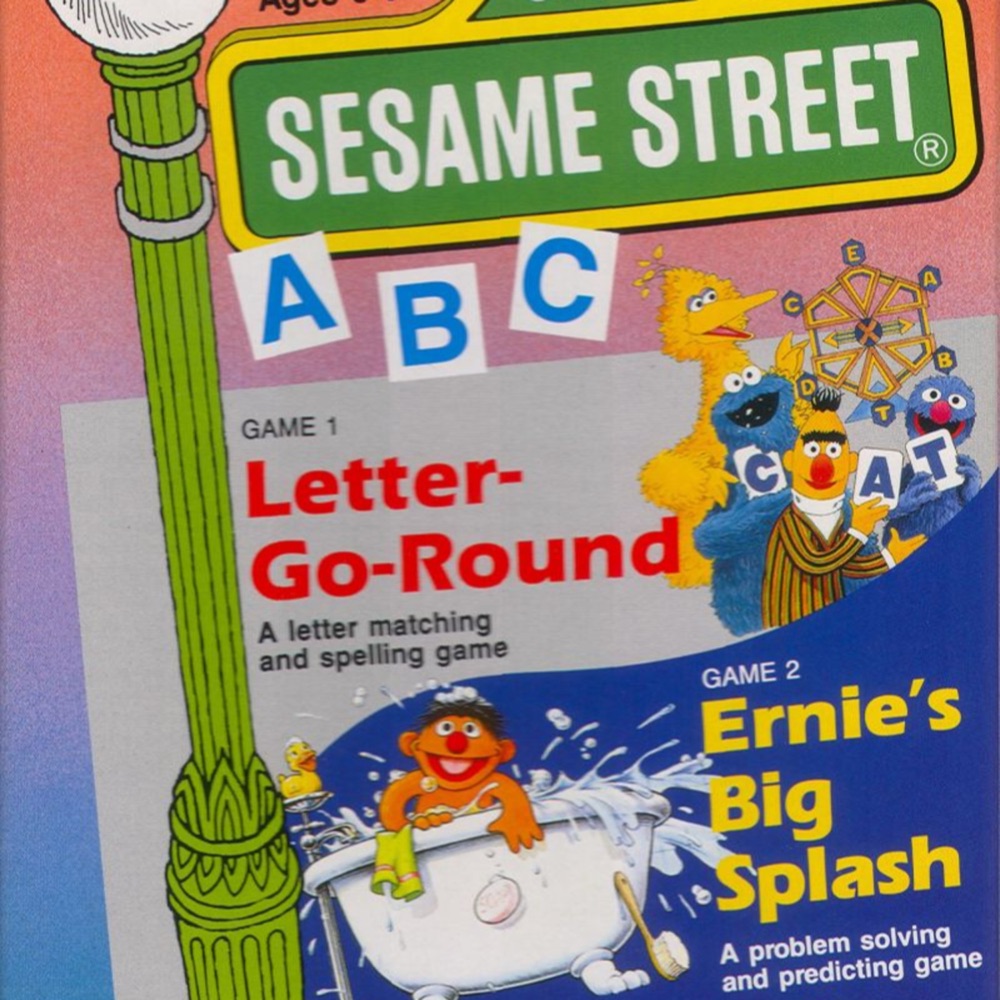
222 · SESAME STREET ABC
This game is divided into two parts:
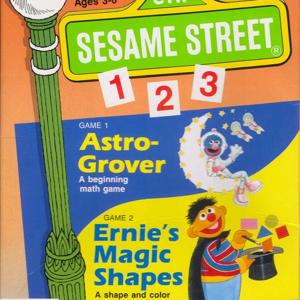
Letter-Go-Round: By catching and matching letters on a spinning ferris wheel children practice letter recognition and matching, simple spelling and word formation.
Ernie's Big Splash: Children can help Ernie find his rubber duckie for his bath by building a pathway from duckie's soap dish to Ernie's bathtub. This helps children practice planning, predicting and problem-solving.
SHOW NOTES
Sesame Street ABC Longplay
- Learning fun with your pals from Sesame Street
- NES Longplay
- Introductions
- Learning Games in general
- Leapfrog / Jumpstart
- Learning Games in general
- Overview
- Big Bird and friends teach players the alphabet, upper and lower cases, and spelling. Also Ernie wants to teach you about map making and directions in a second game that has nothing to do with the alphabet
- Gameplay
- It’s the same terrible menu in my opinion. Kids will never need to understand directions. Everything in life is being handed to them
- Letter Go Round
- A ferris wheel revolves with letters attached to it. You stop the wheel when the letter you think matches the reference letter is at the bottom of the ferris wheel.
- Upper/Lower/Mixed
- Too few animated celebrations
- One Little Word / What’s Missing
- They wouldn’t accept LAD, wanted BAD
- They wouldn’t accept FEW, wanted PEW
- Spell the Secret Word
- Random spinning wheel where you just guess letters, this doesn’t feel like learning at all.
- It would be one thing if they only used the letters on the ferris wheel, the addition of other letters makes it feel very random
- Wouldn’t accept BAG, wanted BAH
- Random spinning wheel where you just guess letters, this doesn’t feel like learning at all.
- Ernie’s Big Splash
- Now do you understand why not being able to cycle through choices in both directions could be a problem
- EGL
- NEStalgia Byte - Tower of Druaga
Auto-generated transcript. Each paragraph starts with its timestamp. Speakers are not identified.
Sesame Street ABC, learning fun with your pals from Sesame Street.
And welcome to NEStalgia, a chronological exploration of every NES game released in North America. I'm Mike. I'm Sean. And I'm Joe. Real fast, guys, I think that we owe it to everybody here. Let's just do a quick refresher on the alphabet so that just in case anybody who's not familiar with the podcast going into this or with the game for that matter just knows the alphabet. So I feel like that's really important. So we'll just alternate. I'll start. A. B. C. D. E. F. G. H. I. J. K. L. M. N. O. P. Q. R. S. T. U. V. W. X. Y. Why what?
Oh, so good. Yep. We will reveal. Not the first time we've done that, though. Right. No, not the first time. But we will reveal. Which is really weird. We will reveal the final letter at the end of the episode. So stick around for the finale because we will let you know what that final letter was supposed to be. I always remember, like when I need to remember what the alphabet is, like at least the first three, always be closing. You know that one? Do you have, can you continue that sentence for the other 23 letters? Always be closing, doofus, everyone farts. Sounds like two different sentences, but I'll allow it.
Anyway. Why did we do that in the past? Oh, because we wanted everyone to know that if in the future when we die, they can still record episodes of Nostalgia by taking the alphabet. Yeah. Was that really it?
Yeah, that they could build out episodes. Yeah, exactly. Without us. Now, that's a giant in joke. You guys who have been longtime listeners know exactly what we're talking about. It was in a post show back in like the first 100 episodes. Anyway, enough with the jokes. Enough with the like, you know, little hijinks and all that. Another word for jokes. I'm learning a lot of words because today's focus on Sesame Street is not numbers like we got earlier this year in January of 1989. Sesame Street 123 was released. But now it is September of 1989 and they have had enough time to say, screw the numbers. It's time to talk about letters.
And letters are serious business because they're a little trickier than numbers. Would you agree or disagree with that assertion? I'd say that they're a little trickier because like you can't just like add two letters together together to get a new letter. Like there's no it's not like a zero sum thing. Like each letter is unique. Like you have to remember those letters. Hence why I have like, you know, my little.
Yeah, I think that they're trickier to start because they're like, yeah, you got to you got to put all this extra you got to know this extra knowledge. Yes. But in the long run numbers, I think, become more complicated because letters are finite. Like, but numbers, eventually you get into all this crazy math, like like really hard math. And then, you know, like numbers are basically like picking picking Bulbasaur and letters are like picking Charizard. I can understand that because also numbers are if letters just went on forever.
Well, I mean, you could also have like, you know, letters like there's 26 different letters and there's only 10 different like individual numbers that the rest of the numbers are made of. So like out of if you had like a five character number, there's only so many. There's only like 10,000 of those. Whereas if you had a five character word, there's whatever 26 exclamation point are or whatever. So, you know, what are we doing right now? What is this about? No, you might think we're just riffing, but this is all stuff that Sesame Street ABC taught us. Sesame Street ABC involves Big Bird and friends teaching players, presumably children, the alphabet, both upper and lower cases and spelling words and such.
Also, Ernie wants to teach you about map making and directions in a second game that has nothing to do with the alphabet. Yeah, that one was kind of odd. We'll get there.
Before we talk about the game, big kudos to the opening of this game where it has a version of the Sesame Street theme song that sounds just like the Sesame Street theme song. And because it's a game that teaches you words and letters, it has a sing-along version of a bubble that goes across the screen, touching the notes, touching the words as the notes follow on the screen. So you can actually sing along and learn the words right there to the Sesame Street theme song. Very advanced stuff.
I think right there, the game is worth it alone for this karaoke version of the Sesame Street theme song. The first NES karaoke game. I appreciate that. But it's pretty much over after that because then we are greeted with the terrible menu. The worst menu of all time. It is a direct copy of the menu from Sesame Street 123.
Sean and I's friendship nearly ended over this. And it's easy to see why. Okay. Because I think the menu is terrible. And I'm not saying he thinks it's the best menu he's ever seen, but he thinks it's fine for children. I'm just saying that if it's a thing where, like, you know, a three-year-old doesn't know how a controller works. Like, if they press a button, something changes. And that's all you need. That's all you need at this level. And I still hold that as fact. I'm going to take a little break. We'll let you guys talk about this. I'll be back in a little bit. But because you know what this is, Joe, this is just teaching kids that everything in life can be handed to them. This is the original participation trophy. I don't see it.
Kids will never need to understand directions, apparently, because up can be down. Down can be up. This isn't the game that's teaching them directions. What's that? This isn't the game that's there to teach them directions. Right. It's here to teach them letters.
I get that. But I still feel like just the idea that everything is just any button you press is fine because it just leads to the next option could work for me if so. Just to be clear about the menu here, there's like four or five choices to choose from. And no matter what button you press, it goes down on the menu screen to the next option. So if you click down on the D-pad or if you click up on the D-pad, it goes to the next available option, which is fine, except for when you get to the last entry, it doesn't then go back to the top.
Now it starts going up instead of down as if there is only the direction that the game wants you to go in. There is no player agency in this menu. If I were a parent, I don't have kids, but if I were a parent, I would think like, you know, you don't want your kid to learn too much too fast because then eventually the power dynamic of the parent-child relationship changes. You still want to control that kid for the rest of his life or her life. So like, you know, you don't want them to learn directions that you want them to always have to come back to you to be like, which way's up?
It's true though. It's true though, because like we live in a very competitive marketplace right now and anything that I teach my child can be used against me. So I don't want, I don't want my kids to, to be better than me like that. But that is some really silly, uh, naive parenting right there. If you're trying to replace yourself, you're doing it wrong. Yeah. You should be trying to learn as much as you can from the new generation and then taking that and using it against them.
All right. is a word that Sesame Street ABC could potentially teach you because this is more than just learning your ABCs, which is kind of what the game implies, right? It's just supposed to teach you the alphabet. No, we're building out words here. And what words we're building are anybody's guests, including Sesame Street.
But I'm getting ahead of myself because we have to talk about, we have to break this down a little bit. The first, the real game is this game called Letter Go Round. And I don't know why you wouldn't just release this game as Sesame Street's Letter Go Round and then, you know, figure it out from there. But Sesame Street ABC is what they chose it. The actual game is called Letter Go Round. And then within that game that you then boot up, you have uppercase matching, lowercase matching,
mixed case matching, one little word, what's missing, and spell the secret word. These sound like categories for Jeopardy, but they are just all the same kind of game, which is a Ferris wheel at a carnival is revolving, you know, with letters clockwise. And these letters that are attached to it, you choose to stop the Ferris wheel when the letter you think that matches the reference letter that they have provided to you, when that is at the bottom of the wheel, then you say, stop.
I am explaining it confusingly on purpose because I, for the life of me, can't figure out this motif of a Ferris wheel that has a couple letters on it that you're just supposed to decide, well, once the letter hits the bottom, that's the best time to choose it. Why couldn't it have just been a keyboard that you, like, have a mouse for that you, like, select the letter that goes there? Well, first of all, Mike, um, a couple things. Um, number one, this is a, this is a merry-go-round. Otherwise, the name of the game doesn't make sense.
Um, every, anytime you've seen a Ferris wheel, it's actually a merry-go-round, just vertical. Um, so that's why it's called that. And two, uh, obviously you have to choose the one that's on the bottom because that's where you get on and off the vertical merry-go-round. Like, you, you wouldn't jump off the top of a merry-go-round. Yeah, kids know this. That would be certain death. Uh, so they're using the actual, like, intuition of small children to not jump to their death,
uh, to teach them how to match letters. And then there's the obvious, like, have it hop over and, and, and try to do, like, the hit the bell at the top, which always happens. So that's how this works. Yeah, and everybody knows the first thing that gets off the Ferris wheel is the weakest. And the third thing that gets off the Ferris wheel is the strongest. So they'll hit the bell.
So here's the thing about the Ferris wheel that bothers me. You guys are fine with the menu, letting it just shift in any direction. But now we have a Ferris wheel where the only control is either to select the letter at the bottom of the Ferris wheel or to speed up the Ferris wheel at any particular interval. Wait, you can speed it up? Yes, you can choose to have it be incredibly slow and faster if you so wish to, like, you know, if you know that the letter that's coming up is not the letter you need. How? You can press the other button and the Ferris wheel will change speeds. I didn't know that. I didn't know either.
I think that that letter, I mean, sorry, that controls, those controls are for the parents, I think. Yes, they're, like, tired. They're like, come on, you missed it. You missed it. We're not waiting for it to go around again.
You know, okay. So let's start with the matching, okay? They show you in the bottom right corner, they show you, like, a capital U. And then they give you six letters on this Ferris wheel and only one of them looks just like the other one. They're not telling you that that is the letter U. There is no, like, synthesized voice that confirms that or anything. It's just find the shapes that look similar. So this is more of a shape game than it is teaching you about, like, the alphabet. Well, no, wait. Well, letters are shapes.
Right, but I'm saying, like, you're just learning, you're just confirming that the pictures match. You're not confirming that you've learned the letter U. Yeah, you're not like, okay, that's an E. I mean, you're, okay, you're right. But, I mean, yeah, I guess it still doesn't get much better later. But, like, later when you're talking about words, then you have to, like, put them together
in a way that makes a word. Right, but that implies that you, like, went to school and then learned the whole alphabet. Yeah, you learned it somewhere else. Okay. I will confirm. I will confirm that the only mode within this sub-game that actually could be used to illustrate your understanding of the alphabet and how they form words is the secret word, kind of, and the what's missing.
Like, those are the only two sub-games of the sub-game which sort of, like, actually show understanding. The rest is just, you're right, matching different shapes. Right. But even those just show understanding. Like, I see what you're saying. They don't actually teach you. You have to have learned that somewhere else, like, what the secret word is in order to play that correctly. Like, what I feel like this should have been, this match the letter to the other letter
game, should have been, like, there should just be a simple picture of, like, a cat and you have to get C. And then that shows, like, oh, cat starts with C. Or even more simple, it could have just been, like, show one case and match it to the uppercase or lowercase or the opposite case. Like, that would show that you know that it's the same letter.
Yes. Agreed. True. And I would also think if you're a child, right, or if you're a parent buying this video game for a child, the point of buying an educational video game is because kids love video games, kids love stimulation and excitement and all that. And it's just not, it's not fun to teach them the traditional way how to learn the alphabet. We're going to do it with video games now. But when you only have three celebratory animations, whether it be Big Bird, Cookie Monster, Elmo, not Elmo, Ernie, you know, when you only have those three that you constantly are recycling through, I argue that actually this game would get boring fast even for a kid.
Yeah. Well, especially when those animations are not really animated, like, nothing in the, I don't know what, how you actually define sprite, but I assumed a sprite was like, you'd have to have multiple, multiple phases of the animation, like, to make it a sprite. Otherwise, it's just an image. Maybe I'm wrong. Maybe these are sprites, but these sprites are literally just a cutout of a character that just bounces around. Nothing changes about them. No, they were ahead of their time because they're showing the cast of Sesame Street doing Tic-Tac-Tac dances.
That's true. And, I mean, say what you will about how much animation there is in there. I think that it is very celebratory. You get the, you get some fireworks in the background. Basically, what I'm saying is we are the only true authorities on the educational system, and we should be the ones actually facilitating educational video games. Give us the reins. Yeah, I agree. I love the Tic-Tac dance where nothing within your silhouette moves, and you just move up and down slowly. It's the floss. That's going to take off big time.
Now, I don't have much else to say about the uppercase matching, lowercase matching, mixed case matching. Like, that is what it is, and it's a flawed game because it's not teaching you anything. But maybe it's just teaching you how the game works, too, because this concept of a ferris wheel to learn is new to me. Like, they never taught that in school. So, vertical marriage around. Right. First, you have to learn the mechanics of learning at Sesame Street because it's a little different than we do in our public schools.
So, if you move on to one little word slash what's missing because they're kind of the same game again. This is an interesting one because let's do, like, what's missing, for instance, okay? In what's missing, you get a word that is clearly missing a particular letter that you have to choose from on the range of the Ferris wheels alphabet. So, you have six choices for a potential letter, and you have to figure out to fill in the blank. This sounds great. This sounds like a way, finally, we can teach the kids some words and show that they understand the letters. But they have created a situation on the same vertical merry-go-round slash ferris wheel because I'm not calling it that anymore, Sean.
They've created a situation where there can be multiple correct answers, and Sesame Street refuses to select them. They wouldn't accept lad from me, L-A-D. They wanted bad, which is fine, okay? But they also wouldn't accept few, F-E-W, because they wanted pew, P-E-W. I don't even think that's a sound effect. No, it's the name of a- No, it's like in a church. Yeah, a church pew. Yeah. Yeah, but I'm thinking, like, you know, few is a much more common word. Not true. I totally agree. And I had something just like that where it was, like, they wanted rig.
Like, do toddlers know what a rig is or what rigging is? Or, like, do they know that that's a word? And there was something else available. It was, like, hug or something. No, it wasn't hug, but it was something else that I could have done that was a much more common word that I feel like a three-year-old would know. Probably big. But they wanted rig. It wasn't big. It didn't rhyme, but it was, like, three different letters or two different letters.
A chance to teach kids something, but instead they teach them that there are only certain good words. That other words are bad. And if they try to spell those words, they should be shamed. They lose. Well, okay, Mike, if you're talking about, if you want to talk about participation trophies, you have to know that there are some bad words and words that should never be used, like quit. Like, I don't see quit being the word of the day in any of these. Like, so, that's a bad word. Maybe. Have you ever thought of that? Curious. Yep. I love where your head went for bad words.
But speaking of making them feel ashamed, that fail music, that fail music is, like, that's, like, a little anxiety-inducing. It's, like, it's kind of, like, da-na-na-na. Like, dark. It's, like, in Super Mario Bros. 3, just before you fight one of the Koopa bosses, where you're, like, oh, shit, something's about to happen. Like, it makes you feel like you failed. I agree. I think that the game, for the most part, is an intimidating form of learning. Yeah. Oh, God.
After that, you have spell the secret word. Now, I have another problem, believe it or not. This game hasn't taught me a damn thing. Because in Spell the Secret Word, you have a, you know, randomly selected batch of letters on the wheel where there are no, like, fill in the blanks. Now, it's just pick the very first letter that the word we're thinking of starts with. Now, that sounds fine because it's kind of like, you know, I spy, right? You know, it's just like, oh, pick anything in this room. I was thinking more Hangman. Hangman. Okay, Hangman works, too. I agree with that. Probably even better than I spy, honestly.
But here's the issue, okay? It would be one thing if they only use the letters on the Ferris wheel to make a word. So this way you have to think, like, oh, okay, there's a B, there's an A, and there's a D on the Ferris wheel. So they want me to spell bad, you know? And that's, like, really advanced thinking for the target audience of this NES game. But nevertheless, that would have worked. What they did instead is every time a letter finally becomes the letter that they were thinking of to start it, Ernie or Bert adds a whole new letter to the Ferris wheel where now the odds of you getting the next letter in the sequence right is, once again, one in six.
Yeah, you could just be guessing. If that letter that comes up is part of the word you need, then you could just be guessing at the beginning, totally in the dark. Like, hopefully this is what it starts with. Yeah, let's just be clear, though. Like, as many guesses as it takes, there is no failure state. And I think that that is not what you need in an educational game. It needs to be a failure state. I think that if you guess too many of these words wrong, you need a screen that pops up that says that, like, Big Bird died. Or, like, you caused this to happen and it's bad.
Yeah, what it should be is there should be a gun to Big Bird's head. Yeah. And the person holding the gun, Oscar, should say, like, spell bad now. And then, like, you don't do it. Hold on. I think that's typecasting for Oscar. I think Oscar can be a good guy, too, if he wanted to. Well, hey, hey, hey, Oscar was my favorite Sesame Street character as a kid. So, like, I know. All right. I know. Guys, these are great ideas, but there's one problem with all of this. The problem is, is that you are the same people who are okay with the menu being something that they can't get wrong.
And now, all of a sudden, you're upset that there's not a gun pointed at Big Bird's head. That's a different thing. You know what? Like, I've stayed pretty much out of this. Sean, I'm with you. That's a different. That has nothing to do with the letters. That's just, like, get them into the game. They're kids. They don't know what they're doing. They got no motor skills. Just press a button, and hopefully it gets there.
Anyway, you know, basically, if I had to think of another, you know, I spelled the secret word. We were saying I spy hangman. It's actually kind of like Russian roulette, because there's just a one in six chance that you've selected the bullet. But this time, good. It's good that you selected the bullet. Yeah, or bad. You know, it's neither, because there is no failure, Steve. That's true. Everything is worthless without one.
But also, spell the secret word has the same problems as the beginning. They wouldn't accept bag from me. I got the B. I got the A. I'm going for the final letter. I see a G. I'm like, oh, the secret word is bag. But they wanted bah, B-A-H. In my mind, another sound effect. Not really a word that a child should be thinking of. But then again, I'm sure there's also a Sesame Street Animals game where they're going to teach you the animals, but not really at all. Well, Mike, what number am I thinking of right now? Seven. Shit.
There you go. I got good at this game because I played so much of spell the secret word. Right. And that's just as fair as that game. So, never mind. Point retracted. I've got one more thing to say about the Ferris wheel, or vertical merry-go-round, if you will. Thank you. And this is me just testing the game's limits, seeing what is available to the child at hand, right? The Ferris wheel, no matter if there are two letters at the bottom, okay?
Now, technically, they give you a giant triangle as the base here. That's true. Where you could argue that, you know, if it's within that triangle, that is the letter that you're going to select to get off the Ferris wheel. However, if there are two letters in that triangle, no matter how far out the one to the left, the one that has theoretically passed, and, you know, they're not going to, like, go backwards, right? You can't move a Ferris wheel backwards. It only moves forward.
That is not the case in this carnival. In this carnival, they will reset the ride so that all momentum and inertia goes in the opposite direction just to select that other letter that had clearly already passed the bottom. And you're right. I noticed that, too.
And, like, for the game just trying to get you to select the letters, there's, like, a weird reaction time element to this that, like, I don't think was necessary. And maybe it's the fact that I've played other games that are made for older people before. But, like, my gut reaction was, like, I have to select the letter I want slightly before it lands there because there will be some, like, deliberate, like, it'll keep moving a little bit afterwards. I mean, going back to Super Mario Bros. 3. You think about the, on that little, that little, anyone who's playing a little slot machine game. This game is just like Super Mario Bros. 3. It's exactly like it.
You think about what thing is about you want and you select it just before it hits so then it lands on it. So I did that the first time with the Ferris wheel and I missed. I missed the letter I was looking for. I got it wrong. It told me to match a J to a J, the first letter of my name, and I got that wrong because of the reaction time. Well, it's, yeah, because this game, it's a lot like Dark Souls. Like, you need to anticipate and then actually execute. And when you can't do that with the letters on the vertical merry-go-round, then, you know, you just gotta keep trying. Yeah, no, I agree. I mean, this game, it's a lot like Universal Paperclip.
But, all right. But I will say one more thing about the Ferris wheel levels is that recently I, or like last year, I kind of as a gag Secret Santa gift, taught myself to make a basic, basic NES game. And from there, I learned that like the way sprite work and like the way that works with like your palettes, and I might be getting this like a little wrong, but you have a couple of colors that are in your palette. And one of them is set as your transparent color. Usually it's black. And if you, if you use, try to use black while it's your transparent color in something, that thing will be transparent. And you'll be able to see right through it, whatever color is behind it.
And that is what they did for their characters. So like Cookie Monster comes out and you can see through his mouth, which is supposed to be like black, like the inside of, like the dark inside of his mouth. And you can see like the moon behind his mouth as if there's a hole in the back of his head. Same thing with like all of the, like, you know, he's all, Cookie Monster especially has all this texture. So he's got like little black speckles on his fur. You can see through him. Same thing with Big Bird. Same thing with Ernie and Bert, but like much more noticeably for Cookie Monster. But like anywhere where they tried to use black color, it was clear.
The really good thing about the Cookie Monster one is that if you look at the Ferris wheel carefully on the base of the triangle, okay, at the very bottom, there is some like little white lines that are supposed to, I guess, you know, reflect, you know, be like a reflection. Sometimes Cookie Monster can jump in his dance to perfectly line up with the white that is there inside his mouth. So it looks like teeth. It looks like he is smiling. Wow, you're right. I just saw it.
Maybe that was intentional. That's why they did that. They ran that by the Sesame Street creators. And they, you know, Jim Henson personally said that. Yeah. You know, that's the thing about Cookie Monster. Yeah. His teeth are only in one spot, though. And he has to move in front of them for them to be in his mouth. Well, we've never seen him with teeth on the show. Never been in the spot where his teeth are. Yeah, exactly. That's a brand new sentence.
Oh, wow. Okay, it's 33 minutes. Let's keep going. All right, 33 minutes in, and I think it's time for Ernie's Big Splash, okay? Ernie's Big Splash, like I said at the beginning of this whole like overview of what this game is, this is a completely different game that has nothing to do with the alphabet. And instead, it's about getting Ernie's rubber duck to Ernie via a complex like map making, directional sewer system slash underwater bubble transportation.
It's wacky, and it's wild. But all you really need to know is that it's like a grid, and the grid doesn't quite line up with the tiles that you make. No, very weird. Yeah. They have like some shadow to them and stuff like that. But anyway, the directions are given to you. It tells you like, hey, this is what the sprite looks like, but it's going to make the rubber ducky move in this direction. And you basically just have to build it out so that wherever the rubber ducky starts, eventually it gets to Ernie. And they pretend like there's a bunch of other modes in this game, but it's always just also get it to Grover, please. You know, it's like, it's never that complicated.
There's no like obstacles in the way or defeat something, which there shouldn't be. But since we're talking about it anyway, I just thought that I'd mention that all these games are exactly the same. However, I will refuse to believe at this point in the podcast that you guys will still refuse to understand why not being able to cycle through choices in both directions could be a problem like it is in Ernie's Big Splash, where no matter what button you press, it just shows you the next tile.
So if you accidentally skip over the one you need, you will now need to skip back through every other tile to get to the tile that was just the one that you needed right before that, because there is no way to go back, because there is no option to be wrong. Because Ernie will always be reunited with the rubber ducky.
No, that's not true. There's only two. You can fail. You can fail this. Oh, you can fail it. Sure. But I'm saying like, you have to cycle through all of the options. Oh, okay. Yes. I do disagree with that. Yeah, I agree with this. Yeah. It's different than a minute. But I also don't really understand what this is supposed to be teaching you. Maybe it's like a cause and effect thing. Maybe it's like some kind of like Rube Goldberg maker. Like, I don't really know what this is for. I think it's just, I think it's just like brain activity. It's just like, it's just like do, like think about stuff.
Yeah. Is it life? Just brain activity? Yeah, exactly. This is preparing you for life. I do. I will say that I did enjoy this one a bit more just because like you're sort of setting something up and then like you run it. Like maybe it's, it's even like a very simple way to think about like programming where you set a bunch of stuff up and then after that you let it just run its course and it works or it doesn't. What's like some programming language that the next Sesame Street could be like instead of ABC, it's like Sesame Street. C sharp. Sure.
Yeah. Just to paint that picture a little more though, what these tiles are, the tiles have arrows that like show you this is where the duck will enter and this is where the duck will exit. So, you know, like which direction it'll start and end. So, you know, like, okay, I needed to start here because this is where I left off and I need to end there because that's where I want to go. But then when you, once you build your whole path, however, you can make it a winding snaky path, you can just make it go straight to Ernie.
Then you like, yeah, you run it like, like mousetrap where you, each, each one of those tiles has its own, like based on which tile you chose, has its own animation that will carry the duck for like in the direction it's supposed to go. So like one is like a little bubble and when you play it, when it gets to that point, he'll like get sucked into a bubble and that bubble will float like to the left and then up.
Or there are other things where it's like there's a crocodile and that crocodile will lift you from the bottom to the top. And I'll say that I played this alone, nobody around, but like when I finally, when I like built my thing and then like it played, it started going, I out loud said like, oh, cool. Like I actually thought that was kind of cool. Guys. Who are we actually recording this podcast for? Oh, you guys are recording?
Surely there is at least one listener left. And to that listener, I think it's time that we reveal the final letter of the alphabet. I think you're right. Sean, what is that final letter? I'm going to let Joe do the honors. Oh, wow. You know, I, I don't really want this honor, but that final letter is Zed. Which is true. It's not, not a line. I don't know where I'm coming from. We'll accept it. We would have accepted a lot of answers. Honestly, I would have almost accepted anything, including the essential games list. Oh, you didn't even try.
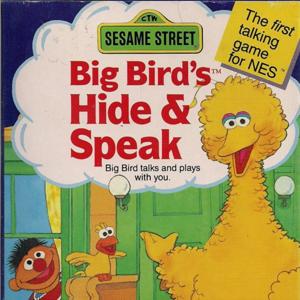
All right. So it's time for the essential games list. I skipped sequels and spinoffs. So I just real fast, just want to let you know that we will be recording an episode of Sesame Street, one, two, three, Sesame Street, ABC combined package. Which Sam already played, if you remember. Which will be twice as long as both of these episodes. Absolutely true. But other Sesame Street games, we also have Sesame Street's Big Birds Hide and Speak, which comes out in October 1990. Now that's a cute name. And so I'm excited to see what that's all about, because it seems like it will actually be different than this.
Which is my essential games list vote, actually. I'm excited for Sesame Street's Big Birds Hide and Speak. And so therefore, I feel like if I'm excited for that game and not excited for this game, I can't possibly put this on the essential games list. So I won't. All right. Sean? I'll go. So, yeah. I apologize to the listener for having to listen to an episode of this podcast in which at no time were we actually sincere in what we said. Like, this is... I think that we're just tired. But, yeah. I mean, this is just what you get when you play everything on a system. So, thanks for listening, and it's not essential.
I'll say that, you know, last time, Sesame Street 123. This is ABC, right? Yeah. Sesame Street 123. I think my vote had something to do with, like, the fact that we are still judging this on, like, whether it's an essential NES game. Like, they weren't setting out to do the same things that other NES games are doing. They were setting out to just be, like, an educational device for kids. And I said, I think in that sense, it succeeded in what it was trying to do.
But Sesame Street ABC, I don't know that it succeeded in what it was trying to do. I mean, Mike, you have convinced me that there is nothing for a child to learn from the actual ABC portion of this. Because, yeah, you just need to know otherwise. Like, you need to know this stuff beforehand and bring it to the game in order to get these things right. Like, the only thing you learn is, like, yes, that shape is that shape. I see what you're saying now. So, like, I don't think it really did what it was setting out to do there.
But I'll say that the Ernie's bath time or whatever it's called, I think that's a fun distraction for a kid that keeps you busy if you want to keep your kid busy. I don't know if you, like, learn too much other than just, like, you're just having some cognitive function going on. But, yeah. So, overall, not essential and maybe not even as, like, successful in its own definition as the first game was. All right, there you have it. That's three no's.
That's it for Sesame Street for a little bit until we get to hide and speak. Thankfully, the Sesame Street ABC 123 compilation doesn't come until November of 91. So, we have a lot of time to not only think about what we're going to say, but also to reconsider these for the Essential Games list in both the best of 89, but also then again in the best of 91. We have a couple of chances to put this game on the Essential Games list.
Remember, that's something that we do because we are coming up towards the end of the year. It's going to take us a long time because we only record one episode a week every Friday, but we are now in September of 1989. So, once we finish December of 1989, we're doing the best of 1989, and we're going to review all these games and the Essential Games list and see what comes on or off that list. Guys, hopes, dreams, fears?
Well, you know my hope. I won't take up much time. There you go. Thank you. Zelda 2. We've already proven that the Essential Games list means nothing. Great. Okay, that's also encouraging for the listeners to hear.
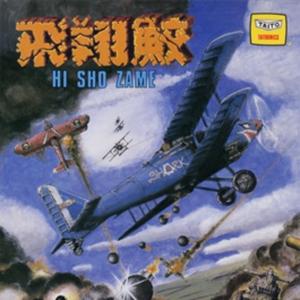
Next week, we'll be recording Flying Shark, and I don't know. That sounds awesome. So, I don't want to even talk about what that could be. I know for a fact it's not the Teenage Mutant Ninja Turtle character named Flying Shark, or Sky Shark, rather. But that's a whole nother... Oh, that's right. The game... This was my notes. My notes are bad. The game is called Flying Shark in the arcade, but on the NES, it's called Sky Shark, and there's a TMNT character named Sky Shark, and that's where I was like, huh. So, you know, consider that a redo, but also that I'm too lazy to redo it, so we just left it in the edit, because nobody should be listening to the episode at this point or this point.
Or this point.