213 · Bad Street Brawler
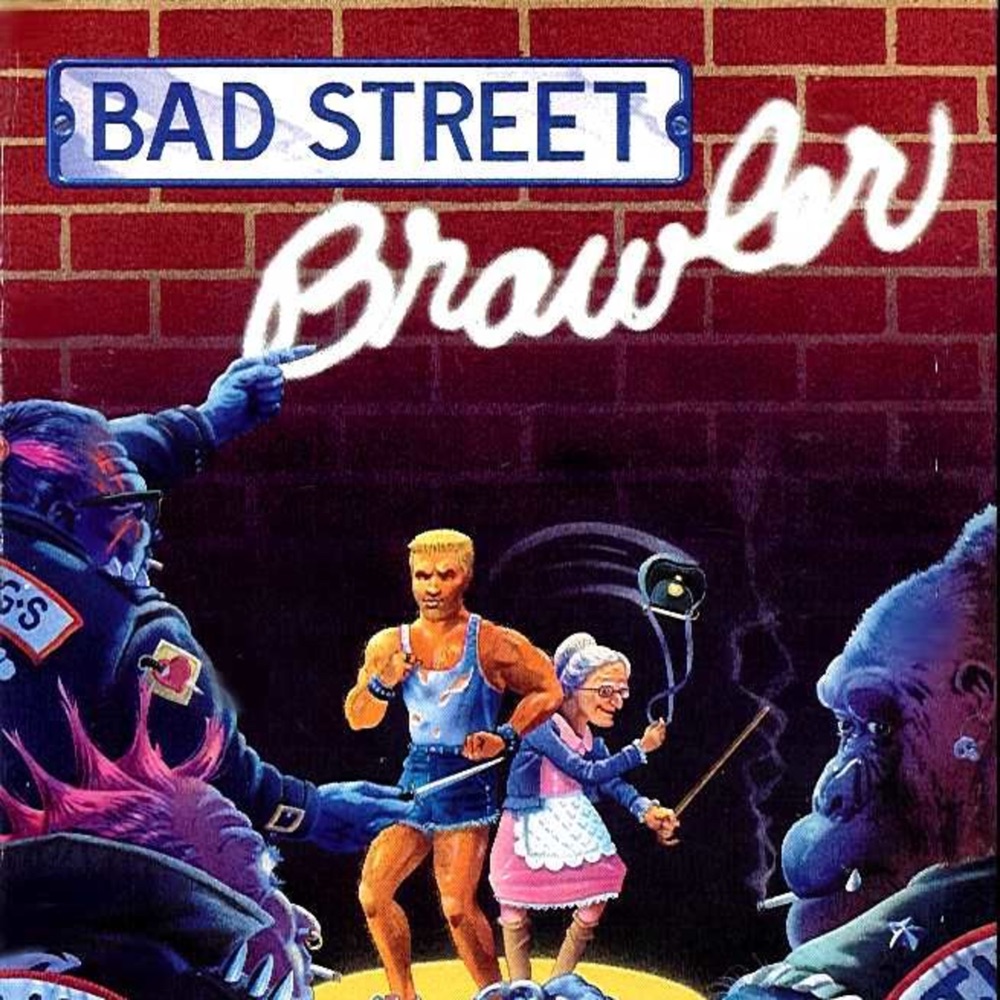
The city has gone wild! Chaos stalks the streets in the guise of new wave gangsters and motorcycle madmen. Only you can save the day. Only you are tough enough, fast enough, mad enough - and only you look good enough in gold spandex trunks to save the streets of our fair city from the swarms of human (and otherwise) vermin who threaten our grandmother's safety.
SHOW NOTES
Bad Street Brawler
How a Power Glove Works
How a Power Glove ACTUALLY works
Neil Patrick Harris
Ringling Barnum and Baileys
Sweet Bro and Hella Jeff Web Comic
Bad Street Brawler is a beat-em-up starring Duke Davis, a former punk rocker in a vest and short shorts, cleaning up streets overrun by thugs and circus renegades. The manual spends a full paragraph on this and could have used one sentence. The game is funnier than it is fun to fight in.
What works
- Walking feels great. Joe flagged it first: movement and even the jump are smooth in a way plenty of side-scrollers never manage.
- The enemies are weird in a good way. Basketball players throwing basketballs, a spy who opens his coat to reveal a smaller spy, a somersaulting wrestler in the Ric Flair mold, circus dwarves that need low attacks and gorillas that need heavy ones. We called them the most creative since Stinger.
- It knows it's a joke. Between levels Duke says things like "don't trouble trouble until trouble troubles you," and the mayor raises his hand while he says "I'll have a cheeseburger." The celebration screens look like MS Paint, and Duke's face changes from screen to screen. Throwing the confiscated weapons, bananas included, into a dumpster while the point numbers bounce like chattering teeth was a highlight.
- The training room. Between levels you test your next moves on a punching bag, and wanting to see them kept us moving.
What doesn't
- The timer. You rarely get more than about 100 seconds and can't add any. Most of our deaths were running out of time, and our best runs came from sprinting past everyone until the screen locked and forced a fight. Nothing tells you where that will happen.
- A new moveset every level. There are 15 force moves, three per stage, all on A, B or both. It sounded fresh and wore off fast; we'd rather have kept what we learned. The headbutt charge, a bit like a spin dash, was a favorite, though it glitched the screen for Sean.
- Fighting feels off. Hitboxes are unreliable, hits give little feedback, enemies have no stun or invincibility frames, and jump is up on the D-pad.
- Random stages. Bosses, skippable enemies and regular brawls come in no pattern.
- A flat ending. The final boss is Duke's old sensei, bazooka in hand, and then Duke rides in a car under confetti that animates in place.
Beyond the game
This was one of two NES games meant for Mattel's Power Glove, and nothing in the game or manual says so. Looking it up mid-show, we found a once-per-stage "glove zap" that beats one enemy, which a regular controller can trigger only by pressing left and right together. The developer, Beam Software, went on to make Back to the Future Part II and III. Computer versions were called Bop and Rumble, and in Europe Street Hassle.
The bottom line
Skip it. Nobody voted it onto the Essential Games List. We liked the style and humor, but the fighting and the unforgiving clock sink it. As Joe put it, the game lives up to its name.
Written from our conversation in this episode.
- Thug thrashing defender of freedom
- NES Longplay
- Introductions
- Are you fighting on Bad Street or are you just bad at street brawling?
- Overview
- This is a beat em up
- Gameplay
- With a name like Bad Street Brawler, what’s up with the carnival style music in the title screen?
- How does this fare as a beat em up?
- What stands out?
- Your move set
- The Force Moves - Duke knows 15, but can only use 3 per stage.
- Timer
- Unique setting in terms of enemies and stages you’ll see
- The spy who opens his coat to reveal another smaller spy
- Duke throwing out all the weapons he collected at the end of the stage is great closure and scoring
- But why do the point totals bounce of screen like a set of chattering teeth
- The Quotes between the stages
- Maybe they’ll make a movie out of me
- "Come fight beside me," I said to myself, and although it doesn't make sense, I held my own hand as a small sign of trust, and together I made my defense.
- The weird ending
- The END BOSS is DUKE'S SENSEI!
- Duke's sensei is an old geezer dressed in yellow with black head band.
- Apparently he is scared crapless of Duke's mad skills because he brought a BAZOOKA to even the odds!!
- The ending is this weird MS pain abomination with confetti
- The END BOSS is DUKE'S SENSEI!
- The NES version was one of only two NES games specifically designed for use with Mattel's Power Glove.
- The other is Super Glove Ball
- Sequels and Spinoffs
- originally released for home computers as Bop'n Rumble
- Or Street Hassle in Europe
- Now here’s a weird piece of trivia
- Last week Back to the Future
- Beam Software will make Pt 2 and 3 on the NES
- EGL
- NEStalgia Byte - Exerion and Formation Z
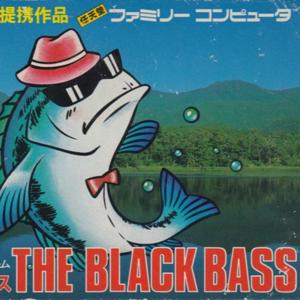
- Next week - The Black Bass
Auto-generated transcript. Each paragraph starts with its timestamp. Speakers are not identified.
Bad Street Brawler, Thug-Thrashing Defender of Freedom.
And welcome to NEStalgia, a chronological exploration of every NES game released in North America. I'm Mike. I'm Sean. And I'm Joe. You know, the title is kind of unclear here. Are you fighting on Bad Street, or are you just bad at street brawling? I think it's Bad Street. Like, you know, like Skid Row, whatever the other names for violent neighborhoods could be. Yeah, this is Bad Street. See, I'm not even doing a bit here. I actually thought it was something different than either of those things. I thought that you were a street brawler, but you're like a bad street brawler. Like, you're like a bad dude. Oh, okay. Like bad dudes. Like a bad enough dude. Yeah. Yeah, you're a bad enough dude to brawl on the streets.
Anyway, you know, Bad Street Brawler is a beat-em-up, and I feel like that's all you really need to know in terms of like overview for this game. But there is a lot of substance in the manual. It's not communicated too well in the actual gameplay of it because it's just a basic arcade beat-em-up. But the manual sets up like this guy Duke that you play as, and he has a whole reason for being on the streets, taking on these... I don't remember the name of the gang. Do either of you? No, I don't. I just know that he wants to clean up the streets.
Yeah, he does want to clean up the streets, but there's like two sides of this for Bad Street Brawler. There's like the guy who is invested in the manual and this blonde-haired dude named Duke. And then there's like the game and you know, like how who in 2022, like you're not the person who's getting the whole package of buying the game or looking at it in the toy store first and being like, man, I want to be like this guy, right? You know, I want to take care of business and beat all the bad guys off the street.
You're just playing this game. You're just starting it up. You're, you know, you're greeted with the menu. This is like the one like menu screen or just intro screen that I had never played the game, but I just like it's in my head as one of like the most iconic like NES screens ever for some reason. Like that, that not really cool dude that's supposed to look cool. I feel like I see that everywhere when talking about retro games. Like is this like a cult hit?
This guy looks like Neil Patrick Harris, right? And that's not somebody that I think is going to do like a great job cleaning up the streets. I just appreciate that. He's like he's looking pretty like, oh, don't don't mess with me or don't mess with don't don't lead a life of crime. But he's also just wearing a vest and short shorts. And it's very funny. I don't know. I wasn't sure. First of all, this was intentionally funny because I kind of came off as it was, but I've never seen King of the Hill. Yeah, but this guy gives me at least on the menu screen because the real King of the Hill vibes.
So I feel like before we get into the game, because we probably never looked at the story, we owe it to everybody to just set up who is Duke Davis and what he's all about. So in the manual, this is what they give you as the story for the game.
Law breaking crooks, thugs and circus renegades rule the mean streets. And, you know, just go pause here for a second. That's some kind of streets where, you know, there's crooks, there's thugs and also a circus is happening. But here we are, and it's a real zoo out there. The city is unsafe and the good citizens live in constant fear. You are Duke Davis, former punk rocker and the world's coolest martial arts vigilante. You are a lean, mean, thug thrashing machine returning to your native city streets as the ultimate defender of freedom.
There's evil waiting behind every bush and danger lurking behind every corner. Look out, it's up to you to send the bad guys reeling with furious fist and foot bashing action. It's nonstop martial arts madness. Nail the no gooders today and watch the street savages scatter. I don't know about you guys, but I just read the whole thing and I feel like that could have been three sentences. Yeah, you're fighting bad guys. Yeah, one sentence. There you go, Joe, you did it.
Is it just, I feel like it's all just there to justify that they have all these assets for just circus people. And they didn't know how to fit it into why you would be fighting them. Yeah, they were working on a Ringling, Barnum and Bailey circus game. And that just got canceled. So they had to work it into their beat them up game, which happened to be this. But you know what's funny is like now that I've read the story, I kind of realized like, oh, it didn't matter whether you read the story or just play the game. You get the idea. Yeah, I'm thinking that maybe like, like even this, this paragraph, maybe I'm too optimistic because I've grown up in this time period where we parody things more. But I like looking at this as an intentional parody.
And that makes it really actually kind of funny to me. But I'm sure it wasn't. You know, how does this fare as a beat them up? Like, we don't need to get into the specifics of anything. What stands out about this game? What works for this game? Like the most generic of levels for you guys? What's going on here? I think if it's as far as something that works for this game, I'll start with that because I have plenty of other things. I will say a good thing about this game that I noticed right away is like the fluid movement.
Now, that's not the controls. I think there are a problem with the controls, but the actual motion. I don't know why so many other games in this type of genre, not even just beat them up, but like the side scroller, even like platformers can't really nail the like smoothness of just walking that that doesn't feel really stiff. And I thought that that actually was a right off the bat, probably the first thing I noticed something that felt good about this game.
That's true. But it also sort of like it, it doesn't have that typical that heads up display, but like the, the, it doesn't give you anything to tell you like, okay, it's a good, it's cool to move, move forward. Now it's like, there's going to be enemies that come. And I think after a while you'll thin them out so that the only thing that you can do is move to the right. But like, it, it doesn't really communicate that well, like what's locking you from, from continuing to move forward.
Um, and you could just like spend all of the seconds, all of the precious seconds that you have, like pretty early in, in the game. And so you're not even testing out how, how fluid the walking feels or something like that. Sorry, I'm getting kind of deep into this one little thing too early, but I, I just felt like that was one of the main, uh, things that I hung on. I'm getting into playing this game. It's true though, Sean, cause it's like two different forms of progress in each of these stages for a beat them up, right?
Like there's the timer that is constantly ticking away as you play through the level. But then there's also the moments where you're like locked to the screen versus, you know, the moments that you can just proceed on with. Like, I'm not going to deal with this guy because time is also very valuable. You don't have a way to gain more time. So you do have to try to beat these levels as fast as possible.
I don't know if they ever give you more than like 100 seconds. I admittedly didn't beat the game, but 100 seconds is not a lot of time when you're trying to take care of enemies. So it's really like a balance in terms of, you know, what we know about beat them ups. Cause beat them ups are usually either you must defeat every enemy on screen or you must find a certain thing to then like get the progression to move forward.
This one chooses a mixture of time and scrolling to indicate how far you're moving. They have that on the UI. These like what I'm going to say are just like foam boots. I think they're buildings. Yeah. And they, they tell you how far in the stage you are. But, um, you know, I don't know if this is like the best indicator because like, what is the measure of, you know, like one building, one screen? Is that like, you know, is one building, two screens? How do you know? Yeah. How much more distance do you have to go compared to time? I didn't find myself finding that either useful or referring to it that much.
Yeah. I referred to it just in the sense of like, how, like, am I getting close? You know, seeing, okay, I only got like two things left. I know that like, I don't have to manage my time so closely because I'm really close to the end. But I, I, yeah, I'm assuming that just like somewhere in the games programming, it's just set that like when you get to this point in the stage, the game, the screen will lock and a boss will come in. And yeah, there's no way for you, the player to know that. So you just kind of got to deal with it when it happens.
Yeah. Cause I've had, you know, the muscle memory of playing other beat-em-ups. And so I was approaching it in the way of just like, Oh, if there's an enemy, you've got to defeat it. Um, and that ended up with me like, you know, running out of time all the time. So then I had to just train myself to just always be testing the right bound. Um, and, uh, like, so I ended up playing on the right side of the screen, most of the game, um, just so that I didn't waste that much time. Because like, I think I, I, I mean, I got beat up quite a bit, but most of my deaths are just from running out of time. I just say, I found that, um, that I would just literally run past everyone until the game stopped me and I had to fight someone in order to progress.
Like it took me a while to figure that out. But once I started doing that, that was like, those are like my best levels. Yeah. Duke is a pretty powerful guy. You know, you take damage just like how you would in any other game. Like where if you get attacked, it takes the health point away from you. But with the exception of some projectile enemies or some enemies that are a bit more aggressive with just the way that they move around the screen. For the most part, you know, any enemy that just enters stage right or stage left, they're not that hard to take care of. And there's not, you know, the screen is never littered with enemies. So I kind of appreciate that.
But it is confusing to know that, you know, like when you're in the middle of like a, you know, a mid stage boss fight, where, you know, you're locked between you and this other guy who the enemy has like a little more health than usual. And that's shown in the UI, but it's like hard to just, what's the point of the stage? Like at any given time, it just feels kind of, you know, random, even though it's not. It's completely like that layout of the stage that I don't know, it was tripping me up a little bit that I kept moving between boss fights, regular enemies, enemies that I could skip. There was no real thought process there of what I was doing.
Yeah, it's definitely a grab bag. Like, and I get that, like, you know, you can, the designer can throw a different assortment at you that, like, obviously the circus dwarves, I don't know what the correct way to say it is.
Like, you're going to have to use your low attack on them. You're going to want to use a, like your more heavy attack on the gorillas and stuff like that. Like, I get that they want to keep you off kilter and you have to like sort of change your style depending on who you're fighting. But yeah, I don't think that there was any real thought process into like what combination you were going to get. Because you're also like, I think it might be random depending on how much you just decide to blow through until you get, you get stopped again.
So it doesn't really allow them to really tailor that experience. And another thing that changes constantly between levels is your move set. We haven't really seen something like this before and I think they tried to make this an interesting hook of the game. But I don't know if it really benefited them in the way that they might have imagined it. You know, they probably thought this will give you some variety, right?
Because you're every level, you have a different move set and you have to figure out what you'll do with that move set. But it always, it's always the same. It's either just either A to attack, B attack or A and B together attack. And then, you know, like, you know, you're locked to that specific stage. Those are your moves for that level and they call them force moves for whatever reason. And there are 15 of them, but you can only use the three of them per stage. And I feel like it would have been better off to have some kind of version of inputs with the D pad.
And you'll learn a new force move each level or something. So they continue to build upon these things instead of just, I hope you really like this move because it's the last time you're ever going to do it. Yeah. I initially thought like, yeah, this is kind of cool because it makes you think about it forces you to think about each level a little differently. Not, you know, not that all the moves are necessarily like super different from each other, but some really are.
And at first I was like, oh, that's kind of neat. But, but it did very quickly get old that like, well, you know, it felt like I should have been gaining some progress and like, yeah, gaining these moves or even like, I mean, this is now just me putting together like a wish list of, you know, maybe this would just be a different game. But like, you know, even if, if there was just, Hey, here's the combination from level one, here's the combination from level two. Now you can, you can pause it and select one of those combinations. So it's still a little challenging because you, you can't ever use, you know, the roundhouse kick with the trip move because they're on different sets or something.
So you still have those like that way where you have to strategize in that sense. But like, you feel like you progressed and you gained these moves and you can, I don't know, it feels too arbitrary that it just throwing something else at you. Like, I like the idea of it, but I think something else needed to be done in order to, to make it an interesting, like fun thing. Well, to sidestep real quick.
One thing I want to point out is that I really do like the presentation of, of how this works. Like between each level you get like into a little training room and you can experiment with the, the, the moves you're going to use in the next level on a punching bag. And I, I, I just appreciate that little, like here, get your bearings time and how that's sort of, it's almost a thing to look forward to because I did like, I, it did kind of drive me to get to the next level. Cause I'm like, Oh, what will the next moves be? Like I want to see if they're, if they look cool or if they feel good.
Um, so I liked that part, but when it comes to like how it slices it up and you only get these three moves for each level. Um, and sometimes like, you know, you get, you'll, you'll get like the trip again, or you'll get the ear twist again.
Um, one thing I think they could have done is just have like one of, have, have one of the lighter, because they do have different damage outputs. Let's have one of the lighter attacks be like a short press and have a heavy attack be a long press. And, um, and then you could maybe throw in the directional stuff, like maybe stay away from up because that's jump, but everything else is fair game. Um, and they probably could have fit most of these onto the controller by the end of the game.
Um, but yeah, you're right. Like the way it is now, like there really can't be any strategy because you, you don't have all the pieces on the board at once. Yeah. And I think it does add some kind of variety just in the types of moves you do, but there really isn't, if you think about it, any difference between the level where you can punch versus the level where you headbutt. Like it's doing the same exact amount of damage and you know where it hurts. The enemy is still like the same placement. So it just looks different, right?
No, I noticed a few like differences in that stuff, which I like, which is where I thought this could, this has potential to be kind of unique and interesting. But like, you know, there's a trip move that like, yeah, other moves might be like a low sweeping kick or just a low kick. But that like the trip move, like you can kind of like hold the guy down for a minute and you like knock him down. Whereas like the low kick just does damage low or something like that. That could be not exactly right. Some of them are grapples that like don't actually do damage, just repositions them that I find kind of useless in a game where time is so much not on your side. But that is still like differences.
Right. And the other, the other one, the one that I loved, it was my favorite was the headbutt or like the charge one where you lower your head and charge because it is, first of all, a means to continue moving forward while attacking. So I could just literally ignore everyone. And if somebody happened to come out of the right side of the screen, I would be headbutting them already.
Yeah. It's like Sonic spin dash. Yeah. So like, and that was fun. Although I don't know what was going on, but I, you know, every time I tried this, any level where I had that would just glitch the heck out. Like just visually, I could still, I could still play it, but like everything was, was messed up. Like, I don't know if you guys experienced that because, because, you know, I would restart the game.
Not that it needed, made me restart the game, but restart the game and try it again. Um, and every time I got to a level like that, it would just get like super glitchy. Huh. I didn't like abuse it. So I guess I don't know if that, you know, if that has something to do with it. Oh, I abused it. Yeah. This game has a very unique setting and atmosphere and a variety of enemies.
I feel like regardless of the execution of what moves you use, these are some of the most creative enemies since Stinger. Remember, like Stinger had watermelons and saxophones and stuff. Like it's not, it's not that wacky, but you know, in the same way, it's the, the enemies, you know how they fight. Like you got the basketball player who will throw basketballs at you and you've got, uh, you know, there's this one I'm thinking of where it's the spy who then opens his coat to reveal another smaller spy.
Like these things are, you know, there, there's a charm to that. And even in the backdrop of the city, like being so run down and then the subway and the parts where it almost looks like the wild west, you know, even though there's no one design scheme here, it is, you know, a little strange that the circus just kind of pulled into town the same day the city went to shit. It was kind of funny. Uh, it just works. And I was always entertained by who was going to come out next or where you were going to go. There's like this Ric Flair wrestler character who comes around and he does somersaults around the screen.
Like, I don't know, all that stuff was just very charming. Attila the honey. Tell me about Attila the honey, Sean. I mean, it's just, it's just like the token, the token female enemy. And I just appreciate that that's the name in the manual.
Yeah. Cause you know what? Before I was like, Oh, I'm sure this is the reason I think it's trying to be funny is just because I'm more used to the game parody. No, this game definitely knows it's funny, right? Yeah. Now that we're talking about this stuff, it's absolutely like trying to have a sense of humor. And I appreciate that. The game knows it's funny because this is the second you beat the first stage, you start seeing quotes between levels. That's when you know that they're in on the joke because I think, you know, there's just a few that I made note of, you know, come fight beside me. I said to myself, and although it doesn't make sense, I held my own hand as a small sign of trust. And together I made my defense.
Like what? What is he saying? When trouble troubles you, don't, wait, don't trouble trouble until trouble troubles you. But that is like the full quote from Duke in the game. And there's more things like that too. Every time he cleans up the street, right, he then like gets celebrated via MS Paint Art with the rest of the city.
What? You know, they're like celebrating his good fortune. So there's one where he's like getting his hand raised by the mayor or something. And he just says, I'll have a cheeseburger. It's like, what? Like in regards to what? We never, we're not in on the joke. And, you know, that Duke's in on the joke, but we still have to laugh a little bit because that's funny. He goes, maybe they'll make a movie out of me. I think that's kind of funny. The developers are like, hey, if you're willing to pay for a movie, we will license Bad Street Brawler to you. Yeah. The MS Paint comment, though, cracks me up because I'm looking at one of these right now and you're right. This was confirmed in my mind to have been made in Microsoft Paint.
That's exactly what it looks like. Yeah, there's something off-putting about that. Yeah. The visuals are very strange because the actual game doesn't look like it's made in MS Paint by any means. There's some, you know, nice pixel artwork going on in here. But then there's just these moments of full screen still images that can only be done with, you know, like the paint bucket tool.
Yeah. Well, it's funny because on the manual, he looks like Neil Patrick Harris. Because then in the gameplay, I think he looks like an old man. You know, he looks like, you know, to go back to last week, he looks like old Biff. And then in these other screens, he looks like, I don't know, like some weird, like Johnny Bravo Microsoft Paint. Like there's no consistency as to what this character looks like. I also just appreciate that when like you, when you clear a level and you throw all the weapons into the dumpster, like the bananas from Gorillaz also qualify as cleaning up a street of weapons. So it's got some good stuff. Yeah. I mean, that is great though.
Like thematically, it all works. And I feel like, you know, they worked in the idea of the weapons that you collect throughout the stages. Yeah. You throw them in the dumpster as if like that's how we as a society get rid of guns. It's like we just throw them all in the trash and agree not to go back into the trash. Clap your hands. Yeah. My job here is done.
Yeah. It's like, right. They're gone now. But you know what annoyed me about that? Even though it's like, so it's such a cute idea to have this guy who was like cleaning the streets single handedly and, you know, removing all the weapons from them. And when he throws the weapons into the trash, the points come out as numbers like 400, 600, right? But then when you start, you know, doing this, when they hit the floor, they bounce like chattering teeth. I don't get what they were going for there. You know, those Toy Story chattering teeth things like you wind them up. I don't know why the 400 is doing that. Little things like that. You know, the game had some thematic fun flair going for it. And then it also just has over the top silliness.
I don't know. I thought that that was not even that silly. It just looked like, oh, they put some physics on the numbers. I thought that was fun. Yeah. Physics on the numbers is not silly, Joe? Well, it's silly, but it's not sillier than the rest of the stuff. A lot of times when you see like a title or something, they put it like in a movie or something. They'll put it like in the environment. They'll put it like in 3D space. And this just gives it a little bounce. I don't know. It's not that silly to me. It just gives it a little bounce. Yeah. Other ones float up and they move side to side rather than just appearing on the screen. It just gives, I don't know, it just makes it look like a thing.
The more I think of Duke's whole thing, I'm enjoying this game a lot more. Just thinking about the little quest that he set himself out onto to get back to his hometown and clean the streets up. You know, he said he's grabbing people, he's lifting them up over his head, and he's just shaking them until they lose all their health. I mean, that's what I would do. It's pretty much, he's really like a neighborhood, a friendly neighborhood Spider-Man. Yeah. Without the wall climbing. Well, you don't, well, we didn't finish the game. Did anyone beat the game? Yeah, that might be the B move in one of the late levels.
Okay, the end of the game reveals that the guy behind it all, the end boss, is Duke Sensei, the man who brought him up and taught him how to be the ultimate martial artist. So now you must take out Duke Sensei, who is just really like, if you thought Duke looked old, this dude is like, you know, he's like a grandfather to somebody. He is old, and he clearly thinks that he, you know, he must have taught Duke well, because, you know, if Duke's trained in the martial arts, he's coming equipped with a bazooka.
He's like, I might have taught you the ways of the fist, but I have a bazooka and I'm prepared to use it. And I just feel like that's a weird ending as it is. But then, you know, rather than get some awesome quote or some kind of ending like epilogue where Duke reunites with his high school sweetheart or something, instead, it just shows him in the, you know, like a car with confetti that doesn't fall, but does animate in the same exact place over and over again. And he's just cheered on by people. This looks like, this looks like, what's that comic book with Jeremy and...
It does look like that, but I don't remember what that's called, Sean, so we'll just have to try to find that and I'll link it in the show notes. But no one's going to know what we're talking about because we don't even know what it's called. I don't know what you're talking about either. But it's a comic book and Sean is definitely right that it looks just like that.
But it's also just like a weird, okay, the city held a parade for him, I suppose, but they were also doing a bunch of other celebratory things for him between levels. I just feel like the ending should have had, you know, been a little bigger. Like, now you've cleaned the streets are clean and here's how many weapons you took off the streets this playthrough. Something, you know, like that would have given a little more to the game. Like, now nobody does drugs in this town anymore. Something like that. Would have been a good ending message. Not that drugs are bad. In the 80s, they sure were. Yes, in the 80s, they had bad drugs. Oh boy, I shouldn't have said that.
Oh, sweet bro and hella Jeff. God damn it. You know, the NES version of this game was only one of two NES games designed to be used with Mattel's power glove. And unlike our attempts to try to locate a power pad to play the power pad games, I didn't even think about trying to acquire a power glove and play this game because I just genuinely can't think about like how that would work. Why this game? With the way the power glove works? The way I understand it and the way this game worked doesn't make sense. It seems like I missed out on any potential features. I still don't actually know. I know that it's a controller on your hand and it's got some design, but do you move it?
Like there's inputs or is it just buttons on your hand? Right. So it has like the whole keyboard on it. Right. But then like you were supposed to be able to punch in the code for the particular game and then the power glove would work based on that particular game.
So you had to you had to know the code of the game and then it would change, you know, and obviously, you know, it's like a Mattel thing. So it wasn't other developers weren't telling them, you know, here's the code to put with that. And then, you know, that's how the power was supposed to work. You had to just, you know, figure it out. And I believe the way it works is some kind of motion from your fingers, you know, that like work with the glove. So, but we're not sure. Well, no. I feel like we need to get one. Yeah. Well, I guess what I'm saying is like, that's how it's supposed to work and it just didn't, you know? Oh, okay.
Right. So like you had to set it up and it kind of worked like how VR, some, some VR headsets work now where you, you have to like actually set up a receiver and, you know, like a stand that sets up that you know where the glove is in the sensor of the zone of the receivers.
And then, yeah, it's like that. Like, uh, you know, it had like a spatial awareness or something. I don't, I don't really know how tech works with that, but it had an idea where your hand was in relation to the sensors. And so you're supposed to be able to move. So it's some form of motion sensing. Right. You were supposed to be able to like move the glove to move, but also like, you know, per finger. Yeah. That's why it has like that bar around the knuckles. It has another bar. It was supposed to be able to like detect finger movements as inputs.
So like my index finger could be, you know, I don't know, I might be making this up, but like my thumb could be the A button. Okay. That seems awful. It does seem awful, but I still think it's like, it's pretty sweet looking.
Oh yeah. Now the other game that we will have to play super glove ball. Now that sounds like a game that you might need the power glove to be useful. Some power pad games were only ever compatible, like with the power pad, you know, otherwise you had to really force yourself to either emulate it and use a keyboard to pretend like you're standing on the power pad with your fingers. You know, the power glove doesn't require that, but super glove ball, maybe it's some kind of bowling game where you need to use your fingers and stuff like that.
But Bad Street Brawler just seems like a weird attempt as a starting game for the power glove. Yeah. Cause it's, it seems so, uh, primarily designed to just be played on a controller. Like I don't understand what would be beneficial about this glove thing. Yeah. It's just because it's like, it's like a side scrolling thing anyways. So like your movements wouldn't really translate to like the perspective of the character. And I couldn't find, you know, it's definitely not in the manual. I couldn't find any information about this, but allegedly the standout feature of why you would want to use Bad Street Brawler's path with the power glove is that there's some moves that can only be done with the glove, but I'm just not sure.
If the manual doesn't even cover it, let alone the game, the game doesn't ever tell you that it's time, right? The game never says like, make sure you have your power glove on. Yeah. I didn't know this was a power glove game. Yeah. I mean, I, I, I read it. I read it on Wikipedia before playing it. Um, but I mean, is it, is it just like you get, is it just like a pay to win by having the power glove? Is it just that easy with the glove? Like, are they that good of the special? I don't know. Yeah. You punch harder and then like now every enemy is one hit KO.
Yeah. And you know, looking at it now, real time followup, the glove allows you to do a special move where if you push the glove forward towards the screen, you do a special move once per stage called the glove zap. This automatically defeats one enemy. This can also be done pressing left and right together on the NES controller, which of course makes this move impossible to perform on a standard controller and making it exclusive to the power glove.
On the sequels and spinoff side, originally Bad Street Brawler was released for home computers as Bop and Rumble. That sounds terrible. Or in Europe as street hassle. Now I'd get street hustle. Street hustle kind of works. Street hassle? It's a hassle to be in those streets. Yeah. You're hassling people. Yeah. Maybe it's just a British like stiff upper lip thing. Like, oh, it's such a hassle living in this wretched hive of a city. I don't know. I do think Bad Street Brawler comes out on top here. Yeah, I think so too.
All right. Now here's a weird piece of trivia for you, Sean. Are you ready for this one? Okay. Last week, Back to the Future episode, okay? We mentioned Back to the Future Part 2 and 3 on the NES. Is there going to be a Bad Street Brawler Part 2 and 3? No, but if you remember, we couldn't. At that moment, you were the LJN expert and we couldn't figure out if LJN made Back to the Future Part 2 and 3. I said, you know, I'm just taking a guess here, but I don't think they did. Well, it turns out that the developers of Bad Street Brawler, Beam Software, will be the ones who make Back to the Future Part 2 and 3.
Whoa. Now, what are the odds that a game that gets released right alongside another game in a movie franchise then gets to make the next sequel to the said game that came before it? Like, I don't know. Like, that just feels very strange. Like, that's got to be, you know, the odds have to be almost impossible for something like that to ever happen again, right? That, like, two games get released and then somebody says, oh, well, I'll take my turn on that next time.
Yeah, I feel like there must be some sort of, like, causality where, like, because they came out at the same time, someone was like, you know what? They'd be a good fit for the next two games of this because maybe LJN didn't do a great job. Now, I can't really see a scenario where this is the game that makes someone think they'd be a good fit, but who knows? I also just think it's such a, it's a thing that we only notice because we're doing a chronological exploration and no one else has ever thought about it before. So this might be the first time it's been brought up to the masses.
That is true. It probably is the first time, which is amazing because that means finally after 210 plus episodes, we finally created a unique piece of trivia worthy of Wikipedia. Yeah, we might make, like, national news. Like, nobody's known this yet. This has got to, people need to know. It's been a slow news day. Sean, get your contacts at the New York Times and let's get this story rolling. All right, I got them. All right, thank you. It's that easy, folks. It's like, do you just get them and then the story gets published? All right, well, speaking of things that are easy, the last thing we have to do this show, it seems like it's going to be kind of easy today. So let's get it out of the way and do the Essential Games list.
Sean, your vote. Well, I really appreciate the presentation of this game and its oddball humor. And I do really like his outfit, even though his character model seems to change at a whim. And yeah, it's got a lot of style. I really appreciate that. But the moment-to-moment gameplay, it really didn't cut it for me. Some of it was, I didn't really get into how frustrating this game is at sometimes, like, in terms of, like, attack hitboxes and, like, just enemies. Like, there's not, like, stun and, like, little iframes where you don't take damage. The time system is way too unforgiving and you kind of have to blow past everything.
It's frustrating enough that I can't put this on the Essential Games list. All right, that's one. Now your turn, Joe. Yeah, I kind of have to echo pretty much everything you said, Sean, because to start with the humor, this game does make me smile while I'm playing it. Like, it's got some funny little, you know, quirky humor in there. And I like that.
As far as what I said at the beginning about the motion feeling really good, I stand by that. But somehow they squander all of that by making, like, the controls and the hitboxes not feel great. Or, like, the feedback from hitting an enemy not feel great. So it's, like, I was really, like, literally with just walking and even the jump motion feeling feels great. But we've already talked in the past about how we hate up button jump inputs.
And that's what this is. This is the up on the D-pad is how you jump. And, like, yeah, everything feels really smooth to move around. But then, like, it feels weird to actually fight anyone. So, like, that kind of gets annoying. And just overall, other than, like, that little charm, the rest of the game doesn't impress me. So I'm going to say no. And just to wrap up the beginning of this episode, the game lives up to its name. It's a bad street brawler. And so it will not be on the essential games list. That's it. That's all you have to do. Sometimes you make it nice and simple. I will say, yeah, I will say, you know, this was, if anything, a very confusing episode.
We started off by just saying that it's a beat-em-up. Then we started to talk about what the game is while already mentioning what it was. And then we started speculating on what the Power Glove does. So, you know, thanks for bearing with us as we try to figure this out. It's all your fault. But really, if anything, Bad Street Brawler is still somewhat of just a confusing experience to me, right? Like, at the end of the day, it's like, was it? Was it a joke? I hope it was a joke. But don't release a $60 game as a joke. Even if it was $40 back then, that's probably at least $80 now. Whoa. Right? That's how Back to the Future works.
Like, why did he bet on sports and not just, we're not getting back into that episode. No, no, we can talk about it right now. Anyway, Bad Street Brawler was this week's episode. And I'm sure you guys know there's tons of things I can plug. But I'm not going to plug anything. I'm going to save you guys the time. And instead, I'm just going to tell you about next week's episode. The Black Bass. Which I promise, none of us know anything about it yet. But take your bets right now. The Black Bass. The Black Bass? Like the fish? Well, that's what I'm saying, Sean. Do you know? Take your bet right now. Is it a fishing game? Or is it a guitar game? So that would be the Black Bass.
Right. But it's, you know, B-A-S-S. Either way, I didn't look into it at all. All right. I can't wait to find out with you. I'm only seeing this through text. So I'm saying, you know, gun to my head, it's a fishing game.
Who's holding the gun? You are. Oh, that's a twist. Joe, do you want to get in on this? Yeah, yeah. I'm trying to think. I mean, I think it's a game about fish and sea life, but not necessarily fishing. You're not catching these fish. Oh, I never even considered that possibility. It's like Echo the Dolphin. That's a good guess, though. Yeah. Honestly, it's going to be hard to do a fishing game on the NES. They're having a hard enough time doing it on PCs today. Like, I don't know if you guys ever play like those Bassmaster games, but they're really like overly complicated for no reason. Legend of Zelda Ocarina of Time figured out how to do fishing in 1998.
Anyways, as I said, we're not going to plug anything. Just remember to keep listening to the show and keep telling your friends about the show. That's the only way we grow. So do all that stuff instead and save yourself the five minutes that I would have done plugging things by continually letting me talk. And while you search for that power button, the power button for your Bluetooth speaker, maybe, or on your phone, maybe you shut your phone off after you listen to episodes. I don't know. Maybe you're just done listening to the episode. That's why you bought the phone. It's like when you're like, oh, I got to get a Switch because Pokemon's coming out. You're like, oh, nostalgia's coming to phones. I got to get a phone. I got to get a Switch.