388 · Super Glove Ball
A 3D style game inspired by ball-and-paddle games, such as Breakout. Super Glove Ball was designed exclusively for Mattel's Power Glove accessory (although it can still be played with a normal controller).
Mike, Sean and Joe all sat down for this one, and we spent as much time on the Power Glove as on the game. Super Glove Ball is the only game designed for it, made by Rare for Mattel. The advertising leaned on Super Mario Bros. and Punch-Out!!, which were never built for a glove. You play a scientist stuck in a virtual maze, floating a glove around a wireframe room and ricocheting a ball off the walls to break panels.
The glove is the show
- Better tech than we expected. The glove emits high-frequency sound pulses to two sensor bars by the TV, which time the delay to work out where your hand is. Sensors in each finger read bending, and a code for each game maps the controls. We found it more mind-blowing than the light gun.
- A bet on one game. Bad Street Brawler had come out a year earlier, so the glove was retrofitted into existing games and nothing else was built for it. It's like a Wii launching with only Wii Sports. Cancelled projects included Glove Pilot, with levers and an oxygen dial, and The Terror of Tech Town.
- It barely works. Mike tried a real glove two years ago. It tracks for a second or two, then freezes or jumps somewhere your hand couldn't be. You're meant to sit with your elbow on a chair and move your arm slowly like a crane game, and any more force breaks it.
The game
- More than a breakout clone. You can move in depth, catch the ball and aim it, and a warp tile lets you skip ahead. Rooms have different enemies, plus boss and puzzle rooms, and we felt there was real thought in them.
- But you can't read it. The ball's depth is hard to judge, it seemed to pass through the glove at times, and we kept hitting the same squares. The last panel is like the last brick in Breakout, except you can't tell what you did right.
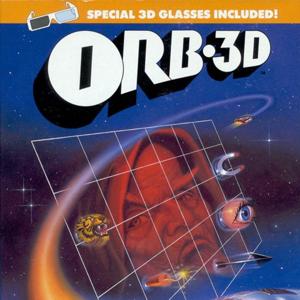
- Weaker than Orb 3D. Orb 3D kept inventing new scenarios, like knocking down ten pins in two shots, while the rooms here work the same way again and again.
- Still boring. We didn't get far, and we'd rather watch someone else play. Boring and difficult aren't mutually exclusive.
The bottom line
Skip it. We all voted no on the game, and Mike also gave the Power Glove a no and the NES a yes as the essential console. Mike blamed Mattel for shipping something that works one time in ten, and Sean's gripe was the copy-pasted Mattel logo on the title screen. Joe said it's not executed well, even if people in 1990 bought it for the awe factor. We enjoyed talking about it more than playing it, and pitched first-person volleyball and Marble Madness, with your fist as the fulcrum, as better ideas.
Written from our conversation in this episode.
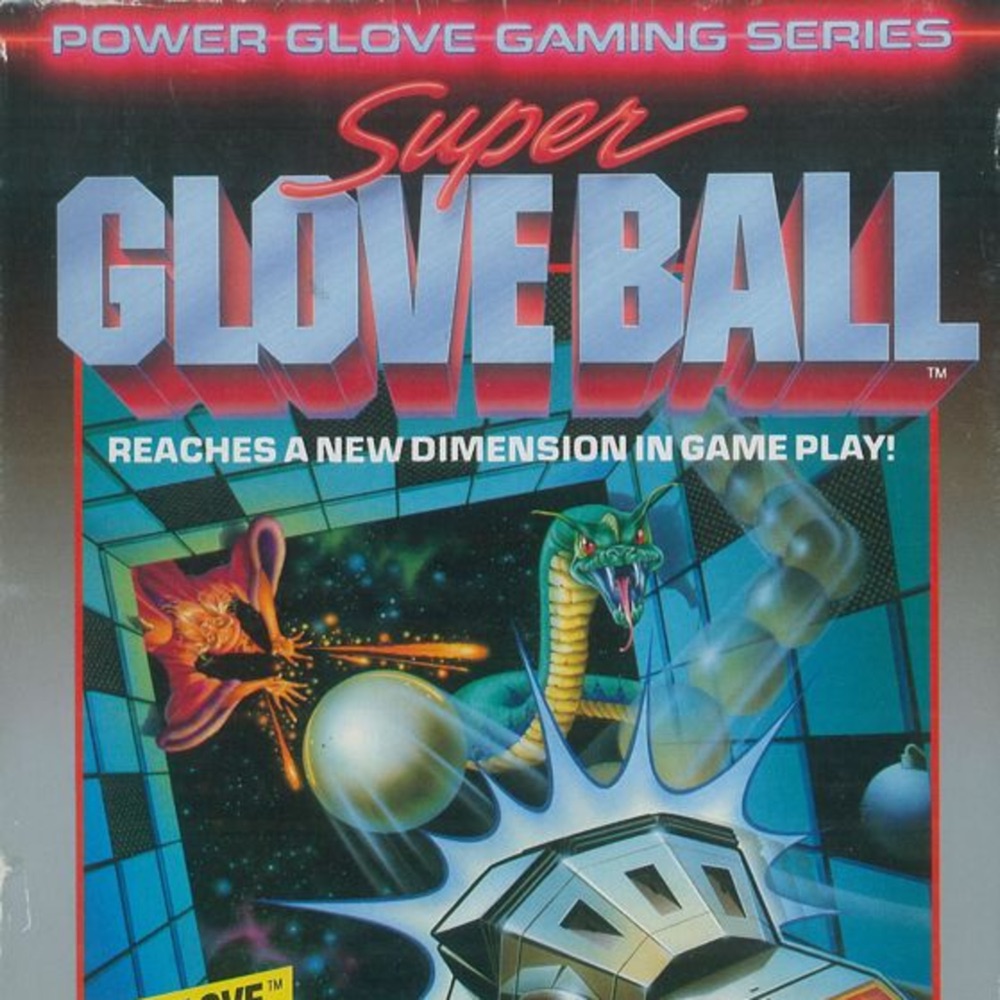
- Super Glove Ball
- Reach a new dimension in gameplay
- 🧤 Power Glove: Technical Overview
- 🎮 1. Basic Concept
- The Power Glove, released in 1989 by Mattel (U.S.) for the NES, was an early attempt at motion control. It allowed players to control games using hand gestures and finger movements, alongside a standard NES-style controller embedded in the glove.
- It didn’t work particularly well—but it was revolutionary in concept.
- 🧠 2. Core Components
- A. Glove Sensors
- Inside the glove's fingers were flex sensors (resistive ink strips).
- These detected bending of each finger, allowing for limited gesture recognition.
- Each sensor changed its electrical resistance when bent, which translated into digital input.
- B. Buttons & D-Pad
- On the forearm was a controller pad with:
- NES D-Pad
- A/B buttons
- Start/Select
- Numeric keypad (for inputting game codes/settings)
- C. Ultrasonic Emitters
- The glove had three ultrasonic speakers on the back of the hand.
- These emitted high-frequency sound pulses.
- D. Sensor Bars (Receivers)
- Two sensor bars were mounted on top of your TV screen.
- Each had three ultrasonic microphones.
- These detected the time delay of pulses reaching each mic.
- 📡 3. Tracking Mechanism
- The Power Glove used triangulation to calculate the glove’s position in 3D space:
- The ultrasonic pulses from the glove reached each microphone at slightly different times.
- By measuring the differences in arrival time, the system could determine:
- X, Y, Z position of the glove
- Pitch, yaw, and roll orientation (rotation)
- This allowed for six degrees of freedom in theory—but in practice, the accuracy was poor, and latency was high.
- 🕹️ General Overview
- Developed by Rare, published by Mattel in 1990.
- Designed specifically to showcase the Power Glove, but also playable with a standard controller.
- A first-person, 3D block-breaking maze game—kind of like Breakout meets The Lawnmower Man.
- You control a floating glove in a wireframe room, ricocheting balls off walls to break panels, uncover items, and move room to room.
- 👤 Story & Objective
- You are a scientist trapped in a virtual maze due to a space/time experiment gone wrong.
- Your mission: escape from the glove dimension by navigating over 100 rooms, battling energy spheres, and collecting special orbs.
- Along the way, you'll dodge hazards, gather map icons, and search for the “EXIT” hidden somewhere in the multidimensional grid.
- 🎮 Gameplay Mechanics
- You control a 3D floating glove in a room, ricocheting a ball at blocks and enemies.
- You can also “catch” the ball to aim it more precisely (with the glove or the D-pad).
- Rooms are linked in a vast maze — each one is a self-contained puzzle or combat challenge.
- Items include:
- Power orbs (upgrades)
- Map icons (to build out a grid of explored rooms)
- Energy units (health)
- The Power Glove allows for more immersive control… in theory. In practice, it’s barely functional.
- 🎨 Graphics & Sound
- Striking pseudo-3D wireframe graphics simulate depth and perspective — rare on NES.
- Very little variety in room design, but the “grid world” effect is visually distinct.
- The soundscape is minimalist, with ambient droning tones and sparse sound effects that enhance the sci-fi vibes.
- 📚 Legacy & Reception
- Widely remembered as one of the only games designed for the Power Glove.
- The game’s actual design is ambitious and kind of fascinating — with a controller.
- With the Power Glove: nearly unplayable.
- Cult classic status thanks to its bizarre concept, unique visuals, and Rare’s involvement.
- 📎 Fun Facts – Did You Know?
- 🧤 One of Two True Power Glove Games: The other was Glove Pilot (never released). Super Glove Ball is the only game officially built around the glove’s 3D capabilities.
→ [Source: Power Glove Development Docs, NES Works series] - 🧠 Rare Developed It During Their Arcade Experiment Phase: Around the same time they made Solar Jetman and Snake Rattle 'n' Roll, Rare was trying wild gameplay ideas.
→ [Source: Rare Replay Interviews] - 🧪 The Player Character Is Never Named: You’re just "a scientist trapped in space-time" — a narrative abstraction to match the game’s minimalism.
→ [Source: Instruction Manual] - 💻 The Maze Has Over 100 Interconnected Rooms: Which means it’s basically Metroid meets Arkanoid in layout—minus the atmosphere and plus a floating glove.
→ [Source: NES Map Archives] - 🎤 Podcast Questions – Super Glove Ball
- 🧤 Peripheral Problems
- “Did anyone ever actually use the Power Glove with this game, or just watch the demo and laugh?”
- “Is this the most ambitious NES game completely sabotaged by its input method?”
- 🤯 Gameplay & Concept
- “Is Super Glove Ball secretly kind of brilliant with a controller?”
- “If this were re-released with actual motion controls today, would it find an audience?”
- 📺 Segment Idea:
- “Power Flop: The Rise and Fall of the Power Glove”
- 🧤 1. The Hype
- Suggested Clip: 1989 commercial audio — "It's so bad!"
- Brief background on Mattel’s Power Glove launch in 1989
- Sold as the first-ever motion control interface for home gaming
- Promised 3D control, pointing, grabbing, and immersive action
- Hyped by The Wizard (1989) — it looked like the future
- 🎤 Host prompt:
- “Do you remember what you thought the Power Glove could do before you ever saw one in real life?”
- 🎮 2. The Reality
- Suggested Clip: Cringey gameplay footage of Super Glove Ball with glove input
- Laggy, inaccurate, and complicated calibration
- Only two games were designed for the glove:
- Super Glove Ball
- Glove Pilot (never released)
- Most other games just mapped motion to d-pad inputs (ex: Rad Racer, Punch-Out!!)
- The glove was more impressive as a cosplay prop than a controller
- 🎤 Host prompt:
- “Did anyone here actually try to finish a game with the glove, or was it just a party trick?”
- 🕹️ 3. The "Glove Games" Roundup
- Create a mini speed-run ranking of games that supported or were designed for the glove:
| Game Title | Glove Compatibility | Verdict |
| Super Glove Ball | Built for it | Ambitious but unplayable |
| Glove Pilot | Canceled | Lost media |
| Rad Racer | Gimmick support | Novel for 5 minutes |
| Punch-Out!! | Barely functional | Basically RNG-based |
| Top Gun | You’ll crash | You will crash again |
- 🎤 Host prompt:
- “What game would have been better with glove support? Imagine aiming in Duck Hunt with it... or don’t.”
- 💥 4. Why It Failed
- Technology was too early for what it was trying to do
- NES couldn’t handle real-time gesture input with fidelity
- Kids were frustrated, parents returned them
- Nintendo licensed it but never really supported it themselves
- Mattel overpromised and underdelivered spectacularly
- 🎤 Host prompt:
- “Could the Power Glove have worked in another era—or was it always doomed to be vaporware for kids?”
- 📼 5. Legacy & Cult Status
- Became a pop culture meme:
- The Wizard (“It’s so bad”)
- Angry Video Game Nerd
- Ready Player One homage
- Survives today through YouTube restorations, mods, and ironic worship
- Super Glove Ball is the last remnant of its big promise
- 🎤 Host prompt:
- “Is the Power Glove retro-cool now? Or is it still just a great bad idea?”
Auto-generated transcript. Each paragraph starts with its timestamp. Speakers are not identified.
Super Gloveball, reach a new dimension in gameplay.
And welcome to NEStalgia, a chronological exploration of every NES game released in North America. I'm Mike. I'm Sean. And I'm Joe. Guys, before we talk about the game, we have to talk about the glove behind the game. This is the, actually the only, if you think about it, but technically I guess there's like one other that we've already reviewed. This is the only Power Glove game. It's very strange.
It's sort of the legendary thing that never was, in my opinion. It's also like, I get like, oh, it failed or whatever, but like, did they just bet on it with one game? Like, they didn't have like a series of launch, like games and development? Joe, that's exactly what I was thinking. Cause this is the equivalent of like, you know, like in another universe, the Wii only ever had Wii Sports ready to go. They were like, we're not going to make any other motion controlled games. We're just going to see if, you know, the tennis and the bowling hits off or not. But yeah, really.
And I think before, before this, uh, like seeing how this game is supposed to be played, I wasn't really even sure what the, what the Power Glove was even supposed to do. Like, I didn't even know that there was any kind of motion tracking involved. I thought it was just a way to wear a controller. Um, so I, I was actually kind of surprised to, to learn that it was somewhat functional. Yeah. And it's interesting because if you look at the, the glove, right, it's a, it goes up to about halfway up your arm too. So it is, it's a long glove and that's because it also has the, uh, the controller base, uh, you know, past your wrist and everything. So it has a lot of, uh, tech on it. Style power. Yeah.
It's not just, yeah, it's not like a Wii mode that you just like hold in your hand and it has motion detection, which was also to Nintendo's credit that we moat made it seem like it was doing a lot more than it actually did. I feel like the Power Glove, which wasn't an official like Nintendo thing. It was with Mattel. Um, the Power Glove actually has a lot more tech than it, than it, uh, you know, that it, that it appears on first glance because I agree, Sean, when I finally looked into like, well, how is the glove tracking your place and everything?
That's where things got really interesting because the glove has speakers on the back of the hand that emit high frequency sound pulses to sensor bars. There are two sensor bars that you put near your TV and those have microphones that pick up. Basically they detect the, the time delay of the pulses coming from the microphone in the glove to the, to the microphones by this TV speakers. Oh, this wasn't light? No, it's not light at all. It's using sound and that's probably why it has mixed results. But like, doesn't that just sound incredible? Like just for, just like obviously whether it works or not is a different story, but like the tech is like really interesting.
This one blows my mind more so than the light gun. The light gun, I, I, I always found really interesting with the way that it, you know, there's like a frame of, of, of white and it, it can tell by there being like a, a lens that can tell if you're pointing at the frame of white light, whatever. Like I just thought that was pretty cool, but I can, I could like, I could get my head around it a lot easier than this. This, I'm just like, I can't get my head around the idea of 1990 hardware recognizing
sound in space in a way that would track your glove in the way that like a Wiimote cursor does. Like that just seems, first of all, like so many, like, I don't know anything about it, but that seems like the, you've taken the more difficult way to do this. I don't know the easier way, but it just, that, that seems wild to me. And I can't imagine it works as well as reports that I've read online say they say it works. Well, I mean, I also have read that it doesn't really work that like, I guess like at the most basic level, yes, it works, but is it, does it feel good? Is, is definitely up for debate.
Right. I mean, cause there's also like, for me, and I guess sometimes this shows our young age, uh, instead of our actual age, you know, like when I see, when I hear 1990, I'm like amazed that there were wireless NES controllers. I'm like, there's just no way that worked. Right. But like, it's not that crazy tech. So to, yeah, Joe, I agree with you to hear about like a glove that has some kind of motion capabilities. That's crazy. But it even has like tech beyond the sound stuff too.
Like there were sensors in each of the gloves fingers to detect like the bending of each individual fig finger as an input, including like, you know, like making like closing your fist and making a punching motion had its own like registered effect as well. That you mount all this stuff along with the fact that you had to like put in a code for each specific game you were playing to like map the controller for that specific game. So like it's advertised in the commercial, Mike Tyson's punch out and super Mario brothers, and you would put in a code so that it would make it so that like, when you lift your hand,
Mario will jump like for that specific input. Whereas like, if you do the punch out code, when you punch with a closed fist at the screen, you know, you will punch in the game. I think like, that's another just like, whoa, this, this like this could sell. Like this could be a very convincing between the commercial and the plugin with the movie, the wizard, it appears in the movie. And it's funny because when it shows up in the movie, I don't remember the name of the character who reveals it, but he's like, you know, the power glove, it's bad. And it's like, I know what he meant.
Like, like, this is like one bad mamma jamma. But like, it actually just sounds like he's saying, this is the worst thing ever. But like, it's not. I guess it's sort of like, you know, this story keeps in terms of like technology, this story just keeps happening over and over because, and I wouldn't say that VR is bad,
but it's not the way of the future like we thought it would be. And it's kind of playing around with the same technology and is sort of disappointing in the same way. Now, Sean, is VR not the way of the future in the next hundred years? Is this one of those things where like, we're just way too early in the idea of like, VR being like, I feel like I'm in the world of Grand Theft Auto and I can walk into those buildings. Like, is that more than a hundred years away?
Oh, I mean, I don't know. I mean, I guess like more so that whole like 20 minutes into the future kind of technology. Like, we just, we don't know how to really make it work in a full holistic design sense. Right. It's similar to the Virtual Boy, right? Where it's like, you know, cool. Like, you could do this, but it's not, you know, or even the 3DS, right? Like the 3DS, I actually think the 3D is really cool and I do try to use it. But even Nintendo eventually just released a version called the 2DS where they were like, yeah, we just forgot about the 3D part. All the games still work.
Yeah. Well, and that's, that's what like designing a game around your, your gimmick. If you, that's maybe not the, the nicest term to call it, but designing a game around your gimmick is so important where like when you're describing right now, like punch out being used for it, that sounds really cool. Cause punch out is about punching, but it's not designed around this glove. So it's like, yeah, you close your fist and make a punching motion and he punches. What happens if you open your fist? You know, like there's no reason to not have your fist closed the whole time.
And like, that makes it almost like trivial where it's like, if the, if punch out was designed with this in mind, maybe there could be some other things. There's like a grapple or something. I know you don't grapple in boxing, but you know, like, like there's something that you can do with, you know, you can kind of hang that has a closed fist.
What'd you say? You can kind of hang off the guy for a second. Yeah, I guess that's, yeah. But like, it's not like an open hand attack. You're not grabbing with your open hand is what I mean. But like, but like you, um, you can design a game where like there you're using more of the elements with, with it. And I think super glove ball is trying to do that a little bit, but not, not having other games that do that. It's just like a weird, it's like it was, it was dead on arrival.
Um, I mean, I kind of disagree because I think that just in the, the sense that super glove ball is playing with more of the elements, I guess. I think that this is so, uh, the concept is, is so focused that it, and I guess this is now actually talking about the game instead of the hardware. It's so focused that it feels more like a tech demo for the, for the power glove then, and almost like the most obvious thing you would think to do with it, uh, as opposed to like an interesting and, uh, innovative way to use it, the technology.
Yeah. I mean, I, I'm, I'm not, I'm not saying that this is the most, I'm just, I'm just saying there's more than, it's more than like a, a punch isn't just like a replacement for the A input. And I, and I guess actually as I'm saying it, I guess it sort of is in, in two or glove ball because you can use it. Yeah, literally. But like, but like, I guess there's just, you, you can move your hand, you can open and close your hand and you can move in Z space. It just feels a little more, a little more robust than just plugging it into an existing game. But like, I don't disagree with you. I don't think that this was like the, this isn't the, um, uh, what do you call it? The PlayStation mascot?
That's that's Mac. No, no, no. The more recent one. That's just got a full game. Yeah. Always. Everybody's always talking about that, but yeah, you're talking about Astro bot. Astro bot. This isn't like the Astro's playroom tech demo of the PS five, you know, but it's, uh, it's, it's, it's like a small iterative step above just replacing a controller with this.
Well, so the power glove, right? It as an accessory, uh, super glove ball as a game puts you in the, uh, you know, as the player, you are the glove. Right. But like, I guess theoretically in duck hunt, right? You're the gun too, right? They just don't show you a gun on screen, but like, it does make sense that you would in like the game that it comes out with, you would be something that involves using your hand on screen to, you know, like coordinate within a 3d space.
Because again, the tech is theoretically supposed to be tracking your X, Y, and Z positions, whether it actually does that or not, we could talk about later, but like, I guess this is like the right way. Like what else would you do with the power glove? I think that it's weird that they didn't throw out a commercial focused on super glove ball and how like it works with the actual glove hand in the game.
And instead they were like, yeah, you can jump as Mario. Like, sure you can, but that's totally fake. And that's basically like, I don't know how there's not like a class action lawsuit against them for that kind of shit. Cause that's not, Mario was never designed with that in mind. And the game barely works with that in mind. So like, I think, you know, and we can get into the actual game now, super glove ball as like the introduction to like how the power glove works is the most obvious thing.
It shouldn't be some kind of like weird platformer where like, you also, uh, have your, you know, like if you're wearing the glove on your right arm, you also have your left arm, like holding on some D pad on your wrist to like move in positions and then like use your fingers to fire off different special abilities. Like it does make sense to have something that tracks in 3d space. Cause this is trying to do a lot of cool things at once. It's doing the whole like 3d thing. It's doing the, each one of your fingers can be, you know, like, uh, controlled.
And then it's also doing this like, uh, puzzle action game where you have to in real time play this like first person 3d block breaking maze game. Kind of like, I don't know, breakout meets, you know, real life or something.
Yeah. I, I guess like what I, what I would say to that and, and why I think like, yes, this is the most obvious application of this hardware is that that, that is, that may be true, but where do they go from here? Like, do they just have a series of games where you control a glove? Like does the character super glove, like just end up in like, if this did hit, like if this did sell well, is there now just a series of games? Yeah. I guess you go into like a series of first person games, right? Like you could have done a beat them up with one hand.
Yeah. But you could have done like a beat them up, right? Where, uh, you know, you, you, uh, you punch, but, but you walk around and then I don't know how you would walk though. Yeah. It's a good point, Sean. I mean, you could, you could do some, some, I mean, you know, there, there'd be gimmicky. You could do some, some like sports games. You can do like tennis, you know, or like other sports. Yeah. Throw a basketball. Yeah. One handed, uh, whole basketball game. Here's how you should have, like, what was the game? The other game was bad street brawlers, bad street brawler, which is crazy, right? Because we reviewed that game in 2022.
Yeah. Like it feels so long ago, but that's just how this podcast works. It actually only came out a year before, um, super glove, uh, ball, which is funny because it's like, so when did the power glove come out? If bad street brawler works with it, it was retroactively like fitted into it. So you have bad street brawler releases, the power glove releases on its own, not with like super glove balls as a, as a pack in and then super glove ball comes out. So they really did mean for this thing to just be like a new controller for your NES.
Yeah. And it's the only game that was designed for it. Correct. Yeah. And like using this as game, as a controller for games that already exist just feels weirdly like, like you're just, you're just, it's like this weird minority report thing where you're just like doing these other motions with your hand that don't translate. I haven't played any of them. So like maybe they translate really well. It's just jumping as Mario by what, like what do you lift a finger or like, how do you, it just doesn't make any sense. It doesn't, it's not intuitive.
Yeah. Uh, there's a rub going into super glove ball. The, uh, one sentence description, you control a floating glove in a wireframe room, ricocheting balls off walls to break panels, uncover items and move from room to room. Sounds pretty simple. Sounds like your standard action puzzle game with motion controls. But remember we're on the NES days.
However, it wouldn't be such a simple game if it didn't have a convoluted story, right? A reason for existing at all. And that is exactly what the manual delivers to us. You are a scientist trapped in a virtual maze due to a space time experiment gone wrong. Your mission escaped from the glove dimension by navigating, uh, across the various rooms, battling energy spheres and collecting special orbs along the way.
Uh, you know, you'll dodge hazards, gather, uh, uh, other power up things, and you have to search for the actual exit hidden somewhere in the, not just side scrolling, but multi-dimensional grid. That is if you ever bothered to get past the first room of this game of which it could take you some time because I was given the opportunity two years ago to play with a power glove, super glove ball. And, uh, I would like to speak with my experience because it was so borderline that I decided I did not need to buy a power glove again to test it out.
One, because I didn't believe I could find a working one, just like we never found a working power pad, but also because the experience of playing with the power glove was one that it was like, it was cool that it was working at all, but it was surprising how like, I don't even want to say sensitive. Cause it would just like, it would just click in and out.
Like it would track you for maybe like a second or two. And then you would just like either your glove would freeze in the space that it was currently in, or it would just glitch over to like an area that like you couldn't have possibly have been in with your own glove. Cause the way that the game wants you to play it is actually the most boring way you can
think of it. When you imagine playing with a power glove, you imagine like probably standing up, moving around, swatting your hand left and right. No, it wants you to like sit in a chair, rest your elbow on the, you know, like on the chair and just kind of like slowly, like as if you were moving like a crane game, slowly move your arm like that. And any more force than that. And you are basically breaking the power glove.
This sort of reminds me of, and, and forgive me for going a bit off topic here, but I, so I bought a Wii, um, you know, many years after the Wii, this was only a couple of years ago, uh, mostly just because I wanted to play Silent Hill Shattered Memories. So I bought the Wii second hand off eBay and I was trying to find a, uh, a Wiimote and I was like, oh, people, you know, sell knockoff Wiimotes on Amazon. So that'll, that'll be cheap and that'll get here soon. And so I bought it and it had that, like, that, like extra piece that you, that, that you put in to make it more sensitive or something. Oh, the Wii motion plus. Sure. That. And it was actually just like hard, like, like soldered into the thing. You couldn't take it out.
Um, and so for 70% of the time I'm playing this game, it was exactly as you described because it was so goddamn sensitive and I had to like hold my arm to make sure that I was being accurate until finally the one that I bought off that the real like OEM one that I bought off of eBay, uh, finally got here weeks later and I could finally play the game and it felt like a real Wii controller. And man, if it, if it's like that, if it's that, like if playing super glove ball when it launched was just as like erratic as that, I don't know if, how long I could do it.
I can promise you just from my experience and also watching other people's YouTube experiences, it basically is one of those things that like, it's so exciting that it works at all, but it never, it never works consistently. I didn't watch one YouTube video where somebody was like, yeah, actually here's the trick. You just have to put the microphones over here, you know, like not too close to the TV, but like if you put them here, they'll read.
It doesn't matter how wide you stretch them across or how far or close you sit to the TV. It just, it's just way too sensitive and just way too random that for something, especially that's happening real time, like super glove ball, a real time puzzle action game, you can't rely on your hand, like being tracked accurately enough to keep catching this ball and throwing it back where you need it to in order to break all the panels in these rooms. Which is interesting because, you know, how I assume Joe played this game as well as I, I used the controller and I'm sure you did as well. I did. Yeah. So. Joe used a towel. Yeah. I was going to say that. I used a blanket. I wrapped it around my hand.
It's versatile. And it's really not, I mean, okay, you have in with the controller, it actually controls, you can move the glove around with more ease than I would have expected. Like the whole like Z space thing is still part of the game. You can mostly do everything that you can do with, with the actual power glove in just much more of a, uh, like digital way.
Um, and even then though, like it's hard to go where you're, throw the ball where you're trying to throw it or hit the ball where you're trying to throw it. Yeah. Because it's, it's hard to tell like what if, you know, if I'm moving to the left and I release, sometimes the ball goes like to the left, but sometimes it just goes straight from where I'm. So it's hard to tell like what my momentum does and like how, you know, and I can't, I got to imagine it's even more confusing when you're actually using a glove because then it really feels like your momentum, you know how to throw a ball.
So like, it feels like, and I know you're not going fast enough to feel like you're throwing a ball, but like, you know how the real world works. So it does feel weird when you, when you release expecting it to go in one direction, just intuitively. And it doesn't, uh, a little awkward. I think there's a couple of things going on here. And one of them is just like, just how it actually portrays that depth. Like, I don't think that there's all that many different sprites being used for how big the ball is to your perspective. Um, which caused me to just like basically let it, like it changes color once it's like in like a danger zone, but I would, it would just like completely phase through my hand at points I feel like.
And also, um, just that there are only so many different vectors and velocities that the ball can go. Like, I felt like I just kept hitting the same squares over and over. Did this happen to you guys? Absolutely. Yeah. I mean, it took, it took, and maybe this is because I didn't use the Z space, but it took me forever to clear that first board. I mean, forever. Uh, and I, I didn't even realize you could kind of move in Z space. Maybe that until, uh, until a little later, but like maybe that would have sped it up a little bit. I don't know if that helped you guys. You can kind of cheat. Like it's basically pushing the, the light gun against the TV.
Yeah. Right. Because so you control the, the glove, whether it's through your standard, uh, NES controller or with this power glove, you control the glove around the room, trying to like bounce the ball back to, um, either hit the enemies or hit the panels because you have to reveal all the panels to be able to move past that particular wall. Uh, but then you can also catch the ball and aim it more precisely where you want to throw it next. But even that didn't feel like it was like, okay, I have the ball in my hands and now I'm going to move it over to this panel. It still has like, maybe it's because of the 3d space and everything, but it doesn't have like perfect accuracy.
So it does kind of become that breakout thing where like, you know, in breakout where there's like, there's like one brick left and you have to like start hitting it on like the perfect diagonals against your own slider to make sure that it like hits the area. Otherwise you're just kind of playing tennis against the wall, hoping that it hits that one block. It kind of becomes like that, but keep in mind, this isn't just like. Like, Oh, keep hitting the wall in the back of the room.
Right? Like this is hit the top of the wall, hit the right side of the wall, hit the bottom wall. Like there are panels everywhere and there's enemies always spawning too. And at first it's kind of just like, I don't even know if these enemies, like, are they, are they going to come at me? Like, are they, are they going to attack me? Do I have to hit them? And then eventually it's just like, they're, they're eating me alive. Like I'm done. I'm dead. Yeah. And as far as that, you know, that comparison to breakout is that last brick and brick and breakout, it is so much like that, except the only difference is it's way harder to read. Like what we were talking about before.
So like that combined in breakout, at least it feels, I can feel like, all right, I know what I got to do. And like, it's satisfying when I do it. Sometimes in this game, I'm just like, Oh, I guess, I guess I hit it there. I don't know how I think it just happened finally. Yeah. And sometimes when it interacts with the enemies, it like the whole physics just breaks down and like, like, Oh, I thought this hit it on the back, uh, like on the backboard. So it should be going back towards the opposite wall, but now it actually bounced off of them and it's coming back to me and I just lost a life. And now I got to start the whole board over again.
So did you guys even get to the part where you explore the other? Yeah. I mean, it was, I mean, it wasn't, it wasn't fast, but I did end up clearing some of like, once you clear a wall, you can then push your glove into the far edge of that wall. And now you are in a new room. Um, at that room may be level two or it may be level 30 or it may be level 59. Who knows? I wasn't making a map. Uh, maybe the reason that the power glove is only on one hand is so that your other hand can draw the map.
Um, if this is the only game that this was designed for. Um, but like I wasn't paying attention to any kind of actual progression. I was just playing around with the different rooms and I will grant that like the rooms all look kind of different. They all have different enemies in them. Um, a lot of them have like weird puzzles happening that you may or may not actually grasp at the
time. Um, but yeah, I mean, I, I wasn't just stuck to level one, if that's what you're asking. It, it, it feels like there is actually a decent amount of thought put into game design of these levels where it's not just a 3d breakout clone. Like there's a lot of, yeah, puzzles and like other things that you're doing by using this mechanic. That's kind of like a breakout thing. But unfortunately a lot of it I think is overshadowed by like the, by the control of it.
So like, I don't know. I, I'll say I didn't get very, I mean, I think I did like two rooms of this and then I watched most of the rest of them with my blanket around my hand.
It's a reference to what was it? Aerobics or whatever we played. Yeah. Plenty of, plenty of power pad games, but yeah, dancing aerobics was dancing. Yeah. Um, but, uh, yeah, I, I just feel like I was a little bit blocked from being able to really enjoy the, like the game design from it because of surface level. I'm just like too focused. I'm like, okay, what is this glove doing? And like, how, how does this work? And I can't imagine how much more so I am. I would think this, that would be the case if I was using an actual power glove. Now, would you guys say that this, uh, that the levels in this are more creative, less creative or equally creative, uh, as orb 3d?
Yes. That's a great question. Uh, because we did just play orb 3d as well. And I, I kind of want to say, I kind of want to say it's less creative, but I want to say the same thing. Yeah. But remember that they like, they just created a whole new controller. Like, so if you, if you disregard that, they had to make the glasses, Mike. No, I know. Yeah. So if you, it's true. If you disregard that, then these rooms essentially are functioning the same over and over again. And yes, I know that there are different power ups and there's even like specific tiles you can hit that open up like warp rooms. So this way you can jump ahead without having to complete the whole room.
The most interesting thing is probably that there are also boss rooms and puzzle rooms. There isn't just like breakout rooms. So there, if you explore the game enough, you will find other rooms. It's not just like, okay, your room, right, right, right. Your room's in the game. Everybody's bedroom is in the game and it's really scary.
But, but orb 3d was actually like creating really interesting scenarios where it was like, okay, spell this thing again by, you know, like specifically hitting the same letters on the screen as, as the word we presented in front of you. Like that's just one room. Then another room is knock down all 10 pins in two bowling shots. Like that's pretty cool. I'm honestly, since you've mentioned orb 3d, which I wasn't on that episode, I've been kind of just sitting here slack jawed watching footage of orb 3d. Like I had no idea. This is such like a weird looking game. I kind of wish I was on this episode. Couldn't orb 3d have been a power glove game.
You just throw that ball instead. It would need to, you would need to have that third dimension. I mean, it does have that third dimension, but you don't actually get to interact with it in the same way. So did this game need boss fights in puzzle rooms though? Like to, I guess it does for variety sake, but like, I, I gotta say, especially if you're using the power glove, but even if you're using a standard controller, I think this game gets kind of hard.
I don't think it's like, I don't think it's like boring. I don't think it's like, Oh, I got to the next room and now I have to do all this shit again. It's like, good luck doing all this shit again. I, I, okay. So I'm not going to call super glove ball boring, but I don't think that it is, that word is a mutually exclusive with difficult. Like I, I think that this is kind of borderline.
I don't know. I, I think I might call it kind of boring. I think it's interesting to think about, but I did, I didn't, I mean, again, I didn't give it, uh, maybe I, maybe this is unfair of me to say, cause I didn't give it like a huge chance. I only played two levels and then watch most of it, but I, I, I didn't have much. No, I agree with you. I'm more interested in watching someone play this than playing it myself. I think that most of the enemies are really just like, it's, it's kind of more visual noise than anything. Like the actual higher concepts are in how like the room itself interacts. And a lot of the enemies, like you can't even really tell what they even are. And they all kind of behave similarly.
And most of the difficulty though, is just coming from getting the goddamn ball into that one spot in the corner that doesn't matter how you bounce it. It's just not going to go there because it's a DVD menu bouncer thing. Um, but so yeah, I think that boring and difficult are not mutually exclusive.
So this isn't the most ambitious NES game that just happens to be sabotaged by its input method. That's true. Yeah. I mean, I, I, I think that that's, that's a binary I would not be on the other side of, but I, I'll say, I think that they, it's impressive the amount of like creativity they put into it for what they were working with. Because like, yeah, you're just making this like 3d version of, of, of breakout. It's like, oh, this is all cool concepts, but like, I don't know. The ball moves too slow and not in the right direction. And it's also too fast. Joe, you say cool concept.
Next question. There's no right or wrong answers to these questions, by the way. I'm just trying to move the podcast along. If this was re-released on the Wii, right? Actual motion controls. Does it find an audience? I think you need to speed it up. And yeah, obviously if the motion controls are better, I think it, it could be fun. Sure. You hit the plus button and you get like a, you get a mini map. So it's where you can actually see where you are.
Everything's better with a mini map. Isn't there a game that's all just mini maps? Uh, is there? It's got to be some indie game jam game at least. Yeah, yeah, yeah. But it's like a roguelike where the mini map always changes and you, you get the map pieces and you have to build a map and then, yeah. I want the game that's just the whole screen is a map and just in the lower right corner is like a fully rendered like 3D environment.
The player character doesn't have a name. Is that, is that a problem? Like, would that have helped? You're just a scientist. You're asking the right questions, Mike. How am I supposed to identify with this glove? Right, right. It's just a narrative abstraction. That I somehow control with my arm. Am I crazy though? Or does the glove have a face like on the back of it? I think those are thrusters.
Okay. Because it looks like two kind of like angry eyes, a nose and a mouth to me. Like right where you would put your hand through the glove. I'm noticing it like in the last five minutes for the first time. I didn't notice if I was playing at all. It looks like a face looking at me, the player, rather than looking at where the glove is throwing. If you look at the actual, like, the box art for this game, you see that there are actual like rocket thrusters on the back that are sort of lined up in that place that you're seeing eyes. Yeah, Joe, what you're describing looks like an owl got stuck in the glove. Yeah, yeah. Probably canon. I believe it's called pareidolia.
So there are two other, or there were two other, uh, powerhouses. Power Glove games that were in development at the same time. Both canceled. Do you want to hear about them? Go for it. Okay. No. Yeah, actually, they did. No, let's just move on. I don't know why that guy said no. Just kidding. Uh, Glove Pilot was one of them. Any guesses? Do you control a ship with your arm? You do, but it's not like a flight sim. Yeah, yeah. It's like Super Glove Ball. Yeah, yeah, exactly. You have a hand and you, like, have a bunch of, like, made-up levers. Like, literally, no wheel or anything. It's just different levers and joysticks that you can grab and shift between, like, several on and off states.
Or there's actually the, there's an oxygen meter that you can turn a dial on. That's pretty cool. You know what's so funny to me about this is that, like, yeah, pressing switches with the glove is just removing the physicality of the controller. Like, you're just interacting with a digital controller now with the glove.
Right, right. Welcome to VR gaming. Yeah, they should have actually, Joe, they should have released, they should have canceled Glove Pilot and just released a pilot controller for the NES that you have to buy again for another 150 bucks or whatever. And it's like, it only works with this game, but now you can switch the levers in real life. All right, I've got, I've got a question and this is, I'm going to start with, with my, with my answer. But, like, here's, the question is, like, what game would you have pitched to actually try and move power gloves with, like, the killer app? First person volleyball.
Well, I'm going to go first. So. Okay. Too late. You didn't go first. Okay, go ahead and explain first person volleyball. Actually, I thought of one better. All right. Okay. Josh Allen's quarterback club 2025.
And all you do is you just have, like, you throw footballs, but you have to throw them exactly to, like, the correct, like, the play has already been called. And it's, like, a, one of those, like, snap reflex games where you have to throw the ball before you get sacked. Okay. Okay, I like that. Mine is, uh, you basically, you just get a bunch of people. They're all legally distinct people. But, like, they would be, uh, cultural figures of the early 90s. And you just get to, like, slap the shit out of them.
Like, spank the monkey. Basically, yeah. But, like, it would be, here's, uh, uh, Greg W. Tree. Uh, sorry, Greg H.W. Tree. Oh, man. Yeah, Greg H.W. Tree is gonna be so pissed that you mentioned him on this podcast.
And then you would just, like, you would just get to smack him. And there'd be other characters. And maybe there'd be, uh, different, like, objectives for, uh, for how you're supposed to beat the shit out of these people. But, uh, I think that'd be pretty cool. Man, I'm, uh, I'm really, uh, struggling to come up with a great suggestion here. Joe, I can give you some time if you want.
Yeah, let's, let's, let's, let me, let me think on it while you're playing the next one. I'll tell you the only other canceled Power Glove game, uh, which is not. Oh, yeah. Yeah. I didn't know that. So, there was Super Glove Ball and there was Glove Pilot. All have Glove in the title. This next one, The Terror of Tech Town. Uh, I'm not sure if anybody was looking for this. But this is another one where it would use the Power Glove. Players would move their robotic hand through corridors, uh, in a, across a series. Series of buildings and streets and such.
Interacting with, like, I guess, puzzles in the rooms to open doors and escape from the town. It's like an escape the room with, with a glove. I mean, at least it's got something going on. It's not just Power Glove. I mean, it's not just, uh, Super Glove Ball. Uh, I've got one. Yeah. Marble Madness.
Now, I know that, I assume that, like, tilting is not involved in the glove. So, you can't, like, I was thinking, yeah, the glove is the level. That is true. And you tilt. Yeah, but tilting is not involved. But tilting is not involved. Theoretically, it is. It's built in there, theoretically.
We just, I don't think it actually worked. Oh, okay. The, the original, like, the, the original piece of, like, hardware that the Power Glove is based off of that was, like, thousands of dollars had pitch and yaw. Yeah. But the Power Glove itself does not. Well, then, if you're using the Power Glove without that, then I think you can, you can imagine that your fist is, like, the fulcrum in which the whole level sits. So, moving the fulcrum from one side to the other will change the way it's tilting.
I like that. I think that could still work with that. I don't know why, but you just made me realize that, and maybe I said that, maybe one of us said this on the episode, Marble Madness is just, like, Super Monkey Ball is the natural evolution of Marble Madness, where instead of the marble, you now control the stage. Yeah. It's so funny. You are the stage. You're the world. I love Super Monkey Ball. We gotta play that next time you guys are over.
Sure. I'm in. All right. And then last thing, I mean, I don't know if it's surprising anymore, but this is a Mattel creation, but Rare developed the game. So, Rare's going out and bringing us Solar Jetman, Snake Rattle and Roll, and Super Gloveball. Are they just, like, are they allowed to be forgiven for this kind of stuff? Like, it's just like they were given a failed thing and they did the best they could? Or do they, like, share some of the blame here? I think it's really funny that it kind of is foretold that they would eventually just be doomed to work on the Kinect, like, with this under their belt. We love weird shit. For sure. Just, like, the right weird shit. Just like everyone who listens to this podcast loves the Essential Games List.
I could do a double vote here, actually. So, Super Gloveball is not an essential game. And it doesn't have to do with the failure of the Power Glove, because the Power Glove is not an essential accessory and never will be. And actually, I really want to look into if there ever was a class action lawsuit against this thing. Because I brought up Rare, and I really think Mattel should be more in trouble. But, like, you have to playtest this game.
And you have to know that you're shipping a failed product. That's something that does not work. Like, it does not work consistently enough. There has to be, like, a limit, right? So, when you're bowling in Wii Sports, I would say nine times out of ten, everybody agrees that's how they threw the bowling ball, right? Like, nobody's like, ah, man, that sucks. But there was that one time where it probably goes in the gutter and you're like, oh, no, I didn't mean to do that, right?
Whatever. This game is like, there's one time out of ten where it has your correct position. And there's nine times out of ten where it's doing absolutely nothing you want it to do. And so, shame on everyone involved for releasing this game, this expensive accessory. Shame on Nintendo for working it into that Wizard movie, which also had the premiere of Super Mario Bros. 3. Like, how are these two things happening together? The greatest thing and the worst thing, arguably, to happen to the NES are in the same movie.
I don't know. But, like, I don't think Super Glove Ball's problems are exclusive to just the fact that it runs on the Power Glove. I think the breakout game thing was boring enough that we managed to talk about that for all of, like, seven minutes. And the rest was the actual fun stuff where we talked about the tech.
And, like, I feel like that's what holds up today is, like, if you do own a Power Glove, you will actually get some novelty factor out of it just by virtue of having friends and being able to show them just how silly this accessory is even today. So, like, I guess if you did buy it back in the day, you're getting your money's worth. I wouldn't recommend anyone go get this now, knowing what a piece of shit it is and how expensive it is. That's just crazy.
So, it's a double no. It's a no for a Super Glove Ball. It's a no for the Power Glove. But it's a yes for the NES, Essential Console. Let's just give it to that. Sean? I do think it would be a really cool, like, thing to do as a society to actually, like, levy actual, like, penalties and maybe even, like, do lawsuits for bad ideas or even just, like, good ideas that weren't really executed properly.
I think that would be a better world as long as you're never on the wrong side of that. But I do blame Mattel. Mostly because I don't like the way that their logo is just sort of, like, copy-pasted wholesale. Like, not even trying to match the background onto the title screen. That's something that I just wanted to get out there that, like, just as a design situation, like, it really annoyed me. But I don't have any other new notes. Like, it's not fun, even with the controller. Mike has the experience with the actual glove. But it's just one of those things that's like, oh, that's neat. And then it's like, oh, wait, no, it's not essential.
Joe? Yeah, sometimes it's tough to do these after I've already called the game boring. But I think we know where it's going. I can understand why, like, releasing this game after playtesting it and knowing it's bad. I can understand someone still thinking, like, you know, this will still do well on, like, the, just on the, like, awe factor of technology we haven't really seen in games before. And that technology doesn't work. But I got to imagine there were a bunch of people who bought this and were like, this is the best thing ever. You know, just off of the, like, the, like, whoa, this is crazy factor.
But I think that playing it with, like, a clear head now after we've had this kind of technology and everything, I mean, there's just, it can't be more apparent to me that this is, you know, not a fun game. Even if there was some creativity behind it, it's just not executed well. So I'm going to say no. All right. Three no's. But, you know, you got to give it to them. It made for a fun episode, right? Lately, we've been having some bad games where it's mostly just bad things to say. But the Power Glove did give us a lot of entertainment out of this episode.
It's no Sesame Street Big Bird's Hide and Speak. But shouldn't Big Bird's Hide and Speak have came with a microphone accessory where you have to talk back to Big Bird, kind of like, hey, you Pikachu? Oh, could you imagine the terrible text-to-speech and speech-to-text that that would ensale? Show us the technology. That should be how you select things on the menu of Big Bird's Hide and Speak. Yeah, you just say which option you want. You don't even have to select anything.
Turn around. But no matter which option you say, it just goes down one. Right, right. So you could just say, ah, ah, ah, and you're making the sound that the bird makes as it moves from option to option. See ya!
See ya! Thank you.