
228 · Jeopardy Junior Edition
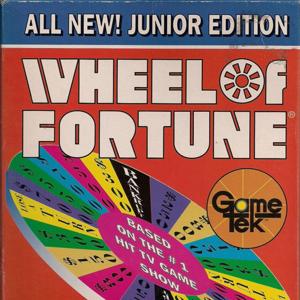
A conversion of the popular TV game show for younger players ages 7 and up. Up to three players can take part in the three-round trivia contest where the answers are given and the contestants must supply the correct question.
SHOW NOTES
NES Longplay
Checkout Lane
James Holzhauer
Ken Jennings Host
Aaron Rodgers Host
Clip Show
- We have the questions, do you have the answers?
- NES Longplay
- Introductions
- We’ve already played this. And we had more fun with it. Should we try to talk more about the game this time?
- Overview
- It’s Jeopardy! With supposedly easier questions
- Gameplay
- A little under the hood here for a minute.
- There are 348 categories, in 58 groups. The categories aren’t randomized so you will only get the category Flintstones with the same other 5 categories. A quick reset will fix the repetitive questions.
- There are only 29 Final Jeopardy questions though. Which checks out mathematically, but makes it more likely you might run into a repeat.
- Quality of the Questions
- This is the kind of questions we should be asking NES players
- Computers
- More gargling answers - that also give you a hint at the answer?
- Strategy
- James Holzhauer strategy, pick up all the big money first and then go ALL IN on the daily double so that no one could catch up.
- The only issue, you gotta know all the answers
- Age of the questions
- The game just ENDS
- A little under the hood here for a minute.
- Sequels and Spinoffs
- Jeopardy!: 25th Anniversary Edition
- Super Jeopardy! (last time)
- EGL
- Next week - Romance of the Three Kingdoms
- NEStalgia Byte - Tower of Druaga
Auto-generated transcript. Each paragraph starts with its timestamp. Speakers are not identified.
Jeopardy! Jr. Edition! We have the questions, do you have the answers?
And welcome to NEStalgia, a chronological exploration of every NES game released in North America. I'm Mike. And I'm Sean. You know, with Jeopardy!, there's usually three contestants, so this is a bit of a struggle to only have two people on the show today. It's actually just the host and one contestant, which I guess is more like who wants to be a millionaire. Well, what do you say we just no host this episode and we just both act as the contestants, if you will, and don't follow any proper means of lines of questioning? What is no? What is no, Mike? Okay, sounds good, sounds good. 10,000 points from Mike.
Well, I don't think you can steal points in a game of Jeopardy!. Well, there's no host to tell us that you can't, so. Oh, shit. Very good. You know, you bring up a good point, though, Sean. We are Jeopardy! experts because we've already played this exact game.
And we had more fun with it in our episode. If listeners didn't check out that episode, we actually made it into a game of Jeopardy! And so it was a lot of fun and it was Sean versus Joe. And I was thinking this time around, instead of playing any kind of Jeopardy!, me being the Trebek or you being the... Aaron Rodgers. Yeah, the Aaron Rodgers, who's also, he was a host, not a contestant. Yes. I thought we should just try and talk more about the actual game this time. Less theatrics and more just get to the nitty gritty. Yeah, you know, I hate when we try and do gimmicks.
It's like we're being lazy. It's a crutch. I like the purity. No, I don't really care. Let's do it the way you want to do it. Great. Thanks so much for that. For those of you that are unaware, Jeopardy! Junior Edition is literally just like playing Jeopardy! on the TV show. The way that that's done is there are categories. And then they give you a question, a thing worded as like the answer. And then you have to respond with the question. So, Sean, what's a good example of something like that?
You just, well, you just did it wrong. You're supposed to, you asked the question first and now I'm giving you an answer. I should have said like, oh, no, you're right. Right. It's a little confusing when you post it as an actual game show because it sounds like, you know, even the back of the box, we have the questions. Do you have the answers? But not necessarily true because you answer in a question. Yeah, I've never truly understood why Jeopardy!
was sort of like put together this way. But that's beyond the scope of this, right? That's way beyond the scope of this. We're not here to debate network television policies. It's true. But yeah, like this is basically the same exact game that we played. But the sprites or like your little avatars are now shaped more like cartoon kids instead of cartoon adults. And the questions are like geared towards a lower age demographic.
Yeah, that's the point. That's like the big difference here, right? Is it's Jeopardy! with supposedly easier questions because it's the junior edition. If you ever got at the board games like Monopoly Junior Edition or Trivial Pursuit Junior Edition, they're supposed to be geared towards kids. And I think one of the things we ran into when playing Jeopardy! last time was that the questions didn't age that well because Jeopardy! in general is asking questions to the people who are in their like 30s at the time of the making of the episode. So when you watch Jeopardy! as a kid, you're like, what the hell? How does everybody know these answers?
The guys on TV know the answers. My dad knows the answers. But you don't understand them at all. And then if you tune into an episode of Jeopardy! now, you're going to realize, oh, it's just pop culture. Yeah. I always thought that there was like you needed to be a computer to be good at Jeopardy! And like there's still a lot of like weird questions that even in, you know, this Jeopardy! Junior, I was like, I have no idea what that even was. But it definitely is something that you sort of grow into and realize that it was easy all along. Like taxes.
A little under the hood here for a minute. There are 348 categories in this game. But there are six categories in a round. So there's 58 groups of categories. Now, the categories aren't randomized. So you will always get the, you know, like if the category is the Flintstones, that will always be grouped with the same other five categories. That is a very efficient way of making sure that you don't get the Flintstones as a category as a possible chance every single time you boot up the game. Instead, your odds of getting a repeat game are just one in 58, which I like that. However, there are only 29 final Jeopardy! questions, which checks out mathematically. 58 divided by 2, 29.
But if you think about it, it actually makes you more likely to run into repeat final Jeopardy! questions sooner because those aren't tied to the 58 groups. Okay, because that was sort of what I was going to ask. Like, so that's between regular and double Jeopardy! Are those 58? Yes. And there's no like, exactly. The second round, the double Jeopardy! round, that isn't like a harder group of questions that are singled off just for double Jeopardy! They could be your potential first round as well.
They just are mixing and matching these groups. So it's great as a way to like know that I've seen these categories before and just hit the reset button to start a game. It's not as great after you've played a whole first round and then you randomly get the chance of having a whole nother batch of categories you've already seen before. Yeah, so there's a maximum of 29 unique games, which, I mean, if you're going to use this as a party game, it's probably enough. But if you're going to be the weirdo that plays against the computer, like I imagine we did,
I don't think you're going to get a lot of lasting, a lot of staying power from this. And why do you think that is, Sean? Well, because the games are relatively short. I think you kind of have to get through this game in something like 10 to 20 minutes, right? Yeah, I'd say around that. It's definitely not. It's about the length of a regular episode because you have to spell out your answers. There are no choices. Yeah, there's less, you know, what do you do? Do you have any weird stories about what you did in middle school?
You're just spelling the whole time. And that becomes an obstacle in itself if you are a little unsure of maybe how they want you to spell a certain thing. I will give a very unique example that I came across where I got the Fantastic Four category, and they didn't ask me a single hard question. But they did ask me some questions that made me think for a minute of, will they accept some variations of the answer or not? So I tested it with, they asked what the Human Torch's real name is. So I tried John Flame, which sounds stupid, right? You wouldn't call Peter Parker Pete Parker, but it's technically not wrong. However, they will only accept the exact answer. There is no room for Wiggle here. So like Pepe Le Pew, you can't just call him Pepe.
Room for Wiggle. Yeah. I would say, okay, I didn't do too much testing, but I want to say that there's at least like a handful of acceptable answers. Like Pepe Le Pew and just calling him Pepe sounds like you forgot the second half of his name. But if you're going to answer like who was the president after JFK, which is a question that I got,
I did Lyndon B. Johnson because I was afraid, but I would imagine they'd have to give you Lyndon Johnson. Or just Johnson. No. See, I think that should work though, right? Like in a perfect world, like they should be able to have like parsers for these kinds of things where like, you know, that's his last name. You would call George Bush Bush.
Sure. I don't know. I feel like Jeopardy in spirit requires some amount of precision, right? I don't know. No, I hear you. Just so you know, I'm only being antagonistic because of them choosing to make it about spelling and then leaving this kind of ambiguity to it.
Something that you couldn't necessarily have in a real life game of Jeopardy where, you know, they don't ask you. And this is a silly example, but according to the song, the Rose of Texas is this color. If you say, what is yellow, right? They don't ask you, can you spell yellow for me? Well, I mean, just to confirm that, you know, I mean, I think maybe if you were on Jeopardy and the amount of times that you pronounce things in weird ways, maybe that's just sort of simulating how you would perform.
You know, if you said Yilo, I mean, they probably wouldn't give it to you. That's true. You've never said that, but you could have. Could have said it. I could have said any of these things. Also, though, it's not hard to spell a lot of these things. My point being that it's for kids. So maybe, you know, maybe they wouldn't necessarily know how to spell Chicago.
I'm just literally looking at the answers here. Just trying to caboose. Caboose would be a tough one for a kid to spell. I think a kid would use a K. I mean, I see what you mean. Like, I might maybe there'd be two B's is what I'd say. Like, maybe they'd mix that up. Yeah, you're working with the gifted children.
Let's talk about the quality of the questions then. So forget that you have to spell them right and everything like that. What'd you just think of the questions, the categories in general? I feel like for me, these are the kinds of questions we should be asking people who play in NES in 1989. Like, most of your audience is probably kids or teens. This is like the right level of questioning so that it's not like inherently like super easy. Like, you know, the Looney Tunes category, for instance, right? There there's no question about Bugs Bunny, right? They're not just like teasing you with the most obvious things that like a Sesame Street level game would do. But they're not challenging you if you don't know Looney Tunes either.
Yeah. I did like the more like general knowledge ones that like the ones that are like plays on words and those sorts of things. But when they get into the stuff that is pop culture at the time, I get a little like this is this was the same in regular Jeopardy and it's to be expected in any kind of pop culture game. But there was an entire category for Captain Power, which I had never even heard of, but I imagine was popular in 1989.
Have you heard of or watched Captain Power? It was my first time hearing about it. And I'll go even further, Sean, and just say that there are things that I know about, but don't know enough about them to answer questions like the Andy Griffith show. Yeah, I haven't watched the Andy. I'm aware of its existence, but don't ask me like anything about like where it takes place or who's who in the show or what the actor's name is. Yeah, I think it was Two's Company.
Three's Company. No, it's not Three's. It's about two people. I'll think of it in 10 minutes, but that sort of stuff. The TV show specific ones I could do without. But these were some very relaxing, easy, general trivia questions aside from those. Look, I'll put my point right now. Sean, you in your teenage years worked at a supermarket, correct? I did do that. That's correct. So look, let's just go through the category and let's just show how easy but fair the game can be for children. Okay? Okay. This dairy item is usually sold in cartons by the dozen. Eggs. What is eggs? There you go. What are eggs?
Yeah. The place where you pay for things you want to purchase. Oh, that would be the cashier or the cash register? You see, I guess we're not doing a good job proving our point here. They're saying, what is the checkout counter? That's a little too specific. And you see, cashier would be wrong in this scenario. But I think that real life Jeopardy would understand the ambiguity of the question and be like, well, yeah, you go to the cashier to purchase things. Huh. Yeah, I didn't really think about that. A bakery bread item with a hole in the middle. Well, okay, there you go. I mean, that could be donuts or bagels.
So which one is it, Sean? You only get one. I'm going to have to go with donuts. It's a bagel. It's a bagel? It's a bagel. The supermarket section where fruits and vegetables are found. Well, that's produce, Mike. Okay, now here's the crazy thing, though, right? That was the $400 question. And yet the checkout counter is the $200. Yeah, it's like, you know, there was no structure. Like the $500 question is supposed to be the hardest. But I didn't ever really come across that.
I mean, yeah. Yeah. There's, and some of them, it's kind of not, it's not very consistent. Sometimes I found the $200 to be the most hard. And maybe even sometimes they'll just throw like the hardest to be the double jeopardy. And sometimes it was very easy. But yeah, I'm not really sure who proofread all these. All right. Last question in the category, Sean. The counter that sells cheese, cold cuts, and prepared foods. Where is New Delhi? Delhi. No, yeah, yeah. We'll accept either. Delhi technically has an H in it, though. So the game would have ruled you wrong. Absolutely. Spelling, man. It's tricky. I'm telling you.
So we're agreeing that the quality of the questions is pretty good and that the categories are definitely geared towards kids, which is important. With the exception of like one per group, maybe. Like there's just one thing where it's like either that's general knowledge or just knowledge that a kid wouldn't have. Right? Yeah.
What about the computers, though? You've got two other computer contestants. If you don't play with friends, how are they doing in this game? Terribly. I feel like I don't know if if they've just toned down the difficulty because I was always playing on hard. And I would imagine that that means that you have less time on the buzzer on average and they are more likely to get questions correct.
And I had situations where I just let I just let them have it. I didn't even try to mean sometimes it was for things like the Captain Power category where I didn't know anything anyway. Just like the computer is going to have this category. So I'm just going to let them answer. And they just let the clock run out. And then a second one in the same category that the same person person picked. Then they let the clock run out. And then the next one. And then they buzz. And then, you know, the same thing from the original Jeopardy game where instead of giving a incorrect answer that would almost make sense, or at least in a language, it just gives you like random oski.
So I don't know. I thought that maybe they just tuned the whole difficulty down also because apparently it was for kids. Yeah, I don't think any of the computers ever scored higher than a thousand bucks in the games I played. Yeah, I think some of yeah, sometimes they got a little bit over that if they accidentally hit the daily double.
But yeah, I blew them out of the water. I hate those kids. And to go back to your point about not being able to provide incorrect answers for the listeners at home, we kind of talked about that in the Jeopardy episode where like it's kind of unfair to expect them to come up with alternate like ideas of what somebody would say incorrectly. Like, you know, that's that's actually like some AI level shit. Right. You know, so I get that part. The interesting thing, though, is it sounds like what they're trying to answer is the correct answer, but they're also gargling on some water or something like it's it's so strange because if you look at their answers.
Yeah, there's like spaces and semicolons and stuff like that, like littered throughout. But then there's also like three or four correct letters that kind of gives you a hint as to what the answer might be like if you kind of thought you might have known it and they get it wrong. But you can see like what they were going for. Then just, you know, fill in the rest. It's like a little reverse Wordle game where they give you some letters and now you have to fill in the rest.
Yeah, I'm so against Wordle. I would I would never do those anymore after we shared them for like a month or so. But what I think what it sounds like you're describing is sort of like it's just an abstraction of somebody getting the answer wrong. And like you're kind of doing the same thing in your head of like trying to piece it together from context. It's just much more technical and not like and not just like common knowledge that you're referring to.
I don't know. And didn't you expect to see the computers have to go to the keyboard screen too and watch them type in their answers? I don't know why, but just maybe based off some recent NES games we played, kind of expected them to have to do that. But instead, they just like give the answer either very confidently incorrectly or correct right away immediately, which is fine for the speed of the game. I'm not advocating for the keyboard. I just kind of thought it was going to come. Yeah, I think I think they did the same thing in the in the regular Jeopardy, but that would have been something else to have to watch computer type on a keyboard.
In terms of Jeopardy strategies, as in my opinion, James Holthauser, who was a real Jeopardy contestant who dominated the game, he figured out the strategy for Jeopardy that I will just use going forward no matter whether I know the answers or not. But a lot of people don't like to play that way in real life Jeopardy because there's some actual risk in a video game. There's very little risk to this because there are very few prizes, if any, to win. So for those of you unfamiliar, the strategy for his game was to just pick all of the $500 categories first, like just go for the $500 in each particular category, rack up all the possible money.
Then afterwards, start just hunting down the categories that, you know, until you find the daily double so that you have the most amount of money possible. Go all in, you know, because he knew freaking everything. He knew he knew the answers. Just go all in. And then it's impossible for the other players to catch up whether they like it or not. Yeah, you know, I'm looking it up right now because that's sort of what I did. And then I got lucky with like not getting the daily double too early.
I think my final score in that game was $72,400. And my two opponents had $1,270 and $1,980. And that was from me like, you know, clearing all of the top scoring answers first and pretty much doing what you're explaining here. Right. Which, you know, to be fair, Sean, back in 1989, your score would have been the greatest score of all time. That, you know, these strategies on how to actually play Jeopardy didn't really come around until like the Ken Jennings era.
Yeah. Praise be. Yes. There is a, you know, you're, you're, you're referencing a lot of like real life Jeopardy stuff. With Aaron Rodgers and praise be to Ken Jennings. Wait, what? You know, I'm just saying like there is a lot to the actual Jeopardy that I feel like, you know, what's been going on with that show is not something that like I'm about to acknowledge in this podcast. But like since Trebek's passing, it has been like a weird stretch for the show where it somehow became controversial.
Like Jeopardy is just a game show where three contestants answer questions and a host reads those questions. It shouldn't be controversial. And yet here we are with them like having a, you know, executive nightmare while, you know, I'm not thinking about that while I was playing this game. I don't associate Jeopardy with a bad time. But man, talk about like losing your brand.
Yeah. You know, I, I actually don't watch Jeopardy that often. I just, I have, I know the basic pop cultural references. Like I know of Ken Jennings and I watched the Aaron Rodgers episodes. And so I've got, you know, just that sort of peripheral knowledge, but I didn't know that they were going through hard times really.
Well, the issue is, is that Ken Jennings, who you said praise be, is how most of the Jeopardy fans feel is that he should be the obvious host. But they just keep not picking him to be the host of things and pick people like Aaron Rodgers to host some guest episodes. And it's just so wild to think like, you know, that's the people that are going to tune into Jeopardy on ABC at 7 p.m. at night. They're the same people who like to watch Aaron Rodgers and put cheese over their heads. Hey man, like don't, don't pigeonhole us. I can like football and, and asking questions as answers. Okay. Yeah, you're right.
And so if your strategy worked out for you, Sean, and you, uh, it certainly did with ending with 70 plus thousand dollars, the final Jeopardy section gives you the opportunity to, you know, wager even more. So I imagine that's when you kind of almost, did you go all in? What'd you do? I did go all in. Yes. Yeah. So you figured nothing to lose anyway. And then after that, you realize really nothing to lose because they don't even show you like in wheel of fortune where there's like you won the car and they just like show you a pixelated car in this game.
It's just over. It's over. But like, you know, you, you see that money. I think the car, I think I'd rather see fake money than see a fake car. Like, cause I, I can still like pretend that that money is in my bank account because it reads the same way. Whereas a car doesn't look like that, you know? So I think there's more, the, there's, there's more satisfaction than seeing a fat bank account number than that blue brandless sedan.
But it's just immediately over. Like the, the score doesn't even like, there's no high scores or anything. There's no like place where that stores over. Even obviously if you're going to shut up the con, uh, the console, it's going to reset anyway. But we've seen games where like the high score at least displays itself at the top. So this way, you know what the current score to beat is. That doesn't happen here. Uh, I guess I'm just a little surprised at the whole, like, you know, the, the sense of winning here is really only to be found against human players. You will find no satisfaction beating the computers.
I would say, like, I was about to argue with you and say that, yeah, like if you play a Jackbox game, you're not going to see a list of high scores in that with like from previous playthroughs. Um, but then again, this, this is a much more like granular game where like those kinds of scores, like you could, uh, set a score so high that it would be a big accomplishment to actually hit that again.
Like, and it's not so low, um, that there are only so many ways to get points. Like, I don't, I don't know if you, if I'm just rambling right now, but this is one of those party games where I think it actually makes, it would make sense to have a high score. So I do agree. Well, thank you for that. And I don't think you're, I don't think you're ever rambling.
Oh man, thank you. On the sequels and spinoff side, we have to play this game two more times. Ugh. Can you believe that? What are we going to do? Let's just, okay. One of them we have to actually play together. So. Yeah, a hundred percent. Actually the three of us, hopefully. Well, yes. So why don't we all play for Jeopardy 25th anniversary edition? Since that seems like a big deal. And, um, and if that game comes out in like 1990 and we play it in 2025, um. Is that really when we're going to, when we're playing it? Yeah, I don't know. I'm just saying with bad math, you could think that that's the 25th anniversary, but that would be like. Like the 35th or 45th anniversary. I can't tell how old people are. 35th anniversary. Yeah. I'm, I'm that old.
That's good. Not that old. You will be. Someday. Yeah. And then I think for Super Jeopardy, which sounds like it should be on the Super Nintendo. But for Super Jeopardy, that is the last time we'll play this game. I think that's the one we make a clip show.
Of all the Jeopardy stuff. Yeah. I think, yeah, we could make something really, really cute out of that. But what I would love to hear from, as to how we're going to cover these next two Jeopardy games is from the listeners. You guys are the ones who have to listen to it. So, you know, if you want to like tweet at us at NostalgiaCast, or if you're a patron and you want to let us know on the Discord, I'd love to hear some suggestions for what we can do for Jeopardy 25th anniversary edition and Super Jeopardy. But one thing we don't take listener suggestions for is the Essential Games List. And Sean, even though we have played this game, the questions are different. So maybe that affects our votes and we'll find that out in the Essential Games List.
Sean, since Joe's not here, you go first. All right. I'm usually going first recently. So that doesn't matter. But here it goes. I think the one thing we didn't really touch on is like the low caliber horror that the new childlike avatars brings to this game. Not one of them seems to behave like a human being. Like they all kind of act possessed, whether they get a question right or wrong. And I ask you to play this game and just to see what it looks like. It's actually kind of unnerving.
Just want to throw that in there because we didn't really go into that. No, that's important because I'm looking at them. I'm just studying them now. And one of the characters just continues to violently shake their head from right to left. It's a little bit Exorcist-y. Yeah, Exorcist. Exactly. So I just wanted to throw that out there. Other than that, we've played this game before with just harder questions.
And this is not going to be a game that makes it onto the Essential Games list. And I'm going to shoot it over to Mike. I'd go as far as to say Jeopardy! 25th Anniversary Edition and Super Jeopardy! also stand no chance at the Essential Games list. But here's the other thing I'll say.
The reason why a game like this doesn't make it to the Essential Games list is because it's emulating an experience that can be had in real life without even attending the game show. You can just watch an episode of Jeopardy! on TV. Answer to nobody. Just shout out the answers. Everybody does it. People all over America just shout out the answers to the TV. And that's more fun than playing this game. So what does that tell you when it's more fun to shout the answers out to no one than to answer them in this game? Preach, church, truth, whatever you want to say these days, validated.
Next week, we'll be playing Romance of the Three Kingdoms. A little different than Jeopardy! to the best of my knowledge. Of course it is, obviously. It's a whole series of games. And I'm sure most of our listeners are familiar with the Romance of the Three Kingdoms series. However, if you're not, I would recommend that before next week's episode, you check out the Nobunaga's Ambition episode of Nostalgia because it's made by Koei. It's also an episode where it's just me and Sean talking. And it's a game that's very similar to Romance of the Three Kingdoms. So what better way to catch up and understand the systems and all that than by going to Nobunaga's Ambition. Sean, have you ever fallen in love with any of the Three Kingdoms?
Um. Is that what you do in these games? I do think that... I didn't think it was about, like, you personally. I thought it was, like, the kingdoms kind of have, like, a love triangle. And, um, you have to... Like, it's sort of like a Jerry Springer episode. Oh, it's like Fire Emblem Jerry Springer. Yeah. Pretty much, yes. Great. And for those of you who are patrons, or if you want to be a patron, just know that our Tower of Druaga episode is coming to the Nostalgia Bites series soon. That'll be our sixth episode, so you can listen to the other five immediately. Imagine that. The ability to listen to five brand new episodes of Nostalgia as soon as you want.
I think that the concept of on-demand entertainment is still fresh, so this should get the people in on the Patreon. Yeah, people want to put butts in the seats, but I want to put pods in the ears. Get those pods in those ears. Fuck them kids. Fuck them kids.