215 · Castlequest
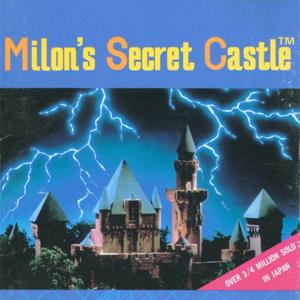
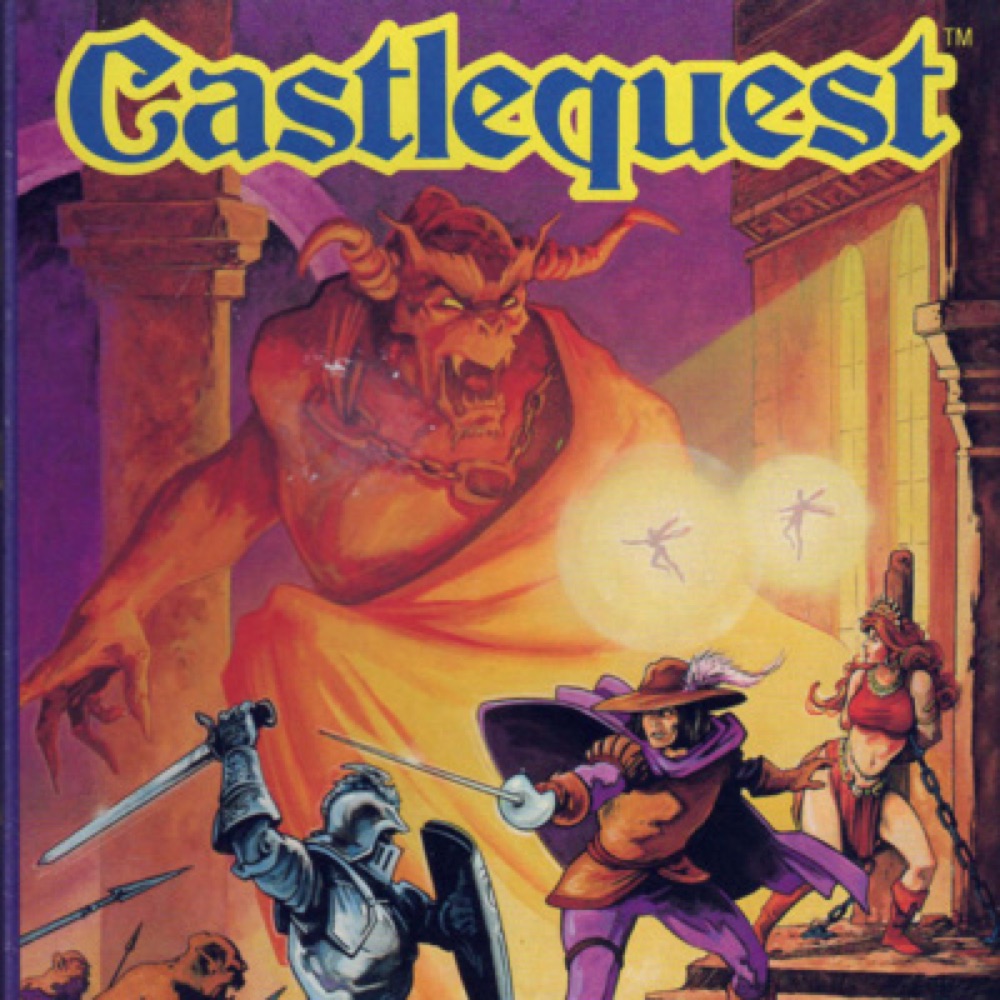
The object of the game is to navigate through Groken Castle to rescue Princess Margarita. It is the sequel to The Castle
SHOW NOTES
Castlequest
The Castle
Prince of Persia
- A long time ago in a faraway land there lived a lovely young princess named Margarita
- NES Longplay
- Introductions
- Overview
- The object of the game is to navigate through the Castle to rescue Princess Margarita. You’ll traverse the castle room by room collecting keys and other items to get closer to rescuing the princess
- Gameplay
- The idea that it all takes place in one castle uninterrupted
- Controls
- The HOLD jump
- The types of rooms
- Useless doors - is it a benefit here?
- 50 lives because there is no save
- The Sword
- NES only
- Suicide Strategy
- killing Rafael for advantage. This is different from reset or back in that it seeks to establish a gain instead of to reset an error. Sometimes you may want to get a key but will be trapped when you do or need to use a key to get out. If you can kill Rafael without leaving, you'll have gained a key normally thought impossible. This is a bit of a sacrifice, as you're trading a life for security at the end– if you make it. There are some rare cases where suicide works out, but often you'll be able to get the key, etc. without doing so. Only use suicide to get a key. You may not be able to kill Rafael.
- Sequels and Spinoffs
- The Castle
- EGL
- NEStalgia Byte - Antarctic Adventure
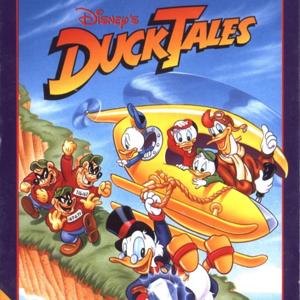
- Next week - DuckTales
Auto-generated transcript. Each paragraph starts with its timestamp. Speakers are not identified.
Castle Quest. A long time ago, in a faraway land, there lived a lovely young princess named Margarita.
And welcome to NEStalgia, a chronological exploration of every NES game released in North America. I'm Mike. I'm Sean. And I'm Joe. Castle Quest. Castle Quest seems like the whole game is explained here. We don't really need to tell anybody what the game is or what it does or, you know, it's just a castle that goes on a quest throughout the land. The castle literally picks up its physical body and just walks through, roams the land of Fantasy World, going on a quest to find another castle. Well, that's where you're wrong, Mike.
Well, I was going to say, if that doesn't explain it enough for you, you can always read the back of the box, which tells you all the conflict that's happening in this game, that once upon a time there was a princess named Margarita. I mean, now, to be fair, I cut the back of the box off because they wanted me, this version of the back of the box wanted me to read the entire thing. But even if I was going to say like, okay, well, what's the shortest possible version I can find? That is the shortest possible version I could find because the one in the manual is even longer and basically repeats itself but manages to find like additional details to add in.
So overall, there is no short, like, side of the story other than you're a guy in a castle trying to find a princess. I think we've heard it before. I don't think we need to include all the like atmospheric character names and... There's nothing. Yeah, it's just a bunch of like, you know, padding for the actual experience of the game. That's just the reverse problem. Just like this is for the show. Yeah. Right.
Well, there's a whole podcast dedicated to Castle Quest, so I figured, you know, we don't have to cover that here. We'll just cover the game. True. Not the story. They are doing a chronological exploration of the story of Castle Quest and they are on episode 1000. What are they called? Props to Questalgia?
Yeah, something like that. But no, we have to talk about the game, obviously. Because that's the point of this podcast. I guess what I was getting at though, is that Castle Quest to me sounds like a fairly generic thing that would actually be exciting, right? Like the idea of like seeing Castle Quest on a box, like if I'm a young kid, that kind of title is going to grab me more than most titles. And so that alone has like some intrigue to it, you know, in terms of NES titles. Do you guys agree? Yeah.
No. I feel like gives you more of a like, maybe the idea that it's going to be a little bit of action. The genericness of the title kind of made me just think like, oh, I'm not really in for anything exciting. And I know that I have been proven wrong before, but I had no expectations going into this. So in this game that Sean has no expectations for, you are navigating through a castle. Do we know this guy's name? Does any did anybody actually read the manual to find out this guy's name?
Bob. Okay. So you're Bob and you have to go through the castle and the whole game takes place inside this one castle with about a hundred different rooms inside of it. And as you traverse the castle, it's like a series of puzzle rooms that you have to navigate your way through to collect different colored keys.
These colored keys can only open the corresponding color of the door that appears before them. And there are many keys in each room. It's not just, you know, though, this is a, there might not be any key or there might be one key. It's like, no, there are many keys throughout the rooms and you have to do a lot of backtracking to find ways to collect the other keys.
But ultimately the idea of this game is you enter a room, you try to figure out which key you need to collect or which keys you can collect at the current moment, collect said keys by solving the puzzles, moving into the new doors to go into the other room, and then progressing onwards until you get closer and closer to rescuing Princess Margarita. How does this make for a core gameplay loop?
It's on paper. It's, it's, it's, it's entirely, it's entirely acceptable. Um, you know, we, we haven't had too many puzzle platformer, uh, games and, uh, that there's, there's all the room to grow within that genre. So, uh, I, I think, yeah, that, that's how I, that's what I'd say about it. So, even though, like you said, we haven't had a ton of these, it's, uh, it's a little different in the sense that it, it feels like one full, like cohesive whole.
Not to say that like other puzzle games didn't feel cohesive, but what I mean by that is that it's not like, you don't go through level after level that each level is its own self-contained puzzle. It's like the whole castle is one puzzle. And yes, there are self-contained puzzles on each screen, but they sort of correspond to each other. So like you're on one screen, you can't figure out what to do. You might have to remember back to a different screen. You might have to look at your map and, and remember back to another screen, um, where there
was a pink key and like, Oh, how can I get that pink key? Well, in order to get that pink key, you got to get this other, this blue key from this other screen. And you got to really think of the castle as a whole like that. And as you go, you kind of like build your map. So like, I appreciated that as something that was like different than, uh, I mean, just to use the generic or like the, the first example of this different than, um, and now I can't think of the name, uh, Wrecking Crew. Load Runner? Load Runner 2. But I was thinking Wrecking Crew even where it was just like the first puzzle game we had where, but it was like every, every puzzle was its own self-contained puzzle. It's nice to see, to see a different way of approaching it.
Yeah. I mean, the idea that it all takes place in one castle uninterrupted is kind of like the hook here, right? Um, you mentioned Joe building out like the map and just thinking about your whereabouts. This isn't a game even with a hundred levels where you necessarily get lost. You can get stuck not figuring out how to solve the current puzzle or being like, Oh, maybe I should have used my key on a different door because there is no, like, you must use the key that you just picked up on the door that's directly in front of you. There is choices and stuff, but the, this, it doesn't have like a deadly towers problem where you have no idea where you are in said castle that feels more like a maze.
This is just a massive sprawling castle that you're constantly just uncovering, you know, new, uh, new doors for. It's sort of like, I guess like a modern equivalent, at least structurally in terms of like each puzzle playing into puzzles nearby. I guess like the modern equivalent could be something like the witness. Uh, I know there's, there's really nothing else similar, uh, beyond that, but that was just the first thing that I thought of. But, um, uh, but Mike going to your statement about how you can get stuck. Um, I, I feel like an alternate title for this game would be just like soft lock because,
uh, that this is a game. I don't want to get ahead of ourselves, but, um, that I think one of the, that they had, it was such a problem being soft locked in this game that they had to create a feature for it. Um, with the, with the restart room, uh, button on the other controller. So I, I think that the, they did, they did a lot of things, uh, well structurally in terms of the puzzle layout, but also, um, stuff like that.
Yeah. I mean, you really haven't played this game until you've soft locked yourself and with a hundred levels, you're gonna do it eventually. I actually at first thought like it was on me, like, oh no. Like what did I, did I really just go through the wrong door or whatever? And then I looked it up and it's just like, no, this is just something that happens to people.
So, you know, I'm glad you mentioned the witness. Cause I also, I wasn't thinking of like that modern of a game, but in many ways I found this to be like an early prototype version of a Prince of Persia style game. You know, Prince of Persia has like, you're in the, um, what are you in there? Are you in like a temple or like a pyramids?
Yeah. You're talking about like the PlayStation Prince of Persia. No, I'm talking about the, um, the original, the computer game one where, uh, you know, the only, you don't have any real like advantages other than your jump and stuff like that. Egyptian or Mesopotamian or something. That's an NES game also, right? We'll be playing that, right? I think we'll be playing a version of that, not the original version, but like the NES port of it, which probably has some changes.
Gotcha. Anyway, the reason why I say that, you know, the whole Prince of Persia thing is that it didn't have that problem of like potentials to like soft lock yourself here. So I, you know, I, I know you thought that it might be a bit early to bring that up, but I think that is an important, uh, piece of this whole, like this game, because ultimately this game is a lot of experimentation in counterproductive ways because of how much, um, control and options they give to the player. On the one hand, the rooms are littered with all different kinds of keys and all different color doors, right? And that gives a lot of player agency on what they should do or what they want to do next.
But that can also lead to a lot of moments where you just chose wrong and you have to, you know, like you said, restart the room or, you know, or suicide yourself to kind of get like a cheap way to have a door remain unlocked, but, uh, you know, but not with any penalties. Like those things are built into the game because they couldn't figure out the, like, let's just open up so many doors and so many keys that, you know, they'll feel like they have a lot of choices, but ultimately we didn't actually test all of these branching paths. Yeah. That's sort of what I was getting, uh, getting from it is like a lot of, I think a lot of more testing would have solved this problem.
And, and the, the 50 lives, while that's also a, um, a solution to another problem between the 50 lives and the whole like sub menu, like that's just entirely dedicated to having to restart, um, uh, are just sort of lazy solutions for. Sure. I'm, I'm of two minds of this too. Cause when I, when I first played my first play through, I softlocked myself and this is before I had read the manual. So I thought I was actually softlocked and I was very negative about this game after that point, because then I softlocked again and I restarted again. I had this happen twice before I finally read the manual, which should have done in the first place.
Um, and realized that I, that I could be using it. Cause I've tried every button on the guy. I was like, there must be some menu in the pause menu. I don't know why this isn't just in the pause menu anyways, but, uh, there must be some menu where I can like reset or go back. Cause I didn't think that the idea of resetting a room in a puzzle game like this was that out of the ordinary. In fact, I was looking for it. Cause I, I thought that that was just like a thing where, is that not a thing where you like you, you, you lock yourself. Oh, you got to try again. No, I think it's definitely a feature in a lot.
Yeah. Yeah. So like that didn't bother me. Once I found out that that exists, it didn't bother me so much because, because that's part of the experimentation of it all. I, I never felt like after that, I never felt like, Oh, like there's just a mess of, of options of ways you're not supposed to go. And that's why the softlocking is just felt like, and again, I didn't beat this game.
So maybe a lot of the places I was going would have turned out to be fruitless and pointless in the end, but I thought everywhere was going to turn out to be somewhere I needed to eventually go. And I, and, and the whole softlocking part was just like, yeah, not, not maybe not the most ideal way, but it's like just me exploring and trial and error. Um, like finding things that I would come back to later.
Well, I do think though, that, that we've, we've been talking about like this sub menu being able to restart sort of solving this problem. But I also do think, and I can't confirm, but I do think that if you proceed through the game in, in a certain way or certain ways that you can just run out of keys. Yes, that is correct. So that is a real softlock that they don't have a button for, uh, which is kind of crazy, um, in a game this long. Yeah. Okay. Well, I'm sold now that this, that sucks.
So I'm, yeah, sorry. I'm just back to exactly where I was before I knew you had that menu where it's like this game, no game should, you shouldn't be able to softlock legitimately in any game. Um, well, you know, and it's also the whole useless doors thing. Um, I appreciated your optimism to think that like, well, it's just so big that maybe I'll figure out what these were for eventually.
But the fact that there are useless doors and there are ways to like lock yourself out of the game and stuff like that. It just, to me, shows a lack of like developer care towards the, towards the game that they are ultimately trying to extend the life of the game by making it so that, you know, oh, well, you went through the wrong door. Like hopefully next time you'll remember that and figure it out this way. Or, you know, there's a lot of obstacles in this game that are self-created that they could have just play tested. Uh, but instead that it's almost like they left them in because they thought that was part of the experience. But I'd argue if it is part of the experience, it's the worst part of the experience.
Yeah. There's no like, uh, like there's no like get good to, uh, getting trapped. Like there's nothing like, oh, I feel like I've earned this failure. It just feels like you wasted your time. And that's a good point because overall the game isn't really like difficult or anything.
Uh, there's enemies on screen that, you know, kind of act like either Goombas or Koopa Troopers where they'll either just stay on the same path or they'll pace back and forth. But, you know, they have very programmed sets of movements. They're not going to target you in any particular way. And you do have a knife that provided you time it correctly, you'll be able to attack enemies with, uh, something that I understand was not in all versions of Castle Quest. So that was like another added bonus for the NES is like another way to take out enemies.
So, you know, even when you go into a new room, the first thing that they give you is the option to explore the room, scroll across left and right at your own leisure to see what the room looks like to understand maybe what you need to do in that room rather than have your character walk about and explore it with the peril of enemies and things around it. So it is a forgiving game in some regards.
It's just, um, you know, the trade-off is, is that when you're, when you're playing through the game, you're not sure if you're going to wind up on a path that is ultimately leading you somewhere. There is no progression bar. There are no story beats. I think, you know, this game didn't need like boss fights or, um, separate castles, but it did need some kind of moment of like, I've made it, you know, like now I have a, I collected, some other kind of key that I need for the overall like bigger picture to rescue the princess, right? It needed something like that. So this way you felt like you were making progress rather than just continuously entering room after room after room.
Yeah. I mean, I, I guess the only, the only sense of progress is that, yeah, that looking at your map and seeing what's filled out, but even that there would be like times where I didn't know, you know, how many layers deep underground rooms could go. So like, I still couldn't even tell how full my map was because I was like, well, maybe more things will start opening up over here where I don't think there's any rooms.
Yeah. The sense of progress is literally just the progress that you make. I know that that sounds kind of goofy and, and tautological, but, um, I, I do think that some dopamine release, it could have, could have been helpful here because again, this is a very long game and it is possible to miss the map. Um, so you might have to be writing this all down and, uh, you don't have this thing to look at. Um, so it, it, it's very much laborious is what I would say. Look, this is sort of a job to get through.
Right. It's interesting that they didn't include the map as just like part of your starting equipment, right? Yeah. Because it is something that it feels like Raphael is filling out. Not that he, you know, not something that like, it's, it's almost like he found blank paper and a pen instead. You know, it's like, great, now I can fill in the map. If he found an actual map, it should be all filled in.
That's true. Anyway, um, I just said his name was Raphael and that's true. I'm sure that caught some people off guard. I think it's Bob. While you were talking, I was like, eh, let me look up this guy's name just so I can find out what the hell we're supposed to be calling him. So his name's Raphael and the reason why I looked up his name is because we're going to be talking about how he controls now.
Uh, that's, that's kind of an important thing because, you know, expanding it to the Prince of Persia series, that whole, um, computer game was based on, you know, how far he can jump and knowing the limitations of his move set and what he can grab onto. I feel like that's still important here with Raphael because if he doesn't have, you know, like there, there's a certain amount of space he can jump to. There's purposely designed, um, platforms in each stage that after a while you'll get a feel that you just know you can't reach them because you can't jump that high.
What did we think about this floaty control that he has in his jump? Was it to their benefit to include something like that to give a little extra gameplay boost to it? Or did it feel kind of zany and out there? I think it could have been, it could have been fine for a puzzle game, but because they tried to like, I don't know, because it was also like most of the time or not most of the time, but a lot of the time, the jump and the motion is also, like the, is also ties into the action quote unquote element of it where you're jumping over an enemy or you have to jump a certain distance around a spike spikes. It just feels like you have to be too precise.
Like there are a lot of times where I would just jump over something and I would miss it by like a pixel, like legitimately. I'm like, okay, I actually don't think I can make it, but then I would try like 20 more times and I would make another 20th time. And I can't even like see the difference in like what my jump was. And that felt kind of weird because it's like, it gives you just for context for anyone hasn't played the game. It gives you this like hang time that's like very exact. Like you literally just sit up there perfectly still in the air for like three seconds and then start to move down. It just, it sounds like it would be easier to jump over things that way, but it almost makes it harder.
Yeah. It's got this like princess peach thing going for it. And I found that it's, it's totally viable for the puzzle platforming. Like the fact that there's sort of like just two binary heights that you can be either on the ground or at this max, uh, jump. And in between is this very linear, slow, uh, movement so that like it's, it's, it's legible and, uh, you'll be able to sort of know how high you can jump. Um, but it does not work for, uh, avoiding enemies because it's so slow and, and it has no hop to it.
It's just this linear increasing of, uh, of height, um, that when you're trying to jump over an enemy, like you need to, yeah, be super precise because there's so much lead time that for, uh, you may hit the jump button per, but, but for several milliseconds, you're still in harm's way. And now that sounds super short and nitpicky, but it just doesn't feel good. Um, and just becomes a problem for that part of the gameplay. Well, Sean, that's, you know, that becomes a problem because that's how they designed a lot of these enemy encounters to be in very narrow spaces where there is like a wall directly above you.
So if you want to jump, right, it just kind of gives you like, you know, there's either spikes or there's a wall or there's, um, you know, some, some other element that you need to get to. So you, you do have to kind of time all these enemy things. And I think that's fine, but yeah, when the jump control input, like the timing of it becomes an issue with the character, which I do know what you're talking about. There was definitely some things even early on that I ran into when that becomes an issue.
It's something that you have to learn around, you know, of like, uh, pressing, pressing earlier than you want to almost like you have to think about the room and be like, okay, well, this is a small space. And that enemy is heading in the direction that I'm going to be walking towards. So I need to hit the jump as he's approaching me rather than like when we're about to collide because you have to prepare for the, the weight at first that then becomes like a levitation trick that then, you know, falls, uh, with the same kind of weight. There's a lot of recalibration in your gamer head, um, from like past, uh, from past side scrollers that it's hard to, it's hard to get around.
So let's talk about the types of rooms and we're not gonna talk about every room because there's a hundred of them, but I'm just curious about the experience that we all had with the puzzles that we, that we saw. Cause I would argue that the game at first does do a good job at leading the player to like, here's the kinds of puzzles you'll run into. And here's the strategy of the game, right? Like there, there's, they're immediately introducing you to the different colors and keys. It's not like you're only collecting gold keys right away and there's only gold doors. And then all of a sudden it's like, wow, it's blue. No, they're, they're teaching you these things very early on.
And, you know, they start off with like, here's one enemy and then here's a enemy that has kind of like a puzzle thing to it because you have to time the enemy with the, where the key is. And then they show you water. So they space these things all out and they definitely teach you the elements of the game, which is helpful. But I didn't beat this game either. I found that later on the puzzles actually became very intricate in a, like Adventures of Lolo or, um, you know, other NES puzzle games that we've faced so far in that kind of same, same realm where like, oh, it's a, it's a similar game where you think it's going to be an easy ride the whole way through. And then it kind of throws this, you know, difficulty curve at you.
But this one felt fair to me. It just felt like the puzzles just kept getting longer and longer in each room. I was surprised when I started seeing pulley systems with blocks and you have to like put blocks on the weights and then pull another, push another block in an opposite direction to get the gears to spin. Like, it was kind of amazing to see these things in this game, even though there's nothing complicated about that. It's just that I didn't expect the puzzles to reach that level of intricacy.
Yeah, that level itself, that one screen can take you like five to 10 minutes and then multiply that by a hundred. I know that it is one of the more, at least as far as I got, it's one of the most complex. But, uh, yeah, it can, it varies from like, uh, you, you kind of see what they're doing immediately, um, to, I have no idea how to approach this and I'm hoping that the next room gives me hints.
Um, so yeah, it, it, it varies wildly the amount of time that you'll have to spend on each of them. Yeah. I, I sort of like that though. I mean, it, it depends, you know, so earlier, Mike, you said, um, that you saw based on the, uh, the dead end doors and the beginning locked, uh, soft lock, like a lack of care by the developers. And I agree with you on that point. But I also think that, that these puzzles show a good amount of care in, you know, in a different way.
But I, I, I kind of appreciated that there would be a, there would be something that I'm like, okay, this is, this is ridiculous. This is unsolvable. I don't have all the pieces of the puzzle. And then it would click for me, you know, like I remember there were a couple where you had to fill in, it was early on, but like you had to fill in.
You had to fill in spaces with blocks and you had, you know, you had to fill in spaces with blocks, which is one thing you have to think about. Like you have to, that has to dawn on you first of all. And then second of all, you have to figure out how to get the blocks over to those spaces. And then like, once those blocks are filled in, you can use that to push other things. And it's, it's a lot easier to explain if you can see what I'm talking about.
But like things like that, where it's like, I, you know, I do appreciate that, that type of puzzle that gives you this satisfaction because you couldn't see it before. And not to keep bringing up, you know, I know it's kind of ridiculous. We keep bringing up the witness, but like, that's the kind of thing, that's the kind of feeling I get from the witness. And do not get me wrong, this game is nowhere near the witness, but like, it just feels like a tiny, tiny little step in that direction for me.
And, you know, not every puzzle in this game is like that, but I'm just saying I noticed some that were like that. Right. It's not as unforgiving as Solomon's Key got later on, but that's the other game I was thinking of off the top of my head for NES puzzle games was like, you know, at first they just show you what to do with the game.
And you're like, great. Okay. Like I can play this game. I know what to do. And then the puzzles start to become more intricate to the point where you're like, I don't, I don't even know if I could play this because this is a lot to digest at the moment. I think, Joe, you're spot on that, you know, this is definitely some care in these levels and the fact that there's so many of them and that they aren't just like, okay, defeat all the enemies in the room and then the key will spawn, right? Because it's not that kind of thing.
It does take longer to create these kinds of environments and think about how to make a whole new puzzle rather than just, okay, it's the same puzzle as the previous room, but now we added enemies, you know? Like they are, they are being pretty intricate about their designs here. I, I just wonder, you know, they gave you 50 lives because there was no save. Okay. In other versions of this game where you can save, they only give you three lives.
So because the NES, the cartridge, they didn't want to splurge on the same battery that requires you to make it so you can save. They, you know, whether it was a lack of faith in how much it would sell or that was just too expensive for them because they use that as a crutch. I wonder if that really hurts this game more than anything is the length of the game, the inability to save and knowing that these puzzles are on the longer side.
It kind, you know, even though that seems weird to say something about those things all mixing together hurts the performance of the game, whether it's smartly designed or not. Right. You, you don't want to find out that, um, you know, the 2000 piece puzzle that you bought on Amazon that you're assembling the people from Amazon come up at the end of the day and they say, Hey, did you finish it? Cause otherwise we're taking it back and we'll give it to you tomorrow. You know, like you don't want to find that out. And that's kind of what they did here. Yeah. That's funny.
I think that, um, yeah, it's not even just like do the puzzle again, but it's, it's like the fact that it is the same puzzles over and over that. Like if I did, even if it's something simple that I can memorize, like if I was told that I had to solve 40 crossword puzzles in a row and I'd have to keep solving the same, like the same starting 39 each, uh, it, it, it doesn't sound fun to like, if you don't finish this in one sitting, having to solve the puzzles again, like you've already solved the puzzle. Yeah. Once you already know the answers, now it's just work.
Like you can't do that with this. This, you have to do it all in one sitting. I mean, might as well give you unlimited lives because who cares? As soon as you shut the, the, the NES off, you got to start over anyways. Like the point of the game doesn't feel like it's to keep your lives and to not die. The point of the game is to solve the puzzles. So yeah, it's, it, I think it definitely hurts itself by not giving you the chance to like come back and save your progress. Now we're not cavemen. We have technology. We have emulators. We have the ability to do save states. Now what's an emulator?
Don't worry about that. Uh, that's a, another show, but the, um, the ability to do save states, is that actually now like, is this game because of time and technological progressions? Is this game now better off because you can foe save? Well, yeah, but I don't think that that should be reflected on the judgment of the game because it is a, it's, it's kind of cheating. It's, it's a cheat. Like it does the, if a game genie made a bad game fun because it's a fun to cheat with it, I don't think that makes the game good.
Okay. I like that analogy because it's like grant, Grand Theft Auto is the same way, right? Like it's a fun game on its own. And then the cheats are a separate thing. Yeah. Yeah. And you know, like, I think if you did want to play with an emulator, you have to make sure you have some good self-control because if you, if you're just going to rewind or, or pause or save state anytime you're stuck, like you're going to also rob the fun of the game because you've made it impossible to fail.
Like, like, I feel like if you're going to do that, then you need to like set a rule for yourself that you're just going to like save after each solve of a puzzle or something. Yeah. I don't know why, but that, that just made me think of someone rewinding in NES Tetris. And I just think that's like a really funny thing to be like, I didn't mean to put that block there.
Like, yeah, you are right, Joe. Those, those things rob the experience. But since we're on the subject of cheating, I found on game FAQs, and I talked about this briefly at the beginning because Sean was alluding to it, the suicide strategy for Raphael, where it's not the same as a reset or going back into the room. Um, this suicide strategy makes it so that, uh, you know, you may want to get a key, but you'll be trapped or, uh, you need to use the different key to, you have to use the same color key to get out. So you can kill Raphael without leaving.
You'll gain the key, which is, you know, not supposed to, obviously the game didn't account for it. And even though you're trading a life for this, now you have the same key that you were supposed to collect. Now you have that in your possession and you can open up a different door.
Well, that I would say is more cheesing than cheating. That is something that is a part of the game, whether it's on the NES or on an emulator. Um, and it's, I guess it's just also a sound strategy, whereas like save stating is not an inherent part of the game. Um, so I think that that gets a pass. Maybe they overlooked it. Maybe they thought about it, but that's, that's a part of the game one way or the other. Yeah. It gets a pass as far as if you're the player, but you know, it's, it's definitely a, uh, it's definitely a, uh, dark mark or whatever on the record of the developers. Because like, you should have seen that.
Those lazy motherfuckers. Or yeah, maybe that's just part of their plan though. You know, there, we are accepting the idea that Raphael has 50 lives. So he's just essentially being reincarnated. Now, apparently you get reincarnated with all the possessions you had on you, on your body as well. So why not keep the keys? Yeah, true. But wouldn't the keys also go back to where they belong? I don't know. It's a paradox. That's for the Back to the Future episode, which we already recorded, so we can't do anything about it. We can go back. To the future. There we go. On the sequels and spinoff side, this game, Castle Quest, is a sequel to a game called The Castle.
Castle. So, thank you for that, Sean. Um, the castle was, this was, that's a prequel where the castle hadn't gone on its quest yet. That was just them building the castle. It's a, it's a castle builder game. Yeah, there's no quest in it, so you just look at a castle all this time and then the quest starts in the game.
Awesome. Truth be told, it looks like it's exactly the same game as Castle Quest, like, the character's even just a little bit smaller, if you can believe it, than Raphael is, but it's the same kind of puzzles, same kind of layouts of the, you know, the different rooms and stuff, except for it, it looks like, based on a cursory playthrough look, this is on the MSX, so I didn't seek it out, but it looks like there are no color keys in this one, but maybe that's not true, because now I'm starting to, like, jump ahead and colors are being introduced. So maybe they just, you're just, you're just describing what you're seeing right now.
Yeah, but maybe they weren't introduced, uh, maybe it's more progression like that. I also can't tell what's different other than the fact that it just looks worse. So, why would you go back to the castle when we have Castle Quest? They also don't have a nice, like, key layout in Castle Quest. Each of the keys is always on screen as its color, and it just puts numbers next to how many of that color you have. In the castle, it just spawns all the colors of the keys in whatever order you collect them in, so you just see, like, blue key, yellow key, yellow key, yellow key, green key.
Huh. I don't know, I don't like that. Good job, the castle. You know, I wonder what you guys think of this opinion, but I find the castle to be a more enticing name. Yeah. Like, I'm more interested in the castle than I am Castle Quest. Yeah, it feels like there's gonna be, like, like, something's up with this castle. Well, something's up with this game, and we're gonna have to figure that out on the final segment of this show, The Essential Games List.
Sean, your vote. This is one of the few games that I just was exhausted by. I ended up not really having too much fun at the end of it. I love puzzle games, like, modern puzzle games and old puzzle games, but, like, this one just didn't have it. It's got too many faults, so, no, it's not essential.
Joe. I, I'm inclined to agree with you, Sean, on, uh, on a lot of what you're saying, but I, yeah, I will say that I did have, like, I enjoyed parts of this because I did have those, like, moments of that. It did, it did succeed at times in giving me those moments of, like, of this immense satisfaction for solving a puzzle. Some of the puzzles were intricate enough or at least required my thinking back and, like, backtracking enough that it felt really satisfying when I figured some of them out. So, you know, in, in that regard, I think it succeeded sometimes.
But overall, first of all, the fact that you can get locked out is, or soft locked is, is pretty unforgivable. A lot of the game does feel like you're going through the boring parts to get to the, to the more interesting parts. And that also, combined with the terrible movement in this game, uh, I'm, I'm definitely not putting it on the essential games list. And, and for the, for the record, I think that even without a lot of those flaws, if I just had those parts that I said that I liked, I'd still probably not put it on the essential games list. I just, I just, I just wanted, wanted to give it the credit for, for the things that did right as well. Not essential. Doubly not essential for me. It's very noble of you.
So, to recap the episode, I cut off the back of the box. We started talking about a game where a castle literally picks itself up and goes on a quest. We didn't bother to learn the main character's name.
We talked about how the developers didn't care, but they actually did care about the puzzles. And we rushed into the essential games list. So, you tell me, listeners, if you think this is going to go on the essential games list. What I guess I'm getting at is, is that if you're judging by the podcast, you might think we didn't give the game a fair shake here. But I would say that the best things about this game, the things that you might enjoy about this game, aren't things that you would necessarily, like, say out loud in a sentence.
You know, like, to Joe's point, to Joe's point about, like, you know, there were moments of satisfaction, right, of, like, solving puzzles, right? Like, that's, that's just something, like, great, you feel that satisfaction. And then it's gone because of the core gameplay loop not being a satisfying experience. So, anything that is, like, nice about this game when you're playing it isn't something that I think you're going to be raving about on a podcast that is now running close to 40 minutes.
Does that make sense, guys? Yeah. I mean, and another thing that Joe said, like, that there were, there were moments of, of, of success. I think those are the words you use. Like, you know, like, the 7 and 56 and 12 San Jose Sharks of 1993, like, they had moments of success, but they were also one of the worst hockey teams of all time. Well, and that's what I was thinking when I was playing the game, a lot of it. I was like, this is, like, what you said.
So, yeah, just another way to, another way to phrase it. Well, there's always a chance for another game to be on the Essential Games list. Next week we have DuckTales, and, you know, I've heard good things about that game. I just know it has a really catchy tune on the moon, because everybody knows that that's, like, tune on the moon. I like the sound of that, but the level is just called The Moon, and the song is amazing, and we're definitely going to feature it on next week's episode.
But that also means that I have never played DuckTales in my life, so I don't know anything. And that's the whole point of the show, right, guys? We don't know anything about anything. Right. Even after playing, I am not an expert on any subject whatsoever. No experience necessary.
Right. Great. That's what I always say. Look it up, everyone. Also, if you're like, you know, hey, DuckTales is great, but I did play it, so what else you got for me? I've got a game you probably never played. We are doing on our Nostalgia Bites podcast, which is just for patron members. You can join at patreon.com slash nostalgia. Nostalgia, we're doing Antarctic Adventure, a Konami penguin racing platformer game. You know you want that. You know you want that in your life, and it never came to the United States, so I am pretty much betting that you haven't played it. But if you've played it, that's cool and all. Maybe still listen to the episode and, you know, throw us some bones, because the bones are our dollars and the worms are our money.
We'll be right back.