235 · Tetris
Read more: Tetris Evolution, how the NES classic compares to modern versions →
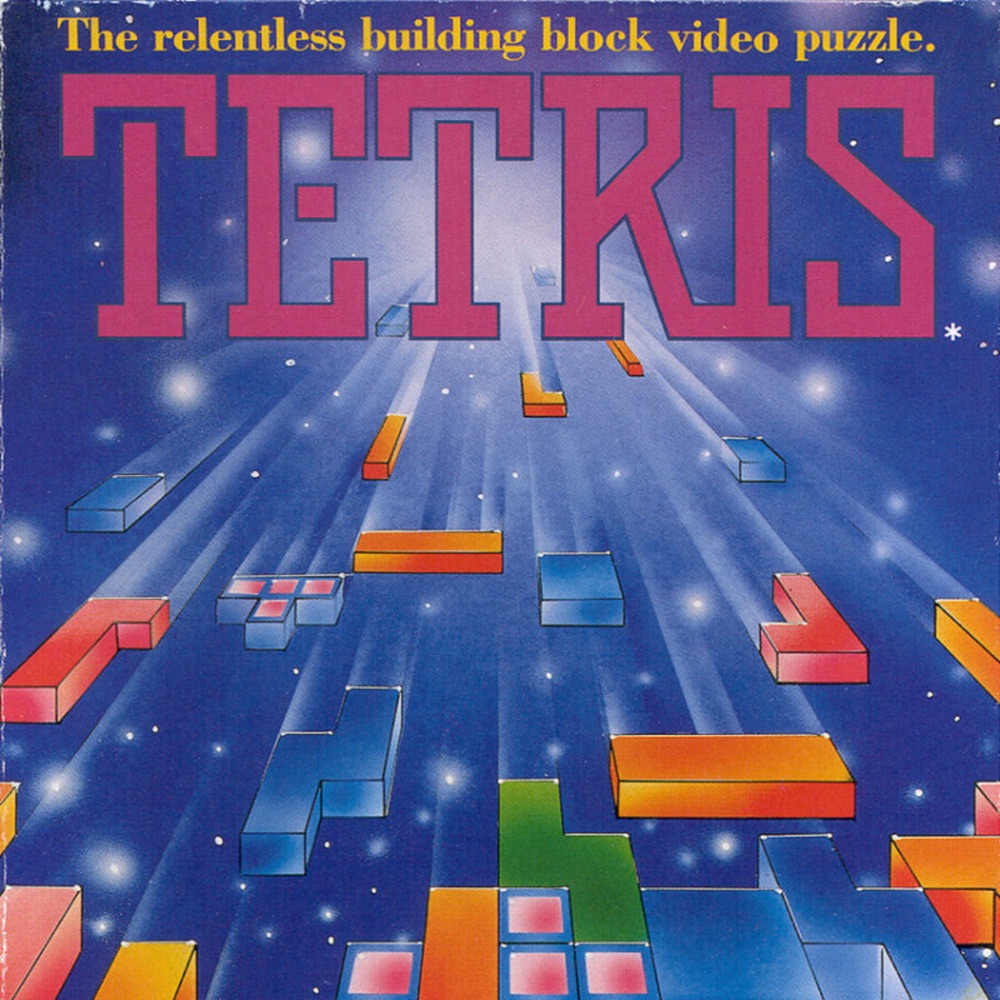
This version of Tetris is one of many conversions of the famous block-stacking game, as well as the best-known (but not the only) version on Nintendo's first home console. The goal is to place pieces made up of four tiles in a ten-by-twenty well, organizing them into complete rows, which disappear. As rows are cleared, the pace of the game increases, and the game ends if the stack reaches the top of the well.
SHOW NOTES
Tetris Longplay
Tengen Tetris
Famicom Tetris (Bulletproof)
Tetris NES Commercial
Nintendo Research & Development 1 made this and Nintendo published it in 1989. It is the falling-block puzzle with "Soviet sensation" on the back of the box, from a Nintendo that had rejected other NES Tetrises as unlicensed. We had a good time with it, and still did not put it on the Essential Games List.
What works
- It doesn't feel old. Tetris started in 1984, but this doesn't read as an aging port. It almost cycled back around to feeling new, like the quick, cerebral puzzles that fill mobile gaming.
- The statistics panel. It shows how many of each piece you got. We figure it's there to call out complainers who swear they never got enough straight lines: you got 13 of those.
- Two modes. A-type is the classic. B-type has you clear 25 lines through a mess you pick the height of, with no timer, then moves you to a harder level. It felt like cleaning up someone else's mess, and more like a designed puzzle. Sean found it intimidating. Beginners can start at level zero and experts can gamble on level 10.
What doesn't
- Sticky blocks. Once a piece reaches a landing position, it falls and you're done. You can slide under things but not rotate under them, and a piece near the wall can't turn, where a modern game would push you out.
- Speed. Once it's fast enough, eyes stop keeping up. Level zero or one stayed comfortable.
- Greed. Leaving one column open for the straight piece worked maybe five percent of the time. Building a perfect stack for a big Tetris later got us killed dozens of times.
The music and the ending
The first of three tunes is the Sugar Plum Fairy arrangement, which more people hum as Tetris than as the Nutcracker.
Finish a B-type game and a parade of Nintendo characters appears, and they look off. Mario and Luigi look like curmudgeons, Mario looks kind of pissed, and Bowser stands alone with an instrument. The joke was that these are the Soviet versions.
Worth knowing
Atari's unlicensed Tengen Tetris has "liquidy" lines instead of four squares, which didn't feel like Tetris to us. It has versus and co-op modes, but Nintendo's feels closer to the Tetris we know.
The bottom line
Play it. Nobody voted it onto the Essential Games List. Sean pointed to how many Tetrises feel, look or sound better, and Joe called it an essential mobile or arcade game, not one he needs to be wired into his TV for. Without Tetris there are no variants, but being first is not the same as being best. It isn't the version you need, though you'll enjoy it.
Written from our conversation in this episode.
- The Soviet Game Sensation
- NES Longplay
- Introductions
- Nintendo, a company that is very careful, chooses what does and doesn’t get localized. Rejects several NES versions of Tetris for being unlicensed and such…and yet the version they PUBLISH has the words SOVIET SENSATION on the back. Kinda makes the whole thing silly right?
- Also worth mentioning that I LOVE Tetris. Not necessarily NES Tetris that we’re talking about today, but Modern Tetris is something I both play a lot of and fancy myself to be a pretty good player.
- Overview
- Different shaped blocks fall down from the top of the screen, it’s your job to stack those blocks on top of each other by rotating and guiding them into the proper position. In order to remove the blocks from the screen you have to fill up the entire line with blocks, take caution though, as only the lines you completely fill disappear. The rest remain and continue to inch closer to the top until it’s game over.
- Gameplay
- The speed of Tetris
- Distribution of each type of block
- The inability to HOLD pieces
- Your strategy
- The most satisfying game since Pac-Man?
- A certain stickiness to the pieces
- B-Type game is where you see how high you can score with 25 lines.
- This is now referred to as sprint, but there’s noticeably no timer here. It’s just about points not speed.
- In the marketing materials for Nintendo’s release they keep referring to things as Tetris-ized and getting your Tetris Shot. Just checking to see if I’m missing something here, these words seem random.
- Sequels and Spinoffs
- Let’s not talk about the 1000+ Tetris games and just keep focused on the other versions that technically came to the NES that we can’t formally review.
- Tetris (Tengen)
- Unlicensed Atari version
- Blocks don’t have little squares between them to make them look more blocky. Kinda like long liquidy lines.
- Has a cooperative mode where both players stack blocks together in a t-shaped field
- And a verus mode against friends or computer
- It shows the distribution of what type of blocks you’ve been getting. Maybe to help you look at what might be coming based on what you haven’t received.
- Can have a handicap which indicates how many unfilled lines you will start with
- Somewhat Different music tracks.
- Tetris (Bulletproof)
- Japan only
- The A button is now the drop button and you rotate blocks by pushing down on the d-pad. You cannot move blocks down faster other than a hard drop. It’s insane.
- You can select a “round” which basically just gives you random blocks on the screen at varying difficulties to make it more puzzle like
- Tetris (Tengen)
- Let’s not talk about the 1000+ Tetris games and just keep focused on the other versions that technically came to the NES that we can’t formally review.
- EGL
- Original Tetris is a lot like Pong. You have to respect it and understand the art. Without Tetris there are no tetris variants. But that doesn’t mean that being first is equivalent to being best. I think many other versions of Tetris have built better using the blocks found in this game.
- Next week - TO THE EARTH
- NEStalgia Byte - Pac-Land
Auto-generated transcript. Each paragraph starts with its timestamp. Speakers are not identified.
The Soviet game sensation, Tetris.
And welcome to NEStalgia, a chronological exploration of every NES game released in North America. I'm Mike. I'm Sean. And I'm Joe. Joe? No, back by popular demand. Wow. No one did that. I'm glad you're back. Yeah, Joe, you've had a spotty appearance as of late, not necessarily consecutive losing That's true. I was back for Wheel of Fortune. Yes. And then that was it. And then you missed it in 20. Yeah, yeah, yeah. But I do plan on catching up on my backlog. Great. A little tease there right at the start. Maybe that's something just for the Patreon. Who can say? Remember, you can join us. Patreon.com slash Nostalgia. And we'll talk to you soon. Oh, wait, wait. No, no, no. We have to do an episode. Episode.
Yeah. The game is a licensed one by Nintendo. They are completely different games. It's not like some of the other Tengen games where it's like they released an unlicensed version under their own brand. And then they also brought the same exact game as a licensed version when they later worked out a deal with Nintendo. No, in this game, Tetris, as if the history of Tetris wasn't spotty enough, they also made their own version of Tetris, Tengen Tetris, that honestly is a completely different game, even in the way it looks, controls, and the modes of Tetris, which is, I don't know, for you guys, that might be surprising to hear.
I mean, yeah, the one that I'm used to is the, like, mode A, but what are the other ones? Well, I'll get into that a little later on the other games. I want to know now. No, you'll have to wait, but they're, you know, for the fans, they can just skip the chapter markers to the point where we start talking about the sequels and spinoffs, if they really want it. My point being that there's so many other versions of Tetris on the NES, we're just talking about the Nintendo one here, and, you know, it's weird that kind of Nintendo said, no, we're going to, you know, license a version of Tetris and release it officially under our own name.
They go through all of these, like, hoops to put the, you know, seal of quality on the Nintendo games, whether you're first party or third party, they're guaranteeing a certain kind of quality, and they make sure that, you know, it's a company that is very careful. They choose what does and doesn't get localized. They tell people, like, you got to remove the blood on this game or the nudity on this game, and then the Famicom version has it just fine. So maybe it's a Nintendo of America thing. But they've rejected several NES versions of Tetris for being unlicensed, and yet the version they publish has the words Soviet sensation right on the back of the box.
I mean, kind of makes the whole thing silly, right? That they're like, you know, not dodging the weird Soviet Union angle that's happening in the 80s. I mean, I always, I thought it was funny because, like, this game is released, like, only months away from the Soviet Union, like, starting to crumble. It's like, did they know something? What was in the news? I think that's how we got a hold of it. Like, they were starting to crumble and then we were able to, like, send our agents, our American agents... To extract Tetris. Yeah, to get the game, the source code of Tetris. That's a good point because Tetris was a game that I think first started in 1984, and yet,
not to say that Tetris hasn't advanced into the year 2022, it has changed, you know, quite a lot. The basic game and strategy is something that is just timeless, right? You don't feel the age on this one between 1984 and 1989 versus some of the other arcade games that we've seen ported over to the NES. A lot of times we'll see, like, oh, this game came to arcades in 81, and yeah, they made an NES version of it, so it's not a one-to-one clone, but it still kind of looks old, feels old, didn't add anything new to it.
That's not necessarily the case here with Tetris. If anything, I would say that if you were to play this for the first time, you had never heard of Tetris. It's almost like it's cycled back around to feeling new again. Because this is what mobile gaming... Like, this is, like, the vast majority of what mobile gaming is like. You know, it's these quick puzzle games that have this, like, oddly cerebral effect on a person because it's, like, satisfying.
You know, it feels very much like a Candy Crush, which I know is not a necessarily, like, recent reference, but, like, I don't play mobile games. So, like, whatever is... You probably made somebody angry.
Well, but you know what I mean. Yeah, you know, I'm not saying that the Candy Crush quality or game design is up there with Tetris, but it's like, it's in that, it feels like it's got that Candy Crush is taking a lot of pages out of Tetris' book. And I don't know if you guys either remember this or have ever heard this, but there was, like, for a brief history of Tetris in the beginning of things when it was known as a Soviet game, a lot of people were convinced that it was actually a Soviet spying device, like, that somehow the cartridge was giving off information back to the Soviet Union, or because it was on the computer game, they could access files on your computer. You know, things like that still happen today.
It happened for real, I suppose, but this was never proven, and to the best of my knowledge, there's never been anything that said Tetris was created solely as a spying device. Like, did they think it was connected to the internet? Yeah, that's, I mean, I know that, you know, their networks exist in, like, the late 80s, but it wouldn't have been ubiquitous enough for, I don't know. It's not like there's gonna be Wi-Fi.
Yeah. Like, you need to be, like, hardwired, or does someone, like, come into the house and take the cartridge? Yeah, they have to pick it up. Yeah. But you have to imagine the people creating those kinds of storylines also just imagine it to be more like a movie sci-fi thing, where, like, it's just explained because we can't understand it, you know, somehow the data is getting to them. Fair. Sputnik's picking up the signal. Also worth mentioning that I love Tetris, not necessarily NES Tetris.
I'm gonna try to be very unbiased here and leave the modern Tetris games out of it, but modern Tetris is something that I play a lot of, whether it's on a mobile device or whether it's on, you know, just like, you can type in Tetris onto Google and get, like, a hundred different results for different websites where you can play Tetris on. I find Tetris to be a really fun, satisfying game, similar to, you know, a lot of times we're talking about how, like, Pac-Man is, like, mowing your lawn.
And, I don't know, Tetris clearing those blocks, you know, may be even more satisfying, right? There's something about clearing lines that were at one point untidy, but then just kind of vanish. You know, feels good. Yeah. I'm not particularly good at any form of Tetris. Like, once it gets fast enough, then my eyes just don't see anymore. But I'll always enjoy a nice, hearty game of Tetris in whatever form it takes.
I actually, I really enjoyed playing it for the podcast. This NES version is one of those rare games I sometimes talk about where I actually played this as a kid, this exact version, I mean, moderately frequently, or at least it was, like, one of the games in our library of NES games at home.
And I never liked it as a kid. But I mean, I think that part of that might just be because I was a kid and I just, like, didn't, I was like, I don't want to do this, like, geometry. Like, you know, like Mario. It might have been, it might have been a more recent thing that I actually started to enjoy Tetris because, yeah, as a kid, I don't think I was very into it. I was not really looking forward to playing it for the episode. And then I started playing it and I was like, oh my god, I totally get it.
It sounds weird because I'm sure everybody who would listen to this episode would be familiar with Tetris, but I'm going to explain the basic overview of how to play Tetris, only to then talk about the concept itself. You know, nowadays, like, Tetris has been around long enough that most people just pick it up and go. But I'm interested in what you guys were saying there, where this isn't necessarily checkers or, you know, other board games that have been around forever that, you know, you just kind of learn at a young age.
Tetris is something that can, by either difficulty or by the weirdness of the game and the way that the blocks stack and the type of blocks that you get, not necessarily the most accessible type of puzzle game. So first, here we go. Here's the, here's my overview.
Okay. Different shaped blocks fall down from the top of the screen. It's your job to stack those blocks on top of each other by rotating and guiding them into the proper position. In order to remove the blocks from the screen, you have to fill up an entire line with those blocks. Take caution though, as only the lines you completely fill disappear. The rest remain and continue to inch closer and closer to the top until the game is over. Wow. If I, that, that could have been in the manual for this game. Like that, that, that's a real like NES manual sounding description.
Right. And yet it's not inherently clear if you are just like not playing the game, right? That sounds, that sounds very weird. Like, wait, what's happening to the blocks? Why are only some blocks going away?
Um, you know, I would like you guys to talk a little bit about that because you were saying that as kids, this was, this was not appealing to you. Well, I was going to say the only thing I would add, unless I missed it in that description is that you, you want one consecutive horizontal row with a, with a block in every top, in every space. Yes. And that row will disappear. Yes. And, and if you want to get real clear with it, you have to specify that it's not just shapes. It's arrangements of four blocks that one might call a tetronomo. So like, you're not just stacking triangles and rhombuses here.
Uh, that, that might've been partially unclear, but I mean, if it, to answer your real question of like, why it, it wasn't a thing that I was into as a kid, um, where I get it now is like, I just wasn't a puzzle guy as a kid, I guess. Like I, um, I understood it. And when it was at the slowest levels, like I could, I could clear a couple blocks and, but I wasn't like playing with any strategy.
I was just like, Oh, that kind of looks like it fits there. And then it didn't, or I'm, I'm not playing well enough to get, uh, the, uh, like the, the actual Tetris is, which is very satisfying. I wasn't playing in a very satisfying way. I would say roughly the same thing. I mean, I, I mean, I think I liked puzzles, but I wasn't good at this one. And especially because, uh, I think what I didn't like and still, you know, still gives me a little bit of anxiety, you know, fun anxiety, I guess, uh, is, uh, fun anxiety.
Yeah. Is the, is the like kind of race against the clock type things in video games, especially where it's like the higher you get, the higher your stack of blocks gets, the less time you have to think about where to place something. And you know, when I'm playing right now, I mean, I played with a bunch, through a bunch of different modes and stuff just to test it out. But both the times where I was really just playing for fun, I'm playing pretty comfortably on like speed level zero or one.
Like, like I tried some of the other ones and I did like, okay. And some of the medium level ones, but like, normally I'm like, I'm just satisfied figuring it out as it's falling. But when it starts to get like stressful, I, I, I lose it a little bit, uh, as far as lose my, uh, my streak, not like to lose my mind.
Yeah. Joe, that's, I think that is something that everybody experiences, but the speed of Tetris, it's definitely part of the hook that there will come a point where arguably no human can, um, can outmatch the speed of which the Tetris blocks fall. I know that, um, recently in the NES, uh, Tetris speed running community, they've hit like a new level of like level maybe 31 or something like that, which is just ridiculous to say out loud, but there will, the game will still continue to count up beyond that and reach speeds that, uh, you just can't move the D pad fast enough at that point. Um, but there's also a, a certain stickiness to these blocks, right? There, once they fall into a place that could be considered a landing position.
Yeah, that's it. There is no more like, you know, in modern Tetris, you get a little more wiggle room after that, uh, to kind of keep rotating it or, uh, move it around a little longer here. It just falls and you're done. And I think, um, that's the scary part. Yeah, that's a question where I'm, I want to ask you as a more, uh, uh, veteran Tetris player.
Is that just the nature of the old, the older generations or is it just, is it the NES version specifically? No, that's the nature of just all older versions of Tetris. And, uh, I, I can't say it's exactly around this time, but, um, some point in Tetris, there was also the ability added to hold a piece, um, maybe not the piece that you needed at that moment. You could hold one piece, but then you must take the next piece. And around that same time, they also started to give a little more float to the, uh, to the blocks
and make it so this way, even if it feels like it might be in the landing position, you could still turn it a little bit. And then from that, we got the ability to do T spins and other, you know, other fancy Tetris moves. Um, those things came a lot later. A T spin is when you know that, um, that, well, they're all four blocks, but the one that it looks like, uh, closest to a pyramid, right? Yeah. Or T. Yeah.
Um, you can spin that so that it falls into a spot in a, in a Tetris board where there is a, You're kind of like hooking under, you're hooking. Hooking under. Right. So impossible to actually just place it there on its own. You have to actually use the rotate feature and the game registers it as something that kind of snaps into place. And it makes a very satisfying snap sound. And the game itself refers to it as a T spin. It's not just something, uh, it's not a nickname fans have given it.
Yeah. That, that's what I was like expecting. And then when that stickiness like that, that was when I first realized that like, oh, not all Tetris is are created equal. This, I mean like there's still like, you can still kind of slide if, if you're, if you're matching your D pad movement with the, uh, like an L block, um, touching the block below it. Like you can still sort of slide under things, but you can't, you can't rotate under anything.
Right. Well, I also noticed that there is like, I mean, obviously I guess, but I, I hadn't thought of the significance of this, but that there is a rotation point that is set on each block where it's like, like the, the, the straight lines are going to rotate from the center, which seems obvious. But that means that you couldn't ever be too close to the edge vertically.
And if you want, you would never want to do this anyways, but if you wanted to rotate it horizontally, you'd have to move away from the edge to do that. And that's a bad example, but like, like another example is like something that's a little more, uh, more asymmetrical that like you might want to, you might want to flip over, but you can't because you can't turn it horizontal because you're too close to the edge. Whereas in a more modern Tetris game, I believe like just from what I guess my muscle memory thought existed, it would just move your piece. Yeah. It would just push you out, push you out.
Yeah. Right. Which is true. It does do that. Um, but there, it's not like there's zero quality of life, uh, even in this version of Tetris. I, I would argue the ability to rotate from both directions is something that like a bad developer wouldn't have considered, you know? Like you would have had to hit the rotate button four times to get back to the original position. Whereas here, both the A and B button, uh, rotate both clockwise and counterclockwise. So this way, uh, especially at higher speeds, you know, which direction you start your rotation in really does matter because you might not be able to make a full rotation before the block lands into its place.
But what about the distribution of each type of block? Uh, you know, Sean, we keep talking about modern Tetris and we said we wouldn't, but a lot of the modern games, even some of the more like competitive style ones, make sure that you get every kind of block uniquely before you ever get, um, another block. And that's not true in this version. In this version, they go as far as to give you a statistics, uh, panel where you can see like where the distribution is happening and being like, huh, it felt like I got a lot of those T-shaped blocks.
And you could just look over at the statistics and be like, yeah, cause I did. I got, I got seven more than any other kind of block. I also think it's there just to like call out complainers like, oh, I didn't, I never got enough of the, uh, the straight lines. And it's like, no, you got 13 of those. And it's like, it was, it was just there as a bit of a, well, we know what we're doing.
Yeah. And I assume that it's all RNG, right? It's not, I would think statistics like affect what might come next. So I imagine it's like playing like roulette and looking at the, looking at like the, the, the recent, uh,
and like, it doesn't really mean anything, right? It's just showing, oh, that's what happened, but it doesn't mean that you shouldn't expect, oh, I haven't gotten a, uh, you know, I haven't gotten a long one in a while. It must be coming up next. It's actually, I think, determined by where you place the previous block. So you'll always, the next block is always displayed. It's this way you can prepare if you're, if you're that kind of Tetris player, if you have the ability to look at what's coming next and think ahead, that block is always guaranteed to be that block. But that block, the next block is determined by where you placed the block, two blocks before it.
So it's, like, so you could, um, learn how that works and then sort of place, because you know, like, if you place on the left and the block after next will be. No, I doubt it. I doubt that. Like, cause I think it's just like way too complex. And it's probably, like, a unique seed for, based on when you started the game or something. So that's just how it pulls data to determine the next one. Not so much, like, it could be a tool to be used to learn the game. Right. No one has ever successfully manipulated it so that it's just the, um, four blocks in a row.
What are we calling these blocks? Should we give them nicknames? Is that the tall block? Is that the line block? Okay, there's line, square, L, other L. Yeah. Oh, yeah. And others. Yeah, S, Z. Yeah. I don't know. So we'll just keep using these interchangeably. Surely the audience will follow.
I don't know. I kind of thought for this version of Tetris, right, since it is a little more rigid and it is a little more punishing, it was fine that the distribution wasn't even, right? That you could kind of tell that the, uh, line blocks, even the game knows that they're very important. And they were going to be something that, at least in my experience, I got less frequently than the other blocks. Uh, rightfully so, maybe. Yeah, I'm not sure if I was, like, imagining it because of how, of how much of a pain in the ass they were. But, like, I felt like I was getting the Z slash S blocks a lot.
And those are, like, I mean, I never know what to do with, like, once in a while. I'm like, oh, that's the perfect spot for it. But halftime, it's like, there's always going to be something sticking out. Yeah. I mean, I actually didn't know that in more modern games that it did try and equalize things. So, I always thought that in any Tetris, you're going to get a random thing, or at least, or even, uh, artificially making the symmetrical blocks harder to find.
Um, so, I, I guess I, I always thought it was this way. So, I, I didn't think it was too different. If we could get in a little bit of the strategy, right? Uh, I was even looking on GameFAQs here, and they have, for NES Tetris, like, a few different strategies laid out. Um, the most common one I think everybody, uh, at least tries at some point is the Tetris strategy, where you just build all your blocks, um, except for leaving one hole on either the left or right completely open.
So that when you do get the straight line, you can drop it right in, and then you get an immediate Tetris and keep trying to do that. And that works out well for a lot of players until the speed either increases or they get that one block that they were hoping they didn't get, and now it screws up the beautiful, like, straight lines that they've created.
Um, guys, did you do the Tetris strategy? Yeah, I, I try, and it works maybe 5% of the time. Uh, but, like, I was watching other players, um, because Tetris just has that hypnotic effect sometimes. Um, and I saw that there were, there are some players that, like, if they find that there's no perfect place for it, like, they'll just find a spot that will at least clear, like, one row. But in doing that, you would think, oh, then it's gonna, like, make a, an obstacle, so I can't get to my open spaces below that. Um, but they find a way that, like, that just, it opens, it opens it up again. I don't know if I'm making sense here. Uh, they know how to fail well so that their future turns are, like, minimally effective. Minimally affected.
Yeah, I, I think, ultimately, the whole game of Tetris, like, no matter what strategy you choose from, right, like, you could choose to build from the outside and place, and then place inside to get, like, blocks that land neatly inside. I, I don't do that, but you could do that. Um, no matter what you wind up doing, the player who's the most successful is just the one who, um, stacks the blocks the prettiest, right?
Um, who doesn't, like, just, you know, get the Z block and then be like, all right, well, I'll turn this, um, so this way it blocks off this entire section. And now I have nothing, I have to wait until this whole thing is completely cleared before I can get back to it. Uh, that's more of, like, a thing you do in, in a panic situation, not something that would be encouraged.
Um, you know, even thinking about, uh, you could do that with the square blocks. The square blocks can really screw you over sometimes if you don't have two empty blocks on top of a stack neatly next to each other. Like, if you only have, um, one space, one space, one space, right? It's like, if there's nowhere to put it, you are going to block off a large chunk. So it's about trying to undo your own mistakes faster, uh, than the game giving you more blocks that you don't necessarily want.
Yeah. And, you know, I, I tried the, uh, Tetris strategy as well. I think just because naturally that's just like, I feel like that's just where everybody ends up. And when you're like early on trying to learn Tetris, you're like, oh, well, I'll just try and, uh, try and use these useful long blocks to, to clear out as much as I can.
But, um, another thing that, that I noticed that, uh, that I'm doing, and maybe this is just like something that's like, once I got better at Tetris, this wouldn't be as much of a, an issue for me. But I'm noticing, I almost have to think, um, the opposite of what you would normally think as far as, uh, like planning ahead.
So a lot of times I will, I will see something, a block. Okay. This fits perfectly over here on the left, but the left is a little higher than the right. But like, I'm planning ahead and I'm going to make this like a perfectly neat, um, set of blocks. So I, so when I, when I get there, eventually I can clear that. And like, I'll worry about the stuff on this, on the, on the lower end of the right and like clear that stuff down to keep me away from the top.
And I'm doing that as opposed to thinking like what will immediately keep me safe. And I feel like normally like that's the kind of thing that, uh, you're used to like getting rewarded for is like thinking ahead and not just like, not, not just thinking of what's going to keep you safe in the moment. But I screwed myself dozens of times by trying to like, by trying to like. Making that stack too high. Yeah. By like, by like being tempted by like, oh, this is the perfect spot and it'll make a big Tetris later once I get there. But then I can never get there because I'm not just protecting myself in the immediate, even if it's not perfect, even if it just gets me a couple rows and, and leaves me with maybe a couple of shitty like gaps.
Uh, it, it's this weird balance that I have to try. And you know, I, I'm assuming like once you're really good at Tetris, you don't have to worry about that as much because you're, you're only, you're doing both. But like, for me, it's like this weird balance of like, do I want to plan ahead or do like, should I, should I work in the now and keep myself alive for one step longer? Like that's the most important thing.
Um, to like, just, I found it interesting that I had to kind of think about it in, in that way and like make those sacrifices. Yeah. And I think especially with NES Tetris more than any other version of Tetris I've played, I found myself, cause I, I use the Tetris strategy too. I found myself getting into undesirable situations a lot faster than I expected. Like the speed wasn't even necessarily the problem. It was just that the way that I'm used to building out these things and the blocks I was receiving just made it to Sean's point.
Like sometimes you do just have to accept that you're not just going to continue to get back to back to back Tetris's and that you just kind of have to put this guy over here for now, get rid of him as quick as you can, and then go back to building your Tetris strategy. Uh, I feel like, you know, there is, there is kind of like the, your, your head is your own worst enemy here. If you try to be stubborn and be like, Nope, I'm just going to wait for that straight line block. Uh, he's, if I could just wait till I get him, I'll saw that'll solve all my problems. It's like, yeah, you don't know when the next time that's showing up is.
Yeah. And then it'll also, I don't know. It's, I think it's partially, um, playing scared, but I think it's also playing like little compulsive, like at a certain point, I just don't want to see anything down there. So I'll just keep taking these like low scoring. Uh, I'll, I'll just keep clearing that bottom row over and over just because maybe I'm getting to the point with the speed that I just, I don't want to deal with Tetris. I just want to have, have an empty, have an empty field. You know, Sean, in, in modern Tetris, that's called an all clear and that's actually worth some additional points. Oh. Um, but what if you never really get too high?
Well, it's only worth, um, you know, it's like similar to Tetris and then back to back Tetris, back to back Tetris is technically worth more points, but not back to back to back. Like there's like a cap on the kinds of points you can get. So they don't encourage it, but it's more of like, if you do happen to clear off every single block, it's an all clear and you get like a nice little bonus, but you would technically score more points from doing the crazier things that the game offers in modern Tetris. Like, you know, um, the T spins and the back to back Tetris.
We should probably talk about the music for this game too. Uh, it's not just the NES version that has this famous music, but, um, there's three tunes to choose from. And the most obvious one is that, uh, arrangement of dance of the sugar plum fairy from the Nutcracker suite that, you know, people, I feel like more people hum that and think of Tetris than they do of the Nutcracker suite at this point. Right. See, I forgot that this was the song. As soon as I heard of it, it came back to me, but I was thinking of a different song that I associate with Tetris. And maybe it's from a different version of Tetris or like an earlier version, but that's, I'm going to try and hum it here. So bear with me here. Oh, wait.
Yeah. That's the real Tetris song. Yeah. Right. But that's not what this song is, right? It's yeah. Yeah. But I do remember this now from my childhood and I guess just another song I just know from pop culture or something.
You know, it's like Russian music in general, right? It's just like associated with, um, with Tetris. But the other two songs in this too are songs that I wasn't necessarily familiar with, but because I've heard the first arrangement so many times, I actually chose, uh, music, uh, two and three instead just to, just to hear what they were. And apparently they're not even like, they're like custom Nintendo, like songs that are meant to sound traditional Russian. Wow. Like they're not like just another ripoff of a composer's music. I, I, I, I believe. Yeah. I don't even remember that this, the second or third choice. Like when I was listening to those, like those don't even ring a bell to me.
Um, I remember them sounding kind of inappropriate, like not like not bad, but they just didn't feel like explicit content. It was explicit. There was swearing in them. Um, and also to have a little Nintendo flair, um, when you complete the, uh, the game B mode, uh, the B type game, sorry. When you complete that, you are greeted to a bunch of Nintendo characters. Now we'll get into the, the B type game thing, but I thought it was important just to talk about the, the one Nintendo touch that Nintendo put on their own, uh, their own version of Tetris here.
These Nintendo characters don't look like the Nintendo characters that I'm familiar with. Like maybe Samus looks like the closest, uh, to what I was expecting, but Mario and Luigi have like weird proportions. I've never seen this version of Bowser ever again, either before or after this game. Link doesn't look like the Zelda two link that they clearly could have just put into this game. Why, why do you think that these characters look so strange?
I don't know. I mean, yeah, Mario and Luigi, they look like they are like, they're down on their luck. They're like curmudgeons now. Yeah. They don't even look like they're supposed to be like jumping up and down for joy. And I guess Luigi is kind of doing like a jig or something. Like he's holding onto his waist and yeah, that legs out. But yeah, but I don't know. Mario looks kind of pissed. Yeah. Like, what are you doing? You're not supposed to be. These are these, these, these are the Soviet versions of these characters. Like they're, they're much less happy go lucky because it's Soviet Russia. I'm just saying, if anything, this is, this feels like the unlicensed part of the game.
In a completely Nintendo licensed game, of course. Also, maybe the first nod that Bowser isn't evil. You know, nowadays he's in like, you can race as him in Mario Kart or you can, you know, he like, he, he's just playing along in Mario Party. He's just being funny. Um, or in Super Mario RPG, he actually joins your crew. It's like nowadays, it's just established that Bowser is, um, playing the role of antagonist, but is more, you know, he's also getting together with them for tennis. Uh, and stuff. He's not necessarily inherently evil. This might've been the earliest example of him just like, yep, I'm just here playing musical instruments with everybody else. Uh, just, you know, really happy to see you doing well, not, not causing any havoc.
Or maybe he's just trying to show them up. You know, like I play whatever it is that I play better than you. So it's more adversarial still. He is alone. They, they made sure not to put anybody near him. So maybe, yeah, maybe he does smell at the very least, which is, you know, a villainous, uh, tactic. It's a villainous trait, yes. Yeah, it almost looks like, because Mario and Luigi don't have any instruments either. Maybe he stole it from them. That's why Mario is so pissed.
Huh. I get, I, I believe we could create a whole kind of, um, you know, backstory for each of these characters since they're clearly not the Nintendo version. Of themselves. But also, you know, there's that, I, I'm sorry. I don't know the name of the castle, but that, you know, that Russian castle that's also featured on.
Is that what it is? I thought that was the Kremlin. Oh no, it's St. Battle's Cathedral. There you go. Great. Much better. Same thing. We're learning in real time here, folks. Uh, anyway, the, uh, you know, I just think, like, having that alongside Nintendo characters is very interesting, considering we never saw, like, Donkey Kong with the Empire State Building, even though the game is supposed to take place in New York. Well, the, the Empire State Building is copyright protected. There you go. And, uh, this is not. This church, I thought the church surely would be like. Well, it's Russian. It's the Soviet Union, yeah. Yeah. Right, yep. We already stole the game from them.
All right, so let's rewind. Let's go back. Let's talk about the B-type game rather than talking about the ending. I'm glad we got that out of our systems. But the B-type game is, uh, it's a different kind of game because you're, you're not tasked with, uh, like a high score necessarily, but how high you can score with 25 lines. Um, I believe this is now referred to as sprint, but in this version, the NES version, there's noticeably no timer here. It's, it's about points, not speed. In modern Tetris, it's more about how fast can you clear these 25 lines.
In, um, in NES Tetris, it's actually like, all right, you can start at whatever level you feel like, but once you clear the 25 lines, you go on to the next level, which is noticeably harder than the previous. Yeah, I didn't, I didn't play too much of this, uh, because it was intimidating. And all the, uh, I just didn't like, there was lots of blank spaces. Uh, I, I like the classic, uh, game A, but, um, it almost seems like a, uh, clean up this mess. And I, I can see how that can feel, uh, uh, what's the word? Satisfying to others.
Yeah, I actually played a lot of this, um, and I was significantly worse at it than I was at the other game, but it was very, there was just something like enticing about, about exactly what you just said, Sean. Like, there's like this major obstacle in the way that this, the, these bricks or whatever blocks are randomly laid out. And it's like, it was very satisfying when I was able to like really, um, make a dent in, in that.
Like that, yeah, there was something cathartic about it. Yeah. It's also not a situation you would ever find yourself in, in your own game of Tetris. You'll, you'll just wind up stacking the blocks too high before you get it that messy. Uh, you know, a lot of times these are almost impossible, uh, situations to recreate in, in the A-type game. So I kind of appreciated it from that standpoint, as like you were saying, Sean, cleaning up someone else's mess.
In this, you know, there's definitely, especially in the much later levels, there's almost a, uh, a futile feeling to it in the types of blocks you're receiving where you're just building on the mess. You're making an even worse mess by attempting to clean it because the blocks that you have, you know, are, are stacking on top of many holes that you haven't necessarily cleared yet. So I think this is definitely the more challenging mode, no doubt about that, but it's also completely different from the A-type game in an appreciatable way. It's, it's not like, oh, this is the same mode, but now they've just created a mess. This is more of a, this feels more like a puzzle solving thing than the first mode did.
Yeah. And in some ways I almost thought that it was like, that, that there was a solve. Like, I don't know if they're, uh, giving you the blocks and the correct, in, in like a specified order and they're, they're actually designed so that there is an optimal way. And, and that may not be the case, but it gave me that feel like a more designed puzzle. Yeah, it does. It does sort of feel like that. And, and, and, you know, it's like the, the mess, you can always sort of tell where like you're just by looking at it, where your, uh, your mess begins.
Exactly. Yeah. Where you're, because like there's, it's so like chaotic. So it is cool to just slowly see yourself like crushing that down and it makes it feel like, like, yeah, you found the solution to like this puzzle. Even if it wasn't designed that way, like with, with intent, um, it works that way.
And both modes are very well suited to beginners and experts because there's, there's a, uh, a lot of choice between both speed and in the B type mode, the kind of mess you want, you know, you get to choose the height of the blocks as well. So if you're just learning how to play Tetris, you can start right at level zero of either of these with no mess and just experiment with, with learning the different modes. But as you get better and better, the dream is to eventually like, be like, nah, I'm just gonna start at level 10 where, uh, you know, I think you definitely score more points for clearing lines, but there's a risk reward to that.
Where like, yeah, your, your points are accumulating faster, but will you actually score more points along with, or will you, you know, game over first? It would be weird if the point totals didn't work with the levels though, right? There would almost be no incentive to start later. Yeah. Just like a self-defined challenge at that point.
Right. So I think, you know, in a lot of ways, I know Nintendo didn't come up with these, uh, executions for Tetris, but in a lot of ways, like this game, you know, was very well thought about, even if the basic concept is even so simple that anyone can understand it. The, the, the extra intricacies here of being able to see what block comes next and, um, being able to choose which speed the blocks fall and the, and the, uh, the amount of clears required before it increases in speed. I think that's the kind of stuff that made even the very, very basic versions of Tetris, uh, you know, addicting and enjoyable. You know, you, you felt the progression.
In the marketing materials for Nintendo's release of, uh, their version of NES Tetris, uh, they kept referring to things as Tetrisized and, you know, getting your Tetris shot. Um, just checking, uh, am I missing something here? These words seem incredibly random. Uh, Tetrisized? Is Tetris shot supposed to be like getting your tetanus shot? Um, not, not sure what the pun is. I, I think it's just like, you know, tet, tet, tech, exercise, tech, texercise?
Like, you know, having your shot of Tetris, exercising, but Tetris, like you're supposed to play this a little bit every day. It's like working out your brain muscle. Like, that, that's, this is your puzzling to keep your brain healthy. I think that's what they're, that's what they're going for. All right, but it's like a kid in a detective costume saying, in, in, in like a raspy voice being like, have you been Tetrisized? Okay, then I don't know what they're talking about. But I loved your guess.
Have you been, does that just mean like you've, you've caught the bug? Right, I guess you caught the bug and now you need your Tetris shot, uh, which is what another kid dressed like a doctor says. I'm gonna link the commercial in the show notes, but Joe, you will definitely agree with me if you check the commercial out. It has a very Nickelodeon 90s vibe to it. Um, so I don't know who ripped off who. Maybe, maybe Nickelodeon saw this commercial and was like, that's our, that's our whole brand initiative.
Welcome back to everyone that left earlier, um, when Mike said to skip to this point. Yes, because it is now the sequels and spinoff section. And let's not talk about the 1000 plus Tetris games and clones, uh, that just continuously get released. Practically, you know, if you, if you know the iOS app store and stuff like that, there's probably one being released every single day at this point. But let's not talk about all of those different things like we usually do in our sequels and spinoff section.
And let's just focus on the other versions that technically came to the NES that we can't formally review because of the mission statement of the podcast, which is, um, a chronological explanation of every NES game released in North America. Releasing, releasing in North America requires Nintendo's blessing, which Tenjin did not get. So Tetris Tenjin is the, uh, unlicensed Atari version of NES Tetris. The blocks don't have little squares between them to make them look more blocky.
They just kind of look like long, liquidy lines. Liquidy? Um, yeah, you know, like they just look like one fluid line. Whereas in, in Nintendo's Tetris, each of the, you know, each of the, say the, the T-shaped one, right? It's four squares, four little squares that then create that shape. Um, here it's like one long continuous. So it's just a T and not four squares making a T.
Exactly. Okay. And I don't know, I just, it just doesn't look satisfying when it's laid out at the bottom because you can see each of the individual blocks that you laid down. Like you can remember, oh, that was a T, that was the, that was the Z, that was the long line. You know, it's like when you look at it on the Nintendo one, they just look like square blocks that have been placed around. And yeah, the colors are, are what makes them stand out. But for the most part, otherwise, they just look like blocks that have fallen into these places. Not, um.
Yeah. Not specific shapes. Yeah, I'd, I'd be bummed for some reason too, to not see like my solid brick wall that I've made. You know, it's like, oh, those are just all the pieces just kind of sitting still independent of each other.
Right. Uh, Tengen Tetris also has a versus mode against either a friend or a computer. So hook in player two and now you can compete against another player or don't invite anybody over your house and just verse the computer. That is possible in the Tengen mode. Although I, I guess I kind of have to say with the power of Game Genie, it's also possible in Nintendo's version of Tetris. It's just not an officially supported mode because you have to type in a very weird string of characters on a Game Genie to force the option for a two-player mode. But it's, like, it shows two sets of Tetris fields?
I only have the code, John. I wish I could have, I wish I could have understood what, what that meant, but I don't have a Game Genie. So, um, it's, uh, I would imagine that that's impossible, right? Like, they wouldn't have a two-player mode. So maybe two players can control the Tetris. Like, you know, it's, it's like technically the same field, but now both players have, both controllers can do what they want. Yeah, that's weird.
But that could be interesting if you, if each player is controlling a different block, and it's like you gotta work together to keep the, keep the, uh, the wall flat. Joe, do I have a mode for you? Yes. In, uh, in Tengen Tetris, there is a cooperative mode where both players stack blocks in the same field. Now, granted, two blocks come out, so it's not like you're fighting over where the block gets placed. One player has their block, and the other player has their block. How would you design that kind of field, though?
Well, don't worry. Instead of it being just a rectangle that all the blocks fall into, it's now a T-shaped thing where the, uh, player one's blocks fall in from the left side and then get brought into the, uh, you know, the bottom half of that T. And player two comes in from the right side and has to fill in, like, his side or cross over into player one's side if they desire.
This looked like the most interesting thing that Tengen Tetris did that, uh, Nintendo chose not to. Yeah, I feel like that's an interesting, I mean, that's almost got, like, you know, like, like, that's literally just, like, an exercise in cooperation. It's not even, like, like, like, it's, like, the most pure exercise of cooperation as far as, like, co-op video games go. I can't back that up with any, like, uh, I don't have, like, the source on that, but that's just my opinion.
And Tengen Tetris also has, uh, different music tracks that, um, you know, you might be fooled, you might think that they're the same tracks, but no, they're the more familiar, uh, Tetris tracks. Uh, unsure why Nintendo, you know, did the whole Soviet references without getting the official Tetris track, but here we are, nevertheless. Maybe that wasn't the official Tetris track at this point. Maybe it wasn't unanimous.
Yeah, I guess that's what I thought. Maybe there were many competing songs. Yeah. Um, now, you don't have to answer now, and you can wait until the essential games list, but, I mean, you, you've played Tengen Tetris, right? I guess, correct. I played all these versions that we're gonna talk about. Okay. I, I wanna know which one's better.
You know, it is a, it's a good question, and I think that, you know, I think even just in my overview here, I listed both positives and negatives for Tengen Tetris, right? I, I really think that the, the thing that I'm describing as liquidy lines was the most off-putting thing. It just didn't feel like Tetris. It doesn't look like Tetris.
Um, and maybe it does look like the original version. I didn't play the 1984 version, because to the best of my knowledge, that's, like, something that only, like, was on floppy disks for Russian computers. Like, I, I'm sure you can find YouTube videos of it, but you can't play it. Uh, so maybe that's how it was, but I prefer this more blocky look to Tetris. However, a versus mode against a friend, a cooperative mode where two players can play together to, to complete a field, which can also cause its own forms of chaos. As we saw with, uh, you know, another favorite of mine, Balloon Fight. The two-player mode actually, you know, has the players working together, but if you're just pissed at your friend, you can just pop their balloons, too.
Which version's better, I think, ultimately just comes down to what you're looking for. You know, if you're looking for more modes, Tengen Tetris has it. Okay. If you're looking for, um, you know, something that feels more like, something that feels closer to the Tetris we know, I think that that's the Nintendo Tetris. Okay. Thank you.
But there is one other version of Tetris that was Japan-only. It was, uh, made by a company called Bulletproof. And their version of Tetris is, um, so the A button is now the drop button. Whoa. And you rotate blocks by pushing down on the D-pad. So if you know what I'm talking about here, if you can imagine that, you cannot move blocks down faster other than a hard drop. Which, for some people like me, uh, who may not be able to see alignment very well, uh, that's bad.
Yes, I agree. Not only is it bad from an alignment perspective, it causes you to be patient in the slower modes of the game where you have to wait for the block to fall.
Um, you know, it takes a lot longer for it to come down. It's especially bad if you're trying to slide blocks in. You know, if you start with a, uh, Z-shaped block, uh, the next thing that you're hoping for is one of those L-shaped blocks so that you can kind of put it like a boot into it. Yeah. Scooch it in. And so this way that, that hole has been closed and you don't have to worry about it anymore. That's easy in these other two Tetris games. It's really hard in this Bulletproof game because you have to painfully wait until it's at the bottom and then slide it in real fast before it locks. Sounds like that's the worst.
You can also select a, uh, round, which basically just gives you random blocks on the screen at varying difficulties to make it more puzzle-like. However, that's not too different from the B-type game that I'm describing, that we were describing earlier. So no points for originality either. Not quite a, uh, Tetris game in the sense of like, well, it never came to, um, America, but a game called Tetris Flash, which I think is different than these other Tetris games that we were covering was also released on the Famicom.
And it doesn't try to be like these other versions of Tetris. That's why I kind of hesitated to put it on there. But I was just shocked to find out that, you know, like franchises, they start to have like, you know, uh, the equivalent of show Bibles for their respective things where it's like, these are the things that we don't want people doing with Tetris, right? You know, and it's like, they've never like introduced new blocks or anything. But in Tetris Flash, they had like the craziest blocks I've ever seen. And I was just getting perplexed. I started to think that they were just randomly generating where four blocks could show up. I feel like the only other way, like they wouldn't be able to have faces touching. It'd be like corners touching.
Right. And that's exactly what they were doing. And they were also creating gaps between them. So you might have like two blocks and then two spaces and then two more blocks. That's chaos Tetris. I don't like that. I don't like it one bit. But however, it's called Tetris Flash because if you, you know, stack the blocks in a correct way, it creates more of a explosion type thing that removes blocks. It's not like lines anymore. It's more about exploding the blocks to remove them from screen. There's an explosion physics system. Yeah, Tetris, the one thing it lacked was enough explosions.
Right. I will tease that we are going to get Tetris 2 on the NES, which just sounds insane because I've never heard of Tetris 3 being released. So it's funny that we get Tetris 1 and 2 on the NES and then just never Tetris 3 ever. Like no one, that would be the biggest E3 announcement of all time, right?
Well, I mean, I think they're just going unnumbered. Yeah, Chess 2, maybe. Yeah, Chess 2, that'd be great. I'm sure somebody has that on Steam, right? Like there's some indie dev who made Chess 2. I'm sure it's that like five-dimensional version.
Right. Where was I going with this? Oh, yeah, but we'll play Tetris 2. I have never even like looked at Tetris 2 because I'm not even sure what they would, you know, like Tetris 2 implies that they screwed around with Tetris a little more than I would like them to. And so I don't even know what that's going to be. I can't wait to see what they change and what the rules are, but we'll wait a little bit for that version. So stay tuned for that, I suppose. Can't wait. But there's something we do have to do this episode. We don't have to do it like every episode. We do it every episode, Sean. And I think Joe knows what I'm talking about. Joe, what do we do every episode? It was essential something. Right. It was the essential games list.
All right, Sean, we've been talking about Tetris for a while. What's the verdict? I mean, there's so much Tetris in this world. And I'd say that none of them are all that different from each other. Like, it's a very iterative thing. Like, what the next Tetris is like and what little differences that they create.
And I'd say that there are so many Tetris's that either feel better or look better or both or sound better. Have that new Tetris theme that you can't put this on the essential games list. Joe? So before I played this for the podcast, I try not to do this. But because this is a game that obviously I'm aware of and have played, my brain automatically goes like, would I put that on the essential games list? And my initial thought was like, you know, I think if you erase Tetris from history and then release it today. Release it today among all the games that exist now that might have been inspired by Tetris or whatever.
And then play it. It doesn't stand out as something special. That's what I thought my essential games vote was going to be before I played it. Once I played it, I think I was like, you know what? There is something just like, it is just like, it's the pure form of like what so many other games are trying to capture. And something about it, as someone who doesn't love like mobile games that just feel like progress for the sake of progress. Like I'm just trying to get better at this one task over and over again.
Not my thing. This did suck me in. And it did make me rethink what I just said about like what I think maybe if it was released today, it would be. It would stand out. That being said, I still think that I kind of agree with Sean that I don't know if it goes on the essential games list for an NES game. I think it goes, it's like an essential mobile game, an essential arcade style game.
But it feels, and a lot of this might be my bias too towards this kind of game. For me, like my taste, this feels so repetitive that I do feel like after a while I get tired of it. Or it's something that like, yeah, I want to just pull out my phone during my commute and play. I don't think I need to be wired into my TV to play Tetris.
And this all makes it sound very negative. I think this is an absolute play it. And I imagine that if I'm picking this up thinking I'm not going to have a great time with it and then having a great time with it, anyone who plays it is going to have a good time with it. I just don't think this is the version you need to play. But you'll enjoy it if you do.
So not essential. All right. Yeah, not essential. And that means it can't be on the essential games list because we need the majority. I will add, I feel like games like this, or even not even necessarily the Nintendo version of Tetris, but these OG versions of Tetris, you know, because again, it started as like a Russian computer game. I don't even know if like how many people have actually played the original, original version of Tetris. But this is one of the earlier ones.
Tetris is a lot like Pong. You have to respect it and understand the art of being able to create a game that so many people got addicted to and, you know, continues to get iterated on even today.
Without Tetris, there are no Tetris variants. But that doesn't mean that being first is the equivalent to being best. I think many other versions of Tetris that I have played on a variety of different consoles and, you know, different points in my life were built better using the same blocks and the same rules that you find in this game. And so something about, you know, maybe the stickiness or maybe the way that the controls of the blocks felt. I didn't enjoy this version of Tetris even as much as the other versions, but I definitely noticed myself remembering all of the quality of life improvements in later versions. And that held this back for me. So it won't be an essential vote for me either.
I think it's really cool as a as a starting point and as a history piece. Right. But it doesn't quite do enough to be with the rest of the games that are on the essential games list. And if I could just add. Yeah, go ahead. And I know that there are other genres that we we've talked like. I remember when we were like, oh, a sports game would it just can't be essential because we have better sports games. But Tech Mobile is on the essential games list because like that is a very specific experience of football.
And this while it is Tetris and it it's almost essentially the same game that we play now. It is just essentially the same game, only worse in a couple of ways. So like that that's why something like a sports game can get on the essential games list. But something like this maybe can't.
Right. I'm just thinking like when you have Tetris, the Grandmaster Tetris connected Tetris with friends Tetris 99. Like those are all like arguably insane things for like the people who own the Tetris brand to continue to come up with amazing new ways to spin off Tetris and mostly keep the same exact rule set. But find ways to make it more fun than ever before. Like that's the actual accomplishment of the Tetris brand and Tetris in general. What's the trippy one? Yeah. Oh. Connected. That's connected. Okay.
Yeah. That's the made by the guy I think who made Rez and yeah, music based. Dig it. Yeah. Very cool. Next week we'll have a game called To The Earth. Should I say it like that? Like as if that's where they're going? Like to the earth. I don't know what the what the point of this game is, but we're going to find out in the episode. Obviously, I'm going to say when you have a name like that, maybe it's a shmup.
Um, I think it's like civilization, but you're you're an alien colonizing the earth. Right. So you're saying to the earth to take over to kill all humans. Yes. Yeah. When you say it to to the earth like that, like to the earth, that gives me a totally different vibe than the way I was kind of imagining it, which is like this like poetic, like to the earth. Like it's like a like a like a grand journey to the earth and we're going to get there. Right. To to the earth could be like an RPG.
Yeah. You're thinking. Right. To the moon. But, you know, to Joe's point to the earth could be like some kind of, you know, I'm saying this obviously because it has earth in the title as well, but some earthbound style game that is just a very quirky, weird little adventure in suburban America. Or it's a mistranslation of just the earth to.
Oh, yeah. I like that. That sounds like a sounds like a Peter Molyneux game. Yeah. The earth to the two earths. Whoa. Next week, we also have a Nostalgia Bites episode coming. So if you're not a patron or, you know, first off, if you are a patron, you're getting that episode. If you're not a patron, bad news. You just found out you're not getting that episode. The way to get that episode, obviously, is patreon.com slash nostalgia.
Five dollars a month. You get access to all the old episodes, too, including a bunch of fun bonus content. And our Discord channel. But you also get access to our next Nostalgia Bites episode, which is Pac-Land. For so long on Nostalgia Bites, we've been talking about Pac-Man. And now it's time to find out where the heck that guy lives. Pac-Man is a result. Pac-Man is a result. Pac-Man is a result. Pac-Man is a result.
Pac-Man is a result. Thank you.