311 · Arkista's Ring
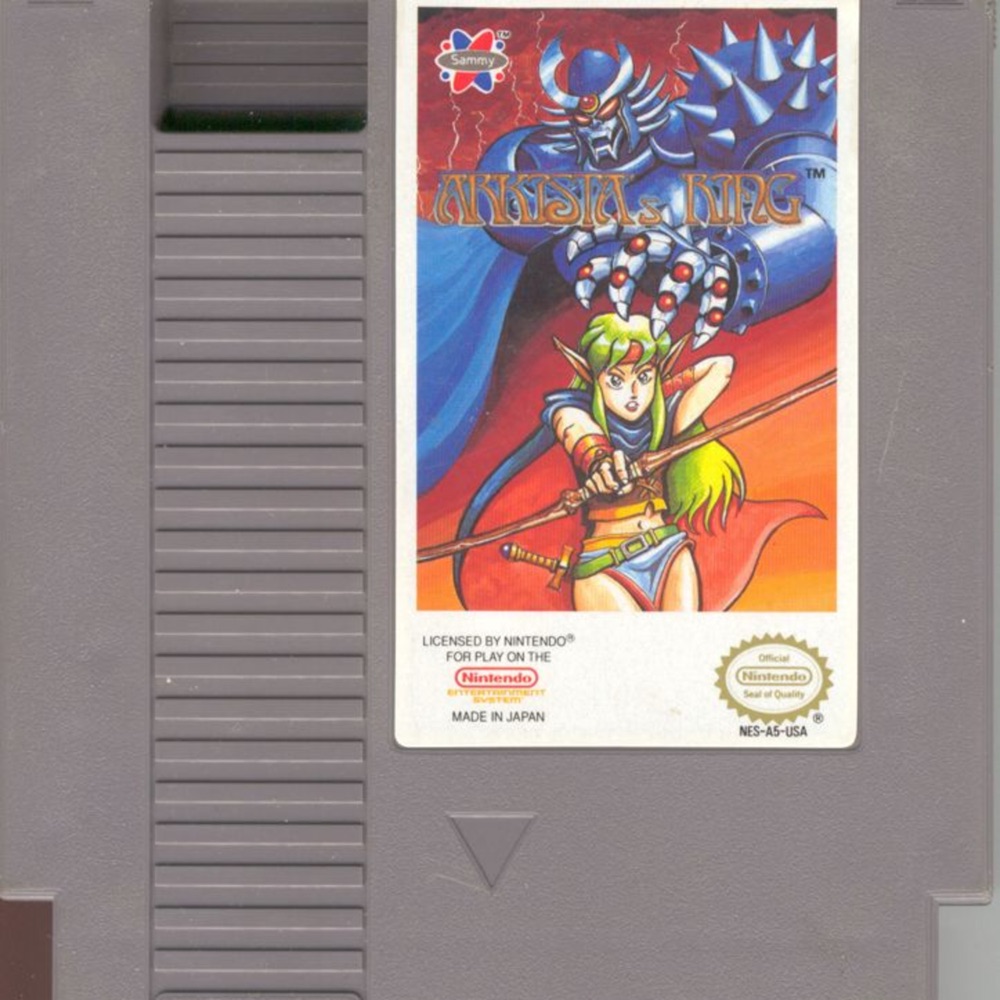
An evil character named Shogun has stolen the Elven ring of Arkista, and in so doing has plunged the whole Elf kingdom into darkness. All the elves hope lies in one elf warrior named Christine. Equipped in the beginning with only a bow, she proceeds to find the ring and restore her home back to normal.
Arkista's Ring promises 125 stages of mystery. Mike and Joe recorded this one with Sean out sick, and the first thing we noticed is that a "stage" here is roughly one Zelda dungeon room. Christine, an elf with a very modern name, clears every enemy off the screen, grabs the key that appears, and leaves through the door. The Shogun has stolen the ring and plunged the kingdom into darkness, though the game is bright and you never see a kingdom.
Why it's easy to settle into
- Comfort food. Joe's phrase. You enter a room, see the enemies, work out how to clear them, move on. It's a few stages on the subway, and with a limited childhood library we'd have gone back to it constantly.
- Unlimited arrows. Christine has no sword, only a bow that never runs out. After Zelda, where you need full health to throw your sword, that was a relief.
- Enemy variety. Ninjas jump walls and home in on you, slow green trolls soak up arrows until you kite them, and skeletons collapse into bone piles. Around stage 30 one room throws six gray ninjas at you.
- Good item count. A fire wand, a holy stick that wipes most of the screen, and a music box (the manual calls it the ninja stunner) that puts ninjas to sleep.
Where it wears thin
- Turning costs a step. You can't face a new direction without moving, so rounding a corner toward an enemy walks you into it. This hurt on narrow, maze-like stages and bosses.
- Not a Zelda clone. It looks the part, but there's no exploration, one staircase per room, and the "puzzles" are a wall of doors with one right one, or a tree that looks different. Joe thought half as many rooms with twice the design would have been better.
- Armor that is just hearts. The HUD shows a helmet, cape, gauntlet, shield and armor, but each is only another hit point. A character screen appears if you press Select between stages, and it does nothing useful.
- Pause quirk. Start pauses, but only B unpauses.
- Repetition. The stages loop fairly early, and Mike called copying and pasting the game to claim 125 stages unacceptable. With no save, five hearts and limited continues, the length catches up with you.
- A tease. One early stage has blocks colored like houses you can't enter. One line of text from a villager would have given us all the story we needed.
The bottom line
Skip it. It didn't make the Essential Games List. Mike called it an early, stripped-down Binding of Isaac, missing what makes that game great and what made the first Zelda great, a one-off minigame today. Joe was friendlier: fun, relaxing and easy, a B-plus for 1990, but nothing to rave about and not essential.
Written from our conversation in this episode.
- Challenge yourself to 125 stages of mystery!
- NES Longplay
- Manual
- Nowadays does 125 sound impressive or monotonous
- I still see very little about this game even when researching for the show. Are we sure this was officially licensed (of course it was)
- The Elven ring of Arkista has been stolen by the villainous Shogun, who has cast the entire Elven Kingdom into darkness. The only hope for the Elves is that their strongest warrior, Christine, equipped with only her trusty bow and arrows, can travel throughout the Kingdom and retrieve the ring.
- Zelda Clone
- It’s just the dungeon part of Zelda and it’s just a ROOM of the dungeon part of Zelda per stage
- Combat change - Bow and Arrow instead of sword. Unlimited arrows instead of limited supply.
- My big gripe - You can’t face a new direction without taking a step
- The object of each level is to defeat enemies until a key appears
- Yet Zelda is known for the puzzles
- Upon beating the game you’re brought all the way back to level 1.
- However, you will find that the enemies are faster and tougher than before. This cycle will repeat until you reach stage 128, which is the end of the 4th loop.
- There is no save feature at all, but you have 10 continues.
- Start to Pause, B to unpause
- EGL
- Arkista’s Ring is a really really early Binding of Isaac and as such it’s missing almost all of the features that make BoI so great. Simultaneously it also misses a lot of what makes Zelda games great.
- NEXT WEEK - Bad News Baseball
- Guys, bad news about next week
Auto-generated transcript. Each paragraph starts with its timestamp. Speakers are not identified.
Arkesta's Ring, challenge yourself to 125 stages of mystery.
And welcome to NEStalgia, a chronological exploration of every NES game released in North America. I'm Mike. And I'm Joe. You still get to do the end, I'm Joe, even though Sean's not here, so that's good. It went back when Sam used to be here, that was always tough, because I think it, for the longest time, secretly, was And I'm Sam. And then I took the title when he stopped coming on so much. Yeah, and you mentioning Sam probably makes people worried that Sean's not coming back either now, but he's just, for the first time ever? I've only got one more to go, and then it'll just be my podcast. Exactly. Yeah, you're moving your way up the line, certainly.
I just gotta take you out, and then it'll just be me. Yeah, and some people think we sound alike, so it's practically already two of us, or two of you, or two of me, depending on which way you look at it. But Sean's coming back, everybody, just so that that's the thing, and he just isn't feeling well, so we're gonna record without him. But he will return, and now we have to do a whole episode where, I don't know, Joe, I guess you have to fill in more voids than you usually do? Yeah, I guess I gotta play Sean.
Yeah, so Arquista's Ring is throwing out 125 stages, and that's an impressive claim back in the day. But what does 125 stages sound like now? Does it sound impressive? Like, no video game nowadays is made with 125 chapters or stages, you know? Like, or does it just sound monotonous? I mean, it depends on what you mean by a stage. And I think once you start playing Arquista's Ring, you realize very quickly that it's not exactly that one stage is like one screen on The Legend of Zelda, but it's pretty close to that. Like, the stages, they're not what we're used to with stages. It's not like a Castlevania stage, and there's hundreds, you know, 100, what's it, 125?
Yes. Yeah, like, it's, they're short stages, and like, yes, there's some game design, but not, I'm sure we'll get into it, but not as much as it would need to be to be like, oh my god, 125 full stages? Like, some of them are very straightforward, very simple. That's a very important distinction that you made there, that this is stages in the sense of, you know, Bomberman levels, and not Castle, not like Castlevania Ninja Gaiden style stages, where there's, you know, an objective and a longer mission. This is really just defeat all the enemies on the screen to get the key to open the door to go to the very next stage.
Very little exploration happens outside of that. So yes, I think even the 125 stages claim, though, in the game is a little bit of blasphemy, not just because the stages don't feel long enough to warrant, you know, being bragged about, but because they also repeat fairly early. So it's not even 125 unique stages, necessarily. The challenge gets upped, but not necessarily the design or the, there's no puzzle in this game to begin with. So nothing else really increases other than the difficulty of, like, what, is it like, I think it takes like 25 stages, maybe, or 30 stages before it loops?
Yeah, I think it's 30. I think when that first castle comes crashing down, that's the first time it loops, right? I think that was 32. 32. Yeah, okay, that makes sense, because you have to do it four times. We'll get into it. Why don't we actually talk about what the game is, so we can paint a clearer picture for everybody.
The Elven Ring of Arquista has been stolen by the villainous Shogun, okay? And I thought it was like, oh, Shogun who? But like, no, it's just Shogun. And I'm not sure, is that, is Shogun a character name, or is that like a type of thing?
Like, Shogun? So I didn't read the manual, I was going to show right now. Yeah, S-H-O-G-U-N. Isn't that like a, isn't that like a, isn't that like adjacent to like a samurai? Isn't that like a- That's what I'm saying, it's like a class, right? It's not necessarily like the name of the evil person. Yeah. Maybe we don't know. Maybe we just know that the evil person is a Shogun. Okay. And that evil Shogun has cast the entire Elven Kingdom into darkness. But you wouldn't know it from the game, because it's very bright.
The only hope for the Elves is that their strongest warrior, Christine, equipped with only her trusty bow and arrows, can travel throughout the Kingdom and retrieve Arquista's Ring. I wonder what Christine's name was in Japan, or like, Christine just does not feel like a, like an, like a fantasy Elven name. It's so contemporary.
Yes. Yeah. And just to add on to that too, I think that for reading that, it kind of felt like a reveal. I was expecting Arquista to be the main character. But of course, that doesn't really make any sense, because you're going to get their ring. Um, but how do you go about getting their ring and defeating these stages and everything? This is a, um, a Zelda clone if it was just the dungeon parts of Zelda, and it was just the room of a dungeon at a time.
Uh, people have referred to this as a Zelda clone. I, when I think of Zelda clone, I think of something more literal, something that actually takes all of the elements, uh, from the inventory system to the map to the, uh, hidden secrets. And the puzzles. This is really just that, um, action adventure part of the game where you're in the dungeons. This has individual rooms that you explore.
You find enemies. They are not, uh, hidden or anything like that. You deal with them most likely one at a time. And when you finally clear all the enemies off the stage, then the key reveals itself for you to collect the key, go through the door, and move on to the following stage. This is all done in a top-down fashion. This is all done in a top-down fashion, just like Zelda.
Uh, but unlike, uh, Link, you know, Christine doesn't have a sword. Christine only uses her bow and arrow. And Link had a bow and arrow and a sword. So, already kind of playing with a disadvantage. Yeah, well, you know what, though? I'll just say one thing. That's probably, like, the one thing that I prefer, uh, is Christine's bow and arrow to Link's sword and bow and arrow. Because you need to be full health to, like, to just be able to consistently use your projectile.
You know, because you need arrows, right, in Legend of Zelda? Oh, you're, you're talking, yes. Yeah, you need, you need arrows to, to shoot. And Christine, you have unlimited, yeah. Yeah, I always love when I'm full health when you have unlimited, like, sword throws or whatever it is. But in this, it's just like, I'm not good enough at this kind of top-down NES game to just, to stab with my one, you know, one pixel sword or whatever it is. So, I did appreciate the, the full projectile, uh, available for Christine. Like, you were mentioning the combat change here with the bow and arrow.
There's, there's a different thing, and I think this is my biggest gripe about the game. It's one thing to have the projectile be the main attack, and, you know, this way you can deal with things at a distance. And obviously, they have projectiles, too. But there's this, uh, you can't face a new direction without taking a step. And so, in other top-down games, if you just want to, like, shoot to the left, you just hit left on the D-pad, and your character doesn't move. They just face the left now, and then they can shoot at anything to the left of them.
In Arquista's Ring, Christine requires to take that step in order to face that direction. And I don't know why, but this tripped me up a number of times when I was, like, first starting the game. I was just taking unnecessary damage, because you almost have to, like, think about where the enemy's placement is. You're taking a step to, you know, land in their direction, and then you can fire. So a lot of times, you just happen to, like, walk into an enemy.
Did that happen to you at all, Joe? All the time, especially on boss battles. But also, like, you know, a lot of, I'd say most of these levels are very, like, traditional maze-like. You know, and not in the sense that, like, the mazes are difficult, or, like, it's hard to find your way through. But it's like, you have narrow, Christine-sized hallways to walk through.
And there are a lot of times where it's like, yeah, you're coming up on an enemy that's around a corner from you. And all you need to do is walk to that corner, turn, and shoot. But walking to that corner and turning automatically makes you walk over the enemy instead of just turning.
Sounds like a minor thing, but that did happen to me a lot. Like, you'd have to, like, walk and, like, turn away from the enemy, walk away from the enemy, then turn around and walk back a step, and then shoot. Which, honestly, just gives the enemy a lot of time to hit you.
That seems unnecessary. And since it's a top-down game where you can only move in four directions, there's really only two choices for the developer to make in terms of map layout. And that's either incredibly spacious, where everybody just kind of runs around the screen, you and the enemies. Or incredibly claustrophobic, where you're just kind of following down a path, and there's an enemy in your way, and you kind of, you know, pop out, shoot them, go back into the other hole, pop out, shoot them, and deal with them that way.
I wasn't able to think of a solution for this, because, again, you can only move in those four directions. But certainly, they could have played with the idea of open and narrow a little more than just, in this stage, it's, you know, it's sprawled out. In this stage, it's very narrow. Yeah, I mean, I think that, I think that that is one of the, one of the few things, to go back to what you said earlier about people saying this is a Zelda clone, one of the few things that makes this stick out as very different from the Legend of Zelda. Where, like, I don't know, every dungeon in the Legend of Zelda, even though, like, yeah, they're very, like, simple rooms, they all feel very intentional.
Whereas these, they do feel like there's a level of intent, it's not just random, but I feel like maybe, maybe you could have done half the amount of dungeons and spent twice the amount of time on each room. In, like, designing, because there are, like, for every one that is interesting, there's one that's like, okay, this is just, you know, four blocks and five enemies, you know, here. And granted, I only got to, like, level 40, which sounds like a lot, but it's really not in this game because they're so fast. But, um, it's like, maybe they get, like, way more complicated. I have heard that this game gets, like, really, really crushingly hard later. So, like, maybe, I don't know, the jury's out on, like, the end game of, of Arquista's Ring.
But that, coupled with the, the fact that, um, there's actually no exploration in this game. Not, not, you know, not that they're trying to have exploration, it's fine, but, like, that means to me immediately this is not, I would not consider this a Zelda clone. I did initially when I first turned it on, I was like, well, this looks like Zelda, but it does not give me the elements of gameplay that I think Zelda, that, to me, is, like, the major parts of Legend of Zelda. It's, like, exploration and freedom.
Right, and you think it would be easy given there's, like, a whole implied elven kingdom and an evil villain and, like, the cast into darkness. Like, what does that look like as you're going through it? But instead, that part's just, like, implied on you, whereas in Zelda you saw it. And just to further, you know, you were talking about that in Zelda the dungeon rooms feel purposefully designed. And that's as simple as just, well, because you're moving from room to room trying to find the boss in that dungeon. Whereas in this game, there's only ever one stairs to take, and that stairs will take you to the next screen.
You don't, you know, you don't get to decide, like, oh, you know, they're giving me the choice of north and west. I think I'll go north this time, right? Like, in Zelda, you're given that option. But also the rooms feel purposeful in Zelda because there's puzzles and secrets. And if there's neither of that, usually it's, like, an extraordinarily tough enemy.
In this game, there's no puzzles whatsoever. And so I think that's actually what stops it from being the Zelda clone more than even just the open world exploration part. I just think, like, where's the anything other than just shooting enemies off the screen? Like, it feels like at this point the bow and arrow could be anything. Make it a gun, make it whatever. It's, like, it just doesn't feel like a real world in this game. Yeah. I mean, I don't know if I would say that there are no puzzles whatsoever. I think a lot of this, a lot of these rooms can be categorized as very easy puzzles.
You know, like, there are things where it's, like, oh, there's, there are hidden doors that, like, look a little, there are, some of these trees look a little different than others. And if you hit, if you hit the one that looks wrong, it'll open up, like, a secret door. Like, it's sort of, like, a puzzle. It's not, like, you know, it's not a crazy brain teaser. You're not going to be, you know, you know, you shouldn't go, like, apply for Jeopardy! because you, because you got, you know, through one of these puzzles. Like, they're very simple, but, like, they're puzzle-y. They just don't ever feel like they're designed in a way to be, like, really challenging in the puzzle element.
Would you recommend people play the Jeopardy! NES game before they apply for Jeopardy? Yeah, if you can beat the Jeopardy! NES game, then you are, you're Ken Jennings. .
there's also you said you got to level 40 there is no save feature in this game and uh that sounds not like a big deal in in the stages but keep in mind 125 stages and only what is it uh five hearts uh throughout so uh yes they give you continues but even those are limited so it does feel like you know even if the game itself isn't crushing the length kind of eventually will get you but so
those passwords though they they are other passwords in this no passwords i don't think there's passwords you know i'm thinking of because i play also played next week's game and i'm thinking oh yeah well you know i can understand that you could get bad news bear uh bad news bears bad news baseball confused with our keys just like i got bad news baseball confused with bad news bears well bad news bears though that makes sense to confuse with bad news baseball just because so uh going
back to the question then now that you've been proven wrong uh did it was it the length that got you to level 40 or did you just say i'm done playing this game uh what what caused you to turn off around there i was not sick of the game i think it just i mean you know i just that's just how far i got you know as i was playing like i'm not opposed to playing more of this game i feel like we're being
kind of negative about it but like the game is at least so far it's kind of cozy i don't know if that makes any sense where it's like yeah it's not it's kind of like a turn your brain off and like play but it's like still decently fun like i'm like i enjoy getting into a room and being like oh what are these enemies how do i take them out like it's just never like it's not something i'm gonna
be like oh like you gotta like we gotta sit down and play this game i never feel like oh i i'm craving to play more of this game but if it's like oh i'm just bored right now like man i'm really getting to my essential vote right now that's not what i'm meaning to do but like i i i guess i'm trying to say like i didn't get sick of this game i feel it's it's just it's like comfort food game almost like i feel like if i had this when i was a kid i would have played it all the time and probably
never raved about it but like it just it's just fun it's easy enough and there's few obstacles in your way other than the enemies who aren't exactly um i don't know they're not really thinking they're not really alive right they're just moving in any given direction they don't they're not even coming towards you necessarily yeah but there are like again you know only getting to level 40 i don't
know if maybe maybe i maybe i capped out and it doesn't get any better but i i did find that there was like a gradual progression of enemy types like i was just starting to get well i think i was like a few levels past like the introduction of like the ninja characters and then like which who like jump over walls and they can basically just move around the level freely and they're very fast and they like
they feel ninja like and the way they attack you and like you you have to think of them totally different than any other enemies you'd been facing before that and then then there was also around the same time these giant green like troll looking enemies they're really slow but if you if you've got your basic arrow take like a thousand hits to get rid of and you you got to kind of sort of do
like this set up this chase and attack you know thing where like as they chase you you get a far enough way for them shoot until they get too close and then run away like i felt like enemy variety was nice yeah and actually you know you're reminding me of the green ninjas um you know like yeah they are they are unique in the in the way they behave in the game and probably just in these kinds of games
like we haven't really seen an enemy do something like that however i guess what i meant is just that i don't know they don't feel like they're homing on you or anything they feel like they're just kind of on the screen and it's up to you with the bow and arrow to run into them uh if that makes sense like did you feel like the enemies were were thinking i mean i felt like some enemies were
exactly like you described there are the skeleton guys that just kind of walk back and forth but they have a different gimmick where like you they're they're basically the the what are you dry bones from mario like you you defeat them they fall into a pile of bones so it's like that's why i was okay with them not like being smarter but the ninja things particularly i felt that as soon as one
basically i considered it seeing me like as soon as one was on screen they honed in for me and same thing with um there are these other like it's almost like a palette swap of the ninjas but they're like they're like gray or white and there's one level like around like 30 where there's just like there's like six of them and they are all honing in on you and you have to really think about how you're
going to like avoid them because they're they're probably exactly as fast as you but i i guess my long story short i i found that certain enemy types definitely honed in right towards me those those giant green trolls i just talked about too but only because they were so slow it didn't really bother me as much but and all that to say that just you know i guess it doesn't really matter to
me either because they still pose a threat given that you only have five hearts uh but that it might that might be attributing to the cozy feel of the game that uh for the most part you're just kind of going through these dungeons with nothing else than cleaning up uh the the enemies and so it becomes this i mean i believe she's just uh you know she could be the cleaning lady of the dungeons and she's
just coming out and taking care of these people and it's just satisfying to remove these characters off screen rather than do anything else right like you you don't have to think about what you're doing in this game it's almost arcade like after a while especially given the short nature of the stages that it's just okay and i cleared out that wave and they shouldn't be calling them stages it should just be wave one wave two wave three but of course they're calling them stages because uh graphically and the layouts are different too but it really does feel like it's just okay bring on the next wave of enemies yeah yeah i mean that's exactly exactly what it is and but there is you know there's like
it's weird because i never considered the like quote unquote puzzle elements bad but they are just never memorable or good like at least so far we're like there is the element of like you go into the next stage it's like you're in this dungeon with 30 doors and you got to figure out which one is the right door and they do that a lot that's kind of almost like they're it feels like it's like the they're like cheap way to make a puzzle is like by making a bunch of doors and not letting you know
which one it is you know it's like oh it's a puzzle because you got to figure it out so there's things like that where it's like it didn't bother me it was like still felt like a decent part of the gameplay to try and solve this but i never had to turn my brain on you know to figure that out but it was like that was the other element in each thing was like how am i going to get out of this dungeon because sometimes it's not even a door sometimes it's a tree or something that looks different than the
others that like leads to the next stage joe did you ever pause the game i'm pause sound joe of course i paused the game uh so did you notice the weird thing about pausing this game um all i noticed that there is no pause sound and the music just keeps going but was there something else there was something else but you know i did not play this on official hardware so i'm hoping you might remember to recall this uh there's no sound it's that when you pause you have you press the start button but you don't unpause with the start button oh yeah yeah you unpause with b and
i don't recall a game that's ever done that where the unpause button is different than the pause button but also b is the pause button too yes but it's it's it's the pause button in that sense because it lets you access your inventory yeah but which does which functionally does the exact same because because the start button also lets you access your inventory so it's like the the start button is pause only and then the b button is pause and unpause for some reason yes yes and the b button works for me as the as a pause because it's technically like an actionable button that you're entering some menus for whereas
like the start button at least obviously you know in in modern video games it's more useful but the start button in an as games for me is associated with pausing so it's like all right cool this time they get a pass for including it in the inventory thing i just thought it was really weird that start wouldn't also just unpause the game yeah like how did they program this that they or did they did they notice like they i mean obviously they noticed but like they wouldn't bother to fix it they'd be
like no we don't want people to unpause with the same button they yeah yeah i don't i don't understand it seems almost like a mistake and so using the b button version to um accept your items in your inventory to use them uh put it putting it another way uh that's important to note that there are other items you can find both that are weapons and true items uh things you can uh wear and such did you
think that this was enough uh for the game to switch up from the bow and arrow mechanic um you know there's the fire wand that lets you shoot fireballs instead there's uh the holy stick which just uh destroys most foes on the screen you know i think that without like introducing another type of weapon like a sword or something this was probably the best way to go about it yeah i thought that this the the amount of inventory options was the amount of inventory options was perfect in my opinion
for the first 30 levels i think when the so honestly again having only gotten to level 40 i didn't really realize until watching some footage that like i had pretty much played seen the whole game seems like because of the way it loops and that like i am starting to think that like if i were to play 125 levels of this i'll i would probably need something else to change up you know the the levels the enemies or the or give me new power-ups give me something new in later levels um but to to the
to speak about the power-ups i did think that in those in the time that i played they it was i thought it was very you know fun and well balanced uh granted there is one power-up that i don't fully understand what it does there's that one wand that does destroy a bunch of enemies on the screen but there's like another like wand like winged wand looking thing yep that i would always use it and it would just flash and nothing would happen yes uh i think it depends on which type of enemies are on
the screen and i don't know which kind of destroys but um it's not a glitch it just uh i think it takes down like undead foes uh yeah okay i thought it was something i probably should have looked at the manual but um but yeah the other things i mean i love the i mean my favorite obviously is the like scepter that shoots fireballs or whatever like dale but then there's also there's also the um the music box that puts i think just ninjas to sleep yes uh very is that what it is it's a music box
i think that looks like it's like a music note i may i might be thinking it's a music box specifically because in super mario brothers 3 the music box puts the hammer bros to sleep but it looks like a little music note with a crank or something sure no i mean it's gotta it's gotta be something right it's not a taser yeah because it's called in the manual the ninja stunner but um i don't think i don't think they have tasers in the elven kingdom yeah you were talking about maybe that they needed a little more variety and and i kind of feel like that's implied too on that character screen um i don't
that you see where it's like it's got her portrait it's like name christine type elf sex female from arkista and it's like okay not expecting some role-playing game stuff where i'm gonna be able to like change my type or where i'm from blah blah blah like i get it it's a set game but then there's this whole like what kind of bow you have your armor set like what's in your bag and yeah what's in your bag changes based on what you pick up but it's not like there's shops in the game and your armor doesn't change just your bow and arrow changes but like to to always be wearing the leather armor it's
either why bother showing me this on this screen or it should have been i'm i'm what you're talking about just the bottom heads-up display no there's like um i don't even know what triggers it but there's a there's like a character screen with like a portrait of christine and everything i don't think i ever saw that but it was a was it a button that you hit or was like between levels it's like between levels i think it's like after you i'm pretty sure it's after you defeat the um the boss yeah like after you defeat a boss you see that um it exists it's not uh it's not i'm not making it up i promise
um yeah that's crazy maybe i'm just misremembering him but um but but yeah i mean even even the bottom heads-up display has all these bits of armor and like your helmet and your cape and your gauntlet and your shield and your armor and to what i can tell those are just kind of more hearts and like am i wrong about that yeah like they just function as more health but not even that much more health it's not like you you know it's not like you're getting so much stronger by the end of the game no i in fact i was saying like i was thinking that like when i'd have the five hearts and then i'd have the
the the armor the shield the gauntlet the helmet and the cape it felt like basically i had 10 hearts like i thought that those like it was weird to me for them to show it down there as if they're like oh this is your defenses when really they literally act exactly as just more hit points it's like like i'd like to describe it it's like if you have all your health and all that armor then you get hit once like the first piece of armor on your heads-up display will blink out like it's a heart
and it's gone and then your helmet blinks out and then your gauntlet blinks out and then eventually it gets to your hearts and to to any to to as far as i can tell they do not behave any differently than just an extra heart container in zelda which is fine i mean like i guess if it's like oh you had 10 hearts and you decided to turn five of them into armor before you released the game just for some flavor that's cool i guess but like when i see it there i'm i'm disappointed when i realize that it like doesn't do anything that's functionally different than health
joe i was able to solve the character screen oh good what's funny is neither one of us is wrong okay yeah it happens after you finish a stage but it also requires as you implied a button input in between stages so when it shows you you know like stage 22 if you press the select button only while that is up that's how you get the character screen and that's why i must have just done it as an accident or i must have read the manual or something um because it just happened to me and i um
i know i made note of it but again it's not anything useful it's more like a cool flavor text thing yeah i mean so like what it just gives you basically the information that's on screen at all times just in like a nicer format is that yeah like yeah with with text descriptions of them and stuff and text descriptions about christine but again these are you know that's me being kind to the game it's being very uh very minimal in what in what information it gives you and so i do kind of wish that like
hey if you're gonna build this kind of feature into the game like make it do something more yeah yeah because i all right while i was playing this like a lot of the time i was thinking like i don't know anything about what's going on plot wise here and i in the end didn't feel like i needed to know the plot of this game but i i did i do kind of regret not reading the manual and i'm curious like flavor text without any flavor text here like having read the manual did you is there like a plot going on is something is there anything that you should know that like that gives you any that elevates this experience more from like a story standpoint the manual uh which usually i get from
the game is a foot arcade.com which i'm not sure what that means the game is a foot game is a foot is i believe a old sherlock holmes quote okay there we go is that like like the game is on someone's playing this game with us that helps solve that also featured on a season of survivor i would have thought a season of doctor who probably that too the the manual is scanned so poorly that uh you know
some of the text is too jpegged to like fully read but i can tell you that it has a nice map of the elven kingdom something that would have been nice to see in the game uh it has uh the legend of arkista which is probably the closest it gets to the legend of zelda um you know i don't know i don't even know like that they should have just named their game that then right if they're gonna be that
brazen about it but uh that it just tells you about uh how how she like became notified that this was going on and her name is christine in the manual so it's not it's not a mistake or anything that her name is christine and yeah it says suddenly the doors of the town hall swung open so these elves like have a whole society you know you wouldn't know it from from when you're exploring in this game through 125 stages but there's a whole you know there's a whole society and government and all of that
going on in this world yeah it's just over there it's over where you don't you don't see it's right off screen you know but it just makes you think right like how many other video games did we play where there were just like functioning societies and governments going on like did you did you ever think about that in um i'm trying to think of like a really old game that we would have played but
yeah like in clue clue land right it's like for all we know that's their job and then they go home and they're like you know how was work honey you know and it was like oh i got swinging around yeah it's like oh i got really sick at work today i swung too much um yeah yeah i wonder if you know again maybe maybe the manual maybe there's some deep lore for was there was her name clue clue
i don't know um the clue clue characters names but that's a good that's a good trivia thing we should find that out yeah uh i was also thinking of for some reason i maybe it was like the lack of puzzles in this one i've had solomon's key on my mind for most of this episode oh yeah there's got to be a functioning society in there right oh absolutely solomon's key and also the uh adventures of lolo
yeah adventures of lolo obviously like yeah if there's if there's a castle yeah there's a society yeah right exactly um and yeah solomon's key i mean even if there's a key then there's a there's locked doors somebody made these locked doors you know so that that's a that's another question uh that falls into this game but also ties back into the whole zelda clone argument
who's locking the doors and leaving the keys is that the mystical magical part of things or is that implied that like ganondorf or in the original legend of zelda ganon and then here shogun are like saying like yeah i'll let you catch me if you can well is it like is it that the you know because of course if you're gonna lock yourself somewhere it needs to be possible to get there and to get out of there
so like you need a key out there likely and is it possible that it's at least in this game that the enemies you're fighting are like are like shogun's lieutenants and and if you fight enough of them you know one of them will drop the key even though it's obviously the key doesn't drop out of the enemy but it's like oh you've beaten enough of them that you've been able to get the key from them to move on like like they're protecting they're guarding the the way forward
okay and i've never thought of it like that i always thought like you know the real devious thing to do would just be like leave just enough keys that it seems like they can complete the dungeon but just take like one or two right yeah you actually just start in one door right behind the starting screen that doesn't have a key just stay locked in there and make them go on this long 125 screen
journey that sounds like a great indie game move you know like just like the realization that you have to go all the way back to the beginning now to fight the boss who was always behind you yeah like if you had just gone backwards that first screen you would have beaten the game already it's like in is it far cry where oh yeah you could just shoot him right at the beginning of the game i think there
was there was that but there was also something where it was like someone says at the very beginning of the game someone says like wait here i'll be back in i'll be back in an hour but then like you know you're waiting on the couch you get up and you walk around and then like some crazy shit happens and you get kidnapped or whatever it is that happens i've never played a far cry game oh yeah i think that was i think that was far cry 4 yeah if you just if you do just wait on the on the couch for an hour and don't touch the controller apparently the guy comes back and is like all right thanks let's go and like the credits roll yeah something like that that's great that's a nice touch um by the way
most important piece of information we're going to give people today that fish uh believe you believe it or not that fish uh from clue clue that we've all been talking about yeah that balloon fish apparently did you know that the character in uh clue clue land is a balloon fish i didn't know we must have talked about that on the on the episode when we were in our prime and then if you had to just if you had to guess the sex of the titular character i know it's a female it's a female balloon fish
named bubbles i i was gonna say bubbles too i like i feel like that stuck in my head a little bit but it's easy for me to say that now after you have revealed that it is bubbles of course yeah no you were always going to say balloon if you can edit this into earlier right here i'll go it was it bubbles there you got that in earlier and then edit out this part it's just that simple folks the magic
of podcasting um but uh i do want to point out though in arkista's ring early on in in the loop uh there is a level that has houses it's like a little village you can't go in any of the houses there's no people or anything but like it's it wants you to feel like oh this is like a this is like an open world rpg there's there's little they look like little rpg houses but what would be the
harm in just being able to go into one of those houses and having the character be like you know little text dialogue help us right like not even that much text right like yeah just adds some kind of flavor even just being at the very very beginning of the game even if you just want to put that one house there these two houses and it's someone saying like yeah just say shogun has you know
cast the world in the darkness we need your help like give me that that's all the story i need for this game but it would have been nice touch since you put the houses there anyways yes yeah like the houses that are just blocks they're just blocks that are colored in like houses man this game is such a tease i i was his character screens yeah right i mean i did think when i first turned it on too like oh this is going to be this is i don't know why it's got like an accent there but this is going to be my type of game not that it wasn't but it's not like it tricked me into thinking it was going to be something it's not but you had never heard of our keys does ring before we played it this week right
i feel like i've probably heard of it only in like looking ahead at the podcast and it's a it's a it's an enticing sounding name so i've probably like looked probably clicked on the wikipedia article before interesting because see i i do think that the name is a little intriguing and that's part of the um curiosity of why i never see it mentioned either like you think it would just be a name that people would remember or whatever i never heard about this game i'd never seen anybody mention this game and in researching this episode for the show i saw very little about this game like i said the manual was barely scanned in on moby games the like you know the video game database of of the
internet uh there was not even a shot of the box like you can't even i couldn't get the box art on there they just uploaded the cartridge it's like where's all the information on this game did it actually get released i i actually meant to bring up earlier and now it's been so long probably neither of us can remember but did you read the back of the box at the beginning of this episode i did it was challenge yourself to 125 stages okay okay i'd like total i blacked out for that i was i was you know still i was thinking about sean and do you know how i found that back of the box uh you had to mail in uh a request to nintendo it would have been faster to just buy a copy on ebay sure no doubt but
instead i found someone had uploaded both the front and back of the box as the like still image on the youtube video for the official soundtrack of arquista's ring and so i had to like zoom in you know command plus command plus like get zoom in just to see like wait what does it say in the back of the box and so i was like all right i'm just going to the front of the box and the front of the box says challenge yourself to 125 stages of mystery well it's funny that you went through all that work and all it was was probably what you would have come up with if you had made it up right right yeah do they even call it stage 125 no right like after stage 30 or whatever it just loops back to stage one right
no it does it does it does say like i'm like watching a video right now it says like stage 58 and it's oh okay it's also what was stage you know 27 so it's like that math's wrong but we've been talking about the game for so long that i forgot what it is yeah well yeah i'm forgetting features legend of zelda i think yeah right right well those bats do look very close to the bats in legend of zelda so i can understand a lot of confusion i mean it i don't want to i don't want to assume this because you know there's only there's only so many styles you can do on the nes but it does feel like they wanted people to associate this with the legend of zelda based on the art style absolutely
no doubt in my mind and there's one thing we always try to do in this in these episodes is associate the actual show with the most important part of the show the essential games list
arkista's ring is a really really early binding of isaac and as such it's missing almost all of the features that make binding of isaac so great not even the roguelike features i'm just talking about the variety and the anything can happen possibilities like this is yeah you're just going from stage to stage and everything and you're just focusing on the action portion of what makes zelda games great but is that really what makes zelda games so great because if so i also feel like arkista's ring while missing what makes future games like binding of isaac so good it also misses a lot of what made
the legend of zelda one so great uh so this game just kind of falls as like a uh you know into the category of mini game in this day and age it must have felt surely like a full game back in the day but now it really just feels like something that is uh you know a one-off play and anybody can experience it sure but what do you really walk away with and so for that reason it is not on my essential games list joe i'm surprised to hear you say that there was you could find so little about this game online because i think this game has all the makings of what back in 1990 would have been
a b plus you know i think that it was it is like i i can't get away from this phrase comfort food like it feels like it's just a fun game to turn your brain off play it's not going to get too i mean i apparently it does get really challenging later but it's like not too challenging in in the puzzle element and it's you're just doing this simple task over and you do one stage at a time you sit down for a couple stages uh and and like that's it it's just you take a break you know if you played it now you'd
play it on the subway but so like i think that this even today is fun and i would probably rate it a play it but like yeah there's just not much there's not much to it that's like making me want to rave about it or like that it's going to stand out but like you know if if i were a kid in the 90s and i had only a limited number of games this would probably be one i would go back to a lot when i just wanted to like hang out uh hang out and chill yeah so overall i mean i think that this is this is a play it but one thing that i'm forgetting to mention is that i think it's just actually just not acceptable
to to make a game and then copy and paste it five times and then call it a longer game so that is another major point against it so definitely not essential but you know a relaxing fun game joe you bring up a great point about uh just like childhood games and what you can do when you have unlimited time to play video games like yeah this suddenly does become more acceptable and more like well i know i'm good at this so i should keep playing it you know uh right whereas i'm not sure
like you know ghost and goblins is on is on the spectrum of like yeah with unlimited time like kids would enjoy that game too but for like a totally different reason of just like yeah how much further i can get this time right whereas this game is more like yeah i mean it feels good to clear stages so let me just keep doing more of that whereas like nowadays when you're working for most of your life and then you have very little free time on the weekends and ps5 games exist it's hard to
justify going back to orquista's ring right and and not to just make the same point i just made again but like the other thing that hurts that is that like the the point in for this of like progressing progressing would be to see what's next like that's what's fun and if like it's just going to be the same stuff you already saw yeah the game ends at level 30 joe i have some bad news about next week
oh no we're gonna be playing bad news baseball uh i knew it and uh for some people that might be good news uh and for us it kind of is because that means another episode of the show um is that good news do we want to keep doing the show sean's out now should we yeah i'll keep doing i'll try and convince sean to come back okay i'll see probably will take me a week so so don't expect next week but i bet the week after i'll get them back all right and who knows it might be good news that we play bad news baseball you