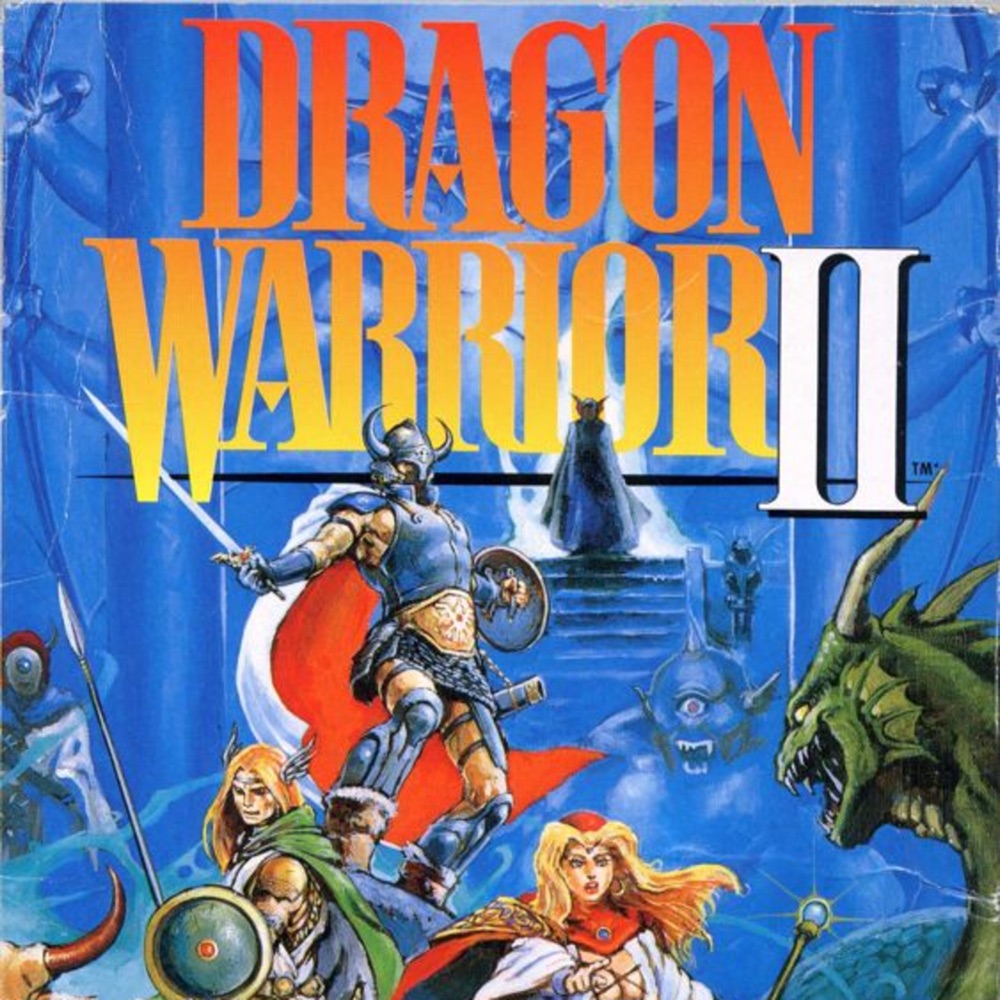
360 · Dragon Warrior II
Dragon Warrior II is an early top-down RPG that expands and improves on its predecessor, Dragon Warrior. Taking the role of a descendant of Erdrick, the player once again ventures forth in an effort to save the world.
Mike and Sean took this one, and the hardest part was deciding how to judge it. It was made before Final Fantasy, but in North America it landed in 1990, after Final Fantasy had eaten much of its lunch. We agreed to judge it as the 360th game on the show and not keep saying "Final Fantasy did this." It is set 100 years after the first game, you play a descendant of Erdrick, and the wizard Hargon wants to summon the demon Malroth and end the world.
What it gets right
- Real upgrades. There is a party, groups of enemies, a ship, and no more stare button.
- The enemies. Akira Toriyama's designs are the best we've met in an RPG. A skeleton strikes a pose with a bat crest on his shield, and bat-baboon mashups made us laugh.
- Designed encounters. Army ants call for more army ants and the heel squid keeps peeling. A wasted attack on a dead enemy rolls over to another target.
- Three party members. For Mike, three was exactly what his head could handle, and magic is forgiving, with enough MP to keep casting.
- Joining the party. The prince turns up by accident after you circle the map, and the princess is a dog who follows you until you turn her human.
- The tower jump. With the right item you leap off the top instead of climbing down.
Where it falls apart
- Grinding and encounters. Entering the overworld from a town counts as a step, so you can be in a battle before you move.
- Black battle screens. Multiple enemies cost the landscape backgrounds, so fights look like an Apple II game.
- Hidden things. The Moonbrook mirror sits in a poison swamp you search blind, and we found no hint for it in the game. The inventory is tiny, and a full pack means a chest's contents are simply gone.
- The difficulty cliff. Around Rhone you need to be well past level 25, and the earlier enemies don't pay enough to get you there. Mike read that development started in July 1986, slipped to January, and left about five weeks to finish and playtest, which would explain why the start plays so smoothly. Enemy spells like Defeat and Sacrifice kill a member or the whole party.
- Silent characters with names. The prince and princess are named from what you call your hero (Sean's hero was Paco). They never say a word.
Beyond the game
The Super Famicom remake rebalanced things. The first Dragon Warrior sold so poorly that Nintendo Power gave it away with subscriptions.
The bottom line
Skip it. We both voted it off the Essential Games List. Sean liked it more than Dragon Warrior and parts of it more than Final Fantasy, but called it bare bones and disrespectful of your time. Mike never felt the sense of adventure the box promised, only the challenge. We are hoping Dragon Warrior 3 changes the formula.
Written from our conversation in this episode.
- This is a role playing game filled with adventure and challenges
- TITLE SCREEN SAYS: PART 2
- Plot Summary of Dragon Quest II:
- Set 100 years after Dragon Quest, the story begins with an attack on Moonbrooke Castle by the wizard Hargon, who aims to summon the demon Malroth to destroy the world.
- A dying soldier escapes and warns the kingdom of Midenhall, prompting the king to send his son, a descendant of Erdrick (Loto), on a quest to defeat Hargon.
- The Prince of Midenhall starts his journey alone but is joined by two relatives:
- The Prince of Cannock, who was also tasked with stopping Hargon.
- The Princess of Moonbrooke, initially cursed into the form of a dog during Hargon’s attack, is restored to her human form.
- The trio secures a ship to explore new continents, including Alefgard, the setting of the original game.
- There, they meet the grandson of the Dragonlord (the first game's antagonist), who reveals the need to collect five crests scattered across the world.
- The crests are used to create the Charm of Rubiss, a magical item necessary to overcome Hargon’s illusions.
- The heroes venture to Hargon’s castle in Rhone, where they defeat him.
- After Hargon’s death, he sacrifices himself to summon Malroth, but the heroes successfully slay the demon.
- The Prince of Midenhall returns home and is crowned the new king.
- Key Features of Dragon Warrior II
- NO STAIRS BUTTON
- Party System: A significant departure from the solo adventure of the original, Dragon Warrior II allows players to control a party of three characters. This party typically consists of a warrior specializing in strength and combat, a mage focusing on magic and spells, and a balanced character with a mix of both attributes.
- Based on the name you choose for the Prince of Midenhall, the Prince of Cannock's name is selected from a list of eight names. They are Bran, Glynn, Talint, Numor, Lars, Orfeo, Artho, and Esgar.
- Her name and stats are determined by the name the player chooses for the Hero. The Princess' name is selected from a list of eight names. They are Maria, Elani, Ollisa, Roz, Kailin, Peta, Illyth, and Gwen.
- Expanded World: The game world in Dragon Warrior II is significantly expanded compared to the original Dragon Warrior. It features multiple continents with diverse landscapes, separated by vast seas that players can traverse using ships. This expanded world design encourages exploration and a sense of discovery as players navigate through different terrains, encounter new towns and villages, and uncover hidden secrets. The increased scale and variety in the game world contribute to a richer and more immersive gameplay experience.
- Exploration:
- Players can explore fields, caves, towers, seas, and dungeons.
- Open-world exploration is enhanced by the addition of a sailing ship, which allows landing anywhere.
- Non-linear gameplay, particularly after acquiring the boat.
- Going back to the continent of Alfgard where DW1 took place
- Exploration:
- Ship Travel: As players progress, they acquire a ship that allows them to traverse the seas and reach new continents and islands. This opens up new areas for exploration and adds a layer of depth to the gameplay.
- Combat: Introduced groups of monsters in battles, expanding from the one-on-one format of the original. But we lost the landscapes for a black screen
- Amazing Enemy sprites. Great designs and very dynamic poses / comedy
- Still battling nothing if you kill an enemy earlier
- You really lose sight of the story with all the grinding. Sidequests nowadays are a joke about delaying the ending, but grinding in these older games is way more mindless.
- Spells and Abilities: Dragon Warrior II boasts a wider array of spells and abilities compared to the first game. These include offensive spells for combat, healing spells for recovery, and utility spells like teleportation for convenient travel.
- Enemies have spells too like the defeat spell which automatically kills a party member
- Sacrifice is the absolute stupidest idea for an enemy spell, Enemy kills himself but it also kills your entire PARTY?!
- The Final Boss can heal himself
- Late game very grindy
- Enemies have spells too like the defeat spell which automatically kills a party member
- Mini-games like the Lottery Ticket system for a game of chance.
- What Makes it Unique/Different from Final Fantasy I?
- Dragon Warrior 2 (January 26, 1987) releases before Final Fantasy 1 (December 18, 1987)
- Simpler Class System: Dragon Warrior II assigns set roles to party members, whereas Final Fantasy I allows for customizable party compositions.
- Combat Simplicity: Battles in Dragon Warrior II are more straightforward, lacking the elemental weaknesses and tactical depth of Final Fantasy I.
- World Structure: Dragon Warrior II has a more connected overworld, while Final Fantasy is segmented by key story events that unlock new areas.
- Moonbrooke's Fall:
- The game begins with Moonbrooke Castle being attacked by Hargon’s forces.
- A wounded soldier escapes to Midenhall Castle, informing the king of the invasion and the rising threat of Hargon.
- The Prince of Midenhall's Journey:
- The player, as the Prince of Midenhall, sets off to stop Hargon.
- The prince’s first task is to find and recruit the Prince of Cannock, another descendant of Erdrick.
- Reuniting the Heroes:
- After locating the Prince of Cannock, the duo searches for the Princess of Moonbrooke, who has been cursed and turned into a dog.
- The heroes break the curse and form a party of three.
- Gathering Sacred Crests:
- The trio must find five ancient crests scattered across the world.
- These crests are essential to gaining access to powerful tools to defeat Hargon.
- Unlocking the Sea:
- The heroes acquire a ship, enabling exploration of a vast overworld filled with islands, towns, and dungeons.
- With the ship, they locate key items and crests in remote locations.
- Confronting Hargon’s Forces:
- The party ventures into increasingly dangerous areas, including the Cave of Rhone, known for its challenging design and powerful enemies.
- Reaching Hargon’s Citadel:
- The heroes navigate Hargon’s fortress and face his minions in grueling battles.
- Final Battle with Hargon:
- The party defeats Hargon, but his death summons Malroth, the God of Destruction.
- The final challenge pits the heroes against Malroth in an epic battle.
- Victory and Peace:
- With Malroth defeated, the world is saved from destruction.
- The descendants of Erdrick are celebrated as heroes, and peace returns to the land.
- Memorable Battles
- Malroth (Final Boss):
- Malroth, the God of Destruction, appears unexpectedly after Hargon’s defeat, making for one of the first "surprise final bosses" in JRPG history. His battle is grueling, requiring the player to strategize heavily due to his high attack power and ability to cast devastating spells.
- Standout Characters
- Hargon:
- A cult leader and primary antagonist whose ultimate goal is to summon Malroth to destroy the world. His chilling ideology and the surprise twist of summoning a deity made him a memorable villain.
- The Prince of Cannock:
- Known for his mixed abilities as a fighter and spellcaster, but also for his frailty compared to the Prince of Midenhall. His reliance on teamwork to shine highlights the importance of party dynamics.
- The Princess of Moonbrooke:
- Her initial curse as a dog and subsequent rescue creates an emotional connection, and her role as the party's dedicated spellcaster adds an essential layer of strategy to battles.
- Olivia’s Tragic Story:
- Olivia, a ghost haunting the Promontory of Olivia, is a standout NPC. Her tragic backstory involving her lost love and her role in guiding the party adds emotional depth to the narrative.
- Miscellaneous Features Worth Discussing
- Mysterious NPC Hints:
- NPCs throughout the game provide cryptic hints about crests, items, and locations, encouraging players to piece together the puzzle of the game world themselves.
- Magic and Item Use in Exploration:
- Spells like Return and Outside help with fast travel and escaping dungeons, while items like the Echo Flute aid in tracking down the elusive crests, blending magic and puzzle-solving in a satisfying way.
- DEVELOPMENT
- Yuji Horii's Vision: Horii wanted to emphasize the social aspects of adventuring, hence the introduction of a party system to mimic camaraderie.
- Development Timeline:
- Planning began in April 1986, a month before Dragon Quest's release.
- Development started in July 1986, with a divided team working on story and programming.
- Initial deadline: November 1986, but the game was delayed to January 26, 1987, due to balancing issues.
- Challenges:
- Space limitations: The 1 Mbit cartridge had only 10 bytes of free space after completion, limiting content.
- Cut Content and Later Additions:
- Some ideas, like an alternate ending and cursed subplots, were dropped due to space constraints but were added in later remakes.
- The Promontory of Olivia in Dragon Quest III was initially designed for Dragon Quest II.
- Artwork and Monster Design:
- Akira Toriyama first designed monsters’ personalities and skills, which were then converted into pixel art by the team.
- North American Localization (1990):
- Published by Enix, with changes like battery backup saves replacing passwords.
- Added a storyline introduction set in Moonbrooke.
- Dialogue featured archaic English for a medieval tone.
- Censorship: Coffin sprites for defeated characters were replaced with ghost-like sprites.
- Technical Advancements:
- Improved leveling and enemy balance.
- New tools for balancing combat, though some issues persisted with large monster groups and boat exploration.
- What Other Versions of Dragon Warrior II Exist?
- Famicom Version (1987): The original Japanese release, which featured a higher difficulty compared to later versions.
- NES Version (1990): The localized version for North America, with some balance adjustments and translation changes.
- Super Famicom (1993): Included in Dragon Quest I & II, featuring updated graphics, quality-of-life improvements, and a rebalanced difficulty curve.
- Game Boy Color (1999): A portable remake with additional tweaks and new monster sprites.
- Mobile Versions (2014): Released for iOS and Android, these versions feature modernized controls, streamlined menus, and slightly updated visuals.
- Nintendo Switch/PS4 Versions (2019): Ports of the mobile versions, brought to modern consoles as part of Dragon Quest's anniversary celebrations.
Auto-generated transcript. Each paragraph starts with its timestamp. Speakers are not identified.
Dragon Warrior 2, this is a role playing game filled with adventure and challenges.
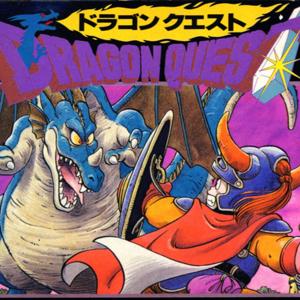
And welcome to NEStalgia, a chronological exploration of every NES game released in North America. I'm Mike. And I'm Sean. A role playing game filled with adventure and challenges. Is there a role playing game that isn't? Yeah, this is one of the more generic ways to pitch a JRPG, I think. And I know that it's a cheap shot because obviously the back of the box also has a bunch of other things about plot and what you'll be doing. But it's also like other things that JRPGs talk about with like, you know, evil wizards and getting, you know, getting revenge. And yeah, that's true. That's true. So I just want to put an emphasis that like that part was in bold.
Okay. So like that is the part that they thought would catch your eye as well. And you have to remember, it's early in the days of RPGs, but it's not that early anymore, right? Like we're playing this game in 1990 on the NES. We've played a few chronologically at this point. But this game actually came out in 97, right? Right. And so that's what I want to talk to you about, Sean, because there's like so many ways that we could handle this episode. And there's so many ways that people could have experienced Dragon Warrior 2 over the last 30 years. We can view this the way that we view every NES game on nostalgia. And that is just as the 360 whatever episode of the show with no nostalgia. And we're just playing it in real modern time on 2025.
And we're just dealing with that. Or we could look at this as like, well, this is the sequel to Dragon Warrior. And how does that fare? Right. Because like technically that's a big deal in its own, right? It's like the original Dragon Warrior was not without its faults, but was a big deal for the NES RPG library. And this is now the sequel to that. Or you could look at it as like, well, technically this game Dragon Warrior 2 came out before Final Fantasy 1. So we played Final Fantasy and we've reviewed it and we put it on the essential games list. But is it fair to look at Dragon Warrior 2 after the fact when it technically was made beforehand?
I get it. But, you know, I think like we haven't been, we haven't been like assigning a rubric that sort of scales as time goes on. You know, this is, I know that we have been taking into account the sort of maturation of genre. But I think like if the game's good enough, regardless of when it came out, it'll make it on there or it won't. Well, especially because so much of the emphasis of my opening read of this show focuses on games releasing in North America. I think it's just really important that we focus on the fact that Dragon Warrior 2 came out here at this point chronologically.
And Final Fantasy really ate a lot of its lunch just coming out a few months beforehand. Because, holy shit, are there so many features in Dragon Warrior 2 that are obviously like quality of life boosts over the original game. But just like now it's not even worth talking about, right? Like we're going to talk about that now there's a party, right? But there was a party in Final Fantasy. Now there's no more stare button. Yeah, there's no more stare button, right? That's amazing. And there's no more, you can get on a ship and sail the seas to get to other parts of the world, right? Instead of just traveling on land. But there was a ship. There was a ship. There was a canoe. There was an airship.
You know, what else? Oh, not just single enemy battles at a time. In Dragon Warrior 1, you only fought one-on-one battles. Here, now you fight groups of enemies. Well, you also fought groups of enemies in Final Fantasy. You see where I'm going, right? This is going to be a tough thing to discuss because there's so many different angles you can go at it. I feel like we just have to give it like our shake, our original take on Dragon Warrior 2 without trying to keep saying, well, Final Fantasy did this or this is better because Dragon Warrior 1 didn't do this. Like, let's not give it any handicaps, but let's also not try to beat it up so much.
I mean, that's hard for me because I just beat up games, but I'll do my best for you. So we're doing good cop, bad cop? Yeah, yeah. Well, the first thing I wanted to point out, holy original take here, not really Dragon Warrior 2.
And it's not like a Dragon Quest 2 gotcha moment. Okay. It says on the title screen, part 2. Dragon Warrior part 2, yes. This is part 2. This is not like, you know, oh, you don't need to play whatever. Like, you don't need to play the original to know this. But this is a little different than Final Fantasy 1 and Final Fantasy 2.
This one is saying it is a continuation of the story of the original Dragon Warrior right on the title screen. This is all semantics, though, because everything, like, Final Fantasy, like, yeah, they're an anthology series. We shouldn't know that yet. But a part 2 in this is like any other 2 in media where it's you, you are in the same world playing a different character or maybe similar. Maybe they're related. Like, this is a 2. It's just called part 2.
So isn't it funny then that, like, RPGs are kind of, like, stepping away from being like, oh, and you're going to be Erdrick again. And you're going to pick up right where Dragon Warrior 1 left off. Or Final Fantasy, you're going to be the four heroes of light again.
It's Legend of Zelda, right? Didn't think twice about it. They were like, yeah, you're Link again. Of course you're Link again. Why wouldn't you be Link? He's the star, you know?
Simon and Simon in the first 2 Castlevanias. And then they were like, nah, screw that. We're going Trevor for the third one. So, I guess there's no established rules yet. And to your point, the only part that makes this part 2 is that it is set 100 years after Dragon Warrior 1. That's, like, enough time that, like, none of it really matters. There's a couple of nice... It may as well be, too. Yeah, there's a couple of nice nods for the fans of the first one who, you know, know the lore and everything. You can go back to Kanto.
Yes. Yep. That is true in this game. You can go back to, uh, Alf... Alfgard? I don't remember what it's called. I'm pretty sure it's called Alfgard. Um, which is cool because, again, that was something... Another, uh, Zelda 2 reference there. You could go and get to the original Zelda 1's Hyrule inside Zelda 2 as a smaller part of it. That makes the games feel bigger. So, I do like that it has a lot of the elements of Dragon Warrior 1 and just says, well, this time we're just going to do everything a little bit bigger, a little bit better.
Uh, but as far as the rest of the story goes, it is most of the stuff that you've heard before. Or, you know, crazy evil wizard just wants to take over the world. What is the aim with taking over the world? I think... When are we finally going to get somebody who just wants to take over, like, the country next door?
I mean, I think if you want to take over the world, it's more so that, like, it's the ultimate bragging right among wizards. Um, because there's a lot of wizards that haven't taken over the world. And I get the taking over part. That makes total sense. But this wizard, uh, Hargon, he's, he's like, big thing is that he wants to summon, uh, Malroth, who's like a demon. And what's he going to do with that? His plan is to destroy the world, essentially, with Malroth. And it's like, destroy it, like, with you on it, buddy? Well, what's, what's the point of doing anything after you've taken over the world? Like, you've already done it. Like, what, it's basically, you may as well end.
Right, so he's looking for, like, a new game plus afterwards. Yes. Yeah, okay. So, we're the hero here, uh, a descendant of Erdrick. And we are, we're going to try and just, like, snap this guy to his senses again and be like, hey, dude, you know you're on this planet. Like, you're gonna die, too.
Uh, and the way to do that in this game, rather than take it on solo, is you have to go get the prince and princess, who are also, like, your cousins. Yeah. And, you know, that could be something that is, like, the, you know, like, the entire game, right? Is, like, finding your cousins, and then, finally, the three of you team up, and you take down this guy. But that's, like, act one of this game, is, like, getting the party together, and, uh, there's a kind of a... That can take you hours, though. Like, it took me hours. Oh, yeah, yeah, yeah. For sure, but we're talking about a very long game here. Yeah, yeah. I would definitely say that, like, act one, the end of act one is when you finally have all three party members.
And the way that you acquire the other party members is, like, interesting, at least from a story perspective, right? Like, you're told, you're basically on this long fetch quest to find the prince. Mm-hmm.
Um, go get him. Like, you end up happening upon him, basically, when you're trying to, like, reset yourself and be like, where should I check next? And he just sort of is there.
Yeah, and I actually, I find that, like, to have some comedy element to it as well, where, like, you, to your point, you basically do have to go in a full circle just to find the guy that, like, he's obviously wouldn't just be there if you left the town and came back, but you have to go to all the other places in order to track him down. And then there's another, like, funny thing with the princess where there's, uh, I forget what the name of the town is, but there's a dog in that town, and the dog will follow you if you don't have the key item yet. But, uh, other than that, you just leave the town, the dog doesn't come with you or anything.
There's no real indication that the dog is the princess until you transform her into her human form, and you're like, oh, there's my third party member. Like, let's go. That's also another, like, fun, uh, not necessarily puzzly, but indirect way of having somebody join your party. I do like this first act in terms of building on the story of the first game, where in the first game you were essentially just, I am, I am at this town, and to get to the next town, I need to be this level. And I should just keep farming in this area of grass until I'm that level. Then I'm gonna go into that town. That still exists here, but at least there's another layer on top of it.
Yes, yeah, there's, there's a little more in terms of variety of, of just combat as well, though, right? So, the combat system was expanded. As I mentioned earlier, we have a group of monsters now in battle, uh, so it's not just one-on-one, it's 3v, as many as eight. You can have as many as eight monsters. Yeah, that's a lot. And that's a lot. That's too much. Let's be honest. Mm-hmm. Uh, but, the one thing that makes up for this, and it's not, this isn't a, uh, a new feature for this one, but I forgot how, like, dynamic and great the designs of these enemies are.
Like, they are, uh, they are obviously by Akira Toriyama, creator of Dragon Ball, he designs all these enemies, but they are really fun to, like, stumble onto new enemies. And yes, they are, they don't, they're not animated or anything, but the first time you encounter a new enemy, they have this, like, silliness, but also, uh, you know, not strength, but like, they just have this charisma to them. That I really like the enemies in this world more than, uh, uh, any other RPG we've played.
I, I think there is a, uh, a comfort that comes with coming across a slime, uh, even though the, the only, the first time I ever played a Dragon Warrior game was Dragon Warrior Monster, uh, for the Game Boy, and there were tons of slimes in that. Yeah, so I always feel like, oh, I'm still, I'm still a kid sometimes.
Uh, other than that, like, some of them are, like, I've now associated their designs with annoyance, like, uh, like baboons. Um, but I, I do understand what you mean. They are, they are iconic. But the, the funny thing is, is obviously this is not a knock on, um, Akira Toriyama, but like, when you know that he's the Dragon Ball artist, a lot of these designs look like they're from the Dragon Ball universe. And they could even be characters in the Dragon Ball universe. And that's obviously, like, true of the heroes of these stories. Most of them either just look like some form of Goku or Trunks. But the baboons, since you called them out, like, the baboons look like the, uh, ape form of these Saiyans. Like, yeah, a hundred percent.
But, uh, you know, like, later on, like, the, uh, the orcs or, uh, those trees that come to life, like, they have, they, they're supposed to be scary. But they're also, like, silly. So I just, I appreciate the variety in the enemies. And that, like, you know, they don't necessarily have, like, quirks to them in combat. But they do have quirks to them that make them, um, visually appealing.
True, true. And then the other thing for combat, and this is now a detraction from the original game. Because there's now multiple enemies on screen, we are, uh, we just have, we've lost our landscape backgrounds. And we just have a black screen.
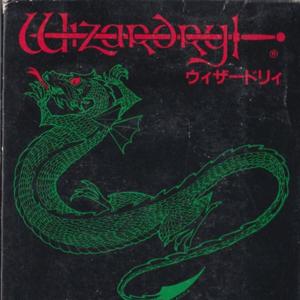
And, uh, that gets kind of dull as well. That makes it look like you're playing on, like, an Apple II instead of an NES. Or you're playing Wizardry, or not Wizardry. Um, what was the one we just played that was too hard? Too hard? That could be a lot of them. Yeah, um. Didn't we just play Wizardry? Was it Wizardry? I guess it was Wizardry. The one where, uh, you, when your party dies, you have to go back and, like, collect their corpses. Yeah, that was Wizardry.
Okay. Um, whereas that was, like, super simplified. Yeah, that was Wizardry. Uh, it feels more like that now. We also did recently play, um, Swords and Serpents, though, too. Maybe it was Swords and Serpents. I think it was a Swords and Serpents, yeah. But Wizardry, I think, is the one where you have to, no, yeah, you're right. Now I can't tell. Huh.
They both were, because they were both dungeon crawlers. Yeah, yeah. Regardless, it feels a bit more like that. But the one that does feel... Oh, but Swords and Serpents, you lived in the dungeon. Like, there wasn't, like, at least in Wizardry, you had to go to the dungeon. There was a town. In Swords and Serpents... This is the only place that exists. That's the only place that exists. Uh, the one thing that I did like about the combat, or at least the battle system, maybe not even, it's not even a system thing. The fact that you have three party members, and not four, this is gonna sound super, like, specific to my experience only. I, I like that there's only three. I grew up with three.
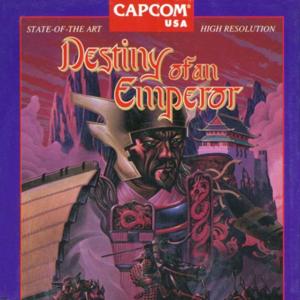
Final Fantasy VII and VIII, there were only three party members, and that was basically what my mental bandwidth could handle for the majority of my RPG playing career. So this, I felt a bit more at home in this battle system than I have in the other one. Yeah, I was kind of upset that there weren't 300, like in, uh... Oh, God. Uh, Destiny of an Emperor. Yeah, yeah. Uh, but they don't make you play 300 at a time.
Uh, no, I know what you're talking about there, too, though, because, so the, the characters themselves, you have the, like, the strength, the magic, and the balanced character, right? The one who can do both. Yeah. So, three works out pretty perfectly there, because you can have one who's just constantly healing, or debuffing, or buffing the party, and then you can have one who's just always just attack, and then you have the other one who's like, well, what kind of situation? Are we playing defense, or are we playing offense right now, you know? Like, so I, I do think three is the way to go.
Uh, also because, not that this game has it, but with, like, the games you were talking about, with four people, and a, um, real-time battle system, like, you know, you have to make those choices pretty quickly. I don't think I could do it.
Like, I have a tough time in, in games like Final Fantasy VI, where, like, you know, you have your meters, and when those fill up, if you're playing in real time, like, the enemies can continue to attack if you just sit there thinking about what you're gonna do. You can turn it to turn-based, but, uh, I do like not having to make so many choices in battle, which sounds like, which sounds kind of stupid, but, to the most part, as long as I'm fulfilling different roles for each party member. Now, remember, there's not classes here.
Uh, in Final Fantasy, you chose a party of four different people with four different classes, and they could even be the same class, and you built your team that way. This one doesn't say, like, you know, oh, she's the wizard of the group, she just obviously has the highest magic stats that you're gonna use her for that. Uh, I, I think I also appreciate, uh, no, I, I know I appreciate this more. As opposed to these other battle systems where magic is charged base, uh, where you have, like, one or two useds of heal or antidote or whatever, uh, this is a lot more forgiving. You have a good amount of MP, even at early levels, where you can, you can spam, like,
Faraga, or the equivalent of, of just the fire all attack. Um, and you can keep doing that, and you can heal pretty, pretty, it, I just appreciate that it's a bit more forgiving than, oh, you use it twice? You don't get to use magic anymore.
Yeah, and I think that's necessary, especially when you're in the dungeon sections of the game. It's a lot more forgiving, obviously, in these grindy moments where you're just near a town, and you just kinda, like, well, I think I caught enough, killed enough enemies, so I collected enough gill that if I go stay at the inn, I'm, I'm net positive on the adventure for the day.
Yeah. Uh, you know, and that's essentially what you wind up doing for a lot of Dragon Warrior 2, but when you do have to, okay, I'm actually leaving this area for the first time, and I'm going to do the next part of the story, you oftentimes are taken on a pretty long, uh,
trek both through the overworld and then these, uh, caves slash dungeons where there's a lot of just, like, you know, hey, there's a treasure chest over this way, and then, you know, swing all the way over to this other side, and there's another treasure chest here, but there is also just a very, like, clear path, uh, surrounded by a lot of dead ends, and that stuff gets really tricky in a game like this if you're playing without a guide. I, I couldn't do it because I just didn't have the, uh, the mental stamina to keep, like, uh,
reloading my save states, you know, and just being like, okay, well, I died here, so now I gotta go back here, like, sooner or later, you just have to know the path so that you have the least amount of encounters possible because you're gonna encounter. Because that is a thing. The, the, the amount of, and we probably complained about, we've complained about this in every RPG, sorry, this is just something that we really just don't have the,
that, that mental endurance for anymore, is the rate of, of random encounters. Like, you can load from a town into the overworld, and you don't even have to move. That, that, like, loading from a town to the overworld counts as a step in which it's possible to fall into a random battle, and I cannot abide by that. Like, that is actually, like, that, I, they somehow made it, they, they, they, that's beyond the pale. You can't load into the overworld and immediately get into a battle. Right. Unless it's scripted.
You know what the issue with grinding is, and I really noticed it in this game, uh, but this is just a critique on grinding in games in general. It's not necessarily the, uh, do it over and over again portion, uh, although that becomes, that, that really, like, weakens if you have a, if you have a bad, uh, gameplay loop. Like, if the combat's not actually fun, your grinding's not going to be fun. But I noticed, you know, you really lose sight of the story with all this grinding.
And we talk about, in modern times, games in 2025, how it's funny that, like, side quests nowadays are a joke about, you know, like, oh, shouldn't you just be, like, going to take on the bad guy, but now you're gonna, like, save this town, and you're gonna play this card game. Learn a new recipe, yeah. Yeah, learn, yeah, do all this stupid shit. But at least in the, in those things, like, it's rewarding, because it's, like, world building, and you're learning about characters that live in the universe.
Grinding in these older games is way more mindless, and I'm kind of just, like, imagine if the Castlevania show on Netflix, which I'm currently watching, because we had a great Castlevania 3 episode. Imagine if that show really was just trying to recreate the moment-to-moment gameplay of Castlevania 1, and it was just, like, you know, there was just a whole episode where Trevor's just fighting skeletons.
Like, nobody wants to watch that shit, and nobody wants to play fighting skeletons over and over and over again either. So I think, like, I had a really tough time kind of focusing and remembering, like, wait, what was I supposed to, like, where was I supposed to go next, and why am I going there? I, I could remember the next town, but I couldn't remember why I was going to that town after a long session of grinding.
Well, also, unless you have, like, a guide open, you may not know exactly why you are going there. You're just, you're just going. And maybe you're just going to a place you haven't been, because the only way out is through, basically. Um, and so, like, I would go to this tower because I needed to get this cloak thing that there's no, aside from maybe, like, a character in a town saying, like, oh, maybe there's this, that'll probably help you in the future.
Uh, it, it is paper thin most of the time, the moment-to-moment, like, beats. So, in any other game, or in any other, I guess, era of RPGs, it would be, like, that world building would have more opportunity to work its way in. And I don't, I just don't think, even with Final Fantasy, uh, it, it's been strong enough to support the amount of bullshit battles you have to fight.
Since you were talking about that tower, it was a cool moment though when you have the item to be able to just jump off the top of the tower to leave rather than have to go back down floor to floor.
That's like another thing where it's like, huh, they are thinking a little bit about what it means to be playing this kind of game. Yeah. You know, because not that I'm on like a Final Fantasy VI kick or anything, but like that game early on in it has a lot of surprise moments in both like combat and in like in actual gameplay that you don't expect an RPG to do.
And I feel like it was like, so for instance, when the first time Tara uses magic in combat, the game like stops itself and all the characters are like freaked out because they're like magic exists. Like it's real, like, you know, cause she's the only one who can do it. They'd never seen it. It's been gone for a thousand years. It's funny that like the game waits for you to cast the magic. It's not like a story scripted moment.
You know, to a lesser extent, this tower thing kind of did that for me, right? It's like, it doesn't, it doesn't clearly communicate like, Hey, just so you know, you're going to have to jump off the top of this tower. You can just go down to the, to the bottom again, but because it lets you have that freedom, it's an earlier example of that. That's, you know, less significant. And that was kind of undercut for me because that's, and that's sort of the pitfall of using a guide is that I was kind of the fact that the guide told me to do it made it not a choice.
Right. And that's my, that's my issue with playing with guides a lot. But the secret I've had to doing to success with that lately, Sean, is I look up, I think it's like it's RPG center or something. There's some website and they have maps for every,
you know, like every RPG you can think of. And so I usually just wait till I get to the next like dungeon or whatever. And then I pull up the map just to see like, is what's ever in that treasure chest over there worth grabbing? Or is it just another like high potion or, you know, like where do I really need to go?
And then I try to save the guide stuff for like when I'm, when I really just don't have a clue of where to go next. That makes sense. Yeah. The fortunate thing in dragon warrior two, of course, is that it's not littered with locations. So you can just kind of figure out like, well, where can I go? You know, like on the overworld, where's the next natural town that I can travel to? Because I can't go over these mountains. I can't cross the sea yet.
There is eventually just a place you'll have to, you'll have to come across. I say that of course, but there is actually before you get the ship and before you even go to that tower, I think there was a, um, there was an area trying to look it up right now. So I'm cheating a little bit. Oh, where you go to get the mirror. Yes, that was a, that was bullshit by the way, but it was also just really hard to find that. Yeah. I had to, was there any NPC that mentioned this thing?
Not, not that I can recall because I, again, this is a guide and even the guide was wrong or maybe I was reading the guide for the, one of the remasters or something because the guide told me, and this isn't a review of the guide, but, uh, it's like, Oh, there's going to be a swamp, one of those poison swamps. And you're going to want to look for like the glint of something on the world map in the poison swamp. And I got to where it obviously was like, this is the other description of where to find this mirror of ga or za or ra was,
this is the only thing that fits that description. And I go, and I'm not seeing any kind of extra, uh, sprite or any kind of glint or anything different about this poison swamp other than every other poison swamp I've come across. So I just go in, take my damage, search, nothing there, search, nothing there. And then finally search. Oh, here's the mirror. Like, I don't know what that was supposed to be. And maybe I didn't, I didn't like explore enough to where that was supposed to be pointed out for me. And I'm just complaining about, uh, trying to power through the game.
But did you have any idea? No, I, I needed a guide for that, but apparently, you know, cheating here, but apparently the, um, the king of moonbrook, who I believe is a ghost, uh, he hints at, uh, that the mirror, you were able to talk to him. I couldn't even get in the building. Yeah. Apparently you are able to talk to him. And that's how, again, I just used a guide, but that's how you would find that out. But it's also like, I can't find the actual hint. So I'm sure it's not like in the corner of the swamp, right? Like again, just even finding the swamp is a little, uh, you know, it's not exactly direct, but, uh,
to, once you got that mirror though, still without a, without a ship, you are just walking a lot to get to the tower from there was also a bit of like, uh, where, where do I go thing? Cause you had to go from, so moonbrook to the mirror is basically a straight line East. You'll have to cross through some woods and some grass and everything, but to get to the tower, which is just South of the mirror. And technically you could see it on the overworld map. You wouldn't be able to reach it, but you could see it. You have to go from moonbrook,
Northeast through like so much grassland and then, uh, cross over like basically to the, to like a side that would otherwise be inaccessible. If you took the mirror path and then like hug the perimeter of the continent for a good while before you get to the tower. And it's just like, okay, I get it. Like it's rewarding exploration, but the little like further, uh, than you would think. And maybe it would almost be trivial at that point, because if you played this, that a guide, you'd be so overleveled just by virtue of having so many random battles, not knowing where you're going, um, that maybe you'd be three or four levels over where it actually poses a challenge to fight these monsters. Whereas we're trying to just get there.
It is kind of weird that before you get the ship though, you do jump continents. Yeah. Through, uh, the channel. Yeah. Through a cave. Like, uh, you know, I guess anything's possible, but if you need a ship, right? Like why don't they have caves to everywhere then? Like how, how does the cave system work across two continents?
It's, it's basically, you know, it's just the channel between, uh, the UK and, and France. And, you know, sometimes you need to drive cars and sometimes you need to drive big steamer ships. Okay. I think you're right. I think you're onto something. Uh, but then obviously the next big beat after getting, uh, your party together is to get the ship and be able to explore the open seas. So, uh, again, I'm sure it felt bigger. In 1987.
Uh, but it was just kind of like, for me, it w it, it didn't feel like it. Cause we had an airship, you know, like, uh, now we have also, this is like a trope of the, of the genre now.
So it's obviously not going to feel as big as, as this. Like, like, yeah, we, we said, we promised we wouldn't talk like this, but if, if this was the first instance in our RPG playing career, maybe it would feel bigger.
Right. I think it would, but still just maybe, maybe it doesn't because it's, it's a boat and not something, not a flying boat. Yeah. It's not a fantastical in any way. Yes. Uh, and what's funny is, so you have a boat and then you find out, uh, from, uh, the previous games, boss's son or grandson, uh, you find out that there are these five like pieces of the crest, uh, that you have to collect in order to, um, in order to, uh, fight off Hargon. And as nonsense as that all sounds, that also sounds like the legend of Zelda, the wind waker, where most of that game towards the end, you're just on a boat as link, like traveling, trying to find pieces of the Triforce.
So obviously that game came way later. So dragon warrior two is scooping the story there, but, uh, just wanted to point that out for any fans who make that connection. I wonder, uh, if, uh, Miyamoto or anybody over, uh, Zelda team was inspired by the, the same, uh, story beats there. Cause then it does become a little bit more, uh, formulaic, right? The act two of collecting all the, um, all the pieces of the crest. Uh, it's just kind of like, okay, go here, defeat this thing, get this crest. And then once you have them all, you'll be able to take on the boss. That goes back to the dragon warrior one formula.
Because otherwise they would need like a plot to, to move you to all these places that they created, you know? Right, right. And you can't ask them that. Yeah. So instead it's just, uh, go collect the pieces of the Holy grail.
There was one thing we, uh, cause we talked so much about the combat, but I didn't want to overlook a couple things. And that is, this has the similar problem that final fantasy one had in which if you attack, uh, an enemy that dies, it still attacks nothing, but it's not as much of a problem here because you are, you, you can target groups and more often than not, there'll be more than one enemy in that group. Uh, maybe not more often than not more often than in final fantasy,
you can roll over your attack to another enemy. So I didn't have as much of a problem here. I think that what I liked about the combat system here is it felt more, uh, like a designed encounter than in previous JRP's that we've played because these enemies have at least more obvious to me, um,
uh, actual like, uh, quirks like the army ants will call in more army ants and the heel squid will keep peeling itself. And like these, these take different approaches to, to deal with. And, uh, certain combinations of them will have one or two on one side. And so you can get away with just having your attackers focus on that big swarm and you maybe not run into, uh, the like, Oh no, nobody's there anymore. Your attack is now moot. Um, so I don't know. I, I agree, but it's not as bad as final fantasy.
Yeah. And I know what you're saying there too. There's kind of, again, going back to the great character design, it's kind of clear, like who's the leader of a pack and who are just like the little, uh, you know, the army ants, if you will. But like, if you face, uh, two snakes and a baboon, like you, it's communicated to you. Yeah. Take the baboon out. Uh, but then, you know, the same thing with like,
uh, the zombies, the mummies, the dolls, like they all look like they would be susceptible to attacks that are, you know, uh, like raising the dead and stuff like that. So it, it's communicated very well in the design of the, again, without any kind of communication or like, you know, uh, spelling it out for the player. I appreciate that. Even just like looking at like the much later, uh, sprites of like the bat boons, which is a really funny idea, right? Like baboons and bats fusing together or the Cyclops thing, uh, which is just like,
uh, you know, the, the enemies, I just, I, I'm guess I'm gushing about the design, but I also just really like the enemies that you face off against. Yeah. They all have their own vibe. Um, so that, that helps. Yeah. I think there's, there's, we've been spoiled a bit. Um, actually the opposite of spoiled. We've, we've been traumatized by the enemy designs and a lot of these games that are just so generic.
And finally, there's something that at least takes a little bit of creativity and, uh, like, Oh, this is why I play video games, you know? Right. Cause even their skeleton sprite, isn't just like a spooky skeleton. It's, it's like, you know, he's, he's posing and he's got his sword, like mid strike and his shield has a bat on it. Like it has a crest. I like it all. You know what I don't like though? And it goes back to these same enemies.
What's that? Two of the worst spells ever created in a, in any JRPG exist in this game. You'll have to remind me. I don't, yeah, I was gonna say, I don't know if you ever ran into them because it's, it's later in the game, but there are, there are two spells. There is a, a defeat spell. Ah, yes. Which enemies can cast, uh, and that automatically kills a party member if, uh, cast successfully.
And that sucks, right? Like just an automatic insta kill. Like, what do you mean? There's a button that's just the win button and they press the win button and they win. But at least that's like, okay, I don't know. If it misses, but, uh, I'm not, I, I didn't feel confident to say a hundred percent. So I feel like, you know, you cast a spell. There must be some kind of stat to figure out if it hits or not, but that sucks in itself. But at least, you know, okay, one party member down, we'll, we'll figure out a way to get through this or we'll revive him or whatever. There's a way stupider spell called sacrifice,
which might work. I thought these were spells that you could cast. I didn't know. Like when I was reading the manual, I saw these as like, Oh, these are the spells you'll unlock. I didn't know that they would also cast them on you. Right. And, and so it sounds, it sounds okay in practice, I guess. If it, the idea is they sacrifice themselves, right? The enemy. So they die. And in exchange, your entire party dies too. Yeah, no, you can't have that. You cannot have that. You cannot have one that kills the entire party. No, you can have, you can have skills that reduce everyone to one. You can have skills that will kill a party member. If their level is like a multiple of four. Like I'm just naming off stuff from mid,
like mid era final fantasy right now, because they were, they were balanced. Once they had an eye for balance and, and designing these, uh, you can't do that. I just can't figure out also like what the game has to gain with that, because that's a thing where like, no matter what level you are, you could be max level. I don't know what the max level in the game is, but you can be max level.
And it, you would still succumb to that. Like it should just do a large amount of damage that like most, and most, uh, characters below level, like 25 wouldn't be able to, uh, withstand. Right. But like, you cannot just say it's an insta death. Yeah. And I can, and even the ones that are per character, it's a death I can live with. If it's a party white, you're, you're basically creating a game that is just chance. Like, I guess you can just have the character, like whenever the, the, the player runs into this character or this enemy, they'll just spam run away. But even that's just a, like a dice roll.
Yep. Uh, now you, you mentioned that you can also have these spells and I think that's where it's more practical, right? It's like, okay, so you can cast sacrifice or, uh, and, you know, that particular party member dies. Yeah. So you have to live with those consequences. The enemy doesn't have to live with those consequences. The game is over. Yeah. And also like, shouldn't that enemy be able to like, if it can insta kill, shouldn't they be leading this army? Yeah. I don't think that, um, uh, Hargon has the ability to,
cast defeat on anybody. So, uh, why, you know, why should he be in charge of everything if he can't one hit KO? So it's true, but you know what? Uh, not Hargon can't do it, but, uh, at the end of the game, Hargon does, after you defeat him, he does successfully, uh, summon Malroth and Malroth basically has the ability to heal himself at will. Okay. That's a terrible feature. but what another terrible feature, right? It's just like, okay, so you're, it's got like a large HP base, able to deal tons of damage. And most of the time, it's also just going to continue to heal itself. So how do you fucking do any damage?
It's funny that this is sort of, uh, this is something that we can't deal with. And I, and I don't think this is something that I remember running into in Bloodborne when you'd play, when you face other hunters, or I think there's, you know, there's other circumstances in other RPGs,
especially CRPGs, where a, a, an enemy or a boss will like, use the same potions or whatever item to heal themselves. And we see that as unfair because we've had access to these the entire time. And like, if you think like in an, like the enemy's like, how come they get to use that? They get to use herbs and we have to just die. Um, I do think that like, you know, as an outside observer, it is, it is funny to complain about that, but, uh, I agree that I feel the same way. I feel cheated when enemies use the things that we've been using the entire time.
And I'm not speaking from firsthand experience anyway, because even though the final boss is known for having that ability and dragging on that fight, uh, I'm just not going to be able to get there because like most people today, I just won't ever experience the end of this game because of the sudden jump in difficulty that this game takes in the third act. It just becomes almost, uh, unbelievable how for the most part throughout this game, yes, you needed to grind, right? But you at least knew where you stood like, okay, I probably want to be like, uh, one more level before I can take on these guys. And then I can move over to this next area or, Oh, I'm a little, I moved through that other area too fast. So I got to grind a little bit and catch up.
There's just a sudden moment in this game where like, Nope, you actually have to be like five to 10 more levels higher than you think you need to be in order to take on any, because I read about this and I remember I read about why it happened, but I don't, I didn't get there. Well, I want to hear from you first. Why did it happen? So the Wikipedia page says that there was some, like basically a debugging software that they were using to kind of simulate battles and leveling and enemy strength.
And, uh, they found that as it was designed, it was, it was relatively balanced and was more balanced than the original, um, which is what they, they wanted to be more accessible. But what they did not realize, and again, this is just Wikipedia. It could be wrong. Maybe you'll correct me in a moment, Mike. Um, but apparently that tool was tuned as if it was one-on-one fight or like your party versus one enemy and not eight enemies as it could possibly be. Um, did you read this part?
No, I did not read the Wikipedia entry. So I guess that's good news because we're, this way we're not, uh, saying the same things twice. But I did, I do have here in the developer, uh, information that, um, they, they basically had to, the game was, the first game was such a big success that they had to turn this around incredibly fast. So they started planning it in April of 86. Development started, uh, about three months later in July. And then the deadline was November.
Yeah, that's a lot. Okay. Think about that. August, September, October, November, like what would they only had like four months to work on this whole game? That's nuts. Uh, it was delayed to January. Uh, but my understanding is that they only had like five weeks to really like not only, not only finish the game entirely, but play test it as well and everything. So I bet you pure speculation here, but the beginning plays so fine because that's what they play tested. Yeah. I mean, that was, that's part of what I was getting to. Yeah. That's crazy. Uh, that it's this broken.
Yeah. And the part where you, you know, you pretty much have to be at like level 25, if not even higher, uh, is, you know, basically the final showdown after you have all the crests and then you go to, uh, Rhone, uh,
R H O N E. Uh, that is like all of a sudden the monster, the monsters in there are just too tough, you know, it's like, you won't be able, but it's weird because the monsters otherwise aren't rewarding you with enough experience to like, get to the, you know, like, so the enemies right beforehand aren't strong enough to justify the grind. So you have to grind a lot to get the experience because I think the simple fix, and I'm sure a ROM hack does it, is just make it so that the jumps between levels aren't so drastic on the experience, uh, counter so that you don't have to be like, okay, and now get another 1000 experience points, but the enemies are only giving you a 50 experience, you know, like that's just not a good, just not good enough.
And I think, you know, because this game has been remastered so many times that it was fixed in those, but yeah, the way that we're playing is probably the least accessible. Yeah, yeah. Did you, uh, win any, uh, lottery games while you were playing this? Uh, I won a,
I won a medicinal herb once, but my inventory was full, so I didn't get it. Ooh. That's one other thing. Your inventory is tiny, in this game. And if you end up like, uh, end up like hoarding antidotes and herbs, like you just, you can't pick up anything. And if you open a chest, you will be told like, do you want to throw away another item? And it'll, and if you don't do that, then you just like, whatever was in that chest is just gone. It could have been an item that you need. It just, it just gone.
Could you sell the lottery tickets? You can. Yeah. I think they're like 23 bucks. That's the way to go. In my opinion, you're not really going to win much anyway. I see. I see what you mean. Yeah. You know, like just sell the ticket. And then at least, you know, they think about that. Imagine if you found like a mega millions lotto ticket on the ground, but somebody else was going to pay you $20 for that ticket. I would sell the ticket. I'm sure. Mathematically, you're correct, but there's too much of a degenerate gambler in me to, for me to do that.
Mathematically, I have to be correct. Right. Because at least for the mega millions, it's like one in a, one in like a billion, one in five billion. Yeah. Probably. Yeah. Um, here it's a, it's, uh, it's not really a lottery. It's slots, which is still degenerate. So I'm, I'm into it. Oh yeah. No, I'm more into that. I guess is what I'm saying. I don't, uh, you know, in Pokemon gold and silver, there was a radio station that was a number.
Yeah, exactly. And that was just basically, and that felt like to, as a little kid to me, that felt like I had no idea what the hell those numbers meant, what my numbers meant. Like, I just didn't even bother checking in on that at all. But apparently it's the only way to get additional master balls in that game. Here, I'm immediately seeing that, you know, I didn't, I either got the symbols to match up or I did it. Right. And to me, that's all the gambling I need is did the pictures line up.
That's the funny thing about this is you would think that the people running this, uh, the slot racket, because it obviously, the way that they presenting it, it is a racket. Like you have to, in one of the towns, you have to get a silver key to unlock a back room in a shop to get there.
Um, you'd think that they'd want you to spend money, that you don't need lottery tickets to do this. Like that, that, you know, just keep giving me 25 gill, 25 gill, and the slot machine will never hit. Like the, the lottery, like the, it's a, it's, you're really reducing your, your potential revenue by requiring these lottery tickets that can only so happen to find sometimes. I, that, that lost me, the world building in this game. It lost me there. Yeah. The lottery is like the beginning of a good idea.
Yeah. It's like, that's fun in like one town. And now give me like another town has to do something totally different. Stop it with this lottery. It's all craps. Yeah. Sure. It doesn't even have to be casino stuff though. Right. It's just like, uh, I almost said horse racing, which is just basically another form of gambling. So it doesn't have to be gambling related. Okay. Oh, okay. I just feel like nowadays these things are given when you, you know, like you, you want to see what like goes on in a specific town and all these little silly side quests and everything. But like the lottery is putting that idea down and then just not committing to it and not really rewarding the player enough. And so most guides you read tell you don't even bother.
Right. Like if the lottery was like, Oh, if you get three moon symbols, you know, you're going to get like, uh, this one item that you otherwise just couldn't get anywhere else. Like, so make sure you always play the lottery every time you go to a town because you really need this thing. Now that, um, principle sucks, right? Yeah. I don't want it to be a key item, but I don't mind. I don't, I really don't mind. Like if a great weapon is, is locked behind chance.
I, that pisses some people off where like, that's the steel mechanic in a, ton of games. That's what I'm saying. Right? Like, I don't mind if the thief in a game can steal really cool stuff, but I just didn't know that. And I didn't get it because I'm still going to be able to beat the game. So I'm not asking for any lockable content, but I just feel like this lottery is only the start of an idea. And the actual prizes of like an herb is like, you know, come on. Uh huh. Knock it. What are we doing here? Well,
what else didn't we talk about? Uh, most of the second half of the game, because again, I, I didn't play it, but you want to talk about collecting the crest? Like, I feel like that. No, I don't want to. I'm saying like, I don't, I'm saying that like, like for me, most of this game is the, the constant loop of grinding in new areas. So learning your new, your new set of enemies and the patterns they'll have and everything. So for instance, the baboons, right? A pain in the ass. The first time you come across them, they won't be a pain in the ass forever. And that feels good, right? There is something that feels good when you're just knocking down baboons after a while. So it does take a while though.
Yes, it does. You know? And then like the, the prince and the princess, your cousins, like those were like cool characters that we met so early. And I don't necessarily think that we get another cool character in this game from, from that point onwards. Well, do you ever, and again, this is coming from me, not really getting that far, but like you talk to them once, right? Oh, I just meant like how you meet them though, too, you know, like just, sure. You meet them. It's an interesting way to meet them. I agree. Like that was a cool part of the game, but do they ever talk again? Uh, yeah. Okay. They have to, right? Like, I don't know.
Like you don't, I don't think anybody talks in this game after like, because the main character doesn't say anything. Yeah. Well, you know, they're very silent protagonists,
but it's weird to have this combination of characters. Like what we're, you know, we just, we just had the, you know, the sins of the emperor or whatever we'd played. Yep. We're dynasty, uh, destiny, destiny of the emperor where the characters talk and there's a plot going on. And it may be simplified, but it's a plot and you have final fantasy where, you know, the characters are completely user generated. So it's kind of expect expected that they won't talk. And you're just, you're just the adventures on this quest.
And then you have this weird middle ground where you have characters that have names and have backstories and they don't talk. And maybe this is just me not playing enough of the game. And I'm, I, and everybody's like, Sean, you're an idiot. Stop talking. Why do I listen to this podcast? You're so wrong. Um, but from what I experienced, there was nothing going on among these characters that had, had character development up until they were part of your party.
Yeah. You know, it's funny. So I found the script for the game online and yeah, they're not talking. I don't like that. They're not talking. They're not saying a damn word. Sean, they won't even commit to names. Do you know that?
But no. Well, okay. so I named my guy Paco and I thought I'd be able to do that for the rest of the story, but then they have names. No, but they don't have names. They don't have, they don't have, uh, they don't have canon names. Sean, did you know that it is based on what you name your prince that, uh, or your, you know, your main, uh, character, what you name him is what the prince and princesses names are then generated based off of that. Oh my God. So, uh, there are eight names for the prince and eight names for the princess. Uh, and it's based off of the name that you chose, um, for the main character. And so, uh, for the prince, you can either get Bran,
Glynn, Talent, Newmore. I got Talent. There you go. Talent. Newmore, Lars, Orfeo, Artho, or Eskar. I like Eskar. That was pretty cool. Eskar's cool. I, but it's canonically Talent to me. There you go. But, uh, Dragon Warrior 2, Dragon Warrior or Dragon Quests, uh, Wikipedia will not take a stand on what the canon name is. They're just known as the Prince of Maidenhall and the Princess of Moonbrook. Now, the Princess of Moonbrook's name, possible names are Maria, Alani, Olisa, Roz, Kaylin. I had Kaylin. Kaylin. Yeah, that's weird. Uh, Peta. Yeah. P-E-T-A. Peta.
Um, Illith, and Gwen. Ooh, Gwen sounds good. Gwen sounds nice. So, Gwen and Eskar, and, uh, you named your guy Paco? Oh yeah, Paco. Hell yeah. Um, what's your name here is? Mike?
Yeah. How would I know who they're talking to? I know, I know. I just felt like, you know, I've been naming characters after myself for so long. I just kind of wanted Paco. I used to be that guy who would like, they would say like, uh, you know, they'd introduce you to the character and then they would give you the pre-filled in name, like the canon name, and I would delete those and type in my friends' names. Yeah. I did that on Chrono Trigger. Uh-huh. Everybody's names got changed to my friends' names. Now I can't do that at all. I cannot bring myself to do it because I won't know who anybody was talking about online. That's true. That's how I, I mean, that's not why, but I just don't do it anymore because it kind of feels childish now.
When you, when you played through Final Fantasy VII for the first time, was Tifa Tifa? Oh, what's that? Was Tifa Tifa? Tifa was not Tifa, but there was nobody that was named, but it was just like some made up girl's name that just sounded more realistic, you know? Wow. So like, did that take you a little bit to learn who Tifa was? No, I know who Tifa was, but no, I know what you're getting at, but no, I kind of, I understood it. I understood. you were, you were old enough. I was old enough.
Uh, yeah. So that's that. They, those are names. Uh, I don't really think I have too much more. I wanted to talk about here because we, we're not going to make this into a comparison act between the other ones, but I will say we didn't make a big enough deal about the stairs thing. That is a pretty big thing. The stairs button is huge. It's crazy how much of a, of a convenience that is, but it's also crazy that they couldn't just make everything contextual. Like we see in final fantasy. Like why realize that you don't need a stairs button, but you still need a search button or that. How else would you, how else would you search?
By fucking going up to it? Just pressing the button in front of it. Because you know what? Because otherwise you would have to see something in that swamp to get the mirror instead of randomly searching every inch of that swamp. I won't forgive the swamp. Here's a weird sentence. Okay. Did this game lag for you? Uh, yeah. There's obviously some like, uh, what is, what's that game? The NES just can't handle it, right? Yeah. There's some like Crypt of the Necrodancer shit going on here where you have to, it just goes step by step and it, it'll kind of sync up with, with your, with the NPCs around town or it won't.
Um, but no, there's no like seamless navigation. You are just, you are just like taking steps that just happened to sort of like smoothly go into the next step unless you're trying to get like precision. And then you realize that like, you can't, you can't like just go backwards. You have to wait to go right. And then I, do you know what I'm saying? I don't know if that's exactly what I was. That's what I was bringing up though is like, so just to make it a little more obvious, John, you're, you're doing a great job of actually explaining the mechanic, but I will just say that basically movement is just a little, there's a little bit of friction in the movement where there otherwise shouldn't be.
Sometimes you swear that you press something on the D pad, but it just doesn't quite move the character along the way you expect it. And, uh, that's what I meant by lag. And if Sean can understand it, then surely anybody else who's played this game can understand it. Just sometimes I'm pretty certain that my character was just gonna, you know, move to the right. Cause I pushed the right button, but he just stood there. Yeah. One thing that I did like about this game is the way they handled keys.
Um, because you, you keep walking around and you keep seeing locked doors and there's only a couple kinds of locked door, but you, you don't have any kind of key on you. So it's just like, all right, whatever. But then you go and you find, and you, you find a, uh, the silver key and, uh, you go like, Oh, I remember there being like silver doors and it's kind of got this like, kind of metroidy or Vania E.
Uh, like, so you, there's a reason to go back to, you know, like the original town and you kind of get a little bit of like a, an ego boost because now you're just like destroying everything in this area. Um, and then you go in and you open up the door and then like, like, Oh, this is like another prison or like, Oh, there's this, there's like the, now I can play lottery or like there's, there's reasons to go back and they are obvious in ways that are not, like other JRPGs where the key items may not be obvious. So there's a little bit more, um,
satisfactory satisfaction that comes from those items, which I like. On the sequels and spinoff side. Uh, so the original Famicom version, which is obviously known as Dragon Quest 2, uh, is just, uh, believe it or not, apparently has an even higher difficulty. Uh, they, the, when they localized it in 1990, they apparently did some additional balance adjustments. And obviously, uh, the translation brought about some story changes, but I, I, I find that kind of hard to believe that the Famicom version could be even more difficult than the large. It seems like the opposite.
Yeah. Right. If anything, just bring on more, they probably made it more difficult for the NES. That's where you play with it longer. Yeah. That's wild. I didn't know what that was even, I thought that they just really had a masochistic tendency for the West. Yeah. I, I think it goes, uh, kind of on a coin flip with these things. I think sometimes it's, uh, it rolls the other way and that's just the way that the dice rolled on that day, but there was no way for me to test this. I wasn't going to break out a Famicom version and figure out like, if things are harder, because I, I, you'd have to really know the differences between the two games too. Like you'd have to feel it. I wouldn't just be able to know right away. Like, yeah, this is difficult.
Now, one thing I did try a long time ago after I, um, beat the original dragon warrior was I found out that there was a dragon quest one and two on the super Famicom. It never came to the super Nintendo, but because those games share a lot of the same sprite work and any, and everything, I felt like they probably just thought like, Oh, we can just combine them into one package. It'll be an easy remaster on, on the super Famicom. So I played the original dragon, uh, warrior on the super Famicom translated, uh, port. I didn't get to the second one, but, uh, it really does have a lot of the, you know, not just better looking graphics,
but quality of life improvements as well. Like we were talking about the stairs thing and all that. It's nice to, it's really nice if, especially if like, you don't want to go all the way back to the NES version. You have this super Nintendo version granted with, you'll have to get a ROM hack translation and everything, but more interestingly, they did apparently rebalance the game again. Uh, and I imagine that that could help a lot of people's complaints about the grindiness of, uh, dragon quest two specifically, uh, with the super Famicom version,
the, uh, portable version, uh, came out on Game Boy Color, uh, apparently, uh, new monster sprites in this one. I wonder if Toriyama like was in charge of that or if somebody just does like, eh, I could basically mine better. Yeah, I could, but you know, like also I could probably like when we say new monster sprites, we don't mean they look brand new. They probably just are like, cause the Game Boy Color can't lay down the same, you know, fidelity.
So they probably just had to like adapt it. We, I don't know if we talked about this on the Dragon Warrior episode or on the Final Fantasy episode, but it is kind of funny that like Dragon Warrior and, or Dragon Quest and Final Fantasy both have like two prolific artists that like do their designs that don't make it into the actual game. Like it's then up to the designers of the game to like adapt it. Pixel art. Yeah. You know what I'm saying? Like between, um,
between the two artists having to like make like these incredibly detailed, beautiful, uh, portraits of these characters. And then the games are like, yeah, they kind of look like this. And they just fart something out that kind of has the same shapes. Yeah. You know what? I won't say fart it out because that, you know, there's obviously still, uh, there's still a lot that goes into adapting that kind of work, but I'm going to, you know what? I am going to go back to say that they farted out because through that. But if you look at like Amano's drawing of a bomb,
you know, that fireball enemy, uh, you know, it's, it's a pretty good translation. It's just like, obviously an illustration is just able to perceive like a lot more, but then you look at like Amano's idea of Terra, uh, in final fantasy six. And you're like, the hell's going on there? Like, you know, that her hair's too thin. Does she have a vitamin deficiency? Yeah. She doesn't look like that. Um, that's especially true too, of the final fantasy seven stuff, because, uh, you know, that was like a, they were having an artist crisis there between, um, Nomura and, Nomura and Amano. Yeah, exactly. Uh, just count the zippers and you'll be able to tell. I don't know if,
Dragon Quest two is like, got any other like remake remakes. I know it's like on mobile and I believe you can even play it on, um, on switch now for like super cheap. That makes sense. I wouldn't pay too much to buy these. But you're getting the mobile port though, too, of the switch one. You're not getting like the, I don't know if it's available on NES, uh, Nintendo switch online, but like for it's six 50, but right now, because of some new year's sale, it's $3 and 89 cents, but it's the more mobile port. And I got to say, Sean, the mobile port looks horrendous as most mobile ports do. Yeah. I just don't know what they were laying down here, but I'm going to post just this one image for you.
You know what I'm talking about, right? Like that sucks. Yeah. Okay. So what, what I'm just going to describe to the viewer is I will grant that it is higher resolution pixel art. No, but there were like three different looks in this one shot. Yeah, exactly. You've got, the completely smooth, uh,
sans serif font that is way too high res to fit into this game. And then you have the background, which looks the most at home, or at least like the most, like a remaster. And then you've got what looks like double the resolution in the sprites for the characters and completely just does like, doesn't even look like the character, like that it belongs in dragon quest. Slash warrior. Um, yeah, it's a mess. It's a mess. It's also on a blue background as if like, there's like a, a broadcast error.
Yeah. Um, that's just for that specific, uh, that's just for that specific, shot that I sent you though. The whole game doesn't have like this blue background. Uh, uh, the whole dragon quest slash dragon warrior thing. Uh, I think we can all, uh, like forgive ourselves if we mess that up because it's officially dragon quest. Now they, they abandoned the warrior thing after the fourth game. Well, I haven't played any of those, so I don't care. It's dragon warrior to me. Damn it. Yeah. And, it's also time for the essential games list to me. Damn it. When it comes to dragon warrior, I almost did quest because of our little kerfluffle there for a second. Uh, when it comes to dragon warrior as a series, I don't know.
We got, we got, uh, the third one coming up and, uh, that one just got a big old remake 2.5 D like all the specials. Special Sprite stuff, the Octopath Traveler treatment. And people are like, Oh, that's the one people are telling us on, uh, on Twitter, on our discord. They're like, you know, dragon warrior three. That's, that's the good one. And that's weird. Cause we were playing dragon warrior two. Nobody was like, yeah, you guys, I can't wait to get the dragon warrior two. Nobody talked about it like that. Seems like even consensus back in the day,
which was not strong on dragon warrior one. You have to remember that was a game that they, they had so many copies of that. They had to start giving it away for free as a subscription to Nintendo power. They were like, subscribe to our magazine and we'll give you this game for free. So the original reception wasn't great. And then dragon warrior two did not get bundled with a subscription. So when people played that, the reviews, especially from like content, you know, reviews at the time were like,
this is, this is dragon warrior one all over again. They just made it. I mean, it's not free. Right. They're like, they just made it longer and, uh, they added a couple of party members and everything. But like, otherwise, don't you kind of feel like you're playing the same game? I don't think I'm feeling playing the same exact game, but it is definitely like the same mechanics and engine and everything. And so I think I take that into account is just like, we haven't seen enough of an overhaul and we're going to need to for this third one, guys. I don't want to hurt anybody, but like if dragon warrior three doesn't up the ante on the combat system, I don't think the story could save it for me. And I, I think I'm just not loving, uh,
just how simple the actual moment to moment gameplay of these games are. And that's not to say it's, it's an easy game. Yeah. Simple meaning just like it, it kind of becomes mindless with the grinding and the, uh, going here and then going there. Like, I don't really get a, uh, a sense of adventure that the box art was promising me. Uh, I just got the challenge part. So, uh, no dragon,
uh, warrior two will not be on the essential game list for me. What about you, Sean? Yeah. Um, obviously, you know, I've, I have been, I think I've been more charitable to this game than I have to a lot of games recently while still also being very critical of it. There are parts of this game that I like more than even final fantasy. Um, I have not made it a secret that I have, have like grown kind of, uh, I, I've, I've grown kind of, uh, unhappy with this entire genre. genre recently.
Um, but I don't, I don't hate this game. I think it's much better than dragon warrior. Uh, and again, I think that there's that it does some things better than final fantasy, but, uh, it is still way too bare bones and way too, to get into the weeds and it does not respect your time. And so I'm going to just echo what Mike's saying for the most part and really just hope that there are some revolutionary things that happen in Dragon Warrior 3 to make it worth our time again. So yeah, not essential.
Try again. The big question for Dragon Warrior 3 is, does it take place 100 years after Dragon Warrior 2? Well, obviously you have to keep making it Descendants. Sure. Yeah, you have to. The Erdrick line, right? That's a good question. I don't know if 3 is the end of a trilogy or is 3 the beginning of a trilogy. I think the Wikipedia page says that it's the end of a trilogy. Huh. So there you go. Sean has all the answers because he goes on Wikipedia. I went on Wikipedia. And now everybody loves him. Everybody loves me. I don't know. I don't know.