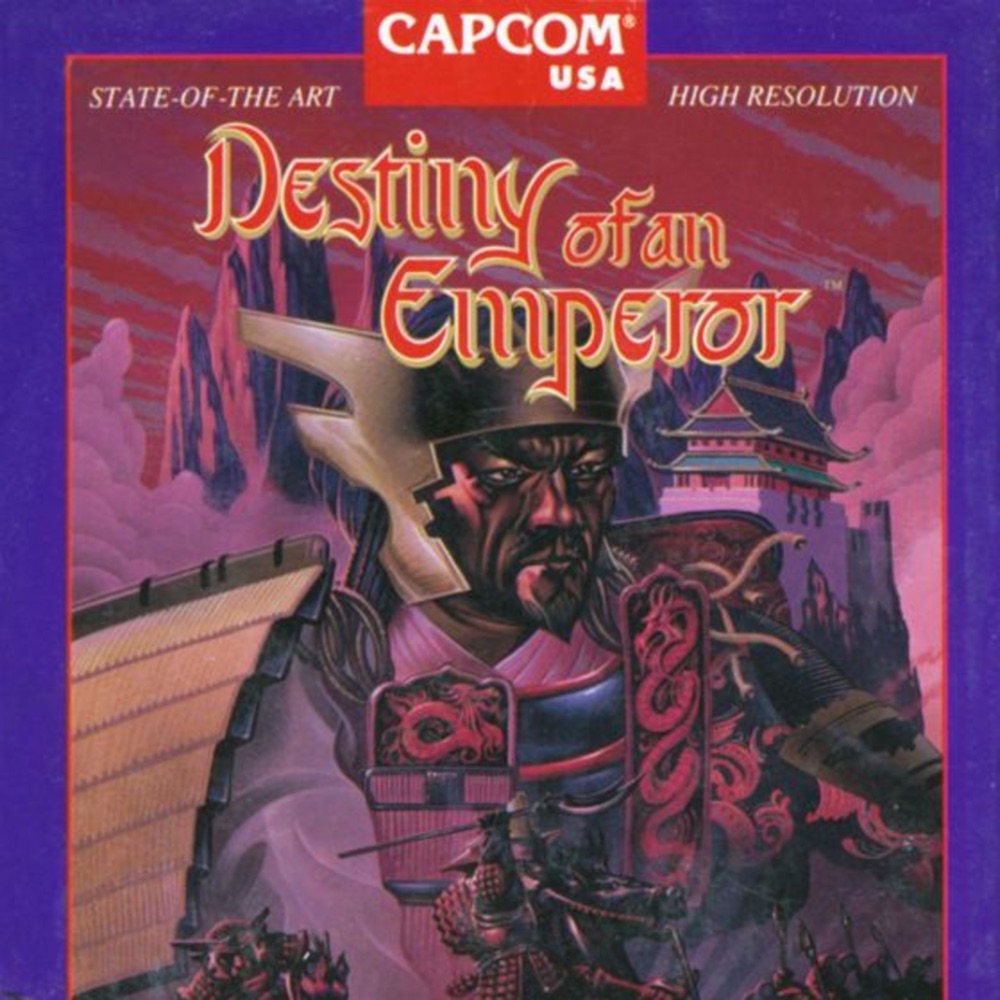
359 · Destiny of an Emperor
Destiny of an Emperor is a strategy role-playing game set in the Three Kingdoms era. A party is formed by selecting up to five officers from a huge pool, many of whom would only join you after be bribed or defeated in combat.
We expected a Koei grand strategy game and got a Capcom RPG based on Romance of the Three Kingdoms. Mike, Sean and Joe all played it, and we kept saying it felt unlike anything we had played. We respected the ideas more than the hours.
What it does that nothing else does
- Soldiers are your HP. You lead warlords, and each one's troop count is his health. It is more than flavor: your damage depends on how healthy your army is, in steps of powers of ten, so a general with 998 troops hits as hard as one with 101. Dropping from 100 to 99 changes your damage, so fights turn into whittling down the big armies first.
- Tactics instead of magic. The tactician's intelligence sets the party's pool of tactic points. The spells are not labeled, so we made up a rule: if you can target an enemy, it's damage.
- Recruiting, for real. Talk to people or beat generals and they join. You can also fire them and run into them again in the wild, like releasing a Pokemon. Beating a roaming warlord's army thins out random encounters in that area.
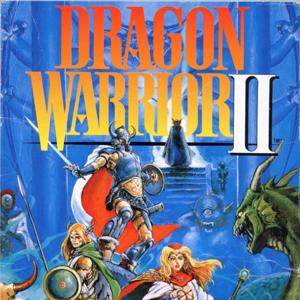
- Visible damage. Enemy health bars tick down, so unlike Dragon Warrior you can see how close a fight is.
Where it wears thin
- Too many fights. All Out is a lifesaver. Without it, Joe said, the game would be 200 hours long. Even so, watching bars tick down in battle after battle gets dull, and one night at the inn heals an army of thousands.
- Grinding. The bosses flattened us, we ground for 20 minutes, then got flattened again. We leaned on the top-rated GameFAQs guide.
- Obscure progress. Zhao Dong has to be recruited in a random fight, on a coin toss, to cross a bandit cave, and another recruit needs a horse. We could not tell if there was another way, and it reminded us of Castlevania II.
- Equipment you have to equip. You start with gear that is not on, and we wondered if the flail was a throwing weapon.
- Chests and menus. You stand on a painted chest and open a menu to check it, which grated on Sean.
- Numbers. In a long run the 100 troops you start with turn into 26,719, and a let's play ended with 6,955,000 food.
Beyond the game
The long play is 11 hours, and with all the chapters it could stretch toward 40. The Famicom sequel drops the food system and adds formations. Here, formation affects who takes damage, and with the powers-of-ten rule it can be better to put your strongest in back. A fan community has an editor and an annual hack award.
The bottom line
Play it. It did not make the Essential Games List. Mike called it respectable but repetitive, a game that overstays its welcome. Joe said it is an absolute Play it for any JRPG fan, and still could not vote it in. Sean, who has been falling out of love with JRPGs, did not have much fun. It reads as cult status to us, and the powers-of-ten HP idea alone is worth knowing about.
Written from our conversation in this episode.
- Fulfill an Ancient Prophecy
- We hope to die in the same hour of the same day of the same year
- 1. Background and Context
- Destiny of an Emperor was released in 1990 for the NES by Capcom.
- Based on the Chinese historical novel Romance of the Three Kingdoms and the manga Tenchi wo Kurau by Hiroshi Motomiya.
- Its ancient Chinese setting stood out among the medieval or futuristic themes common in JRPGs.
- Reminiscent of Koei’s strategy games, with its focus on generals, armies, and resource management.
- 2. Gameplay Mechanics
- Exploration and Movement:
- Fast walking speed, reducing the grind common in other RPGs.
- Items like Gullwings allow instant return to towns.
- Resource Management:
- The game uses rice (food) to sustain the army, reminiscent of Nobunaga’s Ambition.
- Running out of food causes damage with each step, adding a survival element.
- Tactical Points (TP):
- Shared pool for magic-like abilities (tactics), governed by tacticians' intelligence and specific tactic sets.
- Adds a strategic layer to battles.
- Equipment Quirks:
- Starts with unequipped items, requiring manual setup.
- 3. Battle System
- Generals and Armies:
- Generals represent characters in battle, with army size acting as HP.
- A unique “Power of 10” mechanic dictates damage output, rewarding careful unit placement to maximize strength.
- Stats like strength, intelligence, and troop numbers affect effectiveness.
- Tactics:
- Acts as the game’s magic system, enabling healing, buffs, and offensive abilities.
- Players can choose between targeting single or multiple enemies (with reduced strength).
- Innovative Options:
- “All-out” battle option automates minor fights, saving time during repetitive encounters.
- 4. Recruitment System
- A robust system allows up to 150 generals to join, with 70 active slots available.
- Recruitment is achieved through negotiation, payment, or repeated victories in battle.
- Adds personalization and experimentation to party building.
- 5. Story and Structure
- Follows the rise of Liu Bei, chronicling events from Romance of the Three Kingdoms.
- Linear progression focused on castle conquests and set-piece battles.
- Dungeon and overworld visuals are repetitive, but varied battles maintain player engagement.
- Repetitive Battles:
- Battles occur frequently, but the progression and tactics add enough variety to keep things engaging.
- Party Dynamics:
- Fired party members can reappear as wild enemies.
- Tactical decision-making involves prioritizing generals based on their optimal damage thresholds.
- 7. Sequel – Tenchi wo Kurau II (1991)
- Released for the Famicom, retaining many mechanics while introducing changes:
- Removed food management for simplified exploration.
- Linear story progression restricted by river-crossing events, emphasizing narrative over branching paths.
- Introduced formation tactics, which grant stat bonuses and special effects during battle.
- Maximum soldier count capped at 9,999, simplifying army management.
- Weapons categorized into five types: swords, sabres, bows, axes, and spears, with specific ultimate weapons.
- 8. Modding and Legacy
- Fan Modding:
- In 2007, a tool called Destiny of an Editor was created, allowing fans to edit stats, maps, encounters, and graphics.
- Led to a vibrant hacking community and the Huan Ho awards for the best Destiny of an Emperor hacks.
- Cult Following:
- Despite its niche appeal, Destiny of an Emperor developed a loyal fanbase.
- Praised for its historical setting, tactical depth, and unique mechanics.
Auto-generated transcript. Each paragraph starts with its timestamp. Speakers are not identified.
Destiny of an Emperor, Fulfill an Ancient Prophecy.
And welcome to NEStalgia, a chronological exploration of every NES game released in North America. I'm Mike. I'm Sean. And I'm Joe. And we all hope to die in the same hour of the same day of the same year. And we're making that pact right now on the podcast. Right, guys? Yes. Not only do I hope it, I vow it. I will make sure that if I'm ever about to die, I will find you guys and take you down with me. I think that's sort of what it sounds like, doesn't it? It's sort of like a suicide pact. And I don't really know what that's really supposed to tell you about someone's, like, confidence in the mission of Nostalgia.
It depends if I'm like, wow, Sean is going to greatly outlive me. Like, I definitely want to make that pact. And I'll ride, you know, ride your coattails to the long life. But it sounds like they expect to die in battle if it happens to be at the same hour of the same day of the same year. Like, they plan to fail. Yeah, I think, well, see, I think that I could take it as like, all right, the three of us are going into battle. And like, if you're going to die, I'm not like backing down from that. I will fight with you until the end. That's basically what it feels like to me. That's very poetic. I like that one better.
I'm going to make sure that I outlive both of you. Good luck. When you hear the title, Destiny of an Emperor, I don't know about you guys, but I was expecting one of those Koei Grand Strategy games. This is an RPG from Capcom. With like the flavorings of one. Like it basically is the story of a Grand Strategy game that we have played. Maybe Joe didn't. Yeah, isn't this Romance of the Three Kingdoms? Yeah, this is Romance of the Three Kingdoms, the book. I guess this is sort of like, you know, like the Peter Jackson Lord of the Rings and like the Ralph Bakshi Lord of the Rings, but it's just Romance of the Three Kingdoms. It, yeah, it's interesting that we're getting two vastly different takes on the source material here.
And it's funny, I know you asked Joe if he, maybe, maybe he didn't play that one. That is, of course, because Joe is not usually present for the Koei episodes. But, uh, that's just a coincidence. I was present for one. Right, it's just a coincidence. It's just a coincidence. Yeah, yeah, I swear.
Joe, Joe, while we have you, maybe you would like to kind of set the stage here of just like, you know, we had Romance of the Three Kingdoms as a grand strategy game, as a Nobunaga style. And we always go back to Nobunaga because that was the first one we dealt with. It's a great thing to say. It just feels like great out of the mouth, you know? Yeah, yeah, exactly. Nobunaga and, uh, that's some of the children's first words, I'm sure. Uh, maybe, maybe you want to just tell us a little bit about how that kind of game could be translated into an RPG.
Well, I am, if you're asking how it could be translated and maybe how this game attempted it. How this game translated it, yes. I can do that. Um, you know, it took, it's, on the surface it's very different than like a Final Fantasy or a Dragon Warrior, but the more you look at it, it's, um, at a, you know, bird's eye view, it's, uh, it's similar. But what it basically does is you play as these, uh, what are they, generals? Warlords. Yeah. Warlords.
Um, and you, you wander the map as you're, as you're taking on other warlords and recruiting them. But instead of, uh, instead of being like your one character with HP, you're one warlord with soldiers and your soldiers are your HP. So like it kind of, but really that's what it is. Your soldiers are your HP.
No, no, no, it just made me think of like, and the bones are their money, but. And they've got like tactics, which is kind of their way of getting magic into the, the game. And they, they have everything that you expect in like a classic JRPG is kind of here, but translated to, you know, with the, with the help of your imagination, you're what you're, you're watching large scale battles of armies unfold rather than four characters fighting for goblins or something. And I, I like that recontextualization of like HP and like, instead of magic, you're, you're, you're deploying tactics, but it, it's kind of half-hearted because you go to an inn and it has three beds. And it's like, does your whole army just sleep in this inn?
Is it like a massive Amazon warehouse of an inn or, um, are we three adventurers? And maybe this was like old assets from something they were working on. That was more traditional. Uh, and then you have like, you could buy items and just like, Oh, here's a robe or like buying a, are you buying 3000 robes? Because like the food is a, it's a high number. Like that makes sense.
Everything else is kind of really abstracted. Yeah. I, I, I definitely, uh, saw that. And I guess, I guess the optimist in me was more like, well, you know, this is just trying to be abstract ways to represent like the, the health of your army. But the more like you describe it, you're kind of right. Like you're, the food is, the food is not like, Oh, buy a loaf of bread. It's like buy 30,000 food.
You know? So like, it does like the more you mentioned, like it probably is that they just like, well, okay, we're not going to like figure out all these little things. We'll just keep those all generic and, um, and just change like some of the context. But I, I mean, I was able to play it and kind of imagine it as like, yeah, I'm, I'm plussing up this warlord and therefore his, his soldiers are being plussed up too.
But yeah. Yeah. It's interesting that you, you know, mentioned the rice and food system and the HP thing. Cause I think those are the two things that set this apart from the dragon warriors and the final fantasies where yes, the actual like turn-based combat plays very similar, but the, the food thing specifically is very reminiscent of those, uh, Koei grand strategy games, because those always have like, you always have to make sure you have enough rice or else you're going to, you know, have an unhappy civilization. Or you have to like feed your army and stuff that counts as something in addition to the HP of the game where every step you take basically is like consuming food.
And then you go into the, the towns and battle and stuff as ways to get additional resources. And it's not something you can, you know, like constantly have to be managing. It's not like a survival simulator, but it is something that you have to keep in mind as you're playing the game of never, uh, being without too much food, because then you'll start taking damage essentially because your troops are dying. And again, your troops are your HP, but your troops being your HP plays into the combat side of things too, because that is how, uh, your attack power is determined in this game. Believe it or not, your, how much damage you do is indicated by how healthy your army is at the scale of a power to the power of 10.
So I'll say that I didn't even realize that, but that, that makes sense. That does make it like, yeah, that makes it mean more. They did put more thought into that element of it where it's like, yeah.
It's more than just saying like, oh, it's not HP, it's people. Yeah. It's not just a reskin of HP. It's like, no, these are your people. And if you don't have as many of them, you're not going to hit as hard because, you know. Right, right, right. It's not just like a numbers game where it's like, well, I just want to have more so this way I can outlast the enemy. It's like, I actually do more damage, but I did mention that it's a power of 10 thing. So it does kind of become a game of optimization, especially in the battles where essentially if you have, uh, uh, a hundred troops, let's say. So your HP is 100.
The second you drop to 99, now you've dropped from a power of 10. So your damage is now different from 0 to 99, 100 to 999, uh, 1,000 to 9,999. You know what I'm saying? So it's like, it's not like, oh, it does an exact calculation of I have 271 troops and this is my damage output. But the, uh, an army slash character that has 998 hits just as hard as one with 101.
Yes. Oof. And so, yes, exactly. And so what happens is, is you wind up, uh, not even in your own battles, of course, but, uh, the battles, uh, that, you know, the enemies you encounter, you start looking at, well, who's got the most troops, right? Like some of the, some of the ones that are just generically labeled rebel force all have like at the early part of the game, they have like a hundred troops each or whatever.
And then one of them has, or sorry, no, they have less than a hundred. They have 25. And then the main general has a hundred. Well, I should start taking him out first to make sure he's just as weak as his rebel forces. And so it just kind of becomes a game of balancing numbers, uh, rather than like strategically thinking about who you should attack because there's not classes. There's just size of armies to think about.
So you were playing a lot. I mean, I guess, yeah. So I guess this, this, uh, begs us to kind of go into like the actual like moment to moment of these battle of these battles, because there's a couple of ways to play them. Um, and the way you're describing is sort of the more micromanagey, uh, this can take you 10 minutes way to, in a single battle, um, way of fighting.
And then there's also like the, the, like all out, which is good for just like random encounters. Um, like essentially an auto battle system, right? Yeah. Well, I, I get, I don't even know if, cause you're not really like, you're not creating any tactics. You're just, you're just throwing these two masses of people together.
Um, if you select all out and, and without any like management at all. And then there's the one where it's like more final fantasy slash dragon warrior, where you're selecting each thing you're going to do. But that like takes forever. So I just wanted to do auto battle for everything. Yeah. And I guess the happy medium there, which thankfully they do allow for it in the game is that you can all out at any time. So the best way to play the game is essentially to first take your strongest guys and whittle down, uh, you know, the largest, uh, enemies, the largest sized enemies on the screen.
And then once they're all kind of below a certain damage input, now you can do all out and you'll just kind of know that like you're going to be doing larger damage than they are. And you don't have to worry about necessarily, uh, any of your characters getting a, you know, a knockout or anything like that. So it's a little bit of both.
And I do agree with you that, uh, it sometimes is like, especially with the random encounter system, if you're just running into like five V five, like it is a lot to ask to just continue to use battling and tactics. When all out is just there to kind of do the same exact thing. And you're probably just going to rush back to the town and sleep at the end. Cause you've got more than enough gold in one battle to sleep your entire army of thousands of people. So maybe it should have had more of a like trade off for that. But I found myself just basically, uh, random battling a lot, waiting till I was weak enough, going back to the end, sleeping, and then just continuing with my all out attacks.
Except for obviously, uh, this game has large, yeah. Large story moments too, where you have to take on specific generals. And as Joe mentioned, you have the ability to, uh, then recruit those generals. You recruit so many characters in this game. It's, it's nuts. I've heard of RPGs where like, you know, you can have 90 people, uh, join your party or whatever over the course of the game. And I feel like this comes close to that.
Like, I don't know exactly how many people you get, but even just in the very first town, you already have your team of three. And then you immediately just get two other guys to, to join your party just by talking to them. You can completely miss them if you don't talk to them, but they'll just be like, Hey, we want to join the fight. And then they do. And then just as easily they can die in the battle too. And that's the end of that.
Yeah. I mean, I mean, you can obviously, you can bring them back, but yes, but I kind of like to play it. I mean, just because it was different to play it that way. Whereas as long, as long as the people, you know, weren't my like main, uh, characters that I was using like that, that I needed. I was sometimes I was like, well, you know, I just recruited these other people. So it's like, okay, I'll just canonically. I lost this character in his army. Like they fell in battle, but now I recruit these other people. Huh? More blood for the blood guard.
Yeah. But no, but like, it's interesting. Cause it's like a, it's like a, a reason to try out new, um, party members. And, uh, I, I will say that, uh, I did notice by doing that a lot. And, and I, I confirmed this by, uh, reading a little bit online, uh, which is never wrong. So definitely confirmed that a lot of these, um, like these like lesser warlords are, they cannot get to the levels of some of the ones that the developers want to be like your mains. So like some of them, like, just no matter what you do, will never be as strong as like the ones that they intended to be the ones you were using.
That makes sense. And what I read online, you know, based on like the story and, and I know the story is based in like somewhat, uh, some semblance of history, you know, sure. You're, you know, obviously like just inspired by or whatever, but like, yeah, there are like, there are generals that they're just like, yeah, this, this guy would never be, he's not the hero of the story. And he's like, he's like a low general and they didn't want the player to be able to like go against cannon that far.
Yeah. You, you bring up a good point, Joe. It's nuts that it's not just like, here's a 150, I don't know. I'm making it up, but like, here's 150 people that you can have join your party, but they're all just kind of the same warrior class with the same stats. It's like, no, they actually did take the time to like give them all individual, like intelligence stats, strength stats, defense stats. So that you could make a use case for, uh, you know, like, oh, here's the optimal party.
But then like, you know, if you don't recruit this guy or you don't encounter this guy or, uh, you don't want to use this kind of thing, you can also go this way. Like we were talking about how the strength of final fantasy is that you can make, uh, a team of four, but of any kind of different classes in here, you can have like any, like, I couldn't even imagine. I don't know how, I don't know the names of my characters cause I wasn't really looking at it that hard, but like, I can't imagine that the three of us were running the same team, you know, like that's how, that's how many characters you run into. And you have to pick like, who's going to be your, um, is it tactician?
Is it general? Like there, there's one you have to pick to, I forget what they called it. Yeah. So you have to pick one to be your tactician and you know, you could just like assign that to your strongest thinking that that's the way to go. But really it's like the one with the, um, uh, intelligence, the highest intelligence to be able to, because, because there's a weird thing about the magic system, which again, is just the tactics. But there are, uh, tactics points. So instead of MPTP, but then there's also a MTP for your max tactical points as like a party. And so you have to put the best, like you have to put the strongest person in that position to be the tactician to max out the MTPs. This way everybody can use their TP.
It's, it's a little less complicated than I'm making things sound. And I just want to say that about this game overall is that when we talk about it for an episode and we just talk about the, uh, the systems and the kind of the unique things this game is doing, it might sound like this is a game that completely reinvents RPGs, but we are just highlighting the stuff that like stands out. The more you don't, the more you, you know, just go in the overworld and have the random encounter experience and go to the shops, the more that you start to realize, like this game is as complicated as you want to make it sound.
Like you can, to Sean's point earlier, just use all out attack and get by and not really have to think too much about strategy or tactics. outside of bosses at least outside of bosses sure sure but you could also just grind to hell right like you could just level up enough that the bosses aren't that big of a problem that's what it sounds like you did no no no i followed a guide actually very carefully because i got my ass handed to me by those same bosses and was like i think i need to find out how to play this game so there was a great uh there was many actually on game faqs many guides uh i followed the one that's always highest rated and using that guide like i gotta tell you it's just it's weird how many times
this game can surprise you and then go back to basics like right after that you know like there's like oh wow that wasn't expecting that like you recruit so many people just by talking to them or defeating them in battle and then all of a sudden you got to make sure you have a horse for this one guy otherwise you can't recruit him and it's like whoa that's that's like almost like a side quest
slash story element slash missable character thing that all the steed does i couldn't i never yes yeah yes that is um and it's just funny that like you have those moments so this game to me kind of kept me on my toes but also managed to bore me a little bit in the moment because like what you were just describing before and what led me to believe that you sort of played this via grinding
uh was like oh yeah you just go and you fight a bunch of bandits and you go home and then you you sleep and you come back and you fight a bunch of bandits and it's like that's kind of what it feels like and there's really no appreciable difference in how a battle plays out aside from it being harder between a boss and the random battle enemies it's even like it could be just as tedious because these random battles can have five forces at once and the the more story bosses can have five uh like
armies at once and you're kind of doing the same thing and you really have to love the the battle system in this game to love this game i think yeah yeah because i think that it has its its pluses like i i do actually really i don't think there was ever a boss battle that i didn't have fun with you know i enjoyed the boss battles because you know it's never gets like super complicated strategy but because of the way that i don't know just because of like something about it is like a little different than
another jrpg and you know as i'm saying that i'm realizing that i don't know exactly what it is but you know i guess it's just that i felt a lot more um like inclined to like mike was saying earlier lower the to like target the the strong forces lower their to equalize things enough where then i could go all out you know and i guess you don't have to play it that way but because i'm playing that way it does it does make it feel different and i and i was enjoying kind of coming
up with that strategy the problem is all the other battles that aren't boss battles where you don't have to do that yes it gives you that quality of life command of all out where you can just kind of watch them go at it and watch your army take them out but even that takes kind of long like not anywhere near as long as doing a whole battle but like you can do a lot of random encounters in this game so like for that to be happening over and over again just for you to watch numbers go down
that part does get i guess what one other thing that i think uh adds to the flavor of the game and might just be satisfying for a certain kind of player is unlike a lot of jrpgs uh there is just a there's a lot of transparency of information uh like where you see each health bar it almost it's almost like a just a fighting game in some ways like where each enemy has its health bar and if you're doing all out you see it tick down or if you're doing the more tactical mode um you're still
seeing that visible uh okay i'm actually doing damage whereas in a final fantasy or a dragon warrior yada yada uh you're just seeing your attacks are hitting you don't know how close to death your enemy is i think that can add some satisfaction to it it's funny that when you do finally stop doing the all-out battles and have to do these uh quote-unquote boss battles or just like more personalized fighting approaches and then you get into the tactics of things there was that moment
uh where like you know a lot of rpgs are like this is the heal spell this is the fire spell right like and you just it's called fire or it's called cure and you're like yeah i know exactly what that does because i played other rpgs and i'm gonna use it now this game doesn't have that at all going for it and required me to constantly keep checking back with the guide to be like okay and this spell does what again like it's they're just you know i'm not i'm sure that they actually do translate well it's
just that because they're it's all chinese yeah it's all chinese right and not chinese uh typeface of course it's it's um it's in english yeah it's like phonetic yeah phonetically it it just becomes challenging to to remember that no matter how many times because they aren't like labeled or anything my rule of thumb was that if i select it and then i can target an enemy uh that that means oh big damage time and if i couldn't do that then like oh this is just like a buff or something yeah later on
i was gonna say later on you get you get other things that you can do to the enemies other than deal damage um like lower their stats yeah yeah and i did like start to by sight only like recognize certain spells that i used more of or spells tactics that i used more often where it was like yeah there was one that like that like increases your your resistance or or your defense and there was another one that
uh heals you obviously like that one i used a lot so like i started to recognize it by sight but if you asked me what they were right now i couldn't tell you but like give me the exact list in the exact order i was looking at them i can point out which ones which that's a testament to how often you use them which is great right soそれではそれではそれではそれではそれではそれではそれではそれではそれでは!!!
Is there another time period that you would like to see the destiny of an emperor treatment done to, where you're playing as historical figures in a very gamified setting? The American Revolution. I had a feeling. Only because I'm playing Assassin's Creed 3 right now. The whole time I'm playing it, I'm like, wow, nothing is ever set here, ever. That's why I'm like, wow, this is so interesting how battles worked. I'm sure that this game wouldn't really give me quite the history of how muskets work and everything.
I think it would be funny to make the JRPG version of the American Revolution, like going around as George Washington. Yeah. See, but the British would attack the way that you do in Destiny of an Emperor, where you have like X amount of troops as your HP, and you deal a lot of damage all at once, and you got to whittle that down. But then the Americans would have some kind of guerrilla warfare
mechanics built into theirs, where they can just kind of spread out and not have to do the traditional war games. And I think that would be a noteworthy thing to make that stand out from Destiny of an Emperor. I like the question, Sean, I kind of feel like just in general,
so many RPGs are either fantasy or sci-fi that I'm just down for, not even just Destiny of an Emperor, but I'm just down for more historical RPGs as a thing. Forget about this system being forced onto it. Just like, let's get our World War II RPGs with decision-making trees so that we can alter the course of history. Let's get that. If I may make a recommendation, and I may have mentioned this in a previous episode, but Expeditions Rome is a game that starts out,
unlike this, which is, you know, you are the historical figure in question, and while it is not, you know, accurate, it's still doing its best to cover the broad strokes of what's going on. That game starts out with Caesar dying as, like, a young dude, and now you are in, like, his position, and you can sort of choose to do things that he may have done or go a different way.
It's very much what you kind of described. So I would have looked that up. It's a lot of fun. It's a turn-based RPG, but, like, tactical. I like it. I'm going to mention some other things that I noticed about this game that don't quite fit under any kind of category, but if, you know, if you guys want to react to them or bring up things of your own as I mentioned this, I feel like this is that section now for just, like, cool little quirks in the game. One that I really liked is that, so obviously you can only have a team of five at any given point, but you have to kind of, like, you can put them in the reserves or whatever so that you can call them back later,
and you can also have the ability to fire people, like, basically just let them go. And if you let them go, you can then find them in random battles again and have to fight them because now they don't, they're not part of your army. And I don't know, that's just, like, that's something that I didn't think would be possible in a game like this. Like, you release, it's like releasing your Pokemon and having the ability to, like, run into them in the wild again. Yeah. With, like, the nickname you gave them and everything, still in the wild. Yes, yeah.
I like it. Yeah, I like that. What's a warlord to do other than warlord? Right. But, you know, that kind of brings up another thing that we didn't really mention is that some of these random encounters you come across in the world are these other characters. Whether they're bosses that you'll fight later, bosses that you've already fought, like, they are roaming the world, quote unquote. And depending on their status in the story, usually if you beat them, you can request that they convert and, like, join you. And sometimes they'll do it for money, sometimes they'll just do it, like, because you defeated them, and other times they'll refuse. But, like, that is a way that you could pick up new, um,
companions and new party members. And also, now their armies won't be roaming around, and that'll kind of lessen the amount of, um, random encounters in that area. So, like, there's a lot going on in this game that we have not seen in other games that, like, that I also did not think was possible back, uh, you know, in 1990.
And then in a lot of RPGs, when you start, uh, you have to buy all your equipment in the first town with, like, some gold that either the king gets you or you find in a chest or you just start with. Uh, in this game, you have equipment on you at the start of the game, but... Oh, God, yeah. It's unequipped. Yeah. Why do I have to equip the equipment that's already on my persons? That was weird, because, yeah, I remember in the first battle that I got into,
uh, I was just exploring the menus and went into items, like, oh, I wonder if I start with any items, and I'm like, oh, cool, a flail. I, maybe I can just throw this at them? Like, is that a, is this a throw game?
And I selected, and it's like, yeah, you can't use that right now. And then was just like, well, this, this game is really, like, I'm very weak. And then later realized that I could equip them. So it's, that, I don't know what that decision was. The long play for this game is at 11 hours, which, uh, it feels long. I'm sure it's even way longer than that if you don't know exactly what you're doing. I'm sure this could be the kind of game that you could sing, uh, as, as high as, like, maybe 40 hours into. Like, there are a lot of different chapters and different, like, twists and turns in the story, and just, the, the world map is very large.
Uh, the game, the game has a lot of, uh, a lot of depth to its story and, uh, the kind of character relationships. But, in any kind of game that's that long, uh, eventually, the numbers that you saw in the beginning of the game, uh, become, like, trivial. And so, uh, in the let's play, at the end of it, like, the, you start with, like, a hundred HP as your, like, troops. Mm-hmm. This person has 26,719, 22,500, 11,000. It's like, what do those numbers mean at this point? Like, everybody's numbers just get really big. All their stats get really big. The, the food is at, uh, 6,955,000. It's like, what is going on? Uh, but, you gotta appreciate that kind of stuff, too. Yeah, I, I've definitely felt the, um, the, like, power creep, I guess, even in, in,
you know, it's sort of the first quarter of the game, which is, you know, I definitely didn't get anywhere further than that if I even got that far. But, um, but, like, every time I would kind of come up to, like, okay, I'm in, like, a new section, there's a new boss here or something, I would be,
I would be getting, I would be getting my ass kicked, like, and then I would grind a little bit, I would get some, some new equipment and everything, and then I'd be like, oh, okay, I'm doing really good now. And then, 20 minutes later, I'm getting my ass kicked again, gotta grind a little more, and got, so, like, I used, you, more so than usual, I was very aware of, like, the scaling happening, like, and feeling myself scale to try and, uh, match the enemies. Like, it just, not in a bad or good way, just, like, really noticeable for some reason this time. And I think this is mostly historically accurate, because I think, like, the whole, like, romancing of the three kingdoms
situation was just three guys in a bar fight, and then it turned into, uh, actual billions of people fighting, um, at the end of it. That's right, yeah. That's, yeah, that's what happened. It started out with, yeah, it was like, it was like 200 people, and then by the end, yeah, it was the entire population of the world. Several times the population of the world, I think. Yeah, at the time. And this is an early example in the game, but just to show you that the game isn't just, uh, find the next fort,
fight all of the, um, uh, major characters there, and, uh, now convert the fort to part of your kingdom, uh, to prove that there's actually some kind of questing going on. Uh, very early on in the game, you kind of hit, like, a, well, what do I do now moment? And, uh, that certainly happened to me, that's what made me pull up this guide, and there's a character, uh, Zhao Dong, that you have to, uh, recruit by running into him in random battle,
and, uh, he's kind of like, it's a, it's actually like a coin toss thing, uh, the game decides on probability of, like, he, he isn't necessarily loyal to his warlord, so he might offer to join your party, or he might run off, and then you have to go find him again in a random encounter, but if you do successfully recruit him, you can go into this cave where there is, you know, like, the rival bandits are, and if he's in your party, they'll let you cross the water,
uh, which you obviously can't do with any kind of item or anything otherwise, but he needs to be in your party as well, and so that becomes, like, an interesting mechanic of this game too, where sometimes you need the right person in your, uh, in your party to move the story along, but you'll just have to know to have that person in your party, like, oh yeah, he was with. So there's no other way around it? I, I don't know if that's true or not, I think that this might have been, like, a backdoor thing, I can't confirm or deny that because that's just, I got stuck here and that's what I did instead,
uh, Joe, I don't know if you did something different. Uh, no, I did, I think I just happened to, it happened to work out for me, so I didn't even realize that that would be, like, uh, something you got stuck on. Right, yeah, so, um, all that to say, like, you know, that's something that does happen in this game where you need, you know, time and time again, you need, like, the right kind of item or the right person in your party, uh, even, like, who is in charge of your party changes pretty early in the game, uh, with, um, is it Lube?
He leaves? Yeah, he, like, leaves to take over the, well, because he is promised, like, to be the heir. At the end of the first chapter, so that's pretty big, right? Like, the guy who you probably were, like, role-playing as, is like, yeah, that's, that's me, and everybody else is just joining my party, it's like, well, now I've left the party.
Yeah, but then he gives you, the, he gives, like, all his equipment to, like, the guy that you recruit immediately at that moment, so it's kind of like he's just, is replaced by, like, a new... like, his son? Was it? I don't remember. I don't know. I don't know either, because I can't track, yeah, exactly, I can't track these names, and it's totally our fault, but I, I couldn't do it. I just couldn't, I didn't know who anybody was,
because I just don't know anything about, uh, this story. I'm just, uh... and that's what, it does feel like, even with what you're mentioning about, like, needing to have this person in your party to progress and things like that, it feels like maybe, maybe the game can be a little bit, uh, accused of requiring you to sort of know the story already. I mean, like, some of the stuff, it's like, maybe if I'm very familiar with the Romance of the Three Kingdoms, I'd be like, well, at this point, I'm supposed to have this person because I know that. But, like, I don't know, I guess it depends on, and maybe I haven't combed the game thoroughly enough for, like, yeah,
like, I'm sure there's enough hints from the NPCs and stuff, like, in another JRPG. That's entirely possible because this is a game that does give hints, but what you were describing then, obviously, I have not played the game as much as you guys have, but when you were describing the situation of, like, oh, you can go into the bandit camp and you get free passage across this thing, like, that's really cool if that's, like, one way to do it. Right. But if that's the only way to do it, then that is some,
like, that's some Castlevania 2 stuff, and I'm not really a big fan of really obscure ways to lock progression. I am a fan of really obscure ways to sidestep things you might think are necessary, like, sort of like an immersive sim sort of thing, or, like, a CRPG, but no, that kind of, my opinion flipped on its head there. I think that can happen in some regards where, like,
the battles might be tougher if you didn't take on some of these guys beforehand, like, who is, like, at the end of the chapter and stuff. I don't want to say that with 100% certainty, but I do recall seeing that in my guide of, like, if you fought so-and-so earlier, they won't be at this battle, and I thought that was kind of cool, too. Yeah. Like, it's keeping track of a lot of moving parts, and, um, we're just one more thing to keep track of. There is a sequel to this game, uh, but it did not, uh, come out, uh, on the NES. Kind of crazy that this one did, right? Like, this, this feels like the kind of, like, RPGs didn't sell well, uh, back then, and this is very Japanese and, or Chinese.
I'll be honest, this feels like such a game, like, a type of game that we have not played, and, because of it, this, this week, we, we've also been playing one of our Bytes games, and I kept thinking this was the Bytes game, because I was like, yeah, this didn't come out in the US, because, like, US audiences don't play this kind of game, and I'm like, no, this isn't the Bytes game, this is the regular game for the regular podcast. Um, so, yeah, it's funny, because it is just, it is a very unique experience compared to really anything we've played. Obviously, you know, closer to some things like Dragon Warrior and stuff, but, but it, it definitely has its own unique charm.
And the, uh, just to close it up, the other one on the Famicom that we may explore in a Nostalgia Bytes episode for our Patreon members, uh, that removed the food management system, so there's no, like, rice to collect or anything, uh, it kind of made the open world thing, like, a little more linear, so it's, it's not, like, on rails necessarily, but there's less branching paths, and, like, go anywhere you want kind of thing, and more, like, take down this, then do this, then do that, uh, but it, it's not all, like, removing features, there was also, uh, the introduction of formation tactics in, in addition to, uh, the magic system that we had in this one, now it's, like, you know, put your,
uh, put your characters in a specific order for specific stat bonuses or special effects during battle, uh, so I like that, because that, that kind of plays into, again, another thing that you would see in the Koei games of, like, what kind of, uh, units you want to place near each other and everything, like, having that in an RPG sounds cool and reminds me, uh, a little bit, like, what you would see on, uh, the Super Nintendo, not necessarily the Famicom. And then when you say formation, though, I mean, this is still, like, a regular, like, party, like you would see on the screen in the Earth, it's not like, it's not like it's become, like, a tactical RPG.
still, still just a, yep, just the order that you want them to be in. Doesn't formation affect something in this game? The formation in this game affects, like, who takes more damage. Yes. So theoretically, you would think that you want to put your strongest, like, the ones with the most soldiers up front, but actually, because of the way that the Power of Ten rule works, you want to put those guys in the back of the party so that they're always dealing. I do not do that. I always put my strongest in the front. but it's true. So, yeah, so, so wait, why put them in the back? Because then they're not getting hurt as much and they're still dealing their max output of damage. yeah. But, yeah, it seems kind of broken.
Because I also was, um, worrying more about, like, anyone dying. Because another thing to think about is, like, if you have, if you have five party members, they're all kind of, I mean, granted, they're not splitting the damage equally because more damage is going to the people in the front than in the back, but, like, they are splitting the damage. Once you have three people left, now all that damage is being split among three people. Once you have two people left, so it's like, when the more, the fewer people you have left,
the more that those people are taking damage. Sounds really obvious now when I say that out loud, and of course, that's obviously the case in any other RPG ever with a party, but, like, it's so much more visible this time because, like, of the all-out feature where you just, like, see it, like, wow, everyone's health's going down slowly. One person dies, that's going down fast. Two people die. It's like, oh my god, my health is plummeting. You know, it's like, it's just so much more
top of mind. There's a lot of, yeah, positive feedback loops. Yeah. So that's why I was always trying to keep strongest on top, so it's like, he can take a bunch of hits, whereas the weaker can't, but, like, I'm trying to keep it spread out, like, keep everybody alive, you know? And apparently, Destiny of an Emperor is very well regarded in its fan community to the point where they have their own modding tool, Destiny of an Editor, where you can change the stats of any of these characters, change the names of the characters, the maps, the encounters, the graphics.
Apparently, there is an annual, like, award for the best new Destiny of an Emperor hack, so there's certainly a community here just like there is for Tech Mobile. Do you think there's a George Washington one? Right? Where's the American Revolution one? I'm sure that they're also, yeah, they're changing, like, the setting in a lot of these, too, if they're going to change the maps, so maybe it already exists, Joe. Check out the Destiny of an Editor. Oh, that's a look. And we will look into whether Destiny of an Emperor will be the next game on the Essential Games list. Right now, Destiny of an Emperor is giving me more of, like,
you know, cult status than it is essential status. I think this game is, like, really under the radar. I had never heard of it. It totally made me, like, I wasn't playing it early enough, and I was like, shit, I gotta find some time for this. Like, this is a different kind of game than I thought I was gonna be playing.
And over the course of, like, the two weeks that I was playing it, it was something that I both respected but wanted a lot more out of it than what it gave me. I think what we have here
is kind of what I was getting at in the body of the episode where you can make this game sound like, it's like a massive open world, three kingdoms, unbelievable, 150 recruitable characters, and you can do this and you can do that and you won't believe what happens in chapter four and it's like, you kind of do want it to be that game but ultimately it is just a little too repetitive.
It almost reminds me of, like, Dragon Warrior where it's like, yeah, it's a totally competent NES RPG, beloved by many but in today's time it's a little too, not stale but it's just, it runs its, it overstays its welcome. There was a point in this game early on where I was like, oh, I can't wait to, like, see how this ends and then there was a point where, like, I think I'm ready to end it and to me that's not a good sign of an essential game
even though it laid down so many cool features for an RPG that just got me thinking differently about, like, what RPGs can be doing. Like, I've never seen this with the HP system being also the number of troops you have. Like, it's more than just flavor text. It actually changes how you do damage. Like, that's awesome but it's not awesome enough to just put on the essential games list for reasons like that. So for me, it's a no. What about you, Joe? I love a lot of what this game is doing. I really love the recruiting
warlords as you go and sort of building your party, like, actually building your party. You're not just picking up you know, six out of nine possible party members. Like, you're really building like, pretty unique party and you're changing the way that the world, the overworld sort of works with random encounters.
And the battle system is pretty fun too. I appreciate the all-out feature kind of speeding things up. I mean, if that wasn't in it, this game would be, you know, 200 hours long.
But, but yeah, I think that, like, I started with, sort of echoing you, Mike, I started with this, like, high level of excitement and interest and, like, a little bit of, like, tediousness or, like, to, like, the tediousness. And that kind of bar graph reversed slowly as I went. And I do think that, like, I really, really enjoyed the combat and the boss battles of this game, but I didn't enjoy them as much as I was bored from the rest of, like, from the random encounters as time went on. Now, I didn't get, you know, super far in this game either and I have watched some footage and it does seem, like, really late in the game. The battles start to get, like, more strategic or, like, less than just who has, who is stronger
in the sense where now, like, the enemies are using more tactics, they're healing, they're using defensive things, you got, they're trying to use things to stop you from attacking and on one hand, I could see that making it even more tedious, but on the other hand, I, I would like to, I wish I kind of had gotten to a point where I felt that and it didn't take so long to get there so I can at least feel like there's a little more strategizing
once things started to get stale. But I suspect that that would get stale eventually too. So, I don't know. I think this is absolute play it for any, like, JRPG fan, but I, I can't put this on the essential game list for me. Sean? Yeah. So, this, this may sound a little off topic, but like the, I'd say the last few years of this podcast, no, yeah. The last few years of this podcast, behind the scenes, and maybe I've alluded to it in prior episodes,
have kind of been me falling out of love with the JRPG and, and that shouldn't really, like, no game should bear the brunt of that change in, uh, taste in opinion. Um, but, already, uh, Destiny of an Emperor, just because it's leaning so much into that, that classic style, it, it kind of got off on the wrong foot for me. I, however, I can appreciate all those things that you guys, uh, pointed out as, as new and unique and something we hadn't seen before, and I do appreciate that, and it, it allowed me to,
like, to put a little bit more time into it than I really wanted, originally wanted to, um, because it, that, that did pique my interest. However, it still is, at its core, a very basic JRPG where you have to open up the menu to interact with anything, and that just really grinds my gears in a way that I forgot about since Dragon Warrior, um, so it, it, the points get taken off for that too, um,
but, yeah, I, I like a lot of the ideas and a lot of the things on paper are really cool. I didn't have too much fun with this game, um, so yeah, it's not essential for me.
Sean, I like what you brought up about the menuing, because you're, there's a, there is something about, like, breaking immersion, and nothing does that more than when you walk over a treasure chest, instead of, like, face it. Like it's just painted on the floor. Right, and you have to, like, stand over it, and then go into the menu, and press the check button to check what's inside of it, and it's like, why couldn't it just be, I'm facing this, I'm gonna press A, and it's going to tell me what I checked, like, I understand we're not there yet, but I hate when we're not there yet, in these older games.
Are we there yet? See you next time.