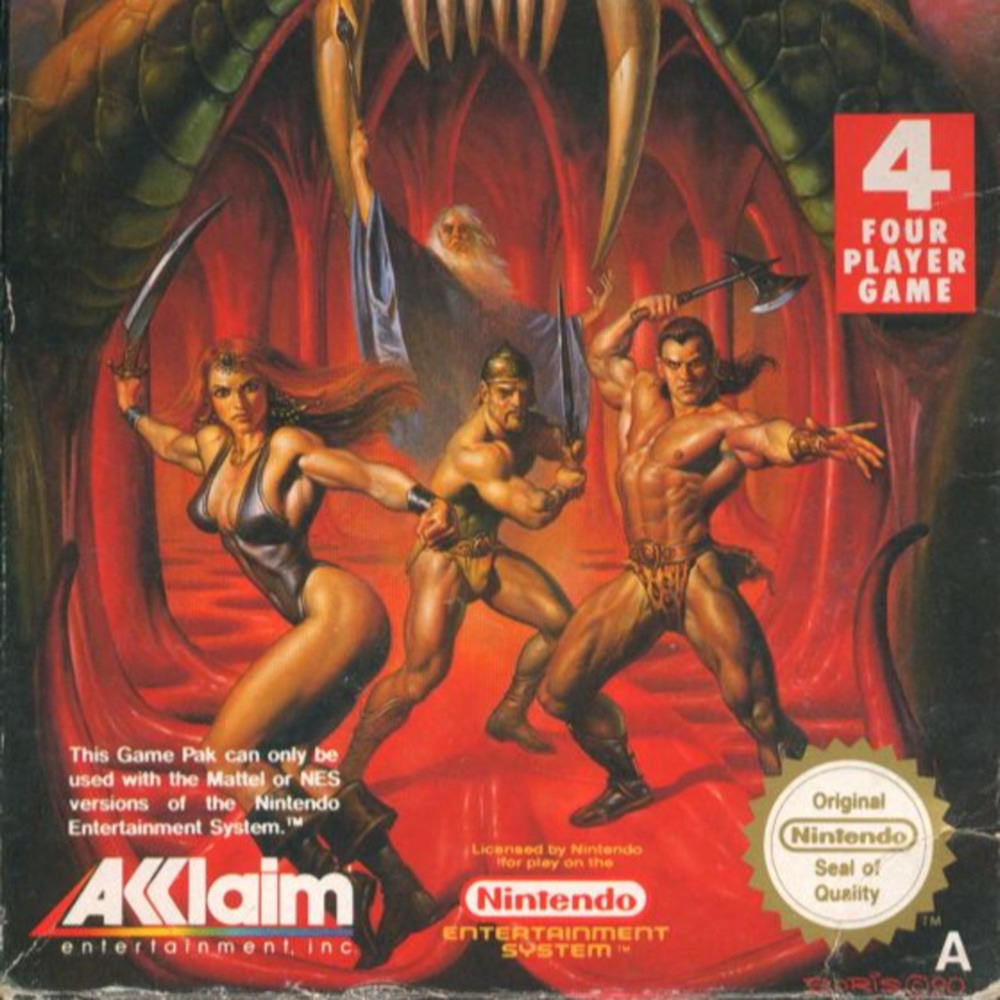
352 · Swords and Serpents
Deep in the dungeons lay the fabled ruby treasures. Many brave souls have tried to recover them; all have failed. Little did they know how futile their quests would be -- they met a horrible fate at the hands of a horrible serpent king. Can your party of champions defeat the dragon and claim the ruby treasures? Or will you, too, be vanquished?
Swords and Serpents is Interplay's first-person dungeon crawler, built for the NES instead of ported. Mike, Sean and Joe found it the first of these we could actually follow, though the title promises more serpents than we met.
What it fixes
- A map that draws itself. The 3D view sits at top left and a top-down map at top right, filling in walls and doors as you walk, with an arrow for your facing. After weeks of Wizardry complaints, a 1990 NES game with the fix modern remakes added felt like a rebuke. It beat the lost feeling of Golgo 13's maze sections.
- A button for the thing you do most. A attacks, B opens spells, so fights go fast compared to NES RPGs where everything is a menu.
- A manual that teaches. It explains what a role-playing game is and what each part of the screen does.
- Friendlier deaths. A wipe warps you to a temple with levels, spells and gear intact, a relief after Wizardry.
- The art. Enemies are hand-drawn and spill outside their boxes, and we compared them fondly to Philips CD-i characters. The snakes are some of the best sprite work we've seen.
What it doesn't
- Streamlined unevenly. Three classes, three stats, but equipping a broadsword means trading it to a character who can use it, then equipping it from their menu.
- Same dungeon, 16 floors. Mostly palette swaps, with illusory walls and a few shops, a magic fountain and spells written on walls. The map doesn't mark any of that, and it sometimes resets when you change floors. The manual even includes 16 blank grid pages for hand mapping.
- Repetition. Enemies never change the plan. You attack, level, and go on.
- No plot. You're told there's a dragon at the end.
Worth knowing
- Multiplayer divided us. Up to four can play, each controlling a character, and playing together did feel like a Dungeons & Dragons party. But a warrior only presses A, and nothing is designed around it.
- Passwords. Each character gets a short password plus a party password that depends on all of them, so you can't swap one character into a saved party.
- Magic matters. Early spells barely beat a sword, but later buffs and the wall pass spell make a magician necessary. Viper's manual entry only says it contains the venom of a thousand snakes.
- Rolling. You can reroll stats until they're good, which relies on trust.
The bottom line
Skip it. Nobody voted it onto the Essential Games List. Mike said the map was a neat trick in 1990 but doesn't stand out in 2024. Joe called it a golden Play it, best in small sessions with friends, and Sean called it the friendliest NES entry to the genre we've seen.
Written from our conversation in this episode.
- STEP INTO A NEW WORLD OF GAMING, WHERE YOU NOT ONLY PLAY, YOU BECOME!
- Not a Computer Port. An NES RPG through and through
- What is the Gameplay Loop?
- Swords and Serpents is a first-person dungeon-crawling RPG that revolves around exploration, combat, and character progression.
- The game places the player in a labyrinth filled with monsters, traps, and treasures, encouraging methodical exploration.
- The core loop involves:
- Exploring dungeon floors in a grid-based manner.
- Engaging in turn-based combat against various enemies.
- Collecting loot (weapons, armor, items) and leveling up your party of four characters.
- Managing health, magic, and resources to push further into the labyrinth and eventually confront the final boss.
- Plot is minimal; the objective is to collect rubies and reassemble a sword to defeat a dragon. The story is pieced together through small snippets.
- The game allows cooperative multiplayer (up to 4 players with the NES Four Score), which is uncommon in RPGs for the time, adding a unique social element to dungeon crawling.
- What are some Key Features of the Game?
- Character Customization: Players control a party of four, each representing different fantasy classes (Warrior, Thief, Magician, and Cleric). You can customize their stats, giving you control over your playstyle.
- Turn-Based Combat: The battles take place in first-person but are turn-based, where players select actions like attacking, casting spells, or using items.
- Players can target body parts (head, legs, body) with no notable damage difference.
- Maze-Like Dungeons: The game is heavily focused on labyrinth-style exploration, requiring players to keep track of their movements to avoid getting lost.
- The player navigates through a crude representation of a dungeon, presented in split-screen format which allows the player to simultaneously view the dungeon from a first-person perspective and a simple map of the current level showing the party's location.
- Dungeon environments are basic, with little variation between levels.
- Limited points of interest and invisible walls detract from exploration.
- Spells are found in the dungeon, not earned by level-up. find spells written on the walls of the dungeon.
- The game includes riddle-like clues necessary for navigation
- The manual even came with a few dot matrix pages for drawing maps
- Multiplayer Support: Unusually, up to four players can control each character, creating a cooperative experience for an RPG on the NES.
- Magician and Cleric Spells: Each magic user has distinct spell sets, with the Cleric focusing on healing and protection and the Magician on offensive spells, adding tactical depth.
- Offensive magic is weak, better used for buffs and healing.
- No narrative wrap-up; the game ends with a basic congratulations screen.
- What are some other Examples of Games like Swords and Serpents on NES?
- Wizardry series – Another dungeon-crawling RPG with a focus on first-person exploration and turn-based combat.
- Dungeon Magic – A lesser-known NES title with first-person perspective and an emphasis on role-playing and exploration.
- The Bard’s Tale – Offers a similar dungeon-crawling experience, combining exploration with RPG mechanics.
- Might and Magic: Secret of the Inner Sanctum – A blend of exploration, turn-based combat, and RPG elements, also featuring a party of adventurers exploring dungeons.
- Ultima: Exodus – While it’s not first-person, it shares the same complex RPG mechanics, exploration, and party management.
- What Makes it Unique/Different to Other NES Games?
- Co-op Multiplayer: The ability to have up to four players control the characters simultaneously is highly unusual for an NES RPG, offering a party-based multiplayer adventure that wasn't typical for the genre at the time.
- What Kind of Quality of Life Improvements Could Swords and Serpents Have Added?
- Battery Save: The password system is cumbersome, and a battery save feature would have made progress tracking much smoother for players, especially given the game’s complexity.
- Improved Map Functionality: There’s no in-game map, which forces players to either memorize or manually draw their maps. A mini-map or auto-mapping feature would have made exploration far more accessible.
- Clearer Objectives: The game can feel aimless, as it lacks clear in-game prompts or guidance on where to go next. Adding quest markers or more in-game hints would have improved player navigation.
- More Intuitive UI: The menu system is clunky and could have benefited from streamlining, especially for managing inventory or swapping out equipment.
- Faster Combat: The turn-based combat can feel slow and repetitive, so speeding up combat sequences or adding more battle variety would keep the pacing engaging.
- Class Balance: Balancing between the character classes would improve the gameplay experience, as some players might find the Cleric and Magician's abilities less impactful in early stages compared to Warriors.
Auto-generated transcript. Each paragraph starts with its timestamp. Speakers are not identified.
Swords and Serpents, step into a new world of gaming, where you not only play, you become.
And welcome to NEStalgia, a chronological exploration of every NES game released in North America. I'm Mike. I'm Sean. And I'm also Joe. Is Swords and Serpents a play on Snakes and Ladders? I don't think so. Yeah, not in the gameplay anywhere. Snakes and Ladders is just like a... Snakes and Ladders? Yeah. Oh, it's like Shoots and Ladders, right? Oh, we gotta make it cool for kids in the 90s. I'd say it's just Dungeons and Dragons by another name. Yeah, that's actually a really good point. My whole argument is thrown out the window because I only ever played Snakes and Ladders. I am aware of Shoots and Ladders, though, which this is obviously not doing that. So, forget about that.
Serpents with an S, though? A little misleading, right? There's just like one serpent at the end. No. I ran into a couple of serpents and I didn't get anywhere close to the end. Okay. I thought there was like one big dragon serpent thing at the end that like that's what they were referring to. I don't remember any serpents. I thought that they were all just like dudes in armor or like goblins or stuff like that. Yeah, this... I didn't get very far, though.
But this dungeon is crowded, Sean, with like everybody. It's like, are all these people thematically working together? Like, are they all part of the same army trying to take us down? Because like there's no rhyme or reason to who you run into in this game. I don't remember any like actual deep lore. I think it's just sort of you get thrown in there, you fight stuff, and then you beat a dude. And is there deep lore? I didn't read the manual. I guess I've just meant like the types of enemies. It's like, okay, I can believe that the spiders and the skeletons all like live inside the dungeon, right? But there's a lot of like other types of warriors and...
It's like a mailman. Yeah, there's no mailman. But like different types of like warriors that you'll run into and goblins and like I just did none of them feel like they're all like working together. And who would they be working together for anyway? The big dragon at the end, like he commands this army? Yeah, I mean as someone who also didn't read any like lore, if it is in the manual, I read a lot of the manual, but none of the like story stuff. But I just assumed that like all of the soldiers were part of like one army and I don't know why they were in there, but like they wanted to stop us from getting to the end.
And then everything else that's not a like soldier or like I guess a wizard or something. Everything that's not a human is just like the monsters that live in the dungeon. But that's just that's just my headcanon. Yeah, I mean there's really not much that there's really not much complexity going on. These are all standard genre fare and you would find them in any fantasy dungeon. Yeah, but I don't know if you'd find them all like together.
Like, you know, you'd be like, oh, we're gonna go go to the gnome village, meet the gnomes, right? And then take on like in the local cave, whoever like has been terrorizing the gnomes, right? Instead, it's like it's all just happening in this dungeon. Everything is here. Even the shops are inside the dungeon. It's like Smash Bros. Yeah, everybody's here. There's actually no outside world. They all live in this underground cave. There is no above ground. We wouldn't know. We wouldn't know because we don't leave it. But let's rewind for a minute. Swords and Serpents is a first person dungeon crawling RPG.
We've played a lot of those. So we've got to figure out something to talk about that's going to make this one different. And believe it or not, there is something that's different. Yes, the core loop involves exploring this grid dungeon, turn, you know, turn based combat, random enemy encounters, you know, defeating enemies, collecting loot, gaining experience. But for the first time ever in a first person NES dungeon crawler, there is a like a map on the screen.
Very, very few games that I can think of are not only do they not do this, like this is the first time I'm seeing one in an NES game, but also like it's generating the map as you're moving around it, too. So you don't just like see the whole map. You didn't like find the map in the dungeon. And then all of a sudden the map is filled out in your UI. You are filling it in as you're taking steps. You have this arrow that shows you which direction you're facing in the dungeon. It draws walls for you so you can see the boundaries of where you are. But there's still a black void everywhere else that you have to kind of, you know, explore and fill in to find out everything. Yeah, you got that fog of war.
And it's funny that like only a few weeks ago we were talking about wizardry and talking about like all these sort of these functions that didn't really age well. And we were like, oh, you know, if only they just had like a map on the screen and like, oh, you know, there's a game that just came out in early 2024.
That's a remake of this wizardry. It's like, oh, wow, they really modernize it. And lo and fucking behold, literally, however, like maybe a month later in the calendar of NES releases, this game is out and it's already got the map. And just come on, wizardry. Now you're making us look bad. Well, I mean, I didn't play wizardry yet. Well, I will get to it. But compared to any other game, not even just like dungeon crawler games, any other game that had a mode like this where you're like in first person going through a dungeon.
This map has made quality of life so much easier and it has made it like intuitive and it made it feel like a game to me rather than whatever. Like, I don't know, Golgo 13 sections like this feel like or other games like that where I'm like, oh, this is cute. But like, I'm completely lost and this is not fun. This like this made a huge difference having this map on the side.
And if you guys peruse the manual at all, you'll notice that a lot of just the first person dungeon crawling experience, while it may be simplified compared to other entries we've experienced that tried to go more complex. This game really feels like it's trying to be the entry level into not just a dungeon crawler, but RPGs in general going as far as to have sections on what's a role playing game and explaining like how each screen on the UI works. And I'm not talking about like how every manual does like most manuals.
Yeah, they'll say like, and this is your map screen, right? But this actually explains like the difference between your 3D viewing section and your map display. So for those of you that haven't played the game, the UI is basically so that there is the 3D first person view in the top left and then in the top right is a top down map that is being drawn as you move through the dungeon, kind of filling out where the walls are, where the doors are, where you've been. And then you can kind of try to figure out where to go next as a result.
And then at the bottom, you have very basic information about your party. You got a bar chart. Yeah, you get a bar. Yeah, it really is. It's a bar graph chart of just like your life. And if anybody can cast spells, just how much MP they have.
And while I do think that this game is a little more basic than other RPGs that we've played at this point, it is really just a lot of walking through a dungeon, running into random encounters, and attacking enemies until you defeat them. I will say that just the way that they took the extra time here to like think about how to do a first person game in 8-bit really paid off because it is, to Joe's point, like it is so much easier to understand where you are. And not just because there's a map, but because you have two different ways of looking at everything. It's not like you disregard the 3D screen.
You just have this other way of being like, well, which direction was I coming from? Oh, yeah, which direction am I facing? Like the top-down map really helps establish. And I think a part of that is, while I didn't read the manual, I did do a little bit of background.
This is like a game. This isn't a port. This is a game that was designed to be played on the NES. So it doesn't have all those like sort of antique features that like wizardry had or like, you know, basically you're running around this dungeon and you don't have to delve through too many menus. There's still menu diving, but it's not quite as antiquated as before. And also like this is Interplay and their bread and butter has been this kind of game. I just wasn't, I wasn't expecting like, you know, these are the guys behind like Wasteland and Bard's Tale, like them to take on this like, all right, let's do a streamlined 8-bit console version of what we kind of know best. So it's really interesting.
Yeah, and when you say streamlined too, like they, it's both, I think it's great for like someone who's not super into these games. I mean, even like attack is A. You just press A and your character attacks and that's it. There's no, there's not like a big menu or anything. You press B and you get your menu of spells and that's it. Like, so you can, you can get through a battle quite quickly compared to a lot of other RPGs we've played on the NES where everything is a menu. You have to select a bunch of things.
It kind of, it's almost like a no brainer now that I think about it. Like why haven't other, you know, like, you know, why can't other games, maybe not Final Fantasy, but other games just be like A, attacks. I mean, some might also say that this is like overly simplified. So we haven't gotten to the qualitative moment of it. Sure, sure. But I do, I do think that like having a button for the thing you're going to do the most is kind of a cool idea. And then another button that opens a menu of the other options. Yeah. So let's, let's start with that turn-based combat since that's mostly what you're going to be doing as you walk through this dungeon maze, whatever you want to call it.
The battles that, you know, you always run into, you can run into multiple of an enemy, but you can't run into groups of various enemies. Is that right? It never happened to me. My understanding was that. I think they're all the same enemy. Yeah. Like, so if you ran into a spider, you could face seven spiders, but you're just going to like, you're, you're only facing just spiders. And so there's no like, Oh, I have to manage like the wizard and his six spiders.
Inside the turn-based combat, they, you know, Joe explained that basically you can either attack or you can use the spells there. There, you do learn spells as time goes on in the game. You start off with a few if you have like the, the wizard class, but, or no, it's magicians, right? They're not wizards. Magicians and clerics.
Magicians and thieves and warriors. There's, I don't think there's clerics. Right. Sorry. Uh, but I, I guess you, well, yeah, cause they all learn the spell, right? Like, so the spells are on the walls in the, in the game. And so basically that's how you learn the spell, but then everybody learns it who can. Correct. Yeah.
Which is like, why can't that be applied to the other things that happen in this game? Like, okay, you defeat the enemy and whoever's first in your party receives the broadsword. But wait a minute, that character can't use the broadsword. So you have to go into, uh, even though there was a lack of menus in the turn-based combat, there's plenty of menu navigation when you're trying to do anything with your characters. Because you have to enter, um, uh, there, there's, there's three different menus. There's B for your spells. There's start for like your systems.
And then there's select for like your inventory and other things. And even when you press select for your inventories, it asks you if you want to view one character or the group. And viewing the group is kind of a useless thing. It's not like it makes it to this way. You can see what everybody has equipped. For that, you have to go individual. Individual. And then in the individual equipment, you have to now like select a character who received the broadsword in the fight, trade the equipment over to a character that you hope is capable of having the broadsword equipped, go into that character, and then equip them with it.
It is, I just feel like we've seen easier ways to get this done already. And it is a game that is supposed to be, at least my understanding, supposed to be a little like simpler and easier to digest for those. Yeah, sure. What's funny is like, so, so it's very unevenly applied, this whole like streamlining thing. They cut down classes down to three. There's three stats.
Um, uh, but then you've got these other weird like holdovers from, uh, like the menu diving of, of the older generation, I guess. But I also think this might be a side effect of the other kind of feature that we haven't talked about yet. And that's the fact that you can play this game multiplayer. So it would kind of make sense to say like, oh, uh, this is my inventory, not your inventory. Even though, uh, all I can do is press A.
Like if you were playing this multiplayer with friends and you had a warrior, like all they can do is press A to attack, which is very funny. But I also think that that might be why each individual character has an individual inventory that they would have to voluntarily trade to you. They can also choose to flee the fight and say it's up to you. True. I think that's like, I did, I did think about that. Sorry, Joe. I just wanted to. Go ahead. No, go ahead. While we're on multiplayer. Uh, just, I do wonder, like, is it, is it just a cool feature to have the ability to play with, uh, you know, either two or four? Sorry, there's no three player multiplayer.
Uh, is it just a cool feature to have? Or does the game actually work in this, like, not competitive, but like friendly way of being a party with like different types of characters, all like having their own strengths and weaknesses? Like, I don't think this game necessarily like did enough to lend itself to like, this is an RPG party game. Like instead, it's just kind of. I don't think so. Yeah. To Sean's point, it's like some characters just only attack.
Like that's the thing they do. And they don't get to like, oh, well I can, because I'm, uh, the thief, like I can go talk to this person and have a different dialogue conversation than the warrior would. So this is now my side quest. You know, it's like, that's not happening. Yeah, you basically, the only difference here is that the player one is going to still be like the main character. They're the ones that get to walk around and the other characters, you're basically just outsourcing battle control of one of the characters. Yeah. I mean, that's true. And, and I, I like, I both agree and disagree. It's definitely, yeah, you are, if you're playing as a warrior and in multiplayer, yes, you're just pressing A.
Okay. I'm telling you that like each character does have agency. It seems. Um, I did play multiplayer. I played also single player and, uh, I, you know, I didn't get super far either way. I think it got to the third level in multiplayer and I got to the fifth level in single player. I did have a lot more fun playing multiplayer. Like, and it did, we, we did feel like we were working together and like deciding who's going to do what. And like, yeah, we could, you could play single player and everyone just talk and decide what to do. But there, there is something like imaginative, but also like there's, there's something about having this attachment to your character and building up your stats.
Granted, everybody levels up at the same time, but you are like making trades for like, oh, you got a broad sword and like I can use it. And then this other character can use it. Like who can use the broad sword? Like, you know, I'll take this and, uh, you know, can you heal me so I can keep attacking or I'm going to flee because my health low and things like that. It, it's, it does feel a little bit like it's a D and D party. You know what this reminded me of? Basic version of this.
This, this kind of, the way you described me, it kind of reminds me of before we had a podcast and we had a board game night and, uh, the host of the board game night was also Mike. Uh, so he would, he would bring out pandemic, which is a cooperative multiplayer board game in which you basically just hold cards for whoever's got like, you know, whoever's going to make the plan and you just kind of do what the plan says. You're not really being like, I don't see it as having agency. I see it as just, again, just holding the sword.
You know what I mean? I don't know. I don't, I don't see the same. I know what you mean, but I guess what I'm saying is it's not just holding the sword. It is like, you know, deciding what you want to equip and like it, you, you do control your character, especially the, the magical characters where there's different spells you use. There's different, there's different ways where it's like, Hey, I need, I need you to use dead eye on me. So I, so I stopped missing.
And then it's like, you know, there is like a level of stuff that you do that the other players don't do, you know? And like, it is not just like, okay, this is what we're going to do. Everybody do your action. But there's also like, I mean, it can be if you, if that's how you play it, but like we were playing it where everyone's kind of just a control of their own character and everyone, you know, the, the wizards, no one said like, okay, it's time for the wizard to use a heal spell. Now, like the wizard decided when to use the heal spell and, or when to like buff somebody or when to use a shield spell on, you know, on the warriors.
There's definitely more complexity if you're being a magician. I was talking about like, if you're a warrior, but just a thought here, Joe, uh, and I'm not trying to say like, like I do, I agree with everything you're saying, but don't you think theoretically, and this is not to discount what this game did, but theoretically if final fantasy made it so that, you know, you make a party of four and, and it actually had four player support, it would be basically the same thing as what you're saying is cool in this particular game.
And the point I guess I was trying to make was that, doesn't that just mean that it's just like a, it, this game didn't specifically like introduce any kind of multiplayer mechanics into it, but just made it so that like the, you know, the multiplayer part is, is that your character is the, you know, is your character's the leader.
My character's the magician, the other character's the thief, and we're all playing as different people, but they didn't like actually think about how to take that multiplayer experience in any other way than just being like, well, you just control a different party member than the other person. Basically what this is doing is just, instead of passing the controller around, like now your controller's just tied to a character.
Doesn't seem to be anything designed to make it more engaging. I mean, yeah, I don't, I don't think that they designed anything that, I don't think they designed anything that like changes the game, like the game itself, but just the, just the act of having your own character that somebody else can't control. I mean, yeah, you can pass the controller around and get the same effect, but that would be tedious.
So like, I, I do think that there's, yeah, you have to use a little bit of imagination and you have to like maybe set ground rules like, hey, we're not going to just play as a one player game where one person's giving commands to everyone else. And as long as you don't do that, there is agency to each character, but yeah, it's, you're right. Like they didn't, they didn't do like, they didn't make it. So there's something different than single player as far as like the code of the game. But they actually did. And I'm, and I'm going to make, I'm going to give you. I can't even agree with you.
I know. I'm going to, I'm going to, um, give you a counterpoint that I did think of. And I do think that this is worth talking about because this is not possible in a Final Fantasy, um, RPG on the NES. None of those styles games allow this. This game allows when you want to save your game, there is no battery to save. You get a password, but you don't just get like a password for the like spot that you're specifically in and you load right into. You get a password for each character.
So theoretically the multiplayer component is almost a little bit. And this might, I didn't fully play this game. So this might be not a hundred percent true, but like Final Fantasy Crystal Chronicles, like where you can just bring your, uh, your character from your save file to your friend's house. And some other people can come over to, and you all hook up your Game Boy advances to your GameCube. And now you're all playing together as a party, but it doesn't mean that you have to finish the game as that party.
You can take this character that you got the password for, go over to somebody else's house and be this awesome character loaded into their file. Playing as that particular person that you did at your other friend's house or at home and, and still have that experience now with a different friend. So they actually, you will start at level one though, regardless.
Yeah. That's true. So, so what do you get? Just the items and gear that you've had? And maybe I think the gear, I'm not sure. I think you get the gear. You might even get the spells, honestly, but I, I, I don't know. Yeah. Cause that reminds me of probably a much lesser known game than a crystal Chronicles, but a return of the King on the PS2.
One of those rare of those age, like games based on a movie that was actually fantastic in my opinion. But yeah, it was the same thing. I would play, I would play, you know, through with like a buddy and I would be Legolas and he'd be Aragorn. And then I would go home and I would continue playing my single player game with Legolas, level them up more and then bring them back. I mean, that would be cool if that's, we, we didn't do anything like that, uh, when we played yet. Cause we haven't, we only played one session, but, uh, it would be interesting to see if I could take my single player, uh, characters and load them into our, uh, like a new multiplayer game.
You know what? I hate to do this, but I was, it's not true. I was looking into just like what carries over and such. So it's just based stats, huh? No, it's worse. It's not possible. I came up with something cooler than the game. Wait, really? So where did you come up with that? Well, they do have a different password for each character. Right. They do have a different password for each character.
All right. So you can't just take like, you know, uh, let's just use the, uh, the default party, right. Uh, that you get with the game, uh, Iago, you can't take like that Iago that you have and just take that password and enter it and then create three new characters. Like you, you can't do that. That's pretty, it's pretty upsetting. Look at us. Well, I don't think that's a look at us thing. I think it's like, why wouldn't it work? I just don't have friends, but it turns out that they didn't do it. So that stinks.
I guess that makes sense. Cause I was thinking that these passwords, although annoying to type in, uh, four of them, it is pretty interesting that they were short, right? Like I feel like Metroid had an incredibly long password. Granted it was an older game, but why is this so short? But it turns out, no, it's just a clever way of breaking up the lines of code.
So even if you're playing, even if you're playing one player, does this work that way? It is still separate passwords for each character. Okay. So I didn't realize that cause I was also thinking like, wow, this is the first time I've ever seen four digit codes. So I was like, what, what information could even be in those? So the name, the name needs to be in here's, here's the rules.
Sorry. This is like from an old forum post on swords and serpents. The name needs to be in, uh, included in order for a character password to be valid. So you have to type in the correct name, Iago with the password that was provided. The game password, uh, uses the other passwords to generate it. So if you create three, all 14 stat characters. So it's hashed, insulted, and.
But then you later want to replace one with the other character. You cannot, the game password will not be accepted. However, the order of the characters can be changed and it will still be valid. So to use the default party of Iago, Mask, Ajax, and Eren, you could have Eren lead the party, but you still need Iago, Mask, and Ajax as you had them in the other file. Is it does not, like, there's no real leading, there's no character that's leading the party.
Aside from in a multiplayer setting, I guess, where whatever controller you're using is also controlling one of the characters. But in a single player game, like, there's no, like, there's no turn order and there's no, uh, like, preference for who gets hit. So leading the party is kind of in air quotes here. Yeah, I mean, I guess it feels a lot different in multiplayer because, yeah, the leader is actually the one moving through the maze. But, yeah, in single player, in single player, honestly, I don't even think about who's who. I just, yeah, I just going through. They're just pools of health and mana.
Yeah, exactly. So for single player, I just use the, the, um, generic, like, customer, the pre-made party. And I don't even remember their names. But, um. It's Joe, Mike, uh, Chris, and Sean. Oh, no, Sam. Um, well, Chris has, uh. Chris has been Sam in 200 episodes. I was going to say 200 years. Yeah, but, uh, but the listeners don't know Chris. Sorry, Chris. I know you can hear me right now.
Chris is our audio producer. What I did like about this game, though, and, you know, this is another streamlining, not so much making better. But it, it was just a, it was just refreshing after the complete, again, I'm going to continue to reference wizardry, which I know you haven't played, Joe. But, uh, just the intense, uh, like, punishing level that wizardry got to in terms of, like, if your party dies, like, you have to then lose those characters and go back and get them. Or, uh, just abandon them and start over from scratch.
Whereas in this game, you just kind of get warped to, like, a temple, and you still got all your stuff, and you still got all your spells, and you still got all your levels, and then you just have to backtrack. And I know that that's super baby mode, but I think in a game like this, I think that's necessary.
Um, you know what, as you said that, I did remember that I did play a little bit of wizardry. I just couldn't make the episode and didn't play enough of it anyways. But I do remember now, at least the beginnings of wizardry. Thought that needed to be, I thought I needed to put that out there. That sucks. But it sucks that, like, you had to, you had to, like, die and then go back and get them, and it just, you know, it hurts. Yeah, it was, this game, again, for that, like, ease of access compared to a lot of other games, uh, is a lot less punishing also. But still can be punishing. Oh, yeah. For no reason sometimes.
Like the fact that, I love the fact that when you, when you go through this dungeon, you are, you are revealing it and, and basically plotting it on your map as you go. And then you can, you can go to the next floor, you come back, and it's like, all right, I've already been here, so I'm not lost anymore. Because the map is already right there. But then sometimes, it just resets all the maps. And that's so frustrating. That was, like, the coolest thing about this game. And then it's like, I gotta go back to, like, level two after I was on level five, and I'm like, oh, it's completely, I gotta, I gotta fumble my way around again. Joe, that's actually them simulating concussions.
Oh, okay, yeah. Probably get a lot of concussions from the, from the goblins. Yes. I mean, I guess, realistically, if I go through, you know, all these levels in real life of dungeons, I don't have them all 100% committed to memory when I go back hours later. But they definitely, like, tricked me into thinking I was gonna get that. And then it, it didn't happen all the time. And while it's nice to have a sense of place in the dungeon, thanks to the top-down map that is being drawn for you, the dungeon environments themselves, I mean, like, it's really basic. There's very little variation between the various levels, of which there are 16 levels to explore.
Basically, it just changes from, like, the walls are blue to the walls are purple. There's not even, like, points of interest, though, you know? No, yeah. There's invisible walls, which is just frustrating. Not, not necessarily a cool thing. I mean, it's cool when there's, like, one invisible wall. Invisible walls or illusory walls? Oh, is that what they're called? Well, is it a wall you can't walk through and can't see? Or is it a wall that you can see but then be able to walk through? It's a wall that you can see but then be able to walk through. Ah, okay. That would, it's just, it's not an invisible wall. That's true. So, so. Silly goose. What, what, what did you call it? I like that. An illusory wall.
So there's illusory walls. There's limited points of interest. There's just a palette swap across levels. I just think that, and let's talk, you know, we can talk, too, about even just, Joe was pointing out one flaw, but I think another flaw of the drawing map system, now that we've done enough praising of it, another problem is that it doesn't mark anything of note. It just draws a map for you, but it doesn't say, like, it doesn't place an A or a shield for, like, where the armory is. It doesn't point out, like, where a previously opened room was. Like, a door open doesn't exist. It just draws a door.
I know I'm asking for a lot here, but I guess what I'm saying is, is that the game wants you so badly to be involved in the map system that there is a first-person 3D map on your left, a top-down 2D map on your right, and then in the manual, there is a page, a blank dot matrix page for every single level of the map. So 16 blank dot matrix grid pages for you to draw the map yet again,
but this time with an actual legend of, like, this is where the temple is, and this is where the armory is, and this is a staircase, because it wouldn't mark that for you in the game. Why they were, like, going through three different ways to basically have a map, including a whole page on just the idea of how to draw and map your quest, makes me think that this is actually just like a Lewis and Clark mapping simulator.
I think you're licking a gift horse in the mouth. First of all, like, there are no points of interest, Mike. Like, there's just walls, floors, and ceilings. It does mark doors at the very least, so if you can see on the other side of a door, one would assume you've been through it.
And yes, it would be nice to mark the armory and the staircases, but I think that's the only real complaint there, and that's just like, you know, they've already given you a pre-drawn map. So I just think there's, I think they're still doing the right thing. Yeah, and I mean, there, see, my issue with it was that there are sort of points of interest. There's shops, and there's, like, the magic fountain, and you run into, like, people that tell you stuff, and places with spells on the wall. There's spells drawn on the wall, yeah. Yeah, there's just no, like, I don't even, if it's not on the map, fine.
Give me the map and the manual, and I'll mark it down, and, like, that kind of, that's kind of fun, I guess. But, like, on the left side, when you actually, like, they got this nice screen with all these graphics on it. Why is everything a blank wall? Like, I'd like to see this magic fountain. Well, this is where it all went. Give me some graphics. The graphics are all in the enemies. Have you seen these enemies? I mean, that's true. They kind of look like Philip CDI characters. There's, like, animation.
They're definitely hand-drawn. They're going outside the boundaries of the box. I love this. This is some top-level character art here, and we're just kind of, we're just complaining about the boxes. Like, let's show some love. I'm disappointed that you guys never saw any of the serpents, because they're, so that might be, like, some of my favorite sprite work that I've seen. I'll post one for you guys to see right now. But, like, they are very cool-looking serpents. That's a spider Joe. Okay. He got angry.
I had to do that, too. I had to leave and come back in order to post this picture for some reason, because it's how my Discord works. Like, look at that. Those are some cool serpents. He does look smiley. Yeah. They look like the ones on the box, too. Yeah. It's kind of like the Harry Potter basilisk. But the second photo, sorry, the snake is almost, like, smiling in the second photo. I kind of want to, like, befriend the snake. Yeah. And why are we forced to fight these guys? Yeah, he just looks like these guys. Because it's either swords or serpents. The game lies. You can't have both. It's swords or serpents. Damn. There's also, sorry, Sean, there is no plot explanation, because there's very little plot in the game at all.
Apparently, there's a little, you know, there's a little bit here or there. The game hits you early with just, like, you know, there's a dragon at the end. Yeah. There's a dragon at the end of this. Like, it's like, okay, thanks. Like, that's a weird thing to say. It's like, the beginning is literally, like, somebody goes, like, hey. And then you walk forward. It's like, oh, hey. And then you walk forward. It's like, you're on a quest. Do this stuff. It's like, whoa, this is really jarring. Yeah. I think it's leaning very heavily on you to just, like, imagine the story. We were talking about combat a little while earlier, and I don't want to get back to it. I do think it is pretty simple.
But magic starts off kind of like, I feel like offensive magic at the beginning isn't really that much better than just attacking with a sword. So I mostly just hit the A button a lot at the beginning of the game, even if I was the magician. But as you move on, you can, if you find them on the walls, you can learn a lot of spells. That whole page will fill up, and you have a lot of different spells to choose from. It makes me think that the game's probably not beatable without a magician in your party. Like, you probably need a magician.
I think it says that in the manual, actually. Okay. We read that somewhere before. It said, like, you cannot beat the game without a magician. Got it. Yeah. Unless I saw that on an FAQ, but I'm pretty sure we were actually reading the manual. I did watch a speed run, and he definitely had magicians. So I would think just with, you know, by virtue of it being a speed run and how optimized those are, one would assume that it's probably not very easy without one.
Well, there's also a spell, what is it, on, like, the fifth or the fourth or fifth level, there's, like, a wall that you have to walk through that is not illusory or whatever we were calling it, that is just a regular wall. And I think you need the wall pass spell. Yes. So, like, there might be some, like, key spells you need in order to progress. So you're automatically softlocked if you just select more years of peace. If you don't have a wizard, a magician.
Yeah. Or serpents. But, yeah, I did notice also that, like, the first few spells I got all seemed to do the same offensive thing as, other than the heal spells, as your attacks do. And then it wasn't until later that I realized how much of support characters the wizards need to be, or the magicians need to be, where it's not just healing and stuff like that. You're actually, like, buffing yourself and nerfing the enemies as much as you can with, like, with, yeah, shield spells or, like, the dead eye accuracy spells or there's, I mean, I didn't get this, but I know there's a spell much later in the game that, like, crystallizes the enemy and stops them from taking their turns for a while and things like that.
So, you know, I imagine the further you go, the more, like, essential the magicians become. Yeah, I think that's what I was arguing, too, is, like, you only start with heal and flash fire, but even just the ability to restore some health or attack with something other than a weapon just feels like a big, like, buff. Why wouldn't you run, like, three magicians and a warrior?
Right? Like, I feel like down the line. Sometimes you can insta-kill with the thief, you know? Okay. I guess that's a good argument. Yeah, that happens a lot, actually, with the thief. I almost feel like if I were going to do your method, I would go three wizards and a thief.
Yeah, right, as we say, yeah, just do that, or just do the default party, Iago and the gang, because that gives you one warrior, one thief, and two magicians. So, all checks out. The spells, there is a section in the manual that tells you, like, heal, restores six health points. That's good to know. It's good to know how many health points are restored by a heal. Oh, it's not a roll. Okay, that's good. Yeah, it's good to know. And then it's good to know things like, you know, thunder can zap two enemies at once. Like, oh, this is a ranged spell. Like, it will attack multiple enemies. But there's a spell called Viper, and the action listed contains the venom of a thousand snakes. Well, I don't know how strong that's going to be.
Does it hit more than one enemy, or is it just overjoying someone? Yeah, like, don't ask any other questions, okay? But literally everything else clearly explains what it does other than Viper, which just made me think, like, somebody just thought that was, like, too cool to pass on. Like, we have to write that. Like, but we don't know how many hit points it does. Don't worry about it. Yeah. It actually doesn't attack the enemy. It just is the venom of a thousand snakes. It just exists at that point when you cast the spell. Yeah, yeah. Um, did you guys, uh, roll for your characters, or did you use the default party?
I rolled. I did. I did roll. It's pretty easy to get stacked. I thought it was kind of cool that you can just, you can just roll forever until you have exactly what you want. Yeah. Like, there's, I mean, I guess what would stop you anyways, you could always just reset the game if you didn't like what you got. Let's just make it easier. But, yeah, you can just go and go and go until you get something good. There's a trust system, right? Because otherwise you might as well, um, not even just restart, but like, why wouldn't you just make it a slider then? Right? Of just, you know, ah, just gonna max out every stat. It's, the roll is there because they trust you to be honest about your rolls.
Yeah. And also, like, you know, when, when we were rolling, there were a lot of times where we were like, okay, this is going to be our, our wizard. And so we want his intelligence to be high. And then I would get like high intelligence and high strength and really low AC. And I'd be like, well, you know, it's probably worth it for those two high, like if I re-roll, yeah, maybe I'll get a higher AC, but I'm not going to get this good of the other two.
So like there were incentives to just like take a hit on a stat here and there too. Well, we might as well roll the dice on the ending of this episode with the essential games list, but, uh, I don't think that anybody should actually roll a dice to tell them whether their vote should be essential or not. So let's do it for real in the essential games list.
All right. So double sixes. I don't think I'm doing that right though. Right? Like six sided die and Dungeons and Dragons don't, I'm sure you do roll a six sided die, but I feel like you also roll a bunch of other crazy die, like the D20. It'd probably be a D20. Right. But like the D3 exists where it's like a pyramid. Um, there's so many cool die that at one point I was just buying weird dice. I was just like, uh, I just want to have all these different dice. Yeah. Chris is typing. I knew it was only a matter of time.
Chris is having a breakthrough episode here. So many references, really just from Joe. Me and Sean are trying to make sure that he doesn't exist, but okay. Pyramid is D4. A is D3. Is a D3 is a D6 divided by two. All right. I don't know. A D6. But what would we use for the essential games list? It would be a coin, Joe. A D3 is like you roll a six sided die and then just divide it by two. Yeah. That doesn't sound right. What if you roll a five? Yeah. But I guess five or a three. It's probably five and six is three. Three and four is two.
One and two is one. You know? I want them to just make a D3. Why can't they just do that? Chris says yes to Sean. I don't think it's possible. Why can't we just have a, we have a D2. It's called a coin. I think that would be a caltrap. Right? A D2 is a coin? Yes. That would be a coin. Okay. So why can't we have a D3?
I bet you there's some like unique, weird, like shaped die out there that, that they, you know, wouldn't, doesn't function very well, but technically works as a D3. Mike, this is your essential games list vote, by the way. There's a D100 out there. There is. Oh, you know, like, like a hundred sided die. That's crazy. It's, it's two ten sided die. I believe Chris has a 100 sided die.
Yeah. Chris does. Why am I talking about dice instead of the game? Uh, I don't know. Uh, actually, you know what? I'm going to be honest. I really enjoyed my time with this game because of that little 2d top down map. Uh, it made me realize that sometimes with these older games, you really can appreciate a simple quality of life improvement. And, um, this game more than any other of these dungeon crawlers was something that I could
actually hang with for a little bit longer than I probably, uh, am accustomed to at this point on the podcast. Uh, I did play quite a, quite a good, a bit, but the problem with playing quite a good bit is that you realize that once you do all of the, like what, once you hang with the game a little bit, the actual experience of playing the game is really, uh, just navigating this uninteresting map and constantly running into random encounters where the only real question
is what am I going to do? Because the enemies don't really do anything of particular note in the sense of like, oh, this is going to like, like this new enemy is going to completely flip the script on me. It's like, no, it's really like, how do I want to attack this? And so you mostly just wind up doing the same thing over and over and over again, which is a problem in a lot of RPGs, but it's specifically a problem here because that's the whole game. The whole game is you are inside this dungeon with 16 floors and you just continue to run into enemies that you continue to defeat, to continue to gain experience.
It is incremental in a way. It's a, it's, it's not, it's not an incremental clicker game, but in some senses it, uh, it has some parallels to that. And so ultimately I didn't feel wowed by anything in swords and serpents other than this little like map generator drawer, which if I recall in our wizardry episode, there is a program on like steam now that can do this for any NES game. You can just to have, have any NES game, like track its location for you and draw these maps. So theoretically this is possible with a wizardry or with a Metroid or, uh, a Simon's quest even, right? Like anything that you want to mark your locations and move along, you now have the ability to do so. So the fact that this game can do it is really neat in 1990.
It doesn't make it stand out in 2024. So it's a no from me. What about you, Joe? I, uh, I had a hard time with this one, uh, with deciding this because I really, really enjoyed this game, uh, while playing it with my friends and even while playing, uh, my single player file. Um, it is, it does feel like it, it, it nails that sort of dungeon crawling feeling where you are, you are uncovering things as you go and you're, you're, you're really learning about this world and you feel like you're in danger and you feel like you kind of have to plan ahead of like, how do I get back up a few floors in time to heal before I keep going back down? And like, I, I love that about it.
Um, as I was playing again today to kind of refresh myself before we recorded, it sort of dawned on me that I think something like this, it's something that I really like, but I think that I sometimes lose sight of the difference between an essential game and a play it. And, and I think that this is a play it. I do think that what you're saying, Mike, is that like, I, like, I think that I agree that after a while, yeah, this game is kind of doing a lot of the same thing without a lot, of anything different happening.
And I, I was loving it and I'm on, I'm on level five. There's 16 levels. So maybe it gets more interesting as it goes, but my opinion is this is definitely a play it. I'll even say this is a golden play it. It's been a while since we heard that one. But, uh, I think that this is not a game that you marathon. I think this is a game that like you play a little bit. If you can play multiplayer, even better.
And then like one day, a couple of weeks, months later, when those same friends are around, be like, Hey, let's see if we can get a little further than that. And like, just do that for years and don't, you know, you won't get sick of it that way. If you love, you let time between, but I do think this game does lend itself to like you getting kind of tired of it. So in the end, not essential. Sean. Wow. So I, I'm, I'm kind of in the middle between Mike's total indictment of the genre and, uh,
Joe's really enthusiastic, uh, great, like, I won't say love since you said it wasn't essential. Um, I, I also just want to throw out there that I don't think just because there's like, you know, some tools, uh, that can be sort of hacked into games on steam. Now it doesn't mean that like that, that will affect whether I think something is essential, but I do, uh, I do not think this is an essential game.
I do think that this is really interesting. Interesting, but just because like, this is the first time we're seeing something so streamlined that it seems like that this was the intent was, Hey, everything that we, that we've seen come out of these games, uh, come out of this genre has been really dense and it's really easy to bounce off of. And it's probably because we're trying to make PC games on the NES. So let's try and make this genre on the NES for real. And it seems like they succeeded in doing that.
Um, we've, we've gone over all the pros and cons. Uh, but I just wanted to say that that was, I, I, I would say it's a play it if you like dungeon crawlers or maybe if you have just found them completely opaque and want to give a shot to something with a little bit more, not polish, but a little bit more forgiveness.
Um, but yeah, still not essential. That is a great point though, Sean. We, we don't talk about that enough that like, this is, this would easily be even, even if I didn't sound enthusiastic about the game, it would be my, uh, accessible entry point for anybody who wants to try a NES, uh, dungeon crawler. You know, I wouldn't, I wouldn't recommend any of the other ones that we've played because they're just so difficult, so old, so, uh, removed of the kinds of things we expect in video games now.
Whereas this one, uh, you know, just even the ability to understand your place in the world, uh, which sounds crazy, but like that's enough in a way for, I would recommend, I, we, we need more of that. We need to think about like, you know, if you can only play one of the genre and the genre completely sucks, which would you play?
But the genre doesn't completely suck. Of course, there's, uh, many a good dungeon crawler out there. Um, there's a whole, there's a whole book on it. There's books and books on dungeon crawlers and there are an exciting genre. It's just clearly not something that I grew up with. So it's a little harder for me. You know, it's really hard that I don't have any nostalgia at all, but I also don't have any nostalgia for this genre. So it's like platformers probably get an easier pass, right? One would imagine. Yeah. Especially because like platformers, platformers did things right from the beginning. You know, like we kind of said like, yeah, that's the blueprint. Like jumping is good. Yeah. Jumping is good. Like, and have pits while you're at it.
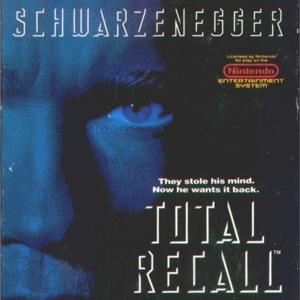
Um, next week, what are we playing? I don't know. I know it's up to me, right? We are playing. Okay. So, all right, wait, well, we made Joe do a deep dive into Dick Tracy before we played that game. Next week is total recall. So is anybody the total recall expert or does one of us have to become one by next week? I'll become the total recall expert.
Okay. Sean is our- Yeah, I've never seen it. So that's perfect. I'll defer to Sean next week. Sean is our total recall expert. I feel like there's not that much, right? There's like, there's probably like- I think there's two movies. One of which is a remake. Two movies. One of which is a remake is correct. Uh, does the remake also star Schwarzenegger? I think it's Colin Farrell in that one. Okay. And then there's apparently also a TV show. Oh, I'm not watching that. Yeah. Uh, total recall 2070. 22 episodes. We're not going to expect you to watch that, but maybe you check out like the theme song.
I'll watch the- I mean, I got to imagine. I'll watch the intro. Like, yeah, that's the theme song. The intro. That's, yeah. Yeah. Um, I mean, it'll- I'm sure it could only help to watch the new movie, but- But really, it's only the original movie that is going to have- That this game is going to have known existed when it came out. No, no, no. I'm going to make sure that we- That we compare to both of them. I'm going to have a whole section. Oh, okay. Yeah. Perfect. Yeah. I'm going to have a whole section here. Thank you.