394 · Mega Man 3
Mega Man 3 is a traditional side-scrolling platformer: you jump from brick to brick while avoiding pits and shooting robots. It's quite similar, in all respects, to other Mega Man games; however, this is the first time that you get a sidekick. It's also the first time you're allowed to slide instead of merely walking. Support NEStalgia directly by becoming a member of our Patreon at https://www.patreon.com/Nestalgia Members at the $5 and above level get access to our brand new show NEStalgia Bytes. A look at the famicom games you can play without any Japanese knowledge! For More NEStalgia, visit www.NEStalgiacast.com
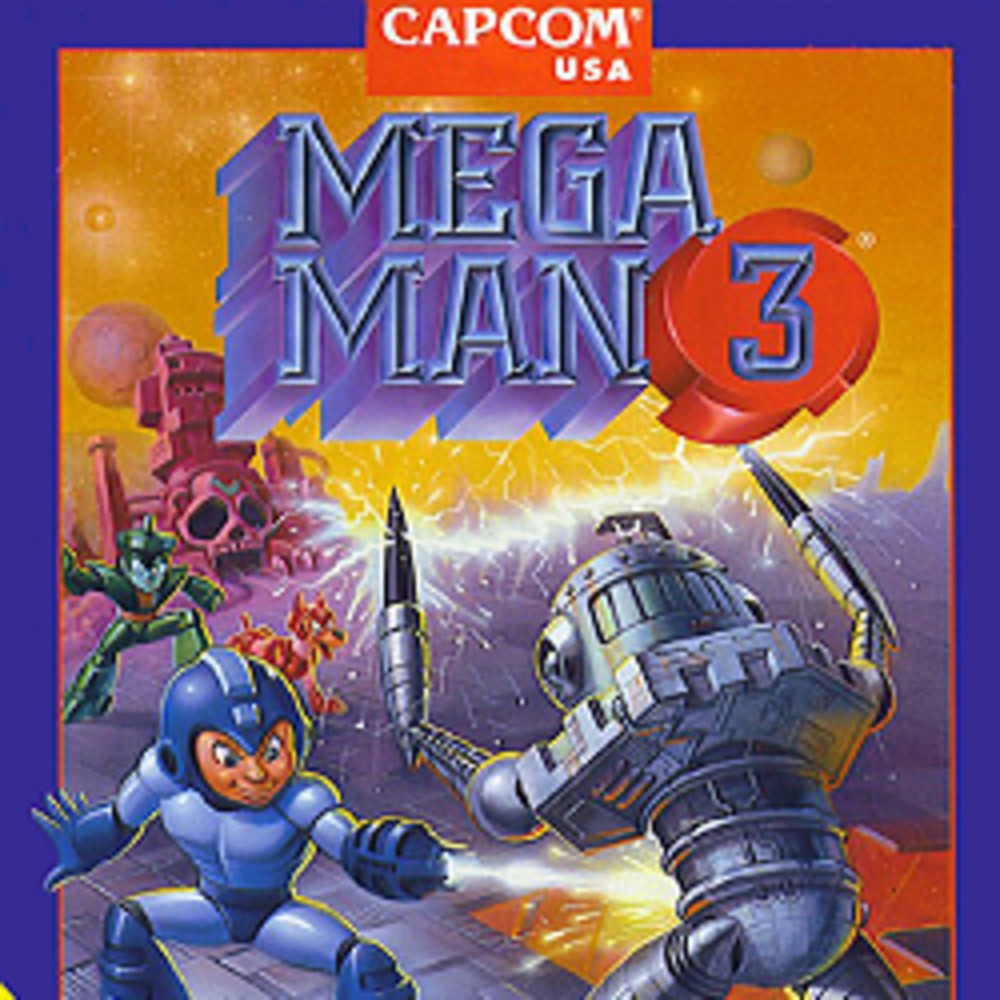
Mega Man 3 is Capcom's third NES entry in as many years, with eight new Robot Masters, a slide, Rush the robot dog, a mid-game run of Doc Robot stages, and Proto Man (Break Man here) whistling his way in. Mike, Sean and Joe were all on this one, and we spent much of it complaining. We still voted it onto the Essential Games List.
What makes it essential
- The slide. It's a dodge, it's faster than walking, it gets you under attack patterns, and the game works hard to teach you it matters. It feels like part of Mega Man, not a gimmick.
- Rush. Coil, jet and submarine are more than a cute pet. The jet can lift you over hard enemies when you're short on energy, and in one spot you must use him to proceed, via a menu jump that felt like a puzzle.
- Weapons that stay inventive. Needle Cannon shoots through walls, the snakes crawl along edges to reach ceiling enemies, and the laser bounces. Joe called the series the goat for power-ups: tons of them, all useful, and you never feel overpowered, since the plain blaster can still beat every boss. The Top Spin seemed useless, yet it finishes Gamma at once.
- A kinder curve. More health orbs and extra lives sit in the open, boss rushes hand back health, and energy tanks survive a continue. Mike found it the tightest, most accessible Mega Man yet, with shorter Wily stages that fight bosses who aren't robots, a reverse of Mega Man 2's brutal castle.
- Enemy design. Every enemy has its own mechanic, like the pole-vaulter you must slide under, and the hard-hat minions have won us over.
Where it stumbles
- Doc Robot padding. Eight bosses in remixed versions of stages you already beat, some with near-identical layouts. We'd rather have had four new stages.
- Break Man. The whistle is great, but the fight is slide under him and shoot, and it returns unchanged.
- Ammo lost on death. Spent weapon energy stays spent, which we didn't like. Passwords also stop saving once you reach the Wily stretch.
- Bees and the Yellow Devil. The bee drop can't be dodged, so we took the hit. Mike's run ended at the Yellow Devil, where hitboxes seemed bigger than the sprite and a turn-around input could get eaten.
Beyond the game
Capcom took robot designs from a fan contest with more than 50,000 entries, and Top Man is one winner. Series lead Akira Kitamura left early in development, and Inafune has named this one of his least favorite entries. A second controller works as a debug input: hold right for a super jump.
The bottom line
Essential. We all voted it onto the list. Joe said all three NES games earn it. Sean agreed reluctantly: he didn't have much fun this time, but could see it plainly improves on two games he'd already voted Essential. It leaves Mike questioning whether Mega Man 1 and 2 should stay, a conversation for another episode.
Written from our conversation in this episode.
- Introduction
- What it is: 1990 action platformer by Capcom, the third main Mega Man on NES. Introduces the slide and the Rush transformations, and folds in a new mid-game chapter with Doc Robot.
- Why it matters: Polishes the Mega Man 2 blueprint while adding mobility, companion versatility, and a larger campaign. For many players this is the most expansive of the NES classics.
- General Overview
- Release: North America and Japan in 1990, Europe in 1992.
- Core loop: Choose any of eight Robot Master stages, win their weapon, and use weaknesses to route the rest of the bosses. After the eight are cleared the game reopens altered stages with Doc Robot encounters, then moves to Wily stages and the endgame.
- Headliners: First appearance of Proto Man, first appearance of Rush, and Mega Man’s slide.
- Story and Objective
- Dr. Light and a seemingly reformed Dr. Wily build the peacekeeping robot Gamma. Eight industrial robots go rogue and steal energy elements. Mega Man must retrieve the elements to complete Gamma.
- The Japanese subtitle is “Dr. Wily no Saigo!?” (“The End of Dr. Wily!?”)
- Proto Man appears across the journey as a mysterious red rival who tests you in mid-stage duels. He later reveals himself and shows up as Break Man before the Wily fortress.
- Endgame reveals Wily’s coup to seize Gamma. Final battles occur inside Wily’s fortress and around the reactivated Gamma.
- Gameplay Mechanics (Deep Dive)
- Movement
- Slide by pressing Down + A. Grants burst speed, a low profile, and slide-cancel options. Used to dodge patterns, cross low tunnels, and skip small platforming waits.
- Ladder behavior is snappier than MM2. Slide cannot be used on ladders, so dismount timing matters in high traffic rooms.
- Combat
- Mega Buster tap fire with rapid rhythm is still king for popcorn enemies. Charge shot does not exist yet.
- Contact damage is high in this entry. Enemy knockback near pits is a core risk.
- Companion system: Rush
- Rush Coil is a springboard to reach high items and mid-boss ledges.
- Rush Jet allows free horizontal travel with limited vertical correction. It consumes energy and promotes sequence breaks.
- Rush Marine is a water-only sub. Niche but stylish in Gemini waterways.
- Items and economy
- E-Tanks return and are crucial for Doc Robot consistency and late fortress safety.
- Extra lives are common in risky side corridors. Route knowledge converts lives into fortress learning attempts.
- Passwords and pacing
- Password grid returns for long play sessions. Doc Robot chapter increases total playtime and resource pressure.
- Robot Masters and Stage Flavor
- Fan-designed Robot Masters (huge contest). As with MM2, Capcom solicited boss designs from fans—reports put ~50,000 submissions, eight of which became the game’s Robot Masters.
- Runner ups received a pencil tin and ID card
- Top Man
- Spinning platforms and simple fodder teach slide timing. Weapon reward is Top Spin, a contact-based attack with quirky energy use.
- Shadow Man
- Dark rooms and quick fall traps stress caution. Shadow Blade is a short-range boomerang that angles upward, great for air control.
- Spark Man
- Vertical shafts with battery lifts and timed discharges. Spark Shock is a stunning shot with limited boss utility but useful for certain mid-bosses.
- Magnet Man
- Magnetic pulls, suspended magnet blocks, and sniper bots. Magnet Missile tracks in a gentle homing arc.
- Hard Man
- Bee swarms and petrify drops. Hard Knuckle is a slow, heavy projectile that can be steered slightly after firing and can break certain walls.
- Gemini Man
- Water galleries, reflective surfaces, and twin-boss mirror fight. Gemini Laser bounces off walls which enables creative lines and also wastes ammo if mis-aimed.
- Needle Man
- Tight corridors and porcupine hazards. Needle Cannon is a fast tap-fire that shreds many minibosses.
- Snake Man
- Serpentine platforms that wrap around the screen. Search Snake crawls along floors and up small steps, excellent for low targets.
- Weakness Web and Routing Notes
- The game supports many viable route orders. Players often open with Top Man or Snake Man to secure a safe first win.
- There’s a small stage-select oddity: MM3’s weakness chart isn’t a perfect loop—you’ll typically defeat at least two bosses without having their primary weakness because the cycle splits into a 5-boss loop and a 3-boss loop.
- Doc Robot requires you to think in terms of Mega Man 2 bosses. Keep a spread of weapon energy before entering those rooms since several MM2 patterns are best countered by specific MM3 tools.
- Practical tip: conserve Rush Jet for two notorious jumps in the Wily stages and a couple of Doc Robot rooms with sparse platforms.
- Doc Robot Chapter
- After the eight Robot Masters, four of the earlier stages are rebuilt with new layouts and enemies.
- Each of these remix stages contains two Doc Robot fights. Each Doc Robot loads the move set of a different Mega Man 2 boss. You fight eight MM2 patterns in total.
- Design purpose: a victory lap through MM2’s best ideas inside MM3’s weapon ecosystem. Difficulty spikes here, which is why E-Tank planning and Rush usage matter.
- Wily Fortress and Endgame
- Fortress maps lean into long autoscrollers, spike halls, and ammo checks. Several rooms are balanced around Rush Jet consistency.
- The final boss sequence culminates with the Gamma fight. Damage windows encourage careful positioning and selective weapon use.
- Post-fight story beat: Wily’s fortress collapses, Proto Man intervenes off-screen, and the credits tease his identity.
- Graphics and Sound
- Visuals
- Colorful industrial themes with large set piece sprites, like Gemini’s reflective pools and Magnet Man’s cranes.
- Animated backgrounds and screen-space gimmicks sell the factory, lab, and cavern motifs.
- Music
- Iconic stage music for Snake Man, Gemini Man, and Needle Man are fan favorites. Proto Man’s whistle leitmotif debuts here.
- Sound effects emphasize slide friction, Rush transforms, and weapon distinctiveness.
- Development and Context
- Shipped during a very busy period for Capcom. The team expanded the scope with the Doc Robot replay and the new mobility kit.
- Development on Mega Man 3 began at Capcom over a year after the release of Mega Man 2. Akira Kitamura, the lead supervisor for the first two games quit his job at the company during that gap of time.[2] Artist Keiji Inafune, credited as "Inafking", considered Mega Man 3 as one of his least favorite entries in the series due to "[...] what went into the game and what was behind the release of the game
- Difficulty and Mastery Tips
- Slide early and often. Sliding through contact does not grant full invulnerability but it reduces exposure windows.
- Learn a safe first clear. Needle Man with Mega Buster and controlled jumps is a common early target if you do not like Top Man openers.
- Map your Rush Jet usage. Treat weapon energy as a limited mobility budget, not only as offense.
- Doc Robot discipline. Enter each Doc Robot room with near-full weapon energy and at least one E-Tank until you internalize patterns.
- Boss practice. Several Robot Masters have simple counters that punish impatience more than poor aim. Do not jump into Needle Man on reaction. Wait and punish.
- Beyond the Game
- Proto Man as character seed. The rival archetype here blossoms into playable forms and story beats in later entries.
- OST legacy. Mega Man 3 tracks are frequent subjects of fan covers, live VGM sets, and chiptune competitions.
- The game shipped with a famous quirk: plugging in a second controller lets you do things like super-high jumps (hold Right on pad 2). TCRF documents this and notes it’s removed in the European version.
- The PS1 Rockman Complete Works version adds Navi Mode (on-screen hint popups) and optional arranged music; these features were later included (in modified form) in Mega Man Anniversary Collection
- Versions and Availability
- Original NES cart. Included later in compilation releases like Anniversary Collection and Legacy Collection.
- Wily Wars on Mega Drive remakes Mega Man 1 through 3 with 16-bit art and slightly different physics. It is an interesting curio for MM3 routing conversations.
- Discussion Questions
- What single mechanic makes MM3 feel the most different from MM2: slide, Rush Jet, or Doc Robot remixes?
- Which stage best teaches slide value without text, and which abuses it?
- Favorite track and why does it fit the stage pacing?
- Is the Doc Robot chapter a clever encore or a momentum breaker?
- What one change would you make in a remaster without losing the 1990 feel?
- Listener Prompts
- First stage you cleared as a kid and why.
- Your go-to opening route today.
- One Rush Jet skip you still find satisfying.
- Wrap-Up
- Where does Mega Man 3 rank in the NES run compared to 2 and 4.
- Tease next episode.
Found automatically from the transcript and checked, but it can miss things or pick the wrong page. Spot a mistake? Tell us.
Games
- Mega Man 3 mentioned at
The episode's game: Capcom's 1990 NES sequel that adds the slide, Rush the robot dog and the Doc Robot stages.
- Mega Man mentioned at
The first game in the series, voted onto the Essential Games List; the hosts debate whether it still belongs.
- Mega Man 2 mentioned at
The previous NES game, also on the Essential Games List, whose bosses return as Doc Robot in this game.
- Mega Man X mentioned at
Super Nintendo entry in the spinoff series that one host owned as a kid and loved.
- Mega Man 8 mentioned at
A later PlayStation-era entry in the series that one host remembers playing.
- Mega Man Anniversary Collection mentioned at
The PS2 and GameCube compilation of Mega Man 1 to 8, with a Navi Mode, that one host found too hard.
- Rockman Complete Works mentioned at
The Japan-only PlayStation remake of Rockman 3, with a Navi Mode that adds hint pop-ups.
- Mega Man: The Wily Wars mentioned at
The Sega Genesis remake of Mega Man 1 to 3 with 16-bit graphics and changed physics.
- Mega Man Soccer mentioned at
A Super Nintendo spin-off soccer game the hosts could hardly believe exists.
- Mega Man 4 mentioned at
The next NES game, whose big change one host knows but will not spoil.
- The Legend of Zelda: A Link to the Past mentioned at
Contest winner Chris Houlihan got his name in a secret house in this game.
- Kingdom Hearts mentioned at
Its secret boss Kurt Zisa was named after a fan who won a name-in-game contest.
- Pokemon Gold and Silver mentioned at
Compared to Mega Man 3's return to earlier bosses, like going back to Kanto.
- Castlevania mentioned at
Mentioned for credits that list made-up names, and for its knockback.
- Super Smash Bros. mentioned at
Nintendo crossover fighter where Mega Man, Samus and Simon appear; the hosts mention its DLC and long roster.
- Tony Hawk's Pro Skater 3 mentioned at
Its revert is the example for a single mechanic that changes a sequel.
- Final Fantasy Pixel Remaster mentioned at
Remaster with adjustable settings, such as boosted experience, used as a model for a Mega Man 3 remaster.
- Journey mentioned at
Brought up in a joke about not knowing you play online; the game is a wordless adventure.
Companies
- Capcom mentioned at
The developer and publisher behind Mega Man, putting out a game nearly every year.
People
- Keiji Inafune mentioned at
Mega Man artist who said Mega Man 3 is one of his least favorite entries.
- Akira Kitamura mentioned at
Lead of the first two games, who left Capcom early in this game's development.
Terms and events
- Mega Man 3 second-controller debug features mentioned at
Leftover debug features in the NES game: super jump, slowed and frozen animations when using controller two.
Other
- Mega Man (franchise) mentioned at
The Capcom action-platformer series; this is its third NES entry, with Mega Man 11 the latest numbered game mentioned.
- Yellow Devil mentioned at
The giant block-throwing Wily boss, back as Yellow Devil Mark 2; a wall for one host.
- NEStalgia Essential Games List mentioned at
The show's list of NES games that define the system; Mega Man 3 is voted on at the end.
Auto-generated transcript. Each paragraph starts with its timestamp. Speakers are not identified.
Mega Man 3 Mega Man explodes in back to back robot battle.
And welcome to NEStalgia, a chronological exploration of every NES game released in North America. I'm Mike. I'm Sean. And I'm Joe. I feel like it's worth clarifying that Mega Man does not explode in this game unless he dies. He does if you're me. Okay, yeah. Back to back explodes a lot if you're me. Right, right. But I guess I meant like the back of the box shouldn't be like the headline is that Mega Man explodes. I guess they meant Mega Man 3, like the game explodes. Right, right. Yeah. I thought that was weird too though. I was like, are they advertising like how bad you're going to be at the game? Yeah, don't put this cart in a toaster. Put it in an NES or it will explode. Or on a chair. Oh God, there it is. Thank you. So early in the episode.
Okay, it's Mega Man 3 though. And I feel like, you know, this is another one of those games that we just like, we just know is important, even if we've never played it before. I've never played this one before. Have you guys played this one? No. You know, I bet I had played it like in passing as a kid. I remember playing multiple Mega Man games briefly as a kid. So this could have been one of them. I played, I remember playing 8. I played the 2 for the podcast. I think there was a couple X's in there.
Um, and, uh, that one 3D one where you kick a ball. I feel like I probably said this in the Mega Man 1 episode, but it's worth, I mean, that was how many years ago now. I think it's worth just repeating that like I owned Mega Man X, the original on Super Nintendo, and I love that game. I thought it was great. And so as a result, I bought like one of those Mega Man anniversary collections on either PlayStation 2 or GameCube and, uh, never even got to Mega Man 3 because I was just stunned at how hard these games were.
Uh, you know, like for, for a PS2 minded brain to go back to this NES stuff. It was like, I can't, I can't make any progress in these games. And I just, I don't think I played more than a half hour of Mega Man anniversary collection, which is a shame because it's probably hours and hours of endless fun. But the podcast forces me to play these games. So we will be playing them Mega Man 1 and 2 both currently on the essential games list. Feels like a huge feat, uh, that both of those, those games are on them, even when they're offering the kind of the same exact product.
Uh, you know, it's not like, oh, they're different games. Uh, they're, they're the same kind of game and Mega Man 3 is going to change the formula a little bit. We'll get into it in the episode, but it's mostly the Mega Man. We know it's Capcom, uh, pumping out these action platformers year after year after year. It's, it's become a yearly cycle. And essentially the, the, you know, the third main Mega Man game on the NES introduces, uh,
the slide mechanic and rush the dog, uh, his transformations. Uh, so, you know, those are like the two big things, but otherwise like it's eight new robot masters. It's, uh, there's a new mid game chapter with this doc robot. There's a robot character who, uh, actually has the abilities of the bosses from Mega Man 2. That's kind of cool.
There's a proto man who I think is known as break man in these games. It's his introduction as well. And he just kind of has his own little mini stage as well, which is, uh, a little lackluster, but we'll get to that. And last but not least, Dr. Wiley, uh, who is now completely reformed, uh, is working again with Dr. Light. I asked the question, if you were someone who tried to take over the world via the power of these robots twice.
And again, I don't know the politics of the Mega Man world, but if you announced that you're reformed, shouldn't you go to like jail first? You shouldn't just be able to like go back to working on robots. I don't think jail is a thing in this universe. There is no government at all is what you're saying. Yeah. It's just robots and scientists and, uh, robots and scientists. Yeah. Mega Man's a robot. Is he fully? Or I thought he was a cyborg. He's a full clanker, man. He is a robot.
Yeah. We prefer to call them bots on the show. Uh, can I, can I re can I rewind a little bit and just talk about like our history with this, with this series? Yeah. I'm sorry that I didn't let you do that. No, no, no. It's okay. So I, you know, I don't do this often. Usually it's one of you guys that like kind of tries to rejog your memory or you just keep the memory from when we originally recorded and it doesn't like leak out of you like my dumb brain. But, uh, I just wanted to, you know, kind of recenter where we have been on this. And obviously we voted, we kind of unanimously voted these essential. Um, but in both instances, Mike, you threatened or, or even just sort of like predicted that
Mega Man one would be removed. Now the one that I did not listen to again was the best of 89 when you could have removed one. Did you, did you try and remove one like officially? I don't think I tried to remove it. I don't recall doing that. Yeah. In one, you said, I see a future in which I have removed Mega Man one or we have removed
and in two, you're like, I don't know. I might be coming at Mega Man one. So it's actually, it's actually funny that we didn't at least have a discussion about it. So I think it's, it's interesting coming back to it here, uh, because it's been a couple before we get into the game and everything. I want to just also, you know, tread some old ground here on Mega Man and just remind everybody that, uh, the Mega Man loop is there's, uh, eight robot master stages.
You select any of them. You can start where the game, wherever you want. And whenever you defeat that robot, you win their weapon. And now you can use, uh, that weapon on everything else in the game with a limited supply that you can, uh, refill. But like the idea is, is that you basically gain the power of one robot master and use it as, uh, exploit its weakness on the other appropriate robot master to then have, uh, an easier fight. Right.
And so there's, there's a known path of like, okay, if I, if I started this guy and just continue to go around in, in a, uh, you know, in a predetermined path, I'll always have the strongest weapon to make these fights a little bit easier. And that works into the fact that in Japan, Mega Man's name is actually Rock Man. And it's supposed to be like a rock, paper, scissors thing where like everything has a, a weakness and a resistance.
And I, I feel like I understood that more with Mega Man one than I do now, because I, I looking at the robot masters in the game, I don't think you can tell who's weak to who. Like this is, this isn't rock, paper, scissors anymore. This is like, okay, snake is weak to needle. Like what, what's happening? You know, like needle is, is needle to top man. Like, you know, it's hard to figure out. The idea that, uh, in Japan, his name is Rock Man changes things a little bit for me. I, but to me, I never thought I knew about this rock, paper, scissors thing, but I never thought of it like Pokemon where it's like, yes, snakes are weak to needles or whatever. Whatever snake man's weak to, but more so that just like, snakes probably are weak to needles,
by the way. I mean, yeah, that would actually be pretty, uh, I think they're weak to most of the things that Mega Man acquires. Yeah. But I, I just thought of it more as like, not so much like, oh, you're supposed to be discovering like their, in their, um, intuitive weaknesses as opposed to just like, oh, like this, the, the one guy's flying up there and there just happens to be a thing that lets you shoot at that angle. Like that. I never thought of it like, oh, you're supposed to know. I just thought of it more like, oh, if you have that thing, it's going to make it easier. Like it's, I never thought of it like Pokemon, you know, I just thought of it more like, oh, I wonder what, uh, this, this.
You'll experiment and then you'll figure out like, oh, this actually makes sense. Yeah. Sorry. I'm fumbling over my words here, but like, yeah, I'm on a boss and I'm having a really difficult time. Hey, maybe I'll come back after I've gotten a couple more weapons and try one of those and see if they work on them and knowing that one of them will. Yeah. I mean, that's an important note because it doesn't, you don't have to have the most powerful weapon to take on any of these bosses. You can complete every single one of these bosses with just the, um, the normal blaster.
So there's no reason to think that, uh, it's, you know, it's, it's not encouraged by the game, at least to like know the optimal path. I feel like the only way to know the optimal path is by talking with other gamers and figuring out like, oh, this weapon did this amount of damage. Cause it's not even like, it's not even straightforward in the sense of they're only, they only each have one weakness. Uh, magnet man is weak to the spark, the shadow blade and the magnet. So it's not like he, they can't, uh, there, there aren't multiple paths, you know, there, there's any way to handle it. I feel like it comes from play testing.
Interestingly enough, like the levels themselves and figuring out like, well, who is the easiest to like defeat and start this game off. So I have at least one additional, uh, powered up weapon at my disposal. Yeah. And it's not even always, at least for me about an actual weakness where like this thing is going to do more damage to this enemy. Sometimes for me, it was like, I don't know if you'd call it like accessibility or something, where it's just like, like the example I used a minute ago, an enemy that's flying up in the air the whole time.
I need a, something that's going to be able to reach him better. You know, even if it doesn't do more damage, it's some of it's to me more about like the, the trajectory of the projectile or, or, or the actual function of it and not just like the damage output on this person. Yeah. And we have really interesting, uh, powers this time around. Uh, there are some that are just basically stronger blasters, but I mentioned the needle, uh, cannon that goes through walls.
So you kind of like are able to hit enemies, uh, that, and not all walls, but it goes through walls that you're able to hit enemies on the other side of things. That's where you can take care of them before you have to approach them closely or the, uh, laser, uh, beam that, uh, can, you know, bounce off the walls and everything. So you can hit enemies that are higher up without having to get close to them. And then there's the spin in place.
Yes. The top spin. It feels like something that must be incredibly strong because it's incredibly useless. Otherwise, like it must have a time and a place. I remember trying like, you know, I'll try it out during the level, uh, like on the next level. I don't know how you guys, uh, strategically use your power ups, but like, I'll give it a shot just so I know what I'm doing with it. And I'm like, wow, I just, I just spin. You're just, you just, I just spin. And I tried it against an enemy like, oh, maybe I can do like some actual like melee damage for once. And I just kept taking damage while I'm spinning. So I, I, you know, I just thought it was kind of useless except for during the boss.
Yeah. That was recommended next. I didn't even really use it during the boss. I did watch a video of someone actually like completely annihilating a boss with it, but uh, I never found it useful in any of my, like, uh, like I never naturally decided to use it and found it useful. So my understanding of how it works is, and it's a little technical here and I don't have the technicality to explain it, but apparently whatever I frames are, I don't know what they are. I'm so sorry. Mega Man, uh, doesn't have them. So the top spin. Invincibility frames. Okay, great. So Mega Man doesn't have them. So if the top spin does, let's say, um, four bars of damage to it, to a particular boss,
every single frame of it counts. So it could do the entirety of the life bar in a single top spin, uh, because it's counting every frame that it connects to the hit box, uh, which makes some fights very trivial, but it doesn't work on everything. There are some enemies that are just immune to, uh, some of these weapons, not just the top spin, but other weapons too.
There's nothing you can do about that. And, and I think it makes sense if top spin doesn't work on hard man, right? I presume a hard man has strong resistance to a lot of things. He should, he should be, uh, yeah, exactly. He's, he's hopefully has a strong armor or something, but it, it was interesting that like the best part of this game does remain these power-ups that you get, uh, for beating these, uh,
these bosses early on, because I feel like somehow this is just like new shmup power-ups in, in, in like those shmup kind of games, but they always find a way to like redefine the game a little more in this platforming context than I'm, than I'm ever expecting, uh, other platformers to do, you know, like other platformers, I feel like would give you the ability to jump higher or create a platform. And like Mega Man has those options as well, but the power-ups that he gains by switching these weapons makes all these weapons like incredibly useful and still three iterations in like still interesting. It's not like, Oh, they're, they ran out of ideas here. Cause like snakes is a weird idea.
I would think that like snakes can't work as like, you can't get snakes as a power-up. What's he gonna do? Shoot snakes out of his cannon. That's exactly what he does. Little snakes come out, but they crawl along the screen and they can ride all the edges of the wall so they can hit areas that like enemies hug that you can't reach. And that's perfect. That's a great use of snakes.
! Sorry to
Sorry Sorry so that's the combat there is one other major change and that is the slide mechanic uh this is the first game to introduce it i feel like that would be weird to go back to megaman one and two now without a slide because you you're forced to use it a lot like they definitely want to teach you that it's useful and there are certain enemies where like sliding is optimal instead of trying to jump over them or um or go under them it's the slide is the preferred
mechanic but is the slide is the slide like a is it an added skill thing or is it like a necessary thing now that they've included in the game of like well you you have to slide because they design things around sliding whereas like you know oh sliding also has this flare element to it can it be both i think it's necessary at least in uh they're trying very hard to teach you that it will be necessary beyond just like oh this is the you you can only get here via sliding i think that's
just like a reminder to use it but like there's times in the i don't know bolt electro uh volt i don't know what the the electric guy that one shot man or whatever yeah like where you're you got like some timing stuff that you're gonna have to or the one with uh the the walls that just kind of get built up over time um really fast like you're gonna want to slide through that because it's sort of like
it's a timing thing and then there are enemies that have attack patterns that are just high enough that you can slide under them it would be like crouching if that ever existed in mega man and so i i think it is like you can you can take the damage i guess and just do and just go about it that way but if you're trying to conserve energy for bosses and stuff but uh then you're gonna want to be sliding
yeah it's also just like it's there are a lot of situation where it's really it's just really good movement tech i guess where like you don't need to be doing it but it does you do move a little faster you it does it is a good dodge so even in times where the game is not designed where it's like oh you have to slide here a lot of times it was useful a lot of times i found it more useful
in jumping you know and then other times yeah i thought it was pretty really only in addition i never felt like uh it was like uh they're just trying to force me to do this shoehorn and in you know again like sean said obviously there's a lot of times where you do have to use it but i think it is yeah this also just like uh hey get used to doing this because you're it's going to be helpful
if you do you know you also have the dog now yeah you have rush uh and we had in mega man 2 like uh there were uh additional power-ups that you could uh acquire to like have some kind of platforming mobility but rush now like puts a character behind that mega man's of course robot dog every every robot needs a man's best friend robo dog as well and rush has the um the springboard the um like the
the jet uh that he transforms into that you kind of ride as like a hoverboard and then the one i didn't understand for a long time because you you summon it and it immediately says nope i'm not supposed to be here but it is for uh it's a submarine for the water uh parts of levels when you get into him yeah you get inside him which uh don't don't say that part again uh and all that to say like i i
think it actually does become more than just like a cool new character i do think like between the coil which becomes very useful and very obvious that like they want you to use it in certain places to like get cool power-ups or one-ups and such uh the jet really becomes like a uh an easy way to like as long provided that you keep the uh i don't want to call it ammunition but everything has like its own power gauge provided you keep that filled uh you can skip a lot of like hard enemies in these regular uh regular stages just by using the jet to kind of like lift you up over them and get to the ladder that you need to reach uh which can be useful if you're dying um and need to like conserve energy because
the bosses uh you know are harder you haven't learned their patterns yet but i guess he's also a good boy yeah i guess i i found it like it was it was good design i guess that there is a point if you're going in the order i went in um there's a point where you cannot proceed unless you use him and i didn't know that i had even unlocked him yet because i didn't read the manual for this it's also meant
that i had no idea what was actually going on in the story for a long time but that's either here nor there but uh you you have to use uh the dog jump and i didn't you know i pause and i don't see a dog jump and i was pressing button combinations because i remember like oh yeah in the in the art the dog's there and i remember this is like a thing in in newer games too um and in i think smash where you jump on them but so then you realize that even like before you've unlocked
anything there this is on the second page so i it was a an interesting moment of like okay i just have to navigate a menu a couple menus deep to use this jump which kind of takes some of the energy out of it but it's there yeah now that you mentioned it a little strange that it like starts out on the second page when it's like the first thing you get but um yeah it's not i it never got to a point
to me where it was it felt like it's part of the platforming like twitch reflex gameplay it felt more like a little more like cognitive you need to stop and think it's almost like a puzzle solving moment whenever you need to use the dog very simple puzzle but yeah you gotta like right you gotta like jingle in your pocket to grab this tool yes exactly and we mentioned also the introduction of proto man
note is break man in this game uh he has a really cool whistle that plays before he ever shows up and i feel like uh that adds a lot of personality to him maybe a bit of mystery who is this guy uh but the actual like fights are really poor in my opinion especially for a mega man game where like the attack patterns and learning them is like half the fun uh he just he just jumps around the stage not even knowing if you're in front of him or not i feel like it's funny that you say that like oh
it's so mysterious and then it's as if like there is a second player that is just spamming jump and it feels less like ai and more like a kid that's never played a video game before well yeah i almost wonder if that maybe not not literally that but if that was the intent where it's like this is supposed to feel like another mega man like a haunted game and it's kind of like the game is handed yeah look at this is what
you look like now that's funny uh but he shows up several times not even in like some of the regular stages he'll show up as like a mid boss or whatever but like it's weird that he shows up and does the same thing every time like i feel like i kind of expected that in the regular uh stages uh the robot master stages that like okay yeah it's just the same fight because that's what he does but when you get that after you take down um the robot master stages and the doc robot stages you get like this icon in the center that's just like his icon and it's like oh shit we're going to his lair now but it's just a
fight with him uh on one screen and he continues to do the same thing and i tried a few different like power-ups to come at him with but i feel like the game was also leading me in this direction where it's just best to use the power uh the regular blaster and slide under him whenever he jumps uh like in your direction you just slide directly under him and keep firing from his back it's a very easy fight
once you realize that you just have to not interact with him yeah yeah or find the cheese yeah what i was hoping for out of proto man what i wish there was is like every time you get a new power-up he gets a new unrelated power-up like he's on his own journey getting his own power-ups but then every time you fight him he it's gonna be different i think that's so cool and i i i guess i just like i don't want to
make the game any longer either so i wasn't suggesting like a a a break man level in that center icon it just felt like a big moment in the game where like okay you've taken down all the robot masters and usually you would go to the wily castle at this point but instead you have to have this mini fight with uh break man again and it just turns out to be the same exact fight it it felt like a misstep because the the up until this point in the game everything had been kind of
from a from a design perspective like what we expect of mega man there's new power-ups which is cool the slide is a interesting like platforming mechanic but but mostly like if you were good at mega man one and two uh you know you're you're gonna be good at this one too and just gradually like get better at it as you learn the pacing switches once you get to the uh wily castle stuff which spoiler alert guy
didn't reform he's evil as hell just like he always was and nobody should trust people who say that they've reformed if they've committed like crimes against society i guess like maybe they need to do some time before they're ready to re-enter society i don't know what that says i don't know what the lesson is there but what i do know is that once you get to the wily castle in previous games this
was my demise uh whether it was mega man one or mega man two but especially mega man two uh like wow i in mega man two i just could not uh make good progress uh in wily's castle and i never got to see the end unless i was cheating in mega man three it's a little bit of a reverse i feel like wily castle is like shorter levels broken up like a lot quicker and uh the uh yeah there's some annoying
things like they still include the boss rush and um the mega man hologram stage also kind of sucks but like for the most part they are like shorter tighter levels that are really just about fighting like fun bosses that aren't robots after you've fought uh 12 total robot masters across the doc robots and the uh and the regular stages it it was like a it was a reverse mega man two i feel like mega man two had really good regular stages and then the wily castle was like near impossible here i felt like
it was reversed what about you guys well i would like to first just uh reply to what joe said about um how what he how he thought proto man should be built um and i would just say that if they're gonna make uh proto man power ups uh you gotta give the player you gotta give the player that that power up at some point right like that's that's just that's just 101 right so that i don't know i don't think so
okay um but that that's how i would feel about that in terms of the uh the sort of level structure here i like you know one and two uh did not beat this game uh i i don't have uh i i don't have the endurance to get good at these games so i played the i played all of the original eight levels um and then like saw some of the the the the next four which are just like harder versions of those levels so
i was never gonna get past that anyway but i i think like if we're gonna if we're talking about this the it's not so much a reverse it's that like it's also you've got that extra padding in there which is taking all of the difficulty from like the wily stuff from the previous games and just sort of putting it in the middle of this one and now you've got like this weird like bell curve of diff of difficulty uh in the game so it's just like a different sequence
yeah that makes any sense no i can i can hear you on that because i think that's a good point that i probably should have made is that yeah from like a pacing perspective i just feel like those doc robot stages which i kind of glossed over but you accurately said are just like remix stages of some of the um stages you already did in the regular round of eight those those levels just feel like they're
they're making the game like artificially longer by including uh new bosses which are technically old bosses because you fought the megaman 2 but there's also this weird like you're fighting the megaman 2 bosses but not as themselves but they have the sprites in the game like you watch the sprite of the megaman 2 enemy go into the uh doc robot but then he's like this larger enemy that's like a pain in the ass to dodge and it's like why couldn't we just fight the megaman 2 uh robot again like that whole section
is is very challenging not even just because um it's it's it prolongs the game and makes it more likely that you'll you know use up your lives and energy tanks it's more challenging just because i feel like the the remix stages are harder than the stages we already encountered and the robot masters or doc robot here is just a harder boss that you have to fight um like eight times before you can get on to the wily stages yeah i don't know exactly how i feel about it because like sean i really mostly just played
uh the uh the main uh robot master stages but i don't i don't find it an inherent flaw again having not played all the doc robot stages and i know that well there's two there's two bosses per yeah stage and four stages there's still eight eight more bosses it's kind of like another megaman game you know it's like so like i mean i guess i don't hate the idea of there being like three acts in this game there's the first act which are like the main the main levels then there's the second act which are like the super powered returning bosses from previous levels and then the third act which is the wily castle
the only thing that kind of bothers me about it is that if you're going to do remix stages of stages we've already done i know there's a lot to ask but like why don't you just give us four new stages yeah that's it there like i i i'm all for more content but even just watching the these new these remix stages like it's not new it's just it's just padding yeah some of some of the level
layouts are almost exact to the point where like the the the room lengths are exactly the same they've just changed like what's inside of them but uh joe to your point about uh these uh these mid stages being like an act two it's kind of like megaman's pokemon gold moment where like now they've gone back to kanto like that you go back to megaman 2 just unfortunate that they didn't include the levels
themselves i guess but i get the premise of just you know revisiting this is probably enough in the context of this game and using the the design the levels that were designed with the slide in mind and and the rush power-ups like i understand why it happened i guess i just feel like this this part slogged a little bit in my in my gameplay of like maybe i just am used to the okay you defeat the robot masters and then you go fight wily um because like remember wily's castle isn't like one level
it's it's like i think it's five or six stages this time around like that's asking a lot so uh that's also the point where passwords no longer like save any progress so up until that point the password system can have you jump back in at any like particular thing of like whichever uh enemies you encountered or um uh if you're on the uh doc robot stages like which ones of those you took out like you can save all of that from the moment you fight breakman you can no longer like have a password
that says okay well you made it to like wily castle 3 like i get it it becomes a rush at that stage uh it just makes for a um a slightly weird pacing but enough about that i feel like we can move on and uh just talk about i have a quick comment about about this sort of uh i don't even know how to describe it i guess like progress block or or or sort of like maybe diminishing
maybe a diminishing return what i don't like and i don't know if this was the case in one and two because i couldn't i can't quite remember but when you die and use it up a life in megaman 3 whatever usage of your power-ups you you did like however much ammunition you used out of your magnet or whatever like that stays like if you used up all of your power up you no longer have that after dying
um i don't like that at all i think that if i have to restart a level or restart a boss like at least give me you've already taken away a life of mine like at least give me my ammo back yeah yeah it makes it all the more challenging yeah yeah i would say on the whole like that that that is a bit of an anomaly because the rest of the game continues to follow the megaman 2 to 1 trend of making a more forgiving game there are certainly more of those um giant yellow uh hp uh orbs floating around this
time than there were in two and in one there was practically none or might have even actually been none i i can't recall right now but like there was it was very hard to recover hp in one two made it a little more accessible i feel like three has an additional accessibility thing uh as as well in the energy tanks because those energy tanks are something you can um save within uh your your uh continues as well so like if you if you game over and you get to the continue screen and you had
like three energy tanks left over you still get to keep all three of those so it does remember like things in the bad way but it also remembers things in the good way too on game overs sure
it wasn't so much game overs it was like it it was just between lives yeah yeah yeah i hear you yeah and that bothers me too i think that uh it didn't bother me as much as uh as it could have because to be honest i didn't run out of power up super super often because i usually just stuck with the main gun except for the very specific scenarios where i needed other guns you know
yeah like you would save them for the boss fights i suppose that's a less fun game though joe right like yeah i mean i'm not i wasn't even saving them for the boss fights i think i just often didn't need them you know i mean like yeah but isn't it just more fun to just like use your stuff you just got these cool weapons don't you want to use them i used them when i felt like oh this is the spot where i need this thing but a lot of times it was just maybe this comes down to again like having to pause the game and select the thing you know it does take you out of down but like a lot of time
say that i i kind of had the same philosophy for like the first half of my playthrough of this where i was just like i just won't do this i won't use anything at all until i get to the boss because that's when i have to use this like because it's apparently strong enough on this boss to be recommended and i would also say go ahead no i just say i don't even know if i was saving it for bosses i did use the power-ups what felt to me like a lot it was just that like the the main
blaster was but clearly by far my primary weapon and then there were a lot of times where i was like oh shit like i'm never gonna reach this guy but the snakes can and then i'd use the snakes for a little while but usually not enough where i'm gonna completely run out of uh the power for that weapon before i'm on to back to my blaster and then on to something else but it's always very situational if there wasn't a specific situational reason to use a weapon i was just using the blaster
sure and i guess i was just like oh well now i have enough power-ups that i don't have to like they all have independent ammunition or or energy i guess so i can screw around with the magnets on this one or i can use the um i can use the the shadow strike or whatever you call it um and not have to worry about running out for the boss because that's not the one that it's weak to um but i would die pretty often and when i thought that the original blaster wasn't quite cutting it and i go in i'm like oh i can at least get some more like dps out of this thing uh and it's just i'm just still out
because the the ammo drops are are kind of random uh sometimes uh it was it was a weird feeling yeah the ammo drops being random uh doesn't help but i do feel like especially in sections where they kind of knew you were going to be using power-ups there's one stage in particular where like it's kind of implied that you should be using um the rush jet uh to fly across this rather than trying to platform through it they did scatter like a lot of refills in that in those particular sections to like be like okay well make sure you keep collecting these so that you keep using this particular power up in this section i'm not saying that the game is like considerably easier but i did notice that like
even after like in in the boss rush stage uh at the end uh towards the end of wiley's castle after you defeat each boss they do give you like a large uh hp replenish after each one so you can just like collect that refill and and take on the next boss rather than trying to like scrape by and have perfect near perfect runs there was just more like out in the open like you saw more of the the megaman one-up lives you know like you had to figure out how you were going to reach them but
they were there i feel like the game in general was a little more kind to people who not necessarily were like willing to explore there's nothing there's no like hidden uh canals or anything but like more willing to um to spend time with it and and know about these these things the unfortunate thing is is again if you die while having none of this stuff there isn't like oh well i'll just go back to this other stage where i know there's plenty of ammo refills and refill up before i take on the new stage you know you can't do that you can't go backwards you
qu' qu' qu' qu' qu' qu'
I don't know about you guys, but that bee who drops down those five bees, that is nightmare stuff right now. That's the first enemy I ran into and really like, oh, this is going to be a fun time. Then you got the one on the pogo stick or plunger or whatever. Yeah, yeah. He does like a pole vault.
And you have to do this very specific dodge move just to – because you can't hit him from the front until – I don't know. Yeah, until after he vaults. And then you have to – basically you have to slide under his vault and then let him run at you, jump over him, and then shoot him like three times in order to take him out. And that's just one time. That's one enemy. It's not like you're going to, oh, good, I'm glad I got him out of the way. He's going to do that three more times on that very screen.
Yeah, I feel this way about I think all three of the Mega Man games, but there are a lot of enemies in them that you need to understand the pattern that they're going – like their flight path or whatever before they come at you in order to dodge them. You can't react. You have to preemptively react. Where there are things like on the ceiling, I'm like, this is going to swoop down at me, but it swoops down in a trajectory where it's like, well, I couldn't have predicted that, and it seemed to predict kind of where I was going to go in a way where it's like I needed to know it was going to do that beforehand.
I almost feel like I can't just dodge. The bees were one of them. Maybe not even that exact circumstance, but the bees, even the speed runners I'm watching are getting hit by the bees. I just feel like you can't dodge those bees. Well, on that note,
I think a lot of times the most efficient way to move forward is just to take a hit or two. There is knockback, but it's not like a guarantee to throw you down. It's not Castlevania knockback, yeah. Yeah, and it's not always a guarantee that even if you are on kind of like a small platform that you're going to fall,
it's still very likely that you're going to fall from that knockback and lose a life and go all the way back. But if you are smart with it, you can, like, that is I think a valid strategy is just take the hit. Mm-hmm. And the bees, sorry to stay on them, but, like, it does feel like there's one singular bee that drops, like, what, a bunch of larva eggs or something? Is that what he's holding? Yeah. And then they break free from that. It does feel like there should be a moment where it's like, oh, not a big deal. I'll shoot the larva before it touches the platform and breaks open so that I have to deal with five bees. You cannot do that, for the record.
Don't, I tried a lot of, even with emulation, like, rewinding and being perfect. It does not happen. The bees will come out and you'll have to deal with all five of them. And I feel like there are other enemies in this game that fly and come at you, like those penguins, but, like, they were much more manageable than the bees were. So the bees are just, like, it's really just because there's a lot of spike deaths and, or endless platforms and stuff like that. So it becomes harder.
It's, again, I think to Sean's point, just tank the hit and move on and it's fine. Like, they won't be able to chase you through the entirety of the stage, but it also, like, slows down the game tremendously. So it has that going for it in terms of, like, being on time and jumping over them. There was some terrible, some terrible slowdown. Overall, though, like, the Mega Man world, I know we established that there's no central government or anything, but, like, the enemies and characters,
like, for the same reasons people love Final Fantasy or Dragon Quest, like, and the enemies you see in those games, like, I am starting to appreciate the charm of the Mega Man world, not just with the new characters we meet that become main characters, like Rush and Proto Man, but, like, those guys who wear the hard hats and look like Goombas almost, you know, because they're so small, like, they amuse me now. They're like the Mega Man world minions.
Yeah, they're cute. They're cute. I think that we're not at the point yet where it is, like, self-parody, but once we get to our place in time, like, I think that the Mega Man, like, other mans, like, the, like, Top Man is already kind of getting close to, like, this. What do you mean, Top Man? Yeah, yeah, where's Bottom Man?
I don't even mean, like, in any kind of euphemistic way. It's just, like, you were getting into really silly things. Yeah, you've run out of, like, elements and you're onto, like, toy, like, mini toys. It should be mentioned that the, just like in Mega Man 2, the robots here were designed as part of a contest that Capcom held for fans in Japan, and there was apparently over 50,000 submissions for ideas for the Robot Masters, and, yes, somehow Top Man won as one of those designs.
I don't know, like, what you got as the grand prize for being one of the selected things. It is kind of amazing that a company was able to just, like, freelance its workout for free to a bunch of kids to, like, come, I don't know, you guys come up with the robots, and they did it. But I did find, oddly enough, there was, like, an eBay auction maybe back in, like,
I don't know, the 2010s. I didn't even check the exact date, but it looks pretty old and expired of a guy who sold his runner-up pencil tin and ID card that Capcom shipped to him as, like, your design wasn't selected, but you're awesome, and we love your idea, so we gave you an ID card and a pencil tin, and unfortunately... What is the ID card? The ID card is in Japanese, so I don't know exactly what it says, but oddly enough... Does it grant you entry to Capcom? No, it doesn't, but here's something interesting.
So it's an ID card, and you designed a robot master, so, of course, who would be, like, who would be authorizing you? Yeah, you're Dr. Wily. You're one of his... Dr. Wily, yes, exactly. You're his minions. Yeah, the bad guy here is thanking you for helping him create another robot master to take down Mega Man.
Cute, though, Mega Man is on the... Even the guy saved the envelope. That it came in in the mail, and Mega Man is on the envelope along with Capcom and their official address and everything, so it's kind of sad that, like, Capcom won't revisit, like, who is basically their mascot at this point in time. Like, they won't revisit this guy, but they're happy to just keep churning out Monster Hunter games, which don't interest me at all, but clearly make a lot of money for the company. You know, or, like, I don't know, Sean,
Resident Evil, like, is Leon, like, the main person that should be the mascot of Capcom, or is that, like, no? I mean, I don't have the same... I don't have the same problem because I don't have any kind of emotional connection to Mega Man,
and I do with Resident Evil, so I'm pretty okay with it. I also don't care about Monster Hunter, though. But I guess which Resident Evil person should be, like, the mascot? Obviously, hyper-buff Chris Redfield with biceps larger than his head. Let it be written... Biceps larger than twice his head. Sorry to interrupt Sorry to interrupt Sorry to interrupt! Sorry to interrupt!!
So, you know, just real fast, because we're talking about the contest. Top Man, obviously, is the funny one, but Shadow Man, Spark Man, Magnet Man, Hard Man, Gemini Man, Needle Man, Snake Man.
You know, I feel like for what it's worth, I understand that a competition that receives 50,000 submissions generates a lot of great buzz for Capcom and potential sales and everything. But Capcom totally could have also just came up with these same villains, right? Like, it didn't require the masses to be like, we're out of ideas, we need your help. Like, to our point, it's the third Mega Man game. You still have elements you can use. You have, like, you know, there's an endless, we know it. There's up to 10 Mega Mans and all those Mega Man X games. Like, we know there are others. But here, they're already asking for help.
Yeah, there is something very alluring to me about the idea of, like, being a kid. And, you know, games that I liked, I would design my own games, like, on a piece of paper with colored pencils, you know? So the idea that, like, just the imagination involved in, like, oh, like, people just made these. Like, you can make a Mega Man, what are they called? Bad Robot Master. Yeah. No, what are these enemies called? The Robot Masters. You can make a Robot Master, like, out of anything you can think of. Like, that's just cool to me.
You know, yeah, obviously you're right. Like, they didn't need to do this. But I think you said it. It's a PR thing. And it seems to have been effective. I actually do like the idea more that if it was, like, guys, we're totally out of ideas. We really need help. They were in crunch. They were obviously in crunch. They make these games once a year and there's a team of, like, six people making them.
It's almost like it's going to be harder. Where it's like, oh, yeah, we got to pick. Now we have to design things based off of something someone else came up with. We have to design, like, gameplay around it. But while we're talking about the design of these things, I do want to also just say I really, just all the enemies, everyone, everything on screen, like, in a regular stage, I just, I really like it. Like, they're so silly, but so cool and still kind of scary, like, at the same time. And it's just like it all, they should not, all three of those things shouldn't fit together so well, but they do. I really appreciate the design of all these Mega Man games.
Yeah, at the very least, you can say that it's too many enemies on a screen or that the enemies are really hard or whatever. But, like, it is also, like, thoughtful enemy design in the sense of, like, how each enemy is completely different from each other. Yeah, it's not just, like, a different skin shade than every other enemy that you fought. And they just come at you and run at you.
Exactly, yeah. They have mechanics. So the pole vaulting guy sucks, but it's also, like, really cleverly designed. Yeah. We were, you were talking about contests, Joe, and I just wanted to mention the two that I know of, which is, I think, Nintendo held it for Legend of Zelda Link to the Past. They're the winner of a contest, I think, in the power, maybe something else, was in, like, a secret house that you could get into. And his name would be in the game, so he was literally in The Legend of Zelda.
And you know this one, but I'll tell the listeners. There's also the boss, the secret boss in Kingdom Hearts 1, Kurt Ziza, which sounds like a villain to begin with. Yes. Like, they couldn't have. And thank God the guy's name was Kurt Ziza and not, like, Jim Smith. Right, exactly. Like, I'm fighting Jim Smith. But, like, Kurt Ziza, like, I didn't know what a Kurt Ziza was. Yeah, right. I didn't think it was a person. Wait, what is this? But I also don't, you gotta look up Kurt Ziza Kingdom Hearts because.
It's like a snake in robo-armor, kind of, with sword, not robo-armor. But this was, this was something that they planned to make based off of a fan. Well, I think they already made the enemy. I don't think they, like, waited to find out who won. Okay. Yeah. The fan just happened to be a snake in armor with swords. 40 snakes, yeah. Yeah, perfect.
But when I was a kid, I just have to say about Kurt Ziza. Like, I didn't know that it was a fan contest. And I just remember, like, I didn't, my brain didn't read Kurt as the name Kurt. Yes, I still don't. To this day, I don't do that. I just read it as, like, one thing, Kurt Ziza. Yeah. And when I, like, learned about that, I was like, oh, of course, Kurt, that's a name. But, like, it didn't read that way to me because it just sounds like such a Final Fantasy Kingdom Hearts enemy name, you know? Yeah, well, Kurt is a good name because think about it.
To your point about John Smith or whatever, even if it was just John Ziza, like, that doesn't cut it for me. That's not. Yeah, right. John is too popular. Kurt does feel like an attack even, like something that might slice you. Don't get Kurted. Yeah. Like a Mike Ziza. Yeah, Mike Ziza is not doing anything other than making pizzerias. Yeah. I'm sorry, guys, but none of the three of us have names that would work as an enemy in a Squaresoft game. I agree. I agree 100%.
Okay, moving on, because we probably should. Back on track to the Wily Fortress. Just want to talk about some of the bosses in there. We don't have to do, like, comprehensive or anything, but I need to tell you where I lost my Mega Man 3 mojo. And that was with a good old friend, the Yellow Devil. He's back. He's the Yellow Devil Mark 2.
And he's basically the same idea, if you think about it. Like, he looks different, sure. And he behaves, like, kind of the same way where he moves from block from block, one side of the screen to the other. And I know there's a pattern. And I know you can learn it. I cannot learn it fast enough before I get hit. And I wish I could have been that guy who said I overcame it in time for the podcast. But I could not beat the Yellow Devil.
I would have maybe tried a little harder if I could have, like, died and went right back to, like, fighting him. Like, the room right before him, and you just go right back in. But you have to do the whole level over again, too. Which is a short level, but it's just, like, it was just asking too much. I wasn't going to be able to figure out the pattern. So, from that moment on, it did become a Game Genie moment. But the Yellow Devil just remains inaccessible to me when he appears in these games. Because he was tough the first time. He's tougher now.
Or maybe not. Because, like, the slide adds an interesting mechanic where you can slide under these. I just think there's not enough room in the fight for me to be, like, able to take these hits. Because, like, when you get hit by a block, it's not like, oh, okay, I just can't have that happen 12 more times. It's like, it's taking off chunks of your damage, of your health. So, you have to make sure that, like, you learn this pattern quickly.
Yeah, and then I don't remember in the other games, like, the pieces of him do different patterns now. They, like, bounce. And they, like, they don't just slide across the screen anymore. Yep. And there's a weird, like, glitch thing there where, if they're in the blobby form, if you are hanging out on the other side that he's not on, you'll take, like, massive damage for being on that side where he's going to, like, spawn in. And I'm like, well, that doesn't, you know, I shouldn't know that. Like, there's nothing over there currently.
Yeah, and I just, I don't want to assume, I usually am under the assumption that everyone listening to this knows more about these games than I do. But just for the, just for the sake of, uh, of, uh, caution, if anyone doesn't know what the Yellow Devil is, it's this, this giant enemy that's maybe, you know, 20 times the, the sprite size of Mega Man.
And each little cube 20th sprite, each little, like, portion of his sprite breaks off from him and shoots across the screen one at a time that you have to dodge. And that's just in between its attacks. So, like, not only are you fighting him, but, like, every couple seconds you have to, like, wait while he transitions to the other side of the screen and avoid all of those, too. So, it's like you're in kind of two fights at once.
All while, and this is gonna, I'm just gonna, like, shove my nitpicks into this section right here. All while there is some very questionable hitbox stuff going on, um, and maybe some input eating. I don't know how you guys felt about these specific complaints, but I felt like your hitbox against a lot of enemies was larger than your sprite. And, uh, I would, like, input to turn around to shoot, and I, it would eat my turn around input, and I'd be shooting in the opposite direction. Uh, yeah, that happens. So, these are things that happen playing this game, so it's not always your fault when you, when you get hit, and, or, uh, you know, fail to take advantage of an opening. And sometimes that, that hurts.
Yeah, and, and I don't want to say that, like, the Yellow Devil is impossible. I just don't think I had the, the time commitment, uh, to make it beyond that. Because what's interesting is, the Yellow Devil is pretty early on in Wily's castle, and he's tough.
After that, you have to fight, uh, these Mega Man holograms, which are also, like, a tough enemy if you don't understand that, like, oh, only one of them is the real Mega Man hologram. Which is like, wait, that's not how that works, because I'm the real Mega Man, so why are the, why are there, like, what is this? Like, one of them is also the real Mega Man, and the other two are holograms, or are they all three holograms? Anyway, that one's a, a, a challenging boss, because they kind of, like, appear from their hologram base, they run to the left, shoot like crazy, all three of them at the same time.
And, homing at you, uh, all three of them, and then they run to the right, and they shoot some stuff, and then they go back to their hologram base, and, and then you have to, like, oh, I don't know which one. The real one's the real one anymore, because now they'll appear.
So you kind of have to do some guesswork. But if you have the snake power-up, and you knew that, you can actually take out the real Mega Man in, in, uh, one sequence, because the snake thing, like, will do enough damage if you shoot it, if you just spam it, uh, before he goes back in the hologram tube. So that one's, like, okay, at least there's, like, a cheese method. I, I, there's no cheese method to Yellow Devil, you just have to be able to survive, uh, at least three sequences of him doing that, like, block-to-block thing.
The, after the holograms is the boss rush of every single robot master in Mega Man 3. Not the Mega Man 2 ones again, but the Mega Man 3 ones. And I gotta say, like, it's nice that this time you don't have to do all of the bosses and then immediately fight Dr. Wily. I think that was true in Mega Man 2. Uh, but this is, this is still not good. I feel like I complained about this on Mega Man 2, I hope I did, uh, but I don't think that this is great design. To be like, okay, the whole beginning of the game was go through their stage, find the robot master, take them down to get, I don't know, what are they collecting here? It says it in the manual, they're collecting some kind of energy. Elements? They're connecting, uh, energy crystals.
Uh, so you, you collect those, right? That's what, that's what the whole point is, and then Wily runs off with them after you collected them. So why are they back? And why is it just them, like, instead of, like... Because Wily rebuilt them with his own... I know, I know, but like, it's like we are, it's treading ground we already did. You know what I'm saying? And now it's just like, oh, we'll do it all in the same sequence.
Uh, I just don't like that, but it is, you know, to, to add to the challenge. It's a, it's a tough challenge, but now you know their weaknesses, presumably, and you'll be able to deal with them without losing too much health. And they give you health, uh, after you defeat each of them, so you could theoretically, like, even if you have a bad fight against one, you could have two good fights and go back to full health. And like I said, you don't have to fight Dr. Wily at the end of this boss rush, so it's not, uh, as challenging as it once was.
Still padding. Yep, still padding. I totally agree with you. Then you fight Dr. Wily in his, uh, new Wily machine. I don't know. I'm sure these things have a more official name, but, uh, it's the third iteration of this.
And, uh, this is where it almost just becomes that moment in the game where like, if you got to this point, you're fine. You know, like now it's all like cinema flair and just like, let's wrap up this story because, and I'm sure there'll be some people that disagree with me, but Wily's a pretty easy fight. And after him, uh, you fight Gamma with Wily and, uh, controlling him.
Gamma, by the way, for plot point is just like, he's supposed to be like the one robot that will protect the world. And it's just like, I don't think we should ever be building a giant robot to protect us. Uh, especially if we have all these robots that go bad, uh, in this world, we shouldn't be building more of them, but they did that. Every single one. Yeah. Like every single one. Ever in the history of the universe.
Right. Uh, and so he comes out with this awesome sprite where, um, you know, he takes up the entire screen. He's kind of like in the background, but his stage again, it's, it's, it's just a boss fight. It's pretty easy. If you know the weakness, you could take him down in two shots. And finally the, uh, top spin power up is, is useful because if you, uh, do get to the second phase of the gamma boss fight and, uh, top spin on top of his head, it's an automatic KO. So what a cool way to finish, uh, the game by just doing a little, oh yeah, well how about this? And tornado spinning on his head. A little finishing touch.
I mean, you know, after that, it's all story beats. We find out, um, that proto man is mega man's brother. Hmm. That's interesting. I wouldn't know. I, uh, I wasn't really sure it was happening.
Yeah. So it's his brother, which they kind of tease us with. They also do like a credits list. They're like number, um, the number of the robots. So now we have like number eight, elect man, number nine. Right. But it's like, it gives, it gives those ones like their purpose and everything. But then eventually like with the other robots, it gives them like the name and then like another name. And I was like, who's, is that like the actor? Yeah. Like who, I couldn't find a solid answer. I'm sure it's just somebody who worked on the game, but I'm like, why are they being paired with these? And then I was like, oh, you know what? Maybe it's the winners of the contest.
Oh, okay. That makes sense. I couldn't confirm it. I couldn't confirm it, but I have to think like, that's the most likely thing is that it is what it designed. I do like the idea of just making up an actor name. Yeah. Well, because remember, I think, I'm pretty sure, didn't Castlevania do that? The original? Yeah.
I've never seen the ending organically, but. I forgot about that. Yeah. Also a neat little thing here at the end of Mega Man 3, after you learn that Proto Man's your brother and everything, you see him in the sky. But if you look to your right, you will also see a little UFO. Oh, and that is probably Dr. Wiley's hinting that he is not gone and he will return. Who would have thought? Who would have thought they would make Mega Man 4? I would think.
Yeah. They've made up to 11 now, right? I actually don't know. I feel like 11 came out, like, 9 and 10 were still like NES inspired, even though they came out like on the Wii or something like that. But 11 is like a more modern, like, faithful thing, but made by Capcom. Well, it's pretty crazy to me that we're going to have six of these by 1992 and then only 11 by 2025. Yeah, right? Like, what happened to the pace? But you have to remember, then they jump over to the X series, Joe, and there were eight of those. Oh, okay. So those still are Mega Man series. Yeah, and then there was, there was like, um, alphas, Mega Man alphas as well. And then the 3D one where you can like kick a can. Sure. There's also Mega Man soccer on the Super Nintendo.
I don't know why they made that. That really is a thing. Oh, wow. Yeah, I wish I was joking. But to give some development context here for just Mega Man 3, the development began, like, pretty much immediately after Mega Man 2. And the lead supervisor of the first two games, Akira Kitamura, quit in like, I guess like in the middle of this game or like, maybe like in the early weeks of it. But, uh, they basically had to like, figure out how to do this without the guy who had been making them. Uh, so it's already a tight team. That's why they hired out those kids.
Right, right, right. And, um, Inafune, who's the artist who create, uh, who's credited with a lot of Mega Man success. Uh, he said that Mega Man 3 is one of his least favorite entries in the series, um, due to what went into the game and what was behind the release of the game. So that just sounds like maybe a lot of infighting about what Mega Man 3 should be. Yeah, exactly. Stuff that like, he's like not going to tell us, but he kind of told us everything by saying that. He didn't like the kids. Yeah. Um, but I don't know. I don't feel like, like this is a rushed, unfinished game.
It's bigger than the other ones. Like it's, it's even, they could just continue expanding the scope. Yeah, it definitely has a polish to it. You know, I, I, you know, it's, it's in that high percentile of all NES games by, by far, as far as like polish and completeness.
Yeah. I feel like there's usually some kind of like telling mark that like, oh, this game, this game went through, there were a lot of arguments, there were some falling outs. Uh, I think it's more noticeable in like, I think it may be like the, uh, I don't know. If you watch, if you watch like what happened, like on YouTube, one of, that's one of my favorite YouTube series about like just games and some movies that have really troubled, uh, really troubled production timelines and stories.
Uh, usually you can tell like that this game is like kind of the committee that designed it didn't really like each other. And this doesn't really have any of those hallmarks. Right. And, um, this is more, this isn't like development context, but, uh, like left in the game, there's a lot that you can do if you plug in a second controller while playing Mega Man three that probably wasn't like intended to, it was probably like debugging code for the game, uh, because it's completely removed in the European version, uh, which I, I've got to imagine came out afterwards. It wasn't like, uh, Oh, stop the presses. It's like, we'll, we'll spend a couple extra days. It was like the controller two.
If you hold the right on the D pad, the right button on the D pad, it gives Mega Man a super jump. Uh, even allowing Mega Man to jump out of pits and such like he can just jump almost the entire height of the screen. If you hold up, it will slow down the animations.
And if you hold up and a, it will freeze the timer on some of the animations. So not like the, there's no like in game clock or whatever, but like the timing on some of the animations, including like no, yeah, enemy attacks and explosions and other things. Um, so it, it, it, it even causes like some bosses to just like freeze in place. So, um, if you, if you haven't tried that plug in a second controller. All right. That, that sounds like something that would happen to a game with a, uh, rough design schedule. Yeah. But again, like, would you ever think to plug in a second controller on a one player game?
No. Should Mega Man three have had a battle mode where you, you and, uh, one of you plays as Mega Man, one of you plays as Proto Man and you have all the power ups and you just like shoot at each other in an, in an arena. No, that's kind of just what the Proto Man battles are. Right. I do love that. I think it is online.
Like journey. You don't know you're online. Spoiler. I think I ever played it. Wow. Huge spoiler. Um, but probably not now. I mean, is anyone online playing journey right now? I'm just, it's like, to be fair. I never played it. So I'm just guessing. So it's really not a spoiler. It's a theory that I have. Well, we'll go on that journey together, Joe. I love it. You can't, you can't do that. The PlayStation one version of this game, which exists, apparently I had no idea. Um, it rock man complete works. So that makes me think it's a Japanese only, uh, game, but it added a, uh, what was called a Navi mode, I guess, navigational mode, uh, which added onscreen hint pop-ups. Um, which I can only imagine must be incredibly annoying.
Yeah. Right. Like, like how, what could it have done other than been like, use this weapon on this boss, right? Like, like it's, there's not a lot of like, you know, Oh, watch your, watch your step. Right. Like you don't need something like that. Uh, but again, just another thing that from soft stole from earlier video games.
And, uh, these, these features were added to the mega man anniversary collection. So maybe I should look at, um, playing like the, the baby mode, uh, with my copy. Yeah. I could use, I could definitely use a baby mode for these games. I feel like I also heard though, um, that there was like extreme lag on the anniversary collection on PS2. So maybe that's why I was so bad at those games. What could possibly make a PS2 game lag an NES game? I don't know what made a PS1 disc.
Why did a PS1 disc make Chrono Trigger lag? Why did the chicken cross the road? Oh, actually, you know what? Yeah, Joe, you're right. It was the load times, not actual lagging. And also like, would it matter if things lagged in a turn-based game?
Uh, anyway, um, it's some, some questions. Okay. Which single mechanic makes mega man three feel the most different from mega man two? The slide, the new friendly dog or the doc robot stages?
The slide. Uh, see, I might, I might, uh, play devil's advocate here and say, uh, I think maybe the doc robot stages, the slide does, but I feel like honestly, it didn't, it having not played the other ones in a while, I was not like, oh my God, this is so different. I actually had to remember, but yeah, wait, was there a slide in mega man two or not? So like, it definitely does make a difference, but I don't think it was like, uh, I don't think it was as significant as there being eight more bosses, you know, granted now just to argue with myself here, you don't even have to talk. I'll just argue with myself.
Um, granted that the fact that they are taking previous bosses, maybe just by definition makes it more like the previous games and not more, uh, separate. So who knows? I mean, my argument against that is that, uh, some people would never even notice that they're, that those bosses exist because they don't get to them. They don't get to them, uh, which is, uh, me. Um, but, uh, so I'm gonna, I'm gonna stick with the, I'm gonna stick with the slide to me. It's like, you know, like you, you can obviously, you can automatically tell the difference between, uh, between like Tony Hawk pro skater two and Tony Hawk pro skater three, because in Tony Hawk pro skater three, you had the revert.
And that means you could like, you could have these really crazy long, like combos going. And I could be wrong. And maybe that was into, but, uh, but like it, it's something foundational and like that slide is like a foundational move that you're going to either use all the time or completely forget about, but it's still like, it's a part of your move set. Yeah. I'm, I'm sold. I, I rescind.
Sorry.
What one change would you make in a Mega Man 3 remaster without losing the NES feel? Hmm. I might make my Proto Man change. Give him some power-ups of his own. Should he have new power-ups you've never seen, or should he have callback power-ups? What are you thinking? I like new power-ups you've never seen, only because I like the idea of there being these unobtainable things that he's doing. He's on his own alternate journey. He's an alternate version of you. He's got totally different things.
Maybe if you really want to make the game development a little more complicated, give him one power-up that counters each of your power-ups in some way. It's kind of interesting that we've never had a Final Fantasy game where halfway through we run into the other group that's questing to take down... Yeah, we had the same plan over in our town. We defeated this boss already. We're planning to do this. It's like, oh, you guys want to team up? And they're like, no, we want to stop you, too.
There's got to be a Final Fantasy that has that. Maybe not a Final Fantasy, but definitely an RPG has to have that mechanic in it somewhere. Because that's just really fun. That's a fun idea. I agree with you. I like the Proto Man one. Sean, not to put you on the spot, but can you top it? No, I don't have any. I think it would be a multitude of changes. Yeah, I hear you. I hear you. But also, I feel like you did call out your biggest complaint was about the ammunition not replenishing between deaths. And maybe that's a simple enough fix to slap a remaster on it. It's now easier.
There you go. Yeah, and I didn't think about the question either, if I'm being honest. But in terms of what I would want to see now while still keeping the NES feel, I think you can just release the same game. But let's give these games the pixel remaster treatment where you can kind of tweak them as necessary. Like, okay, enemies do 0.5 times damage now. And you just turn that setting on and you go through the game and you're able to experience it. But it's kind of like, you know what you did. You went into the settings and you had to change those things. There's no, like, easy mode.
But you have to live with that. It's the same thing with turning experience points up four times on any of the Final Fantasy pixel remasters. I'm going to be able to sleep at night doing that because I have now gained enough time to go to sleep. If I did the one-time experience, I would be still playing to make up the same amount of time as the four times. So I'm fine with it. I think a lot of games, not even just NES games, but a lot of older games, could benefit from just, like, this settings menu where you kind of, like, adjust the feel of, like,
especially for JRPGs, how often turn-based encounters happen. Do they happen at all? Like, you know, I'm not saying change the system where, like, it scales with you or something. God, no. Please don't do that. I have one now. Please. Blood and gore. Why not? It's Mega Man. Yeah, have, like, a blood and gore slider. You can go from, like, none, like, default, and then, like, truly, like, gib-tastic, like, super meat boy stuff on all the walls and stuff. Would it be blood or would it be oil? Oh, you're right. It's like oil and gore.
I think that you should still keep the graphics just pixelated, you know, exactly the same graphics but have, like, fully, like, Unreal Engine 5 blood and gore coming out of it. Yeah, I'm going to do it. The Japanese subtitle of Mega Man 3 was Dr. Wily no Saigo, which means the end of Dr. Wily. So I guess they were trying to, like, fake out a trilogy here, but I don't think anyone thought that this was, like, the end of a trilogy. But you could make the case that, like, Mega Man 1, Dr. Light and Dr. Wily are working together, and Dr. Wily betrays Dr. Light, and then you have that.
In Mega Man 2, now Wily's acting on his own. So, you know, you've got to take him down with the new robots he created without the help of Dr. Light. And now, at the end of the trilogy, Wily's back with Light, but only to betray him again. But that's not really, like, I don't know, that's just, like, a repeat of the story of one a little bit, except for now you already know that he did the betraying. Yeah, that sounds a little, like, daytime TV. Maybe that's exactly what Mega Man was made for, a little telenovela.
It's a will they, won't they with Dr. Light and Dr. Wily. Will they get back together? Yeah, they should have, like, between each level had sort of, like, a B plot that went over, like, their little love affair. Yeah, just seeing them, like, out to dinner, and, you know, Dr. Wily's like, what do you say we play credit card roulette to decide who pays for the bill?
Do they have credit cards in Mega Man? I don't think there's money. Yeah, there's no money either. That's so interesting. There's three things, that's it.
Robots, people, and robot dogs. Yes. But that begs the question, are there dogs in the Mega Man world? No. Just robot dogs? Yeah. Yep. Maybe they're in, like, a simulation. Maybe Dr. Light and Dr. Wily went inside a computer. Well, yes, of course they are, right?
Is it a simulation, though, or, like, just inside of a program? Well, we are in a simulation, so. And they're in our program. Right. They're in a simulation. Got it. Okay, that's all my stuff. I just wanted to mention real fast, since I was talking about the anniversary collection. There is one other way to, like, play these in the old-fashioned way, and that is with the Sega Genesis release of The Wily Wars. The Wily Wars. It only came out on Genesis.
The Wily Wars? Yeah, The Wily Wars. And it remakes Mega Man's 1, 2, and 3 with a 16-bit art style. But apparently, also, like, some different physics and stuff, too. So, I'm curious. Like, are The Wily Wars, like, panned? Like, do they not feel like Mega Man? Or is it, like, a slept-on thing where it's like, oh, a lot of people just don't know about it? And turns out, like, that, like, just like how Super Mario All-Stars doesn't, like, replace Super Mario Bros. 1, 2, and 3 on the NES. It kind of, like, is like, well, I prefer to play it on Super Nintendo with All-Stars. Or, no, I prefer to play it on the NES, like, the way it was intended.
Interesting conversation. I don't have an opinion, because I've never played Wily Wars. But I do have an opinion on something, Sean. And that is if Mega Man 3 will be on the Essential Games list.
For me, Mega Man 3 is the tightest Mega Man yet. Mega Man 2, while a great game, Mega Man 3 felt more accessible, more dynamic, and the new mechanics that were added, the slide, Rush, and the Doc Robot stages, are all, like, even if I don't love the length of the Doc Robot stages, they're all, like, welcome things in terms of expanding Mega Man. They all make it feel like a bigger game.
I don't feel like this game is unfinished or, like, a decline in the series. I feel like the slide isn't just, like, a gimmick thing. It feels like it's part of Mega Man, which makes it, like I said, it will be interesting to go back to 1 or 2. And I know I said it on Mega Man 2's episode, but now I really question both 1 and 2 being on the Essential Games list, and especially 1, obviously, when 3 can get the job done. 1. I think it will just be about, though, like, Mega Man 3 and 2 are kind of, like, the same exact engine, the same game, so they're almost, like, complements to each other.
Do you just have to, like, suck it up and put 1? Like, are we in a situation where we need to do that? Or can we just agree that, like, both are great? Like, that's a discussion we'll have later. Today is all about Mega Man 3, and I'm happy to say that even though I think this game is still just as hard, the accessibility features that they added and just the kind of, like,
the way that it flows as you move on, not becoming, like, this increasingly more challenging thing, but just kind of this thing that, like, well, if you made it this far, you can probably persevere feels better than what was happening with Mega Man 1 and 2, where it was like, yeah, you're lucky to be here, and you'll be lucky to get any further. I appreciated this change of pace in Mega Man 3, and so I'm giving it my Essential Games List stamp. What about you, Joe?
I think that the Mega Man series, just talking about all three of them right now, they're still the goat when it comes to power-ups. Just their ability to keep things balanced in a way where, like, everything that you get is useful. You get tons of power-ups. They're all very, well, mostly very helpful, very useful in different scenarios, but you never feel overpowered. It still feels like a challenge in that, like, there are specific things that are being balanced. There's bosses and enemies that are being balanced where you can beat it without these things or with them. Like, that's quite the feat, in my opinion, to design something like that.
I feel like this episode, we have sounded maybe a little negative. I'll be honest, I thought that, Mike, I thought you were not going to vote at Essential, just based on the episode so far. I thought that, and maybe, you know, Sean will have a chance to prove this right or wrong on his episode, but I thought I was going to be a lone Essential vote for this one. But I really did enjoy it. I haven't played the other two in a long time.
So in my flawed memories of two, I guess I vaguely remember maybe liking two a little more, but I do firmly believe that, like, there's no need for, like, only one game existing on this, you know, in this series existing on the Essential Games list. I think that if all three games are fantastic games that are worth playing, then all three games are Essential Games. So what I'm bringing it down to is, like, if somebody asks me, hey, I'm into video games, should I play Mega Man 3?
What is my answer going to be? My answer is going to be definitely for Mega Man 1, 2, and 3, at least before I do a revisit of them. That's where I stand for now. So right now, I still, I'm going to give my Essential vote for three different games. I think 1, 2, and 3 are essential. All right, Sean. Okay, yeah. So I, like, I mentioned earlier that I revisited our past, at least our Essential Games list sections for Mega Man 1 and 2, just so that I could recalibrate where my head has been these past hard for many years.
And I think it's because, like, I don't know, I think my mood has just shifted. Like, I think I have less patience now, because I didn't really, I didn't have all that much fun playing this game. And I know that I did in 1 and 2, but does that mean, does that mean that, like, this isn't essential? Because, like, it's just not really my cup of tea right now? Because it really isn't.
But, like, it's sort of like, you know, when I talk about football and, you know, there was a time in my life where I would have just said, like, you know, no, no, no, Tom Brady sucks. Tom Brady is a system QB, and it's all Bill Belichick. And, like, there's nothing that he's got that you couldn't plug anybody else in. And he'd win just as many Super Bowls. But, you know, looking back on stuff, and, you know, he then won another Super Bowl somewhere else, and then Bill Belichick wasn't very good. I'm getting off topic. Basically, it's more so, like, you have to visually, like, I visually see objectively that this is just an improvement on two games that I voted essential.
That is, like, that is what this is. Like, there's no way that this is a worse game than those two. I just didn't, you know, I just, like, I'm at the point in, I'm at a point in time where it's just, I didn't really have that much fun with it. But, you know, as, like, an objective observer, I'm just going to say, yeah, it's essential.
I'm concurring. Like, I'm not going to argue about it. I do think you bring up a good point, though, about one specific thing, and that is the enjoyment that you are having as somebody who is playing through all of these NES games with limited time, you know, like, we release an episode every Friday. Like, it's hard to, like, pick up a franchise that you last touched years ago, right? Like, Mega Man 2 was a while back now. And it's hard to also just, like, keep switching gears and being good at these things. And Mega Man games in general require them to, you have to be good at them to have fun. You are otherwise learning how to play the game.
I think that's worth mentioning, that Mega Man 3 and Mega Man 2, and Mega Man 2 actually had, like, an easy mode, if you recall. It had, like, a, they called it normal mode, but you could also play difficult mode. So, that one even had, like, a toned down version thing. Mega Man 1 was the hardest of the batch, no question. But, like, even if these games become more accessible, that's from the viewpoint of, like,
changing things within the design of Mega Man games to kind of, like, tone them down. They're still Mega Man games. They're still challenging. Compared to the games that we play nowadays where, like, basically everyone wins as long as they're willing to play, right? Like, I can't think of somebody who wouldn't be able to finish God of War 2018 if they just wanted to play it. Like, they're never going to get stuck in, like, that boss is too hard. Like, it's basically like watching a story.
Mega Man is not that kind of series. And so, yeah, if you're, like, picking it up and going through it and dying a lot, like, Joe even joked in the episode that his Mega Man is the one that explodes all the time. Like, yeah, that happens, but that has to also be, like, a rewarding thing, too. And I think that's what Mega Man gets right is that, like, you'll die, I don't know, you know, 20, 30 times or whatever.
But, like, you'll get better along the way. This isn't, there's no cheap shots in this game. There are things that might feel unavoidable or that you personally just can't overcome. For me, that happened to be Yellow Devil. But on an infinite timescale, like, everything on Mega Man is very achievable in the sense of, like, what NES games are offering. There are tons of really cheap or needlessly hard NES games. This is just one that requires more, like, patience to love.
Yeah. I also, I was going to mention something similar when we were talking about the, um, kind of the artificially drawn-out length of the game, which I don't disagree with. I do think that, like, yeah, having the, the, those extra levels, but having them not be new levels does make it feel a little artificial. But it probably is an easier pill to swallow when you're playing this game. You're picking it up and putting it down over, like, years as a child, as opposed to us where we're, like, yeah, we got, we got six days to play.
You know, obviously we start sometimes a little before the week before, but, like, still, it's, like, it's just a thing that's, there is a time limit where we're, like, we got to get as far as we can in this amount of time, as opposed to, like, yeah, if this is just the game that I had for the year, you know, one of my two or three video games, then it would be, like, yeah, this is how far I am, and, you know, I'm going to put it down for a few months. I'm going to pick it back up eventually, you know. And that's sort of, that's sort of my, it's, it's all, it's just also being kind of, like,
trying to have some internal consistency. But, like, I know I have used the defense in a lot of games that we have talked about difficulty in a negative sense of just, like, well, if I actually had more time, this would be, like, I'd find this a lot more satisfying, and the word I am looking for eludes me, but fulfilling. Whereas, you know, it's just, the time crunch kind of takes the magic out of it sometimes, but I still like doing it. Yeah, and without spoiling it, I do know what the change is in Mega Man 4. Do you guys?
No. I don't. Okay, cool. So, I won't spoil it here. Is it online, secretly? It's, yeah, it's always online. He's barefoot now. Oh, that would be a twist, right? He takes, he takes off the blaster. He just fights with his fists now. It's actually Samus underneath all the armor.
Samus versus Mega Man is, like, something that people didn't really make a big deal out of on Smash Brothers when they finally were both in the same game, right? Like, I feel like Mega Man Mario wasn't really, like, Mario's got Sonic. Yeah. Mega Man should be going off against Samus, I suppose. Or Samus against Simon or whatever, right? Or who, who's, who'd they put in for, did they put in Simon or did they put in Trevor?
I think it's Simon. Good. Okay, no, I can't remember. I was, it's weird is, is like, I played Smash for, like, the longest time, and somehow DLC ruined it for me. Like, I stopped playing when they started doing those season pass things, and now I can't remember, like, any of the 87 people that are in Smash Brothers other than Mario and Yoshi. Is that one soccer player in it now?
Oh, Ronaldo? Yeah, Ronaldo, he's in it, right? Yeah, he's, he's, well, he's in Fortnite, and I heard that just the concept of Fortnite is going to be the next character in Smash Brothers. After Home Depot. Home Depot for Smash 7 confirmed.