392 · Formula One: Built to Win
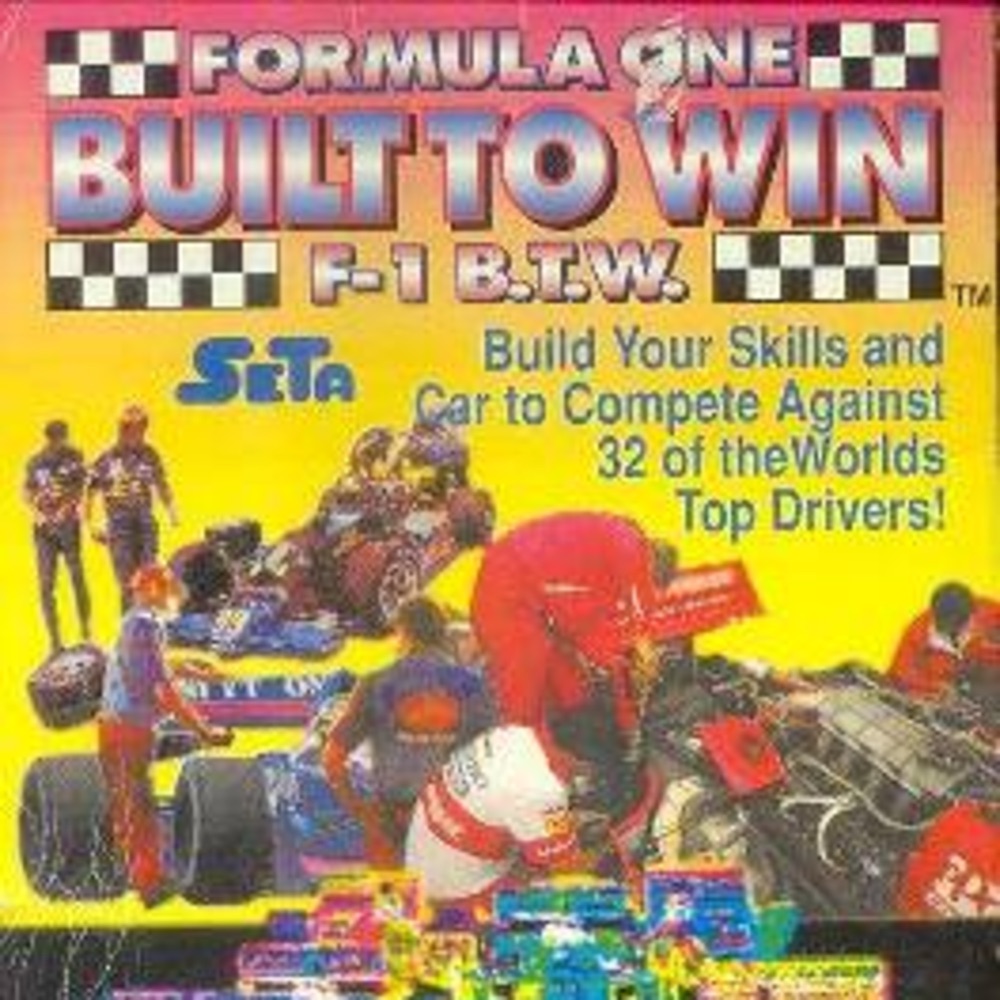
Formula One: Born To Win is a career racing game. The player begins with a Mini Cooper and claws up the ranks of the racing circuit starting with the lowest ranked races in the eastern part of the United States. By winning races, the player can upgrade parts on the Mini and have a better shot at more races. Support NEStalgia directly by becoming a member of our Patreon at https://www.patreon.com/Nestalgia Members at the $5 and above level get access to our brand new show NEStalgia Bytes. A look at the famicom games you can play without any Japanese knowledge! For More NEStalgia, visit www.NEStalgiacast.com
Formula One: Built to Win is an NES exclusive that plays like an early cousin of Gran Turismo: buy cars, upgrade parts, pass tests, and climb from a Mini Cooper to the Formula One circuit. Mike and Sean were on this one. We were stunned it exists, even as the racing itself left us cooler. Our verdict is Play it.
What works
- A career on a cartridge. You start in New York, Detroit and Miami, earn cash, buy parts, then move on to Yellowstone, Las Vegas, Denver and eventually F1. It's a sandbox, not a level ladder: you pick your town and race, and each city sells different parts. It battery-saves, so you can do New York today and Detroit tomorrow.
- Upgrades you can feel. Engines make you faster, tires help handling, and heavier gear has trade-offs. Even small improvements read clearly, which can't be said for most games with several vehicles.
- Parts you watch go on. In an RPG you buy the sword and it just appears. Here the old engine comes off, the new one goes on, and you sell old gear at a different shop. Every new car also swaps your dashboard, from a lame Mini Cooper to something futuristic.
- Cars that feel different. In free mode the Mini Cooper, the economy sports car, the Ferrari F40 and the F1 car all handle differently, and each has its own engine sound.
- The F1 stretch. Those races use real 1990 tracks, including Brazil, Mexico City and Phoenix for the USA round. The car is fast and twitchy, the sense of speed is convincing, and nitro costs finally start to matter.
- Vegas. Fly there and bet your winnings on slots. It's less of a cheat than it sounds, since nothing sells to you until you've cleared the lower-rank races.
What doesn't
- The racing itself. It's arcade driving, and opponents act more like moving obstacles. Results depend on parts and money: either you're underequipped and can't win, or overequipped and wave goodbye to everyone. Mike called it a B plus racer.
- Traffic. Blue cars are your opponents and they block you. Green cars are civilians who stay in their lane. We never understood why sanctioned, entry-fee races share the road with commuters, and rear-ending anything spins you out.
- Always last at the start. Every pre-F1 race is a rolling start from the back.
- Nitro housekeeping. Refilling after races is a box you forget to check.
- Music or effects, not both.
- No reward at the end. Win the title and that's it. Free mode offers time attack on any car and track, but with no computer opponents.
The bottom line
Play it. Neither Mike nor Sean voted it onto the Essential Games List. Sean called it worth playing if you like racing games. The scaffolding around the racing is something we hadn't seen on the system, but the racing underneath is merely decent, and we wish the F1 strategy had shown up sooner. Maybe the developers had a better one in them, and we'd happily see it.
Written from our conversation in this episode.
- Introduction
- What it is: A 1990 NES-exclusive racer by Seta that blends arcade racing with career progression, car upgrades, and a full Formula One license in its final tier.
- Why it matters: It’s one of the first racing games on console with a Gran Turismo-style structure, offering car purchasing, upgrading, and license testing nearly a decade before GT1.
- General Overview
- Release Info
- Released in 1990 (North America ONLY), developed and published by Seta Corporation.
- Loop in one sentence: Start with a clunky Mini Cooper, grind regional races across the U.S. for cash, upgrade or buy faster cars, pass license tests to unlock new race tiers, then tackle a 16‑race international Formula One season.
- Career Structure & Rank Progression
| Rank | Regions Unlocked | Sample Races | Entry Fees | 1st‑Place Reward |
| D | NY → Detroit → Miami | “Big Apple Night,” “Motor City” | $0–$100 | $500–$5 000 |
| C | Yellowstone → Dallas | “Great Divide,” “Lone Star Run” | $300–$600 | $6 000–$18 000 |
| B | Las Vegas → Denver | “Million $ Night,” “Mountain Road” | $600–$1 200 | $18 000–$50 000 |
| A | SF → LA → Hawaii | “Dragon Cup,” “Volcano Bay” | $2 000–$5 000 | $50 000–$100 000 |
| INTL | 16 real GP circuits (Suzuka, Monaco, Silverstone, etc.) | one‑lap quali+race | — | $200 000 ea. |
- Vehicles & Top Speeds
| Tier | Car | Cost | Stock Top Speed |
| Starter | Mini Cooper | $8 000 | 120 mph |
| Mid | Vector W2 | $30 000 | 160 mph |
| High | Ferrari F40 | $200 000 | 200 mph |
| Endgame | Formula One | – (earned) | 240 mph |
| (gamefaqs.gamespot.com) |
- Parts & Upgrades (purchased at regional Parts Shops)
| Category | Grades | Effect | Price Range |
| Tires | D/C/B/A grip (A wears out after 1 race) | Grip & cornering | $50 – $1 000 |
| Engines | 4‑Cyl → V6 → V8 → V12 → Turbine | +100 → +180 mph ceiling | $1 000 – $100 000 |
| Turbo | Turbo → Super → Impact Flow | Acceleration boost | $4 000 – $40 000 |
| Brakes | Disc → 4‑Wheel → Anti‑lock | Shorter brake distance | $800 – $10 000 |
| Suspension | Coil → Air → Active | Steering response | $1 000 – $60 000 |
| Bumper & Chassis | Adds durability/handling | $400 – $50 000 |
- Economy, Shops & Side Activities
- Parts Shops: New York, Miami, Yellowstone, Denver, LA, Hawaii – buy upgrades & refill nitro.
- Speed Shops: Detroit, San Francisco – sell spare parts to recoup cash.
- Car Dealership: Dallas – purchase Vector/F40; Mini is default, F1 is earned.
- Casino (Las Vegas): Slot machines with variable denomination (1/10/1000); cherries pay, 777 jackpot nets 1 000× coins. Ideal (or dangerous) way to bankroll upgrades. (gamefaqs.gamespot.com)
- Gameplay Mechanics (Deep Dive)
- Controls: A = Gas, B = Brake, Up = Nitro, Select = Retire mid‑race. (gamefaqs.gamespot.com)
- Nitro Management: Limited tank, refilled at shop; use on clear straights after lining up passes.
- Traffic Types: Green civilian cars impede; blue racers are position rivals—both block aggressively.
- Passing Logic: Center the lane, bait the block, dart inside; boost once mid‑pass to seal it. (gamefaqs.gamespot.com)
- Cornering Model: Sharp turns demand brake‑coast‑exit rhythm; overshoot = grass @ ≤ 60 mph & spin risk.
- Licenses: Short time‑trial tests gate each rank; pass speed & handling trials to unlock next tier races.
- Free Mode: Time‑attack any unlocked car/track (single‑lap, full nitro, no AI). Saves best laps to battery. (en.wikipedia.org)
- Tracks Snapshot
- U.S. Circuit Cities: NY • Detroit • Miami • Yellowstone • Dallas • Las Vegas • Denver • SF • LA • Hawaii.
- International GP Roster (16 rounds): Brazil → San Marino → Monaco → Mexico → USA (Phoenix) → Canada → France → Britain → Germany → Hungary → Belgium → Italy → Portugal → Spain → Japan → Australia. (gamefaqs.gamespot.com)
- Graphics & Sound
- Clean pseudo‑3D scaling similar to Rad Racer; sense of speed jumps dramatically with engine upgrades.
- Distinct engine pitches per car; menu/garage themes provide mid‑race breathers.
- Difficulty & Mastery Angles
- Money Grind: Rank‑up requirement forces full sweep of each city—smart part purchases can shortcut grind.
- Tire Strategy: A‑Grip tires + active suspension are almost mandatory for Rank A circuits but replace each race.
- Nitro Discipline: Hoard for overtake bursts; refill cost is trivial early but significant during F1 season.
- Million‑Dollar Rule: FAQ recommends $1 M bankroll before entering F1 so you can fully upgrade and still afford nitro/tires. (gamefaqs.gamespot.com)
- Unique & Interesting Features
- Battery Backup: Saves garage inventory, bankroll, lap records—uncommon for 1990 racers.
- Pseudo‑Licensed Grid: Endgame rivals have spoofed names (e.g., “S. Nakazma”) resembling 1990‑91 F1 drivers.
- Casino Economy Exploit: Savvy (or save‑state) gamblers can bankroll a Turbine engine long before Rank B.
- Podcast Discussion Questions
- Did you grind too long in the Mini Cooper, or did you game the upgrade path?
- Which of the four cars feels the most satisfying to drive?
- Does the license test system add tension or interrupt the flow?
- Is this the NES’ most underappreciated racing sim?
- Could this concept work with modern indie polish?
- Listener Prompts
- Share your favorite in-game car tier or racing memory.
- Did you ever actually beat the F1 World Championship?
- What other NES games had this kind of long-form progression?
Auto-generated transcript. Each paragraph starts with its timestamp. Speakers are not identified.
Formula One, built to win, exciting races all over the world.
And welcome to NEStalgia, a chronological exploration of every NES game released in North America. I'm Mike. And I'm Sean. And what we have here, not just a Formula One game, probably like the earliest iteration I can imagine on the Gran Turismo style structure of like a racing game that offers car purchasing, upgrading, and license testing nearly a decade before Gran Turismo 1 would go on to kind of not only invent that style, but perfect it. So we have it here on this NES exclusive racer. This didn't come to any other platforms by the developer Seda.
Sean, before I get too in the weeds here, just want to hear your thoughts in general on not necessarily racing games or Gran Turismo, but just this format specifically of kind of like working your way through like, you know, a beater car and eventually getting to the Formula One championships.
Well, I guess like what you're describing is, I guess the term like Gran Turismo game is a bit of a misnomer. Like these are all built to win likes that we've been playing. But I really, I really like this style. I guess it's not so much like racing specifically that, that has gotten me into them or why I've always had a soft spot for these. But I think it's more so just like having an evolving shift in scope over the course of a game. And I think Gran Turismo 2 on PlayStation was the first time that I really felt that. And I had no idea that something like this existed on the NES.
Yeah, it's funny because like obviously this doesn't have the car library that the Gran Turismo games have. And Gran Turismo 2 specifically just had like what seemed like an impossible number of cars to choose from. And yeah, some of them are just like slight variations. They weren't obviously like all, you know, like based on real world physics or anything.
But it was still there and there was the opportunity to like for something I didn't know, an itch I needed scratched to like, yeah, I would like to race in a Honda Civic, you know, like everybody's trying to get you to race. Or a Model T. Right, right, exactly. Everybody's trying to get you to race in these like ultra fast cars. And it turns out it's like, is there a league for PT Cruisers? Like maybe, maybe.
And it exists right here. I think PT Cruisers were introduced in Gran Turismo 4, but still the idea that like every car can be raced in and that they're all like different classes and different types of races is, you know, is a welcome take. I like what you said about too, just like that the scope kind of changes. That's definitely true in this game too, as, you know, the cars, they upgrade from the, what is it, like a Mini Cooper, right? Is your default car? Yeah, Mini Cooper.
And you're just sort of, you're jumping from city to city, finding parts. And then by the end of it, you're, you're on like, you're on the actual like Formula One circuit. So that's just cool. Right. Realistic? Maybe not. But nevertheless, you know, it's got the makings of a good movie. It's as realistic as the map of the United States that they feature in this game. And since I said the words movie, I'd be remiss to not mention that there was a Gran Turismo movie that like, I laughed at the very idea of existing, but apparently it's like, it's not good, but apparently it's passable.
So maybe one day. Yeah, I didn't have any interest in watching that. So yeah, the interesting thing is like Gran Turismo as a, as a brand, I think lives in everyone's head as like an amazing, like, you know, sim racing thing. But it's like, it's leading in nothing right now. Like, it's not leading in, in like, in ridership, you know, like players, like, it doesn't have the most players.
You know what I mean? Like, no one's competing in it. Yeah, no one's competing in it. No one. It's not particularly well liked because they wound up like forcing a credit system that basically was like, you can try and earn all these credits, but you'd be much better off going to the PlayStation Network store. Mwahaha. It's like, it, they've made a lot of bad decisions from the days of like, everything's on the disc and you can have it when you want it. You know, I feel like it peaked with a spec or three a spec and then maybe a little bit of four.
Um, and since then, Forza's had their number. Yeah, but Forza even had a tough time with the most recent one. I think that there were like large layoffs recently on the Forza team because of the latest, the sales of the latest just don't do it. But I think that maybe we should mention that's because of a little game called iRacing, which apparently like even real Formula One racers are participating in on their off season and driving on. So it's like, it's kind of hard.
I know nothing about this at all. Yeah. I'm just saying it's like, it's interesting. It has nothing to do with this game even. So I'm going to wrap it up. But I just think it's interesting that the format that we're describing here is just surprising to see this early. I definitely didn't expect that we could get this kind of game on the NES. It is obviously different than Gran Turismo. But even the idea of these Gran Turismo games has changed quite a bit where Gran Turismo 7 doesn't quite have the same system that we're describing here or in the original Gran Turismo games.
So it's kind of like, it's kind of lost. It came, it went, and I'm surprised to see it again so early here. So now that we've talked about the formula, the basic loop, if you will, is that you start in this clunky Mini Cooper. You grind through some pretty easy local races in New York, Detroit, and Miami, slowly accumulating some cash, using that cash to upgrade the parts for your car, to be able to race in the harder races in Yellowstone or Las Vegas or Denver. And then you pass the test to unlock new race tiers with a new car and eventually continue to upgrade that car until you unlock the F1 races.
So the whole way you're just, you know, you're participating in races that you can participate in over and over again, too. This isn't like a level-based thing where it like tells you, okay, you start in New York level one and you got to do this race. Yeah. And then level two is this. It's more sandboxy. Right. Much more sandbox. You can go visit these towns as you like. The different towns or cities, I guess, it's not that small. The different cities have different shops even of like what parts are available and such. And the most cutting edge feature is the ability to fly out to Las Vegas, take your winnings, and just bet them right there on the slot machines, baby.
I did do that pretty early on and had way more money than I had that I could do anything with because they wouldn't sell to me because I wasn't a good enough racer. So I guess it's sort of like a shortcut that may be useless for a while. Yes. And I think it's funny because I feel like the casino could have been a lot more punishing.
Obviously, if you're emulating the game, you can just rewind if you don't like the result. And it's one of those interesting games where, you know, save states, whatever. It's one of those interesting games where like the result isn't necessarily predetermined. It's based on the frame you pull down the lever. So you don't have to like. So you basically, you cheated the whole time. No, no, no, no. I did not. Because again, to your point, it doesn't matter, right? Like if you haven't done any of the rank D races, you can't go play in rank C. So what's the point? That's true.
And so all that to say that the casino is there and it's definitely a way to help with grinding. But it's not necessarily the cheat it's made out to be, at least early on. You still have to go through all the races. And I think it's nice that like there's so many from the beginning. There's New York, Detroit, and Miami that you can go to. But there's also multiple races in each of those cities. The New York race where your icon or cursor starts anyway does have the $0 entry fee race to reward you with a first place $500 finish.
And then, you know, eventually with any other race after that race, you'll have to pay to get in. But the rewards will be bigger, so on and so forth. But it's not until you enter the race that you really get a sense of like how your car stacks up against the other cars. So I think it's worth talking about because another, just to go back to the Gran Turismo thing, a huge issue in those games is that money does become pointless.
Not right away, but like after a few hours of playtime, money becomes pointless. And you can essentially just save up enough money to upgrade the car so that your car is, you know, is the car for that race. The other cars in the race don't get like the tune-ups that your car got to be competitive against you. You're just now like able to go 20 to 30 miles faster than them. And of course, that's going to mean that you win the race. It's like, duh, nobody can outrun an accelerator that can do an extra 30 miles per hour.
As long as you know what you're doing, you know, there's a lot of people that just go max speed no matter what. Like I did when I first got Gran Turismo 2. Yeah, as a kid, I just didn't even know about brakes. I just thought you just went full speed. Brakes are for suckers. Yeah, you just turned at the appropriate moment and the car would turn like any other arcade racer.
But, you know, here it's not as sim-like in the racing department. And we can talk about that in a lot of different ways. But I just want to first clarify that, like, this isn't the kind of game where you have, you know, manual transmission. And you have to, you know, follow a driving line. And you have to brake appropriately. It's much more arcade-y than that. Probably necessary. But, Sean, was that a surprise to you?
No, this, I mean, I just, I don't think that the tech is there for all of this to really make a lot of sense. Like, you're always going to be on rails in these racing games. But I think they did a pretty good job of making the upgrades feel like upgrades. And having pros and cons. Like, you'll be a little bit harder to get knocked around. But you're going to lose some max speed. And, like, when you do end up getting, like, an engine upgrade, it does feel like you are genuinely going faster. And your handling will improve if you've got better tires on. And, like, in other games, like, where there are several different vehicles, it was a lot less obvious to me, like, what was changing.
I was still like in a lot of sports games. Like, oh, this team's better at this and that. And the other thing is like, well, it all felt like the same game to me. At least in this game, the smaller improvements are still very noticeable.
But the whole, like, racing engine, I guess, happening here, it's impossible to make it feel like it's a real, like, it's happening in a real, like, environment. It's always going to feel, like, kind of outrun-like. Yes, yeah. Now, we did have Al Unser Jr.'s Turbo Racing, I think was the name of the game. And that game did have a little bit more, like, again, nothing like what we would see with Gran Turismo and onwards. But it did have a little more, like, sim-ish nature to it, but not in the sense of, you know, like, completely unique cars. You know, and I get what you're suggesting here, too, about, like, even just the parts. You wouldn't be able to necessarily change, like, you know, tire wear and grip and handling and all that.
That's just hard stuff to do. And I agree with you that it's noticed here. The other reason why this isn't a sim, though, by any stretch of the imagination, and this one confuses me. Like, I get, and I kind of appreciate it being an arcade racer with some sim-like components. But the traffic in a race, like, what is it? Are these non-sanctioned races? They have prize pools. They have entry fees. But, like, they didn't buy the permit for the track? Like, what the hell is going on? Why are there non-racing cars that are just trying to get to work on their commute and you can bump into them instead? This is the Need for Speed underground universe, actually.
So I think that's where this is coming from. Or maybe it's all just different legs of the cannonball run before you join F1. I don't know. I didn't read the deep lore. Yeah. And so there are blue cars and there are green cars. The blue cars are your actual, like, opponents. And they're aggressive. They're aggressive. But I also, don't you think that the green cars, I don't think they're as aggressive, right? But if I saw somebody, like, speeding, I'm not going to be like, well, I'll show them and try to, like, get them to ram into me. Like, I feel like they do a little bit of, like, not necessarily letting you through.
I think, like, no. I'd be getting out of the way. They definitely are going way too fast. They are going as fast as people on the New Jersey Turnpike. And people on the New Jersey Turnpike are insane. So the New York levels at least makes a little bit of sense. But they don't try and actually block you like your opponents do. Like, they usually stay in their own lane. Yeah, it's unfortunate if they do. Yeah, they usually stay in their own lane.
And it's sort of like this very lackadaisical merge if they're changing from lane to lane. Whereas the blue cars are actually trying to get in your way. And the one, like, very silly thing, at least in the beginning of this game, is that your vehicle is made of paper. And if you just sort of rear end one of these cars, you're going to spin out.
There are some ways to counter that. There's a little bit of counter steering and you don't immediately spin out. But if you're new to the game, you're probably going to spin out a lot.
Yeah, and, you know, we were talking even about how it's an arcadey racer. And it definitely is. But there are some, you know, turns on these tracks, especially, obviously, with the faster cars. That do require, you know, not only preemptive turning and such. But, like, yeah, definitely braking, right? Yeah, you can't go at these things just holding down the accelerator the whole time. Speaking of the accelerator, every car also has nitro in it as well. And you have a boost thing. The boost thing is interesting because it's something that also costs money.
So after each race, depending on how much nitrous you used, you will have that remaining left. Yeah, so you have to fuel it up. But it's not that expensive by any means compared to the rewards of the games. And so it just becomes this, like, tedious, like, box that you sometimes forget to check of, like, did I fuel up the nitrous? Nope, I didn't. Okay, I got to now, like, do this race. Yeah, it's a little silly. I mean, at least it's not, like, something you can lean on. Like, you can't just lean on your nitro for the entire race. And I guess that's just maybe a reminder that this is a resource to be used sparingly.
But maybe, I guess maybe it could have been refueled on its own and just charged to your account after each race to make it less tedious. And how about the actual, like, locations, you know? So you have early on, as I mentioned, New York, and then eventually you upgrade to other races. You can go to those cities before that, but, you know, eventually you upgrade to Dallas, Denver, Hawaii before you go international. Are those tracks and places, like, are they, obviously they're not modeled. Like, the New York one isn't like you're driving on a specific highway or something like that. But is it enough of, like, this is New York? Or is it, like, this is just another racetrack somewhere in the world?
A little bit of both. I was surprised by how many unique, like, skyboxes, I guess would be the word here, there were. Coupled with some, like, there are different road textures. There's, like, the night races look different than the day races. And, like, there's grass. And then, like, you get, like, different visuals for each race. So I thought there'd be a lot more asset reuse there. But I don't think any of them really feel like anywhere. Like, it's the, there's going to be turns that all kind of look like the same. There is some simulation of, like, of going up and down hills. But it doesn't, it never really feels like anything. It's just, this is where the track is taking me. But visually, it's, it looks cool.
It's just, this is where the track is going. So, how does that loop work out for you of, like, you, you know, you run these races. You figure out, like, kind of where you match up against the other drivers. Oh, that's another thing we should mention, too, is, like, this also borrows from the, you know, newest set of Gran Turismo games. The idea that, like, every race is just a, a rolling start, at least before you get to Formula One, where basically, you know, you start and last, and you just have to catch up to first. This has been a major complaint in Gran Turismo 7, that, like, there is no such thing as a qualifying lap, and you must always start in 16th place. Yeah. This is how Ridge Racer worked, too. Like, I was always annoyed by that.
It doesn't really make any sense, because, like, a qualifying lap would still be, like, it takes time, so you have to agree to do it, right? You could just say, nah, skip the qualifying lap and just start and last, but it also isn't necessarily, like, a given that you would just have the fastest lap, right? You might place, like, third or fourth, and then that's interesting. I just feel like the reason the qualifying lap doesn't exist in the NES game is the same reason it doesn't exist in Gran Turismo 7, which is funny. It's that the AI isn't good enough to, like, handle you being in first and then never seeing them again.
I think that there, because there is no, the simulation isn't happening. Like, it's just, like, the car doesn't spawn until you get up to it in this game. I don't know if it's the same reason.
And they're more so just, they're just obstacles that move than actual, like, opponents that they get, they fill in, like, a time after the fact to make it look, to make it feel a little bit more realistic. But, yeah, it's annoying, but it's what I expect. Like, I wasn't expecting to see eight vehicles on the same screen all trying to avoid each other. I feel like that would have crashed the console.
But what I do like about, this is, I guess, just a different topic entirely. Go there. What I did like about this game is just the sense of progression. And I know that we already kind of touched upon, like, the idea of expanding scope, but, and the fact that the upgrades feel like something. But I think the little touch that I wasn't expecting and appreciated the most was just that when you get a new car,
your dashboard changes entirely. And that was not, that was just weird. It was weird and cool. And, like, you're kind of, like, moving forward. And it's not so much, like, going into the future. But, like, the dashboard of the Mini Cooper just looks kind of lame. And then as you get better and better cars, like, it becomes more futuristic and, like, super car-y. And I don't know. I just wanted to chop that out. I think there's a lot of nice touches just throughout the game presentationally. Like, I agree with you on those dashboards. But also just even, like, changing parts when you buy parts upgrades and seeing them be applied to the car. In any other, like, NES game for the most part, just like how it is in most, you know, RPGs on the system,
you buy it and then it's not like you see, like, you buy the sword, right? Let's say in, like, a Final Fantasy game. They don't, like, you don't see the merchant, like, hand you the sword in, like, a cool cutscene, right? And you, like, hold it in your hands. You now just have the sword. Yeah, exactly. That could totally have happened here. You could have just, like, bought the engine and then, like, even worse, you might have to, like, apply the engine. But that doesn't happen here. Instead, it's like you watch the engine get, like, put onto your car. The old one gets taken out. I think they even, if I recall correctly, they buy it back from you, right?
You have to go to a different shop to sell all the gear. Oh, okay, right, right. There are different shops to sell, yeah. But that's neat, right? They didn't have to do that either. So it's kind of like there's a reason to travel back to areas that you were at even though the races you completed there are long gone, right? So you're not, like, done with New York and Miami once you get to rank C. It's just you're not going to be racing there unless you're, you know, somehow blew all your cash at the casino. At the casino? You need to kind of, like, yeah, work up again.
And by the time you get to the Formula One races, the speed of the game has really changed. So I think there's, like, a noticeable jump throughout the game. Oh, sorry. There's a noticeable progress, you know, very, very gently throughout the game. But the Formula One stuff, like, that car is genuinely, like, hard to handle even in this arcade-y game just because of its speed. So it does rely on, obviously it has way better handling, but it does rely on fast twitch reflexes because the pseudo 3D that it's doing and the kind of tracks that are in Formula One, there's, you know, there's lots of winding turns and there's lots of sudden turns and the speed is definitely being translated well here. So I'm still impressed.
You know, I think the wrong thing to do would just be have a miles per hour thing just go up without any sense of speed being added. I think there is a true challenge to these Formula One tracks where it's like, okay, yeah, you were good enough to get here, but are you good enough to stay here? Yeah, I noticed it because I didn't have enough time to actually play through the entire campaign.
So after playing through a bit of it, I just sort of went to free mode and played each different vehicle. And I all have a completely different feel. Like the Mini Cooper is like, it's so funny that it just, that feels like most of the racing games that we've played
with just the handling what it is and the speed what it is. And then just the jump to the, I forget the model, but it's just sort of the, I guess the Econo sports car. Like that, that's a huge difference. And then the Ferrari is a huge difference. And then the F1 is just, yeah, they did a good job with making them all feel like different vehicles. The car, I can't, it's like the Vector or something like that? I think you're right. The Vector sounds right. Who makes that? I'm looking it up real fast. Sorry. Oh, no. Vector is the maker. Vector looks like the car is maybe the W8. The Vector W8 is a sports car. Yeah, this looks like it. It's pretty cool. I actually think it may even look cooler than the Ferrari in real life.
But the Ferrari is the F40 and that's pretty cool too. So what are you going to do? There was also, did you notice that each car's like engine makes different sounds too? So there's not like one stock car engine sound throughout the game. There is one stock. There is one stock tire screech sound. And then if you're silly enough to put on music for any of the races like I did at the beginning, you don't really hear any, you get no feedback.
Yeah, you can only have one or the other. It's music or feedback. So I played every other race without the music. I don't know if that was sort of how you did it. But I'm sure it would have been a complete cacophony if I didn't do that. Or if they didn't do that and try to play music and sound effects at the same time. Right, right. The music's not half bad. So I think I stuck with the music actually. I got what I got out of the – yeah, yeah. I was happy to hear the engine sound effects and all that. But yeah, I didn't mind the music. So let's talk about like some of the – I don't know.
These things could just be described as difficulty. But also just the gameplay mechanics here. Let's get a little in the weeds. The grind of it all, the money grind. Is there one? Did you feel like you were grinding too long in the Mini Cooper? And I don't mean that from like a personal thing of just like I want to make sure I have enough money. But like does it take too long to get to the next upgrade path? Is it enjoyable like the amount of time that they set you in these cars, the upgrades, upgrading the parts along the way? Or does it just kind of become this sort of ever-moving barrier of like, okay, well, because the other cars are getting faster too, I'm just kind of still in the Mini Cooper and I want to get out.
I think that there was a pretty good balance here. I think that the – when I first booted up, the first thing I did was get a new engine because I could afford it, which leaves you with no money. And then doing all three of the New York races, I think you net maybe $900. So you spend $2,000. So you spend $2,000 on the engine. You make maybe like $2,900 on the winnings. And then you have to – minus however much nitro you spent. So it's a little slow going. But I think if you're trying to like actually spend time with this game, like you're not going to be too annoyed with that.
It seemed to go at a pretty good clip. I feel like most importantly, the game had a battery backup. So this was a game that saved. And I feel like that's a huge deal. This isn't the kind of game that you have to pour a ton of time into and do every race in an afternoon. This is the kind of game where like you can do New York today, Detroit tomorrow, Miami. It's like you can kind of just go through these areas ever so slowly and enjoy the game as opposed to like,
all right, well, I really just want to find the fastest path to the F1 car. It doesn't exist. There is no true fast pass. There's kind of like shortcuts you can take along the way if you know which things to properly upgrade to just be fast enough. But like that stuff requires time. And, you know, you'd have to have at least done one kind of playthrough before that to get to that point anyway. Yeah, you know, not everyone is trying to knock these out for a podcast, you know?
Yeah. And is there like there isn't really a part strategy, though, you know? So in in the Gran Turismo games and the Forza games and any racing sim game nowadays, it's not always that you just want to have the soft tires, you know, like you don't. So depending on how many laps you got to do and how much fuel you have and the weight of your car, like those things matter. Here it's kind of like you do just want to apply the best part. Yeah. And I was I had to kind of go back and forth with like, well, I know this from racing games
that are more advanced and can simulate things. So I didn't really I actually didn't even get to a part where I think like I would have been making those decisions. But I had a feeling that it wasn't going to be quite as strategic.
And I mentioned the, you know, the nitro being kind of trivial. Apparently, I didn't get there either. But I did play in free play mode, the F1 car. I didn't get there. But apparently during the F1 season, the refill cost of nitro and the, you know, like how much nitro you use in the race matters significantly. And so that becomes another balancing act of just like because of because of the straightaways and because of, you know, the amount of nitro you have and the length of the tracks, like it matters more.
And so that would have been interesting in a season, you know, to kind of battle with that. But I still feel like just having access to your other cars and access to the slot machine and access to money makes it so that like you can you can trivialize the cost of anything in this game just by racing enough.
So the Gran Turismo issue hasn't hasn't been retroactively solved in 1990. Yeah, yeah. And I don't know. I don't know how to solve it. If I'm being honest, I think I think that's a job for the people who actually get paid to do that stuff. Because while I've thought about it, I don't like any solution I've come up with, because any solution I come up with usually involves like making it less fun of a game. Like, isn't it just fun to just like have a lot of money and buy like all the cool parts for the car as immediately as you receive the car? Should you really have like, okay, you have a whole new bankroll for this new car, like in every car has an individual bankrolls. You have to like ride races in them first. That sucks. That sounds awful.
I think the concept of having a difficult economy should remain in the world of shit like EVE Online. Like, as long as it's in like multiplayer, then I guess it makes sense.
But no, I like, can you think of a game that has a quote unquote, like difficult economy? Well, so here's an interesting thing. Not that Gran Turismo 7 is a single player, but like they have, you know, there's the used car dealership. There's the new car dealership. And then there's this new legend shop where like, you know, all of the highly sought after cars from either like, you know, the 60s, the 70s, but also like, you know, some Formula One and GR cars and stuff like that. Those things all like live in the legends ones, like the best of the best. And those cars are like, you know, 15 million credits, let's say. Okay. A race that takes about an hour to finish gives you about 800,000 credits.
So we're talking 16 hours to afford one car. That sounds pretty painful. Oh, but I'm sure that sounds like a difficult economy. It sounds like they also will give you the option to buy this currency, though. Oh, yeah, absolutely. Yeah, no problem. You can go ahead and go for it.
All right. But I would like an example of this before microtransactions. Right, right, right. Yeah, yeah. What was something that just was unobtainable? Was there anything ever that was just, wasn't there something in, I feel like there was something in Pokemon that was like 9,999 at like one of the casino things. But whatever. That's a joke question. Yeah. Yeah, exactly. And it's also like, yeah, this isn't a race. There's a racing thing. You can't race Pokemon. Why can't you race Pokemon? They should. There should be like a, like a Greyhound race thing for Pokemon. They let us raise them, but they won't let us race them. All right. I got that on my system.
To go back to the F1 stuff though, because I think it's important. Obviously, there is no, there is no at least New York racetrack that is located near the city as of yet. Or within the city. They usually just like close, don't they just like make these races out of the city? Oh yeah, yeah, yeah. Yeah. Absolutely. Yeah, yeah. And that's what I'm saying. So like for the races before F1, they're all imaginary. They're all like in almost impossible locations.
But the F1 ones are actually based on the 1990 and I think even like they had plans for the 1991 year already. So they use some of those as well. And they are the actual tracks that were featured in those seasons for those specific locations too. Because each one of those races, Brazil, Mexico City, USA, which at the time the USA, now we have three Formula One races. But at the time it was in Phoenix, which is interesting because I think, I don't think there's a Phoenix one anymore.
Yeah, maybe it outgrew Phoenix. Yeah, it's just Las Vegas, Austin, and Miami. And I guess this is just like insofar as there can be a real track. I guess it's just modeling like when you're going to turn left or when you're going to turn right. Because, again, there really isn't that much going on in terms of the actual like track construction here.
Yeah, like I do. I wonder if they even got the distance right. You know, like did they measure it in that kind of regard too? Because like obviously there are people who will, you know, draw out, you know, on game FAQs or whatever. And you'll look at the drawn tracks and you'll look at the actual tracks and they match and everything. But like did they take the time to make these almost like reference tracks where like the speed of the Formula One car is traveling the same length that you would expect in a real F1 car. So that the turns are as quick and all that.
I doubt it. I would say no way. Yeah, no way I could I could know that. I just think it's interesting that they went through the trouble at all of of going through that. Because at the end of the day, the whole Formula One built to win thing as the title is a is a is a is a little odd, right? Like this. I never thought this was like a Formula One game. Well, because maybe we spent most of our time before we got the Formula One. It is weird that they would that they would give it that branding and then have an entire portion of the game not take place.
Well, yeah, but you are. You're right, though, that like it it's the brand thing, right? Like I forget that Formula One is like something that you have to like license. And so like because they got because they got the license to it and were able to use it like that's the name you go with at the top. But again, going back to the whole like change in scope over time, like I think that's really cool. Like if there was it happens in like sports games like in Madden, you if you create a character, you can start in the senior bowl for an actual college football team. And while the execution of that mode is pretty crap, I still like the concept of it. So more of that, more of everything, please.
And apparently, you know, after after you complete everything in the game and everything like that, there isn't like there isn't some secret car to unlock or some cool like bonus track or anything. It's just you're the F1 champion of the world and that should be enough for you. Damn it. I'm not saying that the game itself doesn't have enough to offer at that point. It is just kind of weird that like you make your way through everything and there isn't like there isn't some cool thing you can do. The cool thing you can do is that you don't have to play through the whole game again. You can just go to the free mode and just do a time attack with any any car on any track. No way I single. Yeah, it's a little dumb.
Well, but but I do think there is something to like the the you know, like if you've mastered it all now, it's like a competition of like fastest lap stuff. It's obviously way before sharing high scores online and everything like that. But it would have been cool, right, to have this ability to like compare with friends and and say, you know, well, I got like 127 on this track. Well, 127, like, you know, and then you save it. So it does save to them all your time saved to the battery, too. I feel like that was the kind of stuff that was cutting edge on those racing games back then anyway. Right. Of the PS1 days is like Gran Turismo had a whole arcade mode as well. In addition to its sim mode.
Yeah, I guess we're talking about postgame content right now, which isn't really a thing yet. Yes. Yeah. But I'm saying even if even if there is no postgame content, the you know, you can the free mode essentially frees you of having to do all the sim shit again. Yeah. To, you know, to go do all the best stuff like it. It is nice that they gave the option for just a time attack.
Should it have been just, you know, strictly a one lap like fastest lap thing? Probably not. Like you should have been able to turn on or off computers. I would have liked it. Like maybe like, yeah, time attack is one of the options. And then exhibition for just a race with eight with eight or seven computers would have been nice because we know that they can do that. Like there's no reason they couldn't have at least offered you an opponent to race against.
And while you can, you know, there's the parts that you can upgrade tires, engines, brakes, suspension, all that stuff's great. You can't go to a car wash and get the car washed. So this game's, this game's like a wash, right? Yeah. What they should have done was sort of had like the equivalent of like a power washing simulator as like a mini game. And then you would get, you would actually run a car wash. And that could be an alternate way to make money if you kind of crashed out and lost everything at the casino.
Do you think it's odd that Las Vegas has the casino and that's like the only other like, like neat quirk of the game? Like should every city have had something like, like of a mini game of some sort? Like what, like what would they even have though? Like what would be in New York that could be somewhat car based or money based? Like, would you buy like a scammer CD in New York? And then you could listen to those tunes on your car. I like that idea.
I think every idea I'm going to have is just going to be an insult to whatever city it is. So I'm just going to stick with no comment on this one. Yeah. Well, you know, you can go to Denver and do some altitude training. Yeah. Oh yeah. You need that. You know, cause it, uh, the, it is high altitude is higher. Yeah. It's like, it's listed. It's a thing runners actually do. Uh, so I just thought it'd be funny to bring that to cars as well. Like you need to, you need to bring your car up to altitude. So this way it trains, you know, like in more intense conditions.
Good stuff. Yeah. And then in Hawaii, um, you could just relax for a bit. So a is the gas B is the break. No, I'm joking. We're not going to, I feel like we've talked about everything we've exhausted. I know we've exhausted our, our topics here. I just wanted to say that if I haven't said it enough, I'm just, I'm just in awe that this exists. And as somebody who collects Gran Turismo games and plays them very much, I feel like, I feel like I just, uh, I want to see now. No, you have to get this. I need to see like what else can be done. Like we have more racing games to go. Like, can anyone top this idea? Like it's a really neat idea for a racing game. Al Unser's Formula One built to win Grand Prix. Um, Nostalgia's essential games list happens right now.
Okay. Now, no matter what I think about Gran Turismo, um, that shouldn't apply here to Formula One built to win. This game is being judged on its own merits. And what I think we have here is we have a game with some incredible systems, some really fun progression tracks. And like, then like a kind of mediocre racing game. Like, it's like a kind of like a kind of racing game. That's just like sometimes a chore.
If your car is really good. Uh, there are moments, don't get me wrong, where like, it's, uh, it could be an intense race. And, uh, because of the, uh, the spread out nature of your opponents, uh, you have to catch up and everything. And there are some times where like, when you finally hit the finish line and you were in second, you see that you were only like one or two seconds behind the other guy and like, ah, I got to get back in there.
Right. And you, and you do it better and you cross in, that's very satisfying, but that's kind of rare. I feel like you either enter a race and you just don't have either the, the right parts or, um, enough money yet. And it's just not going to happen. Or, uh, you're over equipped and now you're just playing a giant game of like, you know, um, using, uh, using the wind to pass, uh, to pass your opponents and wave to them along the way as you just easily, uh, eclipse first place.
That doesn't sound like a fun enough game to me. Um, so while I really enjoyed poking through the systems and visiting the different cities and, and racing in the different cars and all the neat little touches they did, it's, um, it's just kind of like a, it's like a B plus on the racing games. Uh, it doesn't, it doesn't get the A.
Um, so no, not essential for me. What about you, Sean? Yeah. The, the, the whole scaffolding around the, the, the racing game, it, you know, it's something we haven't seen before on the system and there being a genuine career mode that you're actually like making decisions and it's also, but it's also laid back and like, you're, it's not like, uh, one of the pseudo grand strategy games like Nobunaga or something like that, that, that's super systems based and it's more so just like a math equation. Um, so I, I like the, the middle ground there, but you're right. The racing game itself isn't all that interesting for all the reasons you said. Um, but still super cool. Uh, definitely a play it if you like racing games.
Um, good stuff. Not essential. It is worth just mentioning that the formula one mode in the game, um, you know, is more involved in general than the rest of the game and that there is some interesting like racing strategies at play in that specific, uh, section of the game. It just kind of a shame that it takes so long for that stuff to shine. And I feel like they should have been teaching you that from the beginning. Um, but you know, who knows? I didn't look into if there's like a, a sequel to this or even like a spiritual sequel from the same developers. So who knows? Maybe Sata Corporation has it in them to, um, to, you know, like refine this in another one. Maybe.