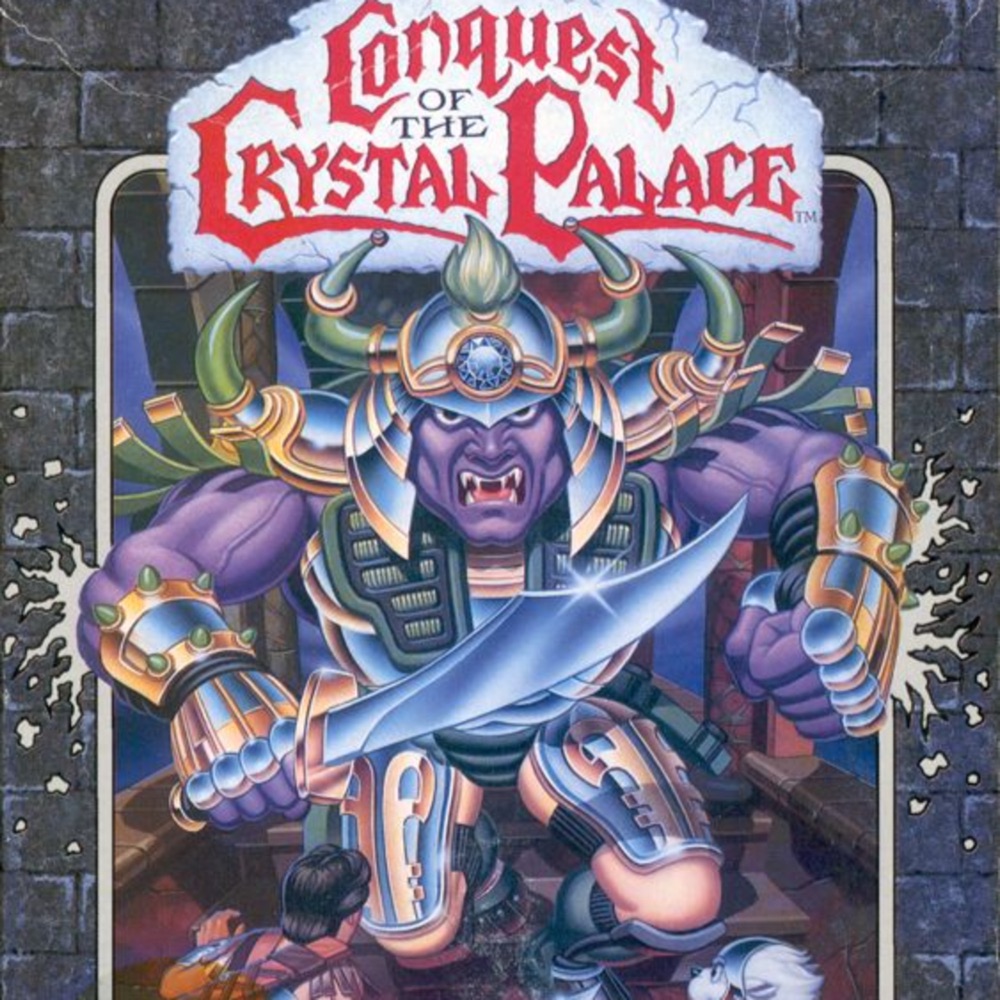
391 · Conquest of the Crystal Palace
Long ago the Crystal Palace was a thriving kingdom, however the evil war spirit Zaras appeared one day and brought destruction to the lands! Support NEStalgia directly by becoming a member of our Patreon at https://www.patreon.com/Nestalgia Members at the $5 and above level get access to our brand new show NEStalgia Bytes. A look at the famicom games you can play without any Japanese knowledge! For More NEStalgia, visit www.NEStalgiacast.com
Conquest of the Crystal Palace is a side-scrolling action platformer from Quest, whose people later went on to Ogre Battle and Tactics Ogre. Prince Farron and his guardian dog Zap must retake a kingdom the demon Zaras has seized, across five levels longer than a Super Mario Bros. stage. Just Mike and Sean this time. We liked the atmosphere more than the mechanics. Our verdict is Play it.
What works
- Controls that behave. The sword and jump are tight, you can steer in midair without it feeling floaty, and the hitboxes seem fair.
- The crystal choice. You pick life, spirit or flight at the start. Spirit gives unlimited fireballs, and it isn't close. We were let down that the choice only changes your opening minutes, since the shops sell the other upgrades almost right away.
- Big boss sprites. After the first two, the bosses are giant, clearly designed enemies in larger scrolling arenas with destructible platforms to hide behind. They are simpler to read, with a clean risk and reward in how often you attack.
- Kim and the Q&N news. The shopkeeper doubles as a news reporter, and the broadcast starts only if you linger. It's the one real lore dump, it gives hints without a bare "press A to attack," and it's the cutest part of the game.
- Atmosphere. The environments are distinct, including a disturbing level of hungry ghosts, and the dog's wise-guide routine reminded us of the bear monologue in Anchorman.
What doesn't
- Zap. You summon him from the item screen and recall him by cycling the menu again. Mike found him useful; Sean mostly saw a dog running into traffic, with no boss health meter and little hit feedback to tell.
- The first boss. A ground enemy powers a lightning bird that dive-bombs with no rhythm, so you need a pixel-perfect jump four or five times. It took far longer than the level before it.
- The spider boss. Spiders pop out from anywhere with no warning. We called it the worst boss in the game.
- Falling lava and water. Half the final level is waiting for lava to stop falling. That's patience, not challenge.
- The last level. It becomes a side-scrolling maze with few enemies. Sean kept climbing stairs and fighting a boss who ran off before realizing he had to go down, and he tapped out. It bothered us in Super Mario Bros.'s last castle too.
Beyond the game
The US version is easier than the Japanese one, and it added a title-screen debug cheat (hold B and Select, then switch to A and Select) to edit gold, items and lives up to 99. The hungry ghost level was also softened for kids. We never found the princess the dog supposedly mentions.
The bottom line
Play it. Neither Mike nor Sean voted it onto the Essential Games List. If you've already worked through Castlevania, Ninja Gaiden and the rest of the genre, it's worth your time. For anyone else it's shallow. Sean could see it being a childhood favorite, though he suspects rose-colored glasses.
Written from our conversation in this episode.
- Which opening crystal (Life/Spirit/Flight) do you pick and why?
- does the game communicate danger well?
- Is there a fair “no-Zap” or “no-shop” challenge worth recommending?
- How does the in-game “news report” gag (QNN/Kim) work as early meta-UI storytelling?
- Introduction
- Hosts: Mike (on rails), Joe (excited contrarian), Sean (cynical historian).
- What it is: 1990 side-scrolling action platformer; developed by Quest, published by Asmik in North America; Japanese title Matendōji. Wikipedia
- Why it matters: Early Quest release that foreshadows talent (e.g., Yasumi Matsuno / Masaharu Iwata collaboration) later known for Ogre Battle / FFT. Wikipedia
- General Overview
- Release & Platforms
- JP release Aug 24, 1990 (Quest); US release Nov 1990 (Asmik). NES only. GameFAQs
- Elevator Pitch
- Prince Farron + guardian dog Zap reclaim a demon-occupied kingdom across five stages with boss fights and shops mid-level. MobyGames
- Story & Objective
- Setup
- Demon Zaras usurps the Crystal Palace; Zap spirits infant prince away; years later, you return to retake the realms. Wikipedia
- Goal
- Clear five realms, defeat bosses, and leverage items/companions to survive.
- Gameplay Mechanics (Deep Dive)
- Core Controls (NES)
- A = jump; B = attack; Down+A cycles sword / Zap / sub-weapon; Select has a hidden function; Start = pause. GameFAQs
- Companion System: Zap
- Summon Zap to attack and screen-control crowds; precise Down + A cursor call from the manual. world-of-nintendo.com
- Crystals (opening choice)
- Flight (higher jump), Life (more HP), Spirit (unlimited fireballs). Power-up effects can also be bought/found. Wikipedia
- Economy & Shops
- Mid-stage shopkeeper Kim sells food, items, and weapons; she also appears as a QNN news reporter with tips/lore. world-of-nintendo.com
- Sub-Weapons / Scrolls
- Ranged scrolls supplement sword; inventory rotation matters in boss phases. (Documented across manual/GameFAQs.) GameFAQs
- Stage Structure
- Horizontal and vertical segments with platforming gauntlets; five themed zones mapped by VGMAPS (useful for on-air descriptions). vgmaps.com
- Graphics & Sound
- Look
- Distinct Japanese mythic vibe (pagodas, spirits), large bosses for NES limits (contemporary Nintendo Power noted this aesthetic). Internet Archive
- Music
- Credits list Tomohisa Mitsuyasu (composer) and Masaharu Iwata (sound). Up-tempo stage loops aid rhythm play. MobyGames
- Development & Version Differences
- Studio / Talent
- Built at Quest; sources credit designer Yasumi Matsuno and highlight his first pairing with Iwata (later of Ogre/Tactics). Wikipedia
- JP ↔ US Changes
- Enemy/visual edits (some spooky child motifs toned down), lowered difficulty, and cheat functions added in the US release. Wikipedia
- Tech Flavor
- Smooth scrolling with frequent enemy counts; occasional slowdown reported late-game (review consensus, useful color commentary). classic-games.net
- Beyond the Game: Culture, Ads, and Media
- Asmik Context
- North American publisher Asmik (pink mascot, later Asmik Ace in film/TV) is a snapshot of early-’90s Japanese media companies straddling games and entertainment. Wikipedia
- In-Game “News” Gag
- Kim of QNN is basically a shopkeeper + broadcaster—nice segue into early meta-UI storytelling in NES games. world-of-nintendo.com
- Design Lineage Hook
- From here to Ogre Battle/Tactics Ogre: discuss how economy, assist systems, and deliberate difficulty telegraph Quest’s taste for tactical play. Wikipedia
- Versions & Comparisons
- Matendōji (JP) vs. US
- Visual/thematic edits and challenge tuning differences; JP presentation reads a bit darker. Wikipedia
- Peers on NES
- Compare to Vice: Project Doom / Ninja Gaiden / Faxanadu for pacing, shop utility, and late-game spike.
- Difficulty & Mastery (On-air Tips)
- Crystal Choice
- Spirit trivializes fodder but demands careful boss pattern reads; Flight opens skips; Life is safest blind. (Mechanics per overview.) Wikipedia
- Zap Timing
- Use Zap to regain footing during spawn swarms; don’t over-summon—cooldown leaves you exposed. world-of-nintendo.com
- Shop Routing
- Memorize Kim locations and plan cash for heals vs. weapons; buy before boss gates. world-of-nintendo.com
- Legacy & Reception
- Hidden-Gem Reputation
- Frequently cited as an overlooked late-era NES title with great music/visuals and uneven difficulty curve; modern retrospectives echo this. classic-games.netReddit
- Credit Roll Nuggets
- Staff list shows several pseudonyms; Iwata appears as sound staff; MobyGames captures the dev roster for name checks on-air. MobyGames
- Trivia & Quick Hits
- Select Button “It’s a secret to everyone.” The game winks at NES culture via its own manual/FAQ notes. GameFAQs
- Map Talker
- Use VGMAPS to describe the Stage-1 pagoda ascent and the Staff of Rain Cave layouts on air. vgmaps.com
- Segment Starters & Listener Prompts
- “Shop Talk”: Best buy at Kim’s before a boss? (Weapon vs. heal.) world-of-nintendo.com
- “Companion Corner”: Zap vs. other NES helpers (e.g., options/familiars) and why this one feels proactive. The Cutting Room Floor
- “Quest Trajectory”: From Matendōji to Ogre Battle/Tactics Ogre—what design DNA carries forward?
Auto-generated transcript. Each paragraph starts with its timestamp. Speakers are not identified.
Conquest of the Crystal Palace. You'll face the baddest, meanest enemies ever seen on the NES.
And welcome to NEStalgia, a chronological exploration of every NES game released in North America. I'm Mike. And I'm Sean. That's it. Two people's fine. We can make do. Yeah, I'm not upset about it at all. Yeah, that's whatever. Two people can conquest a Crystal Palace. I mean, if you know what you're doing and you just work hard, we can do anything together. But can one person conquest a Crystal Palace? It feels like a conquest is usually like an army thing. You know, like a whole country is going to go conquest other countries or something. It's not usually like something like one person does.
I mean, it kind of depends on if you have like maybe a dog that's lived a thousand years before he became your dog. That'll help. Yeah. I mean, I think if you have something like that, you could conquest things. Otherwise, no. Otherwise, it's just it's just not feasible.
And this game is a side scrolling action platformer developed by Quest. And Quest went on to make a bunch of other games. But most notably, a lot of their talent will go on to then make the Ogre Battle and Final Fantasy Tactics games. So a lot more strategy than action platformery. But what we've got here today is not just like so action platformer. I always think it's like an interesting term because platformer in itself is usually like, yeah, this is a game about jumping. Right. And like action games are usually like this is a game about shooting.
But this is not necessarily like an adventure game. So, Sean, help me out here. What what is like what is the distinct loop of this game? Yeah, I always thought that action platformer and it's all like I wouldn't say it's overgenrification, but there's very little difference.
It actually it shares some things with something like Mario and and Zelda 2. And I think that there's like it's basically you go to the right and you you you don't jump on things. I think the actual the actual difference between platformers and action platformers is that you can't kill enemies by jumping on them. You have to seem silly. You have to shoot or you have to do some kind of melee attack. And that's the difference. Who's to say that jumping on anything wouldn't hurt it? Well, I guess I try jumping on someone. I haven't. I don't have that kind of vertical. And I try not to jump on people that are lying down because I feel like they're trying to sleep.
So maybe it works if they lay down first. And while we were talking about one person conquesting a Crystal Palace at the beginning of the episode, it's not our hero who has done the conquesting. It is the demon Zaras. He has taken over the Crystal Palace. And so Prince Farron and his guardian dog Zap have to reclaim the occupied kingdom across a variety of stages.
Really like five levels. But it likes calling them levels is a little interesting because they're they're longer than like a Super Mario Brothers style level. So five is like selling it short. They're a bit more into it than that. But there are shops along the way to kind of upgrade the character ever so slightly. This isn't an RPG. But obviously, just like any good platformer, every level ends with a big boss fight that kind of is the gate that will prevent you from making progress.
Let's just talk about Prince Farron for a second. I don't want to talk about Prince Farron. Oh, OK. Yeah, no, we'll talk about the controls. Yeah, that's what I was going to say. The controls of any platformer make or break the game. So he has he has a couple different sub weapons. But most notably, he has that sword and he has a jump. How are those two things in the grand scheme of platformers we've played on the NES?
They're fine. Like it's tight. There are no complaints on the jump or the attack. Like the hitboxes seem to work. The jump you can control in midair, but it's not floaty.
Thankfully, we're past the point where that's sort of in question. Every other game, you are able to upgrade both of both of these things. Some with like short term, like disposable upgrades and some with more long term things. And you can get like a fireball move later. But the basics, they're nothing to complain about.
And the biggest, you know, differentiator here or the standout feature of the game is that at the beginning of the game, when you start it, you kind of choose a one of three crystals for Prince Farron that change a little bit about his like stats. They are there's the life crystal, the spirit crystal and the flight crystal. And depending on which one you choose, it changes the game a little bit. It doesn't change the levels, doesn't change the types of enemies. It changes how Prince Farron behaves. Sean, which one did you go with?
Well, I just I read what they described. And first, I just we need we need to acknowledge that my one off comment earlier wasn't just me wanting to talk about a dog. Like you were presented these choices by your dog, who apparently knows everything. Like he's your Lord dump. Like the dog is suspicious a little bit. I'm not saying it's suspicious. I think like it reminded me a lot of that scene in Anchorman where like the dog sort of does a long monologue to the bears.
And if you remember that movie at all, I do. Yeah. Okay. Yeah. And it's just the dog is very wise. He knows more about the world than you do. Like apparently you as the main character would not be on this quest unless your dog told you what was going on. But anyway, yeah, he then gives you this choice.
And the description of it is like pretty obvious that you're going to that you should go with the like you get a ranged weapon off the bat. Now, I'm pretty sure that this is really only changing the first like few minutes of the game because you can then buy the other upgrades almost immediately. And that's surprising, right? Yeah. I was a little disappointed that they were that that it was that that small of like just a change in initial conditions.
But it's still cool, I guess, that you can do that. And yes, I wasn't expect I was expecting to alter things a little more. I agree with you that you read the descriptions and it, you know, obviously life gives you more HP and flight gives you a higher jump. I was expecting those things to matter a little more in the gameplay like, you know, oh, more height makes it easier to dodge enemies.
So, you know, even though I'll be a little floaty or whatever, I'll be able to like get through the level faster and not have to like worry about every enemy I encounter. I can just kind of get around them. Whereas like life is like, yeah, I mastered the combat. So it doesn't matter. I'll take a little more hits, but I'll be able to fight. And then the spirit one gives you unlimited fireballs. And that just seems like the clear winner of the three, right? Yeah, it's not even close. It's not even close.
I mean, and there are some enemies that are not affected by them, but they are so few and far between that it's like, OK, I guess I got to switch to the sword. And I think like it also is just they are slow fireballs. So you may just want to stick with the sword for stretches of this game, but it's still like so versatile. Right. I just feel like unlimited of something is great. It'd be like if the life one gave you unlimited HP, right? Like you would obviously pick that. Unlimited is such a stat changer compared to a slightly higher jump.
Mm hmm. OK, we can now talk about Zap in the game, at least. The dog. You you explained to kind of his reason for being in the game, but he's also not not necessarily a playable character, but a summonable character. And you can summon Zap on the attack screen. One thing I didn't realize is that he has like like you can see his health bar and everything, but that like you could also just retract him and use him when the when the moments are right. Yeah. So it's not something you want to just like call and have hang out in the beginning of the stage.
Yeah, because he does take damage pretty rant. Like he does just sort of flail about the screen pretty randomly and he will target enemies. But he also just runs into oncoming traffic like, you know, like maybe a dog would. But I think that I was I was sort of experimenting with the controls. I'm like, there's got to be a way I can take the dog back because it's just he's just draining. And I'm sure there's a boss coming up. So I found, you know, if you just sort of cycle through it again and select the upgrade as it would like if you were just selecting another upgrade, he does go back into the pokeball.
And I tried to like save him for boss fights, but I could never tell what he was actually doing because there's no like there's no boss health meter and there isn't a lot of feedback with damage. So it's just sort of seeing the dog run around and jump at the enemies. And if you were to then buy the dog whistle upgrade, he then does that really fast.
Yes, but I will say that I think Zap was a little more useful than you're giving him credit for, particularly if, you know, you're dealing with enemies in later stages that like suck. You know, there are there are there are enemies that are easily defeatable and those are great. But then sometimes there's a lot of enemies that suck in this game. Yeah, exactly. Just a bit more tedious or things that like will hit you. And, you know, you just get like I'm thinking about I think it's even on the second, maybe second or third stage. There's like these hands that just are like attached to the floor.
And they're not like I don't even know what you can do with them or if you can even fight back on them. You can you can kill them. But it's better to handle that. Yeah, that's true. That's true. Does he grab Zap's I never really deployed Zap against them. Well, see, the problem is with Zap's attack animation, you wouldn't it wouldn't be communicated to you if he's being grabbed because he's he sticks with the enemy that he's attacking anyway. Ah, yes. Yeah. You know, so it doesn't it's not really I would say overall. While while the combat in this game is just fine, it's serviceable.
The the like animation of the combat in general leaves a lot to be desired. It has that issue with the sword where like you can't quite tell if like the edge of your sword is actually connecting with the enemies. It's not it's not a terrible hit hit box or whatever. It's just one of those things where it's like, well, you know, like what is the hit box the entirety of the sword or is like is my swing like just barely missing? I hate that in games. That happens a lot on not just any. It's also just like audio feedback isn't quite there.
Yeah, exactly. So I think like overall, it leads a little bit more to be desired in that in that category. The next thing I wanted to talk about the I guess you could call it an economy, but really it's about the shops. There are mid mid stage shopkeepers. I think it's the same girl every time named Kim and she'll sell you food items and weapons.
And she's the shopkeeper so you can buy these things from her. But she's also the like QNN, which is presumably a play on CNN. Maybe they have something in Japan that has an NN as well. She's the news reporter there. And that's like that's the cutest part of the game is her giving like this little like I don't know. It's like it's like meta, but it's also like, you know, because there's no reason for them to have TVs. Right. Like, so this is who's this broadcast directly to the player. And we weren't given that in the lore dump, like what kind of what kind of media landscape they're in. But I guess we do have a news network that spans all the planes of existence.
The one thing that I thought was funny about that whole like concept is you you have to sort of linger in the shop for it to happen. Yes. It's just like you it's not after you buy anything. It's not as soon as you jump in. It's like you could be mid scroll, like just trying to get to something to buy. And it'll be like, do you want to listen to the news? And like, of course, you want to listen to the news. And there's some like like not I wouldn't say they're like little hints sometimes. Otherwise, it's just funny stuff. Yeah. Thank you.
Knowing that Zap and the Shop are optional things within the game that obviously greatly help the player, you think there's any merit for a no Zap or a no Shop challenge run? Is that worth recommending, or is that just making it boring? Have we ever recommended anything like that? No, never. I'm just saying... I'm sure they exist. Yeah, but you know what I mean, right? It's like Super Mario Bros., you can't recommend a no-jump run.
Yeah, but it's like, you could do the Warpless, so if you're doing speedruns... I'm sure there's speedrun categories for no Shop or anything like that. There is all levels. In Super Mario Bros., there's all levels. Yeah. Okay. Does the game communicate the danger of the enemies well? And I don't mean how strong they are. I mean, like, sometimes in platformers, enemies just appear as soon as the screen scrolls and it's very fast. Do you have a fair shot against the spawning of enemies in this action platformer? Sometimes.
I think that the spawn behavior, like, in the middle of a level, like when you're just sort of moving around, is fine. And there's actually long stretches where you don't see anything. But then there are some, I guess, like, planned fights or like more... I wouldn't call them...
I guess there's one that is a boss, but it's just a bunch of spiders. And that is just the... That was the worst boss. Because it's literally just a bunch of spiders that kind of pop out of nowhere. There's no, like, telegraphing of where they're going to come from. They're just going to come all over the place. Come from all over the place.
And you're just going to keep getting hit. And I think that that was part of... I got annoyed when you were earlier describing just some of the frustrations. That was definitely one of them. Yeah, I would agree that on the most part, the game doesn't have any, like, cheap spawns or anything. There are just tough enemies in the game. There are just tough setups with, like, anything... Anytime you're running into falling water or lava, it is probably the most tedious shit in the game. Yeah, even from the very first level, the water is there.
But, like, I feel like the... Because those aren't enemies, right? So you can't even hurt them. But, like, yeah, some of the more, like, challenging platforming of the game. It's like, it's never about, like, pitfalls or anything. Or, like, oh, there's going to be a tricky jump. It's usually about, like, well, there's an enemy on this thing. And I've got to get there.
And, you know, so on and so forth. It's like, it requires a little bit more thinking. Good players will know what to do. It's not so challenging that it's an auto-death or something like that. But then the other thing, which I noticed right away in the first level, the first boss is nowhere near on the same difficulty scale as the level itself was. Do you agree with me? Or was I just really bad at this boss fight?
This is the one with the guy on the ground and, like, the lightning bird above. Yeah, which is a really cool combo. Don't get me wrong. I thought that was a very interesting boss because the guy on the ground is sending the electricity to the flying creature. So that then, like, charges it up to throw a lightning bolt at you. Yeah. So it's very involved. I liked thinking about dodging it and everything. I just feel like attacking both of those enemies was actually pretty tricky.
So, excuse me. Here's what I did at first. I just had Zap take care of the guy on the ground. And then it was just the bird. And the bird was, like, almost impossible to hit. It took forever because it'll dive bomb you. And it immediately jumps back up. Like, there... And again, this isn't... There's no rhythm to it. Maybe it's on... Maybe there's a pattern. But there's no actual rhythm to it. It'll just randomly dive bomb and will immediately go right back up. So you have to be pixel perfect on a jump timing to then hit this bird. And you gotta do it, like, four or five times. So, yeah, that was another frustrating part.
Yes. And it's not, like, to say that it, like, you know, you overcome it and everything. I just felt like the battle took a really long time compared to the stage itself. And that's part of the, like, vibes. Like, we were talking about falling water and falling lava. Like, the whole, like, half of the final level, and I'm not trying to skip ahead or anything, but half the final level in just raw time that you spend is just waiting for falling lava to stop falling. And it's just not, like, sure, it's like, oh, testing your patience is not what I came here for.
Yeah, exactly. Because it's testing your patience not in the sense of, like, dying over and over again and retrying the level. It's testing your patience in the fact that you have to wait for that perfect moment where the lava isn't falling. Because it usually falls in, like, you know, increments of three or four at a time. Right, okay. And so you just have to kind of stand there, pass it, wait for the next one.
They're grouped together. You mentioned the spider boss, and I mentioned the first boss. Outside of those two, though, it's kind of interesting. The rest of the bosses are really, like, giant sprite enemies that I found to be not only, like, awesome designs, but a little more, like, not easier, but, like, simpler boss fights. They're more understandable, yeah. Yes, understandable, digestible.
There's a clear, like, risk and reward mechanic of, like, attacking often, but you have a better chance of being hit, whereas you can kind of, in the stage, like, run to whatever direction. It's a larger stage with a scroll on this boss fight. You're not locked in a specific screen. Yeah, you could, like, seek shelter among some destructible platforms. Yeah. And so, yeah, there's more of a, like, that's a strategy in a more typical action platformer sense.
But I really like these boss sprites specifically. They feel, we've seen big bra sprites even in, like, the Mega Man style games, too, but it just feels larger than life compared to what the rest of the game was offering. And I think that's a, you know, if you have the ability to do that in your game, I think that feels really cool and plusses up these segments when there really is only just, no matter how long they take, there is only five levels. So it feels like a big deal.
Yeah, I think a big part of, there's also the falling level after, after the, like, the spider one, which is basically just a bunch of, it's almost entirely lava or some kind of plasma,
is another, like, this is just, this is just too much. Like, everything can kill you. I think a lot of the visuals are really cool in these parts of the game, but are also just lots of little annoyances. I'm kind of rambling here, but I found myself annoyed at this level, too. Interesting. Yeah, yeah. I think overall the game itself doesn't have too many, like, wow factors in the, in the grand scheme of, like, the catalog that we've played. So I think that's why, like, calling these things out feels unremarkable, but is, but again, it's, like, worth calling out.
Thank you. So let's see. We talked about, talking about most of, like, the game functions. I feel like there's, there's probably something to mention about, like, development of the game or whatever, or maybe there's more to those Q&N segments that would have been, you know, like, like, would have helped. Just maybe describe to our audience here that, like, I just feel like that's the only moment
of lore dump and of, like, cheeky dialogue that kind of, like, gives you tips without being, like, as direct as, like, you know, some games are just press A to attack, right? It's, like, it's, it's not like that.
Yeah. So I feel like the game is trying to, to plus itself up from the older days of, like, you know, in the original run of the show, like, Ninja Kid and stuff like that. Those were just really bare bones. Like, we were just impressed by the game mechanics, and now games like Conquest of the Crystal Palace, it's like, yeah, we've seen these mechanics before, so how are you going to iterate on it? Yeah, I think a lot of the, the, the memorable things about this game are more just, it's, I guess atmosphere is the word, but the, the environments are all, are kind of unique. Like, like, there's one that's genuinely, like, disturbing, where it's just a bunch of, like,
uh, I, I, maybe they're ghosts, maybe they're some kind of giant organism that's made of other bodies. Like, I guess, this was the level, the, uh, the plane of hungry ghosts, or something along those lines. I forgot. They mention it in the Q&A segment, the name of the, like, the circle of hell, or where the hell you are. Right, right. Um, but there's a lot of cool visuals going on, and the, the dog design and just the Q&A segments, like, yeah, they all give it some personality. It's just the, but what's going on around that with the actual mechanics is, like, yeah, like, it's, it's all dress up. Now, would you believe that the, like, the US version, this is one of those rare instances where it was actually made easier?
Easier. Than the Japanese? Yeah, like, I, I, I'm not sure what, what was exactly changed, but it says, uh, not only was the game's difficulty reduced, but a, uh, cheat code that obviously isn't included in the manual or anything, but must have been provided through one of the video game magazines. A cheat code was added into the game for the NES release, where, um, at the title screen,
you basically hold B plus select, and then switch it from B plus select to A plus select, and then you enter, like, a debug mode where you can change all sorts of things. How much gold you have, what items are in your inventory, you can have lives up to 99, you can just basically edit the game to be whatever you want it to be. So they, they weren't afraid of rentals at all?
No, I guess not. Because I can imagine if you have all that, you can beat this in a day. Sure, yeah, yeah, I guess, again, you have to know about the cheat, which is, like, another thing that always, like, I used to buy Tips and Tricks magazine, and, like, that's how I found my cheats. Um, I guess, theoretically, before that, I did have, uh, Cheat Code Central, that website, uh, you know, to go on AOL, which is now gone. Uh, Game Sages.
Rest in peace to AOL. Yeah, uh, yeah, Canadian AOL. Yeah, Canadian AOL. Uh, and, you know, I would go on those websites, and I would read the cheats, and I'd be like, okay, great, it's straightforward, like, you know, hit the, hit these arrows, hit the, hit these buttons. But, like, who was figuring that out? I couldn't figure it out. Was the, was the developer just providing them? Or were people really just, like, brute forcing their way through this stuff? It was all very fascinating. I would like to see somebody who was discovering those cheats back in the day, like, just talk about that on, like, a, you know, five-minute YouTube thing. It doesn't have to be a documentary.
Just give me five minutes on YouTube of your time to explain how you did that. No, it has to be, it has to be optimized for engagement, so it needs to be at least 32 minutes long, Mike. There was also one other change from the, um, Japanese to the American version, and that was that the, the realm of Hungry Ghosts, as you described it, um, that whole, like, level was kind of changed to be a little more, um, friendly to, uh, to kids. It was a little scary in the Japanese version.
The realm of Hungry Ghosts. It was already pretty scary. Yeah, but those Hungry Ghosts, instead of them being, like, I don't know, what are they? Bugs? Uh, creatures? They were, they were ghosts for real, like, like, little, like, kids, skeleton bones, and, uh, yeah, there were, the, the, the, the animated background things that, like, look like giant plants that, you know, uh, animate, like, kind of, I don't know, like, opening their mouth and closing it. They, they hit it well, but instead of them being plants, they were just, like, giant skull faces that would just, you know, basically be screaming at the player. So, all that stuff was changed. I mean, we've seen skulls. Yep, all skulls. We can't show skulls around here.
Okay. What did you think of the final level, and did you finish it? No, I didn't finish the final level. I don't know if I could have put a little more time into it to get there, um, but my thoughts of the final level is it's kind of weird how empty the final level is of enemies and that it becomes just more of a platforming challenge. Yeah, I, I think part of it, and I, maybe this is why, again, like, I had to call out the, uh, the lava falls because then in, this hasn't happened in the game before. It now becomes a maze, like a 2D side-scrolling maze, and I just, I think it's just because there's no actual, like, you can't keep track of where you are in a real spatial reality and stuff like this. And I just, I get, I tap out.
Because I guess you have to, I kept going, I kept, like, jumping onto this flight of stairs and fighting this boss that I thought, like, would just keep running away, and then you would, you would, uh, chip away at it again in the next fight, and then you would chip away at it again in the next fight. And I think I did this, like, five times, and nothing was happening. And then I realized you have to just keep going down the stairs instead of going up the stairs. And I was like, you know what? I don't have time for this.
Yeah. They were doing the, the, you know, the original Super Mario Brothers approach, uh, the final, um, Bowser level, you have to go through a specific, uh, you know, a specific path to get to Bowser. But just like how I kind of felt like that in the Super Mario Brothers level, it's not communicated to the player well. I mean, there is obviously a loop and you will notice it, but it's not communicated to the player at any other point in the game that that would matter. And so I didn't like it in Super Mario Brothers and I don't like it here. That's funny. I don't know if I said that in the Super Mario Brothers episode. I think that's the weakest part of the entire game.
Yeah. And I, it almost seems like more, more, uh, punishing than like punitive than it should be. If you're going to put what looks like a boss or like mini boss in this room that you end up having to push through if you go the wrong way. So this, just silly stuff. And then on the, on like the topic of the, just little nitpicks, um, in the beginning,
the, the dog kind of tells you that you kind of have, you have to save the princess, right? Like there's a princess. Is there not a princess? There is a princess. You never see a princess in this game. Did you see a princess? I never saw a princess, but now, you know, I agree with you. I just was like, yeah, all video games have princesses. Now I have to like, think about that. Like, I'm pretty sure that the dog tells you that, uh, that, that dude that you kill in the, at the end stole a princess. And then like you would ostensibly rescue the princess. But when you beat the game, you know, because, you know, we just said, I didn't actually beat the game myself, but I watched the end of the game. Uh, you never see a princess.
I think that's, uh, I think that's kind of a half measure. Yeah. So look in here, no mention of a princess. I think you may be confused that because the guy you play as was the prince, you know, The dog, the dog tells you about, about a princess. I, I don't think so. I feel like, I feel like the dog tells you that he used to be like, he used to not be a dog. Maybe. Is that what he was saying at the beginning? He was saying like, he used to be the guardian of the palace and now he's like a dog. I think he's always been a dog. Is that like a bad translation? Yeah.
Before I escape the, I'm, I'm watching it right now. At no point does he say that he was a human. He says, now I can reveal the truth. I was once a keeper of the crystal palace, right? Now he could still just have been a dog, but like, why would he have to reveal that truth to us? Right? Like, sounds like he was saying he was once like, you know, your bodyguard. Well, you can be a body dog. You can be a body dog.
Okay. Sure. But like, you know what I mean? It's a little bit of like a weird, gigantic reveal lord dumb thing. And also like, how much time has passed? He's like, you were the prince. Like, it's like, he was, he's still kind of young. Is this like five months? Like, is it five days? Like, does the guy, did the prince land on his head? Like. All right. I'm, I, as I'm watching this, I, I now don't see any mention of a princess. But you're not wrong to assume video games have trained you that there's princesses.
No, now I, now I feel like I've, I've duped myself. So, uh, it's okay. But I still think he was always a dog, regardless. Do you think there's an alternate game here where, um, the crystals you choose, again, because it's all about the conquest of the crystal palace, there are more crystals to choose from and kind of like, you can choose any of them to start and you'll be able to play the game. But then like, after each level, you gain a new crystal that like, eventually builds you up to like, your final form before you get to the final stage. Like, is that, that's kind of where I like, expected the game to go, but then you just get to the shop and they're there.
Yeah, it's kind of, the, the fact that that's named conquest of the crystal palace and there's only one mention of the crystals and then you just start the game as if there were no crystals. Uh, it's odd. Uh, I'll give you that. I, I don't know what else, what other crystals there could be. Like maybe there'd be a crystal of, of whistles and then you just start with the whistle. Yeah. I don't know. Uh, yeah, a different version of this game could have that. And a different version of this podcast would just end right now. However, our podcast continues with the essential games list.
Conquest of the crystal palace is not essential. Uh, I don't even know if it's like hidden gem territory, but it is absolutely recommended to fans of the action platformer, which feels weird because I was having a tough time describing even what that was in the beginning of the episode, but like fans of these kinds of games, if they miss this one somehow, I think it's totally worth playing through.
Assuming you're, uh, already like you've beaten all the classics in this genre. So if you've, if you played through the castlevanias and the ninja guidance and all that, I feel like it's probably worth your time to also check out conquest of the crystal palace. I just don't think I'll be recommending it to the larger group because at the end of the day, it is, it is kind of shallow. Like the game itself, it offers a few things to like give us things to talk about on this episode. But as you can see, we were trying to stretch those because the game is otherwise unremarkable.
So, uh, for me, it's an easy answer. What about you, Sean? Yeah, I liked some of the systems. Uh, I liked the versatility of not versatility. I liked the, the system of selecting what you were doing. Um, it, it was much more, it felt much more polished than I think we, we really touched upon it in certain points. Uh, however, in general, I, I think that the combat is a little, it leaves a lot to be desired. Uh, the, the dog, um, is less useful than, uh, than you would be led to believe. Uh, even though, you know, Mike said the opposite.
Um, I think there's, there's some cool vibes here, but otherwise, I can definitely see this being somebody's favorite game from their childhood. But, uh, I think that's a little bit of rose colored glasses. Uh, not essential for me either. We mentioned, uh, that Quest was the developer and that some, certain people will go on to make some pretty prolific games. But Quest's own catalog, uh, uh, some interesting games, uh, notably the Ogre Battle series, uh, starting on the Super Nintendo, Ogre Battle, The March of the Black Queen, um, and then Tactics Ogre. I played those.
So, yeah, but do you, do you know, cause I didn't know this, the Ogre, uh, franchise is, like, two separate things. So, like, there's Ogre Battle games and then there's Tactics Ogre games. And they're both strategy games, but Ogre Battle games are real-time strategy games and Tactics Ogre games are turn-based, uh, strategy games. I think that's interesting, right? There's no, like, there's not another, I can't think of, like, XCOM also doing a real-time strategy. Did they? Um, uh, I don't think so. I mean, no, they did, but it was a very, it was very spinoff-y. I think it was, like, XCOM, the, the Bureau or something.
Uh, but that, and that was more like a squad-based third-person shooter sort of thing. But, I, I don't know enough about Ogre anything to even have had that, like, in my head. So, this is all news to me. I just, I just think it's interesting to have, like, basically the same game, right? But, to have, because they continue to, to, like, almost cycle through them, right? Of, like, battle versus tactics games. Like, just, like. But these all happen in the same world?
I, that I don't know. So, I, I, I can't comment. I'd have to imagine so, but why not? Um, but, you know, it's, it's, like, funny. It's, like, the Fire Emblem series is always, you know, turn-based tactical role-playing game. It would be interesting to see a Final Fantasy, uh, Final Fantasy, a Fire Emblem, uh, real-time, uh, strategy game as well. I feel like these strategy games can kind of lend themselves to multiple things in the genre. Fire Emblem Dynasty Warriors?
Fire Emblem, uh, Warriors was that, right? Is that a thing? Did that happen? Yeah, Fire Emblem Warriors. Yeah, yeah, remember Nintendo went on a kick there for a minute and they were, like, I was waiting for- I thought there was a Hyrule Warriors, but I didn't know they did a Fire Emblem one. Yeah, there was a Fire- I was waiting for Animal Crossing Warriors. I can't believe we didn't get it. Ha, ha, ha, ha. Yeah, I can't believe we didn't have a fire- Yeah, I can't believe we didn't have a fire- Yeah, I can't believe we didn't have a fire- Yeah, I can't believe we didn't have a fire- Yeah, I can't believe we didn't have a fire-