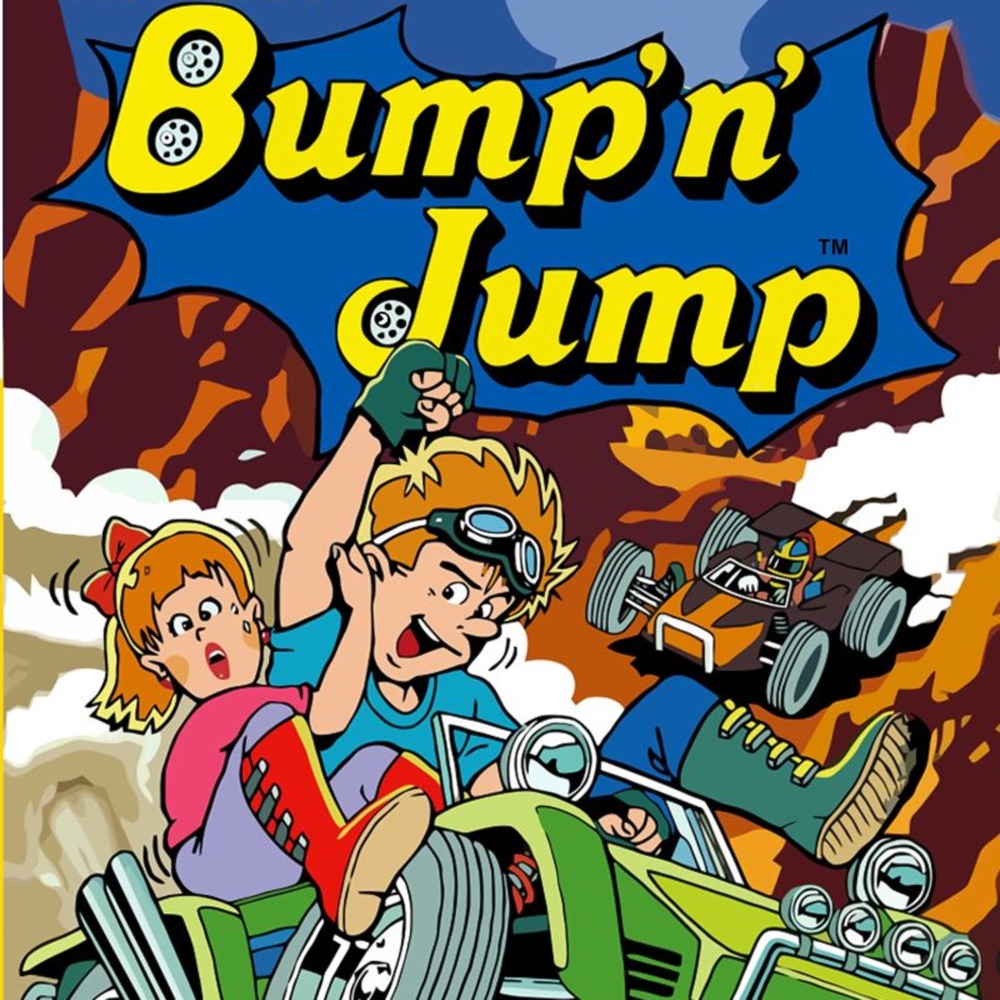
142 · BUMP 'N' JUMP
Bump 'N' Jump is an action racing game played from a top down point of view. As you race through the treacherous and ever changing roadways, the numerous enemy cars will be trying to bump you off the road. You need to make sure you bump the cars out of the way before you get bumped and crash into the sides yourself!
SHOW NOTES
Bump N Jump Longplay
Manual
Spy Hunter Episode
240 Quarters
Robert Moses
City Connection Visual
- The Sunday drive that turned into a nightmare on wheels!
- Introductions
- Story
- While enjoying a drive with your girlfriend in your car that you have named "Popper", you are attacked by a ruthless gang called Jackals.
- Your girlfriend is kidnapped by Jackals in their big off-road vehicle. The girl's pleading voice is heard to say "Help me!" as the vehicle speeds away.
- You, of course, must chase down the gang's getaway car, and when you meet up with these enemies, you will have to fight them anyway you can.
- You will try bumping with your own car, crashing into them, even leaping on top of them in the hope that they will be crushed. All this is necessary to save the girl and get her back!!
- Gameplay
- OVERVIEW
- Overhead-view survival racing game in which you must fight off enemy cars and jump over obstacles in order to progress to the next level
- Because of the bird's eye view, players cannot see the large obstacles until it is too late to jump, so the game displays a flashing exclamation point when the large obstacles are about to appear.
- Control speed and manage enemies
- Adding a level of complexity, the NES version of the game also requires that players pick up cans of gasoline that are interspersed throughout each course, as their car uses up fuel steadily throughout the game if the car goes too fast.
- Not much here huh?
- OVERVIEW
- EGL
- I prefer Spy Hunter
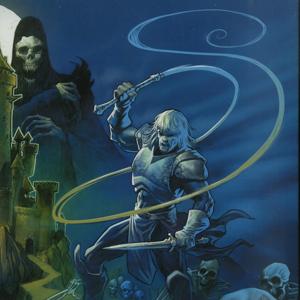
- Next week - CASTLEVANIA II
Auto-generated transcript. Each paragraph starts with its timestamp. Speakers are not identified.
Bump and Jump, the Sunday drive that turned into a nightmare on wheels.
And welcome to NEStalgia, a chronological exploration of every NES game released in North America. I'm Mike. I'm Sean. And I'm Sam. Guys, today we have Bump and Jump. Didn't know that the game took place on a Sunday, but it is definitely a nightmare on wheels.
It's quite the interesting storyline for this one in the manual. If you didn't know any better, Bump and Jump is actually like the cocaine cliff diving game, where you just take a bump and then jump off a cliff. Oh, wow. I never actually thought about that. That's the 80s, man. Yeah, there you go. That's a lot of people were doing that in the 80s. It's on someone's best of 88 list. Right, right.
Of course, Bump and Jump, you know, as a game, is a Data East game. But I'm curious, like, which one hit first? The realization that it was a Data East game or the realization that it was a driving game? Because Bump and Jump doesn't quite scream to me that you're going to be like doing a top-down arcade racing style game. Well, it hit me because I always Google it first before I boot anything up. And, you know, it's just that Wikipedia entry that says, like, Bump and Jump is a 1988 Data East. And then I just sort of lose it. I'm just like, my eyes glaze over a little bit. Then I clicked on it and I saw the gameplay section and I'm like, okay, this sounds like they can't mess it up too bad.
That was my little thing there. And this is one of those rare ones too where it's like, it's an arcade game, pretty popular, that is now finally coming to the NES after being on the Famicom, like, years before. And I say rare only because we cover every NES game, but some people might just only own these, like, arcade games that then get ported to the NES. Sam, what are you feeling about, like, these inferior NES ports of these arcade games?
I kind of have mixed feelings about them because on the one hand, I imagine that the idea of having an arcade game in your house must have been really novel in the 80s and must have been pretty cool. And you kind of understand that it's not going to be the same experience as going to the arcade. But on the other hand, most of the time they suck. So I don't know.
Yeah, I actually wonder, if you think about it, right, an arcade game was probably 25 cents, right? Yeah. Per play. That means that it would take 240 quarters to get to $60. Do you think that people would play bump and jump 240 times at the arcade before they, like, reach the same limit of like, well, I'm glad I bought it for home play instead. So this way I didn't spend any additional quarters.
So you're actually asking, would you want to play this game 240 times? Yeah, yeah. Okay. Or any arcade game. Yeah. 240 times. I don't know. How often do people go to the arcade? It's like a Saturday thing, right? You would just hang out there. From the movies, it seems like it was pretty often. They're always there. Yeah. Well, if you go every Saturday, let's say for a year, that's 52 times if you only play a game once.
So I imagine that if someone is really into arcades, they would probably be playing some of these games a couple hundred times. And there's definitely like the greats. I'm sure people would say that Donkey Kong, Pac-Man, Millipede. Well, that's like at least a five quarter game right there. Yeah, exactly. Like you would put a lot of quarters into those games. You just can't realistically be putting like, you know, for every arcade game that got ported to the NES, that number times 240 quarters and being like, yeah, I spent like 1300 quarters at the arcade last year. What if it's like you get that as a present, you get the NES game as a present or something because your mom or someone knows that you love the arcade game so much.
And then you use the NES one to practice on because it's a lot harder and the controls are a lot more clunky. And then when you get to the actual one, maybe it helps, but maybe it doesn't. I don't know. I think that goes back to the novelty part that you mentioned, Sam. And I think that is the big selling point of like, wow, this huge machine with a CRT built into it that I go to like, I go out to the mall and I play it there. Now I finally like just have it in my living room and I can invite my friends over. Now I'm the arcade.
Yeah, I mean, I don't, I don't really get that, uh, that logic in that like home gaming is practice and the arcade is the actual thing. Like, I mean, I guess like, yeah, the arcade version was definitely a better version, but it's not like, uh, you're playing competitively. I don't know. Funny.
And to be fair, you don't have to spend 240 quarters to be like, well, I got the same value as those fools that bought it on the, on the, on the home system. Social interactions. Right, right. Uh, I just think it's like a funny argument to actually like say that number out loud. I bet nobody has thought that like you have to spend 240 quarters to equal the same price, but you could actually just like rent it in your, in your mind in a way by going to the arcade and just spending less.
These are the threshold numbers we think about, you know, that's the Fibonacci sequence of home video gaming. So do you think that someone would have, would play the game less in the arcade if they had it at home? Or do you think they would play it more because it's like a favorite of theirs? Ask yourself that same question. What would you do? Give me a game.
Like, all right. So just Donkey Kong, right? That's on the NES, but it's also in the arcade. Are you going to play that more or less? I'm not saying, would you play it at the arcade? I'm saying you're going to play it more or less now that you own it at home. Probably less. Yeah. I would agree with less. For that game. But I think it also depends on the kind of games where the port isn't as good. Yeah. Like what was it? Ikari Warriors or something? Yeah. That was a bad part.
You take that one. Like, are you going to play it more in the arcade because you've kind of been teased by the crappy version of it at home? And maybe you don't think that that's crappy. Maybe you don't even know yet what a real Ikari Warriors can be like. So you're like, oh, I have that at home. And then you like see all the flashes on the screen and you go over and you're like, what are those graphics? Like, let me get in there. And then you realize like playing with, uh, what do we call, I guess we call those joysticks.
Um, playing with those instead of a D-pad is also really effective for a game like Ikari Warriors where you can choose where you shoot in which direction and stuff like that. So do we know what the experience of bump and jump was like in the arcade?
Well, I will tell you this. Uh, it was a less complex game in the arcade. Oh, interesting. Yeah. Uh, the NES version of the game is the one that requires players to pick up cans of gasoline to, uh, continue to collect fuel. That was just not an element in the arcade version of the game. So, you know, I actually think that's shocking. Like you, the picking up gas thing seems like totally an arcade mechanic of like, let's make sure we screw over the player in every corner so that they keep putting in corner quarters. I mean, maybe, maybe the gas was only put in to, uh, emulate the obstacles, uh, that quarters would have been. Uh, right, right. To make it feel like you're getting that arcade experience at home.
Yeah. To artificially extend the game. Yeah. There should have been an adapter on the NES to just like insert a 25 cent slot, you know, onto the back of your NES or something. Can we talk about those cans for a second? The gas cans? Yeah. Talk about the gas cans. They, I feel like whoever coded this to put the gas cans in just kind of said, all right, as long as it's on the screen somewhere, then that's, that's fine. Yeah. Because they're always in just, they're in the, the window dressing all the time and you can't touch them. Yeah. They'd show up in the, like the boundaries of the course that show up in obstacles of the course that I've had one in the middle of the ocean as I was jumping over it.
So that's gotta be, I mean, Sam, you design games a little bit. That's gotta be just a way to say that like, this is all just randomly generated, right? That they didn't design the actual course layouts in a way that like you would place the can, the gas cans meaningly, meaningfully. And so instead it's just like when they hit certain amount of part into the level or when they're at this level of gas, then have a gas can appear. And that just happens to be anywhere possible on the screen with whether it doesn't care whether it's collectible for the player or not. Well, it does seem kind of random, but I don't know if it's like they show up in the same spot every time because I didn't really play the same level multiple times a lot.
Yeah. I'd just be shocked if they did though, show up in, um, in those places purposefully, because then that's just kind of like teasing the player of like, oh, you know, you could, you could get this gas can, but it'll kill you. And so it's not worth collecting, but you need those gas cans. So you could be like, you could have four, um, you know, what are we going to call the unit of measurement here? You could have four gas left.
And every time you pick up a gas can, yeah, four power left. And every time you pick up one of those gas cans, it gives you 10 more power. But if they place it in a place where you can't collect it, you are now dead no matter what. I would guess it's random because of that. And because I also see like cars in random spots too, like parked cars. Did you guys notice that? Yeah, I noticed that. There were like cars in the water or on the sides or in front of buildings and things. It's, it's, it's a, it's kind of inscrutable.
Like I really couldn't tell if that was supposed to mean something or if it was, uh, just a, a quirk of the code. Um, but I mean, it seems like a lot of it was randomly generated. I don't know how much the, um, I don't know how much the levels themselves are because I mean, I can see chunks. Like I can see recognizable patterns in these levels, uh, or just like the road courses. But, uh, yeah, I can't, I can't tell just by deduction. Thank you.
Yeah, well, you know, just to give the listeners a clearer picture here, Bump and Jump is an overhead view survival racing game. I'm going to just describe it as a survival racing game because there's no discernible finish. You're just trying to survive every single obstacle until you get to the finish line of that stage, but it's one of those games where you just continue to progress forever, right? I don't think there is a clear ending. I think you can just keep going on to get a high score.
Well, I mean, there are endings for each level. Like, you go to cross a finish line, it's easily recognizable, and then you start... Yeah, no, I'm just saying there's no final boss or anything, so you just keep going up in stages. It'd be like completing Pac-Man stages, you know? This is the closest thing to... This is just Spy Hunter again with a couple different mechanics, but I think Spy Hunter never stopped. Did Spy Hunter ever stop? That's a good question. I don't know. Yeah. So, yeah, it's a little bit more level-oriented than Spy Hunter, at least. Yeah, but did you like that breakup? You know, like, you seem to be a fan of it. You're saying at least it had that over Spy Hunter.
I guess I don't know if I could qualitatively say that one was better than the other, but I guess it does lend itself to, like, at least telling you you've gotten this far. So far, that's as much as I can say. I was going to say, I like how there's some courses, like, there's one that has a couple levels later, it's like five or six or something,
that has these almost, like, rings around buildings, and the buildings are in the center of the map, and you have to jump to the side of them, and so I thought that was kind of cool. And then there was one or two after that, there was a level that had these sort of safe patches on the right side that were just roads that would continue, and no cars would ever spawn over there, so as long as you knew to jump over there,
then you were safe. So I think that there are specifics about the levels that are different from each other that makes it, if not more enjoyable, then at least different and, like, kind of interesting. Yeah, I think they were trying to go for, like, a change of seasons effect between the levels and the color palettes. Yeah, I can see that. I'm sure it's more noticeable in the arcade version of the game, but even just the fact that the colors do change on the background tiles. There's a change in seasons and a change in urbanization. Yeah, I think that helps, like, break up the monotony of the game, and it would be more jarring if just, like,
it changed as you were driving. Like, it's like, oh, now you drove into the next season or the next area. That would be impressive, though. It would be impressive, but I actually think it wouldn't work as well as, like, as the trick that it requires, you know? Like, instead you'd be like, hold on. Did I get anywhere? Like, did I actually progress, you know? So I think that's the problem there. We should talk about the jumping, though, because that's the big aspect of this game is that your car has the ability to basically be, like, a giant pogo stick and jump very high into the air. Well, that and the bumping.
Right. Well, the bumping we'll get to. Oh, okay. Yeah, don't worry. That's, you know, half the equation. But the jumping's important here because for some reason, Robert Moses, when he was designing these roads, forgot to, like, include half of the road. That's a great civil engineering inside joke right there. Yeah. Yeah, there you go. He, like, there's just these gigantic holes in the highways, and that's, like, that's the idea, you know, of, like, why you must always jump because the road ends but then restarts. Or there's an enormous wall. Yeah, an enormous wall, or it splits a certain way, or there's, like, a mini island that you have to hop to and then hop back to the main highway. Which is way too hard to fucking figure out. So, I'm sorry.
Yes. It's all sort of, like, MC, not MC Escher. It kind of is in that there's just, like, walls bisecting roads and maybe a little bit of, like, Kafka because, like, what kind of society would design a city like this? It's a little bit of existential dread while I'm playing this, but I don't know if you guys felt the same way. Well, I'm just wondering, because of the bird's eye view that you get, you know, that top-down look, you can't see these things very far in advance. And you do get used to it, so I'll give it that credit. But, like, is this the best way to go about making an obstacle in a video game of just, like, reaction times for your last second notices of, like,
obstacles coming at you? Like, it almost feels, if you didn't know any better, and this is, sorry, this is going out there, but it's kind of like Guitar Hero, this game, you know? You don't see the notes for a while, and then all of a sudden they're just there. And it's fine when you're playing on, like, easy mode, but if you're playing on expert, all of a sudden, things are being X'd of you that you didn't even know your fingers could do. Not that the game ever gets that intense, where there's, like, a difference between an easy and an expert mode,
but it is like that, where you only have a small window of opportunity to decide when and how you want to jump, because the jump isn't something that you can actually control. You can't do, like, a hard press for a very high jump that keeps you in the air for a while. I mean, I would say... I would say that it's even worse than the Guitar Hero statement, because there are situations in this where you need the information that you can't see yet in order to jump in time. Like, that when you need to jump onto those little islands, you need to know that before you see it. Like, the audio warning that starts playing when it's trying to tell you, like, you're going to have to jump soon.
It's not specific enough to say that, like, oh, you're going to have to jump to this little archipelago first. So you can only know that that's coming because you've already failed at it. So I think that that's kind of, like, a flaw in itself. There were some... Going off of that, there were some times also where you have to jump at the very last bit right before the water starts in order to clear it in some of the later levels.
And for me, I felt like there was no reason to not always be jumping except during those, like, about-to-jump parts where it gives you the warning. Like, land when you see that. But besides that, just always be jumping because you just land on everyone instead of getting bumped. So... And I also... Also on jumping, this is my second thought, I thought that... I didn't like how you had to be going a certain speed in order to jump because if you're slowing down because you're trying to maneuver around someone or, you know, play the game,
then... Conserve fuel. Right, conserve fuel. Because that's another thing. You're trying... Or I think there was something in the manual about having a cop pull you over which never happened. Yeah, it never happened to me. I never saw an ambulance either. I saw an ambulance. Maybe tongue-in-cheek, like, oh, don't go too fast or the cop will pull you over. Yeah, I don't know.
But yeah, then... Then one of the warning signs comes up and you can't speed up fast enough to jump again. So you just kind of have to play the game a specific way. And for me, I found the easiest way was just to just always be jumping on top of people. Yeah, I'd like to go back to your point there about jumping always so this way you just land. Like, the worst thing that could happen provided that you know that there isn't a obstacle coming ahead. The worst thing that could happen is you just land on another car or you dodge cars. So when you land on the other cars, that one, like, really does a lot of damage and, like, pushes them over to the side and usually destroys the car.
I find that to be a lot more effective than this bumping thing. So in some ways, the game is jump and jump and not bump and jump. But don't you use more power when you jump? Like, in your kind of... When you're in air, 90% of the time, you're kind of missing all these hiccups when they are, like, pick up a bowl. And you need them. Yeah, sure. So, I mean, I feel like that would be a quick way to lose, like, power to jump at some point. I guess so, but I never had a problem with it. Oh, okay. I see what you're saying, though, Sean. It's like the jump is the greater power, but it comes with responsibility.
Yes. It's a great power. Yeah. It's like the boost in F-Zero. It's also your help. Sure. Yeah, no, that's a good point, too. I just think there's something about the bump here that I hated. It didn't respond that great for me. I didn't actually... I felt like I was being bullied by every car on the road. Yeah, when I get bumped, I go flying, but when I bump someone else, they're like, oh, you did not just do that. You know, they just don't really care.
Yeah, they're like that meme where the guy is, like, driving and then he hears somebody say something, so he goes in reverse. You know, it's like, that's the bump. It's like by bumping other... I don't know about that meme. I'm bumping the enemies. You come on! Is he going in reverse or is he just checking out what's happening in the back seat? Yeah, no, he goes like this. He has, like, his, you know, he has his arm around the passenger seat. He looks behind him and he's like... He goes in reverse.
He's going in reverse, though? He's going in reverse. He's like, he's going forward. He sees it. He's like, he's got his eyes squinted and he's like... And he goes in reverse. He's like, I'm not going to whatever that is. Oh, no. I don't... I think I'm thinking of a different meme.
I think it's really hard to describe memes over a podcast. That's a great idea for a podcast that somebody else can handle. We sort of did this... I'm not doing it. I mean, this is off topic, but we did play that game before the in-person records in the before time. I'm just saying, free idea for a podcast. Yeah. Describe memes to people. No, no, no. I copyright that. Oh, yeah. You copyright a lot of podcasts. You have that one just about all different kinds of mustards? I do. Nobody can make it. Yeah, we were going to taste every mustard in North America. I'm a podcast idea squatter. Very good. That's the Thomas Edison way.
All right. Thomas Edison, Robert Moses, what year is it? You know, funny thing about the Robert Moses thing since you mentioned about like how the devastation that the city must be dealing with for designing their highways like this. It made me think of City Connection, that Jaleco game we played where the girl's on like her moped. And that one has like... Oh, yeah. That's a disaster itself as well. Yeah, it's like, welcome to New York. And it's like, the roads are on different
floating platforms. Yeah. And it's like, that's not New York to me, baby. Well, the other thing, like in the same vein that I noticed was in the manual, the story is like, yeah, you're on a Sunday drive and this gang steals your girlfriend and then you just decide to, I guess, follow the car and then put her... But before you do that, you name your car. Yeah, you for some reason named your car. It's never decided why. You never see the car's name in the game.
And so you try and like find her and you just, I guess, put her in harm's way by trying to run the car off the road that she's in. And then apparently you're supposed to run all the cars off the road and they all want to do that to you. Like, it all sounds like a nightmare. Like the architecture in this game, the civil engineering in this game, the society in which you live in which it's okay to act like you have... Everybody has road rage. It's just a world I don't want to live in. I don't know if it's a...
An analogy for anything or an allegory. All these one-way streets also. Yeah. I mean, it's a never-ending... I mean, everything's on the same road. Weird. And you know what? If you get far enough into the stages in the game, you can see the car that is carrying the girlfriend's... Well, I thought she kept getting stolen. That makes more sense. That also makes more sense, I suppose. But, I mean, that makes... That convinces me that this game is actually one of those nightmares where you're not fast enough. Uh-huh. You know, it's like, well, you know, your car is always going to be slower than the other car
owned by the jackal gang that has your girlfriend kidnapped. I buy that. The story's also very out of place if we're being honest. Like, I didn't need one. I didn't notice it. I don't know if you picked up on any of those clues before reading the manual. Like, visually in the game, did you ever say, like, those must be the jackals and my car must be named the popper? Well, that does go without saying, like, once you get into it that it is named the popper. You're right. I was wrong before, but the rest, no. So, it's just one of those things where, like, I appreciate that they included a story in the manual,
but they went, they went a little extra to make sure that it matched the visuals in the game. Yeah. And they should have just had fun with it instead. Mm-hmm. It should have been, like, a whole, it should have, honestly, this should have been a game that took place in World War II where, you know, people from the future came and kidnapped your girlfriend, and she is the only one who has the codes to stop the moon from exploding. Yeah, exactly. The same thing. Same thing. Okay. Yeah. You know, there's just not really a lot to this game, so we've been rambling. Yeah, there's not much to talk about anymore.
Oh, I got something. Yeah, please. There's different music for each stage. You know, the music changes. Did you like the music? Didn't even notice. Not, not really. I'm shrugging right now. It's, it's bad when you have two opinions on this. One is, I didn't even notice that the music changed, and the other one being, well, I didn't necessarily like it. Yeah, but, you know, it's not some, oh, what was that one?
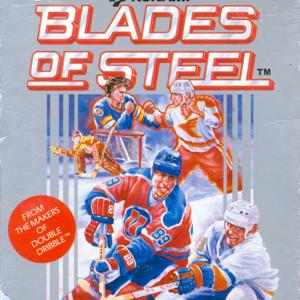
Chubby Cherub? Yes. With that same song over and over again? You know, I forgot to mention this in the, since we're talking about music. Last week's episode, Blades of Steel, had amazing music, and we didn't talk about it at all. You're right. And that's, that's Konami right there. And, um, I feel bad. That, that had some really, uh, that sort of, had some classics in it.
And, and, you know, what's funny is when you think about that, though, you're like, okay, so that had great music, and we didn't mention it. But then, go back one more episode, Bionic Commando, and we didn't talk about the music at all for that episode. And that's the same, like, that's like Mega Man music, because it's Capcom. It's practically, I think it is the same composer, too. People like that. Very similar, yeah. Yeah. I'm sure you sprinkled in some of like, some of those little zingers,
uh, into the, the audio itself, right, I always put music, everybody knows that about me, I always put the NES music. In fact, if you haven't listened to our Super Mario Brothers Duck Hunt episode yet, because you thought like, well, they would just combine both those previous episodes into one episode, you're wrong, it's a completely original episode, but it also has really fun Mario remixes that I guarantee no one has heard before. Did you make them yourself, Mike? No, I'm talking about like, really rare, early 1986 Japanese Mario track. Oh, Like, Super Mario Syndrome, and, um, this other one that's just like a, I didn't play the whole song, but it describes the entire adventure from Peach's perspective.
But, you know, in song? Japanese too, so I don't know what she's saying. Yeah, in song, but she's like, she's just saying it. Okay. But, so it's not 8-bit, it's just. Oh, no, yeah, these are like, fully produced, like, records. But from the 80s. Oh, that's pretty cool. I guess the rest of this. Super Mario Syndrome, it's great. The rest of this episode, we're just plugging our other episodes.
Yeah, yeah, do you have a favorite episode? Favorite episode? That's hard to say. Why wouldn't it be this one? It's always this one. You're hurting the listener's feelings. Yeah. Uh, yeah, of course. They're spending the time right now. Well, I'm sure there's listeners that have favorite episode going into this one, and if I say it's this one, then they're like, oh, but I like, I like Donkey Kong 3. You know? People can have different favorites. You would say Donkey Kong 3, when only me and Sean were on that episode? He really likes it when we get intimate.
All right, all right. I'll tell you what, I'll tell you one thing I know, all right? I know that we have exhausted talking about this game, and we now need to talk about it in the Essential Games List. We're not even going to talk about Victor Kai?
As you just heard, it's time for the Essential Games List, I think, since I usually don't go first, I'm going to go first, and just say right off the bat, no, I prefer Spy Hunter. Sam? I'm going to say no. I prefer Mock Rider. Sean? I'm going to say no. I would prefer both of those games. I, Spy Hunter and Mock Rider. Yeah, I would prefer both those games to kind of get like a crossover. They get together, make a nice little top-down, post-book with the baby. Some Rad Racer, 3D in there. Ooh, Rad Racer. You do like Rad Racer, Sean. You should have said that.
I mean, I couldn't really think on my feet there. You gave me like 30 seconds, you know? Yeah, that's true, that's true. But you do like Rad Racer, right? I do like Rad Racer. Where would you rank the three of those? Rad Racer, Spy Hunter, Mock Rider. Just you. Well, there's Rad Racer, and then there's Mock Rider, and then there's Spy Hunter, going from top to bottom. And then there's Bump and Jump. Yeah. Great. I think Mock Rider might be one of my favorite NES games still. It's still up there for me. It oozes style. Yeah. Well, it's just accessible. Anyway, speaking of oozing,
next week, it is going to ooze red blood when we do our special Halloween episode. That's right. It's not going to be on Friday. You'll have to wait a full day, but on October 31st, All Hallows Eve, is that the... That's a way to say it, yes. Yeah, yeah. Because no, something that's confusing is All Hallows Eve, like Halloween Eve, like, you know, Christmas Eve?
No, it's... That's correct. Right. Gotcha. So just to make it even more complicated, then, does that make November 1st All Hallows Day? Yes. No, it would be All Hallows-ween. Ah, All Hallows-ween. I like that. Anyway, to make a long story short, our special Halloween episode will be Castlevania II, Simon's Quest. Note that we are not going out of order. This is a beautiful coincidence that many of our listeners pointed out to us a while ago, and we just happen to be ready to do this, and it just happens to be on Halloween. So to make it a big episode, make it grand, I was thinking we get none other than Dracula himself on the show. What do you guys say? I mean, you have to invite him.
Yeah, I mean, look, I'm sure he can, I'll send it through like a Raven mail, right? Right, but I'm saying he can't come unless he's invited, because he's a vampire. It's a vampire. Vampire humor. I mean, what does that mean, though? Because they, oh, come on, guys, they got to be invited into your house before they can come in, like that whole thing. Yeah, you don't know about this, Sean?
Oh, no, I get it, I get it. I mean, look, are we going to, are we actually going to say that, though? Look, we just got to brush up on our vampire humor before Dracula gets here, because I don't want to be like, you know, I'll be extra spooky. Awkward around. Sean, I know you usually have garlic bread on Wednesdays. So when we record, why are you telling everybody that? Can you just not eat garlic bread that day? I know it's a big ask. All right. Yeah, sure. Whatever. Like hold off. Whatever.
Nobody stands between me and my garlic bread. I'm going to pull off all the wood floorboards in my house because I don't want him thinking that I'm going to turn them into steaks. Am I allowed to eat Gabagool? Gabagool is always good with a Dracula, you know? Okay. Are you going to say something or are you just going to make that face? That's my Gabagool face. The listeners know exactly what we're talking about. Next week, Castlevania 2, Simon's Quest with Dracula here in the studio.
That's right. It's going to be a great episode. And there's many more great episodes to come, too. So make sure to hit that big follow button on Twitter. Smash that follow. Smash that follow button on Twitter at NostalgiaCast. I'm Michael Esposito. You can find me at Esposito Film on Twitter. And we'll be talking to you next week for a very spooky nostalgia episode. Thank you.