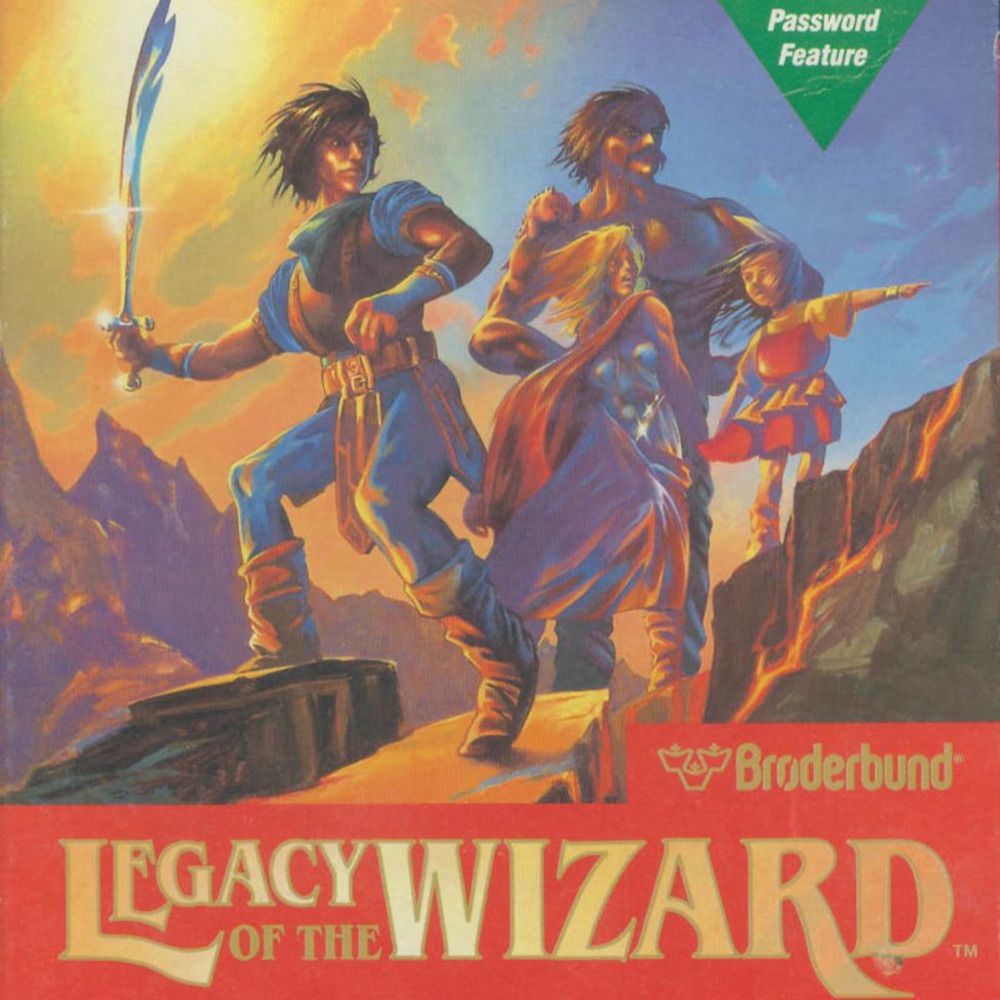
177 · Legacy of the Wizard
Long ago, an evil dragon named Keela was imprisoned inside a magical dungeon. However time has passed and the magic that sealed the dragon away is weakening. The Drasle family decides that it's time to destroy the dragon once and for all. However only one weapon is capable of doing this, the Dragon Slayer, which is itself sealed away by four magical crowns. The Drasle family decides to take on this quest, and will use every member of the family in order to accomplish it.
SHOW NOTES
NES Longplay
Dragon Slayer Franchise
Legacy of the Wizard Map
- Long, long ago, an evil dragon terrorized the forest until it was imprisoned by a powerful wizard. Now, years later, the dragon has revived and it's up to you to use the power of the wizard's descendants, the Draslefamily, to defeat the dragon once again.
- NES Longplay - https://www.youtube.com/watch?v=Mw49GWtonLk
- Introductions
- Legacy of THE wizard and yet you play as many different characters
- Overview
- the story of the Drasle family (an abbreviation for "Dragon Slayer"; though the characters are given the last name "Worzen" in the credits)
- Attempt to destroy an ancient dragon named Keela that is magically entrapped in a painting within an underground labyrinth.
- To accomplish this goal, they must find the "Dragon Slayer", a magical sword that is protected by four hidden crowns.
- the story of Legacy of the Wizard is explained almost entirely in the game's instruction manual. The game itself contains very little text, and does little to add to or even to explain the story of the game.
- Gameplay
- You are the six family members, one at a time, as you traverse the large cavern underground
- Navigation
- Is it too large?
- no clues as to where you’re actually supposed to go.
- Getting stuck
- How much did you backtrack
- tons of dead ends, pits to fall into, and hidden areas for your characters to navigate.
- falling damage
- Combat
- The character you pick plays a big role
- The uniqueness of the 6 characters compared to say SMB 2
- each section of the dungeon has an area that only a particular family member can access.
- Only certain characters can use special equipment
- Pochi
- The pet who can help explore. No damage
- Boss fights
- Finding out there is only the cavern
- Development
- Sequels and Spinoffs
- Dragon Slayer IV: Draslefamily
- EGL
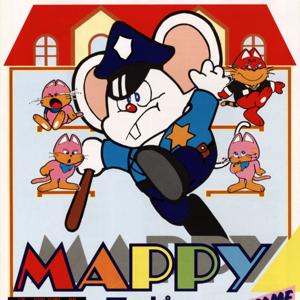
- Next week - Mappy-Land
Auto-generated transcript. Each paragraph starts with its timestamp. Speakers are not identified.
The Legacy of the Wizard! Long, long ago, an evil dragon terrorized the forest until it was imprisoned by a powerful wizard. Now, years later, the dragon has revived and it's up to you to use the power of the wizard's descendants, the Drassel family, to defeat the dragon once again.
NOSTALGIA And welcome to NEStalgia, a chronological exploration of every NES game released in North America. I'm Mike. I'm Sean. And I'm Joe. Did you guys get all that at the beginning? Like, was that not enough information? Too much information? I think it was pretty good. I mean, that, this is one of my favorite, uh, this is one of my favorite instruction booklets for its, uh, story. Um, but you really did get most of, like, what, what makes it great.
Yeah, it's quite a long back of the box compared to, uh, compared to most. Because there's no, like, there's no stopping point. They just, it's like plot, plot, plot. Like, they never let you, like, take a break and be like, oh, that, that's enough. Like, that's not, that's enough to give the, uh, person an idea of what the game is. It's like, you really have to read the whole back of the box to understand what you're playing. I, I actually think it's kind of funny that, or it's interesting that more games don't do that because they only, you know, the, the most common precedent to this would have been, like, books. And I feel like the back of books have, like, a whole long synopsis. But games don't usually do this.
I mean, I mean, a lot of them are, have something like this going on, I think. Uh, unless you mean specifically how much story is told in the back of the box. Yeah, that's what I, that's what I mean. I mean, usually there's like, it's usually like, break the boxes and defeat the evil lord. Whatever, do you remember that game? Everyone remembers that game. Yeah. Bowser is the evil lord? Yeah, yeah. Um, also, legacy of the wizard, and yet you play as many characters. Well, it's because you, you're all the legacy of the wizard. Like, you, uh, you are his spawn. Yeah, like the wizard being the, the grandfather, right? Whose picture's on the wall? The one who's also just still standing there? I was there. Yeah.
Uh, wait a minute. No, he's, he's, yeah, he's in prison, that, that wizard. That, that, it's the legacy of that wizard, not your grandfather. I'm talking about the one long, long ago when the dragon was there. The, the wizard, that wizard is the legacy. I could have sworn, the wizard is your grandfather. Yeah, the, the, the, the grandmother tells the story and says, like, see that picture? That is your grandfather.
See, I didn't get, I guess I didn't get that from the back of the box, because I'm reading it and I'm thinking, like, well, that happened a long time ago, and now, like, you know, centuries later, the descendants of that wizard have to, like, you know, retame this dragon. I, I get what you mean, because in the manual, like, uh, they start two paragraphs with a long, long time ago and long, long ago. So, uh, but it's really just, like, you know, two generations, um, because at the end of that, they say that the wizard is your grandfather.
Um, and, uh, I think, uh, now he, I don't know who they're, like, she's speaking to, because your grandfather's there. Like, he's, he's the one that, like, gives you passwords and stuff. So, uh, I don't know if it is pretending he's not around. I don't know. Well, you can't play as him or grandma, really. They're just password boxes. But, uh, the rest of the family is completely playable, and I'll tell you, I didn't expect to play as a family in this game. I'd say, I'd say the same. Uh, it's, it's a, it's a neat little trick to give context to why there are multiple characters. But, uh, yeah, playing as a, as a mom and then a daughter is, uh, it's, it's funny, funny to me.
And this is the story of the Drassel family, as mentioned in the back of the box, and we're talking about this family a lot. But did you know that Drassel, like that, is just an abbreviation for Dragon Slayer? Do you guys know about the Dragon Slayer games?
I've heard of them. I have not. Well. It's a really lazy way to, um, make that the name of a family, though. No, come on. Japanese people love doing that stuff where, like, they shorten, uh, you know, like, names of things to then bring them down to, to be like, that's the crazy reveal or something. Obviously, it doesn't work here because they completely ignored the fact that this is a Dragon Slayer game because, I think this is the fourth Dragon Slayer game. Uh, that would ever come out, but they're just like, nah, we'll just call it Legacy of the Wizard in America.
Hold on. This actually is a Dragon Slayer game, or are you? This is a Dragon Slayer game. I'm not joking at all. Oh, I didn't know that. Yeah, and that's why they're called the Drassel family. But in the, in the credits of the game, they're, they're given the last name Warzen. So, what happened to the Drassel family?
Warzen? Is that, like, answer backwards? It's, you know, the, the, the Drassel family of House Warzen, or, you know, something like that. I don't know what that's about, but I think that's, like, a funny, like, it's like a half commitment. It's like, it is a Dragon Slayer game, but it's also not all in the same game. My head hurts.
Sean, you mentioned the manual, and it is a good one. The story of this game is, is mostly explained entirely in the manual. There's very little, if anything, in the game to really give you any additional context. So, did you feel like the manual was enough in terms of storytelling? I never feel like a manual is enough in terms of storytelling. The only reason that I appreciate this one is because of how, how terribly written it is. But, um, that doesn't mean it's any good.
Yeah, I, I feel like the only time I would say a manual would suffice as being the only means of storytelling is if, like, the story literally, like, just doesn't mean anything. If it's just, like, a, if it's just, like, a random shmup that doesn't have much of a story, but then there's, like, a little bit of, like, oh, here's a little aside, a little extra thing in the manual if you want to read it.
But, like, this game seems like big, a big part of the adventure is the story of the adventure. So, it would have been nice to have it, like, included in the manual. Especially, like, today, I mean, if someone picks up this game, I mean, how many people Google the manual anymore? You know, or, like, just, just, or even have the, you know, have the physical manual. It would probably be a lot of people reading it.
Yeah, and, I mean, you know, like, the game itself, even though it doesn't give you any context or anything, I guess, like, you know, the, the map itself is gigantic enough that you could just kind of build your own explanation for things and lore and stuff like that, right? And that's half the fun. It's, like, that's the fun of those Dark Souls games, right? You just experience the lore and the world. There's no, like, actual coherent story. I guess you could say that. It's a joke. I'm making a joke, but.
I mean, I was just trying to, trying to be nice about it. Well, I also, though, do jokes aside, think that there is a, there is a happy medium between, depending on the kind of story. Like, a Pokemon game, you know the story, you're trying to be a Pokemon trainer, but you sort of tell it as you go. I guess it's not really that you're, you're making up the story and coming up with the story yourself, but it's, like. No, but there's at least, like, exposition and, like, things that are said in the game. Totally. But I do, I get what you're saying.
The game itself is a side-scrolling, I'm going to call it, like, platformer, but it's also kind of like a dungeon crawler, right? Because it's just this one giant dungeon that all takes place underground that you just kind of have to navigate yourself through. I'm not quite sure what a dungeon crawler is, but would either of you back me up on that? As someone who's also not quite sure what a dungeon crawler, specifically what you would define it as, yes, I'll back you up on that. It seems like you crawl through dungeons. I'd call a dungeon crawler something more similar to, like, almost like a Diablo. So I wouldn't say that's what this is, but it's definitely a platform RPG hybrid.
Right, right. Okay, I'm happy with that description. And, you know, we mentioned that you play as these six family members, and obviously they all have, like, unique traits and different characteristics that help explore this underground dungeon. But before we talk about the family members and all that stuff, pretend you're playing as just the most generic version of any of these characters.
Let's talk about this gigantic underground cavern, because I feel like that's always what we're going to wind up going back to. That is where most of the game takes place. That is, like, the experience of being in that dungeon and trying to find your way around it. So can I just get some thoughts, maybe Sean, we'll start with you, on just navigation and how, like, how exploration works in this giant underground cavern?
Yeah, it's got, it's an interesting mix of, like, gameplay mechanics and level design here, where it has some similarities to, like, a Mario, and it has some similarities to, like, a top-down Zelda. The, like, the orientation is very, it's very side-scroller, in that, like, up is, like, up and not north. But a lot of the mechanics seem to be designed for, like, an up-is-north kind of game, like, more of a top-down thing. But basically, it's just a really big labyrinth, and you have to collect keys, you have to collect power-ups in order to interact with certain things, in order to get around and eventually slay this dragon.
And, yeah, I think that's pretty much the basics of it. Absolutely. Joe, anything you want to add to that? Yeah, so, I'll also say that I think they did a good job of aesthetically making, making it feel like there are different sections of this dungeon. So, like, I know when I'm, oh, I'm in that green section with all the ladders, and I'm in the section with all, you know, that looks really dark, and, you know, that, like, fiery red section and whatnot. And it makes it feel like you're progressing through. But I had this weird, like, back and forth of, like, whether I thought the areas felt unique or not. And I think what I landed on is that the areas look unique.
But I think as far as, like, dungeon design, like, most of the game feels kind of the same, which I thought was a little bit annoying to me. Because there was such a big world, and there were so many different locations, but it always felt like you're doing the same thing, and there was not, like, too much that was unique as far as, like, gameplay. Or, like, I don't know, it just all felt like sort of, if you were to skin it all similarly, it all felt like you're in, like, one place. Does that make any sense?
Yeah. Yeah, like, it's all coded so that you can know where you are in relation. Like, if you are somebody that has made a map or is following a map. Like, this isn't like the game we played last week where most of the areas have sort of the same visual aesthetic and kind of makes everything look samey.
In this, it's more like there's enough uniqueness to make it visually distinct for, like, a utilitarian purpose. But there isn't a lot of uniqueness in terms of how, like, to make it feel like a world and not just a maze. Yeah. Exactly. That's kind of what I wanted to go off there, Sean. That's a good point. You know, there's no real, like, aha moments early on or sense of discovery.
You can go through a large amount of this maze without anything, like, spectacular happening to you. Like, yeah, enemies will drop stuff and, you know, you might get, like, keys and things. And you're like, oh, I wonder what these keys do. But when you're playing another game that just kind of drops you in the middle and says, like, hey, go explore this stuff. I'm talking about the Legend of Zelda, right?
It's not like you're, like, lost forever in the sense of what do I do now? Like, okay, I got the sword from the old man. Like, now I can go anywhere on the map. It's like, no, you can kind of, like, go to this area and we're kind of guiding you towards this particular dungeon. But it's okay if you find one of the other two dungeons.
In Legacy of the Wizard, there are really no clues and no real design rhythm to the map itself that, like, forces you to go to a particular thing that is, like, interesting. And even if that was the case, it doesn't happen quick enough. You know, it just is one of those things where you could be going for a while, find something, and then it's like, oh, but actually I didn't bring the right family member. Like, this puzzle's not for them. And that was kind of like a, there's like a weird balance here. Is the map itself just too large?
Yeah, and this is a huge map. I think it's bigger than Zelda. And, like, yeah, there isn't enough distinctness to it to make, like, because this game is designed for multiple playthroughs or runs or, like, whatever you would call a different run through with another family member. But there really isn't a lot that makes me want to do this more than once, to go through these rooms more than once. Because once you know the trick, you know the trick, if there is one. And there's a lot that are just, like, so annoyingly laid out, to me at least, that there was a lot of times where I kind of just, like, sighed when I had to play through it again.
So I think, yeah, that's where I come from on that. Yeah, I think that if you are going to make it this big, I don't think that's a problem as long as you make the areas feel distinct. Like, I want one area to be, you know, oh, this is where it's more puzzly. And this is where it's more, you know, where you've got to think about things this way, specifically in this area. Oh, and this area is a little harder. You know, the enemies, there's these interesting, unique enemies here. But just, like, everything felt, like, the same. And that just makes the map feel way too big.
Yeah, this had my, like, my problem with the original Metroid that we went over in that episode long ago. It has it, like, amplified times 10 because, you know, in Metroid, I guess my complaint to that was that since there's no, like, general sense of direction and it's up to you to explore, like, that's half cool and half tedious of, like, trying to actually figure out where the item that you need is at any particular moment. Because the game's not pushing you in any sense. In this game, there's not even, like, the unlockability component because the keys are freely given out by enemies. And the only way you find out, like, oh, I don't have the right thing is by finding out that you don't have the right character for the puzzle.
And if you're going to do something like that, the switch out system should probably be, like, a lot simpler than what they proposed. Yeah, I agree. Yeah, they've got those ins throughout. And you can change your items in the ins. And I wish that you were able, you know, maybe it doesn't make narrative sense, but I wish that you were able to change your player at the ins rather than have to any time you want to switch, you have to go back to the beginning of the game. Gotta love backtracking for the sake of backtracking.
So how much did you backtrack? How much were you like, all right, I will continue. I'm glad I found this thing. I'm going to go all the way back and do it with the correct person this time. I didn't have enough direction to know when I should do that because there are so many weird situations in the design of this catacomb that, like, just poking at walls or poking at ceilings, like, that'll be, like, these hidden areas. I didn't know when I was done with a certain character.
It was just hard for me to tell, like, when I should go back. Yeah, I did a little bit of it because at first I just started out, just, I played as the dad first and then realized pretty quickly that I ran into, like, a block I couldn't pass. I knew I was from, I knew from the manual and from reading up on it a little bit, I needed to get the gloves. So then I pretty quickly went back and switched to the dog, quote unquote dog, who's, like, apparently not a dog. But, um. Hold on, hold on. The description of Pochi is, it acts like a dog, but it is really a monster. The other monsters don't bother Pochi.
Yeah, which I thought that was actually kind of an interesting and a decent mechanic in the game where if you want to play as Pochi, you don't have to worry. Your enemies can't hurt you.
Like, have we had a game that's given you, like, the option to just go through, like, the whole main portion of the map with invincibility, basically? Because it gave me, first of all, incentive to play first as Pochi and get whatever items I needed, namely the gloves. And I think I ended up getting something else with Pochi, but also, like, explore and get to know the map safely.
Yeah, I mean, I don't think I've, I don't think we've run into this specific thing, but I do like the idea of, like, these characters actually having, like, unique benefits that are more than just, like, more than just a tweaked stat, like a jump or power of an attack or something. So I thought that the implementation of Pochi was at least unique.
Exactly, yeah. There should have been more Pochi, you know, like, there should have been more Pochis in this game. Not even in the sense of, like, more pets or anything like that, but just what they did with Pochi was really cool because it affects the entire dungeon, like Joe's talking about. That's like your, he's your scout, you know? You bring him down there and you figure out where to go and what's what. And then you go, okay, cool, I'll come back here with this character or, okay, I'll save this for later or don't go this way. It's a dead end, you know? Like, Pochi's really cool for figuring those things out.
The other characters are really just used for, like, specific puzzle-solving moments, which doesn't feel as useful in the grand scheme of the dungeon. It'd be really cool if each character had elements that, like, affected the overall way that they go through the map. And I understand, like, yes, some of them have, like, different jump heights and, you know, different strengths and stuff like that. But I'm talking about, like, actually affecting the map itself in some way that makes it easier and harder for those specific characters to navigate. Yeah, I guess the other example would be that the father can move the blocks after using the gloves.
I think that that's, like, a big enough switch to how you play the game for him to qualify. But the rest, yeah, they're just stat tweaks. Yeah, I feel like Pochi, the advantage you get from playing Pochi is so much more organic. Where it's just, like you said, it changes the game.
Whereas, like, I think even the dad and the other ones where it's, like, you get the advantage from the dad of moving the blocks, but the developers placed those blocks in places, you know? So it feels like it's, like, well, we put this obstacle here so you can have someone that has to get through it. It's more constructed. Yeah, which is totally a valid, you know, game design choice. But it's just, it just doesn't feel quite as significant as the Pochi thing. And then even, you know, some characters where it's, like, oh, this person's, yeah, I think with the daughter, you can jump on enemies and, like, there's other things that help you dispatch enemies more easily.
But did we really ever have too much trouble fighting the enemies in the first place in this game? Yeah. Which almost invalidates my whole Pochi. Because of how many of them were there.
Right. It'd be cool if, not to harp on this subject, but since you were suggesting stuff like that, Joe, it'd be cool if, like, instead of the dad's ability to, like, move blocks, if he got, if he was, like, a digger instead and he could, like, dig new holes to get to, you know, create new access points between the map that, like, another character could use, you know, now that you've made that whole, like, I mean, that's not possible probably in an NES game. And I'm really, like, leaning on my SteamWorld dig knowledge here. But I think something like that would also be a cool way of affecting the maze through character powers, you know, as opposed to just being like, well, now he's the only one who can solve this puzzle thanks to his gloves.
Right. Well, I guess also the mom has, because she can fly, right? So she can just go in 3D space anywhere on the map. I think it takes away magic to do that. But that's, like, a pretty significant thing. She can go in 3D space?
Well, you can go, I guess, 2D. You can go up, yeah. But you know what I mean. Yeah. On top of all of the hard-to-navigate sections of the game, you know, there's dead ends. There's pits that you can fall into. They're not like pits of death, though, right? I mean, they will do damage to you. But they just lead to new areas, which then you can't get back to the previous areas. And then there's also, like, hidden areas that you're supposed to kind of organically find. But, you know, sometimes it's just like, well, that's a block and it should block my path. But I can actually, turns out, I can walk right through it. Like, it's hard to know these things are happening.
And I feel like all of these things sound like cool ideas if they were used, you know, like, as one-offs, right? Like, it'd be cool if there was a dead end once, right? Like, oh, you went the wrong way. Like, cool. I'm done with that. No, it's like, you know, programming that stuff, the pits and the hidden areas. Like, programming that stuff frequently throughout the map then just becomes, like, a thing you check for now all the time. Yeah, it ended up being that the way I'd navigate this game was just pushing up against every wall, every ceiling that I could find. And I don't like doing that.
It's sort of, like, the anti-fun for me. But, I mean, it makes it a much more challenging puzzle or a much more challenging maze. Yeah, this is something that bothered me a lot because it's just something we see so often on the NES. And, like, I don't really understand why there's so many, like, just completely invisible paths that are necessary to complete games like back then. And it just, it makes me, you know, feel like I would never want to try and beat this game without a guide.
And I hate having to, like, look for after every step, check the guide and make sure I've gone the right way. You know, like, that's, I think, the way that guides suck. You know, there's, like, a way that a guide can be used where it's like, oh, well, this guide is a nice complement to it. But other times it's just, like, why am I even playing this game? It feels like a chore to just be, like, following instructions.
Yeah. Yeah, I think, like, they have an idea of selling this game as, like, you know, oh, but you'll go, like, out to recess and talk with the other kids who are also playing this game. And you'll share, like, you know, where you found your hidden walls and stuff like that. And that's a cute picture for people who want to believe that that happened to them in the 80s, you know.
That wants to believe. Right, you know, again, they just think that, like, they always discussed secrets. Like, try describing a secret that you found in this game to another kid without a map, you know. Like, just try being, like, so I was in this room and it was pink and then there was this blue block. But turns out it's not, you know, it's not actually a block. You can go through it. Like, no one's going to know what you're talking about.
So, in reality, the real thing of the game is, like Joe was mentioning, is, like, it's to call the Nintendo Power Hotline. It's to buy the strategy guide. It's to do, you know, it's to do stuff like that. These games add these extra elements that essentially become, as Sean's mentioning, they become, like, checklists. Like, go in every room and make sure you push up against the walls. Did I find the secret one?
Yeah. One other thing that I want to mention about this game is, like, the moment-to-moment gameplay. This, the design of the labyrinth does not seem to be coherent or, like, copacetic with the, like, physics in this game.
Like, your jump and the, like, how precise your movements are don't seem to really mesh well with how tight a lot of these corridors and tight these jumps are. It seems a lot of the times that, like, in order to get into parts of this map, I'm trying to, like, wrestle with the game itself to, like, get into this little hole. It seems, like, very not how it was designed, and I'm almost, like, going to where I'm not supposed to be, but that's sort of just how it is. Did you guys feel this way when you were playing?
Yeah, specifically when you're jumping into a one-tile space. Yeah. Yeah, I was getting that a lot. It has to come down with the fact that they designed everybody to have, like, a somewhat different height jump, but then they didn't, you know, like, they didn't account for all of those different types of characters going through this maze, you know? It seems like, I get that, like, you know, some of the puzzle portion is, like, well, make sure you have somebody who can jump really high for this or not, you know? But it seems like, to your point, Sean, about not being intuitive, I feel like when I had the, I think the daughter is the highest jumper.
Yeah. And when you play as her, she just feels, it's like, it should feel floaty, right? You should feel like you're able to, like, jump and land wherever you want to and stuff like that, but instead, you're, like, hitting ceilings or hitting platforms that you shouldn't be having in the way, you know? Well, and then there's the weird implementation of fall damage. Like, this game, in order to, like, actually maneuver around it, and maybe this is, like, oh, you're supposed to just play as the mom who can fly her way down. But, like, there are so many parts of this game where, like, in order to get to the next screen, you just have to fall, like, three screens down.
And it's not a lot, but you do take damage when that happens. And even more bizarrely, it's got a very short amount of vertical distance that you have to clear in order to, like, get that fall damage. So that also felt really wacky to me. I looked into it, and the fall damage is in response to the highest the character can jump. So if you fall further than the highest point that the character can jump in tile spaces, you know, then, like, it counts as fall damage. And to your point, for most characters, that's going to be fall damage most of the time.
Yeah. But did you guys ever, how often did you guys feel in danger of losing all your life? Like, there was a point, a period of time where I just started to realize, like, I'll just take the fall damage.
I have no idea how much life I have. Was I missing something, or is there no way to tell? There's absolutely a way to tell. I mean, there's a life bar. I'm pretty sure. But it's filled up several times. So your life bar fills up all just... Yeah, it's like each top bar is one of, is like a full, each top, like, little unit is a full bar on the bottom. But the amount of damage that any given enemy doles out seems to be kind of random. And I think that a lot of that randomness comes from, like, that this game doesn't really have iframes that I could tell. So just sort of intersecting with an enemy for a little too long will give you multiple chunks.
Well, I feel really dumb. I did not realize that, like, each red peg, I'm looking at it right now, each red peg clearly is, like, how many blue bars you have. Oh, yeah. So that actually tells you your point of thing. That's how the magic works. That's how the gold works. But, yeah, I didn't even... I just thought that was just two bars of health. I don't know why I didn't, like, wonder why one was red and one was blue. That's actually so obvious now. I feel stupid. We'll edit that out. No, the red one is your blood and the blue one is your soul. And it's like, you know, you have to keep your vitality and your soul alive.
That's not true. Don't play the game that way. See, it's funny that I didn't get this because it's actually very Kingdom Hearts. Like, Kingdom Hearts 2 onwards. Kind of how, like, enemy health bars sort of look.
Yeah. Bring it home to the KH. Gotta bring it up. Joe, I feel like what you want to talk about next is the combat. You've been teasing that it's kind of easy and dull. And, you know, the character that you pick is supposed to play a role in the combat of this game, right? They have different stats and stuff like that. Did you feel like that at all? Like, they all have projectile weapons, right? So at the end of the day, everybody does... Except for Pochi, right? He doesn't... Because he doesn't have to take damage anyway.
But... He just walks around. Right. But the other characters... Wait, no. He does have a weapon. He has, like, a melee attack, though, right? It's like a... Oh, is that only a one-frame thing? But I think that also the father's... I mean, I guess it's technically projectile. It goes like a tile ahead of you and then disappears.
But it's not like some of the projectile weapons you see later with other characters. But the enemies aren't necessarily menacing. They, you know, like, they will charge at you, I suppose. But they don't really, like, attack. It feels kind of weird. It feels like we're intruding on their land. And, you know, the combat system that they have in place here is also weird because you don't know how sometimes how many times it's going to take to hit a certain person to kill them off. Because even same enemy class types will take, like, this one took three, but the next one will only take one hit. And then the next one's going to take two hits. It's like it always felt random. Did you guys experience that at all?
Yeah, a little bit. I mean, I never really knew. I never really knew, I guess, or, like, was able to keep enough track to, like, be like, oh, these are the guys that take three hits. These are the guys that take five. So maybe, I mean, it's possible I just didn't notice. But also I think that that also speaks to how, like, yeah, the enemies, some of them are designed differently. But similar to the rooms, like, none of them do much that's that different. There's nothing, there's not many that you have to think about a different way of how to take on this enemy. Like, oh, that one might be a little faster than that guy. And this guy goes in a different direction.
But, like, for the most part, they all just kind of walk back and forth. Yeah, you really just have to pay attention to, like, the different archetypes. Like, this is going to be one that will just patrol a certain platform. This is one that is sort of, like, removed from the constraints of the map and can go anywhere. There are the ones that are, like, they'll go into, like, a hot pursuit if you end up being close. But that, like, those, like, five or whatever kinds of enemies end up covering, like, 50, maybe not 50, like, a dozen or more different, like, unique sprites. Unique enemies. So, yeah, it was hard for me to tell. Maybe the other difference is how much damage they make or how much damage they can take.
But, like, if you take that and, like, think about now, like, the simplest Mario level you can think of, you're probably going to have Goombas, which you just jump on regularly. You're going to have Koopa Troopas, which you've got to hit twice, and you kick the turtle shell, and that makes you think about them a little differently. You're going to have the fire flowers that shoot fireballs at you.
And there's just different ways of thinking about there's reasons for these enemies to be different. We're here, like, I'm just watching right now, and, like, all the enemies I'm seeing on screen in this video I'm watching are just walking back and forth. There's one that's, like, hopping. But, like, you don't have to deal with them any differently. You're right. I forgot about that kind.
But it makes me wish that there was, you know, like, maybe less enemies, right? And it was more about navigating and exploring and solving these puzzles, but also the maze itself. And then there were, like, sections where, like, you know, oh, this room's filled with, like, meaningful enemies that do some damage, so make sure you bring, like, your strongest character.
Or, you know, this is a, you know, because I think there's a couple bosses in the game, too. But it'd be cool if, like, some rooms were just, like, small mini boss fights with, like, a particular enemy that takes, like, a bunch of shots to kill. And, you know, I guess I'm describing a boss fight, so I just want more boss fights. But, like, you know what I mean? Like, I think at the end of the day, the enemies that they lay out throughout every single stage just become another part of the tedious thing that you have to do in each room. Like, check the walls, check where, you know, like, if you have the correct character. And, oh, please take care of all these enemies, even though they pose no threat to you.
Yeah, and I guess another thing that they do, like, some of the enemies can be used as platforms, which can be used in the puzzle-solving element of it. But they just seem to be so randomly placed that it doesn't really matter that much. Like, yeah, you're going to find the ones that you probably need somewhere in the vicinity of the puzzle, but it doesn't feel as, like, as polished as it could have.
One thing I wanted to mention about, can we talk about the pickups just a little bit? Yeah, totally. We're good for that. Cool. This is just a skin-deep sort of thing, but the pickup that gives you more health just looks like a pair of butt cheeks.
That's all I wanted to say on it. Thank you for that. Yeah, I agree. I totally agree. Yeah? That was my first thought. Was it really, or you were just making... No, I really do agree. You know I sound like I'm being, like, dickishly sarcastic, but I really was being serious.
Okay, good. Yeah, I like the idea of the, like, of the items and the way that, like, you know, certain characters use different items and you have to, like... If you plan it out properly, you can... Or if you look at a guide like I did, you can, you know, make it work out in a way where it's like you get... You play as the dog and you get all the items that you need for the father. So then you can switch to the father and, like, complete pretty much his journey with the items that you need. And while you're doing that, get the items you need for the mother. And then you grab, use those items in, like, in different ways. And it gives you...
If you're using a guide, you can just go through and, like, optimize what you're doing. And if you're not using a guide, it was a good... At least a good attempt at, like, giving you this feeling of, like, discovery where it's like, oh, like, now I've got this thing. I wonder if I can go back and play as the father.
And, like, to bring it back to another game I bring up all the time, Ratchet & Clank, that was one of the things I loved about the original Ratchet & Clank. Where it was like, I felt like I could... I go to this planet and that, like, suddenly opens up something on this other planet I've already been to. And I can go back there and start doing something. And I get this item that I'm like, oh, this will unlock something on this other planet. And it's a lot of backtracking in, like, a good way. And I felt like this could have scratched that itch.
I do think that it was a little bit lacking in how you use these items that, like, didn't make it, you know, quite as unique as I liked. But I really did appreciate that little bit of, like, thought into why you would play this character first and then go back to play another character. Yeah. All right, so let's talk about the characters because we've been, you know, mentioning their usefulness and stuff like that. But actually, like, you know, the six characters and the uniqueness of them, compare it to, say, Super Mario Bros. 2, right? Where you could pick between Mario, Luigi, Toad, and Peach, right? Or Princess Toadstool.
And that's it. Like, you're locked to them for that particular level. But they all clearly can clear the stage. And they have, like, this one cool thing that they do. Did it feel like that with the six characters? Like, obviously, there's no, like, levels or anything like that. But did it feel like there was enough uniqueness between the six of them that you'd be like, oh, well, maybe I'd like to do another playthrough where I start as the sun. Or is that just, like, not a realistic expectation here? For me, it's not. But I can see how somebody playing this game in its time might think that. That's, like, not a – it's obviously not, like, a new concept in, like, replayability in games. But I think that the first playthrough has to be – has to have a few less frustrations for me personally for me to want to do that.
Yeah, and I think as far as the comparison to Super Mario Bros. 2 goes, I feel like they were trying to do such very different things. Like you said, Mike, in Super Mario Bros. 2, you could beat any stage with any player – with any character, rather. Whereas this, like, the whole point seemed to be, like, you need to use certain characters for certain things. So you have to, like, figure out their strengths and figure out where one can get that others can't. But, like, so, like – so, no, I don't feel like it felt the same way as Super Mario Bros. 2. But I also don't necessarily think it was trying to.
But if we're just looking at them on, like, the face value of, like, hey, they each have different abilities. I think that, like, the different abilities felt a little better in Super Mario Bros. 2 than here.
But, I mean, you know, honestly, I'm already, like, not sure that I fully believe that. I mean, there's some interesting – like, we were talking about the dog and this. Like, there are some interesting things. It's just maybe not surrounded by as good of a game. I think what it came down to for me, though, too, is, like – and we talked about this briefly.
When you find out that you don't have the right character, there's, like, almost a moment where you realize, like, like, oh, I have to go back and get the other character that just makes you kind of want to – at least me – made me kind of want to, like, put down the game. It's, like, not even if it was a good game, bad game, whatever.
Just, like, the fact that you would have to backtrack all your progress and, like, do everything you just did again just to get to the next character and do it all again with them. But now, like, you figured out that you have the right thing. And knowing that it was just going to be a matter of time before you get to another scenario where it's, like, even though you swapped that time, now, oh, you need another new character.
Something about that loop isn't – you know, I just don't even know if, like, they've tested that enough to figure out, like, hey, this is – we're asking the players to do a lot here, you know? Like, it seems like there should have been another way to meaningfully take the uniqueness of the characters and make it matter in the dungeon more than just, like, exceedingly, you know, like, larger and larger as you continue to explore the map. Exceedingly larger and larger amounts of time backtracking as you continue to go further down. Yeah, that's sort of why I had that, like, train of thought when, like, when we were talking about, like, when do you know when to go back? Like, yeah, you've got this pickup now.
Like, do you go back or do you continue to search? I think that may have, like, colored my instinct to just keep trying because I really didn't want to go back and restart everything.
So I'm in the same boat as you with that. Yeah, I mean, I completely agree also. And I think that, like, a way that they could have done it that would have been more bearable to me, much more bearable to me, is if it was designed in such a way that, like, there's always something for me to do at that end with the character I've chosen or, like, beyond that, you know, maybe I see the door that I can't get through without the dad. But while I'm playing as the, you know, as the daughter, I'm like, okay, I see that.
I can move on and still go do something that I need to get done and then remember to come back here. And, like, there'd probably have to be some interesting stuff along the way that'll be different playing as the father than the daughter that'll still make me want to come back and do it all again. But, like, to just hit that dead end and then realize, like, realize, like, oh, shit, like, that was all for nothing. I had to come back and do it all again with another character is kind of a spirit breaker.
Joe? Uh-oh, did you lose me? You are the father. Oh. Whoa. I thought you lost connection with me or something. You're like, Joe, right after my... Sorry. He lost connection with you, his father. Right, right. There are four boss fights and then, I guess, like, a final boss fight. So there's five boss fights. I have a tough time talking about boss fights today.
And it's only going to continue because I don't really know how to talk about these boss fights except for that, like, all the complaints we had about the regular enemies no longer matter because your combat now sucks compared to the bosses. Like, the bosses are really hard in this game and they're just doing so much more damage and everything. They're just doing so much more of everything than the enemies were. And it's kind of like, hey, what the heck? Like, you know, first it was too easy. Now it's too hard. I'm not having a good time, man. Yeah, there's way too much of a discrepancy between, like, standard combat and boss combat.
Like, usually I would think that a boss is sort of like what you've been doing throughout the game. It's a challenge to, like, it's challenging your skills that you've been playing with, like, at a smaller scope throughout the game. And it's just like a completely different game in that way. I, so I admittedly only faced, I think, two of the bosses.
Like, first of all, there was no design of, like, oh, you've got to recognize their pattern or whatever. It was just hit them more times than they hit you as quickly as possible. Yeah, but you didn't find yourself taking a lot of damage? I found myself taking a lot of damage, but I always found, I mean, so both times I fought the bosses, I went to an inn first and got my life back. And then I just went in there and just rammed the attack button and just watched both of our life drain, but the boss drained before mine. It's a great strategy. So I'm actually surprised to hear you guys say that, but maybe it's because I healed beforehand that it was... I'm thinking that has to be what it is because I didn't heal beforehand.
But obviously, like, that would be the correct strategy. I just think... Yeah, that's our fault. So... Yeah. You know, at the end of the day, I guess I just... It's not that they're, like, impossible boss fights. I just think it's funny how, like, all the other enemies in this game are so inconsequential and, like, the worst thing that can happen is they just run into you. But then the boss fights come out and, like Sean was saying, they just kind of remembered that there should be boss fights in this game.
You know, like, they're not really teaching you anything about the, you know, like, new tricks you've learned or specific to the environments you've been dealing with or specific to the character you're playing as. So it's just like, oh, yeah, we have this piece of a crown that needs to be guarded. Might as well put a dragon here.
Yeah, right, right. And it's funny, though, because doing it with full health, then, I guess, is the big difference. But my experience with this is, like, a boss battle is, like, a little five-second, literally five-second detour of just, like, kill the boss. And then it's, like, and they just fly back to the place or whatever.
I don't know if later bosses maybe get more health or something, but I can't imagine that they have, like, boss patterns because the first two had no boss patterns at all. It was just, like, standing. They don't have any boss patterns. Yeah. All right, there's one thing I wanted to talk about that maybe we should have talked about at the beginning, but I feel like it's funny that we're going to mention it now after we've talked about so much of this game. But there's that moment probably within, like, the first five minutes of the game that I feel like my brain registered, but I didn't really register. And then as I was writing down notes for the game, I was like, oh, yeah, like, that was a thing.
What did you guys think about when you first go down to the cavern, right, in the dungeon, and you find out that, like, that's all there is? It's just this – the whole game is just this cavern. And something about, like, leaving your house and going to the, like, the top part of the game where it's, like, the overworld and everything, I felt like I naturally stumbled into this cavern and thought, like, oh, I'll just take a detroit here and see what's down here. But the fact that, like, the whole game is underground and that there's not much happening in the overworld is just, like, an interesting thing, right? It's like a different – it's like a – oh, yeah, there could have been a whole other thing going on with this game above ground.
Yeah, I mean, I actually tried to go to the right first, then I tried to go to the left, and then only when I realized that, like, the overworld of this game is just your house, it's like, okay, fine, I'll go into the catacombs or whatever. So, yeah, right off the bat, I realized that this is all there is.
Yeah. Yeah, I was kind of the same way. I went to the – yeah, I went to the left. There was nothing there. I only skipped over that ladder because I was like, well, I don't feel like going into a dungeon just yet. I want to explore the lore a little bit. And I was like, oh, okay, I'll just go into this dungeon for the entire game. But I also don't think it's, like, a terrible – I think it's a cool idea. It's just one large dungeon. I don't think it's a bad thing. It just was, like you said, it was just, like, not expected at all.
It's just one large dungeon. So just to get into sequels and spinoffs for a second, you know, I mentioned early on that this is actually a Dragon Slayer game. I don't think we got any of the Dragon Slayer games before this. So rather than just call it Dragon Slayer, which I guess could have made sense, but they didn't want to call Dragon Slayer 4, obviously. So it became Legacy of the Wizard. And it seems like in the Dragon Slayer, like, series of games, right, most Dragon Slayer games become, like, series of their own. Like, they get spinoffs and stuff. But Dragon Slayer 4 did not get any.
Dragon Slayer 1 had, like, Dragon Slayer Gaiden released in 92. Dragon Slayer 2 is actually Xanadu, which we'll get to play as, I'm not sure if I'm going to say this right, but that famous NES game, Faxanadu, that everybody keeps saying, like, oh, if you guys love Zelda, you'll love Faxanadu.
So, you know, we will experience more games in this Dragon Slayer series on the nostalgia exploration. But it's also kind of interesting that there's, like, this whole Dragon Slayer timeline that just is unfamiliar to me. It's like, again, I've heard of the series. But if you told me, like, you know, Sorcerian or Lord Monarch or Dragon Slayer Jr., I'm like, I've never heard of these games. Joe, Sean, anything ring a bell? You're just saying, like, syllables right now.
Yeah, none of this at all. Even Faxanadu, though? Oh, Faxanadu, yes. I've never heard. Is that, like, F-A-C? Faxanadu? F-A-X. Faxanadu. Okay. So, I've only heard it. I recognize the name. And I actually just recently just kind of, like, picked it up for, like, a second. Played, like, the first, like, five minutes of it. You're playing ahead. It did look actually kind of interesting. Yeah, once in a while, I'll, you know, I'll check out an NES game, you know? You stop it right now. Oh, shit. I shouldn't have said that.
I will say, though, just, like, from looking at these other Dragon Slayer games, they all seem to be side-scrolling action RPGs. So, I could only imagine that, like, you know, it's not like they would decline in quality as time goes on. They probably learned from the other ones. So, it makes me wonder, like, I would love to just go back and play the original Dragon Slayer in comparison to this. Because it's just essentially, like, an earlier version of this game that we have here, you know? Which just feels odd to say. An earlier version of an early game.
And that's really all I have for Legacy of the Wizard, a.k.a. Dragon Slayer 4, a.k.a. Dragon Slayer part of the Xanadu series. But we have to figure out if, you know, this particular Dragon Slayer game will make it onto a list that we call the Essential Games List.
Joe, last episode, I saved you for last. This episode, you're going to go first. What are your thoughts on Legacy of the Wizard? So, coming into this episode, I, in my head, was like, okay, I've got plenty of good things to say about this. And I still kind of, I still did, do think that this game has a lot of positives for it. But, man, doing this episode and, like, listing all the negatives out with you guys really made me realize, like, there's a lot more negatives than I was, like, thinking when I played the game.
But it doesn't take away from the fact that I actually did enjoy it. Like, I think I just enjoyed the idea of, like, of having these characters and having, like, we talked about having the reasons to backtrack with them and find different items. And I think it was a really cool idea. And it was nice to have these characters that had significant differences that actually made them play differently.
But, yeah, I mean, there are obviously more negatives to the gameplay that kind of outweigh those positives. But I don't think that would deter me from telling people to play it. But it definitely deters me from putting it on the Essential Games list. It's just not quite there. Sean, your thoughts? Yeah, this game has a lot of unique stuff going on between, like, just the size of it, the whole construction of how the game is played with multiple characters and a big branching dungeon and, like, the mishmash of gameplay elements that they've implemented here.
I have a lot of problems with its execution, like we've been saying. So I think, yeah, if you're curious and want some kind of, like, RPG-lite platformer thing, I'd go ahead and give it a shot. But I can't put it on the Essential Games list either. I think another thing that we forgot to mention is most of the games that we've been playing in 1989 have been, you know, shorter experiences. A lot of them haven't, like, created tedious routes for us on purpose or anything like that. They've sort of learned from the mistakes of the earlier NES games. This one, like, goes back to a lot of – and maybe it's because it is a younger game that's just now getting ported.
But there's just a lot of things here that could make this, like, dozens of hours of your time if you play without a guide. You know, like, I really can't imagine somebody even coming close to beating this game without some help. You know, who knows what those children did in 1989 to play this game and beat it. You know, I – Think of the children. No, I'm just saying, you know, it's like, did it even happen or did they just, like – was the fun just seeing how far you could get? Like, it feels weird to say that because I don't think that would be fun. And that's why, for me, it's not going to be on the Essential Games list. It's a gigantic game with very little reason to continue to push forward.
And I think under different circumstances, maybe the characters could have been more unique. Maybe the map could have been more unique in terms of working with the characters. See how, like, there's this theme of uniqueness because that's what gets you on the Essential Games list, standing out and doing something that the rest of the pack doesn't do. And unfortunately for this game, I don't see anything here that represents that. So it's not an Essential Game, you know, but we've had a lot. We've had a lot of games so far in 1989 become Essential Games. So I'm not feeling a loss here. Are you guys? I feel great shame.
I'm just saying, in 23 episodes in 1989, we already have three Essential Games. That's, you know, that's like every 10 games we get an Essential. Yeah, and Essentials that we weren't expecting, you know, Essentials that we had never heard of. Absolutely. That's cool. Yeah. We also have next week another potential Essential game. You could technically say the following 600 games could all be Essential. So who's, you know, we won't know until we play them. So next week we have Mappy Land. It sounds like a game for your Garmin, but we're going to play it. And Joe, any guesses on Mappy Land?
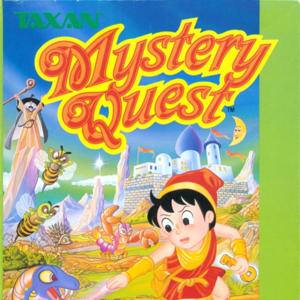
Well, this is another one. You know, maybe I know this one. I know of Mappy Land. Oh, okay. Did you play the entire game before? Yeah, I love Mappy Land. I think I've only watched the game Grumps play it. I don't think I ever actually played it myself, but I do know what it is. I won't spoil it for you. That's fine. Sean, the episode after that is Mystery Quest. Any ideas what the mystery in that quest is?
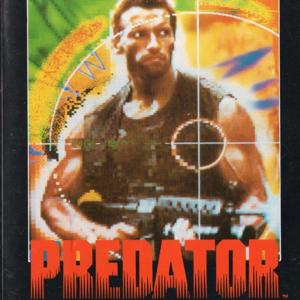
Um, I'm assuming it's going to be like, uh, um, actually no. I have nothing clever to say. I also have no idea what it could actually be. Well, yeah, you're definitely going to go on a quest, but of what kind is a mystery? Oh, there it is. I could have wrote the back of the box for them. You're definitely going to go on a quest, but... And the last episode we'll go into for future teases here is Predator, which I can only imagine is a game based on the hit TV show to catch a predator with Chris Hansen. So I'm happy to go catch those kids. Not the kids. No, you catch the predators. Yeah, yeah, yeah. I forgot the point of the show. I forget the word. It's in the title. Yeah, I forget, like, you know, who's really on whose side in those shows.
That was good. I like that. Anyway, yeah, yeah, that's good. I bet you that that's good. Why don't you sit down and have a seat, Sean, all right? Michael Esposito, Nostalgia. Outro Music