338 · Crystalis
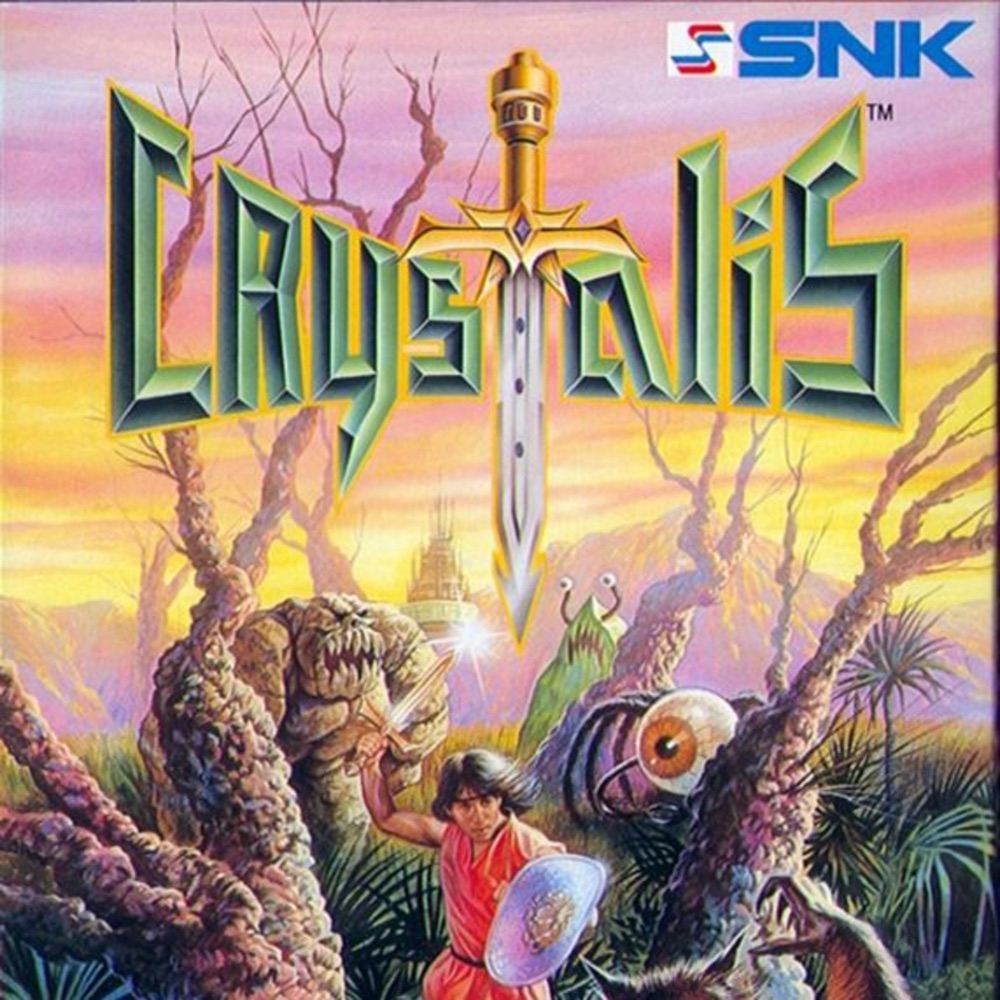
October 1st, 1997 is known as END DAY. A great war encircles the globe and brings about an end to civilization. The surviving humans concluded that they could never repeat their mistakes and build a great tower in the sky to watch over the world and act accordingly to combat "evil". One hundred years have passed since then and a hidden cryogenic chamber in the mountains springs to life...
SNK's Crystalis wakes you from cryogenic sleep in a world wrecked by a 1997 nuclear war, with no memory and a code name instead of a name. Four sages hand out elemental swords to take down the Draygonian empire, and Mike, Sean and Joe all came to it for the first time. We expected another Zelda clone. We got our first Essential game in 20 episodes.
What makes it essential
- It plays like a modern game. You walk into town, get what you need and go. We kept expecting JRPG menus for talking or searching, and they never came. Joe called it the best version yet of the overhead stab-and-fire-sword-energy feel. We barely needed a guide, because people and bosses nudge you toward the next place, and the overworld has enough landmarks to find your way.
- Power you can feel. Charge your attack and you fire a projectile, charge twice and something bigger happens, and the later swords turn the third charge into a tornado. We liked that spells are mostly utility: recover, barrier, shape-changing, teleport, and a strange one that lets you question the elders.
- Towns that react. The dwarf town in the swamp won't talk to you until you rescue a trapped kid, who runs slower than you so you keep doubling back. Then you kill the giant bugging the town, and you go from cold shoulder to hero.
- A twist. The emperor turns into a dragon, which we expected. Then a robotic alien thing in a sky tower shows up as a surprise last fight, played from behind, and the opening makes it clear this is our Earth, hundreds of years on.
Where it falters
- Grinding. Enemies take no damage at all if you're underleveled, and some areas just refuse you. A training-house fight early on left us convinced we'd lose three times before it let us win.
- Swapping swords means menus on a console with too few buttons. Different enemies in one spot are immune to different elements, so you stop and cycle.
- Accidental charges. Hold the button a hair too long and you spend MP on a third charge you didn't want.
- The caves. They look the same apart from color, they wind in right angles, and the answer to a bad one seems to be a longer one. The statue you need is a square you simply stumble onto.
Beyond the game
We spent a while on the 2000 Game Boy Color version, which reorders the last bosses, makes enemies hurt by every element, and turns the tower into a dragon weapon with a prophesied hero. We all mocked the chosen-one change. There is also a hidden debug-style trick: plug in a second controller, press B to pause, or hold A and tap A and B on controller one to warp around the map.
The bottom line
Essential. Mike voted yes, partly because it beats Willow, which is already on the list. Sean called it polished and deeper than usual, and Joe loved it. All three voted yes, a unanimous call that broke a 20-episode drought. Don't play the Game Boy Color version.
Written from our conversation in this episode.
- High adventure under the big top
- NES Longplay
- Manual
- Promising start to a game
- Code Name instead of just asking for you to give your name
- But the enemies don’t attack for a while
- But the collision detection is terrible at times
- A bit of a Zelda clone. Elder in a house gives you a sword
- The game begins with a young magician awakening from the cryogenic sleep he was placed in by the villains of the Great War before nuclear war rained down in the year 1997. Even though he is unable to recall his name or who he was, he exits the Mezame Shrine and discovers that he may be the key to save this world from destruction. Aided by four wise sages and a mysterious woman, he rises up against the tyrannical Draygonian Empire to ensure that humanity ultimately does not repeat the Great War.
- Leveling/Experience
- Armor and Swords, also strength HP and MP
- Magic
- GRIND
- Four Elemental Swords
- bosses and enemies require the hero be a certain level or else they cannot be harmed, even if the correct sword is used.
- Towns
- Running into people to talk
- Dungeons/Clues
- Emperor Draygon is the ultimate antagonist and the root of all of evil in Crystalis. After defeating his false self, the hero encounters the real one and reveals his true, dragon-like form. After defeating the real Draygon, the hero gains access to the Tower for a final showdown[4] with a machine called DYNA.
- To pause the game press B on the second controller.
- To warp from one place to another while playing, do this. Press A + B on Controller One while holding A on Controller Two. A screen will appear where you can warp to several different places.
- Sequels and Spinoffs
- Nintendo, with licensing from SNK, re-released Crystalis for the Game Boy Color on June 26, 2000.
- Plot Changes regarding the tower and the hero’s origin
- In the Game Boy Color version, the players go to the flying tower directly (which has been shortened compared to the original). Once inside, the players fight DYNA and then fight Draygon's two forms. The re-ordering of these last battles caused Azteca's death scene to be excised from the game.
- Unlike the original version, enemies are not immune to certain elemental swords.
- Nintendo, with licensing from SNK, re-released Crystalis for the Game Boy Color on June 26, 2000.
- Essential Games List Vote
- Next week
- NEStalgia Byte
Found automatically from the transcript and checked, but it can miss things or pick the wrong page. Spot a mistake? Tell us.
Games
- Crystalis mentioned at
The episode's game: SNK's 1990 action RPG about a hero woken from cryosleep to find four elemental swords.
- Faxanadu mentioned at
Earlier Essential-list NES action RPG, compared here; the hosts joke about how its name is pronounced.
- Xanadu mentioned at
Falcom's computer RPG series that Faxanadu's name comes from.
- The Legend of Zelda mentioned at
The 1986 NES adventure whose sword-from-an-old-man opening and overhead action Crystalis is compared to.
- Zelda II: The Adventure of Link mentioned at
The side-scrolling Zelda sequel with towns and a linear story, also compared to Crystalis.
- The Legend of Zelda: A Link to the Past mentioned at
Later Super Nintendo Zelda that Crystalis reminded one host of.
- The Legend of Zelda: Link's Awakening mentioned at
The Game Boy Zelda whose look and size of characters reminded the hosts of Crystalis.
- Willow mentioned at
Capcom's NES action RPG based on the movie, already on the Essential Games List.
- Dragon Warrior mentioned at
The NES RPG where you talk to people through menus, unlike Crystalis's bump-to-talk.
- Doom Eternal mentioned at
Shooter used as an example of a combat system with many tools on many buttons.
- Dragon Quest III HD-2D Remake mentioned at
Upcoming remake whose widely spaced sprites prompted a joke about the hero's big bedroom.
- Mass Effect mentioned at
Series used to argue that you don't need to be told you're the chosen one.
- Secret of Mana mentioned at
Super Nintendo action RPG named among the best of Crystalis's genre.
- Super Mario Bros. 3 mentioned at
The last game before Crystalis to get a unanimous Essential Games List vote.
- Terra Cresta mentioned at
NES shooter from a recent episode that one host never played.
- Chip 'n Dale: Rescue Rangers mentioned at
NES platformer from a past Essential Games List vote, jokingly called Chippendale.
- DuckTales mentioned at
Earlier NES platformer whose Essential Games List vote is recalled.
- Dragon Spirit mentioned at
NES shooter that came the episode after Chip 'n Dale in the voting.
Hardware
- Game Boy mentioned at
Nintendo's handheld, described as a powered-down NES, which Crystalis feels like it could run on.
- Super Nintendo Entertainment System mentioned at
Nintendo's 16-bit console, whose polish Crystalis's particle effects recalled.
- Nintendo Switch 2 mentioned at
Nintendo's rumored next console, joked about as a place for a new Crystalis.
- Nintendo Switch mentioned at
Console that the hosts debate calling a handheld or a console.
- Super Game Boy mentioned at
SNES accessory for playing Game Boy games on a TV, used in the handheld-versus-console debate.
Companies
- FromSoftware mentioned at
Developer whose games were used as a comparison for dungeons having a gimmick or legacy design.
- SNK mentioned at
The company that developed and published Crystalis; the hosts note its logo resembles Sega's.
- Sega mentioned at
Company whose logo the hosts say SNK's startup screen resembles.
- Nintendo mentioned at
Published the 2000 Game Boy Color Crystalis and bought the rights to it.
Film, TV and music
- Godzilla Minus One mentioned at
2023 film one host was watching when thinking about being the one who has to fight.
Other
- Final Fantasy mentioned at
RPG series the hosts mention for grinding and for fighting a god at the end.
- Pokémon mentioned at
Franchise mentioned for status moves like Tail Whip and for frustrating caves.
- NEStalgia Essential Games List mentioned at
The show's list of NES games that define the system; Crystalis was just voted in.
Auto-generated transcript. Each paragraph starts with its timestamp. Speakers are not identified.
Crystalis, the time has come for you to fulfill your destiny.
And welcome to NEStalgia, a chronological exploration of every NES game released in North America. I'm Mike. I'm Sean. And I'm Joe. And the game, as I mentioned at the top of the episode, like we always do, Crystallis. Crystalis, right? Crystalis, yeah. Crystalis? Crystalis. It definitely is a... Do we know what a Crystalis is? I think it's like a sword. Yes. It's a combination of four elemental swords. Or like a KFC in Taco Bell. Crystalis. And thankfully it's not activated by calling its name or else some people might be confused because this is like a... It's funny because Faxanadu, which some people still say Faxanadu, or whatever. What did you say, Joe? You said Faxanadu? Faxanadu, yeah. I said Faxanadu.
Sure. I think everybody in the world other than Mike has said Faxanadu. Well, I just know that it comes from a series of games called Xanadu. Yeah. And then Samacon Xanadu. Right, right, right. But anyway, I digress. The point being that Faxanadu was a like Zelda 2 style clone that like we had heard rumblings about being a good game before we played it and then we confirmed it was a good game and put it on the essential games list. Crystalis is another one where like I heard good things about it going in and it's not a Zelda 2 thing, but it is definitely like a Zelda...
I wouldn't even say Zelda 1, but like just later Legend of Zelda games inspired like type game. And so, you know, there's some kind of weird combination here between the titling of your game and, you know, making it subjective how one might pronounce it and if it's a Zelda clone... Being tied to Zelda? Yeah.
I'll say that I think that it does have maybe as much DNA from Zelda 2 as Zelda 1. Okay. There's a lot of things that Zelda 2 and I haven't played many of the or any of the later Zelda games, but just from one I'm familiar with, correct me if I'm wrong, there are a lot of things that Zelda 2 started in the Zelda lore. Like, I mean, besides, you know, obviously there's side scrolling in Zelda 2, but also there's like the towns and there's like more of a straight, a linear story.
Yes. And this kind of felt more like that, but like with a control style of Zelda 1. Sure, but in this one, you go into the house of an old man and he gives you a sword, which sounds awfully familiar to Zelda 1, right? Well, yeah. There's elements of both. No, I know. I'm teasing. I'm saying like that, if there were ever rules for what contains to be a Zelda clone,
getting a sword from an old man has to be on like the Ten Commandments. True. Sean, what do you make of all this? Did you feel the Zelda-ness of it all? Yeah, I mean, I was thinking more along the lines of like, oh, this is like Zelda 1 until you said not so much that, but more the later ones. And now I see that, like more a link to the past.
Whereas, yeah, I was just thinking like, oh, we've already played Zelda. I guess this feels pretty Zelda. I didn't really get anything from 2. I mean, I guess you could say that going to towns and speaking to people, but that's more just like a RPG trope in general. So I guess I didn't make that connection. But yeah, it definitely like bears its inspirations on its sleeve.
And for some reason, and I don't know how to articulate this too well, but it feels to me like even though I know this is an NES game, played it on an NES, have played many NES games, something about it felt very much like the Legend of Zelda Link's Awakening Game Boy game. And I don't know if it's the graphical style of it or the size of the characters, but I had a very like Game Boy color feel to this game that I don't usually feel with NES games.
And I know the Game Boy is basically just like a powered down version of the NES and was working off of that. But this game more than other games has given me that vibe of like, you throw this on a portable console, portable handheld, and I'm right there. It's funny you say that. Oh God. Because we both said it's funny you say that.
I feel like we might be about, should we try and say the rest of the sentence at the same time? No, this is all you, Joe. It gave me Super Nintendo vibes going almost the opposite direction. Yeah, I'll say that. Okay, so I think that the level of graphical polish on this game, like you've got particle effects everywhere.
Uh, that kind of stuff. Like that was giving me Super NES vibes as Joe was saying. But what I thought you were going to mention, and I guess this will be talked about more later in the episode when we talk about spinoffs and yada, uh, is that there, there was a Game Boy color version of this game. I've done a bit more research than I normally do for this one. Uh, and it was vastly inferior.
Um, so that's sort of where I thought you were going with it. And that is true, but we will get there. Maybe this is like the ideal version of that handheld version. Yeah, yeah, this is, I don't know. There's something about it. Like it just mimics maybe the style of Link's Awakening to a little bit that I just felt it. But, um, you know, I, I love Link's Awakening, so I'm, I'm here for it. And that's where, uh, what I wanted to get into next, I guess, is like, you know, an NES
game at any point. Now we played so many of them. Uh, you need a promising start, right? Like we played a lot. So you need something that's going to stand out. And, uh, Crystalis was, was a game that didn't necessarily, you know, we talked about it being a Zelda clone and everything didn't necessarily like break any new molds or anything, but it plays well from the beginning and doesn't, doesn't really like, uh, slog or, uh, or force you to do, uh, to do something that you, you know, that like progresses the gameplay in a manner that you don't want to.
I feel like you go right into the first town, you get what you need, you go out to adventure and the rest is just kind of what we expect from, from video games now. Like, you know, you just, you just, you're in the game. Like you're just doing it. And it's not, uh, it's not, you know, it's not, um, not held back by its previous, uh, by, you know, the age of the game. It felt like a game I was playing today.
Yeah. Well, yeah. I mean, what I was expecting out of a game like this, and I know it's not a turn-based game, so it was never going to be that, but there's enough standard JRPG DNA in this game to make me think that like, oh God, it's going to make me open a menu to talk to somebody or it's going to, oh God, it's going to make me open a menu and select search when I'm looking for something on the ground.
Like I thought that that was sort of what we were in for, but it's very streamlined in, in how it's designed. Uh, I won't say that it, it's completely free of, of headaches because as we'll get into it, I think there's a little too much, uh, focus on the grind. But if we're just talking about how you interact with the game and like the, the, the level of friction between you doing what you want to do and it happening on screen, I will agree that, yeah, it, you just start doing it as Mike said.
Yeah. It, to me, it felt the most modern in the sense that you can, yeah, what you're doing, you're figuring it out because it's designed to have you figure it out. It's one of the first games like this where I did, I felt I did not need a guide. Um, even games that I've loved, uh, I mean, even Zelda 2, which I, which I obviously loved. I needed a guide. I think Faxanadu, I needed a guide. I can't remember. I think there was one other one that I played where I didn't feel like I needed a guide. I might've been Willow, but, uh, but this one, I did eventually start using a guide for the sake of time because I wanted to get further before this record.
But I, I was, you know, even when I was lost, I was, it felt like a modern game where I could kind of explore and figure out where to go next from context clues. And as I'm exploring, it doesn't feel like there's this hopeless, like, well, first of all, when I'm exploring, I'm not just in like absolute moral, mortal peril every time where a lot of NES games, it's like, you can't even afford to explore because it's so easy to die. Or moral peril. Yeah. Or moral peril. But, uh, I, yeah, I felt like that coupled with the smoothness of the gameplay, which I, I, this might be a hot take here, but I do think that they, as far as like being a, um, an overhead
game where you stab and fire your sword energy at people, uh, I think that they perfected that original Zelda, uh, game feel. So like, those are the two things that made me feel like this was a little bit ahead of its time. What's interesting about, um, you know, Sean was mentioning the grind and everything. And, uh, Joe, you were mentioning the combat is if you take in what Zelda one did in 87, right, we're now three years away from that. And so it would be nice for a game to just even, you know, be as tight and, uh, and specially designed as Zelda one felt like, but what Christalis does is it, it kind of works upon
three years, uh, of, you know, okay. So Zelda one has come and gone and now how do we improve upon that? And so it took some chances on things. And I think it did change up a little bit. Like it doesn't like the combat doesn't feel exactly like, uh, Zelda one, but in a way,
even though it's, it's the similar, you know, you stab with the sword and you walk around, uh, you know, because of the addition of your force meter and your magic and changing up swords on elements and solving puzzles in ways that, you know, you could never have done in the original Zelda. I do think that this offers an expansion in every way possible from that game, while also including a full story, something Zelda did not have. And so you also have the ability, like you said, you don't need a guide because you get your kind of clues on what to do next if necessary by talking to the people in the town or, you know, it's given to you after you defeat a boss or something, uh, or receive an item.
You kind of like get that nudge of what to do next. And so I do feel like even if this game is a clone, right? And we could talk about the combat more in depth too. It doesn't necessarily have to, uh, go too far off from feeling, from feeling different than Zelda because of just the way that like games have progressed since Zelda's release. And it, it takes, it works on other things too. Like it worked upon other versions of games that have tried to do the Zelda thing. And here with Crystalis, like we're actually seeing that all together in a more complete picture.
Yeah. I think that, but your use of the word clone, I think that that that's valid, but I also kind of want to push back on it where I think that this, this game does it well enough where I think we can just start calling this genre tropes instead of like, oh, this is a Zelda clone where I think it kind of belittles what this game does, uh, to completely view it as a in that lens of like, oh, just trying to do what Zelda did. Um, whereas I think like what Zelda did is now just like, kind of like a more of a, a genre codifier.
Cause I, I think that this game is, is good enough to not need to be, uh, qualified like that. You know what I mean? Yeah. It definitely stands out as a totally different experience from Zelda. Like you should, if you like, if you love this game, you should still play Zelda. You know, like, like it's not, you're right. It's not trying to be the same thing. It's just using like sort of the same base gameplay style as far as like overhead stab
with a sword action RPG, I guess, action, whatever adventure game. Yeah. And one thing we haven't seen before, at least I can't remember a game, uh, doing this is, uh, and maybe this is what you're mentioning with the grind earlier, Sean, when you are under leveled for an area, it's not that it takes, uh, way more hits to defeat an enemy or, oh, I just don't have the correct item to defeat this enemy. You may have the right sword, uh, for the job and you may have, uh, you know, 300 hits
on the guy. You're just not doing damage. And it's something you've learned. I feel like kind of early on, if you try to move a little too fast without leveling up, but that is the one thing that I questioned about, uh, you know, for progress in this game is like, if the player can get to the area, why say that like the damage is completely null?
Like why not make it so that it's like, you know, oh yeah, you, you know, like you're in this new area that's really tough and, uh, it may take 20 hits to defeat an enemy. And so that's kind of like a sign that you should go backwards. But instead they just say, no, it doesn't do any damage period. It's weird that it lets you go and do those things. But also there are certain points that unless you've hit a certain trigger,
either in the story or just like what's in your inventory, it will just say like, Hey, you're not strong enough to go here. And it's just weird that like, you let me go here and you're, you told me that I can try to attack things and it just won't do any damage. But now you're just telling me I can't go there at all. It's a, it's a strange, uh, it's just not very, uh, it's not following its own rules in certain times.
Yeah. Because there are plenty of times where the game wants to stop you from going somewhere and it puts an ice wall in front of you and you need a fire power up to get through it. Or it puts something there where there's a contextual thing you need to get past it. And that's fine. But there's like nothing, then they're just like, well, we didn't put anything here to block you. So we're just gonna, there's just gonna be a text box that says don't go here yet. It's not time yet. Who's saying that?
Yeah. Uh, and also, yeah, as far as like the, the level things, I would like for them to always be able to, you know, be like, yeah, you're clearly not supposed to be here yet. But like, if you really want to challenge yourself, they probably weren't thinking like this back then, but it is weird. It is weird to make things just literally invincible until you get to a certain level.
But outside of the grind to get to the appropriate level to keep moving on, you do have to give them credit for how powered up you can feel as you continue to move through the game. I mean, playing the game at the beginning with just the sword and eventually getting your first magic spell and then working upon that, it does feel good to level up in a way that nowadays we just take for granted.
With skill trees, you're always leveled up, got to get a new ability, got to have a new combo on my controller, right? It's like, that didn't really exist then. So it is nice that at the very least you feel like you're more powerful as you continue to level in the game. It kind of blew my mind when, like, because one aspect of the game is you can charge up your attack and you start off with this like, oh, if you charge it up fully, you can do a projectile just like Zelda.
But what kind of blew my mind was when you finally get to a certain point and then you get another little special move that, like, if you charge up twice, you get something that's a bit more powerful. And, like, it's very simple, but something like that, like, adds so much more depth to an actual progression system that we don't really see a lot of outside of just level one, two, three, yada, yada.
So that was just cool to see that. Yeah. And those, like, all correspond to different weapons with different elements. So not only are they getting more powerful, you also have to think, like, okay, what's weak against this sword? What's weak against this type of magic or this element? Yeah, so there's the four swords that you get in the game, each with a different element. And as Joe mentioned, it also becomes a little, not like a puzzle per se, but, like, a way to block off or require you to use the correct magic and switch your weapons accordingly as well. Did you find that to be a tedious thing that you have to kind of go into the menus and switch out between swords? Or was that strategic? I think they could have done it better.
I like the idea of it. I think it's a great game mechanic. I think literally the actual literal mechanics of how you switch can get tedious. Because a lot of times you'll have two or three enemy types in one area right in front of you, and they take damage from different things. You know, they're immune to one thing while the other enemy takes damage from that same thing. So to have to press select and cycle through your menu, change your sword, and change your, like, magical item every time you want to attack a different enemy
is a little annoying. And I was eventually watching some videos about it, and one video suggested, like, you have your start menu and you have your select menu. Your start menu gives you, like, some stats and, like, your pause and your save. And your select menu, you can scroll through all your power-ups that you want to change. Like, both of them you could scroll from, like, page one, page two, page three.
So really all of those things should be on the start menu if you want to do that. And then select should just be, like, a quick change between, like, your three swords or your four swords. That would make this game, I think, a lot smoother. That would help. I think that even with that, this really wouldn't have landed well. I agree that it's kind of tedious.
I think that it's a cool idea, but this is not the console to do it on. Because you only have so many buttons. And when I think of a battle system or a combat system like this, as weird as it sounds, I think of Doom Eternal. You have so many different ways to kill enemies. Like, whether it's your guns, which gun you're using. You've got, like, a flamethrower backpack thing. You've got a chainsaw. And all those things have different effects on different enemies.
And have different effects on the kind of resources that you can gather. But you have enough buttons on the controller or on your keyboard to do all that. The fact that you have to go into a menu of any kind or scroll through, which may also, like, hamper the, just how, like, again, like, I was praising how there's very little friction from doing what you want to do, or from going from what you want to do to doing what you want to do in this game. That adds friction.
And if you have to go into a menu, I just don't think that that's really a valid concept. I mean, the reason that I don't, like, fully dislike it in theory is because I like a JRPG where I have to change equipment. Or, you know, and, like, this kind of takes that element into this more action RPG.
And, like, if they could have pulled it off right, it would be, it wouldn't have to be, I'm not imagining it being, like, I've never played Doom Eternal, but, like, anything like that where it's, like, I'm literally in mid-action, like, use this attack, then that attack, then this attack. It's more like, I see this enemy, I'll pull out this sword. I see that enemy, I'll pull out that sword. And if they could have let me do that a little faster, I think that would give it some depth that I would like more. And, like, I didn't hate it here. Again, like, I didn't hate having to change. I hated how long it took me to change.
I thought it was interesting that the very first spell you learn in the game is a recover spell. The ability to just replenish HP whenever, wherever. And I know, like, you know, in a JRPG game where you have a party, usually there's, like, a white mage-style character who can restore people's health or whatever. But in a solo ARPG-style game, the ability to just kind of, as long as you have MP, heal whenever, wherever, was also, like, refreshingly different. And a lot of the spells that you learn, too, are all defensive-based, you know? There's the barrier one to block projectiles, the recover one to heal yourself from poison,
eventually change forms, teleport out of a place. I just feel like, you know, it's nice to, obviously, the force power things have, like, your moves based on the element of the swords. But it's nice that you don't have to, like, also learn the fireball, right? Or, like, just the base-level attacks of those things. And then, like, as you level up, it's like you went from Fyra to Firaga, right? It's like, instead, you're just actually getting, like, things that change or improve your character. Yeah, I was always more interested in utility-type spells. That isn't just, like, a different way to do damage.
Because, you know, it's just more creative, I think. And I think that this sort of handled that well. Like, you were saying, like, oh, fire, Fyra. Going from that to that isn't as interesting as finding a new way to just interact with the world. Mm-hmm. Yeah. And, I mean, that came with spells and with items. Like, you get the ability to jump. I think that was an item, right? But, like, the same thing. Like, there's spells that let you do... I mean, there's a spell that lets you communicate with the elders.
Mm-hmm. Which is very strange. And, like, I'm not sure how I feel about how I was executed. But an interesting thing. You know, because it's like... It's a fortune-tree spell. You use a spell and you just get, like... You get a piece of information from one of the elders. But then it, like, takes up a lot of your MP. And, I don't know. I guess it's a cool way to have a little guidance, you know, pre-internet. Yeah, they just feel different, you know?
And, Sean, you were talking about how you like using the utility stuff. I agree now. Like, I do like trying to play different than I would have as a kid. But as a kid, I totally was... Like, even in Pokemon, right? It's like, don't give me Tail Whip. Like, I never want Tail Whip. I'm only ever going to do offensive damage on these. And you don't realize until later on when you start, you know, thinking about, like,
Oh, well, it turns out, actually, if I would have just, you know, used a spell to raise my attack before attacking, I would have taken less damage, right? It's like a thing you have to overcome. It's a game theory thing. But the game here mostly offers you just ways to kind of stay in the battle as opposed to, you know, fight harder or do more damage. Again, I guess maybe as a result of the fact that sometimes you just can't damage things if you're not at the level that you need to be.
But that's only really a problem, too, like, at the beginning of the game. Like, eventually you get used to the grind as you get used to any kind of grind in a game, right? Like, any Final Fantasy game that requires you to grind your party. It's like you usually die to a surprise boss early on.
And you're like, okay, going forward, I'm just going to be overleveled. Am I speaking out of turn? Is that just a me thing? No, I think that's definitely a way. I think it's a coping mechanism.
I've never been a fan of grinding, whether it's been in games I love or in games that I otherwise wouldn't be that into. But I understand that it's going to exist and I will miss out if I use that as a reason not to play a game. So I'll do it. And I think, like, the reason that I brought it up as a specific point in this game isn't really like, oh, I got, like, curb stomped in this certain point. Or, like, oh, I got annoyed that I went to the mountain and everything was giving me, like, that tinky noise, which means it wasn't doing any damage. It was the sword fight.
Again, like, that, like, you're sort of forced into doing before you can move forward at, like, this training house. And you have to just, like, hammer on the A button to, like, back this guy into a corner. And I realized that, like, at the level I was at, I was just, like, I just, like, you're never dying. It's just, like, you keep losing. But then I leveled up again and I could last a little bit longer, but it still wasn't working. And then I had to level up again. And I'm like, Jesus, I can only fight the same mobs outside for so long without getting bored. So this is, like, an early section. Is that level-based? I didn't realize that had to do with your level.
I feel like it had to based on how I experienced it. How many times did you try before you started grinding? A few times. And I just kept getting pushed into the back of the wall. Because I read something about, like, literally, like, the first three times you can't win or something like that. No way. And then it lets you, like, you have more of a chance. That's actually bullshit. Yeah, that's stupid. I kind of hate this game now.
Because it made me think that I had to go out and grind. So I waited until I got to the next level, then went back. So maybe I was overleveled for a couple minutes. The good news is you almost certainly would have had to have grinded very shortly after that anyways. So you got it out of the way. But as far as the grind goes, I mean, there's no denying that this game requires a lot of grinding. But I wondered if it requires a lot of grinding for us today.
Playing with, like, a little bit of guides and a little bit, you know, or I don't know about you guys. But, you know, I did, like I said, I started eventually playing with a guide just to get further in a shorter amount of time.
And I did notice that before I started with the guide, I never really felt like I needed the grind because my exploration, as long as I just constantly fought things that were on the screen as I was trying to figure out where to go, I kept a pretty good level. And I can't say that it would have stayed that way had I continued through the whole game like that. But I did notice that, like, shortly after I started using a guide and progressing really quickly, I obviously was not leveling up at a rate that matched how far I was progressing to the game. But then I needed to, like, look more often and be like, okay, I'm underleveled.
No, I agree. I only sparingly used the guide, which is also, which also explains where I ended the game, which is still in that mountain just searching around caves, which I believe is pretty early in the game. But I would, I agree. The amount of time that I would have had to looked around to find that stupid statue probably would have put me in a pretty good spot.
And I know, like, there is a quest giver that basically says, like, hey, I found, I lost a statue, it's over here. And I could tell you that I would eventually have found it. But it's vague enough that with the amount of game that I was trying to get through, it just wasn't going to be acceptable to search for that long. Yeah. But something like that definitely would have been a roadblock where I would have naturally grinded or just naturally gained levels, I guess. Yeah. And also, I actually forgot about that statue because I just totally lucked out and found it.
But thinking back, if I hadn't been lucky and just, like, I wasn't even trying to find it, I just walked on the spot and it said, like, oh, you found a statue. That part is a little bit bullshit, too. Because there's no, like, statue on, there's nothing on screen. There's no straighter. Yeah, just in the rooms. There's a walk onto this square and the statue will be there. So, yeah, I lucked out, but I do, I can see an alternate universe where I would be very upset about how annoying that was.
And I think a lot of games back then, you know, wanted you to explore and poke everything anyway, right? To extend the longevity of the game. But, Sean, you mentioned earlier how, like, a dragon quest, for instance, Dragon Warrior, would have, you know, menued everything out, going downstairs, talking to people, etc. But in Crystals, you have a funny way of talking to people when you explore the towns and everything.
And that's just, you run into them. Yeah, it's also annoying, but at least, I'd say it's the lesser of two evils here. Yes, I would agree that it's the lesser of two evils, but I did wind up having a lot of duplicate conversations with people that I didn't mean to talk to. If that's what you were saying by annoying. Oh, yeah. Yeah, and you can get, like, you can sort of get cornered. Oh, wait, no. No, you can't. I'm thinking of something else. Yeah, it's okay. But it's like, you know, running into people to talk is kind of, it's funny, right? That's like an expression, right? Like, oh, look who I ran into.
Yeah, that's why they did that. That's why they did it, right? But this is going to lead into my next question about just the towns in general. Were they just kind of lore dumps or were they interesting places? Was it always just, you know, here's the inn, here's the old sage, here's, like, the people walking around the town, and here's the shop? Or were there, like, you know, I remember at 1.2, there's, like, a bar. Were the towns interesting and unique enough that the world continued to feel alive as you moved on through the game, I guess is my question.
Um, you know, yes and no. Like, some of the towns definitely were samey. You know, you get different layouts. You get different, yeah, information from villagers or whatever or quests from them. But, yeah, there's a lot of saminess. But there's some that, like, there's one town a little ways in where there's, like, a castle in the town. And there's stuff in there to sort of explore and people to talk to in there. Like, the queen or the fortune teller or whoever she is. So there's some character to those. But there are also plenty of cookie cutter towns. I'd say, like, the highlight of what I was able to play through would have been the dwarf town in the swamp. Where, you know, the first time you happen upon it, they won't even talk to you.
And then you will learn of, like, oh, there's a kid that's trapped out there. And you go and you rescue the kid. And it's also, like, a really fun little bit of, uh, just a little accent. Where once you rescue the kid, he doesn't run as fast as you. So you kind of have to keep, like, doubling back to make sure he's with you. Which is just, like, a little bit of, uh, of detail that I just wasn't expecting out of an NES game. Uh, anyway. So then you bring him back. And then, like, oh, thank god. Like, uh, maybe we can trust you.
Um, by the way, there's, like, this, this, uh, this giant enemy that has been harassing the town. Could you take care of that? And then you go and you take care of it. And now they're even, like, then they'll give you another gift. And, like, that town, you know, it's all very simple. And when we think about progression or just, like, the world changing around you in modern games. Uh, but it felt very reactive, uh, for the era that we're in right now. So I thought that was pretty cool. Going from, like, they will always give you the cold shoulder to you're the hero of the village.
Yeah, I really like that, too. Like, you, you are, you are living within this world and your, your actions are affecting things. And, yeah, like, that town is not just, like, you go into this town and you get a piece of information and you leave. Like, like you said, you go back a couple times and you get more stuff as you go back. It feels more lived in.
The world feels more lived in it. It feels like you have more agency. Even though, obviously, you're doing exactly what the developer, like. Yeah, it's all scripted, but yeah. Yeah, yeah. But, but it feels robust. And there, there are definitely, like, cool moments in this game, too. There's a, there's a point where you ride a dolphin. You know, the, the, the, the plot does kind of unfold, especially at the very end in a very unexpected way.
But the actual dungeons, I guess you would call them, the parts leading up to the boss fights when you get out of the main areas and kind of go into the caves. You know, uh, for the Zelda genre of things, if we're not going to call this a clone. The Zelda genre of things. One thing, one thing Zelda has laid out. Top down ARPG. There you go. One thing, uh, Zelda games, uh, unfortunately not recently, but for the most part in their, uh, 30 plus years of being video games. Uh, the Zelda franchise is known for the dungeons. And I think it's because they make them simple enough to understand, but complex enough to, like, get through.
So it's just a, you know, it's a grid-based layout where every room is a square. But that doesn't necessarily mean that there's always going to be four doors and that they're all just accessible and you just keep walking in this grid-like fashion. Crystallis took, uh, you know, the approach that we've seen in other NES games with these long winding side scrolling caves and, or top down scrolling caves.
And that works to its benefit and, and to, um, and to my unenjoyment, uh, at times. Because some of these, you know, the idea is like, oh, well, the last one, um, we'll just, you know, to improve upon it, we'll just make this cave longer now. Like, it's just larger. And it's like, I don't know if that's the answer necessarily, right? Because if I wasn't enjoying the previous one, now you're telling me, well, it's going to be mostly like that, but just a little bit longer.
You know, it's like, I don't know if I want it longer. I know what you mean about, I guess, more modern Zelda, or at least, you know, post NES Zelda, where their, their, their dungeons have concepts. Like, they're all concept dungeons. Or if we're going to use like a, a FromSoft way, they're all legacy dungeons where they all kind of have like a thing or like a gimmick to them. Where none of this doesn't have any of that. Like, anytime you go into a cave, they all look the same, other than like the color.
And yeah, they're all just winding, and you could probably map them out, but it's not like, they're not like doom maps where there's kind of like a, you can recognize where you were before. There's, it's just right angle turns, yada yada. Um, that's definitely a fault of this game is, is the dungeon design. I think that the overworld design, like when you're in named places, uh, like you can kind of get your bearings. There's enough, uh, I don't want to say landmarks, but there's enough uniqueness to overworld stuff where it feels like a place. And when it feels like a place, it feels navigable. Whereas anytime you go underground, it just feels like, oh, now I'm in an underground portion and this is going to suck. So that's also a negative here.
Yeah, they're all a little too cookie cutter. Um, I will go as far to say, uh, that the overworld stuff does have like some, at least for me, some significant landmarks even. Like I, I felt like I always knew where I was in the overworld and it always felt like there were different ways to interact. You know, you got to get the boots to jump over the poisonous swamp and you got to get, you know, the, the water sword to make like bridges across rivers and things like that.
That was really cool. And it was quite a contrast to, to then being like a dozen of these very similar caves. And I didn't necessarily have a bad time with them. I mean, I mean, even like, you know, like I know a lot of people when we were younger, didn't like the caves and in Pokemon games, cause you get lost in there. And I was always even an apologist for those because the getting lost and being frustrated is part of the satisfaction of getting out of a cave.
And like to that sense, I liked it, but it was like, yeah, it was like, okay, another long corridor with a bunch of different ways to go with a bunch of new enemies. And like, that's it. It's all just trial and error. And a few of those I would have been okay with, but a lot of them, it did start to, to wear on me a bit. And as a result, does the combat ever wear down?
Do you ever find a moment, whether it's, um, you know, Sean was mentioning a frustrating, uh, fight or, you know, just the onslaught of enemies spawning over and over again. Is there ever a moment where, uh, gameplay just became stale as, as we were, you know, we play these games in a short timeframe. So, uh, did the combat ever feel like, you know, I'm just running around, stab people with a sword and shooting fireballs. Or is that just kind of like, that's, you know, that's what we're used to now.
Um, uh, yeah, I felt like it wasn't necessarily over a long period of time. I got sick of combat. It was when you are lower level or have a lower sword or, or just fighting a higher level enemy. Some enemies take like 15 hits that gets a little tedious, especially when you're trying to like grind to, to level up where you just got to fight the same enemy over like charge up, hit them, charge up, hit them. Just keep stopping them from getting closer to you. Uh, that on a, on a, on a granular, like case by case level got tedious.
Yeah. But I think that the, like the base mechanics are, uh, satisfying enough that I don't think the combat itself ever got tedious. I think it was like, once you look at it in the wider context and maybe you just might not know where to go next. Uh, then maybe, but I think that's just the frustration of getting lost. Um, I think the combat itself is fine, but yes, I, I'm never a fan of grinding.
I mean, it's also how you want to play though, too. Like, uh, you know, you can charge up the force meters enough to, you know, like just fight every enemy that way. But that, that takes time to, you know, you'd be surprised how, how, how often you'll be charging up your force meter and attacking like singular enemies.
If you play it that way. And also you don't have to attack everything, you know, uh, I, I wound up skipping over, uh, things later on, but then that comes with the cost of like, well, am I going to have enough experience if I skipped enemies? You know, and so maybe that should, you know, just another case of like, maybe it's not the best thing to tell a player that they're not, uh, you know, tell them they're not strong enough because they can't beat the enemy.
Not because, uh, you're, you know, you told them they're not. Yeah. Well, one, one other, speaking of the charging up part, one other thing that was a little bit of a, it was a tiny thing, but it was, it was a little bit of frustration for me was once you get to the level three of, of each of your, your sword powers, you know, if you got a level three of the wind and you charge it up one, two, three times, the third one will do this like really cool, like tornado thing that takes out a bunch of enemies in front of you. But that takes MP and the way you charge these up is just by holding the attack button for one second. We'll charge up once, two seconds, we'll do something like that. Two seconds, charge up twice and three, charge up three times.
So it's not easy to just to like, unless you're going to release the attack right away when you get to the second charge, you're going to accidentally end up on the third charge and use MP when you don't want to a lot of the time. That sort of bugged me because there's so many times I'm like, I just want to hit this guy with like a decently powerful move, but not use magic on him. And there's no, there's no way to like do that.
There's no way to, to reliably consistently make sure you're not doing that. If you want to like stay charged up, you know, you have to charge up before each enemy. I, uh, I know what you mean. And I, I do know that there's a way to make sure it doesn't happen, but it's like, it's still a pain in the ass because you have to keep thinking about it. But since you only charge when you're moving, you just sort of have to keep moving.
Um, but as soon as you stop, it's just, it just, it just lends to accidentally charging too far. If you stop or if you got to move, you know, your complaint is valid. Thank you. And the game begins with you waking up from, uh, cryogenic sleep, uh, that I guess happened because in 1997, the great war, uh, you know, obviously not the earth off its axis and right. Not our earth, but yeah, 1997, the great war, um, uh, eventually led to nuclear war, which, uh, took out everybody.
And you, for whatever reason, were put to sleep. Now you're awake. Uh, you're not able to recall your name. And what I thought was interesting was that the game doesn't ask you what your name is. It asks you what your code name is, uh, which is like, I guess an interesting way of saying like, you know, that, uh, that's not your real name. Like maybe your real name, you know, like just the name that you're going to give yourself now, because it's like whatever came to you in your head. But, um, anyway, uh, just, you know, that's like, that's the beginning of what is actually though a very long plot.
Like, I, I don't feel like reading through everything because there's probably a, probably an official strategy guide for this kind of level of detail. You know, like this is, this is a lengthy story that eventually, you know, it can be boiled down into something really simple about like, you know, four wise sages, you know, give you the elemental swords, uh, to take down the dragonian empire. But what I really like is also the little twist at the end.
Um, if we can talk about that for a hot second, if anybody doesn't want to be spoiled, maybe, uh, just leave. But so the whole time you're taking down the, uh, dragonian empire, which, uh, is not spelled dragon. Uh, it's with it. It's, there's a Y in there. So dragon. So, uh, it's just like a playful thing for dragon. But of course, emperor dragon is actually turns into a dragon, uh, for the, for the big boss fight. And that's not the surprise of course, because I mean, that even happened in dragon warrior, right? Where like up turns out the big bad guy.
Yeah. He's also a dragon. So dragons is nothing new, but then all of a sudden at the end, they reveal that like some kind of like cybernetic alien thing is responsible for everything. And that's who is actually like behind everything.
And you know, that's like, that's now an established trope in games, right? It's like aliens or gods are actually like the big boss at the end, but we are not there yet. Uh, and so I, you know, I know, you know, most final fantasy games is like boils down to fight God at the end, but here, this isn't God. This is just like some other, you know, robotic alien thing that like just kind of came out of nowhere in a completely fantasy driven story. Right? Like there's no, there's no like robots you fight along the way or a hints of mech.
So I, I thought it was kind of cool as a, as a little reveal at the end. Yeah. I was going to ask where the, like before that, was there any reference ever in game to the fact that this does not take place in like a mythical past, but actually the future of basically our world. Yeah. The intro, but like nothing, nothing like outside of, I don't know. Nothing in game is like, there's no like, Oh, here's the ruins of an old city. Here's the ruins of Chicago. No, it's not that.
But like first you get the long intro and it's a long intro. Uh, but then you, you have this whole like boot up sequence for getting woken up. Right. Uh, in the, in the underground, like cryo wing. I don't know. Uh, yeah, it's not, it, it, I, I'll say that it's not, uh, it's not like saturated throughout the game. Like there's no situations where you happen upon, uh, like ancient factories or whatever. Unless I, unless it happens after I stopped playing. Right. Which is entirely possible. But, um, it's at least, it's, it's at least like information that you are, you start with.
Right. But it's like, I was just gonna say it like, to me, it almost feels like this game was built as a fantasy game. Um, and then like tacked to the beginning was this like, oh, interesting part of the story where there's like that one little screen where you wake up and like, and then, yeah. And then the, the intro.
But like, other than that, I don't know. I guess I didn't, I didn't get to the end. So Mike, when you just explained that, um, ending, it made me think, okay, maybe there was more cohesion here than I, than I thought. Because like, there being this alien robot thing, maybe alludes to what happened to the planet in 1997 in the first place. I don't know. But I was wondering throughout playing this, like, was this the whole game just from the beginning of development intended to be taking place like in a post apocalypse?
Because it doesn't feel like it. Yeah. So Joe, uh, I think what Sean was trying to, um, suggest is that yes, there is an opening when you press start. But if you actually just watch before you even hit start, right, if you let the menu play out, like there is a story that is like the startup screen. And that one is the one that lays out like things I even forgot now. Like I'm just looking at it again for the episode.
But it does lay out and imply that like this is our Earth. And I, for some reason, just didn't think that. I just thought this was like a different planet where nuclear war happened and they just happened to use the Gregorian calendar for one reason or another. Um, but they're implying that like in, you know, 1997, our, our Earth, nuclear war happens. And then hundreds of years later, now everything is mutated and transformed into this.
And those surviving have decided like, you know, no, we're going to go live in the sky and abandon the Earth that now looks like this fantasy, uh, like, you know, like place. But yeah, there isn't really like, I don't want to say no hints, but like it does, it does come out of left field enough that it just winds up being like a, a cool thing rather than like a heavy handed, like, and it was aliens or it was robots all along. Right. It's like, it just kinds of beginning like a, huh?
Wasn't expecting to fight again. Like, you know, you beat, you beat the big, you beat the big dragon. You beat the emperor who then turns into a dragon. You think you're all done. And it's like, uh, how about nah? Like, how about no? One more, one more fight. And it's not even like, um, it's not a traditional fight. Uh, we should talk about that too, because it's not like the rest of the game. It's not top down. Are we talking about, is it, this is in the NES version of the game. The NES version of the game.
Okay. Because I know that the Game Boy version is, was said to have, uh, no, the Game Boy version end of the game. But yeah, I'll get into that one because, uh, it, it does some, it does some controversial things. But this is like, this is just like a final fight kind of thing where you see like a, a robotic mother brain like character, uh, uh, cyborg thing. And it just shoots at you projectiles all around the room and everything. And you just have to shoot, uh, your sword and beams at it.
Um, and, and, and, you know, it's not like a very, at least in the long play that, um, that you can watch on YouTube. It's not a very long fight or anything, but it is interesting that it is completely, uh, different. And that it, uh, takes place with like you looking at the characters back as you fight. That's cute. That is, I'm just watching it for the first time now. And that is kind of where you can't walk forward in this at all. Uh, that's a good question. I don't think so. It looks like you can't, but, uh, yeah. I think you can walk, I think you can walk side to side though to avoid the projectile.
Yeah. Um, cause it, it kind of reminds me a little bit that's different, but it reminds me a little bit of that fight, Sean, that you were talking about in the forest that you, that the, uh, rabbit door people. Yeah, the big bug. Yeah. Cause you're like on the bottom of the screen. It's like off a cliff, but it is still. Yeah. It's definitely a different, uh, perspective in this one here. Yeah. It's like that one is like organically in that game style, giving you a similar gameplay, but this one like has changed to the game, changed the gameplay.
Right. And it should be mentioned too, that, um, maybe the reason for the switch up in gameplay is because now you finally, um, merge the four swords together to get the legendary crystal. I like that you take an escalator up there too.
Yeah. Well, it's the, it's the, it's the, uh, building in the sky, Sean. It's gotta, you know, it's gotta be high tech. I just find it hard to believe that nuclear war destroyed all evidence of like any kind of scientific, uh, And it's only a hundred years later. Yeah. I guess that's what like I was getting at before is that like you, you, you, you watch that whole intro, you wake up in that like cryo chamber and there's like all this like techy stuff in that one room. Um, and it's got me thinking, okay, this is going to be like this fantasy married with technology game.
And then for like largely the rest of the game, there's no sign of any of that until the end and it comes back. It just felt surprising to me, you know, not necessarily bad. I was just like wondering if it, if there was any, like, you know, if 90% of this game was developed before they decided to put any, any reference to the fact that like, this is the future in it. Oh. Who knows? Joe, did you pause in this game?
I did, but, uh, I didn't notice. Was there a sound? Was there a pause sound? I should have been. Well, perhaps because you didn't, uh, truly pause the game the way you might think. Hmm. See, now you pause. I'm going to press start. Yeah. You pause the game by, but did you really pause it or did you just go into a menu? I went into a menu. Right. To pause the game, you plug in a second controller. What? And if you press B on the second controller, you can pause the game.
Wow. That's ridiculous. No menus. But I mean, opening up a menu is pausing the game also. So like, why would they even need to add that? Well, because there's other things you can do with that second controller plugged in. Okay. If you press A and B, which is a little confusing, it should have maybe been like A and up or something because B is also assigned to something. But if you press A alone do something, I mean, can't they just give it to A? No. Can't they just give it to A? Oh, yeah, yeah, yeah. You're right. Sorry. You're right. You have to hold A on controller two, but press A and B on controller one.
And by doing that, you will be able to warp to other areas. There will be a list of areas you can go to and you can warp between those. And that feels more like a debug thing. Yeah. You can do that at any time. You can just get way ahead of yourself from the beginning. Well, you won't be able to do any damage.
Yeah, that's true. See, that's why they built it in there. They were like, okay, we don't know how to remove our debug features. So we have to make it so that you can't attack those things in the later levels. And then let's get, I guess, to the main thing here for Sean's been dying to talk about it all episode.
The commercial. Oh, no. SNK. Yeah. SNK made this game. And by the way, their startup on this, which is like their startup across all 40 years of them being a company. Did anybody else think that that looks really close to the Sega logo? Yeah. Like it's blue. It's got the lines. I suppose. Yeah. It should just say, SNK. You know, like SNK. That's how you pronounce it. SNK. Yeah.
Anyway, they, Nintendo was like, oh, let's re-release Crystalis for the Game Boy Color. In the year 2000. Like that's kind of crazy. So like it's 10 years later. It's the 10th, 10 year anniversary. Nintendo and SNK team up to release Crystalis on the Game Boy Color.
And they do a bunch of plot changes about the tower in the sky and who, you know, the hero's origin story. In the Game Boy Color version. The players, you go to the flying tower directly. And it's a shorter version of the flying tower. Once inside, you fight the giant robot cyborg Dina first. And then you fight Dragon. So you basically reorder the battles, the last three boss fights of the game, which causes Azteca's death scene. Sorry, another spoiler. To just basically be removed from the game.
Because it happened after Dragon. So that's interesting. It's like they really wanted to make it so that Dragon was the final big bad instead of this cool twist. But wasn't there another final boss? On top of Dragon? I thought that the whole thing was that they added an unfinished boss to say that this is the actual version of the game that was meant to be released. I just thought they switched the order. That's interesting. I could be wrong. I didn't play it.
Yeah. Well, hold on. We can do some research on that. Joe, what do you think the answer is? You cut out for like 30 seconds there. So I don't know what we're talking about. Great. That's even better. Hopefully I didn't cut out for everybody. No, I heard it. No, I mean, I'm listening to you. I'm like, can you just fill me in and all? It will paste me in here. Yeah. That's how it works. What I've heard is that the Game Boy Color version of the game added an entirely new final boss. Whereas Mike is saying that they just switched the order of the two final bosses.
I don't know. It sounds like they would have. I mean, adding another final boss feels like they already have a surprise final boss. So I don't know. I could go either way. Because you could also say like the fun of the original was that surprise boss. So let's get another surprise boss in here. Okay. So I don't see another boss. But maybe what they did, Sean, was change the dragon fight. Into something different? Into something different. So I'm now watching. This is funny. We're all going to do this together, folks. So let's go to the end of a Game Boy Color long play of Crystallis.
And okay. Wow. You know what's funny? It really does look like it. The Game Boy Color game looks like the NES game. Like exactly. Exactly. But super zoomed in. Yes. It is very. It makes it harder to play apparently. I'm surprised that it looks so similar. I mean, I would think that it would have to lose a little bit of detail. Yeah. Sorry, Sean. I don't see anything different. I just see the order being flipped. Yeah. Whatever. I don't care. Well, I'm glad we could prove you wrong on the show. But maybe somebody will write in and be like, nope, you got the wrong let's play.
Totally different. And then it also changed the way the elemental swords work. So enemies are like, they can take damage from all the elemental swords. They just happen to be like, obviously weak to the one that they were specifically weak to, but like, they're not immune.
So they made them weaker. I guess. Oh, okay. I like that. That's good. I don't know. Everything they changed about the game just sounds like it's like a, it's just worse, right? Like it's a net negative overall. No, I think that that last thing is better. Yeah. But I mean, like it kind of takes away from the elemental swords being like, you know, a strategic advantage. And instead of being like- But it still is a strategic advantage. I think what the thing is, is that they knew that the game was demonstrably harder now because you could only see five feet in front of you. So they made it a little easier in one other respect.
It's funny you say five feet in front of you because I don't really know how to measure distance in video games. And I was looking at, I was looking at, um, Dragon Quest 3 HD, which is coming, uh, the, the re-release of the, the remake of that game is coming out, uh, later this year. And I was just thinking like, man, that guy's got a big bedroom, you know? Like it was just like, cause of the way that they space out the sprites and everything.
And everybody's like, oh my God, look at these graphics. And I'm like, it's, you know, it's not that much. Like it's not that much to do, but like they, they could have bring, like make it a little more realistic. And like his bed, he shouldn't have like eight feet of carpet before you get to his, to his dresser. Right? Like that's, that's a little crazy. You know, real estate, real, real estate is cheap out there.
Yeah. So I don't know what this, I just don't know. Like, do we lay the characters down flat, figure out what their height is and then measure them according to that. So I'm going to, I'll say, I, while in the NES version, maybe you can see like 50 feet in front of, in the Game Boy Color version, you can see maybe 15 feet in front of you. And that's just, you know, me eyeballing it, considering, uh, the, the, maybe the, uh, the main character is five foot 10, uh, you know, and then you, you take three tenths of a football, football field and pick the square root of five cheeseburgers on top of each other. And that's how you sort of get how big the screen is.
So are we out of stuff to talk about, about Crystalis or? Uh, no, we're not. Because, uh, one other thing about that Game Boy thing, I mentioned that there were some plot changes. This is the one that upset the fan. Um, the, uh, the tower built in the sky.
It's now known in this game, in the Game Boy Color version as a weapon created by the dragons. Oh. By the dragons to like, you know, like, it's not this great, like, you know, oh, we, they built a tower in the sky and everything. It's like, it's like a known bad thing now. And so I, I think that's awful. I wouldn't do that. And then, um, the main character is now part of some prophecy where he, you know, he's the chosen one who's going to save the world.
And like, we, we, we all, we, we're just going to do it anyway. Right. Like there's nobody else controlling the actors in this game. Like, yeah, you know, this is like, yeah, I think this is Nintendo. Like, I feel like SNK didn't really have a part in this port. Yeah, yeah, you're right. I agree. So Nintendo's making these decisions. Yes, I'm just saying like, I guess my argument is, is that aren't, isn't every video game where you play the main character, isn't that character the chosen one?
I'd like to be playing like a game where I'm just like living my life while like a hero is going out saving the world around me. I feel like there's some item shop games for you. Yeah, yeah. Yeah. But even think about like, you know, Mass Effect, right? Like Shepard doesn't need to be told he's the, he or she is the chosen one, right? Like you just know you're doing badass shit around the, around the galaxy. And like, it's up to you to take down the Reapers. Nobody else is really doing anything. Like you're just, I've never been, I've never been fighting like a final boss in any video game. Be like, why, why is this on me? Why do I have to be the one fighting this guy?
I thought about that when I was watching Godzilla minus one the other day, but that's, that's now like, now we're going into our own personal lives. Let's get back on topic for the show and just mention real fast that Nintendo bought the rights to Crystallis to make the Game Boy Color version and then chose to do nothing with Crystallis. Like, what are we going to get? Come on, let's get like a surprise Switch 2 Crystallis game, right? Okay. Yeah, I'm into it. I don't know if it's called Switch 2. I'm not, I'm not leaking anything. Neo Switch. Yeah.
Uh, Super Switch is, is my preferred, uh, name for the console, but, uh, or handheld. Is the Switch a handheld? The Switch Mega 64. It's both. Switch is a handheld and a console? I think it's just a handheld, right? No, I mean, it's a, I mean, what you call a regular kind of a handheld console and then there's just like, the Switch SP. No, I don't think you call it a handheld console, though. You just call it a handheld. Like, think about, like, the Game Boy, right? Like, also had, uh, the Super Game Boy where you could plug it into your Super Nintendo to play it on the TV, right? But, like, ultimately it was a handheld.
If, if that's the way, if that's the way we're going with it, I would say it's both. Okay. Why not both? I mean, isn't it, isn't that like half of the marketing? I think they, they said it was both anyway. Their marketing. I guess I'm just saying that it's more of a handheld than a console. Fair. Because the console is like, there's no extra guts. In the, uh, in the dock. Yeah, but it does sometimes run differently or display differently. It has a fan in it.
Just to be loud and sound like a console. Yeah, just, just to be loud. Yeah, no. I think that helps it, like, run more efficiently so that it can up-res. Oh, it makes it cooler. Yeah, yeah, yeah. And makes it cooler. Uh, okay. So, now that we've run out of things to talk about when it comes to crystals, which isn't true, by the way. We've only barely scratched the surface. We could have went, like, into this specific region and everything. Yeah, but we can't do. We, we don't have any two-hour episodes in us anymore, right? Right, right. So, we're old. Yeah. So, instead, we're just gonna jump right to the most exciting part, the part that you wanted to hear anyway, and that is the Essential Games List.
You might have thought that we gave away our votes early on in this episode when we were praising it, but then, that means you didn't listen to the rest of the episode where we kind of slowly found fault with the game. However, there doesn't need, a game doesn't need to be perfect to be on the Essential Games List. It just needs to stand above the rest of the, of the library and hold up today.
That's, that's, like, my two biggest things, is I want it to feel different and unique and exciting when, compared to the other 350 NES games I've played, but I also want to make sure that it also feels good to play today, right? There are certain NES games that are unique, but that's just as much of a bad thing as it is a good thing sometimes. Like, yeah, I'm glad I'm playing something different, but it doesn't play well.
I wouldn't say Crystallis feels entirely different, right? I talked about how much of a Zelda, you know, feel and inspire, or Secret of Mana, or, you know, games like that, all those best ARPGs, but the fact that you can say those kind of games and Crystallis in the same sentence makes Crystallis feel pretty good. And Willow is a game that's currently on the Essential Games list. I believe both me and Joe voted for it on the Essential Games list.
And at the time, I really did think that was something that was, like, while not as good as The Legend of Zelda, was taking, you know, streamlining things from The Legend of Zelda and also telling a cool story and also feeling very rewarding in terms of the combat and progression and, you know, your character feeling stronger as you play the game.
I got all those same feels from Crystallis, but even more than I got from Willow. And so the fact that it stands above a game that's currently on the Essential Games list is, like, that's one thumbs up. The other thumbs up is, does the game hold up today? And I really feel like that part's even more true, right? Forget about, is this, like, one of the best NES games? I just feel like this was a game that I never thought while I was playing it. Like, yeah, this is an NES game, all right.
Like, if anything, it felt beyond that. It really does surprise me, not just graphically, not just with its size or variety. It really just surprises me in terms of what we've seen so far and what I think we're going to continue to see. I think Crystallis is one of those ones that just, you know, we're not going to see another one like it. And if we do, I will be very surprised. So for that reason, I'm putting Crystallis on the Essential Games list. Sean? Yeah, no notes.
Pretty good, pretty good Essential Games list vote, Mike. Thank you. I will say that I think I might have also voted for Willow, but maybe who's to say? Like, I can't remember what I had for dinner yesterday.
But yeah, this game is just so polished, and there's so much, like, there's more depth than we're used to, and the, like, just the reactivity of the world, like we were describing, like, in these certain towns, and, like, you know, you'll go back to a town, and, like, oh, everybody's kidnapped. Like, how'd that happen? They're supposed to just be stagnant and always saying the same line every time I talk to them. Like, the story is great for the time, and the gameplay is great regardless, and, again, I'm not a fan of grinding, but grinding's still a thing. So, yeah, this is an essential game for me as well.
All right, that means it's in, but we need to hear from Joe. Yeah, the first thing that I noticed about this game was how good it feels to play. It does feel, I agree, it does feel kind of beyond what you would expect from an NES game. And then building on that, like I said, the design of the world, the design of the quest you're on gives you a lot more agency,
and it feels a lot more modern in the sense that you don't have to be looking at a guide. You don't have a ton of bullshit that you have to get through. I won't say that there's none, but there, this game, I love this game. It was fantastic. It's definitely my style of game, so maybe that was working for it from the beginning, but I think even outside of that, this was a game that I enjoyed playing and want to keep playing. So I'm definitely going to vote this essential.
All right, unanimous. You'll love to see it. I think that's the first time in a long time. That might be the first unanimous since Super Mario Bros. 3 recorded back on June 2nd, 2023. So we found a way, guys. It took us a whole year and some more to agree on something, but we can all agree that this is essential. Although Joe never played Terra Cresta, so maybe he would have voted that essential. I gotta give it a try. And then Joe, did you vote Chippendale Rescue Rangers essential?
I think so. I don't think I did. Okay, that's what it is. Because I remember being kind of reversed from the old DuckTales vote, or I didn't initially for some reason. Okay, so Mike and Joe voted essential on Chippendale, but Mike and Sean voted essential the very next episode for Dragon Spirit. That sounds right? You didn't vote for Dragon Spirit? Yeah, I think that's right. But I did vote for Willow also, so maybe all three of us voted for Willow. No, Sean did not vote for Willow. Whatever. I distinctly remember saying the words what a treat in my essential game. Go back, listeners, and look it up. I said what a treat.
It was 20 episodes, but we got there. After a 20-episode drought, we have our newest essential game, Crystalis. Don't play the Game Boy Color version because you're always the chosen one listener. We'll see you next time.