291 · Terra Cresta
New to SHMUPs? Read our guide: How To Enjoy SHMUPs →
In the follow-up to Moon Cresta, a well-guarded planet is being invaded. You will have to make a succession of passes over the landscape, shooting out ground turrets and aliens. Numbered bases release power-ups when shot - these can either be used in combination or (by pressing the space bar) in Formation Mode, covering a wider range of shooting positions. Each pass over the planet ends with a boss; the third and final one with a boss who can only be killed if you are at maximum power.
- This is the fastest paced video game anywhere
- NES Longplay
- Manual
- It’s been 10 weeks without a SHMUP
- I played some amazing SHMUPs at LI Retro Expo. Real bullet hell, but I’m on fire type shit. Real 2004 Denzel Washington Man on Fire type stuff
- With a name like this, sounds like an RPG
- originally released in 1985 for Arcades
- Plot
- In a century on the space calendarEarthlings were driven away from the surface and into the bottom of the ocean by the Space Demon King Mandler and the monsters under his control. In order to regain the lands blessed by the sunshine and green trees humanity formed the Earth Recovery Army Terra Cresta, which sends the combat interceptor Wing Galiber to recapture the parts left on the hangars in the ground and defeat Mandler.
- The power up system
- Small capsules appear on the ground. Once the player has shot all of them down, the game awards the player with a piece that attaches onto the Wing Galibur. Four different pieces are available to give the Wing Galibur extra firepower and wider shots. They also act as shields, giving the player extra hits before they die. Should the player add all pieces to the ship and press the "transform" button, the Wing Galibur will transform into an invulnerable flaming phoenix for a brief period of time.
- You can transform without having all the pieces
- the pieces to split from the Wing Galibur and move into a triangular shape around the player. While separated, the pieces are invulnerable to all enemy fire, while the main ship is not. If the player is hit while separated, the Wing Galibur will revert to a singular craft.
- FORMATION DESIGN
- Sequels and Spinoffs
- Moon Alpha (ムーンアルファー) is a shoot 'em up video game developed by Nichibutsu and released in 1979 for Arcades. This game would serve as the basis for Moon Cresta, released the next year.
- Moon Cresta - originally released in 1980 for Arcades
- Galaga clone, you’re stuck on the bottom of the screen. 3 lives but each is a different part of the ship and more powerful than the last
- Terra Force (テラフォース) is a shoot 'em up video game developed by Nichibutsu and released in 1987 for Arcades.
- JESUS this game is hard. Power ups take forever and they don’t carry
- Sky Robo, known in Japan as Tatakae! Big Fighter (戦え!ビッグファイター) is a shoot 'em up video game developed by Nichibutsu and released in 1989 for Arcades. It is a spin-off of the Terra Cresta series, and Nichibutsu's last Arcade title.
- Now it’s cool cause your ship turns into a mech and there’s more exploration in the auto scrolling (which sounds crazy)
- Terra Cresta II - released in 1992 for the PC Engine in Japan.
- Same game, a lot more customization, all english
- Terra Cresta 3D - released in 1997 for the Sega Saturn in Japan only.
- Sol Cresta - developed by Platinum Games and published by Hamster in 2022 for the Sony PlayStation 4, Nintendo Switch and PC through Steam.
- EGL
- What’s a game whose title doesn’t match its genre?
- Next week -
- NEStalgia Byte -
Auto-generated transcript. Each paragraph starts with its timestamp. Speakers are not identified.
Terra Cresta, the spaceship dogfight of the century, and you're at the controls.
And welcome to NEStalgia, a chronological exploration of every NES game released in North America. I'm Mike. And I'm Sean. Sean, it's been 10 weeks without an accident here at the lab, and by that I mean it's been 10 weeks without a shmup. Does it feel like it? Have you missed them?
I thought it'd never end. It's been a weird summer vacation of sorts. But you know, sometimes you just gotta go back to school. Over the last couple weeks, starting with my venture down to the Long Island Retro Gaming Expo, I played some amazing shmups that weren't on the NES. We're talking like, yeah, they were retro, but on like, you know, more than advanced 8-bit!!!!!!!!!!!! ! Hardware kind of things.
And these were real bullet hell games. Like, real, like, everything is happening. Chaos is on the screen, but I'm also on fire type of shit. Like, real 2004 Denzel Washington man on fire type stuff. Where like, everything's wrong, but also I'm a badass and I can't be shot down. And then we come back to our 8-bit friend shmup games where actually, you know, the bullets aren't in hell or anything. And I don't even know what it means to, for that. But basically, you know, one shot kills you in these games.
And, you know, it's hard to go back. It's hard to go back sometimes. Do you ever feel like it's hard to, you know, like, we obviously play PS5, Nintendo Switch. Like, we play games that come out today, too. You ever have a hard time going back? I think that's something that we have to, we struggle with every time we play a game. Because we've played modern versions of all this shit.
And I think it's easier with shmups. And maybe it's because I haven't played these wild shmups that you have. And I associate the entire genre with hardware that is obsolete. That I may, I might not feel that. I didn't, I unfortunately, I did not go to that convention with you. So, I don't have that experience. But I mean, I definitely have it more with sports games. Like, games that I'm more familiar with.
RPGs. Where it's like, oh, you gotta kinda, you kinda gotta remove your brain for a bit to look at it anew. Yeah, and then does it become, like, educational at that point? Or are you still doing it for fun? Is this a history show? Or, you know, like, what are we doing here sometimes is a good question, too. Like, it depends. Sometimes it does feel like work.
But sometimes it's actually genuinely fun stuff. I will say, with a name like Terra Cresta, I wasn't expecting a shmup. I was thinking, like, RPG. Yeah, that sounds more JRPG than anything, right? Yeah, and maybe it's just the Terra part of things. And maybe I'm just getting it confused with Terranigma. Which was a cool Super Nintendo game that I believe was an RPG. But not, like, maybe not. Maybe we're just thinking of Final Fantasy VI. Yeah, there you go. Yeah, Terra there as well. Or Tina, depending on which version of the game you play.
But this game, you know, even though it's a shmup, has a pretty cool plot. It makes a point of letting you know right off the bat that it takes place in a century on the space calendar. Now, that's very vague, right? What is a century on the space calendar? Is that a unit of time that's longer than our centuries? Or is it just that the space calendar, like, has more months than hours? Feels confusing to put those two things together. A century is something we measure time in, but a space calendar is not something we track time on.
So, but real quick, I'm just going to say I did not read the manual for this game, so everything you say is going to be new to me. This is going to be fantastic. If I can extrapolate some things about culture for a bit, I will say that in the 70s and the 80s, I don't think screenwriters, writers, and I guess video game writers, and specifically video game manual writers, really knew how to write about space. You got people using a measure of distance as a measure of time in Star Wars. You got all the crazy wild shit that we've seen in these other video game manuals that make zero sense.
So I think that's just another symptom of that. They don't know what that means. Okay, I like it. I can boogie with that, I suppose, because that's not even, that's not plot oriented. That's just a confusing way to start a sentence. Yes. But the rest of the plot is basically this space demon king whose name is Mandler brought a bunch of his monsters. They make a point to say monsters. Again, sorry for the sidetrack here. Not aliens. Yeah, they're monsters. So is it like, did the space demon king come from space hell? Like, is there, does each planet have its own hell?
See, that's also strange. Like, now they're mixing the sci-fi with the fantasy, and I'm confused. I also, from not having any information on the plot of this game, thought maybe you were traveling back in time because there are obvious dinosaurs scattered along the levels with turrets in the background. So I didn't know if it was like a Jurassic Park situation, or if it was like a Land of the Lost situation, or Dino Crisis, or just some random alien world that you were on that just so happened to have alien dinosaur-alikes. So maybe you have the answer. Yeah, it's just a century so far ahead in the space calendar that basically we did dinosaurs again. Yeah, none of that makes any sense.
And so the space demon king and his monsters come to Earth, and basically the Earthlings, that's what they call them, I'm not, you know, the person who wrote this manual is an alien. The Earthlings are forced to go live at the bottom of the ocean. Not like something that would be feasible to do, right, unless they were preparing for it in advance, right? That would take a long time to be like, all right, well, these guys are showing up. Let's go hide in the ocean. It doesn't seem like a good idea. But that's what they do. They hide in the ocean, and it says in the manual that they've been blessed by sunshine.
And the Earth Recovery Army Terra Cresta, so that's where Terra Cresta comes from, it's the name of the army, sends its combat interceptor, the Wing Galibur, to recapture the parts left on the hangers from above ground. So they brought the Galibur underground into the bottom of the ocean, but they didn't bring the rest of it. That's confusing because they took the time to build the infrastructure down there.
But now the Wing Galibur is back up, and it's going to collect the other parts and defeat the evil space demon king, Mandler. The only problem with any of this is that if you played the game like Sean did, and like I'm sure some of you did, without reading the manual, you wouldn't know any of this was happening, and you wouldn't care. You wouldn't give a fuck. Right, Sean? Yeah, the only thing that gives any indication of the fate of humanity at the beginning of this game is the some, again, if you haven't read the manual, it's just this weird decision that your ship comes out of the ocean.
And I was like, oh, that's cool, I wonder what that means, and then immediately forgot as I was playing. But yeah, no, this is all just happening in your imagination. Right, and is it just like, is the whole thing devised to be really cool and get you intrigued if you, you know, are either on the car ride home or just reading through your manuals, and now you're like, oh, I didn't know that was the plot, let me go check out this game again.
Or is it just a way to try to be clever about why you're picking up the other parts? Because I never thought about it when I was playing the game. I never thought like, why are these parts here? Like, it's early video games, I don't give a shit. Like, I'm just happy my vehicle is cooler. I know that we've talked about this in the past, but I think it's important to note that in games like these, you're not asking why. There's no reason to, because the answer is always because it's cool. And don't tell me why the parts are on land and not explain why dinosaurs are back.
Yeah, absolutely. Last week I said we weren't going to talk about a bunch of things that we've already covered on beat-em-ups, and I feel like we owe the same kindness to our listeners for this shmup episode, where we should just dive right into arguably the most interesting part of this game, and that is the power-up system. That is what makes Terra Cresta different than other shmups we have played.
The way it works is, yes, you are just doing a shmup where enemies will appear on screen in waves. You have to take them out and make sure you survive. And then eventually, if you survive long enough, you'll see these kind of capsules on the ground that have the number on them between one and five. And once the player shoots all the ones with the number one capsule down, it's basically like a hangar opens up where another piece of the wing galibur, but basically, think of it also like another ship, comes out. And you fly into it, collect it, and now your ship is upgraded. So it's like, you know, a little larger, but also shoots a couple different, like, projectiles now.
And it also acts as a shield because it gives the player one extra hit before they die. So if you take any kind of bullet damage or run into an enemy, your additional pieces that you've acquired go away, not the galibur, which is always great news. Because obviously, the same is not true in an essential game like Life Force, where, you know, one hit always kills you regardless. Now, the interesting thing on top of all of that is that should the player add all the pieces to the ship and press the transform button on your controller, the wing galibur will transform into an invulnerable... A burning... Yeah, an invincible, burning, soaring phoenix. And it's one of the coolest things ever.
You couldn't have said it better, Sean. It's like, now we have literally transformed into a live, like, I refuse to believe that that's the ship on fire. Like, that is an actual bird now. We have become the phoenix. And through the powers of something, we are now, like, invincible and able to just wreck everything. It's pretty great. So, this game, you know, with everything you just described, it was different levels of... It happens very rarely now, where I'm playing one of these games, and I'm like, I genuinely think to myself, like, oh shit, that was cool. And not, like, neat. Or something much more measured.
But the fact that with its upgrades, the pieces of the ship are now visibly pieces on your ship, and it's not just some weird, like, color change, or it's not even reflected, or it's just something, like, circling you. Like, it's an added part of your ship. Your sprite gets bigger. It's harder to maneuver around things. It has meaningful effects on the gameplay, as well as looking cool. Then, once you press that transform button, which Mike kind of just mentioned, but that's a whole other part of the gameplay, where you can then break off the parts of your ship that you picked up, like a zord.
And then, now you're fighting sort of independently as, like, a squadron of ships, and the trajectories that the different pieces are shooting in are kind of all at different angles, so you've got, like, a wider spread. And you're only going to take damage if your original ship gets hit, so you can use that to sort of maneuver, if you have a transform token, or whatever you want to call it, to maneuver more bullet-hel-y areas.
And it just looks awesome. And then, once you got the whole ship, you turned into the phoenix. It just, like, was really cool. All of that was so cool. And say that wasn't enough features for you in terms of how the power-up system works in this game. Remember, we've always said shmups are always about their power-ups. If it's not cool enough that you collect pieces of the ship to get a better ship, and then you can also send out all of the pieces of your ship to kind of have this spread of ships where only your main ship can be damaged,
there's a other menu mode in this game called formation design where you can go in and customize where you prefer each piece of your ship to be and what direction you prefer them to shoot at, so this way you can think about the kind of spreads that you want in your game. It lets you customize how the power-ups work. And to me, you put any of those features together, and I think you've got an interesting shmup, but now I'm, like, over the edge. Like, wow, they really thought of a lot when it comes to player control over the only thing that you do in this game, shoot.
You know, like, you have so many ways to shoot. You have so many different options for how you want to handle shooting. You get more than one life, theoretically, as long as you always have another piece of your ship. And you have the ability to kind of say, like, you know, nah, screw it, actually. I want more ships to cover more ground, but I'm willing to take that chance of, like, the one-hit KO as a result.
Yeah, I really love that risk-reward of using the transform mode because, yeah, you don't... Because there's also a shield that you can get so you'd keep your full ship, but then you won't have the shield behind you before you get to that penultimate hit where you just get broken down to the original hit. But if you do transform, all of those safety nets get ripped away. And I think there's just a lot of decision-making going on as the player when you start to, like, think about all this, you know?
One, you might really hate losing any pieces of your ship that you collect because, keep mind, when you get hit, they go away. So it really stings because you have to collect all of them to get that awesome Phoenix thing. So it's great that it feels good to have them all and it's not just some, like, yep, now you're the fully decked-out version of your ship and, you know, your spread's really large. It's an actual invincible form that you know is incredibly useful in a shmup like this. There's a lot of...
It's a mixture of caution and excitement at the same time, if that makes sense. Because it's very exciting to be a powerful ship. It feels bad to go back to the base form. But they give the pieces of the ship out frequently enough that it's also not a total reset like we've seen in other shmups where, like, I was in the middle of this stage, had all these awesome power-ups, now I'm back to the base ship and good luck getting any of my power-ups back before I die again. And it is a hard game, I will admit that. But it also, yeah, that whole frequency of upgrade. And, yes, it's a linear sort of builds on each other like a Gradius, but there's less steps and they're more frequent.
You know what I think makes it a hard game more than, like, just bullets? Like, bullets are gonna be in any game and they always suck when there's, like, too many enemies or whatever. But I actually think the hardest thing about this game is something that maybe could be learned with, like, enough playthroughs. But I actually find the enemy patterns, like, the way that the ships move, they move a lot around the middle and center of the screen, an area that isn't ever a safe zone, right? You usually either hang back or move up. These guys move a lot in the center and find ways to keep looping back around to get in that area. And so I just find myself being stuck a lot, you know, like,
being in a position where I'm like, well, shit, now I'm in the corner and bullets are flying at me. Yeah, if you get in the corner, you're kind of fucked, yeah. Right, so it's, like, it's something that potentially could be learned. But, yeah, that's what I found to be the most challenging is that some of the enemy patterns are maybe a little more vicious than we see in the usual, like, here's a straight line of enemies or here's enemies that come in from the side. It's like, no, some of these enemies, like, they all come down in different directions and then they all, like, loop back in a giant circle and then they fire all these beams in different directions. And it's like, oh, God, no.
And then when you're in a boss fight, I think it's a bit more infrequent that these formations sort of come, but you're still dealing with waves of enemies while these boss fights are happening. So it definitely piles on. And the boss fights are sticking to the trope that I guess started with Gradius, or if it didn't start with Gradius, forgive me, but at least it started on this podcast with Gradius of just the, you know, shoot the core style boss fight where you also just have to manage everything else. But those guys aren't, you know, necessarily a cakewalk either.
Like, the way that they shoot their bullets winds up becoming more of an interesting, like, figure eight spread and stuff like that as the game goes on. And so those aren't very easy because the only, they're shooting nonstop and you have to shoot their core. So it's not like you can just, like, hit this one part of the wing, you know, and do any damage. You're not doing any damage. So you have to go mano-a-mano with these guys head on. And that's a hard thing to do.
It's a little tedious at times. Yeah, a little tedious is what I was going to say too, is like, you know, if you're playing this game and you really are good at shmups, maybe it's not hard at all. But if you're of the kind of level that me and Sean seem to be, you're weaving in and out where it's like, it's constantly like, gotta hit and then exit it, you know? And then like, okay, this looks like a good moment. Like, you're mostly taking chances. Yeah. Nothing's guaranteed. And the concentration of fire in front of them is so dense that you might just die.
And that's, again, between what you mentioned, between the different formations, the inelasticity of the bosses, and I also say just the sheer amount of barriers that end up on these screens, I find it kind of strange that something that is clearly a ground-based wall is blocking all your fire from the sky. And those are all over the map.
And they're usually blocking turrets that can indeed shoot past the barriers. So that also kind of feels cheap. So a lot of these things added together kind of make for a more frustrating experience than you'd imagine. And so, Sean, question here. This does not happen in the game.
How much would it break a game like this if instead of losing every piece you've collected when you got hit, you just lost the most recent piece you acquired? So say you had three of the ship parts, including your base ship, so four parts technically. If you just lost the most recent one, or maybe the most powerful one of those determined by the numbers on them, if you just lost that piece, and now you could technically take, like, because you had three, you could technically take four hits before you died. Is that just a great quality of life improvement? Or does that break the game now where it is way too easy?
I don't know. Again, the bullets come in bunches. So if you're going to get hit by one, you're probably going to get hit by a couple. So it might all be for naught if it worked that way. That's not entirely accurate. But I don't think it would break the game. And that's actually how I thought it worked for a while before I learned that it was just you either have upgrades or you don't. I find myself a lot in all shmups, even the ones I was having a blast with over the weekend,
always wishing that I just had more hits. I always want that HP bar instead of that, like, you know, that up, you just that bullet was, you know, that was all you had left. And now you're dead. I hate finding out that I only can have like one or two hits because it is a, you know, it's a demanding thing to always be on top of these bullets and everything. And why should like, I don't know, Nathan Drake from Uncharted, why should he be able to take so many bullets, but the ship can only take two, right? Like luck. It's luck, Michael.
Understood. So my point being, you know, I don't think it breaks those games or anything, but I'm also thinking that I'm trying to fulfill something different than what the kind of scratch that shmups itch. And that is that these games are not necessarily designed to be beaten by everybody to see the end or whatever. They're designed to challenge you in a see how far you can go kind of thing. And I don't know if that's appealing now or if it was appealing back then because I wasn't there, but I certainly feel like it was probably more appreciated back then than it is now when games today are so focused on, you know, beating them and figuring out like the, not the story, but like seeing it through to the end.
Whereas in, you know, games back then it was just more about score and how far you get. Like maybe a shmup isn't about beating it and more about that cool moment of like, this time I got all the parts and I got to be the Phoenix. Like maybe you shouldn't be the Phoenix that often. Maybe it wouldn't feel as cool if you were always the Phoenix.
I think we are more trained with our modern brains for games to just automatically be beatable and maybe, maybe we're too soft. And that's why we get sick pleasure out of, out of games like, you know, from soft games because we're finally relearning that hard can be good, but you know, it can also be super frustrating like other games we played on this system and half the reason sometimes it feels like work. Yes.
And, uh, you know, you talked about the, uh, the split transformation of your ship. So this way you can, uh, basically have a larger spread and, uh, at the risk of if you get hit, that's it. But the other pieces of the ship are invincible. And that is a little like, this is an aside to my main question, but it is a little odd to have the other parts of the ship be invincible and just like go through bullets and enemies and stuff. It feels a little like, uh, in my brain, I'm like losing track of which one I am really. And like why this is working.
No, you know what I'm saying? No, it's like you're looking around at all your pieces and they're fine or whatever. And, but they're like overlapping and sprite or whatever. It gets a little, it's a little weird. I see what you're saying. I, and I get that.
And I, at the first time I did it, I treated them as if they were also targets that could be hit. But when you do it like that, you realize, wow, this game would be a nightmare if that's what had happened. I would just never use that feature because all it, it, all it does is make you more of a target. So that's definitely why.
So my, my question was going to be, did you use that feature a lot? Because it does come with that trade-off. So was it like whenever it was available to you, you were going to split off your pieces knowing that you had maybe a little more power and a little more coverage, but at the risk of dying? I'd say I would use it when I was starting to get overwhelmed. Um, just so that I, there was a lesser target on my back so that, you know, I could be a bit more maneuverable between the bullets.
Um, like, and that's in like the normal levels. And then in boss fights, if I had any charges left, I would definitely use them there because then you don't need to be directly in front of the boss's fire to land some hits. Yeah, that's a great, that's a great point. And I just think it's such a smart idea for any game. Like this is such a great teachable thing about just the choice that comes with that and the ability to be able to beat the game either way, right? Like you don't have to split off the ship.
You can just have the more powerful weapon spread just from having the new pieces. Like it would suck if you were collecting the pieces, but you still just had the normal, uh, one bullet, um, shoot upwards. You know, it's like the fact that it does change to like, okay, now it's a diagonal sprayer. Now it's a four-way, uh, shot, or now it's a front and back shot. Like that's all great. And then you also get the ability to say, nah, screw that. I just want ships everywhere shooting in all different directions.
And that's, what's so cool about the formation design thing is that it, and I did play with this. It's a mode that just lets you have fun with it. Like, yeah, they probably gave you the best spread, right? Like the one that does the most coverage, but you might be playing through the game and being like, you know what? I'd rather everybody just shot everything behind me so that I didn't have to worry about my back, you know? Like I could just, I can deal with everything in front and the other ships can take out like the sides and backs and I can, you know, and I can deal with that. And like that, that's now a play style. Like it's just so cool that the game, especially an NES game, let you have that kind of control over it. Absolutely.
On the sequels and spinoff side, Sean, get ready. It's a little bit of a lengthy one and I played them all. Oh, you played them all. I played them all because I couldn't help myself. I said, you know what? This is good research for the podcast. And I had a plan at one point that I was going to play them all. And these are thankfully, when I say played them all, you'll know when I stopped playing them. But most of them are older games. So they're very easy to take in and get the experience. And believe it or not, we're starting with a prequel to all of this whole series that came out in 1979. It's called- 1979?
1979. It's called Moon Alpha. And basically, Moon Alpha is a, what do you, like a Galaga style game. Almost a Galaga clone. But it's, you know, it's not as good as Galaga. That's why nobody's heard of it in that sense. Like they're riding off the wave. It's already been done and they're not really doing anything new. So this is just laying down the bare bones. However, Moon Alpha would get a sequel called, and get ready, you're about to see the, you know, how it all links together here.
Moon Cresta. Okay. So now the Cresta title is in there. And Moon Cresta was released the following year. It is another Galaga style game, except for you're stuck on the bottom of the screen. You can't move the ship around. I hated this. That really bothered me. What year is this again?
1980. Okay. I guess, yeah, that wasn't, that, that, that, um, that hasn't changed the game yet. You know, that, but you are going to be stuck at the bottom of the screen. Yeah. So you're stuck at the bottom of the screen. You can only move left to right. Uh, keep in mind, of course, you could move all around the screen in a game like Asteroids. So they, you know, just obviously different kind of, different kind of game.
Lemons. Yes. Um, and you get, uh, three lives in Moon Cresta, but get ready for this. Okay. Each live, when you die, each is a different part of the ship. So now they're introducing that parts of the ship mechanic and each life is more powerful than the last. So when you're down to your last live, you have the most powerful ship and it is kind of like a, it's on thing. And from a leaderboard standpoint, I really appreciate that. Yeah. It's, it's so fun to do it in the reverse way of rather than like having the most powerful ship and it's slowly breaking apart. It's like. That'd be terrible.
Yeah. You're calling in the reinforcements now and you've got the big guy for last. Yeah. I really liked that. So that was Moon Cresta, which you'll remember got its name from Moon Alpha.
The next game in our line of sequels and spinoffs. Earth Cresta. No. Terra Force. Oh. So now we have, we have Cresta at one game and we have Terra in another game. So, you know, Terra Cresta is coming, right? But Terra Force is a 1987 shmup. And this game is really hard. Uh, this game, like we were talking about Terra Cresta being hard. Terra Force is really hard. And, um, the only thing I noted about this one is it's mostly the same kind of game as Terra Cresta, but power-ups take forever to accumulate.
And there are other kinds of power-ups on top of the different ships. So there's also, like, how strong your bombs are, how strong your beams are, and stuff like that. And I just wasn't a fan of, even though it sounds like I should be, based on the whole, like, give all the player all the customization they want. That's not customization. But if it's just percentages, like, yeah. Exactly. Yeah. So it didn't feel fun. And, um, should note Terra Force, uh, even though it was released in 87 and we're reviewing a 1990 game, it came out, um, the same year as Terra Cresta. So it's not necessarily, like, a sequel or whatever to, uh, Terra Force is not a sequel to Terra Cresta or vice versa. It seems like both games were developed around the same time.
Okay. But right now I can just tell you that I'm a little annoyed that, um, the older ones weren't called Luna Cresta, because not only does that sound better, it sticks with, like, the Latin theme. Yeah. I love that. Uh, you're gonna be really confused by our next game then. It's actually, it's more of a spinoff than a sequel. It is Sky Robo. Yeah, it's terrible. Sky Robo is a, uh, another shmup, but this time it's a, it's cool because your ship turns into a mech. We've done that. We did that on the Bites.
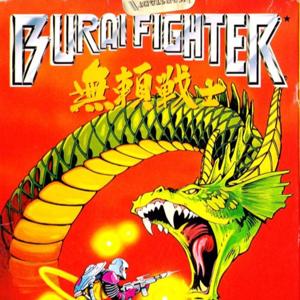
Oh, okay. But it was a, but what's cool about that with Sky Robo is that there's more exploration in the auto-scrolling, which sounds crazy, right? Exploration. Exploration in auto-scrolling. But basically, the screen is always pushing you to the right, but you can move all around, uh, the top and bottom and really explore, um, you know, the layout that way. I see. Like, branching paths and stuff like that. It's not pushing you. Like, uh, what was that other game we played on NES recently? Uh, was it Burai Fighter? Yeah, Burai Fighter.
That was one where it was like, it was pushing you in all different directions and you had to follow along. This one is only pushing you to the right and you can kind of choose to, you know, take the high ground, low ground, be a ship, be a mech at any point. Um, so I really, uh, I like this title in, in, in a short burst. I don't know if I would play it again. Okay. Terra Cresta 2 was released in 1992. They had to, as soon as, as soon as they heard 1992 was coming around, they were like, well, we have to release Terra Cresta 2. New Year's about to drop. Yeah. Uh, and that only came out for the PC Engine and only in Japan. And a lot of these are only in Japan for what it's worth, by the way.
And Terra Cresta 2 is basically, uh, the same game as Terra Cresta 1, but with a lot more customization. And when I say a lot more, I'm talking about even in the formation screens, you are able to change like what it, what your layout is when you have just one part, what your layout is like when you have two parts, et cetera. You know, like you can really, that is a thing that we didn't really touch on because that is also a thing in this game where really, if you've only got one upgrade, you get this sort of mini spread, uh, where instead of your two ship parts shooting forward, you get like this big, like wave gun that generates between the two, which I thought was really cool that there's like these different, uh, formation, uh, fluctuations.
Um, I don't know that I really appreciated that. Yeah, that's cool. And I guess what I'm saying with this one is just more like, um, you can decide at any, you know, like before you start the game, all the various formations, this way you're not, um, you know, you're not like caught off guard by like the, well, what if I only have three? Like what's that spread look like? Yeah. Uh, also Terra Cresta 2 is a game that's entirely in English. I thought that was a little strange, uh, for a game that was only released in Japan, but, um, totally playable if you guys want to seek it out.
Okay. Terra Cresta 3D for the Sega Saturn. Um, honestly, yeah, I couldn't tell at this, but like they had to do it. They had to do the trope of 3D for the third game. And, um, you know, I couldn't get a read on this one if it's an improvement or not because yeah, it's in 3D, but it's mostly still like, like a pixel art style game. And then there's occasionally like three, like full on 3D. Like I would describe them as mini games, but they are levels.
Uh, but they're so small bursts between the stages that it's kind of like more of just a, an obligatory, like here's the 3D part of Terra Cresta 3D. And then you go back to the same game that we're used to. So I just, I guess I was hoping for more, uh, at this point. I guess that's better than what I expected, which was a, they moved the whole thing to 3D,
but didn't know how to make that fun yet. So it was just a terrible slog, but so it's not the worst possible end. And then the only one I didn't play because it was released last year. Wow. After a, uh, what is that? That's like a 20 year hiatus. Yeah. Longer. Yeah. Longer. 25 year hiatus. Soul Cresta came out, uh, on the PlayStation 4, Nintendo Switch and Steam.
Uh, and it was developed by Platinum Games. I mean, there would be time. Oh my God. So, uh, Soul Cresta is a game. I, I didn't really like look into it or anything. I watched a trailer that seemed awesome, but obviously it's not, you know, it's not doing like, Oh, this is terror Cresta 3D sequel or whatever. It's like, it's doing a bunch of new stuff. So, uh, pretty, pretty damn cool.
And they are describing it as the final entry in the Cresta series. So don't know if that plot about, uh, humans getting up from the bottom of the ocean nets out here or if it already netted out or whatever. But like, if you were invested, I guess you have to get soul Cresta to find out. Like just looking at Soul Cresta is, is confusing. There's like so many menu things going on. I can't tell if it's an upgrade or not. Like how do you spell soul here? S O L. Oh, like the sun. That makes more sense.
Oh yeah. There's a lot of, there's a lot of HUD. Yeah. There's a lot of HUD. I can't, you know, like I can never know, but basically I guess based on the, um, you know, bullet hell games I was playing last weekend. Yeah. This could be a good time. Yeah. This looks like, it looks like there's fighting game combos in here and, uh, the, there's different shapes. Yeah. This is intriguing and you still get to turn into a giant Phoenix. That's great. Wouldn't be a Terra Cresta game without it. Uh, it, it also wouldn't be a nostalgia episode without the most important part of the show, the essential games list.
Terra Cresta is doing some cool stuff and we talked about it at length because it's the only thing worth talking about. I mean, you could talk about, um, you know, shmup gameplay in general and whether that's entertaining to you, right? There are people who have let us know that they just don't enjoy shmups.
Uh, Joe is one of them and he is absent from this episode. And so that makes me wonder if this new power up system where you are able to acquire pieces of a ship and then get an extra hit as a result. Like if the, if the longevity of your gameplay as a result of the power up system is enough to make the shmup part still fun for everybody else. And I get to tell everybody that frankly, that's not, I don't vote for all of you. I vote just for me. And for me, this power up system was really interesting to see on the NES. As I really enjoyed my time with Terra Cresta and I think I could enjoy multiple playthroughs given just the ability to test with the formation designs and be able to continue to see how much further I can get.
Uh, it is a hard game, but all shmups for the most part are what I would consider hard games. Uh, they're, they're unforgiving in that, uh, in that regard, but I don't think a game being hard is a reason I would keep it off the essential games list. And so I am actually going to vote for this one on the essential games list. Sean. All right. Well, um, we, we've, we've pretty, we've lauded this game with praise this entire time. Um, there are some negatives and I'd like to, I'd like to go over them a little bit.
Uh, the, the screens that you're playing on are, they're, they're kind of dull. Uh, the enemies and the turrets. Unfortunately, a lot of what you're firing at are just sort of like nondescript turrets. Sometimes they just blend into the background. Like I was fighting two giant dinosaurs that just looked like sand dunes for a while. Um, and then when they die, they just turn into impenetrable barriers. Um, and then the boss design, while it is an interesting way to, to design a boss, there's really only the one design. Like it's not like a really cool, like monster, even though they described everything as a monster, it's kind of just like a big hexagon with guns. Those guns change the arrangement of those changes.
Um, but overall, like the aesthetic experience is pretty standard fare. Now it, which means that it's definitely leaning on these really cool features that, uh, they've introduced for the power-ups and like the, the transform mechanic and like the ultimate change. But like it, it, it definitely is worth it. Like those sort of trade-offs I'm okay with. I would have, I would love a version of this game that had slightly more interesting backgrounds and enemy design.
Um, but I think that everything that we've talked about with the core gameplay is enough to also vote this on the essential games list. Ooh, I felt the pain though. I felt a little bit of the pain.
I don't, I don't think it was pain. I think it, I, I think that I feel bad that we waited until, uh, Joe wasn't around who, uh, you know, he doesn't really like these games, but I guess if it was the three of us, it would still be on because, you know, 66.66666% of, uh, the people on the podcast voted for it. So. Yeah, it's a good point. And I was thinking about what you said too, about like, just that the bosses aren't really
innovative and everything. And those are definitely knocks against the game, uh, in, in a different respect though, too. I think I really just respect this game for the way that it, for the same reasons that like I originally voted Gradius on the essential games list. Like the, the power-up system in that one was so cool. And the ability to, to like save your power-ups for a better one later, you know, like you wanted the option, you know, and like to have all of that under your belt was really cool.
Now I feel like, like screw Gradius, like Terra Cresta figured it out like better than them. And so just on my own logic scales right now, it's like, this is all subject to change by the time we get to 1994 on the system. But right now it's like, well, of course this is, has to go on the essential games list because of Gradius, you know, it's like, that's just how it's working for me.
And also like, there are games that I can consider my favorite games of all time that have huge knocks against them. Like, uh, play Spider-Man two on the Xbox, uh, has no story, doesn't look great. And the, the fighting, which you're doing half the time is kind of trash, but we all remember that game for the sense of speed when you're like web slinging and stuff like that is, that was enough for me to consider that a favorite game of mine and all of the things going on with the upgrade system and the transforming and setting up your own transformations.
That's enough to put on the essential games list. I love it. It was almost poetic air at the end, Sean. No, almost. Almost, but not. That's why I said almost. If this was a slam poetry, uh, podcast, we'd be in trouble. We would. Uh, I had some, I had like a question here, but I think I'll save this for when Joe comes back. Cause it's more fun when you both answer questions. So, uh, for anybody who was expecting a question to be answered this week, uh, look forward to it next week.
Um, I'm Michael Esposito. I'm not doing that right. Remember when we used to do that? We used to like say a bunch of shit at the end of the episodes. Well, it was just you. And then I would, I would yell. Uh, random things to interrupt you. Right. Now I just put ads every two minutes in the episode. I just uninterruptible, uh, 10 minute ads every two minutes between the shows. So that basically it takes you until next Friday to listen to this episode. Hey, hit us up. Let us know how many hymns ads you got during this podcast. And also if you're speed running the podcast, let us know about that too. I'd be interested to see who could do it the fastest.