111 · LIFE FORCE
New to SHMUPs? Read our guide: How To Enjoy SHMUPs →
Ranked #6 in our Top 10 NES Games of 1988 →
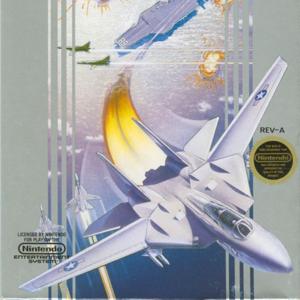
You've saved the innocent people of Gradius from the vile Bacterions. But now an even deadlier plague has slimed into the neighborhood. It's Zelos, an all-engulfing, planet-eating alien who's hungering to take a bite out of you!
SHOW NOTES
Manual
NEStalgia Gradius Episode
Salamander II
Salamander Arcade Version
Life Force Anime (FULL EPISODE)
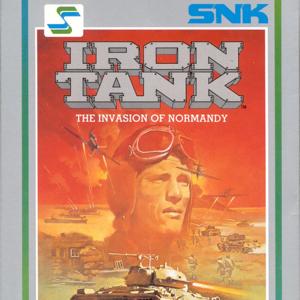
Life Force is the first sequel to an Essential game we have played, and the NES box says so: you saved the innocent people of Gradius, and now something has "slimed into the neighborhood." The manual is word salad (600 Gs at warp speed, and a pilot lounging in a La-Z-Boy), but the game underneath is a faster, better-looking Gradius that alternates horizontal and vertical stages.
What works
- The power-up meter survives. Collect capsules, bank them, and cash in on speed, options, lasers or a force field. We loved it in Gradius and had half forgotten how much.
- It feels like a place. You are flying through a living planet, with intestine walls, volcanoes and solar flares as real obstacles. The first boss fades in out of the wall so slowly that the brain is simply there, and it all looks almost Super Nintendo.
- The bosses. Every one has a readable pattern: shoot the brain's eye, circle the spinning-armed boss clockwise, park an option beside Tutankhamen Attack while you keep firing. We liked them more than some of the stages, and the Gradius core boss returns as a sub-boss with the Gradius music.
- Dying hurts less. There is no checkpoint, so you pop straight back in, and power-ups are common enough to rebuild. We found it clearly easier than Gradius, and with the Konami code it is close to a guaranteed win. We read that as accessibility, not a flaw.
- Co-op. Two players at once, one option each.
What doesn't
- Unfair walls. The growing intestine barriers give no warning, and shooting them does nothing. The solar flares at least flash first, but there are over 20 of them in one level.
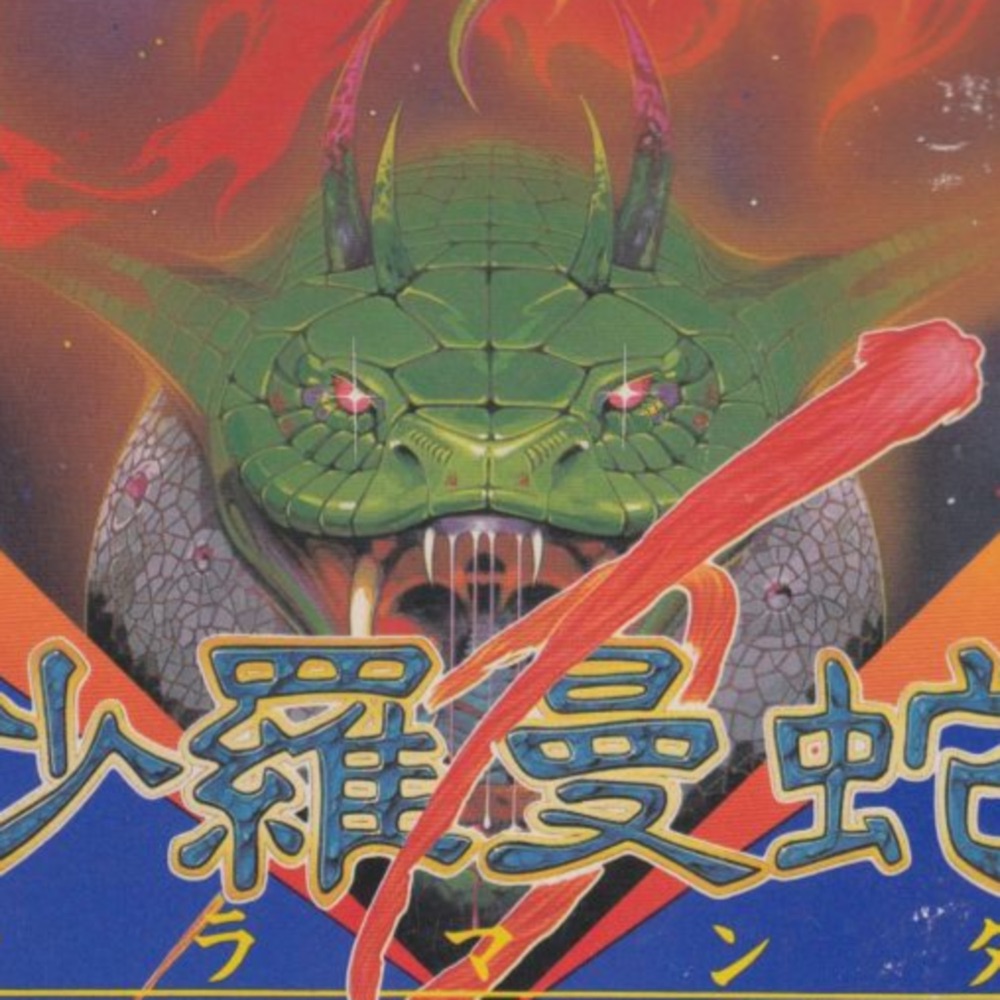
- The final escape. Zigzagging through narrow gates is nearly frame perfect, and with ten lives you just crash until a cutscene plays. The last boss, a snake-like salamander built up by the box art, is the weakest of the lot. Skip shooting Zelos and the game quietly restarts the level.
- Slowdown. It is worse than in Gradius, especially when fully powered, which makes an easy game easier.
- Two-player is muddy. Both ships are the same design in different colors, and when they overlap you lose track of which is yours.
Beyond the game
The arcade Salamander gave you upgrades on pickup, with no power-up meter, and up to four options. The Famicom version allows three options and has endings tied to your continues: a pilot without a helmet, the planet, or just the helmet. Konami's programmer said the arcade board had no test mode, so the team had to play well enough to reach the later loops. We also paid respects to Kazuhisa Hashimoto, creator of the Konami code.
The bottom line
Essential. Joe, who usually complains about shmups, said he never did here, and voted first. Sean followed, enjoying it more than Gradius even if it is less iconic, and that was the two votes the rule needs. Mike made it three for three. That gives Konami four, level with Nintendo R&D 1. Gradius does not have to leave to make room, though Best of 1988 will decide.
Written from our conversation in this episode.
- Calling all Viper pilots! The Galaxy’s on the edge of doom again!
- Manual
- Introductions
- Overview
- The NES version is treated as a Sequel to Gradius
- Horizontal and Vertical layout SHMUP where you must successfully survive traversing through 6 different stages. At the end of each stage there is a boss that must be defeated to move forward
- The power-up section from Gradius returns with even more choices
- What did we like so much about Gradius
- Customizing your needs
- Thoughtful level design
- Unique bosses
- Gameplay
- Refined controls/Improved graphics
- The game looks better, feels smoother, and plays faster
- Levels aren’t seamless
- Frustrating level design
- First stage - Growing barriers
- Volcano flames
- Parasetic roots that expand way too fast
- Destroying obstacles but then it regenerates
- Escaping destruction at the end barriers
- The game takes place entirely inside a living planet
- Very creative bosses
- Shoot the core is gone
- Konami Code
- The new dying
- No checkpoint, instead you get right back in
- 2 player
- Refined controls/Improved graphics
- Ending
- the final boss – a big, red orb called the Zelos Force – is defenseless, but the screen continues to scroll forward when you reach it. If you don’t kill it before it scrolls off the screen, you need to replay the whole stage. After killing it, the scrolling speeds up, and you need to maneuver through a set of tight corridors before you can escape.
- Version differences
- Arcade
- Didn’t let you choose powerups. Instead it gave them to you immediately on pick up.
- The levels are different after the first one. This didn’t have the living planet construct
- You could have 4
- Famicom
- You could have 3 options
- Different ending depending on continues
- Arcade
- Interview
- Also, the Salamander pcb didn’t have a test mode for debugging (where you could make yourself invincible, for instance). So in order to check if everything was arcade-accurate, when it came time to check the later loops I had to practice enough to be able to get there on my own. Thanks to that practice, I can now get much further in Salamander than I could when it came out.
- Spinoffs
- Many more Gradius sequels to get to. The next is Gradius II
- Salamander II did happen!
- EGL
- 13:30 end of what we liked about Gradius
- 23:00 end of bosses
- 42:15 end of Difficulty
- 55:15 end of Konami Code
- 58:50 - EGL
Found automatically from the transcript and checked, but it can miss things or pick the wrong page. Spot a mistake? Tell us.
Games
- Life Force mentioned at
Konami's NES shooter, a sequel to Gradius based on the arcade game Salamander, and the episode's game.
- Ikari Warriors II: Victory Road mentioned at
Earlier NES sequel the hosts already played.
- Gradius mentioned at
Konami's 1985 shooter, which Life Force follows on the NES.
- The Legend of Zelda mentioned at
Used to compare how dungeons differ in layout and theme.
- Double Dragon mentioned at
Previous episode's game, cited for how closely it mimicked its arcade look.
- Stinger mentioned at
Konami NES shooter with creative bosses such as a giant watermelon and a saxophone.
- Mass Effect mentioned at
Science fiction series used to talk about playing a series in order.
- Uncharted mentioned at
Series used as an example of playing a later game before the first.
- Legendary Wings mentioned at
Capcom shooter with simultaneous two-player play, covered earlier.
- Metroid mentioned at
Cited for an ending where the hero is shown without the helmet.
- Mega Man 3 mentioned at
Game said to end with a shot of the hero's helmet in a field.
- Final Fantasy VII mentioned at
Cited for its game over image of a broken sword.
- Contra mentioned at
Konami NES game where the Konami Code also appears.
- Gradius II mentioned at
The next Konami sequel in the series.
- Salamander 2 mentioned at
1996 arcade sequel to Salamander that also came to PlayStation.
- Super Mario Bros. 3 mentioned at
Used as an example of one game not requiring removal of an earlier one.
- Super Mario Bros. mentioned at
Compared with its sequel in the question of the essential list.
- Gradius V mentioned at
Later game in the series that the hosts mention when talking about lore.
- Gauntlet mentioned at
NES game used as the example of the show's per-game Twitter threads.
Hardware
- PlayStation mentioned at
Console that Salamander 2 came to.
Companies
- Konami mentioned at
Developer and publisher of Life Force.
- La-Z-Boy mentioned at
Recliner brand named in the manual's description of piloting at 600 Gs.
- Capcom mentioned at
Developer of Legendary Wings.
- Nintendo Research & Development 1 mentioned at
Nintendo's internal development team, compared by number of essential games.
People
- George Lucas mentioned at
Star Wars creator, in a joke about what counts as canon.
Film, TV and music
- The Dark Knight Rises mentioned at
Used as an example of a sequel with a different title.
- Drive mentioned at
2011 film joked about for its orange and blue colors.
- Mad Men mentioned at
TV show whose audience the hosts joke overlaps with listeners.
- Don Draper mentioned at
Mad Men advertising character the hosts invoke for selling the show.
Terms and events
- Konami Code mentioned at
The famous cheat code that began with Gradius.
Articles, videos and sites
- Essential Games List mentioned at
NEStalgia's running list of the NES games the hosts call essential.
Other
- Moai mentioned at
The stone heads that return as enemies from Gradius.
- Pachinko mentioned at
Japanese gambling machines the hosts joke Konami also makes.
- Star Wars mentioned at
Used to illustrate a discussion of canon under a story's creator.
Auto-generated transcript. Each paragraph starts with its timestamp. Speakers are not identified.
Calling all Viper pilots, the galaxies on the edge of doom again. This is Lifeforce.
Nostalgia And welcome to NEStalgia, a chronological exploration of every NES game released in North America. I'm Mike. I'm Joe. And I'm Sean. And we are playing the first ever, quote unquote, sequel to a essential game. Ooh. Oh, yeah. We've played Ikari Warriors 2, so we have some, we've dabbled in sequels. Has anybody ever seen a sequel to a movie or played another game that had a sequel? You know what? I actually have. They're usually similar. Got it. And so that would make sense why they usually don't call them just the game 2, right? They usually give it a totally different name. Yeah, I was just going to say this one, never would have known.
Like, yeah, like The Dark Knight. Yeah. The Dark Knight Rises. Yeah, which was, yeah, that's true. That was a sequel to a movie. Yeah, they didn't call it The Dark Knight 2. That's right. They called it The Dark Knight Rises. And I'm talking about Life Force, which is a sequel to Gradius.
Yes, that's right. Don't let people tell you otherwise. If they say that it's not true, that's because they're talking about the arcade game, which was also known as Salamander, but for all intents and purposes is the same game. However, it's only on the NES box where Konami finally decides to say, oh, yeah, this is the same exact universe because they put here, you've saved the innocent people of Gradius. That's like automatically enough for me. That's evidence. I think it's just like a coincidence. You've saved the innocent people of Gradius from the vile bacterians, but now an even deadlier plague has, I thought it said smiled, it says slimed, has slimed into the neighborhood.
What happened there? I don't know. Is that a verb? To get slimed, you know? That was also like a very like normal sci-fi thing to say at the top and then met like with fellow kids at the end, you know?
Guess who just slimed into the neighborhood? Good. It's the Zelos. It's all right because like the whole plot to this game, at least in the manual, is word salad. Like there's nothing. They use words wrong. They make up words. And all they had to do was say, oh, no, he's back. But we did get the meaningful line in bold. The birth of Zelos could mean the death of zillions.
They might as well just said zillions at that point. But maybe that would have been citizens of Zelos. It's never really clear what Zelos is other than like a... It's a little boy. Like a snake, right? It's a little boy monster. No, it's not a little boy. It's a little boy monster. Okay. It's like an adult space monster is how it's described. He grew into an adult space monster. Oh, he started out as a little boy. Got it. It's been a while.
Zelos is hearty. Yeah. His proud parents, Ma and Pa Deltoid, named their only son Zelos. It's like they couldn't decide if they wanted it to be like really cool or really funny. Do you know what Zelos means though in their language? What? One mean son of a gun. Oh, yeah. I gotta say that when they wrote this, like as Zelos grew into an adult space monster, his appetite turned ravenous, his temper became ruthless, and his name proved an understatement.
I gotta imagine that the writer just was so happy with himself. Yeah, I think he was like cracking his knuckles before he wrote it. Like, here we go. Typing away. And you're back in the Vic Viper, which was in Gradius as well and will be in all future Gradius-like games. There's a weird thing here though, and I don't know if Sean threw this in because he's sponsored by Lazy Boy, but it says here that a pilot can pull 600 Gs at a warp speed. That's bullshit. What? It's all nonsense.
But then, I mean, like that stuff's all cool. Like, if you're a kid, that stuff helps, right? Right, 600 Gs, warp speed 9. Those are exciting things. Makes total sense. Then saying, it's like he's lounging in a Lazy Boy. TM. I think, yeah, I think it's either a TM or an R. Whatever. It's amazing that they included that. Yeah, and I just, I think that actually lounging in a Lazy Boy isn't cool compared to going
600 G and warp speed 9. It should be like you're in the cockpit or something. You can recline the Lazy Boy, and that's kind of like, it's kind of like an adventure. Yeah, it's like he's snoozing. Yeah, he's flying. And outside of the Vic Viper, then there's the Road British Space Destroyer. It's funny how like these don't sound like they were named, but I mean, I guess they're not, but it just sounds, they don't sound like they were named by the same team. I mean, I think the Road British, I read that it's a translation error. It's supposed to be the Lord British.
Yes, that's true. But it's just weird to think that in the Gradius timeline, which I think is there in like the year 3000 or maybe even much, much later. Yeah. It's weird to think that like the British Empire is still like referenced in any capacity. Exactly. Thousands of years later. I assumed it was like supposed to be the rogue British space destroyer. It was a rogue British space destroyer. Gotcha. Okay. Well, that was just an assumption.
If you somehow have not played Gradius or didn't listen to our episode, which I highly recommend, we were very kind to Gradius, I'll just give a brief overview here. The NES version of this game, Life Force, is treated as a sequel to Gradius in both the things we were just talking about, but also gameplay wise. It's important to note that the original arcade version of Salamander, as the game was known, did not play like Gradius. It was only once the name got changed to Life Force that it played a lot similar to Gradius. So what does that mean? Well, it usually means that it's a horizontal style shmup, but Life Force adds vertical layouts as well. So it alternates between horizontal stages and vertical stages, A, B, A, B.
You have to successfully survive traversing through the six different stages. And at the end of each stage, there's a mandatory boss that must be defeated in order to move forward. Unlike in Gradius, there are cut scenes between the levels rather than continuing to just progress on after you defeat the boss, the screen would just start scrolling again. That's not true here. In this one, you do get a moment to breathe.
And the power-up section from Gradius returns with even more choices this time. And the power-ups, the way that system worked in Gradius that we were big fans of was every time you collect a power-up, you store a level, and then you decide to cash in. So a level one power-up is for a speed boost, and a level six is for a force field, essentially. So if you wait to collect six power-ups, you can cash in and get the force field, or you can just continuously increase your speed.
And they stack, whether it's within that single power-up or in total. You can be super fast, have the shield, have the lasers, or you can just keep going faster and faster. So, yeah. And was that power-up system also present in the arcade version then? It was not. So that's the major thing. It's a whole different game. The major thing that made it different was that when you collected power-ups in Salamander,
you immediately received the next upgrade of your ship. So the layout would continue to change as you got the power-up. So you've grabbed the first one, and it's an option. And then you grab the second one, and now you have missiles, so on and so forth. It was a little weirder, but I think it's nice that the NES version... Streamlines it for people who are interested in games after Gradius. Choice and everything. Yeah. So what did we like so much about Gradius?
I think a big part of it was that power-up system, at least for me. Just the ability to kind of choose your power-ups and almost have this real-time RPG decision-making going on. And that's... To be honest, when I was playing this game, I kind of forgot a lot about how much I liked that about Gradius. I had to go back and watch a little bit of Gradius to be like, wow, that is what that was like. Yeah. I think that the creative use of the power-up system was my main selling point for Gradius. And also just the performance and how it looked in comparison to everything else that we were playing around that time. It just seemed a step above.
So all that together just seemed like the perfect NES game at the time. Yeah. I remember we even commented about the Vic Viper and the way that as you moved from up and down the screen, you actually saw different angles of your ship.
And that's here too. So that was nice. But yeah, it's definitely about the control of the ship itself and how smooth everything plays out. The graphics are a huge plus as well. But I really liked Gradius for the traversal style of thoughtful level design that you're actually going through either a cave or a space war zone. It's not just waves of enemies. There's also this design to the map that you're on that requires you to think about where you want to be on the stage. And there's obstacles in the way other than just outright enemies. So that's what I really liked about Gradius.
Now looking ahead to Life Force, the game of the week that we've played. We're playing Life Force? Yeah, Life Force. I know. We've been saying Salamander. We've been saying Gradius. It's all over the place.
Just like the manual, this has been word salad a little bit. So let's just focus in for the remainder of our time, focusing on Life Force. And I'd really like to just start talking about the refined controls here and the improved graphics because it seems kind of silly to be talking about graphics on the NES when we have what we have today. But I do think that when you compare Gradius and this, a game that we already thought was pretty good looking, this is a step up and it also feels a little faster. I wouldn't say they changed the way that the Vic Viper controls in a meaningful way. It just feels faster, the game overall. I'll jump in to talk about the graphics real quick too because that's something that stood
out to me right away. And it's not even necessarily graphics as much as it is just, I guess, like art style and design. But similar to what you said about Gradius, Mike, is that, or Sean, I can't remember who said it, but that it stands out even now, even this much further into it, it stands out a little bit as like having these environmental things that make you feel like you're in this specific space that it wants you to feel like. Not that we haven't had other games like that, but too many times we see a game that it's just like, you're just flying, enemies are coming at you, and there's just basic environments
around. Yeah, just like a scrolling, repeating, like archipelago below you, or it's just a star field. Like, yeah, I appreciate that these are each actual places. Even just out of shmups, just to take it into a very popular game, The Legend of Zelda, each of those dungeons doesn't, you know, there wasn't yet the concept of a water dungeon and a forest dungeon. There was the blue dungeon and the green dungeon. Right. But the layout-wise, they were all still the same. So what helped that, obviously, was that the puzzles were unique and different. But, you know, that is something to keep in mind, that this really, the idea of taking place inside of a living planet that you're trying to get to the center of and defeat,
what was his name, Zelos? Zelda. Yeah. Zelda. The fact that you're trying to actually, like, put a narrative of, like, entering this living planet and then going inside of its... Shrinkter. Yeah. Well, yeah, sure. Whatever it is. But, you know, there's a cool conceit there. And then when you get to, like, the volcanoes and the fire spitting out... Solar flares, yeah. Which are horrible, but they're awesome. Like, it adds that level to what you were talking about before, where the environment
is, like, a part of the game. They're the obstacles. You're interacting with the environment. It feels like you're in a living thing. And knowing that these are ports of an arcade game, too, just to talk again about how good they look, they look different enough from the way they look in the arcade that, you know it's an NES game and then it's not trying to just figure out, like, okay, what's the 8-bit equivalent of what the arcade game looks like? But it almost takes on its own design spin. And I think that really helps it rather than, you know, Double Dragon in recent memory.
Like, not that that game looked bad, but it didn't look like its arcade counterpart, but it was just trying to mimic everything that you saw. Whereas this would make some sacrifices. I also think that this, like, the NES versions of these games do have a unique look to them compared to other games in general, not just other shmups. And maybe that's just because I enjoyed these more.
But to me, they look much different than a lot of the shovelware we played. And I can't put my finger on it, really, because we've played other games that look, I'd say, you know, as good. But something about this and Gradius, when I played both of them, the first thing I thought was, like, wow, this almost looks a little like Super Nintendo. I don't know what it is, if it's, like, the brightness of the colors contrasted against, like, the black backgrounds or something. But something about it is, like, wow, this looks like it's, like, up a level a little bit. Well, one specific example that really impressed me was the reveal of the first boss,
where you're in the middle of, again, it looks like intestines to me. And then all of the different sprites for the walls around you just sort of fade away and it morphs into or just reveals this big brain. Yeah, and it fades away in such, like, a slow way. Yeah, in a really organic way. That you're almost like, is it fading away? For a second, you're, like, questioning, is that fading away? And then it just, like, you don't even see it happening, just slowly there just is a brain there.
Yeah, it was really impressive. Almost all of the bosses are really good-looking, too, from, like, a pixel art perspective because they're the only other layer. They basically even remove the HUD during the boss fights to make sure that they can design the bosses as nice as they want to. But also, they're very creative bosses from just a, you know, from, like, a way that they design to attack you. Yeah, there are different strategies. And they're not outright, none of them are outright impossible. No. They all have a very clear pattern that you have to follow.
And they kind of remind me of Stinger's bosses that were also very creative. Like, there was that giant watermelon and stuff like that. I love the saxophone. Yeah. And the saxophone that, I thought that was something else I remember. Yeah, but it was a saxophone. But, yeah, it was a saxophone. But, you know, like, that stuff is really cool, and I'm glad that that's back here. And what do I care if, like, one of them is an Egyptian, like, sarcophagus, you know? Like, fine. It was Tutankhamen Attack.
That's his name. You're right. Tutankhamen Attack. All one word. There's, you know, I think that the boss fights in this one were even more enjoyable than some of the, like, actual levels you had to go through because they're very approachable. They feel good to defeat. And there is, like, a solving process to the whole thing. Yeah. At first, you're like, you know, and maybe it's not as hard. Like, the brain is the first boss. And obviously, he's very easy. It's just, like, shoot the eye. Yeah, shoot the eye.
And I like that one because that reminded me the most of Gradius' shoot the core. Is this the one that has three different cores? Or is this? Yeah, he has, well, no. The three different cores one, I know what you're thinking of. That's kind of like a sub-boss. Yeah, that was. I'm looking at the pictures right now.
That's the one that has the, it's the ship from. Yeah. That was at the end of every Gradius level. Yeah, that's true. And you had to shoot the core, and that's where that phrase comes that's very, like, iconic to Gradius players. The intruder was the only one that had to do that where you would shoot out the layers and then take it out. Yeah, I like that shooting of layers. It's very fun.
Yeah, and it was, again, like, the fact that he just shoots the, like, arms around, like, just swings his arms around in a circular motion. It becomes very clear that you have to kind of, like, go clockwise with him. You have to get on the inside, or else he's too fast. If you're too far on the outside, he's too fast for you. It's interesting. Right. And all of these bosses are very well complemented by your power-up systems, too.
I think regardless of whether you have a fully loaded ship, like, let's say, with, you know, the double lasers and two options and a force field, like, all that stuff feels great when you're a fully decked out ship. But even just having an additional option brings in this whole new level of strategy for whether you want to, like, double up and stay exactly in the same spot and just shoot, you know, like, twice the amount of fire at once. Or if you want to cover more ground and be like, well, this boss keeps, like, I'm thinking of Tooting Common Attack, the Egyptian head, where he kind of just keeps going up and down on the horizontal stage. So you can just leave your option there.
Right. You're out of harm's way. Yeah, exactly. And just keep shooting. So, yeah, it lends itself to a lot of creative thinking. Yeah. Even another one just to call out that I liked was Giga, the, like, skull head thing. Yeah. Because that is a boss battle that, for some reason, is very easy if you're fully decked out. Yeah. It could take, like, maybe three to four hits before it dies for some reason.
But if you're not fully decked out, as time goes on, it then, like, seeks its eyeballs out at you. Like, it's like, forget all this stuff that's coming out of my mouth. Like, now its eyeballs start, like... See, I thought, maybe it was just because it took me longer to defeat him than you were. I thought maybe I wasn't able to kill him until his eyeballs came out because he didn't die for me until after his eyeballs came out and I started shooting at his eyeballs. I've definitely had only... I've had situations where only one eyeball came out and it was, like, not even all the way out. So I think it is just a certain amount of hits. I don't think it has to do with, like, waiting until the eyeballs come out. Gotcha. Thank you.
Thank you.
Let's hear it.
Let's hear it.
front of or back of the screen for particular hazards ahead of time. You won't have to deal with the problems. But I never think a game should be reduced to memory. We have been very hard on games that do that. But it does sort of come with the territory with a lot of NES games. So it's like, I think sometimes you might have to just get around it, but... So in the very first stage, you're in what I would consider, like, the body of the planet. Yeah. And it's growing.
It grows these, like, barriers of its intestines or whatever. I like to... I mean, I know you think it's just me being funny, but these are sphincters. Okay. There you go. So they are... These sphincters are growing barriers that, like, at a rate that almost might at first... And I don't know if you guys had this experience. I did. I thought, like, oh, something's wrong with the cartridge. Like, it's not in all the way... It's like... It didn't see those pixels until I got close to them.
Because it doesn't really, like, look like it's growing. And they just kind of populate onto the screen. And then there was one, all of a sudden, that just completely took over and closed off the entire screen. And that's when I knew, like, oh, this isn't a glitch. I'm just doing something wrong. So then I tried shooting at it next time. And it doesn't work either. And that's when I realized, oh, you just have to know about it and be in front of it before it closes.
There were a few that I remember thinking, like, it starts happening and you're like, oh, gotta get through and you have time. But there are some that it's like, if you weren't ready for it, like, it's pretty tough to get past. So I think I'd like to see if I can predict your next one. Which, is that the solar flares? The solar flares are the next one. So I would say that there's a difference between these two. Because with the first, with the sphincters, I think it's more logical for the player to believe that these are things that are going to contract and expand as you go. And you will never actually be blocked off entirely.
Like, I thought that, like, oh, it's closed for now, but it's going to open in a second. And it never did. Whereas, so it's not really telegraphing anything. That's true. Whereas with the solar flares in level whatever. I think it's the third one. Okay, in level three. It does give you a split second of showing where it's going to come out from. And I think that if you can read that quick enough and you've picked up enough speed power-ups to be able to react in time, you can get out of the way of these solar flares. And absolutely true. And I would say that this is one that was on my list. And I thought maybe I should take it off because it is something that you can overcome. And I definitely did wind up doing eventually a perfect run through that.
The thing there that bothers me is the split second thing that you were referring to. I wish for, like, a little longer of a bubble up because there's already a lot going on on that screen. And it's not, you know, if you're not paying attention to everything, like, imagine you have to watch, like, 40 different things going on. And then all of a sudden, the little bottom hand, there's, like, a small little jiggle. And then, boom. That's my second problem. The wave of these solar flares is gigantic. It covers so much real estate of the screen.
And it's a double-edged sword because it is beautiful sprite work. You know, like, it looks really cool. It's hecking awesome. Right. It's really cool. So I don't know what I would have preferred them to do here. I just think taking up so much of the real estate and playing in a way where you have to pretty much be in the middle of each one is a cool solve. But maybe it shouldn't have been the entire level. I think it's very annoying that there's, like, over 20 of these throughout the level. Did you count? Yeah. I mean, it goes on for a very long time. So I'm going to say it felt like over 20. Okay. I could have done five. The reason I'm a little more forgiving that, too, because I do think that the telegraph for me was, like, almost not noticeable.
But the reason I'm a little more forgiving is because this one, at least, you might die once. And then you're like, okay, I have to play this level really cautiously. And you can play it that way. You can stay to the back. And you can even wait until the soil fire appears and not get hit and kind of stay behind it. Yeah. Whereas with the first one we talked about with the growing whatever, I don't want to say it. No, I know. You mean the sphincters? Exactly. They do – if you were to try and, like, be cautious and stay ahead of it, like, you might be too late. Like, you have to, like, be aggressive and kind of know where they are.
Whereas this is, like – even if you don't know where the solar flares are coming, it just makes you think about the level differently. Like, I've got to be careful. That does its own – that has its own faults as well because you're also being harassed by – I think they're invincible?
Which – what is that? Nothing in this stage, I believe, is invincible. Oh, okay. Well, you're still being harassed by fighters that are coming at you that are not affected by the fire. And then there's also those random firebirds because, like – Oh, yeah, yeah. So there's five firebirds in a row and that will give you a power-up. And that's normal. There's a specific orange-colored enemies in everywhere. But then there's another one that I think Sean was just mentioning that if you shoot it, it just does, like, a kamikaze attack at you. And it's like, whoa, you look like the same as the other ones. Why are you going to start coming at me? Why are you coming at me?
I don't like when the birds come at me, especially when they're orange, which in this game so far has only ever meant power-up. Yeah. You know? This stage also has, I think, the only ability to get a power-up that's blue instead of orange that destroys everything on screen. And maybe that was just because they were, like, after the fact, they were like, wow, we really put a lot of enemies in here. We should get rid of them. Like, there should be a way for the – you know, just in case they're all still on the screen. We should have a way to just clear them all out at once. Can you guess my next one? I can't right now. Is it in the pillar stage? I have – The temple stage?
It's before the temple stage. It's the parasitic brown roots. They look like the tree roots. Ah, yeah, yeah. That grow out of the, like, circular – Orbs. Yeah, the orb bodies. Okay. And the reason here, they expand way too fast. It doesn't – it doesn't – it only basically rewards the player for just staying at the very bottom of the screen. Well, yeah, I mean, that's the – that's what you're supposed to do in this part. Yeah, this one didn't bother me, actually, because I don't know if I was always able to destroy those. Yeah, I was always powerful enough in this stage that I was able to destroy it before I could even get in range. Got it. So you're wrong, Mike. Okay, that makes sense. I can be wrong. I'm cool with that. But I had a problem with it.
It's okay. And – oh, and then this one was just kind of, like, prevailing throughout some of the stages. But there was, like, sometimes these walls that were destructible. And I'm not talking about in the temple because the temple one was the exception to this rule. But there were some walls that were destructible and then they would regenerate.
But they regenerated, like, in a very weird timing manner. So if you were hanging back and shooting at the wall, as you got closer to the wall, it might regenerate and close in on you. Yeah. I know what you mean. And it was, like, you kind of had to, like, know about that and be very close to the wall at all times. This way you could constantly be shooting exactly what's ahead of you. This way it wasn't on the timer. Yeah, I could deal without that as well.
Yeah. You're correct. Yeah, thank you. Thank you. So I'm wrong and I'm right. And I think this last one is just – this one's not necessarily bad. It's pretty cool. Spoiler for the end of the game here. After you defeat the final boss, you have to, like, escape the planet before it explodes. And they make these, like, little gates that you essentially have to, like, get through.
And, you know, they're pretty much just making you zigzag. And they're very, like, frame perfect. It's so fast. That's what I was thinking of when I said the temple level. I forgot that this is at the end of – not in the temple. It's at the very end of the game. Here's my problem with that, though. By the end of the game, you're either on, like, one to two lives left or you have, like, ten. You know, it depends on what kind of player you were if you were going for scoring because it's very easy to get extra lives in this game.
So I think it's just, like, what are you doing here at the end by killing off, like, in a perilous way here? Because if you only have one to two lives left, it sucks to die right there. You've kind of already beaten what, like, what you would think is the game.
And then there's this thing that's – it's cool to have an extra challenge, but, like you said, it is frame perfect. But also if you – Not literally, but it feels like it. It feels like it also because it's so narrow. I would have actually been fine with the idea of maybe it closing in, too. And you have – like, there is a – there's another cave earlier on that you kind of imagine if you picked up speed or wind or something, like you went through a wind tunnel or something. Space wind. It makes the whole thing go faster, though, you know? Yeah. What would you call that? Like, what would you call that effect? It definitely does speed up the scrolling.
Yeah. So that would have been something cool, like having to navigate through asteroids or something like that. But to have, like, these – this is your – there's only this very small width that's available to you. And then immediately after that, it's, like, one frame over, one frame over. It's like, no, don't do that. Yeah. No, it's a – this is a very annoying part. And this would be at the top of my list of things that were peeving me. But the problem is double – you know, is double-sided here because forget the one to two having the game over thing.
If you have 10-plus lives, it's very anticlimactic as well because you might just die. Plop room, yeah. And then you're – you know, the – one thing that hasn't been mentioned at all yet that's worth explaining is that when you die in this one – I figured we'd get into that, yeah. Right. You – rather – there's no checkpoint. In Gradius, it would start you back at a certain checkpoint depending on where you were in the stage.
In Life Force here, you just immediately come back onto the screen, which I think is great. Yeah. Except for here at this very ending because you wind up just coming back, crashing again, coming back, crashing again. And then the next thing you know, it practically played out like a cut scene. As long as you have more – I think I timed it. As long as you have more than four lives, you don't have to move. You'll die and pop up enough times that you'll be able to just then take off.
Interesting. Into the ending cut scene. Yeah. I guess then it's not that big of a deal because it doesn't matter. Right. But it feels kind of like something that was supposed to be epic, isn't it? So there's really no solution here other than get rid of that, in my opinion. And not to mention that the last boss sucks. Yeah. It's the worst boss. All the other bosses are great. And then the box art made this snake-like creature look so cool, right? He has these huge fangs. The salamander? What? The salamander? Yeah, the salamander. Yeah. And it's so cool. And then you see it on the screen, and you're like, I think I saw a bunch of those in the volcano level. Right? Yeah.
Going back to what we sort of touched upon, which is that difficulty, and this was the kind of, it's a riff off of the way they play with difficulty in Gradius, where, you know, you can become all-powerful, pretty much, but as soon as you get hit once, like, you're back to square one, regardless of whether you're on level one, two, three, or if you're fighting a boss in this one.
I know that we've talked about being punished for doing well or being punished for doing badly. Like, how did you find the difficulty in this game in general? Well, I think I'm going to start off with the first part, addressing that with the when you die and you come back with nothing.
That was handled a lot better here, and I think that was because power-ups were more frequent other than just the beginning of the stage. I think that was very important to at least give, they definitely give less opportunities as the stage goes on, and if you come back at the boss, you're out of luck. But the ability to, you won't get a full ship again by the end of the level if you're in the middle of the level, but the ability to go in, die, and come back with a chance to maybe even have, like, another option would be, you know,
is nice and appreciated. So I actually found the difficulty in this game overall to be significantly easier than Gradius. Oh, yeah. I found it easier than Gradius, too, but I also found that I still felt like the power-ups were really weighted towards the first half of the level and not the second half of the level. Oh, yeah, they are. Where I feel like it should be the other way around, you're more likely to lose, you know, the first half of the level you collect, but then by the second half of the level, that's when it gets harder and you're going to lose those power-ups.
I feel like if you don't have any chance to get them, it feels a little... That's definitely not the design decision that they were... I think it's very intentional that they're sort of loading you up on supplies to begin. Yeah, but then one hit and it doesn't matter. And I feel like that just felt weird to me, that it wasn't, you know... Well, there's always, you know, there's destructible areas, too, throughout the stage that don't necessarily, like, imply that they have power-ups, but if you shoot at them, they might give power-ups to you as well. So I would say that it's definitely more generous than Gradius
because I think Gradius was only ever in the beginning of the stage, as far as I can remember. Yeah, I can't remember. But, you know, that ties into another thing here is that while Gradius isn't impossible by any means, it was something we thought, like, needed the Konami code. You know, the up, up, down, down, left, right, left, right, BA.
In this one, I feel like if you have the Konami code, you're pretty much guaranteed a victory provided you've at least seen the stages before. Yeah. You know, it's very hard to consider losing 30 lives in Life Force. In Gradius, that could have just been any given day because you will go back to the destined checkpoint. That's why I thought that this game, Life Force, was a much bigger power trip than Gradius. And I think Life Force is not...
It shouldn't be punished for being easier because I think in the world of NES games, sometimes being easier on this kind of scale makes it a more accessible game. Yeah. Whereas even though Gradius is on our essential games list, some people might play that and think, like, well, I just suck at shmups. It's like, no, it just takes a lot of time and stuff like that. Maybe you should try Life Force first to get better. I was going to say, there's actually an argument to try the sequel first because it feels like the natural progression is the other way around.
The difficulty, like, it's like the next level of difficulty is Gradius. Okay. If you're going for that route. Yeah, yeah. I mean, it's not that it has to be that way. I mean, obviously, the events of Life Force take place after Gradius. And you really want to probably get invested in the plot. Now, Sean, to keep us grounded in this sci-fi world, you're currently going through a Mass Effect playthrough and you've played one and two and you're on three now. Having played them in the order of one, two, three... So you should be playing two, one, three. Right. In order of descending...
How good they are. Which is not usually a measurement of thing to play. But what I meant was, in three, by that point, and this can apply to any version of a game franchise, you look back at one and you say, well, I could only play one first. I could never go to three. And forget that Mass Effect is storyline-based. But, you know, like a lot... Even Uncharted for Joe here, right? Yeah, yeah. People who play Uncharted 4 first might not love going back to Uncharted 1. Okay, so that's... Might not love it, you're saying, because it's aged.
But also, those are also both pretty story-driven games. Whereas, like... I know, arguably, Radius is pretty story-driven. Yeah, removing itself from story, though. Yeah. In both of the examples that... In all of the examples that we've said so far,
the gameplay itself, the moment-to-moment gameplay, has gotten better over time, at least in my opinion. Yeah, as far as... Maybe a lot of the difficulty in Gradius has... Also, maybe some of it comes from it not being as well of a designed game. Well, that's what I was going to get at, is that after having played Life Force for a while, I did go back to Gradius to remember, you know, a lot about the game and to talk about and compare it to Life Force here on the show. And I was kind of surprised that a game that came out only two years ago,
comparatively, we're in 1988 now, it came out in 86, at the end of 86, I was surprised to see myself feeling like, oh, well, I don't think I could go back. I'm glad I played Gradius first. You know, like, it's weird to think about that in the scope of NES games, but that's how I felt. I don't know. How do you... Did you guys go back to Gradius? To be honest, when I first played this, I kind of... I was like, wow, this is like Gradius a lot. I didn't go back to play Gradius, but I went back and watched it, and I was like, wow, this actually does look a lot better than Gradius. You know, because just my memory of Gradius is a little distorted by my... That all being said, I think that there is one thing that Gradius sort of has a leg up
in terms of Life Force. I noticed a lot more slowdown. Absolutely. And I think that... I mean, it's obviously a trade-off, considering that there seem to be a lot more effects going on in Life Force, but it's definitely a negative. Also, yeah, not only is it a negative for that reason,
the game is already, by the three of us, considered easy in the realm of shmups. That makes it easier. And then slowdown, especially because slowdown occurs much more frequently when you are a fully powered-up unit, that it almost helps you, like, you know, in your lazy boy chair, in your Vic Viper, you're able to, like, see through space and time and make perfect decisions. I justify it to myself by, like, oh, no, that's how powered up I am. I can now see things happening in slow motion and now I'm super reactive.
But, yeah, the slowdown was... Even on one player was pretty bad. And we didn't go too far into two-player, but I can only imagine it gets pretty bad with two players powered up on the screen. Thankfully, in two-player, you can only have one option each, but that's still one more option or one more source of DACA than the previous, like, single-player. Thank you.
So, Joe, you just mentioned the two-player there, and in this one, you get the chance to play simultaneously, two players at the same time. That's kind of cool for a shmup, but we did just see that, right?
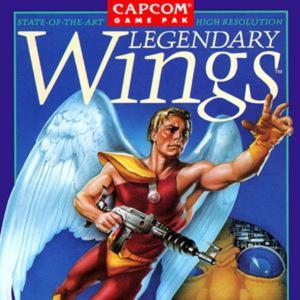
With Legendary Wings? We did. Right. And that was a Capcom. I'm not saying, like... Yeah. I know you're both confused. We're both, like, looking at you. I'm just saying it's not a novelty to us. Like, this wasn't the first shmup where it was like, wow, two people, you know, helping each other out, doing the thing. It's nice to see that maybe they're kind of figuring this out, though. Like, people would probably rather play together. I mean, it's harder together. Yeah. But, I mean, maybe it's just me, but I love, like, a co-op... See, I don't like other people. Well, I gathered that, but... But in general, I love a co-op game with people that aren't Sean.
This doesn't work here because... And we touched upon this while we were playing. The Vic Viper and the Road British, or Lord British, as it's officially known, they look... They're the same exact ship design, too. And I don't know. Could they fit the sprite work to design a different-looking ship? Maybe. But to just say, oh, well, it's like a bluish-orange now instead of blue. Like, not even to go full orange on it, to be like, you know, the color of Drive, the 2011 film. You know, just to be like that orange and blue. The Best Picture nominee. Nine years running.
Honestly, I think that the design of the ship isn't so much like... Yeah, you're right. It's the design of the ship coupled with the color palette swap. It needs to be a bit more contrasty.
And also, there needs to... When they're on top of each other, that's even worse because if you go in one direction, you pretty much have, like, did a card trick on yourself. Like, which one was I looking at before we crossed paths? And it's just so difficult to distinguish. And then also, Sean, you mentioned that you can each have one option. But I think it's also important to talk about just the power-up system in general changing because when you fight against... You know, when you take down five of those orange guys to generate a power-up, you still just get one. You don't get two. So you do have to work together a little bit to decide who gets the power-ups. Yeah, you can't be selfish like Mike and try and take all the power-ups,
but that's just going to have to be how good at cooperative games you are. I am just, you know, to anybody who's listened to me and Sean play the games, you can tell I'm just very selfish in general when it comes... You're the reason Sean doesn't like other people. Right. At least in his video games. Yeah. I love NPCs. Yeah. NPCs are my best friends. Yeah. Yeah, and I don't know if there's anything else to really add to the two-player mode other than that. Like, there's no collision between the ships, thankfully.
Yeah. Like, not that anybody should be confused by that. I don't think that... Hopefully that would never be added. I think it should. Into one of these games, but that would be crazy just to consider all the other things that are on screen, too. Do you guys ever feel like there was too much on screen? In two-player, yes.
Maybe in two-player, but in one player, I felt like I never thought there was too much on screen except I was like, well, I guess the game thinks there's too much. Like, I thought there was too much on screen because I was noticing the slowdown.
I guess the game knows best. I was like, well, there's not... Like, you know what I mean. I only thought there was too much on screen because it was slowing the game down. I was like, all right, let's get a little less on here. But otherwise, I don't think I would have been overwhelmed. Yeah, there was occasionally times where I was a little bothered by... Like, all the enemies in this game are great, by the way. I think that's worth mentioning. Like, anything that actually comes at you and attacks you... Come at me. ...is great. No, no, I mean, like, we got the return of the Moai heads and we love them and we got the... We got the Gradius
core bosses from the first game. Three of them as, like, a sub-boss in one of them and it even plays the Gradius one music. I thought that was, like, a nice touch. Do you guys remember that moment? I remember that moment so well. Right. So, you know, things like that. Like, all of the actual enemies in this game are really cool except for those things that aren't even necessarily enemies. They're just part of the world that just vomit every now and again. Like, either flames
or the rocks that come out or... Yeah, I could do without the rocks. Or even the... And there's, like, different types of rocks, too. There's those ones that... There's unbreakable rocks. Right. There's the ones that, like, fall from the ground and will automatically kill you even if you have a force field. Yeah. Then there's the ones that just, like, shoot out of these what I imagine they think are, like, geezers or something. Like... Geysers. Geysers, sure. Geysers are old people. You know, it's every day with me. So there's nothing new here.
And before we move on to everything else that usually comes with a nostalgia episode, I wanted to talk about the final boss because I noticed that after you defeat the salamander, the thing that you actually have to do is shoot the core. Pretty cool. At the actual boss, Zelos, who has done absolutely nothing, will do absolutely nothing, is totally not the threat he's made out to be in the manual. He's definitely not a bad dude. But you can choose to not destroy him.
I didn't know that. And I actually did this on my second complete playthrough. I said, well, it didn't feel like I had to shoot him. The screen keeps scrolling. So the screen keeps going. And rather than get to the point with the different gates and everything to, like, be frame perfect, the thing we hate, instead, as soon as that passes, you restart the level.
Oh. And it's like, no, you better go kill him. That's so weird. It doesn't communicate why or anything. It just restarts you at the start of the level again. And it's like, okay. It's weird that they would even program it that way because I don't think that there's... It shouldn't scroll. ...any player at all that would decide not to shoot them unless you read about it on a wiki. Right. Well, I actually became that person, though. I did not read about it on a wiki. I just thought... You just didn't shoot it. I just thought that it was weird that the screen implied scrolling
and I did hear something about alternate endings. So I thought, oh, maybe there is an alternate ending if you don't... Do they count that as an alternate ending? No, it's not. I'll explain the alternate endings in our sequels and spinoff section. But I just thought that was like a neat thing that you could just avoid killing the final boss and instead of being rewarded for that, it will tell you, no, play the level again.
It's not like everything's empty now. You have to go do everything again, including defeating the salamander. Okay. It would have been cool if they had like a little alternate little mini cutscene for doing that where you now joined Zelos or like... Right, right. Or that you just look behind your... Look over your shoulder and like, oh, man. Yeah. Totally forgot about that.
Well, there are... There's... Before we do sequels and spinoffs, I just want to talk about some version differences. So in the arcade, we talked about this at the very beginning of the show, it didn't let you choose your power-ups. Instead, it gave them to you immediately on your pickup. The levels are completely different after the first one. The first one's exactly the same. You mean like even the theme of the levels? The themes of the levels are the thing that make it different. They didn't have this living planet construct. You know, it was just like different areas of space. So then did the theme...
If the theme wasn't there, was it still the same types of like environmental obstacles where things would grow out of the ceiling at you? Same types of enemies and the same bosses for the most part. Some bosses were swapped out, but for the most part, it was the same bosses that you see here in the NES version.
And in the arcade version, you could have four options. Oh, man. Well, that's just a... I mean, that's just a processing power thing, I think. So to be able to like have four other ships with you and just line them up in a row, you could have five. You could pretty much take up the whole screen at the bottom just shooting lasers up at everything else. I don't know if we described what options were at all during this episode, but everyone who's listening would probably know. But yeah, they're just like, imagine another ship that doesn't get a ship sprite, it just gets a blue orb. And that also shoots whatever you have it does there as well. And it follows you like a trail, like wherever you were the last input ago. And then the Famicom version,
which is renamed to Life Force Salamander, it's like it also has the Salamander thing in there. In that one, you can have three options. So I thought that was a little strange that in the Famicom one, you get the choice for three options, but they limited it to two in the NES one. And I played through the Famicom version and I think that like that's the version I'll continue to keep playing because nothing about it is different and the ability to have three options instead of two just makes you feel even better. Honestly, if they told me you could have seven, I'd be like, I want that version.
And this is the one that has different endings. So at the end of the game in the NES one, it cuts to the Konami logo. In this one, it shows like a little sprite work thing before the Konami logo. And it all depends on your number of continues. So if you only continued, if you didn't continue at all, you get to see whoever was piloting the Vic Viper without their helmet. Reminded me of like a Metroid style ending. If you used like one to three continues, you got to see like the planet. And if you did like more than three continues, you just saw like your helmet.
Just the helmet. Like just the helmet placed down on like a surface. Okay. With like some drop shadow. I wouldn't say that either of those are better than the others. I would say the helmet kind of seems really cool. The helmet reminds me of like Mega Man, which we haven't gotten to the later Mega Man games. But there's like one in like I think Mega Man 3's ending where he just like, you just see his helmet in a field. And it's like, that's pretty cool. Sort of like in Final Fantasy 7,
if you get a game over, you get that. Yeah, the sword, right? Broken or something like that. Yeah, I actually now thinking about it too, it's probably harder for them to make a person look cool as it is to just a helmet look cool. The helmet probably looks better than without the helmet off. And I have one developer interview thing here, which I thought was kind of important.
I'll get it up here because I don't know who said it. He just goes by the name Aki. Ah. And no last name here, but he says that he was the programmer on Salamander. I don't know why I made that sound like his name. Do you believe him? Yeah. He definitely was the programmer on Salamander. And I just grabbed this quote. He says a lot of things and also... Again, doubting him. Right. No, but basically like everything else that these guys say is like they're huge Gradius fanboys and they talk about like I used to go to the arcade and I would bring my tape cassette recorder and record the music just so I could listen to it. And yeah, the arcade was loud and it had my sound effects, but I would listen to that thing all the time.
And, you know, it's like you guys worked on these games. Like you don't have access to the CDs or the audio files themselves. Well, because they did release all of... Gradius' music is very iconic, I guess, to the Japanese. So they did get official releases of all of the audio for all of the games way back in the day. Yeah. Anyway, to get to the point of what he said, for the programming,
Salamander's PCB, which is their board for the arcade, didn't have a test mode for debugging. So you couldn't like make yourself invincible and just test out the levels. So in order to check if everything was arcade accurate,
when it came time to check the later loops, I had to practice enough to be able to get there on my own. So they had to figure out like how many loops can the game go? Like we have to keep, you know, like what does it look like on loop seven? Like, you know, I think that's like the most bizarre thing to make that decision. Did they work on the boards? It's kind of like how you can't upload like a Mario Maker level until you beat it. It's like they have to become masters of the game before they can sell the game. Maybe it's better that they got to test their game without being able to use cheats. Yeah. But they were able to use the Konami code. That's true. Yeah. The creator of the Konami code did just pass away pretty recently. his name was
Kazuhisa Hashimoto. And he started it with Gradius actually, which is the first instance of it. Came up in all the Gradius games. Also showed up in Contra, another essential game from us. So, you know, I think we all have used that cheat at one point or another to help us. Shout out to Hashimoto. Yep. And that is up, up, down, down, left, right, BA, and then start.
We'll be right back. Real quick, though, I just want to tell you guys for the sequels and spinoff section, we kind of covered it pretty in depth on the Gradius episode. So there are many more Gradius sequels to get to. Listen to the Gradius episode to find out the scoop on all of those. Next up for us will be Gradius 2 with Roman numerals, not the numeric.
Whatever. You get the idea. There won't be a number. It'll be Roman numerals because this takes place in the age after numbers. I love that age. And Salamander 2 did happen. Okay? It's worth noting that there was a Salamander 2, came to the arcades, and I think maybe the PS2 or PS1 in, like, 1996. That would definitely be a PS1.
And it's, I don't know why, but, like, it doesn't look great. Like, I'm sure it was just like, I have a, I should, full disclosure. You does have a bias against PS1 games. I have a problem with not only just PS1 games, now it's N64 games and Saturn games. It's charming. We're not going to have this conversation again. Early 3D for me just doesn't do that low-poly stuff. I can't handle it. So there's something about that. Maybe the game control is just fine. I would like to get my hands on Salamander 2, so I will report back, I guess, on the Twitter if anything turns out on that, if I get the chance to play it. Yeah. And while Sean laughs it off, I've basically been stumbling through the episode and we are going to stumble through the Essential Games list.
We have four Essential Games from Konami already. That is the same amount as Nintendo R&D 1. If we vote Life Force into the Essential Games list today, does that mean that Konami is doing this system better than its own maker?
They didn't... Nintendo didn't make Konami. No, no, I meant the NES. Oh, okay. Yeah, yeah, yeah. You know, like, is that controversial to have, like, at any point in time more Essential Games? Well, I mean, like, if you count the other Nintendo R&Ds, technically, they're at, like,
six, seven? They're at seven? So it's not like... I guess it's still okay. We're still safe. No one's going to write in angry letters to us that we're Konami fanboys because we can't be fanboys of pachinko machines. It's just impossible. Honestly, arrest Konami. Yeah, seriously. Get down there and do it. But right now, we're not going to arrest anybody or at least the three of us because we have a vote to do. So, Joe, take us through your Essential Games list vote for Life Force.
One thing you might have noticed is that this was a whole episode about shmups and I didn't complain about it. And I usually complain about shmups and that really says a lot to me. And I think I said a similar thing when we talked about Gradius. But I really do think this is a very well-designed game. Whether or not it's better than Gradius, I mean, playing it now, I feel like it is, but I am far removed from Gradius. So I'd have to go back and play it to really confirm that that's my opinion. But just the fact that it also has a co-op, which is a big plus for me, a co-op for a good game on the NES, which we had with Contra, but we haven't had a ton of good cooperative experiences. This one's fun,
single player or co-op. So I don't know if you can tell, but I'm going to vote this essential. All right. That's one vote. What are we? It's two, right? I think you need two votes. Two votes? Two votes, Mike. Okay. All right. So Joe didn't just make it essential. We need to have at least one other person One out of three should be the new vote.
Sean? So, you know, I know that this is a very similar game to Gradius. And is it uniqueness that makes the experience better? Is it just raw gameplay that should say if it's essential or not? And I think that this is a more fun experience than Gradius. It's not as iconic. That would, that's not really possible when you have something as iconic as Gradius. But I did have more fun with it. And I don't know if that's because of tweaks to difficulty or a more creative level design,
even, you know, warts and all. But I did have a lot of fun with this game. And I think even though maybe Konami's a little heavy, a little heavy on the EGL right now, I can't really hold it against them for making good games. So I'm going to vote it onto the Essential Games list. All right. So it is officially on the Essential Games list, but I will just add that I love this game. I think it's really, really, really good. And Gradius was my top game of 1986. I think it was most of ours for 1986.
And I think of this as one of those moments where it's like, you know, now that we exist in 2020 and we know everything about like the NES library, like we know of the good games and we know what's coming up. I bowled some of the ones that I think are more important. You can kind of see that as cheating. But like in a way, this was a very organic experience because none of us had heard of Life Force before, right? Like I bowled at it because I knew it was important as a shmup, but I had never played it before. I never watched videos. I don't spoil the experience of doing the podcast itself here. And so this was a very cool thing where you play a game like Gradius and that was my first time playing it.
And I loved it. And I immediately voted onto the Essential Games list. I made my top game of 1986. And it kind of got me into a genre that I didn't like think about too much before. And now I play a lot of those shmup games. Because we have to. Yeah, because we have to. But I also dabble in like some other consoles that we don't have to. Extracurricular shmups. That's true. And to play Life Force was a treat because of having Gradius in my knowledge bank. I think if you weren't going through
every NES game ever in chronological order, you might not appreciate a game like Life Force when it actually comes up. If that's the first game you play on the NES today, you might not think it's anything too special. But in the spectrum of everything that we're doing here, not only do I think this is my favorite shmup on the console now, I think it's also one of my favorite games. And it has so much to do with every other game we've played before it. But I think it really understands a couple of things. It gets the graphics right in a way that doesn't
it doesn't hinder the rest of the experience. Sometimes we get great looking games that as a result, the gameplay itself sucks because they spend so much time on the pixel art. You have to remember we're dealing with teams of like six making these NES games. It's not like 200 people working on a AAA game like today. So the resources are divided. So to get a game that hits like all five
areas of what I consider important is like damn, that's got to be on the essential games list. And so that's why I'm putting Life Force on the essential games list. Interesting. I thought you were going to dissent. Yeah. No, I have to. It's got to be on there and that does make Konami with the perfect five now because that's all like I said if it hits all five corners because it can't because there's only four corners so it just created a fifth. And I'm talking in a circle. Pentagon's have five corners. Let me escape. Nope. All right. We're talking about corners now. What are your thoughts on geometry? I will say that just to keep things going here for the essential games list
there's nothing that because now Life Force is on here like Gradius needs to be removed. No one's saying that. Whether it happens or not that's to be decided in our Best of 88 episode. I think it's just worth noting that we've talked about in the past of like well games might be better or I know games are going to be better but right now this is a good game so it has to be on the essential games list. I'm not gaming the essential games list. It's not something I'm interested in. I liken it to you know well once we put Super Mario Bros. 3 on the essential games list we just have to get rid of Super Mario Bros. 1 right?
No. I thought about this a lot when I was playing this game because again I'll have to play Gradius again but I know we've kind of like mentioned things like that before but I really think yeah they can just both be independently good games and one can be better than the other but they can both be essential for different reasons both the games that you should play and probably will enjoy. Right. And that about wraps it up for the oh no it doesn't because I forgot something fun I wanted to mention. We covered the wrong game. Yeah. We were supposed to talk about Salamander. No no no one real fun thing that I wanted to mention is that Salamander
does have a OVA anime that you can watch on YouTube which it's already like the subtitles are burned in and it is like three 50 minute episodes of original animation that the first episode just takes you through the entire plot of Salamander. Okay but I read about this on Wikipedia. I watched it. And yeah I didn't I didn't watch it but the way that it was written about on Wikipedia was hilarious to me because like again here's a game that in both of them really more so in Life Force the plot is
incomprehensible and they use words that don't mean anything and they they described the anime as not being canon. And I just don't understand how something like this can have canon or how canon can be that like untouchable. Well yeah I agree with the how can canon be so untouchable statement. I would say that definitely right now no one was thinking about the deep lore but you know as Gradius evolves as a franchise I mean it goes all the way to Gradius 5 right? Like sooner or later unlike the When did the anime come out? Who knows? No the anime
came out in like 86 so you're right like who cares but like I guess what I mean is that it's not weird for these games like I'll give you the perfect example to go back to Super Mario Brothers I think it's weird that there are people out there trying to create a timeline for when all the Super Mario Brothers games happen like I just think that's ridiculous right? But with Gradius if the actual like company puts out like actual years to the dates after the fact I think that helps dictate like what is canon and what isn't.
Okay so word of God is it rules is that what is that's what you mean? I think I mean that if yeah if the actual creator says something that makes it legitimate and that's why the Disney movie the Disney Star Wars movies are not real they don't count because they're not George Lucas's idea. Well I think that we can have this discussion about death of the author if we want but we should probably end the episode. Yeah the episode ends with me telling you that you can go to our Twitter at NostalgiaCast and write to us about this episode did you think Life Force was essential? Have you ever played Salamander? What's an option?
Let us know all of your thoughts on all of this stuff just tweeted us at NostalgiaCast we're posting a lot of cool stuff up on there it doesn't have to be just for the game of the week I've learned how to make Twitter threads now so I make threads to connect all of the posts for the same game so this way if you ever find one post about Gauntlet you'll see all of the Gauntlet stuff we've posted. And while you're on there don't be afraid to muse to yourself of whether a story is more just something that the author is dictating or if it's more a conversation between the author and
the reader maybe you can think about that yeah you could think about that or you could also tell your friends about this podcast that's the best way to support us some people want to know how can I give you guys money that's great I'm not going to tell you that right here but if you just mail something out with my name on it maybe it'll get to me so just write to Mike and see if it happens I would say that forget about the money and instead gain us a listener that would be the best thing you could possibly do pay someone to listen to us instead of paying us the money we've grown a lot
since the beginning of the podcast and we're very happy about that but that only happens because of you guys every now and again somebody will post about it on like Reddit or tweet at us that they're going through everything again I'd like to for you guys to think of yourselves in the 80s or 90s and think of this podcast as a chain letter and your most getting in on the ground level yeah you're no your hopes will not come true unless you share this with however many people or if you really want to make it like the 80s or 90s instead think of nostalgia as like something that you could listen to on
cassette and record the episodes on a cassette yourself and then trade those cassettes with other people so this way they can hear a nostalgia cast on cassette the one problem about that is we can't track cassette plays currently we're working on that technology but we're not able to do it right now so you won't really get credit for an additional listener and we are giving out credits for a lot of credit you could say that like the audio is much warmer when it's on cassette though yeah and I'm sure in college you we we we give out credits for listening to this you can you can theoretically graduate
from listening to nostalgia the venn diagram of people the venn diagram of people who listen to this show and watch the show mad men is probably very like they're probably very close together I would imagine that that middle circle is actually gigantic usually venn diagrams show like a very small circle in the middle and so I would like to for you all to think of yourselves as the Don Draper of
your own life and and what you should really do is start thinking about yourself as a marketer for a nostalgia cast how can I sell the show to my friends my mom's never played video games before why should she listen nostalgia cast it's toasted there you go that's all you have to say or nostalgia cast it's a podcast about playing every NES game in chronological order that's the log line moon moon moon! moon!